EP0033342B1 - Verfahren zum reduzieren des schwefelgehalts von kohle - Google Patents
Verfahren zum reduzieren des schwefelgehalts von kohle Download PDFInfo
- Publication number
- EP0033342B1 EP0033342B1 EP80901683A EP80901683A EP0033342B1 EP 0033342 B1 EP0033342 B1 EP 0033342B1 EP 80901683 A EP80901683 A EP 80901683A EP 80901683 A EP80901683 A EP 80901683A EP 0033342 B1 EP0033342 B1 EP 0033342B1
- Authority
- EP
- European Patent Office
- Prior art keywords
- coal
- pyrite
- particles
- component
- process according
- Prior art date
- Legal status (The legal status is an assumption and is not a legal conclusion. Google has not performed a legal analysis and makes no representation as to the accuracy of the status listed.)
- Expired
Links
Images
Classifications
-
- B—PERFORMING OPERATIONS; TRANSPORTING
- B03—SEPARATION OF SOLID MATERIALS USING LIQUIDS OR USING PNEUMATIC TABLES OR JIGS; MAGNETIC OR ELECTROSTATIC SEPARATION OF SOLID MATERIALS FROM SOLID MATERIALS OR FLUIDS; SEPARATION BY HIGH-VOLTAGE ELECTRIC FIELDS
- B03C—MAGNETIC OR ELECTROSTATIC SEPARATION OF SOLID MATERIALS FROM SOLID MATERIALS OR FLUIDS; SEPARATION BY HIGH-VOLTAGE ELECTRIC FIELDS
- B03C7/00—Separating solids from solids by electrostatic effect
-
- C—CHEMISTRY; METALLURGY
- C10—PETROLEUM, GAS OR COKE INDUSTRIES; TECHNICAL GASES CONTAINING CARBON MONOXIDE; FUELS; LUBRICANTS; PEAT
- C10L—FUELS NOT OTHERWISE PROVIDED FOR; NATURAL GAS; SYNTHETIC NATURAL GAS OBTAINED BY PROCESSES NOT COVERED BY SUBCLASSES C10G OR C10K; LIQUIFIED PETROLEUM GAS; USE OF ADDITIVES TO FUELS OR FIRES; FIRE-LIGHTERS
- C10L9/00—Treating solid fuels to improve their combustion
-
- Y—GENERAL TAGGING OF NEW TECHNOLOGICAL DEVELOPMENTS; GENERAL TAGGING OF CROSS-SECTIONAL TECHNOLOGIES SPANNING OVER SEVERAL SECTIONS OF THE IPC; TECHNICAL SUBJECTS COVERED BY FORMER USPC CROSS-REFERENCE ART COLLECTIONS [XRACs] AND DIGESTS
- Y10—TECHNICAL SUBJECTS COVERED BY FORMER USPC
- Y10S—TECHNICAL SUBJECTS COVERED BY FORMER USPC CROSS-REFERENCE ART COLLECTIONS [XRACs] AND DIGESTS
- Y10S44/00—Fuel and related compositions
- Y10S44/904—Method involving electric or wave energy
Definitions
- the taks of the invention is to overcome the above drawbacks and to improve the process of reducing the sulfur content of coal.
- the invention consists in a new process for reducing the sulfur content of coal.
- the process comprises as a first step pulverizing the coal to U.S. standard minus 200 mesh (75 um mesh aperture) so as to provide a mixture of coal and pyrite particles in which the majority of the pyrite particles are physically freed from the coal matrix, and as a second step applying a silent corona A.C. discharge to the mixture in the presence of a gas to separate the particles each from the other so as to de-agglomerate the mixture whereby to provide a mixture in which the surfaces of substantially all the particles are accessible for contact treatment.
- corona "silent discharge” ionizes the gas between the electrodes, creating a large number of both positive and negative ions in the gas. This "silent discharge” also converts a fraction of the gas molecules into nascent atoms of the gas. Presence of coal and pyrite particles in the ionized gas discharges any electrostatic charge on the particles. If the gas is capable of reacting with coal or pyrite, the ionized gas molecules react with the surface of the pyrite or the coal particles, converting the selected substance to another compound. For example, hydrogen in the gas will react with iron disulfide (pyrite) converting the surface layer of this substance into iron and the sulfur into a very small quantity of hydrogen sulfide gas.
- iron disulfide pyrite
- the iron is both electrically highly conductive, and strongly magnetic.
- This process step alters substantially all the pyrite particles to a depth of at least one molecule to a new chemical form characterized by enhancement of at least one of the pre-existing differences in magnetic susceptibility and electrical conductivity between the pyrite and the coal components of the mixture.
- the process thereafter, in a third step, employs one or both of these enhanced property differences to improve separation of said components one from the other.
- the step of pulverizing coal containing pyrite particles in the range 50 micrometers or smaller may fail to separate enough of the pyrite component from the coal component to allow subsequent steps of the process to achieve the required sulfur-content reduction.
- pulverizing the coal to even smaller sizes than U.S. standard minus 200 mesh (75 ⁇ m mesh aperture) may, instead, bring about increased difficulties in handling the smaller-mesh powders than will be produced.
- certain chemicals may be used to weaken the bond between the smaller-size pyrite particles and the coal matrix prior to the crushing or pulverizing step, after which the effect of the pulverizing step is increased so that pyrite particles as small as 37 micrometers can be physically separated from the coal matrix.
- the final step is performed in a high tension separator, using a process heretofore generally called “electrostatic separation".
- electrostatic separation as used in this specification is intended to have the scope of meaning that is ascribed to it in "Chemical Engineers' Handbook", Robert H. Perry and Cecil H. Chilton, Editorial Directors; 5th Edition 1973, in the article entitled “Electro- statis Separation” at pages 21-62 to 21-65 - McGraw-Hill Book Company, New York, N.Y.
- Step 1 the coal is pulverized to U.S. standard -200 mesh (75 p m mesh aperture).
- U.S. standard -200 mesh 75 p m mesh aperture
- pyrite is the major source of sulfur in coals, and that pyrite can be distributed in coals on a scale finer than 50 micrometers ( ⁇ m).
- the coal In order to separate the particles of pyrite physically from the coal matrix in which they are bound, the coal must be pulverized to U.S. standard -200 mesh (75 ,um mesh aperture) or finer.
- coal that is pulverized so fine is difficult to handle.
- Step 2 involves the conversion of pyrite into a form capable of either magnetic or electrostatic separation from the coal.
- magnetic separation, pyrite an essentially non-magnetic substance, can be converted into a magnetic material by thermal means (some of which are known), or by chemical means.
- pyrite is relatively more conductive, electrically, than is coal, and this difference can be enhanced by chemical means, or by electrical means, or both acting together, so as to render the pyrite functionally far more conductive, electrically, than is the coal, and thereby more easily capable of separation from the coal by electrostatic means.
- Magnetic separation of Pyrite from Coals is the subject of a paper bearing that title by Sabri Ergun and Ernest H. Bean, published by the Bureau of Mines (1968), United States Department of the Interior, Report of Investigations 7181.
- the authors point out that some of the pyrite is converted into ferromagnetic compounds of iron when heated to temperature greater than 500°C.
- Dielectric heating of coals in the Ghz frequency range is suggested as the most feasible method of enhancing the paramagnetism of pyrite.
- Selective heating of the pyrite was recognized in this report. However, the heating times were such (up to 30 minutes in one example) that the coal was also heated to a substantial degree, requiring prohibitive total energy input. This is borne out in N.T.I.S. Report No. PB 285-880.
- the paramagnetism of pyrite particles is more economically enhanced by chemically or electrically transforming the surfaces of the pyrite particles into compounds that are more magnetic than iron disulfide (pyrite).
- pyrite iron disulfide
- This is done chemically, for example, in a treatment of pyrite and coal with halogen gases or the vapors of their acids, such as hydrochloric, hydrobromic or hy- droiodic, so as to transform the pyrite particle surface into ferrous or ferric chloride, bromide, or iodide.
- halogen gases or the vapors of their acids such as hydrochloric, hydrobromic or hy- droiodic
- the surface chemistry of pyrite particles can be electrically altered with an A.C. silent corona discharge. Recombinations of ions on the surfaces of the particles will result in high local temperatures (as in corona nitriding of steel) which, if carried out in the presence of an appropriate gas or gases, will in turn effect a desired chemical reaction.
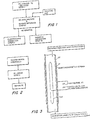
- a reactive gas may be introduced along with the pulverized coal and pyrite, between Step 1 and Step 2, as is indicated in Figure 1.
- each pyrite particle that is transformed into a compound or compounds that are more magnetic than iron disulfide. It is necessary only to convert a shallow surface layer of each pyrite particle to a more magnetic chemical, and this is an energy-saving feature of the invention. It is presented also in the following examples of steps for converting the pyrite into a form that is more capable of electrostatic separation from coal.
- Electrostatic separation of one type of particle from another is possible even when the resistivities are as close as within two or three orders of magnitude. This is sometimes the difference between the electrical resistivities of pyrite versus coal, the pyrite being inherently more electrically conductive than the coal.
- Electrodynamic separators employing charging by iron bombardment
- Electrodynamic separators are commercially available which can separate particles having a ratio of electrical conductivities approximately five or six orders of magnitude. It is necessary only to convert a shallow surface layer of each pyrite particle to a highly conductive chemical in order to render the pyrite particles, that is, to enhance the pre-existing difference in the electrical conductivities of the two materials.
- the enhanced-conductivity surface layer on each pyrite particle need be only a molecule or so in depth. This means that a reaction can take place nearly instantaneously, and it is within the scope of this invention to effect such a reaction at any convenient time after the coal/pyrite mixture leaves the pulverizer.
- the electrical conductivity of pyrite particles can be enhanced through electrical means combined with chemical means, by passing the pyrite in the form of finely-divided particles, preferably carried in a reactant gas or vapor, between electrodes at least one of which is insulated by a suitable dielectric, and applying between the electrodes an A.C. voltage sufficiently high to cause a silent corona discharge, and thereby create both positive and negative ions in the carrier gas (see FIG. 3). Recombinations of ions on the surface of the pyrite particles result in high local temperatures which if effected in the presence of a reactant carrier gas or vapor will in turn promote or accelerate desired reaction or reactions with such gas or vapor.
- the recombinations of ions will take place on the surfaces of both the pyrite particles and he coal particles, and intense local heating of these surfaces of both the pyrite particles and the coal actions between the carrier gas and one or both materials - the pyrite and/or the coal.
- the carrier gas or vapor ought therefore to be chosen so as to favor the desired reaction with the pyrite and to avoid or minimize a reaction with the coal.
- the surfaces of the pyrite particles can be converted into an electrically more conductive compound by reacting the coal/pyrite mixture with chlorine gas, for example, just after the mixture leaves the pulverizer, so as to transform the surface layer into ferrous and/or ferric chloride.
- Step 2 of the process of this invention simulaneously de-agglomerates the mixture of pyrite and coal particles and more greatly enhances a pre-existing difference in their relative electrical conductivity properties and/or their relative magnetic susceptibility properties.
- Step 3 of the process which can be performed in any of a variety of known ways, is thereby rendered more effective, and improved.
- the bond between pyrite particles and coal matrix is weakened chemically in a preliminary step, block 10, taken prior to Step 1 of the process as described with reference to Figure 1.
- This preliminary step has been found effective to enhance the subsequent physical separation of the pyrite component from the coal component of a bituminous coal sample in which the pyrite exists in sizes down to about 50 micrometers.
- a quantity of coal containing 3.11% pyritic sulfur was treated with a chemical com- minutant, in this example, an aqueous solution of 29% ammonia at atmospheric pressure and ambient temperature for a few hours, and then dried, afer which it was pulverized in a hammer mill to U.S. standard minus 200 mesh (75 ⁇ m mesh aperture).
- the pulverized sample was then treated with Step 2 and electrostatically separated in Step 3.
- the coal recovered after Step 3 had a sulfur content of 0.95%.
- the pyrite sulfur content was reduced 75%.
- a dielectric tube 20 (made, for example, of a glass known under the Trade mark of "Pyrex" glass) has an electrically conductive first electrode 21 on its outer surface, and an electrically conductive second electrode 22 axially located within it.
- the second electrode can be supported by any suitable holding means (not shown) presenting the smallest possible impediment to flow of the gas and particle mixture.
- the tube 20 can have two outer electrodes on opposing outer surfaces, in which case the tube walls covered with the electrodes should preferably be flat so that the electrodes will be evenly spaced along the path through which the gas (or vapor) and particle mixture flows.
- a pair of terminals 23, 24 are connected one to each electrode 21, 22, respectively and an A.C.
- the effect of the A.C. silent corona discharge, whether or not a reactant gas or vapor is present, is to de-agglomerate the particles in the coal and pyrite mixture.
- a mixture pulverized to U.S. standard 200 mesh (75 um mesh aperture) is passed through the tube 20 and suitable A.C. voltage is applied at terminals 23, 24, the particles execute rapid motion back and forth between the electrodes 21, 22, and transverse to the direction of their passage between the electrodes, so much so that the interior of the tube becomes clouded with moving particles and blocks substantially the light that would otherwise pass through the tube.
- the output from the tube is a de-agglomerated mixture of coal and pyrite.
- the pyrite has been altered to enhance its electrical and/or magnetic properties, as is described above. This output is supplied to separating means in Step 3.
Landscapes
- Chemical & Material Sciences (AREA)
- Engineering & Computer Science (AREA)
- Combustion & Propulsion (AREA)
- Oil, Petroleum & Natural Gas (AREA)
- Organic Chemistry (AREA)
- Solid Fuels And Fuel-Associated Substances (AREA)
- Electrostatic Separation (AREA)
Claims (6)
Applications Claiming Priority (2)
| Application Number | Priority Date | Filing Date | Title |
|---|---|---|---|
| US64726 | 1979-08-08 | ||
| US06/064,726 US4260394A (en) | 1979-08-08 | 1979-08-08 | Process for reducing the sulfur content of coal |
Publications (3)
| Publication Number | Publication Date |
|---|---|
| EP0033342A1 EP0033342A1 (de) | 1981-08-12 |
| EP0033342A4 EP0033342A4 (de) | 1982-01-08 |
| EP0033342B1 true EP0033342B1 (de) | 1984-11-21 |
Family
ID=22057899
Family Applications (1)
| Application Number | Title | Priority Date | Filing Date |
|---|---|---|---|
| EP80901683A Expired EP0033342B1 (de) | 1979-08-08 | 1981-02-24 | Verfahren zum reduzieren des schwefelgehalts von kohle |
Country Status (10)
| Country | Link |
|---|---|
| US (1) | US4260394A (de) |
| EP (1) | EP0033342B1 (de) |
| JP (1) | JPS56500967A (de) |
| BE (1) | BE884649A (de) |
| CA (1) | CA1144105A (de) |
| DE (1) | DE3069665D1 (de) |
| FR (1) | FR2463179A1 (de) |
| NL (1) | NL8020305A (de) |
| WO (1) | WO1981000416A1 (de) |
| ZA (1) | ZA804718B (de) |
Families Citing this family (40)
| Publication number | Priority date | Publication date | Assignee | Title |
|---|---|---|---|---|
| US4743271A (en) * | 1983-02-17 | 1988-05-10 | Williams Technologies, Inc. | Process for producing a clean hydrocarbon fuel |
| US4695290A (en) * | 1983-07-26 | 1987-09-22 | Integrated Carbons Corporation | Integrated coal cleaning process with mixed acid regeneration |
| US4543104A (en) * | 1984-06-12 | 1985-09-24 | Brown Coal Corporation | Coal treatment method and product produced therefrom |
| WO1986001820A1 (en) * | 1984-09-18 | 1986-03-27 | Lambda Group, Inc. | Microbiological method for the removal of contaminants from coal |
| AU3997385A (en) * | 1984-10-30 | 1986-05-15 | Brown Coal Corp. | Coal treatment method and product produced therefrom |
| US4753033A (en) * | 1985-03-24 | 1988-06-28 | Williams Technologies, Inc. | Process for producing a clean hydrocarbon fuel from high calcium coal |
| US4661118A (en) * | 1985-04-15 | 1987-04-28 | The United States Of America, As Represented By The Secretary Of The Interior | Method for oxidation of pyrite in coal to magnetite and low field magnetic separation thereof |
| CA2169556A1 (en) * | 1994-06-15 | 1995-12-21 | David B. Goodson | Apparatus and method for reducing particulate emissions from combustion processes |
| JP2003508211A (ja) * | 1999-09-03 | 2003-03-04 | ザ クリーブランド クリニック ファウンデーション | 環状フローチャネルによる継続的な粒子および分子の分離 |
| US6467706B1 (en) * | 1999-11-29 | 2002-10-22 | Xerox Corporation | Method for recycling expanded polymers |
| WO2003070862A1 (en) * | 2002-02-15 | 2003-08-28 | Hazen Research, Inc. | Dry dust control materials |
| US8557101B2 (en) | 2007-12-20 | 2013-10-15 | Exxonmobil Research And Engineering Company | Electrochemical treatment of heavy oil streams followed by caustic extraction |
| US7985332B2 (en) * | 2007-12-20 | 2011-07-26 | Exxonmobil Research And Engineering Company | Electrodesulfurization of heavy oils using a divided electrochemical cell |
| US20090159503A1 (en) * | 2007-12-20 | 2009-06-25 | Greaney Mark A | Electrochemical treatment of heavy oil streams followed by caustic extraction or thermal treatment |
| US8177963B2 (en) * | 2007-12-20 | 2012-05-15 | Exxonmobil Research And Engineering Company | Partial electro-hydrogenation of sulfur containing feedstreams followed by sulfur removal |
| US8075762B2 (en) * | 2007-12-20 | 2011-12-13 | Exxonmobil Reseach And Engineering Company | Electrodesulfurization of heavy oils |
| US8486251B2 (en) * | 2008-08-05 | 2013-07-16 | Exxonmobil Research And Engineering Company | Process for regenerating alkali metal hydroxides by electrochemical means |
| UA117010C2 (uk) | 2008-10-31 | 2018-06-11 | Сайтек Текнолоджи Корп. | Реагент для модифікації електростатичних властивостей, призначений для збагачення мінерального субстрату за допомогою електростатичної сепарації |
| US8851882B2 (en) * | 2009-04-03 | 2014-10-07 | Clearsign Combustion Corporation | System and apparatus for applying an electric field to a combustion volume |
| US20110078948A1 (en) * | 2009-10-01 | 2011-04-07 | Chandrashekhar Ganpatrao Sonwane | Ash removal from coal: process to avoid large quantities of hydrogen fluoride on-site |
| US9151549B2 (en) * | 2010-01-13 | 2015-10-06 | Clearsign Combustion Corporation | Method and apparatus for electrical control of heat transfer |
| US11073280B2 (en) | 2010-04-01 | 2021-07-27 | Clearsign Technologies Corporation | Electrodynamic control in a burner system |
| US9209654B2 (en) | 2011-12-30 | 2015-12-08 | Clearsign Combustion Corporation | Method and apparatus for enhancing flame radiation |
| US9284886B2 (en) | 2011-12-30 | 2016-03-15 | Clearsign Combustion Corporation | Gas turbine with Coulombic thermal protection |
| US9377195B2 (en) | 2012-03-01 | 2016-06-28 | Clearsign Combustion Corporation | Inertial electrode and system configured for electrodynamic interaction with a voltage-biased flame |
| CN104169725B (zh) | 2012-03-01 | 2018-04-17 | 克利尔赛恩燃烧公司 | 配置为与火焰电动交互的惰性电极和系统 |
| US9366427B2 (en) | 2012-03-27 | 2016-06-14 | Clearsign Combustion Corporation | Solid fuel burner with electrodynamic homogenization |
| WO2013147956A1 (en) | 2012-03-27 | 2013-10-03 | Clearsign Combustion Corporation | Multiple fuel combustion system and method |
| US9289780B2 (en) | 2012-03-27 | 2016-03-22 | Clearsign Combustion Corporation | Electrically-driven particulate agglomeration in a combustion system |
| CN104334970A (zh) | 2012-05-31 | 2015-02-04 | 克利尔赛恩燃烧公司 | 具有火焰位置电极排列的燃烧器 |
| US9702550B2 (en) | 2012-07-24 | 2017-07-11 | Clearsign Combustion Corporation | Electrically stabilized burner |
| US9310077B2 (en) | 2012-07-31 | 2016-04-12 | Clearsign Combustion Corporation | Acoustic control of an electrodynamic combustion system |
| US8911699B2 (en) | 2012-08-14 | 2014-12-16 | Clearsign Combustion Corporation | Charge-induced selective reduction of nitrogen |
| US9513006B2 (en) | 2012-11-27 | 2016-12-06 | Clearsign Combustion Corporation | Electrodynamic burner with a flame ionizer |
| WO2014085696A1 (en) | 2012-11-27 | 2014-06-05 | Clearsign Combustion Corporation | Precombustion ionization |
| US9746180B2 (en) | 2012-11-27 | 2017-08-29 | Clearsign Combustion Corporation | Multijet burner with charge interaction |
| US9562681B2 (en) | 2012-12-11 | 2017-02-07 | Clearsign Combustion Corporation | Burner having a cast dielectric electrode holder |
| US20140170576A1 (en) * | 2012-12-12 | 2014-06-19 | Clearsign Combustion Corporation | Contained flame flare stack |
| US20140170575A1 (en) * | 2012-12-14 | 2014-06-19 | Clearsign Combustion Corporation | Ionizer for a combustion system, including foam electrode structure |
| US9441834B2 (en) | 2012-12-28 | 2016-09-13 | Clearsign Combustion Corporation | Wirelessly powered electrodynamic combustion control system |
Family Cites Families (14)
| Publication number | Priority date | Publication date | Assignee | Title |
|---|---|---|---|---|
| US614927A (en) * | 1898-11-29 | Process of and apparatus for separating metals and by-products from ores by electricity | ||
| US502431A (en) * | 1893-08-01 | Process of desulphurizing metallic ores | ||
| US1366457A (en) * | 1919-05-20 | 1921-01-25 | Aluminum Co Of America | Apparatus for calcining carbon for electrodes |
| US1731473A (en) * | 1923-04-21 | 1929-10-15 | John J Naugle | Method of treating carbonaceous material in an electric furnace or the like |
| GB819588A (en) * | 1956-08-02 | 1959-09-09 | Aluminium Lab Ltd | Improvements in or relating to the production of purified carbonaceous material |
| GB851502A (en) * | 1958-01-15 | 1960-10-19 | Kloeckner Huettenwerk Haspe A | Improvements in or relating to methods and apparatus for caking fine and super-fine ores |
| GB854729A (en) * | 1958-07-15 | 1960-11-23 | Klockner Huttenwerk Haspe Ag | Sintering of fine ores |
| FR1579577A (de) * | 1967-05-19 | 1969-08-29 | ||
| US4081251A (en) * | 1976-07-06 | 1978-03-28 | The United States Of America As Represented By The Secretary Of The Navy | Process to remove iron sulfide from coal to reduce pollution |
| US4052170A (en) * | 1976-07-09 | 1977-10-04 | Mobil Oil Corporation | Magnetic desulfurization of airborne pulverized coal |
| US4155715A (en) * | 1977-09-06 | 1979-05-22 | Occidental Petroleum Corporation | Process for reducing the organic sulfur content of char |
| DE2754468A1 (de) * | 1977-12-07 | 1979-06-13 | Kloeckner Humboldt Deutz Ag | Verfahren zur entschwefelung von kohle, vorzugsweise von kraftwerkskohle |
| US4152120A (en) * | 1978-02-06 | 1979-05-01 | General Electric Company | Coal desulfurization using alkali metal or alkaline earth compounds and electromagnetic irradiation |
| US4169710A (en) * | 1978-03-29 | 1979-10-02 | Chevron Research Company | Process for comminuting and reducing the sulfur and ash content of coal |
-
1979
- 1979-08-08 US US06/064,726 patent/US4260394A/en not_active Expired - Lifetime
-
1980
- 1980-08-01 WO PCT/US1980/000976 patent/WO1981000416A1/en not_active Ceased
- 1980-08-01 DE DE8080901683T patent/DE3069665D1/de not_active Expired
- 1980-08-01 JP JP50194180A patent/JPS56500967A/ja active Pending
- 1980-08-01 NL NL8020305A patent/NL8020305A/nl not_active Application Discontinuation
- 1980-08-04 ZA ZA00804718A patent/ZA804718B/xx unknown
- 1980-08-06 BE BE0/201663A patent/BE884649A/fr not_active IP Right Cessation
- 1980-08-08 CA CA000357855A patent/CA1144105A/en not_active Expired
- 1980-08-08 FR FR8017611A patent/FR2463179A1/fr active Granted
-
1981
- 1981-02-24 EP EP80901683A patent/EP0033342B1/de not_active Expired
Also Published As
| Publication number | Publication date |
|---|---|
| WO1981000416A1 (en) | 1981-02-19 |
| EP0033342A4 (de) | 1982-01-08 |
| EP0033342A1 (de) | 1981-08-12 |
| JPS56500967A (de) | 1981-07-16 |
| US4260394A (en) | 1981-04-07 |
| DE3069665D1 (en) | 1985-01-03 |
| BE884649A (fr) | 1980-12-01 |
| CA1144105A (en) | 1983-04-05 |
| FR2463179A1 (fr) | 1981-02-20 |
| NL8020305A (nl) | 1981-07-01 |
| FR2463179B1 (de) | 1984-03-16 |
| ZA804718B (en) | 1981-09-30 |
Similar Documents
| Publication | Publication Date | Title |
|---|---|---|
| EP0033342B1 (de) | Verfahren zum reduzieren des schwefelgehalts von kohle | |
| US3970546A (en) | Method and apparatus for separating non-ferrous metal from waste material | |
| US3938966A (en) | Process for improving coal | |
| Sreenivas et al. | Surface chemistry and flotation of cassiterite with alkyl hydroxamates | |
| Gupta et al. | Electrostatic separation of powder mixtures based on the work functions of its constituents | |
| Iuga et al. | Corona-electrostatic separators for recovery of waste non-ferrous metals | |
| CA1240953A (en) | Method and apparatus for separating impurities from low conductivity liquids | |
| Knoll et al. | Advances in electrostatic separation | |
| Lindley et al. | Charging mechanisms for particles prior to electrostatic separation | |
| US4627579A (en) | Particle charging and collecting system | |
| AU535672B2 (en) | Process for reducing the sulfur content of coal | |
| US2997171A (en) | Method for beneficiating potash materials | |
| Ciccu et al. | Selective tribocharging of particles for separation | |
| Lindley et al. | Feed preparation factors affecting the efficiency of electrostatic separation | |
| Lungu | Separation of small metallic nonferrous particles in low concentration from mineral wastes using dielectrophoresis | |
| Iuga et al. | Electrostatic separation of muscovite mica from feldspathic pegmatites | |
| Saeki et al. | Electrostatic separation of chopped waste electric cables | |
| RU2828347C1 (ru) | Способ подготовки калийной руды к ее электростатическому обогащению | |
| Iuga et al. | Electrostatic separation of brass from industrial wastes | |
| Butcher et al. | Electrostatic separation of pyrite from coal | |
| Morar et al. | Iron ore beneficiation using roll-type high-intensity electric field separators | |
| Idres et al. | New method of electrostatic separation of the oxidized iron ore | |
| Tilmatine et al. | Plastic wastes recovery using electrostatic forces | |
| US4257881A (en) | Process for beneficiating oxide ores | |
| Svoboda | Separation of particles in the corona–discharge field |
Legal Events
| Date | Code | Title | Description |
|---|---|---|---|
| PUAI | Public reference made under article 153(3) epc to a published international application that has entered the european phase |
Free format text: ORIGINAL CODE: 0009012 |
|
| AK | Designated contracting states |
Designated state(s): CH DE GB SE |
|
| 17P | Request for examination filed |
Effective date: 19810721 |
|
| GRAA | (expected) grant |
Free format text: ORIGINAL CODE: 0009210 |
|
| AK | Designated contracting states |
Designated state(s): CH DE GB LI SE |
|
| PG25 | Lapsed in a contracting state [announced via postgrant information from national office to epo] |
Ref country code: SE Effective date: 19841121 Ref country code: LI Effective date: 19841121 Ref country code: CH Effective date: 19841121 |
|
| REF | Corresponds to: |
Ref document number: 3069665 Country of ref document: DE Date of ref document: 19850103 |
|
| REG | Reference to a national code |
Ref country code: CH Ref legal event code: PL |
|
| PLBE | No opposition filed within time limit |
Free format text: ORIGINAL CODE: 0009261 |
|
| STAA | Information on the status of an ep patent application or granted ep patent |
Free format text: STATUS: NO OPPOSITION FILED WITHIN TIME LIMIT |
|
| 26N | No opposition filed | ||
| GBPC | Gb: european patent ceased through non-payment of renewal fee | ||
| PG25 | Lapsed in a contracting state [announced via postgrant information from national office to epo] |
Ref country code: DE Effective date: 19880503 |
|
| PG25 | Lapsed in a contracting state [announced via postgrant information from national office to epo] |
Ref country code: GB Free format text: LAPSE BECAUSE OF NON-PAYMENT OF DUE FEES Effective date: 19881118 |