EP0012643A2 - Dérivés de la phényl-1 (pipéridyl-4)-3 propanone-1, procédés pour leur préparation, et médicaments les contenant - Google Patents
Dérivés de la phényl-1 (pipéridyl-4)-3 propanone-1, procédés pour leur préparation, et médicaments les contenant Download PDFInfo
- Publication number
- EP0012643A2 EP0012643A2 EP79400890A EP79400890A EP0012643A2 EP 0012643 A2 EP0012643 A2 EP 0012643A2 EP 79400890 A EP79400890 A EP 79400890A EP 79400890 A EP79400890 A EP 79400890A EP 0012643 A2 EP0012643 A2 EP 0012643A2
- Authority
- EP
- European Patent Office
- Prior art keywords
- group
- carbon atoms
- formula
- phenyl
- compounds
- Prior art date
- Legal status (The legal status is an assumption and is not a legal conclusion. Google has not performed a legal analysis and makes no representation as to the accuracy of the status listed.)
- Granted
Links
- 0 C*N1CCC(C)CC1 Chemical compound C*N1CCC(C)CC1 0.000 description 6
Classifications
-
- C—CHEMISTRY; METALLURGY
- C07—ORGANIC CHEMISTRY
- C07D—HETEROCYCLIC COMPOUNDS
- C07D213/00—Heterocyclic compounds containing six-membered rings, not condensed with other rings, with one nitrogen atom as the only ring hetero atom and three or more double bonds between ring members or between ring members and non-ring members
- C07D213/02—Heterocyclic compounds containing six-membered rings, not condensed with other rings, with one nitrogen atom as the only ring hetero atom and three or more double bonds between ring members or between ring members and non-ring members having three double bonds between ring members or between ring members and non-ring members
- C07D213/04—Heterocyclic compounds containing six-membered rings, not condensed with other rings, with one nitrogen atom as the only ring hetero atom and three or more double bonds between ring members or between ring members and non-ring members having three double bonds between ring members or between ring members and non-ring members having no bond between the ring nitrogen atom and a non-ring member or having only hydrogen or carbon atoms directly attached to the ring nitrogen atom
- C07D213/24—Heterocyclic compounds containing six-membered rings, not condensed with other rings, with one nitrogen atom as the only ring hetero atom and three or more double bonds between ring members or between ring members and non-ring members having three double bonds between ring members or between ring members and non-ring members having no bond between the ring nitrogen atom and a non-ring member or having only hydrogen or carbon atoms directly attached to the ring nitrogen atom with substituted hydrocarbon radicals attached to ring carbon atoms
- C07D213/26—Radicals substituted by halogen atoms or nitro radicals
-
- A—HUMAN NECESSITIES
- A61—MEDICAL OR VETERINARY SCIENCE; HYGIENE
- A61P—SPECIFIC THERAPEUTIC ACTIVITY OF CHEMICAL COMPOUNDS OR MEDICINAL PREPARATIONS
- A61P25/00—Drugs for disorders of the nervous system
- A61P25/20—Hypnotics; Sedatives
-
- A—HUMAN NECESSITIES
- A61—MEDICAL OR VETERINARY SCIENCE; HYGIENE
- A61P—SPECIFIC THERAPEUTIC ACTIVITY OF CHEMICAL COMPOUNDS OR MEDICINAL PREPARATIONS
- A61P25/00—Drugs for disorders of the nervous system
- A61P25/24—Antidepressants
-
- A—HUMAN NECESSITIES
- A61—MEDICAL OR VETERINARY SCIENCE; HYGIENE
- A61P—SPECIFIC THERAPEUTIC ACTIVITY OF CHEMICAL COMPOUNDS OR MEDICINAL PREPARATIONS
- A61P25/00—Drugs for disorders of the nervous system
- A61P25/26—Psychostimulants, e.g. nicotine, cocaine
-
- A—HUMAN NECESSITIES
- A61—MEDICAL OR VETERINARY SCIENCE; HYGIENE
- A61P—SPECIFIC THERAPEUTIC ACTIVITY OF CHEMICAL COMPOUNDS OR MEDICINAL PREPARATIONS
- A61P9/00—Drugs for disorders of the cardiovascular system
- A61P9/06—Antiarrhythmics
-
- C—CHEMISTRY; METALLURGY
- C07—ORGANIC CHEMISTRY
- C07D—HETEROCYCLIC COMPOUNDS
- C07D211/00—Heterocyclic compounds containing hydrogenated pyridine rings, not condensed with other rings
- C07D211/04—Heterocyclic compounds containing hydrogenated pyridine rings, not condensed with other rings with only hydrogen or carbon atoms directly attached to the ring nitrogen atom
- C07D211/06—Heterocyclic compounds containing hydrogenated pyridine rings, not condensed with other rings with only hydrogen or carbon atoms directly attached to the ring nitrogen atom having no double bonds between ring members or between ring members and non-ring members
- C07D211/08—Heterocyclic compounds containing hydrogenated pyridine rings, not condensed with other rings with only hydrogen or carbon atoms directly attached to the ring nitrogen atom having no double bonds between ring members or between ring members and non-ring members with hydrocarbon or substituted hydrocarbon radicals directly attached to ring carbon atoms
- C07D211/10—Heterocyclic compounds containing hydrogenated pyridine rings, not condensed with other rings with only hydrogen or carbon atoms directly attached to the ring nitrogen atom having no double bonds between ring members or between ring members and non-ring members with hydrocarbon or substituted hydrocarbon radicals directly attached to ring carbon atoms with radicals containing only carbon and hydrogen atoms attached to ring carbon atoms
- C07D211/12—Heterocyclic compounds containing hydrogenated pyridine rings, not condensed with other rings with only hydrogen or carbon atoms directly attached to the ring nitrogen atom having no double bonds between ring members or between ring members and non-ring members with hydrocarbon or substituted hydrocarbon radicals directly attached to ring carbon atoms with radicals containing only carbon and hydrogen atoms attached to ring carbon atoms with only hydrogen atoms attached to the ring nitrogen atom
-
- C—CHEMISTRY; METALLURGY
- C07—ORGANIC CHEMISTRY
- C07D—HETEROCYCLIC COMPOUNDS
- C07D211/00—Heterocyclic compounds containing hydrogenated pyridine rings, not condensed with other rings
- C07D211/04—Heterocyclic compounds containing hydrogenated pyridine rings, not condensed with other rings with only hydrogen or carbon atoms directly attached to the ring nitrogen atom
- C07D211/06—Heterocyclic compounds containing hydrogenated pyridine rings, not condensed with other rings with only hydrogen or carbon atoms directly attached to the ring nitrogen atom having no double bonds between ring members or between ring members and non-ring members
- C07D211/08—Heterocyclic compounds containing hydrogenated pyridine rings, not condensed with other rings with only hydrogen or carbon atoms directly attached to the ring nitrogen atom having no double bonds between ring members or between ring members and non-ring members with hydrocarbon or substituted hydrocarbon radicals directly attached to ring carbon atoms
- C07D211/18—Heterocyclic compounds containing hydrogenated pyridine rings, not condensed with other rings with only hydrogen or carbon atoms directly attached to the ring nitrogen atom having no double bonds between ring members or between ring members and non-ring members with hydrocarbon or substituted hydrocarbon radicals directly attached to ring carbon atoms with substituted hydrocarbon radicals attached to ring carbon atoms
-
- C—CHEMISTRY; METALLURGY
- C07—ORGANIC CHEMISTRY
- C07D—HETEROCYCLIC COMPOUNDS
- C07D211/00—Heterocyclic compounds containing hydrogenated pyridine rings, not condensed with other rings
- C07D211/04—Heterocyclic compounds containing hydrogenated pyridine rings, not condensed with other rings with only hydrogen or carbon atoms directly attached to the ring nitrogen atom
- C07D211/06—Heterocyclic compounds containing hydrogenated pyridine rings, not condensed with other rings with only hydrogen or carbon atoms directly attached to the ring nitrogen atom having no double bonds between ring members or between ring members and non-ring members
- C07D211/08—Heterocyclic compounds containing hydrogenated pyridine rings, not condensed with other rings with only hydrogen or carbon atoms directly attached to the ring nitrogen atom having no double bonds between ring members or between ring members and non-ring members with hydrocarbon or substituted hydrocarbon radicals directly attached to ring carbon atoms
- C07D211/18—Heterocyclic compounds containing hydrogenated pyridine rings, not condensed with other rings with only hydrogen or carbon atoms directly attached to the ring nitrogen atom having no double bonds between ring members or between ring members and non-ring members with hydrocarbon or substituted hydrocarbon radicals directly attached to ring carbon atoms with substituted hydrocarbon radicals attached to ring carbon atoms
- C07D211/20—Heterocyclic compounds containing hydrogenated pyridine rings, not condensed with other rings with only hydrogen or carbon atoms directly attached to the ring nitrogen atom having no double bonds between ring members or between ring members and non-ring members with hydrocarbon or substituted hydrocarbon radicals directly attached to ring carbon atoms with substituted hydrocarbon radicals attached to ring carbon atoms with hydrocarbon radicals, substituted by singly bound oxygen or sulphur atoms
- C07D211/22—Heterocyclic compounds containing hydrogenated pyridine rings, not condensed with other rings with only hydrogen or carbon atoms directly attached to the ring nitrogen atom having no double bonds between ring members or between ring members and non-ring members with hydrocarbon or substituted hydrocarbon radicals directly attached to ring carbon atoms with substituted hydrocarbon radicals attached to ring carbon atoms with hydrocarbon radicals, substituted by singly bound oxygen or sulphur atoms by oxygen atoms
-
- C—CHEMISTRY; METALLURGY
- C07—ORGANIC CHEMISTRY
- C07D—HETEROCYCLIC COMPOUNDS
- C07D211/00—Heterocyclic compounds containing hydrogenated pyridine rings, not condensed with other rings
- C07D211/04—Heterocyclic compounds containing hydrogenated pyridine rings, not condensed with other rings with only hydrogen or carbon atoms directly attached to the ring nitrogen atom
- C07D211/06—Heterocyclic compounds containing hydrogenated pyridine rings, not condensed with other rings with only hydrogen or carbon atoms directly attached to the ring nitrogen atom having no double bonds between ring members or between ring members and non-ring members
- C07D211/08—Heterocyclic compounds containing hydrogenated pyridine rings, not condensed with other rings with only hydrogen or carbon atoms directly attached to the ring nitrogen atom having no double bonds between ring members or between ring members and non-ring members with hydrocarbon or substituted hydrocarbon radicals directly attached to ring carbon atoms
- C07D211/18—Heterocyclic compounds containing hydrogenated pyridine rings, not condensed with other rings with only hydrogen or carbon atoms directly attached to the ring nitrogen atom having no double bonds between ring members or between ring members and non-ring members with hydrocarbon or substituted hydrocarbon radicals directly attached to ring carbon atoms with substituted hydrocarbon radicals attached to ring carbon atoms
- C07D211/26—Heterocyclic compounds containing hydrogenated pyridine rings, not condensed with other rings with only hydrogen or carbon atoms directly attached to the ring nitrogen atom having no double bonds between ring members or between ring members and non-ring members with hydrocarbon or substituted hydrocarbon radicals directly attached to ring carbon atoms with substituted hydrocarbon radicals attached to ring carbon atoms with hydrocarbon radicals, substituted by nitrogen atoms
-
- C—CHEMISTRY; METALLURGY
- C07—ORGANIC CHEMISTRY
- C07D—HETEROCYCLIC COMPOUNDS
- C07D211/00—Heterocyclic compounds containing hydrogenated pyridine rings, not condensed with other rings
- C07D211/04—Heterocyclic compounds containing hydrogenated pyridine rings, not condensed with other rings with only hydrogen or carbon atoms directly attached to the ring nitrogen atom
- C07D211/06—Heterocyclic compounds containing hydrogenated pyridine rings, not condensed with other rings with only hydrogen or carbon atoms directly attached to the ring nitrogen atom having no double bonds between ring members or between ring members and non-ring members
- C07D211/08—Heterocyclic compounds containing hydrogenated pyridine rings, not condensed with other rings with only hydrogen or carbon atoms directly attached to the ring nitrogen atom having no double bonds between ring members or between ring members and non-ring members with hydrocarbon or substituted hydrocarbon radicals directly attached to ring carbon atoms
- C07D211/18—Heterocyclic compounds containing hydrogenated pyridine rings, not condensed with other rings with only hydrogen or carbon atoms directly attached to the ring nitrogen atom having no double bonds between ring members or between ring members and non-ring members with hydrocarbon or substituted hydrocarbon radicals directly attached to ring carbon atoms with substituted hydrocarbon radicals attached to ring carbon atoms
- C07D211/30—Heterocyclic compounds containing hydrogenated pyridine rings, not condensed with other rings with only hydrogen or carbon atoms directly attached to the ring nitrogen atom having no double bonds between ring members or between ring members and non-ring members with hydrocarbon or substituted hydrocarbon radicals directly attached to ring carbon atoms with substituted hydrocarbon radicals attached to ring carbon atoms with hydrocarbon radicals, substituted by doubly bound oxygen or sulfur atoms or by two oxygen or sulfur atoms singly bound to the same carbon atom
- C07D211/32—Heterocyclic compounds containing hydrogenated pyridine rings, not condensed with other rings with only hydrogen or carbon atoms directly attached to the ring nitrogen atom having no double bonds between ring members or between ring members and non-ring members with hydrocarbon or substituted hydrocarbon radicals directly attached to ring carbon atoms with substituted hydrocarbon radicals attached to ring carbon atoms with hydrocarbon radicals, substituted by doubly bound oxygen or sulfur atoms or by two oxygen or sulfur atoms singly bound to the same carbon atom by oxygen atoms
-
- C—CHEMISTRY; METALLURGY
- C07—ORGANIC CHEMISTRY
- C07D—HETEROCYCLIC COMPOUNDS
- C07D213/00—Heterocyclic compounds containing six-membered rings, not condensed with other rings, with one nitrogen atom as the only ring hetero atom and three or more double bonds between ring members or between ring members and non-ring members
- C07D213/02—Heterocyclic compounds containing six-membered rings, not condensed with other rings, with one nitrogen atom as the only ring hetero atom and three or more double bonds between ring members or between ring members and non-ring members having three double bonds between ring members or between ring members and non-ring members
- C07D213/04—Heterocyclic compounds containing six-membered rings, not condensed with other rings, with one nitrogen atom as the only ring hetero atom and three or more double bonds between ring members or between ring members and non-ring members having three double bonds between ring members or between ring members and non-ring members having no bond between the ring nitrogen atom and a non-ring member or having only hydrogen or carbon atoms directly attached to the ring nitrogen atom
- C07D213/24—Heterocyclic compounds containing six-membered rings, not condensed with other rings, with one nitrogen atom as the only ring hetero atom and three or more double bonds between ring members or between ring members and non-ring members having three double bonds between ring members or between ring members and non-ring members having no bond between the ring nitrogen atom and a non-ring member or having only hydrogen or carbon atoms directly attached to the ring nitrogen atom with substituted hydrocarbon radicals attached to ring carbon atoms
- C07D213/44—Radicals substituted by doubly-bound oxygen, sulfur, or nitrogen atoms, or by two such atoms singly-bound to the same carbon atom
- C07D213/46—Oxygen atoms
- C07D213/50—Ketonic radicals
Definitions
- the present invention relates to new medicaments, useful in particular as antiarrhythmics and as psychotropics, in particular for the treatment of states of depression and anxiety, containing as active agent a derivative of phenyl-1 (piperidyl-4 ) -3 propanone-1 having the formula (I) below or a salt of such a compound with a pharmaceutically acceptable acid.
- the phenyl-1 (piperidyl-4) -3 propanone-1 derivatives incorporated as active agent in the medicaments according to the invention can be represented by the formula: in which X and Y are identical or different and represent hydrogen or halogen atoms (chlorine, fluorine, bromine, iodine) or alkyl groups having 1 to 4 carbon atoms, alkoxy having 1 to 4 carbon atoms, alkylthio having 1 to 4 carbon atoms, trifluoromethyl, hydroxy, amino, monoalkylamino having 1 to 4 carbon atoms, or amino substituted by an alkylsulfonyl group having 1 to 4 carbon atoms, by an alkylcarbonyl group having 1 to 5 atoms carbon, in particular acetyl, or by an aroyl group, in particular benzoyl, and A represents a group CHOH or CH 2 .
- X and Y are identical or different and represent hydrogen or halogen atoms (chlorine, fluor
- the products of general formula (I) for which A represents the group CH 2 can be prepared by reduction of the corresponding products of formula (I) for which A represents the group CO or of their N-benzoylated derivatives (the cleavage of the benzoyl group s 'performing under the conditions of the reduction).
- methods known per se are used which make it possible to transform a CO group into a CH 2 group, for example those described by RB WAGNER and HD ZOOK, Synthetic Organic Chemistry, p. 5 (J. Wiley and Sons -1953).
- reducing agent hydrazine hydrate in the presence of an alkali metal hydroxide such as sodium hydroxide, in a solvent such as an alcohol. It is generally carried out at the boiling point of the solvent.
- an alkali metal hydroxide such as sodium hydroxide
- R 1 represents a hydrogen atom
- R 2 represents a hydrogen atom or an OH group
- R 1 and R 2 can also form a single bond together.
- This catalytic hydrogenation is carried out in an inert solvent and in the presence of a catalyst, at a temperature between 20 and 80 ° C and under a hydrogen pressure of 1 to 50 bars.
- solvent it is possible to use, for example, alcohols, such as methanol or ethanol, or acids such as acetic acid.
- nickel, palladium, rhodium, ruthenium or platinum can be mentioned.
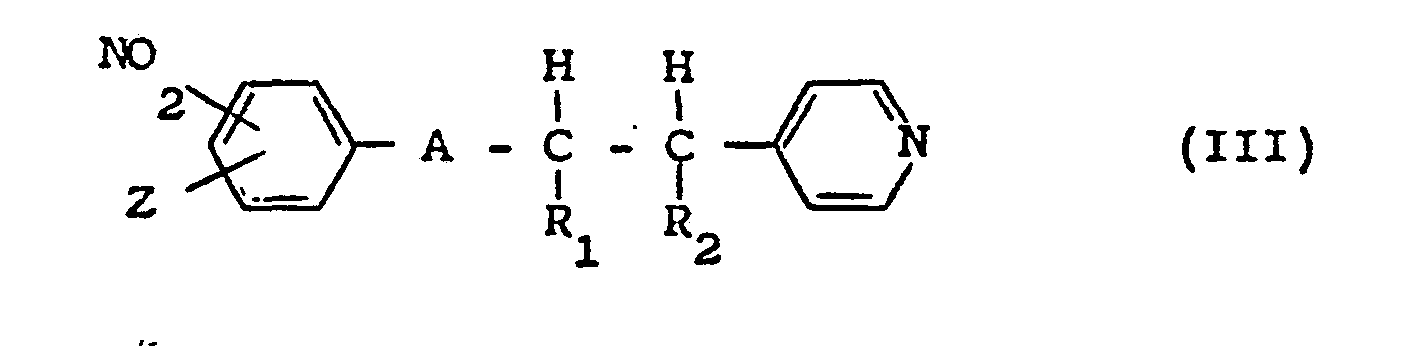
- the compounds of general formula (I) for which A represents a CH 2 group and at least one of the substituents X and Y is an NH group can also be prepared by catalytic hydrogenation, under conditions identical to those employed for the hydrogenation compounds of formula (II), compounds of formula: where A is CHOH or CH, R 1 and R 2 have the meanings indicated above and Z has the same meanings as X and Y in formula (I).
- the compounds of formula (I) for which A represents the CHOH group can be prepared by reduction of the corresponding compounds of formula (I) for which A represents the group CO.
- a metal hydride such as sodium, potassium or lithium borohydride, aluminum and lithium hydride, bis (2-methoxyethoxy) aluminum hydride or else diborane.
- These hydrides are generally used in excess, in an inert solvent such as ether, tetrahydrofuran or a hydrocarbon, at a temperature between 10 ° C. and the boiling point of the solvent used.
- the products of general formula (I) for which A represents the group CO can be prepared by gentle catalytic hydrogenation of the products of formula (II B ) or their salts.
- an inert solvent such as an alcohol (for example methanol or ethanol) or an acid (for example acetic acid).
- catalysts palladium, rhodium, ruthenium or platinum can be mentioned.
- the compounds of formula (I) for which A represents the group CO can also be prepared, by a acylation reaction of Friedel and Crafts, by reacting a benzene derivative of formula (IV) with a piperidine derivative of formula (V) and by hydrolyzing the compound of formula (VI) thus formed, according to the following reaction scheme:
- Z 'de notes an OH group or a halogen atom.
- reaction a To carry out reaction a), the operation is carried out in the presence of the catalysts known under the name of Friedel and Crafts catalysts (metal halides, metal oxides, iodine, mineral acids, etc.), under conditions such as those described in “Friedel -Crafts and related reactions "OLAH, vol.3 (Inter-science 1964).
- Z ′ represents a chlorine atom
- aluminum chloride is advantageously used as catalyst, in the presence or absence of a solvent, the solvents preferably used being carbon sulphide or 1,2-dichloroethane.
- Z '. is an OH group, it is possible, for example, to operate in the presence of polyphosphoric acid, at a temperature in the region of 100 ° C.
- the hydrolysis reaction b) is carried out according to methods known per se (cf. for example "Hydrolysis of N-substituted amides" in "Synthetic Organic Chemistry” p. 678, RB WAGNER and HD ZOOK, J. Wiley and Sons 1953 ). It can for example be carried out using an aqueous solution, heated to reflux, a mineral acid such as hydrochloric acid or sulfuric acid or a mineral base such as sodium hydroxide or potassium.
- a mineral acid such as hydrochloric acid or sulfuric acid
- a mineral base such as sodium hydroxide or potassium.
- the yield of reaction (a) varies as well as the position on the benzene ring where the acylation takes place predominantly (cf. J. MARCH “Advanced Organic Chemistry Reactions, mechanisms and Structure ". Mc. GRAW Hill 1968, p. 382 to 391).
- the method using the Friedel and Crafts acylation reaction is advantageous in the case where X is a hydrogen or halogen atom or an alkyl or alkoxy group and Y is a hydrogen atom or a group identical to X, not located in the para position with respect to X. In this the reaction is carried out with good yields and the products obtained carry the acyl chain in the para position relative to the group X.
- reaction mixtures obtained by the processes described above are treated according to conventional, physical (evaporation, extraction using a solvent, distillation, crystallization, chromatography, etc.) or chemical (salt formation and regeneration of base, etc.) in order to isolate the product of formula (I) in the pure state.
- the compounds of formula (I) in the form of free bases can optionally be converted into addition salts with a mineral or organic acid by the action of such an acid in an appropriate solvent.
- the compounds of formulas (I IA ) and (II B ) can be prepared, according to a known general process (cf. HOUBEN-WEYL, Methoden der organischen chemie 7 (2b) 1483), by condensing the pyridine carbaldehyde-4 with an acetophenone of formula (VII) according to the reaction scheme:
- the condensation reaction c) can be carried out in a pure alcohol, such as methanol or ethanol, in the presence of a base such as tetramethylammonium hydroxide or a basic resin (for example IRA-400) , at room temperature. It is also possible to operate in the presence of sodium hydroxide in a hydroalcoholic medium. Depending on the conditions and depending on the nature of the substituents X and Y, either the compound (II B ) or the compound (II A ) or a mixture of the two products is obtained, which can then be separated by crystallization or chromatography.
- a base such as tetramethylammonium hydroxide or a basic resin (for example IRA-400)
- the compounds of formula (II C ) can generally be obtained by non-catalytic reduction of the pyridine derivatives of formula: themselves obtained by condensation of 4-cyano pyridine with the appropriate organo-magnesium derivative according to the method described by KP PRASAD et Coll. J. Chem. Soc. (C) 1969, 2134.
- hydrazine hydrate is used in the presence of an alkali metal hydroxide such as sodium hydroxide in a solvent such as an alcohol. It is generally carried out at the boiling point of the solvent.
- the compounds of formula (III), which are new and form as such of the invention, can be prepared by nitration of the compounds of formula: in which A, R 1 , R 2 and Z have the same meanings 1 as in formula (III).
- Examples 1 to 5 relate to the preparation of the compounds of formula (VI), Examples 11 to 15 that of the compounds of formula (II), Examples 6 to 10 and 16 to 22 that of the compounds of formula (I).
- EXAMPLE 1 (BENZOYL-1 PIPERIDYL-4) -3 (METHOXY-4 PHENYL) -1 PROPANONE-1.
- the propionic acid (benzoyl-1 piperidyl-4) -3 used as starting material has been described by KOELSCH (J. Am. Chem. Soc. 1943, 65, 2460).
- EXAMPLE 3 (3,4-DICHLORO-PHENYL) -1 (BENZOYL-1 PIPERIDYL-4) -3 PROPANONE-1.
- Example 1 the 9.9 g of anisole and 15.7 g of (benzoyl-1 piperidyl-4) -3-propionic acid are replaced by 185 ml of 1,2-dichloro-benzene and 35 g of, respectively. propionic acid (benzoyl-1 piperidyl-4) -3.
- the reaction is carried out at 100 ° C. and without solvent.
- 51.1 g of (3,4-dichloro-phenyl) -1 (benzoyl-1 piperidyl-4) -3 propanone-1 are obtained in crude form as an oil which slowly crystallizes.
- EXAMPLE 5 (METHYL-4 PHENYL) -1 (BENZOYL-1 PIPERIDYL-4) -3 PROPANONE-1.
- Example 6 The procedure is as in Example 6, starting with 40.1 g of (1-benzoyl-piperidyl-4) -3 (4-chloro-phenyl) -1 propanone-1. 23.5 g of a brown oil are obtained, which provides, after acidification with HCl and recrystallization, 19.6 of [(4-chloro-phenyl) -3 propyl-1] -4 piperidine in the form of hydrochloride which melts at 142 ° C.
- EXAMPLE 11 (HYDROXY-2 PHENYL) -1 (PYRIDYL-4) -3 HYDROXY-3 PROPANONE-1.
- EXAMPLE 12 (AMINO-4 PHENYL) -1 (PYRIDYL-4) -3 PROPENE-2 ONE-1.
- EXAMPLE 13 (FLUORO-4 PHENYL) -1 (PYRIDYL-4) -3 PROPENE-2 ONE-1.
- Example 11 The procedure is as in Example 11, starting with 15 g of 2-methoxy-acetophenone and 20.4 g of pyridine carbaldehyde-4 in 50 ml of methanol and using 45 ml of a 2.5N aqueous hydroxide solution. sodium instead of 11N solution. 7 g of (2-methoxyphenyl) -1 (pyridyl-4) -3 propene-2 one-1 are obtained, which melts at 70 ° C.
- the platinum is then separated by filtration and the acetic solution is concentrated.
- the residue is diluted with 300 ml of water, brought to pH 10 by addition of potassium carbonate and then extracted with 2 times 300 ml of chloroform.
- the combined chloroform fractions are dried over magnesium sulfate and then concentrated. 19.2 g of an impure product are obtained, which, after acidification with HCl and crystallization from acetone, provides 18.8 g of (3-phenyl-propyl) -4 piperidine in the form of hydrochloride, melting at 167 ° C.
- EXAMPLE 18 (ACETYLAMINO-2 PHENYL) -1 (PIPERIDYL-4) -3 PROPANONE-1
- a well stirred suspension consisting of 43.5 g of (2-acetylamino-phenyl) -1 (pyridyl-4) -3 propene-2 one-1, 4.3 g of ADAMS platinum oxide and 450 ml of acid acetic acid is maintained, at ambient temperature, under a hydrogen pressure corresponding to an overpressure of 50 mm of water relative to atmospheric pressure, until absorption of 8 equivalents of hydrogen.
- the platinum is then separated by filtration and the acetic solution is concentrated.
- the residue is diluted with 500 ml of water, brought to pH 10 with a concentrated solution of sodium hydroxide and then extracted with 3 times 200 ml of ethyl acetate.
- the combined organic phases are washed with twice 50 ml of water, dried over magnesium sulfate, then concentrated.
- EXAMPLE 19 (METHOXY-4 PHENYL) -1 (PIPERIDYL-4) -3 PROPANONE-1.
- a suspension of 49 g of (1-benzoyl-4-piperidyl) -3 (4-methoxyphenyl) -1 propanone-1 in 490 ml of an aqueous solution of 5N hydrochloric acid is heated for 5 hours at reflux. After cooling, the pH is brought to 3-4 by addition of a sodium hydroxide solution, then extracted with 500 ml of ether the benzoic acid formed.
- the separated aqueous phase is made alkaline by adding a sodium hydroxide solution and then extracted with 250 ml of ethyl acetate.
- the organic phase is dried over magnesium sulfate and then concentrated.
- 39 g of crude product are obtained which, diluted in 240 ml of ethanol and acidified with 10 ml of a 7N solution of hydrochloric acid in ether, provide 12 g of (4-methoxyphenyl) -1 (piperidyl-4) -3 propanone-1 in the form of hydrochloride, melting at 168 ° C.
- Example 19 The procedure is as in Example 19, starting with 12 g of (1-benzoyl-4-piperidyl) -3 (4-fluoro-phenyl) -1 propanone-1. After acidification of the crude product obtained with a solution of hydrochloric acid in ether, 6.5 g of hydrochloride are obtained of (fluoro-4 phenyl) -1 (piperidyl-4) -3 propanone-1 which melts at 188 ° C.
- EXAMPLE 22 (4-METHOXY PHENYL) -1 (PIPERIDYL-4) -3 PROPANOL -1
- the currently known antidepressant products have the property of inhibiting the reuptake by neurons of brain monoamines. They act both on serotonin or 5-hydroxy tryptamine (5HT) and on catecholamines, in particular on norepinephrine (NA) and have various side effects, in particular cardiotoxicity.
- 5HT serotonin or 5-hydroxy tryptamine
- NA norepinephrine
- Table I shows that the compounds of formula (I) are potent serotonin reuptake inhibitors. They are often more active and above all much more selective than imipramine (reference product). They specifically inhibit the reuptake of serotonin.
- This affinity is measured by the ability of the products to displace tritiated diazepam ( 3 H -diazepam) from its site of bond and is expressed by a value K i , in micromoles, which is calculated by the formula: in which C represents the concentration of 3 H -diazepam, K D an affinity constant equal to 2.74 ⁇ M and I 50 the concentration necessary to obtain a 50% inhibition of the binding of 3 H-diazepam.
- the products of formula (I) are therefore not only antidepressants but also anxiolytic drugs.
- the mechanism of action of these compounds (specific action on the reuptake of serotonin and affinity for brain benzodiazepine receptors) gives them an entirely original psychotropic profile.
- the antiarrhythmic activity of the compounds of formula (I) has been demonstrated using the aconitine test in rats.
- the principle of the technique is based on the induction time of ventricular arrhythmias caused by aconitine in slow infusion in rats.
- An antiarrhythmic substance delays the onset of arrhythmias and this delay is proportional to the activity of the molecule.
- the acute toxicities of the compounds of formula (I) were determined in the CD 1 male mouse (Charles RIVER) orally.
- the LD 50s were calculated, after 3 days of observations, by the cumulative method of JJ REED and H. MUENCH (Amer. J. Hyg. 27, 493, (1938)).
- the compounds of formula (I) and their pharmaceutically acceptable salts can be used in human therapy in the form of tablets, capsules, capsules, suppositories, ingestible or injectable solutions, etc. for the treatment of various mental disorders with a depressive and anxious component and for the treatment of arrhythmias.
- the dosage depends on the desired effects and the route of administration used. For example, orally, it can be between 5 and 250 mg of active substance per day, with unit doses ranging from 1 to 50 mg.
Landscapes
- Chemical & Material Sciences (AREA)
- Organic Chemistry (AREA)
- Health & Medical Sciences (AREA)
- General Health & Medical Sciences (AREA)
- Veterinary Medicine (AREA)
- Public Health (AREA)
- Chemical Kinetics & Catalysis (AREA)
- General Chemical & Material Sciences (AREA)
- Medicinal Chemistry (AREA)
- Nuclear Medicine, Radiotherapy & Molecular Imaging (AREA)
- Bioinformatics & Cheminformatics (AREA)
- Pharmacology & Pharmacy (AREA)
- Life Sciences & Earth Sciences (AREA)
- Animal Behavior & Ethology (AREA)
- Engineering & Computer Science (AREA)
- Neurology (AREA)
- Neurosurgery (AREA)
- Biomedical Technology (AREA)
- Psychiatry (AREA)
- Pain & Pain Management (AREA)
- Anesthesiology (AREA)
- Cardiology (AREA)
- Heart & Thoracic Surgery (AREA)
- Hydrogenated Pyridines (AREA)
- Pharmaceuticals Containing Other Organic And Inorganic Compounds (AREA)
- Plural Heterocyclic Compounds (AREA)
- Pyridine Compounds (AREA)
- Organic Low-Molecular-Weight Compounds And Preparation Thereof (AREA)
- Acyclic And Carbocyclic Compounds In Medicinal Compositions (AREA)
Abstract

Description
- La présente invention concerne de nouveau médicaments, utiles notamment comme antiarythmiques et comme psycho- tropes, en particulier pour le traitement des états de dépression et d'anxiété, contenant en tant qu'agent actif un dérivé de la phényl-1 (pipéridyl-4)-3 propanone-1 répon- dant à la formule (I) ci-dessous ou un sel d'un tel composé avec un acide pharmaceutiquement acceptable.
- Les dérivés de la phényl-1 (pipéridyl-4)-3 propanone-1 incorporés en tant qu'agent actif dans les médicaments selon l'invention peuvent être représentés par la formule :


- Les composés de formule (I) pour lesquels A est CH2, Y est un atome d'hydrogène et X est un atome d'hydrogène ou un groupe p-méthoxy, m-méthoxy, o-méthoxy, p-méthyle, p-isopropyle ou p-tert-butyle sont déjà connus. Ils ont été décrits en tant qu'intermédiaires de synthèse (cf. DOS 2 456 947 ; brevet belge n°818 260 ; K.B. PRASAD et Coll. J. Chem. Soc. (C), 1969, 2134-2136 ; E.O. MAGARIAN et Coll. J. Pharm. Sci. 62, 325 (1973)), mais aucun de ces composés n'a été jusqu'à présent préconisé comme médicament.
- Les composés de formule (I) autres que ceux cités dans le paragraphe précédent sont nouveaux et font partie en tant que tels de l'invention.
- Les produits de formule générale (I) pour lesquels A représente le groupe CH2 peuvent être préparés par réduction des produits correspondants de formule (I) pour lesquels A représente le groupe CO ou de leurs dérivés N-benzoylés (la coupure du groupement benzoyle s'effectuant dans les conditions de la réduction). Pour cette réduction on utilise les méthodes connues en soi qui permettent de transformer un groupe CO en un groupe CH2, par exemple celles décrites par R.B. WAGNER et H.D. ZOOK, Synthetic Organic Chemistry, p. 5 (J. Wiley and Sons -1953).
- On utilise avantageusement comme agent réducteur l'hydrate d'hydrazine en présence d'un hydroxyde de métal alcalin tel que l'hydroxyde de sodium, au sein d'un solvant tel qu'un alcool. On opère généralement à la température d'ébullition du solvant.
- Les produits de formule générale (I) pour lesquels A représente le groupement CH2 peuvent également être préparés par hydrogénation catalytique des composés pyridiniques de formule :

- Dans la formule (II), A, X et Y ont les mêmes significations que dans la formule (I), R1 représente un atome d'hydrogène, R2 représente un atome d'hydrogène ou un groupe OH, R1 et R2 pouvant en outre former ensemble une liaison simple.
- Les produits de formule (II) utilisés de préférence parce que les plus accessibles sont les suivants :



- Cette hydrogénation catalytique est effectuée au sein d'un solvant inerte et en présence d'un catalyseur, à une température située entre 20 et 80°C et sous une pression d'hydrogène de 1 à 50 bars. Comme solvant on peut utiliser par exemple des alcools, tels que le méthanol ou l'éthanol, ou des acides tels que l'acide acétique. Comme catalyseur peuvent être mentionnés le nickel, la palladium, le rhodium, le ruthénium ou le platine.
- Les composés de formule générale (I) pour lesquels A représente un groupe CH2 et l'un au moins des substituants X et Y est un groupe NH peuvent également être préparés par hydrogénation catalytique, dans des conditions identiques à celles employées pour l'hydrogénation des composés de formule (II), des composés de formule :

- Les composés de formule (I) pour lesquels A représente le groupe CHOH peuvent être préparés par réduction des composés de formule (I) correspondants pour lesquels A représente le groupe CO. On peut utiliser à cet effet les procédés connus en soi permettant de transformer une cétone en alcool (cf. R.B. WAGNER et H.D. ZOOK Synthetic Organic Chemistry p. 149 - J. Wiley and Sons 1953). Il est avantageux d'utiliser comme agent réducteur un hydrure métallique tel que le borohydrure de sodium, de potassium ou de lithium, l'hydrure d'aluminium et de lithium, l'hydrure de bis (méthoxy-2 éthoxy) aluminium ou encore le diborane. Ces hydrures sont généralement utilisés en excès, au sein d'un solvant inerte tel que l'éther, le tétrahydrofuranne ou un hydrocarbure, à une température située entre 10°C et la température d'ébullition du solvant utilisé.
- Les produits de formule générale (I) pour lesquels A représente le groupe CO peuvent être préparés par hydrogénation catalytique ménagée des produits de formule (IIB) ou de leurs sels. Il convient d'arrêter l'hydrogénation lorsque la quantité d'hydrogène théoriquement nécessaire à l'hydrogénation du groupe -CH = CH- et du cycle pyridinique a été absorbée. On opère généralement au voisinage de la température ambiante, sous une pression d'hydrogène voisine de la pression atmosphérique, au sein d'un solvant inerte tel qu'un alcool (par exemple le méthanol ou l'éthanol) ou un acide (par exemple l'acide acétique). Comme catalyseurs peuvent être mentionnés le palladium, le rhodium, le ruthénium ou le platine.
- Les composés de formule (I) pour lesquels A représente le groupe CO peuvent également être préparés, par une réaction d'acylation de Friedel et Crafts, en faisant réagir un dérivé benzénique de formule (IV) avec un dérivé pipéridinique de formule (V) et en hydrolysant le composé de formule (VI) ainsi formé, selon le schéma réactionnel suivant :


- Dans la formule (V), Z' désigne un groupe OH ou un atome d'halogène.
- Pour réaliser la réaction a) on opère en présence des catalyseurs connus sous le nom de catalyseurs de Friedel et Crafts (halogénures métalliques, oxydes métalliques, iode, acides minéraux, etc...), dans des conditions telles que celles décrites dans "Friedel-Crafts and related reactions" OLAH, vol.3 (Inter-science 1964). Lorsque Z' représente un atome de chlore on emploie avantageusement comme catalyseur le chlorure d'aluminium, en présence ou non d'un solvant, les solvants utilisés de préférence étant le sulfure de carbone ou le dichloro-1,2 éthane. Lorsque Z'. est un groupe OH on peut opérer par exemple en présence d'acide polyphosphorique, à une température voisine de 100°C.
- La réaction d'hydrolyse b) est faite selon des procédés connus en soi (cf. par exemple "Hydrolysis of N-substituted amides" dans "Synthetic Organic Chemistry" p. 678, R.B. WAGNER et H.D. ZOOK, J. Wiley and Sons 1953). On peut par exemple l'effectuer à l'aide d'une solution aqueuse, chauffée au reflux, d'un acide minéral tel que l'acide chlorhydrique ou l'acide sulfurique ou d'une base minérale telle que l'hydroxyde de sodium ou de potassium.
- Suivant la nature des substituants X et Y le rendement de la réaction (a) varie ainsi que la position sur le cycle benzénique où se fait l'acylation de façon prépondérante (cf. J. MARCH "Advanced Organic Chemistry Reactions, mecha- nisms and Structure". Mc. GRAW Hill 1968, p. 382 à 391). La méthode faisant appel à la réaction d'acylation de Friedel et Crafts est avantageuse dans le cas où X est un atome d'hydrogène ou d'halogène ou un groupe alkyle ou alcoxy et Y est un atome d'hydrogène ou un groupe identique à X, non situé en position para par rapport à X. Dans ce cas la réaction s'effectue avec de bons rendements et les produits obtenus portent la chaîne acyle en position para par rapport au groupement X.
- Les mélanges réactionnels obtenus par les procédés décrits précédemment sont traités suivant des méthodes classiques, physiques (évaporation, extraction à l'aide d'un solvant, distillation, cristallisation, chromatographie, etc...) ou chimiques (formation de sel et régénération de la base, etc...) afin d'isoler le produit de formule (I) à l'état pur.
- Les composés de formule (I) sous forme de bases libres peuvent éventuellement être transformés en sels d'addition avec un acide minéral ou organique par action d'un tel acide au sein d'un solvant approprié.
- Certains composés répondant aux formules (IIA), (IIB) et (IIC) sont déjà connus. Le composé de formule (IIA) avec Y = H et X = OH en position 2 a été décrit par A. CORVAISIER (Bull. Soc. Chim. Fr. 1962, 528-534). Les composés de formule (IIB) avec X = Y = H et avec X = OH en position 2 et Y = H, OCH3 en position 4, Cl ou Br en position 4 ou 5 ont été décrits par A. CORVAISIER (déjà cité), C.S. MARVEL et Coll. (J. Org. Chem. 1785, (1955), A.C. ANNIGERI et Coll. (Monatsch. Chem. 96, 625 (1965)) et P. DEVITT et Coll. (J. Org. Chem. 26, 4941, (1961)). Les composés de formule (IIC) avec Y = H et X = H, OCH3 en position 2, 3 ou 4, CH3 en position 4, isopropyle en position 4, tert-butyle en position 4 ont été décrits par K.B. PRASAD et Coll. (déjà cité) et dans le DOS 2 456 947.
- Les composés de formules (IIA) et (IIB) peuvent être préparés, selon un procédé général connu (cf. HOUBEN-WEYL, Methoden der organischen chemie 7 (2b) 1483), en condensant le pyridine carbaldéhyde-4 avec une acétophénone de formule (VII) suivant le schéma réactionnel :

- La réaction de condensation c) peut être réalisée au sein d'un alcool pur, tel que le méthanol ou l'éthanol, en présence d'une base telle que l'hydroxyde de tétraméthylammonium ou une résine basique (par exemple IRA-400), à température ambiante. On peut également opérer en présence d'hydroxyde de sodium dans un milieu hydroalcoolique. Suivant les conditions et suivant la nature des substituants X et Y on obtient soit le composé (IIB) soit le composé (IIA) soit encore un mélange des deux produits, que l'on peut ensuite séparer par cristallisation où chromatographie.
- Les composés de formule (IIC) peuvent être obtenus de manière générale par réduction non catalytique des dérivés pyridiniques de formule :

- On utilise avantageusement, comme agent réducteur, l'hydrate d'hydrazine en présence d'un hydroxyde de métal alcalin tel que l'hydroxyde de sodium au sein d'un solvant tel qu'un alcool. On opère en général à la température d'ébullition du solvant.
- Les composés de formule (III), qui sont nouveaux et font partie en tant que tels de l'invention, peuvent être préparés par nitration des composés de formule :

- Certains composés répondant à la formule (VI), en particulier ceux décrits aux exemples 1 à 5 ci-après, sont nouveaux.
- Les exemples suivants illustrent l'invention sans la limiter. Les exemples 1 à 5 concernent la préparation des composés de formule (VI), les exemples 11 à 15 celle des composés de formule (II), les exemples 6 à 10 et 16 à 22 celle des composés de formule (I).
- .On agite fortement 9,9 g d'anisole en solution dans 157 ml de sulfure de carbone avec 17 g de chlorure de (benzoyl-1 pipéridyl-4)-3 prcpionyle [préparé par action de 8,8 ml de chlorure de thionyle sur 15,7 g d'acide (benzoyl-1 pipé- ridyl-4)-3 propionique au sein du chloroforme]. Puis on ajoute, par portions, 20,2 g de chlorure d'aluminium finement divisé. La température monte progressivement à 35°C.
- On chauffe ensuite à 50°C pendant 20 mn, puis le mélange réactionnel est jeté sur de la glace pilée et on extrait par deux fois 200 ml de chloroforme. Les phases organiques rassemblées sont lavées à l'eau, séchées sur sulfate de magnésium, puis concentrées par élimination du chloroforme. L'huile résiduaire obtenue est recristallisée dans 200 ml d'un mélange éther-éther de pétrole et les cristaux obtenus sont séchés à 65°C sous vide.
- On obtient ainsi 16,7 g de (benzoyl-1 pipéridyl-4)-3 (méthoxy-4 phényl)-1 propanone-1.
- Spectre R.M.N. du produit obtenu (solvant : deutérochloro- forme ; référence : tétraméthylsilane) :
- Les déplacements chimiques δ sont les suivants :


- L'acide (benzoyl-1 pipéridyl-4)-3 propionique utilisé comme produit de départ a été décrit par KOELSCH (J. Am. Chem. Soc. 1943, 65, 2460).
- On opère comme à l'exemple 1 en partant de 8,8 g de fluoro- benzène au lieu de 9,9 g d'anisole et de 20 g d'acide (benzoyl-1 pipéridyl-4)-3 propionique au lieu de 15,7 g. On obtient 25,5 g de (benzoyl-1 pipéridyl-4)-3 (fluoro-4 phényl)-1 propanone-1 brute sous forme d'une huile.
- On remplace dans l'exemple 1 les 9,9 g d'anisole et 15,7 g d'acide (benzoyl-1 pipéridyl-4)-3 propionique par respectivement 185 ml de dichloro-1,2 benzène et 35 g d'acide (benzoyl-1 pipéridyl-4)-3 propionique. La réaction est effectuée à 100°C et sans solvant. On obtient 51,1 g de (dichloro-3,4 phényl)-1 (benzoyl-1 pipéridyl-4)-3 propanone-1 brute sous forme d'une huile qui cristallise lentement.
- On opère comme à l'exemple 1 en partant de 18 g de chlorobenzène au lieu de 9,9 g d'anisole, 350 ml de sulfure de carbone au lieu de 157 ml et 35 g d'acide (benzoyl-1 pipé- ridyl-4)-3 propionique au lieu de 15,7 g. On obtient 40,1 g de (chloro-4 phényl)-1 (benzoyl-1 pipéridyl-4)-3 propanone-1 brute sous forme d'une huile qui cristallise.
- On opère comme à l'exemple 4 en remplaçant les 18 g de chlorobenzène par 30 g de toluène. On obtient 34 g de (méthyl-4 phényl)-1 (benzoyl-1 pipéridyl-4)-3 propanone-1 brute sous forme d'une huile.
- On chauffe pendant 20 mn à 140°C une solution contenant 16,7 g de (benzoyl-1 pipéridyl-4)-3 (méthoxy-4 phényl)-1 propanone-1, 45 ml de diéthylène glycol et 8,4 g d'hydrate d'hydrazine à 85 %. La solution jaune obtenue est refroidie à 100°C, puis on ajoute par portions 16 g d'hydroxyde de potassium en pastilles. On porte alors la température à 160°C pendant 4 heures, puis à 190°C pendant 2 heures. On refroidit le mélange et introduit 450 ml d'eau. On extrait deux fois par 150 ml d'acétate d'éthyle puis sèche la phase organique avec du sulfate de magnésium. Après filtration et concentration par élimination de l'acétate d'éthyle, on obtient une huile qui, acidifiée par une solution d'acide chlorhydrique dans l'acétone, fournit 10,2 g de chlorhydrate de [(méthoxy-4 phényl)-3 propyl-1]-4 pipéridine fondant à 145°C.
- Analyse pour C15H23NO: HCl

- On opère comme à l'exemple 6 en partant de 24,2 g de (benzoyl-1 pipéridyl-4)-3 (fluoro-4 phényl)-1 propanone-1. On obtient 8,7 g de [(fluoro-4 phényl)-3 propyl-1]-4 pipéridine sous forme de chlorhydrate fondant à 142°C.
- Analyse pour C14H20NF, HCl

- On opère comme à l'exemple 6 en partant de 40,1 g de (benzoyl-1 pipéridyl-4)-3 (chloro-4 phényl)-1 propanone-1. On obtient 23,5 g d'une huile brune, qui fournit, après acidification par HCl et recristallisation, 19,6 de [(chloro-4 phényl)-3 propyl-1]-4 pipéridine sous forme de chlorhydrate qui fond à 142°C.
- Spectre R.M.N. du produit obtenu (solvant : CDCl3; référence : tétraméthylsilane) :

- On opère comme à l'exemple 6 en partant de 51,1 g de (benzoyl-1 pipéridyl-4)-3 (dichloro-3,4 phényl)-1 propanone-1. On obtient 15,3 g de [(dichloro-3,4 phényl)-3 propyl-1]-4 pipéridine sous forme de chlorhydrate fondant à 150°C.
- Spectre R.M.N. du produit obtenu (solvant CDCl3) :

- On opère comme à l'exemple 6 en partant de 34,2 g de (benzoyl-1 pipéridyl-4)-3 (méthyl-4 phényl)-1 propanone-1. On obtient 12 g de[(méthyl-4 phényl)-3 propyl-1]-4 pipéridine qui fond à 171°C.
- Spectre R.M.N. du produit obtenu (solvant CDC13) :

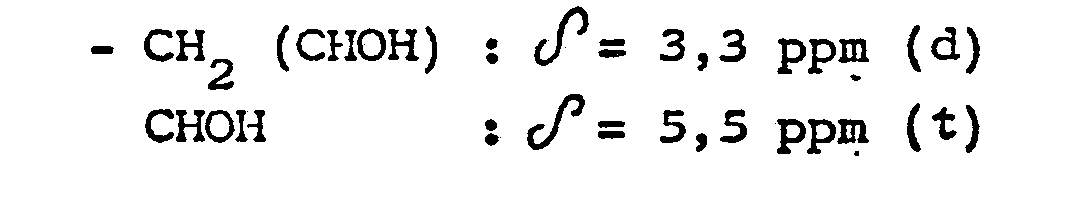
- Selon la méthode de CORVAISIER (Bull. Soc. Chim. Fr 1962, 528), on ajoute, à une solution de 24 g d'hydroxy-2 acétophénone et de 21 g de pyridine carbaldéhyde-4 dans 130 ml d'éthanol absolu maintenue à température ambiante, 15 ml d'une solution aqueuse 11N d'hydroxyde de sodium. Un précipité abondant jaune se forme d'abord puis se dissout progressivement. Après deux heures à température ambiante, on amène à pH 1 au moyen d'acide chlorhydrique. Le précipité jaune obtenu est filtré, lavé à l'eau et séché. On obtient 27 g d'(hydroxy-2 phényl)-1 (pyridyl-4)-3 hydroxy-3 propanone-1 fondant à 150°C.
- Spectre R.M.N. du produit obtenu (solvant : acide trifluoroacétique) :
- On opère comme à l'exemple 11 en partant de 1,35 g d'amino-4 acétophénone (au lieu de 24 g d'hydroxy-2 acétophénone) et de 2,14 g de pyridine carbaldéhyde-4 au lieu de 21 g et en employant une solution aqueuse 2,5N d'hydroxyde de sodium au lieu d'une solution 11N. On obtient 2,2 g d'(amino-4 phényl)-1 (pyridyl-4)-3 propène-2 one-1 qui fond à 2O7°C. Spectre R.M.N. du produit obtenu (solvant : acide trifluoroacétique) :


- En opérant comme à l'exemple 11 à partir de 2,9 g de fluoro-4 acétophénone et 3 g de pyridine carbaldéhyde-4 mais en utilisant une solution d'hydroxyde de tétraméthylammonium dans le méthanol au lieu de la solution aqueuse d'hydroxyde de sodium, on obtient la (fluoro-4 phényl)-1 (pyridyl-4)-3 propène-2 one-1 qui fond à 157°C.
- Spectre R.M.N. du produit obtenu (solvant CDCl3) :


- On opère comme à l'exemple 13 à partir de 4 g d' amino-2 acétophénone et de 6,42 g de pyridine-carbaldéhyde-4 dans 14 ml de méthanol. On obtient 5,2 g d'un mélange 50/50 d'(amino-2 phényl)-1 (pyridyl-4)-3 hydroxy-3 propanone-1 et d'(amino-2 Phényl)-1 (pyridyl-4)-3 propène-2 one-1. Les constituants de ce mélange sont séparés par chromatographie sur colonne de silice (éluant : mélange de 80 parties en volume d'acétate d'éthyle et 20 parties en volume de cyclohexane). On obtient 2,3 g d'(amino-2 phényl)-1 (pyridyl-4)-3 propène-2 one-1 qui fond à 168°C.
- Spectre R.M.N. du produit obtenu (solvant CDCl3) :


- On opère comme à l'exemple 11 en partant de 15 g de méthoxy-2 acétophénone et de 20,4 g de pyridine carbaldéhyde-4 dans 50 ml de méthanol et en employant 45 ml d'une solution aqueuse 2,5N d'hydroxyde de sodium à la place de la solution 11N. On obtient 7 g de (méthoxy-2 phényl)-1 (pyridyl-4)-3 propène-2 one-1 qui fond à 70°C.
- Spectre R.M.N. du produit obtenu (solvant CDCl3) :


- Une suspension bien agitée contenant 19,7 g de (phényl-3 propyl)-4 pyridine [préparée selon K.B. PRASAD et Coll. J. Chem. Soc. Ser. C, 1969, 2134]en solution dans 300 ml d'acide acétique et 2 g d'oxyde de platine ADAMS est maintenue, à température ambiante, sous une pression d'hydrogène correspondant à une surpression de 50 mm d'eau par rapport à la pression atmosphérique, jusqu'à cessation de l'absorption de gaz.
- Le platine est ensuite séparé par filtration puis la solution acétique est concentrée. Le résidu est dilué par 300 ml d'eau, amené à pH 10 par addition de carbonate de potassium puis extrait par 2 fois 300 ml de chloroforme. Les fractions chloroformiques rassemblées sont séchées sur sulfate de magnésium puis concentrées. On obtient 19,2 g d'un produit impur, qui, après acidification par HC1 et cristallisation dans l'acétone, fournit 18,8 g de (phényl-3 propyl)-4 pipéridine sous forme de chlorhydrate fondant à 167°C.
- Analyse pour C14H21N' HCl
- . Calculé % C 70 % H 9,2 % N 5,85
- . Trouvé % C 70,15 % H 9,21 % N 5,69
- En hydrogénant, selon le procédé de l'exemple 16, 29,7 g de [(nitro-4 phényl)-3 propyl]-4 pyridine, on obtient un mélange dont les constituants sont séparés par chromatographie sur colonne de silice (éluant : mélange de 90 parties en volume de chloroforme et 10 parties en volume de diéthylamine) . Après acidification par HCl des fractions séparées, on obtient 1,8 g de chlorhydrate d' [(amino-4 phényl)-3 propyl]-4 pipéridine qui fond à 250°C.
- Spectre R.M.N. du produit obtenu (solvant CDC13) :


- La [(nitro-4 phényl)-3 propyl]-4 pyridine, produit de départ, est préparée comme suit :
- Dans une solution refroidie à 5°C, constituée de 10,3 ml d'acide acétique pur et 18,6 ml d'acide sulfurique à 98 %, on introduit lentement, goutte à goutte, 25 g de (phényl-3 propyl)-4 pyridine. Lorsque cette addition est terminée, on refroidit la solution obtenue à -15°C et coule, goutte à goutte, un mélange sulfonitrique constitué de 9 ml d'acide nitrique et 18,6 ml d'acide sulfurique à 98 %. Pendant toute la durée de l'addition on maintient la température du milieu réactionnel en dessous de +10°C. L'addition est terminée en une heure. La solution jaune obtenue est jetée dans 600 g d'un mélange eau + glace. On amène à pH 11 par addition d'une solution aqueuse d'hydroxyde de potassium et extrait par deux fois 200 ml d'éther. Les phases éthérées rassemblées sont lavées à l'eau, séchées sur sulfate de magnésium et concentrées. On obtient 29,7 g de [(nitro-4 ph6nyl)-3 propyl]-4 pyridine.
- Spectre R.M.N. du produit obtenu (solvant CDCl3) :


- Une suspension bien agitée constituée de 43,5 g d'(acétylamino-2 phényl)-1 (pyridyl-4)-3 propène-2 one-1, 4,3 g d'oxyde de platine ADAMS et 450 ml d'acide acétique est maintenue, à température ambiante, sous une pression d'hydrogène correspondant à une surpression de 50 mm d'eau par rapport à la pression atmosphérique, jusqu'à absorption de 8 équivalents d'hydrogène..
- Le platine est ensuite séparé par filtration puis la solution acétique est concentrée. Le résidu est dilué par 500 ml d'eau, amené à pH 10 par une solution concentrée d'hydroxyde de sodium puis extrait par 3 fois 200 ml d'acétate d'éthyle. Les phases organiques rassemblées sont lavées par deux fois 50 ml d'eau, séchées sur sulfate de magnésium, puis concentrées.
- On obtient ainsi 38,4 g d'un produit huileux brun qui, après acidification à pH 5 par une solution d'acide chlôr- hydrique dans l'éther, est transformé en chlorhydrate. La recristallisation du chlorhydrate brut dans l'éthanol fournit 26 g d'(acétylamino-2 phényl)-1 (pipéridyl-4)-3 propanone-1 sous forme de chlorhydrate fondant à 217°C.
- Spectre R.M.N du produit obtenu (solvant CDCl3) :


- L' (acétylamino-2 phényl)-1 (pyridyl-4) -3 propène-2 one-1, produit de départ, est préparée comme suit :
- On met en contact 45 g d'(amino-2 phényl)-1 (pyridyl-4)-3 propène-2 one-1 (produit de l'exemple 14) avec 13,5 ml d'anhydride acétique. Après 10 mn à 100°C, la solution obtenue est refroidie, diluée par 80 ml d'eau puis amenée lentement (en maintenant la température à 5°C) jusqu'à pH 6 par addition d'une solution concentrée d'hydroxyde de sodium. Après agitation pendant une heure, le précipité formé est filtré, lavé à l'eau puis séché à 80°C sous vide. On obtient 53 g d'(acétylamino-2 phényl)-1 (pyridyl-4)-3 propène-2 one-1 qui fond à 130°C.
- Une suspension de 49 g de (benzoyl-1 pipéridyl-4)-3 (méthoxy-4 phényl)-1 propanone-1 dans 490 ml d'une solution aqueuse d'acide chlorhydrique 5N est chauffée 5 heures au reflux. Après refroidissement, on amène le pH à 3-4 par addition d'une lessive de soude, puis extrait par 500 ml d'éther l'acide benzoïque formé.
- La phase aqueuse séparée est alcalinisée par addition d'une solution d'hydroxyde de sodium puis extraite par 250 ml d'acétate d'éthyle. La phase organique est séchée sur sulfate de magnésium puis concentrée. On obtient 39 g de produit brut qui, dilués dans 240 ml d'éthanol et acidifiés par 10 ml d'une solution 7N d'acide chlorhydrique dans l'éther, fournissent 12 g de (méthoxy-4 phényl)-1 (pipé- ridyl-4)-3 propanone-1 sous forme de chlorhydrate fondant à 168°C.
- Analyse pour C15H21NO2, HCl
- Calculé % C 63,4 % H 7,76 % N 4,94
- Trouvé % C 63,81 % H 7,90 % N 4,71
- Une solution bien agitée contenant 23 g d'(hydroxy-2 phényl)-1 (pyridyl-4)-3 hydroxy-3 propanone-1 (préparée selon CORVAISIER Bull. Soc. Chim. Fr. 1962, 528) en solution dans 340 ml d'acide acétique pur et 5 g de charbon palladié à 10 % de palladium est maintenue à 80°C sous une pression d'hydrogène correspondant à une surpression de 50 ml d'eau par rapport à-la pression atmosphérique, jusqu'à cessation de l'absorption du gaz.
- Après refroidissement, le charbon palladié est séparé par filtration, puis la solution acétique est concentrée. On obtient 11,5 g d'une huile incolore qui, après recristallisation dans un mélange isopropanol-acétate d'éthyle, fournit 5,3 g de [(pipéridyl-4)-3 propyl]-2 phénol qui fond à 152°C.
- Analyse pour C14H21NO
- . Calculé % C 76,71 % H 9,59 % N 6,39
- . Trouvé % C 76,49 % H 9,51 % N 6,42
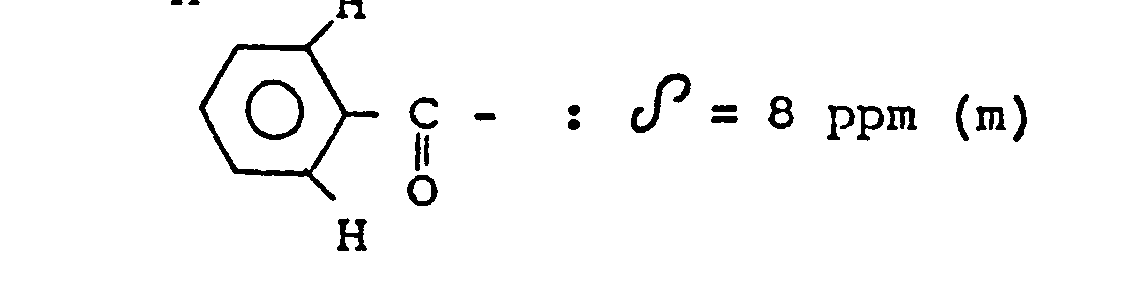
- On opère comme à l'exemple 19, en partant de 12 g de (benzoyl-1 pipéridyl-4)-3 (fluoro-4 phényl)-1 propanone-1. Après acidification du produit brut obtenu par une solution d'acide chlorhydrique dans l'éther, on obtient 6,5 g de chlorhydrate de (fluoro-4 phényl)-1 (pipéridyl-4)-3 propanone-1 qui fond à 188°C.
- Spectre R.M.N. du produit obtenu (solvant CDCl3) :


- A une suspension de 10,2 g de (méthoxy-4 phényl)-1 (pipé- ridyl-4)-3 propanone-1 dans 130 ml de tétrahydrofuranne sec, maintenue à 5°C et sous atmosphère d'azote, on ajoute, par petites portions, 2,8 g d'hydrure d'aluminium et de lithium. Lorsque l'addition est terminée, le mélange réactionnel est porté à 60°C pendant 5 heures puis refroidi à O°C. On ajoute alors très lentement, en maintenant cette température, 25,2 ml d'eau. Les produits minéraux sont filtrés et lavés par deux fois 50 ml de chlorure de méthylène chaud. Les solutions organiques rassemblées sont concentrées par évaporation du solvant. L'huile obtenue est mise en solution dans 150 ml d'isopropanol et traitée par 7,4 g d'acide fumarique. On obtient finalement ainsi 7,8 g de (méthoxy-4 phényl)-1 (pipéridyl-4)-3 propanol-1 sous forme de son fumarate.
- Analyse pour 3 (C15H23NO2)' 2(C4H4O4)
- . Calculé % C 65 % H 7,86 % N 4,29
- . Trouvé % C 64,8 % H 7,92 % N 4,19
- On sait que les produits antidépresseurs actuellement connus possèdent la propriété d'inhiber la recapture, par les neurones, des monoamines cérébrales. Ils agissent à la fois sur la sérotonine ou hydroxy-5 tryptamine (5HT) et sur les catécholamines, notamment sur la noradrénaline (NA) et présentent divers effets secondaires, en particulier une cardiotoxicité.
- Un moyen d'obtenir des antidépresseurs présentant moins d'effet secondaires que les médicaments actuellement utilisés consiste à rechercher des produits agissant spécifiquement sur la sérotonine (J. BUUSLASSEN et Coll. Europ J. Pharmacol. 33, 108 (1975)).
- L'activité des produits de formule (I) a été démontrée à l'aide du test d'inhibition de la recapture des monoamines cérébrales par des synaptosomes de cerveau de rat, selon la méthode de KANNENGIESSER et Coll. (Biochem. Pharmacol. 22, 73, 1973). Les résultats sont exprimés par une dose inhibitrice 50 % (I50) qui représente la dose de produit, en micromole par litre, diminuant de 50 % la recapture du neuromédiateur considéré dans les régions spécifiques (hypothalamus, medulla + pons) où prédominent les neurones correspondants.
- A titre d'exemple, on obtient les résultats suivants :
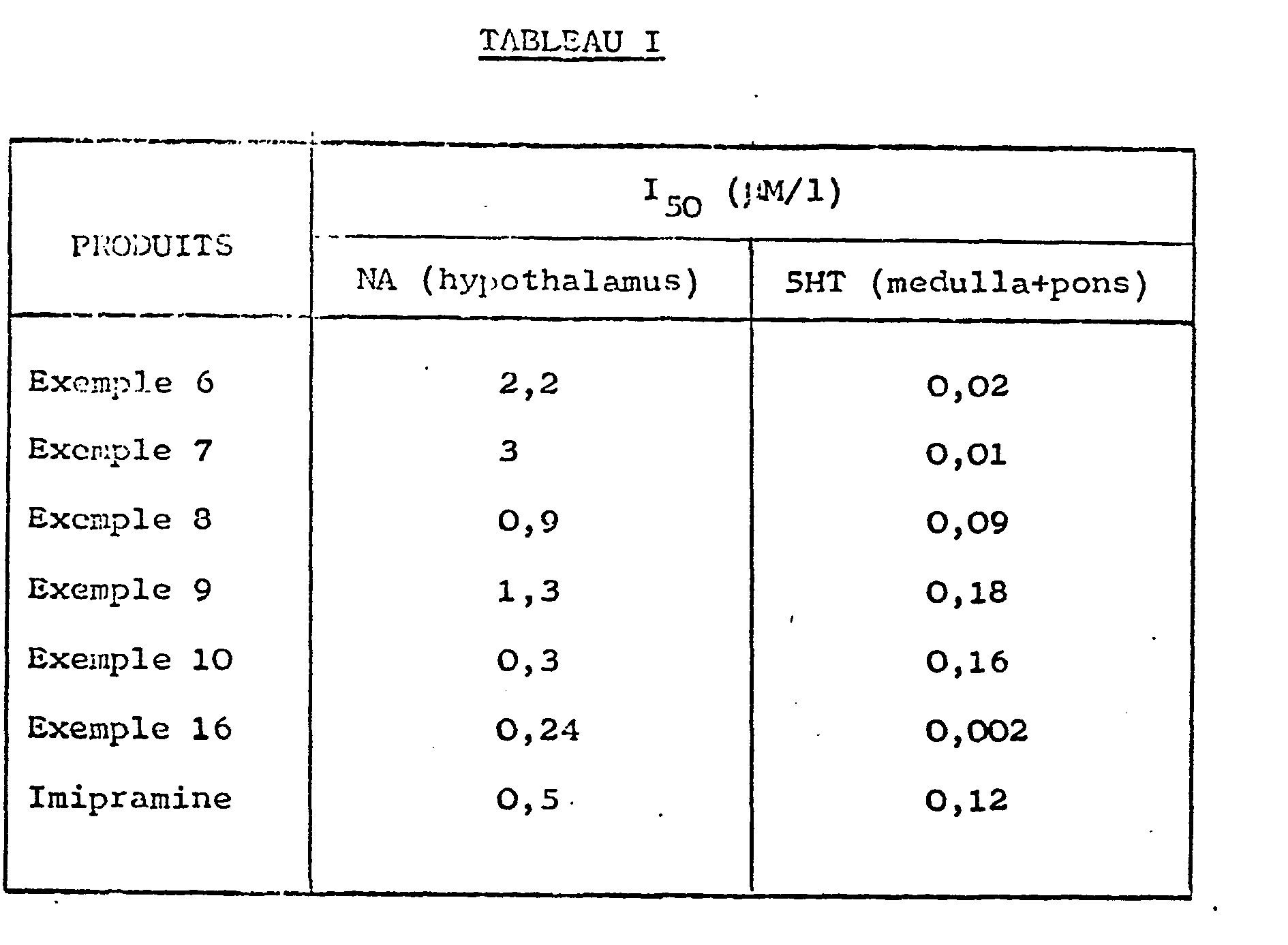
- Le tableau I montre que les composés de formule (I) sont de puissants inhibiteurs de recapture de la sérotonine. Ils sont souvent plus actifs et surtout beaucoup plus sélectifs que l'imipramine (produit de référence). Ils inhibent spécifiquement la recapture de la sérotonine.
- L'activité anxiolytique des benzodiazépines est bien connue. La présence de récepteurs spécifiques des benzodiazépines dans les membranes de cerveau de rat est également bien établie (SQUIRES et Coll.-Nature 266, 732, (1977)) et il existe une bonne corrélation entre le degré d'affinité des benzodiazépines pour les sites de liaison récepteurs et les effets pharmacodynamiques observés chez l'animal et chez l'homme.
- Cette affinité est mesurée par l'aptitude des produits à déplacer le diazépam tritié (3 H-diazépam) de son site de liaison et est exprimée par une valeur Ki, en micromoles, qui est calculée par la formule :

- Jusqu'à ce jour l'affinité des benzodiazépines pour leurs récepteurs cérébraux s'est avérée une caractéristique exclusive de cette série chimique. En effet aucun autre médicament agissant par ailleurs sur le système nerveux central ne s'est montré capable de déplacer, de manière significative, le diazépam de ses sites de liaison (BRAESTRUP et Coll., Eur. J. Pharmacol. 48, 263 (1978).
- Les produits de formule (I), bien que de structure différente de celle des benzodiazépines, déplacent le 3H-diazépam de ses sites de liaison, comme le montrent les résultats du tableau II ci-dessous :

- Les produits de formule (I) sont donc non seulement des antidépresseurs mais aussi des drogues anxiolytiques. Le mécanisme d'action de ces composés (action spécifique sur la recapture de la sérotonine et affinité pour les récepteurs cérébraux des benzodiazépines) leur confère un profil de psychotrope entièrement original.
- L'activité antiarythmique des composés de formule (I) à été démontrée à l'aide du test à l'aconitine chez le rat.
- Le principe de la technique repose sur le temps d'induction des arythmies ventriculaires provoquées par l'aconitine en perfusion lente chez le rat. Une substance antiarythmique retarde l'apparition des arythmies et ce délai est proportionnel à l'activité de la molécule.
- On utilise des groupes de 5 rats mâles. Une anesthésie individuelle est réalisée (uréthane 10 % : 1 g/kg/ip) pour permettre une cathétérisation de la veine du pénis. L'électrocardiogramme est enregistré. Au temps T = O la substance étudiée est injectée sous forme d'une solution aqueuse, à raison de 2,5 ml de solution par kg en 30 secondes. Au temps T = 90 secondes, soit 1 minute après la fin de l'introduction, l'aconitine est perfusée à raison de 20 µg/l min, jusqu'à l'apparition d'extra systoles supra-ventriculaires. Le temps de perfusion de l'aconitine est noté.
- On exprime les résultats en DE , dose en mg/kg qui, par rapport aux animaux témoins, augmente de 50 % le temps de perfusion de l'aconitine.
- Les produits de formule (I) présentent de remarquables propriétés antiarythmiques, comme le montrent les résultats. du tableau ci-après donnés à titre d'exemple.

- Les toxicités aiguës des composés de formule (I) ont été déterminés chez la souris mâle CD1 (Charles RIVER) par voie orale. Les DL50 ont été calculées, après 3 jours d'observations, par la méthode cumulative de J. J. REED et H. MUENCH (Amer. J. Hyg. 27, 493, (1938)).
- Les produits de formule (I) se comportent comme des substances peu toxiques chez la souris, comme le montrent les DL50 rassemblés, à titre d'exemple, dans le tableau suivant :

- Les composés de formule (I) et leurs sels pharmaceutiquement acceptables peuvent être utilisés en thérapeutique humaine sous forme de comprimés, capsules, gélules, suppositoires, solutions ingérables ou injectables, etc... pour le traitement de divers troubles psychiques à composante dépressive et anxieuse et pour le traitement des arythmies.
- La posologie dépend des effets recherchés et de la voie d'administration utilisée. Par exemple, par voie orale, elle peut être comprise entre 5 et 250 mg de substance active par jour, avec des doses unitaires allant de 1 à 50 mg.
Claims (9)





Applications Claiming Priority (2)
| Application Number | Priority Date | Filing Date | Title |
|---|---|---|---|
| FR7834185A FR2443246A1 (fr) | 1978-12-05 | 1978-12-05 | Nouveaux medicaments a base de derives de la phenyl-1 (piperidyl-4)-3 propanone-1 |
| FR7834185 | 1978-12-05 |
Publications (3)
| Publication Number | Publication Date |
|---|---|
| EP0012643A2 true EP0012643A2 (fr) | 1980-06-25 |
| EP0012643A3 EP0012643A3 (en) | 1980-10-01 |
| EP0012643B1 EP0012643B1 (fr) | 1982-02-17 |
Family
ID=9215691
Family Applications (1)
| Application Number | Title | Priority Date | Filing Date |
|---|---|---|---|
| EP79400890A Expired EP0012643B1 (fr) | 1978-12-05 | 1979-11-20 | Dérivés de la phényl-1 (pipéridyl-4)-3 propanone-1, procédés pour leur préparation, et médicaments les contenant |
Country Status (10)
| Country | Link |
|---|---|
| US (1) | US4294841A (fr) |
| EP (1) | EP0012643B1 (fr) |
| JP (1) | JPS55113715A (fr) |
| CA (1) | CA1137485A (fr) |
| DE (1) | DE2962158D1 (fr) |
| DK (1) | DK508479A (fr) |
| ES (3) | ES8104230A1 (fr) |
| FR (1) | FR2443246A1 (fr) |
| NO (1) | NO151964C (fr) |
| PT (1) | PT70503A (fr) |
Cited By (7)
| Publication number | Priority date | Publication date | Assignee | Title |
|---|---|---|---|---|
| FR2560873A1 (fr) * | 1984-03-09 | 1985-09-13 | Rhone Poulenc Sante | Medicaments a base de derives de la piperidine, nouveaux derives de la piperidine et leurs procedes de preparation |
| EP0076072B1 (fr) * | 1981-09-24 | 1987-05-13 | BEECHAM - WUELFING GmbH & Co. KG | Sulfonamides |
| FR2678265A1 (fr) * | 1991-06-27 | 1992-12-31 | Synthelabo | Derives de 4-(2-phenylethyl)piperidine, leur preparation et leur application en therapeutique. |
| WO1994001403A1 (fr) * | 1992-07-08 | 1994-01-20 | Shell Internationale Research Maatschappij B.V. | Derives de piperidine |
| WO1994013291A1 (fr) * | 1992-12-15 | 1994-06-23 | Smithkline Beecham Plc | Utilisation d'amines cycliques a substitution aryloxyalkyle comme antagonistes des canaux a calcium et nouveaux derives de piperidine phenyloxyalkyle |
| WO1994027965A1 (fr) * | 1993-05-26 | 1994-12-08 | Syntex (U.S.A.) Inc. | Nouveaux ligands 1-phenylalcanone du recepteur de 5-ht4 |
| WO2013010885A1 (fr) | 2011-07-15 | 2013-01-24 | Basf Se | Composés de 2-[2-chloro-4-(dihalo-phénoxy)-phényl]-1-[1,2,4]triazol-1-yl-éthanol substitués par alkyle et aryle fongicides |
Families Citing this family (13)
| Publication number | Priority date | Publication date | Assignee | Title |
|---|---|---|---|---|
| DE3309595A1 (de) * | 1983-03-17 | 1984-09-20 | Basf Ag, 6700 Ludwigshafen | Neue aminopropanolderivate von 1-(2-hydroxy-phenyl)-3-phenyl-propanolen, verfahren zu ihrer herstellung und diese enthaltende therapeutische mittel |
| CA1250838A (fr) * | 1983-10-14 | 1989-03-07 | Louis Lafon | Procede de preparation de derives de 1-(acetylaminophenyl)-2-amino-propanone et les derives ainsi obtenus |
| US4642348A (en) * | 1984-04-10 | 1987-02-10 | A. H. Robins Company, Incorporated | N-(amino)alkyl)-1-pyrrolidine, 1-piperidine and 1-homopiperidinecarboxamides (and thiocarboxamides) with sulfur linked substitution in the 2, 3 or 4-positions |
| JPH0165783U (fr) * | 1987-10-22 | 1989-04-27 | ||
| JPH0165782U (fr) * | 1987-10-22 | 1989-04-27 | ||
| US5821252A (en) * | 1988-10-21 | 1998-10-13 | Hoechst Aktiengesellschaft | Method of blocking nerve conduction by treatment with branched-chain esters of 2- 4-(2-piperidine-ethoxy)-benzoyl!-benzoic acid and pharmaceutically acceptable salts thereof |
| HU207310B (en) * | 1988-12-02 | 1993-03-29 | Pfizer | Process for producing aryl-piperidine derivatives |
| JP2969359B2 (ja) * | 1989-01-13 | 1999-11-02 | 武田薬品工業株式会社 | 環状アミン化合物 |
| US5243048A (en) * | 1989-09-08 | 1993-09-07 | The Du Pont Merck Pharmaceutical Company | Antipsychotic 1-cycloalkylpiperidines |
| US5266572A (en) * | 1989-09-08 | 1993-11-30 | The Du Pont Merck Pharmaceutical Company | Antipsychotic 1-cycloalkylpiperidines |
| US5109002A (en) * | 1989-09-08 | 1992-04-28 | Du Pont Merck Pharmaceutical Company | Antipsychotic 1-cycloalkylpiperidines |
| EP0881215B1 (fr) * | 1995-09-28 | 2001-09-05 | Kaken Pharmaceutical Co., Ltd. | Procede d'elaboration de 4-methylenepiperidines |
| WO2007136790A2 (fr) | 2006-05-18 | 2007-11-29 | Mannkind Corporation | Inhibiteurs de kinases intracellulaires |
Family Cites Families (4)
| Publication number | Priority date | Publication date | Assignee | Title |
|---|---|---|---|---|
| US2833776A (en) * | 1958-05-06 | Aryl-substituted psperidylpropanols | ||
| GB395231A (en) * | 1932-06-27 | 1933-07-13 | Goodyear Tire & Rubber | Hydrogenation of heterocyclic compounds |
| US3637712A (en) * | 1970-01-26 | 1972-01-25 | Bristol Myers Co | Piperidylpropanol compounds |
| US4181803A (en) * | 1973-12-14 | 1980-01-01 | Eisai Co., Ltd. | Propiophenone derivatives and preparation thereof |
-
1978
- 1978-12-05 FR FR7834185A patent/FR2443246A1/fr active Granted
-
1979
- 1979-11-20 DE DE7979400890T patent/DE2962158D1/de not_active Expired
- 1979-11-20 EP EP79400890A patent/EP0012643B1/fr not_active Expired
- 1979-11-27 US US06/097,772 patent/US4294841A/en not_active Expired - Lifetime
- 1979-11-27 PT PT70503A patent/PT70503A/fr unknown
- 1979-11-29 DK DK508479A patent/DK508479A/da not_active Application Discontinuation
- 1979-12-04 JP JP15643479A patent/JPS55113715A/ja active Granted
- 1979-12-04 CA CA000341136A patent/CA1137485A/fr not_active Expired
- 1979-12-04 NO NO793943A patent/NO151964C/no unknown
- 1979-12-04 ES ES486596A patent/ES8104230A1/es not_active Expired
-
1980
- 1980-07-16 ES ES493440A patent/ES8106499A1/es not_active Expired
- 1980-07-16 ES ES493441A patent/ES8105980A1/es not_active Expired
Cited By (10)
| Publication number | Priority date | Publication date | Assignee | Title |
|---|---|---|---|---|
| EP0076072B1 (fr) * | 1981-09-24 | 1987-05-13 | BEECHAM - WUELFING GmbH & Co. KG | Sulfonamides |
| FR2560873A1 (fr) * | 1984-03-09 | 1985-09-13 | Rhone Poulenc Sante | Medicaments a base de derives de la piperidine, nouveaux derives de la piperidine et leurs procedes de preparation |
| EP0173585A1 (fr) * | 1984-03-09 | 1986-03-05 | Rhone-Poulenc Sante | Médicaments à base de dérivés de la pipéridine, nouveaux dérivés de la pipéridine et leurs procédés de préparation |
| US4665076A (en) * | 1984-03-09 | 1987-05-12 | Rhone-Poulenc Sante | Pharmacologically active piperidine derivatives and their use |
| FR2678265A1 (fr) * | 1991-06-27 | 1992-12-31 | Synthelabo | Derives de 4-(2-phenylethyl)piperidine, leur preparation et leur application en therapeutique. |
| WO1994001403A1 (fr) * | 1992-07-08 | 1994-01-20 | Shell Internationale Research Maatschappij B.V. | Derives de piperidine |
| WO1994013291A1 (fr) * | 1992-12-15 | 1994-06-23 | Smithkline Beecham Plc | Utilisation d'amines cycliques a substitution aryloxyalkyle comme antagonistes des canaux a calcium et nouveaux derives de piperidine phenyloxyalkyle |
| WO1994027965A1 (fr) * | 1993-05-26 | 1994-12-08 | Syntex (U.S.A.) Inc. | Nouveaux ligands 1-phenylalcanone du recepteur de 5-ht4 |
| US5763458A (en) * | 1993-05-26 | 1998-06-09 | Syntex (U.S.A.) Inc. | 1-phenylalkanone 5-HT4 receptor ligands |
| WO2013010885A1 (fr) | 2011-07-15 | 2013-01-24 | Basf Se | Composés de 2-[2-chloro-4-(dihalo-phénoxy)-phényl]-1-[1,2,4]triazol-1-yl-éthanol substitués par alkyle et aryle fongicides |
Also Published As
| Publication number | Publication date |
|---|---|
| EP0012643B1 (fr) | 1982-02-17 |
| NO151964B (no) | 1985-04-01 |
| ES493441A0 (es) | 1981-07-01 |
| EP0012643A3 (en) | 1980-10-01 |
| ES486596A0 (es) | 1981-03-16 |
| FR2443246A1 (fr) | 1980-07-04 |
| NO151964C (no) | 1985-07-10 |
| DE2962158D1 (en) | 1982-03-25 |
| US4294841A (en) | 1981-10-13 |
| DK508479A (da) | 1980-06-06 |
| ES8105980A1 (es) | 1981-07-01 |
| NO793943L (no) | 1980-06-06 |
| CA1137485A (fr) | 1982-12-14 |
| ES493440A0 (es) | 1981-07-01 |
| FR2443246B1 (fr) | 1982-04-30 |
| JPS6230988B2 (fr) | 1987-07-06 |
| ES8106499A1 (es) | 1981-07-01 |
| ES8104230A1 (es) | 1981-03-16 |
| PT70503A (fr) | 1979-12-01 |
| JPS55113715A (en) | 1980-09-02 |
Similar Documents
| Publication | Publication Date | Title |
|---|---|---|
| EP0012643B1 (fr) | Dérivés de la phényl-1 (pipéridyl-4)-3 propanone-1, procédés pour leur préparation, et médicaments les contenant | |
| CA1088939A (fr) | Medicaments derives de l'indole | |
| EP0042781B1 (fr) | Nouveaux dérivés de (quinolyl-4)-1 (pipéridyl ou pyrrolidinyl-2 ou -3)-2 ou -3 éthanone ou propanone, procédés pour leur préparation, et leur utilisation comme médicaments | |
| CH635813A5 (fr) | 1,9-dihydroxyoctahydrophenanthrenes et medicament les contenant. | |
| EP0101381B1 (fr) | Trifluorométhylphényltétrahydropyridines à activité anorexigène, un procédé de préparation et compositions pharmaceutiques | |
| EP0001534B1 (fr) | Nouveaux dérivés du pyrrole, leur procédé de préparation et leurs applications en thérapeutique | |
| EP0031753B1 (fr) | Nouveaux dérivés de la (pipéridyl-4)-2 (quinolyl-4)-1 éthanone, produits intermédiaires et procédés pour leur préparation, et leur utilisation comme médicaments | |
| EP0003445A1 (fr) | Dérivés d'aza-1 bicyclo(2,2,2)octane, leur procédé de préparation et produits intermédiaires, et médicaments les contenant | |
| EP0042322B1 (fr) | Nouveaux dérivés de l'indène, procédés pour leur préparation et des médicaments les contenant | |
| EP0053964B1 (fr) | Médicaments à base de dérivés de (quinolyl-4)-1 éthanol ou propanol, nouveaux dérivés de (quinolyl-4)-1 éthanol ou propanol et procédés pour leur préparation | |
| CH625800A5 (en) | Process for the preparation of derivatives of quinoline | |
| EP0173585B1 (fr) | Médicaments à base de dérivés de la pipéridine, nouveaux dérivés de la pipéridine et leurs procédés de préparation | |
| EP0060176B1 (fr) | Trifluorométhylphényltétrahydropyridines substituées à activité anorexigène, un procédé de préparation et compositions pharmaceutiques | |
| BE854655A (fr) | 9-hydroxyhexahydrobenzo (c) quinoleines et intermediaires de synthese | |
| EP0294258A1 (fr) | Dérivés d'hydrazine, procédé d'obtention et compositions pharmaceutiques les contenant | |
| EP0065908B1 (fr) | ((Alkyl- et alcényl-3 pipéridyl-4)-2 éthyl)-3 indoles et leur utilisation comme médicaments | |
| EP0412898A1 (fr) | Nouveaux dérivés d'oxazolo pyridines, leur procédé de préparation et les compositions pharmaceutiques qui les contiennent | |
| EP0067106B1 (fr) | Nouveaux éthers de phénol actifs sur le système cardiovasculaire, leur procédé de préparation et leur utilisation dans des médicaments | |
| EP0008962B1 (fr) | Nouveaux dérivés de la ((quinolyl-4)-3 propyl-1)-4 pipéridine et médicaments les contenant | |
| CA1116089A (fr) | Compositions pharmaceutiques comprenant des medicaments a base de derives de la quinoleine | |
| FR2692894A1 (fr) | Aryl-1-(o-alcoxy-phényl-4-pipérazinyl-1)-2, 3- ou 4-alcanols, leur procédé de préparation et leur utilisation pour la préparation de médicaments. | |
| CA1098446A (fr) | Medicaments derives de l'indole | |
| FR2468592A1 (fr) | Nouvelles (alkyl-4 aroyl-4 piperidino)-4 butyrophenones utiles notamment comme medicaments antipsychotiques, procedes et intermediaires, pour leur preparation et compositions therapeutiques et formes pharmaceutiques les contenant | |
| FR2459795A1 (fr) | Nouveaux derives de la phenyl-1 (piperidyl-4)-3 propanone-1 utilisables comme medicaments | |
| EP0155888A1 (fr) | Dérivés de (quinol yl-4)-1 (piperidyl-4)-2 ethanamine et de (quinolyl-4)-1 (piperidyl-4)-3 propanamine, procédés pour leur préparation et médicaments les contenant |
Legal Events
| Date | Code | Title | Description |
|---|---|---|---|
| PUAI | Public reference made under article 153(3) epc to a published international application that has entered the european phase |
Free format text: ORIGINAL CODE: 0009012 |
|
| 17P | Request for examination filed | ||
| AK | Designated contracting states |
Designated state(s): BE CH DE FR GB IT LU NL SE |
|
| PUAL | Search report despatched |
Free format text: ORIGINAL CODE: 0009013 |
|
| AK | Designated contracting states |
Designated state(s): BE CH DE FR GB IT LU NL SE |
|
| ITF | It: translation for a ep patent filed | ||
| GRAA | (expected) grant |
Free format text: ORIGINAL CODE: 0009210 |
|
| AK | Designated contracting states |
Designated state(s): BE CH DE FR GB IT LU NL SE |
|
| REF | Corresponds to: |
Ref document number: 2962158 Country of ref document: DE Date of ref document: 19820325 |
|
| PG25 | Lapsed in a contracting state [announced via postgrant information from national office to epo] |
Ref country code: LU Free format text: LAPSE BECAUSE OF NON-PAYMENT OF DUE FEES Effective date: 19821130 |
|
| PGFP | Annual fee paid to national office [announced via postgrant information from national office to epo] |
Ref country code: LU Payment date: 19831103 Year of fee payment: 5 |
|
| PGFP | Annual fee paid to national office [announced via postgrant information from national office to epo] |
Ref country code: BE Payment date: 19840930 Year of fee payment: 6 |
|
| PGFP | Annual fee paid to national office [announced via postgrant information from national office to epo] |
Ref country code: FR Payment date: 19841120 Year of fee payment: 6 |
|
| PGFP | Annual fee paid to national office [announced via postgrant information from national office to epo] |
Ref country code: CH Payment date: 19841224 Year of fee payment: 6 |
|
| PGFP | Annual fee paid to national office [announced via postgrant information from national office to epo] |
Ref country code: SE Payment date: 19841231 Year of fee payment: 6 |
|
| PGFP | Annual fee paid to national office [announced via postgrant information from national office to epo] |
Ref country code: DE Payment date: 19850103 Year of fee payment: 6 |
|
| PGFP | Annual fee paid to national office [announced via postgrant information from national office to epo] |
Ref country code: NL Payment date: 19871130 Year of fee payment: 9 |
|
| PG25 | Lapsed in a contracting state [announced via postgrant information from national office to epo] |
Ref country code: GB Effective date: 19881120 |
|
| PG25 | Lapsed in a contracting state [announced via postgrant information from national office to epo] |
Ref country code: SE Effective date: 19881121 |
|
| PG25 | Lapsed in a contracting state [announced via postgrant information from national office to epo] |
Ref country code: CH Effective date: 19881130 Ref country code: BE Effective date: 19881130 |
|
| BERE | Be: lapsed |
Owner name: PHARMINDUSTRIE Effective date: 19881130 |
|
| PG25 | Lapsed in a contracting state [announced via postgrant information from national office to epo] |
Ref country code: NL Effective date: 19890601 |
|
| NLV4 | Nl: lapsed or anulled due to non-payment of the annual fee | ||
| GBPC | Gb: european patent ceased through non-payment of renewal fee | ||
| PG25 | Lapsed in a contracting state [announced via postgrant information from national office to epo] |
Ref country code: FR Free format text: LAPSE BECAUSE OF NON-PAYMENT OF DUE FEES Effective date: 19890731 |
|
| REG | Reference to a national code |
Ref country code: CH Ref legal event code: PL |
|
| PG25 | Lapsed in a contracting state [announced via postgrant information from national office to epo] |
Ref country code: DE Effective date: 19890801 |
|
| REG | Reference to a national code |
Ref country code: FR Ref legal event code: ST |
|
| EUG | Se: european patent has lapsed |
Ref document number: 79400890.4 Effective date: 19890726 |
|
| PLBE | No opposition filed within time limit |
Free format text: ORIGINAL CODE: 0009261 |
|
| STAA | Information on the status of an ep patent application or granted ep patent |
Free format text: STATUS: NO OPPOSITION FILED WITHIN TIME LIMIT |