EP0009423B1 - Substrat hydrophobe apte à libérer une substance chimique, procédé pour sa préparation et son application comme dispositif intra-utérin - Google Patents
Substrat hydrophobe apte à libérer une substance chimique, procédé pour sa préparation et son application comme dispositif intra-utérin Download PDFInfo
- Publication number
- EP0009423B1 EP0009423B1 EP79400565A EP79400565A EP0009423B1 EP 0009423 B1 EP0009423 B1 EP 0009423B1 EP 79400565 A EP79400565 A EP 79400565A EP 79400565 A EP79400565 A EP 79400565A EP 0009423 B1 EP0009423 B1 EP 0009423B1
- Authority
- EP
- European Patent Office
- Prior art keywords
- hydrophobic
- powder
- chemical compound
- solution
- hydrophobic polymer
- Prior art date
- Legal status (The legal status is an assumption and is not a legal conclusion. Google has not performed a legal analysis and makes no representation as to the accuracy of the status listed.)
- Expired
Links
Images



Classifications
-
- C—CHEMISTRY; METALLURGY
- C08—ORGANIC MACROMOLECULAR COMPOUNDS; THEIR PREPARATION OR CHEMICAL WORKING-UP; COMPOSITIONS BASED THEREON
- C08J—WORKING-UP; GENERAL PROCESSES OF COMPOUNDING; AFTER-TREATMENT NOT COVERED BY SUBCLASSES C08B, C08C, C08F, C08G or C08H
- C08J7/00—Chemical treatment or coating of shaped articles made of macromolecular substances
- C08J7/12—Chemical modification
- C08J7/16—Chemical modification with polymerisable compounds
- C08J7/18—Chemical modification with polymerisable compounds using wave energy or particle radiation
-
- A—HUMAN NECESSITIES
- A61—MEDICAL OR VETERINARY SCIENCE; HYGIENE
- A61F—FILTERS IMPLANTABLE INTO BLOOD VESSELS; PROSTHESES; DEVICES PROVIDING PATENCY TO, OR PREVENTING COLLAPSING OF, TUBULAR STRUCTURES OF THE BODY, e.g. STENTS; ORTHOPAEDIC, NURSING OR CONTRACEPTIVE DEVICES; FOMENTATION; TREATMENT OR PROTECTION OF EYES OR EARS; BANDAGES, DRESSINGS OR ABSORBENT PADS; FIRST-AID KITS
- A61F6/00—Contraceptive devices; Pessaries; Applicators therefor
- A61F6/06—Contraceptive devices; Pessaries; Applicators therefor for use by females
- A61F6/14—Contraceptive devices; Pessaries; Applicators therefor for use by females intra-uterine type
- A61F6/142—Wirelike structures, e.g. loops, rings, spirals
-
- A—HUMAN NECESSITIES
- A61—MEDICAL OR VETERINARY SCIENCE; HYGIENE
- A61K—PREPARATIONS FOR MEDICAL, DENTAL OR TOILETRY PURPOSES
- A61K9/00—Medicinal preparations characterised by special physical form
- A61K9/0012—Galenical forms characterised by the site of application
- A61K9/0034—Urogenital system, e.g. vagina, uterus, cervix, penis, scrotum, urethra, bladder; Personal lubricants
- A61K9/0039—Devices retained in the uterus for a prolonged period, e.g. intrauterine devices for contraception
-
- A—HUMAN NECESSITIES
- A61—MEDICAL OR VETERINARY SCIENCE; HYGIENE
- A61M—DEVICES FOR INTRODUCING MEDIA INTO, OR ONTO, THE BODY; DEVICES FOR TRANSDUCING BODY MEDIA OR FOR TAKING MEDIA FROM THE BODY; DEVICES FOR PRODUCING OR ENDING SLEEP OR STUPOR
- A61M31/00—Devices for introducing or retaining media, e.g. remedies, in cavities of the body
-
- Y—GENERAL TAGGING OF NEW TECHNOLOGICAL DEVELOPMENTS; GENERAL TAGGING OF CROSS-SECTIONAL TECHNOLOGIES SPANNING OVER SEVERAL SECTIONS OF THE IPC; TECHNICAL SUBJECTS COVERED BY FORMER USPC CROSS-REFERENCE ART COLLECTIONS [XRACs] AND DIGESTS
- Y10—TECHNICAL SUBJECTS COVERED BY FORMER USPC
- Y10S—TECHNICAL SUBJECTS COVERED BY FORMER USPC CROSS-REFERENCE ART COLLECTIONS [XRACs] AND DIGESTS
- Y10S424/00—Drug, bio-affecting and body treating compositions
- Y10S424/14—Topical contraceptives and spermacides
Definitions
- the subject of the present invention is a hydrophobic substrate capable of releasing a chemical substance and a method of manufacturing such a substrate.
- Such substrates can be used for the introduction into the human body of an active substance such as a medicament and they find in particular an application to the production of intrauterine devices capable of releasing into the uterus, for a prolonged period, a substantially constant dose of an active substance such as a contraceptive agent.
- the methods currently known for preparing substrates of this type use a first step of forming hydrophilic or hydrophobic inclusions in a hydrophobic substrate and a second step which consists in absorbing a chemical substance in the hydrophilic or hydrophobic inclusions of the substrate by immersion of the substrate in a solution of the substance.
- the substance is stored in the inclusions by absorption and therefore the quantity of chemical substance stored is limited by the content of hydrophilic or hydrophobic inclusions of the substrate, by the absorption capacity of the polymer constituting these inclusions and by the duration of the absorption step.
- the step of immersing the grafted substrate in the solution of the substance it is necessary to carry out the step of immersing the grafted substrate in the solution of the substance for a relatively long period in order to reach the maximum absorption.
- the present invention specifically relates to a hydrophobic substrate capable of releasing a chemical substance, which precisely has the advantage of being able to contain a greater quantity of chemical substance than the substrates currently known and which, moreover, can be produced by a process which does not require not the implementation of a step of storing the substance from a solution.
- the hydrophobic substrate capable of releasing at least one chemical substance comprises a matrix of hydrophobic polymer containing a chemical substance and comprising inclusions of polymerized, hydrophilic or hydrophobic compounds, different from the hydrophobic polymer, grafted onto this hydrophobic polymer, and it is characterized in that said substance is stored in the matrix in the solid state outside the inclusions of polymerized compounds.
- the hydrophobic substrate as characterized above advantageously takes advantage of its particular structure which allows it to release, under certain conditions, the chemical substance which it contains, due to the presence of the stable network of inclusions of polymerized compounds, which constitutes in the hydrophobic polymer matrix an access route to the inclusions of the chemical substance.
- the inclusions of polymerized compounds are inclusions of hydrophilic compounds, for example inclusions of polymer of a hydrophilic monomer chosen from the group comprising acrylamide, ethylene glycol acrylate , methylol acrylamide, diacetone acrylamide, maleic acid, acrylic acid, fumaric acid, itaconic acid, propylene glycol acrylate, ethylene glycol methacrylate, methacrylamide, methacrylic acid and propylene glycol methacrylate.
- a hydrophilic monomer chosen from the group comprising acrylamide, ethylene glycol acrylate , methylol acrylamide, diacetone acrylamide, maleic acid, acrylic acid, fumaric acid, itaconic acid, propylene glycol acrylate, ethylene glycol methacrylate, methacrylamide, methacrylic acid and propylene glycol methacrylate.
- This embodiment proves to be particularly advantageous for releasing chemical substances in a polar solution since the hydrophilic inclusions have the property of absorbing the polar solutions.
- the chemical substance is advantageously a metal or a metal salt such as copper or copper acetate.
- the inclusions of polymerized compounds are inclusions of hydrophobic compounds, for example inclusions of polymer of a hydrophobic monomer chosen from the group comprising ethyl acrylate, acrylate of butyl, isobutyl acrylate, hexyl acrylate, heptyl acrylate, ethyl methacrylate, butyl methacrylate, isobutyl methacrylate, hexyl methacrylate, methacrylate heptyle and acrylonitrile.
- a hydrophobic monomer chosen from the group comprising ethyl acrylate, acrylate of butyl, isobutyl acrylate, hexyl acrylate, heptyl acrylate, ethyl methacrylate, butyl methacrylate, isobutyl methacrylate, hexyl methacrylate, methacrylate heptyle and acrylonitrile.
- This second embodiment of the invention proves to be particularly advantageous for releasing a substance in a medium capable of being absorbed by hydrophobic inclusions.
- the hydrophobic polymer of the matrix is advantageously chosen from the group comprising polyvinyl acetates, polyethylenes, polypropylenes, polyamides, polyethylene glycol terephthalate, polyvinyl chlorides, polyformaldehyde chlorides, polycarbonates, ethylene copolymers, polyethers, polyurethanes, polyacrylonitriles and copolymers of ethylene and vinyl acetate.
- the present invention also relates to a process for the preparation of the hydrophobic substrate capable of releasing a chemical substance, described above.
- the process as characterized above advantageously takes advantage of the fact that by creating by grafting inclusions of polymerized compounds in a hydrophobic polymer powder and then subjecting to a hot forming operation a mixture of the grafted powder and of a powder of the chemical substance, a substrate is obtained comprising a hydrophobic polymer matrix in which are included inclusions of the chemical substance and inclusions of polymerized compounds which, thanks to the presence of the covalent bonds formed during grafting, form in l inside the matrix a stable network in contact with the inclusions of the chemical substance.
- the grafting of the monomer onto the hydrophobic polymer powder can be carried out by any known method, for example, chemically or by irradiation by means of ionizing radiation such as X, gamma, ultraviolet radiation or by a beam. of electrons.
- ionizing radiation such as X, gamma, ultraviolet radiation or by a beam. of electrons.
- the grafting of said monomer is preferably carried out on said hydrophobic polymer powder by subjecting said hydrophobic polymer powder immersed in a solution of said monomer containing a polymerization inhibitor to irradiation by means of ionizing radiation.
- the grafting rate of said monomer on the hydrophobic polymer is controlled by adjusting the temperature and the monomer concentration of the solution, the irradiation dose rate and the irradiation time.
- the grafting rate is chosen as a function of the nature of the hydrophobic polymer and of the monomer used for the grafting, so that the substrate obtained has a sufficient amount of inclusions of polymerized compounds, while also exhibiting the mechanical properties interesting hydrophobic matrix, for example mechanical flexibility in the case of the production of substrates intended to be used commu intrauterine devices.
- the grafted powder obtained is intimately mixed with a powder of the chemical substance to be stored in the substrate.
- This operation can be carried out in a conventional type powder mixer, for example in a Moritz mixer.
- a chemical substance powder having a particle size smaller than that of the grafted hydrophobic polymer powder, in order to obtain a fine and homogeneous dispersion of the chemical substance in the hydrophobic polymer matrix.
- the mixture obtained is then put into the form of a substrate by hot forming, for example by extrusion, by injection or by compression, at a temperature below the melting point of the chemical substance.
- the substrate obtained is subjected to crosslinking by means of ionizing radiation.
- the speed of migration of the chemical substance through the inclusions of polymerized compounds is too high, it can be adjusted by crosslinking the inclusions under radiation after the forming operation. This of course on the condition that the chemical supports this irradiation.
- the hydrophobic polymer is advantageously chosen from the group comprising polyvinyl acetates, polyethylenes, polypropylenes, polyamides, polyethylene terephthalate glycol, polyethylene chlorides,., I nyl, chlorides polyformaldehyde , polycarbonates, ethylene copolymers, polyethers, polyurethanes, polyacrylonitriles and copolymers of ethylene and vinyl acetate.
- the monomer used for the grafting is a hydrophilic monomer such as acrylamide, ethylene glycol acrylate, methylol acrylamide, diacetone acrylamide, maleic acid, acrylic acid, fumaric acid, itaconic acid, propylene glycol acrylate, ethylene glycol methacrylate, methacrytamide, methacrylic acid and propylene glycol methacrylate, or a hydrophobic monomer such as ethyl acrylate, butyl acrylate, isobutyl acrylate, d acrylate hexyl, heptyl acrylate ethyl methacrylate, butyl methacrylate, isobutyl methacrylate, hexyl methacrylate, heptyl methacrylate and acrylonitrile.
- a hydrophilic monomer such as acrylamide, ethylene glycol acrylate, methylol acrylamide, diacetone acrylamide, maleic
- the chemical substance is preferably a substance soluble in polar solution or a substance capable of reacting with a polar solution.
- the hydrophobic polymer and the monomer used for grafting are chosen according to the nature and the properties of the chemical substance to be stored in the substrate so as to give the substrate obtained the property of be able to release the substance in a suitable medium, for example in a gas, a polar solution or a non-polar liquid medium.
- the hydrophobic polymer is chosen according to its mechanical and chemical properties, taking into account the subsequent use of the substrate obtained.
- a hydrophobic polymer having a high mechanical flexibility is chosen.
- 125 g of the EVA copolymer powder with an average particle size of 1 mm, immersed in the grafting solution and with stirring, are subjected to irradiation under gamma radiation, by means of a source of cobalt 60. , at a dose rate of 0.72 Mrad / h, for a period of 1 h 30 min, under a nitrogen atmosphere, and at a temperature of 20 ° C.
- the grafted powder After irradiation, the grafted powder is washed and then dried in a vacuum oven.
- the grafted powder is then mixed with 12.5% by weight relative to the weight of grafted powder, copper powder, with an average particle size of 50 microns, at a temperature of 140 to 150 ° C, in a mixer, then the mixture is introduced into a 1 mm thick mold, the plates of which are maintained at a temperature of 170 ° C.
- the desorption properties of the substrate thus prepared are then checked, after having cut from the wafer obtained a piece of wafer with a surface of 600 mm 2 , that is to say of a surface which corresponds substantially to the surface d '' a classic type intrauterine device.
- the piece of wafer is immersed in a liter of isotonic solution (9 g of NaCl / 1) maintained at a temperature of 37 ° C and whose pH is adjusted to 5 or 6.5 per addition of acid lactic acid to achieve desorption of copper in the solution.
- the solution is changed at regular intervals and the amount of copper released in each of the solutions sampled by spectrophotometry of the copper dithizonate complex is determined.
- FIGS. 1 and 2 relate respectively to the use of a solution having a pH of 6.5 and to the use of a solution having a pH of 5.
- a hydrophobic substrate loaded with copper powder is prepared in the same way as in Example 1, by grafting acrylic acid onto a powder of ethylene vinyl acetate copolymer - (EVA) similar to that of Example 1, using the same grafting solution and the same irradiation dose rate as in Example 1, but carrying out the irradiation for 43 minutes instead of 1 h 30.
- EVA ethylene vinyl acetate copolymer -
- the grafted powder obtained has a grafting rate of 30.4% by weight of acrylic acid relative to the weight of powder of EVA copolymer.
- the grafted powder is then mixed with 12.5% by weight of copper powder and the mixture is put in the form of a plate 1 mm thick using the same procedure as in example 1, but maintaining the mold trays at a temperature of 150 ° C instead of 170 ° C.
- the desorption properties of the substrate obtained are then checked on a piece of wafer with a surface area of 600 mm 2 , using the same procedure as in Example 1.
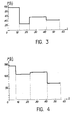
- the results obtained up to 56 days are given in the figures. 3 and 4, which relate respectively to the use of a solution at pH 6.5 and a solution at pH 5, and which represent as a function of time (in days) the amount of copper (, ug) released per day in the solution. These results also confirm the influence of the pH of the solution on the amount of copper released by the substrate.
- This example relates to the production of substrates which can be used as intrauterine devices loaded with copper.
- acrylic acid is grafted onto a powder of copolymer of ethylene and vinyl acetate at 33% by weight of vinyl acetate (EVA) having an average particle size of 0.98 mm.
- EVA vinyl acetate
- the grafted powder is immediately washed in water brought to 90 ° C. for 4 hours, then dried in an oven under vacuum to constant weight.
- a grafted powder is thus obtained, the grafting rate of which is 31.8% by weight of acrylic acid relative to the weight of the powder of EVA copolymer.
- the grafted powder is then intimately mixed with 15% by weight of copper powder having an average particle size of 50 microns and this mixture is put into the form of intrauterine devices by hot injection of the mixture into molds corresponding to intra device -OM-GA type 0 and size 1 uterines.
- an intrauterine device (IUD) of this type comprises a frame of particular shape.
- the device which corresponds to size 0 has a width of 26 mm and a height of 26 mm
- the device of size 1 has a width of 35 mm and a height of 35 mm.
- the solution is changed and withdrawn at regular intervals, and the quantity of copper present in the withdrawn solution is measured out.
- the grafted powder is then washed with water and alcohol and dried under vacuum in an oven.
- the grafting rate of the powder thus obtained is 47% by weight of acrylic acid relative to the initial weight of the copolymer powder (EVA).
- the desorption solution is changed at regular intervals and the copper content of this solution is determined.
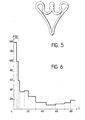
- fig. 10 illustrates as a function of time (in days) the amount of copper (, ug) released per day by the substrate.
- a polyamide 11 powder with a particle size between 100 and 125 microns is grafted with butyl acrylate by the preirradiation technique.
- the grafted powder is then washed with alcohol and dried under vacuum in an oven.
- the grafting rate of the powder thus obtained is 20% by weight of butyl polyacrylate relative to the initial weight of the polyamide 11 powder.
- the speed of desorption of the active ingredient is determined on a 30 x 20 x 2.5 mm sample taken from a plate.
- This sample is immersed in one liter of TBG ethyl alcohol.
- the concentration of ethyl alcohol in (3-benzoyl-phenyl) 2-propionic acid is determined at regular intervals.
- the desorption rate remains constant for the first eight hours.
- the grafted powder is then washed with alcohol and dried under vacuum in an oven.
- the grafting rate of the powder thus obtained is 40% by weight of polybutylacrylate relative to the initial weight of the polyamide 11 powder.
- Example 2 Under the conditions described in Example 1, with a solution of butyl acrylate in ethyl alcohol (70/30) 10.10 g of polyamide 11 powder with a particle size between 100 and 125 microns are grafted at 70 ° C. during 30 minutes.
- a grafting rate of 38% by weight of polybutylacrylate relative to the initial weight of the polyamide 11 powder is obtained.
- EVA ethylene vinyl acetate copolymer containing 33% vinyl acetate
- grafts of ethylene vinyl acetate (EVA) copolymer containing 33% vinyl acetate are grafted using a solution of butyl acrylate in ethyl alcohol (concentration 25/75).
- the weighed EVA granules are introduced into pyrex ampoules containing the solution of butyl acrylate in ethanol to which is added 1% copper acetate and 0.25% copper powder for inhibit polymerization of the monomer in solution.
- the ampoules are degassed and then irradiated under gamma radiation from cobalt 60 at a dose rate of 0.2 Mrad.h- 1 at room temperature.
- 100 g of granules thus grafted are then mixed with 25 g of active principle of (3-benzoyl-phenyl) 2-propionic acid, then the mixture is placed in the form of a plate by compressing it in a mold at a temperature of 80 ° C.
- the desorption rate is determined as indicated in Example 1.
- the desorption rate remains constant for the first 40 days.
- a low density polyethylene powder with a particle size between 200 and 400 microns is grafted with ethylene glycol acrylate by the preirradiation technique. 10.10 g of powder are irradiated in a vacuum interrupter under an accelerated electron beam of 3 MeV at a given dose.
- the speed of desorption of the active ingredient is determined on a 30 x 20 x 2.5 mm sample taken from a plate.
- the concentration of codeine phosphate is determined at regular intervals.
- the desorption rate remains constant for the first eight hours.
Landscapes
- Health & Medical Sciences (AREA)
- Chemical & Material Sciences (AREA)
- Reproductive Health (AREA)
- Life Sciences & Earth Sciences (AREA)
- Animal Behavior & Ethology (AREA)
- General Health & Medical Sciences (AREA)
- Public Health (AREA)
- Veterinary Medicine (AREA)
- Engineering & Computer Science (AREA)
- Biomedical Technology (AREA)
- Heart & Thoracic Surgery (AREA)
- Medicinal Chemistry (AREA)
- Chemical Kinetics & Catalysis (AREA)
- Epidemiology (AREA)
- Toxicology (AREA)
- Vascular Medicine (AREA)
- Polymers & Plastics (AREA)
- Organic Chemistry (AREA)
- Gynecology & Obstetrics (AREA)
- Urology & Nephrology (AREA)
- Pharmacology & Pharmacy (AREA)
- General Chemical & Material Sciences (AREA)
- Anesthesiology (AREA)
- Hematology (AREA)
- Medicinal Preparation (AREA)
- Graft Or Block Polymers (AREA)
- Medical Preparation Storing Or Oral Administration Devices (AREA)
- Orthopedics, Nursing, And Contraception (AREA)
- Compositions Of Macromolecular Compounds (AREA)
Applications Claiming Priority (2)
| Application Number | Priority Date | Filing Date | Title |
|---|---|---|---|
| FR7824678A FR2433949A1 (fr) | 1978-08-25 | 1978-08-25 | Substrat hydrophobe apte a liberer une substance chimique |
| FR7824678 | 1978-08-25 |
Publications (2)
| Publication Number | Publication Date |
|---|---|
| EP0009423A1 EP0009423A1 (fr) | 1980-04-02 |
| EP0009423B1 true EP0009423B1 (fr) | 1982-05-05 |
Family
ID=9212086
Family Applications (1)
| Application Number | Title | Priority Date | Filing Date |
|---|---|---|---|
| EP79400565A Expired EP0009423B1 (fr) | 1978-08-25 | 1979-08-10 | Substrat hydrophobe apte à libérer une substance chimique, procédé pour sa préparation et son application comme dispositif intra-utérin |
Country Status (9)
| Country | Link |
|---|---|
| US (1) | US4283325A (enExample) |
| EP (1) | EP0009423B1 (enExample) |
| JP (1) | JPS5531882A (enExample) |
| CA (1) | CA1171580A (enExample) |
| DE (1) | DE2962701D1 (enExample) |
| ES (1) | ES483631A1 (enExample) |
| FR (1) | FR2433949A1 (enExample) |
| IL (1) | IL58040A (enExample) |
| ZA (1) | ZA794257B (enExample) |
Families Citing this family (28)
| Publication number | Priority date | Publication date | Assignee | Title |
|---|---|---|---|---|
| FR2485370A1 (fr) * | 1980-06-30 | 1981-12-31 | Commissariat Energie Atomique | Support inerte en copolymere reticule, son procede de preparation et son utilisation pour la realisation de medicaments retard |
| US4534996A (en) * | 1981-03-30 | 1985-08-13 | California Institute Of Technology | Hybrid microspheres |
| CS232807B1 (en) * | 1982-05-04 | 1985-02-14 | Valter Jakubek | Inter-uterus anticonception little body and method of its making |
| JPS5915903U (ja) * | 1982-07-21 | 1984-01-31 | 河口湖精密株式会社 | デジタル測長器 |
| JPS612016A (ja) * | 1984-06-15 | 1986-01-08 | Sotsukishiya:Kk | フ−リエイメ−ジを利用したエンコ−ダ |
| US4855127A (en) * | 1986-07-07 | 1989-08-08 | Dow Corning Corporation | Lattice-entrapped composition |
| JPS6375518A (ja) * | 1986-09-18 | 1988-04-05 | Tokyo Seimitsu Co Ltd | 移動量検出装置 |
| JPH07888Y2 (ja) * | 1988-02-22 | 1995-01-11 | 株式会社ミツトヨ | 光学式変位検出器 |
| JPH0629740B2 (ja) * | 1988-02-26 | 1994-04-20 | オ−クマ株式会社 | 平均化回折モアレ位置検出器 |
| JPH0648339Y2 (ja) * | 1989-05-08 | 1994-12-12 | 双葉電子工業株式会社 | 光学式変位検出装置 |
| FR2657257B1 (fr) * | 1990-01-19 | 1994-09-02 | Rhone Poulenc Sante | Procede de preparation de medicaments sous forme de perles. |
| US5529914A (en) * | 1990-10-15 | 1996-06-25 | The Board Of Regents The Univeristy Of Texas System | Gels for encapsulation of biological materials |
| US5562914A (en) * | 1990-12-06 | 1996-10-08 | Zeneca Inc. | Impregnated porous granules and a polyurethane matrix held within the pores thereof and holding a liquid material for controlled release of liquid material and process therefor |
| US5573934A (en) | 1992-04-20 | 1996-11-12 | Board Of Regents, The University Of Texas System | Gels for encapsulation of biological materials |
| GB9222382D0 (en) * | 1992-10-24 | 1992-12-09 | Cranfield Inst Of Tech | Polymeric biochemical compositions |
| FR2745720B1 (fr) * | 1996-03-08 | 1998-05-07 | Soc D Pharmacologie Et D Immun | Dispositif de diffusion d'un produit volatil dans l'atmosphere |
| DE19812688A1 (de) * | 1998-03-23 | 1999-09-30 | Basf Ag | Verfahren zur Herstellung von festen Dosierungsformen |
| WO2004075854A2 (en) * | 2003-02-26 | 2004-09-10 | Program For Appropriate Technology In Health | Microbicidal compositions and method of use |
| US20050037033A1 (en) * | 2003-05-23 | 2005-02-17 | Program For Appropriate Technology In Health | Microbicidal compositions and methods and use |
| AU2004267383A1 (en) * | 2003-08-14 | 2005-03-03 | The Bio Balance Corporation | Bacterial strains, compositions including same and probiotic use thereof |
| UA93354C2 (ru) | 2004-07-09 | 2011-02-10 | Гилиад Сайенсиз, Инк. | Местный противовирусный препарат |
| FR2881431B1 (fr) * | 2005-01-28 | 2008-12-05 | Arkema Sa | Greffage d'une poudre de polyamide par irradiation gamma. |
| US7862552B2 (en) | 2005-05-09 | 2011-01-04 | Boston Scientific Scimed, Inc. | Medical devices for treating urological and uterine conditions |
| KR20120099473A (ko) | 2009-12-01 | 2012-09-10 | 세프록스 바이오텍, 에스.엘. | Hiv 감염 예방을 위한 히드록시타이로졸 및 유도체의 국소적 사용 |
| EP2546358A1 (en) | 2011-07-15 | 2013-01-16 | Laboratorios Del. Dr. Esteve, S.A. | Methods and reagents for efficient control of HIV progression |
| EP2606897A1 (en) | 2011-12-22 | 2013-06-26 | Laboratorios Del. Dr. Esteve, S.A. | Methods and compositions for the treatment of diseases caused by enveloped viruses |
| CA2995297C (en) * | 2015-08-11 | 2024-01-02 | Ptt Holding Aps | A delivery device |
| CN119859221A (zh) * | 2025-01-25 | 2025-04-22 | 华侨大学 | 一种EVA泡沫回收料-α-甲基丙烯酸共聚物及其制备方法和应用 |
Family Cites Families (6)
| Publication number | Priority date | Publication date | Assignee | Title |
|---|---|---|---|---|
| US3803308A (en) * | 1968-09-18 | 1974-04-09 | Searle & Co | Method of contraception with a soluble non-toxic copper or zinc compound |
| FR2250793B1 (enExample) * | 1973-11-09 | 1978-12-29 | Commissariat Energie Atomique | |
| FR2250520B1 (enExample) * | 1973-11-09 | 1977-04-15 | Cournut Rene | |
| FR2278317A1 (fr) * | 1974-07-19 | 1976-02-13 | Commissariat Energie Atomique | Implant buccal pour administrer des produits solubilisables |
| FR2348238A2 (fr) * | 1976-04-14 | 1977-11-10 | Commissariat Energie Atomique | Substrat hydrophobe comportant des inclusions hydrophiles contenant des produits volatils |
| FR2367087A1 (fr) * | 1976-10-08 | 1978-05-05 | Commissariat Energie Atomique | Substrat hydrophobe comportant des inclusions de composes hydrophobes contenant des substances chimiques |
-
1978
- 1978-08-25 FR FR7824678A patent/FR2433949A1/fr active Granted
-
1979
- 1979-08-10 DE DE7979400565T patent/DE2962701D1/de not_active Expired
- 1979-08-10 EP EP79400565A patent/EP0009423B1/fr not_active Expired
- 1979-08-13 IL IL58040A patent/IL58040A/xx unknown
- 1979-08-14 ZA ZA00794257A patent/ZA794257B/xx unknown
- 1979-08-15 US US06/066,521 patent/US4283325A/en not_active Expired - Lifetime
- 1979-08-23 CA CA000334446A patent/CA1171580A/en not_active Expired
- 1979-08-24 JP JP10731179A patent/JPS5531882A/ja active Granted
- 1979-08-24 ES ES483631A patent/ES483631A1/es not_active Expired
Also Published As
| Publication number | Publication date |
|---|---|
| IL58040A (en) | 1983-02-23 |
| US4283325A (en) | 1981-08-11 |
| CA1171580A (en) | 1984-07-24 |
| EP0009423A1 (fr) | 1980-04-02 |
| FR2433949A1 (fr) | 1980-03-21 |
| ZA794257B (en) | 1980-08-27 |
| DE2962701D1 (en) | 1982-06-24 |
| IL58040A0 (en) | 1979-12-30 |
| JPS5531882A (en) | 1980-03-06 |
| JPH0120164B2 (enExample) | 1989-04-14 |
| ES483631A1 (es) | 1980-04-16 |
| FR2433949B1 (enExample) | 1982-10-22 |
Similar Documents
| Publication | Publication Date | Title |
|---|---|---|
| EP0009423A1 (fr) | Substrat hydrophobe apte à libérer une substance chimique, procédé pour sa préparation et son application comme dispositif intra-utérin | |
| EP0043319B1 (fr) | Support inerte en copolymère réticulé, son procédé de préparation et son utilisation pour la réalisation de médicaments retard | |
| EP0625901B1 (fr) | Films a base de copolymeres, leurs applications dans des systemes transdermiques et leurs procedes de preparation | |
| CA1065792A (fr) | Procedes de preparation de polymeres acryliques hydrosolubles par photopolymerisation | |
| EP1051436B1 (fr) | Nouveaux copolymeres tensioactifs a base de methylidene malonate | |
| EP0934059B1 (fr) | Procede de preparation de nanoparticules de methylidene malonate, nanoparticules contenant eventuellement une ou plusieurs molecules biologiquement actives | |
| CA2102186C (fr) | Nanoparticules ayant un temps de capture par le systeme reticulo endothelial allonge | |
| FR2581541A1 (fr) | Nouvelles compositions pharmaceutiques permettant la liberation prolongee d'un principe actif et leur procede de preparation | |
| EP0457660B1 (fr) | Nouveaux polymères absorbants, leur procédé de fabrication et leur application | |
| EP0377370A1 (fr) | Procédé d'encapsulation de particules au moyen d'un copolymère silicone thermoplastique et particules enrobées | |
| EP3187046B1 (fr) | Composition solide pour le relargage controle de substances semiochimiques | |
| FR2741628A1 (fr) | Nouveaux hydrogels a base de copolymeres trisequences et leur application notamment a la liberation progressive de principes actifs | |
| FR2778100A1 (fr) | Nouvelles microspheres a base de poly(methylidene malonate), leur procede de preparation et compositions pharmaceutiques les contenant | |
| FR2732223A1 (fr) | Composition pharmaceutique pour administration transdermique | |
| EP0002543A1 (fr) | Particules solides contenant du peroxyde de calcium, leur préparation et leur utilisation pour le traitement des eaux | |
| CH634100A5 (fr) | Procede d'obtention de supports pour cultures cellulaires et supports obtenus. | |
| FR2534486A1 (fr) | Support particulaire greffe en surface, son procede de preparation et adsorbants pour chromatographie d'affinite incorporant ce support, ainsi que leur utilisation, notamment en biologie | |
| FR2473847A1 (fr) | Formulations solides contenant des pheromones | |
| WO1997011687A1 (fr) | Systeme matriciel transdermique | |
| EP1368002B1 (fr) | Procede de fabrication d'un comprime flottant incluant de l'alfuzosine | |
| EP0006370B1 (fr) | Préparation de polymères hydrosolubles utilisables comme floculants | |
| WO1993000388A1 (fr) | Procede de preparation de nanoparticules | |
| FR2653437A1 (enExample) | ||
| EP0006777B1 (fr) | Procédé de préparation de polymères utilisables comme floculants | |
| CH615446A5 (en) | Process for the manufacture of a hydrophobic substrate comprising grafted hydrophilic inclusions |
Legal Events
| Date | Code | Title | Description |
|---|---|---|---|
| PUAI | Public reference made under article 153(3) epc to a published international application that has entered the european phase |
Free format text: ORIGINAL CODE: 0009012 |
|
| AK | Designated contracting states |
Designated state(s): BE CH DE GB IT NL SE |
|
| 17P | Request for examination filed | ||
| ITF | It: translation for a ep patent filed | ||
| GRAA | (expected) grant |
Free format text: ORIGINAL CODE: 0009210 |
|
| AK | Designated contracting states |
Designated state(s): BE CH DE GB IT NL SE |
|
| REF | Corresponds to: |
Ref document number: 2962701 Country of ref document: DE Date of ref document: 19820624 |
|
| REG | Reference to a national code |
Ref country code: CH Ref legal event code: PUE Owner name: LA COMPAGNIE ORIS INDUSTRIE SA |
|
| ITPR | It: changes in ownership of a european patent |
Owner name: CESSIONE;COMPAGNIE ORIS INDUSTRIE S.A. |
|
| REG | Reference to a national code |
Ref country code: GB Ref legal event code: 732 |
|
| NLS | Nl: assignments of ep-patents |
Owner name: COMPAGNIE ORIS INDUSTRIE S.A. TE PARIJS, FRANKRIJK |
|
| ITTA | It: last paid annual fee | ||
| EAL | Se: european patent in force in sweden |
Ref document number: 79400565.2 |
|
| PGFP | Annual fee paid to national office [announced via postgrant information from national office to epo] |
Ref country code: GB Payment date: 19980723 Year of fee payment: 20 Ref country code: BE Payment date: 19980723 Year of fee payment: 20 |
|
| PGFP | Annual fee paid to national office [announced via postgrant information from national office to epo] |
Ref country code: SE Payment date: 19980727 Year of fee payment: 20 |
|
| PGFP | Annual fee paid to national office [announced via postgrant information from national office to epo] |
Ref country code: DE Payment date: 19980731 Year of fee payment: 20 |
|
| PGFP | Annual fee paid to national office [announced via postgrant information from national office to epo] |
Ref country code: NL Payment date: 19980831 Year of fee payment: 20 |
|
| PGFP | Annual fee paid to national office [announced via postgrant information from national office to epo] |
Ref country code: CH Payment date: 19980907 Year of fee payment: 20 |
|
| BE20 | Be: patent expired |
Free format text: 19990810 *ORIS INDUSTRIE S.A. |
|
| PG25 | Lapsed in a contracting state [announced via postgrant information from national office to epo] |
Ref country code: GB Free format text: LAPSE BECAUSE OF NON-PAYMENT OF DUE FEES Effective date: 19990809 Ref country code: CH Free format text: LAPSE BECAUSE OF EXPIRATION OF PROTECTION Effective date: 19990809 |
|
| PG25 | Lapsed in a contracting state [announced via postgrant information from national office to epo] |
Ref country code: NL Free format text: LAPSE BECAUSE OF EXPIRATION OF PROTECTION Effective date: 19990810 |
|
| PG25 | Lapsed in a contracting state [announced via postgrant information from national office to epo] |
Ref country code: SE Free format text: LAPSE BECAUSE OF NON-PAYMENT OF DUE FEES Effective date: 19990811 |
|
| REG | Reference to a national code |
Ref country code: CH Ref legal event code: PL |
|
| REG | Reference to a national code |
Ref country code: GB Ref legal event code: PE20 Effective date: 19990809 |
|
| EUG | Se: european patent has lapsed |
Ref document number: 79400565.2 |
|
| PLBE | No opposition filed within time limit |
Free format text: ORIGINAL CODE: 0009261 |
|
| STAA | Information on the status of an ep patent application or granted ep patent |
Free format text: STATUS: NO OPPOSITION FILED WITHIN TIME LIMIT |