WO2025141844A1 - 支援システム、サーバ装置、及び支援方法 - Google Patents
支援システム、サーバ装置、及び支援方法 Download PDFInfo
- Publication number
- WO2025141844A1 WO2025141844A1 PCT/JP2023/047205 JP2023047205W WO2025141844A1 WO 2025141844 A1 WO2025141844 A1 WO 2025141844A1 JP 2023047205 W JP2023047205 W JP 2023047205W WO 2025141844 A1 WO2025141844 A1 WO 2025141844A1
- Authority
- WO
- WIPO (PCT)
- Prior art keywords
- information
- processing unit
- medical
- unit
- display
- Prior art date
- Legal status (The legal status is an assumption and is not a legal conclusion. Google has not performed a legal analysis and makes no representation as to the accuracy of the status listed.)
- Pending
Links
Images







Classifications
-
- G—PHYSICS
- G16—INFORMATION AND COMMUNICATION TECHNOLOGY [ICT] SPECIALLY ADAPTED FOR SPECIFIC APPLICATION FIELDS
- G16H—HEALTHCARE INFORMATICS, i.e. INFORMATION AND COMMUNICATION TECHNOLOGY [ICT] SPECIALLY ADAPTED FOR THE HANDLING OR PROCESSING OF MEDICAL OR HEALTHCARE DATA
- G16H10/00—ICT specially adapted for the handling or processing of patient-related medical or healthcare data
- G16H10/60—ICT specially adapted for the handling or processing of patient-related medical or healthcare data for patient-specific data, e.g. for electronic patient records
Definitions
- This disclosure relates to a support system, a server device, and a support method.
- Patent Document 1 There is known technology that reduces the burden on medical professionals, such as doctors, by making it easy to check data obtained during medical procedures.
- the present disclosure has been made to solve the above problems, and its purpose is to provide a support system, server device, and support method that can further reduce the burden on medical professionals and improve work efficiency and accuracy.
- an assistance system that includes a collection processing unit that collects sound information and image information associated with a medical procedure performed by a user, a recording processing unit that extracts a first keyword that is a keyword included in the sound information collected by the collection processing unit, and stores, as record information, in a record information storage unit, information that associates the first keyword with date and time information when the first keyword was uttered, and information that associates the image information collected by the collection processing unit with date and time information when the image information was acquired, and an output control unit that displays, on a display unit, a timeline display in which the first keyword and the image information are arranged in chronological order based on the record information stored in the record information storage unit.
- a collection processing unit collects sound information and image information associated with a medical procedure performed by a user
- a recording processing unit extracts a first keyword that is a keyword included in the sound information collected by the collection processing unit, and stores, as record information, information associating the first keyword with date and time information at which the first keyword was uttered and information associating the image information collected by the collection processing unit with date and time information at which the image information was acquired, in a record information storage unit
- an output control causes a display unit to display a timeline display in which the first keyword and the image information are arranged in chronological order based on the record information stored in the record information storage unit.
- the medical support system 1 allows the user to operate the collection of audio data or image data through non-contact operations, allowing the user to perform medical procedures and record medical procedures while maintaining hygienic conditions. Therefore, the medical support system 1 according to this embodiment can further reduce the burden on medical staff and improve convenience.
- the medical support system 1 can record medical procedures and the like using voice control, motion control, and eye control, further reducing the burden on medical staff and improving convenience.
- the recording processing unit 333 extracts a second keyword, which is a keyword included in the image data collected by the collection processing unit 191, and stores information associating the image data, the date and time information (e.g., time information) when the image information was acquired, and the second keyword in the recorded information storage unit 327 as recorded information.
- the output control unit 192 displays the image information, the date and time information when the image information was acquired, and the second keyword in association with each other on the timeline display on the display unit 13.
- the medical support system 1 associates the second keyword extracted from the image data with the image data and displays it on the display unit 13, making it possible to keep records of medical procedures in an even clearer and more accurate manner.
- the recording processing unit 333 stores the recording information created for each period during which the sound data and image data were collected in the recording information storage unit 327.
- the output control unit 192 displays a timeline display for each period on the display unit 13.
- the first keyword and the second keyword include at least one of terms related to the treatment, terms related to the tools used in the treatment, terms related to medication, and terms related to the patient's biological information.
- the medical support system 1 can accurately record record information on medical procedures.
- the users include multiple medical professionals.
- the record processing unit 333 identifies the speaker who spoke the first keyword among the multiple medical professionals based on the sound data, and stores information that associates identification information (e.g., a user ID) that identifies the speaker with the first keyword and date and time information as record information in the record information storage unit 327.
- identification information e.g., a user ID
- the medical support system 1 can easily and accurately record medical procedure information for multiple medical professionals, further reducing the burden on medical professionals and improving work efficiency and accuracy.
- the medical support system 1 allows users to receive appropriate suggestions based on past performance while performing medical procedures, further improving the efficiency and accuracy of medical procedures.
- the medical support system 1 also includes an editing processing unit 335.
- the editing processing unit 335 edits the record information stored in the record information storage unit 327, and outputs the edited record information to the user.
- the medical support system 1 can check the recorded information at a later date and, for example, appropriately correct any erroneous records, thereby further improving the efficiency and accuracy of operations.
- the medical support system 1 automatically generates medical documents (e.g., electronic medical records, medical receipts (medical fee statements), prescriptions, etc.) from recorded information, further reducing the burden on medical staff and further improving work efficiency and accuracy.
- medical documents e.g., electronic medical records, medical receipts (medical fee statements), prescriptions, etc.
- the support method also includes a collection processing step, a recording processing step, and an output control step.
- the collection processing step the collection processing unit 191 collects sound data and image data associated with a medical procedure by the user.
- the recording processing step the recording processing unit 333 extracts a first keyword, which is a keyword contained in the sound data collected by the collection processing unit 191, and stores, as record information, information associating the first keyword with date and time information when the first keyword was uttered, and information associating the image data collected by the collection processing unit 191 with date and time information when the image information was acquired, in the record information storage unit 327.
- the output control unit 192 displays, on the display unit 13, a timeline display in which the keywords and image data are arranged in chronological order based on the record information stored in the record information storage unit 327.
- the server device (information collecting server 30) may include the collection processing unit 191 and the output control unit 192. That is, the server device (information collecting server 30) according to the present embodiment may include the above-described collection processing unit 191, the recording processing unit 333, and the output control unit 192. As a result, the server device (information collection server 30) according to this embodiment can achieve the same effects as the medical support system 1 described above, further reducing the burden on medical personnel and improving work efficiency and accuracy.
- a modified example is described in which a timeline based on recorded information is displayed on an external display device 55 installed in a medical setting, such as an operating room, in addition to the display unit 13 of the mobile terminal 10.
- FIG. 16 is a functional block diagram showing an example of a medical support system 1a according to the second embodiment.
- the medical support system 1 a includes a mobile terminal 10 , a headset device 20 , an external imaging device 25 , an information collecting server 30 a , a management terminal 40 , a hospital management server 50 , and an external display device 55 .
- the same components as those in the first embodiment shown in FIG. 1 are denoted by the same reference numerals, and the description thereof will be omitted.
- the medical support system 1a is an example of a support system.
- the external display device 55 is, for example, a large-screen display device that is fixedly installed in an operating room or the like.
- the external display device 55 is, for example, a liquid crystal display, and is an example of a display unit.
- the display unit includes the external display device 55 (an example of a display device) installed in a place where a medical procedure is performed (for example, an operating room, etc.).
- the external display device 55 also includes a display control unit 551 .
- the display control unit 551 displays various information on the external display device 55 in response to instructions from the recording processing unit 333a of the information collection server 30a, which will be described later.
- the display control unit 551 displays a timeline based on the recorded information, similar to the display unit 13 of the mobile terminal 10.
- the timeline display is performed in real time while the medical procedure is being performed, and the timeline display is updated each time a procedure is performed (in detail, each time sound data and image data related to the procedure are collected and the recorded information is updated) (i.e., new information related to the procedure is added to the timeline from time to time).
- the recording processing unit 333a displays the timeline display on the external display device 55 while updating it to the latest information via the display control unit 551, that is, while updating various information related to the procedure (for example, the patient's biological information, information related to symptoms, or information related to medication) to the latest information.
- the display control unit 551 displays associated information associated with the recorded information on the same screen together with the timeline display.
- the associated information is, for example, basic information about the patient, information about the patient's symptoms, or information related to medication. Details of the display on the external display device 55 will be described later.
- the recording processing unit 333a has the same functions as the recording processing unit 333 of the above-described first embodiment.
- the recording processing unit 333a also displays a timeline display in which keywords and image data are arranged in chronological order on the external display device 55 via the display control unit 551 of the external display device 55.
- the recording processing unit 333a updates the timeline display to the latest information based on the recording information that is updated from time to time, and displays it on the external display device 55 via the display control unit 551.
- the recording processing unit 333a also displays associated information of the recording information on the same screen as the timeline display of the recording information via the display control unit 551.
- FIG. 17 is a diagram showing an example of the operation of the medical support system 1a according to this embodiment.
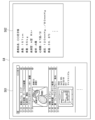
- the display control unit 551 displays a timeline of the recorded information in area SG1 (first area) on the screen of the external display device 55, and also displays basic information of the patient in area SG2 (second area).
- the basic information is an example of associated information, and is, for example, the patient's name, height, weight, blood type, symptoms, and biometric information (vital information).
- the biometric information includes, for example, heart rate, blood pressure, body temperature, respiratory rate, etc.
- the recording processing unit 333a causes the display control unit 551 to display and transcribe the newly displayed basic information values into area SG2 (second area) as the latest basic information.
- the recording processing unit 333a causes the external display device 55 to display a timeline display in which keywords and image data are arranged in chronological order, via the display control unit 551 of the external display device 55, and also causes the external display device 55 to display the patient's latest biometric information (heart rate, blood pressure, body temperature, respiratory rate, etc.) based on the recorded information.
- biometric information heart rate, blood pressure, body temperature, respiratory rate, etc.
- FIG. 18 is a diagram showing another example of the operation of the medical support system 1a according to this embodiment. Here, a modified example of the information displayed on the external display device 55 is described.
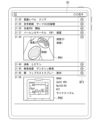
- the display control unit 551 displays a timeline of the recorded information in area SG1 (first area) on the screen of the external display device 55, and displays information about the patient's symptoms in area SG3 (third area).
- the information about the patient's symptoms is an example of associated information, and includes, for example, the name of the symptom and an image PH3 of the affected area.
- the external display device 55 also displays information about medication extracted from the recorded information in area SG4 (fourth area).
- the information about medication is an example of associated information, and includes, for example, the name and dosage of the administered medication, and an image PH4 of the label of the administered medication pack.
- the recording processing unit 333a causes the external display device 55 to display a timeline display in which keywords and image data are arranged in chronological order, via the display control unit 551 of the external display device 55, and also causes the external display device 55 to display information relating to the patient's symptoms and information relating to medication, based on the recorded information.
- the recording processing unit 333a causes the display control unit 551 to display the newly displayed information so that it is transcribed into area SG3 (third area) as information related to the latest patient's symptoms. Also, when the timeline display is updated in area SG1 (first area) and information related to medication is additionally displayed, the recording processing unit 333a causes the display control unit 551 to display the newly displayed information so that it is transcribed into area SG4 (fourth area) as information related to the latest medication.
- the type and content of the associated information to be displayed on the same screen as the timeline display may be arbitrarily set by the user. For example, by setting items that the user wants to check during a medical procedure as associated information, the user can perform the procedure while checking the record information (timeline display) and the associated information that are updated from time to time.
- the desired information is automatically extracted by setting the information to be extracted as associated information, so that the user can save the trouble of manually extracting the desired information from the record information. For example, information contained in any medical document may be set as the associated information.
- the display of the associated information may be controlled so that the format of the medical document specified by the user is displayed, and the corresponding information from the timeline display is automatically transcribed into the blank items of the medical document. This allows the user to check the contents of the medical document that is ultimately scheduled to be created by the medical document generation unit 336 based on the record information in advance on-site.
- the display unit to which the recorded information is output is the external display device 55 (display device) installed at the location where the medical procedure is performed.
- the recording processing unit 333a causes the external display device 55 to display a timeline display in which keywords and image information are arranged in chronological order, while updating the timeline display (updating to the latest information) as needed, via the display control unit 551 (an example of an output control unit).
- the recording processing unit 333a causes the display control unit 551 to display associated information (for example, the patient's latest basic information (for example, biological information), latest symptom information, or medication information) as needed, on the same screen as the timeline display of the recorded information, based on the updated recorded information.
- the medical support system 1a makes it possible to perform treatment while checking the timeline display of recorded information that is constantly updated, and the associated information, thereby improving user convenience.
- the associated information by configuring the associated information to be displayed by automatically transcribing part of the recorded information, it is possible to eliminate the need for the user to manually transcribe the information. In this way, according to this embodiment, the burden on medical staff can be further reduced, and work efficiency and accuracy can be improved.
- the display according to this embodiment does not necessarily have to be displayed on the external display device 55, but may be displayed on another display device.
- the displays shown in Figures 17 and 18 may be displayed on the display unit 13 of the mobile terminal 10.
- the information displayed as the associated information may be editable by the editing processing unit 335 of the information collecting server 30a, similar to the record information in the first embodiment. This makes it possible to make appropriate corrections when an error is found in the information extracted from the record information as the associated information.
- the record information is edited by the editing processing unit 335, the corresponding description of the associated information may be automatically corrected.
- editing (changing) the record information may be automatically reflected in the associated information. This makes it possible to correct both errors in a single editing process when there is a common error in the record information and the associated information extracted from the record information, thereby improving business efficiency.
- the timeline display as shown in FIG. 7 may be shared in real time, for example, on any network inside or outside the hospital.
- an external specialist for example, an external doctor from another department, etc.
- comments on AI diagnosis may be added.
- the timeline display and added comments may be displayed on a single screen.
- the display control unit 551 output control unit 192 may change the font and color of the comments from the specialist and AI diagnosis to make them easier to understand.
- the medical support system 1a can make more effective use of recorded information by utilizing external specialists and AI diagnosis, and can improve the accuracy of operations (accuracy of diagnosis and treatment).
- the display control unit 551 (192) may change the background color of time periods in which there was a sudden change in the data.
- the recording processing unit 333a (333) may automatically record the start time and end time of the sudden change.
- a “sudden change” may be, for example, a sudden change in biological data (heart rate, blood pressure), etc.
- This embodiment relates to a method for more effectively utilizing the record information recorded in the first and second embodiments.
- the purpose of this embodiment is to effectively utilize medical treatment information (e.g., date and time information, information on the patient's symptoms, information on the contents of the treatment, information on the time required for the treatment, and progress information showing the progress after the treatment) collected at a medical institution.
- medical treatment information e.g., date and time information, information on the patient's symptoms, information on the contents of the treatment, information on the time required for the treatment, and progress information showing the progress after the treatment
- FIG. 19 is a functional block diagram showing an example of a medical support system 1b according to the third embodiment.
- FIG. 19 shows only the recorded information storage unit 327 among the functions of the information collection server 30 shown in FIG. 1.
- the aggregation processing unit 631 aggregates the record information recorded based on the information collected during the medical procedure.
- the record information is information stored in the record information storage unit 327 of the information collection server 30, and includes, for example, patient information indicating the patient, medical worker information indicating the medical worker who performed the medical procedure, and medical procedure information indicating the content of the medical procedure associated with date and time information.
- the tallying processing unit 631 for example, tallying up statistical data on the number of patients and symptoms for each period (month, day), statistical data on patient information (age, sex) and the time taken for treatment, statistical data on symptoms and the time taken for treatment, and statistical data showing the relationship between the treatment performed, the type and amount of drug administered, the tool used, and progress information after treatment for each symptom, based on record information (information indicating the content of medical procedures at a medical institution).
- the tallying information storage unit 621 may tally up the time taken for treatment in emergency medical care separately from the time taken for treatment in other normal medical care. This is because emergency medical care often targets patients who require urgent care, and therefore information on the time taken for treatment may be particularly important.
- the tallying information storage unit 621 may also tally up statistical data on the time taken from when an inquiry about emergency transport is made until the patient is transported.
- the aggregation processing unit 631 also aggregates the content of medical procedures and the time required for each medical worker based on the recorded information, for example, to generate statistical data regarding the work of medical workers.
- the aggregation processing unit 631 may perform a man-hour analysis of each medical worker based on the collection time of the record information, for example.
- the aggregation processing unit 631 may also aggregate the treatment procedures and timing of treatment for multiple hospitals and multiple doctors, for example.
- the calculation processing unit 631 may also calculate the difficulty of medical treatment based on the diagnosis result (disease name, etc.) and the collection time of the recorded information.
- the calculation processing unit 631 may also perform calculations by associating, for example, the medical device (tool) with the collection time of the recorded information (required time) or the collected information (treatment effect: for example, improvement of blood data, changes in vital signs (blood pressure, pulse rate, consciousness, respiration, body temperature, oxygen saturation, etc.)).
- the counting processing unit 631 may obtain a correlation between the area information and a specific symptom by counting the recorded information in association with the area information stored in the area information storage unit 624.
- Examples of correlations between the area information and a specific symptom include "when the temperature is below aa degrees and the humidity is below bb%, the number of influenza patients increases by cc% compared to normal", "when the temperature is above dd degrees and the humidity is above ee%, the number of heat stroke patients increases by ff% compared to normal", and "when the traffic volume is above gg% compared to normal, the number of patients due to traffic accidents increases by hh%".
- the tallying unit 631 stores the tallying results in the tally information storage unit 621 .
- the learning processing unit 632 generates learning data according to the subject of machine learning based on the recorded information or the aggregation results, and stores the data in the learning data storage unit 622 . Furthermore, the learning processing unit 632 generates various learning models using the learning data stored in the learning data storage unit 622. The learning processing unit 632 generates, by machine learning processing, for example, a prediction model that predicts the busy season of a medical institution, a prediction model that predicts the time required for treatment for each symptom, and an estimation model that estimates treatment candidates, medication candidates, tool candidates, or treatment timing (including treatment procedure), for each symptom.
- a prediction model that predicts the busy season of a medical institution
- a prediction model that predicts the time required for treatment for each symptom
- an estimation model that estimates treatment candidates, medication candidates, tool candidates, or treatment timing (including treatment procedure), for each symptom.
- the prediction processing unit 633 predicts the busy season of the medical institution based on the results of the aggregation performed by the aggregation processing unit 631. For example, the aggregation processing unit 631 aggregates the number of patients for each symptom based on the recorded information, and the prediction processing unit 633 predicts the busy season for each medical department based on the aggregated number of patients for each symptom.
- the prediction processing unit 633 also predicts the busy season of the medical institution, for example, based on the tally results stored in the tally information storage unit 621 and the regional information stored in the regional information storage unit 624. Specifically, the prediction processing unit 633 predicts an increase or decrease in the number of patients with a specific symptom according to the current regional information, based on the correlation between the regional information obtained by the tally processing unit 631 and the specific symptom.
- the prediction processing unit 633 predicts busy periods based on information about events held in a region included in the regional information, according to the number of people in that region during the event period (for example, the prediction processing unit 633 predicts that there is a possibility of an increase in heat stroke patients if a crowded event is held in the summer, etc.).Furthermore, for example, the prediction processing unit 633 predicts busy periods based on information about the industry of the region included in the regional information (for example, the prediction processing unit 633 predicts that in a region with many factories, the number of patients visiting medical institutions due to injuries caused by accidents in the factories will increase, etc.).
- the prediction processing unit 633 predicts busy periods based on information about the population of the region included in the regional information (for example, the prediction processing unit 633 predicts the number of patients with symptoms according to gender, age, etc., taking into account the male/female ratio and age structure of the population of the region (there is a possibility of an increase in patients with diseases specific to men/women, an increase in patients with diseases specific to children/elderly people, etc.)).
- the prediction processing unit 633 predicts busy periods based on information about schools in the region included in the regional information, for example, according to the number of elementary schools, junior high schools, high schools, and universities (for example, the prediction processing unit 633 predicts that in a region with a large number of elementary schools, there is a possibility of an increase in patients with diseases specific to children, etc.).
- the prediction processing unit 633 predicts busy periods based on information about other medical institutions located in the area included in the regional information (for example, the prediction processing unit 633 predicts the number of patients with a specific symptom who will visit its own medical institution, taking into account the medical departments and size, etc., of its own medical institution and the other medical institutions). Furthermore, the prediction processing unit 633 may predict the busy season of the medical institution based on the prediction model stored in the learning result storage unit 623.
- the prediction model here is a prediction model that predicts the busy season of the medical institution.
- the prediction processing unit 633 may also predict the required time for treatment for each symptom based on the statistical data of symptoms and the time taken for treatment compiled by the compilation processing unit 631. For this prediction, a prediction model predicting the required time for treatment for each symptom may be used, which is the result of machine learning performed by the learning processing unit 632 using the symptoms or diagnosis results (disease name, etc.) included in the recorded information and the required time for treatment (based on the collection time of the recorded information) as teacher data.
- the prediction processing unit 633 may use the information on the treatment time required for each symptom predicted in this way to predict, for example, when there is an inquiry about the acceptability of emergency transport, the time when emergency transport can be accepted and the number of patients that can be accepted. Specifically, information on the status of medical staff at the medical institution at the time of the emergency transport (information indicating the working status such as how many medical staff from which departments are working, the work status of each staff at that time (are they treating a patient or are they free), and when they will be free if they are treating a patient) as well as information regarding the emergency transport (basic information of the patient involved in the emergency transport (patient's name, height, weight, blood type, symptoms, and biological information (vital information), etc.) are input to the prediction processing unit 633 via the NW communication unit 61.
- the user can send a request to generate externally provided information (request for externally provided information) from the input unit 42 of the management terminal 40 to the externally provided information processing unit 637 of the information support server 60.
- the request for externally provided information by the user may be input from any terminal.
- the request for externally provided information includes information on the destination to which the externally provided information will be provided.
- the externally provided information processing unit 637 that receives the request for externally provided information performs processing in a format according to the destination to which the externally provided information will be provided, thereby performing the above-mentioned generation processing of the externally provided information.
- the external provision processing unit 637 stores the generated provision information (external provision information) to be provided to the external organization in the external provision information storage unit 628.
- the information stored in the external provision information storage unit 628 is transmitted to an external organization (not shown) designated by the user, for example, via the NW communication unit 61.
- the learning processing unit 632 of the information assistance server 60 generates learning data (step S402).
- the learning processing unit 632 generates learning data using the aggregation results by the aggregation processing unit 631, and stores the learning data in the learning data storage unit 622.
- the learning processing unit 632 executes a learning process based on the learning data (step S403).
- the learning processing unit 632 executes a machine learning process using the learning data stored in the learning data storage unit 622.
- the learning processing unit 632 stores the learning results in the learning result storage unit 623 (step S404). After the processing of step S404, the learning processing unit 632 ends the learning process.
- FIG. 21 is a flowchart showing an example of personnel allocation processing in the medical support system 1b according to this embodiment.
- the server control unit 63 of the information support server 60 determines whether or not a staffing request has been received (step S501).
- the server control unit 63 determines whether or not a staffing request has been received from, for example, the management terminal 40 via the NW communication unit 61. If the server control unit 63 has received a staffing request (step S501: YES), the process proceeds to step S502. If the server control unit 63 has not received a staffing request (step S501: NO), the process returns to step S501.
- the prediction processing unit 633 of the server control unit 63 predicts the busy season of the medical institution. For example, the prediction processing unit 633 predicts the busy season of the medical institution using statistical data of past recorded information compiled by the compilation processing unit 631. Alternatively, the prediction processing unit 633 may predict the busy season of the medical institution using the learning results (prediction model) stored in the learning result storage unit 623. The prediction processing unit 633 stores the prediction result in the prediction result storage unit 625.
- the staffing generation unit 634 of the server control unit 63 generates a staffing plan based on the prediction result (step S503).
- the staffing generation unit 634 generates a staffing plan to, for example, increase the number of medical staff during the predicted busy period.
- the staffing generation unit 634 stores the generated staffing plan in the staffing information storage unit 626.
- FIG. 22 is a flowchart showing an example of a labor management process of the medical support system 1b according to this embodiment.
- the calculation processing unit 631 of the information support server 60 acquires the record information and executes calculation processing for each medical worker (step S511).
- the calculation processing unit 631 acquires the record information from the information collection server 30 via the NW communication unit 61 and executes calculation processing for each medical worker. Specifically, in the calculation processing for each medical worker, the content of the medical procedure and the period required for the medical procedure are calculated based on the record information, and statistical data on the work of the medical workers is generated.
- the calculation processing unit 631 stores the calculation results in the calculation information storage unit 621.
- the labor management processing unit 635 of the information support server 60 executes labor management processing for each medical worker based on the collected results (step S512).
- the labor management processing includes evaluation of the work content of the medical worker and management of working hours.
- the labor management processing unit 635 stores information about the results of labor management in the labor management information storage unit 627 (step S513). After processing in step S513, the labor management processing unit 635 ends the labor management processing.
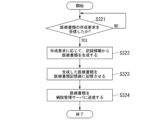
- FIG. Fig. 23 is a flowchart showing an example of a proposal process of the medical support system 1b according to this embodiment.
- the medical support system 1b may execute the series of processes shown in Fig. 23 by receiving a proposal request (proposal request) from a user.
- the user can transmit a proposal request to the information support server 60 from the input unit 42 of the management terminal 40.
- the staffing request by the user may be input from any terminal.
- the server control unit 63 of the information support server 60 acquires the record information (step S521).
- the server control unit 63 acquires the record information from the information collection server 30 via the NW communication unit 61.
- the prediction processing unit 633 of the server control unit 63 predicts the optimal treatment for the new patient from the past record information (step S522). Specifically, the prediction processing unit 633 predicts the optimal treatment for each symptom (optimal treatment, optimal amount of drug used, optimal tool used, optimal treatment timing (including treatment procedure), etc.) based on statistical data indicating the relationship between the treatment performed for each symptom, the type and amount of drug administered, the tool used, and progress information after treatment, which are collected by the collection processing unit 631.
- the prediction processing unit 633 may predict the optimal treatment for the new patient using the learning results (an estimation model that estimates treatment candidates, medication candidates, tool candidates, or treatment timing candidates for each symptom) that have been learned in advance and stored in the learning result storage unit 623.
- the prediction processing unit 633 stores the prediction results in the prediction result storage unit 625.
- the proposal processing unit 636 proposes an optimal treatment based on the prediction result (step S523).
- the proposal processing unit 636 transmits the content of the optimal treatment, which is the proposal content, via the NW communication unit 61 to the mobile terminal 10 or any terminal that the user can view.
- the proposal processing unit 636 determines whether there is a discrepancy between the predicted/proposed treatment and the actual treatment (step S524). In this determination, the presence or absence of a discrepancy between the two can be determined according to a predetermined rule. If there is a discrepancy between the two (step S524: YES), the proposal processing unit 636 proceeds to step S525. If there is no discrepancy between the two (step S524: NO), the proposal processing unit 636 ends the process.
- FIG. 24 is a flowchart showing an example of an external provision process of the medical support system 1b according to this embodiment.
- the server control unit 63 of the information support server 60 determines whether or not a request for externally provided information has been received (step S531).
- the server control unit 63 determines whether or not a request for externally provided information has been received, for example, from the management terminal 40 via the NW communication unit 61. If the server control unit 63 has received a request for externally provided information (step S531: YES), the process proceeds to step S532. If the server control unit 63 has not received a request for externally provided information (step S531: NO), the process returns to step S531.
- step S532 the external provision processing unit 637 of the server control unit 63 generates external provision information in response to the request from the recorded information or the aggregated results of the recorded information.
- the external provision processing unit 637 stores the generated external provision information in the external provision information storage unit 628 (step S533). After processing in step S533, the external provision processing unit 637 ends the external provision process.
- the information support server 60 includes a calculation processing unit 631 and a prediction processing unit 633.
- the calculation processing unit 631 calculates the time required for treatment of patients for each symptom based on medical treatment information indicating the content of the medical treatment at the medical institution.
- the prediction processing unit 633 predicts the time when the medical institution can accept patients for emergency transport and the number of patients that can be accepted, based on the results of the calculation performed by the calculation processing unit 631, the status of medical staff at the medical institution, and the symptoms of the patients involved in the emergency transport.
- the information support server 60 can use medical treatment information obtained during medical treatment for staffing, and can effectively utilize recorded information. Therefore, the medical support system 1b according to this embodiment can reduce the burden on medical staff and improve work efficiency and work accuracy.
- the counting processor 631 counts the number of patients for each symptom based on the medical treatment information.
- the prediction processor 633 predicts the busy season for each medical department based on the number of patients for each symptom counted by the counting processor 631.
- the staffing allocation generator 634 generates staffing allocations of medical staff in the medical departments who can handle the busy seasons based on the busy seasons for each medical department predicted by the prediction processor 633. This enables the information support server 60 according to this embodiment to generate appropriate staffing allocations of medical staff for each medical department.
- the prediction processing unit 633 predicts the busy season of the medical institution based on the tabulation result and the regional information on the region the medical institution is located in.
- the regional information includes at least one of information on the weather in the region, information on the traffic volume in the region, information on events held in the region, information on the population of the region, information on the industry in the region, and information on other medical institutions located in the region. This allows the information support server 60 according to this embodiment to more accurately predict the busy season of a medical institution based on the regional information relating to the region where medical treatment is performed.
- the tabulation results include statistical data on the number of patients and symptoms for each period, statistical data on symptoms and the time required for medical treatment, and statistical data on patient information and the time required for medical treatment.
- the information support server 60 can more accurately predict busy periods for medical institutions by using statistical data for each period and statistical data that takes into account the time required for medical procedures as the aggregation results.
- the information support server 60 also includes a labor management processing unit 635.
- the labor management processing unit 635 executes the labor evaluation process for medical workers and the management process for working hours.
- the compilation processing unit 631 compiles the content of medical procedures and the time required for the medical procedures for each medical worker based on the recorded information, and generates statistical data regarding the work of the medical workers.
- the labor management processing unit 635 then executes the labor evaluation process and labor management process based on the statistical data regarding the work of the medical workers.
- the information support server 60 can use the record information obtained during medical procedures to perform labor evaluation processing and labor management processing for medical personnel, enabling even more effective use of the record information.
- the information support server 60 includes a proposal processing unit 636.
- the proposal processing unit 636 proposes possible treatment options or medication options for a new patient based on the past performance of recorded information. This allows the medical support system 1b according to this embodiment to make more effective use of the recorded information.
Landscapes
- Health & Medical Sciences (AREA)
- Engineering & Computer Science (AREA)
- Epidemiology (AREA)
- General Health & Medical Sciences (AREA)
- Medical Informatics (AREA)
- Primary Health Care (AREA)
- Public Health (AREA)
- Medical Treatment And Welfare Office Work (AREA)
Priority Applications (2)
| Application Number | Priority Date | Filing Date | Title |
|---|---|---|---|
| PCT/JP2023/047205 WO2025141844A1 (ja) | 2023-12-28 | 2023-12-28 | 支援システム、サーバ装置、及び支援方法 |
| JP2025566140A JPWO2025141844A1 (https=) | 2023-12-28 | 2023-12-28 |
Applications Claiming Priority (1)
| Application Number | Priority Date | Filing Date | Title |
|---|---|---|---|
| PCT/JP2023/047205 WO2025141844A1 (ja) | 2023-12-28 | 2023-12-28 | 支援システム、サーバ装置、及び支援方法 |
Publications (1)
| Publication Number | Publication Date |
|---|---|
| WO2025141844A1 true WO2025141844A1 (ja) | 2025-07-03 |
Family
ID=96217137
Family Applications (1)
| Application Number | Title | Priority Date | Filing Date |
|---|---|---|---|
| PCT/JP2023/047205 Pending WO2025141844A1 (ja) | 2023-12-28 | 2023-12-28 | 支援システム、サーバ装置、及び支援方法 |
Country Status (2)
| Country | Link |
|---|---|
| JP (1) | JPWO2025141844A1 (https=) |
| WO (1) | WO2025141844A1 (https=) |
Citations (2)
| Publication number | Priority date | Publication date | Assignee | Title |
|---|---|---|---|---|
| JP2018047068A (ja) * | 2016-09-21 | 2018-03-29 | 富士通株式会社 | 表示制御プログラム、表示制御方法、および情報処理装置 |
| WO2021199952A1 (ja) * | 2020-03-30 | 2021-10-07 | テルモ株式会社 | 情報処理方法、プログラムおよび情報処理システム |
Family Cites Families (3)
| Publication number | Priority date | Publication date | Assignee | Title |
|---|---|---|---|---|
| JP5765899B2 (ja) * | 2010-08-30 | 2015-08-19 | キヤノン株式会社 | 制御装置および制御方法 |
| WO2017187678A1 (ja) * | 2016-04-27 | 2017-11-02 | ソニー株式会社 | 情報処理装置、情報処理方法、およびプログラム |
| JP6463442B2 (ja) * | 2017-10-26 | 2019-02-06 | 三菱電機株式会社 | 入力表示装置、入力表示方法及び入力表示プログラム |
-
2023
- 2023-12-28 WO PCT/JP2023/047205 patent/WO2025141844A1/ja active Pending
- 2023-12-28 JP JP2025566140A patent/JPWO2025141844A1/ja active Pending
Patent Citations (2)
| Publication number | Priority date | Publication date | Assignee | Title |
|---|---|---|---|---|
| JP2018047068A (ja) * | 2016-09-21 | 2018-03-29 | 富士通株式会社 | 表示制御プログラム、表示制御方法、および情報処理装置 |
| WO2021199952A1 (ja) * | 2020-03-30 | 2021-10-07 | テルモ株式会社 | 情報処理方法、プログラムおよび情報処理システム |
Also Published As
| Publication number | Publication date |
|---|---|
| JPWO2025141844A1 (https=) | 2025-07-03 |
Similar Documents
| Publication | Publication Date | Title |
|---|---|---|
| US20220051770A1 (en) | Devices and method for a healthcare collaboration space | |
| US11545271B2 (en) | Systems and methods for public and private communication threads | |
| US20180200142A1 (en) | Tools for case review performance analysis and trending of treatment metrics | |
| US20140365242A1 (en) | Integration of Multiple Input Data Streams to Create Structured Data | |
| KR20210113299A (ko) | 대화형 유연한 데이터 제시를 위한 시스템 및 방법 | |
| US20120101847A1 (en) | Mobile Medical Information System and Methods of Use | |
| US20250131997A1 (en) | Systems and methods for automated medical data capture and caregiver guidance | |
| US20240320596A1 (en) | Systems and methods for utilizing machine learning for burnout prediction | |
| US20240395403A1 (en) | Post-Acute Care System and Method | |
| JP2019515398A (ja) | 介護者による被介護者に関する非公式の所見をたどるためのシステム及び方法 | |
| WO2020036207A1 (ja) | 医療用情報処理システム、医療用情報処理装置、および医療用情報処理方法 | |
| WO2026025411A1 (en) | Medical service systems and methods | |
| JP7670293B2 (ja) | 情報処理システム | |
| JP2016157320A (ja) | 情報処理システム、情報処理方法及びプログラム | |
| WO2026025416A1 (en) | Systems for hospital management | |
| WO2026025414A1 (en) | Systems and methods for providing hospitalization services | |
| WO2025141844A1 (ja) | 支援システム、サーバ装置、及び支援方法 | |
| WO2025141847A1 (ja) | 情報支援サーバ、及び情報支援方法 | |
| US20250157663A1 (en) | Systems and methods for automated triaging of electronic ordered lists | |
| CN119560117A (zh) | 一种提供入院问询服务的系统和方法 | |
| US20240331845A1 (en) | System and Method for Mapping a Patient Interaction/Information into a Visual Representation and Review Interface | |
| WO2019010266A1 (en) | READMISSION PREVENTION MANAGEMENT AND ASSOCIATED METHOD AND SYSTEM | |
| JP2010092441A (ja) | 患者登録システムへのデータ移行システム | |
| JP2020190785A (ja) | レセプト情報データベースにおける患者の死亡判定方法及び装置 | |
| Schubel et al. | Design for cognitive support |
Legal Events
| Date | Code | Title | Description |
|---|---|---|---|
| 121 | Ep: the epo has been informed by wipo that ep was designated in this application |
Ref document number: 23963191 Country of ref document: EP Kind code of ref document: A1 |
|
| ENP | Entry into the national phase |
Ref document number: 2025566140 Country of ref document: JP Kind code of ref document: A |
|
| WWE | Wipo information: entry into national phase |
Ref document number: 2025566140 Country of ref document: JP |