WO2025126379A1 - キャラクタ制御装置及びキャラクタ制御方法 - Google Patents
キャラクタ制御装置及びキャラクタ制御方法 Download PDFInfo
- Publication number
- WO2025126379A1 WO2025126379A1 PCT/JP2023/044685 JP2023044685W WO2025126379A1 WO 2025126379 A1 WO2025126379 A1 WO 2025126379A1 JP 2023044685 W JP2023044685 W JP 2023044685W WO 2025126379 A1 WO2025126379 A1 WO 2025126379A1
- Authority
- WO
- WIPO (PCT)
- Prior art keywords
- user
- character
- shopping
- information
- control device
- Prior art date
- Legal status (The legal status is an assumption and is not a legal conclusion. Google has not performed a legal analysis and makes no representation as to the accuracy of the status listed.)
- Pending
Links
Images



Classifications
-
- A—HUMAN NECESSITIES
- A63—SPORTS; GAMES; AMUSEMENTS
- A63F—CARD, BOARD, OR ROULETTE GAMES; INDOOR GAMES USING SMALL MOVING PLAYING BODIES; VIDEO GAMES; GAMES NOT OTHERWISE PROVIDED FOR
- A63F13/00—Video games, i.e. games using an electronically generated display having two or more dimensions
- A63F13/55—Controlling game characters or game objects based on the game progress
-
- A—HUMAN NECESSITIES
- A63—SPORTS; GAMES; AMUSEMENTS
- A63F—CARD, BOARD, OR ROULETTE GAMES; INDOOR GAMES USING SMALL MOVING PLAYING BODIES; VIDEO GAMES; GAMES NOT OTHERWISE PROVIDED FOR
- A63F13/00—Video games, i.e. games using an electronically generated display having two or more dimensions
- A63F13/55—Controlling game characters or game objects based on the game progress
- A63F13/58—Controlling game characters or game objects based on the game progress by computing conditions of game characters, e.g. stamina, strength, motivation or energy level
-
- A—HUMAN NECESSITIES
- A63—SPORTS; GAMES; AMUSEMENTS
- A63F—CARD, BOARD, OR ROULETTE GAMES; INDOOR GAMES USING SMALL MOVING PLAYING BODIES; VIDEO GAMES; GAMES NOT OTHERWISE PROVIDED FOR
- A63F13/00—Video games, i.e. games using an electronically generated display having two or more dimensions
- A63F13/80—Special adaptations for executing a specific game genre or game mode
- A63F13/825—Fostering virtual characters
Definitions
- the present invention relates to a character control device and a character control method for a character in a virtual space.
- Patent Document 1 shows that a virtual character provided to a user terminal can be automatically developed or changed based on data such as the user's actions.
- the user's actions can be reflected in a character in a virtual space, making the user more interested in the character or the virtual space in which the character exists.
- the user's actions can be reflected in a character in a virtual space, making the user more interested in the character or the virtual space in which the character exists.
- One embodiment of the present invention has been made in consideration of the above, and aims to provide a character control device and a character control method that can deepen a user's interest in characters in a virtual space, or in the virtual space itself.
- a character control device includes an acquisition unit that acquires information for judgment including information indicating a user's shopping behavior, a judgment unit that judges the degree of skill of the user at shopping based on the information for judgment acquired by the acquisition unit, and a determination unit that determines attributes of a character related to the user in a virtual space based on the judgment result by the judgment unit.
- a character associated with a user can be created according to the user's level of shopping skill. As a result, the user can develop an interest in the character in the virtual space or in the virtual space itself.
- one embodiment of the present invention can be described not only as a character control device invention as described above, but also as a character control method invention as described below. These are essentially the same invention, just in different categories, and have similar functions and effects.
- a character control method includes an acquisition step in which the character control device acquires information for judgment including information indicating the user's shopping behavior, a judgment step in which the character control device judges the degree of skill of the user in shopping based on the information for judgment acquired in the acquisition step, and a determination step in which the character control device determines attributes of a character related to the user in a virtual space based on the judgment result in the judgment step.
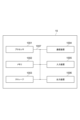
- FIG. 1 is a diagram showing a configuration of a character control device according to an embodiment of the present invention
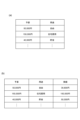
- 11 is a diagram showing an example of determination information acquired by the character control device.
- FIG. 11 is a diagram showing an example of determination information acquired by the character control device.
- FIG. 3 is a flowchart showing a character control method which is a process executed by the character control device according to the embodiment of the present invention.
- 1 is a diagram illustrating a hardware configuration of a character control device according to an embodiment of the present invention.
- Figure 1 shows a character control device 10 according to this embodiment.
- the character control device 10 is a device (system) that determines the attributes of a character in a virtual space.
- the character control device 10 also reflects (controls) the determined attributes in the character.
- the virtual space in which the character whose attributes are to be determined exists is realized by a computer prepared by the provider of the virtual space.
- a virtual space is as follows: The virtual space is used by a user (player). The user accesses the virtual space (a computer that realizes the virtual space) using an information processing device (for example, a smart device such as a smartphone or smart glasses, or a PC (personal computer)). The information processing device outputs in a format that the user can recognize, such as a display corresponding to the virtual space.
- an information processing device for example, a smart device such as a smartphone or smart glasses, or a PC (personal computer)
- the information processing device outputs in a format that the user can recognize, such as a display corresponding to the virtual space.
- the virtual space may be for a game.
- a game is one in which a user controls a character and fights against another user's character or other enemies. This embodiment will be explained using this example.
- the game does not have to be the above-mentioned type, and it is sufficient if a character related to the user exists in the virtual space.
- the character whose attributes are to be determined is, for example, a character in a virtual space that is operated (used) by a user.
- the character may be the user's avatar.
- the character has an attribute whose attributes are to be determined.
- the attribute is, for example, the ability value (parameter) of the character.
- the ability value of the character is related to the game, and is, for example, attack power, defense power, hit points (HP), and magic points (MP).
- the attribute may also be, for example, the character's appearance.
- the attribute whose attributes are to be determined may also be something other than the above, so long as it is related to the character.
- the virtual space in which the above characters exist may be, for example, a conventional metaverse or a virtual space for games.
- the virtual space and characters may also be other than those described above.
- the virtual space may be one in which a character whose attributes are to be determined by the character control device 10 may exist. In other words, the virtual space may be one used for purposes other than games.
- the characters may have attributes that are determined by the character control device 10.
- the character control device 10 is configured by a computer such as a PC or a server device.
- the character control device 10 may be configured by multiple computers.
- the character control device 10 may be capable of transmitting and receiving information to and from other devices via a network in order to obtain information necessary to realize functions.
- the character control device 10 may also be a computer that realizes a virtual space.
- the character control device 10 judges the degree of a user's shopping skill based on the judgment information, which includes information indicating the user's shopping behavior. Based on the judgment result, the character control device 10 determines the attributes of a character related to the user in the virtual space. For example, if it is judged that the user is a good shopper, the character attributes are determined to give the user an advantage in the game.
- the character associated with the user can be made to correspond to the user's shopping skill level. That is, the character can be developed according to the user's shopping behavior.
- the user can deepen his or her interest in the character in the virtual space, or in the virtual space itself. For example, the user can enjoy developing a character according to the shopping experience.
- the character control device 10 is configured to include an acquisition unit 11, a determination unit 12, and a decision unit 13.
- the acquisition unit 11 is a functional unit that acquires information for judgment including information indicating the user's shopping behavior.
- the acquisition unit 11 may acquire information indicating the user's shopping history as the information indicating the behavior.
- the acquisition unit 11 may further acquire information indicating the user's shopping plan as the information for judgment.
- the acquisition unit 11 may further acquire information related to points related to the purchase as the information indicating the user's shopping history.
- the acquisition unit 11 may acquire information indicating the user's behavior before shopping as the information indicating the behavior.
- the information for judgment acquired by the acquisition unit 11 is information used to judge the degree of a user's shopping skill.
- the information for judgment includes information indicating the user's shopping behavior.
- the shopping may be shopping in real space (real shopping), shopping in virtual space, or a combination of both.
- Being a good shopper means, for example, shopping at low prices, buying only what is necessary and not buying unnecessary items, or shopping according to plan. Being a good shopper may also mean other things than those mentioned above.
- the judgment information is, for example, information indicating when, what, and for how much the user purchased, as well as the user's behavior before and during shopping.
- FIG. 2 shows an example of judgment information acquired by the acquisition unit 11.
- the judgment information shown in FIG. 2 relates to online shopping in which the user purchased a product or service (hereinafter also referred to as a product, etc.) from an online sales site.
- the online sales site may be a store in a virtual space (e.g., the metaverse).
- the judgment information may also relate to the user's purchase of a product, etc. in an actual store.
- the judgment information is information associated with the user. As shown in FIG. 2, the judgment information is associated with information on date and time, purchased product/service, amount, points accumulated, whether or not points were used, number of product views, and the period from first viewing to purchase.
- the date and time is information indicating the time when the user purchased the product, etc., and in this example, is information on the date, time, and minute.
- the purchased product/service is information indicating the product or service purchased by the user, and in this example, is the product name or service name.
- the amount is information indicating the amount of the product, etc. purchased by the user.
- Point accumulation and whether or not points have been used are information related to points. Points may be those of a conventional point program. For example, after points are awarded, they can be applied to the purchase price in payment or exchanged for goods. Point accumulation is information indicating whether or not points have been accumulated by purchasing goods, etc. Point utilization is information indicating whether or not the user has utilized accumulated points to purchase goods, etc.
- the number of product views is information indicating the number of products, etc. whose information was viewed by the user on the sales site at the time the product, etc. was purchased (e.g., the number of pages of the product, etc. accessed by the user).
- the number of products, etc. may be the number of products, etc. related to the product, etc. purchased by the user (e.g., the number of products, etc. in a similar genre).
- the period from first viewing to purchase is information indicating the period from the first time the user viewed the product, etc. on the sales site to the time the user purchased the product, etc., and in this example is information in hours and minutes.
- the determination information shown in FIG. 2 includes information indicating the user's shopping history (date and time, purchased product/service, amount, points accumulated and whether or not points were used).
- the information indicating the user's shopping history also includes information related to points for that purchase (points accumulated and whether or not points were used).
- the determination information also includes information indicating the user's behavior before shopping (number of product views and the time it took from the first view to purchase).
- the acquisition unit 11 requests the determination information from a sales site system on the Internet and receives and acquires the determination information from the system.
- the acquisition unit 11 may also acquire the determination information by any other method.
- the information for determination may also include, for example, information indicating the user's shopping plan.
- FIG. 3(a) shows an example of information indicating the user's shopping plan. This information is associated with the user. As shown in FIG. 3(b), this information is associated with each piece of information on budget and purpose.
- the budget is information indicating the amount of money the user plans to spend for the corresponding purpose.
- the purpose is information indicating the purpose for which the budget will be used. As shown in FIG. 3, the purposes are freedom, housing expenses, savings, etc. The purposes include those related to the user's shopping.
- the budget amount is, for example, on a monthly or annual basis. That is, the information shown in FIG. 3(a) is information for a monthly or annual plan.
- the information for determination includes information on actual results against the plan.
- Figure 3(b) shows an example of information for determination including information on actual results.
- the information for determination is information on actual results that is associated with a budget and a use.
- Actual results are information that indicate the amount actually used by the user for the corresponding use. The actual amount is for the same period as the budget amount, for example, on a monthly or annual basis.
- the acquisition unit 11 receives and acquires the information for judgment transmitted from the user's terminal. That is, the acquisition unit 11 acquires the information for judgment by user registration. Specifically, the acquisition unit 11 may acquire plan information shown in FIG. 3(a) before the target period, and acquire actual results information shown in FIG. 3(b) after the target period. Alternatively, the acquisition unit 11 may acquire information including both the plan and actual results shown in FIG. 3(b) after the target period. The acquisition unit 11 may also acquire the information for judgment shown in FIG. 2, and generate and acquire the information on actual results (which may be a part of the actual results) shown in FIG. 3(b) from the acquired information for judgment.
- the purpose may be associated in advance with each content of the purchased product/service, and the acquisition unit 11 may tally up the amount for each purpose from the information for judgment shown in FIG. 2 to obtain the information on actual results.
- the acquisition unit 11 may also acquire the information for judgment by any other method.
- the acquisition unit 11 may acquire information for judgment other than the above, as long as the information indicates the user's shopping behavior and can be used to judge the user's shopping skill.
- the acquisition unit 11 outputs the acquired information for judgment to the judgment unit 12.
- the determination unit 12 is a functional unit that determines the degree of a user's shopping skill based on the determination information acquired by the acquisition unit 11. For example, the determination unit 12 determines the degree of a user's shopping skill as follows.
- the determination unit 12 determines the degree of shopping skill of the user as a numerical value, which is the shopping skill level. For example, the higher the numerical value of the shopping skill level, the better the user is at shopping. However, the determination unit 12 may determine the degree of shopping skill of the user using a value other than a numerical value.
- the judgment unit 12 inputs the judgment information from the acquisition unit 11.
- the judgment unit 12 pre-stores judgment criteria for judging the user's shopping skill level based on the judgment information, and makes a judgment using the judgment criteria.
- the judgment criteria for example, a shopping skill level is set in advance for each content of the judgment information.
- the judgment unit 12 judges the shopping skill level from the input judgment information based on (1) criteria related to planning, (2) criteria related to payment method, and (3) criteria related to behavior leading up to purchase.
- (1) Criteria related to planning are, for example, (i) whether the purchase is within the planned budget (for example, monthly or yearly plan).
- (2) Criteria related to payment method are, for example, (i) criteria related to point utilization (for example, whether points are utilized), and (ii) criteria related to point accumulation (for example, whether the purchase is made at a store where points can be accumulated).
- Criteria related to behavior leading up to purchase are, for example, (i) criteria related to product/service comparison (whether a purchase is made as a result of viewing multiple products or services). Any of the above criteria (1) to (3) may be used for the judgment, or a combination of these may be used for the judgment.
- the judgment unit 12 judges (determines) the shopping skill level to be +10. If the actual amount is 20% lower than the budget amount, the judgment unit 12 judges (determines) the shopping skill level to be +20. If the actual amount is 10% higher than the budget amount, the judgment unit 12 judges (determines) the shopping skill level to be -10. If the actual amount is 20% higher than the budget amount, the judgment unit 12 judges (determines) the shopping skill level to be -20. In this way, if the actual amount is lower than the budget, the judgment unit 12 judges the user to be a good shopper, and if the actual amount is higher than the budget, the judgment unit 12 judges the user to be a bad shopper.
- the determination unit 12 may perform the above determination for a preset use (e.g., a use with "free”). For the use with "free” in the determination information shown in FIG. 3(b), the actual amount is 20% lower than the budget amount, so the shopping skill level is determined to be +20. Alternatively, the determination unit 12 may perform the above determination for each use, or for the total of multiple uses.
- a preset use e.g., a use with "free”
- the actual amount is 20% lower than the budget amount, so the shopping skill level is determined to be +20.
- the determination unit 12 may perform the above determination for each use, or for the total of multiple uses.
- the judgment unit 12 may judge the shopping skill level as follows. If the user accumulates 10% more points than planned, the judgment unit 12 judges (determines) the shopping skill level to be +10. If the user accumulates 20% more points than planned, the judgment unit 12 judges (determines) the shopping skill level to be +20.
- the judgment unit 12 may judge the shopping skill level as follows. If the user uses 10% more points than planned, the judgment unit 12 judges (determines) the shopping skill level as +10 or -10. If the user uses 20% more points than planned, the judgment unit 12 judges (determines) the shopping skill level as +20 or -20. In this way, if the accumulation or usage of points is appropriate, the judgment unit 12 judges the user to be a good shopper, and if the accumulation or usage of points is inappropriate, the judgment unit 12 judges the user to be a not a good shopper.
- the judgment unit 12 judges (determines) the shopping skill level according to the number of product views. For example, the judgment unit 12 judges (determines) the shopping skill level to be a value of +(number of product views-reference value). For example, if the number of product views exceeds the reference value by 10 times, the judgment unit 12 judges (determines) the shopping skill level to be +10. If the number of product views exceeds the reference value by 20 times, the judgment unit 12 judges (determines) the shopping skill level to be +20. In this way, if the user's behavior before shopping is appropriate, for example, if the user refers to a lot of information on other products before purchasing a product, as described above, the judgment unit 12 judges the user to be a good shopper.
- the determination unit 12 may perform a determination other than the above as long as it determines the degree of shopping skill of the user based on the determination information.
- the determination unit 12 outputs information indicating the degree of shopping skill of the user, for example, the shopping skill level, to the determination unit 13.
- the determination unit 13 is a functional unit that determines the attributes of a character related to a user in a virtual space based on the determination result by the determination unit 12.
- the determination unit 13 may determine the ability value of the character as the character's attribute.
- the determination unit 13 may determine the appearance of the character as the character's attribute. For example, the determination unit 13 determines the character's attribute as follows.
- the determination unit 13 inputs information indicating the user's shopping skill level, for example, shopping skill level, from the judgment unit 12.
- the determination unit 13 pre-stores decision criteria for determining the attributes of a character based on the shopping skill level, and makes a decision using the decision criteria.
- the determination unit 13 pre-stores a correspondence relationship between a user whose shopping skill level is to be judged and a character whose attributes are to be determined, i.e., a character operated by the user.
- the determination unit 13 determines the character attributes corresponding to the input shopping skill level based on the correspondence relationship.
- the determination unit 13 determines the ability values (e.g., attack power, defense power, HP, and MP) of a character that reflects the shopping skill level. For example, if the shopping skill level is +10, the determination unit 13 increases the attack power of the corresponding character by +10.
- the judgment unit 12 judges the shopping skill level for each criterion (for example, the above-mentioned (1) criterion related to planning, (2) criterion related to payment method, and (3) criterion related to actions leading up to purchase)
- the determination unit 13 may determine a type of ability value preset for each criterion according to the shopping skill level.
- the determination unit 13 may also determine the ability value of the character based on information other than the shopping skill determined by the determination unit 12.
- the information other than the shopping skill is, for example, information indicating the number of points held by the user or savings.
- the determination unit 13 acquires the information.
- the information may be acquired by a conventional method. For example, (1) if the shopping skill based on the standard related to planning is +10 and the user has accumulated points equal to or greater than a preset threshold or has saved money, the character's attack power is increased.
- the threshold may be set by the user or an administrator of the character control device 10. Alternatively, the threshold may be set according to the character whose attributes are to be determined (for example, according to the level or strength of the character).
- the determination unit 13 may also determine the attributes of a character, for example, the ability value of a character, based on the determination information acquired by the acquisition unit 11. In this case, the acquisition unit 11 outputs the acquired determination information to the determination unit 13, and the determination unit 13 inputs the determination information from the acquisition unit 11. Note that the determination information used to determine the attributes of a character may or may not be used in the determination by the determination unit 12.
- the determination unit 13 may add to the character's ability value (e.g., HP) according to the accumulated points. If a user uses points by shopping, or if the user's points have expired, the determination unit 13 may subtract from the character's ability value (e.g., HP) according to the points used, etc.
- the character's ability value e.g., HP
- the determination unit 13 may increase the character's ability value (e.g., HP).
- the determination unit 13 may decrease the character's ability value (e.g., HP) according to the savings used.
- the determination unit 13 may also determine the character's appearance to reflect the shopping skill level. For example, the determination unit 13 stores in advance a correspondence between the shopping skill level and the character's appearance, and determines the character's appearance using the correspondence.
- the determination unit 13 may also determine the character's appearance based on the judgment information acquired by the acquisition unit 11. If the user purchases a product related to sports using an amount equal to or greater than a preset threshold, the determination unit 13 determines the character's appearance to be sporty. If the user purchases a product related to animation using an amount equal to or greater than a preset threshold, the determination unit 13 determines the character's appearance to be the appearance of a character related to the animation.
- the threshold may be calculated from the planned budget and actual results. For example, the threshold may be set to 20% of the amount of money available for free use. The threshold may also be determined depending on whether the purchase is made during a campaign period. The threshold may also be set by the user or an administrator of the character control device 10. Alternatively, the threshold may be set depending on the character whose attributes are to be determined (for example, depending on the level or strength of the character).
- the determination unit 13 may make decisions other than those described above, so long as it determines the attributes of a character related to the user in the virtual space based on the determination result by the determination unit 12.
- the determination unit 13 reflects the determined character attributes in the character associated with the user in the virtual space. For example, the determination unit 13 transmits the determined character attributes to a computer that realizes the virtual space and the character in the virtual space, and reflects the attributes in the character. In this way, the determination unit 13 controls the character associated with the user in the virtual space.
- the determination unit 13 may control the character using the determined character attributes in a manner other than the above.
- the acquisition unit 11 acquires judgment information including information indicating the user's shopping behavior (S01, acquisition step).
- the judgment unit 12 judges the user's shopping skill level based on the judgment information acquired by the acquisition unit 11 (S02, judgment step).
- the determination unit 13 determines attributes of a character related to the user in the virtual space based on the judgment result by the determination unit 12, and reflects these in the character related to the user in the virtual space (S03, determination step). This concludes the character control method which is a process executed by the character control device 10 according to this embodiment.
- the character associated with the user can be made to correspond to the user's level of shopping skill.
- the user can deepen his or her interest in the character in the virtual space or in the virtual space itself.
- the acquisition unit 11 may acquire information indicating the user's shopping history as information indicating the behavior of the determination information.
- the acquisition unit 11 may further acquire information indicating the user's shopping plan as information for determination.
- the acquisition unit 11 may further acquire information indicating the user's shopping plan as information for determination.
- the acquisition unit 11 may acquire information related to points associated with a purchase as information indicating the user's shopping history.
- the acquisition unit 11 may acquire information indicating the user's pre-shopping behavior as the information indicating the behavior of the judgment information.
- the judgment information does not necessarily have to be the above, as long as it includes information indicating the user's shopping-related behavior.
- the determination unit 13 may determine the ability value of the character as the character's attribute. As in this embodiment, the determination unit 13 may determine the appearance of the character as the character's attribute. These configurations can make the user more interested in the characters in the virtual space or in the virtual space itself. However, the determined character attributes do not necessarily have to be those described above.
- each functional block may be realized using one device that is physically or logically coupled, or may be realized using two or more devices that are physically or logically separated and connected directly or indirectly (for example, using wires, wirelessly, etc.) and these multiple devices.
- the functional blocks may be realized by combining the one device or the multiple devices with software.
- Functions include, but are not limited to, judgement, determination, judgment, calculation, computation, processing, derivation, investigation, search, confirmation, reception, transmission, output, access, resolution, selection, selection, establishment, comparison, assumption, expectation, regarding, broadcasting, notifying, communicating, forwarding, configuring, reconfiguring, allocating, mapping, and assignment.
- a functional block (component) that performs the transmission function is called a transmitting unit or transmitter.
- the character control device 10 in one embodiment of the present disclosure may function as a computer that performs the information processing of the present disclosure.
- FIG. 5 is a diagram showing an example of a hardware configuration of the character control device 10 according to one embodiment of the present disclosure.
- the character control device 10 described above may be physically configured as a computer device including a processor 1001, memory 1002, storage 1003, communication device 1004, input device 1005, output device 1006, bus 1007, etc.
- the word "apparatus” can be interpreted as a circuit, device, unit, etc.
- the hardware configuration of the character control device 10 may be configured to include one or more of the devices shown in the figure, or may be configured to exclude some of the devices.
- Each function of the character control device 10 is realized by loading a specific software (program) onto hardware such as the processor 1001 and memory 1002, causing the processor 1001 to perform calculations, control communications via the communication device 1004, and control at least one of the reading and writing of data in the memory 1002 and storage 1003.
- a specific software program
- the processor 1001 for example, operates an operating system to control the entire computer.
- the processor 1001 may be configured as a central processing unit (CPU) including an interface with peripheral devices, a control device, an arithmetic unit, registers, etc.
- CPU central processing unit
- each function in the character control device 10 described above may be realized by the processor 1001.
- the processor 1001 also reads out programs (program codes), software modules, data, etc. from at least one of the storage 1003 and the communication device 1004 into the memory 1002, and executes various processes according to these.
- the programs used are those that cause a computer to execute at least some of the operations described in the above-mentioned embodiments.
- each function in the character control device 10 may be realized by a control program stored in the memory 1002 and running on the processor 1001.
- each function in the character control device 10 may be realized by a control program stored in the memory 1002 and running on the processor 1001.
- the processor 1001 may be implemented by one or more chips.
- the programs may be transmitted from a network via a telecommunications line.
- Memory 1002 is a computer-readable recording medium, and may be composed of at least one of, for example, ROM (Read Only Memory), EPROM (Erasable Programmable ROM), EEPROM (Electrically Erasable Programmable ROM), RAM (Random Access Memory), etc.
- Memory 1002 may also be called a register, cache, main memory (primary storage device), etc.
- Memory 1002 can store executable programs (program codes), software modules, etc., for performing information processing related to one embodiment of the present disclosure.
- Storage 1003 is a computer-readable recording medium, and may be composed of at least one of an optical disk such as a CD-ROM (Compact Disc ROM), a hard disk drive, a flexible disk, a magneto-optical disk (e.g., a compact disk, a digital versatile disk, a Blu-ray (registered trademark) disk), a smart card, a flash memory (e.g., a card, a stick, a key drive), a floppy (registered trademark) disk, a magnetic strip, etc.
- Storage 1003 may also be called an auxiliary storage device.
- the storage medium provided by the character control device 10 may be, for example, a database, a server, or other suitable medium that includes at least one of memory 1002 and storage 1003.
- the communication device 1004 is hardware (transmitting/receiving device) for communicating between computers via at least one of a wired network and a wireless network, and is also called, for example, a network device, a network controller, a network card, a communication module, etc.
- the input device 1005 is an input device (e.g., a keyboard, a mouse, a microphone, a switch, a button, a sensor, etc.) that accepts input from the outside.
- the output device 1006 is an output device (e.g., a display, a speaker, an LED lamp, etc.) that performs output to the outside. Note that the input device 1005 and the output device 1006 may be integrated into one structure (e.g., a touch panel).
- each device such as the processor 1001 and memory 1002 is connected by a bus 1007 for communicating information.
- the bus 1007 may be configured using a single bus, or may be configured using different buses between each device.
- the character control device 10 may also be configured to include hardware such as a microprocessor, a digital signal processor (DSP), an application specific integrated circuit (ASIC), a programmable logic device (PLD), or a field programmable gate array (FPGA), and some or all of the functional blocks may be realized by the hardware.
- the processor 1001 may be implemented using at least one of these pieces of hardware.
- the input and output information may be stored in a specific location (e.g., memory) or may be managed using a management table.
- the input and output information may be overwritten, updated, or added to.
- the output information may be deleted.
- the input information may be sent to another device.
- the determination may be based on a value represented by one bit (0 or 1), a Boolean value (true or false), or a numerical comparison (e.g., a comparison with a predetermined value).
- notification of specific information is not limited to being done explicitly, but may be done implicitly (e.g., not notifying the specific information).
- Software shall be construed broadly to mean instructions, instruction sets, code, code segments, program code, programs, subprograms, software modules, applications, software applications, software packages, routines, subroutines, objects, executable files, threads of execution, procedures, functions, etc., whether referred to as software, firmware, middleware, microcode, hardware description language, or otherwise.
- Software, instructions, information, etc. may also be transmitted and received via a transmission medium.
- a transmission medium For example, if the software is transmitted from a website, server, or other remote source using at least one of wired technologies (such as coaxial cable, fiber optic cable, twisted pair, Digital Subscriber Line (DSL)), and/or wireless technologies (such as infrared, microwave), then at least one of these wired and wireless technologies is included within the definition of a transmission medium.
- wired technologies such as coaxial cable, fiber optic cable, twisted pair, Digital Subscriber Line (DSL)
- wireless technologies such as infrared, microwave
- system and “network” are used interchangeably.
- information, parameters, etc. described in this disclosure may be expressed using absolute values, may be expressed using relative values from a predetermined value, or may be expressed using other corresponding information.
- determining may encompass a wide variety of actions.
- Determining and “determining” may include, for example, judging, calculating, computing, processing, deriving, investigating, looking up, search, inquiry (e.g., searching in a table, database, or other data structure), and considering ascertaining as “judging” or “determining.”
- determining and “determining” may include receiving (e.g., receiving information), transmitting (e.g., sending information), input, output, accessing (e.g., accessing data in memory), and considering ascertaining as “judging” or “determining.”
- judgment” and “decision” can include considering resolving, selecting, choosing, establishing, comparing, etc., to have been “judged” or “decided.” In other words, “judgment” and “decision” can include considering some action to have been “judged” or “decided.” Additionally, “judgment (decision)” can be interpreted as “assuming,” “ex
- connection refers to any direct or indirect connection or coupling between two or more elements, and may include the presence of one or more intermediate elements between two elements that are “connected” or “coupled” to each other.
- the coupling or connection between elements may be physical, logical, or a combination thereof.
- “connected” may be read as "access.”
- two elements may be considered to be “connected” or “coupled” to each other using at least one of one or more wires, cables, and printed electrical connections, as well as electromagnetic energy having wavelengths in the radio frequency range, microwave range, and optical (both visible and invisible) range, as some non-limiting and non-exhaustive examples.
- the phrase “based on” does not mean “based only on,” unless expressly stated otherwise. In other words, the phrase “based on” means both “based only on” and “based at least on.”
- any reference to an element using a designation such as "first,” “second,” etc., used in this disclosure does not generally limit the quantity or order of those elements. These designations may be used in this disclosure as a convenient method of distinguishing between two or more elements. Thus, a reference to a first and a second element does not imply that only two elements may be employed or that the first element must precede the second element in some way.
- a and B are different may mean “A and B are different from each other.”
- the term may also mean “A and B are each different from C.”
- Terms such as “separate” and “combined” may also be interpreted in the same way as “different.”
- the character control device and the character control method of the present disclosure have the following configuration.
- An acquisition unit that acquires determination information including information indicating a user's shopping behavior; a determination unit that determines a shopping skill level of the user based on the determination information acquired by the acquisition unit; a determination unit that determines attributes of a character related to the user in a virtual space based on a result of the determination by the determination unit;
- a character control device comprising: [2] The character control device according to [1], wherein the acquisition unit acquires information indicating a user's shopping history as the information indicating the behavior. [3] The character control device according to [2], wherein the acquisition unit further acquires information indicating the user's shopping plans as the information for determination.
- [4] The character control device according to [2] or [3], wherein the acquisition unit acquires information relating to points related to the purchase as information indicating the user's shopping history.
- [5] The character control device according to any one of [1] to [4], wherein the acquisition unit acquires information indicating a user's pre-shopping behavior as the information indicating the behavior.
- [6] The character control device according to any one of [1] to [5], wherein the determination unit determines an ability value of the character as an attribute of the character.
- [7] The character control device according to any one of [1] to [6], wherein the determination unit determines an appearance of the character as an attribute of the character.
- a character control method comprising:
- 10 character control device, 11: acquisition unit, 12: judgment unit, 13: decision unit, 1001: processor, 1002: memory, 1003: storage, 1004: communication device, 1005: input device, 1006: output device, 1007: bus.
Landscapes
- Engineering & Computer Science (AREA)
- Multimedia (AREA)
- Human Computer Interaction (AREA)
- Theoretical Computer Science (AREA)
- Management, Administration, Business Operations System, And Electronic Commerce (AREA)
Priority Applications (2)
| Application Number | Priority Date | Filing Date | Title |
|---|---|---|---|
| JP2025563135A JPWO2025126379A1 (https=) | 2023-12-13 | 2023-12-13 | |
| PCT/JP2023/044685 WO2025126379A1 (ja) | 2023-12-13 | 2023-12-13 | キャラクタ制御装置及びキャラクタ制御方法 |
Applications Claiming Priority (1)
| Application Number | Priority Date | Filing Date | Title |
|---|---|---|---|
| PCT/JP2023/044685 WO2025126379A1 (ja) | 2023-12-13 | 2023-12-13 | キャラクタ制御装置及びキャラクタ制御方法 |
Publications (1)
| Publication Number | Publication Date |
|---|---|
| WO2025126379A1 true WO2025126379A1 (ja) | 2025-06-19 |
Family
ID=96056657
Family Applications (1)
| Application Number | Title | Priority Date | Filing Date |
|---|---|---|---|
| PCT/JP2023/044685 Pending WO2025126379A1 (ja) | 2023-12-13 | 2023-12-13 | キャラクタ制御装置及びキャラクタ制御方法 |
Country Status (2)
| Country | Link |
|---|---|
| JP (1) | JPWO2025126379A1 (https=) |
| WO (1) | WO2025126379A1 (https=) |
Citations (6)
| Publication number | Priority date | Publication date | Assignee | Title |
|---|---|---|---|---|
| JP2003076846A (ja) * | 2001-08-30 | 2003-03-14 | Toshiba Corp | 家計管理支援方法、家計データ入力プログラム、その記録媒体、家計管理支援プログラム、その記録媒体及び家計管理サーバ |
| JP2004215722A (ja) * | 2003-01-09 | 2004-08-05 | Aruze Corp | ネットゲームシステム、ネットゲームサーバ及び広告表示方法 |
| JP2009205256A (ja) * | 2008-02-26 | 2009-09-10 | Dainippon Printing Co Ltd | 栄養情報提供システム、サーバ、プログラム |
| CN111652673A (zh) * | 2020-05-09 | 2020-09-11 | 腾讯科技(深圳)有限公司 | 智能推荐方法、装置、服务器和存储介质 |
| JP2022189366A (ja) * | 2021-06-11 | 2022-12-22 | 株式会社Nttドコモ | 家計簿管理装置 |
| JP7242955B1 (ja) * | 2022-09-29 | 2023-03-20 | 株式会社バンダイ | 情報処理装置、プログラム及びゲームシステム |
-
2023
- 2023-12-13 JP JP2025563135A patent/JPWO2025126379A1/ja active Pending
- 2023-12-13 WO PCT/JP2023/044685 patent/WO2025126379A1/ja active Pending
Patent Citations (6)
| Publication number | Priority date | Publication date | Assignee | Title |
|---|---|---|---|---|
| JP2003076846A (ja) * | 2001-08-30 | 2003-03-14 | Toshiba Corp | 家計管理支援方法、家計データ入力プログラム、その記録媒体、家計管理支援プログラム、その記録媒体及び家計管理サーバ |
| JP2004215722A (ja) * | 2003-01-09 | 2004-08-05 | Aruze Corp | ネットゲームシステム、ネットゲームサーバ及び広告表示方法 |
| JP2009205256A (ja) * | 2008-02-26 | 2009-09-10 | Dainippon Printing Co Ltd | 栄養情報提供システム、サーバ、プログラム |
| CN111652673A (zh) * | 2020-05-09 | 2020-09-11 | 腾讯科技(深圳)有限公司 | 智能推荐方法、装置、服务器和存储介质 |
| JP2022189366A (ja) * | 2021-06-11 | 2022-12-22 | 株式会社Nttドコモ | 家計簿管理装置 |
| JP7242955B1 (ja) * | 2022-09-29 | 2023-03-20 | 株式会社バンダイ | 情報処理装置、プログラム及びゲームシステム |
Also Published As
| Publication number | Publication date |
|---|---|
| JPWO2025126379A1 (https=) | 2025-06-19 |
Similar Documents
| Publication | Publication Date | Title |
|---|---|---|
| US20210319468A1 (en) | Information processing method, server, first terminal, and computer storage medium | |
| US20120066040A1 (en) | Virtual-world benefit to motivate physical-world purchase | |
| US20240283650A1 (en) | Information processing device, information processing method, and program | |
| JP7580878B2 (ja) | 情報処理方法、プログラム、及び情報処理装置 | |
| CN111260449B (zh) | 一种模型训练的方法、商品推荐的方法、装置及存储介质 | |
| CN111932319B (zh) | 权益配置方法、装置、存储介质及计算机设备 | |
| CN111054078B (zh) | 对象信息获取方法及装置 | |
| JP7337017B2 (ja) | 還元値設定システム及び還元値設定方法 | |
| WO2025126379A1 (ja) | キャラクタ制御装置及びキャラクタ制御方法 | |
| US11423433B2 (en) | Payment system, method for providing information, and program | |
| JP7679483B2 (ja) | 領域価値評価システム | |
| JP6835680B2 (ja) | 情報処理装置および信用度算出方法 | |
| JP7809798B2 (ja) | 興味推定装置 | |
| JP6934343B2 (ja) | 情報処理装置および決済方法 | |
| WO2025104918A1 (ja) | キャラクタ評価装置及びキャラクタ評価方法 | |
| KR100390556B1 (ko) | 사이트 메신저를 이용한 전자 상거래 방법 | |
| JP7572809B2 (ja) | 情報提供装置 | |
| WO2025094384A1 (ja) | 仮想空間評価システム | |
| WO2025120862A1 (ja) | 決済用装置及び決済用方法 | |
| WO2025141805A1 (ja) | 情報処理装置及び情報処理方法 | |
| WO2025115227A1 (ja) | 提案システム | |
| WO2025177352A1 (ja) | 情報処理装置及び情報処理方法 | |
| JP6876118B1 (ja) | 情報処理装置 | |
| WO2025126492A1 (ja) | 情報処理装置 | |
| TWI860510B (zh) | 提供商務服務的方法、電腦裝置及電腦可讀取記錄媒體 |
Legal Events
| Date | Code | Title | Description |
|---|---|---|---|
| 121 | Ep: the epo has been informed by wipo that ep was designated in this application |
Ref document number: 23961445 Country of ref document: EP Kind code of ref document: A1 |
|
| ENP | Entry into the national phase |
Ref document number: 2025563135 Country of ref document: JP Kind code of ref document: A |