WO2025105102A1 - 誘電体層用スラリー組成物、誘電体層、積層セラミックコンデンサ用積層体及びその製造方法、並びに積層セラミックコンデンサ - Google Patents
誘電体層用スラリー組成物、誘電体層、積層セラミックコンデンサ用積層体及びその製造方法、並びに積層セラミックコンデンサ Download PDFInfo
- Publication number
- WO2025105102A1 WO2025105102A1 PCT/JP2024/036896 JP2024036896W WO2025105102A1 WO 2025105102 A1 WO2025105102 A1 WO 2025105102A1 JP 2024036896 W JP2024036896 W JP 2024036896W WO 2025105102 A1 WO2025105102 A1 WO 2025105102A1
- Authority
- WO
- WIPO (PCT)
- Prior art keywords
- dielectric layer
- mass
- slurry composition
- water
- soluble polymer
- Prior art date
- Legal status (The legal status is an assumption and is not a legal conclusion. Google has not performed a legal analysis and makes no representation as to the accuracy of the status listed.)
- Pending
Links
Images
Classifications
-
- C—CHEMISTRY; METALLURGY
- C04—CEMENTS; CONCRETE; ARTIFICIAL STONE; CERAMICS; REFRACTORIES
- C04B—LIME, MAGNESIA; SLAG; CEMENTS; COMPOSITIONS THEREOF, e.g. MORTARS, CONCRETE OR LIKE BUILDING MATERIALS; ARTIFICIAL STONE; CERAMICS; REFRACTORIES; TREATMENT OF NATURAL STONE
- C04B35/00—Shaped ceramic products characterised by their composition; Ceramics compositions; Processing powders of inorganic compounds preparatory to the manufacturing of ceramic products
- C04B35/01—Shaped ceramic products characterised by their composition; Ceramics compositions; Processing powders of inorganic compounds preparatory to the manufacturing of ceramic products based on oxide ceramics
- C04B35/46—Shaped ceramic products characterised by their composition; Ceramics compositions; Processing powders of inorganic compounds preparatory to the manufacturing of ceramic products based on oxide ceramics based on titanium oxides or titanates
- C04B35/462—Shaped ceramic products characterised by their composition; Ceramics compositions; Processing powders of inorganic compounds preparatory to the manufacturing of ceramic products based on oxide ceramics based on titanium oxides or titanates based on titanates
- C04B35/465—Shaped ceramic products characterised by their composition; Ceramics compositions; Processing powders of inorganic compounds preparatory to the manufacturing of ceramic products based on oxide ceramics based on titanium oxides or titanates based on titanates based on alkaline earth metal titanates
- C04B35/468—Shaped ceramic products characterised by their composition; Ceramics compositions; Processing powders of inorganic compounds preparatory to the manufacturing of ceramic products based on oxide ceramics based on titanium oxides or titanates based on titanates based on alkaline earth metal titanates based on barium titanates
-
- H—ELECTRICITY
- H01—ELECTRIC ELEMENTS
- H01B—CABLES; CONDUCTORS; INSULATORS; SELECTION OF MATERIALS FOR THEIR CONDUCTIVE, INSULATING OR DIELECTRIC PROPERTIES
- H01B3/00—Insulators or insulating bodies characterised by the insulating materials; Selection of materials for their insulating or dielectric properties
-
- H—ELECTRICITY
- H01—ELECTRIC ELEMENTS
- H01G—CAPACITORS; CAPACITORS, RECTIFIERS, DETECTORS, SWITCHING DEVICES, LIGHT-SENSITIVE OR TEMPERATURE-SENSITIVE DEVICES OF THE ELECTROLYTIC TYPE
- H01G4/00—Fixed capacitors; Processes of their manufacture
- H01G4/30—Stacked capacitors
Definitions
- the present invention relates to a slurry composition for a dielectric layer, a dielectric layer, a laminate for a multilayer ceramic capacitor and a method for producing the same, and a multilayer ceramic capacitor.
- Multilayer ceramic capacitors are generally manufactured using dielectric layers such as ceramic green sheets.
- the dielectric layer can be obtained, for example, by first preparing a slurry composition containing a binder, a dielectric material, and a solvent, then applying the slurry composition onto a release substrate or the like, and then drying it. Then, an internal electrode layer is formed on the obtained dielectric layer, and laminated thereon, and a degreasing treatment (binder removal treatment) is optionally performed, followed by sintering to obtain a multilayer ceramic capacitor.
- a degreasing treatment bin removal treatment
- Patent Document 1 proposes a slurry composition that contains a dispersion medium made of an organic solvent, ceramic powder having a predetermined average particle size, and a binder made of a predetermined (meth)acrylate copolymer, as a slurry composition that can produce a ceramic green sheet that leaves little residual binder during binder removal treatment and has excellent smoothness and ceramic particle density after binder removal treatment.
- a conductive paste can be applied onto the dielectric layer to form an internal electrode layer, and from the standpoint of achieving good adhesion between the dielectric layer and the internal electrode layer and imparting excellent performance to the resulting multilayer ceramic capacitor, it is desirable for the dielectric layer to have excellent wettability to the conductive paste (hereinafter sometimes simply referred to as "wettability").
- an object of the present invention is to provide a slurry composition for a dielectric layer that can impart excellent wettability to a dielectric layer. Another object of the present invention is to provide a dielectric layer having excellent wettability. Another object of the present invention is to provide a laminate for a multilayer ceramic capacitor, which is capable of imparting excellent performance to the multilayer ceramic capacitor, and a method for producing the same. Another object of the present invention is to provide a multilayer ceramic capacitor with excellent performance.
- the present inventors have conducted extensive research with the aim of solving the above problems. As a result, the present inventors have newly discovered that the above problems can be solved by a slurry composition for a dielectric layer that contains a dielectric material having a perovskite structure, a water-soluble polymer, a predetermined amount of an antifoaming agent, and water, and have thus completed the present invention.
- an object of the present invention is to advantageously solve the above-mentioned problems, and [1] the present invention is a slurry composition for a dielectric layer, which contains a dielectric material having a perovskite structure, a water-soluble polymer, an antifoaming agent, and water, wherein the content of the antifoaming agent is 0.001 parts by mass or more and 1 part by mass or less, when the dielectric material is taken as 100 parts by mass.
- the above-mentioned slurry composition for a dielectric layer can impart excellent wettability to the dielectric layer.
- the water-soluble polymer preferably has a weight average molecular weight of 100,000 or more and 2,000,000 or less.
- the weight average molecular weight of the water-soluble polymer is equal to or higher than the above lower limit, the drying speed of the dielectric layer slurry composition can be improved.
- the weight average molecular weight of the water-soluble polymer is equal to or less than the above upper limit, the wettability of the resulting dielectric layer can be improved.
- the "weight average molecular weight" of a polymer can be measured by the method described in the examples of this specification.
- the defoaming agent is preferably at least one of a silicone-based defoaming agent and a nonionic surfactant.
- the defoaming agent is at least one of a silicone-based defoaming agent and a nonionic surfactant, the wettability of the resulting dielectric layer can be improved, and the coating density of the film obtained by using the dielectric layer slurry composition can be improved.
- the water-soluble polymer contains a structural unit having a hydrophilic group, and the hydrophilic group is at least one of a carboxylic acid group and a hydroxyl group. If the water-soluble polymer contains a structural unit having a hydrophilic group, and the hydrophilic group is at least one of a carboxylic acid group and a hydroxyl group, the wettability of the resulting dielectric layer can be further improved.
- the content of the water-soluble polymer is preferably 0.1 parts by mass or more and 10 parts by mass or less, based on 100 parts by mass of the dielectric material.
- the content of the water-soluble polymer is equal to or more than the above lower limit, the wettability of the resulting dielectric layer can be improved.
- the drying speed of the dielectric layer slurry composition can be improved, and the coating density of the resulting film can be improved.
- the mass ratio of the antifoaming agent to the water-soluble polymer is preferably 0.001 or more and 0.1 or less.
- the mass ratio of the defoaming agent to the water-soluble polymer is equal to or greater than the above lower limit, the wettability of the resulting dielectric layer can be improved.
- the mass ratio of the antifoaming agent to the water-soluble polymer is equal to or less than the above upper limit, the drying speed of the dielectric layer slurry composition can be improved.
- the slurry composition for a dielectric layer according to any one of the above [1] to [6] further contains a particulate polymer. If the slurry composition for the dielectric layer further contains a particulate polymer, the coating density of the resulting film can be improved.
- the present invention also aims to advantageously solve the above problems, and [8] the present invention is a dielectric layer obtained by drying a coating film made of a slurry composition for a dielectric layer according to any one of [1] to [7] above.
- the dielectric layer as described above has excellent wettability.
- the present invention also aims to advantageously solve the above-mentioned problems, and provides, [9] a laminate for a multilayer ceramic capacitor, comprising the dielectric layer of [8] above and an internal electrode layer provided on a surface of the dielectric layer, the internal electrode layer including a conductive material and a binder.
- the laminate for a multilayer ceramic capacitor as described above can impart excellent performance to the multilayer ceramic capacitor.
- the present invention also aims to advantageously solve the above-mentioned problems, and [10] the present invention provides a method for producing a laminate for a multilayer ceramic capacitor, comprising a dielectric layer and an internal electrode layer provided on a surface of the dielectric layer, the method comprising: a dielectric layer forming step of applying a slurry composition for a dielectric layer according to any one of [1] to [7] above onto a release substrate, and drying the applied film to form a dielectric layer; and an internal electrode layer forming step of applying a conductive paste containing a conductive material, a binder, and an organic solvent onto the dielectric layer, and drying the applied film to form an internal electrode layer.
- a dielectric layer forming step of applying a slurry composition for a dielectric layer according to any one of [1] to [7] above onto a release substrate, and drying the applied film to form a dielectric layer and an internal electrode layer forming step of applying a conductive paste containing a conductive material,
- the organic solvent is preferably a terpene-based solvent. If the organic solvent is a terpene solvent, the drying speed can be increased.
- the conductive material is preferably a powder of Ni or a Ni alloy. If the conductive material is Ni or Ni alloy powder, the electrical conductivity and corrosion resistance of the internal electrode layers can be improved, and the cost of the internal electrode layers can be reduced.
- Another object of the present invention is to advantageously solve the above problems, and the present invention [13] is a multilayer ceramic capacitor obtained by sintering the laminate for a multilayer ceramic capacitor according to the above [9].
- the multilayer ceramic capacitor described above has excellent performance.
- a slurry composition for a dielectric layer that can impart excellent wettability to a dielectric layer.
- a dielectric layer having excellent wettability can be provided.
- a laminate for a multilayer ceramic capacitor which is capable of imparting excellent performance to the multilayer ceramic capacitor, and a method for producing the same.
- a multilayer ceramic capacitor with excellent performance can be provided.
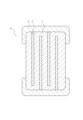
- FIG. 1 is a schematic cross-sectional view showing an example of a multilayer ceramic capacitor of the present invention.
- the slurry composition for dielectric layer of the present invention (hereinafter sometimes simply referred to as "slurry composition”) can be used to form a dielectric layer used in the manufacture of a multilayer ceramic capacitor.
- the dielectric layer of the present invention can be formed by drying a coating film made of the slurry composition of the present invention.
- the laminate for multilayer ceramic capacitor of the present invention (hereinafter sometimes simply referred to as "laminate”) includes the dielectric layer of the present invention and can be used to manufacture a multilayer ceramic capacitor.
- the multilayer ceramic capacitor of the present invention can be obtained by sintering the laminate of the present invention.
- the slurry composition for dielectric layer of the present invention contains a dielectric material having a perovskite structure (hereinafter, may be simply referred to as "dielectric material"), a water-soluble polymer, an antifoaming agent, and water, and may optionally contain a particulate polymer.
- the content of the antifoaming agent is 0.001 parts by mass or more and 1 part by mass or less, based on 100 parts by mass of the dielectric material.
- the above-mentioned slurry composition can provide excellent wettability to the dielectric layer.
- the slurry composition of the present invention effectively suppresses foaming of the slurry composition by using a predetermined amount of an antifoaming agent, and as a result, can provide excellent wettability to the dielectric layer.
- the above-mentioned slurry composition has an excellent drying speed since the content of the antifoaming agent is within a specified range.
- the above-mentioned slurry composition is inhibited from foaming, pinholes in the film obtained using the slurry composition can be effectively suppressed, thereby increasing the coating density and increasing the relative dielectric constant of the dielectric layer.
- the slurry composition of the present invention may optionally further contain components other than the dielectric material, water-soluble polymer, water, and particulate polymer (hereinafter, sometimes referred to as "other component A").
- the dielectric material has a perovskite structure.
- perovskite structure means a structure represented by the general formula ABO3
- dielectric material has a perovskite structure means that the structure represented by the general formula ABO3 exists in at least a part of the dielectric material.
- the slurry composition may optionally further contain a dielectric material other than the dielectric material having a perovskite structure.
- the dielectric material is not particularly limited as long as it has a perovskite structure, but a ceramic material having a perovskite structure as the main phase is preferable.
- the ceramic material include barium titanate (BaTiO 3 ), calcium zirconate (CaZrO 3 ), calcium titanate (CaTiO 3 ), strontium titanate (SrTiO 3 ), and Ba 1-x-y Ca x Sr y Ti 1-z Zr z O 3 (0 ⁇ x ⁇ 1, 0 ⁇ y ⁇ 1, 0 ⁇ z ⁇ 1) that forms a perovskite structure.
- barium titanate and calcium zirconate are preferable as ceramic materials having a perovskite structure as the main phase.
- the volume average particle diameter of the dielectric material is preferably 0.01 ⁇ m or more, more preferably 0.02 ⁇ m or more, even more preferably 0.05 ⁇ m or more, even more preferably 0.08 ⁇ m or more, and is preferably 1 ⁇ m or less, more preferably 0.8 ⁇ m or less, even more preferably 0.5 ⁇ m or less, even more preferably 0.3 ⁇ m or less, and even more preferably 0.2 ⁇ m or less.
- the volume average particle size of a dielectric material means a particle size at which the cumulative volume calculated from the small diameter side is 50% in a particle size distribution (volume basis) obtained by measurement using a laser diffraction method.
- the content of the dielectric material in the slurry composition is preferably 40% by mass or more, more preferably 50% by mass or more, and preferably 80% by mass or less, and more preferably 70% by mass or less, assuming that all components in the slurry composition (including the solvent) are 100% by mass.
- the water-soluble polymer is a component that can function as a viscosity modifier and a binder.
- the water-soluble polymer is not particularly limited, but preferably contains a structural unit having a hydrophilic group (hereinafter, sometimes referred to as a "hydrophilic group-containing structural unit"), since it can improve the wettability of the resulting dielectric layer.
- the hydrophilic group include acid groups such as carboxylic acid groups, sulfonic acid groups, and phosphoric acid groups; hydroxyl groups; amide groups; and the like.
- the hydrophilic group is preferably at least one of an acid group and a hydroxyl group, more preferably at least one of a carboxylic acid group and a hydroxyl group, and even more preferably a carboxylic acid group, since it can further improve the wettability of the resulting dielectric layer.
- the water-soluble polymer may contain a (meth)acrylic acid alkyl ester monomer unit in addition to the hydrophilic group-containing structural unit.
- the water-soluble polymer may also contain a monomer unit other than the hydrophilic group-containing structural unit and the (meth)acrylic acid alkyl ester monomer unit (hereinafter, sometimes referred to as "other monomer unit A").
- (meth)acrylic means acrylic and/or methacrylic.
- the structural unit having a hydrophilic group may be a structural unit that can be formed from a monomer having a hydrophilic group (hereinafter, may be referred to as a "hydrophilic group-containing monomer”), or may be a structural unit obtained by obtaining a water-soluble polymer using a monomer composition containing a monomer having a specific functional group, and then modifying or converting the functional group into a hydrophilic group.
- Examples of the carboxylic acid group-containing monomer capable of forming a structural unit having a carboxylic acid group as a hydrophilic group include monocarboxylic acids and derivatives thereof, dicarboxylic acids and acid anhydrides thereof, and derivatives thereof.
- Examples of the monocarboxylic acid include acrylic acid, methacrylic acid, and crotonic acid.
- Examples of the monocarboxylic acid derivatives include 2-ethylacrylic acid, isocrotonic acid, ⁇ -acetoxyacrylic acid, ⁇ -trans-aryloxyacrylic acid, ⁇ -chloro- ⁇ -E-methoxyacrylic acid, and ⁇ -diaminoacrylic acid.
- the dicarboxylic acid includes maleic acid, fumaric acid, itaconic acid, and the like.
- dicarboxylic acid derivatives include methylmaleic acid, dimethylmaleic acid, phenylmaleic acid, chloromaleic acid, dichloromaleic acid, fluoromaleic acid, and maleic acid esters such as methylallyl maleate, diphenyl maleate, nonyl maleate, decyl maleate, dodecyl maleate, octadecyl maleate, and fluoroalkyl maleate.
- the acid anhydrides of dicarboxylic acids include maleic anhydride, acrylic anhydride, methylmaleic anhydride, and dimethylmaleic anhydride.
- carboxylic acid group-containing monomer an acid anhydride which generates a carboxylic acid group upon hydrolysis can also be used.
- Other examples include monoesters and diesters of ⁇ , ⁇ -ethylenically unsaturated polyvalent carboxylic acids such as monoethyl maleate, diethyl maleate, monobutyl maleate, dibutyl maleate, monoethyl fumarate, diethyl fumarate, monobutyl fumarate, dibutyl fumarate, monocyclohexyl fumarate, dicyclohexyl fumarate, monoethyl itaconate, diethyl itaconate, monobutyl itaconate, and dibutyl itaconate.
- acrylic acid and methacrylic acid are preferred as the carboxylic acid group-containing monomer.
- sulfonic acid group-containing monomers capable of forming a structural unit having a sulfonic acid group as a hydrophilic group include vinyl sulfonic acid, methyl vinyl sulfonic acid, (meth)allyl sulfonic acid, styrene sulfonic acid, (meth)acrylic acid-2-ethyl sulfonate, 2-acrylamido-2-methylpropanesulfonic acid, 3-allyloxy-2-hydroxypropanesulfonic acid, etc.
- vinyl sulfonic acid is preferred.
- (meth)allyl means allyl and/or methallyl.
- Examples of phosphate group-containing monomers capable of forming a structural unit having a phosphate group as a hydrophilic group include 2-(meth)acryloyloxyethyl phosphate, methyl-2-(meth)acryloyloxyethyl phosphate, ethyl-(meth)acryloyloxyethyl phosphate, vinylphosphonic acid, and dimethyl vinylphosphonate.
- (meth)acryloyl means acryloyl and/or methacryloyl.
- amide group-containing monomers that can form structural units having an amide group as a hydrophilic group (hereinafter, sometimes referred to as "amide group-containing structural units").
- the structure of the structural unit having a hydroxyl group as a hydrophilic group (hereinafter, sometimes referred to as a "hydroxyl group-containing structural unit") is not particularly limited as long as it is a repeating unit having a hydroxyl group.
- the method for introducing the hydroxyl group-containing structural unit into the water-soluble polymer may be, for example, the following method (1) or (2): (1) A method for preparing a water-soluble polymer containing a hydroxyl group-containing structural unit from a monomer composition containing a hydroxyl group-containing monomer.
- Examples of the hydroxyl group-containing monomer used in the above method (1) include ethylenically unsaturated alcohols such as (meth)allyl alcohol, 3-buten-1-ol, and 5-hexen-1-ol; alkanol esters of ethylenically unsaturated carboxylic acids such as 2-hydroxyethyl acrylate, 2-hydroxypropyl acrylate, 2-hydroxyethyl methacrylate (2-hydroxyethyl methacrylate), 2-hydroxypropyl methacrylate, di-2-hydroxyethyl maleate, di-4-hydroxybutyl maleate, and di-2-hydroxypropyl itaconate; and monomers represented by the general formula: CH 2 ⁇ CR 1 -COO-(C q H 2q O) p -H (wherein p is an integer of 2 to 9, q is an integer of 2 to 4, and R esters of polyalkylene glycols represented by the formula (I, 1 represents hydrogen or a methyl group) with (meth
- polyoxyalkylene glycol mono(meth)allyl ethers such as diethylene glycol mono(meth)allyl ether and dipropylene glycol mono(meth)allyl ether; mono(meth)allyl ethers of halogen- and hydroxy-substituted (poly)alkylene glycols such as glycerin mono(meth)allyl ether, (meth)allyl-2-chloro-3-hydroxypropyl ether and (meth)allyl-2-hydroxy-3-chloropropyl ether; mono(meth)allyl ethers of polyhydric phenols such as eugenol and isoeugenol and halogen-substituted products thereof; (meth)allyl thioethers of alkylene glycols such as (meth)allyl-2-hydroxyethyl thioether and (meth)allyl-2-hydroxypropyl thioether; 2-hydroxyethyl(meth)
- alkanol esters of ethylenically unsaturated carboxylic acids are preferred, and 2-hydroxyethyl methacrylate (2-hydroxyethyl methacrylate) is more preferred.
- Examples of the vinyl carboxylate monomer used in the above method (2) include vinyl acetate, vinyl propionate, vinyl butyrate, vinyl caproate, vinyl caprylate, vinyl caprate, vinyl laurate, vinyl myristate, vinyl palmitate, and vinyl stearate. These can be used alone or in combination of two or more. Among these, vinyl acetate is preferred.
- some of the hydroxyl groups of the obtained water-soluble polymer may be acetalized.
- An example of such a water-soluble polymer is polyvinyl butyral, in which the hydroxyl groups of the water-soluble polymer are acetalized with butyraldehyde.
- the polyvinyl acetal for example, S-LEC BL-2H manufactured by Sekisui Chemical Co., Ltd. can be used.
- the content of the hydrophilic group-containing structural unit in the water-soluble polymer is preferably 10% by mass or more, more preferably 15% by mass or more, even more preferably 20% by mass or more, even more preferably 30% by mass or more, and is preferably 80% by mass or less, more preferably 70% by mass or less, even more preferably 50% by mass or less, and even more preferably 40% by mass or less, when all repeating units (all monomer units and all structural units) contained in the water-soluble polymer are taken as 100% by mass.
- the content of the hydrophilic group-containing structural unit is equal to or more than the above lower limit, assuming that all monomer units and all structural units contained in the water-soluble polymer are 100 mass %, the wettability of the obtained dielectric layer can be improved.
- the drying speed of the slurry composition can be improved.
- the content ratio of various repeating units (monomer units and structural units) in the polymer can be measured by a nuclear magnetic resonance (NMR) method such as 1 H-NMR.
- the (meth)acrylic acid alkyl ester monomer unit that the water-soluble polymer may contain is a monomer unit that may be formed by a (meth)acrylic acid alkyl ester monomer.
- Examples of (meth)acrylic acid alkyl ester monomers capable of forming (meth)acrylic acid alkyl ester monomer units include methyl acrylate, ethyl acrylate, n-propyl acrylate, isopropyl acrylate, n-butyl acrylate, t-butyl acrylate, isobutyl acrylate, n-pentyl acrylate, isopentyl acrylate, hexyl acrylate, heptyl acrylate, octyl acrylate, 2-ethylhexyl acrylate, nonyl acrylate, decyl acrylate, lauryl acrylate, n-tetradecyl acrylate, and stearyl acrylate.
- methacrylic acid alkyl esters such as methyl methacrylate, ethyl methacrylate, n-propyl methacrylate, isopropyl methacrylate, n-butyl methacrylate, t-butyl methacrylate, isobutyl methacrylate, n-pentyl methacrylate, isopentyl methacrylate, hexyl methacrylate, heptyl methacrylate, octyl methacrylate, 2-ethylhexyl methacrylate, nonyl methacrylate, decyl methacrylate, lauryl methacrylate, n-tetradecyl methacrylate, and stearyl methacrylate.
- the water-soluble polymer preferably contains at least one of an ethyl acrylate unit and an n-butyl acrylate unit. And, the water-soluble polymer more preferably contains an ethyl acrylate unit and an n-butyl acrylate unit.
- the content of (meth)acrylic acid alkyl ester monomer units in the water-soluble polymer is preferably 20% by mass or more, more preferably 30% by mass or more, even more preferably 50% by mass or more, even more preferably 60% by mass or more, preferably 90% by mass or less, more preferably 85% by mass or less, even more preferably 80% by mass or less, and even more preferably 70% by mass or less, when the total repeating units (total monomer units and total structural units) contained in the water-soluble polymer is taken as 100% by mass.
- the other monomer unit A is a monomer unit that can be formed by another monomer A.
- the other monomer A is not particularly limited as long as it is a monomer that can be copolymerized with the above-mentioned monomer that can form the water-soluble polymer.
- the content of other monomer units A in the water-soluble polymer is preferably 10% by mass or less, more preferably 5% by mass or less, even more preferably 1% by mass or less, and even more preferably 0% by mass, when the total repeating units (all monomer units and all structural units) contained in the water-soluble polymer is taken as 100% by mass.
- the water-soluble polymer preferably has a weight average molecular weight of 100,000 or more, more preferably 200,000 or more, and preferably 2,000,000 or less, more preferably 1,500,000 or less.
- the weight average molecular weight of the water-soluble polymer is equal to or higher than the above lower limit, the drying speed of the slurry composition can be improved.
- the weight average molecular weight of the water-soluble polymer is equal to or less than the above upper limit, the wettability of the resulting dielectric layer can be improved.
- the water-soluble polymer preferably has a glass transition temperature of 0° C. or higher, more preferably 5° C. or higher, and preferably has a glass transition temperature of 100° C. or lower, more preferably 80° C. or lower.
- the glass transition temperature of a polymer can be measured according to the method described in the Examples.
- the content of the water-soluble polymer in the slurry composition is preferably 0.1 parts by mass or more, and more preferably 0.5 parts by mass or more, and is preferably 10 parts by mass or less, and more preferably 5 parts by mass or less, based on 100 parts by mass of the dielectric material.
- the content of the water-soluble polymer is equal to or more than the above lower limit, the wettability of the resulting dielectric layer can be improved.
- the drying speed of the dielectric layer slurry composition can be improved, and the coating density of the resulting film can be improved.
- the water-soluble polymer can be obtained, for example, by mixing each of the above-mentioned monomers with an arbitrary polymerization solvent by a known method to obtain a monomer composition, polymerizing the monomer composition by an arbitrary polymerization method, and subjecting the resulting mixture to a treatment such as saponification, if necessary.
- the polymerization method for the water-soluble polymer is not limited, and any method may be used, such as a solution polymerization method such as an aqueous solution polymerization method, a slurry polymerization method, a suspension polymerization method, a bulk polymerization method, an emulsion polymerization method, etc.
- addition polymerization such as ionic polymerization, radical polymerization, and living radical polymerization can be used as the polymerization reaction.
- additives such as a polymerization initiator, a polymerization promoter, an emulsifier, a dispersant, and a chain transfer agent used in polymerization can be generally used, and the amount of each of them used can be the amount generally used.
- the aqueous solution polymerization method using water as the polymerization solvent is preferred because it does not require a solvent removal operation and the solvent is highly safe.
- the polymerization initiator that can be used in the preparation of the water-soluble polymer is not particularly limited, and examples thereof include known polymerization initiators such as sodium persulfate, ammonium persulfate, and potassium persulfate. Among these, it is preferable to use potassium persulfate.
- the polymerization initiator may be used alone or in combination of two or more types in any ratio.
- the polymerization accelerator is not particularly limited, and a known reducing polymerization accelerator, such as tetramethylethylenediamine, can be used.
- the polymerization accelerator may be used alone or in combination of two or more in any ratio.
- the antifoaming agent is a component that can suppress foaming of the slurry composition of the present invention.
- the defoaming agent is not particularly limited as long as it is a compound that exhibits a defoaming effect, but examples include mineral oil-based defoaming agents such as modified hydrocarbon oils based on mineral oil; silicone-based defoaming agents such as silicone oil; nonionic surfactants such as acetylene glycol-based surfactants; and the like. These may be used alone or in combination of two or more in any ratio.
- the defoaming agent is preferably at least one of a silicone-based defoaming agent and a nonionic surfactant, since it can improve the wettability of the resulting dielectric layer and can improve the coating density of the resulting film.
- the defoaming agent is more preferably a silicone-based defoaming agent, and even more preferably silicone oil, since it can further improve the coating density of the resulting film.
- the content of the antifoaming agent in the slurry composition must be 0.001 parts by mass or more, and preferably 0.01 parts by mass or more, and must be 1 part by mass or less, and preferably 0.1 parts by mass or less, based on 100 parts by mass of the dielectric material.
- the content of the defoaming agent is equal to or more than the above lower limit, the wettability of the resulting dielectric layer can be improved.
- the content of the antifoaming agent is equal to or less than the upper limit, the drying speed of the slurry composition can be improved.
- the mass ratio of the defoamer to the water-soluble polymer is preferably 0.001 or more, more preferably 0.01 or more, and is preferably 0.1 or less, more preferably 0.08 or less.
- the mass ratio of the defoaming agent to the water-soluble polymer is equal to or greater than the above lower limit, the wettability of the resulting dielectric layer can be improved.
- the mass ratio of the antifoaming agent to the water-soluble polymer is equal to or less than the above upper limit, the drying speed of the slurry composition can be improved.
- the slurry composition of the present invention further preferably contains a particulate polymer. If the slurry composition further contains a particulate polymer, the coating density of the obtained film can be improved.
- the particulate polymer is a component that can function as a binder, imparting adhesiveness to the dielectric layer formed using the slurry composition and retaining materials contained in the dielectric layer (e.g., dielectric materials) so that they do not detach from the dielectric layer.
- the particulate polymer has a particulate shape in the slurry composition, but may be present in the dielectric layer while maintaining the particulate shape or may be present in any non-particulate shape.
- the particulate polymer is preferably water-insoluble.
- a polymer being "water-insoluble" means that when 0.5 g of the polymer is dissolved in 100 g of water at a temperature of 25°C, the insoluble portion is 90% by mass or more.
- the particulate polymer is not particularly limited, and any polymer such as a conjugated diene polymer or an acrylic polymer can be used.
- a conjugated diene polymer is a polymer containing a conjugated diene monomer unit.
- the conjugated diene polymer may optionally contain an aromatic vinyl monomer unit, a hydrophilic group-containing structural unit, and a cyano group-containing monomer unit.
- the conjugated diene polymer may also contain a monomer unit other than the conjugated diene monomer unit, the aromatic vinyl monomer unit, the hydrophilic group-containing structural unit, and the cyano group-containing monomer unit (hereinafter, sometimes referred to as "other monomer unit B").
- conjugated diene polymers include copolymers containing aromatic vinyl monomer units and conjugated diene monomer units, such as styrene-butadiene copolymer (SBR), butadiene rubber (BR), isoprene rubber, acrylic rubber (NBR) (copolymers containing cyano group-containing monomer units and conjugated diene monomer units), and hydrogenated versions of these.
- SBR styrene-butadiene copolymer
- BR butadiene rubber
- NBR acrylic rubber
- the conjugated diene monomer unit is a monomer unit that can be formed by a conjugated diene monomer.
- the conjugated diene monomer include 1,3-butadiene, 2-methyl-1,3-butadiene (isoprene), 2,3-dimethyl-1,3-butadiene, 2-chloro-1,3-butadiene, substituted linear conjugated pentadiene, and substituted and side-chain conjugated hexadienes. These may be used alone or in combination of two or more. Among these, 1,3-butadiene and 2-methyl-1,3-butadiene (isoprene) are preferred as the conjugated diene monomer, and 1,3-butadiene is more preferred.
- the content of conjugated diene monomer units in the conjugated diene polymer is preferably 20% by mass or more, more preferably 25% by mass or more, and preferably 60% by mass or less, and more preferably 55% by mass or less, when the total repeating units (total monomer units and total structural units) contained in the conjugated diene polymer is taken as 100% by mass.
- the aromatic vinyl monomer unit is a monomer unit that can be formed by an aromatic vinyl monomer.
- the aromatic vinyl monomer include styrene, ⁇ -methylstyrene, vinyltoluene, and divinylbenzene. These may be used alone or in combination of two or more. Among these, styrene is preferred as the aromatic vinyl monomer.
- the content of aromatic vinyl monomer units in the conjugated diene polymer is preferably 30% by mass or more, more preferably 40% by mass or more, and even more preferably 45% by mass or more, preferably 70% by mass or less, and more preferably 65% by mass or less, when the total repeating units (total monomer units and total structural units) contained in the conjugated diene polymer is taken as 100% by mass.
- the hydrophilic group-containing structural unit may be a structural unit that can be formed from a hydrophilic group-containing monomer, or may be a structural unit obtained by obtaining a water-soluble polymer using a monomer composition containing a monomer having a specific functional group, and then modifying or converting the functional group into a hydrophilic group.
- the hydrophilic group-containing structural unit is a hydroxyl group-containing structural unit
- the hydrophilic group-containing structural unit in the conjugated diene-based polymer is usually a hydrophilic group-containing structural unit introduced into the polymer by the above method (1).
- hydrophilic group-containing monomer examples include the same monomers as those described in the above section on "hydrophilic group-containing structural units". These may be used alone or in combination of two or more.
- the hydrophilic group-containing monomer is preferably an acid group-containing monomer.
- the acid group-containing monomer is preferably a carboxylic acid group-containing monomer, more preferably acrylic acid, methacrylic acid, itaconic acid, and vinylsulfonic acid, and even more preferably acrylic acid, methacrylic acid, and itaconic acid.
- the content of hydrophilic group-containing structural units in the conjugated diene polymer is preferably 0.1% by mass or more, more preferably 0.2% by mass or more, and preferably 10% by mass or less, and more preferably 5% by mass or less, when the total repeating units (total monomer units and total structural units) contained in the conjugated diene polymer is taken as 100% by mass.
- the cyano group-containing monomer unit is a monomer unit that can be formed by a cyano group-containing monomer.
- Examples of the cyano group-containing monomer include acrylonitrile and methacrylonitrile. These may be used alone or in combination of two or more at any ratio. Among these, acrylonitrile is preferred as the cyano group-containing monomer.
- the cyano group-containing monomer units in the conjugated diene polymer preferably account for 5% by mass or more, more preferably 10% by mass or more, and more preferably 25% by mass or less, and more preferably 20% by mass or less, when the total repeating units (total monomer units and total structural units) contained in the conjugated diene polymer is taken as 100% by mass.
- the other monomer unit B is a monomer unit that can be formed by the other monomer B.
- the other monomer B is not particularly limited as long as it is a monomer that can be copolymerized with the monomer that can form the above-mentioned conjugated diene polymer.
- Examples of the other monomer B include amide group-containing monomers such as acrylamide and methacrylamide; crosslinkable monomers (crosslinkable monomers) such as allyl glycidyl ether and allyl (meth)acrylate; olefins such as ethylene and propylene; halogen atom-containing monomers such as vinyl chloride and vinylidene chloride; vinyl esters such as vinyl acetate, vinyl propionate, and vinyl butyrate; vinyl ethers such as methyl vinyl ether, ethyl vinyl ether, and butyl vinyl ether; vinyl ketones such as methyl vinyl ketone, ethyl vinyl ketone, butyl vinyl ketone, hexyl vinyl ketone, and isopropenyl vinyl ketone; and N-vinylpyrrolidone.
- crosslinkable monomers such as allyl glycidyl ether and allyl (meth)acrylate
- olefins such as
- Examples of the other monomer B include heterocyclic ring-containing vinyl compounds such as vinylpyridine and vinylimidazole; amino group-containing monomers such as aminoethyl vinyl ether and dimethylaminoethyl vinyl ether; (meth)acrylic acid alkyl ester monomers such as methyl (meth)acrylate, ethyl (meth)acrylate, n-propyl (meth)acrylate, isopropyl (meth)acrylate, n-butyl (meth)acrylate, t-butyl (meth)acrylate, pentyl (meth)acrylate, hexyl (meth)acrylate, heptyl (meth)acrylate, and octyl (meth)acrylate such as 2-ethylhexyl (meth)acrylate; and the like.
- One type of these other monomers B may be used alone, or two or more types may be used in combination.
- the content of other monomer units B in the conjugated diene polymer is preferably 10% by mass or less, more preferably 5% by mass or less, even more preferably 1% by mass or less, and even more preferably 0% by mass, when the total repeating units (total monomer units and total structural units) contained in the conjugated diene polymer is taken as 100% by mass.
- the content of the (meth)acrylic acid alkyl ester monomer unit is less than 50% by mass when the total repeating units (total monomer units and total structural units) contained in the conjugated diene polymer is taken as 100% by mass.
- the acrylic polymer is a polymer containing a (meth)acrylic acid alkyl ester monomer unit.
- the acrylic polymer may optionally contain an aromatic vinyl monomer unit, a hydrophilic group-containing structural unit, and a cyano group-containing monomer unit.
- the acrylic polymer may also contain a monomer unit other than the (meth)acrylic acid alkyl ester monomer unit, the aromatic vinyl monomer unit, the hydrophilic group-containing structural unit, and the cyano group-containing monomer unit (hereinafter, sometimes referred to as "other monomer unit C").
- the acrylic polymer is usually a polymer containing 50% by mass or more of (meth)acrylic acid alkyl ester monomer units, with the total repeating units (all monomer units and all structural units) contained in the acrylic polymer being 100% by mass, and is different from the above-mentioned conjugated diene polymer.
- the (meth)acrylic acid alkyl ester monomer unit is a monomer unit that can be formed by a (meth)acrylic acid alkyl ester monomer.
- Examples of the (meth)acrylic acid alkyl ester monomer that can be used in the preparation of the acrylic polymer include the same monomers as those described in the above section "(meth)acrylic acid alkyl ester monomer unit.” These may be used alone or in combination of two or more types.
- the content of (meth)acrylic acid alkyl ester monomer units in the acrylic polymer is usually 50% by mass or more, preferably 55% by mass or more, preferably 98% by mass or less, and more preferably 95% by mass or less, when the total repeating units (total monomer units and total structural units) contained in the acrylic polymer is taken as 100% by mass.
- the aromatic vinyl monomer unit is a monomer unit that can be formed by an aromatic vinyl monomer.
- Examples of the aromatic vinyl monomer unit that can be used in the preparation of the acrylic polymer include the same monomers as those described in the above section "aromatic vinyl monomer unit". These may be used alone or in combination of two or more.
- the content of aromatic vinyl monomer units in the acrylic polymer is preferably 10% by mass or more, more preferably 20% by mass or more, and preferably 50% by mass or less, and more preferably 40% by mass or less, when the total repeating units (total monomer units and total structural units) contained in the acrylic polymer is taken as 100% by mass.
- the hydrophilic group-containing structural unit may be a structural unit that can be formed from a hydrophilic group-containing monomer, or may be a structural unit obtained by obtaining a water-soluble polymer using a monomer composition containing a monomer having a specific functional group, and then modifying or converting the functional group into a hydrophilic group.
- the hydrophilic group-containing structural unit is a hydroxyl group-containing structural unit
- the hydrophilic group-containing structural unit in the acrylic polymer is usually a hydrophilic group-containing structural unit introduced into the polymer by the above method (1).
- hydrophilic group-containing monomer examples include the same monomers as those described in the above section "hydrophilic group-containing structural unit". These may be used alone or in combination of two or more.
- the hydrophilic group-containing monomer is preferably an acid group-containing monomer.
- the acid group-containing monomer is preferably acrylic acid, methacrylic acid, itaconic acid, or vinylsulfonic acid.
- the content of hydrophilic group-containing structural units in the acrylic polymer is preferably 0.1% by mass or more, more preferably 0.2% by mass or more, and preferably 10% by mass or less, and more preferably 5% by mass or less, when the total repeating units (total monomer units and total structural units) contained in the acrylic polymer is taken as 100% by mass.
- the cyano group-containing monomer unit is a monomer unit that can be formed by a cyano group-containing monomer.
- Examples of the cyano group-containing monomer that can be used to prepare the acrylic polymer include the same monomers as those described in the above section "cyano group-containing monomer unit". These may be used alone or in combination of two or more types in any ratio.
- the content of cyano group-containing monomer units in the acrylic polymer is preferably 1% by mass or more, more preferably 3% by mass or more, and preferably 10% by mass or less, and more preferably 8% by mass or less, when the total repeating units (total monomer units and total structural units) contained in the acrylic polymer is taken as 100% by mass.
- the other monomer unit C is a monomer unit that can be formed by the other monomer C.
- the other monomer C is not particularly limited as long as it is a monomer that can be copolymerized with the above-mentioned monomer that can form the acrylic polymer.
- Examples of the other monomer C include amide group-containing monomers such as acrylamide and methacrylamide; crosslinkable monomers (crosslinkable monomers) such as allyl glycidyl ether and allyl (meth)acrylate; olefins such as ethylene and propylene; halogen atom-containing monomers such as vinyl chloride and vinylidene chloride; vinyl esters such as vinyl acetate, vinyl propionate, and vinyl butyrate; vinyl ethers such as methyl vinyl ether, ethyl vinyl ether, and butyl vinyl ether; vinyl ketones such as methyl vinyl ketone, ethyl vinyl ketone, butyl vinyl ketone, hexyl vinyl ketone, and isopropenyl vinyl ketone; heterocyclic ring-containing vinyl compounds such as N-vinyl pyrrolidone, vinyl pyridine, and vinyl imidazole; amino group-containing monomers such as aminoethyl vinyl ether and di
- the content of other monomer units C in the acrylic polymer is preferably 10% by mass or less, more preferably 5% by mass or less, even more preferably 1% by mass or less, and even more preferably 0% by mass, when the total repeating units (all monomer units and all structural units) contained in the acrylic polymer is taken as 100% by mass.
- the glass transition temperature of the particulate polymer is preferably ⁇ 60° C. or higher, more preferably ⁇ 50° C. or higher, and is preferably ⁇ 10° C. or lower, more preferably ⁇ 15° C. or lower.
- the volume average particle size of the particulate polymer is preferably 0.01 ⁇ m or more, more preferably 0.02 ⁇ m or more, and is preferably 1.0 ⁇ m or less, more preferably 0.8 ⁇ m or less, and even more preferably 0.5 ⁇ m or less.
- the content of the particulate polymer in the slurry composition is preferably 0.1 parts by mass or more, more preferably 1 part by mass or more, and is preferably 20 parts by mass or less, more preferably 15 parts by mass or less, based on 100 parts by mass of the dielectric material.
- the polymerization method of the particulate polymer is not particularly limited, and may be any of solution polymerization, suspension polymerization, bulk polymerization, emulsion polymerization, etc.
- the polymerization reaction may be addition polymerization such as ionic polymerization, radical polymerization, living radical polymerization, etc.
- the polymerization solvent and additives such as emulsifier, dispersant, polymerization initiator, and chain transfer agent that can be used in the polymerization may be general ones, and the amount of each of them may be the amount generally used.
- the slurry composition of the present invention contains water as a solvent.
- the slurry composition of the present invention may contain a solvent other than water within a range that does not impair the object of the present invention, but it is preferable that the slurry composition of the present invention contains only water as a solvent from the viewpoint of wettability of the dielectric layer, reduction of environmental load, and safety.
- the slurry composition of the present invention may contain another component A.
- the other component A include the above-mentioned additives used when polymerizing the water-soluble polymer and any particulate polymer.
- the solids concentration of the slurry composition is preferably 20% by mass or more, more preferably 25% by mass or more, and is preferably 90% by mass or less, more preferably 80% by mass or less.
- the above-mentioned slurry composition can be prepared by mixing the above-mentioned dielectric material, water-soluble polymer, antifoaming agent, water, any particulate polymer, and other component A by a known method.
- the slurry composition can be prepared by mixing the above-mentioned components using a mixer such as a ball mill, a sand mill, a bead mill, a pigment disperser, a crusher, an ultrasonic disperser, a homogenizer, a planetary mixer, a film mix, or a planetary mixer.
- the dielectric layer of the present invention is obtained by drying a coating film made of the above-mentioned slurry composition of the present invention.
- the dielectric layer of the present invention is usually a dried film obtained by partially or completely removing water as a solvent from a coating film made of the above-mentioned slurry composition of the present invention. That is, the dielectric layer of the present invention contains the above-mentioned dielectric material, a water-soluble polymer, and an antifoaming agent, and optionally contains a particulate polymer, water, and other component A.
- the dielectric layer of the present invention has excellent wettability since it is obtained by drying a coating film made of the slurry composition of the present invention which can impart excellent wettability to the dielectric layer.
- the dielectric layer of the present invention is excellent in productivity since it is formed by drying a coating film made of the slurry composition of the present invention, which has an excellent drying speed.
- the dielectric layer of the present invention has a high relative dielectric constant since it is formed by drying a coating film made of the slurry composition of the present invention, which can increase the coating density of the film.
- the content of the dielectric material in the dielectric layer is preferably 70% by mass or more, more preferably 80% by mass or more, and even more preferably 85% by mass or more, and is preferably 98% by mass or less, and more preferably 95% by mass or less, assuming that all components in the dielectric layer are 100% by mass.
- the content of the water-soluble polymer in the dielectric layer is preferably 0.1 parts by mass or more, more preferably 0.5 parts by mass or more, and preferably 10 parts by mass or less, more preferably 5 parts by mass or less, based on 100 parts by mass of the dielectric material in the dielectric layer.
- the content of the defoaming agent in the dielectric layer is usually 0.001 parts by mass or more, preferably 0.01 parts by mass or more, and usually 1 part by mass or less, preferably 0.1 part by mass or less, based on 100 parts by mass of the dielectric material in the dielectric layer.
- the mass ratio of the defoamer to the water-soluble polymer is preferably 0.001 or more, more preferably 0.01 or more, and is preferably 0.1 or less, more preferably 0.08 or less.
- the content of any particulate polymer in the dielectric layer is preferably 0.1 parts by mass or more, more preferably 1 part by mass or more, and is preferably 20 parts by mass or less, more preferably 15 parts by mass or less, based on 100 parts by mass of the dielectric material in the dielectric layer.
- the thickness of the dielectric layer is preferably 0.1 ⁇ m or more, more preferably 0.5 ⁇ m or more, and is preferably 10 ⁇ m or less, more preferably 5 ⁇ m or less.
- the dielectric layer can be produced by applying the slurry composition of the present invention onto a release substrate or the like and drying the formed coating film. Details will be described later in the section "Dielectric layer forming step.”
- the laminate for a multilayer ceramic capacitor of the present invention includes the dielectric layer of the present invention described above and an internal electrode layer provided on a surface of the dielectric layer.
- the internal electrode layer includes a conductive material and a binder.
- the laminate of the present invention includes the dielectric layers of the present invention which have excellent wettability, the adhesion between the dielectric layers and the internal electrode layers is high, and excellent performance can be imparted to the multilayer ceramic capacitor.
- the laminate of the present invention has excellent productivity since it includes the dielectric layer of the present invention, which has excellent productivity.
- the laminate of the present invention includes the dielectric layers of the present invention having a high relative dielectric constant, it can impart excellent performance to the laminated ceramic capacitor.
- the laminate of the present invention may further include any layer other than the dielectric layer and the internal electrode layer (hereinafter, sometimes referred to as "other layers"). Examples of the other layers include a release substrate.
- the internal electrode layer includes a conductive material and a binder, and may optionally include a dielectric material.
- the internal electrode layer may also include a component other than the conductive material, the binder, and the dielectric material (hereinafter, sometimes referred to as "other component B").
- the internal electrode layer is formed by drying a coating film made of a conductive paste containing a conductive material, a binder, an organic solvent, an optional dielectric material, and optional other component B, which will be described later.
- the internal electrode layer is usually a dried film obtained by partially or completely removing the organic solvent from the coating film made of the conductive paste. That is, the internal electrode layer contains a conductive material and a binder, and optionally contains an organic solvent, a dielectric material, and other component B.
- the internal electrode layers usually have a predetermined electrode pattern.
- the conductive material is not particularly limited, and for example, one or more powders selected from Ni, Pd, Pt, Au, Ag, Cu, and alloys thereof can be used.
- Ni powder or Ni alloy powder is preferred from the viewpoints of conductivity, corrosion resistance, and cost.
- the Ni alloy for example, an alloy of Ni and at least one element selected from the group consisting of Mn, Cr, Co, Al, Fe, Cu, Zn, Ag, Au, Pt, and Pd can be used.
- the Ni content in the Ni alloy is usually 50% by mass or more, and preferably 80% by mass or more.
- the Ni powder may contain about several hundred ppm of S (sulfur) in order to suppress rapid gas generation due to partial thermal decomposition of the polymer B during the binder removal treatment.
- the average particle size of the conductive material is preferably 0.05 ⁇ m or more, more preferably 0.1 ⁇ m or more, and is preferably 1.0 ⁇ m or less, more preferably 0.5 ⁇ m or less.
- the average particle size of the conductive material is a particle size calculated from the specific surface area obtained based on the BET method unless otherwise specified.
- the content of the conductive material in the internal electrode layer is preferably 60% by mass or more, more preferably 70% by mass or more, and preferably 90% by mass or less, and more preferably 85% by mass or less, assuming that the total components in the internal electrode layer are 100% by mass.
- the binder contained in the internal electrode layers is a component that holds the material (for example, conductive material) contained in the internal electrode layers so that it does not come off from the internal electrode layers.
- the same polymer as that described in the above section "Water-soluble polymer” can be used as the binder.
- the binder contained in the internal electrode layer polyvinyl acetal in which some of the hydroxyl groups of a water-soluble polymer having hydroxyl groups (for example, the water-soluble polymer obtained by the above method (2)) have been acetalized is preferable, and polyvinyl butyral in which the hydroxyl groups of the water-soluble polymer have been acetalized with butyraldehyde is more preferable.
- the content of the binder in the internal electrode layer may be, for example, 0.1 parts by mass or more, 1 part by mass or more, or 2 parts by mass or more, for example, 15 parts by mass or less, 10 parts by mass or less, or 5 parts by mass or less.
- the dielectric material that can be included in the internal electrode layer can be the same as that described in the above "Dielectric material".
- the dielectric material that can be included in the internal electrode layer is preferably a ceramic material having a perovskite structure as a main phase, and more preferably barium titanate or calcium zirconate.
- a dielectric material that has the same composition as the dielectric material contained in the dielectric layer since this can effectively prevent the occurrence of cracks due to differences in shrinkage rates at the interface between the dielectric layer and the internal electrode layer.
- the dielectric material contained in the dielectric layer is barium titanate
- the dielectric material that can be contained in the internal electrode layer is barium titanate
- the dielectric material contained in the dielectric layer is calcium zirconate
- the dielectric material that can be contained in the internal electrode layer is calcium zirconate.
- the content of the dielectric material in the internal electrode layer is, for example, 5 parts by mass or more, 10 parts by mass or more, or 20 parts by mass or more, for example, 50 parts by mass or less, 40 parts by mass or less, or 30 parts by mass or less, assuming that the conductive material is 100 parts by mass.
- the internal electrode layer may contain another component B.
- the other component B include additives used when polymerizing the binder contained in the internal electrode layer.
- the additives used when polymerizing the binder include surfactants.
- the laminate of the present invention may have a release substrate on the surface of the dielectric layer opposite to the surface on which the internal electrode layer is provided. That is, the laminate of the present invention may be formed by laminating a release substrate, a dielectric layer, and an internal electrode layer in this order.
- the release substrate is preferably made of a resin having flexibility.
- the laminate can be stored in a rolled state and supplied as needed.
- the release substrate is not particularly limited, and examples thereof include substrates containing resins such as polyesters, such as polyethylene terephthalate and polyethylene naphthalate, polyethylene, polypropylene, polystyrene, polyimide, polyvinyl alcohol, and polyvinyl chloride.
- the surface of the release substrate on which the dielectric layer is formed is subjected to a surface treatment to improve releasability.
- a surface treatment there are no particular limitations on the surface treatment, and examples include surface treatments using release agents such as silicone-based release agents, fluorine-based release agents, and wax-based release agents.
- the thickness of the release substrate is not particularly limited, but is usually 20 ⁇ m or more and 100 ⁇ m or less.
- the method for producing a laminate for a multilayer ceramic capacitor of the present invention comprising a dielectric layer and an internal electrode layer provided on a surface of the dielectric layer (hereinafter, may be simply referred to as a "production method"), includes a dielectric layer forming step of applying the above-mentioned slurry composition of the present invention onto a release substrate and drying the applied film to form a dielectric layer, and an internal electrode layer forming step of applying a conductive paste containing a conductive material, a binder, and an organic solvent onto the dielectric layer and drying the applied film to form an internal electrode layer.
- a dielectric layer forming step of applying the above-mentioned slurry composition of the present invention onto a release substrate and drying the applied film to form a dielectric layer and an internal electrode layer forming step of applying a conductive paste containing a conductive material, a binder, and an organic solvent onto the dielectric layer and drying the applied film to form an internal electrode layer.
- the manufacturing method of the present invention may optionally further include a peeling step in which the obtained dielectric layer and internal electrode layer are peeled off from the release substrate.
- the slurry composition of the present invention is applied onto a release substrate, and the applied film is dried to form a dielectric layer.
- the method for applying the slurry composition to the release substrate is not particularly limited, and examples include known application methods using an applicator or various roll coaters such as a gravure coater or a comma coater (registered trademark).
- the method for drying the coating film formed on the release substrate is not particularly limited, and examples include known drying methods using a hot air dryer.
- the drying conditions can be set appropriately depending on the solvent content in the coating film, the thickness of the coating film, etc., but the drying temperature is usually 80°C or higher and 150°C or lower, and the drying time is usually 3 minutes or higher and 60 minutes or lower.
- a conductive paste containing a conductive material, a binder, and an organic solvent is applied onto the dielectric layer obtained in the dielectric layer formation process, and the applied film is dried to form the internal electrode layer.
- the organic solvent contained in the conductive paste is not particularly limited, but examples include terpene-based solvents such as terpineol and dihydroterpineol; and alcohol-based solvents such as methanol and ethanol. Among these, terpene-based solvents are preferred, and terpineol is more preferred, from the viewpoint of increasing the drying speed.
- the solid content of the conductive paste is, for example, 20% by mass or more, or may be 40% by mass or more, or 50% by mass or more, or may be, for example, 90% by mass or less, or may be 80% by mass or less.
- the conductive paste can be prepared by mixing the conductive material, the binder, the organic solvent, any dielectric material, and any other component B by a known method.
- the multilayer ceramic capacitor of the present invention is obtained by sintering the above-mentioned laminate of the present invention (sintered product).
- the multilayer ceramic capacitor of the present invention has excellent performance since it is obtained by sintering the laminate of the present invention, which is capable of imparting excellent performance to the multilayer ceramic capacitor.
- the multilayer ceramic capacitor of the present invention is obtained by sintering the laminate of the present invention, which has excellent productivity, and therefore has excellent productivity.
- an example of the multilayer ceramic capacitor of the present invention will be described with reference to FIG. 1, but the multilayer ceramic capacitor of the present invention is not limited thereto.
- FIG. 1 is a schematic cross-sectional view showing an example of a multilayer ceramic capacitor of the present invention.
- the multilayer ceramic capacitor 10 shown in FIG. 1 includes layered dielectrics 11 and layered internal electrodes 12 that are alternately stacked, and includes a pair of external electrodes 13 on the outside of the dielectrics 11 and the internal electrodes 12.
- One of the pair of internal electrodes 12 adjacent to each other along the stacking direction with the dielectric 11 sandwiched therebetween is electrically connected to one of the pair of external electrodes 13 inside the multilayer ceramic capacitor 10, and the other of the pair of internal electrodes 12 adjacent to each other along the stacking direction with the dielectric 11 sandwiched therebetween is electrically connected to the other of the pair of external electrodes 13 inside the multilayer ceramic capacitor 10.
- a structure is formed in which a plurality of capacitor elements are electrically connected in parallel between the pair of external electrodes 13. Note that the boundary surface between the dielectric layers that may be formed when the laminate of the present invention is stacked is not shown in FIG. 1 because the dielectric layers may disappear when they are integrated together by sintering.
- the multilayer ceramic capacitor is not particularly limited and can be manufactured by a conventionally known method.
- the multilayer ceramic capacitor can be manufactured by peeling the dielectric layers and the internal electrode layers from the release substrate, stacking the laminates of the present invention so that the dielectric layers and the internal electrode layers alternate, heating and pressing the laminates together, pyrolyzing and removing the binder components contained in the dielectric layers and the internal electrode layers (degreasing treatment), sintering the laminates, and forming external electrodes on the end faces of the sintered ceramic product obtained by sintering.
- the degreasing treatment is usually carried out in a nitrogen atmosphere at a temperature of 300° C. to 500° C.
- the degreasing treatment time is usually 1 hour to 5 hours.
- the total content of the binder components in the dielectric layers and internal electrode layers after the degreasing treatment is usually 50 ppm or less.
- the degreased laminate is usually sintered in a reducing atmosphere such as H 2 --N 2 --H 2 O gas with an oxygen partial pressure of 10 -9 to 10 -12 MPa at a temperature of 1000° C. to 1500° C.
- the sintering time for the laminate is usually 1 hour to 30 hours.
- the external electrodes can be formed by applying an external electrode material to the end faces of the sintered ceramic body obtained by sintering and then baking the applied material, thereby obtaining, for example, the multilayer ceramic capacitor shown in FIG.
- materials for the external electrodes include Cu paste containing glass frit.
- the baking is usually performed in a nitrogen atmosphere at a temperature of 500° C. to 1500° C.
- the surfaces of the external electrodes may be plated with Ni, Sn, or the like.
- the present invention will be described in detail below with reference to examples, but the present invention is not limited to these examples.
- “%” and “parts” expressing amounts are based on mass unless otherwise specified.
- the ratio of a monomer unit formed by polymerizing a certain monomer in the polymer usually coincides with the ratio (feed ratio) of that monomer to all monomers used in the polymerization of the polymer, unless otherwise specified.
- the glass transition temperatures of the water-soluble polymer and the particulate polymer, the weight average molecular weight of the water-soluble polymer, the wettability, the drying rate, and the coating density were measured and evaluated by the following procedures.
- the water-soluble polymers used were as follows:
- ⁇ Glass Transition Temperature of Water-Soluble Polymer and Particulate Polymer> The aqueous solution of the water-soluble polymer or the dispersion of the particulate polymer was dried for 3 days in an environment of 50% humidity and 25° C. to obtain a film having a thickness of 1.0 mm. This film was dried at 60° C. for 10 hours using a vacuum dryer. Thereafter, the glass transition temperature (° C.) of the dried film was measured using a differential scanning calorimeter (DSC6220, manufactured by SII NanoTechnology Inc.) under the conditions of a measurement temperature of ⁇ 100° C. to 180° C. and a temperature rise rate of 5° C./min in accordance with JIS K7121.
- DSC6220 differential scanning calorimeter
- ⁇ Weight average molecular weight of water-soluble polymer> The weight average molecular weight of the water-soluble polymer was measured by gel permeation chromatography (GPC). Specifically, the water-soluble polymer was added to about 5 mL of eluent so that the solid concentration was about 0.5 g/L, and slowly dissolved at room temperature. After visually confirming the dissolution of the water-soluble polymer, the solution was gently filtered through a 0.45 ⁇ m filter to prepare a measurement sample, which was then used for measurement. Then, a calibration curve was created using the standard substance to calculate the weight average molecular weight as a standard substance equivalent value. The measurement conditions were as follows.
- a slurry composition was prepared in the same manner as in each of the Examples and Comparative Examples, except that no dielectric material was used in the slurry composition, and the resulting slurry composition was used as an evaluation slurry composition to evaluate wettability. Specifically, first, 100 parts of Ni powder (average particle size: 0.3 ⁇ m) as a conductive material, 25 parts of barium titanate ("BT-01" manufactured by Sakai Chemical Industry Co., Ltd.) as a dielectric material, 2 parts of polyvinyl butyral (BL-2H manufactured by Sekisui Chemical Co., Ltd.) as a binder, and 65 parts of terpineol as an organic solvent were mixed to prepare a conductive paste (solid concentration 66%).
- the evaluation slurry composition was applied onto a polyethylene terephthalate (PET) substrate to prepare a coating film having a thickness of 5 ⁇ m, and the coating film was dried at 100° C. for 10 minutes.
- 1 ⁇ L of conductive paste was dropped onto the obtained coating film, and the contact angle (°) formed between the coating film and the droplet of conductive paste after 10 seconds was measured, and the wettability was evaluated according to the following criteria. The smaller the contact angle, the better the wettability.
- B Contact angle is more than 30° and less than 40°.
- C Contact angle is more than 40°.
- ⁇ Coating density> The slurry compositions obtained in the examples and comparative examples were coated on a PET substrate so that the length was 50 mm, the width was 50 mm, and the thickness was 20 ⁇ m, and the obtained film was dried at 100° C. for 5 minutes, and the weight W of the obtained dried film was measured.
- the density was calculated using the volume (length x width x thickness) and weight W of the film, and the coating density was evaluated according to the following criteria.
- a higher coating density means that a higher relative dielectric constant can be imparted to the dielectric layer.
- aqueous solution of water-soluble polymer B was obtained in the same manner as in the preparation of the aqueous solution of water-soluble polymer A, except that the amount of potassium persulfate used as the polymerization initiator was changed from 1 part to 2 parts. Using the obtained aqueous solution of water-soluble polymer B, the glass transition temperature and the weight average molecular weight of water-soluble polymer B were measured. The results are shown in Table 1.
- aqueous solution of water-soluble polymer C was obtained in the same manner as in the preparation of the aqueous solution of water-soluble polymer A, except that the amount of potassium persulfate used as the polymerization initiator was changed from 1 part to 0.5 parts. Using the obtained aqueous solution of water-soluble polymer C, the glass transition temperature and the weight average molecular weight of water-soluble polymer C were measured. The results are shown in Table 1.
- Example 1 Preparation of Particulate Polymer Dispersion> Into a 5 MPa pressure vessel equipped with a stirrer, 76 parts of 2-ethylhexyl acrylate, 20 parts of acrylonitrile, and 4 parts of itaconic acid as a monomer composition, as well as 4 parts of sodium lauryl sulfate as an emulsifier, 150 parts of ion-exchanged water, and 0.5 parts of ammonium persulfate as a polymerization initiator were charged, and after sufficient stirring, the mixture was heated to a temperature of 80° C. to initiate polymerization. When the polymerization conversion rate reached 96.0%, the mixture was cooled to stop the reaction.
- a 5% aqueous sodium hydroxide solution was added to the aqueous dispersion containing the polymer thus obtained to adjust the pH to 7. Then, unreacted monomers were removed by heating and vacuum distillation. Then, the mixture was cooled to a temperature of 30° C. or less to obtain a dispersion containing an acrylic particulate polymer (ACL). The glass transition temperature of the particulate polymer obtained was measured using the dispersion of the particulate polymer. The results are shown in Table 2.
- ⁇ Preparation of Slurry Composition for Dielectric Layer 100 parts of barium titanate (manufactured by Sakai Chemical Industry Co., Ltd., "BT-01") having a volume average particle diameter (d50) of 0.1 ⁇ m as a dielectric material, 2.5 parts of the aqueous solution of water-soluble polymer A prepared above (containing 1 part of water-soluble polymer A), and 40 parts of water as a solvent were mixed with 100 parts of zirconia beads (manufactured by Nikkato Co., Ltd.) having a particle diameter of 0.1 mm as mixing beads, using a bead mill (manufactured by Imex Co., Ltd., "RMB-01").
- Example 2 Except for changing the amount of the antifoaming agent used from 0.05 part to 0.005 part, various operations, measurements, and evaluations were carried out in the same manner as in Example 1. The results are shown in Table 2.
- Example 3 Except for changing the amount of the antifoaming agent used from 0.05 part to 0.2 part, various operations, measurements, and evaluations were carried out in the same manner as in Example 1. The results are shown in Table 2.
- Example 4 Except for changing the antifoaming agent from silicone oil to an acetylene glycol surfactant (nonionic surfactant, Surfynol (registered trademark) SE-F, manufactured by Nissin Chemical Industry Co., Ltd.), various operations, measurements, and evaluations were carried out in the same manner as in Example 1. The results are shown in Table 2.
- nonionic surfactant Surfynol (registered trademark) SE-F, manufactured by Nissin Chemical Industry Co., Ltd.
- Example 5 Except for changing the amount of the water-soluble polymer A used from 1 part to 0.2 parts, various operations, measurements and evaluations were carried out in the same manner as in Example 1. The results are shown in Table 2.
- Example 6 Except for changing the amount of the water-soluble polymer A used from 1 part to 8 parts, various operations, measurements and evaluations were carried out in the same manner as in Example 1. The results are shown in Table 2.
- Example 7 Except for not using the dispersion liquid of the particulate polymer, various operations, measurements and evaluations were carried out in the same manner as in Example 1. The results are shown in Table 2.
- Example 8 Except for changing the dielectric material of the slurry composition from barium titanate to calcium zirconate, various operations, measurements, and evaluations were carried out in the same manner as in Example 1. The results are shown in Table 2.
- Example 9 Various operations, measurements and evaluations were carried out in the same manner as in Example 1, except that the aqueous solution of water-soluble polymer B was used instead of the aqueous solution of water-soluble polymer A. The results are shown in Table 2.
- Example 10 Various operations, measurements and evaluations were carried out in the same manner as in Example 1, except that the aqueous solution of water-soluble polymer C was used instead of the aqueous solution of water-soluble polymer A. The results are shown in Table 2.
- Example 11 Various operations, measurements and evaluations were carried out in the same manner as in Example 1, except that the aqueous solution of water-soluble polymer D was used instead of the aqueous solution of water-soluble polymer A. The results are shown in Table 2.
- EA indicates an ethyl acrylate unit
- BA indicates n-butyl acrylate units
- MAA represents a methacrylic acid unit
- BaTiO 3 indicates barium titanate
- CaZrO 3 indicates calcium zirconate
- Acetylene glycol refers to an acetylene glycol surfactant.
- ACL refers to an acrylic particulate polymer
- Antifoam agent/water-soluble polymer refers to the weight ratio of antifoam agent to water-soluble polymer.
- the slurry composition of the embodiment can impart excellent wettability to the dielectric layer.
- a slurry composition for a dielectric layer that can impart excellent wettability to a dielectric layer.
- a dielectric layer having excellent wettability can be provided.
- a laminate for a multilayer ceramic capacitor which is capable of imparting excellent performance to the multilayer ceramic capacitor, and a method for producing the same.
- a multilayer ceramic capacitor with excellent performance can be provided.
- Multilayer ceramic capacitor 11 Dielectric 12: Internal electrode 13: External electrode
Landscapes
- Engineering & Computer Science (AREA)
- Power Engineering (AREA)
- Chemical & Material Sciences (AREA)
- Manufacturing & Machinery (AREA)
- Ceramic Engineering (AREA)
- Microelectronics & Electronic Packaging (AREA)
- Materials Engineering (AREA)
- Structural Engineering (AREA)
- Organic Chemistry (AREA)
- Compositions Of Macromolecular Compounds (AREA)
- Ceramic Capacitors (AREA)
- Inorganic Insulating Materials (AREA)
Abstract
本発明の目的は、誘電体層に優れた濡れ性を付与可能な誘電体層用スラリー組成物の提供である。本発明は、ペロブスカイト構造を有する誘電体材料と、水溶性重合体と、消泡剤と、水とを含む誘電体層用スラリー組成物であって、前記消泡剤の含有量が、前記誘電体材料を100質量部とした場合に、0.001質量部以上1質量部以下である、誘電体層用スラリー組成物である。
Description
本発明は、誘電体層用スラリー組成物、誘電体層、積層セラミックコンデンサ用積層体及びその製造方法、並びに積層セラミックコンデンサに関する。
積層セラミックコンデンサは、一般的にセラミックグリーンシート等の誘電体層を用いて製造される。
上記誘電体層は、例えば、まず、バインダーと、誘電体材料と、溶媒とを含むスラリー組成物を調製し、次いで、このスラリー組成物を離型基材等の上に塗布し、その後乾燥することによって得ることができる。そして、得られた誘電体層上に内部電極層を形成して重ね合わせ、任意に脱脂処理(脱バインダー処理)を行い、焼結することで積層セラミックコンデンサを得ることができる。
上記誘電体層は、例えば、まず、バインダーと、誘電体材料と、溶媒とを含むスラリー組成物を調製し、次いで、このスラリー組成物を離型基材等の上に塗布し、その後乾燥することによって得ることができる。そして、得られた誘電体層上に内部電極層を形成して重ね合わせ、任意に脱脂処理(脱バインダー処理)を行い、焼結することで積層セラミックコンデンサを得ることができる。
近年では、コンデンサに優れた特性を付与するために、誘電体層の製造に用いられるスラリー組成物の開発が進められている。
例えば、特許文献1では、脱バインダー処理でのバインダーの燃え残りが少なく、且つ脱バインダー処理後に平滑性及びセラミック粒子の緻密さに優れたセラミックグリーンシートを製造可能なスラリー組成物として、有機溶媒からなる分散媒と、所定の平均粒子径を有するセラミック粉末と、所定の(メタ)アクリレート共重合体からなるバインダーとを含む、スラリー組成物が提案されている。
例えば、特許文献1では、脱バインダー処理でのバインダーの燃え残りが少なく、且つ脱バインダー処理後に平滑性及びセラミック粒子の緻密さに優れたセラミックグリーンシートを製造可能なスラリー組成物として、有機溶媒からなる分散媒と、所定の平均粒子径を有するセラミック粉末と、所定の(メタ)アクリレート共重合体からなるバインダーとを含む、スラリー組成物が提案されている。
ここで、誘電体層上には、導電性ペーストを塗布して内部電極層を形成し得るところ、誘電体層と内部電極層とを良好に密着させ、得られる積層セラミックコンデンサに優れた性能を付与する観点から、誘電体層は導電性ペーストへの濡れ性(以下、単に「濡れ性」と称する場合がある。)に優れていることが望ましい。
そこで、本発明は、誘電体層に優れた濡れ性を付与可能な誘電体層用スラリー組成物を提供することを目的とする。
また、本発明は、濡れ性に優れる誘電体層を提供することを目的とする。
また、本発明は、積層セラミックコンデンサに優れた性能を付与可能な積層セラミックコンデンサ用積層体及びその製造方法を提供することを目的とする。
また、本発明は、性能に優れる積層セラミックコンデンサを提供することを目的とする。
また、本発明は、濡れ性に優れる誘電体層を提供することを目的とする。
また、本発明は、積層セラミックコンデンサに優れた性能を付与可能な積層セラミックコンデンサ用積層体及びその製造方法を提供することを目的とする。
また、本発明は、性能に優れる積層セラミックコンデンサを提供することを目的とする。
本発明者は、上記課題を解決することを目的として鋭意検討を行った。そして、本発明者は、ペロブスカイト構造を有する誘電体材料と、水溶性重合体と、所定量の消泡剤と、水とを含む誘電体層用スラリー組成物であれば、上記課題を解決できることを新たに見出し、本発明を完成させた。
即ち、この発明は、上記課題を有利に解決することを目的とするものであり、[1]本発明は、ペロブスカイト構造を有する誘電体材料と、水溶性重合体と、消泡剤と、水とを含む誘電体層用スラリー組成物であって、前記消泡剤の含有量が、前記誘電体材料を100質量部とした場合に、0.001質量部以上1質量部以下である、誘電体層用スラリー組成物である。
上記のような誘電体層用スラリー組成物であれば、誘電体層に優れた濡れ性を付与できる。
上記のような誘電体層用スラリー組成物であれば、誘電体層に優れた濡れ性を付与できる。
[2]上記[1]の誘電体層用スラリー組成物において、前記水溶性重合体の重量平均分子量は、100,000以上2,000,000以下であることが好ましい。
水溶性重合体の重量平均分子量が上記下限以上であれば、誘電体層用スラリー組成物の乾燥速度を向上できる。
一方、水溶性重合体の重量平均分子量が上記上限以下であれば、得られる誘電体層の濡れ性を向上できる。
本明細書において、重合体の「重量平均分子量」は、本明細書の実施例に記載の方法を用いて測定できる。
水溶性重合体の重量平均分子量が上記下限以上であれば、誘電体層用スラリー組成物の乾燥速度を向上できる。
一方、水溶性重合体の重量平均分子量が上記上限以下であれば、得られる誘電体層の濡れ性を向上できる。
本明細書において、重合体の「重量平均分子量」は、本明細書の実施例に記載の方法を用いて測定できる。
[3]上記[1]又は[2]の誘電体層用スラリー組成物において、前記消泡剤は、シリコーン系消泡剤及び非イオン性界面活性剤の少なくとも一方であることが好ましい。
消泡剤がシリコーン系消泡剤及び非イオン性界面活性剤の少なくとも一方であれば、得られる誘電体層の濡れ性を向上できる。また、誘電体層用スラリー組成物を用いて得られる膜の塗工密度を向上できる。
消泡剤がシリコーン系消泡剤及び非イオン性界面活性剤の少なくとも一方であれば、得られる誘電体層の濡れ性を向上できる。また、誘電体層用スラリー組成物を用いて得られる膜の塗工密度を向上できる。
[4]上記[1]~[3]の何れかの誘電体層用スラリー組成物において、前記水溶性重合体は、親水性基を有する構造単位を含有し、前記親水性基は、カルボン酸基及びヒドロキシル基の少なくとも一方であることが好ましい。
水溶性重合体が親水性基を有する構造単位を含有し、親水性基がカルボン酸基及びヒドロキシル基の少なくとも一方であれば、得られる誘電体層の濡れ性をより向上できる。
水溶性重合体が親水性基を有する構造単位を含有し、親水性基がカルボン酸基及びヒドロキシル基の少なくとも一方であれば、得られる誘電体層の濡れ性をより向上できる。
[5]上記[1]~[4]の何れかの誘電体層用スラリー組成物において、前記水溶性重合体の含有量は、前記誘電体材料を100質量部とした場合に、0.1質量部以上10質量部以下であることが好ましい。
水溶性重合体の含有量が上記下限以上であれば、得られる誘電体層の濡れ性を向上できる。
一方、水溶性重合体の含有量が上記上限以下であれば、誘電体層用スラリー組成物の乾燥速度を向上できる。また、得られる膜の塗工密度を向上できる。
水溶性重合体の含有量が上記下限以上であれば、得られる誘電体層の濡れ性を向上できる。
一方、水溶性重合体の含有量が上記上限以下であれば、誘電体層用スラリー組成物の乾燥速度を向上できる。また、得られる膜の塗工密度を向上できる。
[6]上記[1]~[5]の何れかの誘電体層用スラリー組成物において、前記水溶性重合体に対する前記消泡剤の質量比は、0.001以上0.1以下であることが好ましい。
水溶性重合体に対する消泡剤の質量比が上記下限以上あれば、得られる誘電体層の濡れ性を向上できる。
一方、水溶性重合体に対する消泡剤の質量比が上記上限以下であれば、誘電体層用スラリー組成物の乾燥速度を向上できる。
水溶性重合体に対する消泡剤の質量比が上記下限以上あれば、得られる誘電体層の濡れ性を向上できる。
一方、水溶性重合体に対する消泡剤の質量比が上記上限以下であれば、誘電体層用スラリー組成物の乾燥速度を向上できる。
[7]上記[1]~[6]の何れかの誘電体層用スラリー組成物は、粒子状重合体を更に含むことが好ましい。
誘電体層用スラリー組成物が粒子状重合体を更に含めば、得られる膜の塗工密度を向上できる。
誘電体層用スラリー組成物が粒子状重合体を更に含めば、得られる膜の塗工密度を向上できる。
また、この発明は、上記課題を有利に解決することを目的とするものであり、[8]本発明は、上記[1]~[7]の何れかの誘電体層用スラリー組成物からなる塗布膜を乾燥してなる、誘電体層である。
上記のような誘電体層は、濡れ性に優れている。
上記のような誘電体層は、濡れ性に優れている。
また、この発明は、上記課題を有利に解決することを目的とするものであり、[9]本発明は、上記[8]の誘電体層と、前記誘電体層の表面上に設けられた内部電極層とを備え、前記内部電極層が、導電性材料と結着材とを含む、積層セラミックコンデンサ用積層体である。
上記のような積層セラミックコンデンサ用積層体であれば、積層セラミックコンデンサに優れた性能を付与できる。
上記のような積層セラミックコンデンサ用積層体であれば、積層セラミックコンデンサに優れた性能を付与できる。
また、この発明は、上記課題を有利に解決することを目的とするものであり、[10]本発明は、誘電体層と、前記誘電体層の表面上に設けられた内部電極層とを備える、積層セラミックコンデンサ用積層体の製造方法であって、上記[1]~[7]の何れかの誘電体層用スラリー組成物を離型基材上に塗布し、塗布膜を乾燥して誘電体層を形成する、誘電体層形成工程と、前記誘電体層上に、導電性材料と、結着材と、有機溶剤とを含む導電性ペーストを塗布し、塗布膜を乾燥して内部電極層を形成する、内部電極層形成工程と、を含む、積層セラミックコンデンサ用積層体の製造方法である。
上記のような製造方法であれば、積層セラミックコンデンサに優れた性能を付与可能な積層セラミックコンデンサ用積層体を得ることができる。
上記のような製造方法であれば、積層セラミックコンデンサに優れた性能を付与可能な積層セラミックコンデンサ用積層体を得ることができる。
[11]上記[10]の積層セラミックコンデンサ用積層体の製造方法において、前記有機溶剤は、テルペン系溶剤であることが好ましい。
有機溶剤がテルペン系溶剤であれば、乾燥速度を高めることができる。
有機溶剤がテルペン系溶剤であれば、乾燥速度を高めることができる。
[12]上記[10]又は[11]の積層セラミックコンデンサ用積層体の製造方法において、前記導電性材料は、Ni又はNi合金の粉末であることが好ましい。
導電性材料がNi又はNi合金の粉末であれば、内部電極層の導電性及び耐食性を向上できる。また、内部電極層のコストを低減できる。
導電性材料がNi又はNi合金の粉末であれば、内部電極層の導電性及び耐食性を向上できる。また、内部電極層のコストを低減できる。
また、この発明は、上記課題を有利に解決することを目的とするものであり、[13]本発明は、上記[9]に記載の積層セラミックコンデンサ用積層体を焼結してなる、積層セラミックコンデンサである。
上記のような積層セラミックコンデンサは、性能に優れている。
上記のような積層セラミックコンデンサは、性能に優れている。
本発明によれば、誘電体層に優れた濡れ性を付与可能な誘電体層用スラリー組成物を提供できる。
また、本発明によれば、濡れ性に優れる誘電体層を提供できる。
また、本発明によれば、積層セラミックコンデンサに優れた性能を付与可能な積層セラミックコンデンサ用積層体及びその製造方法を提供できる。
また、本発明によれば、性能に優れる積層セラミックコンデンサを提供できる。
また、本発明によれば、濡れ性に優れる誘電体層を提供できる。
また、本発明によれば、積層セラミックコンデンサに優れた性能を付与可能な積層セラミックコンデンサ用積層体及びその製造方法を提供できる。
また、本発明によれば、性能に優れる積層セラミックコンデンサを提供できる。
以下、本発明の実施形態について詳細に説明する。
ここで、本発明の誘電体層用スラリー組成物(以下、単に「スラリー組成物」と称する場合がある。)は、積層セラミックコンデンサの製造に用いられる誘電体層の形成に用いることができる。また、本発明の誘電体層は、本発明のスラリー組成物からなる塗布膜を乾燥して形成できる。また、本発明の積層セラミックコンデンサ用積層体(以下、単に「積層体」と称する場合がある。)は、本発明の誘電体層を備えるものであり、積層セラミックコンデンサの製造に用いることができる。また、本発明の積層セラミックコンデンサは、本発明の積層体を焼結して得ることができる。
ここで、本発明の誘電体層用スラリー組成物(以下、単に「スラリー組成物」と称する場合がある。)は、積層セラミックコンデンサの製造に用いられる誘電体層の形成に用いることができる。また、本発明の誘電体層は、本発明のスラリー組成物からなる塗布膜を乾燥して形成できる。また、本発明の積層セラミックコンデンサ用積層体(以下、単に「積層体」と称する場合がある。)は、本発明の誘電体層を備えるものであり、積層セラミックコンデンサの製造に用いることができる。また、本発明の積層セラミックコンデンサは、本発明の積層体を焼結して得ることができる。
(誘電体層用スラリー組成物)
本発明の誘電体層用スラリー組成物は、ペロブスカイト構造を有する誘電体材料(以下、単に「誘電体材料」と称する場合がある。)と、水溶性重合体と、消泡剤と、水とを含み、任意に、粒子状重合体を含んでいてもよい。また、本発明のスラリー組成物において、消泡剤の含有量は、誘電体材料を100質量部とした場合に、0.001質量部以上1質量部以下である。
上記のようなスラリー組成物であれば、誘電体層に優れた濡れ性を付与できる。ここで、スラリー組成物に水溶性重合体を用いると、誘電体層の濡れ性が向上し得る一方で、スラリー組成物が発泡し易くなるため、これによって誘電体層の濡れ性の向上が阻害され得る。本発明のスラリー組成物は、所定量の消泡剤を用いることで、スラリー組成物の発泡を効果的に抑制し、その結果、誘電体層に優れた濡れ性を付与できる。
また、上記のようなスラリー組成物は、消泡剤の含有量を所定の範囲にしているため、乾燥速度に優れている。
また、上記のようなスラリー組成物は発泡が抑制されているため、スラリー組成物を用いて得られる膜のピンホールを効果的に抑制して塗工密度を高め、誘電体層の比誘電率を高めることができる。
本発明の誘電体層用スラリー組成物は、ペロブスカイト構造を有する誘電体材料(以下、単に「誘電体材料」と称する場合がある。)と、水溶性重合体と、消泡剤と、水とを含み、任意に、粒子状重合体を含んでいてもよい。また、本発明のスラリー組成物において、消泡剤の含有量は、誘電体材料を100質量部とした場合に、0.001質量部以上1質量部以下である。
上記のようなスラリー組成物であれば、誘電体層に優れた濡れ性を付与できる。ここで、スラリー組成物に水溶性重合体を用いると、誘電体層の濡れ性が向上し得る一方で、スラリー組成物が発泡し易くなるため、これによって誘電体層の濡れ性の向上が阻害され得る。本発明のスラリー組成物は、所定量の消泡剤を用いることで、スラリー組成物の発泡を効果的に抑制し、その結果、誘電体層に優れた濡れ性を付与できる。
また、上記のようなスラリー組成物は、消泡剤の含有量を所定の範囲にしているため、乾燥速度に優れている。
また、上記のようなスラリー組成物は発泡が抑制されているため、スラリー組成物を用いて得られる膜のピンホールを効果的に抑制して塗工密度を高め、誘電体層の比誘電率を高めることができる。
なお、本発明のスラリー組成物は、任意に、上記誘電体材料、水溶性重合体、水、及び粒子状重合体以外の成分(以下、「その他の成分A」と称する場合がある。)を更に含んでいてもよい。
本発明のスラリー組成物において、誘電体材料はペロブスカイト構造を有する。ここで、「ペロブスカイト構造」とは、一般式ABO3で表される構造を意味し、「誘電体材料がペロブスカイト構造を有する」とは、誘電体材料の少なくとも一部において、一般式ABO3で表される構造が存在することを意味する。
なお、スラリー組成物は、任意に、ペロブスカイト構造を有する誘電体材料以外の誘電体材料を更に含んでいてもよい。
なお、スラリー組成物は、任意に、ペロブスカイト構造を有する誘電体材料以外の誘電体材料を更に含んでいてもよい。
誘電体材料としては、ペロブスカイト構造を有するものであれば特に限定されるものではないが、ペロブスカイト構造を主相とするセラミック材料が好ましい。当該セラミック材料として、例えば、チタン酸バリウム(BaTiO3)、ジルコン酸カルシウム(CaZrO3)、チタン酸カルシウム(CaTiO3)、チタン酸ストロンチウム(SrTiO3)、ペロブスカイト構造を形成するBa1-x-yCaxSryTi1-zZrzO3(0≦x≦1,0≦y≦1,0≦z≦1)等が挙げられる。これらの中でも、ペロブスカイト構造を主相とするセラミック材料としては、チタン酸バリウム、ジルコン酸カルシウムが好ましい。
誘電体材料の体積平均粒子径は、0.01μm以上であることが好ましく、0.02μm以上であることがより好ましく、0.05μm以上であることが更に好ましく、0.08μm以上であることが更により好ましく、1μm以下であることが好ましく、0.8μm以下であることがより好ましく、0.5μm以下であることが更に好ましく、0.3μm以下であることが更により好ましく、0.2μm以下であることがより一層好ましい。
誘電体材料の体積平均粒子径が上記範囲内であれば、スラリー組成物中における誘電体材料の分散安定性を向上できる。そして、その結果、誘電体材料が均一に分散した誘電体層を作製できる。
本明細書において、誘電体材料の体積平均粒子径は、レーザー回折法により測定して得られた粒子径分布(体積基準)において、小径側から計算した累積体積が50%となる粒子径を意味する。
誘電体材料の体積平均粒子径が上記範囲内であれば、スラリー組成物中における誘電体材料の分散安定性を向上できる。そして、その結果、誘電体材料が均一に分散した誘電体層を作製できる。
本明細書において、誘電体材料の体積平均粒子径は、レーザー回折法により測定して得られた粒子径分布(体積基準)において、小径側から計算した累積体積が50%となる粒子径を意味する。
スラリー組成物中における誘電体材料の含有割合は、スラリー組成物中の全成分(溶媒も含む。)を100質量%とした場合に、40質量%以上であることが好ましく、50質量%以上であることがより好ましく、80質量%以下であることが好ましく、70質量%以下であることがより好ましい。
<水溶性重合体>
本発明のスラリー組成物において、水溶性重合体は、粘度調整剤及び結着材として機能し得る成分である。
本発明のスラリー組成物において、水溶性重合体は、粘度調整剤及び結着材として機能し得る成分である。
ここで、水溶性重合体は、特に限定されないが、得られる誘電体層の濡れ性を向上できることから、親水性基を有する構造単位(以下、「親水性基含有構造単位」と称する場合がある。)を含有することが好ましい。親水性基としては、カルボン酸基、スルホン酸基、リン酸基等の酸基;ヒドロキシル基;アミド基;等が挙げられる。これらの中でも、得られる誘電体層の濡れ性をより向上できることから、親水性基は、酸基及びヒドロキシル基の少なくとも一方であることが好ましく、カルボン酸基及びヒドロキシル基の少なくとも一方であることがより好ましく、カルボン酸基であることが更に好ましい。
なお、水溶性重合体は、親水性基含有構造単位以外に、(メタ)アクリル酸アルキルエステル単量体単位を含んでいてもよい。また、水溶性重合体は、親水性基含有構造単位及び(メタ)アクリル酸アルキルエステル単量体単位以外の単量体単位(以下、「その他の単量体単位A」と称する場合がある。)を含んでいてもよい。
なお、本明細書において「(メタ)アクリル」とは、アクリル及び/又はメタクリルを意味する。
なお、水溶性重合体は、親水性基含有構造単位以外に、(メタ)アクリル酸アルキルエステル単量体単位を含んでいてもよい。また、水溶性重合体は、親水性基含有構造単位及び(メタ)アクリル酸アルキルエステル単量体単位以外の単量体単位(以下、「その他の単量体単位A」と称する場合がある。)を含んでいてもよい。
なお、本明細書において「(メタ)アクリル」とは、アクリル及び/又はメタクリルを意味する。
<<親水性基を有する構造単位>>
親水性基を有する構造単位(親水性基含有構造単位)は、親水性基を有する単量体(以下、「親水性基含有単量体」と称する場合がある。)により形成され得る構造単位であっても、所定の官能基を有する単量体を含む単量体組成物を用いて水溶性重合体を得た後に、該官能基を親水性基に変性又は変換した構造単位であってもよい。
親水性基を有する構造単位(親水性基含有構造単位)は、親水性基を有する単量体(以下、「親水性基含有単量体」と称する場合がある。)により形成され得る構造単位であっても、所定の官能基を有する単量体を含む単量体組成物を用いて水溶性重合体を得た後に、該官能基を親水性基に変性又は変換した構造単位であってもよい。
親水性基としてカルボン酸基を有する構造単位(以下、「カルボン酸基含有構造単位」と称する場合がある。)を形成し得るカルボン酸基含有単量体としては、モノカルボン酸及びその誘導体や、ジカルボン酸及びその酸無水物並びにそれらの誘導体等が挙げられる。
モノカルボン酸としては、アクリル酸、メタクリル酸、クロトン酸等が挙げられる。
モノカルボン酸誘導体としては、2-エチルアクリル酸、イソクロトン酸、α-アセトキシアクリル酸、β-trans-アリールオキシアクリル酸、α-クロロ-β-E-メトキシアクリル酸、β-ジアミノアクリル酸等が挙げられる。
ジカルボン酸としては、マレイン酸、フマル酸、イタコン酸等が挙げられる。
ジカルボン酸誘導体としては、メチルマレイン酸、ジメチルマレイン酸、フェニルマレイン酸、クロロマレイン酸、ジクロロマレイン酸、フルオロマレイン酸や、マレイン酸メチルアリル、マレイン酸ジフェニル、マレイン酸ノニル、マレイン酸デシル、マレイン酸ドデシル、マレイン酸オクタデシル、マレイン酸フルオロアルキル等のマレイン酸エステルが挙げられる。
ジカルボン酸の酸無水物としては、無水マレイン酸、アクリル酸無水物、メチル無水マレイン酸、ジメチル無水マレイン酸等が挙げられる。
また、カルボン酸基含有単量体としては、加水分解によりカルボン酸基を生成する酸無水物も使用できる。
その他、マレイン酸モノエチル、マレイン酸ジエチル、マレイン酸モノブチル、マレイン酸ジブチル、フマル酸モノエチル、フマル酸ジエチル、フマル酸モノブチル、フマル酸ジブチル、フマル酸モノシクロヘキシル、フマル酸ジシクロヘキシル、イタコン酸モノエチル、イタコン酸ジエチル、イタコン酸モノブチル、イタコン酸ジブチル等のα,β-エチレン性不飽和多価カルボン酸のモノエステル及びジエステルも挙げられる。
上記したものの中でも、カルボン酸基含有単量体としては、アクリル酸及びメタクリル酸が好ましい。
モノカルボン酸としては、アクリル酸、メタクリル酸、クロトン酸等が挙げられる。
モノカルボン酸誘導体としては、2-エチルアクリル酸、イソクロトン酸、α-アセトキシアクリル酸、β-trans-アリールオキシアクリル酸、α-クロロ-β-E-メトキシアクリル酸、β-ジアミノアクリル酸等が挙げられる。
ジカルボン酸としては、マレイン酸、フマル酸、イタコン酸等が挙げられる。
ジカルボン酸誘導体としては、メチルマレイン酸、ジメチルマレイン酸、フェニルマレイン酸、クロロマレイン酸、ジクロロマレイン酸、フルオロマレイン酸や、マレイン酸メチルアリル、マレイン酸ジフェニル、マレイン酸ノニル、マレイン酸デシル、マレイン酸ドデシル、マレイン酸オクタデシル、マレイン酸フルオロアルキル等のマレイン酸エステルが挙げられる。
ジカルボン酸の酸無水物としては、無水マレイン酸、アクリル酸無水物、メチル無水マレイン酸、ジメチル無水マレイン酸等が挙げられる。
また、カルボン酸基含有単量体としては、加水分解によりカルボン酸基を生成する酸無水物も使用できる。
その他、マレイン酸モノエチル、マレイン酸ジエチル、マレイン酸モノブチル、マレイン酸ジブチル、フマル酸モノエチル、フマル酸ジエチル、フマル酸モノブチル、フマル酸ジブチル、フマル酸モノシクロヘキシル、フマル酸ジシクロヘキシル、イタコン酸モノエチル、イタコン酸ジエチル、イタコン酸モノブチル、イタコン酸ジブチル等のα,β-エチレン性不飽和多価カルボン酸のモノエステル及びジエステルも挙げられる。
上記したものの中でも、カルボン酸基含有単量体としては、アクリル酸及びメタクリル酸が好ましい。
親水性基としてスルホン酸基を有する構造単位(以下、「スルホン酸基含有構造単位」と称する場合がある。)を形成し得るスルホン酸基含有単量体としては、ビニルスルホン酸、メチルビニルスルホン酸、(メタ)アリルスルホン酸、スチレンスルホン酸、(メタ)アクリル酸-2-スルホン酸エチル、2-アクリルアミド-2-メチルプロパンスルホン酸、3-アリロキシ-2-ヒドロキシプロパンスルホン酸等が挙げられる。これらの中でも、ビニルスルホン酸が好ましい。
なお、本明細書において「(メタ)アリル」とは、アリル及び/又はメタリルを意味する。
なお、本明細書において「(メタ)アリル」とは、アリル及び/又はメタリルを意味する。
親水性基としてリン酸基を有する構造単位(以下、「リン酸基含有構造単位」と称する場合がある。)を形成し得るリン酸基含有単量体としては、リン酸-2-(メタ)アクリロイルオキシエチル、リン酸メチル-2-(メタ)アクリロイルオキシエチル、リン酸エチル-(メタ)アクリロイルオキシエチル、ビニルホスホン酸、ビニルホスホン酸ジメチル等が挙げられる。
なお、本明細書において「(メタ)アクリロイル」とは、アクリロイル及び/又はメタクリロイルを意味する。
なお、本明細書において「(メタ)アクリロイル」とは、アクリロイル及び/又はメタクリロイルを意味する。
親水性基としてアミド基を有する構造単位(以下、「アミド基含有構造単位」と称する場合がある。)を形成し得るアミド基含有単量体としては、アクリルアミド、メタクリルアミド等が挙げられる。
親水性基としてヒドロキシル基を有する構造単位(以下、「ヒドロキシル基含有構造単位」と称する場合がある。)は、ヒドロキシル基を有する繰り返し単位であれば、その構造は特に限定されない。そして、ヒドロキシル基含有構造単位を水溶性重合体へ導入する方法としては、例えば、以下の(1)又は(2)の方法:
(1)ヒドロキシル基含有単量体を含む単量体組成物から、ヒドロキシル基含有構造単位を含有する水溶性重合体を調製する方法
(2)一般式:R-CO-O-CH=CH2(式中、Rは任意の構造であるが、炭素数1以上19以下のアルキル基であることが好ましい。)で表されるカルボン酸ビニルエステル単量体を含む単量体組成物から重合体を調製し、当該重合体をケン化することで、カルボン酸ビニルエステル単量体単位の「R-CO-O-」の全部又は一部をヒドロキシル基に変換して、ビニルアルコール単位を含有し、任意に、カルボン酸ビニルエステル単量体単位を含有する水溶性重合体を調製する方法
(1)ヒドロキシル基含有単量体を含む単量体組成物から、ヒドロキシル基含有構造単位を含有する水溶性重合体を調製する方法
(2)一般式:R-CO-O-CH=CH2(式中、Rは任意の構造であるが、炭素数1以上19以下のアルキル基であることが好ましい。)で表されるカルボン酸ビニルエステル単量体を含む単量体組成物から重合体を調製し、当該重合体をケン化することで、カルボン酸ビニルエステル単量体単位の「R-CO-O-」の全部又は一部をヒドロキシル基に変換して、ビニルアルコール単位を含有し、任意に、カルボン酸ビニルエステル単量体単位を含有する水溶性重合体を調製する方法
上記(1)の方法で用いるヒドロキシル基含有単量体としては、(メタ)アリルアルコール、3-ブテン-1-オール、5-ヘキセン-1-オール等のエチレン性不飽和アルコール;アクリル酸-2-ヒドロキシエチル、アクリル酸-2-ヒドロキシプロピル、メタクリル酸-2-ヒドロキシエチル(2-ヒドロキシエチルメタクリレート)、メタクリル酸-2-ヒドロキシプロピル、マレイン酸ジ-2-ヒドロキシエチル、マレイン酸ジ-4-ヒドロキシブチル、イタコン酸ジ-2-ヒドロキシプロピル等のエチレン性不飽和カルボン酸のアルカノールエステル類;一般式:CH2=CR1-COO-(CqH2qO)p-H(式中、pは2~9の整数、qは2~4の整数、R1は水素又はメチル基を表す)で表されるポリアルキレングリコールと(メタ)アクリル酸とのエステル類;2-ヒドロキシエチル-2’-(メタ)アクリロイルオキシフタレート、2-ヒドロキシエチル-2’-(メタ)アクリロイルオキシサクシネート等のジカルボン酸のジヒドロキシエステルのモノ(メタ)アクリル酸エステル類;2-ヒドロキシエチルビニルエーテル、2-ヒドロキシプロピルビニルエーテル等のビニルエーテル類;(メタ)アリル-2-ヒドロキシエチルエーテル、(メタ)アリル-2-ヒドロキシプロピルエーテル、(メタ)アリル-3-ヒドロキシプロピルエーテル、(メタ)アリル-2-ヒドロキシブチルエーテル、(メタ)アリル-3-ヒドロキシブチルエーテル、(メタ)アリル-4-ヒドロキシブチルエーテル、(メタ)アリル-6-ヒドロキシヘキシルエーテル等のアルキレングリコールのモノ(メタ)アリルエーテル類;ジエチレングリコールモノ(メタ)アリルエーテル、ジプロピレングリコールモノ(メタ)アリルエーテル等のポリオキシアルキレングリコールモノ(メタ)アリルエーテル類;グリセリンモノ(メタ)アリルエーテル、(メタ)アリル-2-クロロ-3-ヒドロキシプロピルエーテル、(メタ)アリル-2-ヒドロキシ-3-クロロプロピルエーテル等の、(ポリ)アルキレングリコールのハロゲン及びヒドロキシ置換体のモノ(メタ)アリルエーテル;オイゲノール、イソオイゲノール等の多価フェノールのモノ(メタ)アリルエーテル及びそのハロゲン置換体;(メタ)アリル-2-ヒドロキシエチルチオエーテル、(メタ)アリル-2-ヒドロキシプロピルチオエーテル等のアルキレングリコールの(メタ)アリルチオエーテル類;2-ヒドロキシエチル(メタ)アクリルアミド、N-メチロールアクリルアミド;等が挙げられる。これらは、単独で、又は、2種以上を組み合わせて用いることができる。これらの中でも、エチレン性不飽和カルボン酸のアルカノールエステル類が好ましく、メタクリル酸-2-ヒドロキシエチル(2-ヒドロキシエチルメタクリレート)がより好ましい。
上記(2)の方法で用いるカルボン酸ビニルエステル単量体としては、例えば、酢酸ビニル、プロピオン酸ビニル、酪酸ビニル、カプロン酸ビニル、カプリル酸ビニル、カプリン酸ビニル、ラウリン酸ビニル、ミリスチン酸ビニル、パルミチン酸ビニル、ステアリン酸ビニルが挙げられる。これらは、単独で、又は、2種以上を組み合わせて用いることができる。これらの中でも、酢酸ビニルが好ましい。
ここで、上記(2)の方法で水溶性重合体を調製する場合、得られた水溶性重合体のヒドロキシル基の一部をアセタール化してもよい。このような水溶性重合体としては、例えば、水溶性重合体が有するヒドロキシル基をブチルアルデヒドによってアセタール化したポリビニルブチラール等が挙げられる。なお、ポリビニルアセタールとしては、例えば、積水化学工業社製のエスレックBL-2H等を用いることができる。
水溶性重合体における親水性基含有構造単位の含有割合は、水溶性重合体中に含まれる全繰り返し単位(全単量体単位及び全構造単位)を100質量%とした場合に、10質量%以上であることが好ましく、15質量%以上であることがより好ましく、20質量%以上であることが更に好ましく、30質量%以上であることが更により好ましく、80質量%以下であることが好ましく、70質量%以下であることがより好ましく、50質量%以下であることが更に好ましく、40質量%以下であることが更により好ましい。
親水性基含有構造単位の含有割合が、水溶性重合体中に含まれる全単量体単位及び全構造単位を100質量%とした場合に、上記下限以上であれば、得られる誘電体層の濡れ性を向上できる。
一方、親水性基含有構造単位の含有割合が、水溶性重合体中に含まれる全単量体単位及び全構造単位を100質量%とした場合に、得られる上記上限以下であれば、スラリー組成物の乾燥速度を向上できる。
本明細書において、重合体中の各種の繰り返し単位(単量体単位及び構造単位)の含有割合は、1H-NMR等の核磁気共鳴(NMR)法を用いて測定できる。
親水性基含有構造単位の含有割合が、水溶性重合体中に含まれる全単量体単位及び全構造単位を100質量%とした場合に、上記下限以上であれば、得られる誘電体層の濡れ性を向上できる。
一方、親水性基含有構造単位の含有割合が、水溶性重合体中に含まれる全単量体単位及び全構造単位を100質量%とした場合に、得られる上記上限以下であれば、スラリー組成物の乾燥速度を向上できる。
本明細書において、重合体中の各種の繰り返し単位(単量体単位及び構造単位)の含有割合は、1H-NMR等の核磁気共鳴(NMR)法を用いて測定できる。
<<(メタ)アクリル酸アルキルエステル単量体単位>>
水溶性重合体が含み得る(メタ)アクリル酸アルキルエステル単量体単位は、(メタ)アクリル酸アルキルエステル単量体により形成され得る単量体単位である。
水溶性重合体が含み得る(メタ)アクリル酸アルキルエステル単量体単位は、(メタ)アクリル酸アルキルエステル単量体により形成され得る単量体単位である。
(メタ)アクリル酸アルキルエステル単量体単位を形成し得る(メタ)アクリル酸アルキルエステル単量体としては、例えば、メチルアクリレート、エチルアクリレート、n-プロピルアクリレート、イソプロピルアクリレート、n-ブチルアクリレート、t-ブチルアクリレート、イソブチルアクリレート、n-ペンチルアクリレート、イソペンチルアクリレート、ヘキシルアクリレート、ヘプチルアクリレート、オクチルアクリレート、2-エチルヘキシルアクリレート、ノニルアクリレート、デシルアクリレート、ラウリルアクリレート、n-テトラデシルアクリレート、ステアリルアクリレート等のアクリル酸アルキルエステル;メチルメタクリレート、エチルメタクリレート、n-プロピルメタクリレート、イソプロピルメタクリレート、n-ブチルメタクリレート、t-ブチルメタクリレート、イソブチルメタクリレート、n-ペンチルメタクリレート、イソペンチルメタクリレート、ヘキシルメタクリレート、ヘプチルメタクリレート、オクチルメタクリレート、2-エチルヘキシルメタクリレート、ノニルメタクリレート、デシルメタクリレート、ラウリルメタクリレート、n-テトラデシルメタクリレート、ステアリルメタクリレート等のメタクリル酸アルキルエステル;等が挙げられる。これらは、1種を単独で用いてもよく、2種以上を組み合わせて用いてもよい。
これらの中でも、エチルアクリレート、n-ブチルアクリレートが好ましい。即ち、水溶性重合体が、エチルアクリレート単位及びn-ブチルアクリレート単位の少なくとも一方を含有することが好ましい。そして、水溶性重合体は、エチルアクリレート単位及びn-ブチルアクリレート単位を含有することがより好ましい。
これらの中でも、エチルアクリレート、n-ブチルアクリレートが好ましい。即ち、水溶性重合体が、エチルアクリレート単位及びn-ブチルアクリレート単位の少なくとも一方を含有することが好ましい。そして、水溶性重合体は、エチルアクリレート単位及びn-ブチルアクリレート単位を含有することがより好ましい。
水溶性重合体における(メタ)アクリル酸アルキルエステル単量体単位の含有割合は、水溶性重合体中に含まれる全繰り返し単位(全単量体単位及び全構造単位)を100質量%とした場合に、20質量%以上であることが好ましく、30質量%以上であることがより好ましく、50質量%以上であることが更に好ましく、60質量%以上であることが更により好ましく、90質量%以下であることが好ましく、85質量%以下であることがより好ましく、80質量%以下であることが更に好ましく、70質量%以下であることが更により好ましい。
<<その他の単量体単位A>>
その他の単量体単位Aは、その他の単量体Aにより形成され得る単量体単位である。その他の単量体Aは、上述した水溶性重合体を形成し得る単量体と共重合可能な単量体であれば特に限定されるものではない。その他の単量体Aとしては、例えば、アリルグリシジルエーテル、アリル(メタ)アクリレート、エトキシ化ペンタエリスリトールテトラアクリレート等の分子中に2以上のエチレン性不飽和結合(C=C)を有する多官能エチレン性不飽和カルボン酸エステル単量体等の架橋性単量体(架橋可能な単量体);エチレン、プロピレン等のオレフィン類;塩化ビニル、塩化ビニリデン等のハロゲン原子含有単量体;メチルビニルエーテル、エチルビニルエーテル、ブチルビエルエーテル等のビニルエーテル類;メチルビニルケトン、エチルビニルケトン、ブチルビニルケトン、ヘキシルビニルケトン、イソプロペニルビニルケトン等のビニルケトン類;N-ビニルピロリドン、ビニルピリジン、ビニルイミダゾール等の複素環含有ビニル化合物;アミノエチルビニルエーテル、ジメチルアミノエチルビニルエーテル等のアミノ基含有単量体;等が挙げられる。これらのその他の単量体Aは、1種類を単独で用いてもよく、2種類以上を組み合わせて用いてもよい。
その他の単量体単位Aは、その他の単量体Aにより形成され得る単量体単位である。その他の単量体Aは、上述した水溶性重合体を形成し得る単量体と共重合可能な単量体であれば特に限定されるものではない。その他の単量体Aとしては、例えば、アリルグリシジルエーテル、アリル(メタ)アクリレート、エトキシ化ペンタエリスリトールテトラアクリレート等の分子中に2以上のエチレン性不飽和結合(C=C)を有する多官能エチレン性不飽和カルボン酸エステル単量体等の架橋性単量体(架橋可能な単量体);エチレン、プロピレン等のオレフィン類;塩化ビニル、塩化ビニリデン等のハロゲン原子含有単量体;メチルビニルエーテル、エチルビニルエーテル、ブチルビエルエーテル等のビニルエーテル類;メチルビニルケトン、エチルビニルケトン、ブチルビニルケトン、ヘキシルビニルケトン、イソプロペニルビニルケトン等のビニルケトン類;N-ビニルピロリドン、ビニルピリジン、ビニルイミダゾール等の複素環含有ビニル化合物;アミノエチルビニルエーテル、ジメチルアミノエチルビニルエーテル等のアミノ基含有単量体;等が挙げられる。これらのその他の単量体Aは、1種類を単独で用いてもよく、2種類以上を組み合わせて用いてもよい。
水溶性重合体におけるその他の単量体単位Aの含有割合は、水溶性重合体中に含まれる全繰り返し単位(全単量体単位及び全構造単位)を100質量%とした場合に、10質量%以下であることが好ましく、5質量%以下であることがより好ましく、1質量%以下であることが更に好ましく、0質量%であること、即ち、水溶性重合体はその他の単量体単位Aを含有しないことが更により好ましい。
<<水溶性重合体の特性>>
水溶性重合体は、重量平均分子量が、100,000以上であることが好ましく、200,000以上であることがより好ましく、2,000,000以下であることが好ましく、1,500,000以下であることがより好ましい。
水溶性重合体の重量平均分子量が上記下限以上であれば、スラリー組成物の乾燥速度を向上できる。
一方、水溶性重合体の重量平均分子量が上記上限以下であれば、得られる誘電体層の濡れ性を向上できる。
水溶性重合体は、重量平均分子量が、100,000以上であることが好ましく、200,000以上であることがより好ましく、2,000,000以下であることが好ましく、1,500,000以下であることがより好ましい。
水溶性重合体の重量平均分子量が上記下限以上であれば、スラリー組成物の乾燥速度を向上できる。
一方、水溶性重合体の重量平均分子量が上記上限以下であれば、得られる誘電体層の濡れ性を向上できる。
水溶性重合体は、ガラス転移温度が、0℃以上であることが好ましく、5℃以上であることがより好ましく、100℃以下であることが好ましく、80℃以下であることがより好ましい。
本明細書において、重合体のガラス転移温度は、実施例に記載の方法に従って測定できる。
本明細書において、重合体のガラス転移温度は、実施例に記載の方法に従って測定できる。
<<水溶性重合体の含有量>>
スラリー組成物中における水溶性重合体の含有量は、誘電体材料を100質量部とした場合に、0.1質量部以上であることが好ましく、0.5質量部以上であることがより好ましく、10質量部以下であることが好ましく、5質量部以下であることがより好ましい。
水溶性重合体の含有量が上記下限以上であれば、得られる誘電体層の濡れ性を向上できる。
一方、水溶性重合体の含有量が上記上限以下であれば、誘電体層用スラリー組成物の乾燥速度を向上できる。また、得られる膜の塗工密度を向上できる。
スラリー組成物中における水溶性重合体の含有量は、誘電体材料を100質量部とした場合に、0.1質量部以上であることが好ましく、0.5質量部以上であることがより好ましく、10質量部以下であることが好ましく、5質量部以下であることがより好ましい。
水溶性重合体の含有量が上記下限以上であれば、得られる誘電体層の濡れ性を向上できる。
一方、水溶性重合体の含有量が上記上限以下であれば、誘電体層用スラリー組成物の乾燥速度を向上できる。また、得られる膜の塗工密度を向上できる。
<<水溶性重合体の調製方法>>
水溶性重合体は、例えば、上述した各単量体と任意の重合溶媒とを既知の方法で混合して得た単量体組成物を、任意の重合方法で重合させ、必要に応じてケン化処理などの処理を施すことで得ることができる。
ここで、水溶性重合体の重合方法としては、限定されることなく、例えば、水溶液重合法等の溶液重合法、スラリー重合法、懸濁重合法、塊状重合法、乳化重合法等のいずれの方法を用いてもよい。また、重合反応としては、イオン重合、ラジカル重合、リビングラジカル重合等の付加重合を用いることができる。そして、重合に使用される重合開始剤、重合促進剤、乳化剤、分散剤、連鎖移動剤等の添加剤は、一般に用いられるものを使用することができ、その使用量も、一般に使用される量とすることができる。
中でも、溶媒の除去操作が不要であり、溶媒の安全性が高いことから、重合溶媒として水を使用した水溶液重合法が好ましい。
水溶性重合体は、例えば、上述した各単量体と任意の重合溶媒とを既知の方法で混合して得た単量体組成物を、任意の重合方法で重合させ、必要に応じてケン化処理などの処理を施すことで得ることができる。
ここで、水溶性重合体の重合方法としては、限定されることなく、例えば、水溶液重合法等の溶液重合法、スラリー重合法、懸濁重合法、塊状重合法、乳化重合法等のいずれの方法を用いてもよい。また、重合反応としては、イオン重合、ラジカル重合、リビングラジカル重合等の付加重合を用いることができる。そして、重合に使用される重合開始剤、重合促進剤、乳化剤、分散剤、連鎖移動剤等の添加剤は、一般に用いられるものを使用することができ、その使用量も、一般に使用される量とすることができる。
中でも、溶媒の除去操作が不要であり、溶媒の安全性が高いことから、重合溶媒として水を使用した水溶液重合法が好ましい。
なお、重合溶媒として水を使用し、上述した単量体組成物を水中で重合して水溶性重合体を含む水溶液を調製する場合には、重合後に水溶液のpHを7以上9以下に調整することが好ましい。
ここで、水溶性重合体の調製に用いられ得る重合開始剤としては、特に制限されることなく、既知の重合開始剤、例えば、過硫酸ナトリウム、過硫酸アンモニウム、過硫酸カリウムが挙げられる。中でも、過硫酸カリウムを用いることが好ましい。重合開始剤は、1種類を単独で用いてもよく、2種類以上を任意の比率で組み合わせて用いてもよい。
また、重合促進剤としては、特に制限されることなく、既知の還元性の重合促進剤、例えば、テトラメチルエチレンジアミンを使用することができる。重合促進剤は、1種類を単独で用いてもよく、2種類以上を任意の比率で組み合わせて用いてもよい。
<消泡剤>
消泡剤は、本発明のスラリー組成物の発泡を抑制し得る成分である。
消泡剤は、本発明のスラリー組成物の発泡を抑制し得る成分である。
ここで、消泡剤としては、消泡作用を発揮する化合物であれば特に限定されないが、例えば、鉱物油を基剤とする変性炭化水素油等の鉱物油系消泡剤;シリコーンオイル等のシリコーン系消泡剤;アセチレングリコール系界面活性剤等の非イオン性界面活性剤;等が挙げられる。これらは、1種類を単独で使用しても、2種以上を任意の比率で組み合わせてもよい。消泡剤は、得られる誘電体層の濡れ性を向上でき、且つ、得られる膜の塗工密度を向上できることから、シリコーン系消泡剤及び非イオン性界面活性剤の少なくとも一方であることが好ましい。また、消泡剤は、得られる膜の塗工密度をより向上できることから、シリコーン系消泡剤であることがより好ましく、シリコーンオイルであることが更に好ましい。
スラリー組成物中における消泡剤の含有量は、誘電体材料を100質量部とした場合に、0.001質量部以上であることが必要であり、0.01質量部以上であることが好ましく、1質量部以下であることが必要であり、0.1質量部以下であることが好ましい。
消泡剤の含有量が上記下限以上であれば、得られる誘電体層の濡れ性を向上できる。
一方、消泡剤の含有量が上記上限以下であれば、スラリー組成物の乾燥速度を向上できる。
消泡剤の含有量が上記下限以上であれば、得られる誘電体層の濡れ性を向上できる。
一方、消泡剤の含有量が上記上限以下であれば、スラリー組成物の乾燥速度を向上できる。
スラリー組成物において、水溶性重合体に対する消泡剤の質量比(消泡剤/水溶性重合体)は、0.001以上であることが好ましく、0.01以上であることがより好ましく、0.1以下であることが好ましく、0.08以下であることがより好ましい。
水溶性重合体に対する消泡剤の質量比が上記下限以上あれば、得られる誘電体層の濡れ性を向上できる。
一方、水溶性重合体に対する消泡剤の質量比が上記上限以下であれば、スラリー組成物の乾燥速度を向上できる。
水溶性重合体に対する消泡剤の質量比が上記下限以上あれば、得られる誘電体層の濡れ性を向上できる。
一方、水溶性重合体に対する消泡剤の質量比が上記上限以下であれば、スラリー組成物の乾燥速度を向上できる。
<粒子状重合体>
本発明のスラリー組成物は、粒子状重合体を含むことが更に好ましい。スラリー組成物が粒子状重合体を更に含めば、得られる膜の塗工密度を向上できる。
本発明のスラリー組成物は、粒子状重合体を含むことが更に好ましい。スラリー組成物が粒子状重合体を更に含めば、得られる膜の塗工密度を向上できる。
ここで、粒子状重合体は、結着材として機能し得る成分であり、スラリー組成物を使用して形成した誘電体層に接着性を付与すると共に、誘電体層中に含まれている材料(例えば、誘電体材料)が、当該誘電体層から脱離しないように保持する成分である。
なお、粒子状重合体は、スラリー組成物中では粒子形状を有しているが、誘電体層中では、粒子形状を維持したまま存在していても、任意の非粒子形状を有して存在していてもよい。
なお、粒子状重合体は、スラリー組成物中では粒子形状を有しているが、誘電体層中では、粒子形状を維持したまま存在していても、任意の非粒子形状を有して存在していてもよい。
粒子状重合体は、非水溶性であることが好ましい。ここで、本明細書において、重合体が「非水溶性」であるとは、温度25℃において重合体0.5gを100gの水に溶解した際に、不溶分が90質量%以上となることをいう。
粒子状重合体としては、特に限定されることなく、例えば、共役ジエン系重合体、アクリル系重合体等の任意の重合体を用いることができる。
<<共役ジエン系重合体>>
共役ジエン系重合体とは、共役ジエン単量体単位を含有する重合体である。共役ジエン系重合体は、任意に、芳香族ビニル単量体単位、親水性基含有構造単位、シアノ基含有単量体単位を含有していてもよい。また、共役ジエン系重合体は、共役ジエン単量体単位、芳香族ビニル単量体単位、親水性基含有構造単位及びシアノ基含有単量体単位以外の単量体単位(以下、「その他の単量体単位B」と称する場合がある。)を含有していてもよい。
共役ジエン系重合体とは、共役ジエン単量体単位を含有する重合体である。共役ジエン系重合体は、任意に、芳香族ビニル単量体単位、親水性基含有構造単位、シアノ基含有単量体単位を含有していてもよい。また、共役ジエン系重合体は、共役ジエン単量体単位、芳香族ビニル単量体単位、親水性基含有構造単位及びシアノ基含有単量体単位以外の単量体単位(以下、「その他の単量体単位B」と称する場合がある。)を含有していてもよい。
ここで、共役ジエン系重合体としては、例えば、スチレン-ブタジエン共重合体(SBR)等の芳香族ビニル単量体単位及び共役ジエン単量体単位を含む共重合体、ブタジエンゴム(BR)、イソプレンゴム、アクリルゴム(NBR)(シアノ基含有単量体単位及び共役ジエン単量体単位を含む共重合体)、並びに、それらの水素化物等が挙げられる。
[共役ジエン単量体単位]
共役ジエン単量体単位は、共役ジエン単量体により形成され得る単量体単位である。共役ジエン単量体としては、例えば、1,3-ブタジエン、2-メチル-1,3-ブタジエン(イソプレン)、2,3-ジメチル-1,3-ブタジエン、2-クロル-1,3-ブタジエン、置換直鎖共役ペンタジエン類、置換及び側鎖共役ヘキサジエン類等が挙げられる。これらは、1種類を単独で用いてもよく、2種類以上を組み合わせて用いてもよい。これらの中でも、共役ジエン単量体としては、1,3-ブタジエン及び2-メチル-1,3-ブタジエン(イソプレン)が好ましく、1,3-ブタジエンがより好ましい。
共役ジエン単量体単位は、共役ジエン単量体により形成され得る単量体単位である。共役ジエン単量体としては、例えば、1,3-ブタジエン、2-メチル-1,3-ブタジエン(イソプレン)、2,3-ジメチル-1,3-ブタジエン、2-クロル-1,3-ブタジエン、置換直鎖共役ペンタジエン類、置換及び側鎖共役ヘキサジエン類等が挙げられる。これらは、1種類を単独で用いてもよく、2種類以上を組み合わせて用いてもよい。これらの中でも、共役ジエン単量体としては、1,3-ブタジエン及び2-メチル-1,3-ブタジエン(イソプレン)が好ましく、1,3-ブタジエンがより好ましい。
共役ジエン系重合体における共役ジエン単量体単位の含有割合は、共役ジエン系重合体中に含まれる全繰り返し単位(全単量体単位及び全構造単位)を100質量%とした場合に、20質量%以上であることが好ましく、25質量%以上であることがより好ましく、60質量%以下であることが好ましく、55質量%以下であることがより好ましい。
[芳香族ビニル単量体単位]
芳香族ビニル単量体単位は、芳香族ビニル単量体により形成され得る単量体単位である。芳香族ビニル単量体としては、例えば、スチレン、α-メチルスチレン、ビニルトルエン、ジビニルベンゼン等が挙げられる。これらは、1種類を単独で用いてもよく、2種類以上を組み合わせて用いてもよい。これらの中でも、芳香族ビニル単量体としてはスチレンが好ましい。
芳香族ビニル単量体単位は、芳香族ビニル単量体により形成され得る単量体単位である。芳香族ビニル単量体としては、例えば、スチレン、α-メチルスチレン、ビニルトルエン、ジビニルベンゼン等が挙げられる。これらは、1種類を単独で用いてもよく、2種類以上を組み合わせて用いてもよい。これらの中でも、芳香族ビニル単量体としてはスチレンが好ましい。
共役ジエン系重合体における芳香族ビニル単量体単位の含有割合は、共役ジエン系重合体中に含まれる全繰り返し単位(全単量体単位及び全構造単位)を100質量%とした場合に、30質量%以上であることが好ましく、40質量%以上であることがより好ましく、45質量%以上であることが更に好ましく、70質量%以下であることが好ましく、65質量%以下であることがより好ましい。
[親水性基含有構造単位]
共役ジエン系重合体において、親水性基含有構造単位は、親水性基含有単量体により形成され得る構造単位であっても、所定の官能基を有する単量体を含む単量体組成物を用いて水溶性重合体を得た後に、該官能基を親水性基に変性又は変換した構造単位であってもよいが、親水性基含有構造単位がヒドロキシル基含有構造単位である場合、共役ジエン系重合体における親水性基含有構造単位は、通常、上記(1)の方法により重合体に導入された親水性基含有構造単位である。
共役ジエン系重合体の調製に用いられ得る親水性基含有単量体としては、例えば、上述した「親水性基含有構造単位」の項で説明したものと同様の単量体を挙げることができる。これらは、1種類を単独で用いてもよく、2種類以上を組み合わせて用いてもよい。これらの中でも、親水性基含有単量体としては、酸基含有単量体が好ましい。また、酸基含有単量体としては、カルボン酸基含有単量体が好ましく、アクリル酸、メタクリル酸、イタコン酸及びビニルスルホン酸がより好ましく、アクリル酸、メタクリル酸、イタコン酸が更に好ましい。
共役ジエン系重合体において、親水性基含有構造単位は、親水性基含有単量体により形成され得る構造単位であっても、所定の官能基を有する単量体を含む単量体組成物を用いて水溶性重合体を得た後に、該官能基を親水性基に変性又は変換した構造単位であってもよいが、親水性基含有構造単位がヒドロキシル基含有構造単位である場合、共役ジエン系重合体における親水性基含有構造単位は、通常、上記(1)の方法により重合体に導入された親水性基含有構造単位である。
共役ジエン系重合体の調製に用いられ得る親水性基含有単量体としては、例えば、上述した「親水性基含有構造単位」の項で説明したものと同様の単量体を挙げることができる。これらは、1種類を単独で用いてもよく、2種類以上を組み合わせて用いてもよい。これらの中でも、親水性基含有単量体としては、酸基含有単量体が好ましい。また、酸基含有単量体としては、カルボン酸基含有単量体が好ましく、アクリル酸、メタクリル酸、イタコン酸及びビニルスルホン酸がより好ましく、アクリル酸、メタクリル酸、イタコン酸が更に好ましい。
共役ジエン系重合体における親水性基含有構造単位の含有割合は、共役ジエン系重合体中に含まれる全繰り返し単位(全単量体単位及び全構造単位)を100質量%とした場合に、0.1質量%以上であることが好ましく、0.2質量%以上であることがより好ましく、10質量%以下であることが好ましく、5質量%以下であることがより好ましい。
[シアノ基含有単量体単位]
シアノ基含有単量体単位は、シアノ基含有単量体により形成され得る単量体単位である。シアノ基含有単量体としては、例えば、アクリロニトリル、メタクリロニトリル等が挙げられる。これらは1種類を単独で用いてもよく、2種類以上を任意の比率で組み合わせて用いてもよい。これらの中でも、シアノ基含有単量体としては、アクリロニトリルが好ましい。
シアノ基含有単量体単位は、シアノ基含有単量体により形成され得る単量体単位である。シアノ基含有単量体としては、例えば、アクリロニトリル、メタクリロニトリル等が挙げられる。これらは1種類を単独で用いてもよく、2種類以上を任意の比率で組み合わせて用いてもよい。これらの中でも、シアノ基含有単量体としては、アクリロニトリルが好ましい。
共役ジエン系重合体におけるシアノ基含有単量体単位は、共役ジエン系重合体中に含まれる全繰り返し単位(全単量体単位及び全構造単位)を100質量%とした場合に、5質量%以上であることが好ましく、10質量%以上であることがより好ましく、25質量%以下であることが好ましく、20質量%以下であることがより好ましい。
[その他の単量体単位B]
その他の単量体単位Bは、その他の単量体Bにより形成され得る単量体単位である。その他の単量体Bは、上述した共役ジエン系重合体を形成し得る単量体と共重合可能な単量体であれば特に限定されるものではない。その他の単量体Bとしては、アクリルアミド、メタクリルアミド等のアミド基含有単量体;アリルグリシジルエーテル、アリル(メタ)アクリレート等の架橋性単量体(架橋可能な単量体);エチレン、プロピレン等のオレフィン類;塩化ビニル、塩化ビニリデン等のハロゲン原子含有単量体;酢酸ビニル、プロピオン酸ビニル、酪酸ビニル等のビニルエステル類;メチルビニルエーテル、エチルビニルエーテル、ブチルビエルエーテル等のビニルエーテル類;メチルビニルケトン、エチルビニルケトン、ブチルビニルケトン、ヘキシルビニルケトン、イソプロペニルビニルケトン等のビニルケトン類;N-ビニルピロリドン、ビニルピリジン、ビニルイミダゾール等の複素環含有ビニル化合物;アミノエチルビニルエーテル、ジメチルアミノエチルビニルエーテル等のアミノ基含有単量体;メチル(メタ)アクリレート、エチル(メタ)アクリレート、n-プロピル(メタ)アクリレート、イソプロピル(メタ)アクリレート、n-ブチル(メタ)アクリレート、t-ブチル(メタ)アクリレート、ペンチル(メタ)アクリレート、ヘキシル(メタ)アクリレート、ヘプチル(メタ)アクリレート、2-エチルヘキシル(メタ)アクリレート等のオクチル(メタ)アクリレート、等の(メタ)アクリル酸アルキルエステル単量体;等が挙げられる。これらのその他の単量体Bは、1種類を単独で用いてもよく、2種類以上を組み合わせて用いてもよい。
その他の単量体単位Bは、その他の単量体Bにより形成され得る単量体単位である。その他の単量体Bは、上述した共役ジエン系重合体を形成し得る単量体と共重合可能な単量体であれば特に限定されるものではない。その他の単量体Bとしては、アクリルアミド、メタクリルアミド等のアミド基含有単量体;アリルグリシジルエーテル、アリル(メタ)アクリレート等の架橋性単量体(架橋可能な単量体);エチレン、プロピレン等のオレフィン類;塩化ビニル、塩化ビニリデン等のハロゲン原子含有単量体;酢酸ビニル、プロピオン酸ビニル、酪酸ビニル等のビニルエステル類;メチルビニルエーテル、エチルビニルエーテル、ブチルビエルエーテル等のビニルエーテル類;メチルビニルケトン、エチルビニルケトン、ブチルビニルケトン、ヘキシルビニルケトン、イソプロペニルビニルケトン等のビニルケトン類;N-ビニルピロリドン、ビニルピリジン、ビニルイミダゾール等の複素環含有ビニル化合物;アミノエチルビニルエーテル、ジメチルアミノエチルビニルエーテル等のアミノ基含有単量体;メチル(メタ)アクリレート、エチル(メタ)アクリレート、n-プロピル(メタ)アクリレート、イソプロピル(メタ)アクリレート、n-ブチル(メタ)アクリレート、t-ブチル(メタ)アクリレート、ペンチル(メタ)アクリレート、ヘキシル(メタ)アクリレート、ヘプチル(メタ)アクリレート、2-エチルヘキシル(メタ)アクリレート等のオクチル(メタ)アクリレート、等の(メタ)アクリル酸アルキルエステル単量体;等が挙げられる。これらのその他の単量体Bは、1種類を単独で用いてもよく、2種類以上を組み合わせて用いてもよい。
共役ジエン系重合体におけるその他の単量体単位Bの含有割合は、共役ジエン系重合体中に含まれる全繰り返し単位(全単量体単位及び全構造単位)を100質量%とした場合に、10質量%以下であることが好ましく、5質量%以下であることがより好ましく、1質量%以下であることが更に好ましく、0質量%であること、即ち、共役ジエン系重合体はその他の単量体単位Bを含有しないことが更により好ましい。
なお、共役ジエン系重合体の調製に(メタ)アクリル酸アルキルエステル単量体を用いる場合は、当該(メタ)アクリル酸アルキルエステル単量体単位の含有割合は、共役ジエン系重合体中に含まれる全繰り返し単位(全単量体単位及び全構造単位)を100質量%とした場合に、50質量%未満である。
<<アクリル系重合体>>
アクリル系重合体とは、(メタ)アクリル酸アルキルエステル単量体単位を含有する重合体である。アクリル系重合体は、任意に、芳香族ビニル単量体単位、親水性基含有構造単位、及びシアノ基含有単量体単位を含有していてもよい。また、アクリル系重合体は、(メタ)アクリル酸アルキルエステル単量体単位、芳香族ビニル単量体単位、親水性基含有構造単位、及びシアノ基含有単量体単位以外の単量体単位(以下、「その他の単量体単位C」と称する場合がある。)を含有していてもよい。
なお、アクリル系重合体は、通常、アクリル系重合体中に含まれる全繰り返し単位(全単量体単位及び全構造単位)を100質量%として、(メタ)アクリル酸アルキルエステル単量体単位を50質量%以上含む重合体であり、上述した共役ジエン系重合体とは異なる。
アクリル系重合体とは、(メタ)アクリル酸アルキルエステル単量体単位を含有する重合体である。アクリル系重合体は、任意に、芳香族ビニル単量体単位、親水性基含有構造単位、及びシアノ基含有単量体単位を含有していてもよい。また、アクリル系重合体は、(メタ)アクリル酸アルキルエステル単量体単位、芳香族ビニル単量体単位、親水性基含有構造単位、及びシアノ基含有単量体単位以外の単量体単位(以下、「その他の単量体単位C」と称する場合がある。)を含有していてもよい。
なお、アクリル系重合体は、通常、アクリル系重合体中に含まれる全繰り返し単位(全単量体単位及び全構造単位)を100質量%として、(メタ)アクリル酸アルキルエステル単量体単位を50質量%以上含む重合体であり、上述した共役ジエン系重合体とは異なる。
[(メタ)アクリル酸アルキルエステル単量体単位]
(メタ)アクリル酸アルキルエステル単量体単位は、(メタ)アクリル酸アルキルエステル単量体により形成され得る単量体単位である。アクリル系重合体の調製に用いられ得る(メタ)アクリル酸アルキルエステル単量体としては、上述した「(メタ)アクリル酸アルキルエステル単量体単位」の項で説明したものと同様の単量体を挙げることができる。これらは、1種類を単独で用いてもよく、2種類以上を組み合わせて用いてもよい。
(メタ)アクリル酸アルキルエステル単量体単位は、(メタ)アクリル酸アルキルエステル単量体により形成され得る単量体単位である。アクリル系重合体の調製に用いられ得る(メタ)アクリル酸アルキルエステル単量体としては、上述した「(メタ)アクリル酸アルキルエステル単量体単位」の項で説明したものと同様の単量体を挙げることができる。これらは、1種類を単独で用いてもよく、2種類以上を組み合わせて用いてもよい。
アクリル系重合体における(メタ)アクリル酸アルキルエステル単量体単位の含有割合は、アクリル系重合体中に含まれる全繰り返し単位(全単量体単位及び全構造単位)を100質量%とした場合に、通常は50質量%以上であり、55質量%以上であることが好ましく、98質量%以下であることが好ましく、95質量%以下であることがより好ましい。
[芳香族ビニル単量体単位]
芳香族ビニル単量体単位は、芳香族ビニル単量体により形成され得る単量体単位である。アクリル系重合体の調製に用いられ得る芳香族ビニル単量体単位としては、上述した「芳香族ビニル単量体単位」の項で説明したものと同様の単量体を挙げることができる。これらは、1種類を単独で用いてもよく、2種類以上を組み合わせて用いてもよい。
芳香族ビニル単量体単位は、芳香族ビニル単量体により形成され得る単量体単位である。アクリル系重合体の調製に用いられ得る芳香族ビニル単量体単位としては、上述した「芳香族ビニル単量体単位」の項で説明したものと同様の単量体を挙げることができる。これらは、1種類を単独で用いてもよく、2種類以上を組み合わせて用いてもよい。
アクリル系重合体における芳香族ビニル単量体単位の含有割合は、アクリル系重合体中に含まれる全繰り返し単位(全単量体単位及び全構造単位)を100質量%とした場合に、10質量%以上であることが好ましく、20質量%以上であることがより好ましく、50質量%以下であることが好ましく、40質量%以下であることがより好ましい。
[親水性基含有構造単位]
アクリル系重合体において、親水性基含有構造単位は、親水性基含有単量体により形成され得る構造単位であっても、所定の官能基を有する単量体を含む単量体組成物を用いて水溶性重合体を得た後に、該官能基を親水性基に変性又は変換した構造単位であってもよいが、親水性基含有構造単位がヒドロキシル基含有構造単位である場合、アクリル系重合体における親水性基含有構造単位は、通常、上記(1)の方法により重合体に導入された親水性基含有構造単位である。
アクリル系重合体の調製に用いられ得る親水性基含有単量体としては、上述した「親水性基含有構造単位」の項で説明したものと同様の単量体を挙げることができる。これらは、1種類を単独で用いてもよく、2種類以上を組み合わせて用いてもよい。これらの中でも、親水性基含有単量体としては、酸基含有単量体が好ましい。酸基含有単量体としては、アクリル酸、メタクリル酸、イタコン酸、ビニルスルホン酸が好ましい。
アクリル系重合体において、親水性基含有構造単位は、親水性基含有単量体により形成され得る構造単位であっても、所定の官能基を有する単量体を含む単量体組成物を用いて水溶性重合体を得た後に、該官能基を親水性基に変性又は変換した構造単位であってもよいが、親水性基含有構造単位がヒドロキシル基含有構造単位である場合、アクリル系重合体における親水性基含有構造単位は、通常、上記(1)の方法により重合体に導入された親水性基含有構造単位である。
アクリル系重合体の調製に用いられ得る親水性基含有単量体としては、上述した「親水性基含有構造単位」の項で説明したものと同様の単量体を挙げることができる。これらは、1種類を単独で用いてもよく、2種類以上を組み合わせて用いてもよい。これらの中でも、親水性基含有単量体としては、酸基含有単量体が好ましい。酸基含有単量体としては、アクリル酸、メタクリル酸、イタコン酸、ビニルスルホン酸が好ましい。
アクリル系重合体における親水性基含有構造単位の含有割合は、アクリル系重合体中に含まれる全繰り返し単位(全単量体単位及び全構造単位)を100質量%とした場合に、0.1質量%以上であることが好ましく、0.2質量%以上であることがより好ましく、10質量%以下であることが好ましく、5質量%以下であることがより好ましい。
[シアノ基含有単量体単位]
シアノ基含有単量体単位は、シアノ基含有単量体により形成され得る単量体単位である。アクリル系重合体の調製に用いられ得るシアノ基含有単量体としては、上述した「シアノ基含有単量体単位」の項で説明したものと同様の単量体を挙げることができる。これらは1種類を単独で用いてもよく、2種類以上を任意の比率で組み合わせて用いてもよい。
シアノ基含有単量体単位は、シアノ基含有単量体により形成され得る単量体単位である。アクリル系重合体の調製に用いられ得るシアノ基含有単量体としては、上述した「シアノ基含有単量体単位」の項で説明したものと同様の単量体を挙げることができる。これらは1種類を単独で用いてもよく、2種類以上を任意の比率で組み合わせて用いてもよい。
アクリル系重合体におけるシアノ基含有単量体単位の含有割合は、アクリル系重合体中に含まれる全繰り返し単位(全単量体単位及び全構造単位)を100質量%とした場合に、1質量%以上であることが好ましく、3質量%以上であることがより好ましく、10質量%以下であることが好ましく、8質量%以下であることがより好ましい。
[その他の単量体単位C]
その他の単量体単位Cは、その他の単量体Cにより形成され得る単量体単位である。その他の単量体Cは、上述したアクリル系重合体を形成し得る単量体と共重合可能な単量体であれば特に限定されるものではない。その他の単量体Cとしては、アクリルアミド、メタクリルアミド等のアミド基含有単量体;アリルグリシジルエーテル、アリル(メタ)アクリレート等の架橋性単量体(架橋可能な単量体);エチレン、プロピレン等のオレフィン類;塩化ビニル、塩化ビニリデン等のハロゲン原子含有単量体;酢酸ビニル、プロピオン酸ビニル、酪酸ビニル等のビニルエステル類;メチルビニルエーテル、エチルビニルエーテル、ブチルビエルエーテル等のビニルエーテル類;メチルビニルケトン、エチルビニルケトン、ブチルビニルケトン、ヘキシルビニルケトン、イソプロペニルビニルケトン等のビニルケトン類;N-ビニルピロリドン、ビニルピリジン、ビニルイミダゾール等の複素環含有ビニル化合物;アミノエチルビニルエーテル、ジメチルアミノエチルビニルエーテル等のアミノ基含有単量体;等が挙げられる。これらは、1種類を単独で用いてもよく、2種類以上を組み合わせて用いてもよい。
その他の単量体単位Cは、その他の単量体Cにより形成され得る単量体単位である。その他の単量体Cは、上述したアクリル系重合体を形成し得る単量体と共重合可能な単量体であれば特に限定されるものではない。その他の単量体Cとしては、アクリルアミド、メタクリルアミド等のアミド基含有単量体;アリルグリシジルエーテル、アリル(メタ)アクリレート等の架橋性単量体(架橋可能な単量体);エチレン、プロピレン等のオレフィン類;塩化ビニル、塩化ビニリデン等のハロゲン原子含有単量体;酢酸ビニル、プロピオン酸ビニル、酪酸ビニル等のビニルエステル類;メチルビニルエーテル、エチルビニルエーテル、ブチルビエルエーテル等のビニルエーテル類;メチルビニルケトン、エチルビニルケトン、ブチルビニルケトン、ヘキシルビニルケトン、イソプロペニルビニルケトン等のビニルケトン類;N-ビニルピロリドン、ビニルピリジン、ビニルイミダゾール等の複素環含有ビニル化合物;アミノエチルビニルエーテル、ジメチルアミノエチルビニルエーテル等のアミノ基含有単量体;等が挙げられる。これらは、1種類を単独で用いてもよく、2種類以上を組み合わせて用いてもよい。
アクリル系重合体におけるその他の単量体単位Cの含有割合は、アクリル系重合体中に含まれる全繰り返し単位(全単量体単位及び全構造単位)を100質量%とした場合に、10質量%以下であることが好ましく、5質量%以下であることがより好ましく、1質量%以下であることが更に好ましく、0質量%であること、即ち、アクリル系重合体はその他の単量体単位Cを含有しないことが更により好ましい。
<<粒子状重合体のガラス転移温度>>
粒子状重合体のガラス転移温度は、-60℃以上であることが好ましく、-50℃以上であることがより好ましく、-10℃以下であることが好ましく、-15℃以下であることがより好ましい。
粒子状重合体のガラス転移温度は、-60℃以上であることが好ましく、-50℃以上であることがより好ましく、-10℃以下であることが好ましく、-15℃以下であることがより好ましい。
<<粒子状重合体の体積平均粒子径>>
粒子状重合体の体積平均粒子径は、0.01μm以上であることが好ましく、0.02μm以上であることがより好ましく、1.0μm以下であることが好ましく、0.8μm以下であることがより好ましく、0.5μm以下であることが更に好ましい。
粒子状重合体の体積平均粒子径は、0.01μm以上であることが好ましく、0.02μm以上であることがより好ましく、1.0μm以下であることが好ましく、0.8μm以下であることがより好ましく、0.5μm以下であることが更に好ましい。
<<粒子状重合体の含有量>>
スラリー組成物中における粒子状重合体の含有量は、誘電体材料を100質量部とした場合に、0.1質量部以上であることが好ましく、1質量部以上であることがより好ましく、20質量部以下であることが好ましく、15質量部以下であることがより好ましい。
スラリー組成物中における粒子状重合体の含有量は、誘電体材料を100質量部とした場合に、0.1質量部以上であることが好ましく、1質量部以上であることがより好ましく、20質量部以下であることが好ましく、15質量部以下であることがより好ましい。
<<粒子状重合体の調製方法>>
粒子状重合体の重合方法は、特に限定されることなく、例えば、溶液重合法、懸濁重合法、塊状重合法、乳化重合法等のいずれの方法を用いてもよい。また、重合反応としては、イオン重合、ラジカル重合、リビングラジカル重合等の付加重合を用いることができる。そして、重合に使用され得る重合溶媒や、乳化剤、分散剤、重合開始剤、連鎖移動剤等の添加剤は、一般的なものを使用することができ、その使用量も、一般に使用される量とすることができる。
粒子状重合体の重合方法は、特に限定されることなく、例えば、溶液重合法、懸濁重合法、塊状重合法、乳化重合法等のいずれの方法を用いてもよい。また、重合反応としては、イオン重合、ラジカル重合、リビングラジカル重合等の付加重合を用いることができる。そして、重合に使用され得る重合溶媒や、乳化剤、分散剤、重合開始剤、連鎖移動剤等の添加剤は、一般的なものを使用することができ、その使用量も、一般に使用される量とすることができる。
<水>
本発明のスラリー組成物は、溶媒として水を含む。なお、本発明のスラリー組成物は、本発明の目的を損なわない範囲において、水以外の溶媒を含んでいてもよいが、誘電体層の濡れ性等の観点、並びに、環境負荷低減及び安全性の観点から、溶媒として水のみを含むことが好ましい。
本発明のスラリー組成物は、溶媒として水を含む。なお、本発明のスラリー組成物は、本発明の目的を損なわない範囲において、水以外の溶媒を含んでいてもよいが、誘電体層の濡れ性等の観点、並びに、環境負荷低減及び安全性の観点から、溶媒として水のみを含むことが好ましい。
<その他の成分A>
本発明のスラリー組成物は、その他の成分Aを含んでいてもよい。その他の成分Aとしては、例えば、水溶性重合体及び任意の粒子状重合体を重合する際に用いる上記添加剤等が挙げられる。
本発明のスラリー組成物は、その他の成分Aを含んでいてもよい。その他の成分Aとしては、例えば、水溶性重合体及び任意の粒子状重合体を重合する際に用いる上記添加剤等が挙げられる。
<誘電体層用スラリー組成物の固形分濃度>
スラリー組成物の固形分濃度は、20質量%以上であることが好ましく、25質量%以上であることがより好ましく、90質量%以下であることが好ましく、80質量%以下であることがより好ましい。
スラリー組成物の固形分濃度は、20質量%以上であることが好ましく、25質量%以上であることがより好ましく、90質量%以下であることが好ましく、80質量%以下であることがより好ましい。
<誘電体層用スラリー組成物の調製方法>
上述したスラリー組成物は、上述した誘電体材料、水溶性重合体、消泡剤、水、及び任意の粒子状重合体、その他の成分Aを、既知の方法で混合することにより調製できる。具体的には、ボールミル、サンドミル、ビーズミル、顔料分散機、らい潰機、超音波分散機、ホモジナイザー、プラネタリーミキサー、フィルミックス、自転公転ミキサー等の混合機を用いて上記各成分を混合することにより、スラリー組成物を調製できる。
上述したスラリー組成物は、上述した誘電体材料、水溶性重合体、消泡剤、水、及び任意の粒子状重合体、その他の成分Aを、既知の方法で混合することにより調製できる。具体的には、ボールミル、サンドミル、ビーズミル、顔料分散機、らい潰機、超音波分散機、ホモジナイザー、プラネタリーミキサー、フィルミックス、自転公転ミキサー等の混合機を用いて上記各成分を混合することにより、スラリー組成物を調製できる。
(誘電体層)
本発明の誘電体層は、上述した本発明のスラリー組成物からなる塗布膜を乾燥してなるものである。本発明の誘電体層は、通常、本発明のスラリー組成物からなる塗布膜から溶媒としての水を部分的又は完全に除去して得られる乾燥膜である。即ち、本発明の誘電体層は、上述した誘電体材料と、水溶性重合体と、消泡剤とを含み、任意に、粒子状重合体、水、その他の成分Aを含んでいる。
本発明の誘電体層は、誘電体層に優れた濡れ性を付与可能な本発明のスラリー組成物からなる塗布膜を乾燥してなるものであるため、濡れ性に優れている。
また、本発明の誘電体層は、乾燥速度に優れる本発明のスラリー組成物からなる塗布膜を乾燥してなるものであるため、生産性に優れている
また、本発明の誘電体層は、膜の塗工密度を高めることが可能な本発明のスラリー組成物からなる塗布膜を乾燥してなるものであるため、高い比誘電率を有している。
本発明の誘電体層は、上述した本発明のスラリー組成物からなる塗布膜を乾燥してなるものである。本発明の誘電体層は、通常、本発明のスラリー組成物からなる塗布膜から溶媒としての水を部分的又は完全に除去して得られる乾燥膜である。即ち、本発明の誘電体層は、上述した誘電体材料と、水溶性重合体と、消泡剤とを含み、任意に、粒子状重合体、水、その他の成分Aを含んでいる。
本発明の誘電体層は、誘電体層に優れた濡れ性を付与可能な本発明のスラリー組成物からなる塗布膜を乾燥してなるものであるため、濡れ性に優れている。
また、本発明の誘電体層は、乾燥速度に優れる本発明のスラリー組成物からなる塗布膜を乾燥してなるものであるため、生産性に優れている
また、本発明の誘電体層は、膜の塗工密度を高めることが可能な本発明のスラリー組成物からなる塗布膜を乾燥してなるものであるため、高い比誘電率を有している。
誘電体層中における誘電体材料の含有割合は、誘電体層中の全成分を100質量%として場合に、70質量%以上であることが好ましく、80質量%以上であることがより好ましく、85質量%以上であることが更に好ましく、98質量%以下であることが好ましく、95質量%以下であることがより好ましい。
誘電体層中における水溶性重合体の含有量は、誘電体層中の誘電体材料を100質量部とした場合に、0.1質量部以上であることが好ましく、0.5質量部以上であることがより好ましく、10質量部以下であることが好ましく、5質量部以下であることがより好ましい。
誘電体層中における消泡剤の含有量は、誘電体層中の誘電体材料を100質量部とした場合に、通常は0.001質量部以上であり、0.01質量部以上であることが好ましく、通常は1質量部以下であり、0.1質量部以下であることが好ましい。
誘電体層において、水溶性重合体に対する消泡剤の質量比(「消泡剤」/「水溶性重合体」)は、0.001以上であることが好ましく、0.01以上であることがより好ましく、0.1以下であることが好ましく、0.08以下であることがより好ましい。
誘電体層中における任意の粒子状重合体の含有量は、誘電体層中の誘電体材料を100質量部とした場合に、0.1質量部以上であることが好ましく、1質量部以上であることがより好ましく、20質量部以下であることが好ましく、15質量部以下であることがより好ましい。
誘電体層の厚みは、0.1μm以上であることが好ましく、0.5μm以上であることがより好ましく、10μm以下であることが好ましく、5μm以下であることがより好ましい。
<誘電体層の作製方法>
誘電体層は、本発明のスラリー組成物を離型基材等の上に塗布し、形成した塗布膜を乾燥させることにより作製できる。
なお、詳細については、後述する「誘電体層形成工程」の項で説明する。
誘電体層は、本発明のスラリー組成物を離型基材等の上に塗布し、形成した塗布膜を乾燥させることにより作製できる。
なお、詳細については、後述する「誘電体層形成工程」の項で説明する。
(積層セラミックコンデンサ用積層体)
本発明の積層セラミックコンデンサ用積層体は、上述した本発明の誘電体層と、誘電体層の表面上に設けられた内部電極層とを備える。また、本発明の積層体において、内部電極層は、導電性材料と結着材とを含む。
ここで、本発明の積層体は、濡れ性に優れる本発明の誘電体層を備えるものであるため、誘電体層と内部電極層との間の密着性が高く、積層セラミックコンデンサに優れた性能を付与できる。
また、本発明の積層体は、生産性に優れる本発明の誘電体層を備えるものであるため、生産性に優れている。
また、本発明の積層体は、高い比誘電率を有する本発明の誘電体層を備えるものであるため、積層セラミックコンデンサに優れた性能を付与できる。
なお、本発明の積層体は、任意に、上記誘電体層及び内部電極層以外の層(以下、「その他の層」と称する場合がある。)を更に備えていてもよい。その他の層としては、例えば、離型基材等が挙げられる。
本発明の積層セラミックコンデンサ用積層体は、上述した本発明の誘電体層と、誘電体層の表面上に設けられた内部電極層とを備える。また、本発明の積層体において、内部電極層は、導電性材料と結着材とを含む。
ここで、本発明の積層体は、濡れ性に優れる本発明の誘電体層を備えるものであるため、誘電体層と内部電極層との間の密着性が高く、積層セラミックコンデンサに優れた性能を付与できる。
また、本発明の積層体は、生産性に優れる本発明の誘電体層を備えるものであるため、生産性に優れている。
また、本発明の積層体は、高い比誘電率を有する本発明の誘電体層を備えるものであるため、積層セラミックコンデンサに優れた性能を付与できる。
なお、本発明の積層体は、任意に、上記誘電体層及び内部電極層以外の層(以下、「その他の層」と称する場合がある。)を更に備えていてもよい。その他の層としては、例えば、離型基材等が挙げられる。
<誘電体層>
誘電体層については、上記「誘電体層」の項で説明したため、ここでは記載を省略する。
誘電体層については、上記「誘電体層」の項で説明したため、ここでは記載を省略する。
<内部電極層>
内部電極層は、導電性材料と、結着材とを含み、任意に、誘電体材料を含んでいてもよい。また、内部電極層は、導電性材料、結着材、及び誘電体材料以外の成分(以下、「その他の成分B」と称する場合がある。)を含んでいてもよい。
ここで、内部電極層は、後述する、導電性材料、結着材、有機溶剤、任意の誘電体材料、及び任意のその他の成分Bを含む導電性ペーストからなる塗布膜を乾燥してなるものである。内部電極層は、通常、上記導電性ペーストからなる塗布膜から有機溶剤を部分的又は完全に除去して得られる乾燥膜である。即ち、内部電極層は、導電性材料と結着材とを含み、任意に、有機溶剤、誘電体材料、その他の成分Bを含んでいる。
なお、内部電極層は、通常、所定の電極パターンを有している。
内部電極層は、導電性材料と、結着材とを含み、任意に、誘電体材料を含んでいてもよい。また、内部電極層は、導電性材料、結着材、及び誘電体材料以外の成分(以下、「その他の成分B」と称する場合がある。)を含んでいてもよい。
ここで、内部電極層は、後述する、導電性材料、結着材、有機溶剤、任意の誘電体材料、及び任意のその他の成分Bを含む導電性ペーストからなる塗布膜を乾燥してなるものである。内部電極層は、通常、上記導電性ペーストからなる塗布膜から有機溶剤を部分的又は完全に除去して得られる乾燥膜である。即ち、内部電極層は、導電性材料と結着材とを含み、任意に、有機溶剤、誘電体材料、その他の成分Bを含んでいる。
なお、内部電極層は、通常、所定の電極パターンを有している。
<<導電性材料>>
導電性材料は、特に限定されず、例えば、Ni、Pd、Pt、Au、Ag、Cu、及びこれらの合金から選択される1種以上の粉末を用いることができる。これらの中でも、導電性、耐食性及びコストの観点から、Niの粉末又はNi合金の粉末が好ましい。Ni合金としては、例えば、Mn、Cr、Co、Al、Fe、Cu、Zn、Ag、Au、Pt及びPdからなる群から選択される少なくとも1種の元素とNiとの合金を用いることができる。Ni合金におけるNiの含有量は、通常50質量%以上であり、80質量%以上であることが好ましい。また、Ni粉末は、脱バインダー処理の際、重合体Bの部分的な熱分解による急激なガス発生を抑制するために、数百ppm程度のS(硫黄)を含んでもよい。
導電性材料は、特に限定されず、例えば、Ni、Pd、Pt、Au、Ag、Cu、及びこれらの合金から選択される1種以上の粉末を用いることができる。これらの中でも、導電性、耐食性及びコストの観点から、Niの粉末又はNi合金の粉末が好ましい。Ni合金としては、例えば、Mn、Cr、Co、Al、Fe、Cu、Zn、Ag、Au、Pt及びPdからなる群から選択される少なくとも1種の元素とNiとの合金を用いることができる。Ni合金におけるNiの含有量は、通常50質量%以上であり、80質量%以上であることが好ましい。また、Ni粉末は、脱バインダー処理の際、重合体Bの部分的な熱分解による急激なガス発生を抑制するために、数百ppm程度のS(硫黄)を含んでもよい。
導電性材料の平均粒子径は、0.05μm以上であることが好ましく、0.1μm以上であることがより好ましく、1.0μm以下であることが好ましく、0.5μm以下であることがより好ましい。
導電性材料の平均粒子径が上記範囲内であれば、内部電極層の平滑性及び密度を向上できる。
本明細書において、導電性材料の平均粒子径は、特に断らない限りBET法に基づいて得られた比表面積から算出した粒子径である。例えば、Ni粉末の平均粒子径は、以下の式(1)により算出できる。
平均粒子径=6/S.A×ρ・・・(1)
(ρ=8.9(Niの真密度)、S.A=Ni粉末のBET比表面積)
導電性材料の平均粒子径が上記範囲内であれば、内部電極層の平滑性及び密度を向上できる。
本明細書において、導電性材料の平均粒子径は、特に断らない限りBET法に基づいて得られた比表面積から算出した粒子径である。例えば、Ni粉末の平均粒子径は、以下の式(1)により算出できる。
平均粒子径=6/S.A×ρ・・・(1)
(ρ=8.9(Niの真密度)、S.A=Ni粉末のBET比表面積)
内部電極層中における導電性材料の含有割合は、内部電極層中の全成分を100質量%とした場合に、60質量%以上であることが好ましく、70質量%以上であることがより好ましく、90質量%以下であることが好ましく、85質量%以下であることがより好ましい。
<<結着材>>
内部電極層に含まれる結着材は、内部電極層中に含まれている材料(例えば、導電性材料)が、当該内部電極層から脱離しないように保持する成分である。
内部電極層に含まれる結着材は、内部電極層中に含まれている材料(例えば、導電性材料)が、当該内部電極層から脱離しないように保持する成分である。
ここで、結着材としては、上記「水溶性重合体」の項で説明したものと同様の重合体を用いることができる。内部電極層に含まれる結着材としては、ヒドロキシル基を有する水溶性重合体(例えば、上記(2)の方法で得られた水溶性重合体)のヒドロキシル基の一部をアセタール化したポリビニルアセタールが好ましく、水溶性重合体が有するヒドロキシル基をブチルアルデヒドによってアセタール化したポリビニルブチラールがより好ましい。
内部電極層における結着材の含有量は、導電性材料を100質量部とした場合に、例えば0.1質量部以上でもあり、1質量部以上でもよく、2質量部以上でもよく、例えば15質量部以下であり、10質量部以下でもよく、5質量部以下でもよい。
<<誘電体材料>>
内部電極層に含まれ得る誘電体材料としては、上記「誘電体材料」の項で説明したものと同様の誘電体材料を挙げることができる。これらの中でも、内部電極層に含まれ得る誘電体材料としては、ペロブスカイト構造を主相とするセラミック材料が好ましく、チタン酸バリウム、ジルコン酸カルシウムがより好ましい。
内部電極層に含まれ得る誘電体材料としては、上記「誘電体材料」の項で説明したものと同様の誘電体材料を挙げることができる。これらの中でも、内部電極層に含まれ得る誘電体材料としては、ペロブスカイト構造を主相とするセラミック材料が好ましく、チタン酸バリウム、ジルコン酸カルシウムがより好ましい。
ここで、内部電極層に含まれ得る誘電体材料としては、誘電体層と内部電極層との界面での収縮率の差等によるクラックの発生を効果的に予防できることから、誘電体層に含まれる誘電体材料と同一組成のものを用いることが好ましい。例えば、誘電体層に含まれる誘電体材料が、チタン酸バリウムである場合、内部電極層に含まれ得る誘電体材料はチタン酸バリウムであることが好ましく、誘電体層に含まれる誘電体材料が、ジルコン酸カルシウムである場合、内部電極層に含まれ得る誘電体材料はジルコン酸カルシウムであることが好ましい。
内部電極層中における誘電体材料の含有量は、導電性材料を100質量部とした場合に、例えば5質量部以上であり、10質量部以上でもよく、20質量部以上でもよく、例えば50質量部以下であり、40質量部以下でもよく、30質量部以下でもよい。
<<その他の成分B>>
内部電極層は、その他の成分Bを含んでいてもよい。その他の成分Bとしては、例えば、内部電極層に含まれる結着材を重合する際に用いる添加剤等が挙げられる。結着材を重合する際に用いる添加剤としては、例えば、界面活性剤等が挙げられる。
内部電極層は、その他の成分Bを含んでいてもよい。その他の成分Bとしては、例えば、内部電極層に含まれる結着材を重合する際に用いる添加剤等が挙げられる。結着材を重合する際に用いる添加剤としては、例えば、界面活性剤等が挙げられる。
<離型基材>
本発明の積層体は、誘電体層の内部電極層が設けられている面とは反対側の表面上に離型基材を備えていてもよい。即ち、本発明の積層体は、離型基材と、誘電体層と、内部電極層とがこの順に積層されてなるものでもよい。
本発明の積層体は、誘電体層の内部電極層が設けられている面とは反対側の表面上に離型基材を備えていてもよい。即ち、本発明の積層体は、離型基材と、誘電体層と、内部電極層とがこの順に積層されてなるものでもよい。
ここで、離型基材は、可撓性を有する樹脂からなるものであることが好ましい。離型基材が可撓性を有する樹脂からなることで、積層体をロール状に巻回した状態で保存し、必要に応じて供給できる。
離型基材としては、特に限定されず、例えば、ポリエチレンテレフタレート、ポリエチレンナフタレート等のポリエステル、ポリエチレン、ポリプロピレン、ポリスチレン、ポリイミド、ポリビニルアルコール、ポリ塩化ビニル等の樹脂を含む基材が挙げられる。
離型基材としては、特に限定されず、例えば、ポリエチレンテレフタレート、ポリエチレンナフタレート等のポリエステル、ポリエチレン、ポリプロピレン、ポリスチレン、ポリイミド、ポリビニルアルコール、ポリ塩化ビニル等の樹脂を含む基材が挙げられる。
離型基材は、誘電体層が形成される側の面に、離型性を向上するための表面処理が施されていることが好ましい。表面処理としては、特に限定されず、例えば、シリコーン系離型剤、フッ素系離型剤、ワックス系離型剤等の離型剤を用いた表面処理が挙げられる。
離型基材の厚みは特に限定されるものではないが、通常、20μm以上100μm以下である。
(積層セラミックコンデンサ用積層体の製造方法)
本発明の、誘電体層と、誘電体層の表面上に設けられた内部電極層とを備える、積層セラミックコンデンサ用積層体の製造方法(以下、単に「製造方法」と称する場合がある。)は、上述した本発明のスラリー組成物を離型基材上に塗布し、塗布膜を乾燥して誘電体層を形成する、誘電体層形成工程と、誘電体層上に、導電性材料と、結着材と、有機溶剤とを含む導電性ペーストを塗布し、塗布膜を乾燥して内部電極層を形成する、内部電極層形成工程とを含む。
上記のような製造方法であれば、積層セラミックコンデンサに優れた性能を付与可能な積層体を得ることができる。
また、上記のような製造方法であれば、生産性に優れる積層体を得ることができる。
本発明の、誘電体層と、誘電体層の表面上に設けられた内部電極層とを備える、積層セラミックコンデンサ用積層体の製造方法(以下、単に「製造方法」と称する場合がある。)は、上述した本発明のスラリー組成物を離型基材上に塗布し、塗布膜を乾燥して誘電体層を形成する、誘電体層形成工程と、誘電体層上に、導電性材料と、結着材と、有機溶剤とを含む導電性ペーストを塗布し、塗布膜を乾燥して内部電極層を形成する、内部電極層形成工程とを含む。
上記のような製造方法であれば、積層セラミックコンデンサに優れた性能を付与可能な積層体を得ることができる。
また、上記のような製造方法であれば、生産性に優れる積層体を得ることができる。
なお、本発明の製造方法は、任意に、得られた誘電体層及び内部電極層を離型基材から剥離させる、剥離工程を更に含んでいてもよい。
<<誘電体層形成工程>>
誘電体層形成工程では、本発明のスラリー組成物を離型基材上に塗布し、塗布膜を乾燥させて誘電体層を形成する。
誘電体層形成工程では、本発明のスラリー組成物を離型基材上に塗布し、塗布膜を乾燥させて誘電体層を形成する。
スラリー組成物については、上記「誘電体層用スラリー組成物」の項で説明したため、ここでは記載を省略する。
スラリー組成物を離型基材上への塗布方法としては、特に限定されず、例えば、アプリケーターや、グラビアコーター及びコンマコーター(登録商標)に代表される各種ロールコーター等を用いる公知の塗布方法が挙げられる。
離型基材上に形成した塗布膜の乾燥方法としては、特に限定されず、例えば、熱風乾燥機を用いる公知の乾燥方法が挙げられる。なお、乾燥条件は、塗布膜中の溶媒の含有量、塗布膜の厚さ等に応じて適宜設定できるが、乾燥温度は、通常、80℃以上150℃以下であり、乾燥時間は、通常、3分以上60分以下である。
<<内部電極層形成工程>>
内部電極層形成工程では、誘電体層形成工程で得られた誘電体層上に、導電性材料と、結着材と、有機溶剤とを含む導電性ペーストを塗布し、塗布膜を乾燥して内部電極層を形成する。
内部電極層形成工程では、誘電体層形成工程で得られた誘電体層上に、導電性材料と、結着材と、有機溶剤とを含む導電性ペーストを塗布し、塗布膜を乾燥して内部電極層を形成する。
ここで、導電性ペーストに含まれる有機溶剤としては、特に限定されないが、例えば、ターピネオール、ジヒドロターピネオール等のテルペン系溶剤;メタノール、エタノール等のアルコール系溶剤等;が挙げられる。これらの中でも、乾燥速度が高まる観点から、テルペン系溶剤が好ましく、ターピネオールがより好ましい。
導電性ペーストの固形分濃度は、例えば20質量%以上であり、40質量%以上でもよく、50質量%以上でもよく、例えば90質量%以下であり、80質量%以下でもよい。
なお、導電性ペーストは、導電性材料、結着材、有機溶剤、任意の誘電体材料、及び任意のその他の成分Bを、既知の方法で混合することにより調製できる。
(積層セラミックコンデンサ)
本発明の積層セラミックコンデンサは、上述した本発明の積層体を焼結してなるもの(焼結物)である。
本発明の積層セラミックコンデンサは、積層セラミックコンデンサに優れた性能を付与可能な本発明の積層体を焼結してなるものであるため、性能に優れている。
また、本発明の積層セラミックコンデンサは、生産性に優れる本発明の積層体を焼結してなるものであるため、生産性に優れている。
なお、以下では、図1を参照して、本発明の積層セラミックコンデンサの一例を説明するが、本発明の積層セラミックコンデンサはこれに限定されるものではない。
本発明の積層セラミックコンデンサは、上述した本発明の積層体を焼結してなるもの(焼結物)である。
本発明の積層セラミックコンデンサは、積層セラミックコンデンサに優れた性能を付与可能な本発明の積層体を焼結してなるものであるため、性能に優れている。
また、本発明の積層セラミックコンデンサは、生産性に優れる本発明の積層体を焼結してなるものであるため、生産性に優れている。
なお、以下では、図1を参照して、本発明の積層セラミックコンデンサの一例を説明するが、本発明の積層セラミックコンデンサはこれに限定されるものではない。
図1は、本発明の積層セラミックコンデンサの一例を示す概略断面図である。図1に示す積層セラミックコンデンサ10は、交互に積層された、層状の誘電体11と、層状の内部電極12とを備えており、誘電体11及び内部電極12の外側に一対の外部電極13を備えている。そして、積層方向に沿って誘電体11を挟んで隣り合う一対の内部電極12のうちの一方は、積層セラミックコンデンサ10の内部において一対の外部電極13のうちの一方に電気的に接続されており、積層方向に沿って誘電体11を挟んで隣り合う一対の内部電極12のうちの他方は、積層セラミックコンデンサ10の内部において一対の外部電極13のうちの他方に電気的に接続されている。これにより、一対の外部電極13間は、複数のコンデンサ要素が電気的に並列に接続された構造となっている。なお、本発明の積層体を重ね合わせた際に形成され得る誘電体層同士の境界面は、焼結により誘電体層同士が一体化して消滅し得るため、図1には示されていない。
積層セラミックコンデンサは、特に限定されず、従来公知の方法により製造できる。例えば、積層セラミックコンデンサは、任意に、誘電体層及び内部電極層を離型基材から剥離させた後に、誘電体層と内部電極層とが交互になるように本発明の積層体を重ね合わせ、これを加熱圧着し、誘電体層及び内部電極層に含まれる結着材成分等を熱分解して除去し(脱脂処理)、更にこれを焼結し、そして、焼結して得られたセラミック焼結物の端面に外部電極を形成することにより製造できる。
脱脂処理は、通常、窒素雰囲気中において、300℃以上500℃以下の温度で行う。脱脂処理の時間は、通常、1時間以上5時間以下である。
なお、脱脂処理後の誘電体層及び内部電極層の結着材成分の含有量は、通常、合計で50ppm以下である。
なお、脱脂処理後の誘電体層及び内部電極層の結着材成分の含有量は、通常、合計で50ppm以下である。
脱脂処理された積層体の焼結は、通常、酸素分圧10-9~10-12MPaのH2-N2-H2Oガス等の還元性雰囲気中において、1000℃以上1500℃以下の温度で行う。積層体の焼結時間は、通常、1時間以上30時間以下である。
外部電極は、焼結して得られたセラミック焼結物の端面に外部電極用材料を塗布し、これを焼き付けることにより形成できる。これにより、例えば、図1に示す積層セラミックコンデンサを得ることができる。
外部電極用材料としては、例えば、ガラスフリットを含有するCuペースト等が挙げられる。焼き付けは、通常、窒素雰囲気中において、500℃以上1500℃以下の温度で行う。なお、外部電極の表面には、NiやSn等のめっきを施すこともできる。
外部電極用材料としては、例えば、ガラスフリットを含有するCuペースト等が挙げられる。焼き付けは、通常、窒素雰囲気中において、500℃以上1500℃以下の温度で行う。なお、外部電極の表面には、NiやSn等のめっきを施すこともできる。
以下、本発明について実施例に基づき具体的に説明するが、本発明はこれら実施例に限定されるものではない。なお、以下の説明において、量を表す「%」及び「部」は、特に断らない限り、質量基準である。
また、複数種類の単量体を重合して製造される重合体において、ある単量体を重合して形成される単量体単位の重合体における割合は、別に断らない限り、通常は、その重合体の重合に用いる全単量体に占める当該単量体の比率(仕込み比)と一致する。
また、水溶性重合体及び粒子状重合体のガラス転移温度、水溶性重合体の重量平均分子量、濡れ性、乾燥速度、塗工密度は、以下の手順で測定及び評価した。
また、水溶性重合体は以下に示すものを使用した。
また、複数種類の単量体を重合して製造される重合体において、ある単量体を重合して形成される単量体単位の重合体における割合は、別に断らない限り、通常は、その重合体の重合に用いる全単量体に占める当該単量体の比率(仕込み比)と一致する。
また、水溶性重合体及び粒子状重合体のガラス転移温度、水溶性重合体の重量平均分子量、濡れ性、乾燥速度、塗工密度は、以下の手順で測定及び評価した。
また、水溶性重合体は以下に示すものを使用した。
<水溶性重合体及び粒子状重合体のガラス転移温度>
水溶性重合体の水溶液又は粒子状重合体の分散液を、50%湿度、25℃の環境下で3日間乾燥させて、厚み1.0mmのフィルムを得た。このフィルムを、真空乾燥機を用いて60℃で10時間乾燥させた。その後、乾燥させたフィルムをサンプルとして、JISK7121に準じて、測定温度-100℃~180℃、昇温速度5℃/分の条件下で、示差走査熱量分析計(DSC6220、エスアイアイ・ナノテクノロジー社製)を用いてガラス転移温度(℃)を測定した。
水溶性重合体の水溶液又は粒子状重合体の分散液を、50%湿度、25℃の環境下で3日間乾燥させて、厚み1.0mmのフィルムを得た。このフィルムを、真空乾燥機を用いて60℃で10時間乾燥させた。その後、乾燥させたフィルムをサンプルとして、JISK7121に準じて、測定温度-100℃~180℃、昇温速度5℃/分の条件下で、示差走査熱量分析計(DSC6220、エスアイアイ・ナノテクノロジー社製)を用いてガラス転移温度(℃)を測定した。
<水溶性重合体の重量平均分子量>
水溶性重合体の重量平均分子量は、ゲル浸透クロマトグラフィー(GPC)により測定した。
具体的には、まず、溶離液約5mLに、水溶性重合体の固形分濃度が約0.5g/Lとなるように加えて、室温で緩やかに溶解させた。目視で水溶性重合体の溶解を確認後、0.45μmフィルターにて穏やかに濾過を行い、測定用試料を調製し、得られた測定用試料を測定に用いた。そして、標準物質で検量線を作成することにより、標準物質換算値としての重量平均分子量を算出した。なお、測定条件は、以下のとおりである。
<<測定条件>>
・カラム:昭和電工社製、製品名Shodex OHpak(SB-G,SB-807HQ,SB-806MHQ)
・溶離液:0.1Mトリス緩衝液(0.1M塩化カリウム添加)
・流速:0.5mL/分
・試料濃度:0.05g/L(固形分濃度)
・注入量:200μL
・カラム温度:40℃
・検出器:示差屈折率検出器RI(東ソー社製、製品名「RI-8020」)
・標準物質:単分散プルラン(昭和電工社製)
水溶性重合体の重量平均分子量は、ゲル浸透クロマトグラフィー(GPC)により測定した。
具体的には、まず、溶離液約5mLに、水溶性重合体の固形分濃度が約0.5g/Lとなるように加えて、室温で緩やかに溶解させた。目視で水溶性重合体の溶解を確認後、0.45μmフィルターにて穏やかに濾過を行い、測定用試料を調製し、得られた測定用試料を測定に用いた。そして、標準物質で検量線を作成することにより、標準物質換算値としての重量平均分子量を算出した。なお、測定条件は、以下のとおりである。
<<測定条件>>
・カラム:昭和電工社製、製品名Shodex OHpak(SB-G,SB-807HQ,SB-806MHQ)
・溶離液:0.1Mトリス緩衝液(0.1M塩化カリウム添加)
・流速:0.5mL/分
・試料濃度:0.05g/L(固形分濃度)
・注入量:200μL
・カラム温度:40℃
・検出器:示差屈折率検出器RI(東ソー社製、製品名「RI-8020」)
・標準物質:単分散プルラン(昭和電工社製)
<濡れ性>
スラリー組成物に誘電体材料を使用しなかったこと以外は、各実施例及び各比較例と同様にしてスラリー組成物を調製し、これを評価用スラリー組成物として用いて濡れ性の評価を行った。
具体的には、まず、導電性材料としてのNi粉末(平均粒子径:0.3μm)100部、誘電体材料としてのチタン酸バリウム(堺化学工業(株)製「BT-01」)25部、結着材としてのポリビニルブチラール(積水化学工業社製、BL-2H)2部、及び有機溶剤としてのターピネオール65部、を混合して導電性ペースト(固形分濃度66%)を調製した。
次いで、ポリエチレンテレフタレート(PET)基材上に評価用スラリー組成物を塗布して、厚さ5μmの塗布膜を作成し、100℃、10分間の条件で、塗布膜を乾燥した。次いで、得られた塗布膜上に1μLの導電性ペーストを滴下し、10秒後における塗布膜と導電性ペーストの液滴との間で形成される接触角(°)を測定して、下記基準で濡れ性を評価した。接触角が小さい程、濡れ性に優れていることを意味する。
A:接触角が30°以下
B:接触角が30°超40°以下
C:接触角が40°超
スラリー組成物に誘電体材料を使用しなかったこと以外は、各実施例及び各比較例と同様にしてスラリー組成物を調製し、これを評価用スラリー組成物として用いて濡れ性の評価を行った。
具体的には、まず、導電性材料としてのNi粉末(平均粒子径:0.3μm)100部、誘電体材料としてのチタン酸バリウム(堺化学工業(株)製「BT-01」)25部、結着材としてのポリビニルブチラール(積水化学工業社製、BL-2H)2部、及び有機溶剤としてのターピネオール65部、を混合して導電性ペースト(固形分濃度66%)を調製した。
次いで、ポリエチレンテレフタレート(PET)基材上に評価用スラリー組成物を塗布して、厚さ5μmの塗布膜を作成し、100℃、10分間の条件で、塗布膜を乾燥した。次いで、得られた塗布膜上に1μLの導電性ペーストを滴下し、10秒後における塗布膜と導電性ペーストの液滴との間で形成される接触角(°)を測定して、下記基準で濡れ性を評価した。接触角が小さい程、濡れ性に優れていることを意味する。
A:接触角が30°以下
B:接触角が30°超40°以下
C:接触角が40°超
<乾燥速度>
実施例及び比較例で得られたスラリー組成物を、PET基材上に、厚みが20μmとなるように塗工し、乾燥前の膜重量W0を測定した。次いで、得られた膜を100℃で1分間乾燥させ、乾燥後の膜重量W1を測定し、乾燥前後の膜の重量減少率(「(W0-W1)/W1×100(%)」)を算出し、下記基準で乾燥速度を評価した。重量減少率が大きい程、乾燥速度に優れていることを意味する。
A:70%以上
B:60%以上70%未満
C:50%以上60%未満
D:50%未満
実施例及び比較例で得られたスラリー組成物を、PET基材上に、厚みが20μmとなるように塗工し、乾燥前の膜重量W0を測定した。次いで、得られた膜を100℃で1分間乾燥させ、乾燥後の膜重量W1を測定し、乾燥前後の膜の重量減少率(「(W0-W1)/W1×100(%)」)を算出し、下記基準で乾燥速度を評価した。重量減少率が大きい程、乾燥速度に優れていることを意味する。
A:70%以上
B:60%以上70%未満
C:50%以上60%未満
D:50%未満
<塗工密度>
実施例及び比較例で得られたスラリー組成物を、PET基材上に、縦が50mm、横が50mm、厚みが20μmとなるように塗工し、得られた膜を100℃で5分間乾燥させ、得られた乾燥膜の重量Wを測定した。そして、膜の体積(縦×横×厚み)と重量Wを用いて密度を算出し、下記基準で塗工密度を評価した。塗工密度が大きい程、誘電体層に優れた比誘電率を付与可能であることを意味する。
A:3.70g/cm3以上
B:3.40g/cm3以上3.70g/cm3未満
C:3.40g/cm3未満
実施例及び比較例で得られたスラリー組成物を、PET基材上に、縦が50mm、横が50mm、厚みが20μmとなるように塗工し、得られた膜を100℃で5分間乾燥させ、得られた乾燥膜の重量Wを測定した。そして、膜の体積(縦×横×厚み)と重量Wを用いて密度を算出し、下記基準で塗工密度を評価した。塗工密度が大きい程、誘電体層に優れた比誘電率を付与可能であることを意味する。
A:3.70g/cm3以上
B:3.40g/cm3以上3.70g/cm3未満
C:3.40g/cm3未満
<水溶性重合体Aの水溶液の調製>
撹拌機付き5MPa耐圧容器に、単量体組成物として、メタクリル酸(親水性基含有単量体)35部、エチルアクリレート((メタ)アクリル酸アルキルエステル単量体)52部、及びn-ブチルアクリレート((メタ)アクリル酸アルキルエステル単量体)13部、並びに、乳化剤としてドデシルベンゼンスルホン酸ナトリウム0.6部、イオン交換水150部、及び重合開始剤として過硫酸カリウム1部を入れ、十分に撹拌した後、60℃に加温して重合を開始した。重合転化率が96%になった時点で冷却し反応を停止して、さらに水酸化ナトリウム水溶液を添加してpHを4に調整し、水溶性重合体Aの水溶液を得た。得られた水溶性重合体Aの水溶液を用いて、水溶性重合体Aのガラス転移温度及び水溶性重合体Aの重量平均分子量を測定した。結果を表1に示す。
撹拌機付き5MPa耐圧容器に、単量体組成物として、メタクリル酸(親水性基含有単量体)35部、エチルアクリレート((メタ)アクリル酸アルキルエステル単量体)52部、及びn-ブチルアクリレート((メタ)アクリル酸アルキルエステル単量体)13部、並びに、乳化剤としてドデシルベンゼンスルホン酸ナトリウム0.6部、イオン交換水150部、及び重合開始剤として過硫酸カリウム1部を入れ、十分に撹拌した後、60℃に加温して重合を開始した。重合転化率が96%になった時点で冷却し反応を停止して、さらに水酸化ナトリウム水溶液を添加してpHを4に調整し、水溶性重合体Aの水溶液を得た。得られた水溶性重合体Aの水溶液を用いて、水溶性重合体Aのガラス転移温度及び水溶性重合体Aの重量平均分子量を測定した。結果を表1に示す。
<水溶性重合体Bの水溶液の調製>
重合開始剤としての過硫酸カリウムを1部から2部に変更したこと以外は、水溶性重合体Aの水溶液の調製と同様にして水溶性重合体Bの水溶液を得た。得られた水溶性重合体Bの水溶液を用いて、水溶性重合体Bのガラス転移温度及び水溶性重合体Bの重量平均分子量を測定した。結果を表1に示す。
重合開始剤としての過硫酸カリウムを1部から2部に変更したこと以外は、水溶性重合体Aの水溶液の調製と同様にして水溶性重合体Bの水溶液を得た。得られた水溶性重合体Bの水溶液を用いて、水溶性重合体Bのガラス転移温度及び水溶性重合体Bの重量平均分子量を測定した。結果を表1に示す。
<水溶性重合体Cの水溶液の調製>
重合開始剤としての過硫酸カリウムを1部から0.5部に変更したこと以外は、水溶性重合体Aの水溶液の調製と同様にして水溶性重合体Cの水溶液を得た。得られた水溶性重合体Cの水溶液を用いて、水溶性重合体Cのガラス転移温度及び水溶性重合体Cの重量平均分子量を測定した。結果を表1に示す。
重合開始剤としての過硫酸カリウムを1部から0.5部に変更したこと以外は、水溶性重合体Aの水溶液の調製と同様にして水溶性重合体Cの水溶液を得た。得られた水溶性重合体Cの水溶液を用いて、水溶性重合体Cのガラス転移温度及び水溶性重合体Cの重量平均分子量を測定した。結果を表1に示す。
<水溶性重合体Dの水溶液の調製>
ヒドロキシル基含有構造単位を含有する水溶性重合体として、ポリビニルアルコール(デンカ(株)製、デンカポバール(登録商標)B-33)を準備した。そして、固形分濃度が10%となるように、ポリビニルアルコールとイオン交換水とを混合し、水溶性重合体Dの水溶液を得た。水溶性重合体Dのガラス転移温度及び重量平均分子量を表1に示す。
ヒドロキシル基含有構造単位を含有する水溶性重合体として、ポリビニルアルコール(デンカ(株)製、デンカポバール(登録商標)B-33)を準備した。そして、固形分濃度が10%となるように、ポリビニルアルコールとイオン交換水とを混合し、水溶性重合体Dの水溶液を得た。水溶性重合体Dのガラス転移温度及び重量平均分子量を表1に示す。
(実施例1)
<粒子状重合体の分散液の調製>
撹拌機付き5MPa耐圧容器に、単量体組成物として、2-エチルヘキシルアクリレート76、アクリロニトリル20部及びイタコン酸4部、並びに、乳化剤としてラウリル硫酸ナトリウム4部、イオン交換水150部、及び重合開始剤として過硫酸アンモニウム0.5部を投入し、十分に撹拌した後、温度80℃に加温して重合を開始した。
重合転化率が96.0%になった時点で冷却し、反応を停止した。こうして得られた重合体を含んだ水分散体に、5%水酸化ナトリウム水溶液を添加して、pHを7に調整した。その後、加熱減圧蒸留によって未反応単量体の除去を行った。さらにその後、温度30℃以下まで冷却することにより、アクリル系の粒子状重合体(ACL)を含む分散液を得た。得られた粒子状重合体の分散液を用いて、粒子状重合体のガラス転移温度を測定した。結果を表2に示す。
<粒子状重合体の分散液の調製>
撹拌機付き5MPa耐圧容器に、単量体組成物として、2-エチルヘキシルアクリレート76、アクリロニトリル20部及びイタコン酸4部、並びに、乳化剤としてラウリル硫酸ナトリウム4部、イオン交換水150部、及び重合開始剤として過硫酸アンモニウム0.5部を投入し、十分に撹拌した後、温度80℃に加温して重合を開始した。
重合転化率が96.0%になった時点で冷却し、反応を停止した。こうして得られた重合体を含んだ水分散体に、5%水酸化ナトリウム水溶液を添加して、pHを7に調整した。その後、加熱減圧蒸留によって未反応単量体の除去を行った。さらにその後、温度30℃以下まで冷却することにより、アクリル系の粒子状重合体(ACL)を含む分散液を得た。得られた粒子状重合体の分散液を用いて、粒子状重合体のガラス転移温度を測定した。結果を表2に示す。
<誘電体層用スラリー組成物の調製>
誘電体材料として体積平均粒子径(d50)が0.1μmであるチタン酸バリウム(堺化学工業(株)製「BT-01」)100部、上記で調製した水溶性重合体Aの水溶液2.5部(水溶性重合体Aを1部含有)、及び溶媒として水40部を、混合用ビーズである粒子径0.1mmのジルコニアビーズ(ニッカトー(株)製)100部と共に、ビーズミル(アイメックス(株)製「RMB-01」)を用いて、500rpmで20時間撹拌した。その後、水27部を更に加え、500rpmで10時間撹拌した。ジルコニアビーズを濾別し、チタン酸バリウムの分散液を調製した。
上記チタン酸バリウムの分散液169.55部(チタン酸バリウムを100部含有)に、上記で調製した粒子状重合体の分散液を30部(粒子状重合体を12部含有)、消泡剤としてシリコーンオイル(シリコーン系消泡剤、星光PMC社製、DF6351)0.05部を加え、これらを自転公転ミキサーを用いて、1000rpmで3分間撹拌して、スラリー組成物(固形分濃度56.6%)を調製した。得られたスラリー組成物を用いて各種評価を行った。結果を表2に示す。
誘電体材料として体積平均粒子径(d50)が0.1μmであるチタン酸バリウム(堺化学工業(株)製「BT-01」)100部、上記で調製した水溶性重合体Aの水溶液2.5部(水溶性重合体Aを1部含有)、及び溶媒として水40部を、混合用ビーズである粒子径0.1mmのジルコニアビーズ(ニッカトー(株)製)100部と共に、ビーズミル(アイメックス(株)製「RMB-01」)を用いて、500rpmで20時間撹拌した。その後、水27部を更に加え、500rpmで10時間撹拌した。ジルコニアビーズを濾別し、チタン酸バリウムの分散液を調製した。
上記チタン酸バリウムの分散液169.55部(チタン酸バリウムを100部含有)に、上記で調製した粒子状重合体の分散液を30部(粒子状重合体を12部含有)、消泡剤としてシリコーンオイル(シリコーン系消泡剤、星光PMC社製、DF6351)0.05部を加え、これらを自転公転ミキサーを用いて、1000rpmで3分間撹拌して、スラリー組成物(固形分濃度56.6%)を調製した。得られたスラリー組成物を用いて各種評価を行った。結果を表2に示す。
(実施例2)
消泡剤の使用量を0.05部から0.005部に変更したこと以外は、実施例1と同様にして、各種操作、測定、及び評価を実施した。結果を表2に示す。
消泡剤の使用量を0.05部から0.005部に変更したこと以外は、実施例1と同様にして、各種操作、測定、及び評価を実施した。結果を表2に示す。
(実施例3)
消泡剤の使用量を0.05部から0.2部に変更したこと以外は、実施例1と同様にして、各種操作、測定、及び評価を実施した。結果を表2に示す。
消泡剤の使用量を0.05部から0.2部に変更したこと以外は、実施例1と同様にして、各種操作、測定、及び評価を実施した。結果を表2に示す。
(実施例4)
消泡剤をシリコーンオイルからアセチレングリコール系界面活性剤(非イオン性界面活性剤、日信化学工業製、サーフィノール(登録商標)SE-F)に変更したこと以外は、実施例1と同様にして、各種操作、測定、及び評価を実施した。結果を表2に示す。
消泡剤をシリコーンオイルからアセチレングリコール系界面活性剤(非イオン性界面活性剤、日信化学工業製、サーフィノール(登録商標)SE-F)に変更したこと以外は、実施例1と同様にして、各種操作、測定、及び評価を実施した。結果を表2に示す。
(実施例5)
水溶性重合体Aの使用量を1部から0.2部に変更したこと以外は、実施例1と同様にして、各種操作、測定、及び評価を実施した。結果を表2に示す。
水溶性重合体Aの使用量を1部から0.2部に変更したこと以外は、実施例1と同様にして、各種操作、測定、及び評価を実施した。結果を表2に示す。
(実施例6)
水溶性重合体Aの使用量を1部から8部に変更したこと以外は、実施例1と同様にして、各種操作、測定、及び評価を実施した。結果を表2に示す。
水溶性重合体Aの使用量を1部から8部に変更したこと以外は、実施例1と同様にして、各種操作、測定、及び評価を実施した。結果を表2に示す。
(実施例7)
粒子状重合体の分散液を使用しなかったこと以外は、実施例1と同様にして、各種操作、測定、及び評価を実施した。結果を表2に示す。
粒子状重合体の分散液を使用しなかったこと以外は、実施例1と同様にして、各種操作、測定、及び評価を実施した。結果を表2に示す。
(実施例8)
スラリー組成物の誘電体材料をチタン酸バリウムからジルコン酸カルシウムに変更したこと以外は、実施例1と同様にして、各種操作、測定、及び評価を実施した。結果を表2に示す。
スラリー組成物の誘電体材料をチタン酸バリウムからジルコン酸カルシウムに変更したこと以外は、実施例1と同様にして、各種操作、測定、及び評価を実施した。結果を表2に示す。
(実施例9)
水溶性重合体Aの水溶液に替えて、水溶性重合体Bの水溶液を使用したこと以外は、実施例1と同様にして、各種操作、測定、及び評価を実施した。結果を表2に示す。
水溶性重合体Aの水溶液に替えて、水溶性重合体Bの水溶液を使用したこと以外は、実施例1と同様にして、各種操作、測定、及び評価を実施した。結果を表2に示す。
(実施例10)
水溶性重合体Aの水溶液に替えて、水溶性重合体Cの水溶液を使用したこと以外は、実施例1と同様にして、各種操作、測定、及び評価を実施した。結果を表2に示す。
水溶性重合体Aの水溶液に替えて、水溶性重合体Cの水溶液を使用したこと以外は、実施例1と同様にして、各種操作、測定、及び評価を実施した。結果を表2に示す。
(実施例11)
水溶性重合体Aの水溶液に替えて、水溶性重合体Dの水溶液を使用したこと以外は、実施例1と同様にして、各種操作、測定、及び評価を実施した。結果を表2に示す。
水溶性重合体Aの水溶液に替えて、水溶性重合体Dの水溶液を使用したこと以外は、実施例1と同様にして、各種操作、測定、及び評価を実施した。結果を表2に示す。
(比較例1)
消泡剤を使用しなかったこと以外は、実施例11と同様にして、各種操作、測定、及び評価を実施した。結果を表2に示す。
消泡剤を使用しなかったこと以外は、実施例11と同様にして、各種操作、測定、及び評価を実施した。結果を表2に示す。
(比較例2)
消泡剤をシリコーンオイルからアセチレングリコール系界面活性剤に変更し、消泡剤の使用量を0.05部から0.0005部に変更したこと以外は、実施例11と同様にして、各種操作、測定、及び評価を実施した。結果を表2に示す。
消泡剤をシリコーンオイルからアセチレングリコール系界面活性剤に変更し、消泡剤の使用量を0.05部から0.0005部に変更したこと以外は、実施例11と同様にして、各種操作、測定、及び評価を実施した。結果を表2に示す。
(比較例3)
消泡剤をシリコーンオイルからアセチレングリコール系界面活性剤に変更し、消泡剤の使用量を0.05部から1.5部に変更したこと以外は、実施例11と同様にして、各種操作、測定、及び評価を実施した。結果を表2に示す。
消泡剤をシリコーンオイルからアセチレングリコール系界面活性剤に変更し、消泡剤の使用量を0.05部から1.5部に変更したこと以外は、実施例11と同様にして、各種操作、測定、及び評価を実施した。結果を表2に示す。
なお、以下に示す表1及び表2中、
「EA」は、エチルアクリレート単位を示し、
「BA」は、n-ブチルアクリレート単位を示し、
「MAA」は、メタクリル酸単位を示し、
「BaTiO3」は、チタン酸バリウムを示し、
「CaZrO3」は、ジルコン酸カルシウムを示し、
「アセチレングリコール」は、アセチレングリコール系界面活性剤を示し、
「ACL」は、アクリル系の粒子状重合体を示し、
「消泡剤/水溶性重合体」は、水溶性重合体に対する消泡剤の質量比を示す。
「EA」は、エチルアクリレート単位を示し、
「BA」は、n-ブチルアクリレート単位を示し、
「MAA」は、メタクリル酸単位を示し、
「BaTiO3」は、チタン酸バリウムを示し、
「CaZrO3」は、ジルコン酸カルシウムを示し、
「アセチレングリコール」は、アセチレングリコール系界面活性剤を示し、
「ACL」は、アクリル系の粒子状重合体を示し、
「消泡剤/水溶性重合体」は、水溶性重合体に対する消泡剤の質量比を示す。


表2からも明らかな通り、実施例のスラリー組成物であれば、誘電体層に優れた濡れ性を付与できることが分かる。
本発明によれば、誘電体層に優れた濡れ性を付与可能な誘電体層用スラリー組成物を提供できる。
また、本発明によれば、濡れ性に優れる誘電体層を提供できる。
また、本発明によれば、積層セラミックコンデンサに優れた性能を付与可能な積層セラミックコンデンサ用積層体及びその製造方法を提供できる。
また、本発明によれば、性能に優れる積層セラミックコンデンサを提供できる。
また、本発明によれば、濡れ性に優れる誘電体層を提供できる。
また、本発明によれば、積層セラミックコンデンサに優れた性能を付与可能な積層セラミックコンデンサ用積層体及びその製造方法を提供できる。
また、本発明によれば、性能に優れる積層セラミックコンデンサを提供できる。
10:積層セラミックコンデンサ
11:誘電体
12:内部電極
13:外部電極
11:誘電体
12:内部電極
13:外部電極
Claims (13)
- ペロブスカイト構造を有する誘電体材料と、水溶性重合体と、消泡剤と、水とを含む誘電体層用スラリー組成物であって、
前記消泡剤の含有量が、前記誘電体材料を100質量部とした場合に、0.001質量部以上1質量部以下である、誘電体層用スラリー組成物。 - 前記水溶性重合体の重量平均分子量が、100,000以上2,000,000以下である、請求項1に記載の誘電体層用スラリー組成物。
- 前記消泡剤が、シリコーン系消泡剤及び非イオン性界面活性剤の少なくとも一方である、請求項1に記載の誘電体層用スラリー組成物。
- 前記水溶性重合体が、親水性基を有する構造単位を含有し、
前記親水性基が、カルボン酸基及びヒドロキシル基の少なくとも一方である、請求項1に記載の誘電体層用スラリー組成物。 - 前記水溶性重合体の含有量が、前記誘電体材料を100質量部とした場合に、0.1質量部以上10質量部以下である、請求項1に記載の誘電体層用スラリー組成物。
- 前記水溶性重合体に対する前記消泡剤の質量比が、0.001以上0.1以下である、請求項1に記載の誘電体層用スラリー組成物。
- 粒子状重合体を更に含む、請求項1に記載の誘電体層用スラリー組成物。
- 請求項1~7の何れかに記載の誘電体層用スラリー組成物からなる塗布膜を乾燥してなる、誘電体層。
- 請求項8に記載の誘電体層と、前記誘電体層の表面上に設けられた内部電極層とを備え、前記内部電極層が、導電性材料と結着材とを含む、積層セラミックコンデンサ用積層体。
- 誘電体層と、前記誘電体層の表面上に設けられた内部電極層とを備える、積層セラミックコンデンサ用積層体の製造方法であって、
請求項1~7の何れかに記載の誘電体層用スラリー組成物を離型基材上に塗布し、塗布膜を乾燥して誘電体層を形成する、誘電体層形成工程と、
前記誘電体層上に、導電性材料と、結着材と、有機溶剤とを含む導電性ペーストを塗布し、塗布膜を乾燥して内部電極層を形成する、内部電極層形成工程と、
を含む、積層セラミックコンデンサ用積層体の製造方法。 - 前記有機溶剤が、テルペン系溶剤である、請求項10に記載の積層セラミックコンデンサ用積層体の製造方法。
- 前記導電性材料が、Ni又はNi合金の粉末である、請求項10に記載の積層セラミックコンデンサ用積層体の製造方法。
- 請求項9に記載の積層セラミックコンデンサ用積層体を焼結してなる、積層セラミックコンデンサ。
Applications Claiming Priority (2)
| Application Number | Priority Date | Filing Date | Title |
|---|---|---|---|
| JP2023-193942 | 2023-11-14 | ||
| JP2023193942 | 2023-11-14 |
Publications (1)
| Publication Number | Publication Date |
|---|---|
| WO2025105102A1 true WO2025105102A1 (ja) | 2025-05-22 |
Family
ID=95742503
Family Applications (1)
| Application Number | Title | Priority Date | Filing Date |
|---|---|---|---|
| PCT/JP2024/036896 Pending WO2025105102A1 (ja) | 2023-11-14 | 2024-10-16 | 誘電体層用スラリー組成物、誘電体層、積層セラミックコンデンサ用積層体及びその製造方法、並びに積層セラミックコンデンサ |
Country Status (2)
| Country | Link |
|---|---|
| TW (1) | TW202532371A (ja) |
| WO (1) | WO2025105102A1 (ja) |
Citations (5)
| Publication number | Priority date | Publication date | Assignee | Title |
|---|---|---|---|---|
| JPS63170261A (ja) * | 1984-07-05 | 1988-07-14 | イ−・アイ・デユポン・ド・ネモア−ス・アンド・コンパニ− | モノリシックコンデンサーの製法 |
| JPH0570212A (ja) * | 1991-09-13 | 1993-03-23 | Lion Corp | セラミツクス成形用添加剤 |
| JPH08236389A (ja) * | 1995-02-22 | 1996-09-13 | Matsushita Electric Ind Co Ltd | セラミックグリーンシート |
| WO2020183637A1 (ja) * | 2019-03-13 | 2020-09-17 | 互応化学工業株式会社 | 焼成用スラリー組成物、グリーンシート、グリーンシートの製造方法、焼結体の製造方法、及び積層セラミックコンデンサの製造方法 |
| JP2023100029A (ja) * | 2022-01-05 | 2023-07-18 | 住友金属鉱山株式会社 | 導電性ペースト、電子部品、及び、積層セラミックコンデンサ |
-
2024
- 2024-10-16 WO PCT/JP2024/036896 patent/WO2025105102A1/ja active Pending
- 2024-11-06 TW TW113142586A patent/TW202532371A/zh unknown
Patent Citations (5)
| Publication number | Priority date | Publication date | Assignee | Title |
|---|---|---|---|---|
| JPS63170261A (ja) * | 1984-07-05 | 1988-07-14 | イ−・アイ・デユポン・ド・ネモア−ス・アンド・コンパニ− | モノリシックコンデンサーの製法 |
| JPH0570212A (ja) * | 1991-09-13 | 1993-03-23 | Lion Corp | セラミツクス成形用添加剤 |
| JPH08236389A (ja) * | 1995-02-22 | 1996-09-13 | Matsushita Electric Ind Co Ltd | セラミックグリーンシート |
| WO2020183637A1 (ja) * | 2019-03-13 | 2020-09-17 | 互応化学工業株式会社 | 焼成用スラリー組成物、グリーンシート、グリーンシートの製造方法、焼結体の製造方法、及び積層セラミックコンデンサの製造方法 |
| JP2023100029A (ja) * | 2022-01-05 | 2023-07-18 | 住友金属鉱山株式会社 | 導電性ペースト、電子部品、及び、積層セラミックコンデンサ |
Also Published As
| Publication number | Publication date |
|---|---|
| TW202532371A (zh) | 2025-08-16 |
Similar Documents
| Publication | Publication Date | Title |
|---|---|---|
| TW201734124A (zh) | 無機質燒結體製造用黏合劑 | |
| JP6666479B2 (ja) | スラリー組成物、セラミックグリーンシートおよび塗工シート | |
| JP4403920B2 (ja) | 剥離層用ペーストの製造方法及び積層型電子部品の製造方法 | |
| WO2024095663A1 (ja) | 誘電体層用スラリー組成物、誘電体層、及びコンデンサ | |
| TW202532371A (zh) | 介電質層用漿料組成物、介電質層、多層陶瓷電容器用堆疊體及其製造方法以及多層陶瓷電容器 | |
| JP4766505B2 (ja) | セラミックスラリー、セラミックグリーンシートおよび積層セラミック電子部品 | |
| JP2025118245A (ja) | 誘電体層用スラリー組成物、誘電体層、及び積層セラミックコンデンサ | |
| JP2024172225A (ja) | 積層セラミックコンデンサ用積層体、及び積層セラミックコンデンサ | |
| JP2020057772A (ja) | 段差吸収ペースト、段差吸収ペースト用樹脂微粒子及び積層セラミックコンデンサの製造方法 | |
| WO2024247633A1 (ja) | 誘電体層用スラリー組成物、誘電体層、及びコンデンサ | |
| WO2026028809A1 (ja) | 組成物、スラリー組成物、誘電体層、及び積層セラミックコンデンサ | |
| TW202615592A (zh) | 組成物、漿料組成物、介電質層及多層陶瓷電容器 | |
| WO2025057651A1 (ja) | 誘電体層用バインダー組成物、誘電体層用スラリー組成物、誘電体層、及び積層セラミックコンデンサ | |
| WO2026042753A1 (ja) | 積層セラミックコンデンサ用バインダー組成物、積層セラミックコンデンサ用スラリー組成物、積層セラミックコンデンサ用積層体、および積層セラミックコンデンサ | |
| WO2024095664A1 (ja) | 誘電体層用バインダー組成物、誘電体層用スラリー組成物、誘電体層、及びコンデンサ | |
| JP2025040324A (ja) | 誘電体層用スラリー組成物、誘電体層、及び積層セラミックコンデンサ | |
| JP2025161217A (ja) | 誘電体層用バインダー組成物、誘電体層用スラリー組成物、誘電体層、及び積層セラミックコンデンサ | |
| JP2017127856A (ja) | 無機化合物分散用剤、スラリー組成物、セラミックグリーンシート、導電ペーストおよび塗工シート | |
| WO2024095719A1 (ja) | 誘電体層用バインダー組成物、誘電体層用スラリー組成物、誘電体層、およびコンデンサ | |
| TWI902583B (zh) | 導電性漿料、電子零件以及積層陶瓷電容器 | |
| KR20260068710A (ko) | 유전체층용 바인더 조성물, 유전체층용 슬러리 조성물, 유전체층, 및 적층 세라믹 콘덴서 | |
| JP4640028B2 (ja) | 剥離層用ペースト及び積層型電子部品の製造方法 | |
| TW202601683A (zh) | 導電性糊料、電子零件及層合陶瓷電容器 | |
| WO2026100706A1 (ja) | 積層セラミックコンデンサ向け電極用スラリー組成物、積層セラミックコンデンサ向け電極層、および積層セラミックコンデンサ | |
| JP2006013246A (ja) | 積層型電子部品の製造方法 |
Legal Events
| Date | Code | Title | Description |
|---|---|---|---|
| 121 | Ep: the epo has been informed by wipo that ep was designated in this application |
Ref document number: 24891144 Country of ref document: EP Kind code of ref document: A1 |
|
| ENP | Entry into the national phase |
Ref document number: 2025557706 Country of ref document: JP Kind code of ref document: A |