WO2025100522A1 - ポリペプチド、融合タンパク質、融合タンパク質の製造方法、エクソソームにタンパク質を局在化させる方法、エクソソーム、及びエクソソームの製造方法 - Google Patents
ポリペプチド、融合タンパク質、融合タンパク質の製造方法、エクソソームにタンパク質を局在化させる方法、エクソソーム、及びエクソソームの製造方法 Download PDFInfo
- Publication number
- WO2025100522A1 WO2025100522A1 PCT/JP2024/039758 JP2024039758W WO2025100522A1 WO 2025100522 A1 WO2025100522 A1 WO 2025100522A1 JP 2024039758 W JP2024039758 W JP 2024039758W WO 2025100522 A1 WO2025100522 A1 WO 2025100522A1
- Authority
- WO
- WIPO (PCT)
- Prior art keywords
- protein
- fusion protein
- amino acid
- polypeptide
- terminus
- Prior art date
- Legal status (The legal status is an assumption and is not a legal conclusion. Google has not performed a legal analysis and makes no representation as to the accuracy of the status listed.)
- Pending
Links
Images

Classifications
-
- C—CHEMISTRY; METALLURGY
- C07—ORGANIC CHEMISTRY
- C07K—PEPTIDES
- C07K14/00—Peptides having more than 20 amino acids; Gastrins; Somatostatins; Melanotropins; Derivatives thereof
-
- C—CHEMISTRY; METALLURGY
- C07—ORGANIC CHEMISTRY
- C07K—PEPTIDES
- C07K19/00—Hybrid peptides, i.e. peptides covalently bound to nucleic acids, or non-covalently bound protein-protein complexes
-
- C—CHEMISTRY; METALLURGY
- C07—ORGANIC CHEMISTRY
- C07K—PEPTIDES
- C07K7/00—Peptides having 5 to 20 amino acids in a fully defined sequence; Derivatives thereof
- C07K7/04—Linear peptides containing only normal peptide links
- C07K7/06—Linear peptides containing only normal peptide links having 5 to 11 amino acids
-
- C—CHEMISTRY; METALLURGY
- C07—ORGANIC CHEMISTRY
- C07K—PEPTIDES
- C07K7/00—Peptides having 5 to 20 amino acids in a fully defined sequence; Derivatives thereof
- C07K7/04—Linear peptides containing only normal peptide links
- C07K7/08—Linear peptides containing only normal peptide links having 12 to 20 amino acids
-
- C—CHEMISTRY; METALLURGY
- C12—BIOCHEMISTRY; BEER; SPIRITS; WINE; VINEGAR; MICROBIOLOGY; ENZYMOLOGY; MUTATION OR GENETIC ENGINEERING
- C12N—MICROORGANISMS OR ENZYMES; COMPOSITIONS THEREOF; PROPAGATING, PRESERVING, OR MAINTAINING MICROORGANISMS; MUTATION OR GENETIC ENGINEERING; CULTURE MEDIA
- C12N15/00—Mutation or genetic engineering; DNA or RNA concerning genetic engineering, vectors, e.g. plasmids, or their isolation, preparation or purification; Use of hosts therefor
- C12N15/09—Recombinant DNA-technology
- C12N15/63—Introduction of foreign genetic material using vectors; Vectors; Use of hosts therefor; Regulation of expression
- C12N15/74—Vectors or expression systems specially adapted for prokaryotic hosts other than E. coli, e.g. Lactobacillus, Micromonospora
-
- C—CHEMISTRY; METALLURGY
- C12—BIOCHEMISTRY; BEER; SPIRITS; WINE; VINEGAR; MICROBIOLOGY; ENZYMOLOGY; MUTATION OR GENETIC ENGINEERING
- C12N—MICROORGANISMS OR ENZYMES; COMPOSITIONS THEREOF; PROPAGATING, PRESERVING, OR MAINTAINING MICROORGANISMS; MUTATION OR GENETIC ENGINEERING; CULTURE MEDIA
- C12N15/00—Mutation or genetic engineering; DNA or RNA concerning genetic engineering, vectors, e.g. plasmids, or their isolation, preparation or purification; Use of hosts therefor
- C12N15/09—Recombinant DNA-technology
- C12N15/63—Introduction of foreign genetic material using vectors; Vectors; Use of hosts therefor; Regulation of expression
- C12N15/79—Vectors or expression systems specially adapted for eukaryotic hosts
- C12N15/80—Vectors or expression systems specially adapted for eukaryotic hosts for fungi
-
- C—CHEMISTRY; METALLURGY
- C12—BIOCHEMISTRY; BEER; SPIRITS; WINE; VINEGAR; MICROBIOLOGY; ENZYMOLOGY; MUTATION OR GENETIC ENGINEERING
- C12N—MICROORGANISMS OR ENZYMES; COMPOSITIONS THEREOF; PROPAGATING, PRESERVING, OR MAINTAINING MICROORGANISMS; MUTATION OR GENETIC ENGINEERING; CULTURE MEDIA
- C12N15/00—Mutation or genetic engineering; DNA or RNA concerning genetic engineering, vectors, e.g. plasmids, or their isolation, preparation or purification; Use of hosts therefor
- C12N15/09—Recombinant DNA-technology
- C12N15/63—Introduction of foreign genetic material using vectors; Vectors; Use of hosts therefor; Regulation of expression
- C12N15/79—Vectors or expression systems specially adapted for eukaryotic hosts
- C12N15/80—Vectors or expression systems specially adapted for eukaryotic hosts for fungi
- C12N15/81—Vectors or expression systems specially adapted for eukaryotic hosts for fungi for yeasts
-
- C—CHEMISTRY; METALLURGY
- C12—BIOCHEMISTRY; BEER; SPIRITS; WINE; VINEGAR; MICROBIOLOGY; ENZYMOLOGY; MUTATION OR GENETIC ENGINEERING
- C12N—MICROORGANISMS OR ENZYMES; COMPOSITIONS THEREOF; PROPAGATING, PRESERVING, OR MAINTAINING MICROORGANISMS; MUTATION OR GENETIC ENGINEERING; CULTURE MEDIA
- C12N5/00—Undifferentiated human, animal or plant cells, e.g. cell lines; Tissues; Cultivation or maintenance thereof; Culture media therefor
- C12N5/10—Cells modified by introduction of foreign genetic material
-
- C—CHEMISTRY; METALLURGY
- C12—BIOCHEMISTRY; BEER; SPIRITS; WINE; VINEGAR; MICROBIOLOGY; ENZYMOLOGY; MUTATION OR GENETIC ENGINEERING
- C12P—FERMENTATION OR ENZYME-USING PROCESSES TO SYNTHESISE A DESIRED CHEMICAL COMPOUND OR COMPOSITION OR TO SEPARATE OPTICAL ISOMERS FROM A RACEMIC MIXTURE
- C12P21/00—Preparation of peptides or proteins
- C12P21/02—Preparation of peptides or proteins having a known sequence of two or more amino acids, e.g. glutathione
Definitions
- the present invention relates to a polypeptide, a fusion protein, a method for producing a fusion protein, an exosome, and a method for producing an exosome.
- Exosomes are small vesicles (approximately 100 nm in size) produced by cells that play a variety of biological roles. Exosomes contain proteins and/or nucleic acids and are known to play a role in transmitting information between cells. Due to these characteristics, exosomes are considered promising for use as biomarkers or drug delivery carriers.
- Patent Document 1 discloses "an exosome containing a target protein, wherein at least a portion of the target protein is expressed from an exogenous sequence, and the target protein contains MARCKS, MARCKSL1, BASP1, or a fragment or variant thereof.” and "a method for producing an engineered exosome, comprising: a. introducing into a cell a nucleic acid construct encoding a fusion polypeptide comprising (i) a first sequence encoding MARCKS, MARCKSL1, BASP1, or a fragment or variant thereof, and (ii) a second sequence encoding a cargo peptide; b. maintaining the cell under conditions that allow the cell to express the fusion polypeptide; and c. obtaining the engineered exosome containing the fusion polypeptide from the cell.”
- Patent document 2 discloses "an isolated extracellular vesicle (EV) comprising a biologically active molecule linked to a scaffolding protein, the scaffolding protein comprising an N-terminal domain (ND) and an effector domain (ED), the ND associated with the luminal surface of the EV, the ED associated with the luminal surface of the EV through ionic interactions, and the ED comprising at least two consecutive lysines (Lys) in its sequence.”
- ND N-terminal domain
- ED effector domain
- Patent document 3 discloses "an extracellular vesicle (EV) comprising a biologically active molecule (BAM) covalently linked to the EV via an anchoring moiety (AM), wherein the anchoring moiety comprises the formula [AM]-[linker]n-[BAM] (I), where n is any number.”
- Non-Patent Document 1 discloses that in addition to previously known proteins such as CD9 and CD63, PTGFRN (prostaglandin F2 receptor inhibitor) and BASP1 (Brain Abundant Membrane Attached Signal Protein 1) are present in EVs. Non-Patent Document 1 also discloses that fusion proteins of PTGFRN or BASP1 with other proteins are localized in EVs (extracellular vesicles), and that simply adding a polypeptide consisting of the N-terminal 8-10 amino acid sequence of BASP1 to the N-terminus of any protein can cause it to localize in EVs.
- Patent Document 1 requires that a polypeptide consisting of the N-terminal 8-10 amino acid sequence of BASP1 be added to the N-terminus of the target protein.
- cell membrane proteins require a secretion signal at their N-terminus, making it theoretically impossible to add the polypeptide.
- the present invention was made in consideration of the above circumstances, and aims to provide a technology that can localize any protein into exosomes.
- the present inventors conducted intensive research to solve the above problems and discovered that by adding a polypeptide consisting of a specific amino acid sequence (hereinafter also referred to as an "exosome localization sequence") to the C-terminus of a protein, a fusion protein of the protein and the polypeptide can be localized in exosomes, thereby completing the present invention. That is, the present invention includes the following aspects.
- X11 and X12 each independently represent any one amino acid residue selected from the group consisting of an L-lysine residue, an L-arginine residue, an L-serine residue, an L-threonine residue, and an aliphatic amino acid residue
- X13 represents an L-lysine residue or an L-arginine residue.
- X21 and X22 each independently represent an aliphatic amino acid residue, and X23 represents any amino acid residue.
- a fusion protein comprising a first protein and a polypeptide according to any one of [1] to [5] linked to the C-terminus of the first protein.
- a fusion protein comprising a first protein, a second protein linked to the C-terminus of the first protein, and the polypeptide according to any one of [1] to [5] linked to the C-terminus of the second protein.
- the fusion protein according to [10] wherein at least one of the C-terminus of the first protein and the N-terminus of the second protein and the C-terminus of the second protein and the N-terminus of the polypeptide is linked via a spacer.
- a method for producing a fusion protein comprising the steps of: preparing a construct that is an expression vector incorporating a cDNA of the fusion protein according to any one of [6] to [9]; transfecting the construct into a host cell; expressing the fusion protein in the host cell; and isolating and recovering the fusion protein from the host cell.
- a method for producing a fusion protein comprising the steps of: preparing a construct, which is an expression vector incorporating a cDNA of the fusion protein according to any one of [10] to [14]; transfecting the construct into a host cell; expressing the fusion protein in the host cell; and isolating and recovering the fusion protein from the host cell.
- a method for localizing a protein in an exosome comprising the steps of: preparing a construct, which is an expression vector incorporating a cDNA of the fusion protein according to any one of [6] to [9]; transfecting the construct into a host cell; and expressing the fusion protein in the host cell.
- a method for localizing a protein in an exosome comprising the steps of: preparing a construct, which is an expression vector incorporating a cDNA of the fusion protein according to any one of [10] to [14]; transfecting the construct into a host cell; and expressing the fusion protein in the host cell.
- a method for producing exosomes comprising the steps of: preparing a construct, which is an expression vector incorporating a cDNA of the fusion protein according to any one of [6] to [9]; transfecting the construct into a host cell; expressing the fusion protein in the host cell; and isolating and recovering exosomes from the host cell.
- a method for producing an exosome comprising the steps of: preparing a construct, which is an expression vector incorporating a cDNA of the fusion protein according to any one of [10] to [14]; transfecting the construct into a host cell; expressing the fusion protein in the host cell; and isolating the fusion protein from the host cell.
- the present invention is not subject to the limitations of the technology disclosed in Non-Patent Document 1, and can localize any protein in exosomes.
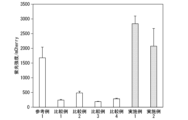
- FIG. 1 is a graph showing the measurement results of Reference Example 1, Examples 1 and 2, and Comparative Examples 1 to 4.
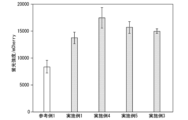
- FIG. 2 is a graph showing the measurement results of Reference Example 1 and Examples 1, 3 to 5.
- FIG. 3 is a graph showing the measurement results of Comparative Examples 5 to 6 and Example 6.
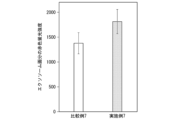
- FIG. 4 is a graph showing the measurement results of Comparative Example 7 and Example 7.
- the present invention is not limited to the embodiment described below, and various modifications are possible without departing from the gist of the present invention.
- the names and symbols of amino acids are in accordance with the IUPAC-IUB Joint Commission on Biochemical Nomenclature. Nomenclature and Symbolism for Amino Acids and Peptides. Eur. J. Biochem. 138: 9-37 (1984).
- the optical isomerism of an amino acid is preferably the L-form, unless otherwise specified.
- polypeptide of this embodiment is a polypeptide whose N-terminal amino acid sequence comprises the amino acid sequence represented by formula 1 and whose C-terminal amino acid sequence comprises the amino acid sequence represented by formula 2, and which is added to the C-terminus of a protein to localize a fusion protein with the protein in an exosome.
- X11 and X12 each independently represent any one amino acid residue selected from the group consisting of an L-lysine residue, an L-arginine residue, an L-serine residue, an L-threonine residue, and an aliphatic amino acid residue
- X13 represents an L-lysine residue or an L-arginine residue
- C-X 21 -X 22 -X 23 ...Formula 2
- X21 and X22 each independently represent an aliphatic amino acid residue
- X23 represents any amino acid residue.
- the aliphatic amino acid residue is not particularly limited as long as it is an amino acid residue having an aliphatic hydrocarbon group, but is preferably any one selected from the group consisting of L-alanine residue, L-valine residue, L-leucine residue, and L-isoleucine residue, and more preferably L-leucine residue or L-isoleucine residue.
- a portion of the hydrogen atoms of the aliphatic hydrocarbon group in the side chain of the aliphatic amino acid residue may be substituted with halogen atoms such as chlorine atoms or fluorine atoms.
- X21 and X22 are not particularly limited as long as they are amino acid residues having an aliphatic hydrocarbon group, but are preferably any one selected from the group consisting of L-alanine residue, L-valine residue, L-leucine residue, and L-isoleucine residue, and more preferably L-valine residue or L-isoleucine residue having a branched aliphatic hydrocarbon group.
- a part of the hydrogen atoms of the aliphatic hydrocarbon group may be substituted with halogen atoms such as chlorine atoms or fluorine atoms.
- X 23 is preferably an amino acid residue having a hydrophobic functional group in the side chain, more preferably any one selected from the group consisting of L-alanine residue, L-valine residue, L-leucine residue, L-isoleucine residue, and L-methionine residue, and even more preferably any one selected from the group consisting of L-alanine residue, L-leucine residue, and L-methionine residue.
- a part of the hydrogen atoms directly bonded to the carbon atom of the hydrophobic functional group may be substituted with a halogen atom such as a chlorine atom or a fluorine atom.
- the polypeptide of this embodiment preferably contains the amino acid sequences shown in SEQ ID NOs: 1 to 12. In the amino acid sequences below, the portions corresponding to the amino acid sequence shown in Formula 1 are underlined.
- the polypeptide of this embodiment preferably has an N-terminal amino acid sequence containing any one of the amino acid sequences shown in SEQ ID NOs: 1 to 10.
- the N-terminal amino acid sequence of the polypeptide refers to an amino acid sequence located on the N-terminal side of the amino acid sequence shown in formula 2 in the molecular chain of the polypeptide.
- a spacer consisting of any amino acid sequence may or may not be present between the amino acid sequence shown in formula 1 and the amino acid sequence shown in formula 2 in the molecular chain of the polypeptide.
- the number of amino acid residues constituting the spacer can be, for example, 0 to 20, preferably 1 to 15, more preferably 1 to 10, and even more preferably 1 to 5.
- the spacer sequence preferably contains one or more selected from L-valine residues, L-lysine residues, and L-cysteine residues.
- the polypeptide of this embodiment preferably consists of an amino acid sequence shown in any one of SEQ ID NOs: 13 to 27. In the amino acid sequences below, the portion corresponding to the amino acid sequence shown in Formula 2 is underlined.
- SEQ ID NO: 16 MGGKLSKKKKKYMGGKLSKKKKC CVIL
- At least one of the L-cysteine residues on the C-terminus of the polypeptide consisting of the amino acid sequence shown in SEQ ID NO:13 to 27 may be isopropenylated, geranylgeranylated, or farnesylated.
- the polypeptide of this embodiment is lipid-modified by introducing an isopropenyl group, a geranylgeranyl group, or a farnesyl group into the L-cysteine residue on the C-terminus, which makes it easier for these lipids to penetrate the phospholipid bilayer membrane of exosomes, and therefore makes it easier to localize the polypeptide in the exosome membrane.
- the L-cysteine residue has a thiol group (-SH) in the side chain, it is easy to bind an isopropenyl group, a geranylgeranyl group, or a farnesyl group via a thioether bond.
- -SH thiol group
- Fusion protein and method for producing the fusion protein is a fusion protein in which the above-mentioned polypeptide is linked to the C-terminus of a first protein.
- the first protein is preferably a target protein, i.e., a protein to be localized in exosomes.
- the first protein is preferably a transmembrane protein or a fluorescent protein.
- the transmembrane protein include growth factor receptors such as epidermal growth factor receptor (EGFR) and vascular endothelial growth factor receptors (VEGFR1, VEGFR2), GPCRs such as GLP1 receptor (GLP1R), adrenergic receptor ( ⁇ AR), fatty acid receptors (e.g. GPR40), and human chemokine receptors (e.g. CCR8), intercellular adhesion proteins such as connexin 26 and connexin 43, and cell adhesion proteins such as integrins.
- growth factor receptors such as epidermal growth factor receptor (EGFR) and vascular endothelial growth factor receptors (VEGFR1, VEGFR2)
- GPCRs such as GLP1 receptor (GLP1R), adrenergic receptor ( ⁇ AR), fatty acid receptors (e.g. GPR40), and human chemokine receptors (e.g. CCR
- fluorescent proteins include blue fluorescent proteins such as Sirius and EBFP; cyan fluorescent proteins such as ECFP, mTurquoise, TagCFP, AmCyan, mTFP1, MidoriishiCyan and CFP; green fluorescent proteins such as TurboGFP, AcGFP, TagGFP, Azami-Green, ZsGreen, EmGFP, EGFP, GFP2 and HyPer; TagYFP, EYFP, Venus, YFP, PhiYFP, PhiYFP-m, TurboYFP, Zs Yellow fluorescent proteins such as Yellow and mBanana; orange fluorescent proteins such as KusabiraOrange and mOrange; red fluorescent proteins such as TurboRFP, DsRed-Express, DsRed2, TagRFP, DsRed-Monomer, AsRed2 and mStrawberry; and near-infrared fluorescent proteins such as TurboFP602, mRFP1, JRed, KillerRed, mCherry, HcRed, Keim
- the C-terminus of the first protein and the N-terminus of the polypeptide may be linked via a spacer, or may be linked directly without a spacer.
- the spacer is not particularly limited, but is preferably a spacer consisting of a polypeptide chain. When the spacer consists of a polypeptide chain, it is preferable because it can be produced together with the fusion protein in a cell.
- the number of amino acid residues constituting the spacer can be, for example, 1 to 20, preferably 1 to 15, more preferably 1 to 10, and even more preferably 1 to 5.
- the spacer sequence preferably contains one or more selected from an L-methionine residue, a glycine residue, an L-proline residue, and an L-lysine residue.
- the fusion protein according to the first aspect described above can be localized in exosomes.
- Another aspect of the fusion protein of this embodiment is a fusion protein comprising a first protein, a second protein linked to the C-terminus thereof, and the above-mentioned polypeptide linked to the C-terminus of the second protein.
- the first protein is preferably a target protein, i.e., a protein to be localized in exosomes.
- the first protein is preferably a transmembrane protein.
- the transmembrane protein include growth factor receptors such as epidermal growth factor receptor (EGFR) and vascular endothelial growth factor receptor (VEGFR1, VEGFR2), GPCRs such as GLP1 receptor (GLP1R), adrenergic receptor ( ⁇ AR), fatty acid receptor (GPR40) (e.g. GPR40), and human chemokine receptor (e.g. CCR8), intercellular adhesion proteins such as connexin 26 and connexin 43, and cell adhesion proteins such as integrins.
- growth factor receptors such as epidermal growth factor receptor (EGFR) and vascular endothelial growth factor receptor (VEGFR1, VEGFR2)
- GPCRs such as GLP1 receptor (GLP1R), adrenergic receptor ( ⁇ AR), fatty acid receptor (GPR40) (e.g. GPR40), and human chemokine receptor (e.g. CCR8)
- the second protein is preferably a fluorescent protein.
- the fluorescent protein include blue fluorescent proteins such as Sirius and EBFP; cyan fluorescent proteins such as ECFP, mTurquoise, TagCFP, AmCyan, mTFP1, MidoriishiCyan, and CFP; green fluorescent proteins such as TurboGFP, AcGFP, TagGFP, Azami-Green, ZsGreen, EmGFP, EGFP, GFP2, and HyPer; TagYFP, EYFP, Venus, YFP, PhiYFP, PhiYFP-m, TurboYFP, and ZsY
- yellow fluorescent proteins such as ellow and mBanana
- orange fluorescent proteins such as KusabiraOrange and mOrange
- red fluorescent proteins such as TurboRFP, DsRed-Express, DsRed2, TagRFP, DsRed-Monomer, AsRed2 and mStrawberry
- near-infrared fluorescent proteins such as TurboFP602, mRFP1, JRe
- the C-terminus of the first protein and the N-terminus of the second protein and the C-terminus of the second protein and the N-terminus of the polypeptide may be linked via a spacer.
- the spacer is not particularly limited, but is preferably a spacer made of a polypeptide chain, which is preferable because the spacer can be produced together with the fusion protein in cells.
- Examples of the spacer between the C-terminus of the second protein and the N-terminus of the polypeptide include the same ones as those exemplified in the first aspect.
- the fusion protein according to the second aspect can be localized in exosomes.
- the fusion protein according to the first or second aspect described above can be produced by a method for producing a fusion protein comprising the following steps (1) to (4).
- the fusion proteins according to the first and second aspects described above can be localized in exosomes by a method including the following steps (1) to (3).
- the exosome of this embodiment is an exosome in which the above-mentioned fusion protein is localized.
- the exosomes of the present embodiment can be produced by a production method including the following steps (1) to (4).
- (4) isolating and recovering exosomes from the host cells. Steps (1) to (3) can be carried out by a conventional method.
- Step (4) is preferably carried out by the zinc precipitation method.
- the zinc precipitation method is a precipitation method that utilizes the binding of zinc to phospholipids on the surface of exosomes. Phosphate and zinc generally bind tightly. Zinc phosphate forms an insoluble precipitate. It is also known that a precipitate can be formed with DNA and zinc ions.
- the zinc precipitation method include the following: The cell culture supernatant is centrifuged at 1,000 ⁇ g for 3 minutes, at 2,000 ⁇ g for 30 minutes, and at 10,000 ⁇ g for 30 minutes to remove cell fragments and the like (standard method). Then, add 400 mM ZnCl2 solution to bring the final concentration of ZnCl2 to 8-10 mM, and immediately perform centrifugation (30,000 xg for 1-3 hours). After centrifugation, the supernatant is discarded, and Tris-EDTA buffer (10 mM Tris (pH 8.0), 3 to 10 mM EDTA) is added to the precipitate to suspend the precipitate.
- Tris-EDTA buffer (10 mM Tris (pH 8.0), 3 to 10 mM EDTA
- Proteins are localized to exosomes by adding a polypeptide sequence consisting of an exosome localization sequence to the C-terminus of the protein to be localized to exosomes.
- mCherry with the MGGKLSKKKK sequence (10 residues on the N-terminus of BASP1, hereinafter also referred to as "BASP 10 ") added to the N-terminus is used.
- BASP 10 mCherry with the MGGKLSKKKK sequence (10 residues on the N-terminus of BASP1, hereinafter also referred to as "BASP 10 ”
- This sequence is already known as a localization sequence to exosomes.
- it is essential to add it to the N-terminus because the second glycine is myristoylated (it is known that its activity is lost when it is mutated to Ala).
- Fusion Proteins The following expression vectors for the fusion proteins were prepared by standard techniques.
- Reference Example 1 (Positive Control) A fusion protein in which a polypeptide consisting of the amino acid sequence shown in SEQ ID NO:28 is added to the N-terminus of mCherry.
- SEQ ID NO: 28 MGGKLSKKKK
- Reference Example 2 No expression vector - Example 1 A fusion protein in which a polypeptide consisting of the amino acid sequence shown in SEQ ID NO:15 is added to the C-terminus of mCherry.
- SEQ ID NO: 15 MGGKLSKKKKCCVIL
- SEQ ID NO: 16 MGGKLSKKKKKYMGGKLSKKKKCCVIL
- SEQ ID NO: 21 KKTKKKVCCVIL
- SEQ ID NO:26 A fusion protein in which a polypeptide consisting of the amino acid sequence shown in SEQ ID NO:26 is added to the C-terminus of mCherry.
- SEQ ID NO: 26 KKKKKCCVIL
- Example 5 A fusion protein in which a polypeptide consisting of the amino acid sequence shown in SEQ ID NO:27 is added to the C-terminus of mCherry.
- SEQ ID NO:27 KKRKKCCVIL Comparative Example 1
- a fusion protein in which a polypeptide consisting of the amino acid sequence shown in SEQ ID NO:29 is added to the C-terminus of mCherry.
- SEQ ID NO: 29 CCLVKSIRSGYEVMCCVIL Comparative Example 2
- a fusion protein in which a polypeptide consisting of the amino acid sequence shown in SEQ ID NO:30 is added to the C-terminus of mCherry.
- SEQ ID NO: 30 CCAIRRNREMVCCVIL Comparative Example 3 A fusion protein in which a polypeptide consisting of the amino acid sequence shown in SEQ ID NO:31 is added to the C-terminus of mCherry.
- SEQ ID NO:31 CCGIRNSSVYCCVIL Comparative Example 4 A fusion protein in which a polypeptide consisting of the amino acid sequence shown in SEQ ID NO:32 is added to the C-terminus of mCherry.
- SEQ ID NO: 32 CCKKEVQETRRERRRLMSMEMDCCVIL
- HEK293T (40,000 cells) were transfected with 100 ng of each expression vector using PEImax (Polysciences) and seeded onto a 96-well plate. After three days, the supernatant was collected, and exosomes were recovered by zinc precipitation and measured for fluorescence.
- the zinc precipitation method utilizes the binding of zinc to phospholipids on the surface of exosomes. Phosphate and zinc generally bind tightly. Zinc phosphate forms an insoluble precipitate. It is also known that DNA and zinc ions can also form precipitates.
- the specific method of the zinc precipitation method is as follows.
- the cell culture supernatant was centrifuged successively at 1,000 ⁇ g for 3 minutes, at 2,000 ⁇ g for 30 minutes, and at 10,000 ⁇ g for 30 minutes to remove cell fragments and the like. After centrifugation, 400 mM aqueous zinc(II) chloride solution was added to give a final concentration of 8 to 10 mM, and the mixture was immediately centrifuged (at 30,000 ⁇ g for 1 to 3 hours). After centrifugation, the supernatant was discarded, and Tris-EDTA buffer (10 mM Tris (pH 8.0), 3 to 10 mM EDTA) was added to the precipitate to suspend the precipitate. The fluorescence of the obtained suspension was measured to obtain the fluorescence value of exosomes.
- CCVIL is a lipidation sequence
- Comparative Example 5 A fusion protein in which the red fluorescent protein mCherry is fused to the C-terminus of the human chemokine receptor CCR8, which is a type of GPCR. No additional polypeptide is added to the C-terminus of the fusion protein.
- Comparative Example 6 A fusion protein in which a polypeptide consisting of the amino acid sequence shown in SEQ ID NO:33 has been added to the C-terminus of the fusion protein of Comparative Example 5.
- SEQ ID NO: 33 AAAAACCVIL
- Example 6 A fusion protein in which a polypeptide consisting of the amino acid sequence shown in SEQ ID NO:26 has been added to the C-terminus of the fusion protein of Comparative Example 5.
- SEQ ID NO: 26 KKKKKCCVIL
- HEK293T (40,000 cells) were transfected with 100 ng of each expression vector using PEImax and seeded onto a 96-well plate. After 7 days, the culture supernatant was collected, and the exosome fraction was collected by the zinc precipitation method described above, and red fluorescence was measured.
- Comparative Example 7 A fusion protein in which the red fluorescent protein mCherry is fused to the C-terminus of connexin 26 (Cx26), a component protein of gap junctions. No additional polypeptide is added to the C-terminus of the fusion protein.
- Example 7 A fusion protein in which a polypeptide consisting of the amino acid sequence shown in SEQ ID NO:26 is added to the C-terminus of the fusion protein of Comparative Example 7.
- HEK293T (40,000 cells) were transfected with 100 ng of each expression vector using PEImax and seeded onto a 96-well plate. After 4 days, the culture supernatant was collected, and the exosome fraction was collected by the zinc precipitation method described above, and red fluorescence was measured.
- Comparative Example 7 and Example 7 are shown in Figure 4. It was found that the amount of the fusion protein containing Cx26 transferred to exosomes increased by adding the polypeptide shown in SEQ ID NO:26 to the C-terminus.
- Membrane proteins such as GPCRs (G protein-coupled receptors) can be targets for drugs, but it is known to be extremely difficult to produce antibodies against them. This technology is expected to localize these membrane proteins or proteins in the cytoplasm in exosomes, making it possible to stably produce antibodies against them. It is also hoped that this technology can be applied to lead to vaccine development.
- GPCRs G protein-coupled receptors
Landscapes
- Life Sciences & Earth Sciences (AREA)
- Chemical & Material Sciences (AREA)
- Health & Medical Sciences (AREA)
- Genetics & Genomics (AREA)
- Organic Chemistry (AREA)
- Engineering & Computer Science (AREA)
- Zoology (AREA)
- Wood Science & Technology (AREA)
- Biochemistry (AREA)
- General Health & Medical Sciences (AREA)
- Biotechnology (AREA)
- Bioinformatics & Cheminformatics (AREA)
- General Engineering & Computer Science (AREA)
- Biomedical Technology (AREA)
- Molecular Biology (AREA)
- Biophysics (AREA)
- Microbiology (AREA)
- Proteomics, Peptides & Aminoacids (AREA)
- Medicinal Chemistry (AREA)
- Physics & Mathematics (AREA)
- Mycology (AREA)
- Plant Pathology (AREA)
- Gastroenterology & Hepatology (AREA)
- General Chemical & Material Sciences (AREA)
- Chemical Kinetics & Catalysis (AREA)
- Cell Biology (AREA)
- Peptides Or Proteins (AREA)
Priority Applications (1)
| Application Number | Priority Date | Filing Date | Title |
|---|---|---|---|
| JP2025556472A JPWO2025100522A1 (cg-RX-API-DMAC7.html) | 2023-11-10 | 2024-11-08 |
Applications Claiming Priority (2)
| Application Number | Priority Date | Filing Date | Title |
|---|---|---|---|
| JP2023-192277 | 2023-11-10 | ||
| JP2023192277 | 2023-11-10 |
Publications (1)
| Publication Number | Publication Date |
|---|---|
| WO2025100522A1 true WO2025100522A1 (ja) | 2025-05-15 |
Family
ID=95695250
Family Applications (1)
| Application Number | Title | Priority Date | Filing Date |
|---|---|---|---|
| PCT/JP2024/039758 Pending WO2025100522A1 (ja) | 2023-11-10 | 2024-11-08 | ポリペプチド、融合タンパク質、融合タンパク質の製造方法、エクソソームにタンパク質を局在化させる方法、エクソソーム、及びエクソソームの製造方法 |
Country Status (2)
| Country | Link |
|---|---|
| JP (1) | JPWO2025100522A1 (cg-RX-API-DMAC7.html) |
| WO (1) | WO2025100522A1 (cg-RX-API-DMAC7.html) |
Citations (3)
| Publication number | Priority date | Publication date | Assignee | Title |
|---|---|---|---|---|
| JP2021503300A (ja) * | 2017-11-17 | 2021-02-12 | コディアック バイオサイエンシーズ, インコーポレイテッド | 操作エクソソームの組成物及び内腔エクソソームペイロードの搭載方法 |
| JP2023514975A (ja) * | 2020-01-27 | 2023-04-12 | マントラ バイオ,インコーポレイテッド | キメラ小胞局在化部分を含む非天然発生の小胞、その産生方法、およびその使用 |
| JP2023537070A (ja) * | 2020-08-07 | 2023-08-30 | アミカス セラピューティックス インコーポレイテッド | 小胞を標的とするタンパク質及びその使用 |
-
2024
- 2024-11-08 JP JP2025556472A patent/JPWO2025100522A1/ja active Pending
- 2024-11-08 WO PCT/JP2024/039758 patent/WO2025100522A1/ja active Pending
Patent Citations (3)
| Publication number | Priority date | Publication date | Assignee | Title |
|---|---|---|---|---|
| JP2021503300A (ja) * | 2017-11-17 | 2021-02-12 | コディアック バイオサイエンシーズ, インコーポレイテッド | 操作エクソソームの組成物及び内腔エクソソームペイロードの搭載方法 |
| JP2023514975A (ja) * | 2020-01-27 | 2023-04-12 | マントラ バイオ,インコーポレイテッド | キメラ小胞局在化部分を含む非天然発生の小胞、その産生方法、およびその使用 |
| JP2023537070A (ja) * | 2020-08-07 | 2023-08-30 | アミカス セラピューティックス インコーポレイテッド | 小胞を標的とするタンパク質及びその使用 |
Also Published As
| Publication number | Publication date |
|---|---|
| JPWO2025100522A1 (cg-RX-API-DMAC7.html) | 2025-05-15 |
Similar Documents
| Publication | Publication Date | Title |
|---|---|---|
| DK2681245T3 (en) | MULTIVALENT HEAT-MULTIMED SCAFFOLD DESIGN AND CONSTRUCTIONS | |
| AU2021203496B2 (en) | Super versatile method for presenting cyclic peptide motif on protein structure | |
| US20130012436A1 (en) | Fibronectin based scaffold domain proteins that bind il-23 | |
| US20220218752A1 (en) | Lockr-mediated recruitment of car t cells | |
| Yano et al. | Live-cell imaging of membrane proteins by a coiled-coil labeling method—Principles and applications | |
| AU2020396647A1 (en) | Method for producing peptide having physiological activity, and peptide comprising short linker | |
| WO2011135040A1 (en) | Fluorescent antibody fusion protein, its production and use | |
| KR102956998B1 (ko) | 새로운 결합 특이성을 항체에 부여하는 초범용법 | |
| US12168684B2 (en) | Antibody mimetic capable of being activated reversibly and uses thereof | |
| KR20120125455A (ko) | 세포내 타겟 결합용 바이포달 펩타이드 바인더 | |
| WO2001051629A2 (en) | Circularly permutated, interaction-activated proteins | |
| JP2025137512A (ja) | 新規に設計された共局在化依存性タンパク質スイッチを使用する超特異的細胞標的化 | |
| CN110713522A (zh) | 低pH插入肽的胞外段作为抗原的应用 | |
| EP1544210A1 (en) | Novel notch-origin polypeptides and biomarkers and reagents using the same | |
| KR101636882B1 (ko) | 인간 피브로넥틴 도메인 Ⅲ 기본 골격의 신규 인간 EphA2 특이적 결합 단백질 및 그의 용도 | |
| WO2005036178A1 (ja) | Fretを利用した蛍光指示薬 | |
| Baklaushev et al. | Immunofluorescent analysis of connexin-43 using monoclonal antibodies to its extracellular domain | |
| EP3875113B1 (en) | Transmembrane domain derived from human lrrc24 protein | |
| CN110511273B (zh) | 一种细胞穿膜多肽的制备方法及其应用 | |
| JP6202707B2 (ja) | 新規細胞膜透過ペプチド | |
| KR101636538B1 (ko) | 인간 NLBP 유래의 NP2 폴리펩티드 또는 dNP2 폴리펩티드를 포함하는 세포 투과 펩티드 및 이를 이용한 카고 전달 시스템 | |
| KR101667023B1 (ko) | 무세포 단백질 합성 방법을 이용하여 생산된 항체의 세포질 내로의 유입을 간편하게 분석하는 방법 | |
| JPWO2018025826A1 (ja) | 標識タンパク質を融合した抗体 | |
| EP1692518A2 (en) | Detection of protein interactions | |
| TW202528337A (zh) | 包括細胞穿透藥劑之方法、組合物、及套組 |
Legal Events
| Date | Code | Title | Description |
|---|---|---|---|
| 121 | Ep: the epo has been informed by wipo that ep was designated in this application |
Ref document number: 24888813 Country of ref document: EP Kind code of ref document: A1 |
|
| ENP | Entry into the national phase |
Ref document number: 2025556472 Country of ref document: JP Kind code of ref document: A |
|
| NENP | Non-entry into the national phase |
Ref country code: DE |