WO2025062875A1 - アルコール剥離性光学粘着シート - Google Patents
アルコール剥離性光学粘着シート Download PDFInfo
- Publication number
- WO2025062875A1 WO2025062875A1 PCT/JP2024/028265 JP2024028265W WO2025062875A1 WO 2025062875 A1 WO2025062875 A1 WO 2025062875A1 JP 2024028265 W JP2024028265 W JP 2024028265W WO 2025062875 A1 WO2025062875 A1 WO 2025062875A1
- Authority
- WO
- WIPO (PCT)
- Prior art keywords
- adhesive sheet
- mass
- ethanol
- adhesive
- meth
- Prior art date
- Legal status (The legal status is an assumption and is not a legal conclusion. Google has not performed a legal analysis and makes no representation as to the accuracy of the status listed.)
- Ceased
Links
Images


Classifications
-
- C—CHEMISTRY; METALLURGY
- C09—DYES; PAINTS; POLISHES; NATURAL RESINS; ADHESIVES; COMPOSITIONS NOT OTHERWISE PROVIDED FOR; APPLICATIONS OF MATERIALS NOT OTHERWISE PROVIDED FOR
- C09J—ADHESIVES; NON-MECHANICAL ASPECTS OF ADHESIVE PROCESSES IN GENERAL; ADHESIVE PROCESSES NOT PROVIDED FOR ELSEWHERE; USE OF MATERIALS AS ADHESIVES
- C09J7/00—Adhesives in the form of films or foils
- C09J7/30—Adhesives in the form of films or foils characterised by the adhesive composition
-
- C—CHEMISTRY; METALLURGY
- C08—ORGANIC MACROMOLECULAR COMPOUNDS; THEIR PREPARATION OR CHEMICAL WORKING-UP; COMPOSITIONS BASED THEREON
- C08F—MACROMOLECULAR COMPOUNDS OBTAINED BY REACTIONS ONLY INVOLVING CARBON-TO-CARBON UNSATURATED BONDS
- C08F222/00—Copolymers of compounds having one or more unsaturated aliphatic radicals, each having only one carbon-to-carbon double bond, and at least one being terminated by a carboxyl radical and containing at least one other carboxyl radical in the molecule; Salts, anhydrides, esters, amides, imides, or nitriles thereof
- C08F222/10—Esters
- C08F222/1006—Esters of polyhydric alcohols or polyhydric phenols
-
- C—CHEMISTRY; METALLURGY
- C08—ORGANIC MACROMOLECULAR COMPOUNDS; THEIR PREPARATION OR CHEMICAL WORKING-UP; COMPOSITIONS BASED THEREON
- C08F—MACROMOLECULAR COMPOUNDS OBTAINED BY REACTIONS ONLY INVOLVING CARBON-TO-CARBON UNSATURATED BONDS
- C08F265/00—Macromolecular compounds obtained by polymerising monomers on to polymers of unsaturated monocarboxylic acids or derivatives thereof as defined in group C08F20/00
- C08F265/04—Macromolecular compounds obtained by polymerising monomers on to polymers of unsaturated monocarboxylic acids or derivatives thereof as defined in group C08F20/00 on to polymers of esters
- C08F265/06—Polymerisation of acrylate or methacrylate esters on to polymers thereof
-
- C—CHEMISTRY; METALLURGY
- C09—DYES; PAINTS; POLISHES; NATURAL RESINS; ADHESIVES; COMPOSITIONS NOT OTHERWISE PROVIDED FOR; APPLICATIONS OF MATERIALS NOT OTHERWISE PROVIDED FOR
- C09J—ADHESIVES; NON-MECHANICAL ASPECTS OF ADHESIVE PROCESSES IN GENERAL; ADHESIVE PROCESSES NOT PROVIDED FOR ELSEWHERE; USE OF MATERIALS AS ADHESIVES
- C09J133/00—Adhesives based on homopolymers or copolymers of compounds having one or more unsaturated aliphatic radicals, each having only one carbon-to-carbon double bond, and at least one being terminated by only one carboxyl radical, or of salts, anhydrides, esters, amides, imides, or nitriles thereof; Adhesives based on derivatives of such polymers
- C09J133/04—Homopolymers or copolymers of esters
-
- C—CHEMISTRY; METALLURGY
- C09—DYES; PAINTS; POLISHES; NATURAL RESINS; ADHESIVES; COMPOSITIONS NOT OTHERWISE PROVIDED FOR; APPLICATIONS OF MATERIALS NOT OTHERWISE PROVIDED FOR
- C09J—ADHESIVES; NON-MECHANICAL ASPECTS OF ADHESIVE PROCESSES IN GENERAL; ADHESIVE PROCESSES NOT PROVIDED FOR ELSEWHERE; USE OF MATERIALS AS ADHESIVES
- C09J201/00—Adhesives based on unspecified macromolecular compounds
- C09J201/02—Adhesives based on unspecified macromolecular compounds characterised by the presence of specified groups, e.g. terminal or pendant functional groups
-
- C—CHEMISTRY; METALLURGY
- C09—DYES; PAINTS; POLISHES; NATURAL RESINS; ADHESIVES; COMPOSITIONS NOT OTHERWISE PROVIDED FOR; APPLICATIONS OF MATERIALS NOT OTHERWISE PROVIDED FOR
- C09J—ADHESIVES; NON-MECHANICAL ASPECTS OF ADHESIVE PROCESSES IN GENERAL; ADHESIVE PROCESSES NOT PROVIDED FOR ELSEWHERE; USE OF MATERIALS AS ADHESIVES
- C09J4/00—Adhesives based on organic non-macromolecular compounds having at least one polymerisable carbon-to-carbon unsaturated bond ; adhesives, based on monomers of macromolecular compounds of groups C09J183/00 - C09J183/16
- C09J4/06—Organic non-macromolecular compounds having at least one polymerisable carbon-to-carbon unsaturated bond in combination with a macromolecular compound other than an unsaturated polymer of groups C09J159/00 - C09J187/00
-
- C—CHEMISTRY; METALLURGY
- C09—DYES; PAINTS; POLISHES; NATURAL RESINS; ADHESIVES; COMPOSITIONS NOT OTHERWISE PROVIDED FOR; APPLICATIONS OF MATERIALS NOT OTHERWISE PROVIDED FOR
- C09J—ADHESIVES; NON-MECHANICAL ASPECTS OF ADHESIVE PROCESSES IN GENERAL; ADHESIVE PROCESSES NOT PROVIDED FOR ELSEWHERE; USE OF MATERIALS AS ADHESIVES
- C09J7/00—Adhesives in the form of films or foils
- C09J7/30—Adhesives in the form of films or foils characterised by the adhesive composition
- C09J7/38—Pressure-sensitive adhesives [PSA]
-
- C—CHEMISTRY; METALLURGY
- C09—DYES; PAINTS; POLISHES; NATURAL RESINS; ADHESIVES; COMPOSITIONS NOT OTHERWISE PROVIDED FOR; APPLICATIONS OF MATERIALS NOT OTHERWISE PROVIDED FOR
- C09J—ADHESIVES; NON-MECHANICAL ASPECTS OF ADHESIVE PROCESSES IN GENERAL; ADHESIVE PROCESSES NOT PROVIDED FOR ELSEWHERE; USE OF MATERIALS AS ADHESIVES
- C09J2301/00—Additional features of adhesives in the form of films or foils
- C09J2301/30—Additional features of adhesives in the form of films or foils characterized by the chemical, physicochemical or physical properties of the adhesive or the carrier
- C09J2301/312—Additional features of adhesives in the form of films or foils characterized by the chemical, physicochemical or physical properties of the adhesive or the carrier parameters being the characterizing feature
-
- C—CHEMISTRY; METALLURGY
- C09—DYES; PAINTS; POLISHES; NATURAL RESINS; ADHESIVES; COMPOSITIONS NOT OTHERWISE PROVIDED FOR; APPLICATIONS OF MATERIALS NOT OTHERWISE PROVIDED FOR
- C09J—ADHESIVES; NON-MECHANICAL ASPECTS OF ADHESIVE PROCESSES IN GENERAL; ADHESIVE PROCESSES NOT PROVIDED FOR ELSEWHERE; USE OF MATERIALS AS ADHESIVES
- C09J2301/00—Additional features of adhesives in the form of films or foils
- C09J2301/50—Additional features of adhesives in the form of films or foils characterized by process specific features
- C09J2301/502—Additional features of adhesives in the form of films or foils characterized by process specific features process for debonding adherents
Definitions
- the present invention relates to an optical adhesive sheet.
- a display panel has a laminated structure including elements such as a pixel panel, a polarizing film, and a cover film.
- elements such as a pixel panel, a polarizing film, and a cover film.
- an optically transparent adhesive sheet optical adhesive sheet is used to bond the elements included in the laminated structure.
- a water releasable optical adhesive sheet is an optical adhesive sheet that can reduce the adhesive strength by allowing water droplets to penetrate into the interface between the adherend and the adhesive sheet after it has been attached to an adherend. After being attached to an adherend, such an optical adhesive sheet can be easily peeled off from the adherend using water as necessary.
- a defect such as misalignment
- the adhesive sheet can be peeled off from the adherend using water (water releasable), and a replacement optical adhesive sheet can be used for the attachment work.
- Such optical adhesive sheets having water releasability are described, for example, in Patent Document 1 below.
- the optical adhesive sheet described in Patent Document 1 contains an acrylic-based polymer and a surfactant.
- the acrylic-based polymer ensures adhesion to the adherend.
- the presence of a surfactant on the adhesive surface results in water peelability.
- the optical adhesive sheet of Patent Document 1 has low moisture resistance due to the presence of a surfactant on the adhesive surface.
- the optical adhesive sheet of Patent Document 1 has low adhesive strength in a high humidity environment. Such an optical adhesive sheet does not provide good adhesion reliability to the adherend.
- the present invention provides an alcohol-peelable optical adhesive sheet that is suitable for achieving both adhesive reliability to the adherend and reworkability.
- the present invention [1] includes an alcohol-peelable optical adhesive sheet which contains a photopolymerized polymer as a base polymer, and which has an adhesive strength Fn1 of 9.0 N/25 mm or more in the initial room temperature peel test described below, an adhesive strength Fa1 of 3.0 N/25 mm or less in the first ethanol peel test described below, and an adhesive strength Fh of 2.0 N/25 mm or more in the high temperature and high humidity peel test described below.
- Initial room temperature peel test First, a 25 mm wide x 100 mm long adhesive sheet piece of the alcohol-peelable optical adhesive sheet is attached to an alkali glass plate prepared by the float method to obtain a laminate (preparation step). Next, the laminate is heated and pressurized at 50°C, 0.5 MPa, and 15 minutes (heating and pressurizing step). Next, the laminate is left standing at room temperature for 72 hours (standing step). Next, the adhesive sheet piece is peeled off from the alkali glass plate by pulling one end of the adhesive sheet piece in the length direction under first conditions of 25°C, 50% relative humidity, a peeling angle of 180°, and a pulling speed of 300 mm/min, to measure the adhesive strength (measurement step).
- First ethanol stripping test The procedure is the same as the initial room temperature peel test, except for the following: In the standing step, the laminate is stood at 50° C. for 168 hours; After the standing step and before the measurement step, an ethanol supplying step is performed; In the ethanol supplying step, 10 ⁇ L of ethanol is supplied onto the alkali glass plate of the laminate such that the ethanol contacts one end of the adhesive sheet piece in the length direction at the interface between the alkali glass plate and the adhesive sheet piece.
- High temperature and high humidity peeling test The method is the same as the initial room temperature peel test, except for the following: In the standing step, the laminate is stood at room temperature for 24 hours; After the standing step and before the measurement step, a high temperature and humidity treatment step is performed; In the high temperature and humidity treatment step, the laminate after the standing step is subjected to high temperature and humidity treatment under conditions of 60°C, relative humidity of 93%, and 15 minutes; In the measurement step, a 180° peel test is performed under second conditions of 60°C, relative humidity of 93%, a peel angle of 180°, and a tensile speed of 300 mm/min, instead of the first conditions.
- the present invention [2] includes the alcohol-peelable optical adhesive sheet according to the above [1], which has an adhesive strength F a2 in the second ethanol peeling test described below, and the variation rate of the adhesive strength F a1 relative to the adhesive strength F a2 is -50% to 100%.
- Second ethanol stripping test The test was the same as the first ethanol peeling test, except that in the standing step, the laminate was stood at room temperature for 72 hours.
- the present invention [3] includes the alcohol-peelable optical adhesive sheet described in [2] above, in which the ethanol peeling duration in the second ethanol peeling test is 20 mm or more.
- the present invention [4] includes an alcohol-peelable optical adhesive sheet according to any one of [1] to [3] above, which does not contain a surfactant.
- the alcohol-peelable optical adhesive sheet of the present invention has a base polymer that is a photopolymerized polymer, an adhesive strength Fn1 in an initial room temperature peel test of 9.0 N/25 mm or more, an adhesive strength Fa1 in a first ethanol peel test of 3.0 N/25 mm or less, and an adhesive strength Fh in a high temperature and high humidity peel test of 2.0 N/25 mm or more.
- a high adhesive strength Fn1 (adhesive strength under ethanol non-supply conditions) of 9.0 N/25 mm or more is suitable for ensuring the adhesion reliability of the adhesive sheet to the adherend after the alcohol-peelable optical adhesive sheet is attached to the adherend.
- a low adhesive strength Fa1 (adhesive strength under ethanol supply conditions after storage) of 3.0 N/25 mm or less is suitable for ensuring reworkability by exhibiting good alcohol peelability in the adhesive sheet for a long period of time after the alcohol-peelable optical adhesive sheet is attached to the adherend.
- the high adhesive strength Fh (adhesive strength under conditions of no ethanol supply and high temperature and humidity) of 2.0 N/25 mm or more is suitable for ensuring the adhesive reliability of the optical adhesive sheet to the adherend even in a high humidity environment. Therefore, the alcohol-peelable optical adhesive sheet of the present invention is suitable for achieving both adhesive reliability to the adherend and reworkability.
- FIG. 1 is a schematic cross-sectional view of an alcohol-peelable optical adhesive sheet according to one embodiment of the present invention.
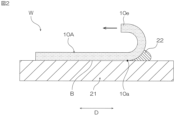
- 1 is a schematic diagram showing an ethanol peeling test.
- 1 shows an example of a peel force-peel length curve obtained in an ethanol peel test.
- 4 shows an example of a method for using the alcohol-peelable optical adhesive sheet shown in Fig. 1.
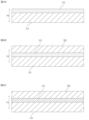
- Fig. 4A shows a step of attaching the alcohol-peelable optical adhesive sheet to a first adherend
- Fig. 4B shows a step of joining the first adherend and the second adherend via the alcohol-peelable optical adhesive sheet
- Fig. 4C shows an aging step.
- adhesive sheet 10 which is one embodiment of the alcohol-peelable optical adhesive sheet of the present invention, has a sheet shape of a predetermined thickness and extends in a direction (plane direction) perpendicular to thickness direction H.
- Adhesive sheet 10 has adhesive surface 11 and adhesive surface 12 opposite adhesive surface 11.
- FIG. 1 exemplarily shows a state in which release liners L1, L2 are attached to adhesive surfaces 11, 12 of adhesive sheet 10. Release liner L1 is disposed on adhesive surface 11. Release liner L2 is disposed on adhesive surface 12.
- the adhesive sheet 10 is an optically transparent adhesive sheet (optical adhesive sheet).
- the adhesive sheet 10 is an optical adhesive sheet that has alcohol releasability.
- the adhesive sheet 10 is an optical adhesive sheet whose adhesive strength can be reduced by infiltrating alcohol (e.g., alcohol droplets) into the interface between the adherend and the adhesive sheet 10 after it has been attached to the adherend (alcohol releasability).
- the pressure-sensitive adhesive sheet 10 is a sheet-like pressure-sensitive adhesive.
- the pressure-sensitive adhesive sheet 10 contains a photopolymerized polymer as a base polymer.
- the base polymer is a polymerized product obtained by photopolymerization of a polymerizable component such as a monomer component.
- Photopolymerization is a polymerization method in which a polymerization reaction of a polymerizable component is advanced by irradiation with active energy rays such as ultraviolet light.
- the pressure-sensitive adhesive sheet 10 also has an adhesive strength Fn 1 of 9.0 N/25 mm or more in the initial room temperature peel test described below, an adhesive strength Fa 1 of 3.0 N/25 mm or less in the first ethanol peel test described below, and an adhesive strength Fh of 2.0 N/25 mm or more in the high temperature and high humidity peel test described below.
- Initial room temperature peel test First, a 25 mm wide x 100 mm long adhesive sheet piece of the adhesive sheet 10 is attached to an alkali glass plate prepared by the float method to obtain a laminate (preparation step). In this step, the adhesive sheet piece is attached to the tin surface of the alkali glass plate (the same applies to other peel tests described later). Next, the laminate is heated and pressurized under conditions of 50°C, 0.5 MPa, and 15 minutes (heating and pressurizing step). Next, the laminate is left to stand at room temperature for 72 hours (standing step).
- the adhesive sheet piece is peeled off from the alkali glass plate by pulling one end of the adhesive sheet piece in the length direction under the first conditions of 25°C, relative humidity 50%, peel angle 180°, and pulling speed 300 mm/min, to measure the adhesive strength (measurement step).
- the method of the initial room temperature peel test is more specifically as described below in the examples.
- First ethanol stripping test The test is the same as the initial room temperature peel test except for the following.
- the laminate In the standing step, the laminate is left standing at 50° C. for 168 hours.
- an ethanol supply step is performed.
- 10 ⁇ L of ethanol (100% ethanol) is supplied onto the alkali glass plate of the laminate so that the ethanol contacts one end of the adhesive sheet piece in the length direction at the interface between the alkali glass plate and the adhesive sheet piece. Specifically, as shown in FIG.
- 10 ⁇ L of ethanol 22 is supplied onto the alkali glass plate 21 of the laminate W so that the ethanol 22 contacts one end 10a in the length direction D of the adhesive sheet piece 10A at the interface B between the alkali glass plate 21 and the adhesive sheet piece 10A.
- the adhesive sheet piece 10A is peeled off from the alkali glass plate by pulling one end side in the length direction of the adhesive sheet piece 10A (one end 10e in FIG. 2) to measure the adhesive strength. More specifically, the method of the first ethanol peel test is as described below in relation to the examples.
- FIG. 3 shows an example of a peel force-peel length curve obtained in an ethanol peel test (first ethanol peel test, second ethanol peel test described later).
- the horizontal axis represents the peel length (mm) from the start of peeling of the adhesive sheet piece in the measurement step (peel length 0 mm), and the vertical axis represents the peel force (N/25 mm) required for peeling in the peeling process of the adhesive sheet piece.
- the peel length d 1 when the peel force starts to stabilize in the peeling process of the adhesive sheet piece and the peel length d 2 at that time when the peel force increases by 10% with respect to the peel force at the peel length d 1 are specified (if the peel force does not increase by 10%, the peel length d 2 is the length of the adhesive sheet piece 100 mm-d 1 ).
- the average value of the peel force measured from the peel length d 1 to the peel length d 2 is the adhesive force (adhesion force F a 1 , F a 2 in the ethanol peel test).
- High temperature and high humidity peel test The procedure is the same as the initial room temperature peel test, except for the following: In the standing step, the laminate is left standing at room temperature for 24 hours; After the standing step and before the measurement step, a high temperature and humidity treatment step is performed; In the high temperature and humidity treatment step, the laminate after the standing step is subjected to high temperature and humidity treatment under conditions of 60°C, relative humidity 93%, and 15 minutes; In the measurement step, instead of the first condition, a 180° peel test is performed under second conditions of 60°C, relative humidity 93%, a peel angle of 180°, and a tensile speed of 300 mm/min. More specifically, the method of the high temperature and humidity peel test is as described below in relation to the examples.
- the adhesive sheet 10 has a base polymer that is a photopolymerized polymer, an adhesive strength Fn1 of 9.0 N/25 mm or more in an initial room temperature peel test, an adhesive strength Fa1 of 3.0 N/25 mm or less in a first ethanol peel test, and an adhesive strength Fh of 2.0 N/25 mm or more in a high temperature and high humidity peel test.
- the adhesive strength Fn1 (adhesive strength under non-ethanol supply conditions) being a high adhesive strength of 9.0 N/25 mm or more is suitable for ensuring the adhesion reliability of the adhesive sheet 10 to the adherend after the adhesive sheet 10 is attached to the adherend.
- the adhesive strength Fa1 (adhesive strength under ethanol supply conditions after storage) being a low adhesive strength of 3.0 N/25 mm or less is suitable for ensuring reworkability by exhibiting good alcohol peelability in the adhesive sheet 10 for a long period of time after the adhesive sheet 10 is attached to the adherend (long-term reworkability).
- the adhesive strength Fh (adhesive strength under conditions of no ethanol supply and high temperature and humidity) of 2.0 N/25 mm or more is suitable for ensuring the adhesive reliability of the adhesive sheet 10 to the adherend even in a high humidity environment. Therefore, the adhesive sheet 10 is suitable for achieving both adhesive reliability to the adherend and reworkability (alcohol reworkability).
- an optical adhesive sheet can exhibit alcohol releasability over a relatively long period of time without relying on a surfactant.
- the present invention is based on this finding. Not relying on a surfactant is suitable for ensuring the adhesive reliability of the optical adhesive sheet to the adherend even in a high humidity environment.
- the adhesive strength Fn1 is preferably 9.5 N/25 mm or more, more preferably 10 N/25 mm or more. From the viewpoint of ensuring the above-mentioned reworkability, the adhesive strength Fn1 is preferably 19 N/25 mm or less, more preferably 18 N/25 mm or less, and even more preferably 17 N/25 mm or less. From the viewpoint of achieving both adhesive reliability and reworkability, the adhesive strength Fn1 is preferably 9.0 to 19 N/25 mm, more preferably 9.5 to 18 N/25 mm, and even more preferably 10 to 17 N/25 mm.
- Examples of methods for adjusting the adhesive strength Fn1 include selecting the type of base polymer in the adhesive sheet 10, adjusting the molecular weight, adjusting the degree of crosslinking, and adjusting the blending amount. Examples of these adjustment methods include selecting the type of monofunctional monomer, polyfunctional polymerizable compound (crosslinking agent), and polymerization initiator when forming the base polymer, and adjusting the blending amount. Methods for adjusting the adhesive strength Fn1 include selecting the type of components other than the base polymer in the adhesive sheet 10 and adjusting the amount of the components. Examples of the components include oligomers (hydrophilic oligomers, hydrophobic oligomers), surfactants, and silane coupling agents. These adjustment methods are also used for the adhesive strengths Fa1 , Fh, and the adhesive strengths Fn2 , Fa2 described below.
- the adhesive strength F a1 is preferably 2.7 N/25 mm or less, more preferably 2.4 N/25 mm or less, and even more preferably 2.0 N/25 mm or less, from the viewpoint of ensuring the alcohol reworkability of the adhesive sheet 10.
- the adhesive strength F a1 is preferably 0.5 N/25 mm or more, more preferably 0.8 N/25 mm or more, even more preferably 1.0 N/25 mm or more, and even more preferably 1.2 N/25 mm or more, from the viewpoint of suppressing unintended peeling of the adhesive sheet 10 when an alcohol-containing liquid (such as a disinfectant) is attached to the adhesive sheet 10.
- the adhesive strength F a1 is preferably 0.5 to 3.0 N/25 mm, more preferably 0.8 to 2.7 N/25 mm, even more preferably 1.0 to 2.4 N/25 mm, and even more preferably 1.2 to 2.0 N/25 mm, from the viewpoint of achieving both the alcohol reworkability of the adhesive sheet 10 and the suppression of the unintended peeling.
- the adhesive strength Fh is preferably 2.1 N/25 mm or more, and more preferably 2.2 N/25 mm or more. From the viewpoint of ensuring reworkability, the adhesive strength Fh is preferably 10 N/25 mm or less, more preferably 7.0 N/25 mm or less, and even more preferably 5.0 N/25 mm or less. From the viewpoint of achieving both the adhesive reliability and reworkability of the adhesive sheet 10 in a high humidity environment, the adhesive strength Fn1 is preferably 2.0 to 10 N/25 mm, more preferably 2.1 to 7.0 N/25 mm, and even more preferably 2.2 to 5.0 N/25 mm.
- the adhesive sheet 10 has an adhesive strength Fn 2 in the room temperature peel test after storage described below.
- the adhesive strength Fn2 is preferably 9.0 N/25 mm or more, more preferably 9.5 N/25 mm or more, and even more preferably 10 N/25 mm or more. From the viewpoint of ensuring the reworkability, the adhesive strength Fn2 is preferably 19 N/25 mm or less, more preferably 18 N/25 mm or less, and even more preferably 17 N/25 mm or less. From the viewpoint of achieving both long-term adhesive reliability and reworkability, the adhesive strength Fn2 is preferably 9.0 to 19 N/25 mm, more preferably 9.5 to 18 N/25 mm, and even more preferably 10 to 17 N/25 mm.
- the adhesive sheet 10 has an adhesive strength F a 2 in the second ethanol peeling test described below.
- Second ethanol stripping test The method of the second ethanol peeling test is the same as that of the first ethanol peeling test, except that the laminate is left to stand at room temperature for 72 hours in the standing step.
- the method of the second ethanol peeling test is specifically as described below in the examples.
- the rate of variation of the adhesive force F a1 relative to the adhesive force F a2 is preferably ⁇ 50% to 100%, more preferably ⁇ 20% to 70%, and even more preferably 0% to 60%, from the viewpoint of ensuring stable alcohol reworkability in the adhesive sheet 10.
- Fluctuation rate (%) [( Fa1 - Fa2 ) / Fa2 ] x 100
- the adhesive strength F a2 is preferably 2.5 N/25 mm or less, more preferably 2.0 N/25 mm or less, and even more preferably 1.8 N/25 mm or less, from the viewpoint of ensuring the alcohol reworkability of the adhesive sheet 10.
- the adhesive strength F a2 is preferably 0.5 N/25 mm or more, more preferably 0.8 N/25 mm or more, and even more preferably 1.0 N/25 mm or more, from the viewpoint of suppressing unintended peeling of the adhesive sheet 10 when an alcohol-containing liquid is attached to the adhesive sheet 10.
- the adhesive strength F a2 is preferably 0.5 to 2.5 N/25 mm, more preferably 0.8 to 2.0 N/25 mm, and even more preferably 1.0 to 1.8 N/25 mm, from the viewpoint of achieving both the alcohol reworkability of the adhesive sheet 10 and the suppression of the unintended peeling.
- the ethanol peeling duration d in the second ethanol peeling test is preferably 20 mm or more, more preferably 26 mm or more, and even more preferably 28 mm or more, from the viewpoint of ensuring the alcohol reworkability of the pressure-sensitive adhesive sheet 10.
- the ethanol peeling duration d is, for example, 100 mm or less.
- the ethanol peeling duration d is the difference (d 2 -d 1 ) between the above-mentioned peeling length d 2 and peeling length d 1.
- the method for measuring the ethanol peeling duration d is specifically as described below in the examples.
- the adhesive sheet 10 is a sheet-like pressure-sensitive adhesive formed from an adhesive composition.
- the adhesive sheet 10 (adhesive composition) contains at least the above-mentioned photopolymerization polymer as a base polymer.
- base polymers examples include acrylic polymers, polyurethane polymers, polyamide polymers, and polyvinyl ether polymers.
- the base polymers may be used alone or in combination of two or more.
- the base polymer is preferably an acrylic polymer.
- the acrylic polymer is a copolymer of monomer components containing 50% or more by mass of (meth)acrylic acid ester.
- (Meth)acrylic means acrylic and/or methacrylic.
- the acrylic polymer is a polymer (photopolymerized polymer) obtained by photopolymerization of a polymerizable component that includes a monofunctional monomer and a polyfunctional polymerizable compound as a crosslinking agent.
- the acrylic polymer is, for example, a polymer obtained by photopolymerization of a partial polymer (a mixture of a polymer of a monofunctional monomer and an unreacted monofunctional monomer) obtained by photopolymerization of a monofunctional monomer and a polyfunctional polymerizable compound.
- Such acrylic polymers include a photopolymerized polymer (first photopolymerized polymer) having a photocrosslinked structure.
- the photocrosslinked structure is a structure in which linear structures formed by units derived from monofunctional monomers are crosslinked by units derived from a crosslinking agent.
- the base polymer may include a photopolymerized polymer (second photopolymerized polymer) that does not have such a photocrosslinked structure.
- the second photopolymerized polymer is a polymer of a monofunctional monomer.
- the monofunctional monomer preferably contains a monofunctional (meth)acrylic acid alkyl ester, and more preferably contains a (meth)acrylic acid alkyl ester having an alkyl group with 1 to 20 carbon atoms.
- the (meth)acrylic acid alkyl ester may have a linear or branched alkyl group, or may have a cyclic alkyl group (alicyclic alkyl group).
- Examples of (meth)acrylic acid alkyl esters having a linear or branched alkyl group include methyl (meth)acrylate, ethyl (meth)acrylate, n-butyl (meth)acrylate, isobutyl (meth)acrylate, s-butyl (meth)acrylate, t-butyl (meth)acrylate, pentyl (meth)acrylate, isopentyl (meth)acrylate, neopentyl (meth)acrylate, hexyl (meth)acrylate, heptyl (meth)acrylate, 2-ethylhexyl (meth)acrylate, n-octyl (meth)acrylate, isooctyl (meth)acrylate, Examples of such acrylates include nonyl (meth)acrylate, isononyl (meth)acrylate, decyl (meth)acrylate, isodecyl (meth
- (meth)acrylic laurate isotridecyl (meth)acrylate, tetradecyl (meth)acrylate, isotetradecyl (meth)acrylate, pentadecyl (meth)acrylate, cetyl (meth)acrylate, heptadecyl (meth)acrylate, octadecyl (meth)acrylate, isooctadecyl (meth)acrylate, and nonadecyl (meth)acrylate.
- Examples of (meth)acrylic acid alkyl esters having an alicyclic alkyl group include (meth)acrylic acid cycloalkyl esters, (meth)acrylic acid alkyl esters having a bicyclic aliphatic hydrocarbon ring, and (meth)acrylic acid alkyl esters having a tricyclic or higher aliphatic hydrocarbon ring.
- Examples of (meth)acrylic acid cycloalkyl esters include cyclopentyl (meth)acrylate, cyclohexyl (meth)acrylate, cycloheptyl (meth)acrylate, and cyclooctyl (meth)acrylate.
- Examples of (meth)acrylic acid alkyl esters having a bicyclic aliphatic hydrocarbon ring include isobornyl (meth)acrylate.
- Examples of (meth)acrylic acid alkyl esters having three or more aliphatic hydrocarbon rings include dicyclopentanyl (meth)acrylate, dicyclopentanyloxyethyl (meth)acrylate, tricyclopentanyl (meth)acrylate, 1-adamantyl (meth)acrylate, 2-methyl-2-adamantyl (meth)acrylate, and 2-ethyl-2-adamantyl (meth)acrylate.
- the monofunctional (meth)acrylic acid alkyl ester may be used alone or in combination of two or more kinds.
- the monofunctional (meth)acrylic acid alkyl ester is preferably an acrylic acid alkyl ester having an alkyl group having 6 to 12 carbon atoms, and more preferably at least one selected from the group consisting of 2-ethylhexyl acrylate (2EHA) and acrylic laurate (LA).
- 2EHA 2-ethylhexyl acrylate
- LA acrylic laurate
- the proportion of the (meth)acrylic acid alkyl ester in the monofunctional monomer is preferably 70 to 99.9% by mass, more preferably 80 to 99.5% by mass, and even more preferably 90 to 99% by mass.
- the proportion of the (meth)acrylic acid alkyl ester in the monofunctional monomer is preferably 70% by mass or more, more preferably 80% by mass or more, and even more preferably 90% by mass or more.
- the proportion of the (meth)acrylic acid alkyl ester is equal to or greater than the lower limit, the adhesive sheet 10 can adequately exhibit basic properties such as adhesiveness.
- the proportion of the monofunctional (meth)acrylic acid alkyl ester in the monofunctional monomer is, for example, 99.9% by mass or less, 99.5% by mass or less, or 99% by mass or less.
- the monofunctional monomer may include a copolymerizable monomer that is copolymerizable with the (meth)acrylic acid alkyl ester.
- the copolymerizable monomer include a polar group-containing monomer.
- the polar group-containing monomer include a hydroxy group-containing monomer, a monomer having a nitrogen atom-containing ring, and a carboxy group-containing monomer.
- the copolymerizable monomer may be used alone or in combination of two or more kinds.
- the polar group-containing monomer is useful for modifying the acrylic polymer, such as ensuring the cohesive force of the acrylic polymer.
- the polar group-containing monomer is preferably at least one selected from the group consisting of a hydroxy group-containing monomer and a monomer having a nitrogen atom-containing ring.
- hydroxy group-containing monomers examples include 2-hydroxyethyl (meth)acrylate, 2-hydroxypropyl (meth)acrylate, 2-hydroxybutyl (meth)acrylate, 3-hydroxypropyl (meth)acrylate, 4-hydroxybutyl (meth)acrylate, 6-hydroxyhexyl (meth)acrylate, 8-hydroxyoctyl (meth)acrylate, 10-hydroxydecyl (meth)acrylate, and 12-hydroxylauryl (meth)acrylate.
- the hydroxy group-containing monomer is preferably at least one selected from the group consisting of 2-hydroxyethyl acrylate (2HEA), 4-hydroxyethyl acrylate (4HEA), and 4-hydroxybutyl acrylate (4HBA).
- the ratio of the hydroxyl group-containing monomer in the monofunctional monomer is preferably 0.1 to 20% by mass, more preferably 0.5 to 15% by mass, and even more preferably 1 to 12% by mass.
- the ratio of the hydroxyl group-containing monomer in the monofunctional monomer is preferably 0.1% by mass or more, more preferably 0.5% by mass or more, and even more preferably 1% by mass or more.
- the ratio of the hydroxyl group-containing monomer in the monomer component is preferably 20% by mass or less, more preferably 15% by mass or less, and even more preferably 12% by mass or less.
- the polarity of the acrylic polymer (related to the compatibility of the various additive components in the adhesive sheet 10 with the acrylic polymer) can be appropriately adjusted.
- Examples of monomers having a nitrogen atom-containing ring include N-vinyl-2-pyrrolidone, N-methylvinylpyrrolidone, N-vinylpyridine, N-vinylpiperidone, N-vinylpyrimidine, N-vinylpiperazine, N-vinylpyrazine, N-vinylpyrrole, N-vinylimidazole, N-vinyloxazole, N-(meth)acryloyl-2-pyrrolidone, N-(meth)acryloylpiperidine, N-(meth)acryloylpyrrolidine, N-vinylmorpholine, N-vinyl-3-morpholinone, N-vinyl-2-caprolactam, N-vinyl-1,3-oxazin-2-one, N-vinyl-3,5-morpholinedione, N-vinylpyrazole, N-vinylisoxazole, N-vinylthiazole, N-
- the ratio of the monomer having a nitrogen atom-containing ring in the monofunctional monomer is preferably 0.1 to 20% by mass, more preferably 0.5 to 12% by mass, and even more preferably 1 to 8% by mass.
- the ratio of the monomer having a nitrogen atom-containing ring in the monofunctional monomer is preferably 0.1% by mass or more, more preferably 0.5% by mass or more, and even more preferably 1% by mass or more.
- the ratio of the monomer having a nitrogen atom-containing ring in the monofunctional monomer is preferably 20% by mass or less, more preferably 12% by mass or less, and even more preferably 8% by mass or less.
- the glass transition temperature of the acrylic polymer can be appropriately adjusted, and the polarity of the acrylic polymer (related to the compatibility of various additive components in the adhesive sheet with the acrylic polymer) can be appropriately adjusted.
- Carboxy group-containing monomers include, for example, acrylic acid, methacrylic acid, carboxyethyl acrylate, carboxypentyl acrylate, itaconic acid, maleic acid, fumaric acid, crotonic acid, and isocrotonic acid.
- the proportion of the carboxyl group-containing monomer in the monofunctional monomer is preferably 0.0 to 3 mass%, more preferably 0.0 to 1 mass%, even more preferably 0.0 to 0.5 mass%, and even more preferably 0.0 to 0.1 mass%.
- the proportion of the carboxyl group-containing monomer in the monofunctional monomer is preferably 3 mass% or less, more preferably 1 mass% or less, even more preferably 0.5 mass% or less, even more preferably 0.1 mass% or less, and particularly preferably 0.0 mass%.
- the monofunctional monomer may contain other copolymerizable monomers.
- the other copolymerizable monomers include acid anhydride monomers, sulfonic acid group-containing monomers, phosphoric acid group-containing monomers, epoxy group-containing monomers, cyano group-containing monomers, alkoxy group-containing monomers, and aromatic vinyl compounds.
- polyfunctional polymerizable compounds include polyfunctional monomers that contain two or more ethylenically unsaturated double bonds in one molecule.
- polyfunctional monomers include polyfunctional (meth)acrylates.
- polyfunctional (meth)acrylates include difunctional (meth)acrylates, trifunctional (meth)acrylates, and tetrafunctional or higher polyfunctional (meth)acrylates.
- bifunctional (meth)acrylates include ethylene glycol di(meth)acrylate, diethylene glycol di(meth)acrylate, triethylene glycol di(meth)acrylate, tetraethylene glycol dimethacrylate, 1,6-hexanediol di(meth)acrylate, 1,9-nonanediol di(meth)acrylate, glycerin di(meth)acrylate, neopentyl glycol di(meth)acrylate, stearic acid modified pentaerythritol di(meth)acrylate, dicyclopentenyl diacrylate, di(meth)acryloyl isocyanurate, and ethoxylated bisphenol A diacrylate (BPAEODE).
- BPAEODE ethoxylated bisphenol A diacrylate
- trifunctional (meth)acrylates examples include trimethylolpropane tri(meth)acrylate, pentaerythritol tri(meth)acrylate, and tris(acryloyloxyethyl)isocyanurate.
- tetrafunctional or higher polyfunctional (meth)acrylates examples include ditrimethylolpropane tetra(meth)acrylate, pentaerythritol tetra(meth)acrylate, dipentaerythritol monohydroxypenta(meth)acrylate, alkyl-modified dipentaerythritol pentaacrylate, and dipentaerythritol hexa(meth)acrylate.
- the polyfunctional polymerizable compound may be used alone or in combination of two or more kinds.
- the polyfunctional polymerizable compound is preferably at least one selected from the group consisting of dipentaerythritol hexaacrylate (DPHA) and 1,9-nonanediol diacrylate (NDDA).
- DPHA dipentaerythritol hexaacrylate
- NDDA 1,9-nonanediol diacrylate
- the amount of the polyfunctional polymerizable compound in the polymerizable component is preferably 0.01 to 2 parts by mass, more preferably 0.03 to 1.5 parts by mass, and even more preferably 0.05 to 1.2 parts by mass, per 100 parts by mass of the monofunctional monomer.
- the amount of the polyfunctional polymerizable compound is equal to or greater than the lower limit, the cohesive force of the adhesive sheet 10 is increased, and the adhesive reliability after being attached to the adherend is improved.
- the amount of the polyfunctional polymerizable compound is equal to or less than the upper limit, the wettability of the adhesive sheet 10 to the adherend can be ensured, and the initial adhesive strength of the adhesive sheet 10 to the adherend can be ensured.
- the acrylic polymer is formed by photopolymerization of the polymerizable components.
- the polymerizable components including a monofunctional monomer and a polyfunctional polymerizable compound as a crosslinking agent
- a prepolymer composition containing a partial polymer (a mixture of a polymer of a monofunctional monomer and an unreacted monofunctional monomer) is first prepared by polymerizing a monofunctional monomer (preliminary polymerization).
- a polyfunctional polymerizable compound as a crosslinking agent is added to the prepolymer composition, and then a polymerization reaction is allowed to proceed in a reaction system containing the partial polymer and the polyfunctional polymerizable compound (main polymerization).
- a photopolymerization initiator may be used.
- photopolymerization initiators examples include radical photopolymerization initiators, cationic photopolymerization initiators, and anionic photopolymerization initiators.
- radical photopolymerization initiators examples include acylphosphine oxide photopolymerization initiators, benzoin ether photopolymerization initiators, acetophenone photopolymerization initiators, ⁇ -ketol photopolymerization initiators, and aromatic sulfonyl chloride photopolymerization initiators.
- acylphosphine oxide photopolymerization initiators include bis(2,4,6-trimethylbenzoyl)phenylphosphine oxide, bis(2,4,6-trimethylbenzoyl)-2,4-di-n-butoxyphenylphosphine oxide, 2,4,6-trimethylbenzoyldiphenylphosphine oxide, and bis(2,6-dimethoxybenzoyl)-2,4,4-trimethylpentylphosphine oxide.
- benzoin ether photopolymerization initiators include benzoin methyl ether, benzoin ethyl ether, benzoin propyl ether, benzoin isopropyl ether, benzoin isobutyl ether, and 2,2-dimethoxy-1,2-diphenylethan-1-one.
- acetophenone photopolymerization initiators include 2,2-diethoxyacetophenone, 2,2-dimethoxy-2-phenylacetophenone, 1-hydroxycyclohexyl phenyl ketone, 4-phenoxydichloroacetophenone, and 4-(t-butyl)dichloroacetophenone.
- Examples of ⁇ -ketol photopolymerization initiators include 2-methyl-2-hydroxypropiophenone and 1-[4-(2-hydroxyethyl)phenyl]-2-methylpropan-1-one.
- Examples of aromatic sulfonyl chloride photopolymerization initiators include 2-naphthalenesulfonyl chloride.
- the photopolymerization initiators may be used alone or in combination of two or more.
- the photopolymerization initiator is preferably at least one selected from the group consisting of bis(2,4,6-trimethylbenzoyl)phenylphosphine oxide, 2,2-dimethoxy-2-phenylacetophenone, and 1-hydroxycyclohexyl phenyl ketone.
- the amount of the photopolymerization initiator is preferably 0.03 to 0.5 parts by mass, more preferably 0.06 to 0.3 parts by mass, and even more preferably 0.08 to 0.2 parts by mass, relative to 100 parts by mass of the polymerizable component.
- the amount of the photopolymerization initiator is preferably 0.03 parts by mass or more, more preferably 0.06 parts by mass or more, and even more preferably 0.08 parts by mass or more, relative to 100 parts by mass of the polymerizable component.
- the amount of the photopolymerization initiator is preferably 0.5 parts by mass or less, more preferably 0.3 parts by mass or less, and even more preferably 0.2 parts by mass or less, relative to 100 parts by mass of the polymerizable component.
- the amount of the photopolymerization initiator is equal to or less than the above upper limit, cohesive failure of the adhesive surface of the adhesive sheet 10 can be suppressed when the adhesive sheet 10 is peeled off from the adherend. This is useful for ensuring alcohol reworkability, for example.
- a photopolymerization initiator may be added after the preliminary polymerization and during the main polymerization.
- the weight average molecular weight of the base polymer is preferably 100,000 to 5,000,000, more preferably 300,000 to 3,000,000, and even more preferably 500,000 to 2,000,000, from the viewpoint of ensuring the cohesive force of the adhesive sheet 10.
- the weight average molecular weight of the base polymer is preferably 100,000 or more, more preferably 300,000 or more, and even more preferably 500,000 or more.
- the weight average molecular weight of the base polymer is preferably 5,000,000 or less, more preferably 3,000,000 or less, and even more preferably 2,000,000 or less.
- the weight average molecular weight of the base polymer is equal to or less than the upper limit, the flexibility of the adhesive sheet 10 can be ensured.
- the weight average molecular weight of the acrylic polymer is measured by gel permeation chromatography (GPC) and calculated in terms of polystyrene.
- the glass transition temperature (Tg) of the base polymer is preferably 0°C or lower, more preferably -10°C or lower, and even more preferably -20°C or lower.
- the glass transition temperature is, for example, -80°C or higher.
- the glass transition temperature of the base polymer is preferably -80°C to 0°C, more preferably -80°C to -10°C, and even more preferably -80°C to -20°C.
- the glass transition temperature (theoretical value) calculated based on the Fox formula below may be used.
- the Fox formula is a relational expression between the glass transition temperature Tg of a polymer and the glass transition temperature Tgi of a homopolymer of a monomer constituting the polymer.
- Tg represents the glass transition temperature of the polymer (°C)
- Wi represents the weight fraction of the monomer i constituting the polymer
- Tgi represents the glass transition temperature (°C) of a homopolymer formed from the monomer i.
- a literature value can be used for the glass transition temperature of the homopolymer.
- the glass transition temperatures of various homopolymers are listed in “Polymer Handbook” (4th edition, John Wiley & Sons, Inc., 1999).
- the glass transition temperature of a homopolymer of a monomer can also be calculated by the method specifically described in JP 2007-51271 A.
- the hydrogen bond term ⁇ H of the Hansen solubility parameter (HSP) of the base polymer is preferably 3.5 or more, preferably 3.8 or more, preferably 4.0 or more, from the viewpoint of ensuring the alcohol affinity of the adhesive sheet 10.
- the hydrogen bond term ⁇ H of the HSP of the base polymer is preferably 4.9 or less, preferably 4.7 or less, preferably 4.6 or less, from the viewpoint of suppressing the hydrophilicity of the adhesive sheet 10.
- the hydrogen bond term ⁇ H of the HSP of the base polymer is preferably 3.5 to 4.9, preferably 3.8 to 4.7, preferably 4.0 to 4.6, from the viewpoint of both ensuring the alcohol affinity of the adhesive sheet 10 and suppressing the hydrophilicity.
- An example of a method for adjusting the ⁇ H of the base polymer is adjusting the monomer composition of the base polymer.
- HSP Hansen solubility parameter
- the ⁇ H of a polymer is calculated from the molar fraction xi of the monomer mi forming the polymer and the hydrogen bond term ⁇ h of the monomer mi according to the following formula (2).
- the hydrogen bond term ⁇ h of a monomer can be calculated, for example, by computer software HSPiP (Hansen Solubility Parameters in Practice). The method of calculating ⁇ H is specifically described below in the examples.
- the polarization term ⁇ P of the HSP of the base polymer is preferably 2.5 or more, preferably 2.8 or more, preferably 3.0 or more, from the viewpoint of ensuring the alcohol affinity of the pressure-sensitive adhesive sheet 10.
- the polarization term ⁇ P of the HSP of the base polymer is preferably 3.7 or less, preferably 3.5 or less, preferably 3.3 or less, from the viewpoint of suppressing the hydrophilicity of the pressure-sensitive adhesive sheet 10.
- the polarization term ⁇ P of the HSP of the base polymer is preferably 2.5 to 3.7, preferably 2.8 to 3.5, preferably 3.0 to 3.3, from the viewpoint of ensuring the alcohol affinity of the pressure-sensitive adhesive sheet 10 and suppressing the hydrophilicity.
- An example of a method for adjusting the ⁇ P of the base polymer is adjustment of the monomer composition of the base polymer.
- the ⁇ P of the polymer is calculated from the molar fraction x i of the monomer m i forming the polymer and the polarization term ⁇ p i of the monomer m i according to the following formula (3).
- the polarization term ⁇ p of the monomer can be calculated, for example, by computer software HSPiP (Hansen Solubility Parameters in Practice). The method of determining ⁇ P is specifically as described below in the examples.
- the content of the base polymer in the adhesive sheet 10 is preferably 80 to 99.9% by mass, more preferably 85 to 99.5% by mass, and even more preferably 90 to 99.0% by mass.
- the content of the base polymer in the adhesive sheet 10 is preferably 80% by mass or more, more preferably 85% by mass or more, and even more preferably 90% by mass or more.
- the adhesive sheet 10 can appropriately exhibit basic properties such as adhesion.
- the content of the base polymer in the adhesive sheet 10 is preferably 99.9% by mass or less, more preferably 99.5% by mass or less, and even more preferably 99.0% by mass or less.
- the content of the oligomer described below can be ensured.
- the adhesive sheet 10 may contain an oligomer.
- the oligomer include hydrophilic oligomers and hydrophobic oligomers.
- the hydrophilic oligomer refers to an oligomer as a polymer of monomer components containing 3% or more by mass of hydrophilic monomers.
- the hydrophobic oligomer refers to an oligomer as a polymer of monomer components containing less than 3% by mass of hydrophilic monomers.
- the weight average molecular weight of the oligomer is, for example, 1,000 or more and 30,000 or less. The weight average molecular weight of the oligomer is measured by gel permeation chromatography (GPC) and calculated in terms of polystyrene.
- the oligomer is preferably an acrylic oligomer. That is, the hydrophilic oligomer is preferably a hydrophilic acrylic oligomer.
- the hydrophobic oligomer is preferably a hydrophobic acrylic oligomer.
- the acrylic oligomer is an oligomer as a polymer of a monomer component containing 50% by mass or more of an alkyl (meth)acrylate ester.
- the hydrophilic acrylic oligomer is preferably a polymer of monomer components including an alkyl (meth)acrylate ester having a chain alkyl group (chain alkyl (meth)acrylate), an alkyl (meth)acrylate ester having an alicyclic alkyl group (alicyclic alkyl (meth)acrylate), and a hydrophilic monomer.
- alkyl (meth)acrylate ester include the alkyl (meth)acrylate esters described above as monomer components of the acrylic polymer.
- the hydrophilic monomer include hydroxyl group-containing monomers and carboxyl group-containing monomers.
- Specific examples of the hydroxyl group-containing monomers and carboxyl group-containing monomers include the hydroxyl group-containing monomers and carboxyl group-containing monomers described above as monomer components of the acrylic polymer.
- the linear alkyl (meth)acrylate is preferably methyl methacrylate (MMA) because it has a high glass transition temperature and is relatively compatible with the base polymer.
- the alicyclic alkyl (meth)acrylate is preferably at least one selected from the group consisting of dicyclopentanyl acrylate (DCPA), dicyclopentanyl methacrylate (DCPMA), cyclohexyl acrylate (CHA), and cyclohexyl methacrylate (CHMA).
- the hydrophilic monomer is preferably at least one selected from the group consisting of 2-hydroxyethyl methacrylate (HEMA), 2-hydroxypropyl methacrylate (HPMA), and 4-hydroxybutyl methacrylate (HBMA).
- the acrylic oligomer is preferably a polymer of monomer components including at least one selected from the group consisting of DCPA, DCPMA, CHA, and CHMA, at least one selected from the group consisting of HEMA, HPMA, and HBMA, and MMA.
- the proportion of alicyclic alkyl (meth)acrylate in the monomer component of the hydrophilic acrylic oligomer is preferably 10% by mass or more, more preferably 30% by mass or more, even more preferably 40% by mass or more, and also preferably 80% by mass or less, more preferably 60% by mass or less, and even more preferably 50% by mass or less.
- the proportion of alicyclic alkyl (meth)acrylate being equal to or greater than the above lower limit helps to ensure the adhesive strength and cohesive strength of the adhesive sheet 10.
- the proportion of alicyclic alkyl (meth)acrylate being equal to or less than the above upper limit helps to ensure the compatibility of the acrylic polymer and the hydrophilic oligomer in the adhesive sheet 10.
- the proportion of chain alkyl (meth)acrylate in the monomer component of the hydrophilic acrylic oligomer is preferably 10% by mass or more, more preferably 30% by mass or more, even more preferably 40% by mass or more, and also preferably 80% by mass or less, more preferably 60% by mass or less, and even more preferably 50% by mass or less.
- the proportion of the chain alkyl (meth)acrylate being equal to or greater than the lower limit helps to ensure the compatibility of the acrylic polymer and the hydrophilic oligomer in the adhesive sheet 10.
- the proportion of the chain alkyl (meth)acrylate being equal to or less than the upper limit helps to ensure the adhesive strength and cohesive strength of the adhesive sheet 10.
- the proportion of the hydrophilic monomer in the monomer component of the hydrophilic acrylic oligomer is preferably 6% by mass or more, more preferably 8% by mass or more, even more preferably 10% by mass or more, and is preferably 20% by mass or less, more preferably 15% by mass or less, and even more preferably 12% by mass or less.
- the proportion of the hydrophilic monomer is equal to or greater than the lower limit, the adhesive strength and cohesive strength of the adhesive sheet 10 can be ensured.
- the proportion of the hydrophilic monomer is equal to or less than the upper limit, the compatibility of the acrylic polymer and the hydrophilic oligomer in the adhesive sheet 10 can be ensured.
- Hydrophilic acrylic oligomers are obtained by polymerizing the monomer components of the acrylic oligomer (the same applies to the hydrophobic acrylic oligomer described below).
- Polymerization methods include, for example, solution polymerization, active energy ray polymerization (e.g., UV polymerization), bulk polymerization, and emulsion polymerization.
- a polymerization initiator may be used, and a chain transfer agent may be used for the purpose of adjusting the molecular weight.
- the content of the hydrophilic oligomer in the adhesive sheet 10 is preferably 0.1 to 3 parts by mass, more preferably 0.3 to 2 parts by mass, and even more preferably 0.4 to 1.2 parts by mass, relative to 100 parts by mass of the base polymer.
- the content of the hydrophilic oligomer in the adhesive sheet 10 is preferably 0.1 parts by mass or more, more preferably 0.3 parts by mass or more, and even more preferably 0.4 parts by mass or more.
- the content of the hydrophilic oligomer in the adhesive sheet 10 is preferably 3 parts by mass or less, more preferably 2 parts by mass or less, and even more preferably 1.2 parts by mass or less, relative to 100 parts by mass of the base polymer.
- the content of the hydrophilic oligomer is equal to or less than the upper limit, the transparency of the adhesive sheet 10 can be ensured.
- the adhesive sheet 10 contains too much oligomer, the compatibility of the oligomer decreases, which tends to increase the haze and decrease the transparency.
- the hydrophobic acrylic oligomer is preferably a polymer of monomer components including a linear alkyl (meth)acrylate and an alicyclic alkyl (meth)acrylate.
- the linear alkyl (meth)acrylate is preferably MMA because it has a high glass transition temperature and is relatively compatible with the base polymer.
- the alicyclic alkyl (meth)acrylate is preferably at least one selected from the group consisting of dicyclopentanyl acrylate, dicyclopentanyl methacrylate, cyclohexyl acrylate, and cyclohexyl methacrylate.
- the acrylic oligomer is preferably a polymer of monomer components including one or more selected from the group consisting of dicyclopentanyl acrylate, dicyclopentanyl methacrylate, cyclohexyl acrylate, and cyclohexyl methacrylate, and MMA.
- the proportion of alicyclic alkyl (meth)acrylate in the monomer component of the hydrophobic acrylic oligomer is preferably 10% by mass or more, more preferably 30% by mass or more, even more preferably 40% by mass or more, and also preferably 90% by mass or less, more preferably 70% by mass or less, and even more preferably 60% by mass or less.
- the proportion of alicyclic alkyl (meth)acrylate being equal to or greater than the above lower limit helps to ensure the adhesive strength and cohesive strength of the adhesive sheet 10.
- the proportion of alicyclic alkyl (meth)acrylate being equal to or less than the above upper limit helps to ensure the compatibility of the acrylic polymer and the hydrophobic oligomer in the adhesive sheet 10.
- the proportion of chain alkyl (meth)acrylate in the monomer component of the hydrophobic acrylic oligomer is preferably 10% by mass or more, more preferably 30% by mass or more, even more preferably 40% by mass or more, and also preferably 90% by mass or less, more preferably 70% by mass or less, and even more preferably 60% by mass or less.
- Having the proportion of linear alkyl (meth)acrylate equal to or greater than the above lower limit helps ensure compatibility between the acrylic polymer and the hydrophobic oligomer in the adhesive sheet 10.
- Having the proportion of linear alkyl (meth)acrylate equal to or less than the above upper limit helps ensure the adhesive strength and cohesive strength of the adhesive sheet 10.
- the content of the hydrophobic oligomer in the adhesive sheet 10 is preferably 0.1 to 3 parts by mass, more preferably 0.3 to 2 parts by mass, and even more preferably 0.4 to 1.2 parts by mass, relative to 100 parts by mass of the base polymer.
- the content of the hydrophobic oligomer in the adhesive sheet 10 is preferably 0.1 parts by mass or more, more preferably 0.3 parts by mass or more, and even more preferably 0.4 parts by mass or more.
- the adhesive strength of the adhesive sheet 10 can be increased.
- the content of the hydrophobic oligomer in the adhesive sheet 10 is preferably 3 parts by mass or less, more preferably 2 parts by mass or less, and even more preferably 1.2 parts by mass or less, relative to 100 parts by mass of the base polymer.
- the content of the hydrophobic oligomer is equal to or less than the upper limit, the transparency of the adhesive sheet 10 can be ensured.
- the total content of the hydrophilic oligomer and the hydrophobic oligomer in the adhesive sheet 10 is preferably 0.2 parts by mass or more, more preferably 0.6 parts by mass or more, even more preferably 0.8 parts by mass or more, and is preferably 5 parts by mass or less, more preferably 4 parts by mass or less, even more preferably 3 parts by mass or less, per 100 parts by mass of the base polymer.
- the adhesive strength of the adhesive sheet 10 can be increased.
- the transparency of the adhesive sheet 10 can be ensured.
- the adhesive sheet 10 may contain other components.
- other components include silane coupling agents, ultraviolet absorbers, antioxidants, surfactants, and rust inhibitors.
- silane coupling agent examples include silane coupling agents containing an epoxy group.
- examples of the epoxy group-containing silane coupling agent include 3-glycidoxydialkyldialkoxysilane and 3-glycidoxyalkyltrialkoxysilane.
- Examples of the 3-glycidoxydialkyldialkoxysilane include 3-glycidoxypropylmethyldimethoxysilane and 3-glycidoxypropylmethyldiethoxysilane.
- 3-glycidoxyalkyltrialkoxysilane examples include 3-glycidoxypropyltrimethoxysilane and 3-glycidoxypropyltriethoxysilane.
- silane coupling agent preferably, 3-glycidoxyalkyltrialkoxysilane is used, and more preferably, 3-glycidoxypropyltrimethoxysilane is used.
- the silane coupling agents may be used alone or in combination of two or more.
- the proportion of the silane coupling agent in the adhesive sheet 10 is preferably 0.1% by mass or more, more preferably 0.2% by mass or more, and even more preferably 0.3% by mass or more, from the viewpoint of suppressing the adhesive sheet 10's adhesion to glass and exhibiting good alcohol peelability, and is preferably 3% by mass or less, more preferably 2% by mass or less, and even more preferably 1% by mass or less.
- the adhesive sheet 10 preferably does not contain a surfactant.
- the surfactant content in the adhesive sheet 10 is preferably 0.3 mass% or less, more preferably 0.2 mass% or less, even more preferably 0.1 mass% or less, and particularly preferably 0.0 mass%.
- the release liner L1 may be, for example, a release liner having a release treatment layer on the surface of the liner substrate, or a release liner formed from a low-adhesion material.
- the liner substrate include resin film and paper.
- the resin of the resin film include polyester resin and polycarbonate resin.
- the polyester resin include polyethylene terephthalate (PET) and polybutylene terephthalate.
- the release treatment layer can be formed by surface treating the liner substrate with a release treatment agent.
- Examples of the release treatment agent include silicone release treatment agents, long-chain alkyl release treatment agents, and fluorine release treatment agents.
- the low-adhesion material include polyolefin resins and fluorine-based polymers.
- the polyolefin resin include polyethylene, polypropylene, and cycloolefin polymer (COP).
- the fluorine-based polymer include polytetrafluoroethylene.
- Examples of the release liner L2 include a release liner having a release treatment layer on the surface of the liner substrate, and a release liner made from a low-adhesion material. Specifically, the release liner L2 is similar to that described above for the release liner L1.
- the adhesive sheet 10 can be manufactured, for example, as follows.
- a prepolymer composition is prepared. Specifically, a mixture (liquid) containing the monofunctional monomer and a photopolymerization initiator for forming the base polymer is prepared. Next, the mixture is irradiated with ultraviolet light to photopolymerize a portion of the monofunctional monomer in the mixture to obtain a prepolymer composition.
- ultraviolet light irradiation include ultraviolet LED lights, black light lamps, high pressure mercury lamps, and metal halide lamps. In the ultraviolet light irradiation, the illuminance is, for example, 5 to 200 mW/cm 2 , and the cumulative amount of irradiation is, for example, 100 to 5000 mJ/cm 2.
- the ultraviolet light irradiation is preferably continued until the viscosity of the composition is about 15 to 25 Pa ⁇ s.
- This viscosity is a value measured by a B-type viscometer under the conditions of a rotor No. 5, a rotor rotation speed of 10 rpm, and a temperature of 30°C.
- the prepolymer composition contains a photopolymerized product of the monofunctional monomer and an unreacted monofunctional monomer (residual monomer). In addition, the prepolymer composition does not contain a solvent.
- a multifunctional polymerizable compound crosslinking agent
- other components include oligomers, additional photopolymerization initiators, silane coupling agents, antioxidants, and rust inhibitors.
- This adhesive composition does not contain a solvent. In other words, the adhesive composition prepared in this process is a solvent-free adhesive composition.
- the adhesive composition is applied onto the release liner L1 to form a coating film, and then the release liner L2 is laminated onto the coating film on the release liner L1.
- methods for applying the adhesive composition include roll coating, kiss roll coating, gravure coating, reverse coating, roll brushing, spray coating, dip roll coating, bar coating, knife coating, air knife coating, curtain coating, lip coating, and die coating.
- the coating film between the release liners L1 and L2 is irradiated with ultraviolet light to photocure it, forming an adhesive layer.
- the ultraviolet light causes a polymerization reaction in the coating film in a reaction system containing the residual monomer and the polyfunctional polymerizable compound, forming a first photopolymerized polymer having a photocrosslinking structure.
- the adhesive layer may then be dried by heating.
- the drying temperature is, for example, 80°C to 150°C.
- the drying time is, for example, 30 seconds to 10 minutes. The drying process allows the unreacted monomer in the adhesive layer to be volatilized and removed.
- an adhesive sheet 10 can be manufactured in which the adhesive surfaces 11, 12 are covered and protected by the release liners L1, L2.
- the release liners L1, L2 are peeled off from the adhesive sheet 10 as necessary when using the adhesive sheet 10.
- the adhesive sheet 10 can be formed from a solvent-free adhesive composition. Such an adhesive sheet 10 is suitable for reducing the environmental load. In other words, an adhesive sheet 10 formed from a solvent-free adhesive composition is environmentally friendly and is preferable from the perspective of sustainable development.
- the thickness of the adhesive sheet 10 is preferably 10 ⁇ m or more, more preferably 20 ⁇ m or more, and even more preferably 30 ⁇ m or more, from the viewpoint of ensuring sufficient adhesion to the adherend.
- the thickness of the adhesive sheet 10 is preferably 300 ⁇ m or less, more preferably 200 ⁇ m or less, and even more preferably 100 ⁇ m or less, from the viewpoint of ease of handling and thinning of the adhesive sheet 10.
- the thickness of the adhesive sheet 10 is preferably 10 to 300 ⁇ m, more preferably 20 to 200 ⁇ m, and even more preferably 30 to 100 ⁇ m, from the viewpoint of achieving both the above-mentioned adhesion and the above-mentioned ease of handling and thinning.
- the total light transmittance of the adhesive sheet 10 is preferably 90% or more, more preferably 95% or more, and is, for example, 100% or less, from the viewpoint of ensuring the transparency of the adhesive sheet 10.
- the total light transmittance can be measured in accordance with JIS K 7375 (2008).
- Figures 4A to 4C show an example of how to use the adhesive sheet 10.
- the adhesive sheet 10 is attached to one side of the member 31 (first adherend) in the thickness direction H (attachment process).
- the member 31 include a pixel panel and a polarizing film in a display panel.
- the adhesive sheet 10 for bonding to other members is provided on the member 31.
- the member 31 and the member 32 are joined via the adhesive sheet 10 on the member 31 (joining process).
- An example of the member 32 is a cover film in a display panel.
- the adhesive sheet 10 between the members 31, 32 is aged (aging process).
- This process increases the bonding strength between the adhesive sheet 10 and the members 31, 32.
- the aging temperature is, for example, 20°C to 160°C.
- the aging time is, for example, 1 minute to 21 days.
- the temperature is, for example, 30°C to 80°C
- the pressure is, for example, 0.1 to 0.8 MPa
- the treatment time is, for example, 15 minutes or more.
- the bond between the members 31 and 32 can be easily released using alcohol (alcohol rework) if necessary. Specifically, this is as follows.
- the adhesive sheet 10 since the adhesive strength Fa1 in the first ethanol peeling test is 3.0/25 mm or less, the above-mentioned alcohol rework is possible.
- the adhesive sheet 10 is, for example, an optical adhesive sheet that is placed at a location where light passes through in a display panel.
- Examples of display panels include liquid crystal panels and organic EL panels.
- Display panels have a layered structure that includes elements such as a pixel panel, a polarizing film, a touch panel, and a cover film.
- the adhesive sheet 10 is used, for example, to bond elements included in the layered structure together during the manufacturing process of the display panel.
- oligomer M 1 a solid acrylic oligomer (oligomer M 1 ) was obtained.
- the weight average molecular weight of the oligomer M 1 was 5100, and the glass transition temperature was 130°C.
- the oligomer M1 is a hydrophobic oligomer.
- oligomer M 2 a solid acrylic oligomer (oligomer M 2 ) was obtained.
- the weight average molecular weight of the oligomer M 2 was 5,300, and the glass transition temperature was 115°C.
- the oligomer M2 is a hydrophilic oligomer.
- Example 1 Preparation of Prepolymer Composition First, in a flask, 58 parts by mass of 2-ethylhexyl acrylate (2EHA), 39 parts by mass of acrylic laurate (LA), 3 parts by mass of 4-hydroxybutyl acrylate (4HBA), 0.05 parts by mass of a first photopolymerization initiator (trade name "Omnirad 184", 1-hydroxycyclohexyl phenyl ketone, manufactured by IGM Resins), and 0.05 parts by mass of a second photopolymerization initiator (trade name "Omnirad 651", 2,2-dimethoxy-2-phenylacetophenone, manufactured by IGM Resins) were mixed, and then the mixture was irradiated with ultraviolet light under a nitrogen atmosphere to polymerize a part of the monomer components in the mixture, thereby obtaining a prepolymer composition with a polymerization rate of about 10%.
- This prepolymer composition is a partial polymer containing a photo
- the adhesive composition C1 was applied to the release-treated surface of a first release liner (product name "Diafoil MRF", thickness 38 ⁇ m, manufactured by Mitsubishi Chemical Corporation) having a release-treated surface on one side to form a coating film.
- a second release liner product name "Diafoil MRN”, thickness 38 ⁇ m, manufactured by Mitsubishi Chemical Corporation
- ultraviolet light was irradiated from the second release liner side to photo-cure the coating film to form an adhesive layer with a thickness of 50 ⁇ m (ultraviolet light irradiation process).
- a black light lamp manufactured by Toshiba
- the illuminance was set to 5.0 mW/cm 2
- the cumulative irradiation light amount was set to 1500 mJ/cm 2 .
- a photopolymerization reaction proceeds in the coating film in a reaction system containing the residual monomer and the polyfunctional polymerizable compound, forming a photopolymerized polymer P1b having a photocrosslinked structure.
- the photopolymerized polymer P1b is formed around the photopolymerized polymer P1a.
- the pressure-sensitive adhesive layer formed in this step contains such photopolymerized polymer P1a and photopolymerized polymer P1b as base polymers.
- the first release liner was peeled off from the adhesive layer, and the adhesive layer on the second release liner was dried for 3 minutes in a hot air oven at 130°C. This caused the unreacted monomer in the adhesive layer to volatilize and be removed.
- the release-treated surface of a third release liner product name: Diafoil MRF, thickness 38 ⁇ m, manufactured by Mitsubishi Chemical Corporation
- a release-treated surface on one side was bonded onto the adhesive layer on the second release liner.
- Example 2 A pressure-sensitive adhesive sheet with a release liner of Example 2 was produced in the same manner as the pressure-sensitive adhesive sheet with a release liner of Example 1, except for the following: In preparing the pressure-sensitive adhesive composition, the blending amount of Oligomer M1 was 0.5 parts by mass, and 0.5 parts by mass of Oligomer M2 was blended.
- Example 3 The PSA sheet with release liner of Example 3 was produced in the same manner as the PSA sheet with release liner of Example 1, except for the following: In preparing the prepolymer composition, the blended amount of 2EHA was 56 parts by mass, and 2 parts by mass of N-vinyl-2-pyrrolidone (NVP) was also blended.
- N-vinyl-2-pyrrolidone N-vinyl-2-pyrrolidone
- Example 4 The PSA sheet with release liner of Example 4 was produced in the same manner as the PSA sheet with release liner of Example 1, except for the following: In preparing the prepolymer composition, the blended amount of 2EHA was 52 parts by mass, and the blended amount of 4HBA was 9 parts by mass.
- Example 5 The pressure-sensitive adhesive sheet with release liner of Example 5 was produced in the same manner as the pressure-sensitive adhesive sheet with release liner of Example 1, except for the following: The composition of the prepolymer composition was changed to the composition shown in Table 1.
- 1.0 part by mass of Oligomer M2 was blended in place of Oligomer M1
- 0.08 part by mass of 1,9-nonanediol diacrylate (NDDA) (product name "Viscoat #260", manufactured by Osaka Organic Chemical Industry Co., Ltd.) was blended in place of DPHA
- NDDA 1,9-nonanediol diacrylate
- DPHA 1,9-nonanediol diacrylate
- 0.1 part by mass of a first additional photopolymerization initiator (Omnirad 651) was blended.
- Comparative Example 1 A PSA sheet with a release liner of Comparative Example 1 was produced in the same manner as the PSA sheet with a release liner of Example 1, except that oligomer M1 was not blended in the preparation of the prepolymer composition.
- Adhesive Sheet> A 50 ⁇ m thick adhesive layer was formed in the same manner as described above for Example 1, except that adhesive composition C2 was used instead of adhesive composition C1, and an adhesive sheet with release liner of Comparative Example 2 (second release liner/adhesive sheet (thickness 50 ⁇ m)/third release liner) was produced.
- Comparative Example 3 An adhesive sheet with a release liner of Comparative Example 3 was produced in the same manner as the adhesive sheet with a release liner of Comparative Example 2, except for the following: In preparing the adhesive composition, the amount of DPHA blended was 0.02 part by mass, no first reactive surfactant and no non-reactive surfactant were blended, and 0.3 part by mass of a second reactive surfactant (product name "Aqualon KH-10", manufactured by Dai-ichi Kogyo Seiyaku Co., Ltd.) and 0.1 part by mass of a third reactive surfactant (product name "Aminoion RE3000MA", manufactured by Nippon Nyukazai Co., Ltd.) were blended.
- a second reactive surfactant product name "Aqualon KH-10", manufactured by Dai-ichi Kogyo Seiyaku Co., Ltd.
- a third reactive surfactant product name "Aminoion RE3000MA", manufactured by Nippon Nyukazai Co., Ltd.
- the PSA sheet with release liner of Comparative Example 4 was produced in the same manner as the PSA sheet with release liner of Comparative Example 2, except for the following: In preparing the PSA composition, the amount of oligomer M1 was 1.5 parts by mass, no oligomer M2 was blended, the amount of DPHA was 0.045 parts by mass, and no first reactive surfactant or non-reactive surfactant was blended.
- Comparative Example 5 A release-lined pressure-sensitive adhesive sheet of Comparative Example 5 was produced in the same manner as the release-lined pressure-sensitive adhesive sheet of Comparative Example 2, except for the following: In preparing the pressure-sensitive adhesive composition, the amount of oligomer M1 was 1.5 parts by mass, no oligomer M2 was blended, the amount of DPHA was 0.11 parts by mass, 0.5 parts by mass of a silane coupling agent (KBM-403) was blended, and the amount of a second additional photopolymerization initiator (Omnirad 819) was 0.02 parts by mass.
- the weight average molecular weight (Mw) of each of the oligomers M 1 and M 2 was measured by gel permeation chromatography (GPC) under the following measurement conditions, and was calculated in terms of polystyrene.
- GPC gel permeation chromatography
- a GPC measuring device product name "HLC-8120GPC", manufactured by Tosoh Corporation
- the sample solution was prepared as follows. First, a dimethylformamide (DMF) solution (salt added) with a sample concentration of 0.20% by mass was prepared using an acrylic oligomer as a sample, and the DMF solution was left to stand for 20 hours. Next, the DMF solution was filtered through a membrane filter with an average pore size of 0.45 ⁇ m, and the filtrate was obtained as a sample solution for molecular weight measurement.
- DMF dimethylformamide
- the hydrogen bond term ⁇ H the dispersion term ⁇ D, and the polarization term ⁇ P of the Hansen solubility parameter (HSP) were determined. Specifically, they are as follows.
- the hydrogen bond term ( ⁇ h i ) of HSP was calculated for each monomer m i forming the acrylic polymer using computer software HSPiP (Hansen Solubility Parameters in Practice).
- HSPiP Hasen Solubility Parameters in Practice
- the hydrogen bond term ( ⁇ H) of the acrylic polymer was calculated using the following formula (2) from the molar fraction x i of the monomer m i in the acrylic monomer and the hydrogen bond term ⁇ h i of the monomer m i .
- the HSP dispersion term ( ⁇ d i ) was calculated for each monomer m i forming the acrylic polymer by computer software HSPiP, and the dispersion term ( ⁇ D) of the acrylic polymer was obtained from the molar fraction x i of the monomer m i in the acrylic monomer and the dispersion term ⁇ d i of the monomer m i .
- the HSP polarization term ( ⁇ p i ) was calculated for each monomer m i forming the acrylic polymer by computer software HSPiP, and the polarization term ( ⁇ P) of the acrylic polymer was obtained from the molar fraction x i of the monomer m i in the acrylic monomer and the polarization term ⁇ p i of the monomer m i .
- the hydrogen bond term ⁇ H, dispersion term ⁇ D, and polarization term ⁇ P of the acrylic polymer are shown in Tables 1 and 2.
- Preparation steps First, the third release liner was peeled off from the pressure-sensitive adhesive sheet with release liner (second release liner/pressure-sensitive adhesive sheet/third release liner). Next, the pressure-sensitive adhesive sheet thus exposed was attached to a polyethylene terephthalate (PET) film (product name "Lumirror S10", thickness 50 ⁇ m, manufactured by Toray) whose surface had been plasma-treated. This resulted in a laminated film.
- PET polyethylene terephthalate
- a plasma irradiation device product name "AP-TO5", manufactured by Sekisui Kogyo Co., Ltd.
- the voltage was set to 160 V
- the frequency was set to 10 kHz
- the treatment speed was set to 5000 mm/min.
- the pressure-sensitive adhesive sheet was pressed against the PET film by moving a 2 kg hand roller back and forth once in an environment of 25°C.
- a laminated film piece having a width of 25 mm and a length of 100 mm was cut out from the laminated film.
- This laminated film comprises a PET film, a pressure-sensitive adhesive sheet piece, and a second release liner in this order in the thickness direction.
- the second release liner was peeled off from the adhesive sheet piece on the PET film, and the adhesive sheet piece (width 25 mm ⁇ length 100 mm) thus exposed was then attached to the tin surface of an alkali glass plate prepared by the float method to obtain a laminate.
- Heat and pressure step Next, the laminate was subjected to a heat and pressure treatment under conditions of 50° C., 0.5 MPa and 15 minutes, thereby causing the adhesive sheet piece to be pressure-bonded to the alkaline glass plate.
- peeling force For this measurement, a tensile tester (product name "Autograph AG-50NX plus” manufactured by Shimadzu Corporation) was used. In this measurement, specifically, under the conditions of 25°C, 50% relative humidity, 180° peel angle and 300 mm/min tensile speed (first condition), one end side of the adhesive sheet piece on the alkaline glass plate in the length direction was pulled to peel the adhesive sheet piece from the alkaline glass plate and measure the peeling force. The peel length (total length) was set to 50 mm, and the average value of the peeling force measured between the peel lengths of 10 mm and 40 mm was taken as the adhesive force.
- the adhesive strength measured in the measurement step of the initial room temperature peel test is shown in Tables 1 and 2 as adhesive strength Fn1 (N/25 mm).
- the peel length (total length) was 50 mm, and the average value of the peel force measured between peel lengths of 10 mm and 40 mm was taken as the adhesive force.
- the adhesive force measured in the measurement step of the room temperature peel test after storage is shown in Tables 1 and 2 as adhesive force Fn2 (N/25 mm).
- a first ethanol peeling test was carried out on each of the pressure-sensitive adhesive sheets of the Examples and Comparative Examples to measure the adhesive strength Fa1 .
- the first ethanol peeling test was the same as the initial room temperature peeling test, except for the following: In the standing step, the laminate was left standing at 50°C for 168 hours. After the standing step and before the measurement step, an ethanol supplying step was carried out. In the ethanol supplying step, 10 ⁇ L of ethanol was supplied onto the alkaline glass plate of the laminate so that the ethanol was in contact with one end of the adhesive sheet piece in the longitudinal direction at the interface between the alkaline glass plate and the adhesive sheet piece.
- the peel length d1 when the peel force started to stabilize and the peel length d2 when the peel force increased by 10% from the peel force at peel length d1 were specified in the peeling process of the adhesive sheet piece.
- the average value of the peel forces measured from peel length d1 to peel length d2 was taken as the adhesive strength.
- the adhesive strength measured in the measurement step of the first ethanol peeling test is shown in Tables 1 and 2 as adhesive strength Fa1 (N/25mm).
- ⁇ Second Ethanol Stripping Test> For each of the pressure-sensitive adhesive sheets of the Examples and Comparative Examples, a second ethanol peeling test was carried out to measure the adhesive strength Fa2 .
- the second ethanol peeling test was the same as the first ethanol peeling test, except for the following: In the standing step, the laminate was left standing at room temperature for 72 hours.
- the peel length d1 when the peel force started to stabilize in the peeling process and the peel length d2 when the peel force increased by 10% from the peel force at the peel length d1 were specified, and the average value of the peel force measured from the peel length d1 to the peel length d2 was taken as the adhesive force.
- the adhesive force measured in the measurement step of the second ethanol peeling test is shown in Tables 1 and 2 as the adhesive force F a2 (N/25mm).
- the difference (d 2 -d 1 ) between the peel length d2 and the peel length d1 is shown in Tables 1 and 2 as the ethanol peeling duration length d (mm).
- the variation rate (%) of the adhesive force F a1 relative to the adhesive force F a2 is also shown in Tables 1 and 2. This variation rate is calculated by the following formula.
- Fluctuation rate (%) [( Fa1 - Fa2 ) / Fa2 ] x 100
- a high-temperature, high-humidity peel test was carried out on each pressure-sensitive adhesive sheet of the Examples and Comparative Examples to measure the adhesive strength Fh.
- the high-temperature, high-humidity peel test was the same as the initial room-temperature peel test, except for the following:
- the laminate was left standing at room temperature for 24 hours.
- a high-temperature, high-humidity treatment step was carried out.
- the laminate after the standing step was subjected to high-temperature, high-humidity treatment under conditions of 60°C, 93% relative humidity, and 15 minutes.
- a 180° peel test was carried out under second conditions of 60°C, 93% relative humidity, a peel angle of 180°, and a tensile speed of 300 mm/min, instead of the first condition.
- the peel length (total length) was set to 50 mm, and the average peel force measured between peel lengths of 10 mm and 40 mm was taken as the adhesive strength.
- the adhesive strength measured in the measurement step of the high temperature and high humidity peel test is shown in Tables 1 and 2 as adhesive strength Fh (N/25 mm).
- a first water peeling test was carried out to measure the adhesive strength Fw1 .
- the first water peeling test was the same as the second ethanol peeling test, except that the following water supplying step was carried out instead of the ethanol supplying step.
- Water supply step After the standing step, 25 ⁇ L of water was supplied onto the alkaline glass plate of the laminate so that the water was in contact with one longitudinal end of the adhesive sheet piece at the interface between the alkaline glass plate and the adhesive sheet piece.
- the peel length d1 when the peel force started to stabilize in the peel process and the peel length d2 when the peel force increased by 10% compared to the peel force at peel length d1 were specified, and the average value of the peel forces measured from peel length d1 to peel length d2 was taken as the adhesive strength.
- the adhesive strength measured in the measurement step of the first water peel test is shown in Tables 1 and 2 as adhesive strength Fw1 (N/25mm).
- ⁇ Second Water Peel Test> For each PSA sheet of the comparative examples, a second water peeling test was performed to measure the adhesive strength Fw2 .
- the second water peeling test was the same as the first ethanol peeling test, except that the above water supplying step was performed instead of the ethanol supplying step.
- the peel length d1 when the peel force started to stabilize in the peel process and the peel length d2 when the peel force increased by 10% compared to the peel force at peel length d1 were identified, and the average value of the peel forces measured from peel length d1 to peel length d2 was taken as the adhesive strength.
- the adhesive strength measured in the measurement step of the second water peel test is shown in Tables 1 and 2 as adhesive strength Fw2 (N/25mm).
- the adhesive sheets of Comparative Examples 2 and 3 use a surfactant. As a result, the adhesive sheets of Comparative Examples 2 and 3 have low adhesive strength Fw1 in the first water peeling test and have water peeling properties. However, the adhesive sheets of Comparative Examples 2 and 3 have low adhesive strength Fh in the high temperature and high humidity peeling test. Such adhesive sheets cannot ensure good adhesion reliability in a high humidity environment. Furthermore, the adhesive sheets of Comparative Examples 2 and 3 have adhesive strength Fw2 that is significantly higher than adhesive strength Fw1 in the second water peeling test. That is, the adhesive sheets of Comparative Examples 2 and 3 cannot maintain water peeling properties (no long-term reworkability).
- the alcohol-peelable optical adhesive sheet of the present invention is suitable for use in display panels such as liquid crystal panels and organic EL panels.
- Adhesive sheet (alcohol-peelable optical adhesive sheet) H: thickness direction 11, 12: adhesive surface 21: alkaline glass plate 22: ethanol L1, L2: release liner
Landscapes
- Chemical & Material Sciences (AREA)
- Organic Chemistry (AREA)
- Health & Medical Sciences (AREA)
- Chemical Kinetics & Catalysis (AREA)
- Medicinal Chemistry (AREA)
- Polymers & Plastics (AREA)
- Adhesives Or Adhesive Processes (AREA)
- Adhesive Tapes (AREA)
Abstract
本発明のアルコール剥離性光学粘着シートとしての粘着シート(10)は、ベースポリマーとして光重合ポリマーを含有する。粘着シート(10)は、所定の初期常温剥離試験での粘着力Fn1が9.0N/25mm以上であり、所定の第1エタノール剥離試験での粘着力Fa1が3.0N/25mm以下であり、所定の高温高湿剥離試験での粘着力Fhが2.0N/25mm以上である。
Description
本発明は、光学粘着シートに関する。
ディスプレイパネルは、例えば、画素パネル、偏光フィルムおよびカバーフィルムなどの要素を含む積層構造を有する。ディスプレイパネルの製造過程では、積層構造に含まれる要素どうしの接合のために、例えば、光学的に透明な粘着シート(光学粘着シート)が用いられる。
一方、水剥離性を有する光学粘着シートが知られている。水剥離性の光学粘着シートは、被着体に貼り合わされた後に当該被着体と粘着シートとの界面に水滴を浸入させることにより、粘着力を低下させることができる光学粘着シートである。このような光学粘着シートは、被着体に貼り合わせた後、必要に応じて、水を用いて被着体から容易に剥離できる。例えば、ディスプレイパネルの製造過程では、被着体への光学粘着シートの貼り合わせに不良(位置ずれ等)が生じた場合、水を用いて当該粘着シートを被着体から剥離して(水剥離性)、代わりの光学粘着シートでの貼合せ作業を実施できる。このような水剥離性を有する光学粘着シートについては、例えば下記の特許文献1に記載されている。
特許文献1に記載の光学粘着シートは、アクリルベースポリマーと、界面活性剤とを含有する。この粘着シートにおいては、アクリルベースポリマーにより、被着体に対する接着性が確保される。また、この粘着シートにおいては、粘着面に界面活性剤が存在することにより、水剥離性が発現する。しかし、特許文献1の光学粘着シートは、界面活性剤が粘着面に存在することにより、耐湿性が低い。例えば、特許文献1の光学粘着シートは、高湿環境下での粘着力が低い。このような光学粘着シートでは、被着体に対する良好な接着信頼性が得られない。
本発明は、被着体に対する接着信頼性とリワーク性とを両立するのに適したアルコール剥離性光学粘着シートを提供する。
本発明[1]は、ベースポリマーとして光重合ポリマーを含有し、下記の初期常温剥離試験での粘着力Fn1が9.0N/25mm以上であり、下記の第1エタノール剥離試験での粘着力Fa1が3.0N/25mm以下であり、下記の高温高湿剥離試験での粘着力Fhが2.0N/25mm以上である、アルコール剥離性光学粘着シートを含む。
初期常温剥離試験:
まず、フロート法で作製されたアルカリガラス板に対し、前記アルコール剥離性光学粘着シートの幅25mm×長さ100mmの粘着シート片を貼り合わせて、積層体を得る(用意ステップ)。次に、前記積層体を、50℃、0.5MPaおよび15分の条件で加熱加圧処理する(加熱加圧ステップ)。次に、前記積層体を、室温で72時間、静置する(静置ステップ)。次に、25℃、相対湿度50%、剥離角度180°および引張速度300mm/分の第1条件で前記粘着シート片の長さ方向一端側を引っ張ることにより、前記アルカリガラス板から前記粘着シート片を剥離して粘着力を測定する(測定ステップ)。
まず、フロート法で作製されたアルカリガラス板に対し、前記アルコール剥離性光学粘着シートの幅25mm×長さ100mmの粘着シート片を貼り合わせて、積層体を得る(用意ステップ)。次に、前記積層体を、50℃、0.5MPaおよび15分の条件で加熱加圧処理する(加熱加圧ステップ)。次に、前記積層体を、室温で72時間、静置する(静置ステップ)。次に、25℃、相対湿度50%、剥離角度180°および引張速度300mm/分の第1条件で前記粘着シート片の長さ方向一端側を引っ張ることにより、前記アルカリガラス板から前記粘着シート片を剥離して粘着力を測定する(測定ステップ)。
第1エタノール剥離試験:
次のこと以外は初期常温剥離試験と同じである。前記静置ステップにおいて前記積層体を50℃で168時間静置する。前記静置ステップの後であって前記測定ステップの前にエタノール供給ステップを実施する。前記エタノール供給ステップでは、10μLのエタノールを、前記アルカリガラス板と前記粘着シート片との界面における前記粘着シート片の長さ方向一端に前記エタノールが接するように、前記積層体の前記アルカリガラス板上に供給する。
次のこと以外は初期常温剥離試験と同じである。前記静置ステップにおいて前記積層体を50℃で168時間静置する。前記静置ステップの後であって前記測定ステップの前にエタノール供給ステップを実施する。前記エタノール供給ステップでは、10μLのエタノールを、前記アルカリガラス板と前記粘着シート片との界面における前記粘着シート片の長さ方向一端に前記エタノールが接するように、前記積層体の前記アルカリガラス板上に供給する。
高温高湿剥離試験:
次のこと以外は初期常温剥離試験と同じである。前記静置ステップにおいて前記積層体を室温で24時間静置する。前記静置ステップの後であって前記測定ステップの前に、高温高湿処理ステップを実施する。高温高湿処理ステップでは、前記静置ステップ後の前記積層体を、60℃、相対湿度93%および15分の条件で高温高湿処理する。前記測定ステップにおいて、前記第1条件に代えて、60℃、相対湿度93%、剥離角度180°および引張速度300mm/分の第2条件で、180°剥離試験を実施する。
次のこと以外は初期常温剥離試験と同じである。前記静置ステップにおいて前記積層体を室温で24時間静置する。前記静置ステップの後であって前記測定ステップの前に、高温高湿処理ステップを実施する。高温高湿処理ステップでは、前記静置ステップ後の前記積層体を、60℃、相対湿度93%および15分の条件で高温高湿処理する。前記測定ステップにおいて、前記第1条件に代えて、60℃、相対湿度93%、剥離角度180°および引張速度300mm/分の第2条件で、180°剥離試験を実施する。
本発明[2]は、下記の第2エタノール剥離試験において粘着力Fa2を有し、前記粘着力Fa2に対する前記粘着力Fa1の変動率が-50%~100%である、上記[1]に記載のアルコール剥離性光学粘着シートを含む。
第2エタノール剥離試験:
前記静置ステップにおいて前記積層体を室温で72時間静置すること以外は、前記第1エタノール剥離試験と同じである。
前記静置ステップにおいて前記積層体を室温で72時間静置すること以外は、前記第1エタノール剥離試験と同じである。
本発明[3]は、前記第2エタノール剥離試験でのエタノール剥離継続長さが20mm以上である、上記[2]に記載のアルコール剥離性光学粘着シートを含む。
本発明[4]は、界面活性剤を含有しない、上記[1]から[3]のいずれか一つに記載のアルコール剥離性光学粘着シートを含む。
本発明のアルコール剥離性光学粘着シートは、上記のように、ベースポリマーが光重合ポリマーであり、初期常温剥離試験での粘着力Fn1が9.0N/25mm以上であり、第1エタノール剥離試験での粘着力Fa1が3.0N/25mm以下であり、且つ、高温高湿剥離試験での粘着力Fhが2.0N/25mm以上である。粘着力Fn1(エタノール非供給条件での粘着力)が9.0N/25mm以上の高粘着力であることは、アルコール剥離性光学粘着シートが被着体に貼り合わされた後、被着体に対する当該粘着シートの接着信頼性を確保するのに適する。粘着力Fa1(保管後の、エタノール供給条件での粘着力)が3.0N/25mm以下の低粘着力であることは、アルコール剥離性光学粘着シートが被着体に貼り合わされた後、長期間にわたり、当該粘着シートにおいて良好なアルコール剥離性を発現させてリワーク性を確保するのに適する。粘着力Fh(エタノール非供給および高温高湿の条件での粘着力)が2.0N/25mm以上の高粘着力であることは、高湿環境下においても被着体に対する光学粘着シートの接着信頼性を確保するのに適する。したがって、本発明のアルコール剥離性光学粘着シートは、被着体に対する接着信頼性とリワーク性とを両立するのに適する。
本発明のアルコール剥離性光学粘着シートの一実施形態としての粘着シート10は、図1に示すように、所定の厚さのシート形状を有し、厚さ方向Hと直交する方向(面方向)に広がる。粘着シート10は、粘着面11と、当該粘着面11とは反対側の粘着面12とを有する。図1は、粘着シート10の粘着面11,12にはく離ライナーL1,L2が貼り合わされている状態を、例示的に示す。はく離ライナーL1は、粘着面11上に配置されている。はく離ライナーL2は、粘着面12上に配置されている。
粘着シート10は、光学的に透明な粘着シート(光学粘着シート)である。粘着シート10は、アルコール剥離性を有する光学粘着シートである。すなわち、粘着シート10は、被着体に貼り合わされた後に当該被着体と粘着シート10との界面にアルコール(例えば、アルコールの液滴)を浸入させることにより、粘着力を低下させることができる光学粘着シートである(アルコール剥離性)。
粘着シート10は、シート状の感圧接着剤である。粘着シート10は、ベースポリマーとして光重合ポリマーを含有する。ベースポリマーは、具体的には、モノマー成分などの重合性成分の光重合による重合物である。光重合とは、紫外線などの活性エネルギー線の照射によって重合性成分の重合反応を進行させる重合方法である。また、粘着シート10は、下記の初期常温剥離試験での粘着力Fn1が9.0N/25mm以上であり、下記の第1エタノール剥離試験での粘着力Fa1が3.0N/25mm以下であり、下記の高温高湿剥離試験での粘着力Fhが2.0N/25mm以上である。
初期常温剥離試験:
まず、フロート法で作製されたアルカリガラス板に対し、粘着シート10の幅25mm×長さ100mmの粘着シート片を貼り合わせて、積層体を得る(用意ステップ)。このステップでは、粘着シート片は、アルカリガラス板のスズ面に貼り合わせられる(後記の他の剥離試験においても同様である)。次に、積層体を、50℃、0.5MPaおよび15分の条件で加熱加圧処理する(加熱加圧ステップ)。次に、積層体を、室温で72時間、静置する(静置ステップ)。次に、25℃、相対湿度50%、剥離角度180°および引張速度300mm/分の第1条件で粘着シート片の長さ方向一端側を引っ張ることにより、アルカリガラス板から粘着シート片を剥離して粘着力を測定する(測定ステップ)。初期常温剥離試験の方法は、より具体的には、実施例に関して後述するとおりである。
まず、フロート法で作製されたアルカリガラス板に対し、粘着シート10の幅25mm×長さ100mmの粘着シート片を貼り合わせて、積層体を得る(用意ステップ)。このステップでは、粘着シート片は、アルカリガラス板のスズ面に貼り合わせられる(後記の他の剥離試験においても同様である)。次に、積層体を、50℃、0.5MPaおよび15分の条件で加熱加圧処理する(加熱加圧ステップ)。次に、積層体を、室温で72時間、静置する(静置ステップ)。次に、25℃、相対湿度50%、剥離角度180°および引張速度300mm/分の第1条件で粘着シート片の長さ方向一端側を引っ張ることにより、アルカリガラス板から粘着シート片を剥離して粘着力を測定する(測定ステップ)。初期常温剥離試験の方法は、より具体的には、実施例に関して後述するとおりである。
第1エタノール剥離試験:
次のこと以外は、初期常温剥離試験と同じである。静置ステップにおいて積層体を50℃で168時間静置する。静置ステップの後であって測定ステップの前にエタノール供給ステップを実施する。エタノール供給ステップでは、10μLのエタノール(100%エタノール)を、アルカリガラス板と粘着シート片との界面における粘着シート片の長さ方向一端にエタノールが接するように、積層体のアルカリガラス板上に供給する。具体的には、図2に示すように、アルカリガラス板21と粘着シート片10Aとの界面Bにおける粘着シート片10Aの長さ方向Dの一端10aにエタノール22が接するように、10μLのエタノール22を、積層体Wのアルカリガラス板21上に供給する。エタノール供給ステップ後の測定ステップでは、粘着シート片10Aの長さ方向一端側(図2では一端部10e)を引っ張ることにより、アルカリガラス板から粘着シート片10Aを剥離して粘着力を測定する。第1エタノール剥離試験の方法は、より具体的には、実施例に関して後述するとおりである。
次のこと以外は、初期常温剥離試験と同じである。静置ステップにおいて積層体を50℃で168時間静置する。静置ステップの後であって測定ステップの前にエタノール供給ステップを実施する。エタノール供給ステップでは、10μLのエタノール(100%エタノール)を、アルカリガラス板と粘着シート片との界面における粘着シート片の長さ方向一端にエタノールが接するように、積層体のアルカリガラス板上に供給する。具体的には、図2に示すように、アルカリガラス板21と粘着シート片10Aとの界面Bにおける粘着シート片10Aの長さ方向Dの一端10aにエタノール22が接するように、10μLのエタノール22を、積層体Wのアルカリガラス板21上に供給する。エタノール供給ステップ後の測定ステップでは、粘着シート片10Aの長さ方向一端側(図2では一端部10e)を引っ張ることにより、アルカリガラス板から粘着シート片10Aを剥離して粘着力を測定する。第1エタノール剥離試験の方法は、より具体的には、実施例に関して後述するとおりである。
図3は、エタノール剥離試験(第1エタノール剥離試験,後記の第2エタノール剥離試験)において得られる剥離力-剥離長さ曲線の一例を表す。図3のグラフにおいて、横軸は、測定ステップにおける粘着シート片の剥離開始(剥離長さ0mm)からの剥離長さ(mm)を表し、縦軸は、粘着シート片の剥離過程での剥離に要する剥離力(N/25mm)を表す。エタノール剥離試験の測定ステップでは、粘着シート片の剥離過程において、剥離力が安定し始めた時の剥離長さd1と、剥離長さd1での剥離力に対して剥離力が10%上昇した場合にその時の剥離長さd2とを特定する(剥離力が10%上昇しない場合、剥離長さd2は粘着シート片の長さ100mm-d1である)。そして、剥離長さd1から剥離長さd2までに測定された剥離力の平均値を、粘着力(エタノール剥離試験での粘着力Fa1,Fa2)とする。
高温高湿剥離試験:
次のこと以外は初期常温剥離試験と同じである。静置ステップにおいて積層体を室温で24時間静置する。静置ステップの後であって測定ステップの前に、高温高湿処理ステップを実施する。高温高湿処理ステップでは、静置ステップ後の積層体を、60℃、相対湿度93%および15分の条件で高温高湿処理する。測定ステップにおいて、第1条件に代えて、60℃、相対湿度93%、剥離角度180°および引張速度300mm/分の第2条件で、180°剥離試験を実施する。高温高湿剥離試験の方法は、より具体的には、実施例に関して後述するとおりである。
次のこと以外は初期常温剥離試験と同じである。静置ステップにおいて積層体を室温で24時間静置する。静置ステップの後であって測定ステップの前に、高温高湿処理ステップを実施する。高温高湿処理ステップでは、静置ステップ後の積層体を、60℃、相対湿度93%および15分の条件で高温高湿処理する。測定ステップにおいて、第1条件に代えて、60℃、相対湿度93%、剥離角度180°および引張速度300mm/分の第2条件で、180°剥離試験を実施する。高温高湿剥離試験の方法は、より具体的には、実施例に関して後述するとおりである。
粘着シート10は、上記のように、ベースポリマーが光重合ポリマーであり、初期常温剥離試験での粘着力Fn1が9.0N/25mm以上であり、第1エタノール剥離試験での粘着力Fa1が3.0N/25mm以下であり、且つ、高温高湿剥離試験での粘着力Fhが2.0N/25mm以上である。粘着力Fn1(エタノール非供給条件での粘着力)が9.0N/25mm以上の高粘着力であることは、粘着シート10が被着体に貼り合わされた後、被着体に対する粘着シート10の接着信頼性を確保するのに適する。粘着力Fa1(保管後の、エタノール供給条件での粘着力)が3.0N/25mm以下の低粘着力であることは、粘着シート10が被着体に貼り合わされた後、長期間にわたり、粘着シート10において良好なアルコール剥離性を発現させてリワーク性を確保するのに適する(長期リワーク性)。粘着力Fh(エタノール非供給および高温高湿の条件での粘着力)が2.0N/25mm以上の高粘着力であることは、高湿環境下においても被着体に対する粘着シート10の接着信頼性を確保するのに適する。したがって、粘着シート10は、被着体に対する接着信頼性とリワーク性(アルコールリワーク性)とを両立するのに適する。
また、特許文献1の光学粘着シートの水剥離性が界面活性剤に依拠して発現するのとは異なり、光学粘着シートにおいて、界面活性剤に依拠せずに、比較的長期間にわってアルコール剥離性を発現できるという知見を、本発明者らは得た。本発明は、このような知見に基づく。界面活性剤に依拠しないことは、高湿環境下においても被着体に対する光学粘着シートの接着信頼性を確保するのに適する。
粘着力Fn1は、上記接着信頼性の確保の観点から、好ましくは9.5N/25mm以上、より好ましくは10N/25mm以上である。粘着力Fn1は、上記リワーク性の確保の観点から、好ましくは19N/25mm以下、より好ましくは18N/25mm以下、更に好ましくは17N/25mm以下である。粘着力Fn1は、接着信頼性とリワーク性との両立の観点から、好ましくは9.0~19N/25mm、より好ましくは9.5~18N/25mm、更に好ましくは10~17N/25mmである。粘着力Fn1の調整方法としては、例えば、粘着シート10におけるベースポリマーの種類の選択、分子量の調整、架橋度の調整、および配合量の調整が挙げられる。これらの調整の方法としては、例えば、ベースポリマー形成時における単官能モノマー、多官能重合性化合物(架橋剤)および重合開始剤の種類の選択および配合量の調整が、挙げられる。粘着力Fn1の調整方法としては、粘着シート10におけるベースポリマー以外の成分の種類の選択、および、当該成分の配合量の調整も挙げられる。当該成分としては、例えば、オリゴマー(親水性オリゴマー,疎水性オリゴマー)、界面活性剤およびシランカップリング剤が挙げられる。これら調整方法は、粘着力Fa1,Fhおよび後記の粘着力Fn2,Fa2についても同様である。
粘着力Fa1は、粘着シート10におけるアルコールリワーク性の確保の観点から、好ましくは2.7N/25mm以下、より好ましくは2.4N/25mm以下、更に好ましくは2.0N/25mm以下である。粘着力Fa1は、粘着シート10へのアルコール含有液(消毒液など)の付着時に粘着シート10に意図しない剥がれが生ずるのを抑制する観点から、好ましくは0.5N/25mm以上、より好ましくは0.8N/25mm以上、更に好ましくは1.0N/25mm以上、一層好ましくは1.2N/25mm以上である。粘着力Fa1は、粘着シート10におけるアルコールリワーク性と意図しない上記剥離の抑制との両立の観点から、好ましくは0.5~3.0N/25mm、より好ましくは0.8~2.7N/25mm、更に好ましくは1.0~2.4N/25mm、一層好ましくは1.2~2.0N/25mmである。
粘着力Fhは、高湿環境下での粘着シート10の接着信頼性を確保する観点から、好ましくは2.1N/25mm以上、より好ましくは2.2N/25mm以上である。粘着力Fhは、リワーク性の確保の観点から、好ましくは10N/25mm以下、より好ましくは7.0N/25mm以下、更に好ましくは5.0N/25mm以下である。粘着力Fn1は、高湿環境下での粘着シート10の接着信頼性とリワーク性との両立の観点から、好ましくは2.0~10N/25mm、より好ましくは2.1~7.0N/25mm、更に好ましくは2.2~5.0N/25mmである。
粘着シート10は、下記の保管後常温剥離試験において粘着力Fn2を有する。
保管後常温剥離試験:
静置ステップにおいて積層体を50℃で168時間静置したこと以外は、初期常温剥離試験と同じである。保管後常温剥離試験の方法は、具体的には、実施例に関して後述するとおりである。
静置ステップにおいて積層体を50℃で168時間静置したこと以外は、初期常温剥離試験と同じである。保管後常温剥離試験の方法は、具体的には、実施例に関して後述するとおりである。
粘着力Fn2は、粘着シート10の長期間の接着信頼性確保の観点から、好ましくは9.0N/25mm以上、より好ましくは9.5N/25mm以上、更に好ましくは10N/25mm以上である。粘着力Fn2は、上記リワーク性の確保の観点から、好ましくは19N/25mm以下、より好ましくは18N/25mm以下、更に好ましくは17N/25mm以下である。粘着力Fn2は、長期間の接着信頼性とリワーク性との両立の観点から、好ましくは9.0~19N/25mm、より好ましくは9.5~18N/25mm、更に好ましくは10~17N/25mmである。
粘着シート10は、下記の第2エタノール剥離試験において粘着力Fa2を有する。
第2エタノール剥離試験:
静置ステップにおいて積層体を室温で72時間静置すること以外は、第1エタノール剥離試験と同じである。第2エタノール剥離試験の方法は、具体的には、実施例に関して後述するとおりである。
静置ステップにおいて積層体を室温で72時間静置すること以外は、第1エタノール剥離試験と同じである。第2エタノール剥離試験の方法は、具体的には、実施例に関して後述するとおりである。
粘着力Fa2に対する粘着力Fa1の下記の式で表される変動率は、粘着シート10におけるアルコールリワーク性の安定的確保の観点から、好ましくは-50%~100%、より好ましくは-20%~70%、更に好ましくは0%~60%である。
変動率(%)=[(Fa1-Fa2)/Fa2]×100
粘着力Fa2は、粘着シート10におけるアルコールリワーク性の確保の観点から、好ましくは2.5N/25mm以下、より好ましくは2.0N/25mm以下、更に好ましくは1.8N/25mm以下である。粘着力Fa2は、粘着シート10へのアルコール含有液付着時に粘着シート10に意図しない剥がれが生ずるのを抑制する観点から、好ましくは0.5N/25mm以上、より好ましくは0.8N/25mm以上、更に好ましくは1.0N/25mm以上である。粘着力Fa2は、粘着シート10におけるアルコールリワーク性と意図しない上記剥離の抑制との両立の観点から、好ましくは0.5~2.5N/25mm、より好ましくは0.8~2.0N/25mm、更に好ましくは1.0~1.8N/25mmである。
第2エタノール剥離試験でのエタノール剥離継続長さdは、粘着シート10におけるアルコールリワーク性の確保の観点から、好ましくは20mm以上、より好ましくは26mm以上、更に好ましくは28mm以上である。エタノール剥離継続長さdは、例えば100mm以下である。エタノール剥離継続長さdとは、上記の剥離長さd2と剥離長さd1との差(d2-d1)である。エタノール剥離継続長さdの測定方法は、具体的には、実施例に関して後述するとおりである。
粘着シート10は、粘着剤組成物から形成されたシート状の感圧接着剤である。粘着シート10(粘着剤組成物)は、少なくとも上記の光重合ポリマーをベースポリマーとして含む。
ベースポリマーとしては、例えば、アクリルポリマー、ポリウレタンポリマー、ポリアミドポリマー、およびポリビニルエーテルポリマーが挙げられる。ベースポリマーは、単独で用いられてもよいし、二種類以上が併用されてもよい。粘着シート10において良好な粘着性および透明性を確保する観点から、ベースポリマーは、好ましくはアクリルポリマーである。アクリルポリマーは、(メタ)アクリル酸エステルを50質量%以上の割合で含むモノマー成分の共重合体である。「(メタ)アクリル」は、アクリルおよび/またはメタクリルを意味する。
アクリルポリマーは、本実施形態では、単官能モノマーと、架橋剤としての多官能重合性化合物とを含む重合性成分の、光重合による重合物(光重合ポリマー)である。アクリルポリマーは、例えば、単官能モノマーの光重合による部分重合物(単官能モノマーの重合物と、未反応の単官能モノマーとの混合物)と、多官能重合性化合物との光重合による重合物である。
このようなアクリルポリマーは、光架橋構造を有する光重合ポリマー(第1光重合ポリマー)を含む。光架橋構造は、単官能モノマーに由来するユニットによる直鎖構造の間が架橋剤に由来するユニットよって架橋されている構造である。ベースポリマーは、そのような光架橋構造を有しない光重合ポリマー(第2光重合ポリマー)を含んでもよい。第2光重合ポリマーは、単官能モノマーの重合物である。
単官能モノマーは、好ましくは、単官能の(メタ)アクリル酸アルキルエステルを含み、より好ましくは、炭素数1~20のアルキル基を有する(メタ)アクリル酸アルキルエステルを含む。(メタ)アクリル酸アルキルエステルは、直鎖状または分岐状のアルキル基を有してもよく、環状のアルキル基(脂環式アルキル基)を有してもよい。
直鎖状または分岐状のアルキル基を有する(メタ)アクリル酸アルキルエステルとしては、例えば、(メタ)アクリル酸メチル、(メタ)アクリル酸エチル、(メタ)アクリル酸n-ブチル、(メタ)アクリル酸イソブチル、(メタ)アクリル酸s-ブチル、(メタ)アクリル酸t-ブチル、(メタ)アクリル酸ペンチル、(メタ)アクリル酸イソペンチル、(メタ)アクリル酸ネオペンチル、(メタ)アクリル酸ヘキシル、(メタ)アクリル酸ヘプチル、(メタ)アクリル酸2-エチルヘキシル、(メタ)アクリル酸n-オクチル、(メタ)アクリル酸イソオクチル、(メタ)アクリル酸ノニル、(メタ)アクリル酸イソノニル、(メタ)アクリル酸デシル、(メタ)アクリル酸イソデシル、(メタ)アクリル酸ウンデシル、(メタ)アクリル酸ドデシル(即ち(メタ)アクリルラウリレート)、(メタ)アクリル酸イソトリデシル、(メタ)アクリル酸テトラデシル、(メタ)アクリル酸イソテトラデシル、(メタ)アクリル酸ペンタデシル、(メタ)アクリル酸セチル、(メタ)アクリル酸ヘプタデシル、(メタ)アクリル酸オクタデシル、(メタ)アクリル酸イソオクタデシル、および(メタ)アクリル酸ノナデシルが挙げられる。
脂環式アルキル基を有する(メタ)アクリル酸アルキルエステルとしては、例えば、(メタ)アクリル酸シクロアルキルエステル、二環式の脂肪族炭化水素環を有する(メタ)アクリル酸アルキルエステル、および、三環以上の脂肪族炭化水素環を有する(メタ)アクリル酸アルキルエステルが挙げられる。(メタ)アクリル酸シクロアルキルエステルとしては、例えば、(メタ)アクリル酸シクロペンチル、(メタ)アクリル酸シクロヘキシル、(メタ)アクリル酸シクロヘプチル、および(メタ)アクリル酸シクロオクチルが挙げられる。二環式の脂肪族炭化水素環を有する(メタ)アクリル酸アルキルエステルとしては、例えば(メタ)アクリル酸イソボルニルが挙げられる。三環以上の脂肪族炭化水素環を有する(メタ)アクリル酸アルキルエステルとしては、例えば、ジシクロペンタニル(メタ)アクリレート、ジシクロペンタニルオキシエチル(メタ)アクリレート、トリシクロペンタニル(メタ)アクリレート、1-アダマンチル(メタ)アクリレート、2-メチル-2-アダマンチル(メタ)アクリレート、および、2-エチル-2-アダマンチル(メタ)アクリレートが挙げられる。
単官能の(メタ)アクリル酸アルキルエステルは、単独で用いられてもよいし、二種類以上が併用されてもよい。単官能の(メタ)アクリル酸アルキルエステルは、好ましくは、炭素数6~12のアルキル基を有するアクリル酸アルキルエステルであり、より好ましくは、アクリル酸2-エチルヘキシル(2EHA)およびアクリルラウリレート(LA)からなる群より選択される少なくとも一つである。
単官能モノマーにおける(メタ)アクリル酸アルキルエステルの割合は、好ましくは70~99.9質量%、より好ましくは80~99.5質量%、更に好ましくは90~99質量%である。単官能モノマーにおける(メタ)アクリル酸アルキルエステルの割合は、好ましくは70質量%以上、より好ましくは80質量%以上、更に好ましくは90質量%以上である。(メタ)アクリル酸アルキルエステルの同割合が上記下限値以上である場合、粘着シート10において粘着性等の基本特性を適切に発現させることができる。また、単官能モノマーにおける単官能の(メタ)アクリル酸アルキルエステルの割合は、例えば、99.9質量%以下、99.5質量%以下または99質量%以下である。
単官能モノマーは、(メタ)アクリル酸アルキルエステルと共重合可能な共重合性モノマーを含んでもよい。共重合性モノマーとしては、例えば、極性基含有モノマーが挙げられる。極性基含有モノマーとしては、例えば、ヒドロキシ基含有モノマー、窒素原子含有環を有するモノマー、およびカルボキシ基含有モノマーが挙げられる。共重合性モノマーは、単独で用いられてもよいし、二種類以上が併用されてもよい。極性基含有モノマーは、アクリルポリマーの凝集力の確保など、アクリルポリマーの改質に役立つ。極性基含有モノマーは、好ましくは、ヒドロキシ基含有モノマーおよび窒素原子含有環を有するモノマーからなる群より選択される少なくとも一つである。
ヒドロキシ基含有モノマーとしては、例えば、(メタ)アクリル酸2-ヒドロキシエチル、(メタ)アクリル酸2-ヒドロキシプロピル、(メタ)アクリル酸2-ヒドロキシブチル、(メタ)アクリル酸3-ヒドロキシプロピル、(メタ)アクリル酸4-ヒドロキシブチル、(メタ)アクリル酸6-ヒドロキシヘキシル、(メタ)アクリル酸8-ヒドロキシオクチル、(メタ)アクリル酸10-ヒドロキシデシル、および(メタ)アクリル酸12-ヒドロキシラウリルが挙げられる。ヒドロキシ基含有モノマーは、好ましくは、アクリル酸2-ヒドロキシエチル(2HEA)、アクリル酸4-ヒドロキシエチル(4HEA)、およびアクリル酸4-ヒドロキシブチル(4HBA)からなる群から選択される少なくとも一つである。
単官能モノマーにおけるヒドロキシ基含有モノマーの割合は、好ましくは0.1~20質量%、より好ましくは0.5~15質量%、更に好ましくは1~12質量%である。単官能モノマーにおけるヒドロキシ基含有モノマーの割合は、好ましくは0.1質量%以上、より好ましくは0.5質量%以上、更に好ましくは1質量%以上である。ヒドロキシ基含有モノマーの同割合が上記下限値以上である場合、粘着シート10における凝集力を確保でき、また、被着体に対する粘着シート10の密着力を確保できる。また、モノマー成分におけるヒドロキシ基含有モノマーの割合は、好ましくは20質量%以下、より好ましくは15質量%以下、更に好ましくは12質量%以下である。ヒドロキシ基含有モノマーの同割合が上記上限値以下である場合、アクリルポリマーの極性(粘着シート10における各種添加剤成分とアクリルポリマーとの相溶性に関わる)を適切に調整できる。
窒素原子含有環を有するモノマーとしては、例えば、N-ビニル-2-ピロリドン、N-メチルビニルピロリドン、N-ビニルピリジン、N-ビニルピペリドン、N-ビニルピリミジン、N-ビニルピペラジン、N-ビニルピラジン、N-ビニルピロール、N-ビニルイミダゾール、N-ビニルオキサゾール、N-(メタ)アクリロイル-2-ピロリドン、N-(メタ)アクリロイルピペリジン、N-(メタ)アクリロイルピロリジン、N-ビニルモルホリン、N-ビニル-3-モルホリノン、N-ビニル-2-カプロラクタム、N-ビニル-1,3-オキサジン-2-オン、N-ビニル-3,5-モルホリンジオン、N-ビニルピラゾール、N-ビニルイソオキサゾール、N-ビニルチアゾール、N-ビニルイソチアゾール、およびアクリロイルモルフォリンが挙げられる。窒素原子含有環を有するモノマーは、好ましくは、N-ビニル-2-ピロリドン(NVP)である。
単官能モノマーにおける、窒素原子含有環を有するモノマーの割合は、好ましくは0.1~20質量%、より好ましくは0.5~12質量%、更に好ましくは1~8質量%である。単官能モノマーにおける、窒素原子含有環を有するモノマーの割合は、好ましくは0.1質量%以上、より好ましくは0.5質量%以上、更に好ましくは1質量%以上である。窒素原子含有環を有するモノマーの同割合が上記下限値以上である場合、粘着シート10における凝集力を確保でき、また、被着体に対する粘着シート10の密着力を確保できる。また、単官能モノマーにおける、窒素原子含有環を有するモノマーの割合は、好ましくは20質量%以下、より好ましくは12質量%以下、更に好ましくは8質量%以下である。窒素原子含有環を有するモノマーの同割合が上記上限値以下である場合、アクリルポリマーのガラス転移温度を適切に調整でき、また、アクリルポリマーの極性(粘着シートにおける各種添加剤成分とアクリルポリマーとの相溶性に関わる)を適切に調整できる。
カルボキシ基含有モノマーとしては、例えば、アクリル酸、メタクリル酸、カルボキシエチルアクリレート、カルボキシペンチルアクリレート、イタコン酸、マレイン酸、フマル酸、クロトン酸、およびイソクロトン酸が挙げられる。
単官能モノマーにおけるカルボキシ基含有モノマーの割合は、好ましくは0.0~3質量%、より好ましくは0.0~1質量%、更に好ましくは0.0~0.5質量%、一層好ましくは0.0~0.1質量%である。単官能モノマーにおけるカルボキシ基含有モノマーの割合は、好ましくは3質量%以下、より好ましくは1質量%以下、更に好ましくは0.5質量%以下、一層好ましくは0.1質量%以下、特に好ましくは0.0質量%である。単官能モノマーにおけるカルボキシ基含有モノマーの割合が上記上限値以下である場合、粘着シート10の被着体において、酸による腐食を抑制できる。
単官能モノマーは、他の共重合性モノマーを含んでいてもよい。他の共重合性モノマーとしては、例えば、酸無水物モノマー、スルホン酸基含有モノマー、リン酸基含有モノマー、エポキシ基含有モノマー、シアノ基含有モノマー、アルコキシ基含有モノマー、および芳香族ビニル化合物が挙げられる。
多官能重合性化合物としては、例えば、エチレン性不飽和二重結合を1分子中に2個以上含有する多官能モノマーが挙げられる。多官能モノマーとしては、例えば、多官能(メタ)アクリレートが挙げられる。多官能(メタ)アクリレートとしては、二官能(メタ)アクリレート、三官能(メタ)アクリレート、および、四官能以上の多官能(メタ)アクリレートが挙げられる。
二官能(メタ)アクリレートとしては、例えば、エチレングリコールジ(メタ)アクリレート、ジエチレングリコールジ(メタ)アクリレート、トリエチレングリコールジ(メタ)アクリレート、テトラエチエレングルコールジメタクリレート、1,6-ヘキサンジオールジ(メタ)アクリレート、1,9-ノナンジオールジ(メタ)アクリレート、グリセリンジ(メタ)アクリレート、ネオペンチルグリコールジ(メタ)アクリレート、ステアリン酸変性ペンタエリスリトールジ(メタ)アクリレート、ジシクロペンテニルジアクリレート、ジ(メタ)アクリロイルイソシアヌレート、および、エトキシ化ビスフェノールAジアクリレート(BPAEODE)が挙げられる。
三官能(メタ)アクリレートとしては、例えば、トリメチロールプロパントリ(メタ)アクリレート、ペンタエリスリトールトリ(メタ)アクリレート、および、トリス(アクリロイルオキシエチル)イソシアヌレートが挙げられる。
四官能以上の多官能(メタ)アクリレートとしては、例えば、ジトリメチロールプロパンテトラ(メタ)アクリレート、ペンタエリスリトールテトラ(メタ)アクリレート、ジペンタエリスリトールモノヒドロキシペンタ(メタ)アクリレート、アルキル変性ジペンタエリスリトールペンタアクリレート、および、ジペンタエリスリトールヘキサ(メタ)アクリレートが挙げられる。
多官能重合性化合物は、単独で用いられてもよいし、二種類以上が併用されてもよい。多官能重合性化合物は、好ましくは、ジペンタエリスリトールヘキサアクリレート(DPHA)および1,9-ノナンジオールジアクリレート(NDDA)からなる群より選択される少なくとも一つである。
重合性成分における多官能重合性化合物の量は、単官能モノマー100質量部に対し、好ましくは0.01~2質量部、より好ましくは0.03~1.5質量部、更に好ましくは0.05~1.2質量部である。多官能重合性化合物の量が上記下限値以上である場合、粘着シート10において、凝集力を高められ、被着体に貼り合わされた後の接着信頼性を高められる。多官能重合性化合物の上記上限値以下である場合、被着体に対する粘着シート10の濡れ性を確保でき、被着体に対する粘着シート10の初期粘着力を確保できる。
アクリルポリマーは、本実施形態では、重合性成分の光重合によって形成される。重合性成分(単官能モノマーと、架橋剤としての多官能重合性化合物とを含む)は、一度で重合させてもよいし、多段階で重合させてもよい。多段階重合の方法では、まず、単官能モノマーを重合させることにより、部分重合物(単官能モノマーの重合物と、未反応の単官能モノマーとの混合物)を含有するプレポリマー組成物を調製する(予備重合)。次に、プレポリマー組成物に、架橋剤としての多官能重合性化合物とを添加した後、部分重合物と多官能重合性化合物とを含む反応系にて重合反応を進行させる(本重合)。光重合では、光重合開始剤を用いてもよい。
光重合開始剤としては、例えば、ラジカル光重合開始剤、カチオン光重合開始剤、およびアニオン光重合開始剤が挙げられる。
ラジカル光重合開始剤としては、例えば、アシルホスフィンオキサイド光重合開始剤、ベンゾインエーテル光重合開始剤、アセトフェノン光重合開始剤、α-ケトール光重合開始剤、および、芳香族スルホニルクロリド光重合開始剤が挙げられる。
アシルホスフィンオキサイド光重合開始剤としては、例えば、ビス(2,4,6-トリメチルベンゾイル)フェニルホスフィンオキサイド、ビス(2,4,6-トリメチルベンゾイル)-2,4-ジ-n-ブトキシフェニルホスフィンオキサイド、2,4,6-トリメチルベンゾイルジフェニルホスフィンオキサイド、および、ビス(2,6-ジメトキシベンゾイル)-2,4,4-トリメチルペンチルホスフィンオキサイドが挙げられる。ベンゾインエーテル光重合開始剤としては、例えば、ベンゾインメチルエーテル、ベンゾインエチルエーテル、ベンゾインプロピルエーテル、ベンゾインイソプロピルエーテル、ベンゾインイソブチルエーテル、および2,2-ジメトキシ-1,2-ジフェニルエタン-1-オンが挙げられる。アセトフェノン光重合開始剤としては、例えば、2,2-ジエトキシアセトフェノン、2,2-ジメトキシ-2-フェニルアセトフェノン、1-ヒドロキシシクロヘキシルフェニルケトン、4-フェノキシジクロロアセトフェノン、および4-(t-ブチル)ジクロロアセトフェノンが挙げられる。α-ケトール光重合開始剤としては、例えば、2-メチル-2-ヒドロキシプロピオフェノン、および1-[4-(2-ヒドロキシエチル)フェニル]-2-メチルプロパン-1-オンが挙げられる。芳香族スルホニルクロリド光重合開始剤としては、例えば2-ナフタレンスルホニルクロリドが挙げられる。光重合開始剤は、単独で用いられてもよいし、二種類以上が併用されてもよい。光重合開始剤は、好ましくは、ビス(2,4,6-トリメチルベンゾイル)フェニルホスフィンオキサイド、2,2-ジメトキシ-2-フェニルアセトフェノン、および、1-ヒドロキシシクロヘキシルフェニルケトンからなる群より選択される少なくとも一つである。
光重合開始剤の量は、重合性成分100質量部に対し、好ましくは0.03~0.5質量部、より好ましくは0.06~0.3質量部、更に好ましくは0.08~0.2質量部である。光重合開始剤の量は、重合性成分100質量部に対し、好ましくは0.03質量部以上、より好ましくは0.06質量部以上、更に好ましくは0.08質量部以上である。光重合開始剤の量が上記下限値以上である場合、アクリルポリマーにおいて十分な架橋密度の架橋ネットワークを形成して、粘着シート10の粘着力を確保できる。光重合開始剤の量は、重合性成分100質量部に対し、好ましくは0.5質量部以下、より好ましくは0.3質量部以下、更に好ましくは0.2質量部以下である。光重合開始剤の量が上記上限値以下である場合、被着体から粘着シート10を剥離する時に、粘着シート10の粘着面の凝集破壊を抑制できる。このことは、例えば、アルコールリワーク性の確保に役立つ。予備重合と本重合とによってアクリルポリマーを光重合する場合、予備重合の後であって本重合の際に光重合開始剤を追加してもよい。
ベースポリマーの重量平均分子量は、粘着シート10における凝集力の確保の観点から、好ましくは100000~5000000、より好ましくは300000~3000000、更に好ましくは500000~2000000である。ベースポリマーの重量平均分子量は、好ましくは100000以上、より好ましくは300000以上、更に好ましくは500000以上である。ベースポリマーの重量平均分子量が上記下限値以上である場合、粘着シート10の凝集力を確保できる。ベースポリマーの重量平均分子量は、好ましくは5000000以下、より好ましくは3000000以下、更に好ましくは2000000以下である。ベースポリマーの重量平均分子量が上記上限値以下である場合、粘着シート10の柔軟性を確保できる。アクリルポリマーの重量平均分子量は、ゲル・パーミエーション・クロマトグラフ(GPC)によって測定してポリスチレン換算により算出される。
ベースポリマーのガラス転移温度(Tg)は、好ましくは0℃以下、より好ましくは-10℃以下、更に好ましくは-20℃以下である。同ガラス転移温度は、例えば-80℃以上である。すなわち、ベースポリマーのガラス転移温度は、好ましくは-80℃~0℃、より好ましくは-80℃~-10℃、更に好ましくは-80℃~-20℃である。
ベースポリマーのガラス転移温度については、下記のFoxの式に基づき求められるガラス転移温度(理論値)を用いてもよい。Foxの式は、ポリマーのガラス転移温度Tgと、当該ポリマーを構成するモノマーのホモポリマーのガラス転移温度Tgiとの関係式である。下記のFoxの式において、Tgはポリマーのガラス転移温度(℃)を表し、Wiは当該ポリマーを構成するモノマーiの重量分率を表し、Tgiは、モノマーiから形成されるホモポリマーのガラス転移温度(℃)を示す。ホモポリマーのガラス転移温度については文献値を用いることができる。例えば、「Polymer Handbook」(第4版,John Wiley & Sons, Inc., 1999年)には、各種のホモポリマーのガラス転移温度が挙げられている。一方、モノマーのホモポリマーのガラス転移温度については、特開2007-51271号公報に具体的に記載されている方法によって求めることも可能である。
Foxの式 1/(273+Tg)=Σ[Wi/(273+Tgi)]
ベースポリマーのハンセン溶解度パラメーター(HSP)の水素結合項δHは、粘着シート10のアルコール親和性を確保する観点から、好ましくは3.5以上、好ましくは3.8以上、好ましくは4.0以上である。ベースポリマーのHSPの水素結合項δHは、粘着シート10の親水性を抑制する観点から、好ましくは4.9以下、好ましくは4.7以下、好ましくは4.6以下である。ベースポリマーのHSPの水素結合項δHは、粘着シート10のアルコール親和性の確保と親水性の抑制との両立の観点から、好ましくは3.5~4.9、好ましくは3.8~4.7、好ましくは4.0~4.6である。ベースポリマーのδHの調整方法としては、例えば、ベースポリマーのモノマー組成の調整が挙げられる。
ハンセン溶解度パラメーター(HSP)は下記式(1)で表され、そのδHは、分子間の水素結合力に由来するエネルギーを表す水素結合項である。また、δDは、分子間の分散力に由来するエネルギーを表す分散項である。δPは、分子間の極性力に由来するエネルギーを表す分極項である。
HSP=(δD2+δP2+δH2)1/2 (1)
ポリマーのδHは、当該ポリマーを形成するモノマーmiのモル分率xiと、当該モノマーmiの水素結合項δhiとから、下記式(2)によって求められる。モノマーの水素結合項δhは、例えば、コンピュータソフトウエアHSPiP(Hansen Solubility Parameters in Practice)によって計算できる。δHの求め方は、具体的には、実施例に関して後述するとおりである。
δH=Σ xi×δhi (2)
ベースポリマーのHSPの分極項δPは、粘着シート10のアルコール親和性を確保する観点から、好ましくは2.5以上、好ましくは2.8以上、好ましくは3.0以上である。ベースポリマーのHSPの分極項δPは、粘着シート10の親水性を抑制する観点から、好ましくは3.7以下、好ましくは3.5以下、好ましくは3.3以下である。ベースポリマーのHSPの分極項δPは、粘着シート10のアルコール親和性の確保と親水性の抑制との両立の観点から、好ましくは2.5~3.7、好ましくは2.8~3.5、好ましくは3.0~3.3である。ベースポリマーのδPの調整方法としては、例えば、ベースポリマーのモノマー組成の調整が挙げられる。ポリマーのδPは、当該ポリマーを形成するモノマーmiのモル分率xiと、当該モノマーmiの分極項δpiとから、下記式(3)によって求められる。モノマーの分極項δpは、例えば、コンピュータソフトウエアHSPiP(Hansen Solubility Parameters in Practice)によって計算できる。δPの求め方は、具体的には、実施例に関して後述するとおりである。
δP=Σ xi×δpi (3)
粘着シート10におけるベースポリマーの含有割合は、好ましくは80~99.9質量%、より好ましくは85~99.5質量%、更に好ましくは90~99.0質量%である。粘着シート10におけるベースポリマーの含有割合は、好ましくは80質量%以上、より好ましくは85質量%以上、更に好ましくは90質量%以上である。ベースポリマーの含有割合が上記下限値以上である場合、粘着シート10において粘着性等の基本特性を適切に発現させることができる。粘着シート10におけるベースポリマーの含有割合は、好ましくは99.9質量%以下、より好ましくは99.5質量%以下、更に好ましくは99.0質量%以下である。ベースポリマーの含有割合が上記上限値以下である場合、後記のオリゴマーの含有割合を確保できる。
粘着シート10は、オリゴマーを含有してもよい。オリゴマーとしては、例えば、親水性オリゴマーおよび疎水性オリゴマーが挙げられる。親水性オリゴマーとは、親水性モノマーを3質量%以上の割合で含むモノマー成分の重合体としてのオリゴマーを意味する。疎水性オリゴマーとは、親水性モノマーの割合が3質量%未満のモノマー成分の重合体としてのオリゴマーを意味する。オリゴマーの重量平均分子量は、例えば1000以上30000以下である。オリゴマーの重量平均分子量は、ゲル・パーミエーション・クロマトグラフ(GPC)によって測定してポリスチレン換算により算出される。
ベースポリマーがアクリルポリマーである場合、オリゴマーは、好ましくはアクリルオリゴマーである。すなわち、親水性オリゴマーは、好ましくは、親水性アクリルオリゴマーである。疎水性オリゴマーは、好ましくは、疎水性アクリルオリゴマーである。アクリルオリゴマーは、(メタ)アクリル酸アルキルエステルを50質量%以上の割合で含むモノマー成分の重合体としてのオリゴマーである。
親水性アクリルオリゴマーは、好ましくは、鎖状アルキル基を有する(メタ)アクリル酸アルキルエステル(鎖状アルキル(メタ)アクリレート)と、脂環式アルキル基を有する(メタ)アクリル酸アルキルエステル(脂環式アルキル(メタ)アクリレート)と、親水性モノマーとを含むモノマー成分の重合体である。(メタ)アクリル酸アルキルエステルの具体的としては、例えば、アクリルポリマーのモノマー成分として上記した(メタ)アクリル酸アルキルエステルが挙げられる。親水性モノマーとしては、例えば、ヒドロキシ基含有モノマーおよびカルボキシ基含有モノマーが挙げられる。ヒドロキシ基含有モノマーおよびカルボキシ基含有モノマーの具体例としては、アクリルポリマーのモノマー成分として上記したヒドロキシ基含有モノマーおよびカルボキシ基含有モノマーが挙げられる。
鎖状アルキル(メタ)アクリレートは、ガラス転移温度が高く、ベースポリマーとの相溶性が比較的高いことから、好ましくはメタクリル酸メチル(MMA)である。脂環式アルキル(メタ)アクリレートは、好ましくは、アクリル酸ジシクロペンタニル(DCPA)、メタクリル酸ジシクロペンタニル(DCPMA)、アクリル酸シクロヘキシル(CHA)、およびメタクリル酸シクロヘキシル(CHMA)からなる群より選択される少なくとも一つである。親水性モノマーは、好ましくは、メタクリル酸2-ヒドロキシエチル(HEMA)、メタクリル酸2-ヒドロキシプロピル(HPMA)、およびメタクリル酸4-ヒドロキシブチル(HBMA)からなる群より選択される少なくとも一つである。すなわち、アクリルオリゴマーは、好ましくは、DCPAとDCPMAとCHAとCHMAとからなる群より選択される少なくとも一つと、HEMAとHPMAとHBMAとからなる群より選択される少なくとも一つと、MMAと、を含むモノマー成分の重合体である。
親水性アクリルオリゴマーのモノマー成分における脂環式アルキル(メタ)アクリレートの割合は、好ましくは10質量%以上、より好ましくは30質量%以上、更に好ましくは40質量%以上であり、また、好ましくは80質量%以下、より好ましくは60質量%以下、更に好ましくは50質量%以下である。脂環式アルキル(メタ)アクリレートの割合が上記下限値以上であることは、粘着シート10の粘着力および凝集力の確保に役立つ。脂環式アルキル(メタ)アクリレートの割合が上記上限値以下であることは、粘着シート10中のアクリルポリマーと親水性オリゴマーとの相溶性の確保に役立つ。親水性アクリルオリゴマーのモノマー成分における鎖状アルキル(メタ)アクリレートの割合は、好ましくは10質量%以上、より好ましくは30質量%以上、更に好ましくは40質量%以上であり、また、好ましくは80質量%以下、より好ましくは60質量%以下、更に好ましくは50質量%以下である。鎖状アルキル(メタ)アクリレートの割合が上記下限値以上であることは、粘着シート10中のアクリルポリマーと親水性オリゴマーの相溶性の確保に役立つ。鎖状アルキル(メタ)アクリレートの割合が上記上限値以下であることは、粘着シート10の粘着力および凝集力の確保に役立つ。親水性アクリルオリゴマーのモノマー成分における親水性モノマーの割合は、好ましくは6質量%以上、より好ましくは8質量%以上、更に好ましくは10質量%以上であり、また、好ましくは20質量%以下、より好ましくは15質量%以下、更に好ましくは12質量%以下である。親水性モノマーの割合が上記下限値以上である場合、粘着シート10の粘着力および凝集力を確保できる。親水性モノマーの割合が上記上限値以下である場合、粘着シート10中のアクリルポリマーと親水性オリゴマーとの相溶性を確保できる。
親水性アクリルオリゴマーは、当該アクリルオリゴマーのモノマー成分を重合することによって得られる(後記の疎水性アクリルオリゴマーについても同様である)。重合方法としては、例えば、溶液重合、活性エネルギー線重合(例えばUV重合)、塊状重合、および乳化重合が挙げられる。アクリルオリゴマーの重合においては、重合開始剤を用いてもよく、分子量の調整を目的として連鎖移動剤を用いてもよい。
粘着シート10における親水性オリゴマーの含有量は、ベースポリマー100質量部に対して、好ましくは0.1~3質量部、より好ましくは0.3~2質量部、更に好ましくは0.4~1.2質量部である。粘着シート10における親水性オリゴマーの含有量は、好ましくは0.1質量部以上、より好ましくは0.3質量部以上、更に好ましくは0.4質量部以上である。親水性オリゴマーの含有量が上記下限値以上である場合、粘着シート10の粘着力(特に高湿環境下での粘着力)を高められる。粘着シート10における親水性オリゴマーの含有量は、ベースポリマー100質量部に対して、好ましくは3質量部以下、より好ましくは2質量部以下、更に好ましくは1.2質量部以下である。親水性オリゴマーの含有量が上記上限値以下である場合、粘着シート10の透明性を確保できる。粘着シート10においては、オリゴマーが多すぎる場合、当該オリゴマーの相溶性の低下に起因して、ヘイズが上昇して透明性が低下する傾向がある。
疎水性アクリルオリゴマーは、好ましくは、鎖状アルキル(メタ)アクリレートと、脂環式アルキル(メタ)アクリレートとを含むモノマー成分の重合体である。鎖状アルキル(メタ)アクリレートは、ガラス転移温度が高く、ベースポリマーとの相溶性が比較的高いことから、好ましくはMMAである。脂環式アルキル(メタ)アクリレートは、好ましくは、アクリル酸ジシクロペンタニル、メタクリル酸ジシクロペンタニル、アクリル酸シクロヘキシル、およびメタクリル酸シクロヘキシルからなる群より選択される少なくとも一つである。すなわち、アクリルオリゴマーは、好ましくは、アクリル酸ジシクロペンタニル、メタクリル酸ジシクロペンタニル、アクリル酸シクロヘキシル、およびメタクリル酸シクロヘキシルからなる群より選択される1種以上と、MMAとを含むモノマー成分の重合体である。
疎水性アクリルオリゴマーのモノマー成分における脂環式アルキル(メタ)アクリレートの割合は、好ましくは10質量%以上、より好ましくは30質量%以上、更に好ましくは40質量%以上であり、また、好ましくは90質量%以下、より好ましくは70質量%以下、更に好ましくは60質量%以下である。脂環式アルキル(メタ)アクリレートの割合が上記下限値以上であることは、粘着シート10の粘着力および凝集力の確保に役立つ。脂環式アルキル(メタ)アクリレートの割合が上記上限値以下であることは、粘着シート10中のアクリルポリマーと疎水性オリゴマーとの相溶性の確保に役立つ。疎水性アクリルオリゴマーのモノマー成分における鎖状アルキル(メタ)アクリレートの割合は、好ましくは10質量%以上、より好ましくは30質量%以上、更に好ましくは40質量%以上であり、また、好ましくは90質量%以下、より好ましくは70質量%以下、更に好ましくは60質量%以下である。鎖状アルキル(メタ)アクリレートの割合が上記下限値以上であることは、粘着シート10中のアクリルポリマーと疎水性オリゴマーとの相溶性の確保に役立つ。鎖状アルキル(メタ)アクリレートの割合が上記上限値以下であることは、粘着シート10の粘着力および凝集力の確保に役立つ。
粘着シート10における疎水性オリゴマーの含有量は、ベースポリマー100質量部に対して、好ましくは0.1~3質量部、より好ましくは0.3~2質量部、更に好ましくは0.4~1.2質量部である。粘着シート10における疎水性オリゴマーの含有量は、好ましくは0.1質量部以上、より好ましくは0.3質量部以上、更に好ましくは0.4質量部以上である。疎水性オリゴマーの含有量が上記下限値以上である場合、粘着シート10の粘着力を高められる。粘着シート10における疎水性オリゴマーの含有量は、ベースポリマー100質量部に対して、好ましくは3質量部以下、より好ましくは2質量部以下、更に好ましくは1.2質量部以下である。疎水性オリゴマーの含有量が上記上限値以下である場合、粘着シート10の透明性を確保できる。
粘着シート10における親水性オリゴマーおよび疎水性オリゴマーの合計含有量は、ベースポリマー100質量部に対して、好ましくは0.2質量部以上、より好ましくは0.6質量部以上、更に好ましくは0.8質量部以上であり、また、好ましくは5質量部以下、より好ましくは4質量部以下、更に好ましくは3質量部以下である。オリゴマーの合計含有量が上記下限値以上である場合、粘着シート10の粘着力を高められる。オリゴマーの合計含有量が上記上限値以下である場合、粘着シート10の透明性を確保できる。
粘着シート10は、他の成分を含有してもよい。他の成分としては、例えば、シランカップリング剤、紫外線吸収剤、酸化防止剤、界面活性剤、および防錆剤が挙げられる。
シランカップリング剤としては、例えば、エポキシ基を含有するシランカップリング剤が挙げられる。エポキシ基含有のシランカップリング剤としては、例えば、3-グリシドキシジアルキルジアルコキシシラン、および3-グリシドキシアルキルトリアルコキシシランが挙げられる。3-グリシドキシジアルキルジアルコキシシランとしては、例えば、3-グリシドキシプロピルメチルジメトキシシラン、および3-グリシドキシプロピルメチルジエトキシシランが挙げられる。3-グリシドキシアルキルトリアルコキシシランとしては、例えば、3-グリシドキシプロピルトリメトキシシラン、および3-グリシドキシプロピルトリエトキシシランが挙げられる。シランカップリング剤としては、好ましくは、3-グリシドキシアルキルトリアルコキシシランが用いられ、より好ましくは、3-グリシドキシプロピルトリメトキシシランが用いられる。シランカップリング剤は、単独で用いられてもよいし、二種類以上が併用されてもよい。粘着シート10におけるシランカップリング剤の割合は、粘着シート10の対ガラス密着力を抑制して良好なアルコール剥離性を発現させる観点から、好ましくは0.1質量%以上、より好ましくは0.2質量%以上、更に好ましくは0.3質量%以上であり、また、好ましくは3質量%以下、より好ましくは2質量%以下、更に好ましくは1質量%以下である。
粘着シート10は、好ましくは界面活性剤を含有しない。粘着シート10の高湿環境下での粘着力を確保する観点から、粘着シート10における界面活性剤の含有量は、好ましくは0.3質量%以下、より好ましくは0.2質量%以下、更に好ましくは0.1質量%以下、特に好ましくは0.0質量%である。
はく離ライナーL1としては、例えば、ライナー基材の表面に剥離処理層を有するはく離ライナー、および、低接着性材料から形成されたはく離ライナーが挙げられる。ライナー基材としては、例えば、樹脂フィルムおよび紙が挙げられる。樹脂フィルムの樹脂としては、例えば、ポリエステル樹脂およびポリカーボネート樹脂が挙げられる。ポリエステル樹脂としては、例えば、ポリエチレンテレフタレート(PET)およびポリブチレンテレフタレートが挙げられる。剥離処理層は、剥離処理剤によってライナー基材を表面処理することによって形成できる。剥離処理剤としては、例えば、シリコーン剥離処理剤、長鎖アルキル剥離処理剤、およびフッ素剥離処理剤が挙げられる。低接着性材料としては、例えば、ポリオレフィン樹脂およびフッ素系ポリマーが挙げられる。ポリオレフィン樹脂としては、例えば、ポリエチレン、ポリプロピレン、およびシクロオレフィンポリマー(COP)が挙げられる。フッ素系ポリマーとしては、例えば、ポリテトラフルオロエチレンが挙げられる。
はく離ライナーL2としては、例えば、ライナー基材の表面に剥離処理層を有するはく離ライナー、および、低接着性材料から形成されたはく離ライナーが挙げられる。はく離ライナーL2は、具体的には、はく離ライナーL1に関して上述したのと同様である。
粘着シート10は、例えば以下のようにして、製造できる。
まず、プレポリマー組成物を調製する。具体的には、まず、ベースポリマー形成用の上記の単官能モノマーと光重合開始剤とを含む混合物(液状)を調製する。次に、混合物に対して紫外線を照射することにより、混合物中の単官能モノマーの一部を光重合させてプレポリマー組成物を得る。紫外線照射用の光源としては、例えば、紫外線LEDライト、ブラックライトランプ、高圧水銀ランプ、およびメタルハライドランプが挙げられる。紫外線照射において、照度は例えば5~200mW/cm2であり、照射積算光量は例えば100~5000mJ/cm2である。紫外線照射は、好ましくは、組成物の粘度が15~25Pa・s程度になるまで続ける。この粘度は、B型粘度計により、ローターNo.5、ローター回転数10rpm、および温度30℃の条件で測定した値とする。プレポリマー組成物は、単官能モノマーの光重合物と、未反応の単官能モノマー(残存モノマー)とを含有する。また、プレポリマー組成物は溶剤を含有しない。
次に、プレポリマー組成物に対し、多官能重合性化合物(架橋剤)と、必要に応じて他の成分とを加えて、粘着剤組成物を調製する。他の成分としては、例えば、オリゴマー、追加の光重合開始剤、シランカップリング剤、酸化防止剤、および防錆剤が挙げられる。この粘着剤組成物は溶剤を含有しない。すなわち、本工程で調製される粘着剤組成物は、無溶剤型の粘着剤組成物である。
次に、はく離ライナーL1上に粘着剤組成物を塗布して塗膜を形成した後、はく離ライナーL1上の塗膜の上にはく離ライナーL2を貼り合わせる。粘着剤組成物の塗布方法としては、例えば、ロールコート、キスロールコート、グラビアコート、リバースコート、ロールブラッシュ、スプレーコート、ディップロールコート、バーコート、ナイフコート、エアーナイフコート、カーテンコート、リップコート、およびダイコートが挙げられる。
次に、はく離ライナーL1,L2間の塗膜に対し、紫外線を照射して光硬化させて、粘着剤層を形成する。紫外線照により、塗膜において、上記の残存モノマーと多官能重合性化合物とを含む反応系での重合反応が進行し、光架橋構造を有する第1光重合ポリマーが形成される。この後、粘着剤層を加熱によって乾燥処理してもよい。乾燥温度は、例えば80℃~150℃である。乾燥時間は、例えば30秒~10分である。乾燥処理により、粘着剤層内の未反応モノマーを揮発させて除去できる。
以上のようにして、はく離ライナーL1,L2によって粘着面11,12が被覆保護された粘着シート10を製造できる。はく離ライナーL1,L2は、粘着シート10を使用する際に必要に応じて粘着シート10から剥がされる。
粘着シート10は、無溶剤型の粘着剤組成物から形成できる。このような粘着シート10は、環境負荷の低減に適する。すなわち、無溶剤型の粘着剤組成物から形成される粘着シート10は、自然環境にやさしく、持続可能な開発の観点から好ましい。
粘着シート10の厚さは、被着体に対する十分な粘着性を確保する観点から、好ましくは10μm以上、より好ましくは20μm以上、更に好ましくは30μm以上である。粘着シート10の厚さは、粘着シート10の取り扱い性および薄型化の観点から、好ましくは300μm以下、より好ましくは200μm以下、更に好ましくは100μm以下である。粘着シート10の厚さは、上記粘着性と上記の取り扱い性および薄型化とを両立する観点から、好ましくは10~300μm、より好ましくは20~200μm、更に好ましくは30~100μmである。
粘着シート10の全光線透過率は、粘着シート10の透明性を確保する観点から、好ましくは90%以上、より好ましくは95%以上であり、また、例えば100%以下である。全光線透過率は、JIS K 7375(2008年)に準拠して、測定できる。
図4Aから図4Cは、粘着シート10の使用方法の一例を表す。
本方法では、まず、図4Aに示すように、粘着シート10を、部材31(第1被着体)の厚さ方向Hの一方面に貼り合わせる(貼合せ工程)。部材31としては、例えば、ディスプレイパネルにおける画素パネルおよび偏光フィルムが挙げられる。本工程により、部材31上に、他の部材との接合用の粘着シート10が設けられる。
次に、図4Bに示すように、部材31上の粘着シート10を介して、部材31と部材32(第2被着体)とを接合する(接合工程)。部材32としては、例えば、ディスプレイパネルにおけるカバーフィルムが挙げられる。
次に、図4Cに示すように、部材31,32間の粘着シート10をエージングする(エージング工程)。本工程により、粘着シート10と部材31,32との接合力が高まる。エージング温度は、例えば20℃~160℃である。エージング時間は、例えば1分から21日である。エージングとしてオートクレーブ処理(加熱加圧処理)する場合、温度は例えば30℃~80℃であり、圧力は例えば0.1~0.8MPaであり、処理時間は例えば15分以上である。
粘着シート10によると、接合工程の後またはエージング工程の後、必要に応じて、部材31,32間の接合状態を、アルコールを用いて容易に解くことができる(アルコールリワーク)。具体的には、以下のとおりである。
部材31と粘着シート10との界面にアルコールを浸入させることにより、部材31に対する粘着シート10の粘着力を低下させた後、粘着シート10付き部材32を部材31から容易に離すことができる。その後、例えば、代わりの粘着シート10付き部材32を、その粘着シート10を介して部材31に接合できる。または、部材32と粘着シート10との界面にアルコールを浸入させることにより、部材32に対する粘着シート10の粘着力を低下させた後、粘着シート10付き部材31を部材32から容易に離すことができる。その後、例えば、代わりの粘着シート10付き部材31を、その粘着シート10を介して部材32に接合できる。アルコールとしては、例えば、メタノール、エタノール、プロパノールおよびブタノールが挙げられる。
粘着シート10によると、第1エタノール剥離試験での粘着力Fa1が3.0/25mm以下であるため、例えば以上のようなアルコールリワークが可能である。
粘着シート10は、例えば、ディスプレイパネルにおける光通過箇所に配置される光学粘着シートである。ディスプレイパネルとしては、例えば、液晶パネルおよび有機ELパネルが挙げられる。ディスプレイパネルは、例えば、画素パネル、偏光フィルム、タッチパネル、およびカバーフィルムなどの要素を含む積層構造を有する。粘着シート10は、例えば、ディスプレイパネルの製造過程において、積層構造に含まれる要素どうしの接合に用いられる。
本発明について、以下に実施例を示して具体的に説明する。ただし、本発明は、実施例に限定されない。また、以下に記載されている配合量(含有量)、物性値、パラメータなどの具体的数値は、上述の「発明を実施するための形態」において記載されている、それらに対応する配合量(含有量)、物性値、パラメータなどの上限(「以下」または「未満」として定義されている数値)または下限(「以上」または「超える」として定義されている数値)に代替できる。
〈オリゴマーM1の調製〉
まず、撹拌機、温度計、還流冷却器、および窒素ガス導入管を備える反応容器内で、メタクリル酸ジシクロペンタニル(DCPMA)60質量部と、メタクリル酸メチル(MMA)40質量部と、連鎖移動剤としてのα-チオグリセロール3.5質量部と、重合溶媒としてのトルエン100質量部とを含む混合物を、70℃で1時間、窒素雰囲気下にて撹拌した。次に、混合物に、熱重合開始剤としての2,2'-アゾビスイソブチロニトリル(AIBN)0.2質量部を加えて反応溶液を調製し、窒素雰囲気下において、70℃で2時間、および、その後に80℃で2時間、反応させた(重合反応)。次に、反応溶液を130℃で加熱することにより、トルエン、連鎖移動剤および未反応モノマーを揮発させて除去した。これにより、固形状のアクリルオリゴマー(オリゴマーM1)を得た。オリゴマーM1の重量平均分子量は5100であり、ガラス転移温度は130℃であった。オリゴマーM1は疎水性オリゴマーである。
まず、撹拌機、温度計、還流冷却器、および窒素ガス導入管を備える反応容器内で、メタクリル酸ジシクロペンタニル(DCPMA)60質量部と、メタクリル酸メチル(MMA)40質量部と、連鎖移動剤としてのα-チオグリセロール3.5質量部と、重合溶媒としてのトルエン100質量部とを含む混合物を、70℃で1時間、窒素雰囲気下にて撹拌した。次に、混合物に、熱重合開始剤としての2,2'-アゾビスイソブチロニトリル(AIBN)0.2質量部を加えて反応溶液を調製し、窒素雰囲気下において、70℃で2時間、および、その後に80℃で2時間、反応させた(重合反応)。次に、反応溶液を130℃で加熱することにより、トルエン、連鎖移動剤および未反応モノマーを揮発させて除去した。これにより、固形状のアクリルオリゴマー(オリゴマーM1)を得た。オリゴマーM1の重量平均分子量は5100であり、ガラス転移温度は130℃であった。オリゴマーM1は疎水性オリゴマーである。
〈オリゴマーM2の調製〉
まず、撹拌機、温度計、還流冷却器、および窒素ガス導入管を備える反応容器内で、DCPMA 45質量部と、MMA 45質量部と、メタクリル酸2-ヒドロキシエチル(HEMA)10質量部と、連鎖移動剤としてのα-チオグリセロール3.5質量部と、重合溶媒としてのトルエン100質量部とを含む混合物を、70℃で1時間、窒素雰囲気下にて撹拌した。次に、混合物に、熱重合開始剤としてのAIBN 0.2質量部を加えて反応溶液を調製し、窒素雰囲気下において、70℃で2時間、および、その後に80℃で2時間、反応させた(重合反応)。次に、反応溶液を130℃で加熱することにより、トルエン、連鎖移動剤および未反応モノマーを揮発させて除去した。これにより、固形状のアクリルオリゴマー(オリゴマーM2)を得た。オリゴマーM2の重量平均分子量は5300であり、ガラス転移温度は115℃であった。オリゴマーM2は親水性オリゴマーである。
まず、撹拌機、温度計、還流冷却器、および窒素ガス導入管を備える反応容器内で、DCPMA 45質量部と、MMA 45質量部と、メタクリル酸2-ヒドロキシエチル(HEMA)10質量部と、連鎖移動剤としてのα-チオグリセロール3.5質量部と、重合溶媒としてのトルエン100質量部とを含む混合物を、70℃で1時間、窒素雰囲気下にて撹拌した。次に、混合物に、熱重合開始剤としてのAIBN 0.2質量部を加えて反応溶液を調製し、窒素雰囲気下において、70℃で2時間、および、その後に80℃で2時間、反応させた(重合反応)。次に、反応溶液を130℃で加熱することにより、トルエン、連鎖移動剤および未反応モノマーを揮発させて除去した。これにより、固形状のアクリルオリゴマー(オリゴマーM2)を得た。オリゴマーM2の重量平均分子量は5300であり、ガラス転移温度は115℃であった。オリゴマーM2は親水性オリゴマーである。
〔実施例1〕
〈プレポリマー組成物の調製〉
まず、フラスコ内で、アクリル酸2-エチルヘキシル(2EHA)58質量部と、アクリルラウリレート(LA)39質量部と、アクリル酸4-ヒドロキシブチル(4HBA)3質量部と、第1の光重合開始剤(品名「Omnirad184」,1-ヒドロキシシクロヘキシルフェニルケトン,IGM Resins社製)0.05質量部と、第2の光重合開始剤(品名「Omnirad651」,2,2-ジメトキシ-2-フェニルアセトフェノン,IGM Resins社製)0.05質量部とを混合した後、当該混合物に対して窒素雰囲気下で紫外線を照射することによって混合物中のモノマー成分の一部を重合させて、重合率約10%のプレポリマー組成物を得た。このプレポリマー組成物は、光重合物(光重合ポリマーP1a)と、未反応のモノマー成分(残存モノマー)とを含有する部分重合物である。
〈粘着剤組成物の調製〉
次に、プレポリマー組成物100質量部と、オリゴマーM11.0質量部と、多官能重合性化合物としてのジペンタエリスリトールヘキサアクリレート(DPHA)(品名「KAYARAD DPHA」,日本化薬社製)0.06質量部と、シランカップリング剤(品名「KBM-403」,信越化学工業社製)0.3質量部とを混合し、粘着剤組成物C1を得た。
次に、プレポリマー組成物100質量部と、オリゴマーM11.0質量部と、多官能重合性化合物としてのジペンタエリスリトールヘキサアクリレート(DPHA)(品名「KAYARAD DPHA」,日本化薬社製)0.06質量部と、シランカップリング剤(品名「KBM-403」,信越化学工業社製)0.3質量部とを混合し、粘着剤組成物C1を得た。
〈粘着シートの作製〉
次に、片面に剥離処理面を有する第1はく離ライナー(品名「ダイアホイル MRF」,厚さ38μm,三菱ケミカル社製)の剥離処理面上に、粘着剤組成物C1を塗布して塗膜を形成した。次に、第1はく離ライナー上の塗膜の上に、片面に剥離処理面を有する第2はく離ライナー(品名「ダイアホイル MRN」,厚さ38μm,三菱ケミカル社製)の剥離処理面を貼り合わせた。次に、はく離ライナー間の塗膜に第2はく離ライナー側から紫外線を照射し、当該塗膜を光硬化させて厚さ50μmの粘着剤層を形成した(紫外線照射工程)。紫外線照射においては、光源としてブラックライトランプ(東芝製)を使用し、照度を5.0mW/cm2とし、照射積算光量を1500mJ/cm2とした。紫外線照射工程では、塗膜において、上記の残存モノマーと多官能重合性化合物とを含む反応系での光重合反応が進行し、光架橋構造を有する光重合ポリマーP1bが形成される。また、当該光重合反応は上記の光重合ポリマーP1aまわりで進行するので、光重合ポリマーP1bは光重合ポリマーP1aまわりに形成される。本工程で形成される粘着剤層は、このような光重合ポリマーP1aと光重合ポリマーP1bとを、ベースポリマーとして含有する。
次に、片面に剥離処理面を有する第1はく離ライナー(品名「ダイアホイル MRF」,厚さ38μm,三菱ケミカル社製)の剥離処理面上に、粘着剤組成物C1を塗布して塗膜を形成した。次に、第1はく離ライナー上の塗膜の上に、片面に剥離処理面を有する第2はく離ライナー(品名「ダイアホイル MRN」,厚さ38μm,三菱ケミカル社製)の剥離処理面を貼り合わせた。次に、はく離ライナー間の塗膜に第2はく離ライナー側から紫外線を照射し、当該塗膜を光硬化させて厚さ50μmの粘着剤層を形成した(紫外線照射工程)。紫外線照射においては、光源としてブラックライトランプ(東芝製)を使用し、照度を5.0mW/cm2とし、照射積算光量を1500mJ/cm2とした。紫外線照射工程では、塗膜において、上記の残存モノマーと多官能重合性化合物とを含む反応系での光重合反応が進行し、光架橋構造を有する光重合ポリマーP1bが形成される。また、当該光重合反応は上記の光重合ポリマーP1aまわりで進行するので、光重合ポリマーP1bは光重合ポリマーP1aまわりに形成される。本工程で形成される粘着剤層は、このような光重合ポリマーP1aと光重合ポリマーP1bとを、ベースポリマーとして含有する。
次に、粘着剤層から第1はく離ライナーを剥離した後、第2はく離ライナー上の粘着剤層を、130℃の熱風オーブン内で3分間、乾燥処理した。これにより、粘着剤層内の未反応モノマーを揮発させて除去した。そして、室温での放冷の後、第2はく離ライナー上の粘着剤層の上に、片面に剥離処理面を有する第3はく離ライナー(品名「ダイアホイル MRF」,厚38μm,三菱ケミカル社製)の剥離処理面を貼り合わせた。
以上のようにして、実施例1のはく離ライナー付き粘着シート(第2はく離ライナー/粘着シート(厚さ50μm)/第3はく離ライナー)を作製した。
〔実施例2〕
次のこと以外は実施例1のはく離ライナー付き粘着シートと同様にして、実施例2のはく離ライナー付き粘着シートを作製した。粘着剤組成物の調製において、オリゴマーM1の配合量を0.5質量部とし、オリゴマーM20.5質量部を配合した。
次のこと以外は実施例1のはく離ライナー付き粘着シートと同様にして、実施例2のはく離ライナー付き粘着シートを作製した。粘着剤組成物の調製において、オリゴマーM1の配合量を0.5質量部とし、オリゴマーM20.5質量部を配合した。
〔実施例3〕
次のこと以外は実施例1のはく離ライナー付き粘着シートと同様にして、実施例3のはく離ライナー付き粘着シートを作製した。プレポリマー組成物の調製において、2EHAの配合量を56質量部とし、N-ビニル-2-ピロリドン(NVP)2質量部を配合した。
次のこと以外は実施例1のはく離ライナー付き粘着シートと同様にして、実施例3のはく離ライナー付き粘着シートを作製した。プレポリマー組成物の調製において、2EHAの配合量を56質量部とし、N-ビニル-2-ピロリドン(NVP)2質量部を配合した。
〔実施例4〕
次のこと以外は実施例1のはく離ライナー付き粘着シートと同様にして、実施例4のはく離ライナー付き粘着シートを作製した。プレポリマー組成物の調製において、2EHAの配合量を52質量部とし、4HBAの配合量を9質量部とした。
次のこと以外は実施例1のはく離ライナー付き粘着シートと同様にして、実施例4のはく離ライナー付き粘着シートを作製した。プレポリマー組成物の調製において、2EHAの配合量を52質量部とし、4HBAの配合量を9質量部とした。
〔実施例5〕
次のこと以外は実施例1のはく離ライナー付き粘着シートと同様にして、実施例5のはく離ライナー付き粘着シートを作製した。プレポリマー組成物の組成を、表1に示す組成に変えた。粘着剤組成物の調製において、オリゴマーM1に代えてオリゴマーM21.0質量部を配合し、DPHAに代えて1,9-ノナンジオールジアクリレート(NDDA)(品名「ビスコート#260」,大阪有機化学工業製)0.08質量部を配合し、第1追加光重合開始剤(Omnirad651)0.1質量部を配合した。
次のこと以外は実施例1のはく離ライナー付き粘着シートと同様にして、実施例5のはく離ライナー付き粘着シートを作製した。プレポリマー組成物の組成を、表1に示す組成に変えた。粘着剤組成物の調製において、オリゴマーM1に代えてオリゴマーM21.0質量部を配合し、DPHAに代えて1,9-ノナンジオールジアクリレート(NDDA)(品名「ビスコート#260」,大阪有機化学工業製)0.08質量部を配合し、第1追加光重合開始剤(Omnirad651)0.1質量部を配合した。
〔比較例1〕
プレポリマー組成物の調製においてオリゴマーM1を配合しなかったこと以外は、実施例1のはく離ライナー付き粘着シートと同様にして、比較例1のはく離ライナー付き粘着シートを作製した。
プレポリマー組成物の調製においてオリゴマーM1を配合しなかったこと以外は、実施例1のはく離ライナー付き粘着シートと同様にして、比較例1のはく離ライナー付き粘着シートを作製した。
〔比較例2〕
〈プレポリマー組成物の調製〉
フラスコ内で、アクリル酸n-オクチル(NOAA)70質量部と、アクリル酸n-ブチル(BA)20質量部と、4HBA 8質量部と、NVP 2質量部とのモノマー混合物に、第1の光重合開始剤(Omnirad184)0.05質量部と、第3の光重合開始剤(品名「Omnirad819」,ビス(2,4,6-トリメチルベンゾイル)フェニルホスフィンオキサイド,IGM Resins社製)0.05質量部とを混合した後、当該混合物に対して窒素雰囲気下で紫外線を照射することによって混合物中のモノマー成分の一部を重合させて、重合率約10%のプレポリマー組成物を得た。
〈プレポリマー組成物の調製〉
フラスコ内で、アクリル酸n-オクチル(NOAA)70質量部と、アクリル酸n-ブチル(BA)20質量部と、4HBA 8質量部と、NVP 2質量部とのモノマー混合物に、第1の光重合開始剤(Omnirad184)0.05質量部と、第3の光重合開始剤(品名「Omnirad819」,ビス(2,4,6-トリメチルベンゾイル)フェニルホスフィンオキサイド,IGM Resins社製)0.05質量部とを混合した後、当該混合物に対して窒素雰囲気下で紫外線を照射することによって混合物中のモノマー成分の一部を重合させて、重合率約10%のプレポリマー組成物を得た。
〈粘着剤組成物の調製〉
次に、プレポリマー組成物100質量部と、オリゴマーM10.5質量部と、オリゴマーM20.5質量部と、多官能重合性化合物としてのDPHA(KAYARAD DPHA)0.01質量部と、第1の反応性界面活性剤(品名「アクリット8WX-046-NS」,大成ファインケミカル社製)0.3質量部と、非反応性界面活性剤(品名「レオドールTW-L120」,花王社製)0.1質量部と、第2追加光重合開始剤(Omnirad819)0.04質量部とを混合して、粘着剤組成物C2を調製した。
次に、プレポリマー組成物100質量部と、オリゴマーM10.5質量部と、オリゴマーM20.5質量部と、多官能重合性化合物としてのDPHA(KAYARAD DPHA)0.01質量部と、第1の反応性界面活性剤(品名「アクリット8WX-046-NS」,大成ファインケミカル社製)0.3質量部と、非反応性界面活性剤(品名「レオドールTW-L120」,花王社製)0.1質量部と、第2追加光重合開始剤(Omnirad819)0.04質量部とを混合して、粘着剤組成物C2を調製した。
〈粘着シートの作製〉
粘着剤組成物C1の代わりに粘着剤組成物C2を用いたこと以外は実施例1に関して上述したのと同様に、厚さ50μmの粘着剤層を形成し、比較例2のはく離ライナー付き粘着シート(第2はく離ライナー/粘着シート(厚さ50μm)/第3はく離ライナー)を作製した。
粘着剤組成物C1の代わりに粘着剤組成物C2を用いたこと以外は実施例1に関して上述したのと同様に、厚さ50μmの粘着剤層を形成し、比較例2のはく離ライナー付き粘着シート(第2はく離ライナー/粘着シート(厚さ50μm)/第3はく離ライナー)を作製した。
〔比較例3〕
次のこと以外は比較例2のはく離ライナー付き粘着シートと同様にして、比較例3のはく離ライナー付き粘着シートを作製した。粘着剤組成物の調製において、DPHAの配合量を0.02質量部とし、第1反応性界面活性剤および非反応性界面活性剤を配合せず、第2反応性界面活性剤(品名「アクアロンKH-10」,第一工業製薬社製)0.3質量部と、第3反応性界面活性剤(品名「アミノイオンRE3000MA」,日本乳化剤社製)0.1質量部とを配合した。
次のこと以外は比較例2のはく離ライナー付き粘着シートと同様にして、比較例3のはく離ライナー付き粘着シートを作製した。粘着剤組成物の調製において、DPHAの配合量を0.02質量部とし、第1反応性界面活性剤および非反応性界面活性剤を配合せず、第2反応性界面活性剤(品名「アクアロンKH-10」,第一工業製薬社製)0.3質量部と、第3反応性界面活性剤(品名「アミノイオンRE3000MA」,日本乳化剤社製)0.1質量部とを配合した。
〔比較例4〕
次のこと以外は比較例2のはく離ライナー付き粘着シートと同様にして、比較例4のはく離ライナー付き粘着シートを作製した。粘着剤組成物の調製において、オリゴマーM1の配合量を1.5質量部とし、オリゴマーM2を配合せず、DPHAの配合量を0.045質量部とし、第1反応性界面活性剤および非反応性界面活性剤を配合しなかった。
次のこと以外は比較例2のはく離ライナー付き粘着シートと同様にして、比較例4のはく離ライナー付き粘着シートを作製した。粘着剤組成物の調製において、オリゴマーM1の配合量を1.5質量部とし、オリゴマーM2を配合せず、DPHAの配合量を0.045質量部とし、第1反応性界面活性剤および非反応性界面活性剤を配合しなかった。
〔比較例5〕
次のこと以外は比較例2のはく離ライナー付き粘着シートと同様にして、比較例5のはく離ライナー付き粘着シートを作製した。粘着剤組成物の調製において、オリゴマーM1の配合量を1.5質量部とし、オリゴマーM2を配合せず、DPHAの配合量を0.11質量部とし、シランカップリング剤(KBM-403)0.5質量部を配合し、第2追加光重合開始剤(Omnirad819)の配合量を0.02質量部とした。
次のこと以外は比較例2のはく離ライナー付き粘着シートと同様にして、比較例5のはく離ライナー付き粘着シートを作製した。粘着剤組成物の調製において、オリゴマーM1の配合量を1.5質量部とし、オリゴマーM2を配合せず、DPHAの配合量を0.11質量部とし、シランカップリング剤(KBM-403)0.5質量部を配合し、第2追加光重合開始剤(Omnirad819)の配合量を0.02質量部とした。
〈オリゴマーの重量平均分子量〉
オリゴマーM1,M2の各重量平均分子量(Mw)を、下記の測定条件において、ゲル・パーミエーション・クロマトグラフィー(GPC)によって測定してポリスチレン換算値で求めた。測定においては、GPC測定装置(品名「HLC-8120GPC」,東ソー製)を使用した。試料溶液は、次のようにして用意した。まず、アクリルオリゴマーを試料として、試料濃度0.20質量%のジメチルホルムアミド(DMF)溶液(塩添加)を調製した後、そのDMF溶液を20時間放置した。次に、当該DMF溶液を、平均孔径0.45μmのメンブレンフィルターで濾過し、ろ液を、分子量測定用の試料溶液として得た。
オリゴマーM1,M2の各重量平均分子量(Mw)を、下記の測定条件において、ゲル・パーミエーション・クロマトグラフィー(GPC)によって測定してポリスチレン換算値で求めた。測定においては、GPC測定装置(品名「HLC-8120GPC」,東ソー製)を使用した。試料溶液は、次のようにして用意した。まず、アクリルオリゴマーを試料として、試料濃度0.20質量%のジメチルホルムアミド(DMF)溶液(塩添加)を調製した後、そのDMF溶液を20時間放置した。次に、当該DMF溶液を、平均孔径0.45μmのメンブレンフィルターで濾過し、ろ液を、分子量測定用の試料溶液として得た。
〔GPCの測定条件〕
カラム:SuperAWM-H + SuperAW4000 + SuperAW2500,各TSKgel(東ソー製)
カラム温度:40℃
溶離液:DMF溶液(塩添加)
流速:0.4mL/分
試料注入量:40μL
標準試料:ポリスチレン(Agilent製)
検出器:示差屈折率計(RI)
カラム:SuperAWM-H + SuperAW4000 + SuperAW2500,各TSKgel(東ソー製)
カラム温度:40℃
溶離液:DMF溶液(塩添加)
流速:0.4mL/分
試料注入量:40μL
標準試料:ポリスチレン(Agilent製)
検出器:示差屈折率計(RI)
〈HSP〉
実施例および比較例で用いた各アクリルポリマーについて、ハンセン溶解度パラメーター(HSP)の、水素結合項δH、分散項δD、および分極項δPを求めた。具体的には、次のとおりである。
実施例および比較例で用いた各アクリルポリマーについて、ハンセン溶解度パラメーター(HSP)の、水素結合項δH、分散項δD、および分極項δPを求めた。具体的には、次のとおりである。
水素結合項δHについては、まず、コンピュータソフトウエアHSPiP(Hansen Solubility Parameters in Practice)により、アクリルポリマーを形成する各モノマーmiについて、HSPの水素結合項(δhi)を計算した。次に、アクリルモノマーにおけるモノマーmiのモル分率xiと、当該モノマーmiの水素結合項δhiとから、下記の式(2)により、アクリルポリマーの水素結合項(δH)を求めた。
δH=Σ xi×δhi (2)
同様に、分散項δDについては、コンピュータソフトウエアHSPiPにより、アクリルポリマーを形成する各モノマーmiについて、HSPの分散項(δdi)を計算し、そして、アクリルモノマーにおけるモノマーmiのモル分率xiと、当該モノマーmiの分散項δdiとから、アクリルポリマーの分散項(δD)を求めた。同様に、分極項δPについては、コンピュータソフトウエアHSPiPにより、アクリルポリマーを形成する各モノマーmiについて、HSPの分極項(δpi)を計算し、そして、アクリルモノマーにおけるモノマーmiのモル分率xiと、当該モノマーmiの分極項δpiとから、アクリルポリマーの分極項(δP)を求めた。アクリルポリマーの水素結合項δH、分散項δD、および分極項δPを、表1,2に示す。
〈初期常温剥離試験〉
実施例および比較例の各粘着シートについて、初期常温剥離試験を実施して粘着力Fn1を測定した。具体的には、以下のとおりである。
実施例および比較例の各粘着シートについて、初期常温剥離試験を実施して粘着力Fn1を測定した。具体的には、以下のとおりである。
用意ステップ:
まず、はく離ライナー付き粘着シート(第2はく離ライナー/粘着シート/第3はく離ライナー)から第3はく離ライナーを剥離した。次に、これによって露出した粘着シートを、表面がプラズマ処理されたポリエチレンテレフタレート(PET)フィルム(品名「ルミラーS10」,厚さ50μm,東レ製)に貼り合わせた。これにより、積層フィルムを得た。プラズマ処理では、プラズマ照射装置(品名「AP-TO5」,積水工業社製)を使用し、電圧を160Vとし、周波数を10kHzとし、処理速度を5000mm/分とした。貼り合わせでは、25℃の環境下で2kgのハンドローラーを1往復させる作業によってPETフィルムに粘着シートを圧着させた。次に、積層フィルムから、幅25mm×長さ100mmの積層フィルム片を切り出した。この積層フィルムは、PETフィルムと、粘着シート片と、第2はく離ライナーとを、厚さ方向にこの順で備える。次に、PETフィルム上の粘着シート片から第2はく離ライナーを剥離した。次に、これによって露出した粘着シート片(幅25mm×長さ100mm)を、フロート法で作製されたアルカリガラス板のスズ面に対して貼り合わせて、積層体を得た。
まず、はく離ライナー付き粘着シート(第2はく離ライナー/粘着シート/第3はく離ライナー)から第3はく離ライナーを剥離した。次に、これによって露出した粘着シートを、表面がプラズマ処理されたポリエチレンテレフタレート(PET)フィルム(品名「ルミラーS10」,厚さ50μm,東レ製)に貼り合わせた。これにより、積層フィルムを得た。プラズマ処理では、プラズマ照射装置(品名「AP-TO5」,積水工業社製)を使用し、電圧を160Vとし、周波数を10kHzとし、処理速度を5000mm/分とした。貼り合わせでは、25℃の環境下で2kgのハンドローラーを1往復させる作業によってPETフィルムに粘着シートを圧着させた。次に、積層フィルムから、幅25mm×長さ100mmの積層フィルム片を切り出した。この積層フィルムは、PETフィルムと、粘着シート片と、第2はく離ライナーとを、厚さ方向にこの順で備える。次に、PETフィルム上の粘着シート片から第2はく離ライナーを剥離した。次に、これによって露出した粘着シート片(幅25mm×長さ100mm)を、フロート法で作製されたアルカリガラス板のスズ面に対して貼り合わせて、積層体を得た。
加熱加圧ステップ:
次に、積層体を、50℃、0.5MPaおよび15分の条件で加熱加圧処理した。これにより、アルカリガラス板に対して粘着シート片を圧着させた。
次に、積層体を、50℃、0.5MPaおよび15分の条件で加熱加圧処理した。これにより、アルカリガラス板に対して粘着シート片を圧着させた。
静置ステップ:
次に、積層体を、室温で72時間、静置した。
次に、積層体を、室温で72時間、静置した。
測定ステップ:
次に、積層体におけるアルカリガラス板から粘着シート片を剥離する180°剥離試験を実施し、剥離に要する力(剥離力)を測定した。本測定には、引張り試験機(品名「オートグラフAG-50NX plus)」,島津製作所製)を使用した。本測定では、具体的には、25℃、相対湿度50%、剥離角度180°および引張速度300mm/分の条件(第1条件)で、アルカリガラス板上の粘着シート片の長さ方向一端側を引っ張ることにより、アルカリガラス板から粘着シート片を剥離して剥離力を測定した。剥離長さ(全長)を50mmとし、剥離長さ10mm~40mmの間で測定された剥離力の平均値を粘着力とした。
次に、積層体におけるアルカリガラス板から粘着シート片を剥離する180°剥離試験を実施し、剥離に要する力(剥離力)を測定した。本測定には、引張り試験機(品名「オートグラフAG-50NX plus)」,島津製作所製)を使用した。本測定では、具体的には、25℃、相対湿度50%、剥離角度180°および引張速度300mm/分の条件(第1条件)で、アルカリガラス板上の粘着シート片の長さ方向一端側を引っ張ることにより、アルカリガラス板から粘着シート片を剥離して剥離力を測定した。剥離長さ(全長)を50mmとし、剥離長さ10mm~40mmの間で測定された剥離力の平均値を粘着力とした。
初期常温剥離試験の測定ステップで測定された粘着力を、粘着力Fn1(N/25mm)として表1,2に示す。
〈保管後常温剥離試験〉
実施例および比較例の各粘着シートについて、保管後常温剥離試験を実施して粘着力Fn2を測定した。保管後常温剥離試験は、静置ステップにおいて積層体を50℃で168時間静置したこと以外は、初期常温剥離試験と同じである。
実施例および比較例の各粘着シートについて、保管後常温剥離試験を実施して粘着力Fn2を測定した。保管後常温剥離試験は、静置ステップにおいて積層体を50℃で168時間静置したこと以外は、初期常温剥離試験と同じである。
保管後常温剥離試験の測定ステップでは、剥離長さ(全長)を50mmとし、剥離長さ10mm~40mmの間で測定された剥離力の平均値を粘着力とした。保管後常温剥離試験の測定ステップで測定された粘着力を、粘着力Fn2(N/25mm)として表1,2に示す。
〈第1エタノール剥離試験〉
実施例および比較例の各粘着シートについて、第1エタノール剥離試験を実施して粘着力Fa1を測定した。第1エタノール剥離試験は、次のこと以外は初期常温剥離試験と同じである。静置ステップにおいて積層体を50℃で168時間静置した。静置ステップの後であって測定ステップの前にエタノール供給ステップを実施した。エタノール供給ステップでは、10μLのエタノールを、アルカリガラス板と粘着シート片との界面における粘着シート片の長さ方向一端にエタノールが接するように、積層体のアルカリガラス板上に供給した。
実施例および比較例の各粘着シートについて、第1エタノール剥離試験を実施して粘着力Fa1を測定した。第1エタノール剥離試験は、次のこと以外は初期常温剥離試験と同じである。静置ステップにおいて積層体を50℃で168時間静置した。静置ステップの後であって測定ステップの前にエタノール供給ステップを実施した。エタノール供給ステップでは、10μLのエタノールを、アルカリガラス板と粘着シート片との界面における粘着シート片の長さ方向一端にエタノールが接するように、積層体のアルカリガラス板上に供給した。
第1エタノール剥離試験の測定ステップでは、粘着シート片の剥離過程において、剥離力が安定し始めた時の剥離長さd1と、剥離長さd1での剥離力に対して剥離力が10%上昇した時の剥離長さd2とを特定した。そして、剥離長さd1から剥離長さd2までに測定された剥離力の平均値を粘着力とした。第1エタノール剥離試験の測定ステップで測定された粘着力を、粘着力Fa1(N/25mm)として表1,2に示す。
〈第2エタノール剥離試験〉
実施例および比較例の各粘着シートについて、第2エタノール剥離試験を実施して粘着力Fa2を測定した。第2エタノール剥離試験は、次のこと以外は第1エタノール剥離試験と同じである。静置ステップにおいて積層体を室温で72時間静置した。
実施例および比較例の各粘着シートについて、第2エタノール剥離試験を実施して粘着力Fa2を測定した。第2エタノール剥離試験は、次のこと以外は第1エタノール剥離試験と同じである。静置ステップにおいて積層体を室温で72時間静置した。
第2エタノール剥離試験の測定ステップでは、剥離過程において、剥離力が安定し始めた時の剥離長さd1と、剥離長さd1での剥離力に対して剥離力が10%上昇した時の剥離長さd2とを特定し、剥離長さd1から剥離長さd2までに測定された剥離力の平均値を粘着力とした。第2エタノール剥離試験の測定ステップで測定された粘着力を、粘着力Fa2(N/25mm)として表1,2に示す。剥離長さd2と剥離長さd1との差(d2-d1)を、エタノール剥離継続長さd(mm)として表1,2に示す。また、粘着力Fa2に対する粘着力Fa1の変動率(%)も、表1,2に示す。この変動率は、次の式によって算出される。
変動率(%)=[(Fa1-Fa2)/Fa2]×100
〈高温高湿剥離試験〉
実施例および比較例の各粘着シートについて、高温高湿剥離試験を実施して粘着力Fhを測定した。高温高湿剥離試験は、次のこと以外は初期常温剥離試験と同じである。静置ステップにおいて積層体を室温で24時間静置した。静置ステップの後であって測定ステップの前に、高温高湿処理ステップを実施した。高温高湿処理ステップでは、静置ステップ後の積層体を、60℃、相対湿度93%および15分の条件で高温高湿処理した。測定ステップにおいて、第1条件に代えて、60℃、相対湿度93%、剥離角度180°および引張速度300mm/分の第2条件で、180°剥離試験を実施した。
実施例および比較例の各粘着シートについて、高温高湿剥離試験を実施して粘着力Fhを測定した。高温高湿剥離試験は、次のこと以外は初期常温剥離試験と同じである。静置ステップにおいて積層体を室温で24時間静置した。静置ステップの後であって測定ステップの前に、高温高湿処理ステップを実施した。高温高湿処理ステップでは、静置ステップ後の積層体を、60℃、相対湿度93%および15分の条件で高温高湿処理した。測定ステップにおいて、第1条件に代えて、60℃、相対湿度93%、剥離角度180°および引張速度300mm/分の第2条件で、180°剥離試験を実施した。
高温高湿剥離試験の測定ステップでは、剥離長さ(全長)を50mmとし、剥離長さ10mm~40mmの間で測定された剥離力の平均値を粘着力とした。高温高湿剥離試験の測定ステップで測定された粘着力を、粘着力Fh(N/25mm)として表1,2に示す。
〈第1水剥離試験〉
比較例の各粘着シートについて、第1水剥離試験を実施して粘着力Fw1を測定した。第1水剥離試験は、エタノール供給ステップの代わりに下記の水供給ステップを実施したこと以外は、第2エタノール剥離試験と同じである。
比較例の各粘着シートについて、第1水剥離試験を実施して粘着力Fw1を測定した。第1水剥離試験は、エタノール供給ステップの代わりに下記の水供給ステップを実施したこと以外は、第2エタノール剥離試験と同じである。
水供給ステップ:
静置ステップ後の積層体において、25μLの水を、アルカリガラス板と粘着シート片との界面における粘着シート片の長さ方向一端に水が接するように、積層体のアルカリガラス板上に供給した。
静置ステップ後の積層体において、25μLの水を、アルカリガラス板と粘着シート片との界面における粘着シート片の長さ方向一端に水が接するように、積層体のアルカリガラス板上に供給した。
第1水剥離試験の測定ステップでは、剥離過程において、剥離力が安定し始めた時の剥離長さd1と、剥離長さd1での剥離力に対して剥離力が10%上昇した時の剥離長さd2とを特定し、剥離長さd1から剥離長さd2までに測定された剥離力の平均値を粘着力とした。第1水剥離試験の測定ステップで測定された粘着力を、粘着力Fw1(N/25mm)として表1,2に示す。
〈第2水剥離試験〉
比較例の各粘着シートについて、第2水剥離試験を実施して粘着力Fw2を測定した。第2水剥離試験は、エタノール供給ステップの代わりに上記の水供給ステップを実施したこと以外は、第1エタノール剥離試験と同じである。
比較例の各粘着シートについて、第2水剥離試験を実施して粘着力Fw2を測定した。第2水剥離試験は、エタノール供給ステップの代わりに上記の水供給ステップを実施したこと以外は、第1エタノール剥離試験と同じである。
第2水剥離試験の測定ステップでは、剥離過程において、剥離力が安定し始めた時の剥離長さd1と、剥離長さd1での剥離力に対して剥離力が10%上昇した時の剥離長さd2とを特定し、剥離長さd1から剥離長さd2までに測定された剥離力の平均値を粘着力とした。第2水剥離試験の測定ステップで測定された粘着力を、粘着力Fw2(N/25mm)として表1,2に示す。
比較例2,3の粘着シートでは、界面活性剤が用いられている。これにより、比較例2,3の粘着シートは、第1水剥離試験での粘着力Fw1が低く、水剥離性を有する。しかし、比較例2,3の粘着シートは、高温高湿剥離試験での粘着力Fhが低い。このような粘着シートは、高湿環境下において良好な接着信頼性を確保できない。また、比較例2,3の粘着シートは、第2水剥離試験での粘着力Fw2が、粘着力Fw1より大きく上昇している。すなわち、比較例2,3の粘着シートでは、水剥離性を維持できない(長期リワーク性がない)。
なお、上記発明は、本開示の例示の実施形態として提供したが、これは単なる例示にすぎず、限定的に解釈してはならない。当該技術分野の当業者によって明らかな本開示の変形例は、後記請求の範囲に含まれるものである。
本発明のアルコール剥離性光学粘着シートは、液晶パネルおよび有機ELパネルなどのディスプレイパネルに好適に用いられる。
10 粘着シート(アルコール剥離性光学粘着シート)
H 厚さ方向
11,12 粘着面
21 アルカリガラス板
22 エタノール
L1,L2 はく離ライナー
H 厚さ方向
11,12 粘着面
21 アルカリガラス板
22 エタノール
L1,L2 はく離ライナー
Claims (4)
- ベースポリマーとして光重合ポリマーを含有し、
下記の初期常温剥離試験での粘着力Fn1が9.0N/25mm以上であり、
下記の第1エタノール剥離試験での粘着力Fa1が3.0N/25mm以下であり、
下記の高温高湿剥離試験での粘着力Fhが2.0N/25mm以上である、アルコール剥離性光学粘着シート。
初期常温剥離試験:
まず、フロート法で作製されたアルカリガラス板に対し、前記アルコール剥離性光学粘着シートの幅25mm×長さ100mmの粘着シート片を貼り合わせて、積層体を得る(用意ステップ)。次に、前記積層体を、50℃、0.5MPaおよび15分の条件で加熱加圧処理する(加熱加圧ステップ)。次に、前記積層体を、室温で72時間、静置する(静置ステップ)。次に、25℃、相対湿度50%、剥離角度180°および引張速度300mm/分の第1条件で前記粘着シート片の長さ方向一端側を引っ張ることにより、前記アルカリガラス板から前記粘着シート片を剥離して粘着力を測定する(測定ステップ)。
第1エタノール剥離試験:
次のこと以外は初期常温剥離試験と同じである。前記静置ステップにおいて前記積層体を50℃で168時間静置する。前記静置ステップの後であって前記測定ステップの前にエタノール供給ステップを実施する。前記エタノール供給ステップでは、10μLのエタノールを、前記アルカリガラス板と前記粘着シート片との界面における前記粘着シート片の長さ方向一端に前記エタノールが接するように、前記積層体の前記アルカリガラス板上に供給する。
高温高湿剥離試験:
次のこと以外は初期常温剥離試験と同じである。前記静置ステップにおいて前記積層体を室温で24時間静置する。前記静置ステップの後であって前記測定ステップの前に、高温高湿処理ステップを実施する。高温高湿処理ステップでは、前記静置ステップ後の前記積層体を、60℃、相対湿度93%および15分の条件で高温高湿処理する。前記測定ステップにおいて、前記第1条件に代えて、60℃、相対湿度93%、剥離角度180°および引張速度300mm/分の第2条件で、180°剥離試験を実施する。 - 下記の第2エタノール剥離試験において粘着力Fa2を有し、前記粘着力Fa2に対する前記粘着力Fa1の変動率が-50%~100%である、請求項1に記載のアルコール剥離性光学粘着シート。
第2エタノール剥離試験:
前記静置ステップにおいて前記積層体を室温で72時間静置すること以外は、前記第1エタノール剥離試験と同じである。 - 前記第2エタノール剥離試験でのエタノール剥離継続長さが20mm以上である、請求項2に記載のアルコール剥離性光学粘着シート。
- 界面活性剤を含有しない、請求項1から3のいずれか一つに記載のアルコール剥離性光学粘着シート。
Priority Applications (2)
| Application Number | Priority Date | Filing Date | Title |
|---|---|---|---|
| CN202480059950.3A CN121889476A (zh) | 2023-09-22 | 2024-08-07 | 醇剥离性光学粘合片 |
| KR1020267007855A KR20260070421A (ko) | 2023-09-22 | 2024-08-07 | 알코올 박리성 광학 점착 시트 |
Applications Claiming Priority (2)
| Application Number | Priority Date | Filing Date | Title |
|---|---|---|---|
| JP2023-158337 | 2023-09-22 | ||
| JP2023158337A JP2025049868A (ja) | 2023-09-22 | 2023-09-22 | アルコール剥離性光学粘着シート |
Publications (1)
| Publication Number | Publication Date |
|---|---|
| WO2025062875A1 true WO2025062875A1 (ja) | 2025-03-27 |
Family
ID=95072712
Family Applications (1)
| Application Number | Title | Priority Date | Filing Date |
|---|---|---|---|
| PCT/JP2024/028265 Ceased WO2025062875A1 (ja) | 2023-09-22 | 2024-08-07 | アルコール剥離性光学粘着シート |
Country Status (5)
| Country | Link |
|---|---|
| JP (1) | JP2025049868A (ja) |
| KR (1) | KR20260070421A (ja) |
| CN (1) | CN121889476A (ja) |
| TW (1) | TW202513744A (ja) |
| WO (1) | WO2025062875A1 (ja) |
Citations (5)
| Publication number | Priority date | Publication date | Assignee | Title |
|---|---|---|---|---|
| WO2014024471A1 (ja) * | 2012-08-08 | 2014-02-13 | 日本化薬株式会社 | 紫外線硬化型樹脂組成物、硬化物及び物品 |
| KR20190070015A (ko) * | 2017-12-12 | 2019-06-20 | 동우 화인켐 주식회사 | 점착제 조성물, 이를 이용하여 제조된 점착시트, 광학부재 및 표시장치 |
| WO2022163637A1 (ja) * | 2021-01-29 | 2022-08-04 | 日東電工株式会社 | フォルダブルデバイス用光学粘着シート |
| JP2023006450A (ja) * | 2021-06-30 | 2023-01-18 | 日東電工株式会社 | 光学粘着剤層 |
| JP2023107668A (ja) * | 2022-01-24 | 2023-08-03 | 日東電工株式会社 | 光学粘着シート |
Family Cites Families (1)
| Publication number | Priority date | Publication date | Assignee | Title |
|---|---|---|---|---|
| US11795350B2 (en) | 2018-07-31 | 2023-10-24 | Nitto Denko Corporation | Optical pressure-sensitive adhesive composition and use thereof |
-
2023
- 2023-09-22 JP JP2023158337A patent/JP2025049868A/ja active Pending
-
2024
- 2024-08-07 KR KR1020267007855A patent/KR20260070421A/ko active Pending
- 2024-08-07 WO PCT/JP2024/028265 patent/WO2025062875A1/ja not_active Ceased
- 2024-08-07 CN CN202480059950.3A patent/CN121889476A/zh active Pending
- 2024-08-14 TW TW113130464A patent/TW202513744A/zh unknown
Patent Citations (5)
| Publication number | Priority date | Publication date | Assignee | Title |
|---|---|---|---|---|
| WO2014024471A1 (ja) * | 2012-08-08 | 2014-02-13 | 日本化薬株式会社 | 紫外線硬化型樹脂組成物、硬化物及び物品 |
| KR20190070015A (ko) * | 2017-12-12 | 2019-06-20 | 동우 화인켐 주식회사 | 점착제 조성물, 이를 이용하여 제조된 점착시트, 광학부재 및 표시장치 |
| WO2022163637A1 (ja) * | 2021-01-29 | 2022-08-04 | 日東電工株式会社 | フォルダブルデバイス用光学粘着シート |
| JP2023006450A (ja) * | 2021-06-30 | 2023-01-18 | 日東電工株式会社 | 光学粘着剤層 |
| JP2023107668A (ja) * | 2022-01-24 | 2023-08-03 | 日東電工株式会社 | 光学粘着シート |
Also Published As
| Publication number | Publication date |
|---|---|
| TW202513744A (zh) | 2025-04-01 |
| KR20260070421A (ko) | 2026-05-19 |
| CN121889476A (zh) | 2026-04-17 |
| JP2025049868A (ja) | 2025-04-04 |
Similar Documents
| Publication | Publication Date | Title |
|---|---|---|
| JP2024137835A (ja) | 光学粘着シート | |
| JP2025049868A (ja) | アルコール剥離性光学粘着シート | |
| KR102967573B1 (ko) | 광학 점착 시트 | |
| JP7836182B2 (ja) | 光学粘着シート | |
| KR102967567B1 (ko) | 광학 점착 시트 | |
| CN113056538B (zh) | 粘合剂组合物和粘合剂膜 | |
| WO2024262340A1 (ja) | 水剥離性光学粘着シート | |
| WO2024195836A1 (ja) | 光学粘着シート | |
| WO2025074832A1 (ja) | 光学粘着シート、および、はく離ライナー付き光学粘着シート | |
| JP2025143120A (ja) | 光学粘着シート | |
| WO2024195837A1 (ja) | 光学粘着シート | |
| JP2025110842A (ja) | はく離ライナー付き光学粘着シート | |
| JP2025143121A (ja) | 光学粘着シート | |
| TW202328369A (zh) | 光學黏著片材 | |
| KR20250040511A (ko) | 광학 점착 시트 | |
| JP2025023630A (ja) | 光学粘着シート | |
| JP2025023631A (ja) | 光学粘着シート | |
| JP2025023632A (ja) | 光学粘着シート | |
| WO2024195838A1 (ja) | 光学粘着シート | |
| WO2024195835A1 (ja) | 光学粘着シート | |
| WO2024242086A1 (ja) | 光学粘着シート | |
| JP2025143119A (ja) | 光学粘着シート | |
| WO2024195839A1 (ja) | 光学粘着シート | |
| JP2024137836A (ja) | 光学粘着シート |
Legal Events
| Date | Code | Title | Description |
|---|---|---|---|
| 121 | Ep: the epo has been informed by wipo that ep was designated in this application |
Ref document number: 24867956 Country of ref document: EP Kind code of ref document: A1 |
|
| NENP | Non-entry into the national phase |
Ref country code: DE |