WO2025022562A1 - 電力系統保護システム - Google Patents
電力系統保護システム Download PDFInfo
- Publication number
- WO2025022562A1 WO2025022562A1 PCT/JP2023/027162 JP2023027162W WO2025022562A1 WO 2025022562 A1 WO2025022562 A1 WO 2025022562A1 JP 2023027162 W JP2023027162 W JP 2023027162W WO 2025022562 A1 WO2025022562 A1 WO 2025022562A1
- Authority
- WO
- WIPO (PCT)
- Prior art keywords
- power system
- circuit breaker
- protection system
- commutator
- system protection
- Prior art date
- Legal status (The legal status is an assumption and is not a legal conclusion. Google has not performed a legal analysis and makes no representation as to the accuracy of the status listed.)
- Pending
Links
Images






Classifications
-
- H—ELECTRICITY
- H02—GENERATION; CONVERSION OR DISTRIBUTION OF ELECTRIC POWER
- H02H—EMERGENCY PROTECTIVE CIRCUIT ARRANGEMENTS
- H02H7/00—Emergency protective circuit arrangements specially adapted for specific types of electric machines or apparatus or for sectionalised protection of cable or line systems, and effecting automatic switching in the event of an undesired change from normal working conditions
- H02H7/26—Sectionalised protection of cable or line systems, e.g. for disconnecting a section on which a short-circuit, earth fault, or arc discharge has occured
-
- H—ELECTRICITY
- H02—GENERATION; CONVERSION OR DISTRIBUTION OF ELECTRIC POWER
- H02H—EMERGENCY PROTECTIVE CIRCUIT ARRANGEMENTS
- H02H1/00—Details of emergency protective circuit arrangements
- H02H1/0007—Details of emergency protective circuit arrangements concerning the detecting means
-
- H—ELECTRICITY
- H02—GENERATION; CONVERSION OR DISTRIBUTION OF ELECTRIC POWER
- H02H—EMERGENCY PROTECTIVE CIRCUIT ARRANGEMENTS
- H02H3/00—Emergency protective circuit arrangements for automatic disconnection directly responsive to an undesired change from normal electric working condition with or without subsequent reconnection ; integrated protection
- H02H3/08—Emergency protective circuit arrangements for automatic disconnection directly responsive to an undesired change from normal electric working condition with or without subsequent reconnection ; integrated protection responsive to excess current
-
- H—ELECTRICITY
- H02—GENERATION; CONVERSION OR DISTRIBUTION OF ELECTRIC POWER
- H02H—EMERGENCY PROTECTIVE CIRCUIT ARRANGEMENTS
- H02H3/00—Emergency protective circuit arrangements for automatic disconnection directly responsive to an undesired change from normal electric working condition with or without subsequent reconnection ; integrated protection
- H02H3/16—Emergency protective circuit arrangements for automatic disconnection directly responsive to an undesired change from normal electric working condition with or without subsequent reconnection ; integrated protection responsive to fault current to earth, frame or mass
-
- H—ELECTRICITY
- H02—GENERATION; CONVERSION OR DISTRIBUTION OF ELECTRIC POWER
- H02H—EMERGENCY PROTECTIVE CIRCUIT ARRANGEMENTS
- H02H9/00—Emergency protective circuit arrangements for limiting excess current or voltage without disconnection
- H02H9/02—Emergency protective circuit arrangements for limiting excess current or voltage without disconnection responsive to excess current
-
- Y—GENERAL TAGGING OF NEW TECHNOLOGICAL DEVELOPMENTS; GENERAL TAGGING OF CROSS-SECTIONAL TECHNOLOGIES SPANNING OVER SEVERAL SECTIONS OF THE IPC; TECHNICAL SUBJECTS COVERED BY FORMER USPC CROSS-REFERENCE ART COLLECTIONS [XRACs] AND DIGESTS
- Y04—INFORMATION OR COMMUNICATION TECHNOLOGIES HAVING AN IMPACT ON OTHER TECHNOLOGY AREAS
- Y04S—SYSTEMS INTEGRATING TECHNOLOGIES RELATED TO POWER NETWORK OPERATION, COMMUNICATION OR INFORMATION TECHNOLOGIES FOR IMPROVING THE ELECTRICAL POWER GENERATION, TRANSMISSION, DISTRIBUTION, MANAGEMENT OR USAGE, i.e. SMART GRIDS
- Y04S10/00—Systems supporting electrical power generation, transmission or distribution
- Y04S10/20—Systems supporting electrical power generation, transmission or distribution using protection elements, arrangements or systems
Definitions
- This disclosure relates to a power system protection system that protects a power system when an abnormality occurs due to a short circuit or ground fault.
- Patent Document 1 discloses a power system protection system that protects the power system when an abnormality occurs due to a short circuit or ground fault.
- the power system protection system disclosed in Patent Document 1 includes a power switch, a bridging circuit installed on the load side of the power switch, and a contactor installed on the load side of the bridging circuit.
- the power system protection system disclosed in Patent Document 1 includes a magnetically driven switch that closes when an abnormality occurs due to a short circuit or ground fault, thereby diverting the fault current to the neutral line. By diverting the fault current to the neutral line, the device disclosed in Patent Document 1 prevents the fault current from flowing to the location where the short circuit or ground fault occurred without using a circuit breaker to interrupt the fault current, and can prevent the scope of the fault from expanding.
- the power system protection system disclosed in Patent Document 1 mentioned above diverts the fault current to the neutral line, so that the fault current does not flow through the location where the short circuit occurred.
- the location where the short circuit occurred does not become currentless even after the fault current is diverted, it is not possible to open the contactor and isolate the location where the short circuit occurred simply by diverting the fault current. Therefore, the power system protection system disclosed in Patent Document 1 cannot isolate the location where the short circuit occurred and resume power transmission unless the fault current is interrupted by another device after the fault current is diverted. For this reason, the device disclosed in Patent Document 1 has the problem that it takes time from the occurrence of the accident until power transmission is resumed.
- the present disclosure has been made in consideration of the above, and aims to provide a power system protection system that shortens the time from the occurrence of an abnormality due to a short circuit or ground fault to the resumption of power transmission to the load.
- the power system protection system disclosed herein is a power system protection system that protects a power system that includes a voltage line through which current supplied from a secondary equipment of a substation flows and a grounded neutral line, and includes a circuit breaker installed on the voltage line, and a commutator that connects the voltage line and the neutral line on the secondary equipment side of the substation rather than the circuit breaker.
- the power system protection system When an abnormality occurs in the voltage line due to a short circuit or ground fault, the power system protection system commutates the fault current flowing in the voltage line to the neutral line via the commutator.
- the present disclosure has the effect of providing a power system protection system that shortens the time from the occurrence of an abnormality due to a short circuit or ground fault to the resumption of power transmission to the load.
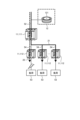
- FIG. 1 is a diagram showing a configuration of a power system protection system according to a first embodiment; Functional block diagram of a control unit of the power system protection system according to the first embodiment
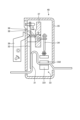
- FIG. 1 is a schematic configuration diagram of a breaker tripping mechanism of a power system protection system according to a first embodiment
- FIG. 1 is a diagram showing the tripping characteristics of a circuit breaker of a power system protection system according to the first embodiment
- a flowchart showing the flow of an electromagnetic tripping operation of a circuit breaker of a power system protection system according to the first embodiment.
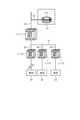
- FIG. 1 is a diagram showing a state in which an abnormality due to a short circuit fault or a ground fault occurs in a branch path of a power system that is a protection target of the power system protection system according to the first embodiment.
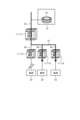
- FIG. 1 is a diagram showing a state in which a semiconductor switch of a commutator of a power system protection system according to a first embodiment is turned on;
- FIG. 1 is a diagram showing a state in which a semiconductor switch of a commutator in a power system protection system according to a first embodiment is turned off.
- FIG. 1 is a diagram showing a first example of a transition of a fault current when an abnormality occurs due to a short circuit fault or a ground fault in the power system protection system according to the first embodiment.
- FIG. 1 is a diagram showing a first example of a transition of a fault current when an abnormality occurs due to a short circuit fault or a ground fault in the power system protection system according to the first embodiment.
- FIG. 2 is a diagram showing a second example of a transition of a fault current when an abnormality occurs due to a short circuit fault or a ground fault in the power system protection system according to the first embodiment.
- FIG. 1 is a schematic diagram of a current limiting unit of a circuit breaker of a power system protection system according to a modification of the first embodiment;
- FIG. 1 is a diagram showing a configuration of a power system protection system according to a second embodiment;
- FIG. 1 shows a configuration of a power system protection system according to a third embodiment.
- FIG. 13 is a diagram showing a configuration of a control unit of a power system protection system according to a fourth embodiment.
- FIG. 1 is a diagram showing a hardware configuration of a control unit of a power system protection system according to a first to fourth embodiments.
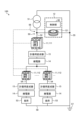
- Embodiment 1. 1 is a diagram showing a configuration of a power system protection system according to a first embodiment.
- the power system protection system 100 according to the first embodiment is a system for protecting a power system 50 that supplies power transformed by a substation to a load 53.
- the power system 50 that is the object of protection by the power system protection system 100 includes a transformer 51 that is a secondary side facility of the substation, a voltage line 56, and a neutral line 55.
- the transformer 51 steps down the power supplied from a primary side facility of the substation (not shown) and supplies the power to the voltage line 56.
- the voltage line 56 includes a main system 52 connected to the transformer 51, a plurality of branch paths 54 that branch off from the main system 52 and are connected to each load 53, and a grounding line 58 that connects each load 53 to a ground 57.
- the power system protection system 100 includes a plurality of circuit breakers 11, a commutator 12 installed upstream of the plurality of circuit breakers 11, a control device 13 having a control unit 80 that controls the circuit breakers 11 and the commutators 12, and a relay 14 and an instrument transformer 15 installed in each of the circuit breakers 11.
- the circuit breakers 11 include a main circuit breaker 111 installed in the main system 52, and subordinate circuit breakers 112 provided in each branch line 54.
- the power system 50 and the power system protection system 100 constitute a DC distribution system that supplies DC power to a load 53.
- the circuit breaker 11 and the commutator 12 of the power system protection system 100 are installed on the same switchboard.
- the commutator 12 has multiple semiconductor switches 121 connected in series or parallel, and connects the main system 52 and the neutral line 55. By connecting multiple semiconductor switches 121 in parallel, the current that can flow through the commutator 12 can be increased. Also, by connecting multiple semiconductor switches 121 in series, the withstand voltage of the commutator 12 can be increased.
- the main circuit breaker 111 and the subordinate circuit breaker 112 are mechanical circuit breakers. When a fault current larger than the rated current flows due to an abnormality caused by a short circuit or ground fault occurs, the relay 14 sends an abnormality detection signal to the control unit 80.
- the instrument transformer 15 reduces the voltage and current of the current flowing through the main system 52 or the branch line 54 and outputs it.
- FIG. 2 is a functional block diagram of the control unit of the power system protection system according to the first embodiment.
- the control unit 80 includes an abnormality detection signal receiving unit 81 that receives an abnormality detection signal output by the relay 14 when it detects the occurrence of an abnormality due to a short circuit or a ground fault, a commutation completion detection unit 82 that detects the completion of commutation based on the magnitude of the current output by the instrument transformer 15, a semiconductor switch control unit 83 that controls the semiconductor switch 121 of the commutator 12, and a circuit breaker control unit 84 that controls the circuit breaker 11.
- an abnormality detection signal receiving unit 81 that receives an abnormality detection signal output by the relay 14 when it detects the occurrence of an abnormality due to a short circuit or a ground fault
- a commutation completion detection unit 82 that detects the completion of commutation based on the magnitude of the current output by the instrument transformer 15, a semiconductor switch control unit 83 that controls the semiconductor switch 121 of the commut
- Fig. 3 is a schematic diagram of the tripping mechanism of the circuit breaker of the power system protection system according to the first embodiment.
- the circuit breaker 11 includes a heating resistor 31, a bimetal 32 attached to the heating resistor 31, an electromagnet 33 having a fixed core 331 and a movable core 332, a tripping rod 34 fixed to the movable core 332, a molded case 35, and a tripping mechanism 40 including a common tripping shaft 37 rotatably supported by a support arm 36 inside the molded case 35.
- the tripping mechanism 40 also includes a latch 38 protruding from the common tripping shaft 37 and a roller trigger 39 engaging with the latch 38.
- the tripping mechanism 40 of the circuit breaker 11 is a thermal electromagnetic type that performs thermal tripping by the bimetal 32 and electromagnetic tripping by the electromagnet 33.
- the circuit breaker 11 used as the lower circuit breaker 112 is equipped with a detection unit (not shown) that detects the fault current that flows due to a short-circuit or ground fault, and the circuit breaker 11 detects the occurrence of an accident by itself and performs an electromagnetic tripping operation.
- the circuit breaker 11 used as the main circuit breaker 111 is not equipped with a detection unit that detects the fault current that flows due to a short-circuit or ground fault, and performs an electromagnetic tripping operation when it receives a trip command output from the circuit breaker control unit 84.
- a circuit breaker 11 equipped with a detection unit (not shown) that detects a fault current flowing due to a short circuit or ground fault may be used as the main circuit breaker 111.
- the control unit 80 may be configured to omit the circuit breaker control unit 84.
- FIG. 4 is a diagram showing the tripping characteristics of the circuit breaker of the power system protection system according to embodiment 1.
- circuit breaker 11 When the magnitude of the overcurrent is equal to or less than current I1, circuit breaker 11 performs a thermal tripping operation using a bimetal, and when the magnitude of the overcurrent exceeds current I1, performs an electromagnetic tripping operation using an electromagnet.
- Thermal tripping is performed when Joule heat generated by heating resistor 31 is transferred to bimetal 32, and therefore has a longer operating time than electromagnetic tripping.
- FIG. 5 is a flowchart showing the flow of the electromagnetic tripping operation of the circuit breaker of the power system protection system according to embodiment 1.
- step S1 a short circuit or ground fault occurs, causing a fault current to flow.
- step S2 a current flows through the movable core 332, starting electromagnetic tripping.
- step S3 the tripping rod 34 fixed to the movable core 332 rotates the common tripping shaft 37, thereby performing a tripping latch operation that releases the engagement between the latch 38 and the roller trigger 39.
- the tripping latch operation rotates the roller trigger 39, and the movable contact (not shown) begins to separate from the fixed contact (not shown). At this time, an arc is generated between the movable contact and the fixed contact.
- step S5 the movable contact moves to a preset position, completing the separation of the movable contact and the fixed contact, and the arc is stretched.
- step S6 the stretched arc is extinguished, completing the interruption of the current.
- the time from when a short circuit or ground fault occurs until the contacts start to open in step S4 is the opening time.
- FIG. 6 is a diagram showing a state in which an abnormality due to a short circuit or a ground fault occurs in a branch of the power system that is the object of protection of the power system protection system according to the first embodiment.
- FIG. 6 shows only a part of the power system protection system 100, and does not show the relay 14 and the instrument transformer 15.
- a fault current 22 which is a current larger than the rated current 21 flows in the branch 54 in which the abnormality due to the short circuit or the ground fault occurs.
- the relay 14 detects the fault current 22, it notifies the control unit 80 of the occurrence of the abnormality due to the short circuit or the ground fault.
- the lower circuit breaker 112 installed in the branch 54 in which the abnormality due to the short circuit or the ground fault occurs detects the short circuit or the ground fault and performs a trip operation by electromagnetic tripping.
- the control unit 80 which has been notified of the occurrence of an abnormality due to a short circuit or a ground fault, outputs a command to the commutator 12 to turn on the semiconductor switch 121.
- the control unit 80 detects that the circuit breaker 11 has been opened due to a short circuit or a ground fault, it outputs a command to the commutator 12 to turn on the semiconductor switch 121.
- FIG. 7 is a diagram showing a state in which the semiconductor switch of the commutator of the power system protection system according to embodiment 1 is turned on. Note that FIG. 7 illustrates only a part of the power system protection system 100, and the relay 14 and the instrument transformer 15 are omitted.
- the commutator 12 When commutating the fault current to the neutral conductor 55 (not shown in FIG. 7), the commutator 12 is turned on when at least the circuit breaker 11 detects the occurrence of a short circuit or a ground fault. For example, when commutating the fault current to the neutral conductor 55, the commutator 12 is turned on when at least the circuit breaker 11 detects the opening of the circuit breaker 11. Since the semiconductor switch 121 has a faster operating speed than a mechanical switch, even if the control unit 80 simultaneously outputs commands to the commutator 12 and the lower circuit breaker 112, the operation of turning on the semiconductor switch 121 of the commutator 12 is performed before the tripping operation of the lower circuit breaker 112.
- the semiconductor switch 121 of the commutator 12 is already in the on state, the fault current 22 is commutated to the neutral conductor 55, and the current flowing in the branch path 54 is smaller than the fault current 22. Therefore, when the lower circuit breaker 112 trips, no arc occurs or only a weak arc occurs. Therefore, deterioration of the lower circuit breaker 112 due to the tripping operation can be suppressed.
- FIG. 8 is a diagram showing the state in which the semiconductor switch of the commutator of the power system protection system according to embodiment 1 is turned off. Note that FIG. 8 shows only a part of the power system protection system 100, and does not show the relay 14 and the instrument transformer 15. Since the lower-level circuit breaker 112 installed in the branch 54 in which an abnormality due to a short circuit or ground fault has occurred is in a tripped state, no current flows in the branch 54 in which an abnormality due to a short circuit or ground fault has occurred. As a result, the rated current 21 flows only in the branch 54 and the main system 52 in which no abnormality due to a short circuit or ground fault has occurred.
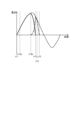
- FIG. 9 is a diagram showing a first example of the transition of the fault current when an abnormality occurs due to a short circuit or a ground fault in the power system protection system according to embodiment 1.
- the solid line indicates the current flowing through the circuit breaker 11 installed in the main system 52 or the branch 54 where an abnormality occurs due to a short circuit or a ground fault
- the dashed line indicates the current flowing through the semiconductor switch 121 of the commutator 12
- the dashed line indicates the current flowing through the circuit breaker when the fault current is interrupted in the power system protection system that interrupts the fault current with a mechanical circuit breaker.
- the time from when the relay 14 detects the fault current until the command to turn on the semiconductor switch 121 of the commutator 12 is output is more than 1/4 cycle of the frequency of the current flowing through the power system 50.
- the lower circuit breaker 112 detects the occurrence of the short circuit or ground fault and starts a tripping operation by electromagnetic tripping at time t12a.
- the control unit 80 outputs a command to the commutator 12 to turn on the semiconductor switch 121. Therefore, after time t12b, the current flowing through the semiconductor switch 121 increases and the current flowing through the lower circuit breaker 112 decreases. The tripping operation of the lower circuit breaker 112 is completed at time t13.
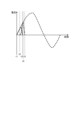
- FIG. 10 is a diagram showing a second example of the transition of the fault current when an abnormality occurs due to a short circuit or a ground fault in the power system protection system according to the first embodiment.
- the solid line indicates the current flowing through the circuit breaker 11 installed in the main system 52 or the branch 54 where an abnormality occurs due to a short circuit or a ground fault
- the dashed line indicates the current flowing through the semiconductor switch 121 of the commutator 12
- the dashed line indicates the current flowing through the circuit breaker when the fault current is interrupted in the power system protection system that interrupts the fault current with a mechanical circuit breaker.
- the lower circuit breaker 112 detects the occurrence of the short circuit or the ground fault and starts a trip operation by electromagnetic tripping.
- the control unit 80 outputs a command to the commutator 12 to turn on the semiconductor switch 121. Therefore, after time t2, the current flowing through the semiconductor switch 121 increases and the current flowing through the lower circuit breaker 112 decreases. At time t3, the tripping operation of the lower-level circuit breaker 112 is completed.
- the current flowing through the semiconductor switch 121 decreases after time t4.
- time t5 when the current increases, the operation of turning off the semiconductor switch 121 is completed. Because the lower-level circuit breaker 112 has tripped, even if the semiconductor switch 121 of the commutator 12 is turned off, no current flows through the location where the abnormality due to the short circuit accident or ground fault has occurred.
- the maximum value of the current flowing through the lower-level circuit breaker 112 is smaller than the maximum value of the current flowing through a lower-level circuit breaker in a power system protection system that does not have a commutator, so a smaller circuit breaker with a lower breaking capacity can be used than in a power system protection system that does not have a commutator.
- the commutator 12 can aggregate the breaking capacity of each of the circuit breakers 11, and the breaking capacity of the entire power system protection system 100 can be easily adjusted by changing the number of parallel connections of the commutators 12. Furthermore, since the power system protection system 100 does not require circuit breakers 11 with high breaking capacity, the number of types of circuit breakers 11 can be reduced by standardizing the models of the circuit breakers 11. Standardizing the models of the circuit breakers 11 eliminates the need to select the model of the circuit breakers 11, making it possible to standardize the panel design. Furthermore, when increasing the breaking capacity of the power system protection system 100, it is not necessary to replace all of the circuit breakers 11, and it is only necessary to adjust the number of parallel connections of only the commutators 12, so the breaking capacity of the entire power system protection system 100 can be easily increased.
- an example was given of an abnormality caused by a short circuit or ground fault in the branch path 54.
- the control unit 80 trips the main circuit breaker 111 and turns on the semiconductor switch 121 of the commutator 12, thereby commutating the fault current and isolating the location where the short circuit occurred.
- the control unit 80 turns on the semiconductor switches 121 of the commutators 12 of the power systems 50 corresponding to the two phases where the short circuit occurred in the case of a two-phase short circuit, and turns on the semiconductor switches of the commutators 12 of the power systems 50 corresponding to the three phases in the case of a three-phase short circuit, thereby making it possible to commutate the fault current and isolate the location where the short circuit occurred only in the phase where the short circuit occurred.
- the power system protection system 100 can prevent the fault current from flowing to the location where the abnormality has occurred faster than when a mechanical circuit breaker is used, and can prevent the scope of the accident from expanding.
- the location where the short-circuit accident has occurred can be isolated by interrupting the rated current with the lower circuit breaker 112 installed in the branch path 54 where the abnormality due to the short-circuit accident or ground fault has occurred.
- the main circuit breaker 111 and the lower circuit breaker 112 do not need to interrupt the fault current and only need to interrupt the rated current, so the power system protection system 100 can be made smaller by using small circuit breakers with low interrupting capacity.
- the semiconductor switch 121 of the commutator 12 is normally off and is turned on only when an abnormality occurs due to a short circuit or ground fault, so there is no need to install cooling equipment.
- the circuit breaker 11 installed in the main system 52 or branch 54 where the abnormality due to a short circuit or ground fault has occurred can cut off the current flowing to the location where the abnormality has occurred, so that power transmission to the load 53 can be resumed in a short time after the occurrence of the abnormality due to the short circuit or ground fault.
- the commutator 12 using the semiconductor switch 121 is given as an example, but the commutator 12 can also be configured using a mechanical switch that can operate at a speed faster than 1/4 cycle of the frequency of the current flowing through the power system 50.
- the circuit breaker 11 may also include a current limiting unit that limits the fault current that flows when a short circuit or ground fault occurs.
- FIG. 11 is a schematic diagram of a current limiting unit of a circuit breaker in a power system protection system according to a modified example of the first embodiment.
- the current limiting unit 60 includes a grid 61 installed around a fixed contact 72 provided on a fixed contactor 71, and a protrusion 62 provided on the fixed contactor 71.
- the grid 61 is configured by arranging a plurality of insulating members at close intervals.
- the control unit 80 may detect the automatic opening of the current limiting unit 60 and issue an ON command to the commutator 12. In this case, it is possible to turn on the commutator 12 at an earlier timing than when the circuit breaker 11 opening is detected, and the effect of the current limiting unit 60 makes it possible to shorten the time required for commutation and breaking.
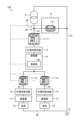
- Embodiment 2. 12 is a diagram showing a configuration of a power system protection system according to embodiment 2.
- the power system protection system 100 according to embodiment 2 differs from the power system protection system 100 according to embodiment 1 in that a control unit 80 is provided in a commutator 12.
- the power system protection system 100 according to embodiment 2 is similar to the power system protection system 100 according to embodiment 1, and therefore a duplicated description will be omitted.
- the control unit 80 is provided in the commutator 12, so the signal line connecting the control unit 80 and the semiconductor switch 121 is short, and the delay when transmitting a command to turn the semiconductor switch 121 on or off from the control unit 80 to the semiconductor switch 121 is small. This makes it possible to shorten the time required from the occurrence of an abnormality due to a short circuit or ground fault to the commutation of the fault current.
- Embodiment 3. 13 is a diagram showing a configuration of a power system protection system according to the third embodiment.
- the power system protection system 100 according to the third embodiment differs from the power system protection system 100 according to the first embodiment in that a control unit 80 is provided in the relay 14.
- the control unit 80 is provided in the relay 14 installed in the main system 52 or the branch line 54 where a short circuit accident or a ground fault accident is likely to occur among the voltage lines 56.
- the control unit 80 is provided in the relay 14 installed in the main system 52.
- the rest is the same as the power system protection system 100 according to the first embodiment, so a duplicated description will be omitted.
- the control unit 80 is provided in the relay 14, so the signal line connecting the control unit 80 and the relay 14 is short, and the delay in transmitting the accident detection signal from the relay 14 to the control unit 80 is small. This makes it possible to shorten the time required from the occurrence of an abnormality due to a short circuit or ground fault to the commutation of the accident current.
- Embodiment 4. 14 is a diagram showing the configuration of a control unit of a power system protection system according to embodiment 4.
- the power system protection system 100 according to embodiment 4 differs from the power system protection system 100 according to embodiment 1 in that the control unit 80 includes a commutation count storage unit 85.
- the power system protection system 100 according to embodiment 4 is similar to the power system protection system 100 according to embodiment 1, and therefore repeated explanations will be omitted.
- the commutation count memory unit 85 stores the number of times a command to turn on the semiconductor switch 121 has been output to the commutator 12.
- the arc generated when the current is interrupted leaves traces such as melting of part of the circuit breaker's contacts, making it possible to recognize after the fact that the circuit breaker has interrupted the fault current. Therefore, a user of a power system protection system using a mechanical circuit breaker can find traces of the fault current during maintenance of the power system protection system and replace voltage wires 56, etc., even if it is not immediately after the occurrence of an abnormality due to a short circuit or earth fault.
- the commutator 12 commutates the fault current to the neutral conductor 55, so the fault current is not interrupted by the circuit breaker 11 and no traces of the fault current remain on the circuit breaker 11.
- the number of times that a command to turn on the semiconductor switch 121 is output to the commutator 12 is stored in the commutation count storage unit 85, so that the user of the power system protection system 100 can recognize after the fact that an abnormality due to a short circuit or a ground fault has occurred in the voltage line 56 by checking the number of times stored in the commutation count storage unit 85. Therefore, the user of the power system protection system 100 according to the third embodiment can find traces of the fault current during maintenance of the power system protection system 100 and replace the voltage line 56, etc., even if it is not immediately after the occurrence of a short circuit or a ground fault.
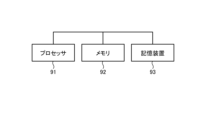
- FIG. 15 is a diagram showing the hardware configuration of the control unit of the power system protection system according to the first to fourth embodiments.
- the control unit 80 is realized by a computer system including a processor 91 that executes various processes, a memory 92 that is a main memory, and a storage device 93 that stores information.
- the processor 91 may be a calculation means such as an arithmetic unit, a microprocessor, a microcomputer, a CPU (Central Processing Unit), or a DSP (Digital Signal Processor).
- the memory 92 may be a non-volatile or volatile semiconductor memory such as a RAM (Random Access Memory), a ROM (Read Only Memory), a flash memory, an EPROM (Erasable Programmable Read Only Memory), or an EEPROM (registered trademark) (Electrically Erasable Programmable Read Only Memory).
- the storage device 93 stores a program for executing a process for controlling the commutator 12 and the circuit breaker 11.
- the above computer system realizes the functions of the control device 13 by the processor 91 reading into the memory 92 and executing the programs stored in the storage device 93 and corresponding to the processing of each component.
- the memory 92 is also used as a temporary memory for each process executed by the processor 91.
- the programs executed by the processor 91 may be provided in a state stored in a storage medium, or may be provided via a network.
- 11 circuit breaker, 12 commutator, 13 control device, 14 relay, 15 instrument transformer, 21 rated current, 22 fault current, 31 heating resistor, 32 bimetal, 33 electromagnet, 34 tripping bar, 35 molded case, 36 support arm, 37 common tripping shaft, 38 latch, 39 roller trigger, 40 tripping mechanism, 50 power system, 51 transformer, 52 main system, 53 load, 54 branch, 55 neutral conductor, 56 voltage conductor, 57 ground, 58 earth conductor, 6 0 current limiting unit, 61 grid, 62 protrusion, 71 fixed contact, 72 fixed contact, 73 moving contact, 74 moving contact, 80 control unit, 81 abnormality detection signal receiving unit, 82 commutation completion detection unit, 83 semiconductor switch control unit, 84 circuit breaker control unit, 85 commutation count storage unit, 91 processor, 92 memory, 93 storage device, 100 power system protection system, 111 main circuit breaker, 112 lower circuit breaker, 121 semiconductor switch, 331 fixed core, 332 moving core.
Landscapes
- Engineering & Computer Science (AREA)
- Power Engineering (AREA)
- Emergency Protection Circuit Devices (AREA)
- Supply And Distribution Of Alternating Current (AREA)
Priority Applications (5)
| Application Number | Priority Date | Filing Date | Title |
|---|---|---|---|
| KR1020267001096A KR20260023038A (ko) | 2023-07-25 | 2023-07-25 | 전력 계통 보호 시스템 |
| CN202380100428.0A CN121548927A (zh) | 2023-07-25 | 2023-07-25 | 电力网保护系统 |
| PCT/JP2023/027162 WO2025022562A1 (ja) | 2023-07-25 | 2023-07-25 | 電力系統保護システム |
| JP2025535456A JPWO2025022562A1 (https=) | 2023-07-25 | 2023-07-25 | |
| TW113115963A TWI905733B (zh) | 2023-07-25 | 2024-04-29 | 電力系統保護系統 |
Applications Claiming Priority (1)
| Application Number | Priority Date | Filing Date | Title |
|---|---|---|---|
| PCT/JP2023/027162 WO2025022562A1 (ja) | 2023-07-25 | 2023-07-25 | 電力系統保護システム |
Publications (1)
| Publication Number | Publication Date |
|---|---|
| WO2025022562A1 true WO2025022562A1 (ja) | 2025-01-30 |
Family
ID=94374238
Family Applications (1)
| Application Number | Title | Priority Date | Filing Date |
|---|---|---|---|
| PCT/JP2023/027162 Pending WO2025022562A1 (ja) | 2023-07-25 | 2023-07-25 | 電力系統保護システム |
Country Status (5)
| Country | Link |
|---|---|
| JP (1) | JPWO2025022562A1 (https=) |
| KR (1) | KR20260023038A (https=) |
| CN (1) | CN121548927A (https=) |
| TW (1) | TWI905733B (https=) |
| WO (1) | WO2025022562A1 (https=) |
Citations (4)
| Publication number | Priority date | Publication date | Assignee | Title |
|---|---|---|---|---|
| JPH06276672A (ja) * | 1993-03-17 | 1994-09-30 | Fuji Electric Co Ltd | 系統地絡検出・分離方法 |
| JPH08508154A (ja) | 1993-03-25 | 1996-08-27 | シーメンス アクチエンゲゼルシヤフト | 短絡時に低圧回路網の枝路を切り離すための装置 |
| JP2001095151A (ja) * | 1998-04-10 | 2001-04-06 | Kyushu Electric Power Co Inc | 事故電流を抑制可能な直接接地システム |
| JP2020167774A (ja) * | 2019-03-28 | 2020-10-08 | 東京電力ホールディングス株式会社 | 保護装置 |
Family Cites Families (3)
| Publication number | Priority date | Publication date | Assignee | Title |
|---|---|---|---|---|
| EP3301771B1 (en) * | 2016-09-30 | 2021-11-10 | ABB Schweiz AG | Fault current handling in an electrical plant |
| EP4138245A4 (en) * | 2020-04-16 | 2023-06-07 | Mitsubishi Electric Corporation | POWER SUPPLY SYSTEM FOR MOVING BODY |
| CN113949044B (zh) * | 2021-02-02 | 2024-02-13 | 保定钰鑫电气科技有限公司 | 一种三相非有效接地供电系统 |
-
2023
- 2023-07-25 KR KR1020267001096A patent/KR20260023038A/ko active Pending
- 2023-07-25 JP JP2025535456A patent/JPWO2025022562A1/ja active Pending
- 2023-07-25 WO PCT/JP2023/027162 patent/WO2025022562A1/ja active Pending
- 2023-07-25 CN CN202380100428.0A patent/CN121548927A/zh active Pending
-
2024
- 2024-04-29 TW TW113115963A patent/TWI905733B/zh active
Patent Citations (4)
| Publication number | Priority date | Publication date | Assignee | Title |
|---|---|---|---|---|
| JPH06276672A (ja) * | 1993-03-17 | 1994-09-30 | Fuji Electric Co Ltd | 系統地絡検出・分離方法 |
| JPH08508154A (ja) | 1993-03-25 | 1996-08-27 | シーメンス アクチエンゲゼルシヤフト | 短絡時に低圧回路網の枝路を切り離すための装置 |
| JP2001095151A (ja) * | 1998-04-10 | 2001-04-06 | Kyushu Electric Power Co Inc | 事故電流を抑制可能な直接接地システム |
| JP2020167774A (ja) * | 2019-03-28 | 2020-10-08 | 東京電力ホールディングス株式会社 | 保護装置 |
Also Published As
| Publication number | Publication date |
|---|---|
| TWI905733B (zh) | 2025-11-21 |
| CN121548927A (zh) | 2026-02-17 |
| KR20260023038A (ko) | 2026-02-20 |
| JPWO2025022562A1 (https=) | 2025-01-30 |
| TW202505835A (zh) | 2025-02-01 |
Similar Documents
| Publication | Publication Date | Title |
|---|---|---|
| US8174801B2 (en) | Controlling arc energy in a hybrid high voltage DC contactor | |
| JP5255630B2 (ja) | 暖房・換気・空調システムにおける微小電子機械システムベースのスイッチング | |
| US6738246B1 (en) | Electrical circuit breaker for protecting against overcurrents | |
| US6687573B2 (en) | Recloser and fuse coordination scheme | |
| RU2633518C2 (ru) | Способ обнаружения дуговых коротких замыканий с применением переключаемых элементов в розетке | |
| JP5114558B2 (ja) | 微小電気機械システムを使用した選択的に調整される配電用保護システム及び保護方法 | |
| JP5002708B2 (ja) | 電流制限装置ベースのリセット可能memsマイクロスイッチアレイ | |
| CN110492477B (zh) | 一种环网控制器及控制方法 | |
| AU2008213827A1 (en) | Fuse saving power distribution system fault protection | |
| JP7809497B2 (ja) | 送電グリッド用ハイブリッドスイッチング装置 | |
| JP7117744B2 (ja) | 電流遮断装置及び電流遮断方法 | |
| CN100407532C (zh) | 自动开关控制系统及其控制方法 | |
| US20230283064A1 (en) | Phase-selective interruption for three-phase ac circuits with thomson coil actuated switches and breakers | |
| CN101340075B (zh) | 用于三相输电线的自动开关控制系统及其控制电源的方法 | |
| WO2025022562A1 (ja) | 電力系統保護システム | |
| EP1919053B1 (en) | State monitoring device for circuit breaker | |
| JP7819410B2 (ja) | 電力系統保護システム、電力系統保護装置及び電力系統保護方法 | |
| KR20170096369A (ko) | 차단 한류기 | |
| KR100304252B1 (ko) | 연동형 기중 차단기의 자동 절체 제어 장치 | |
| JP5137226B2 (ja) | 回路遮断器 | |
| US12444928B2 (en) | Power system protection device with current limiting and controlled switching functions for AC and DC applications | |
| JPH1132427A (ja) | 配電システム | |
| CN110492476B (zh) | 一种含有通讯设备的环网控制器及控制方法 | |
| JPH0338921Y2 (https=) | ||
| CN118920412A (zh) | 一种三相不一致保护装置 |
Legal Events
| Date | Code | Title | Description |
|---|---|---|---|
| 121 | Ep: the epo has been informed by wipo that ep was designated in this application |
Ref document number: 23946646 Country of ref document: EP Kind code of ref document: A1 |
|
| ENP | Entry into the national phase |
Ref document number: 2025535456 Country of ref document: JP Kind code of ref document: A |
|
| WWE | Wipo information: entry into national phase |
Ref document number: 2025535456 Country of ref document: JP |
|
| ENP | Entry into the national phase |
Ref document number: 1020267001096 Country of ref document: KR Free format text: ST27 STATUS EVENT CODE: A-0-1-A10-A15-NAP-PA0105 (AS PROVIDED BY THE NATIONAL OFFICE) |
|
| WWE | Wipo information: entry into national phase |
Ref document number: 1020267001096 Country of ref document: KR |
|
| WWP | Wipo information: published in national office |
Ref document number: 1020267001096 Country of ref document: KR |
|
| WWE | Wipo information: entry into national phase |
Ref document number: 2023946646 Country of ref document: EP |
|
| NENP | Non-entry into the national phase |
Ref country code: DE |