WO2025018295A1 - 改変バクテリオファージ - Google Patents
改変バクテリオファージ Download PDFInfo
- Publication number
- WO2025018295A1 WO2025018295A1 PCT/JP2024/025265 JP2024025265W WO2025018295A1 WO 2025018295 A1 WO2025018295 A1 WO 2025018295A1 JP 2024025265 W JP2024025265 W JP 2024025265W WO 2025018295 A1 WO2025018295 A1 WO 2025018295A1
- Authority
- WO
- WIPO (PCT)
- Prior art keywords
- bacteriophage
- genome
- nucleic acid
- acid sequence
- accession number
- Prior art date
- Legal status (The legal status is an assumption and is not a legal conclusion. Google has not performed a legal analysis and makes no representation as to the accuracy of the status listed.)
- Ceased
Links
Images
Classifications
-
- C—CHEMISTRY; METALLURGY
- C12—BIOCHEMISTRY; BEER; SPIRITS; WINE; VINEGAR; MICROBIOLOGY; ENZYMOLOGY; MUTATION OR GENETIC ENGINEERING
- C12N—MICROORGANISMS OR ENZYMES; COMPOSITIONS THEREOF; PROPAGATING, PRESERVING, OR MAINTAINING MICROORGANISMS; MUTATION OR GENETIC ENGINEERING; CULTURE MEDIA
- C12N7/00—Viruses; Bacteriophages; Compositions thereof; Preparation or purification thereof
-
- A—HUMAN NECESSITIES
- A61—MEDICAL OR VETERINARY SCIENCE; HYGIENE
- A61K—PREPARATIONS FOR MEDICAL, DENTAL OR TOILETRY PURPOSES
- A61K35/00—Medicinal preparations containing materials or reaction products thereof with undetermined constitution
- A61K35/66—Microorganisms or materials therefrom
- A61K35/76—Viruses; Subviral particles; Bacteriophages
-
- A—HUMAN NECESSITIES
- A61—MEDICAL OR VETERINARY SCIENCE; HYGIENE
- A61K—PREPARATIONS FOR MEDICAL, DENTAL OR TOILETRY PURPOSES
- A61K38/00—Medicinal preparations containing peptides
- A61K38/16—Peptides having more than 20 amino acids; Gastrins; Somatostatins; Melanotropins; Derivatives thereof
- A61K38/43—Enzymes; Proenzymes; Derivatives thereof
-
- A—HUMAN NECESSITIES
- A61—MEDICAL OR VETERINARY SCIENCE; HYGIENE
- A61K—PREPARATIONS FOR MEDICAL, DENTAL OR TOILETRY PURPOSES
- A61K47/00—Medicinal preparations characterised by the non-active ingredients used, e.g. carriers or inert additives; Targeting or modifying agents chemically bound to the active ingredient
- A61K47/50—Medicinal preparations characterised by the non-active ingredients used, e.g. carriers or inert additives; Targeting or modifying agents chemically bound to the active ingredient the non-active ingredient being chemically bound to the active ingredient, e.g. polymer-drug conjugates
- A61K47/51—Medicinal preparations characterised by the non-active ingredients used, e.g. carriers or inert additives; Targeting or modifying agents chemically bound to the active ingredient the non-active ingredient being chemically bound to the active ingredient, e.g. polymer-drug conjugates the non-active ingredient being a modifying agent
- A61K47/62—Medicinal preparations characterised by the non-active ingredients used, e.g. carriers or inert additives; Targeting or modifying agents chemically bound to the active ingredient the non-active ingredient being chemically bound to the active ingredient, e.g. polymer-drug conjugates the non-active ingredient being a modifying agent the modifying agent being a protein, peptide or polyamino acid
- A61K47/65—Peptidic linkers, binders or spacers, e.g. peptidic enzyme-labile linkers
-
- A—HUMAN NECESSITIES
- A61—MEDICAL OR VETERINARY SCIENCE; HYGIENE
- A61P—SPECIFIC THERAPEUTIC ACTIVITY OF CHEMICAL COMPOUNDS OR MEDICINAL PREPARATIONS
- A61P11/00—Drugs for disorders of the respiratory system
-
- A—HUMAN NECESSITIES
- A61—MEDICAL OR VETERINARY SCIENCE; HYGIENE
- A61P—SPECIFIC THERAPEUTIC ACTIVITY OF CHEMICAL COMPOUNDS OR MEDICINAL PREPARATIONS
- A61P31/00—Antiinfectives, i.e. antibiotics, antiseptics, chemotherapeutics
- A61P31/04—Antibacterial agents
-
- A—HUMAN NECESSITIES
- A61—MEDICAL OR VETERINARY SCIENCE; HYGIENE
- A61P—SPECIFIC THERAPEUTIC ACTIVITY OF CHEMICAL COMPOUNDS OR MEDICINAL PREPARATIONS
- A61P43/00—Drugs for specific purposes, not provided for in groups A61P1/00-A61P41/00
-
- C—CHEMISTRY; METALLURGY
- C07—ORGANIC CHEMISTRY
- C07K—PEPTIDES
- C07K14/00—Peptides having more than 20 amino acids; Gastrins; Somatostatins; Melanotropins; Derivatives thereof
- C07K14/005—Peptides having more than 20 amino acids; Gastrins; Somatostatins; Melanotropins; Derivatives thereof from viruses
-
- C—CHEMISTRY; METALLURGY
- C12—BIOCHEMISTRY; BEER; SPIRITS; WINE; VINEGAR; MICROBIOLOGY; ENZYMOLOGY; MUTATION OR GENETIC ENGINEERING
- C12N—MICROORGANISMS OR ENZYMES; COMPOSITIONS THEREOF; PROPAGATING, PRESERVING, OR MAINTAINING MICROORGANISMS; MUTATION OR GENETIC ENGINEERING; CULTURE MEDIA
- C12N2795/00—Bacteriophages
- C12N2795/00011—Details
- C12N2795/10011—Details dsDNA Bacteriophages
- C12N2795/10021—Viruses as such, e.g. new isolates, mutants or their genomic sequences
-
- C—CHEMISTRY; METALLURGY
- C12—BIOCHEMISTRY; BEER; SPIRITS; WINE; VINEGAR; MICROBIOLOGY; ENZYMOLOGY; MUTATION OR GENETIC ENGINEERING
- C12N—MICROORGANISMS OR ENZYMES; COMPOSITIONS THEREOF; PROPAGATING, PRESERVING, OR MAINTAINING MICROORGANISMS; MUTATION OR GENETIC ENGINEERING; CULTURE MEDIA
- C12N2795/00—Bacteriophages
- C12N2795/00011—Details
- C12N2795/10011—Details dsDNA Bacteriophages
- C12N2795/10022—New viral proteins or individual genes, new structural or functional aspects of known viral proteins or genes
-
- C—CHEMISTRY; METALLURGY
- C12—BIOCHEMISTRY; BEER; SPIRITS; WINE; VINEGAR; MICROBIOLOGY; ENZYMOLOGY; MUTATION OR GENETIC ENGINEERING
- C12N—MICROORGANISMS OR ENZYMES; COMPOSITIONS THEREOF; PROPAGATING, PRESERVING, OR MAINTAINING MICROORGANISMS; MUTATION OR GENETIC ENGINEERING; CULTURE MEDIA
- C12N2795/00—Bacteriophages
- C12N2795/00011—Details
- C12N2795/10011—Details dsDNA Bacteriophages
- C12N2795/10032—Use of virus as therapeutic agent, other than vaccine, e.g. as cytolytic agent
Definitions
- the present invention relates to novel bacteriophages and modified bacteriophages, as well as uses of these bacteriophages.
- Bacteriophages are viruses that use bacteria as hosts. When a phage infects a particular bacterium, it injects its own genome into the bacterium and uses the metabolic mechanisms of the host bacterium to grow progeny phages. The bacterial cell wall is then destroyed by a lytic enzyme carried in the phage genome, releasing the progeny phages and causing the host bacterium to die.
- Phages can be broadly classified into non-temperate phages (lytic phages) and temperate phages (lysogenic phages) (Scientifica (Cairo). 2014; 2014: 581639.).
- Non-temperate phages replicate without being incorporated into the host bacterial DNA. They grow progeny phages within the bacteria, lyse the bacteria, and release mature phage particles.
- temperate phages are incorporated into the host bacterial DNA after infecting the bacteria, and replicate together with the host bacterial DNA.
- phages lacking the integrase gene (Nat Med. 2019; 25(5): 730.) and phages lacking the integrase gene and the immunity repressor gene (mBio. 2021; 12(3): e00973.) have been reported.
- a phage is composed of a head (capsid containing the phage genome) and a tail.
- the phage capsid is produced by synthesizing multiple proteins that make up the capsid from the phage genome in the host bacterium, and assembling these proteins that make up the capsid.
- a phage with the target peptide or protein added to the capsid is produced by introducing a plasmid in which a DNA sequence encoding a certain capsid-constituting protein is linked to a DNA sequence encoding a target peptide or protein, and a phage genome into the host bacterium.
- Non-Patent Document 1 a modified TM4 phage having a capsid protein fused with an S-tag peptide can be obtained.
- MAC is known to infect cells as well. If phages can be efficiently delivered into cells, they will be able to lyse the MAC inside the cells, and this is expected to have a stronger therapeutic effect.
- CPPs cell penetrating peptides
- CPPs Many sequences are known as CPPs. For example, it has been reported that Inv3, a peptide contained in Mycobacterium cell entry protein (Mce1A), a protein derived from Mycobacterium tuberculosis, has CPP activity (Non-Patent Document 3).
- the object of the present invention is to provide a bacteriophage having lytic activity against Mycobacterium avium and/or Mycobacterium intracellulare.
- Another object of the present invention is to provide a means and method, in particular a bacteriophage and a pharmaceutical composition, for preventing or treating nontuberculous mycobacterial disease such as pulmonary MAC disease.
- Example 1 As a result of considerable inventive and repeated investigations into the creation of bacteriophages, the inventors obtained a novel bacteriophage (Example 1) and discovered that the bacteriophage was resistant to freezing and thawing (Example 2). They also obtained a bacteriophage with a modified capsid (Example 3). They then discovered that the novel bacteriophage and the modified bacteriophage had lytic activity against Mycobacterium avium and Mycobacterium intracellulare (Examples 4-5). Furthermore, the inventors discovered that a pharmaceutical composition containing a combination of specific bacteriophage strains had excellent bactericidal activity (Example 6). Based on the above findings, the present invention was completed.
- the present invention may include the following inventions as medically or industrially useful substances or methods.
- a bacteriophage having lytic activity against Mycobacterium avium and/or Mycobacterium intracellulare the genome of the bacteriophage (a) comprising a nucleic acid sequence having 90% or more identity with the nucleic acid sequence of the genome of the bacteriophage identified by the accession number NITE BP-03513, and (b) lacking an integrase gene and/or an immunity repressor gene, and the capsid of the bacteriophage is linked to an S tag.
- a bacteriophage having lytic activity against Mycobacterium avium and/or Mycobacterium intracellulare the bacteriophage being a bacteriophage identified by the accession number NITE BP-03513 or a subcultured strain thereof, and the capsid of the bacteriophage or the subcultured strain thereof is linked to an S tag.
- a pharmaceutical composition comprising the bacteriophage according to any one of [1] to [6] and a pharma- ceutical acceptable excipient.
- the pharmaceutical composition described in [7] further comprising one or more strains of bacteriophage having lytic activity against Mycobacterium avium and/or Mycobacterium intracellulare.
- a bacteriophage having lytic activity against Mycobacterium avium and/or Mycobacterium intracellulare the genome of which (a) comprises a nucleic acid sequence having 90% or more identity to the nucleic acid sequence of the genome of the bacteriophage identified by the accession number NITE BP-03918, and (b) is deficient in an integrase gene and/or an immunity repressor gene.
- the bacteriophage according to [9] which is resistant to freezing and thawing.
- a pharmaceutical composition comprising the bacteriophage according to any one of [9] to [17] and a pharma- ceutical acceptable excipient. [19] The pharmaceutical composition described in [18], further comprising one or more strains of bacteriophage having lytic activity against Mycobacterium avium and/or Mycobacterium intracellulare.
- a pharmaceutical composition comprising a bacteriophage according to any one of (1) to (3) below and a pharma- ceutical acceptable excipient: (1) A bacteriophage having lytic activity against Mycobacterium avium and/or Mycobacterium intracellulare, the genome of which (a) comprises a nucleic acid sequence having 90% or more identity with the nucleic acid sequence of the genome of the bacteriophage identified by the accession number NITE BP-03513, and (b) is deficient in an integrase gene and/or an immunity repressor gene, and the capsid of the bacteriophage is linked to Inv3 via an S tag; (2) A bacteriophage having lytic activity against Mycobacterium avium and/or Mycobacterium intracellulare, the genome of which (a) comprises a nucleic acid sequence having 90% or more identity with the nucleic acid sequence of the genome of a bacteriophage identified by accession number NITE BP-03514, and (b)
- a pharmaceutical composition comprising a bacteriophage according to any one of (1) to (3) below and a pharma- ceutical acceptable excipient: (1) A bacteriophage having lytic activity against Mycobacterium avium and/or Mycobacterium intracellulare, the bacteriophage being a bacteriophage identified by the accession number NITE BP-03513 or a subcultured strain thereof, and the capsid of the bacteriophage or the subcultured strain thereof is linked to Inv3 via an S tag; (2) a bacteriophage having lytic activity against Mycobacterium avium and/or Mycobacterium intracellulare, the bacteriophage being the bacteriophage specified by accession number NITE BP-03514, or a subcultured strain thereof; and (3) a bacteriophage having lytic activity against Mycobacterium avium and/or Mycobacterium intracellulare, the bacteriophage being the bacteriophage specified by accession number NITE
- a pharmaceutical composition comprising a bacteriophage according to any one of (1) to (3) below and a pharma- ceutical acceptable excipient: (1) A bacteriophage having lytic activity against Mycobacterium avium and/or Mycobacterium intracellulare, the genome of which (a) comprises a nucleic acid sequence having 90% or more identity with the nucleic acid sequence of the genome of the bacteriophage identified by the accession number NITE BP-03513, and (b) is deficient in an integrase gene and/or an immunity repressor gene, and the capsid of the bacteriophage is linked to Inv3 via an S tag; (2) A bacteriophage having lytic activity against Mycobacterium avium and/or Mycobacterium intracellulare, the genome of which (a) comprises a nucleic acid sequence having 90% or more identity with the nucleic acid sequence of the genome of a bacteriophage identified by accession number NITE BP-03918, and (b)
- a pharmaceutical composition comprising a bacteriophage according to any one of (1) to (3) below and a pharma- ceutical acceptable excipient: (1) A bacteriophage having lytic activity against Mycobacterium avium and/or Mycobacterium intracellulare, the bacteriophage being a bacteriophage identified by the accession number NITE BP-03513 or a subcultured strain thereof, and the capsid of the bacteriophage or the subcultured strain thereof is linked to Inv3 via an S tag; (2) A bacteriophage having lytic activity against Mycobacterium avium and/or Mycobacterium intracellulare, the bacteriophage being a bacteriophage specified by accession number NITE BP-03918 or a subcultured strain thereof, and the capsid of the bacteriophage or a subcultured strain thereof is linked to Inv3 via an S tag; and (3) A bacteriophage having lytic activity against Mycobacterium avium and/or My
- a pharmaceutical composition comprising a bacteriophage according to any one of (1) to (3) below and a pharma- ceutical acceptable excipient: (1) A bacteriophage having lytic activity against Mycobacterium avium and/or Mycobacterium intracellulare, the genome of which (a) comprises a nucleic acid sequence having 90% or more identity with the nucleic acid sequence of the genome of the bacteriophage identified by the accession number NITE BP-03513, and (b) is deficient in an integrase gene and/or an immunity repressor gene, and the capsid of the bacteriophage is linked to Inv3 via an S tag; (2) A bacteriophage having lytic activity against Mycobacterium avium and/or Mycobacterium intracellulare, the genome of which (a) contains a nucleic acid sequence having 90% or more identity to the nucleic acid sequence of the genome of the bacteriophage identified by the accession number NITE BP-03514, and (b)
- a pharmaceutical composition comprising a bacteriophage according to any one of (1) to (3) below and a pharma- ceutical acceptable excipient: (1) A bacteriophage having lytic activity against Mycobacterium avium and/or Mycobacterium intracellulare, the bacteriophage being a bacteriophage identified by the accession number NITE BP-03513 or a subcultured strain thereof, and the capsid of the bacteriophage or the subcultured strain thereof is linked to Inv3 via an S tag; (2) A bacteriophage having lytic activity against Mycobacterium avium and/or Mycobacterium intracellulare, the bacteriophage being identified by the accession number NITE BP-03514, or a passage strain thereof; and (3) A bacteriophage having lytic activity against Mycobacterium avium and/or Mycobacterium intracellulare, the bacteriophage being identified by the accession number NITE BP-03519, or a passage strain thereof.
- the bacteriophage and modified bacteriophage, as well as the pharmaceutical composition of the present invention exhibit lytic activity against Mycobacterium avium and/or Mycobacterium intracellulare, and it is expected that the bacteriophage and modified bacteriophage, as well as the pharmaceutical composition of the present invention, can be used to prevent or treat nontuberculous mycobacterial diseases, such as pulmonary MAC disease.
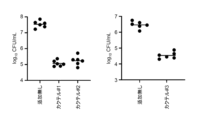
- FIG. 13 is a photograph showing the results of comparing the effect of physical damage caused by freeze-thawing on the number of phages in the #63 lysogen gene-deficient strain (No. 63 ⁇ rep, int) and the #63 freeze-thaw resistant strain (No. 63 ⁇ rep, int_R12-23) by plaque formation assay. Photographs showing the lytic activity of 1. an S-tag and Inv3-fused D29 lysogen gene-deficient strain (D29 ⁇ int-Stag-Inv3), 2. an S-tag and Inv3-fused B1 lysogen gene-deficient strain (B1 ⁇ rep, int-Stag-Inv3), 3.
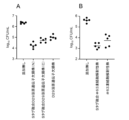
- A A graph showing the bactericidal activity of bacteriophages of the S-tag fusion D29 lysogen gene-deficient strain (N), the S-tag fusion D29 lysogen gene-deficient strain (C), and the D29 lysogen gene-deficient strain against Mycobacterium avium KCH-ASGF-MA-05 infected intracellularly.
- B A graph showing the bactericidal activity of bacteriophages of the S-tag fusion #63 freeze-thaw resistant strain and the #63 freeze-thaw resistant strain against Mycobacterium avium KCH-ASGF-MA-12 infected intracellularly.
- the vertical axis shows colony forming unit concentration (CFU/mL). The bars show the geometric mean value.
- 1 is a graph showing the bactericidal activity of various bacteriophage cocktails against intracellularly infected Mycobacterium avium KCH-ASGF-MA-05.
- the vertical axis shows colony forming unit concentration (CFU/mL). Bars represent geometric mean values.
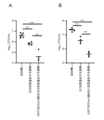
- 1 is a graph showing the bactericidal activity of various bacteriophages against intracellularly infected Mycobacterium avium KCH-ASGF-MA-05.
- the vertical axis indicates colony forming unit concentration (CFU/mL). Bars indicate geometric mean values. ** indicates that a significant difference was observed between groups when tested by Tukey's multiple comparison test at a significance level of less than 1% (p ⁇ 0.01).
- the present invention provides a novel bacteriophage (hereinafter, may be referred to as "the bacteriophage of the present invention”).
- the bacteriophage of the present invention is a bacteriophage having lytic activity against nontuberculous mycobacteria (NTM), in particular Mycobacterium avium and/or Mycobacterium intracellulare, which cause pulmonary MAC disease.
- NTM nontuberculous mycobacteria
- Mycobacterium avium and/or Mycobacterium intracellulare, which cause pulmonary MAC disease.
- the bacteriophage #63 freeze-thaw resistant strain of the present invention has been internationally deposited by the applicant with the National Institute of Technology and Evaluation, Patent Microorganisms Deposit Center (Room 122, 2-5-8 Kazusa Kamatari, Kisarazu City, Chiba Prefecture, Japan 292-0818), which is the international depositary authority under the provisions of the Budapest Treaty for the Deposit of Patent Microorganisms, on June 22, 2023 (Accession No. NITE BP-03918).
- the bacteriophage of the invention includes the following bacteriophage: A bacteriophage having lytic activity against Mycobacterium avium and/or Mycobacterium intracellulare, the genome of the bacteriophage (a) comprising a nucleic acid sequence having 90% or more identity with the nucleic acid sequence of the genome of the bacteriophage identified by the accession number NITE BP-03918, and (b) lacking a lysogen gene.
- identity refers to the identity of a base sequence or an amino acid sequence determined by a technique known in the art.
- a method for aligning sequences generally available alignment software can be used.
- CLUSTAL W program Nucleic Acids Research. 1994; 22(22): 4673-80
- FASTA program Proceedings of the National Academy of Sciences of the United States of America. 1988; 85(8): 2444-8
- the BLAST program including BLASTP, BLASTN, BLASTX, TBLASTN, TBLASTX, etc.
- Journal of Molecular Biology. 1990; 215(3): 403-10 and the like can be used, but are not limited to these.
- lysogenic gene refers to a gene involved in the induction and/or maintenance of a lysogenic state.
- Examples of “lysogenic genes” include the integrase gene, the immunity repressor gene, and the Cro gene, and specific lysogenic genes and their sequence information are also publicly known (Nat Med. 2019; 25(5): 730., mBio. 2021; 12(3): e00973., Cell. 2018; 172(6): 1260.).
- lacking a lysogen gene means that 1) at least one full-length lysogen gene is deleted from the genome sequence of the bacteriophage, or 2-1) at least one part of the lysogen gene region is modified from the genome sequence of the bacteriophage by deletion, substitution, insertion, addition, or a combination thereof, to make the bacteriophage a lytic bacteriophage, or 2-2) the function of the lysogen gene is lost.
- Lysogen gene deletion can be performed by a method known in the art depending on the type of lysogen gene to be deleted (e.g., Nat Med. 2019; 25(5): 730., mBio. 2021; 12(3): e00973., PLoS One. 2008; 3(12): e3957.).
- lytic activity against Mycobacterium avium and/or Mycobacterium intracellulare means showing lytic plaques against at least one strain of bacteria belonging to Mycobacterium avium or Mycobacterium intracellulare. Confirmation of lytic activity against these bacteria can be performed using methods and means known in the art. For example, whether a bacteriophage has lytic activity can be confirmed by confirming whether or not approximately 10 10 pfu/mL to 10 5 pfu/mL of a bacteriophage (or a mixture of multiple bacteriophages) shows lytic plaques against Mycobacterium avium or Mycobacterium intracellulare using the method described in Example 4 of the present specification.
- the bacteriophage of the present invention is resistant to freeze-thawing.
- the bacteriophage of the present invention includes the following bacteriophages: A bacteriophage having lytic activity against Mycobacterium avium and/or Mycobacterium intracellulare, the genome of the bacteriophage (a) comprising a nucleic acid sequence having 90% or more identity with the nucleic acid sequence of the genome of the bacteriophage identified by the accession number NITE BP-03918, and (b) lacking a lysogen gene, and the bacteriophage having resistance to freezing and thawing.
- resistant to freezing and thawing means that the bacteriophage is maintained to a desired degree even after the freezing and thawing treatment, although it is known that some of the bacteriophage are killed or damaged by the freezing and thawing treatment.
- the bacteriophage after the freezing and thawing treatment maintains approximately the same number as before the freezing and thawing treatment, or maintains at least 10%, at least 20%, at least 30%, at least 40%, at least 50%, at least 60%, at least 70%, at least 80%, at least 90% or more of the number before the freezing and thawing treatment. Whether or not the bacteriophage is resistant to freezing and thawing can be confirmed using methods and means known in the art.
- whether or not the bacteriophage is resistant to freezing and thawing can be confirmed by confirming whether or not the bacteriophage shows a decrease in number before and after the freezing and thawing treatment using the method described in Example 2 of this specification.
- resistance to freeze-thawing can be confirmed by checking whether the bacteriophage activity (e.g., lytic activity against Mycobacterium avium and/or Mycobacterium intracellulare) retains the desired activity after freeze-thawing.
- the bacteriophage after freeze-thawing retains approximately the same activity as before freeze-thawing, or retains at least 10%, at least 20%, at least 30%, at least 40%, at least 50%, at least 60%, at least 70%, at least 80%, at least 90% or more of the activity before freeze-thawing, the bacteriophage can be said to be resistant to freeze-thawing.
- the bacteriophage of the invention includes the following bacteriophage: A bacteriophage having lytic activity against Mycobacterium avium and/or Mycobacterium intracellulare, the genome of which (a) comprises a nucleic acid sequence having 90% or more identity with the nucleic acid sequence of the genome of a bacteriophage identified by accession number NITE BP-03918, and (b) is deficient in an integrase gene and/or an immunity repressor gene.
- “Lack of integrase gene and/or immunity repressor gene” means 1) that the entire length of the integrase gene and/or the immunity repressor gene has been deleted from the genome sequence of the bacteriophage, or 2-1) that a portion of the integrase gene and/or the immunity repressor gene has been modified from the genome sequence of the bacteriophage by deletion, substitution, insertion, addition or a combination thereof, thereby turning the bacteriophage into a lytic bacteriophage, or 2-2) that the function of the integrase gene and/or the immunity repressor gene is lost.
- deletion of lysogenic genes such as the integrase gene and the immunity repressor gene can be performed by methods known in the art depending on the type of lysogenic gene to be deleted (e.g., Nat Med. 2019; 25(5): 730., mBio. 2021; 12(3): e00973., PLoS One. 2008; 3(12): e3957.).
- the bacteriophage of the present invention includes a bacteriophage having lytic activity against Mycobacterium avium and/or Mycobacterium intracellulare, the genome of which (a) comprises a nucleic acid sequence having 90% or more, 95% or more, 96% or more, 97% or more, 98% or more, or 99% or more identity to the nucleic acid sequence of the genome of the bacteriophage identified by the accession number NITE BP-03918, and (b) lacks an integrase gene and/or an immunity repressor gene.
- Bacteriophages of the present invention include the following bacteriophages: A bacteriophage having lytic activity against Mycobacterium avium and/or Mycobacterium intracellulare, the genome of said bacteriophage comprising a nucleic acid sequence of the genome of the bacteriophage identified by the accession number NITE BP-03918.
- Bacteriophages of the present invention include the following bacteriophages: A bacteriophage, the genome of which consists of the nucleic acid sequence of the genome of the bacteriophage identified by the accession number NITE BP-03918.
- the bacteriophages of the present invention also include the following bacteriophages: A bacteriophage identified by accession number NITE BP-03918.
- the bacteriophages of the present invention also include the following bacteriophages: A bacteriophage having lytic activity against Mycobacterium avium and/or Mycobacterium intracellulare, the genome of the bacteriophage (a) comprising a nucleic acid sequence in which 1 to 5,000 (e.g., 1 to 1,000, 1 to 500, or 1 to 100) bases have been deleted, substituted, inserted or added, or a combination thereof, in the nucleic acid sequence of the genome of the bacteriophage identified by the accession number NITE BP-03918, and (b) the bacteriophage is deficient in an integrase gene and/or an immunity repressor gene.
- a bacteriophage having lytic activity against Mycobacterium avium and/or Mycobacterium intracellulare the genome of the bacteriophage (a) comprising a nucleic acid sequence in which 1 to 5,000 (e.g., 1 to 1,000, 1 to 500, or 1 to 100)
- modifications such as deletion, substitution, insertion or addition of bases
- multiple modifications may be consecutive, or multiple modifications may be present at different positions.
- Such modifications are included in the bacteriophage of the present invention so long as they have lytic activity against Mycobacterium avium and/or Mycobacterium intracellulare (and, optionally, resistance to freeze-thawing).
- bacteriophage mutants may be generated in which the nucleic acid sequence of the genome contained in the bacteriophage is partially deleted, substituted, inserted and/or added. Such mutants are also included in the bacteriophage of the present invention, so long as they have lytic activity against Mycobacterium avium and/or Mycobacterium intracellulare (and, optionally, resistance to freeze-thawing).
- the bacteriophage of the present invention also includes passaged strains of the bacteriophage identified by the above accession number NITE BP-03918, so long as they have lytic activity against Mycobacterium avium and/or Mycobacterium intracellulare (and, optionally, resistance to freeze-thawing).
- passed strain refers to a bacteriophage obtained by subculturing a distributed bacteriophage.
- the present invention also includes a polynucleotide consisting of a genome contained in the bacteriophage of the present invention (hereinafter, sometimes referred to as the "genome of the present invention").
- the present invention provides a polynucleotide of a bacteriophage genome that contains a nucleic acid sequence having 90% or more identity with the nucleic acid sequence of the genome of the bacteriophage specified by the accession number NITE BP-03918 and lacks an integrase gene and/or an immunity repressor gene, and a polynucleotide of a bacteriophage genome that contains a nucleic acid sequence having 90% or more identity with the nucleic acid sequence of the genome of the bacteriophage specified by the accession number NITE BP-03918.
- the polynucleotide is a polynucleotide that encodes a bacteriophage having lytic activity against Mycobacterium avium and/or My
- the genome of the present invention includes a genome that (a) contains a nucleic acid sequence that has 90% or more, 95% or more, 96% or more, 97% or more, 98% or more, or 99% or more identity to the nucleic acid sequence of the genome of a bacteriophage identified by accession number NITE BP-03918, and (b) is deficient in an integrase gene and/or an immunity repressor gene.
- Genomes of the present invention include the following genomes: A genome comprising the nucleic acid sequence of the genome of the bacteriophage identified by accession number NITE BP-03918.
- Genomes of the present invention include the following genomes: A genome consisting of the nucleic acid sequence of the genome of the bacteriophage identified by accession number NITE BP-03918.
- the genome of the present invention can be produced using common techniques known in the art, such as recombinant DNA techniques (e.g., polymerase chain reaction (PCR) amplification, cloning), enzymatic or chemical synthesis, or a combination thereof.
- recombinant DNA techniques e.g., polymerase chain reaction (PCR) amplification, cloning
- enzymatic or chemical synthesis or a combination thereof.
- the genome of the present invention can be produced by linking multiple polynucleotides containing partial base sequences of the genome of the present invention using genetic engineering techniques.
- the genome of the present invention either in full length or in partial sequence, may be contained in a vector known in the art.
- the bacteriophage of the present invention can be obtained by making a request to the above-mentioned depository center.
- the bacteriophage of the present invention can be produced by deciphering the nucleic acid sequence of the genome of the bacteriophage provided by a general technique known in the art, and based on the sequence information.
- the genome of the present invention produced by the above method is introduced into a host bacterium by electroporation (for example, Mycobacterium is used as the host bacterium to obtain a bacteriophage that exhibits lytic activity against Mycobacterium).
- the bacteria into which the genome has been introduced are then added to a plate overlaid with soft agar and cultured. Thereafter, a single lytic plaque is obtained by plaque assay.
- the single lytic plaque is added to a host bacterium culture liquid and cultured, and the culture supernatant obtained by standing or centrifuging is filtered, whereby the bacteriophage of the present invention can be produced.
- the lysogen gene can be deleted from the phage genome using Bacteriophage Recombineering of Electroporated DNA (BRED) (PLoS One. 2008; 3(12): e3957.).
- the bacteriophage of the present invention can be prepared by general culture, isolation and purification methods known in the art.
- a host bacterium such as Mycobacterium smegmatis, Mycobacterium avium or Mycobacterium intracellulare
- the host bacterium is infected with the bacteriophage of the present invention and cultured at 37°C.
- the culture supernatant obtained by standing or centrifugation is filtered to obtain purified bacteriophage.
- the medium can be appropriately selected depending on the bacterium used. For example, 7H9 medium can be used when culturing Mycobacterium smegmatis.
- they may be grown in different host bacteria or in the same host bacterium.
- the bacteriophage of the present invention can be stored in various forms (liquid, lyophilized, etc.) by appropriate methods known in the art.
- the present invention provides an engineered bacteriophage (hereinafter, may be referred to as "engineered bacteriophage of the present invention").
- the engineered bacteriophage of the present invention is a bacteriophage having a modified head region (also referred to as capsid) and/or tail region.
- the bacteriophage to be modified is not particularly limited as long as it has lytic activity against nontuberculous mycobacteria (NTM), particularly Mycobacterium avium and/or Mycobacterium intracellulare, which cause pulmonary MAC disease.
- NTM nontuberculous mycobacteria
- any of the following bacteriophages (1) to (3) can be modified: (1) A bacteriophage having lytic activity against Mycobacterium avium and/or Mycobacterium intracellulare, the genome of which (a) contains a nucleic acid sequence having 90% or more identity with the nucleic acid sequence of the genome of the bacteriophage identified by the accession number NITE BP-03513, and (b) is deficient in a lysogen gene; (2) A bacteriophage having lytic activity against Mycobacterium avium and/or Mycobacterium intracellulare, the genome of which (a) contains a nucleic acid sequence having 90% or more identity with the nucleic acid sequence of the genome of the
- the modified bacteriophage comprises any of the following (1) to (3): (1) A bacteriophage having lytic activity against Mycobacterium avium and/or Mycobacterium intracellulare, the genome of which (a) comprises a nucleic acid sequence having 90% or more identity to the nucleic acid sequence of the genome of the bacteriophage identified by the accession number NITE BP-03513, and (b) is deficient in an integrase gene and/or an immunity repressor gene; (2) A bacteriophage having lytic activity against Mycobacterium avium and/or Mycobacterium intracellulare, the genome of which (a) comprises a nucleic acid sequence having 90% or more identity to the nucleic acid sequence of the genome of the bacteriophage identified by the accession number NITE BP-03918, and (b) is deficient in an integrase gene and/or an immunity repressor gene; (3) A bacteriophage having lytic activity against Mycobacterium avium and/or My
- the modified bacteriophage comprises any of the following (1) to (3): (1) A bacteriophage having lytic activity against Mycobacterium avium and/or Mycobacterium intracellulare, wherein the genome of the bacteriophage comprises a nucleic acid sequence of the genome of the bacteriophage identified by the accession number NITE BP-03513; (2) A bacteriophage having lytic activity against Mycobacterium avium and/or Mycobacterium intracellulare, wherein the genome of the bacteriophage comprises the nucleic acid sequence of the genome of the bacteriophage identified by the accession number NITE BP-03918; (3) A bacteriophage having lytic activity against Mycobacterium avium and/or Mycobacterium intracellulare, the genome of which comprises a nucleic acid sequence of the genome of the bacteriophage identified by the accession number NITE BP-03514.
- the modified bacteriophage comprises any of the following (1) to (3): (1) A bacteriophage, the genome of which consists of the nucleic acid sequence of the genome of the bacteriophage identified by the accession number NITE BP-03513; (2) A bacteriophage, the genome of which consists of the nucleic acid sequence of the genome of a bacteriophage identified by the accession number NITE BP-03918; (3) A bacteriophage, the genome of which consists of the nucleic acid sequence of the genome of the bacteriophage identified by the accession number NITE BP-03514.
- the bacteriophage to be modified also includes passaged strains of the bacteriophage identified by the above accession number NITE BP-03513, accession number NITE BP-03918, or accession number NITE BP-03514, so long as they have lytic activity against Mycobacterium avium and/or Mycobacterium intracellulare.
- the modified bacteriophage comprises any of the following (1) to (3): (1) A bacteriophage identified by accession number NITE BP-03513 or a subcultured strain thereof; (2) A bacteriophage identified by the accession number NITE BP-03918 or a passage strain thereof; (3) A bacteriophage identified by accession number NITE BP-03514 or a subcultured strain thereof.
- the bacteriophage (#63 freeze-thaw resistant strain #63 ⁇ R12-23) identified by the accession number NITE BP-03918 has been internationally deposited by the applicant with the National Institute of Technology and Evaluation (Room 122, 2-5-8 Kazusa Kamatari, Kisarazu City, Chiba Prefecture, Japan 292-0818), which is the international depository authority under the provisions of the Budapest Treaty for the Deposit of Patent Microorganisms, on June 22, 2023 (accession number NITE BP-03918).
- the bacteriophage identified by the accession number NITE BP-03513 has been internationally deposited by the applicant with the National Institute of Technology and Evaluation (Room 122, 2-5-8 Kazusa Kamatari, Kisarazu City, Chiba Prefecture, Japan 292-0818), which is the international depository authority under the provisions of the Budapest Treaty for the Deposit of Patent Microorganisms, on August 26, 2021 (accession number NITE BP-03513).
- the bacteriophage identified by the accession number NITE BP-03514 (B1 lysogen gene-deficient strain B1 ⁇ ) has been internationally deposited by the applicant at the National Institute of Technology and Evaluation, Patent Microorganisms Deposit Center (Room 122, 2-5-8 Kazusa Kamatari, Kisarazu City, Chiba Prefecture, Japan 292-0818) on August 26, 2021 (accession number NITE BP-03514).
- those identified by accession numbers can be obtained by submitting a request to the above-mentioned depository center.
- the modified bacteriophage can be prepared and cultured in the same manner as described in the previous section ⁇ 1. Bacteriophage of the present invention>.
- the modification includes linking the capsid and/or tail to a tag peptide.
- tag peptide various tag peptides known in the art, such as S tag, T7 tag, His tag, FLAG tag, etc., may be used.
- the modification includes linking the capsid and/or tail to an S tag. That is, the capsid and/or tail of the modified bacteriophage of the present invention is linked to an S tag.
- the modification includes linking the capsid to an S tag.
- the S tag is a type of tag peptide that contains the amino acid sequence WSHPQFEK (SEQ ID NO:2) and is known in the art. There is no particular limit to the number of S tags linked to the capsid and/or tail, and there may be, for example, one, two, or four S tags for any given protein.
- a tag peptide (e.g., an S tag) can be linked to the capsid and/or tail of a bacteriophage by a conventional method that can be performed by a person skilled in the art.
- a plasmid in which a polynucleotide containing a DNA sequence encoding an S tag peptide is linked upstream or downstream of a DNA sequence encoding a capsid-constituting protein and/or a tail-constituting protein is introduced into a bacteriophage host bacterium, a fusion protein of the capsid-constituting protein and an S tag is expressed in the host bacterium, and the bacteriophage is infected therewith, thereby producing a bacteriophage in which an S tag is linked to the capsid and/or tail.
- a bacteriophage in which an S tag is linked to the capsid and/or tail may also be referred to as an S tag fusion bacteriophage.
- Capsid-constituting proteins and/or tail-constituting proteins that can be used include proteins contained in a group of proteins known as major capsid proteins, minor capsid proteins, accessory proteins, neck proteins, and tail proteins that are generally known to constitute capsids.
- Non-Patent Document 1 reports a modified phage in which an S tag is linked to the capsid.
- the linking of the S tag to the capsid may be by linking the S tag peptide to the N-terminus of the capsid-constituting protein, or may be by linking to the C-terminus.
- a modified bacteriophage having a tag peptide (e.g., an S tag) linked to the capsid and/or tail has a higher lytic activity against Mycobacterium avium and/or Mycobacterium intracellulare than an unmodified bacteriophage.
- the modified bacteriophage has a lytic activity that is at least 5%, at least 10%, at least 20%, at least 30%, at least 40%, or at least 50% higher than an unmodified bacteriophage.
- the lytic activity can be confirmed, for example, by the method described in Example 5.
- an engineered bacteriophage of the invention includes: A bacteriophage having lytic activity against Mycobacterium avium and/or Mycobacterium intracellulare, the genome of the bacteriophage (a) comprising a nucleic acid sequence having 90% or more identity with the nucleic acid sequence of the genome of the bacteriophage identified by the accession number NITE BP-03513, and (b) lacking an integrase gene and/or an immunity repressor gene, and the capsid of the bacteriophage is linked to an S tag.
- an engineered bacteriophage of the invention includes: A bacteriophage having lytic activity against Mycobacterium avium and/or Mycobacterium intracellulare, wherein the genome of the bacteriophage comprises a nucleic acid sequence of the genome of the bacteriophage identified by the accession number NITE BP-03513, and the capsid of the bacteriophage is linked to an S tag.
- an engineered bacteriophage of the invention includes: A bacteriophage having lytic activity against Mycobacterium avium and/or Mycobacterium intracellulare, wherein the genome of the bacteriophage consists of the nucleic acid sequence of the genome of the bacteriophage identified by the accession number NITE BP-03513, and the capsid of the bacteriophage is linked to an S tag.
- an engineered bacteriophage of the invention includes: A bacteriophage having lytic activity against Mycobacterium avium and/or Mycobacterium intracellulare, the bacteriophage being a bacteriophage identified by the accession number NITE BP-03513 or a subcultured strain thereof, and the capsid of the bacteriophage or the subcultured strain thereof is linked to an S tag.
- an engineered bacteriophage of the invention includes: A bacteriophage having lytic activity against Mycobacterium avium and/or Mycobacterium intracellulare, the genome of the bacteriophage (a) comprising a nucleic acid sequence having 90% or more identity with the nucleic acid sequence of the genome of the bacteriophage identified by the accession number NITE BP-03918, and (b) lacking an integrase gene and/or an immunity repressor gene, and the capsid of the bacteriophage is linked to an S tag.
- an engineered bacteriophage of the invention includes: A bacteriophage having lytic activity against Mycobacterium avium and/or Mycobacterium intracellulare, the genome of the bacteriophage (a) comprising a nucleic acid sequence having 90% or more identity with the nucleic acid sequence of the genome of the bacteriophage identified by the accession number NITE BP-03918, and (b) lacking an integrase gene and/or an immunity repressor gene, the bacteriophage being resistant to freezing and thawing, and the capsid of the bacteriophage being linked to an S tag.
- an engineered bacteriophage of the invention includes: A bacteriophage having lytic activity against Mycobacterium avium and/or Mycobacterium intracellulare, wherein the genome of the bacteriophage comprises a nucleic acid sequence of the genome of the bacteriophage identified by the accession number NITE BP-03918, and the capsid of the bacteriophage is linked to an S tag.
- an engineered bacteriophage of the invention includes: A bacteriophage having lytic activity against Mycobacterium avium and/or Mycobacterium intracellulare, wherein the genome of the bacteriophage consists of the nucleic acid sequence of the genome of the bacteriophage identified by the accession number NITE BP-03918, and the capsid of the bacteriophage is linked to an S tag.
- an engineered bacteriophage of the invention includes: A bacteriophage having lytic activity against Mycobacterium avium and/or Mycobacterium intracellulare, the bacteriophage being a bacteriophage identified by the accession number NITE BP-03918 or a subcultured strain thereof, and the capsid of the bacteriophage or the subcultured strain thereof is linked to an S tag.
- the modification includes directly or indirectly linking the capsid and/or tail to a cell membrane-permeable peptide. That is, the capsid and/or tail of the modified bacteriophage of the present invention is directly or indirectly linked to a cell membrane-permeable peptide.
- indirectly linked for example, a linker or tag can be used.
- the modification includes linking the capsid and/or tail directly to a cell membrane-penetrating peptide.
- a cell membrane-permeable peptide refers to a peptide that, when linked to the capsid and/or tail of a bacteriophage, increases the uptake of the bacteriophage into the cell.
- CPPs are well known in the art, and many CPP sequences and mechanisms have been reported (e.g., Crit. Rev. Microbiol. 2021; 47(4): 461).
- CPPs include, but are not limited to, peptide Inv3 (TKRRITPKDVIDVRSVTTEINT: SEQ ID NO: 1) at positions 25-46 of the rMceIa sequence, peptide Inv5 (Anal. Biochem. 2006; 353(1): 7) at positions 1-60; R9, TAT, TP10, L17E, etc.
- the modification includes linking the capsid and/or tail to a cell membrane-permeable peptide via a tag.
- the tag is not particularly limited as long as it is a tag peptide that can link the capsid and/or tail to the cell membrane-permeable peptide.
- the tag can be an S tag, a T7 tag, a His tag, a FLAG tag, etc.
- the cell membrane-permeable peptide can be linked to the capsid and/or tail via the tag at the N-terminus or C-terminus of the capsid-constituting protein and/or the tail-constituting protein.
- an engineered bacteriophage of the invention includes: A bacteriophage having lytic activity against Mycobacterium avium and/or Mycobacterium intracellulare, the genome of the bacteriophage (a) comprising a nucleic acid sequence having 90% or more identity with the nucleic acid sequence of the genome of the bacteriophage identified by the accession number NITE BP-03513, and (b) lacking an integrase gene and/or an immunity repressor gene, and the capsid of the bacteriophage is linked to a cell membrane-permeable peptide via an S tag.
- an engineered bacteriophage of the invention includes: A bacteriophage having lytic activity against Mycobacterium avium and/or Mycobacterium intracellulare, the genome of the bacteriophage comprising a nucleic acid sequence of the genome of the bacteriophage identified by the accession number NITE BP-03513, and the capsid of the bacteriophage being linked to a cell membrane-permeable peptide via an S tag.
- an engineered bacteriophage of the invention includes: A bacteriophage having lytic activity against Mycobacterium avium and/or Mycobacterium intracellulare, the genome of the bacteriophage consisting of the nucleic acid sequence of the genome of the bacteriophage identified by the accession number NITE BP-03513, and the capsid of the bacteriophage being linked to a cell membrane-permeable peptide via an S tag.
- an engineered bacteriophage of the invention includes: A bacteriophage having lytic activity against Mycobacterium avium and/or Mycobacterium intracellulare, the bacteriophage being a bacteriophage identified by the accession number NITE BP-03513 or a subcultured strain thereof, the capsid of the bacteriophage or the subcultured strain thereof being linked to a cell membrane-permeable peptide via an S tag.
- an engineered bacteriophage of the invention includes: A bacteriophage having lytic activity against Mycobacterium avium and/or Mycobacterium intracellulare, the genome of the bacteriophage (a) comprising a nucleic acid sequence having 90% or more identity with the nucleic acid sequence of the genome of the bacteriophage identified by the accession number NITE BP-03918, and (b) lacking an integrase gene and/or an immunity repressor gene, and the capsid of the bacteriophage is linked to a cell membrane-permeable peptide.
- an engineered bacteriophage of the invention includes: A bacteriophage having lytic activity against Mycobacterium avium and/or Mycobacterium intracellulare, the genome of the bacteriophage (a) comprising a nucleic acid sequence having 90% or more identity with the nucleic acid sequence of the genome of the bacteriophage identified by the accession number NITE BP-03918, and (b) lacking an integrase gene and/or an immunity repressor gene, the bacteriophage being resistant to freezing and thawing, and the capsid of the bacteriophage being linked to a cell membrane-permeable peptide.
- an engineered bacteriophage of the invention includes: A bacteriophage having lytic activity against Mycobacterium avium and/or Mycobacterium intracellulare, wherein the genome of the bacteriophage comprises a nucleic acid sequence of the genome of the bacteriophage identified by the accession number NITE BP-03918, and the capsid of the bacteriophage is linked to a cell membrane-permeable peptide.
- an engineered bacteriophage of the invention includes: A bacteriophage having lytic activity against Mycobacterium avium and/or Mycobacterium intracellulare, the genome of the bacteriophage consisting of the nucleic acid sequence of the genome of the bacteriophage identified by the accession number NITE BP-03918, and the capsid of the bacteriophage being linked to a cell membrane-permeable peptide.
- an engineered bacteriophage of the invention includes: A bacteriophage having lytic activity against Mycobacterium avium and/or Mycobacterium intracellulare, the bacteriophage being a bacteriophage identified by the accession number NITE BP-03918 or a subcultured strain thereof, and the capsid of the bacteriophage or the subcultured strain thereof is linked to a cell membrane-permeable peptide.
- an engineered bacteriophage of the invention includes: A bacteriophage having lytic activity against Mycobacterium avium and/or Mycobacterium intracellulare, the genome of the bacteriophage (a) comprising a nucleic acid sequence having 90% or more identity with the nucleic acid sequence of the genome of the bacteriophage identified by the accession number NITE BP-03918, and (b) lacking an integrase gene and/or an immunity repressor gene, and the capsid of the bacteriophage is linked to a cell membrane-permeable peptide via a tag.
- an engineered bacteriophage of the invention includes: A bacteriophage having lytic activity against Mycobacterium avium and/or Mycobacterium intracellulare, the genome of the bacteriophage (a) comprising a nucleic acid sequence having 90% or more identity with the nucleic acid sequence of the genome of the bacteriophage identified by the accession number NITE BP-03918, and (b) lacking an integrase gene and/or an immunity repressor gene, the bacteriophage being resistant to freezing and thawing, and the capsid of the bacteriophage being linked to a cell membrane-permeable peptide via a tag.
- an engineered bacteriophage of the invention includes: A bacteriophage having lytic activity against Mycobacterium avium and/or Mycobacterium intracellulare, the genome of the bacteriophage comprising a nucleic acid sequence of the genome of the bacteriophage identified by the accession number NITE BP-03918, and the capsid of the bacteriophage being linked to a cell membrane-permeable peptide via a tag.
- an engineered bacteriophage of the invention includes: A bacteriophage having lytic activity against Mycobacterium avium and/or Mycobacterium intracellulare, the genome of the bacteriophage consisting of a nucleic acid sequence of the genome of the bacteriophage identified by the accession number NITE BP-03918, and the capsid of the bacteriophage being linked to a cell membrane-permeable peptide via a tag.
- an engineered bacteriophage of the invention includes: A bacteriophage having lytic activity against Mycobacterium avium and/or Mycobacterium intracellulare, the bacteriophage being a bacteriophage identified by the accession number NITE BP-03918 or a subcultured strain thereof, and the capsid of the bacteriophage or the subcultured strain thereof is linked to a cell membrane-permeable peptide via a tag.
- the tag linked to the engineered bacteriophage comprises an S tag.
- the cell membrane-permeable peptide linked to the engineered bacteriophage comprises Inv3.
- an engineered bacteriophage of the invention includes: A bacteriophage having lytic activity against Mycobacterium avium and/or Mycobacterium intracellulare, the genome of the bacteriophage (a) comprising a nucleic acid sequence having 90% or more identity with the nucleic acid sequence of the genome of the bacteriophage identified by the accession number NITE BP-03513, and (b) lacking an integrase gene and/or an immunity repressor gene, and the capsid of the bacteriophage is linked to Inv3 via an S tag.
- an engineered bacteriophage of the invention includes: A bacteriophage having lytic activity against Mycobacterium avium and/or Mycobacterium intracellulare, wherein the genome of the bacteriophage comprises a nucleic acid sequence of the genome of the bacteriophage identified by the accession number NITE BP-03513, and the capsid of the bacteriophage is linked to Inv3 via an S tag.
- an engineered bacteriophage of the invention includes: A bacteriophage having lytic activity against Mycobacterium avium and/or Mycobacterium intracellulare, wherein the genome of the bacteriophage consists of the nucleic acid sequence of the genome of the bacteriophage identified by the accession number NITE BP-03513, and the capsid of the bacteriophage is linked to Inv3 via an S tag.
- an engineered bacteriophage of the invention includes: A bacteriophage having lytic activity against Mycobacterium avium and/or Mycobacterium intracellulare, the bacteriophage being a bacteriophage identified by the accession number NITE BP-03513 or a subcultured strain thereof, and the capsid of the bacteriophage or the subcultured strain thereof is linked to Inv3 via an S tag.
- an engineered bacteriophage of the invention includes: A bacteriophage having lytic activity against Mycobacterium avium and/or Mycobacterium intracellulare, the genome of the bacteriophage (a) comprising a nucleic acid sequence having 90% or more identity with the nucleic acid sequence of the genome of the bacteriophage identified by the accession number NITE BP-03918, and (b) lacking an integrase gene and/or an immunity repressor gene, and the capsid of the bacteriophage is linked to Inv3 via an S tag.
- an engineered bacteriophage of the invention includes: A bacteriophage having lytic activity against Mycobacterium avium and/or Mycobacterium intracellulare, wherein the genome of the bacteriophage comprises a nucleic acid sequence of the genome of the bacteriophage identified by the accession number NITE BP-03918, and the capsid of the bacteriophage is linked to Inv3 via an S tag.
- Non-Patent Document 1 A person skilled in the art can link a cell membrane-permeable peptide to the capsid and/or tail directly or via a tag by a conventional method (Non-Patent Document 1, Non-Patent Document 2).
- the bacteriophage of the present invention and/or the modified bacteriophage of the present invention have lytic activity against nontuberculous mycobacteria (NTM), particularly Mycobacterium avium and/or Mycobacterium intracellulare, which cause pulmonary MAC disease, and are therefore expected to be effective in treating or preventing nontuberculous mycobacterial disease (NTM disease), particularly pulmonary MAC disease.
- NTM nontuberculous mycobacteria
- NTM disease nontuberculous mycobacterial disease
- pulmonary MAC disease particularly pulmonary MAC disease
- the present invention provides uses of the bacteriophage of the present invention and/or the modified bacteriophage of the present invention, for example, a pharmaceutical composition containing the bacteriophage of the present invention and/or the modified bacteriophage of the present invention as an active ingredient (hereinafter, sometimes referred to as the "pharmaceutical composition of the present invention").
- the pharmaceutical composition of the present invention may further comprise one or more strains of bacteriophages known to have lytic activity against Mycobacterium avium and/or Mycobacterium intracellulare.
- strains include, but are not limited to, the bacteriophages of the present invention, the modified bacteriophages of the present invention, and the bacteriophages described in International Application No. PCT/JP2023/016600.
- the pharmaceutical composition of the present invention comprises an engineered bacteriophage of the present invention as described below:
- the present invention relates to a bacteriophage having lytic activity against Mycobacterium avium and/or Mycobacterium intracellulare, the genome of which (a) comprises a nucleic acid sequence having 90% or more identity with the nucleic acid sequence of the genome of a bacteriophage identified by accession number NITE BP-03513, and (b) is deficient in an integrase gene and/or an immunity repressor gene, and the capsid of the bacteriophage is linked to a cell membrane-permeable peptide via an S tag, and one or more bacteriophages selected from the group consisting of the following bacteriophages (1) to (3): (1) (A) a bacteriophage having lytic activity against Mycobacterium avium and/or Mycobacterium intracellulare, the genome of which (a) comprises a nucleic acid sequence having 90% or more identity to the
- the bacteriophage (#123 parent strain) identified by the accession number NITE BP-03519 has been internationally deposited by the applicant with the Patent Microorganisms Deposit Center of the National Institute of Technology and Evaluation (Room 122, 2-5-8 Kazusa Kamatari, Kisarazu City, Chiba Prefecture, Japan 292-0818), which is the international depository authority under the provisions of the Budapest Treaty for the Deposit of Patent Microorganisms, on August 26, 2021 (accession number NITE BP-03519).
- the pharmaceutical composition of the present invention comprises an engineered bacteriophage of the present invention as described below:
- the present invention relates to a bacteriophage having lytic activity against Mycobacterium avium and/or Mycobacterium intracellulare, the genome of which comprises a nucleic acid sequence of the genome of a bacteriophage identified by accession number NITE BP-03513, and the capsid of the bacteriophage is linked to an S tag, and one or more bacteriophages selected from the group consisting of the following bacteriophages (1) to (3): (1) (A) a bacteriophage having lytic activity against Mycobacterium avium and/or Mycobacterium intracellulare, the genome of which comprises the nucleic acid sequence of the genome of the bacteriophage identified by the accession number NITE BP-03514, or (B) the bacteriophage of (A), the capsid of which is linked to a cell membrane-permeable peptide via a tag;
- the pharmaceutical composition of the present invention comprises an engineered bacteriophage of the present invention as described below:
- the present invention relates to a bacteriophage having lytic activity against Mycobacterium avium and/or Mycobacterium intracellulare, the genome of which is composed of a nucleic acid sequence of the genome of a bacteriophage identified by accession number NITE BP-03513, and the capsid of the bacteriophage is linked to an S tag, and one or more bacteriophages selected from the group consisting of the following bacteriophages (1) to (3): (1) (A) a bacteriophage having lytic activity against Mycobacterium avium and/or Mycobacterium intracellulare, the genome of which consists of the nucleic acid sequence of the genome of the bacteriophage identified by the accession number NITE BP-03514, or (B) the bacteriophage of (A), the capsid of which is linked to a cell membrane-permeable peptide via
- the pharmaceutical composition of the present invention comprises an engineered bacteriophage of the present invention as described below:
- the present invention relates to a bacteriophage having lytic activity against Mycobacterium avium and/or Mycobacterium intracellulare, the bacteriophage being a bacteriophage identified by the accession number NITE BP-03513 or a subcultured strain thereof, and the capsid of the bacteriophage or the subcultured strain thereof is linked to an S tag, and the bacteriophage includes one or more bacteriophages selected from the group consisting of the following bacteriophages (1) to (3): (1) (A) a bacteriophage having lytic activity against Mycobacterium avium and/or Mycobacterium intracellulare, the bacteriophage being a bacteriophage identified by the accession number NITE BP-03514, or a subcultured strain thereof, or (B) a bacteriophage of (A), the capsid of the present invention
- the pharmaceutical composition of the present invention comprises an engineered bacteriophage of the present invention as described below:
- the present invention relates to a bacteriophage having lytic activity against Mycobacterium avium and/or Mycobacterium intracellulare, the genome of which consists of a nucleic acid sequence of the genome of a bacteriophage identified by accession number NITE BP-03513, and the capsid of the bacteriophage is linked to Inv3 via an S tag, and one or more bacteriophages selected from the group consisting of the following bacteriophages (1) to (3): (1) A bacteriophage having lytic activity against Mycobacterium avium and/or Mycobacterium intracellulare, the genome of the bacteriophage consisting of the nucleic acid sequence of the genome of the bacteriophage identified by the accession number NITE BP-03514; (2) A bacteriophage having lytic activity against Mycobacterium avium and/or Mycobacterium intracellulare,
- the pharmaceutical composition of the present invention comprises an engineered bacteriophage of the present invention as described below:
- the present invention relates to a bacteriophage having lytic activity against Mycobacterium avium and/or Mycobacterium intracellulare, the bacteriophage being a bacteriophage identified by the accession number NITE BP-03513 or a subcultured strain thereof, and the capsid of the bacteriophage or the subcultured strain thereof is linked to Inv3 via an S tag, and one or more bacteriophages selected from the group consisting of the following bacteriophages (1) to (3): (1) A bacteriophage having lytic activity against Mycobacterium avium and/or Mycobacterium intracellulare, the bacteriophage being identified by the accession number NITE BP-03514, or a passage strain thereof; (2) A bacteriophage having lytic activity against Mycobacterium avium and/or Mycobacterium intracellulare, the bacteriophage being being
- the pharmaceutical composition of the present invention comprises an engineered bacteriophage of the present invention as described below:
- the present invention relates to a bacteriophage having lytic activity against Mycobacterium avium and/or Mycobacterium intracellulare, the genome of which is composed of a nucleic acid sequence of the genome of a bacteriophage identified by accession number NITE BP-03918, and the capsid of the bacteriophage is linked to Inv3 via an S tag, and one or more bacteriophages selected from the group consisting of the following bacteriophages (1) to (3): (1) A bacteriophage having lytic activity against Mycobacterium avium and/or Mycobacterium intracellulare, wherein the genome of the bacteriophage consists of the nucleic acid sequence of the genome of the bacteriophage identified by the accession number NITE BP-03513, and the capsid of the bacteriophage is linked to Inv3 via an S tag; (2) a bacteri
- the pharmaceutical composition of the present invention comprises an engineered bacteriophage of the present invention as described below:
- the present invention relates to a bacteriophage having lytic activity against Mycobacterium avium and/or Mycobacterium intracellulare, the bacteriophage being a bacteriophage identified by the accession number NITE BP-03918 or a subcultured strain thereof, and the capsid of the bacteriophage or the subcultured strain thereof is linked to Inv3 via an S tag, and one or more bacteriophages selected from the group consisting of the following bacteriophages (1) to (3): (1) A bacteriophage having lytic activity against Mycobacterium avium and/or Mycobacterium intracellulare, the bacteriophage being a bacteriophage identified by the accession number NITE BP-03513 or a subcultured strain thereof, and the capsid of the bacteriophage or the subcultured strain thereof is linked to Inv3 via an S tag;
- compositions of the present invention can be prepared by a commonly used method using excipients commonly used in the field, i.e., pharmaceutical excipients and pharmaceutical carriers.
- dosage forms of these pharmaceutical compositions include parenteral preparations such as injections, drip infusions, powder inhalants, and nebulizers, and can be administered intravenously or via the lungs.
- excipients, carriers, or additives appropriate for these dosage forms can be used within a pharmaceutical acceptable range.
- the pharmaceutical compositions of the present invention can be produced by mixing the bacteriophage with a pharmaceutical acceptable excipient, or by suspending the bacteriophage in a pharmaceutical acceptable excipient.
- the pharmaceutical composition of the present invention includes a pharmaceutical composition that contains at least two types of bacteriophages and a pharma- ceutical acceptable excipient.
- the pharmaceutical composition of the present invention includes a pharmaceutical composition that contains three types of bacteriophages and a pharma- ceutical acceptable excipient.
- the pharmaceutical composition of the present invention includes a pharmaceutical composition comprising a bacteriophage of any one of (1) to (3) below and a pharma- ceutical acceptable excipient: (1) A bacteriophage having lytic activity against Mycobacterium avium and/or Mycobacterium intracellulare, the genome of which (a) comprises a nucleic acid sequence having 90% or more identity with the nucleic acid sequence of the genome of the bacteriophage identified by the accession number NITE BP-03513, and (b) is deficient in an integrase gene and/or an immunity repressor gene, and the capsid of the bacteriophage is linked to Inv3 via an S tag; (2) A bacteriophage having lytic activity against Mycobacterium avium and/or Mycobacterium intracellulare, the genome of which (a) comprises a nucleic acid sequence having 90% or more identity with the nucleic acid sequence of the genome of a bacteriophage identified by accession number NITE BP
- the pharmaceutical composition of the present invention contains the following bacteriophages (1) to (3): (1) A bacteriophage having lytic activity against Mycobacterium avium and/or Mycobacterium intracellulare, wherein the genome of the bacteriophage comprises a nucleic acid sequence of the genome of the bacteriophage identified by the accession number NITE BP-03513, and the capsid of the bacteriophage is linked to Inv3 via an S tag; (2) a bacteriophage having lytic activity against Mycobacterium avium and/or Mycobacterium intracellulare, the genome of the bacteriophage comprising a nucleic acid sequence of the genome of the bacteriophage identified by accession number NITE BP-03514; and (3) a bacteriophage having lytic activity against Mycobacterium avium and/or Mycobacterium intracellulare, the genome of the bacteriophage comprising a nucleic acid sequence of the genome of the bacteriophage identified by
- the pharmaceutical composition of the present invention contains the following bacteriophages (1) to (3): (1) A bacteriophage having lytic activity against Mycobacterium avium and/or Mycobacterium intracellulare, wherein the genome of the bacteriophage consists of the nucleic acid sequence of the genome of the bacteriophage identified by the accession number NITE BP-03513, and the capsid of the bacteriophage is linked to Inv3 via an S tag; (2) a bacteriophage having lytic activity against Mycobacterium avium and/or Mycobacterium intracellulare, the genome of the bacteriophage consisting of the nucleic acid sequence of the genome of the bacteriophage specified by the accession number NITE BP-03514; and (3) a bacteriophage having lytic activity against Mycobacterium avium and/or Mycobacterium intracellulare, the genome of the bacteriophage consisting of the nucleic acid sequence of the genome of the bacteriophage consisting of the
- the pharmaceutical composition of the present invention includes a pharmaceutical composition comprising a bacteriophage of any one of (1) to (3) below and a pharma- ceutical acceptable excipient: (1) A bacteriophage having lytic activity against Mycobacterium avium and/or Mycobacterium intracellulare, the bacteriophage being a bacteriophage identified by the accession number NITE BP-03513 or a subcultured strain thereof, and the capsid of the bacteriophage or the subcultured strain thereof is linked to Inv3 via an S tag; (2) a bacteriophage having lytic activity against Mycobacterium avium and/or Mycobacterium intracellulare, the bacteriophage being the bacteriophage specified by accession number NITE BP-03514, or a subcultured strain thereof; and (3) a bacteriophage having lytic activity against Mycobacterium avium and/or Mycobacterium intracellulare, the bacteriophage being the bacteriophage being
- the pharmaceutical composition of the present invention includes a pharmaceutical composition comprising a bacteriophage of any one of (1) to (3) below and a pharma- ceutical acceptable excipient: (1) A bacteriophage having lytic activity against Mycobacterium avium and/or Mycobacterium intracellulare, the genome of which (a) comprises a nucleic acid sequence having 90% or more identity with the nucleic acid sequence of the genome of the bacteriophage identified by the accession number NITE BP-03513, and (b) is deficient in an integrase gene and/or an immunity repressor gene, and the capsid of the bacteriophage is linked to Inv3 via an S tag; (2) A bacteriophage having lytic activity against Mycobacterium avium and/or Mycobacterium intracellulare, the genome of which (a) comprises a nucleic acid sequence having 90% or more identity with the nucleic acid sequence of the genome of a bacteriophage identified by accession number NITE BP
- the pharmaceutical composition of the present invention contains the following bacteriophages (1) to (3): (1) A bacteriophage having lytic activity against Mycobacterium avium and/or Mycobacterium intracellulare, wherein the genome of the bacteriophage comprises a nucleic acid sequence of the genome of the bacteriophage identified by the accession number NITE BP-03513, and the capsid of the bacteriophage is linked to Inv3 via an S tag; (2) a bacteriophage having lytic activity against Mycobacterium avium and/or Mycobacterium intracellulare, the genome of the bacteriophage comprising a nucleic acid sequence of the genome of the bacteriophage identified by accession number NITE BP-03918, and the capsid of the bacteriophage being linked to Inv3 via an S tag; and (3) a bacteriophage having lytic activity against Mycobacterium avium and/or Mycobacterium intracellulare, the genome of the bacteri
- the pharmaceutical composition of the present invention contains the following bacteriophages (1) to (3): (1) A bacteriophage having lytic activity against Mycobacterium avium and/or Mycobacterium intracellulare, wherein the genome of the bacteriophage consists of the nucleic acid sequence of the genome of the bacteriophage identified by the accession number NITE BP-03513, and the capsid of the bacteriophage is linked to Inv3 via an S tag; (2) a bacteriophage having lytic activity against Mycobacterium avium and/or Mycobacterium intracellulare, the genome of the bacteriophage consisting of the nucleic acid sequence of the genome of the bacteriophage specified by the accession number NITE BP-03918, and the capsid of the bacteriophage being linked to Inv3 via an S tag; and (3) a bacteriophage having lytic activity against Mycobacterium avium and/or Mycobacterium intracellulare, the genome of the bacteriophage
- the pharmaceutical composition of the present invention includes a pharmaceutical composition comprising a bacteriophage of any one of (1) to (3) below and a pharma- ceutical acceptable excipient: (1) A bacteriophage having lytic activity against Mycobacterium avium and/or Mycobacterium intracellulare, the bacteriophage being a bacteriophage identified by the accession number NITE BP-03513 or a subcultured strain thereof, and the capsid of the bacteriophage or the subcultured strain thereof is linked to Inv3 via an S tag; (2) A bacteriophage having lytic activity against Mycobacterium avium and/or Mycobacterium intracellulare, the bacteriophage being a bacteriophage specified by accession number NITE BP-03918 or a subcultured strain thereof, and the capsid of the bacteriophage or a subcultured strain thereof is linked to Inv3 via an S tag; and (3) A bacteriophage having lytic activity against
- the pharmaceutical composition of the present invention includes a pharmaceutical composition comprising a bacteriophage of any one of (1) to (3) below and a pharma- ceutical acceptable excipient: (1) A bacteriophage having lytic activity against Mycobacterium avium and/or Mycobacterium intracellulare, the genome of which (a) comprises a nucleic acid sequence having 90% or more identity with the nucleic acid sequence of the genome of the bacteriophage identified by the accession number NITE BP-03513, and (b) is deficient in an integrase gene and/or an immunity repressor gene, and the capsid of the bacteriophage is linked to Inv3 via an S tag; (2) a bacteriophage having lytic activity against Mycobacterium avium and/or Mycobacterium intracellulare, the genome of which (a) comprises a nucleic acid sequence having 90% or more identity with the nucleic acid sequence of the genome of a bacteriophage specified by accession number NITE
- the pharmaceutical composition of the present invention contains the following bacteriophages (1) to (3): (1) A bacteriophage having lytic activity against Mycobacterium avium and/or Mycobacterium intracellulare, wherein the genome of the bacteriophage comprises a nucleic acid sequence of the genome of the bacteriophage identified by the accession number NITE BP-03513, and the capsid of the bacteriophage is linked to Inv3 via an S tag; (2) a bacteriophage having lytic activity against Mycobacterium avium and/or Mycobacterium intracellulare, the genome of which comprises a nucleic acid sequence of the genome of a bacteriophage specified by accession number NITE BP-03514; and (3) a bacteriophage having lytic activity against Mycobacterium avium and/or Mycobacterium intracellulare, the genome of which comprises a nucleic acid sequence of the genome of a bacteriophage specified by accession number NITE BP-03514; and (3)
- the pharmaceutical composition of the present invention contains the following bacteriophages (1) to (3): (1) A bacteriophage having lytic activity against Mycobacterium avium and/or Mycobacterium intracellulare, wherein the genome of the bacteriophage consists of the nucleic acid sequence of the genome of the bacteriophage identified by the accession number NITE BP-03513, and the capsid of the bacteriophage is linked to Inv3 via an S tag; (2) a bacteriophage having lytic activity against Mycobacterium avium and/or Mycobacterium intracellulare, the genome of which consists of the nucleic acid sequence of the genome of the bacteriophage specified by the accession number NITE BP-03514; and (3) a bacteriophage having lytic activity against Mycobacterium avium and/or Mycobacterium intracellulare, the genome of which consists of the nucleic acid sequence of the genome of the bacteriophage specified by the accession number NITE BP
- the pharmaceutical composition of the present invention includes a pharmaceutical composition comprising a bacteriophage of any one of (1) to (3) below and a pharma- ceutical acceptable excipient: (1) A bacteriophage having lytic activity against Mycobacterium avium and/or Mycobacterium intracellulare, the bacteriophage being a bacteriophage identified by the accession number NITE BP-03513 or a subcultured strain thereof, and the capsid of the bacteriophage or the subcultured strain thereof is linked to Inv3 via an S tag; (2) a bacteriophage having lytic activity against Mycobacterium avium and/or Mycobacterium intracellulare, the bacteriophage being identified by the accession number NITE BP-03514, or a subcultured strain thereof; and (3) a bacteriophage having lytic activity against Mycobacterium avium and/or Mycobacterium intracellulare, the bacteriophage being identified by the accession number NITE BP-0
- the pharmaceutical composition of the present invention also includes mutant strains of the bacteriophage identified by any of the above accession numbers NITE BP-03918, NITE BP-03513, NITE BP-03514, and NITE BP-03519, so long as they have lytic activity against Mycobacterium avium and/or Mycobacterium intracellulare.
- the pharmaceutical composition of the present invention may include mutant strains of the following bacteriophages: (1) (A) a bacteriophage having lytic activity against Mycobacterium avium and/or Mycobacterium intracellulare, the genome of which (a) comprises a nucleic acid sequence in which 1 to 5,000 (e.g., 1 to 1,000, 1 to 500, or 1 to 100) bases have been deleted, substituted, inserted or added, or modified by a combination thereof, in the nucleic acid sequence of the genome of the bacteriophage identified by the accession number NITE BP-03918, and (b) is deficient in an integrase gene and/or an immunity repressor gene, or (B) the capsid of the bacteriophage (A) is further linked to a cell membrane-permeable peptide via a tag; (2) (C) a bacteriophage having lytic activity against Mycobacterium avium and/or Mycobacterium intracellulare, the genome of which (a) comprises
- the pharmaceutical composition of the present invention also includes a passaged strain of a bacteriophage identified by any of the above accession numbers NITE BP-03918, NITE BP-03513, NITE BP-03514, and NITE BP-03519, so long as it has lytic activity against Mycobacterium avium and/or Mycobacterium intracellulare.
- the effective dose, number of doses and duration of administration vary depending on the purpose of administration (therapeutic or preventive), the severity and age of the subject, the dosage form of the preparation used, the titer of the bacteriophage, etc.
- about 10 4 to 10 14 plaque forming units (pfu) can be used as the effective dose of a single bacteriophage or the total effective dose of two or more bacteriophages.
- the ratio of the doses of two or more bacteriophages can be appropriately adjusted depending on the severity and age of the patient, the dosage form of the preparation used, the titer of the bacteriophage, etc.
- each bacteriophage may be contained in approximately equal amounts (e.g., 3.3 ⁇ 10 3 to 3.3 ⁇ 10 13 pfu), or each bacteriophage may be contained in a different ratio.
- the pharmaceutical composition of the present invention can be used as a preventive or therapeutic agent for NTM disease, such as MAC disease or pulmonary MAC disease.
- treatment means at least partial improvement of symptoms of NTM disease (e.g., cough, sputum, bloody sputum, fever, dyspnea, fatigue, pulmonary nodules, bronchiectasis, etc.), halting of the progression or worsening of NTM disease including negative sputum cultures, complete cure, etc.
- prevention means preventing a subject not suffering from NTM disease from contracting NTM disease, preventing the recurrence of NTM disease, etc.
- the present invention includes a pharmaceutical composition for preventing or treating NTM disease, such as MAC disease or pulmonary MAC disease, which comprises the bacteriophage or modified bacteriophage of the present invention or the pharmaceutical composition of the present invention.
- NTM disease such as MAC disease or pulmonary MAC disease
- the present invention also includes a method for preventing or treating NTM disease, e.g., MAC disease or pulmonary MAC disease, in a subject, comprising administering a therapeutically effective amount of a bacteriophage or modified bacteriophage of the present invention or a pharmaceutical composition of the present invention.
- NTM disease e.g., MAC disease or pulmonary MAC disease
- administering a therapeutically effective amount of a bacteriophage or modified bacteriophage of the present invention or a pharmaceutical composition of the present invention.
- at least two, e.g., three, types of bacteriophages or modified bacteriophages of the present invention can be administered to a subject, and the multiple bacteriophages can be administered simultaneously or separately.
- the present invention includes the bacteriophage or modified bacteriophage of the present invention, or the pharmaceutical composition of the present invention, for use in the prevention or treatment of NTM disease, such as MAC disease or pulmonary MAC disease. Further, the present invention includes the use of the bacteriophage or modified bacteriophage of the present invention, or the pharmaceutical composition of the present invention in the manufacture of a pharmaceutical composition for the prevention or treatment of NTM disease, such as MAC disease or pulmonary MAC disease.
- the subject to which the bacteriophage is administered is not limited as long as it is a mammal, and examples include mice, rats, dogs, pigs, monkeys, and humans.
- the bacteriophage is administered to subjects who have been diagnosed with NTM disease or who are at risk of contracting NTM disease.
- the bacteriophage or modified bacteriophage of the present invention, or the pharmaceutical composition of the present invention may be used or administered in combination with other ingredients that are effective in treating or preventing NTM disease, and the bacteriophage or modified bacteriophage of the present invention, or the pharmaceutical composition of the present invention may be provided as a combination medicine with such other active ingredients.
- the concentration in mol/L is expressed as M.
- 1M sodium hydroxide solution means that the sodium hydroxide solution is 1 mol/L.
- Example 1 Construction of a novel bacteriophage A #63 freeze-thaw resistant strain was obtained by the following method using the #63 lysogen gene-deficient strain (accession number NITE BP-03517) as a parent phage.
- Ethyl methanesulfonate (Nacalai Tesque) was added to the #63 lysogen gene-deficient strain to a final concentration of 33 mM in phage buffer (1 mM CaCl 2 , 10 mM MgSO 4 , 10 mM Tris-HCl (pH 7.5) containing 68.4 mM NaCl), and the mixture was allowed to react for 1 hour at 37° C.
- the reaction solution was mixed with Mycobacterium smegmatis in soft agar, layered on a 7H10 plate (19 g/L Middlebrook 7H10 Agar (Difco), 6.3 g/L glycerol, 100 mL/L Middlebrook OADC Enrichment (Difco)), and cultured overnight at 37° C. After the culture, a phage buffer was added to the plate, and the supernatant was collected and filtered through a 0.22 ⁇ m filter. The filtered solution was frozen in a ⁇ 80° C. freezer and then dissolved at 4° C. This solution was mixed with Mycobacterium smegmatis in soft agar and cultured in the same manner as above to obtain a filtered supernatant. The above operations constitute one cycle, and a total of 12 cycles were performed.
- the supernatant after 12 cycles was cultured in the same manner as above, and the #63 freeze-thaw resistant strain was obtained from a single plaque.
- the accession number for this #63 freeze-thaw resistant strain is NITE BP-03918.
- Example 2 Freeze-thaw resistance activity of #63 freeze-thaw resistant strain The freeze-thaw resistance activity of the freeze-thaw resistant strain #63 obtained in Example 1 was confirmed by the following method.
- Bacterial colonies of Mycobacterium smegmatis grown on 7H10 plates were scraped off and suspended in LB (Luria-Bertani) medium, after which they were expanded at 37°C. After cultivation, the #63 lysogen gene-deficient strain or the #63 freeze-thaw resistant strain was added and cultivation was continued at 37°C for about one day.
- LB Lia-Bertani
- the supernatant after culture was filtered through a 0.22 ⁇ m filter to obtain each phage lysate.
- Each lysate was then purified by ultracentrifugation to obtain each phage solution.
- DNase I and RNase A were added to the phage lysates of the #63 lysogen gene-deficient strain and the #63 freeze-thaw resistant strain to a final concentration of 1 ⁇ g/mL, respectively, and the mixture was left to stand at room temperature for 30 minutes.
- NaCl was added to a final concentration of 1 M, and the mixture was dissolved, and left to stand on ice or in a refrigerator for 1 hour.
- Polyethylene glycol 8000 was added to a final concentration of 10% w/v, and the mixture was dissolved, and left to stand on ice or in a refrigerator for 2 hours.
- the mixture was centrifuged at 11,000 g for 10 minutes at 4°C to remove the supernatant, and the precipitate was suspended and collected by adding phage buffer.
- the collected solution was gently dissolved by adding 0.5 g of cesium chloride per mL, and transferred to a container for ultracentrifugation.
- Cesium chloride solutions with concentrations of 1.45 g/mL, 1.5 g/mL, and 1.7 g/mL were sequentially injected into the bottom of the container using a syringe.
- the band containing the phages was collected by centrifugation at 22,000 g for 2 hours at 4°C.
- the solution containing the collected phages was replaced with phage buffer by dialysis to obtain a phage solution.
- the phage solution of the #63 lysogen gene-deficient strain or the #63 freeze-thaw resistant strain was diluted to approximately 10 pfu/mL.
- a sample was prepared that had been stored at 4°C and a sample was prepared that had been frozen at -80°C for 1 hour and then stored at 4°C.
- 300 ⁇ L of the bacterial suspension was mixed with 3 mL of 7H9 medium containing 0.6% soft agar (4.7 g/L Middlebrook 7H9 Broth (Difco), 6 g/L agarose, 100 mL/L Middlebrook OADC Enrichment (Difco)), and this was layered on a 7H10 plate.
- 7H9 medium containing 0.6% soft agar (4.7 g/L Middlebrook 7H9 Broth (Difco), 6 g/L agarose, 100 mL/L Middlebrook OADC Enrichment (Difco)
- the #63 lysogen gene-deficient strain and #63 freeze-thaw resistant strain samples prepared as described above were repeatedly diluted 10-fold using phage buffer to create a dilution series with a total of six concentrations. After confirming that the soft agar had completely solidified, 2.5 ⁇ L of each sample was dropped onto the samples and incubated overnight at 37°C.
- Example 3 Preparation of capsid-modified phages Capsid-modified phages were prepared by the following method.
- a plasmid was prepared in which a gene encoding an S-tag peptide sequence (SEQ ID NO: 2) or an S-tag peptide sequence and an Inv3 peptide sequence (SEQ ID NO: 1) was inserted upstream or downstream of the genes encoding the capsid component proteins obtained from the genome sequences of the D29 lysogen gene-deficient strain (Accession No. NITE BP-03513), the B1 lysogen gene-deficient strain (Accession No. NITE BP-03514), and the #63 freeze-thaw resistant strain obtained in Example 1.
- the plasmid was introduced into Mycobacterium smegmatis by electroporation to express various fusion capsid component proteins.
- the fusion capsid protein was expressed, the corresponding phage was infected as a source of the capsid protein, producing a capsid-modified phage having a capsid containing a certain ratio of fusion capsid component proteins.
- the capsid-modified phage was purified using a resin that binds to the S tag (Strep-Tactin XT, IBA GmbH).
- S-tag fusion D29 lysogen gene-deficient strain N
- S-tag fusion D29 lysogen gene-deficient strain C
- S-tag fusion #63 freeze-thaw resistant strain a modified phage having a capsid fused with an S-tag on the C-terminus of the capsid-constituting protein
- S tag and Inv3 fusion #63 freeze-thaw resistant strain a modified phage having a capsid in which an S tag and Inv3 sequence are fused to the C-terminus of the capsid-constituting protein
- S-tag and Inv3 fusion #63 freeze-thaw resistant strain a modified phage having a capsid in which an S tag and Inv3 sequence are fused to the C-terminus of the capsid-constituting protein
- S-tag and Inv3-fused B1 lysogen gene-deficient strain B1 lysogen gene-deficient strain
- Example 4 Lytic activity of capsid-modified phages The lytic activity of the capsid-modified phages was evaluated by the following method.
- Mycobacterium avium KCH-ASGF-MA-05 or clarithromycin-resistant Mycobacterium intracellulare KCH-ASGF-MAC-475 strain (provided by Kinki Central Respiratory Center) grown on a 7H10 plate for approximately two weeks at 37°C was scraped off and suspended in 7H9 medium (4.7 g/L Middlebrook 7H9 Broth (Difco)). After suspension, the bacterial suspension was adjusted in 7H9 medium to a final OD600 of 1.5 using a spectrophotometer.
- 300 ⁇ L of the bacterial suspension was mixed with 3 mL of 7H9 medium containing 0.6% soft agar (4.7 g/L Middlebrook 7H9 Broth (Difco), 6 g/L agarose, 100 mL/L Middlebrook OADC Enrichment (Difco)), and this was layered on a 7H10 plate.
- 7H9 medium containing 0.6% soft agar (4.7 g/L Middlebrook 7H9 Broth (Difco), 6 g/L agarose, 100 mL/L Middlebrook OADC Enrichment (Difco)
- the S-tag and Inv3 fused D29 lysogen gene-deficient strain D29 ⁇ int-Stag-Inv3
- the S-tag and Inv3 fused B1 lysogen gene-deficient strain B1 ⁇ rep, int-Stag-Inv3
- the S-tag and Inv3 fused #63 freeze-thaw resistant strain No. 63 ⁇ rep, int_R12-23-Stag-Inv3
- the #63 freeze-thaw resistant strain No.
- Example 5 Bactericidal activity of capsid-modified phages against intracellularly infected bacteria Various phage solutions were obtained by the method of Example 2 or Example 3.
- Two strains of Mycobacterium avium (KCH-ASGF-MA-05 or KCH-ASGF-MA-12 (provided by Kinki Central Respiratory Center)) were cultured on a 7H10 plate at 37°C for 4 days to about two weeks and then scraped off and suspended in cell culture medium. After suspension, the bacterial suspension was adjusted to a final OD600 of 0.07 using a spectrophotometer.
- Mouse bronchoalveolar lavage fluid (BALF solution) was collected, and mouse alveolar macrophages were prepared from the BALF solution and cultured at 37°C in the presence of 5% CO2 for about one week. The cultured cells were pooled and 104 cells were seeded per well on a 96-well plate.
- the supernatant was replaced with the above bacterial suspension one day later. After 2 hours, the supernatant of the bacterial suspension was removed, and the cells were washed three times with amikacin-containing phosphate-buffered saline, followed by addition of cell culture medium and culturing for three days. After culturing, the supernatant was removed, and various phage solutions prepared by the above-mentioned method were added to a final concentration of 3.0 x 10 8 pfu/mL (KCH-ASGF-MA-05) or 1.4 x 10 9 pfu/mL (KCH-ASGF-MA-12). After culturing for three days, the supernatant was removed, and the solution after suspension with the addition of a cell disruption solution was collected and the CFU was counted.
- both bacteriophage strains had bactericidal activity against Mycobacterium avium KCH-ASGF-MA-12 that had infected cells, but the S-tag fusion #63 freeze-thaw resistant strain showed higher bactericidal activity than the #63 freeze-thaw resistant strain ( Figure 3B). From the above, it was confirmed that the S-tag fusion D29 lysogen gene-deficient strain (N), the S-tag fusion D29 lysogen gene-deficient strain (C) and the S-tag fusion #63 freeze-thaw resistant strain have high lytic activity against Mycobacterium avium.
- Example 6 Bactericidal activity of each bacteriophage cocktail against intracellularly infected bacteria
- the B1 lysogen gene-deficient strain (accession number NITE BP-03514) and the #123 parent strain (accession number NITE BP-03519) were purified by ultracentrifugation.
- the bactericidal activity of various bacteriophage cocktails against intracellularly infected Mycobacterium avium KCH-ASGF-MA-05 was evaluated.
- the bacteriophage cocktails were the following three types, each of which was a cocktail in which equal amounts of three phages were mixed at a final concentration of 1.0 ⁇ 10 9 pfu/mL.
- Cocktail #1 S-tag and Inv3 fusion D29 lysogen gene deleted strain, B1 lysogen gene deleted strain, and #123 parent strain
- Cocktail #2 S-tag and Inv3 fusion D29 lysogen gene deleted strain, S-tag and Inv3 fusion #63 freeze-thaw resistant strain
- B1 lysogen gene deleted strain cocktail #3 S-tag and Inv3 fusion D29 lysogen gene-deficient strain, S-tag and Inv3 fusion #63 freeze-thaw resistant strain, and #123 parent strain
- Example 7 Bactericidal activity of capsid-modified phages against intracellularly infected bacteria
- the D29 lysogen gene-deficient strain (accession number NITE BP-03513) and the B1 lysogen gene-deficient strain (accession number NITE BP-03514) were purified by ultracentrifugation to obtain respective phage solutions.
- the S-tag and Inv3-fused D29 lysogen gene-deficient strain and the S-tag and Inv3-fused B1 lysogen gene-deficient strain were purified by the method of Example 3 to obtain respective phage solutions.
- the bactericidal activity of various bacteriophages against intracellularly infected Mycobacterium avium KCH-ASGF-MA-05 was evaluated using the method of Example 5. Bacteriophages were added to a final concentration of 3.0 ⁇ 10 9 pfu/mL.
- the bacteriophage of the present invention and the modified bacteriophage of the present invention, as well as the pharmaceutical composition, are expected to be useful in the prevention or treatment of nontuberculous mycobacterial diseases, such as MAC disease or pulmonary MAC disease.
- SEQ ID NO:1 Synthetic construct (Inv3)
- SEQ ID NO:2 Synthetic construct (S-tag)
Landscapes
- Health & Medical Sciences (AREA)
- Life Sciences & Earth Sciences (AREA)
- Chemical & Material Sciences (AREA)
- General Health & Medical Sciences (AREA)
- Medicinal Chemistry (AREA)
- Pharmacology & Pharmacy (AREA)
- Organic Chemistry (AREA)
- Bioinformatics & Cheminformatics (AREA)
- Engineering & Computer Science (AREA)
- Veterinary Medicine (AREA)
- Public Health (AREA)
- Animal Behavior & Ethology (AREA)
- Proteomics, Peptides & Aminoacids (AREA)
- Epidemiology (AREA)
- Genetics & Genomics (AREA)
- Chemical Kinetics & Catalysis (AREA)
- General Chemical & Material Sciences (AREA)
- Nuclear Medicine, Radiotherapy & Molecular Imaging (AREA)
- Virology (AREA)
- Zoology (AREA)
- Biochemistry (AREA)
- Gastroenterology & Hepatology (AREA)
- Wood Science & Technology (AREA)
- Microbiology (AREA)
- Immunology (AREA)
- General Engineering & Computer Science (AREA)
- Biomedical Technology (AREA)
- Biotechnology (AREA)
- Oncology (AREA)
- Communicable Diseases (AREA)
- Biophysics (AREA)
- Pulmonology (AREA)
- Molecular Biology (AREA)
- Mycology (AREA)
- Medicines Containing Material From Animals Or Micro-Organisms (AREA)
- Micro-Organisms Or Cultivation Processes Thereof (AREA)
- Peptides Or Proteins (AREA)
- Medicines Containing Antibodies Or Antigens For Use As Internal Diagnostic Agents (AREA)
Priority Applications (3)
| Application Number | Priority Date | Filing Date | Title |
|---|---|---|---|
| CN202480044785.4A CN121511297A (zh) | 2023-07-14 | 2024-07-12 | 修饰噬菌体 |
| JP2025534031A JPWO2025018295A1 (cg-RX-API-DMAC7.html) | 2023-07-14 | 2024-07-12 | |
| EP24843086.0A EP4745231A1 (en) | 2023-07-14 | 2024-07-12 | MODIFIED BACTERIOPHAGE |
Applications Claiming Priority (2)
| Application Number | Priority Date | Filing Date | Title |
|---|---|---|---|
| JP2023-116013 | 2023-07-14 | ||
| JP2023116013 | 2023-07-14 |
Publications (1)
| Publication Number | Publication Date |
|---|---|
| WO2025018295A1 true WO2025018295A1 (ja) | 2025-01-23 |
Family
ID=94282182
Family Applications (1)
| Application Number | Title | Priority Date | Filing Date |
|---|---|---|---|
| PCT/JP2024/025265 Ceased WO2025018295A1 (ja) | 2023-07-14 | 2024-07-12 | 改変バクテリオファージ |
Country Status (5)
| Country | Link |
|---|---|
| EP (1) | EP4745231A1 (cg-RX-API-DMAC7.html) |
| JP (1) | JPWO2025018295A1 (cg-RX-API-DMAC7.html) |
| CN (1) | CN121511297A (cg-RX-API-DMAC7.html) |
| TW (1) | TW202517778A (cg-RX-API-DMAC7.html) |
| WO (1) | WO2025018295A1 (cg-RX-API-DMAC7.html) |
Families Citing this family (1)
| Publication number | Priority date | Publication date | Assignee | Title |
|---|---|---|---|---|
| CN122060690A (zh) * | 2026-04-01 | 2026-05-19 | 深圳市百泽诺科生物技术有限公司 | 一种分枝杆菌噬菌体及其应用 |
Citations (6)
| Publication number | Priority date | Publication date | Assignee | Title |
|---|---|---|---|---|
| JP2020506726A (ja) * | 2017-02-03 | 2020-03-05 | エリゴ・バイオサイエンス | 微生物集団の送達用に最適化されたベクター |
| WO2021092362A1 (en) | 2019-11-07 | 2021-05-14 | University Of Pittsburgh - Of The Commonwealth System Of Higher Education | Use of specific phages for the treatment of nontuberculous mycobacteria (ntm) infections |
| US11066691B1 (en) * | 2018-09-14 | 2021-07-20 | National Technology & Engineering Solutions Of Sandia, Llc | Therapeutic phages and methods thereof |
| JP2022554347A (ja) * | 2019-11-06 | 2022-12-28 | ローカス バイオサイエンシーズ,インク. | Crispr casシステムを含むファージ組成物および溶原性モジュール |
| JP2023116013A (ja) | 2022-02-09 | 2023-08-22 | セイコーエプソン株式会社 | 測色装置 |
| WO2023210732A1 (ja) * | 2022-04-28 | 2023-11-02 | アステラス製薬株式会社 | バクテリオファージ |
-
2024
- 2024-07-12 EP EP24843086.0A patent/EP4745231A1/en active Pending
- 2024-07-12 TW TW113126207A patent/TW202517778A/zh unknown
- 2024-07-12 CN CN202480044785.4A patent/CN121511297A/zh active Pending
- 2024-07-12 WO PCT/JP2024/025265 patent/WO2025018295A1/ja not_active Ceased
- 2024-07-12 JP JP2025534031A patent/JPWO2025018295A1/ja active Pending
Patent Citations (6)
| Publication number | Priority date | Publication date | Assignee | Title |
|---|---|---|---|---|
| JP2020506726A (ja) * | 2017-02-03 | 2020-03-05 | エリゴ・バイオサイエンス | 微生物集団の送達用に最適化されたベクター |
| US11066691B1 (en) * | 2018-09-14 | 2021-07-20 | National Technology & Engineering Solutions Of Sandia, Llc | Therapeutic phages and methods thereof |
| JP2022554347A (ja) * | 2019-11-06 | 2022-12-28 | ローカス バイオサイエンシーズ,インク. | Crispr casシステムを含むファージ組成物および溶原性モジュール |
| WO2021092362A1 (en) | 2019-11-07 | 2021-05-14 | University Of Pittsburgh - Of The Commonwealth System Of Higher Education | Use of specific phages for the treatment of nontuberculous mycobacteria (ntm) infections |
| JP2023116013A (ja) | 2022-02-09 | 2023-08-22 | セイコーエプソン株式会社 | 測色装置 |
| WO2023210732A1 (ja) * | 2022-04-28 | 2023-11-02 | アステラス製薬株式会社 | バクテリオファージ |
Non-Patent Citations (20)
| Title |
|---|
| ADV DRUG DELIV REV., vol. 176, 2021, pages 113864 |
| ANAL. BIOCHEM., vol. 353, no. 1, 2006, pages 7 |
| CELL, vol. 172, no. 6, 2018, pages 1260 |
| CRIT. REV. MICROBIOL., vol. 47, no. 4, 2021, pages 461 |
| GUERRERO-BUSTAMANTE CARLOS A. , REBEKAH M. DEDRICK, A REBECCA A. GARLENA, A DANIEL A. RUSSELL, A GRAHAM F. HATFULLA: "Toward a Phage Cocktail for Tuberculosis: Susceptibility and Tuberculocidal Action of Mycobacteriophages against Diverse Mycobacterium tuberculosis Strains", MBIO, AMERICAN SOCIETY FOR MICROBIOLOGY, US, vol. 11, no. 1, 1 February 2020 (2020-02-01), US , pages 1 - 20, XP093264422, ISSN: 2161-2129, DOI: 10.1128/mBio * |
| JOURNAL OF MEDICAL MICROBIOLOGY, vol. 55, no. 1, 2006, pages 37 |
| JOURNAL OF MOLECULAR BIOLOGY, vol. 215, no. 3, 1990, pages 403 - 10 |
| JOURNAL OF MOLECULAR BIOLOGY, vol. 48, no. 3, 1970, pages 443 - 53 |
| LU, S. ; TAGER, L.A. ; CHITALE, S. ; RILEY, L.W.: "A cell-penetrating peptide derived from mammalian cell uptake protein of Mycobacterium tuberculosis", ANALYTICAL BIOCHEMISTRY, ACADEMIC PRESS, AMSTERDAM, NL, vol. 353, no. 1, 1 June 2006 (2006-06-01), Amsterdam, NL , pages 7 - 14, XP024942191, ISSN: 0003-2697, DOI: 10.1016/j.ab.2006.01.044 * |
| MBIO, vol. 12, no. 3, 2021, pages e00973 |
| MBIO., vol. 12, no. 3, 2021, pages e00973 |
| MICROB. DRUG RESIST, vol. 12, 2006, pages 1 |
| MICROORGANISMS, vol. 9, no. 3, 2021, pages 596 |
| NAT MED., vol. 25, no. 5, 2019, pages 730 |
| NUCLEIC ACIDS RESEARCH, vol. 22, no. 22, 1994, pages 4673 - 80 |
| PIURI MARIANA, RONDÓN LILIANA, URDÁNIZ ESTEFANÍA, HATFULL GRAHAM F.: "Generation of Affinity-Tagged Fluoromycobacteriophages by Mixed Assembly of Phage Capsids", APPLIED AND ENVIRONMENTAL MICROBIOLOGY, AMERICAN SOCIETY FOR MICROBIOLOGY, US, vol. 79, no. 18, 15 September 2013 (2013-09-15), US , pages 5608 - 5615, XP093264425, ISSN: 0099-2240, DOI: 10.1128/AEM.01016-13 * |
| PLOS ONE., vol. 3, no. 12, 2008, pages e3957 |
| PROCEEDINGS OF THE NATIONAL ACADEMY OF SCIENCES OF THE UNITED STATES OF AMERICA, vol. 85, no. 8, 1988, pages 2444 - 8 |
| SCIENTIFICA (CAIRO)., vol. 2014, 2014, pages 581639 |
| YAN WEI; BANERJEE PARIKSHIT; XU MIAO; MUKHOPADHYAY SUBHANKAR; IP MARGARET; CARRIGY NICHOLAS B.; LECHUGA-BALLESTEROS DAVID; TO KENN: "Formulation strategies for bacteriophages to target intracellular bacterial pathogens", ADVANCED DRUG DELIVERY REVIEWS, ELSEVIER, AMSTERDAM , NL, vol. 176, 13 July 2021 (2021-07-13), Amsterdam , NL , XP086773382, ISSN: 0169-409X, DOI: 10.1016/j.addr.2021.113864 * |
Also Published As
| Publication number | Publication date |
|---|---|
| CN121511297A (zh) | 2026-02-10 |
| JPWO2025018295A1 (cg-RX-API-DMAC7.html) | 2025-01-23 |
| EP4745231A1 (en) | 2026-05-20 |
| TW202517778A (zh) | 2025-05-01 |
Similar Documents
| Publication | Publication Date | Title |
|---|---|---|
| EP1305038B1 (en) | Bacteriophage having multiple host range | |
| CA2872694C (en) | A bacteriophage for biocontrol of salmonella and in the manufacturing or processing of foods | |
| EP3778867A1 (en) | Phage resistant lactic acid bacteria | |
| US20100004321A1 (en) | Recombinant Staphylococcal Phage Lysin as an Antibacterial Agent | |
| JP7141756B2 (ja) | 異なる尾繊維を有する複数宿主域のバクテリオファージ | |
| US6896882B2 (en) | Lysin-deficient bacteriophages having reduced immunogenicity | |
| JP6748074B2 (ja) | バクテリオファージの改変 | |
| AU2015329957B2 (en) | Multiple host range bacteriophage with different tail fibres | |
| EP3484503A1 (en) | Process for the production of a dna vaccine for cancer immunotherapy | |
| WO2023210732A1 (ja) | バクテリオファージ | |
| EP2465926A1 (en) | Pseudomonas aeruginosa Bacteriophage and uses thereof | |
| TW202517778A (zh) | 修飾噬菌體 | |
| Adamczyk-Popławska et al. | The potential for bacteriophages and prophage elements in fighting and preventing the gonorrhea | |
| JP4495143B2 (ja) | 生物学的安全性が向上した経口ワクチン接種用凍結乾燥形態のコレラ菌弱毒化株 | |
| EP3580229B1 (en) | Rebooting of synthetic bacteriophage genome in l-form bacteria | |
| Chang et al. | Comparative genomic analysis of bacteriophage EP23 infecting Shigella sonnei and Escherichia coli | |
| EP3215174B1 (en) | Monocins and methods of use | |
| JP7836794B2 (ja) | 遺伝子操作された、生きている細菌及びその構築方法 | |
| JP2023528151A (ja) | エンテロシンおよびその使用方法 | |
| WO2025143108A1 (ja) | 緑膿菌バクテリオファージ | |
| CN121950722A (zh) | 一种基于T4gp10样结构域的工程化噬菌体构建平台 | |
| Grigonyte | Engineering bacteriophages to enhance their potential use in therapy | |
| Kalarus | Deletion of prophages in Clostridioides difficile | |
| Hossain | Molecular Interactions between phage and the catfish pathogen Edwardsiella ictaluri and Comparative Genomics of Epidemic strains of Aeromonas hydrophila | |
| Baptista | Recognition of Bacillus subtilis receptors by bacteriophage SPP1: a genetic and biochemical approach |
Legal Events
| Date | Code | Title | Description |
|---|---|---|---|
| 121 | Ep: the epo has been informed by wipo that ep was designated in this application |
Ref document number: 24843086 Country of ref document: EP Kind code of ref document: A1 |
|
| ENP | Entry into the national phase |
Ref document number: 2025534031 Country of ref document: JP Kind code of ref document: A |
|
| WWE | Wipo information: entry into national phase |
Ref document number: 2025534031 Country of ref document: JP |
|
| WWE | Wipo information: entry into national phase |
Ref document number: 2024843086 Country of ref document: EP |
|
| NENP | Non-entry into the national phase |
Ref country code: DE |
|
| WWP | Wipo information: published in national office |
Ref document number: 2024843086 Country of ref document: EP |