WO2025017923A1 - ロボットシステム - Google Patents
ロボットシステム Download PDFInfo
- Publication number
- WO2025017923A1 WO2025017923A1 PCT/JP2023/026662 JP2023026662W WO2025017923A1 WO 2025017923 A1 WO2025017923 A1 WO 2025017923A1 JP 2023026662 W JP2023026662 W JP 2023026662W WO 2025017923 A1 WO2025017923 A1 WO 2025017923A1
- Authority
- WO
- WIPO (PCT)
- Prior art keywords
- gripping
- force
- robot system
- signal
- master device
- Prior art date
- Legal status (The legal status is an assumption and is not a legal conclusion. Google has not performed a legal analysis and makes no representation as to the accuracy of the status listed.)
- Pending
Links
Images


Classifications
-
- A—HUMAN NECESSITIES
- A61—MEDICAL OR VETERINARY SCIENCE; HYGIENE
- A61B—DIAGNOSIS; SURGERY; IDENTIFICATION
- A61B34/00—Computer-aided surgery; Manipulators or robots specially adapted for use in surgery
- A61B34/30—Surgical robots
-
- B—PERFORMING OPERATIONS; TRANSPORTING
- B25—HAND TOOLS; PORTABLE POWER-DRIVEN TOOLS; MANIPULATORS
- B25J—MANIPULATORS; CHAMBERS PROVIDED WITH MANIPULATION DEVICES
- B25J13/00—Controls for manipulators
- B25J13/02—Hand grip control means
-
- B—PERFORMING OPERATIONS; TRANSPORTING
- B25—HAND TOOLS; PORTABLE POWER-DRIVEN TOOLS; MANIPULATORS
- B25J—MANIPULATORS; CHAMBERS PROVIDED WITH MANIPULATION DEVICES
- B25J3/00—Manipulators of leader-follower type, i.e. both controlling unit and controlled unit perform corresponding spatial movements
Definitions
- This disclosure relates to a robot system.
- Patent Document 1 discloses a system equipped with a haptic feedback function that feeds back the stress received from the surgical instruments to a master device (master grip input mechanism) that operates the surgical instruments.
- the surgical support robot system disclosed in Patent Document 1 above is capable of automatically controlling the level of gripping force when gripping tissue, etc., using an end effector gripping device depending on the type of procedure.
- the gripping portion of the master device when expressing the gripping force at the gripping portion of the end effector gripping device, for example, it is possible to set the gripping portion of the master device to be slightly open (opening degree A) so that it corresponds to the closed state (opening degree 0) of the gripping portion of the end effector gripping device, and to express the gripping force at the gripping portion of the end effector gripping device by changing the opening degree of the gripping portion of the master device from opening degree A to opening degree 0 (gripping operation).
- opening degree A opening degree A
- opening degree 0 opening degree 0
- This disclosure was made in consideration of the above problems, and aims to provide a robot system that can improve operability related to gripping operations.
- the robot system of the present disclosure includes: A robot system including a master device for instructing an operation of a slave robot, and a slave device having the slave robot that operates in response to an instruction from the master device,
- the master device A grip portion to be gripped by a user;
- a sensor for detecting a gripping force when the gripping portion is gripped;
- an output unit that outputs a gripping signal corresponding to the gripping force detected by the sensor;
- Equipped with The slave robot is a gripping tool that grips an object with a gripping force based on the gripping signal output from the master device;
- An opening meter that measures the opening degree of the gripping tool; Equipped with A control unit is provided that matches the opening degree of the gripper with the opening degree of the gripper based on the opening degree of the gripper measured by the opening degree meter.
- FIG. 1 is a schematic diagram of a surgical support robot system.
- FIG. 2 is a block diagram showing the functional configuration of the surgery support robot system.
- 11 is a perspective view showing a grip portion of the right-hand operating unit that is held by an operator in his/her right hand.
- FIG. 11 is a sequence diagram showing the flow of force-transfer bilateral control executed by the surgical support robot system.
- 13 is a flowchart showing a control procedure of a gripping signal output process.
- 13 is a flowchart showing a control procedure for a gripping operation process.
- Fig. 1 is a schematic configuration diagram of a surgery support robot system 100 of this embodiment.
- Fig. 2 is a block diagram showing the functional configuration of the surgery support robot system 100.
- the surgical support robot system 100 includes a master device 1 and a slave device 2.
- the master device 1 is a device for instructing the operations of the first slave robot 21, the second slave robot 22, and the endoscope robot 23 that make up the slave device 2.
- the master device 1 includes a control unit 10, a right-hand operation unit 11, a left-hand operation unit 12, a foot operation unit 13, a display unit 14, and an output unit 15.
- the control unit (determination means) 10 is composed of a CPU (Central Processing Unit), RAM (Random Access Memory), ROM (Read Only Memory), etc., and controls the overall processing operations of each part of the master device 1. Specifically, in the control unit 10, the CPU reads out various processing programs stored in the ROM, expands them into the RAM, and performs various processes in cooperation with the programs.
- CPU Central Processing Unit
- RAM Random Access Memory
- ROM Read Only Memory
- the right-hand operation unit 11 is used by an operator of the surgical support robot system 100 (e.g., an operator performing endoscopic surgery) to instruct the operation of the first slave robot 21 with his/her right hand.
- the right-hand operation unit 11 outputs an operation signal input by operating the right-hand operation unit 11 to the control unit 10.
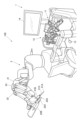
- FIG. 3 is a perspective view showing a grip portion 110 of the right-hand operation unit 11 that the operator holds with his/her right hand.
- the grip portion 110 includes a base portion 111 , a grip 112 , a handle portion 113 , and a clutch lever 114 .
- the grip 112 is held in the palm of the operator's right hand.
- the grip 112 is connected to the base 111 in a state in which it can slide in the forward and backward directions as shown in FIG. 3. This allows the position of the grip 112 relative to the base 111 to be adjusted, so that the grip 112 can be held in an appropriate position according to the size of the operator's right hand.
- the gripper 113 is held by two fingers (e.g., index finger and thumb) of the operator's right hand and is used to instruct the opening and closing of the gripper 21A (e.g., a needle holder or forceps (surgical tool)) supported by the first slave robot 21.
- the gripper 21A e.g., a needle holder or forceps (surgical tool)
- the gripping unit 113 includes a slider 113A connected to the right side of the base 111 in a state in which it can slide left and right as shown in Fig. 3, a first ring-shaped fixing band 113B for fixing the right index finger of the operator to the slider 113A, a second ring-shaped fixing band (not shown) for fixing the right thumb to the left side of the base 111, and a gripping force sensor 113C (see Fig. 2) for detecting the gripping force of the operator.
- the gripping force sensor 113C measures the position of the slider 113A in the left and right direction as shown in Fig. 3 (the width of the gap between the right thumb and right index finger), and derives a force estimate converted from the measured position as the gripping force of the operator.
- the method of deriving the gripping force is not limited to the above method.
- the gripping force of the operator may be derived using a pressure sensor (e.g., a strain gauge pressure sensor, a piezoelectric pressure sensor, a mechanical pressure sensor, a capacitance pressure sensor, a resistive film pressure sensor) provided on the surface of the slider 113A that comes into contact with the index finger of the right hand of the operator.
- a pressure sensor e.g., a strain gauge pressure sensor, a piezoelectric pressure sensor, a mechanical pressure sensor, a capacitance pressure sensor, a resistive film pressure sensor
- the clutch lever 114 is used to block the output of the operation signal input by operating the right-hand operation unit 11 to the control unit 10.
- the clutch lever 114 is constantly biased in the forward direction shown in FIG. 3 by a biasing member (not shown). For example, by pulling the clutch lever 114 in the rearward direction shown in FIG. 3 with the index finger of the right hand, the output of the operation signal input by operating the right-hand operation unit 11 to the control unit 10 can be blocked.
- the right-hand operation unit 11 is also provided with a force feedback mechanism 115.
- the force feedback mechanism 115 feeds back to the right-hand operation unit 11 the stress (force sensation) received from the surgical tool supported by the first slave robot 21.
- the force feedback mechanism 115 also turns off the feedback of the stress (force sensation) to the right-hand operation unit 11 when a predetermined gripping operation (described later) is performed in the gripping unit 113 and the gripping tool 21A of the first slave robot 21 continues to grip an object with a predetermined gripping force.
- the left-hand operation unit 12 is used when the operator instructs the operation of the second slave robot 22 with his/her left hand.
- the left-hand operation unit 12 outputs an operation signal input by operating the left-hand operation unit 12 to the control unit 10. Note that the configuration of the left-hand operation unit 12 is substantially the same as the right-hand operation unit 11 described above, so a description of the configuration of the left-hand operation unit 12 will be omitted.
- the foot operation unit 13 is used when the operator instructs the operation of the slave device 2 or operates a specific function using his/her foot.
- the foot operation unit 13 is a switch that is operated by the operator stepping on it with his/her foot, and outputs an operation signal input by operating the switch to the control unit 10.
- the display unit 14 displays information to those involved in the surgery, including the operator, and is equipped with a monitor such as an LCD (Liquid Crystal Display).
- the display unit 14 displays images captured by the endoscopic robot 23 (images of the area that is the subject of surgery) according to the instructions of a display signal input from the control unit 10.
- the output unit 15 outputs control signals such as a grip signal and a release signal generated in the control unit 10.
- the output unit 15 is connected to the slave device 2 so that the above control signals can be output.
- the slave device 2 supports surgical instruments used in endoscopic surgery, and controls the position, posture, and predetermined movements of the surgical instruments according to the operation of the right-hand operation unit 11 and the left-hand operation unit 12, etc.
- the slave device 2 includes a first slave robot 21, a second slave robot 22, and an endoscope robot 23.
- first slave robot 21 and the second slave robot 22 support grippers 21A, 22A (e.g., needle holders) that can be opened and closed.
- the first slave robot 21 is an articulated slave robot that operates according to the operation of the right-hand operation unit 11.
- the first slave robot 21 is provided with at least a gripper 21A, a cartridge 21B (see FIG. 1), a shaft 21C (see FIG. 1), a joint (not shown), and an opening meter 21D.
- the gripping tool 21A is a surgical tool that grips an object present in a patient's body cavity with a gripping force based on a control signal (gripping signal) output from the output unit 15 under the control of the control unit 10.
- Cartridge 21B supports shaft 21C, a joint portion (not shown), and gripper 21A.
- Shaft 21C is a cylindrical or columnar member extending from cartridge 21B.
- Shaft 21C is arranged to be rotatable around its own central axis relative to cartridge 21B.
- the joint portion supports gripper 21A and controls the position and attitude of gripper 21A by bending.
- the joint portion is located between shaft 21C and gripper 21A.
- the opening meter 21D measures the opening degree when the gripping tool 21A is gripped (opening/closing operation).
- the opening meter 21D is, for example, an encoder-type device that measures the opening degree of the gripping tool 21A from the amount of movement of the wire that operates the gripping tool 21A (opening/closing operation).
- the opening degree indicates the degree to which the gripping tool 21A is open, with 100 being the fully open state and 0 being the fully closed state.
- the second slave robot 22 is an articulated slave robot that operates according to the operation of the left-hand operation unit 12.
- the second slave robot 22 is provided with at least a gripper 22A, a cartridge 22B (see FIG. 1), a shaft 22C (see FIG. 1), a joint (not shown), and an opening meter 22D.
- the configuration of the second slave robot 22 is substantially the same as that of the first slave robot 21 described above, and therefore a description of the configuration of the second slave robot 22 will be omitted.
- the endoscopic robot 23 is a slave robot for acquiring images used in performing endoscopic surgery. Specifically, it is a slave robot that acquires images of the area within the patient's body cavity that is the subject of surgery. The endoscopic robot 23 outputs information about the acquired images to the control unit 10.
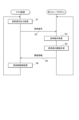
- FIGS. 4 is a sequence diagram showing the flow of force-transfer bilateral control executed by the surgery support robot system 100.
- the force-transfer bilateral control will be described using as an example a case where a gripping operation is performed on the gripping unit 113 (see FIG. 3) of the right-hand operation unit 11.
- the control unit 10 of the master device 1 executes a gripping signal output process (step S1) and outputs a gripping signal (first gripping signal) corresponding to the gripping force value detected by the gripping force sensor 113C of the gripper 113 or a gripping signal (second gripping signal) corresponding to the fully closed state to the first slave robot 21 (step S2).
- the gripping signal output process will be described in detail later.
- the first slave robot 21 executes the gripping operation process based on the gripping signal (step S3).
- the first slave robot 21 measures the opening degree of the gripper 21A when the gripping operation process is executed using the opening degree meter 21D (step S4), and outputs opening degree information indicating the measured opening degree to the master device 1 (step S5).
- the first slave robot 21 then returns the process to step S3 and repeats the subsequent processes. Details of the gripping operation process will be described later.
- step S6 the control unit 10 of the master device 1 executes a grip control process (step S6) and controls the opening of the grip 113, i.e., the position of the slider 113A (the width of the gap between the right thumb and right index finger) based on the opening information so that it matches the opening of the grip 21A.
- the control unit 10 then returns the process to step S1 and repeats the subsequent processes.
- the gripping signal output process is started, for example, when the master device 1 switches to a mode in which the first slave robot 21 and the second slave robot 22 can be operated by an instruction from the master device 1 (hereinafter, referred to as a surgery support mode).
- a surgery support mode a mode in which the first slave robot 21 and the second slave robot 22 can be operated by an instruction from the master device 1
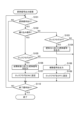
- the grip signal output process will be described taking as an example a case where a grip operation is performed on grip portion 113 (see FIG. 3) of right-hand operation portion 11. As shown in FIG.
- the control unit 10 of the master device 1 determines whether or not a grip operation has been performed on the grip unit 113 of the right-hand operation unit 11 (step S101).
- step S101 If it is determined in step S101 that a gripping operation has been performed (step S101; YES), the control unit 10 determines whether the gripping operation is a gripping operation (step S102). Specifically, if the gripping force value detected by the gripping force sensor 113C of the gripping unit 113 exceeds a predetermined value and the state in which the gripping force exceeds the predetermined value is maintained for a predetermined time, the control unit 10 determines that the gripping operation is a gripping operation.
- the control unit 10 determines that the gripping operation is not a gripping operation. Note that, when the gripping unit 113 is gripped, for example, if a special operation such as pressing a predetermined switch (not shown) provided on the grip unit 110 twice is performed, the gripping operation may be determined to be a gripping operation.
- step S102 determines whether the gripping operation is not a squeeze operation (step S102; NO). If it is determined in step S102 that the gripping operation is not a squeeze operation (step S102; NO), the control unit 10 determines whether the lock flag is set to OFF (step S103).
- step S103 If it is determined in step S103 that the lock flag is set to OFF (step S103; YES), the control unit 10 outputs a gripping signal (first gripping signal) corresponding to the gripping force detected by the gripping force sensor 113C of the gripping unit 113 via the output unit 15 (step S104). Then, the control unit 10 advances the process to step S110.
- a gripping signal first gripping signal
- step S103 determines whether the lock flag is not set to OFF, i.e., that the lock flag is set to ON (step S103; NO). If it is determined in step S103 that the lock flag is not set to OFF, i.e., that the lock flag is set to ON (step S103; NO), the control unit 10 advances the process to step S110.
- step S102 If it is determined in step S102 that the gripping operation is a squeeze operation (step S102; YES), the control unit 10 determines whether the lock flag is set to OFF (step S105).
- step S105 If it is determined in step S105 that the lock flag is set to OFF (step S105; YES), the control unit 10 outputs a gripping signal (second gripping signal) corresponding to the fully closed state via the output unit 15 (step S106). Next, the control unit 10 sets the lock flag to ON (step S107). The control unit 10 then advances the process to step S110.
- a gripping signal second gripping signal
- step S105 if it is determined that the lock flag is not set to OFF, i.e., that the lock flag is set to ON (step S105; NO), the control unit 10 outputs a release signal via the output unit 15 (step S108). Next, the control unit 10 sets the lock flag to OFF (step S109). Then, the control unit 10 advances the process to step S110.
- step S101 If it is determined in step S101 that the gripping operation has not been performed (step S101; NO), the control unit 10 advances the process to step S110.
- the control unit 10 determines whether or not a specific operation has been performed to end the above-mentioned surgical assistance mode (step S110).
- step S110 If it is determined in step S110 that a specific operation has been performed to end the surgical assistance mode (step S110; YES), the control unit 10 ends the gripping signal output process.
- step S110 If it is determined in step S110 that the specified operation to end the surgery support mode has not been performed (step S110; NO), the control unit 10 returns the process to step S101 and repeats the subsequent processes.
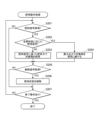
- FIG. 6 is a flowchart showing a control procedure for the gripping operation process, which is started when the mode is changed to the surgery support mode.
- the gripping operation process will be described using as an example a case where a gripping signal or release signal is output by a gripping operation of the grip portion 113 of the right-hand operation unit 11 in the above-mentioned gripping signal output process (see Figure 5).
- the first slave robot 21 of the slave device 2 determines whether or not it has acquired a gripping signal (a gripping signal resulting from a gripping operation of the gripping unit 113 of the right-hand operation unit 11) from the master device 1 (step S201).
- step S201 If it is determined in step S201 that a gripping signal has been acquired from the master device 1 (step S201; YES), the first slave robot 21 determines whether the gripping signal is a gripping signal corresponding to a fully closed state (second gripping signal) (step S202).
- step S202 If it is determined in step S202 that the gripping signal is not a gripping signal corresponding to the fully closed state, i.e., that the gripping signal is a gripping signal corresponding to the gripping force detected by the gripping force sensor 113C of the gripping unit 113 (step S202; NO), the first slave robot 21 grips the object with a gripping force based on the gripping signal by the gripping tool 21A (needle holder) supported by the first slave robot 21 (step S203). The first slave robot 21 then advances the process to step S206.
- step S202 if it is determined that the gripping signal is a gripping signal (second gripping signal) corresponding to the fully closed state (step S202; YES), the first slave robot 21 continues to grip the object with the gripper 21A (needle holder) supported by the first slave robot 21 at the maximum output that the first slave robot 21 can output (step S204). Then, the first slave robot 21 advances the process to step S205.
- the gripping signal is a gripping signal (second gripping signal) corresponding to the fully closed state (step S202; YES)
- the first slave robot 21 continues to grip the object with the gripper 21A (needle holder) supported by the first slave robot 21 at the maximum output that the first slave robot 21 can output (step S204). Then, the first slave robot 21 advances the process to step S205.
- step S201 If it is determined in step S201 that a gripping signal has not been received from the master device 1 (step S201; NO), the first slave robot 21 advances the process to step S205.
- the first slave robot 21 determines whether or not it has received a release signal (a release signal resulting from a gripping operation (gripping operation) of the grip portion 113 of the right-hand operation unit 11) from the master device 1 (step S205).
- step S2065 If it is determined in step S2065 that a release signal has been received from the master device 1 (step S205; YES), the first slave robot 21 releases the gripping state (a state in which the first slave robot 21 continues to grip the object with the gripper 21A (needle holder) at the maximum output that the first slave robot 21 can output) (step S206). Then, the first slave robot 21 advances the process to step S207.
- the gripping state a state in which the first slave robot 21 continues to grip the object with the gripper 21A (needle holder) at the maximum output that the first slave robot 21 can output
- step S205 If it is determined in step S205 that a release signal has not been received from the master device 1 (step S205; NO), the first slave robot 21 advances the process to step S207.
- the first slave robot 21 determines whether or not a specific operation has been performed to end the above-mentioned surgical assistance mode (step S207).
- step S207 If it is determined in step S207 that a predetermined operation to end the surgical assistance mode has been performed (step S207; YES), the first slave robot 21 ends the grasping operation process.
- step S207 If it is determined in step S207 that the specified operation to end the surgery support mode has not been performed (step S207; NO), the first slave robot 21 returns the process to step S201 and repeats the subsequent processes.
- the master device 1 of the surgery support robot system 100 includes the gripping unit 113 provided on the right-hand operation unit 11 and the gripping unit (not shown) provided on the left-hand operation unit 12, gripping force sensors 113C, 123C that detect the gripping force when each gripping unit is gripped, and the output unit 15 that outputs a gripping signal according to the gripping force detected by the gripping force sensors 113C, 123C.
- the first slave robot 21 and the second slave robot 22 each include gripping tools 21A, 22A that grip an object with a gripping force based on the gripping signal output from the master device 1, and opening degree meters 21D, 22D that measure the opening degree of each gripping tool 21A, 22A.
- the master device 1 also includes a control unit 10 that matches the opening degrees of the grippers with the opening degrees of the grippers 21A and 22A based on the opening degrees of the grippers 21A and 22A measured by the opening meters 21D and 22D. This allows the opening degree of the gripping portion 113 of the right-hand operating unit 11 to be matched with the opening degree of the gripping device 21A of the first slave robot 21, and the opening degree of the gripping portion (not shown) of the left-hand operating unit 12 to be matched with the opening degree of the gripping device 22A of the second slave robot 22, thereby improving the operability related to gripping operations.
- control unit 10 of the master device 1 uses force-propagating bilateral control to match the opening degree of each gripper with the opening degree of the grippers 21A and 22A, so that the opening degree of each gripper can be matched with sufficient accuracy with the opening degree of the grippers 21A and 22A.
- the master device 1 also includes force feedback mechanisms 115 and 125 that feed back the force sense when an object is gripped by each of the grippers 21A and 22A of the first slave robot 21 and the second slave robot 22. This allows the force sensation when an object is grasped by the grasper 21A of the first slave robot 21 or the grasper 22A of the second slave robot 22 to be fed back to the operator and made perceptible, thereby improving the operability of the right-hand operating unit 11 and the left-hand operating unit 12.
- each gripping force sensor 113C, 123C can detect the gripping force at any opening angle of each gripping part, allowing for flexible detection of gripping force.
- the output unit 15 of the master device 1 outputs a gripping signal (first gripping signal) corresponding to the gripping force when the gripping operation is performed, whereas when the gripping operation for each gripping part is a predetermined gripping operation, the output unit 15 outputs a gripping signal (second gripping signal) corresponding to the fully closed state.
- first gripping signal first gripping signal
- second gripping signal second gripping signal
- the gripping device 21A of the first slave robot 21 can continue to grip an object with a predetermined gripping force. Therefore, when performing an operation in which the gripping device 21A of the first slave robot 21 continues to grip an object with a predetermined gripping force, the operator of the master device 1 does not need to continue to grip the gripping portion 113, and the operational burden on the operator can be reduced. In addition, since the gripping device 21A can continue to grip an object with a predetermined gripping force, operability can be improved.
- the master device 1 also includes a control unit (determination means) 10 that determines whether or not a gripping operation has been performed on the corresponding grip portion based on the values detected by the grip force sensors 113C and 123C.
- the control unit 10 determines that a gripping operation has been performed on the grip portion
- the output unit 15 of the master device 1 outputs a gripping signal (second gripping signal) corresponding to a fully closed state.
- the gripper 21A of the first slave robot 21 continues to grip the object with a predetermined gripping force, eliminating the need to continue the gripping operation of the grip portion 113. This reduces the operator's fatigue caused by continuing the gripping operation of the grip portion 113.
- the control unit 10 of the master device 1 determines that a gripping operation has been performed on the corresponding grip portion. In this way, by using the condition for determining whether a gripping operation has been performed that the value detected by each gripping force sensor 113C, 123C has exceeded a predetermined value and that the state in which the value has exceeded the predetermined value has continued for a predetermined period of time as a determination condition for determining whether a gripping operation has been performed, it is possible to appropriately determine whether a gripping operation has been performed. As a result, it is possible to prevent the gripping tools 21A, 22A from continuing to grip the object with a predetermined gripping force by mistake.
- the gripping devices 21A, 22A receive a gripping signal (second gripping signal) corresponding to the fully closed state, they grip the object with the maximum output that can be output by their own mechanisms 21A, 22A, so that the gripped state of the object can be maintained in an optimal manner.
- a gripping signal second gripping signal
- the surgical support robot system 100 is equipped with a release means for releasing the state in which the gripping devices 21A and 22A continue to grip the object with a predetermined gripping force, thereby improving the convenience of the function of gripping the object with the gripping devices 21A and 22A.
- the grip signal output process in the above embodiment has been described using an example in which a grip operation is performed on the grip portion 113 (see FIG. 3) of the right-hand operation unit 11, but it goes without saying that the grip signal output process is also performed when a grip operation is performed on the grip portion (not shown) of the left-hand operation unit 12.
- the gripping action processing in the above embodiment has been described using an example in which a gripping signal or release signal is output by a gripping operation of the grip portion 113 of the right-hand operation unit 11, but it goes without saying that the gripping action processing is also performed when a gripping signal or release signal is output by a gripping operation of the grip portion (not shown) of the left-hand operation unit 12.
- step S102 of the grip signal output process if the grip force value detected by the grip force sensor 113C of the grip unit 113 exceeds a predetermined value and the state where the grip force value exceeds the predetermined value is maintained for a predetermined period of time, the control unit 10 determines that the grip operation is a gripping operation. However, if the grip force value detected by the grip force sensor 113C exceeds the predetermined value, the control unit 10 may determine that the grip operation is a gripping operation.
- step S202 of the gripping operation process if it is determined in step S202 of the gripping operation process (see FIG. 6) that the acquired gripping signal is a gripping signal corresponding to the fully closed state (step S202; YES), the first slave robot 21 grips the object with the gripper 21A (needle holder) supported by the first slave robot 21 at the maximum output that the first slave robot 21 can output (step S204).
- gripping the object with the maximum output is merely one example, and the object may be gripped with a preset gripping force other than the maximum output.
- the control unit 10 determines that a gripping operation has been performed again on the corresponding gripping part while the gripping devices 21A, 22A are continuing to grip the object with a predetermined gripping force
- the state in which the gripping devices 21A, 22A continue to grip the object with the predetermined gripping force is released.
- the above state may also be released when, for example, a predetermined switch is pressed.
- the robot system disclosed herein is described as a surgical support robot system 100, but the robot system can also be used in other industrial fields.
- the robot system disclosed herein can be used as a remote-operated robot system used for work at construction sites.
- This disclosure can be used in robotic systems.
Landscapes
- Engineering & Computer Science (AREA)
- Health & Medical Sciences (AREA)
- Robotics (AREA)
- Mechanical Engineering (AREA)
- Surgery (AREA)
- Life Sciences & Earth Sciences (AREA)
- Medical Informatics (AREA)
- Heart & Thoracic Surgery (AREA)
- Biomedical Technology (AREA)
- Molecular Biology (AREA)
- Animal Behavior & Ethology (AREA)
- General Health & Medical Sciences (AREA)
- Public Health (AREA)
- Veterinary Medicine (AREA)
- Nuclear Medicine, Radiotherapy & Molecular Imaging (AREA)
- Manipulator (AREA)
Priority Applications (2)
| Application Number | Priority Date | Filing Date | Title |
|---|---|---|---|
| JP2024558979A JPWO2025017923A1 (https=) | 2023-07-20 | 2023-07-20 | |
| PCT/JP2023/026662 WO2025017923A1 (ja) | 2023-07-20 | 2023-07-20 | ロボットシステム |
Applications Claiming Priority (1)
| Application Number | Priority Date | Filing Date | Title |
|---|---|---|---|
| PCT/JP2023/026662 WO2025017923A1 (ja) | 2023-07-20 | 2023-07-20 | ロボットシステム |
Publications (1)
| Publication Number | Publication Date |
|---|---|
| WO2025017923A1 true WO2025017923A1 (ja) | 2025-01-23 |
Family
ID=94282091
Family Applications (1)
| Application Number | Title | Priority Date | Filing Date |
|---|---|---|---|
| PCT/JP2023/026662 Pending WO2025017923A1 (ja) | 2023-07-20 | 2023-07-20 | ロボットシステム |
Country Status (2)
| Country | Link |
|---|---|
| JP (1) | JPWO2025017923A1 (https=) |
| WO (1) | WO2025017923A1 (https=) |
Citations (3)
| Publication number | Priority date | Publication date | Assignee | Title |
|---|---|---|---|---|
| JPS63196389A (ja) * | 1987-02-12 | 1988-08-15 | 株式会社東芝 | マスタスレ−ブマニピユレ−タ制御装置 |
| JP2013034832A (ja) * | 2011-08-04 | 2013-02-21 | Olympus Corp | 手術器具およびその制御方法 |
| JP2020187688A (ja) * | 2019-05-17 | 2020-11-19 | ソニー株式会社 | 触覚提示装置、キャリブレーション方法及びプログラム |
Family Cites Families (6)
| Publication number | Priority date | Publication date | Assignee | Title |
|---|---|---|---|---|
| JP2006321027A (ja) * | 2005-05-20 | 2006-11-30 | Hitachi Ltd | マスタ・スレーブ式マニピュレータシステム及びその操作入力装置 |
| US8521331B2 (en) * | 2009-11-13 | 2013-08-27 | Intuitive Surgical Operations, Inc. | Patient-side surgeon interface for a minimally invasive, teleoperated surgical instrument |
| JP6326694B2 (ja) * | 2013-04-18 | 2018-05-23 | マッスル株式会社 | ロボットアームおよびその利用方法 |
| JP6547164B2 (ja) * | 2014-04-30 | 2019-07-24 | 株式会社人機一体 | マスタスレーブシステム |
| JP2021529014A (ja) * | 2018-06-15 | 2021-10-28 | バーブ サージカル インコーポレイテッドVerb Surgical Inc. | グリップリンクを有するユーザインターフェース装置 |
| CN115916096B (zh) * | 2020-07-08 | 2024-05-31 | 瑞德医疗机器股份有限公司 | 医疗用操作器械 |
-
2023
- 2023-07-20 WO PCT/JP2023/026662 patent/WO2025017923A1/ja active Pending
- 2023-07-20 JP JP2024558979A patent/JPWO2025017923A1/ja active Pending
Patent Citations (3)
| Publication number | Priority date | Publication date | Assignee | Title |
|---|---|---|---|---|
| JPS63196389A (ja) * | 1987-02-12 | 1988-08-15 | 株式会社東芝 | マスタスレ−ブマニピユレ−タ制御装置 |
| JP2013034832A (ja) * | 2011-08-04 | 2013-02-21 | Olympus Corp | 手術器具およびその制御方法 |
| JP2020187688A (ja) * | 2019-05-17 | 2020-11-19 | ソニー株式会社 | 触覚提示装置、キャリブレーション方法及びプログラム |
Also Published As
| Publication number | Publication date |
|---|---|
| JPWO2025017923A1 (https=) | 2025-01-23 |
Similar Documents
| Publication | Publication Date | Title |
|---|---|---|
| JP6954836B2 (ja) | 外科手術用ロボットシステム | |
| JP5841451B2 (ja) | 手術器具およびその制御方法 | |
| US9713500B2 (en) | Surgical robot control apparatus | |
| KR101645969B1 (ko) | 수술 로봇 시스템 및 그 제어방법 | |
| JP2020510489A (ja) | 外科用器具の制御 | |
| CN102665590A (zh) | 用于内窥镜辅助机器人的人-机器人共享控制 | |
| US11576741B2 (en) | Manipulator system with input device for force reduction | |
| CN113194870B (zh) | 使用者界面装置、手术机器人装置的主控制台及其操作方法 | |
| US12349998B2 (en) | Surgical robotics systems and devices having a sterile restart, and methods thereof | |
| AU2022224765B2 (en) | Camera control | |
| JP2016016238A (ja) | マニピュレータ | |
| EP4166108B1 (en) | Medical operation apparatus | |
| US12357402B2 (en) | Surgical robot | |
| US20250367836A1 (en) | Robotic surgical system, surgical robot, and robotic surgical method | |
| CN115103649B (zh) | 手术机器人以及手术机器人的控制单元 | |
| WO2025017923A1 (ja) | ロボットシステム | |
| KR101642883B1 (ko) | 수술 로봇 시스템 및 그 제어방법 | |
| WO2025017922A1 (ja) | ロボットシステム | |
| CN115103650B (zh) | 手术机器人以及手术机器人的控制单元 | |
| WO2024042651A1 (ja) | 手術支援装置の操作装置 | |
| GB2605091A (en) | Camera control | |
| GB2605090A (en) | Camera control |
Legal Events
| Date | Code | Title | Description |
|---|---|---|---|
| WWE | Wipo information: entry into national phase |
Ref document number: 2024558979 Country of ref document: JP |
|
| 121 | Ep: the epo has been informed by wipo that ep was designated in this application |
Ref document number: 23945925 Country of ref document: EP Kind code of ref document: A1 |
|
| NENP | Non-entry into the national phase |
Ref country code: DE |