WO2025009200A1 - 判定装置、提供装置、判定方法、およびコンピュータプログラム - Google Patents
判定装置、提供装置、判定方法、およびコンピュータプログラム Download PDFInfo
- Publication number
- WO2025009200A1 WO2025009200A1 PCT/JP2024/003261 JP2024003261W WO2025009200A1 WO 2025009200 A1 WO2025009200 A1 WO 2025009200A1 JP 2024003261 W JP2024003261 W JP 2024003261W WO 2025009200 A1 WO2025009200 A1 WO 2025009200A1
- Authority
- WO
- WIPO (PCT)
- Prior art keywords
- information
- vehicle
- warranty
- covered
- component
- Prior art date
- Legal status (The legal status is an assumption and is not a legal conclusion. Google has not performed a legal analysis and makes no representation as to the accuracy of the status listed.)
- Ceased
Links
Images






Classifications
-
- B—PERFORMING OPERATIONS; TRANSPORTING
- B60—VEHICLES IN GENERAL
- B60S—SERVICING, CLEANING, REPAIRING, SUPPORTING, LIFTING, OR MANOEUVRING OF VEHICLES, NOT OTHERWISE PROVIDED FOR
- B60S5/00—Servicing, maintaining, repairing, or refitting of vehicles
-
- G—PHYSICS
- G06—COMPUTING OR CALCULATING; COUNTING
- G06Q—INFORMATION AND COMMUNICATION TECHNOLOGY [ICT] SPECIALLY ADAPTED FOR ADMINISTRATIVE, COMMERCIAL, FINANCIAL, MANAGERIAL OR SUPERVISORY PURPOSES; SYSTEMS OR METHODS SPECIALLY ADAPTED FOR ADMINISTRATIVE, COMMERCIAL, FINANCIAL, MANAGERIAL OR SUPERVISORY PURPOSES, NOT OTHERWISE PROVIDED FOR
- G06Q10/00—Administration; Management
- G06Q10/20—Administration of product repair or maintenance
-
- G—PHYSICS
- G06—COMPUTING OR CALCULATING; COUNTING
- G06Q—INFORMATION AND COMMUNICATION TECHNOLOGY [ICT] SPECIALLY ADAPTED FOR ADMINISTRATIVE, COMMERCIAL, FINANCIAL, MANAGERIAL OR SUPERVISORY PURPOSES; SYSTEMS OR METHODS SPECIALLY ADAPTED FOR ADMINISTRATIVE, COMMERCIAL, FINANCIAL, MANAGERIAL OR SUPERVISORY PURPOSES, NOT OTHERWISE PROVIDED FOR
- G06Q50/00—Information and communication technology [ICT] specially adapted for implementation of business processes of specific business sectors, e.g. utilities or tourism
- G06Q50/10—Services
Definitions
- the present disclosure relates to a determination device, a providing device, a determination method, and a computer program.
- This application claims priority based on Japanese Patent Application No. 2023-109766, filed on July 4, 2023, the disclosure of which is incorporated herein in its entirety.
- a vehicle part management device that records unique information about parts installed in a vehicle and detects parts that are not installed in the vehicle from the unique information (see, for example, Patent Document 1).
- the determination device includes a warranty part information acquisition unit that acquires warranty part information related to determining whether a vehicle part is warranted, an installed part information acquisition unit that acquires installed part information related to installed parts that are vehicle parts mounted on a vehicle, and a warranty eligibility determination unit that determines whether the installed part is covered by a warranty based on the warranty part information and the installed part information.
- FIG. 1 is a diagram illustrating an example of an overall configuration of a component management system according to a first embodiment of the present disclosure.
- FIG. 2 is a block diagram illustrating an example of a hardware configuration of a server according to the first embodiment of the present disclosure.
- FIG. 3 is a diagram showing an example of warranty part information.
- FIG. 4 is a diagram showing an example of the defective part information.
- FIG. 5 is a diagram showing an example of vehicle-part association information.
- FIG. 6 is a diagram showing an example of vehicle type-vehicle association information.
- FIG. 7 is a diagram showing an example of part shipping information.
- FIG. 8 is a diagram illustrating an example of mounted part information.
- FIG. 9 is a block diagram illustrating an example of a functional configuration of the server.
- FIG. 9 is a block diagram illustrating an example of a functional configuration of the server.
- FIG. 10 is a block diagram illustrating an example of a hardware configuration of the in-vehicle system according to the first embodiment of the present disclosure.
- FIG. 11 is a block diagram illustrating an example of a hardware configuration of a relay device according to the first embodiment of the present disclosure.
- FIG. 12 is a sequence diagram showing an example of a process for registering information on parts covered by the warranty in the server.
- FIG. 13 is a sequence diagram illustrating an example of a process for registering parts shipment information in a server.
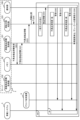
- FIG. 14 is a sequence diagram showing an example of a process for determining whether or not a vehicle mounted component is covered by a warranty.
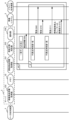
- FIG. 15 is a sequence diagram showing an example of a process for determining whether or not a vehicle mounted component is a defective component.
- Vehicle parts are classified, for example, into genuine parts, semi-genuine parts (parts equivalent to genuine parts), and aftermarket parts (parts other than genuine and semi-genuine parts).
- Genuine and semi-genuine parts are covered by a warranty from the vehicle manufacturer or parts manufacturer in the event of a malfunction, but are more expensive than aftermarket parts. For this reason, some users may choose to use some of the cheaper vehicle parts, even though they are not covered by a warranty.
- This disclosure has been made in light of these circumstances, and aims to provide a determination device, a provision device, a determination method, and a computer program for efficiently managing whether or not vehicle parts installed in a vehicle are covered by a warranty.
- a determination device includes a warranty part information acquisition unit that acquires warranty part information related to determining whether a vehicle part is warranted or not, an installed part information acquisition unit that acquires mounted part information related to installed parts, which are vehicle parts mounted on a vehicle, and a warranty eligibility determination unit that determines whether the installed part is covered by warranty based on the warranty part information and the installed part information.
- the warranty part information may include warranty-covered part information
- the warranty-covered part information may include identification information of the vehicle part that is covered by the warranty
- the mounted part information may include identification information of the mounted part
- the warranty coverage determination unit may determine whether the mounted part is covered by the warranty based on a comparison result between the identification information of the vehicle part that is covered by the warranty and the identification information of the mounted part.
- the installed part is determined to be covered by the warranty, and if they do not match, the installed part is determined to not be covered by the warranty. This makes it possible to manage whether an installed part is covered by the warranty in a simple manner.
- the warranty-covered part information may be information about genuine vehicle parts
- the warranty-covered determination unit may determine whether the mounted part is genuine based on the warranty-covered part information and the mounted part information, thereby determining whether the mounted part is covered by the warranty.
- the warranty part information may include service life information of vehicle parts
- the mounted part information may include usage period information of the mounted parts
- the warranty eligibility determination unit may determine whether the mounted parts are covered by the warranty based on the service life information and the usage period information.
- the guaranteed part information may include defective part information about a vehicle part that has been found to be defective, and the warranty eligibility determination unit may determine whether the mounted part is not covered by the warranty by determining whether a defect has been found in the mounted part based on the defective part information and the mounted part information.
- the determination device may further include a notification unit that notifies at least one of the vehicle and the driver of the vehicle when it is determined that the mounted part is not covered by the warranty.
- the vehicle or driver can be notified that a vehicle part that is not covered by the warranty is installed.
- the vehicle or driver learns of this, they can take measures such as stopping the vehicle from traveling, thereby supporting safe driving.
- the determination device may further include a parts shipping information acquisition unit that acquires parts shipping information indicating the shipping status of vehicle parts, and a fraud determination unit that determines whether the mounted parts are fraudulent parts based on the parts shipping information and the mounted part information.
- the mounted part information may include identification information of the mounted part
- the mounted part information acquisition unit may acquire the mounted part information from each of a first vehicle and a second vehicle different from the first vehicle
- the determination device may further include a fraud determination unit that determines whether the mounted part of the first vehicle is a fraudulent part based on a comparison result between the identification information of the mounted part of the first vehicle and the identification information of the mounted part of the second vehicle.
- the identification information is unique to each vehicle part. Therefore, with this configuration, if a vehicle part having the same identification information as the identification information of a part installed in a first vehicle is installed in a second vehicle, the part installed in the first vehicle can be determined to be an unauthorized part.
- a providing device includes a collection unit that collects information about the mounted components, and a providing unit that provides the information collected by the collection unit to a determination device described in any one of (1) to (8).
- the providing device may further include an acquisition unit that acquires, from the determination device, a determination result as to whether the mounted component is covered by the warranty.
- the vehicle or the driver can be notified that the vehicle contains a non-warranty vehicle part.
- the collection unit may wirelessly receive identification information of the mounted component from the mounted component as information related to the mounted component.
- a determination method includes a step in which a determination device acquires warranty part information related to determining whether a vehicle part is covered by a warranty, a step in which the determination device acquires mounted part information related to mounted parts that are vehicle parts mounted on a vehicle, and a step in which the determination device determines whether the mounted parts are covered by a warranty based on the warranty part information and the mounted part information.
- This configuration includes steps that are characteristic of the determination device described above. Therefore, it achieves the same effects and advantages as the determination device described above.
- a computer program causes a computer to function as a warranty part information acquisition unit that acquires warranty part information related to determining whether a vehicle part is warranted, an installed part information acquisition unit that acquires installed part information related to installed parts that are vehicle parts mounted on a vehicle, and a warranty eligibility determination unit that determines whether the installed part is covered by a warranty based on the warranty part information and the installed part information.
- the computer can function as the above-mentioned determination device. Therefore, the same functions and effects as those of the above-mentioned determination device are achieved.
- FIG. 1 is a diagram illustrating an example of an overall configuration of a component management system according to a first embodiment of the present disclosure.
- the parts management system 1 includes a server 2, a manufacturer terminal device 3, an in-vehicle system 5 installed in a vehicle 4, and a driver terminal device 6, each of which is connected to a network 7.
- Server 2 determines whether the vehicle parts (automobile parts) installed in vehicle 4 are covered by the warranty.
- the mounted parts include, for example, oil filters, tires, engine oil, brake pads, glass, and CVT fluid. Note that these are only examples, and the mounted parts may include other vehicle parts.
- the manufacturer terminal device 3 is a terminal device such as a computer used by the vehicle manufacturer that manufactured the vehicle 4 or the parts manufacturer that manufactured the parts installed in the vehicle 4.
- the person in charge at the vehicle manufacturer or parts manufacturer registers various information about the vehicle parts in the server 2 by transmitting the various information to the server 2 via the network 7 using the manufacturer terminal device 3. The various information registered in the server 2 will be described later.
- Vehicle 4 is an automobile, a motorcycle, or the like. Vehicle 4 is connected to network 7. In FIG. 1, one vehicle 4 is connected to network 7, but there are multiple vehicles 4 connected to network 7.
- the in-vehicle system 5 collects information about the installed parts of the vehicle 4 and transmits the collected information about the installed parts to the server 2 via the network 7.
- the driver terminal device 6 is a terminal device such as a smartphone used by the driver of the vehicle 4.
- the driver terminal device 6 receives information on the determination result as to whether the installed parts of the vehicle 4 are covered by the warranty from the server 2 via the network 7. For example, if the installed parts are not covered by the warranty, the driver terminal device 6 receives warning information including a warning message.
- FIG. 2 is a block diagram showing an example of a hardware configuration of the server 2 according to the first embodiment of the present disclosure.
- the server 2 includes a communication unit 21, a memory 22, and a processor 23.
- the communication unit 21, the memory 22, and the processor 23 are connected to each other via a bus 24.
- the communication unit 21 is a communication interface that connects the server 2 to the network 7 wirelessly or via a wired connection.
- the communication unit 21 receives and transmits various data to and from external devices.
- Memory 22 is composed of volatile memory elements such as SRAM (Static RAM) or DRAM (Dynamic RAM), non-volatile memory elements such as flash memory or EEPROM (Electrically Erasable Programmable Read Only Memory), or magnetic storage devices such as hard disks.
- volatile memory elements such as SRAM (Static RAM) or DRAM (Dynamic RAM)
- non-volatile memory elements such as flash memory or EEPROM (Electrically Erasable Programmable Read Only Memory), or magnetic storage devices such as hard disks.
- the processor 23 is composed of a CPU (Central Processing Unit) and the like, and reads and executes the computer program 221 stored in the memory 22. When executing the computer program 221, the processor 23 transmits and receives various data to and from external devices via the communication unit 21.
- CPU Central Processing Unit
- the memory 22 stores a computer program 221 , guaranteed part information 222 , vehicle-part association information 223 , vehicle type-vehicle association information 224 , part shipping information 225 , and mounted part information 226 .
- Computer program 221 is a determination program for determining whether a vehicle part is covered by a warranty.
- Processor 23 executes computer program 221.
- Warranty part information 222 is information related to determining whether a vehicle part is warranted.
- Warranty part information 222 includes warranty-covered part information 222A and defective part information 222B.
- the warranty part information 222A includes identification information of the vehicle parts covered by the warranty for each vehicle 4 or each model of the vehicle 4. Specifically, the warranty part information 222A includes identification information of the genuine vehicle parts for each vehicle 4 or each model of the vehicle 4.
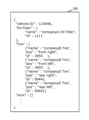
- Figure 3 is a diagram showing an example of warranty-covered parts information 222A.
- Figure 3 shows, for example, warranty-covered parts information 222A named "Warranty-covered parts list 1."
- Warranty-covered parts information 222A indicates that, for oil filters ("Oil Filter” in Figure 3), those manufactured by company A ("company A” in Figure 3) with identification information of "1111” and "2222" are covered by the warranty, i.e., they are genuine.
- warranty part information 222A with other names also includes identification information for genuine vehicle parts.
- the defective part information 222B includes information about a vehicle part that is not covered by the warranty and that has been found to be defective (hereinafter, referred to as a "defective part").
- the defective part information 222B includes identification information of the defective part.
- Figure 4 is a diagram showing an example of defective part information 222B.
- defective part information 222B indicates that an oil filter ("Oil Filter” in Figure 4) with identification information "3333" manufactured by Company E ("Company E” in Figure 4) is a defective part.
- Defective part information 222B also indicates that a tire (“Tire” in Figure 4) with identification information "5497” manufactured by Company F (“Company F” in Figure 4) and a tire (“Tire” in Figure 4) with identification information "9999” manufactured by Company G (“Company G” in Figure 4) are defective parts.
- Vehicle-part matching information 223 is information for matching the vehicle model or vehicle 4 with warranty-covered part information 222A.
- FIG. 5 is a diagram showing an example of vehicle-part correspondence information 223.
- the vehicle parts covered by the warranty for vehicle 4 whose model is "Model A” are in warranty part information 222A named "Warranty Parts List 1".
- the vehicle parts covered by the warranty for vehicle 4 whose model is “Model B” are in warranty part information 222A named "Warranty Parts List 2".
- the vehicle parts covered by the warranty for vehicle 4 whose vehicle ID (identification information for vehicle 4) is "123456" are in warranty part information 222A named "Warranty Parts List 3".
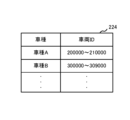
- the vehicle type-vehicle association information 224 is information for associating a vehicle type with a vehicle ID. 6 is a diagram showing an example of the vehicle type-vehicle association information 224.
- the vehicle type-vehicle association information 224 indicates that the vehicle ID of a vehicle 4 whose vehicle type is "vehicle type A" is any one from “200000” to "210000", and the vehicle ID of a vehicle 4 whose vehicle type is "vehicle type B" is any one from "300000" to "309000".
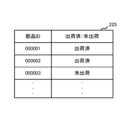
- the parts shipping information 225 is information that indicates the shipping status of vehicle parts. 7 is a diagram showing an example of the parts shipping information 225.
- the parts shipping information 225 indicates that a vehicle part with a part ID (vehicle part identification information) of "000001" and a vehicle part with a part ID of "000002" have been shipped.
- the parts shipping information 225 also indicates that a vehicle part with a part ID of "000003" has not yet been shipped.
- the mounted part information 226 is information related to the mounted parts of the vehicle 4.
- the mounted part information 226 includes a part ID, which is identification information of the mounted part for each vehicle.
- FIG 8 is a diagram showing an example of mounted parts information 226.
- Mounted parts information 226 includes part IDs of mounted parts of vehicle 4, whose vehicle ID ("Vehicle ID” in Figure 8) is "123456".
- Mounted parts information 226 indicates that an oil filter (“Oil Filter” in Figure 8) with part ID "1111” manufactured by company A (“Company A” in Figure 8) is installed.
- Mounted parts information 226 also indicates that tires (“Tire” in Figure 8) with part ID "3450” manufactured by company B (“Company B” in Figure 8) are installed on the front right (“front right” in Figure 8) and front left ("front left” in Figure 8).
- the installed part information 226 indicates that tires (“Tire” in Figure 8) with part ID "0044” manufactured by Company E ("Company E” in Figure 8) are installed on the rear right (“rear right” in Figure 8) and rear left (“rear left” in Figure 8).
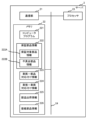
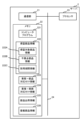
- FIG. 9 is a block diagram showing an example of the functional configuration of the server 2.
- the server 2 has functional configurations, which are provided by the processor 23 executing the computer program 221, including a warranty part information acquisition unit 231, an installed part information acquisition unit 232, a warranty target determination unit 233, a part shipping information acquisition unit 234, a fraud determination unit 235, and a notification unit 236.
- the warranty part information acquisition unit 231 acquires the warranty part information 222 by receiving the warranty part information 222 from the manufacturer terminal device 3.
- the warranty part information 222 includes warranty covered part information 222A and defective part information 222B as described above.
- warranty part information acquisition unit 231 acquires warranty part information 222A from the manufacturer terminal device 3, it acquires from the manufacturer terminal device 3, in addition to the warranty part information 222A, information on the vehicle ID of the vehicle 4 to which the warranty part information 222A applies.
- the warranty part information acquisition unit 231 may also acquire information on the vehicle model to which the warranty part information 222A applies, in addition to the warranty part information 222A.
- the warranty part information acquisition unit 231 assigns a name to the acquired warranty part information 222A and stores it in the memory 22, and adds correspondence information between the acquired vehicle ID or vehicle model and the name of the warranty part information 222A to the vehicle-part correspondence information 223 in the memory 22.
- the warranty part information acquisition unit 231 also reads warranty part information 222A from the memory 22 and outputs it to the warranty target determination unit 233.
- the warranty part information acquisition unit 231 refers to the vehicle-part correspondence information 223, and based on the vehicle ID of vehicle 4 acquired from the mounted part information acquisition unit 232 described below, reads warranty part information 222A associated with the vehicle ID from the memory 22.
- the warranty part information acquisition unit 231 acquires defective part information 222B from the manufacturer terminal device 3, it stores the defective part information 222B in the memory 22 and outputs it to the warranty eligibility determination unit 233.
- the warranty part information acquisition unit 231 may also read out the defective part information 222B from the memory 22 and output the read out defective part information 222B to the warranty eligibility determination unit 233.
- the mounted part information acquisition unit 232 receives information on the mounted parts of the vehicle 4 and the vehicle ID of the vehicle 4 from the in-vehicle system 5, and generates mounted part information 226 including the information and the vehicle ID, thereby acquiring the mounted part information 226.
- the mounted part information acquisition unit 232 stores the acquired mounted part information 226 in the memory 22.
- the mounted part information acquisition unit 232 outputs the acquired mounted part information 226 to the warranty target determination unit 233 and the fraud determination unit 235.
- the mounted part information acquisition unit 232 outputs the received vehicle ID of the vehicle 4 to the warranty part information acquisition unit 231.
- the warranty target determination unit 233 determines whether the mounted parts of the vehicle 4 indicated in the mounted part information 226 are covered by the warranty, based on the warranty part information 222 (warranty covered part information 222A or defective part information 222B) acquired by the warranty part information acquisition unit 231 and the mounted part information 226 acquired by the mounted part information acquisition unit 232. For example, when the mounted part information 226 contains a part ID that is not included in the warranty covered part information 222A, the warranty target determination unit 233 determines that the mounted part with the part ID is not covered by the warranty. Furthermore, when the mounted part information 226 contains a part ID that is included in the defective part information 222B, the warranty target determination unit 233 determines that the mounted part with the part ID is not covered by the warranty. Details of the warranty target determination by the warranty target determination unit 233 will be described later.
- the guarantee object determining unit 233 outputs the guarantee object determination result to the notifying unit 236 .
- the parts shipping information acquisition unit 234 acquires the parts shipping information 225 from the manufacturer terminal device 3 and stores it in the memory 22.
- the parts shipping information acquisition unit 234 reads the parts shipping information 225 from the memory 22 and outputs the read parts shipping information 225 to the fraud determination unit 235.
- the fraud determination unit 235 determines whether an installed part of the vehicle 4 is a fraudulent part based on the installed part information 226 acquired from the installed part information acquisition unit 232 and the part shipping information 225 acquired from the part shipping information acquisition unit 234. For example, if the installed part information 226 contains a pre-shipment part ID indicated in the part shipping information 225, it determines that the installed part with that part ID is a fraudulent part.
- the fraud determination unit 235 determines whether the mounted parts of each vehicle 4 are fraudulent parts based on the mounted part information 226 of the multiple vehicles 4 acquired by the mounted part information acquisition unit 232. For example, even though a part ID is originally unique, if the same part ID is included in multiple pieces of mounted part information 226, it is determined that the mounted part with that part ID is a fraudulent part. The fraud determination unit 235 outputs the result of the fraudulent part determination to the notification unit 236 .
- the notification unit 236 transmits warning information, including a warning message, to the in-vehicle system 5 or the driver terminal device 6 based on the determination result received from the warranty target determination unit 233 or the determination result received from the fraud determination unit 235.
- FIG. 10 is a block diagram showing an example of a hardware configuration of the in-vehicle system 5 according to the first embodiment of the present disclosure.
- the in-vehicle system 5 includes an external communication unit 51, a relay device 52, and a plurality of in-vehicle control devices 53 (e.g., ECUs (Electronic Control Units)).
- the external communication unit 51, the relay device 52, and the in-vehicle control devices 53 are connected to each other via an in-vehicle network such as a Controller Area Network (CAN) or Ethernet (registered trademark).
- CAN Controller Area Network
- Ethernet registered trademark
- the external-vehicle communication unit 51 is wirelessly connected to the network 7.
- the external-vehicle communication unit 51 receives data from a device outside the vehicle 4 and transmits it to the relay device 52.
- the external-vehicle communication unit 51 also transmits the data received from the relay device 52 to a device outside the vehicle 4.
- the relay device 52 transmits the data received by the external communication unit 51 to one of the multiple on-board control devices 53.
- the relay device 52 also transmits the data received from one or more on-board control devices 53 to a device external to the vehicle 4 via the external communication unit 51.
- the on-board control device 53 is an example of an on-board device.
- the on-board control device 53 controls or monitors each piece of hardware in the vehicle 4.
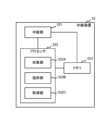
- FIG. 11 is a block diagram illustrating an example of a hardware configuration of the relay device 52 according to the first embodiment of the present disclosure.
- the relay device 52 includes a relay unit 521 , a processor 522 , and a memory 523 .
- the relay unit 521 confirms the destination indicated in the data received by the exterior communication unit 51, and transmits the data to the destination in-vehicle control device 53.
- the relay unit 521 also receives data transmitted from the in-vehicle control device 53, and confirms the destination indicated in the data. If the destination is the in-vehicle control device 53, the relay unit 521 transmits the data to the destination in-vehicle control device 53. If the destination is another device, the relay unit 521 transmits the data to the destination other device via the exterior communication unit 51.
- Memory 523 is composed of volatile memory elements such as SRAM (Static RAM) or DRAM (Dynamic RAM), non-volatile memory elements such as flash memory or EEPROM (Electrically Erasable Programmable Read Only Memory), or a magnetic storage device such as a hard disk.
- Memory 523 stores computer programs executed by processor 522 and various data used when the programs are executed.
- the processor 522 is composed of a CPU (Central Processing Unit) and functions by reading and executing a computer program stored in the memory 523.
- the processor 522 includes a collection unit 522A, a provision unit 522B, and an acquisition unit 522C as functional processing units realized by executing the computer program.
- a wireless tag capable of wireless communication such as an RF (Radio Frequency) tag
- the wireless tag stores information such as the name of the mounted component to which the wireless tag is attached, the name of the manufacturer, and the component ID.
- the collection unit 522A causes the relay unit 521 to communicate with the wireless tag and receives information such as the component ID of the mounted component from the wireless tag as information about the mounted component. Note that, if there is an on-board control device 53 that has a communication function with the wireless tag, the collection unit 522A may cause the on-board control device 53 to communicate with the wireless tag and collect information about the mounted component.
- the acquisition unit 522C acquires from the server 2 the determination result as to whether the mounted parts of the vehicle 4 are covered by the warranty. Specifically, if the mounted parts of the vehicle 4 are not covered by the warranty, the acquisition unit 522C receives warning information including a warning message from the server 2.
- [Registration process of warranty part information 222A] 12 is a sequence diagram showing an example of a process for registering the warranty part information 222A in the server 2. This process is executed as needed by a person in charge of the vehicle manufacturer or parts manufacturer.
- the manufacturer terminal device 3 transmits to the server 2 the warranty part information 222A, which includes the vehicle ID of the vehicle 4 and information on the warranty part, which is a vehicle part guaranteed to be installed in the vehicle 4 (e.g., the name of the warranty part, the name of the manufacturer, and the part ID).
- the warranty part information acquisition unit 231 of the server 2 receives the warranty part information 222A transmitted from the manufacturer terminal device 3 (step S11).
- the warranty part information acquisition unit 231 writes the received warranty part information 222A in the memory 22 (step S12). By the above process, the warranty part information 222A as shown in FIG.
- [Registration process of parts shipping information 225] 13 is a sequence diagram showing an example of a process for registering parts shipping information 225 in server 2. This process is executed as needed by a person in charge of a vehicle manufacturer or a parts manufacturer.
- the parts shipping information acquisition unit 234 writes the received parts shipping information acquisition unit 234 into the memory 22 (step S22). Through the above processing, the parts shipping information 225 as shown in FIG.
- the in-vehicle system 5 collects information about the components mounted on the vehicle 4, including the component IDs of the components mounted on the vehicle 4 (step S31).
- the in-vehicle system 5 transmits the collected information together with the vehicle ID to the server 2, and the in-vehicle information acquisition unit 232 of the server 2 receives the information and the vehicle ID (step S32).
- the mounted part information acquisition unit 232 writes the received information about the mounted parts of the vehicle 4 and the mounted part information 226 (see FIG. 8), which includes the vehicle ID, into the memory 22 (step S33).
- the mounted part information acquisition unit 232 also outputs the mounted part information 226 to the warranty eligibility determination unit 233, and the warranty eligibility determination unit 233 acquires the mounted part information 226 (step S34).
- the mounted part information acquisition unit 232 outputs the vehicle ID of vehicle 4 to the warranty part information acquisition unit 231, and the warranty part information acquisition unit 231 acquires the vehicle ID (step S35).
- the warranty part information acquisition unit 231 refers to the vehicle-part correspondence information 223 or the vehicle model-vehicle correspondence information 224 to search the memory 22 for warranty part information 222A that corresponds to the acquired vehicle ID (step S36), and reads out the warranty part information 222A from the memory 22 (step S37).
- the warranty eligibility determination unit 233 compares the acquired mounted part information 226 and warranty-covered part information 222A (step S39). That is, if a part ID included in mounted part information 226 is included in warranty-covered part information 222A, the warranty eligibility determination unit 233 determines that the vehicle part corresponding to the part ID is covered by the warranty, that is, is genuine. On the other hand, if a part ID included in mounted part information 226 is not included in warranty-covered part information 222A, the warranty eligibility determination unit 233 determines that the vehicle part corresponding to the part ID is not covered by the warranty, that is, is not genuine.
- the warranty eligibility determination unit 233 determines that there is an installed part that is not covered by the warranty, it outputs the part information (part ID, part name, vehicle ID, etc.) of the installed part that is not covered by the warranty to the notification unit 236, and the notification unit 236 acquires the part information (step S40).
- the notification unit 236 transmits warning information to the driver terminal device 6 used by the driver of the vehicle 4, indicating that an in-vehicle part not covered by the warranty is installed, and the driver terminal device 6 receives the warning information (step S41).
- information relating the vehicle ID and the driver terminal device 6 may be stored in advance in the memory 22, and the notification unit 236 may identify the driver terminal device 6 to which the warning information is to be transmitted from the vehicle ID by referring to the information.
- the driver terminal device 6 that has received the warning information notifies the driver by displaying the warning information on the screen of the driver terminal device 6 or outputting it from a speaker of the driver terminal device 6.
- the notification unit 236 transmits warning information to the in-vehicle system 5 of the vehicle 4 indicating that an in-vehicle part not covered by the warranty is installed, and the in-vehicle system 5 receives the warning information (step S42).
- information relating the vehicle ID and the in-vehicle system 5 may be stored in advance in the memory 22, and the notification unit 236 may identify the in-vehicle system 5 to which the warning information is to be transmitted from the vehicle ID by referring to the information.
- the in-vehicle system 5 that receives the warning information transmits the warning information to the in-vehicle control device 53 that controls a monitor in the vehicle 4, and notifies the driver by displaying the warning information on the monitor.
- [Processing for determining defective parts installed in vehicle 4 (part 1)] 15 is a sequence diagram showing an example of a process for determining whether or not an on-board component of the vehicle 4 is a defective component. This process is executed after the warranty eligibility determination process for the on-board component of the vehicle 4 shown in FIG.
- the warranty part information acquisition unit 231 searches the memory 22 for the defective part information 222B (step S51) and reads out the defective part information 222B from the memory 22 (step S52).
- the warranty part information acquisition unit 231 outputs the read defective part information 222B to the warranty eligibility determination unit 233, and the warranty eligibility determination unit 233 acquires the defective part information 222B (step S53).
- the warranty eligibility determination unit 233 compares the mounted part information 226 acquired in step S34 of FIG. 14 with the defective part information 222B acquired in step S53 (step S54). In other words, if a part ID included in the mounted part information 226 is included in the defective part information 222B, the warranty eligibility determination unit 233 determines that the vehicle part corresponding to the part ID is a defective part.
- the warranty eligibility determination unit 233 outputs the part information (part ID, part name, vehicle ID, etc.) of the installed part determined to be a defective part to the notification unit 236, and the notification unit 236 acquires the part information (step S55).
- the notification unit 236 determines the severity of the defect indicated by the defective part based on the acquired part information, and if it determines that the severity of the defect is low, it transmits warning information indicating that a defective part is installed in the vehicle 4 to the driver terminal device 6 used by the driver of the vehicle 4.
- the driver terminal device 6 receives the warning information (step S56).
- the notification unit 236 determines that the severity of the malfunction is high if the defective part is a vehicle part, such as a tire or an LED (Light Emitting Diode) light, that affects the running of the vehicle 4 and requires the operation of the vehicle 4 to be stopped from a safety standpoint.
- the notification unit 236 also determines that the severity of the malfunction is low if the defective part is a vehicle part, such as an oil filter or a monitor, that does not require the operation of the vehicle 4 to be stopped immediately from a safety standpoint.
- the defective part information 222B may indicate the defect severity for each part ID.
- the warranty target determination unit 233 outputs the defect severity of the defective part indicated in the defective part information 222B to the notification unit 236 together with the part information of the defective part.
- the driver terminal device 6 to which the warning information is to be transmitted is identified in the same manner as in the process of step S41 in FIG.
- the driver terminal device 6 that has received the warning information notifies the driver by displaying the warning information on the screen of the driver terminal device 6 or outputting it from a speaker of the driver terminal device 6.
- the notification unit 236 determines that the severity of the defect is low, it transmits warning information indicating that a defective part is installed in the vehicle 4 to the in-vehicle system 5 of the vehicle 4, and the in-vehicle system 5 receives the warning information (step S57).
- the in-vehicle system 5 to which the warning information is to be transmitted is identified in the same manner as in step S42.
- the in-vehicle system 5 that receives the warning information transmits the warning information to the in-vehicle control device 53 that controls the monitor in the vehicle 4, and notifies the driver by displaying the warning information on the monitor.
- the notification unit 236 determines that the severity of the defect is high, it transmits warning information indicating that a defective part is installed in the vehicle 4 to the driver terminal device 6 used by the driver of the vehicle 4.
- the driver terminal device 6 receives the warning information (step S58).
- the driver terminal device 6 notifies the driver by displaying the warning information on the screen of the driver terminal device 6 or by outputting it from a speaker of the driver terminal device 6.
- the notification unit 236 determines that the severity of the malfunction is high, it transmits a signal to prohibit the start of the vehicle 4 to the in-vehicle system 5, and transmits an instruction message to guide the vehicle 4 to a dealer (e.g., a route to the dealer) to the in-vehicle system 5 of the vehicle 4, and the in-vehicle system 5 receives the prohibition signal and the instruction message (step S59).
- a dealer e.g., a route to the dealer
- the in-vehicle system 5 may prohibit the start of the vehicle 4 by having the in-vehicle control device 53, which controls the power supply of the vehicle 4, stop the power supply of the vehicle 4 based on the prohibition signal. Also, the in-vehicle system 5 may instruct the driver to be guided to a dealer by sending an instruction message to the in-vehicle control device 53, which controls a monitor in the vehicle 4, and displaying the instruction message on the monitor.
- the defective part determination process shown in Fig. 15 is executed when the vehicle 4 is started. However, the defective part determination process may be executed when a defect in a vehicle part is found.
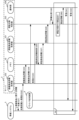
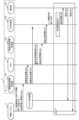
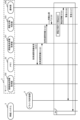
- FIG. 16 is a sequence diagram showing an example of the first half of the process for determining whether or not a mounted component of vehicle 4 is a defective component.
- FIG. 17 is a sequence diagram showing an example of the second half of the process for determining whether or not a mounted component of vehicle 4 is a defective component. This process is executed, for example, when a defect in a vehicle component is found.
- the manufacturer terminal device 3 transmits the defective part information 222B to the server 2, and the warranty part information acquisition unit 231 of the server 2 receives the defective part information 222B (step S61).
- the warranty part information acquisition unit 231 writes the received defective part information 222B to the memory 22 (step S62).
- the mounted part information acquisition unit 232 searches the memory 22 for all mounted part information 226 (step S64) and reads the mounted part information 226 from the memory 22 (step S65).
- the mounted part information acquisition unit 232 outputs the read mounted part information 226 to the warranty eligibility determination unit 233, and the warranty eligibility determination unit 233 acquires the mounted part information 226 (step S66).
- the notification unit 236 compares the acquired mounted part information 226 with the defective part information 222B for each piece of mounted part information 226 (step S67). In other words, if a part ID included in the mounted part information 226 is included in the defective part information 222B, the warranty target determination unit 233 determines that the vehicle part corresponding to the part ID is a defective part.
- the server 2 executes the processes of steps S68 to S72 in FIG. These processes are similar to the processes from step S55 to step S59 in Fig. 15. Therefore, detailed description thereof will not be repeated.
- step S70 or step S72 may be executed the next time the vehicle 4 is started.
- the server 2 may execute the process of step S70 or step S72 when the in-vehicle system 5 next transmits information about the mounted parts to the server 2.
- [Process for determining whether a part is counterfeit or not installed in vehicle 4 (part 1)] 18 is a sequence diagram showing an example of a process for determining whether or not a vehicle mounted part of the vehicle 4 is a counterfeit part.
- an unshipped vehicle part is determined to be a counterfeit part. This process is executed at a predetermined timing, for example, when the vehicle 4 is started.
- the in-vehicle system 5 and the server 2 execute the processes of steps S81 to S83, which are similar to the processes of steps S31 to S33 in FIG. For this reason, the detailed description will not be repeated.
- the mounted component information acquisition unit 232 outputs the mounted component information 226 to the fraud determination unit 235, and the fraud determination unit 235 acquires the mounted component information 226 (step S84).
- the parts shipping information acquisition unit 234 searches the parts shipping information 225 from the memory 22 (step S85) and reads the parts shipping information 225 from the memory 22 (step S86)
- the part shipping information acquisition unit 234 outputs the read part shipping information 225 to the fraud determination unit 235, and the fraud determination unit 235 acquires the part shipping information 225 (step S87).
- the fraud determination unit 235 compares the acquired mounted part information 226 and part shipping information 225 (step S88). In other words, if a part ID included in the mounted part information 226 is included in the part shipping information 225 and the part shipping information 225 indicates that a vehicle part with that part ID has not been shipped, the fraud determination unit 235 determines that the mounted part with that part ID is an unshipped part. Note that the fraud determination unit 235 may also determine that the mounted part with that part ID is an unshipped part if the part ID is not included in the mounted part information 226.
- the fraud determination unit 235 determines that there is an unshipped part, it determines that the determined unshipped part is a fraudulent part and outputs the part information of the fraudulent part (part ID, part name, vehicle ID, etc.) to the notification unit 236, and the notification unit 236 acquires the part information (step S89).
- the notification unit 236 transmits warning information to the driver terminal device 6 used by the driver of the vehicle 4, indicating that an unshipped in-vehicle part is installed, and the driver terminal device 6 receives the warning information (step S90). For example, upon receiving the warning information, the driver terminal device 6 notifies the driver by displaying the warning information on a screen of the driver terminal device 6 or outputting the warning information from a speaker of the driver terminal device 6.
- the notification unit 236 transmits warning information indicating that an unshipped in-vehicle part is installed to the in-vehicle system 5 of the vehicle 4 based on the acquired part information, and the in-vehicle system 5 receives the warning information (step S91).
- the in-vehicle system 5 that receives the warning information transmits the warning information to the in-vehicle control device 53 that controls a monitor in the vehicle 4, and notifies the driver by displaying the warning information on the monitor.
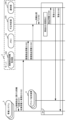
- FIG. 19 is a sequence diagram showing an example of a process for determining whether or not a part mounted on the vehicle 4 is an unauthorized part.
- a plurality of vehicle parts having the same part ID are determined to be unauthorized parts. This process is executed, for example, at a predetermined cycle (for example, once a day).
- Each of the multiple in-vehicle systems 5 executes the processes from step S101 to step S104. These processes are similar to the processes from step S81 to step S84 in FIG. 18. Therefore, detailed description thereof will not be repeated.
- the fraud determination unit 235 compares the mounted part information 226 received from the multiple in-vehicle systems 5 (step S105). In other words, the fraud determination unit 235 determines whether there are any duplicated part IDs among the multiple mounted part information 226.
- the fraud determination unit 235 determines that there is a duplication of part IDs, it determines that the mounted part having the duplicate part ID is a fraudulent part, and outputs the part information of the fraudulent part (part ID, part name, vehicle ID, etc.) to the notification unit 236, which then acquires the part information (step S106).
- the notification unit 236 transmits warning information to the driver terminal device 6 used by the driver of the vehicle 4, based on the acquired part information, indicating that an unauthorized in-vehicle part having a duplicate part ID is installed, and the driver terminal device 6 receives the warning information (step S107). For example, upon receiving the warning information, the driver terminal device 6 notifies the driver by displaying the warning information on a screen of the driver terminal device 6 or outputting the warning information from a speaker of the driver terminal device 6.
- the notification unit 236 transmits warning information to the in-vehicle system 5 of the vehicle 4, indicating that an unauthorized in-vehicle part having a duplicate part ID is installed, based on the acquired part information, and the in-vehicle system 5 receives the warning information (step S108).
- the in-vehicle system 5 that receives the warning information transmits the warning information to the in-vehicle control device 53 that controls a monitor in the vehicle 4, and notifies the driver by displaying the warning information on the monitor.
- the warranty part information 222 As described above, according to the first embodiment of the present disclosure, by comparing the warranty part information 222 and the mounted part information 226, it is possible to determine whether the mounted part of the vehicle 4 is covered by the warranty. This makes it possible to efficiently manage whether the vehicle parts mounted on the vehicle 4 are covered by the warranty.
- the installed part is determined to be covered by the warranty, and if they do not match, the installed part is determined to not be covered by the warranty. This makes it possible to manage whether an installed part is covered by the warranty in a simple manner.
- the vehicle 4 or the driver can be notified that a vehicle part that is not covered by the warranty is installed.
- the vehicle 4 or the driver who knows this can take measures such as stopping the running of the vehicle 4, thereby supporting safe driving.
- the vehicle part can be determined to be an unauthorized part.
- vehicle parts with the same part ID are installed on multiple vehicles 4, those vehicle parts can be identified.
- the in-vehicle system 5 collects information about the installed parts in the vehicle 4 to determine whether the parts are covered by the warranty and provides it to the server 2. This makes it possible to provide information for efficiently managing whether the vehicle parts installed in the vehicle 4 are covered by the warranty.
- the in-vehicle system 5 receives warning information from the server 2 when a part installed in the vehicle 4 is not covered by the warranty. Therefore, the in-vehicle system 5 can notify the vehicle 4 or the driver that a vehicle part not covered by the warranty is installed in the vehicle 4.
- the identification information of the onboard components can be received from the wireless tags all at once. This allows the onboard system 5 to instantly collect onboard component information.
- FIG. 20 is a block diagram illustrating an example of a hardware configuration of the server 2 according to the second embodiment of the present disclosure.
- the server 2 has the same configuration as the server 2 shown in Fig. 2.
- the guaranteed part information 222 stored in the memory 22 further includes useful life information 222C.
- the useful life information 222C is information related to the useful life of a vehicle part.
- the useful life information 222C includes, for example, the name, part ID, and useful life of the vehicle part.
- the useful life information 222C includes the name of the vehicle part "oil”, the part ID "O11", and the useful life "1 year”. In this case, it is shown that the useful life of the oil with the part ID "O11" is 1 year.
- the useful life information 222C may be determined, for example, only based on the usage period of the vehicle part, only based on the mileage of the vehicle 4, or based on the usage period of the vehicle part and the mileage of the vehicle 4. By determining whether the vehicle part is within its useful life according to the usage status of these parts, it is possible to more accurately determine whether the vehicle part needs to be replaced.
- the installed part information 226 includes, for example, the name, part ID, and usage period of the installed part of the vehicle 4.
- the installed part information 226 includes the name of the installed part “oil”, the part ID "O11”, and the usage period "2 years”. This indicates that the usage period of the oil with part ID "O11" installed in the vehicle 4 is 2 years.
- the warranty eligibility determination unit 233 determines whether the mounted part is covered by the warranty based on the comparison result between the useful life information 222C and the mounted part information 226. Specifically, the warranty eligibility determination unit 233 extracts from the mounted part information 226 the usage period of the mounted part with the same part ID as the part ID indicated in the useful life information 222C. If the usage period of the extracted mounted part is longer than the useful life of the part ID indicated in the useful life information 222C, the warranty eligibility determination unit 233 determines that the mounted part is not covered by the warranty. Furthermore, if the usage period of the extracted mounted part is equal to or shorter than the above-mentioned useful life, the warranty eligibility determination unit 233 determines that the mounted part is covered by the warranty.
- the collection unit 522A of the in-vehicle system 5 collects the usage period of the mounted parts. For example, the collection unit 522A acquires sensor information indicating opening and closing from a sensor that measures the opening and closing of a fuel filler cap installed at the engine oil filler cap. Based on the sensor information, the collection unit 522A may collect the elapsed time since the fuel filler cap was last opened and closed as the usage period of the oil. The collection unit 522A may also collect the part ID of the oil from operational input by the user on a touch panel or the like installed in the vehicle 4.
- FIG. 21 is a sequence diagram showing an example of a process for registering useful life information 222C to server 2. This process is executed at any time by a person in charge at the vehicle manufacturer or parts manufacturer, etc.
- the manufacturer terminal device 3 transmits to the server 2 useful life information 222C, which includes at least the part ID of the vehicle part and the useful life of the vehicle part.
- the warranty part information acquisition unit 231 of the server 2 receives the useful life information 222C transmitted from the manufacturer terminal device 3 (step S111).
- the warranty part information acquisition unit 231 writes the received useful life information 222C in the memory 22 (step S112). Through the above process, the useful life information 222C is registered in the memory 22.
- the warranty part information acquisition unit 231 searches the memory 22 for the useful life information 222C (step S121) and reads out the useful life information 222C from the memory 22 (step S122).
- the warranty part information acquisition unit 231 outputs the read useful life information 222C to the warranty eligibility determination unit 233, and the warranty eligibility determination unit 233 acquires the useful life information 222C (step S123).
- the warranty eligibility determination unit 233 compares the mounted part information 226 acquired in step S34 of FIG. 14 with the useful life information 222C acquired in step S123 (step S124). In other words, if a part ID included in the mounted part information 226 is included in the useful life information 222C and the usage period corresponding to the part ID included in the mounted part information 226 exceeds the useful life corresponding to the part ID included in the useful life information 222C, the warranty eligibility determination unit 233 determines that the vehicle part corresponding to the part ID is not covered by the warranty.
- the warranty eligibility determination unit 233 determines that there is an installed part that is not covered by the warranty, it outputs the part information (part ID, part name, vehicle ID, etc.) of the installed part that is not covered by the warranty to the notification unit 236, and the notification unit 236 acquires the part information (step S125).
- the notification unit 236 transmits warning information to the driver terminal device 6 used by the driver of the vehicle 4, indicating that an in-vehicle part not covered by the warranty is installed, and the driver terminal device 6 receives the warning information (step S126).
- information relating the vehicle ID and the driver terminal device 6 may be stored in advance in the memory 22, and the notification unit 236 may identify the driver terminal device 6 to which the warning information is to be transmitted from the vehicle ID by referring to the information.
- the driver terminal device 6 that has received the warning information notifies the driver by displaying the warning information on the screen of the driver terminal device 6 or outputting it from a speaker of the driver terminal device 6.
- the notification unit 236 transmits warning information to the in-vehicle system 5 of the vehicle 4 indicating that an in-vehicle part not covered by the warranty is installed, and the in-vehicle system 5 receives the warning information (step S127).
- information relating the vehicle ID and the in-vehicle system 5 may be stored in advance in the memory 22, and the notification unit 236 may identify the in-vehicle system 5 to which the warning information is to be transmitted from the vehicle ID by referring to the information.
- the in-vehicle system 5 that receives the warning information transmits the warning information to the in-vehicle control device 53 that controls a monitor in the vehicle 4, and notifies the driver by displaying the warning information on the monitor.
- the in-vehicle system 5 collects the mounted part information 226, but the server 2 may collect the mounted part information 226.
- a wireless tag having a wireless communication function is attached to the mounted part of the vehicle 4.
- the wireless tag includes a communication unit using a wireless communication standard such as 5G or Wi-Fi.
- the wireless tag stores the part ID of the mounted part to which the wireless tag is attached and the vehicle ID of the vehicle 4 on which the mounted part is mounted.
- the wireless tag may further store the part name of the mounted part and the mounting position information of the mounted part.
- the wireless tag transmits information on the mounted part including the vehicle ID and the part ID to the server 2 at a predetermined period.
- the wireless tag may receive a transmission request from the server 2 and transmit information on the mounted part including the vehicle ID and the part ID to the server 2 in response to the received transmission request.
- the server 2 may record, for each vehicle 4, the determination result of whether or not a vehicle part that is not covered by the warranty or a vehicle part that has been found to be defective is installed as history data based on the installed part information 226.
- the server 2 may also transfer the history data to another business such as a used car dealer.
- the server 2 may abstract some of the information so that it cannot be recognized before transferring it. For example, the server 2 may delete the part ID of the automobile part from the history data and transfer only the usage period of the defective part and the part name of the defective part.
- a contract or other arrangement regarding management of vehicle parts may be made in advance between a contracting party, such as a vehicle manufacturer or dealer that manufactured the vehicle 4, and an owner or manager of the vehicle 4, or between the contracting party and an operator of the server 2.
- the contracting party can manage the parts installed in the vehicle 4.
- the manufacturer terminal device 3 used by the contracting party acquires part information of the installed part that is not covered by the warranty from the server 2. This allows the contracting party to take measures such as instructing the vehicle 4 to change to a part covered by the warranty, or prohibiting the vehicle 4 from running when the vehicle 4 is equipped with a vehicle part that affects running.
- the server 2 or the manufacturer terminal device 3 can also issue a warning to the vehicle 4.
- Each process (each function) of the above-mentioned embodiment is realized by a processing circuit (circuitry) including one or more processors.
- the processing circuit may be composed of an integrated circuit or the like in which one or more memories, various analog circuits, and various digital circuits are combined in addition to the one or more processors.
- the one or more memories store programs (instructions) that cause the one or more processors to execute each of the above processes.
- the one or more processors may execute each of the above processes according to the programs read from the one or more memories, or may execute each of the above processes according to a logic circuit designed in advance to execute each of the above processes.
- the processor may be various processors suitable for computer control, such as a CPU (Central Processing Unit), a GPU (Graphics Processing Unit), a DSP (Digital Signal Processor), a FPGA (Field Programmable Gate Array), and an ASIC (Application Specific Integrated Circuit).
- the physically separated processors may cooperate with each other to execute each of the above processes.
- the processors mounted on each of a plurality of physically separated computers may cooperate with each other via a network such as a LAN (Local Area Network), a WAN (Wide Area Network), the Internet, etc.
- the program may be installed in the memory from an external server device or the like via the network, or may be distributed in a state stored in a recording medium such as a CD-ROM (Compact Disc Read Only Memory), a DVD-ROM (Digital Versatile Disc Read Only Memory), or a semiconductor memory, and installed in the memory from the recording medium.
- a recording medium such as a CD-ROM (Compact Disc Read Only Memory), a DVD-ROM (Digital Versatile Disc Read Only Memory), or a semiconductor memory, and installed in the memory from the recording medium.
- Parts management system 2 Server (determination device) 3 Manufacturer terminal device 4 Vehicle 5 In-vehicle system (provider device) Description of the Reference Number 6 Driver terminal device 7 Network 21 Communication unit 22 Memory 23 Processor 24 Bus 51 External communication unit 52 Relay unit 53 In-vehicle control device 221 Computer program 222 Warranty part information 222A Warranty target part information 222B Defective part information 222C Useful life information 223 Part correspondence information 224 Vehicle correspondence information 225 Part shipping information 226 Mounted part information 231 Warranty part information acquisition unit 232 Mounted part information acquisition unit 233 Warranty target determination unit 234 Part shipping information acquisition unit 235 Fraud determination unit 236 Notification unit 521 Relay unit 522 Processor 522A Collection unit 522B Provision unit 522C Acquisition unit 523 Memory
Landscapes
- Business, Economics & Management (AREA)
- Engineering & Computer Science (AREA)
- Human Resources & Organizations (AREA)
- Tourism & Hospitality (AREA)
- General Business, Economics & Management (AREA)
- Physics & Mathematics (AREA)
- Theoretical Computer Science (AREA)
- General Physics & Mathematics (AREA)
- Marketing (AREA)
- Economics (AREA)
- Strategic Management (AREA)
- Primary Health Care (AREA)
- Mechanical Engineering (AREA)
- Health & Medical Sciences (AREA)
- General Health & Medical Sciences (AREA)
- Entrepreneurship & Innovation (AREA)
- Operations Research (AREA)
- Quality & Reliability (AREA)
- Management, Administration, Business Operations System, And Electronic Commerce (AREA)
Abstract
Description
この出願は、2023年7月4日に出願された日本出願特願2023-109766号を基礎とする優先権を主張し、その開示のすべてをここに取り込む。
しかしながら、従来の管理装置によると、車両に未搭載の部品を検出することはできるが、搭載されている車両用部品の保証可否の判断に関する管理を行うことができない。
本開示によると、車両に搭載されている車両用部品が保証対象か否かを効率的に管理できる。
以下、本開示の実施形態の概要を列記して説明する。
(1)本開示の一実施形態に係る判定装置は、車両用部品の保証可否の判断に関する保証部品情報を取得する保証部品情報取得部と、車両に搭載された車両用部品である搭載部品に関する搭載部品情報を取得する搭載部品情報取得部と、前記保証部品情報および前記搭載部品情報に基づいて、前記搭載部品が保証対象であるか否かを判定する保証対象判定部とを備える。
このため、上述の判定装置と同様の作用および効果を奏する。
以下、本開示の実施形態について、図面を参照しながら説明する。なお、以下で説明する実施形態は、いずれも本開示の一具体例を示すものである。以下の実施形態で示される数値、形状、材料、構成要素、構成要素の配置位置および接続形態、ステップ、ステップの順序等は、一例であり、本開示を限定するものではない。また、以下の実施形態における構成要素のうち、独立請求項に記載されていない構成要素については、任意に付加可能な構成要素である。また、各図は、模式図であり、必ずしも厳密に図示されたものではない。
〔部品管理システムの全体構成〕
図1は、本開示の実施形態1に係る部品管理システムの全体構成の一例を示す図である。
図2は、本開示の実施形態1に係るサーバ2のハードウェア構成の一例を示すブロック図である。
サーバ2は、通信部21と、メモリ22と、プロセッサ23とを備える。通信部21、メモリ22およびプロセッサ23は、バス24を介して相互に接続される。
メモリ22は、コンピュータプログラム221と、保証部品情報222と、車両-部品対応付け情報223と、車種-車両対応付け情報224と、部品出荷情報225と、搭載部品情報226とを記憶している。
図6は、車種-車両対応付け情報224の一例を示す図である。車種-車両対応付け情報224は、車種が「車種A」の車両4の車両IDは、「200000」から「210000」のいずれかであり、車種が「車種B」の車両4の車両IDは、「300000」から「309000」のいずれかであることを示している。
図7は、部品出荷情報225の一例を示す図である。部品出荷情報225は、部品ID(車両用部品の識別情報)が「000001」の車両用部品および部品IDが「000002」の車両用部品が出荷済みであることを示している。また、部品出荷情報225は、部品IDが「000003」の車両用部品が未出荷であることを示している。
サーバ2は、プロセッサ23がコンピュータプログラム221を実行することにより機能的な構成として、保証部品情報取得部231と、搭載部品情報取得部232と、保証対象判定部233と、部品出荷情報取得部234と、不正判定部235と、通知部236とを備える。
また、搭載部品情報取得部232は、受信した車両4の車両IDを保証部品情報取得部231に出力する。
保証対象判定部233は、保証対象の判定結果を通知部236に出力する。
不正判定部235は、不正部品の判定結果を通知部236に出力する。
図10は、本開示の実施形態1に係る車載システム5のハードウェア構成の一例を示すブロック図である。
車載システム5は、車外通信部51と、中継装置52と、複数の車載制御装置53(例えば、ECU(Electronic Control Unit))とを備える。車外通信部51、中継装置52および車載制御装置53は、例えば、CAN(Controller Area Network)またはイーサネット(登録商標)等の車載ネットワークにより接続されている。
図11は、本開示の実施形態1に係る中継装置52のハードウェア構成の一例を示すブロック図である。
中継装置52は、中継部521と、プロセッサ522と、メモリ523とを備える。
中継部521は、車外通信部51が受信したデータに示される宛先を確認し、当該データを宛先の車載制御装置53に送信する。また、中継部521は、車載制御装置53から送信されたデータを受信し、当該データに示される宛先を確認する。宛先が車載制御装置53の場合には、中継部521は、当該データを宛先の車載制御装置53に送信する。宛先が他装置の場合には、中継部521は、当該データを、車外通信部51を介して宛先の他装置に送信する。
例えば、収集部522Aは、搭載部品を管理している車載制御装置53から、中継部521を介して、搭載部品の名称、搭載部品の製造会社名、搭載部品の部品ID等の情報を収集する。
図12は、サーバ2への保証対象部品情報222Aの登録処理の一例を示すシーケンス図である。この処理は、車両メーカまたは部品メーカ等の担当者等によって随時実行される。
以上の処理により、図3に示したような保証対象部品情報222Aがメモリ22に登録される。
図13は、サーバ2への部品出荷情報225の登録処理の一例を示すシーケンス図である。この処理は、車両メーカまたは部品メーカ等の担当者等によって随時実行される。
以上の処理により、図7に示したような部品出荷情報225がメモリ22に登録される。
図14は、車両4の搭載部品が保証対象か否かを判定する処理の一例を示すシーケンス図である。この処理は、例えば、車両4の起動時等の所定のタイミングに実行される。
図15は、車両4の搭載部品が不具合部品か否かを判定する処理の一例を示すシーケンス図である。この処理は、図14に示した車両4の搭載部品の保証対象判定処理後に実行される。
警告情報の送信対象のドライバ端末装置6の特定は、図14のステップS41での処理と同様に行われる。
警告情報の送信対象の車載システム5の特定は、ステップS42での処理と同様に行われる。
図15に示した不具合部品判定処理は車両4の起動時に実行された。一方、不具合部品判定処理は、車両用部品の不具合が見つかった時点に実行されてもよい。
これらの処理は、図15のステップS55からステップS59の処理と同様である。このため、その詳細な説明は繰り返さない。
図18は、車両4の搭載部品が不正部品か否かを判定する処理の一例を示すシーケンス図である。ここでは、未出荷の車両用部品を不正部品と判定する。この処理は、例えば、車両4の起動時等の所定のタイミングに実行される。
このため、その詳細な説明は繰り返さない。
図19は、車両4の搭載部品が不正部品か否かを判定する処理の一例を示すシーケンス図である。ここでは、同一の部品IDを有する複数の車両用部品を不正部品と判定する。
この処理は、例えば、所定の周期(例えば、1日ごと)で実行される。
実施形態2では、実施形態1に加え、搭載部品の使用履歴に基づいて、搭載部品が保証対象であるかを判定する構成について説明する。
以下では、実施形態1と異なる点を中心に説明を行い、実施形態1と同様の点については説明を繰り返さない。
サーバ2は、図2に示したサーバ2の構成と同様である。ただし、メモリ22に記憶されている保証部品情報222に耐用期間情報222Cがさらに含まれる。
なお、耐用期間情報222Cは、例えば、車両用部品の使用期間のみによって決めるもの、車両4の走行距離のみによって決めるもの、車両用部品の使用期間と車両4の走行距離によって決めるものがある。これらの部品の使用状況に応じて耐用期間内であるかを判定することによって、車両用部品の交換要否をより正確に判断することができる。
以上の処理により、耐用期間情報222Cがメモリ22に登録される。
実施形態1および実施形態2では、車載システム5が搭載部品情報226を収集することとしたが、サーバ2が搭載部品情報226を収集してもよい。例えば、車両4の搭載部品に無線通信機能を備える無線タグを取り付けることとする。無線タグは、例えば、5GまたはWi-Fi等の無線通信規格を用いた通信ユニットを含む。当該無線タグは、無線タグが取り付けられた搭載部品の部品IDと、搭載部品を搭載する車両4の車両IDとを記憶しているものとする。無線タグは、さらに、搭載部品の部品名や、搭載部品の取り付け位置情報を記憶していてもよい。無線タグは、例えば、所定の周期で車両IDおよび部品IDを含む搭載部品に関する情報をサーバ2に送信する。なお、無線タグは、サーバ2からの送信要求を受信し、受信した送信要求に応答して車両IDおよび部品IDを含む搭載部品に関する情報をサーバ2に送信してもよい。
サーバ2は、車両4ごとに、搭載部品情報226に基づいて、保証対象外の車両用部品または不具合が判明した車両用部品が搭載されているかの判定結果を履歴データとして記録してもよい。また、サーバ2は、当該履歴データを、中古車販売業者等の他の事業者に譲渡してもよい。なお、サーバ2は、履歴データを譲渡する際に、一部の情報が認識できないように抽象化した上で譲渡してもよい。例えば、サーバ2は、履歴データから、自動車部品の部品IDを削除した上で、不具合部品の使用期間や不具合部品の部品名のみを譲渡してもよい。
なお、車両4を製造した車両メーカやディーラなどの契約元と車両4の所有者もしくは管理者との間、または契約元とサーバ2の運用者との間で、事前に車両用部品の管理に関する契約等の取り決めが行われていてもよい。この場合、契約元は、車両4の搭載部品を管理することができる。例えば、契約元が利用するメーカ端末装置3は、車両4に保証対象外の自動車部品が搭載されている場合には、保証対象外の搭載部品の部品情報をサーバ2から取得する。これにより、契約元は、当該車両4に対して、保証対象部品への変更を指示したり、走行に影響のある車両用部品が搭載されている場合には車両4の走行を禁止したりする措置をとることができる。
上述の実施形態の各処理(各機能)は、1又は複数のプロセッサを含む処理回路(Circuitry)により実現される。上記処理回路は、上記1又は複数のプロセッサに加え、1又は複数のメモリ、各種アナログ回路、各種デジタル回路が組み合わされた集積回路等で構成されてもよい。上記1又は複数のメモリは、上記各処理を上記1又は複数のプロセッサに実行させるプログラム(命令)を格納する。上記1又は複数のプロセッサは、上記1又は複数のメモリから読み出した上記プログラムに従い上記各処理を実行してもよいし、予め上記各処理を実行するように設計された論理回路に従って上記各処理を実行してもよい。上記プロセッサは、CPU(Central Processing Unit)、GPU(Graphics Processing Unit)、DSP(Digital Signal Processor)、FPGA(Field Programmable Gate Array)、ASIC(Application Specific Integrated Circuit)等、コンピュータの制御に適合する種々のプロセッサであってよい。なお、物理的に分離した上記複数のプロセッサが互いに協働して上記各処理を実行してもよい。例えば、物理的に分離した複数のコンピュータのそれぞれに搭載された上記プロセッサが、LAN(Local Area Network)、WAN (Wide Area Network)、インターネット等のネットワークを介して互いに協働して上記各処理を実行してもよい。上記プログラムは、外部のサーバ装置等から上記ネットワークを介して上記メモリにインストールされても構わないし、CD-ROM(Compact Disc Read Only Memory)、DVD-ROM(Digital Versatile Disk Read Only Memory)、半導体メモリ等の記録媒体に格納された状態で流通し、上記記録媒体から上記メモリにインストールされても構わない。
また、上記実施形態および上記変形例の少なくとも一部を任意に組み合わせてもよい。
2 サーバ(判定装置)
3 メーカ端末装置
4 車両
5 車載システム(提供装置)
6 ドライバ端末装置
7 ネットワーク
21 通信部
22 メモリ
23 プロセッサ
24 バス
51 車外通信部
52 中継装置
53 車載制御装置
221 コンピュータプログラム
222 保証部品情報
222A 保証対象部品情報
222B 不具合部品情報
222C 耐用期間情報
223 部品対応付け情報
224 車両対応付け情報
225 部品出荷情報
226 搭載部品情報
231 保証部品情報取得部
232 搭載部品情報取得部
233 保証対象判定部
234 部品出荷情報取得部
235 不正判定部
236 通知部
521 中継部
522 プロセッサ
522A 収集部
522B 提供部
522C 取得部
523 メモリ
Claims (13)
- 車両用部品の保証可否の判断に関する保証部品情報を取得する保証部品情報取得部と、
車両に搭載された車両用部品である搭載部品に関する搭載部品情報を取得する搭載部品情報取得部と、
前記保証部品情報および前記搭載部品情報に基づいて、前記搭載部品が保証対象であるか否かを判定する保証対象判定部とを備える、判定装置。 - 前記保証部品情報は、保証対象部品情報を含み、
前記保証対象部品情報は、保証対象の車両用部品の識別情報を含み、
前記搭載部品情報は、前記搭載部品の識別情報を含み、
前記保証対象判定部は、前記保証対象の車両用部品の識別情報および前記搭載部品の識別情報の比較結果に基づいて、前記搭載部品が保証対象であるかを判定する、請求項1に記載の判定装置。 - 前記保証対象部品情報は、純正の車両用部品に関する情報であり、
前記保証対象判定部は、前記保証対象部品情報および前記搭載部品情報に基づいて、前記搭載部品が純正であるかを判定することにより、前記搭載部品が保証対象であるかを判定する、請求項2に記載の判定装置。 - 前記保証部品情報は、車両用部品の耐用期間情報を含み、
前記搭載部品情報は、前記搭載部品の使用期間情報を含み、
前記保証対象判定部は、前記耐用期間情報および前記使用期間情報に基づいて、前記搭載部品が保証対象であるかを判定する、請求項1に記載の判定装置。 - 前記保証部品情報は、不具合が判明した車両用部品に関する不具合部品情報を含み、
前記保証対象判定部は、前記不具合部品情報および前記搭載部品情報に基づいて、前記搭載部品の不具合が判明しているかを判定することにより、前記搭載部品が保証対象外であるかを判定する、請求項1に記載の判定装置。 - 前記搭載部品が保証対象ではないと判定された場合に、前記車両および前記車両のドライバの少なくとも一方に通知する通知部をさらに備える、請求項1から請求項5のいずれか1項に記載の判定装置。
- 車両用部品の出荷状態を示す部品出荷情報を取得する部品出荷情報取得部と、
前記部品出荷情報および前記搭載部品情報に基づいて、前記搭載部品が不正な部品であるかを判定する不正判定部とをさらに備える、請求項1から請求項6のいずれか1項に記載の判定装置。 - 前記搭載部品情報は、前記搭載部品の識別情報を含み、
前記搭載部品情報取得部は、第1車両および前記第1車両と異なる第2車両の各々から前記搭載部品情報を取得し、
前記判定装置は、前記第1車両の前記搭載部品の識別情報および前記第2車両の前記搭載部品の識別情報の比較結果に基づいて、前記第1車両の前記搭載部品が不正な部品であるかを判定する不正判定部をさらに備える、請求項1から請求項6のいずれか1項に記載の判定装置。 - 前記搭載部品に関する情報を収集する収集部と、
前記収集部が収集した前記情報を、請求項1から請求項8のいずれか1項に記載の判定装置に提供する提供部とを備える、提供装置。 - 前記判定装置から、前記搭載部品が保証対象であるかの判定結果を取得する取得部をさらに備える、請求項9に記載の提供装置。
- 前記収集部は、前記搭載部品から前記搭載部品の識別情報を、前記搭載部品に関する情報として無線により受信する、請求項9または請求項10に記載の提供装置。
- 判定装置が、車両用部品の保証可否の判断に関する保証部品情報を取得するステップと、
前記判定装置が、車両に搭載された車両用部品である搭載部品に関する搭載部品情報を取得するステップと、
前記判定装置が、前記保証部品情報および前記搭載部品情報に基づいて、前記搭載部品が保証対象であるか否かを判定するステップとを含む、判定方法。 - コンピュータを、
車両用部品の保証可否の判断に関する保証部品情報を取得する保証部品情報取得部、
車両に搭載された車両用部品である搭載部品に関する搭載部品情報を取得する搭載部品情報取得部、および、
前記保証部品情報および前記搭載部品情報に基づいて、前記搭載部品が保証対象であるか否かを判定する保証対象判定部として機能させるための、コンピュータプログラム。
Priority Applications (1)
| Application Number | Priority Date | Filing Date | Title |
|---|---|---|---|
| JP2025530969A JPWO2025009200A1 (ja) | 2023-07-04 | 2024-02-01 |
Applications Claiming Priority (2)
| Application Number | Priority Date | Filing Date | Title |
|---|---|---|---|
| JP2023109766 | 2023-07-04 | ||
| JP2023-109766 | 2023-07-04 |
Publications (1)
| Publication Number | Publication Date |
|---|---|
| WO2025009200A1 true WO2025009200A1 (ja) | 2025-01-09 |
Family
ID=94171607
Family Applications (1)
| Application Number | Title | Priority Date | Filing Date |
|---|---|---|---|
| PCT/JP2024/003261 Ceased WO2025009200A1 (ja) | 2023-07-04 | 2024-02-01 | 判定装置、提供装置、判定方法、およびコンピュータプログラム |
Country Status (2)
| Country | Link |
|---|---|
| JP (1) | JPWO2025009200A1 (ja) |
| WO (1) | WO2025009200A1 (ja) |
Citations (9)
| Publication number | Priority date | Publication date | Assignee | Title |
|---|---|---|---|---|
| JP2003050878A (ja) * | 2001-08-06 | 2003-02-21 | Canon Sales Co Inc | サーバ装置およびサーバ装置の制御方法、機器保証システム、機器保証サーバ装置、機器保証システムの制御方法 |
| JP2005122658A (ja) * | 2003-10-20 | 2005-05-12 | Seiko Epson Corp | 情報収集システム、情報収集サーバ、情報収集方法、及びプログラム |
| JP2010134816A (ja) * | 2008-12-08 | 2010-06-17 | Hochiki Corp | 製品安全管理ネットワークシステム及び方法 |
| JP2012222945A (ja) * | 2011-04-07 | 2012-11-12 | Honda Motor Co Ltd | 車両のバッテリ認証システム |
| JP2013008227A (ja) * | 2011-06-24 | 2013-01-10 | Sharp Corp | 画像形成装置、表示装置、管理サーバ及びこれらを備えた消耗品管理システム、並びに消耗品管理方法 |
| JP2014191514A (ja) * | 2013-03-26 | 2014-10-06 | Fujitsu Fsas Inc | 部品管理装置、部品管理方法および部品管理プログラム |
| WO2016157392A1 (ja) * | 2015-03-30 | 2016-10-06 | 株式会社小松製作所 | 部品情報管理システム及び部品情報管理方法 |
| JP2020086611A (ja) * | 2018-11-16 | 2020-06-04 | トヨタ自動車株式会社 | サーバ装置および情報処理方法 |
| JP2023017453A (ja) * | 2021-07-26 | 2023-02-07 | トヨタ自動車株式会社 | 部品診断装置、部品診断システム、部品診断方法、及び部品診断プログラム |
-
2024
- 2024-02-01 JP JP2025530969A patent/JPWO2025009200A1/ja active Pending
- 2024-02-01 WO PCT/JP2024/003261 patent/WO2025009200A1/ja not_active Ceased
Patent Citations (9)
| Publication number | Priority date | Publication date | Assignee | Title |
|---|---|---|---|---|
| JP2003050878A (ja) * | 2001-08-06 | 2003-02-21 | Canon Sales Co Inc | サーバ装置およびサーバ装置の制御方法、機器保証システム、機器保証サーバ装置、機器保証システムの制御方法 |
| JP2005122658A (ja) * | 2003-10-20 | 2005-05-12 | Seiko Epson Corp | 情報収集システム、情報収集サーバ、情報収集方法、及びプログラム |
| JP2010134816A (ja) * | 2008-12-08 | 2010-06-17 | Hochiki Corp | 製品安全管理ネットワークシステム及び方法 |
| JP2012222945A (ja) * | 2011-04-07 | 2012-11-12 | Honda Motor Co Ltd | 車両のバッテリ認証システム |
| JP2013008227A (ja) * | 2011-06-24 | 2013-01-10 | Sharp Corp | 画像形成装置、表示装置、管理サーバ及びこれらを備えた消耗品管理システム、並びに消耗品管理方法 |
| JP2014191514A (ja) * | 2013-03-26 | 2014-10-06 | Fujitsu Fsas Inc | 部品管理装置、部品管理方法および部品管理プログラム |
| WO2016157392A1 (ja) * | 2015-03-30 | 2016-10-06 | 株式会社小松製作所 | 部品情報管理システム及び部品情報管理方法 |
| JP2020086611A (ja) * | 2018-11-16 | 2020-06-04 | トヨタ自動車株式会社 | サーバ装置および情報処理方法 |
| JP2023017453A (ja) * | 2021-07-26 | 2023-02-07 | トヨタ自動車株式会社 | 部品診断装置、部品診断システム、部品診断方法、及び部品診断プログラム |
Also Published As
| Publication number | Publication date |
|---|---|
| JPWO2025009200A1 (ja) | 2025-01-09 |
Similar Documents
| Publication | Publication Date | Title |
|---|---|---|
| US20210344700A1 (en) | Vehicle security monitoring apparatus, method and non-transitory computer readable medium | |
| JP7049900B2 (ja) | ソフトウェア管理システム、ゲートウェイ装置、保守装置、サーバ装置、及びソフトウェア管理システムの制御方法 | |
| US11887408B2 (en) | Service event response tailoring | |
| US7813852B2 (en) | System mounted on a vehicle, vehicle, diagnosis information collecting device and navigation device | |
| US11418363B2 (en) | Apparatus and method for diagnosing sleep of CAN for vehicle | |
| US11544408B2 (en) | Method and system for managing vehicle generated data | |
| US8209076B2 (en) | Tracking vehicle maintenance using sensor detection | |
| US20200175788A1 (en) | Method and system for managing event data | |
| US20140324275A1 (en) | Online vehicle maintenance | |
| US11373518B2 (en) | Method for data collection | |
| KR20090040622A (ko) | 차량 사고 정보 제공 방법 및 장치 | |
| CN107490488A (zh) | 经由噪声和振动水平进行的车辆健康状况检查 | |
| WO2016088304A1 (ja) | 不正検知電子制御ユニット、車載ネットワークシステム及び不正検知方法 | |
| CN114802052B (zh) | 用于车载网络入侵检测系统的可信环境自学习方法及系统 | |
| JP2017117193A (ja) | 車両情報管理システム | |
| GB2497636A (en) | Vehicle fault diagnosis system | |
| Falco et al. | Assuring automotive data and software integrity employing distributed hash tables and blockchain | |
| Kannadhasan | Self diagnostic cars: Using infotainment electronic control unit | |
| US12260685B2 (en) | Method and apparatus for automotive vehicle diagnostics using cognitive smart sensors | |
| JP2020144542A5 (ja) | ||
| CN113240828A (zh) | 一种基于WiFi/蓝牙的汽车行驶记录仪查验检验方法及装置 | |
| CN112448843A (zh) | 用于节点配置设置的系统和方法 | |
| CN111145386A (zh) | 一种基于区块链管理行车电脑数据的方法、设备及介质 | |
| CN118701081A (zh) | 日志管理装置、电子控制系统、日志管理方法及存储介质 | |
| CN115451997B (zh) | 里程检测方法、装置、电子设备及计算机存储介质 |
Legal Events
| Date | Code | Title | Description |
|---|---|---|---|
| 121 | Ep: the epo has been informed by wipo that ep was designated in this application |
Ref document number: 24835723 Country of ref document: EP Kind code of ref document: A1 |
|
| ENP | Entry into the national phase |
Ref document number: 2025530969 Country of ref document: JP Kind code of ref document: A |
|
| WWE | Wipo information: entry into national phase |
Ref document number: 2025530969 Country of ref document: JP |
|
| NENP | Non-entry into the national phase |
Ref country code: DE |
|
| 122 | Ep: pct application non-entry in european phase |
Ref document number: 24835723 Country of ref document: EP Kind code of ref document: A1 |