WO2025004720A1 - 芳香族ポリスルホン、芳香族ポリスルホンの製造方法、樹脂組成物、及びプリプレグ - Google Patents
芳香族ポリスルホン、芳香族ポリスルホンの製造方法、樹脂組成物、及びプリプレグ Download PDFInfo
- Publication number
- WO2025004720A1 WO2025004720A1 PCT/JP2024/020480 JP2024020480W WO2025004720A1 WO 2025004720 A1 WO2025004720 A1 WO 2025004720A1 JP 2024020480 W JP2024020480 W JP 2024020480W WO 2025004720 A1 WO2025004720 A1 WO 2025004720A1
- Authority
- WO
- WIPO (PCT)
- Prior art keywords
- aromatic polysulfone
- formula
- group
- resin composition
- compound
- Prior art date
- Legal status (The legal status is an assumption and is not a legal conclusion. Google has not performed a legal analysis and makes no representation as to the accuracy of the status listed.)
- Ceased
Links
Classifications
-
- C—CHEMISTRY; METALLURGY
- C08—ORGANIC MACROMOLECULAR COMPOUNDS; THEIR PREPARATION OR CHEMICAL WORKING-UP; COMPOSITIONS BASED THEREON
- C08G—MACROMOLECULAR COMPOUNDS OBTAINED OTHERWISE THAN BY REACTIONS ONLY INVOLVING UNSATURATED CARBON-TO-CARBON BONDS
- C08G59/00—Polycondensates containing more than one epoxy group per molecule; Macromolecules obtained by polymerising compounds containing more than one epoxy group per molecule using curing agents or catalysts which react with the epoxy groups
- C08G59/18—Macromolecules obtained by polymerising compounds containing more than one epoxy group per molecule using curing agents or catalysts which react with the epoxy groups ; e.g. general methods of curing
- C08G59/40—Macromolecules obtained by polymerising compounds containing more than one epoxy group per molecule using curing agents or catalysts which react with the epoxy groups ; e.g. general methods of curing characterised by the curing agents used
-
- C—CHEMISTRY; METALLURGY
- C08—ORGANIC MACROMOLECULAR COMPOUNDS; THEIR PREPARATION OR CHEMICAL WORKING-UP; COMPOSITIONS BASED THEREON
- C08G—MACROMOLECULAR COMPOUNDS OBTAINED OTHERWISE THAN BY REACTIONS ONLY INVOLVING UNSATURATED CARBON-TO-CARBON BONDS
- C08G65/00—Macromolecular compounds obtained by reactions forming an ether link in the main chain of the macromolecule
- C08G65/34—Macromolecular compounds obtained by reactions forming an ether link in the main chain of the macromolecule from hydroxy compounds or their metallic derivatives
- C08G65/38—Macromolecular compounds obtained by reactions forming an ether link in the main chain of the macromolecule from hydroxy compounds or their metallic derivatives derived from phenols
- C08G65/40—Macromolecular compounds obtained by reactions forming an ether link in the main chain of the macromolecule from hydroxy compounds or their metallic derivatives derived from phenols from phenols (I) and other compounds (II), e.g. OH-Ar-OH + X-Ar-X, where X is halogen atom, i.e. leaving group
-
- C—CHEMISTRY; METALLURGY
- C08—ORGANIC MACROMOLECULAR COMPOUNDS; THEIR PREPARATION OR CHEMICAL WORKING-UP; COMPOSITIONS BASED THEREON
- C08J—WORKING-UP; GENERAL PROCESSES OF COMPOUNDING; AFTER-TREATMENT NOT COVERED BY SUBCLASSES C08B, C08C, C08F, C08G or C08H
- C08J5/00—Manufacture of articles or shaped materials containing macromolecular substances
- C08J5/04—Reinforcing macromolecular compounds with loose or coherent fibrous material
- C08J5/10—Reinforcing macromolecular compounds with loose or coherent fibrous material characterised by the additives used in the polymer mixture
-
- C—CHEMISTRY; METALLURGY
- C08—ORGANIC MACROMOLECULAR COMPOUNDS; THEIR PREPARATION OR CHEMICAL WORKING-UP; COMPOSITIONS BASED THEREON
- C08J—WORKING-UP; GENERAL PROCESSES OF COMPOUNDING; AFTER-TREATMENT NOT COVERED BY SUBCLASSES C08B, C08C, C08F, C08G or C08H
- C08J5/00—Manufacture of articles or shaped materials containing macromolecular substances
- C08J5/24—Impregnating materials with prepolymers which can be polymerised in situ, e.g. manufacture of prepregs
-
- C—CHEMISTRY; METALLURGY
- C08—ORGANIC MACROMOLECULAR COMPOUNDS; THEIR PREPARATION OR CHEMICAL WORKING-UP; COMPOSITIONS BASED THEREON
- C08L—COMPOSITIONS OF MACROMOLECULAR COMPOUNDS
- C08L63/00—Compositions of epoxy resins; Compositions of derivatives of epoxy resins
-
- C—CHEMISTRY; METALLURGY
- C08—ORGANIC MACROMOLECULAR COMPOUNDS; THEIR PREPARATION OR CHEMICAL WORKING-UP; COMPOSITIONS BASED THEREON
- C08L—COMPOSITIONS OF MACROMOLECULAR COMPOUNDS
- C08L71/00—Compositions of polyethers obtained by reactions forming an ether link in the main chain; Compositions of derivatives of such polymers
- C08L71/08—Polyethers derived from hydroxy compounds or from their metallic derivatives
- C08L71/10—Polyethers derived from hydroxy compounds or from their metallic derivatives from phenols
Definitions
- the present invention relates to an aromatic polysulfone, a method for producing an aromatic polysulfone, a resin composition, and a prepreg.
- Aromatic polysulfones have a high glass transition temperature (Tg) and are used in many fields including electronic materials as they have excellent heat resistance.
- Patent Document 1 discloses an aromatic polysulfone capable of exhibiting a high glass transition temperature (Tg), a prepreg using the aromatic polysulfone, and a method for producing the prepreg.
- aromatic polysulfones having a repeating unit represented by the following formula (1) tend to exhibit a high glass transition temperature (Tg), but there is still room for improvement in terms of improving the fracture toughness of a cured resin composition containing this aromatic polysulfone with an improved glass transition temperature.
- an object of the present invention is to provide an aromatic polysulfone having a repeating unit represented by the above formula (1), which is capable of producing a resin composition containing the aromatic polysulfone and an epoxy resin, and which exhibits excellent fracture toughness when cured.
- Another object of the present invention is to provide a resin composition which contains the aromatic polysulfone and an epoxy resin and which, when cured, is capable of exhibiting excellent fracture toughness.
- Another object of the present invention is to provide a prepreg containing the resin composition and reinforcing fibers.
- the present inventors have conducted intensive research to solve the above problems and have found that a cured product of a resin composition containing an aromatic polysulfone having a repeating unit represented by formula (1) and having a specific amount of hydroxyl groups and/or salts thereof, and an epoxy resin, exhibits excellent fracture toughness, thereby completing the present invention. That is, the present invention has the following aspects.
- the aromatic polysulfone has a hydroxyl group and/or a salt thereof in an amount of 70 ⁇ mol/g or more per 1 g of the aromatic polysulfone.
- R 1 and R 2 each independently represent a hydrogen atom, an alkyl group having 1 to 6 carbon atoms, or a phenyl group.
- the polymerizable compound has a repeating unit represented by the following formula (2):
- R3 and R4 each independently represent a halogen atom, a phenyl group, an alkyl group having 1 to 6 carbon atoms, or an alkenyl group having 2 to 10 carbon atoms, and m and n each independently represent an integer of 0 to 4. When there are a plurality of R3s or R4s , they may be the same or different.
- ⁇ 4> An aromatic polysulfone according to any one of ⁇ 1> to ⁇ 3> above, having a weight average molecular weight of 10,000 or more and less than 30,000.
- the dihydroxy compound includes a compound represented by the following formula (1a):
- R 11 and R 12 each independently represent a hydrogen atom, an alkyl group having 1 to 6 carbon atoms, or a phenyl group.
- the dihydroxy compound includes dihydroxydiphenyl sulfone and 9,9-bis(4-hydroxy-3-methylphenyl)fluorene;
- a resin composition comprising the aromatic polysulfone according to any one of ⁇ 1> to ⁇ 4> and an epoxy resin.
- a prepreg comprising the resin composition according to ⁇ 8> above and reinforcing fibers.
- an aromatic polysulfone having a repeating unit represented by formula (1) above which is capable of exhibiting excellent fracture toughness when cured from a resin composition containing the aromatic polysulfone and an epoxy resin.
- the present invention also provides a resin composition which contains the aromatic polysulfone and an epoxy resin, and which is capable of exhibiting excellent fracture toughness in the cured product.
- the present invention also provides a prepreg containing the resin composition and reinforcing fibers.
- the aromatic polysulfone of the embodiment is an aromatic polysulfone containing a repeating unit represented by the following formula (1) (hereinafter, sometimes referred to as “repeating unit (1)”), and the amount of hydroxyl groups and/or salts thereof per 1 g of the aromatic polysulfone is 70 ⁇ mol/g or more.
- R 1 and R 2 each independently represent a hydrogen atom, an alkyl group having 1 to 6 carbon atoms, or a phenyl group.
- examples of the alkyl group in R 1 and R 2 include a methyl group, an ethyl group, an n-propyl group, an isopropyl group, an n-butyl group, an isobutyl group, a sec-butyl group, a tert-butyl group, an n-hexyl group, a 2-ethylhexyl group, an n-octyl group, an n-decyl group, etc.
- the alkyl group may be linear or branched.
- R 1 and R 2 are each preferably independently an alkyl group having 1 to 6 carbon atoms, more preferably an alkyl group having 1 to 3 carbon atoms, further preferably each of R 1 and R 2 is a methyl group, and particularly preferably both of R 1 and R 2 are a methyl group.
- Aromatic polysulfones having repeating units (1) can exhibit a high glass transition temperature (Tg) and have excellent heat resistance.
- the Tg of the aromatic polysulfone may be 226° C. or more, 230° C. or more, or 235° C. or more.
- the upper limit of the Tg of the aromatic polysulfone is not particularly limited, and may be, for example, 260° C. or less, 255° C. or less, or 250° C. or less.
- the upper and lower limits of the glass transition temperature can be combined in any combination, and the Tg of the aromatic polysulfone may be, for example, 226°C or more and 260°C or less, 230°C or more and 255°C or less, or 235°C or more and 250°C or less.
- the glass transition temperature (Tg) of aromatic polysulfone can be measured by the following method.
- the glass transition temperature of the aromatic polysulfone is calculated using a differential scanning calorimeter (e.g., Shimadzu DSC-50) according to a method in accordance with JIS-K 7121. Approximately 10 mg of aromatic polysulfone is weighed out, heated to 400° C. at a heating rate of 10° C./min, cooled to 50° C., and heated again to 400° C. at a heating rate of 10° C./min.
- a differential scanning calorimeter e.g., Shimadzu DSC-50
- the glass transition temperature (Tg) of the aromatic polysulfone is calculated from the intersection (midpoint glass transition temperature) of the stepwise change partial curve and the straight line equidistant in the vertical direction from the two baseline extensions in the DSC chart obtained by the second heating.
- the aromatic polysulfone of the embodiment has a hydroxyl group and/or a salt thereof in its molecule.
- the salt of a hydroxyl group may be composed of an oxyanion group formed by dissociating a proton from a hydroxyl group, and a counter cation.
- the counter cation include alkali metal ions such as lithium ion, sodium ion, potassium ion, etc., alkaline earth metal ions such as magnesium ion, calcium ion, etc., and ammonium ions and quaternary ammonium ions formed by protonating ammonia or primary to tertiary amines.
- the counter anion may be composed of a plurality of oxyanion groups, or may be composed of an oxyanion group and another anion such as a chloride ion or hydroxide ion.
- the hydroxyl group and/or its salt may be located at the end of the main chain of the aromatic polysulfone.
- the aromatic polysulfone may have at least one terminal hydroxyl group and/or its salt at the end of the main chain of the aromatic polysulfone.
- the amount of hydroxyl groups and/or their salts per gram of aromatic polysulfone can be determined by the following measurement method.
- the amount of hydroxyl groups and/or salts thereof in the aromatic polysulfone refers to the total content of the hydroxyl groups and the salts of the hydroxyl groups.
- the amount of hydroxyl groups and/or salts thereof per gram of the aromatic polysulfone is 70 ⁇ mol/g or more, preferably 100 ⁇ mol/g or more, and more preferably 150 ⁇ mol/g or more.
- the aromatic polysulfone contains a hydroxyl group and/or a salt thereof at or above the lower limit, the cured product of the resin composition containing the aromatic polysulfone and an epoxy resin can exhibit excellent fracture toughness.
- the amount of hydroxyl groups and/or salts thereof per 1 g of the aromatic polysulfone may be 380 ⁇ mol/g or less, 340 ⁇ mol/g or less, or 300 ⁇ mol/g or less.
- the numerical range of the amount of hydroxyl groups and/or salts thereof per 1 g of the aromatic polysulfone may be 70 ⁇ mol/g or more and 380 ⁇ mol/g or less, 100 ⁇ mol/g or more and 340 ⁇ mol/g or less, or 150 ⁇ mol/g or more and 300 ⁇ mol/g or less.
- aromatic polysulfone refers to a resin having a repeating unit containing a divalent aromatic group (a residue formed by removing two hydrogen atoms bonded to an aromatic ring of an aromatic compound), an ether bond (-O-), and a sulfonyl group (-SO 2 -).
- the aromatic polysulfone preferably has a repeating unit represented by the following formula (2) (hereinafter sometimes referred to as "repeating unit (2)").
- R3 and R4 each independently represent a halogen atom, a phenyl group, an alkyl group having 1 to 6 carbon atoms, or an alkenyl group having 2 to 10 carbon atoms, and m and n each independently represent an integer of 0 to 4. When there are a plurality of R3s or R4s , they may be the same or different.
- examples of the alkyl group in R3 and R4 include the alkyl groups exemplified as the alkyl groups in R1 and R2 in the formula (1).
- n and n are each preferably 0.
- the aromatic polysulfone preferably contains 55% or more of repeating units (2) relative to the total number of all repeating units constituting the aromatic polysulfone (100%), more preferably 60% or more, and even more preferably 65% or more.
- Aromatic polysulfones having repeating units (2) at or above the lower limit above have improved solubility in epoxy resins, a higher thermal decomposition temperature, and excellent heat resistance.
- the aromatic polysulfone preferably contains 55% to 98% of repeating units (2) relative to the total number of all repeating units constituting the aromatic polysulfone (100%), more preferably 60% to 95%, and even more preferably 65% to 95%.
- the aromatic polysulfone may, for example, contain 55% to 98% of repeating units (2) and 2% to 45% of repeating units (1), or 60% to 95% of repeating units (2) and 5% to 40% of repeating units (1), or 65% to 95% of repeating units (2) and 5% to 35% of repeating units (1), relative to 100% of the total number of all repeating units constituting the aromatic polysulfone. However, the total amount of repeating units (1) and (2) does not exceed 100 mol%.
- the aromatic polysulfone may further have one or more other repeating units such as a repeating unit represented by the following formula (3) (hereinafter sometimes referred to as “repeating unit (3)”) or a repeating unit represented by the following formula (4) (hereinafter sometimes referred to as “repeating unit (4)").
- repeating unit (3) a repeating unit represented by the following formula (3)
- (4) a repeating unit represented by the following formula (4)
- Ph3 and Ph4 each independently represent a phenylene group.
- a hydrogen atom in the phenylene group each independently represents an alkyl group, an aryl group, a halogen atom, a sulfo group, a nitro group, an amino group, , a carboxyl group, or a hydroxyl group;
- R represents an alkylidene group, an oxygen atom, or a sulfur atom.
- Ph5 represents a phenylene group.
- Each hydrogen atom in the phenylene group is independently an alkyl group, an aryl group, a halogen atom, a sulfo group, a nitro group, an amino group, a carboxyl group, or a hydroxyl group. may be substituted.
- t represents an integer of 1 to 3. When t is 2 or more, a plurality of Ph 5s may be the same or different.
- the phenylene group represented by any one of Ph 3 to Ph 5 may be a p-phenylene group, an m-phenylene group, or an o-phenylene group, but is preferably a p-phenylene group.
- the number of carbon atoms is preferably 1 to 10.
- Specific examples of the alkyl group include a methyl group, an ethyl group, an n-propyl group, an isopropyl group, an n-butyl group, an isobutyl group, a sec-butyl group, a tert-butyl group, an n-hexyl group, a 2-ethylhexyl group, an n-octyl group, and an n-decyl group.
- the number of carbon atoms is preferably 6 to 20.
- Specific examples of the aryl group include a phenyl group, an o-tolyl group, an m-tolyl group, a p-tolyl group, a 1-naphthyl group, and a 2-naphthyl group.
- halogen atoms that may replace hydrogen atoms in the phenylene groups of formulas (3) and (4) include fluorine atoms, chlorine atoms, bromine atoms, iodine atoms, etc.
- the number of such hydrogen atoms is preferably 2 or less, more preferably 1, independently for each phenylene group.
- the carbon number is preferably 1 to 5. Specific examples include a methylene group, an ethylidene group, an isopropylidene group, and a 1-butylidene group.
- the aromatic polysulfone may have two or more of the repeating units (1) to (4) independently. It is preferable that the aromatic polysulfone has only the repeating unit (1) and the repeating unit (2) as repeating units.
- An example of a preferred aromatic polysulfone of the embodiment is an aromatic polysulfone having a repeating unit (1) and a repeating unit (2), in which R1 and R2 in the repeating unit (1) are methyl groups, and in the repeating unit (2), m and n are 0, the amount of hydroxyl groups and/or salts thereof per 1 g of the aromatic polysulfone is 70 ⁇ mol/g or more, and preferably the number of repeating units (2) is 55% or more relative to the total number of all repeating units constituting the aromatic polysulfone (100%).
- the weight average molecular weight (Mw) of the aromatic polysulfone is preferably less than 30,000, preferably from 10,000 to less than 30,000, more preferably from 12,000 to 27,000, and even more preferably from 15,000 to 25,000.
- a cured product of a resin composition containing an aromatic polysulfone having a weight average molecular weight within the above numerical range and an epoxy resin can exhibit even better fracture toughness.
- the polydispersity (Mw/Mn) of the aromatic polysulfone is not particularly limited, but may be 1.0 to 4.0, 1.0 to 2.0, or 1.5 to 1.8.
- the aromatic polysulfone of the embodiment has the following aspects. "1" An aromatic polysulfone having a repeating unit represented by the following formula (1) and a repeating unit represented by the following formula (2): The aromatic polysulfone has a hydroxyl group and/or a salt thereof in an amount of 70 ⁇ mol/g or more, preferably 100 ⁇ mol/g or more, and more preferably 150 ⁇ mol/g or more per 1 g of the aromatic polysulfone.
- Tg glass transition temperature
- Aromatic polysulfones can be produced by polycondensation of dihalogenosulfone compounds and dihydroxy compounds that correspond to the repeating units that make up the aromatic polysulfones.
- an aromatic polysulfone having repeating unit (1) can be produced by a production method in which the dihydroxy compound in the polymerization step contains a compound represented by the following formula (1a):
- R 11 has the same meaning as R 1 in formula (1)
- R 12 has the same meaning as R 2 in formula (1)
- aromatic polysulfone having repeating unit (2) can be produced by a production method in which the dihydroxy compound in the polymerization step contains a compound represented by the following formula (2a):
- R 13 has the same meaning as R 3 in formula (2)
- R 14 has the same meaning as R 4 in formula (2).
- p and q each independently represent an integer of 0 to 4. When there are a plurality of R 13 or R 14 , they may be the same or different. p and q are each preferably 0.]
- aromatic polysulfone having repeating unit (2) can be produced by a production method in which the dihalogeno compound in the polymerization step contains a compound represented by the following formula (2b):
- X1 and X2 each independently represent a halogen atom.
- X1 and X2 may be the same as or different from each other.
- R15 has the same meaning as R3 in formula (2)
- R16 has the same meaning as R4 in formula (2).
- r and s each independently represent an integer of 0 to 4. When there are a plurality of R15 or R16 , they may be the same as or different from each other. Each of r and s is preferably 0.]
- the halogen atom in formula (2b) includes a fluorine atom, a chlorine atom, a bromine atom, an iodine atom, etc., with a chlorine atom being preferred.
- the method for producing aromatic polysulfone of the embodiment includes a polymerization step of polymerizing a dihydroxy compound and a dihalogeno compound to obtain the aromatic polysulfone, and the dihydroxy compound can include a compound represented by formula (1a) and the dihalogeno compound can include a compound represented by formula (2b).
- the method for producing an aromatic polysulfone of the embodiment includes a polymerization step of polymerizing a dihydroxy compound and a dihalogeno compound to obtain the aromatic polysulfone, the dihydroxy compound including a compound represented by formula (1a) and a compound represented by formula (2a), and the dihalogeno compound including a compound represented by formula (2b).
- the method for producing an aromatic polysulfone of the embodiment includes a polymerization step of polymerizing a dihydroxy compound and a dihalogeno compound to obtain the aromatic polysulfone, the dihydroxy compound includes a compound represented by formula (1a) and a compound represented by formula (2a), the dihalogeno compound includes a compound represented by formula (2b), and the total of the compound represented by formula (1a), the compound represented by formula (2a), and the compound represented by formula (2b) may be 90 mol% or more relative to the total monomers (100 mol%) used in the polymerization of the aromatic polysulfone.
- the method for producing an aromatic polysulfone of the embodiment includes a polymerization step of polymerizing a dihydroxy compound and a dihalogeno compound to obtain the aromatic polysulfone, the dihydroxy compound being composed of a compound represented by the formula (1a) and a compound represented by the formula (2a), and the dihalogeno compound being composed of a compound represented by the formula (2b).
- This production method satisfies the condition of formula (I), i.e., the condition of the dihydroxy compound/the dihalogeno compound>1, and the dihydroxy compound contains a compound represented by formula (2a), making it possible to easily produce an aromatic polysulfone having 55% or more of the repeating unit (2) relative to 100% of the total number of all repeating units constituting the aromatic polysulfone.
- the ratio of the compound represented by formula (1a) to the total amount (100 mol%) of the dihydroxy compounds may be less than 90 mol%, may be 60 mol% or less, may be 50 mol% or less, or may be 30 mol% or less.
- the proportion of the compound represented by formula (1a) is less than 90 mol % relative to the total amount (100 mol %) of the dihydroxy compound, it is possible to easily produce an aromatic polysulfone having 55% or more of the repeating unit (2) relative to the total number (100 mol %) of all repeating units constituting the aromatic polysulfone.
- the ratio of the compound represented by formula (1a) to the total amount (100 mol%) of the dihydroxy compound may be, for example, 5 mol% or more and less than 90 mol%, 5 mol% or more and 60 mol% or less, 10 mol% or more and 50 mol% or less, or 10 mol% or more and 30 mol% or less.
- Examples of the dihydroxy compound represented by the formula (1a) include 9,9-bis(4-hydroxy-3-methylphenyl)fluorene, 9,9-bis(4-hydroxyphenyl)fluorene, and the like.
- An example of the dihydroxy compound represented by the formula (2a) is dihydroxydiphenylsulfone.
- An example of the dihalogeno compound represented by the formula (2b) is dihalogenodiphenylsulfone.
- the dihydroxy compound includes dihydroxydiphenylsulfone and 9,9-bis(4-hydroxy-3-methylphenyl)fluorene
- the dihalogeno compound includes dihalogenodiphenylsulfone
- aromatic polysulfones having the repeating units (1), (2), and (3) exemplified above can be produced by including a compound represented by the formula (1a) as a dihydroxy compound, a compound represented by the formula (2b) as a dihalogeno compound, and a compound represented by the following formula (5) as a dihydroxy compound.
- aromatic polysulfones having the repeating units (1), (2), and (4) exemplified above can be produced by including a compound represented by the formula (1a) as a dihydroxy compound, a compound represented by the formula (2b) as a dihalogeno compound, and a compound represented by the following formula (6) as a dihydroxy compound.
- OH groups in the above formulas (1a), (2a), and (5) to (6) may correspond to hydroxyl groups and salts thereof that may be located at the main chain terminals of the aromatic polysulfone.
- the polycondensation of aromatic polysulfone is preferably carried out in a solvent using an alkali metal salt of carbonate.
- the alkali metal salt of carbonate may be a carbonate, which is a normal salt, a bicarbonate (hydrogen carbonate), which is an acidic salt, or a mixture of the two.
- carbonate sodium carbonate or potassium carbonate is preferably used, and as the hydrogen carbonate, sodium bicarbonate or potassium bicarbonate is preferably used.
- organic polar solvents are preferably used. Specific examples include dimethyl sulfoxide, 1-methyl-2-pyrrolidone, sulfolane (1,1-dioxothiane), 1,3-dimethyl-2-imidazolidinone, 1,3-diethyl-2-imidazolidinone, dimethyl sulfone, diethyl sulfone, diisopropyl sulfone, diphenyl sulfone, etc.
- the resin composition of the embodiment contains an aromatic polysulfone and an epoxy resin.
- the aromatic polysulfone in the resin composition may be, for example, the same aromatic polysulfone as in the above embodiment.
- the resin composition of the embodiment may contain the aromatic polysulfone described in any one of ⁇ 1> to ⁇ 4> and an epoxy resin.
- the content of the aromatic polysulfone in the resin composition of the embodiment is preferably 1 to 70 parts by mass, more preferably 2 to 50 parts by mass, even more preferably 4 to 30 parts by mass, and particularly preferably 5 to 20 parts by mass, relative to 100 parts by mass of the total of the epoxy resin and the aromatic polysulfone resin.
- the content of the aromatic polysulfone in the resin composition of the embodiment is preferably 1 to 70 mass%, more preferably 2 to 50 mass%, even more preferably 4 to 30 mass%, and particularly preferably 5 to 15 mass%, relative to 100 mass% of the total mass of the resin composition.
- the method for producing aromatic polysulfone according to the embodiment has the following aspects.
- "11” A polymerization step of polymerizing a dihydroxy compound and a dihalogeno compound to obtain an aromatic polysulfone,
- the dihydroxy compound includes a compound represented by the following formula (1a):
- R 11 and R 12 each independently represent a hydrogen atom, an alkyl group having 1 to 6 carbon atoms, or a phenyl group.
- the dihydroxy compound includes dihydroxydiphenyl sulfone and 9,9-bis(4-hydroxy-3-methylphenyl)fluorene;
- the epoxy resin means a compound having at least one epoxy group in the molecule.
- the epoxy resin include glycidyl ether type epoxy compounds obtained by reacting polyhydric phenols such as bisphenol A, bisphenol F, bisphenol S, hexahydrobisphenol A, tetramethylbisphenol A, resorcinol, cresol novolak, tetrabromobisphenol A, trihydroxybiphenyl, bisresorcinol, bisphenol hexafluoroacetone, tetramethylbisphenol F, bixylenol, and dihydroxynaphthalene with epichlorohydrin; alicyclic glycidyl ether type epoxy compounds obtained by hydrogenating the glycidyl ether type epoxy compounds; polyglycidyl ether type epoxy compounds obtained by reacting aliphatic polyhydric alcohols such as glycerin, neopentyl glycol, ethylene glycol, propylene
- the epoxy compounds include polyglycidyl ester type epoxy compounds derived from polycarboxylic acids such as phthalic acid, methylphthalic acid, isophthalic acid, terephthalic acid, tetrahydrophthalic acid, hexahydrophthalic acid, endomethylenetetrahydrophthalic acid, endomethylenehexahydrophthalic acid, trimellitic acid, and polymerized fatty acid; glycidyl aminoglycidyl ether type epoxy compounds derived from aminophenol, aminoalkylphenol, and the like; glycidyl aminoglycidyl ester type epoxy compounds derived from aminobenzoic acid; and flexible epoxy resins whose skeletons are polyether, polyurethane, polycarbonate, polyester, polyacrylic, silicone, and the like.
- the epoxy resin may be used alone or in combination of two or more kinds.
- the number of epoxy groups per molecule of the epoxy resin is not particularly limited, and the epoxy resin may be a compound having two epoxy groups in the molecule (bifunctional epoxy resin), or a compound having three or more epoxy groups in the molecule (multifunctional epoxy resin).
- the epoxy resin is preferably a liquid epoxy resin.
- Liquid epoxy resin refers to an epoxy resin that is in a liquid state at 50°C (at normal pressure).
- the content of the epoxy resin in the resin composition of the embodiment is preferably 30 to 99 parts by mass, more preferably 50 to 98 parts by mass, even more preferably 70 to 96 parts by mass, and particularly preferably 80 to 95 parts by mass, relative to 100 parts by mass of the total of the epoxy resin and the aromatic polysulfone resin.
- the content of the epoxy resin in the resin composition of the embodiment is more preferably 40 to 75 mass%, further preferably 50 to 70 mass%, and particularly preferably 55 to 65 mass%, relative to 100 mass% of the total mass of the resin composition.
- the resin composition of the present embodiment may further contain a curing agent.
- the curing agent according to the present embodiment is not particularly limited as long as it can react with the epoxy resin, and includes compounds that are usually used as curing agents for epoxy resins, and amine-based curing agents are preferably used. Examples of such curing agents include tetramethylguanidine, imidazole or its derivatives, carboxylic acid hydrazides, tertiary amines, aromatic amines, aliphatic amines, dicyandiamide or its derivatives, etc.
- the aromatic amine is preferably diaminodiphenylmethane, bis(4-aminophenyl)sulfone or a derivative thereof.
- the aromatic amine may be used alone or in combination of two or more kinds.
- a “derivative” is a compound in which a small part of a compound is replaced with another atom or atomic group without changing the basic structure.
- the curing agent may be used alone or in combination of two or more kinds.
- the content of the curing agent in the resin composition is preferably 0.5 to 1.5 equivalents per equivalent of the epoxy group of the epoxy resin. If the content is 0.5 equivalents or more, the resin is cured well and good mechanical properties are easily exhibited. If the content is 1.5 equivalents or less, unreacted curing agent is unlikely to remain, and good mechanical properties are easily obtained.
- the amount of the curing agent to be added is not particularly limited, but is preferably 0.1 to 5 parts by weight per 100 parts by weight of the epoxy resin.
- the resin composition of the present embodiment may contain other components that do not fall under any of the above-mentioned aromatic polysulfone resins, epoxy resins, and curing agents, as desired.
- other components include solvents, resins that do not fall under the aromatic polysulfone resins and epoxy resins, coloring components, lubricants, various surfactants, antioxidants, heat stabilizers, other various stabilizers, ultraviolet absorbers, antistatic agents, etc.
- the content of the other components is preferably 0 to 10 mass %, and more preferably 0 to 5 mass %, relative to the total mass of the resin composition of the present embodiment.
- the resin composition of the present embodiment may further contain a solvent. From the viewpoint of reducing the amount of the solvent remaining in a cured product obtained by curing the resin composition containing the aromatic polysulfone resin of the present embodiment, however, it is preferable that the amount of the solvent contained in the resin composition is small.
- the resin composition of this embodiment preferably contains 0 to 5 parts by mass of the solvent relative to 100 parts by mass of the epoxy resin and the aromatic polysulfone resin combined, more preferably 0 to 1 part by mass, and even more preferably contains substantially no solvent.
- the solvent content may be 0 to 5 mass %, 0 to 1 mass %, or 0 to 0.1 mass % relative to the total mass of the resin composition of the embodiment, and it is preferable that the composition contains substantially no solvent.
- the solvent may be an organic solvent, and the organic solvent may be a polar solvent or an aprotic polar solvent.
- the solvent used is preferably one that has the effect of improving the affinity of the aromatic polysulfone resin with the epoxy resin.
- the solvent include aprotic polar solvents such as N-ethylpyrrolidone, N,N-dimethylformamide, 1,3-dimethyl-2-imidazolidinone, and sulfolane.
- the resin composition of the embodiment has the following aspects. [21] A resin composition comprising the aromatic polysulfone according to any one of [1] to [5] above and an epoxy resin. [22] The resin composition according to [21] above, further comprising a curing agent.
- the cured product of this embodiment is obtained by curing the resin composition of the above-described embodiment. For example, by heating the resin composition of the embodiment containing a curing agent to a temperature higher than 150° C. and not higher than 200° C. to cure it, a cured product of any shape and form can be easily produced.
- the resin composition it is preferable to cure a composition in which the epoxy resin and aromatic polysulfone resin are uniformly mixed, with the aromatic polysulfone resin dissolved in the epoxy resin, or the epoxy resin and aromatic polysulfone resin compatible with each other, or the aromatic polysulfone resin dispersed in the epoxy resin.
- the cured product of this embodiment has mechanical properties with improved fracture toughness because the resin composition of the above-mentioned embodiment is used.
- the prepreg of the present embodiment contains a resin composition and reinforcing fibers.
- the prepreg of the present embodiment may be one in which the above-mentioned resin composition is impregnated into reinforcing fibers.
- the reinforcing fiber is preferably at least one selected from the group consisting of carbon fiber, glass fiber, boron fiber, and aramid fiber, and from the viewpoints of mechanical properties and light weight, carbon fiber is more preferable.
- These reinforcing fibers may be in the form of a woven or nonwoven fabric.
- the method for producing the prepreg of this embodiment is not particularly limited, and may be, for example, by impregnating the reinforcing fibers with the resin composition described above.
- Methods for impregnating the resin composition into the reinforcing fibers include the wet method and the hot melt method (dry method).
- the wet method involves immersing the reinforcing fibers in a resin composition, then removing the reinforcing fibers and using an oven or the like to evaporate the solvent from the reinforcing fibers, thereby impregnating the reinforcing fibers with the resin composition.
- the hot melt method is a method in which a resin composition that has been reduced in viscosity by heating is directly impregnated into reinforcing fibers.
- Another form of the hot melt method is to prepare a film in which the resin composition is coated on release paper or the like, and then place the film on either or both sides of the reinforcing fibers, and apply heat and pressure to impregnate the reinforcing fibers with the resin composition.
- the prepreg After impregnating the reinforcing fibers with the resin composition in this manner, the prepreg can be manufactured by heating, for example, to 120 to 150°C to cure the impregnated resin composition. The curing of the impregnated resin composition may be semi-cured.
- a cured product obtained by curing the above prepreg As one embodiment of the present invention, there is provided a cured product obtained by curing the above prepreg. According to the prepreg of the present embodiment, since the resin composition of the present embodiment is used, it is possible to provide a cured prepreg having improved fracture toughness and good mechanical properties.
- a product in which the prepregs described above are laminated in multiple layers.
- the product in which the prepregs described above are laminated in multiple layers can be obtained by stacking multiple prepregs produced by the above method and thermosetting and molding them using an autoclave or a heat press machine, etc.
- the pattern for laminating the prepregs includes a method for laminating the prepregs with the reinforcing fibers in the same direction (0°) and a method for laminating the prepregs while shifting them at any angle. For example, when shifting the prepregs by 45°, the pattern is 0°/45°/90°/135°/180°/225°/270°/315°/360° (0°).
- the term "displaced at an arbitrary angle" means changing the relative angle between the fiber directions of the two layers of prepreg to be laminated. The arbitrary angle can be appropriately set depending on the application of the molded article.
- Mn and Mw of aromatic polysulfone were determined by GPC measurement under the following [Measurement conditions]. Note that Mn and Mw were each measured twice, and the average values were calculated to determine Mn and Mw, respectively, and the average value of Mw/Mn was calculated.
- Tg Glass Transition Temperature
- the glass transition temperature Tg of the aromatic polysulfone was calculated using a differential scanning calorimeter (Shimadzu DSC-50) according to a method in accordance with JIS-K7121. Approximately 10 mg of aromatic polysulfone was weighed out, and the temperature was raised to 400°C at a heating rate of 10°C/min, then cooled to 50°C, and again raised to 400°C at a heating rate of 10°C/min.
- the glass transition temperature (Tg) of the aromatic polysulfone was calculated from the intersection (midpoint glass transition temperature) between the stepwise change partial curve and a straight line equidistant in the vertical direction from the two baseline extensions.
- Example 1 In a polymerization tank equipped with a stirrer, a nitrogen inlet tube, a thermometer, and a condenser with a receiver at its tip, 220.55 g of dichlorodiphenylsulfone (DCDPS), 80.09 g of dihydroxydiphenylsulfone (DHDPS), 181.67 g of 9,9-bis(4-hydroxy-3-methylphenyl)fluorene (BHMPF), 116.10 g of potassium carbonate, and 443 g of N-methyl-2-pyrrolidone (NMP) were mixed and reacted at 190° C. for 10 hours.
- DCDPS dichlorodiphenylsulfone
- DHDPS dihydroxydiphenylsulfone
- BHMPF 9,9-bis(4-hydroxy-3-methylphenyl)fluorene
- NMP N-methyl-2-pyrrolidone
- the resulting reaction mixture was then diluted with NMP and cooled to room temperature to precipitate unreacted potassium carbonate and by-produced potassium chloride.
- the above solution was dropped into water to precipitate aromatic polysulfone, and unnecessary NMP was removed by filtration to obtain a precipitate.
- the resulting precipitate was thoroughly washed repeatedly with water and dried by heating at 150° C. to obtain the aromatic polysulfone of Example 1.
- Table 1 shows the molar ratios of the dihydroxy monomers (DHDPS and BHMPF) and the dichloro monomer (DCDPS) used in the polymerization of the aromatic polysulfone.
- Table 1 also shows the ratio (mol %) of the bisphenol fluorene monomer (BHMPF) to the total amount (100 mol %) of the dihydroxy monomers (DHDPS and BHMPF) used in the polymerization of the aromatic polysulfone.
- Example 2 Reference Examples 1 to 2
- the molar ratio of the dihydroxy monomers (DHDPS and BHMPF) and the dichloro monomer (DCDPS) used in the polymerization of the aromatic polysulfone was changed to the value shown in Table 1, and further, the ratio (mol%) of the bisphenol fluorene monomer (BHMPF) relative to the total amount (100 mol%) of the dihydroxy monomers (DHDPS and BHMPF) used in the polymerization of the aromatic polysulfone was changed to the value shown in Table 1. Except for this, the aromatic polysulfones of each Example and each Reference Example were obtained in the same manner as in Example 1.
- the total amount of hydroxyl groups and their salts (referred to as the amount of hydroxyl groups in Table 1), Tg, weight average molecular weight (Mw), and polydispersity (Mw/Mn) of the aromatic polysulfones obtained in each Example and Reference Example are shown in Table 1.
- the obtained epoxy resin composition was filled into a metal frame having a thickness of 3 mm and then heat-cured at 180° C. for 2 hours using a high-temperature hot air dryer to obtain cured products of the epoxy resin compositions of Examples 1 to 6 and Reference Examples 1 and 2.
- a cured product of the epoxy resin composition of Comparative Example 1 was obtained by the same procedure as in the production of the cured product of the epoxy resin composition of Example 1, etc., except that the aromatic polysulfone was not added.
- the fracture toughness value K Ic of the cured product of the epoxy resin composition obtained above is shown in Table 1.
- the cured products of the epoxy resin compositions of Examples 1 to 6 had improved fracture toughness values K Ic compared to the cured products of the epoxy resin compositions of Reference Examples 1 and 2 and Comparative Example 1. This indicates that a cured product of an epoxy resin composition containing an aromatic polysulfone having an amount of hydroxyl groups and/or salts thereof measured above of 70 ⁇ mol/g or more has excellent fracture toughness.
Landscapes
- Chemical & Material Sciences (AREA)
- Health & Medical Sciences (AREA)
- Chemical Kinetics & Catalysis (AREA)
- Medicinal Chemistry (AREA)
- Polymers & Plastics (AREA)
- Organic Chemistry (AREA)
- Engineering & Computer Science (AREA)
- Materials Engineering (AREA)
- Manufacturing & Machinery (AREA)
- Compositions Of Macromolecular Compounds (AREA)
- Reinforced Plastic Materials (AREA)
- Polyethers (AREA)
- Epoxy Resins (AREA)
Abstract
式(1)で表される繰返し単位を有する芳香族ポリスルホンであって、前記芳香族ポリスルホン1gあたりの水酸基及び/又はその塩の量が70μmol/g以上である、芳香族ポリスルホン。式(1)中、R1及びR2は、それぞれ独立に、水素原子、炭素数1~6のアルキル基、又はフェニル基を表す。
Description
本発明は、芳香族ポリスルホン、芳香族ポリスルホンの製造方法、樹脂組成物、及びプリプレグに関する。
本願は、2023年6月30日に日本に出願された特願2023-108835号に基づき優先権を主張し、その内容をここに援用する。
本願は、2023年6月30日に日本に出願された特願2023-108835号に基づき優先権を主張し、その内容をここに援用する。
芳香族ポリスルホンは、ガラス転移温度(Tg)が高く、耐熱性に優れる材料として、電子材料分野をはじめ多くの分野で用いられている。
例えば、特許文献1には、高いガラス転移温度(Tg)を発現できる芳香族ポリスルホン、該芳香族ポリスルホンを用いたプリプレグ及び該プリプレグの製造方法が示されている。
例えば、特許文献1には、高いガラス転移温度(Tg)を発現できる芳香族ポリスルホン、該芳香族ポリスルホンを用いたプリプレグ及び該プリプレグの製造方法が示されている。
本発明者は、下記式(1)で表される繰返し単位を有する芳香族ポリスルホンが、高いガラス転移温度(Tg)を示す傾向にあることを見出したが、このガラス転移温度が向上された芳香族ポリスルホンを含む樹脂組成物の硬化物の、破壊靭性の向上の点においては未だ検討の余地がある。
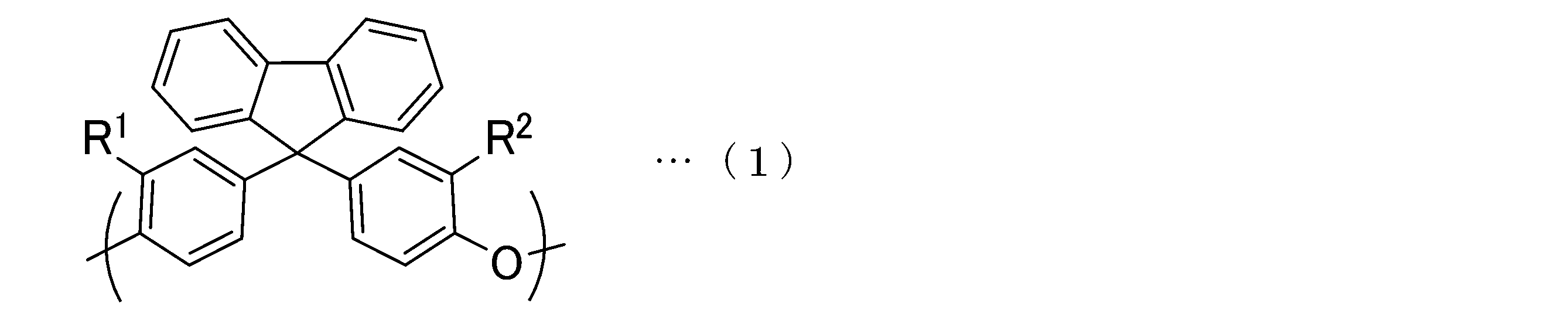
そこで、本発明は、上記のような問題点を解消するためになされたものであり、前記式(1)で表される繰返し単位を有する芳香族ポリスルホンであって、該芳香族ポリスルホンとエポキシ樹脂とを含む樹脂組成物の硬化物が優れた破壊靭性を発揮可能な、芳香族ポリスルホンの提供を目的とする。
また、本発明は、当該芳香族ポリスルホンとエポキシ樹脂とを含み、その硬化物が優れた破壊靭性を発揮可能な、樹脂組成物の提供を目的とする。
また、本発明は、当該樹脂組成物と、強化繊維とを含む、プリプレグの提供を目的とする。
また、本発明は、当該芳香族ポリスルホンとエポキシ樹脂とを含み、その硬化物が優れた破壊靭性を発揮可能な、樹脂組成物の提供を目的とする。
また、本発明は、当該樹脂組成物と、強化繊維とを含む、プリプレグの提供を目的とする。
本発明者は、上記課題を解決すべく鋭意検討した結果、式(1)で表される繰返し単位を有し、水酸基及び/又はその塩の量が特定の値を満たす芳香族ポリスルホンと、エポキシ樹脂と、を含む樹脂組成物の硬化物が、優れた破壊靭性を示すことを見出し、本発明を完成するに至った。
すなわち、本発明は以下の態様を有する。
すなわち、本発明は以下の態様を有する。
<1> 下記式(1)で表される繰返し単位を有する芳香族ポリスルホンであって、
前記芳香族ポリスルホン1gあたりの水酸基及び/又はその塩の量が70μmol/g以上である、芳香族ポリスルホン。
前記芳香族ポリスルホン1gあたりの水酸基及び/又はその塩の量が70μmol/g以上である、芳香族ポリスルホン。
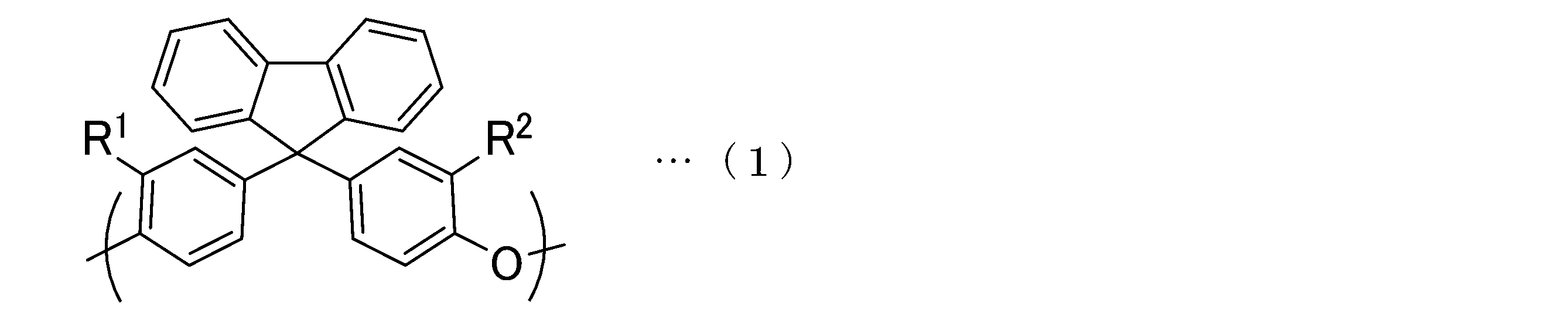
<2> 前記R1及び前記R2がメチル基である、前記<1>に記載の芳香族ポリスルホン。
<3> さらに、下記式(2)で表される繰返し単位を有し、
前記芳香族ポリスルホンを構成する全繰返し単位の合計数100%に対して、前記式(2)で表される繰返し単位の数が55%以上である、前記<1>又は前記<2>に記載の芳香族ポリスルホン。
前記芳香族ポリスルホンを構成する全繰返し単位の合計数100%に対して、前記式(2)で表される繰返し単位の数が55%以上である、前記<1>又は前記<2>に記載の芳香族ポリスルホン。

<4> 重量平均分子量が10000以上30000未満である、前記<1>~<3>のいずれか一つに記載の芳香族ポリスルホン。
<5> ジヒドロキシ化合物とジハロゲノ化合物とを重合させて芳香族ポリスルホンを得る重合工程を含み、
前記ジヒドロキシ化合物が、下記式(1a)で表される化合物を含み、
前記ジヒドロキシ化合物と前記ジハロゲノ化合物とのモル比の値が、下記式(I)の条件を満たす、芳香族ポリスルホンの製造方法。
前記ジヒドロキシ化合物/前記ジハロゲノ化合物>1 式(I)
前記ジヒドロキシ化合物が、下記式(1a)で表される化合物を含み、
前記ジヒドロキシ化合物と前記ジハロゲノ化合物とのモル比の値が、下記式(I)の条件を満たす、芳香族ポリスルホンの製造方法。
前記ジヒドロキシ化合物/前記ジハロゲノ化合物>1 式(I)

<6> 前記重合工程において、
前記ジヒドロキシ化合物が、ジヒドロキシジフェニルスルホン、及び9,9-ビス(4-ヒドロキシ-3-メチルフェニル)フルオレンを含み、
前記ジハロゲノ化合物が、ジハロゲノジフェニルスルホンを含む、前記<5>に記載の芳香族ポリスルホンの製造方法。
前記ジヒドロキシ化合物が、ジヒドロキシジフェニルスルホン、及び9,9-ビス(4-ヒドロキシ-3-メチルフェニル)フルオレンを含み、
前記ジハロゲノ化合物が、ジハロゲノジフェニルスルホンを含む、前記<5>に記載の芳香族ポリスルホンの製造方法。
<7> 前記<1>~<4>のいずれか一つに記載の芳香族ポリスルホンと、エポキシ樹脂と、を含む、樹脂組成物。
<8> さらに硬化剤を含む、前記<7>に記載の樹脂組成物。
<8> さらに硬化剤を含む、前記<7>に記載の樹脂組成物。
<9> 前記<8>に記載の樹脂組成物と、強化繊維とを含む、プリプレグ。
<10> 前記強化繊維が炭素繊維である、前記<9>に記載のプリプレグ。
<10> 前記強化繊維が炭素繊維である、前記<9>に記載のプリプレグ。
本発明によれば、前記式(1)で表される繰返し単位を有する芳香族ポリスルホンであって、該芳香族ポリスルホンとエポキシ樹脂とを含む樹脂組成物の硬化物が、優れた破壊靭性を発揮可能な、芳香族ポリスルホンを提供できる。
また、本発明は、当該芳香族ポリスルホンとエポキシ樹脂とを含み、その硬化物が優れた破壊靭性を発揮可能な、樹脂組成物を提供できる。
また、本発明は、当該樹脂組成物と、強化繊維とを含む、プリプレグを提供できる。
また、本発明は、当該芳香族ポリスルホンとエポキシ樹脂とを含み、その硬化物が優れた破壊靭性を発揮可能な、樹脂組成物を提供できる。
また、本発明は、当該樹脂組成物と、強化繊維とを含む、プリプレグを提供できる。
以下、本発明の芳香族ポリスルホン、芳香族ポリスルホンの製造方法、樹脂組成物、及びプリプレグの実施形態を説明する。
≪芳香族ポリスルホン≫
実施形態の芳香族ポリスルホンは、下記式(1)で表される繰返し単位(以下「繰返し単位(1)」ということがある。)を含む芳香族ポリスルホンであって、前記芳香族ポリスルホン1gあたりの水酸基及び/又はその塩の量が70μmol/g以上である。
実施形態の芳香族ポリスルホンは、下記式(1)で表される繰返し単位(以下「繰返し単位(1)」ということがある。)を含む芳香族ポリスルホンであって、前記芳香族ポリスルホン1gあたりの水酸基及び/又はその塩の量が70μmol/g以上である。
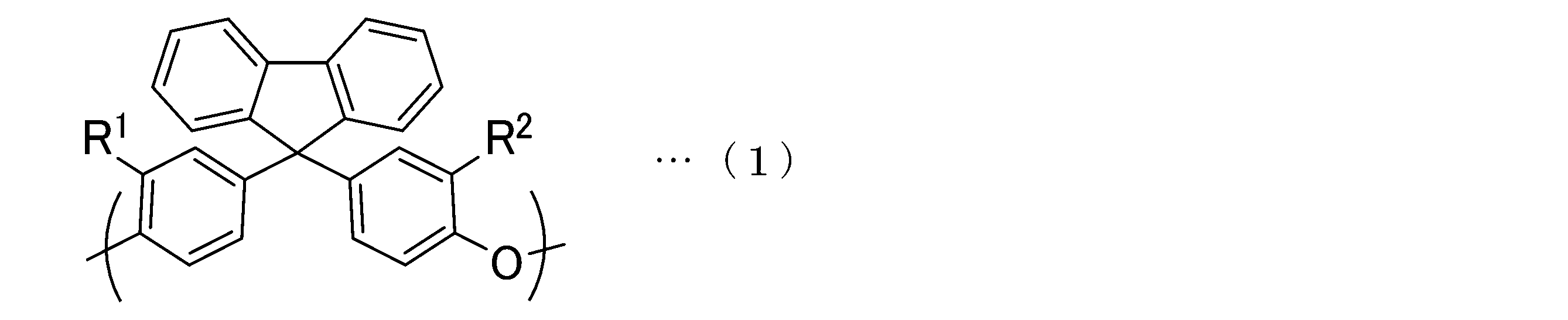
前記式(1)中、R1及びR2におけるアルキル基の例としては、メチル基、エチル基、n-プロピル基、イソプロピル基、n-ブチル基、イソブチル基、sec-ブチル基、tert-ブチル基、n-ヘキシル基、2-エチルヘキシル基、n-オクチル基、n-デシル基等が挙げられる。アルキル基は、直鎖状であってもよく、分岐していてもよい。
芳香族ポリスルホンのエポキシ樹脂への溶解性が向上するとの観点から、式(1)中、R1及びR2は、それぞれ独立に、炭素数1~6のアルキル基であることが好ましく、炭素数1~3のアルキル基であることがより好ましく、R1及びR2はそれぞれメチル基であることがさらに好ましく、R1及びR2がいずれもメチル基であることが特に好ましい。
繰返し単位(1)を有する芳香族ポリスルホンは、高いガラス転移温度(Tg)を発揮可能であり、耐熱性に優れる。
芳香族ポリスルホンのTgは、226℃以上であってよく、230℃以上であってよく、235℃以上であってよい。
芳香族ポリスルホンのTgの上限値は特に限定されず、一例を挙げると、260℃以下であってよく、255℃以下であってよく、250℃以下であってよい。
上記ガラス転移温度の上限値及び下限値は任意に組み合わせることができ、芳香族ポリスルホンのTgは、一例として、226℃以上260℃以下であってよく、230℃以上255℃以下であってよく、235℃以上250℃以下であってよい。
芳香族ポリスルホンのTgの上限値は特に限定されず、一例を挙げると、260℃以下であってよく、255℃以下であってよく、250℃以下であってよい。
上記ガラス転移温度の上限値及び下限値は任意に組み合わせることができ、芳香族ポリスルホンのTgは、一例として、226℃以上260℃以下であってよく、230℃以上255℃以下であってよく、235℃以上250℃以下であってよい。
芳香族ポリスルホンのガラス転移温度(Tg)は、以下の方法により測定できる。
<芳香族ポリスルホンのガラス転移温度(Tg)の測定>
示差走査熱量測定装置(例えば、島津製作所製DSC-50)を用い、JIS-K7121に準じた方法で、芳香族ポリスルホンのガラス転移温度を算出する。芳香族ポリスルホン約10mgを秤量し、昇温速度10℃/minで400℃まで上昇させた後、50℃まで冷却し、再び昇温速度10℃/minで400℃まで上昇させ、2回目の昇温で得られたDSCチャートのうち、階段状変化部分曲線と2本のベースライン延長線から縦軸方向に等距離にある直線との交点(中間点ガラス転移温度)から、芳香族ポリスルホンのガラス転移温度(Tg)を算出する。
示差走査熱量測定装置(例えば、島津製作所製DSC-50)を用い、JIS-K7121に準じた方法で、芳香族ポリスルホンのガラス転移温度を算出する。芳香族ポリスルホン約10mgを秤量し、昇温速度10℃/minで400℃まで上昇させた後、50℃まで冷却し、再び昇温速度10℃/minで400℃まで上昇させ、2回目の昇温で得られたDSCチャートのうち、階段状変化部分曲線と2本のベースライン延長線から縦軸方向に等距離にある直線との交点(中間点ガラス転移温度)から、芳香族ポリスルホンのガラス転移温度(Tg)を算出する。
実施形態の芳香族ポリスルホンは、その分子内に水酸基及び/又はその塩を有する。
水酸基の塩は、水酸基からプロトンが解離してなるオキシアニオン基と、対カチオンとから構成されてよい。
対カチオンの例としては、リチウムイオン、ナトリウムイオン、カリウムイオンの等のアルカリ金属イオン;マグネシウムイオン、カルシウムイオン等のアルカリ土類金属イオン;アンモニアや1~3級アミンがプロトン化されてなるアンモニウムイオン、4級アンモニウムイオンが挙げられる。なお、対カチオンが、アルカリ土類金属イオン等の多価カチオンである場合、対アニオンは、複数のオキシアニオン基から構成されていてもよいし、オキシアニオン基と、塩化物イオン、水酸化物イオン等の他のアニオンとから構成されていてもよい。
対カチオンの例としては、リチウムイオン、ナトリウムイオン、カリウムイオンの等のアルカリ金属イオン;マグネシウムイオン、カルシウムイオン等のアルカリ土類金属イオン;アンモニアや1~3級アミンがプロトン化されてなるアンモニウムイオン、4級アンモニウムイオンが挙げられる。なお、対カチオンが、アルカリ土類金属イオン等の多価カチオンである場合、対アニオンは、複数のオキシアニオン基から構成されていてもよいし、オキシアニオン基と、塩化物イオン、水酸化物イオン等の他のアニオンとから構成されていてもよい。
前記水酸基及び/又はその塩は、芳香族ポリスルホンの主鎖末端に位置するものであってよい。即ち、芳香族ポリスルホンは、その芳香族ポリスルホンの主鎖末端に少なくとも1つの末端水酸基及び/又はその塩を有するものであってよい。
芳香族ポリスルホン1gあたりの水酸基及び/又はその塩の量は、以下の測定方法により求められる。
なお、芳香族ポリスルホンの前記水酸基及び/又はその塩の量とは、前記水酸基及び前記水酸基の塩の含有量の総和を意味する。
<芳香族ポリスルホンの水酸基及びその塩の合計量の測定(μmol/g)>
所定量の芳香族ポリスルホンをジメチルホルムアミドに溶解させた後、過剰量のp-トルエンスルホン酸を加える。次いで、電位差滴定装置を用いて、0.05モル/Lの水酸化カリウム/トルエン・メタノール溶液で滴定し、残存p-トルエンスルホン酸を中和した後、水酸基を中和する。このとき、水酸基の中和に要したカリウムメトキシドの量(モル)を、芳香族ポリスルホンの前記所定量(g)で割ることにより、水酸基およびその塩の合計量を求める。
所定量の芳香族ポリスルホンをジメチルホルムアミドに溶解させた後、過剰量のp-トルエンスルホン酸を加える。次いで、電位差滴定装置を用いて、0.05モル/Lの水酸化カリウム/トルエン・メタノール溶液で滴定し、残存p-トルエンスルホン酸を中和した後、水酸基を中和する。このとき、水酸基の中和に要したカリウムメトキシドの量(モル)を、芳香族ポリスルホンの前記所定量(g)で割ることにより、水酸基およびその塩の合計量を求める。
前記芳香族ポリスルホン1gあたりの水酸基及び/又はその塩の量は、70μmol/g以上であり、100μmol/g以上が好ましく、150μmol/g以上がより好ましい。
上記の下限値以上で、水酸基及び/又はその塩を含有する芳香族ポリスルホンは、該芳香族ポリスルホンとエポキシ樹脂とを含む樹脂組成物の硬化物が、優れた破壊靭性を発揮可能である。
上記の下限値以上で、水酸基及び/又はその塩を含有する芳香族ポリスルホンは、該芳香族ポリスルホンとエポキシ樹脂とを含む樹脂組成物の硬化物が、優れた破壊靭性を発揮可能である。
前記芳香族ポリスルホン1gあたりの水酸基及び/又はその塩の量は、380μmol/g以下であってよく、340μmol/g以下であってよく、300μmol/g以下であってよい。
前記芳香族ポリスルホン1gあたりの水酸基及び/又はその塩の量の数値範囲としては、70μmol/g以上380μmol/g以下であってよく、100μmol/g以上340μmol/g以下であってよく、150μmol/g以上300μmol/g以下であってよい。
前記芳香族ポリスルホン1gあたりの水酸基及び/又はその塩の量の数値範囲としては、70μmol/g以上380μmol/g以下であってよく、100μmol/g以上340μmol/g以下であってよく、150μmol/g以上300μmol/g以下であってよい。
本明細書において、「芳香族ポリスルホン」とは、2価の芳香族基(芳香族化合物から、その芳香環に結合した水素原子を2個除いてなる残基)と、エーテル結合(-O-)と、スルホニル基(-SO2-)とを含む繰返し単位を有する樹脂である。
芳香族ポリスルホンは、繰返し単位(1)の他に、下記式(2)で表される繰返し単位(以下「繰返し単位(2)」ということがある。)を有するものであることが好ましい。

前記式(2)中、R3及びR4におけるアルキル基としては、式(1)中のR1及びR2において例示した前記アルキル基を例示できる。
前記式(2)中、R3及びR4におけるアルケニル基としては、式(1)のR1及びR2において例示した前記アルキル基において、いずれか一つの炭素原子間の単結合(C-C)が、二重結合(C=C)に置換されたものが例示でき、二重結合の位置は限定されない。
前記式(2)中、R3及びR4におけるアルケニル基としては、式(1)のR1及びR2において例示した前記アルキル基において、いずれか一つの炭素原子間の単結合(C-C)が、二重結合(C=C)に置換されたものが例示でき、二重結合の位置は限定されない。
前記式(2)中、m及びnは、それぞれ0が好ましい。
芳香族ポリスルホンは、前記芳香族ポリスルホンを構成する全繰返し単位の合計数100%に対して、繰返し単位(2)を55%以上有することが好ましく、60%以上有することがより好ましく、65%以上有することがさらに好ましい。
上記の下限値以上で、繰返し単位(2)を有する芳香族ポリスルホンは、エポキシ樹脂への溶解性が向上され、熱分解温度が高まり耐熱性にも優れる。
芳香族ポリスルホンは、前記芳香族ポリスルホンを構成する全繰返し単位の合計数100%に対して、例えば、繰返し単位(2)を55%以上98%以下有することが好ましく、60%以上95%以下有することがより好ましく、65%以上95%以下有することがさらに好ましい。
芳香族ポリスルホンは、前記芳香族ポリスルホンを構成する全繰返し単位の合計数100%に対して、例えば、繰返し単位(2)を55%以上98%以下有し、繰返し単位(1)を2%以上45%以下有していてもよく、繰返し単位(2)を60%以上95%以下有し、繰返し単位(1)を5%以上40%以下有していてもよく、繰返し単位(2)を65%以上95%以下有し、繰返し単位(1)を5%以上35%以下有していてもよい。ただし、繰返し単位(1)及び(2)の合計量は100モル%を超えない。
芳香族ポリスルホンは、繰返し単位(1)及び繰返し単位(2)の他に、さらに、下記式(3)で表される繰返し単位(以下「繰返し単位(3)」ということがある。)や、下記式(4)で表される繰返し単位(以下「繰返し単位(4)」ということがある。)等の他の繰返し単位を1種以上有していてもよい。
(3)-Ph3-R-Ph4-O-
[式中、Ph3及びPh4は、それぞれ独立に、フェニレン基を表す。前記フェニレン基にある水素原子は、それぞれ独立に、アルキル基、アリール基、ハロゲン原子、スルホ基、ニトロ基、アミノ基、カルボキシル基、又は水酸基で置換されていてもよい。Rは、アルキリデン基、酸素原子又は硫黄原子を表す。]
[式中、Ph3及びPh4は、それぞれ独立に、フェニレン基を表す。前記フェニレン基にある水素原子は、それぞれ独立に、アルキル基、アリール基、ハロゲン原子、スルホ基、ニトロ基、アミノ基、カルボキシル基、又は水酸基で置換されていてもよい。Rは、アルキリデン基、酸素原子又は硫黄原子を表す。]
(4)-(Ph5)t-O-
[式中、Ph5は、フェニレン基を表す。前記フェニレン基にある水素原子は、それぞれ独立に、アルキル基、アリール基、ハロゲン原子、スルホ基、ニトロ基、アミノ基、カルボキシル基、又は水酸基で置換されていてもよい。tは、1~3の整数を表す。tが2以上である場合、複数存在するPh5は、互いに同一であっても異なっていてもよい。]
[式中、Ph5は、フェニレン基を表す。前記フェニレン基にある水素原子は、それぞれ独立に、アルキル基、アリール基、ハロゲン原子、スルホ基、ニトロ基、アミノ基、カルボキシル基、又は水酸基で置換されていてもよい。tは、1~3の整数を表す。tが2以上である場合、複数存在するPh5は、互いに同一であっても異なっていてもよい。]
Ph3~Ph5のいずれかで表されるフェニレン基は、p-フェニレン基であってもよいし、m-フェニレン基であってもよいし、o-フェニレン基であってもよいが、p-フェニレン基であることが好ましい。
前記式(3)~(4)の前記フェニレン基にある水素原子を置換していてもよいアルキル基において、炭素数は、1~10であることが好ましい。該アルキル基の具体例としては、メチル基、エチル基、n-プロピル基、イソプロピル基、n-ブチル基、イソブチル基、sec-ブチル基、tert-ブチル基、n-ヘキシル基、2-エチルヘキシル基、n-オクチル基、n-デシル基等が挙げられる。
前記式(3)~(4)の前記フェニレン基にある水素原子を置換していてもよいアリール基において、炭素数は、6~20であることが好ましい。該アリール基の具体例としては、フェニル基、o-トリル基、m-トリル基、p-トリル基、1-ナフチル基、2-ナフチル基等が挙げられる。
前記式(3)~(4)の前記フェニレン基にある水素原子を置換していてもよいハロゲン原子としては、フッ素原子、塩素原子、臭素原子、ヨウ素原子等が挙げられる。
前記繰返し単位(3)~(4)の前記フェニレン基にある水素原子がこれらの基で置換されている場合は、その数は、前記フェニレン基毎に、それぞれ独立に、好ましくは2個以下であり、より好ましくは1個である。
上記の中でも、前記繰返し単位(3)~(4)のフェニレン基にある水素原子は置換されていないことが好ましい。
上記の中でも、前記繰返し単位(3)~(4)のフェニレン基にある水素原子は置換されていないことが好ましい。
Rで表されるアルキリデン基において、炭素数は、1~5であることが好ましい。具体例としては、メチレン基、エチリデン基、イソプロピリデン基、1-ブチリデン基等が挙げられる。
なお、芳香族ポリスルホンは、繰返し単位(1)~(4)を、それぞれ独立に、2種以上有してもよい。芳香族ポリスルホンは、繰返し単位として繰返し単位(1)及び繰返し単位(2)のみを有することが好ましい。
実施形態の好ましい芳香族ポリスルホンとして、繰返し単位(1)及び繰返し単位(2)を有する芳香族ポリスルホンであって、前記繰返し単位(1)中、R1及びR2がメチル基であり、前記繰返し単位(2)中、m及びnは0であり、前記芳香族ポリスルホン1gあたりの水酸基及び/又はその塩の量が70μmol/g以上であり、好ましくは前記芳香族ポリスルホンを構成する全繰返し単位の合計数100%に対して、繰返し単位(2)の数が55%以上である、芳香族ポリスルホンを例示する。
芳香族ポリスルホンの重量平均分子量(Mw)は、30000未満が好ましく、10000以上30000未満が好ましく、12000以上27000以下がより好ましく、15000以上25000以下がさらに好ましい。
上記の数値範囲内の重量平均分子量を有する芳香族ポリスルホンと、エポキシ樹脂とを含む樹脂組成物の硬化物は、より一層優れた破壊靭性を発揮可能である。
上記の数値範囲内の重量平均分子量を有する芳香族ポリスルホンと、エポキシ樹脂とを含む樹脂組成物の硬化物は、より一層優れた破壊靭性を発揮可能である。
芳香族ポリスルホンの多分散度(Mw/Mn)は、特に限定されるものではないが、1.0~4.0であってよく、1.0~2.0であってよく、1.5~1.8であってもよい。
芳香族ポリスルホンのMnおよびMwは、以下の方法により測定できる。
<芳香族ポリスルホンのMnおよびMwの測定、Mw/Mnの算出>
芳香族ポリスルホンの重量平均分子量(Mw)、数平均分子量(Mn)および多分散度(Mw/Mn)は、下記[測定条件]にて、GPC測定により求める。なお、MnおよびMwはいずれも2回測定し、その平均値を求めてそれぞれMnおよびMwとし、Mw/Mnの平均値を求める。
芳香族ポリスルホンの重量平均分子量(Mw)、数平均分子量(Mn)および多分散度(Mw/Mn)は、下記[測定条件]にて、GPC測定により求める。なお、MnおよびMwはいずれも2回測定し、その平均値を求めてそれぞれMnおよびMwとし、Mw/Mnの平均値を求める。
[測定条件]
試料:10mM臭化リチウム含有N,N-ジメチルホルムアミド溶液1mLに対し、芳香族ポリスルホン0.002gを配合。
試料注入量:100μL
カラム(固定相):東ソー株式会社製「TSKgel GMHHR-H」(7.8mmφ×300mm)を2本直列に連結。
カラム温度:40℃
溶離液(移動相):10mM臭化リチウム含有N,N-ジメチルホルムアミド
溶離液流量:0.8mL/min
検出器:示差屈折率計(RI)+光散乱光度計(LS)
dn/dc:dn/dc値が既知である標準ポリスチレンのピーク面積、注入濃度およびdn/dc(0.159)と、試料のピーク面積および注入濃度から算出。
分子量算出法:光散乱光度計(LS)から絶対分子量を算出。
実施形態の芳香族ポリスルホンは、以下の側面を有する。
「1」 下記式(1)で表される繰返し単位と、下記式(2)で表される繰返し単位と、を有する芳香族ポリスルホンであって、
前記芳香族ポリスルホン1gあたりの水酸基及び/又はその塩の量が70μmol/g以上であり、好ましくは100μmol/g以上であり、より好ましくは150μmol/g以上である、芳香族ポリスルホン。
「1」 下記式(1)で表される繰返し単位と、下記式(2)で表される繰返し単位と、を有する芳香族ポリスルホンであって、
前記芳香族ポリスルホン1gあたりの水酸基及び/又はその塩の量が70μmol/g以上であり、好ましくは100μmol/g以上であり、より好ましくは150μmol/g以上である、芳香族ポリスルホン。
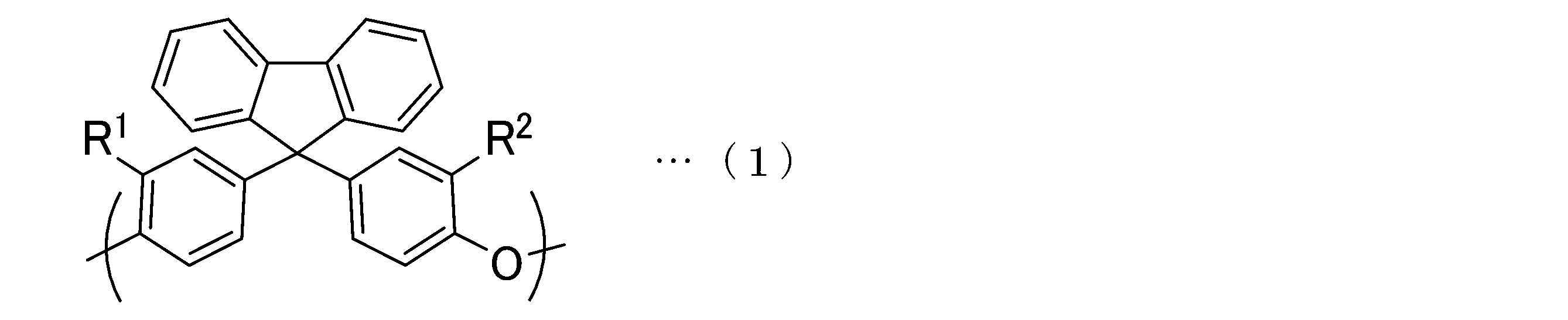

「2」 前記芳香族ポリスルホンを構成する全繰返し単位の合計数100%に対して、前記式(1)で表される繰返し単位の数が好ましくは2%以上45%以下であり、より好ましくは5%以上40%以下であり、さらに好ましくは5%以上35%以下であり、前記式(2)で表される繰返し単位の数が好ましくは55%以上98%以下であり、より好ましくは60%以上95%以下あり、さらに好ましくは65%以上95%以下である、前記「1」に記載の芳香族ポリスルホン。
「3」 前記R1及び前記R2がメチル基である、前記「1」又は前記「2」に記載の芳香族ポリスルホン。
「4」 重量平均分子量が好ましくは10000以上30000未満であり、より好ましくは12000以上27000以下であり、さらに好ましくは15000以上25000以下である、前記「1」~「3」のいずれか一つに記載の芳香族ポリスルホン。
「5」 ガラス転移温度(Tg)が好ましくは226℃以上であり、より好ましくは230℃以上であり、さらに好ましくは235℃以上である、前記「1」~「4」のいずれか一つに記載の芳香族ポリスルホン。
≪芳香族ポリスルホンの製造方法≫
本実施形態の芳香族ポリスルホンの製造方法は、ジヒドロキシ化合物と、ジハロゲノ化合物とを重合させて、前記芳香族ポリスルホンを得る重合工程を含み、前記ジヒドロキシ化合物が、下記式(1a)で表される化合物を含み、前記ジヒドロキシ化合物と前記ジハロゲノ化合物とのモル比の値が、下記式(I)の条件を満たす。
本実施形態の芳香族ポリスルホンの製造方法は、ジヒドロキシ化合物と、ジハロゲノ化合物とを重合させて、前記芳香族ポリスルホンを得る重合工程を含み、前記ジヒドロキシ化合物が、下記式(1a)で表される化合物を含み、前記ジヒドロキシ化合物と前記ジハロゲノ化合物とのモル比の値が、下記式(I)の条件を満たす。
前記ジヒドロキシ化合物/前記ジハロゲノ化合物>1 式(I)
前記式(I)の条件を満たすこと、すなわち前記モル比の値が1を超えることにより、芳香族ポリスルホン1gあたりの水酸基及び/又はその塩の量が70μmol/g以上である芳香族ポリスルホンを、容易に製造できる。
式(I)に示されるとおり、前記ジヒドロキシ化合物/前記ジハロゲノ化合物の値は、1超であり、1超1.20以下であってよく、1超1.10以下であってよく、1.02以上1.05以下であってよい。
芳香族ポリスルホンは、それを構成する繰返し単位に対応するジハロゲノスルホン化合物とジヒドロキシ化合物とを重縮合させることにより、製造することができる。
例えば、繰返し単位(1)を有する芳香族ポリスルホンは、前記重合工程における前記ジヒドロキシ化合物が、下記式(1a)で表される化合物を含む製造方法により、製造することができる。

例えば、繰返し単位(2)を有する芳香族ポリスルホンは、前記重合工程におけるジヒドロキシ化合物が、下記式(2a)で表される化合物を含む製造方法により、製造することができる。

例えば、繰返し単位(2)を有する芳香族ポリスルホンは、前記重合工程におけるジハロゲノ化合物が、下記式(2b)で表される化合物を含む製造方法により、製造することができる。

式(2b)のハロゲン原子としては、フッ素原子、塩素原子、臭素原子、ヨウ素原子等が挙げられ、塩素原子が好ましい。
実施形態の芳香族ポリスルホンの製造方法は、ジヒドロキシ化合物と、ジハロゲノ化合物とを重合させて、前記芳香族ポリスルホンを得る重合工程を含み、前記ジヒドロキシ化合物が、前記式(1a)で表される化合物を含み、前記ジハロゲノ化合物が、前記式(2b)で表される化合物を含むことができる。
より好ましくは、実施形態の芳香族ポリスルホンの製造方法は、ジヒドロキシ化合物と、ジハロゲノ化合物とを重合させて、前記芳香族ポリスルホンを得る重合工程を含み、前記ジヒドロキシ化合物が、前記式(1a)で表される化合物、及び前記式(2a)で表される化合物を含み、前記ジハロゲノ化合物が、前記式(2b)で表される化合物を含むことができる。
さらに好ましくは、実施形態の芳香族ポリスルホンの製造方法は、ジヒドロキシ化合物と、ジハロゲノ化合物とを重合させて、前記芳香族ポリスルホンを得る重合工程を含み、前記ジヒドロキシ化合物が、前記式(1a)で表される化合物、及び前記式(2a)で表される化合物を含み、前記ジハロゲノ化合物が、前記式(2b)で表される化合物を含み、前記芳香族ポリスルホンの重合に用いられる全モノマー(100mol%)に対して、前記式(1a)で表される化合物、前記式(2a)で表される化合物、及び前記式(2b)で表される化合物の合計が90mol%以上であってよい。
特に好ましくは、実施形態の芳香族ポリスルホンの製造方法は、ジヒドロキシ化合物と、ジハロゲノ化合物とを重合させて、前記芳香族ポリスルホンを得る重合工程を含み、前記ジヒドロキシ化合物が、前記式(1a)で表される化合物、及び前記式(2a)で表される化合物からなり、前記ジハロゲノ化合物が、前記式(2b)で表される化合物からなる方法であってよい。
当該製造方法によれば、前記式(I)の条件、すなわち、前記ジヒドロキシ化合物/前記ジハロゲノ化合物>1の条件を満たし、前記ジヒドロキシ化合物が前記式(2a)で表される化合物を含むことで、芳香族ポリスルホンを構成する全繰返し単位の合計数100%に対して、繰返し単位(2)を55%以上有する芳香族ポリスルホンを容易に製造可能である。
前記重合工程における前記ジヒドロキシ化合物が、前記式(1a)で表される化合物、及び前記式(2a)で表される化合物を含む場合に、前記ジヒドロキシ化合物の全量(100mol%)に対する、前記式(1a)で表される化合物の割合は、90mol%未満であってよく、60mol%以下であってよく、50mol%以下であってよく、30mol%以下であってよい。
特に、前記ジヒドロキシ化合物の全量(100mol%)に対する、前記式(1a)で表される化合物の割合が90mol%未満であることで、芳香族ポリスルホンを構成する全繰返し単位の合計数100%に対して、繰返し単位(2)を55%以上有する芳香族ポリスルホンを容易に製造可能である。
特に、前記ジヒドロキシ化合物の全量(100mol%)に対する、前記式(1a)で表される化合物の割合が90mol%未満であることで、芳香族ポリスルホンを構成する全繰返し単位の合計数100%に対して、繰返し単位(2)を55%以上有する芳香族ポリスルホンを容易に製造可能である。
前記ジヒドロキシ化合物の全量(100mol%)に対する、前記式(1a)で表される化合物の割合は、例えば、5mol%以上90mol%未満であってよく、5mol%以上60mol%以下であってよく、10mol%以上50mol%以下であってよく、10mol%以上30mol%以下であってよい。
前記式(1a)で表されるジヒドロキシ化合物としては、9,9-ビス(4-ヒドロキシ-3-メチルフェニル)フルオレン、9,9-ビス(4-ヒドロキシフェニル)フルオレン等を例示できる。
前記式(2a)で表されるジヒドロキシ化合物としては、ジヒドロキシジフェニルスルホンを例示できる。
前記式(2b)で表されるジハロゲノ化合物としては、ジハロゲノジフェニルスルホンを例示できる。
前記式(2a)で表されるジヒドロキシ化合物としては、ジヒドロキシジフェニルスルホンを例示できる。
前記式(2b)で表されるジハロゲノ化合物としては、ジハロゲノジフェニルスルホンを例示できる。
実施形態の芳香族ポリスルホンの製造方法は、前記重合工程において、前記ジヒドロキシ化合物が、ジヒドロキシジフェニルスルホン、及び9,9-ビス(4-ヒドロキシ-3-メチルフェニル)フルオレンを含み、前記ジハロゲノ化合物が、ジハロゲノジフェニルスルホンを含むことが好ましい。
また、上記で例示した繰返し単位(1)、繰返し単位(2)、及び繰返し単位(3)を有する芳香族ポリスルホンは、ジヒドロキシ化合物として前記式(1a)で表される化合物を含み、ジハロゲノ化合物として前記式(2b)で表される化合物を含み、ジヒドロキシ化合物として下記式(5)で表される化合物を含み、製造することができる。
また、上記で例示した繰返し単位(1)、繰返し単位(2)、及び繰返し単位(4)を有する芳香族ポリスルホンは、ジヒドロキシ化合物として前記式(1a)で表される化合物を含み、ジハロゲノ化合物として前記式(2b)で表される化合物を含み、ジヒドロキシ化合物として下記式(6)で表される化合物を含み、製造することができる。
(5)HO-Ph3-R-Ph4-OH
[式中、Ph3、Ph4及びRは、前記と同義である。]
[式中、Ph3、Ph4及びRは、前記と同義である。]
(6)HO-(Ph5)t-OH
[式中、Ph5及びtは、前記と同義である。]
[式中、Ph5及びtは、前記と同義である。]
上記式(1a)、(2a)、及び(5)~(6)中のOH基は、芳香族ポリスルホンの主鎖末端に位置してよい水酸基及びその塩に該当し得る。
芳香族ポリスルホンの重縮合は、炭酸のアルカリ金属塩を用いて、溶媒中で行うことが好ましい。炭酸のアルカリ金属塩は、正塩である炭酸塩であってもよいし、酸性塩である重炭酸塩(炭酸水素塩)であってもよいし、両者の混合物であってもよい。炭酸塩としては、炭酸ナトリウムや炭酸カリウムが好ましく用いられ、炭酸水素塩としては、重炭酸ナトリウムや重炭酸カリウムが好ましく用いられる。
重縮合の溶媒としては、有機極性溶媒が好ましく用いられる。その具体例としては、ジメチルスルホキシド、1-メチル-2-ピロリドン、スルホラン(1,1-ジオキソチラン)、1,3-ジメチル-2-イミダゾリジノン、1,3-ジエチル-2-イミダゾリジノン、ジメチルスルホン、ジエチルスルホン、ジイソプロピルスルホン、ジフェニルスルホン等が挙げられる。
≪樹脂組成物≫
実施形態の樹脂組成物は、芳香族ポリスルホンと、エポキシ樹脂と、を含む。
実施形態の樹脂組成物は、芳香族ポリスルホンと、エポキシ樹脂と、を含む。
樹脂組成物における芳香族ポリスルホンとしては、上記の実施形態の芳香族ポリスルホンと同一の芳香族ポリスルホンを例示できる。
一例として、実施形態の樹脂組成物は、前記<1>~<4>のいずれか一つに記載の芳香族ポリスルホンと、エポキシ樹脂と、を含んでよい。
一例として、実施形態の樹脂組成物は、前記<1>~<4>のいずれか一つに記載の芳香族ポリスルホンと、エポキシ樹脂と、を含んでよい。
実施形態の樹脂組成物における芳香族ポリスルホンの含有量は、エポキシ樹脂と芳香族ポリスルホン樹脂との合計100質量部に対して、1~70質量部であることが好ましく、2~50質量部であることがより好ましく、4~30質量部であることがさらに好ましく、5~20質量部であることが特に好ましい。
あるいは、実施形態の樹脂組成物における芳香族ポリスルホンの含有量は、樹脂組成物の総質量100質量%に対して、1~70質量%であることが好ましく、2~50質量%であることがより好ましく、4~30質量%であることがさらに好ましく、5~15質量%であることが特に好ましい。
あるいは、実施形態の樹脂組成物における芳香族ポリスルホンの含有量は、樹脂組成物の総質量100質量%に対して、1~70質量%であることが好ましく、2~50質量%であることがより好ましく、4~30質量%であることがさらに好ましく、5~15質量%であることが特に好ましい。
実施形態の芳香族ポリスルホンの製造方法は、以下の側面を有する。
「11」 ジヒドロキシ化合物とジハロゲノ化合物とを重合させて芳香族ポリスルホンを得る重合工程を含み、
前記ジヒドロキシ化合物が、下記式(1a)で表される化合物を含み、
前記ジヒドロキシ化合物と前記ジハロゲノ化合物とのモル比の値が、下記式(I)の条件を満たす、前記「1」~「5」のいずれか一つに記載の芳香族ポリスルホンの製造方法。
前記ジヒドロキシ化合物/前記ジハロゲノ化合物>1 式(I)
「11」 ジヒドロキシ化合物とジハロゲノ化合物とを重合させて芳香族ポリスルホンを得る重合工程を含み、
前記ジヒドロキシ化合物が、下記式(1a)で表される化合物を含み、
前記ジヒドロキシ化合物と前記ジハロゲノ化合物とのモル比の値が、下記式(I)の条件を満たす、前記「1」~「5」のいずれか一つに記載の芳香族ポリスルホンの製造方法。
前記ジヒドロキシ化合物/前記ジハロゲノ化合物>1 式(I)

「12」 前記重合工程において、
前記ジヒドロキシ化合物が、ジヒドロキシジフェニルスルホン、及び9,9-ビス(4-ヒドロキシ-3-メチルフェニル)フルオレンを含み、
前記ジハロゲノ化合物が、ジハロゲノジフェニルスルホンを含む、前記「11」に記載の芳香族ポリスルホンの製造方法。
前記ジヒドロキシ化合物が、ジヒドロキシジフェニルスルホン、及び9,9-ビス(4-ヒドロキシ-3-メチルフェニル)フルオレンを含み、
前記ジハロゲノ化合物が、ジハロゲノジフェニルスルホンを含む、前記「11」に記載の芳香族ポリスルホンの製造方法。
<エポキシ樹脂>
本明細書においてエポキシ樹脂とは、分子内に少なくとも1個のエポキシ基を有する化合物を意味する。
前記エポキシ樹脂としては、例えばビスフェノールA、ビスフェノールF、ビスフェノールS、ヘキサヒドロビスフェノールA、テトラメチルビスフェノールA、レゾルシノール、クレゾールノボラック、テトラブロモビスフェノールA、トリヒドロキシビフェニル、ビスレゾルシノール、ビスフェノールヘキサフルオロアセトン、テトラメチルビスフェノールF、ビキシレノール、ジヒドロキシナフタレン等の多価フェノールとエピクロルヒドリンとの反応によって得られるグリシジルエーテル型エポキシ化合物;前記グリシジルエーテル型エポキシ化合物を水添して得られる脂環型のグリシジルエーテル型エポキシ化合物;グリセリン、ネオペンチルグリコール、エチレングリコール、プロピレングリコール、ブチレングリコール、ヘキシレングリコール、ポリエチレングリコール、ポリプロピレングリコール等の脂肪族多価アルコールとエピクロルヒドリンとの反応によって得られるポリグリシジルエーテル型エポキシ化合物;p-オキシ安息香酸、β-オキシナフトエ酸等のヒドロキシカルボン酸とエピクロルヒドリンとの反応によって得られるグリシジルエステル型エポキシ化合物; フタル酸、メチルフタル酸、イソフタル酸、テレフタル酸、テトラハイドロフタル酸、ヘキサハイドロフタル酸、エンドメチレンテトラハイドロフタル酸、エンドメチレンヘキサハイドロフタル酸、トリメリット酸、重合脂肪酸等のポリカルボン酸から誘導されるポリグリシジルエステル型エポキシ化合物;アミノフェノール、アミノアルキルフェノール等から誘導されるグリシジルアミノグリシジルエーテル型エポキシ化合物;アミノ安息香酸から誘導されるグリシジルアミノグリシジルエステル型エポキシ化合物;骨格がポリエーテル、ポリウレタン、ポリカーボネート、ポリエステル、ポリアクリル、シリコーン等である柔軟性エポキシ樹脂などが挙げられる。
エポキシ樹脂は、1種を用いてもよいし、2種以上を併用してもよい。
エポキシ樹脂の1分子あたりのエポキシ基の個数は特に制限されるものではなく、分子内に2個のエポキシ基を有する化合物(2官能のエポキシ樹脂)であってもよく、分子内に3個以上のエポキシ基を有する化合物(多官能のエポキシ樹脂)であってもよい。
エポキシ樹脂は、液状のエポキシ樹脂であることが好ましい。液状のエポキシ樹脂とは、50℃(常圧)で液体の状態であるエポキシ樹脂をいう。
実施形態の樹脂組成物におけるエポキシ樹脂の含有量は、エポキシ樹脂と芳香族ポリスルホン樹脂との合計100質量部に対して、30~99質量部であることが好ましく、50~98質量部であることがより好ましく、70~96質量部であることがさらに好ましく、80~95質量部であることが特に好ましい。
あるいは、実施形態の樹脂組成物におけるエポキシ樹脂の含有量は、樹脂組成物の総質量100質量%に対して、40~75質量%であることがより好ましく、50~70質量%であることがさらに好ましく、55~65質量%であることが特に好ましい。
あるいは、実施形態の樹脂組成物におけるエポキシ樹脂の含有量は、樹脂組成物の総質量100質量%に対して、40~75質量%であることがより好ましく、50~70質量%であることがさらに好ましく、55~65質量%であることが特に好ましい。
<硬化剤>
本実施形態の樹脂組成物は、さらに硬化剤を含んでいてもよい。本実施形態に係る硬化剤としては、前記エポキシ樹脂と反応し得るものであれば特に限定されず、通常、エポキシ樹脂の硬化剤として用いられる化合物が挙げられ、アミン系硬化剤が好ましく用いられる。かかる硬化剤としては、例えば、テトラメチルグアニジン、イミダゾール又はその誘導体、カルボン酸ヒドラジド類、3級アミン、芳香族アミン、脂肪族アミン、ジシアンジアミド又はその誘導体等が挙げられる。
芳香族アミンとしては、ジアミノジフェニルメタン、ビス(4-アミノフェニル)スルホンまたはその誘導体であることが好ましい。芳香族アミンは、1種を単独で用いてもよく、2種以上を併用してもよい。
本明細書において、「誘導体」とは、基本骨格は変えずに、化合物の小部分を他の原子または原子団に置換した化合物である。
硬化剤は、1種を用いてもよいし、2種以上を併用してもよい。
樹脂組成物中の硬化剤の含有量は、エポキシ樹脂のエポキシ基1当量に対して、0.5~1.5当量であることが好ましい。0.5当量以上であると、樹脂の硬化が良好であり、良好な機械特性が発揮されやすい。また、1.5当量以下であると、硬化剤の未反応物が残存し難く、良好な機械特性を得られやすい。硬化剤の添加量としては特に限定はしないが、エポキシ樹脂100重量部に対して0.1~5重量部であることが好ましい。
樹脂組成物中の硬化剤の含有量は、エポキシ樹脂のエポキシ基1当量に対して、0.5~1.5当量であることが好ましい。0.5当量以上であると、樹脂の硬化が良好であり、良好な機械特性が発揮されやすい。また、1.5当量以下であると、硬化剤の未反応物が残存し難く、良好な機械特性を得られやすい。硬化剤の添加量としては特に限定はしないが、エポキシ樹脂100重量部に対して0.1~5重量部であることが好ましい。
<その他の成分>
本実施形態の樹脂組成物は、上述した芳香族ポリスルホン樹脂、エポキシ樹脂及び硬化剤のいずれにも該当しないその他の成分を、所望により含有していてもよい。その他の成分としては、溶媒、芳香族ポリスルホン樹脂及びエポキシ樹脂に該当しない樹脂、着色成分、潤滑剤、各種界面活性剤、酸化防止剤、熱安定剤、その他各種安定剤、紫外線吸収剤、帯電防止剤等が挙げられる。
その他の成分の含有量は、本実施形態の樹脂組成物の総質量に対して、0~10質量%が好ましく、0~5質量%がより好ましい。
本実施形態の樹脂組成物は、上述した芳香族ポリスルホン樹脂、エポキシ樹脂及び硬化剤のいずれにも該当しないその他の成分を、所望により含有していてもよい。その他の成分としては、溶媒、芳香族ポリスルホン樹脂及びエポキシ樹脂に該当しない樹脂、着色成分、潤滑剤、各種界面活性剤、酸化防止剤、熱安定剤、その他各種安定剤、紫外線吸収剤、帯電防止剤等が挙げられる。
その他の成分の含有量は、本実施形態の樹脂組成物の総質量に対して、0~10質量%が好ましく、0~5質量%がより好ましい。
・溶媒
本実施形態の樹脂組成物は、さらに溶媒を含んでいてもよいが、実施形態の芳香族ポリスルホン樹脂を含有する樹脂組成物が硬化した硬化物において、当該溶媒の残存を低減させるとの観点からは、樹脂組成物に含まれる溶媒の量は少ないほうが好ましい。
本実施形態の樹脂組成物は、さらに溶媒を含んでいてもよいが、実施形態の芳香族ポリスルホン樹脂を含有する樹脂組成物が硬化した硬化物において、当該溶媒の残存を低減させるとの観点からは、樹脂組成物に含まれる溶媒の量は少ないほうが好ましい。
本実施形態の樹脂組成物は、溶媒の含有量が、前記エポキシ樹脂と前記芳香族ポリスルホン樹脂との合計100質量部に対して、0~5質量部であることが好ましく、0~1質量部であることがより好ましく、実質的に溶媒を含有しないことがさらに好ましい。
溶媒の含有量は、実施形態の樹脂組成物の総質量に対して、0~5質量%であってもよく、0~1質量%であってもよく、0~0.1質量%であってもよく、実質的に溶媒を含有しないことが好ましい。
溶媒としては有機溶媒であってよく、有機溶媒としては、極性溶媒であってよく、非プロトン性極性溶媒であってよい。
溶媒は、エポキシ樹脂との芳香族ポリスルホン樹脂の親和性を向上させる効果を有するものが使用されることが好ましい。溶媒としては、例えば、非プロトン性極性溶媒として、N-エチルピロリドン、N,N-ジメチルホルムアミド、1,3-ジメチル-2-イミダゾリジノン、スルホラン等を例示できる。
・その他の樹脂
本実施形態の樹脂組成物は、芳香族ポリスルホン樹脂及びエポキシ樹脂のいずれにも該当しない、その他の樹脂をさらに含有していてもよい。
その他の樹脂としては、例えば、ポリアミド、ポリエステル、ポリフェニレンスルフィド、ポリカーボネート、ポリフェニレンエーテル、芳香族ポリケトン、ポリエーテルイミド、フェノール樹脂、ポリイミド樹脂及びその変性物等が挙げられる。
その他の樹脂の含有量は、樹脂組成物の総質量に対して、0~10質量%が好ましく、0~5質量%がより好ましく、0~1質量部であることがさらに好ましく、その他の樹脂を実質的に含有しなくともよい。
本実施形態の樹脂組成物は、芳香族ポリスルホン樹脂及びエポキシ樹脂のいずれにも該当しない、その他の樹脂をさらに含有していてもよい。
その他の樹脂としては、例えば、ポリアミド、ポリエステル、ポリフェニレンスルフィド、ポリカーボネート、ポリフェニレンエーテル、芳香族ポリケトン、ポリエーテルイミド、フェノール樹脂、ポリイミド樹脂及びその変性物等が挙げられる。
その他の樹脂の含有量は、樹脂組成物の総質量に対して、0~10質量%が好ましく、0~5質量%がより好ましく、0~1質量部であることがさらに好ましく、その他の樹脂を実質的に含有しなくともよい。
実施形態の樹脂組成物は、以下の側面を有する。
「21」 前記「1」~「5」のいずれか一つに記載の芳香族ポリスルホンと、エポキシ樹脂と、を含む、樹脂組成物。
「22」 さらに硬化剤を含む、前記「21」に記載の樹脂組成物。
「21」 前記「1」~「5」のいずれか一つに記載の芳香族ポリスルホンと、エポキシ樹脂と、を含む、樹脂組成物。
「22」 さらに硬化剤を含む、前記「21」に記載の樹脂組成物。
≪硬化物≫
本実施形態の硬化物は、上述した実施形態の樹脂組成物が硬化したものである。
例えば、硬化剤を含む実施形態の樹脂組成物を、150℃超200℃以下に加熱して硬化させることにより、任意形状、任意形態の硬化物を容易に製造することができる。
本実施形態の硬化物は、上述した実施形態の樹脂組成物が硬化したものである。
例えば、硬化剤を含む実施形態の樹脂組成物を、150℃超200℃以下に加熱して硬化させることにより、任意形状、任意形態の硬化物を容易に製造することができる。
樹脂組成物を硬化させる際には、エポキシ樹脂に芳香族ポリスルホン樹脂が溶解して、又はエポキシ樹脂と芳香族ポリスルホン樹脂とが相溶して、あるいはエポキシ樹脂に芳香族ポリスルホン樹脂が分散して、エポキシ樹脂と芳香族ポリスルホン樹脂とが均一に混合された組成物を硬化させることが好ましい。
本実施形態の硬化物は、上述した実施形態の樹脂組成物が用いられているため、破壊靭性値の向上された機械特性を備える。
≪プリプレグ≫
本実施形態のプリプレグは、樹脂組成物と、強化繊維とを含むものである。
本実施形態のプリプレグは、上述した樹脂組成物を強化繊維に含浸させたものであってもよい。
強化繊維としては、プリプレグの強度の観点から、炭素繊維、ガラス繊維、ボロン繊維及びアラミド繊維からなる群より選択される少なくとも1種であることが好ましく、さらに機械物性及び軽量性の観点から、炭素繊維であることがより好ましい。これらの強化繊維は、織布又は不織布の状態であってもよい。
本実施形態のプリプレグは、樹脂組成物と、強化繊維とを含むものである。
本実施形態のプリプレグは、上述した樹脂組成物を強化繊維に含浸させたものであってもよい。
強化繊維としては、プリプレグの強度の観点から、炭素繊維、ガラス繊維、ボロン繊維及びアラミド繊維からなる群より選択される少なくとも1種であることが好ましく、さらに機械物性及び軽量性の観点から、炭素繊維であることがより好ましい。これらの強化繊維は、織布又は不織布の状態であってもよい。
本実施形態のプリプレグを製造する方法は、特に限定されず、例えば、上述した樹脂組成物を強化繊維に含浸させればよい。
樹脂組成物を強化繊維に含浸させる方法としては、ウェット法、ホットメルト法(ドライ法)などが挙げられる。
ウェット法は、樹脂組成物に強化繊維を浸漬した後、強化繊維を引き上げ、オーブンなどを用いて強化繊維から溶媒を蒸発させることにより、樹脂組成物を強化繊維に含浸させる方法である。
ホットメルト法は、加熱により低粘度化した樹脂組成物を直接強化繊維に含浸させる方法である。また、ホットメルト法の別の形態としては、離型紙などの上に樹脂組成物をコーティングしたフィルムを作製しておき、次いで強化繊維の両側又は片側から前記フィルムを重ね、加熱加圧することにより、樹脂組成物を強化繊維に含浸させる方法である。
このようにして強化繊維に樹脂組成物を含浸させた後、例えば120~150℃に加熱して、含浸させた樹脂組成物を硬化させることにより、プリプレグを製造することができる。前記含浸させた樹脂組成物の硬化は半硬化であってもよい。
本明細書において「半硬化」とは、一定の形状が維持できるまで樹脂の粘度又は硬度が増加した状態であって、前記状態からさらに粘度又は硬度が増加し得る状態まで、粘度又は硬度が増加可能である状態をいう。
実施形態のプリプレグは、以下の側面を有する。
「31」 前記「22」に記載の樹脂組成物と、強化繊維とを含む、プリプレグ。
「32」 前記強化繊維が炭素繊維である、前記「31」に記載のプリプレグ。
「31」 前記「22」に記載の樹脂組成物と、強化繊維とを含む、プリプレグ。
「32」 前記強化繊維が炭素繊維である、前記「31」に記載のプリプレグ。
本発明の一実施形態として、上記のプリプレグが硬化した硬化物を提供する。
本実施形態のプリプレグによれば、実施形態の樹脂組成物が用いられているため、破壊靭性値が向上された、機械特性の良好なプリプレグの硬化物を提供できる。
本実施形態のプリプレグによれば、実施形態の樹脂組成物が用いられているため、破壊靭性値が向上された、機械特性の良好なプリプレグの硬化物を提供できる。
本発明の他の実施形態として、上述したプリプレグが複数積層されて構成されたものを提供する。上述したプリプレグが複数積層されて構成されたものは、具体的には、上記方法で製造されたプリプレグを、複数重ね、オートクレーブ又は熱プレス機などを用いて熱硬化成形することで得ることができる。
プリプレグを積層するパターンとしては、プリプレグに含まれる強化繊維の配列方向を揃えて積層する方法(0°)や、任意の角度でずらしながらプリプレグを積層する方法が挙げられる。例えば、45°ずつずらす場合には、0°/45°/90°/135°/180°/225°/270°/315°/360°(0°)という具合になる。
尚、「任意の角度でずらす」とは、積層させる2層のプリプレグに含まれる繊維方向の相対角度を変更することを意味する。任意の角度については、成形体の用途に応じて適宜設定することができる。
尚、「任意の角度でずらす」とは、積層させる2層のプリプレグに含まれる繊維方向の相対角度を変更することを意味する。任意の角度については、成形体の用途に応じて適宜設定することができる。
本実施形態の樹脂組成物によれば、破壊靭性値が向上された、機械特性の良好な種々の成形体を提供できる。
次に実施例を示して本発明をさらに詳細に説明するが、本発明は以下の実施例に限定されるものではない。
<芳香族ポリスルホンの水酸基およびその塩の合計量の測定(μmol/g)>
所定量の芳香族ポリスルホンをジメチルホルムアミドに溶解させた後、過剰量のp-トルエンスルホン酸を加えた。次いで、電位差滴定装置を用いて、0.05モル/Lの水酸化カリウム/トルエン・メタノール溶液で滴定し、残存p-トルエンスルホン酸を中和した後、水酸基を中和した。このとき、水酸基の中和に要したカリウムメトキシドの量(モル)を、芳香族ポリスルホンの前記所定量(g)で割ることにより、水酸基およびその塩の合計量を求めた。
所定量の芳香族ポリスルホンをジメチルホルムアミドに溶解させた後、過剰量のp-トルエンスルホン酸を加えた。次いで、電位差滴定装置を用いて、0.05モル/Lの水酸化カリウム/トルエン・メタノール溶液で滴定し、残存p-トルエンスルホン酸を中和した後、水酸基を中和した。このとき、水酸基の中和に要したカリウムメトキシドの量(モル)を、芳香族ポリスルホンの前記所定量(g)で割ることにより、水酸基およびその塩の合計量を求めた。
<芳香族ポリスルホンのMnおよびMwの測定、Mw/Mnの算出>
芳香族ポリスルホンの重量平均分子量(Mw)、数平均分子量(Mn)および多分散度(Mw/Mn)は、下記[測定条件]にて、GPC測定により求めた。なお、MnおよびMwはいずれも2回測定し、その平均値を求めてそれぞれMnおよびMwとし、Mw/Mnの平均値を求めた。
芳香族ポリスルホンの重量平均分子量(Mw)、数平均分子量(Mn)および多分散度(Mw/Mn)は、下記[測定条件]にて、GPC測定により求めた。なお、MnおよびMwはいずれも2回測定し、その平均値を求めてそれぞれMnおよびMwとし、Mw/Mnの平均値を求めた。
[測定条件]
試料:10mM臭化リチウム含有N,N-ジメチルホルムアミド溶液1mLに対し、芳香族ポリスルホン0.002gを配合。
試料注入量:100μL
カラム(固定相):東ソー株式会社製「TSKgel GMHHR-H」(7.8mmφ×300mm)を2本直列に連結。
カラム温度:40℃
溶離液(移動相):10mM臭化リチウム含有N,N-ジメチルホルムアミド
溶離液流量:0.8mL/min
検出器:示差屈折率計(RI)+光散乱光度計(LS)
dn/dc:dn/dc値が既知である標準ポリスチレンのピーク面積、注入濃度およびdn/dc(0.159)と、試料のピーク面積および注入濃度とから算出。
分子量算出法:光散乱光度計(LS)から絶対分子量を算出。
<芳香族ポリスルホンのガラス転移温度(Tg)の測定>
示差走査熱量測定装置(島津製作所製DSC-50)を用い、JIS-K7121に準じた方法で、芳香族ポリスルホンのガラス転移温度Tgを算出した。芳香族ポリスルホン約10mgを秤量し、昇温速度10℃/minで400℃まで上昇させた後、50℃まで冷却し、再び昇温速度10℃/minで400℃まで上昇させた。2回目の昇温で得られたDSCチャートのうち、階段状変化部分曲線と2本のベースライン延長線から縦軸方向に等距離にある直線との交点(中間点ガラス転移温度)から、芳香族ポリスルホンのガラス転移温度(Tg)を算出した。
示差走査熱量測定装置(島津製作所製DSC-50)を用い、JIS-K7121に準じた方法で、芳香族ポリスルホンのガラス転移温度Tgを算出した。芳香族ポリスルホン約10mgを秤量し、昇温速度10℃/minで400℃まで上昇させた後、50℃まで冷却し、再び昇温速度10℃/minで400℃まで上昇させた。2回目の昇温で得られたDSCチャートのうち、階段状変化部分曲線と2本のベースライン延長線から縦軸方向に等距離にある直線との交点(中間点ガラス転移温度)から、芳香族ポリスルホンのガラス転移温度(Tg)を算出した。
<破壊靭性値KIcの算出>
後述の方法で得たエポキシ樹脂組成物の硬化物を、寸法30mm×6mm(幅W)×3mmに切り出して試験片とした。クラック長aは、0.45≦a/W≦0.55となるように調整した。ASTM D5045に従い、万能試験機(島津製作所製、オートグラフ)を用いて、試験片の破壊靱性値(KIc)を測定した。
後述の方法で得たエポキシ樹脂組成物の硬化物を、寸法30mm×6mm(幅W)×3mmに切り出して試験片とした。クラック長aは、0.45≦a/W≦0.55となるように調整した。ASTM D5045に従い、万能試験機(島津製作所製、オートグラフ)を用いて、試験片の破壊靱性値(KIc)を測定した。
<芳香族ポリスルホンの製造>
≪実施例1≫
撹拌機、窒素導入管、温度計、及び先端に受器を付したコンデンサーを備えた重合槽内で、ジクロロジフェニルスルホン(DCDPS)220.55g、ジヒドロキシジフェニルスルホン(DHDPS)80.09g、9,9-ビス(4-ヒドロキシ-3-メチルフェニル)フルオレン(BHMPF)181.67g、炭酸カリウム116.10g及びN-メチル-2-ピロリドン(NMP)443gを混合し、190℃で10時間反応させた。次いで、得られた反応混合溶液を、NMPで希釈し、室温まで冷却して、未反応の炭酸カリウム、及び副生した塩化カリウムを析出させた。上述の溶液を水中に滴下し、芳香族ポリスルホンを析出させ、ろ過で不要なNMPを除去することにより、析出物を得た。得られた析出物を、入念に水で繰返し洗浄し、150℃で加熱乾燥させることにより、実施例1の芳香族ポリスルホンを得た。
表1に、芳香族ポリスルホンの重合に用いたジヒドロキシモノマー(DHDPSおよびBHMPF)と、ジクロロモノマー(DCDPS)とのモル比を示す。
また表1に、芳香族ポリスルホンの重合に用いたジヒドロキシモノマー(DHDPSおよびBHMPF)の全量100mol%に対する、ビスフェノールフルオレンモノマー(BHMPF)の割合(mol%)を示す。
また表1に、芳香族ポリスルホンの重合に用いたジヒドロキシモノマー(DHDPSおよびBHMPF)の全量100mol%に対する、ビスフェノールフルオレンモノマー(BHMPF)の割合(mol%)を示す。
≪実施例2~6、参考例1~2≫
実施例1において、芳香族ポリスルホンの重合に用いたジヒドロキシモノマー(DHDPSおよびBHMPF)と、ジクロロモノマー(DCDPS)とのモル比を表1に記載の値に変更し、更に、芳香族ポリスルホンの重合に用いたジヒドロキシモノマー(DHDPSおよびBHMPF)の全量100mol%に対する、ビスフェノールフルオレンモノマー(BHMPF)の割合(mol%)を、表1に記載の値に変更した以外は、上記実施例1と同様にして、各実施例および各参考例の芳香族ポリスルホンを得た。
実施例1において、芳香族ポリスルホンの重合に用いたジヒドロキシモノマー(DHDPSおよびBHMPF)と、ジクロロモノマー(DCDPS)とのモル比を表1に記載の値に変更し、更に、芳香族ポリスルホンの重合に用いたジヒドロキシモノマー(DHDPSおよびBHMPF)の全量100mol%に対する、ビスフェノールフルオレンモノマー(BHMPF)の割合(mol%)を、表1に記載の値に変更した以外は、上記実施例1と同様にして、各実施例および各参考例の芳香族ポリスルホンを得た。
各実施例および各参考例で得られた芳香族ポリスルホンの、水酸基およびその塩の合計量(表1中、水酸基量と表す。)、Tg、重量平均分子量(Mw)、及び多分散度(Mw/Mn)の値を表1に示す。
<エポキシ樹脂組成物の硬化物の製造>
≪実施例1~6、参考例1~2の硬化物≫
500mLセパラブルフラスコに、上記の各実施例及び各参考例で得られた芳香族ポリスルホンのいずれか20gと、エポキシ樹脂(スミエポキシELM-100、住友化学製)100gとを入れ、130℃で1時間撹拌した後、100℃まで冷却し、ビス(4-アミノフェニル)スルホン(アルドリッチジャパン製)45gを入れ、140℃で1時間撹拌してエポキシ樹脂組成物を得た。得られたエポキシ樹脂組成物を、厚み3mmの金枠に充填した後、高温熱風乾燥器を用いて180℃で2時間加熱硬化し、実施例1~6、及び参考例1~2のエポキシ樹脂組成物の硬化物を得た。
≪実施例1~6、参考例1~2の硬化物≫
500mLセパラブルフラスコに、上記の各実施例及び各参考例で得られた芳香族ポリスルホンのいずれか20gと、エポキシ樹脂(スミエポキシELM-100、住友化学製)100gとを入れ、130℃で1時間撹拌した後、100℃まで冷却し、ビス(4-アミノフェニル)スルホン(アルドリッチジャパン製)45gを入れ、140℃で1時間撹拌してエポキシ樹脂組成物を得た。得られたエポキシ樹脂組成物を、厚み3mmの金枠に充填した後、高温熱風乾燥器を用いて180℃で2時間加熱硬化し、実施例1~6、及び参考例1~2のエポキシ樹脂組成物の硬化物を得た。
≪比較例1の硬化物≫
上記の実施例1等のエポキシ樹脂組成物の硬化物の製造において、上記の芳香族ポリスルホンを配合しなかった以外は同様の操作により、比較例1のエポキシ樹脂組成物の硬化物を得た。
上記の実施例1等のエポキシ樹脂組成物の硬化物の製造において、上記の芳香族ポリスルホンを配合しなかった以外は同様の操作により、比較例1のエポキシ樹脂組成物の硬化物を得た。
上記で得られたエポキシ樹脂組成物の硬化物について、破壊靭性値KIcを計測した値を表1に示す。
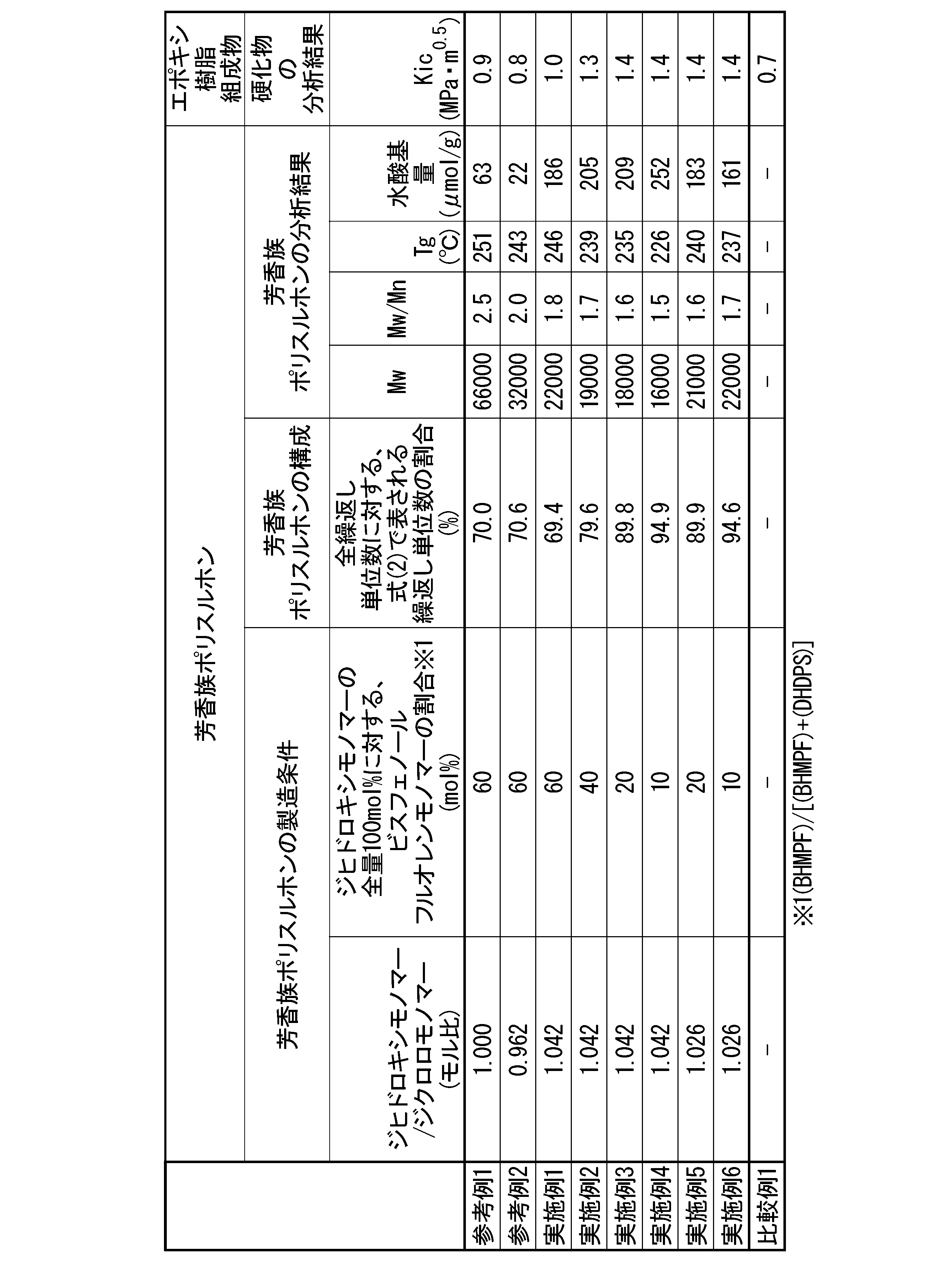
実施例1~6のエポキシ樹脂組成物の硬化物は、参考例1~2および比較例1のエポキシ樹脂組成物の硬化物に比べ、破壊靭性値KIcが向上していた。
このことから、上記で測定された水酸基及び/又はその塩の量が70μmol/g以上である芳香族ポリスルホンを含むエポキシ樹脂組成物の硬化物が、優れた破壊靭性を有することが示された。
このことから、上記で測定された水酸基及び/又はその塩の量が70μmol/g以上である芳香族ポリスルホンを含むエポキシ樹脂組成物の硬化物が、優れた破壊靭性を有することが示された。
各実施形態における各構成及びそれらの組み合わせ等は一例であり、本発明の趣旨を逸脱しない範囲で、構成の付加、省略、置換、およびその他の変更が可能である。また、本発明は各実施形態によって限定されることはなく、請求項(クレーム)の範囲によってのみ限定される。
Claims (10)
- 下記式(1)で表される繰返し単位を有する芳香族ポリスルホンであって、
前記芳香族ポリスルホン1gあたりの水酸基及び/又はその塩の量が70μmol/g以上である、芳香族ポリスルホン。

- 前記R1及び前記R2がメチル基である、請求項1に記載の芳香族ポリスルホン。
- さらに、下記式(2)で表される繰返し単位を有し、
前記芳香族ポリスルホンを構成する全繰返し単位の合計数100%に対して、前記式(2)で表される繰返し単位の数が55%以上である、請求項1又は2に記載の芳香族ポリスルホン。

- 重量平均分子量が10000以上30000未満である、請求項1又は2に記載の芳香族ポリスルホン。
- ジヒドロキシ化合物とジハロゲノ化合物とを重合させて芳香族ポリスルホンを得る重合工程を含み、
前記ジヒドロキシ化合物が、下記式(1a)で表される化合物を含み、

前記ジヒドロキシ化合物と前記ジハロゲノ化合物とのモル比の値が、下記式(I)の条件を満たす、芳香族ポリスルホンの製造方法。
前記ジヒドロキシ化合物/前記ジハロゲノ化合物>1 式(I) - 前記重合工程において、
前記ジヒドロキシ化合物が、ジヒドロキシジフェニルスルホン、及び9,9-ビス(4-ヒドロキシ-3-メチルフェニル)フルオレンを含み、
前記ジハロゲノ化合物が、ジハロゲノジフェニルスルホンを含む、請求項5に記載の芳香族ポリスルホンの製造方法。 - 請求項1又は2に記載の芳香族ポリスルホンと、エポキシ樹脂と、を含む、樹脂組成物。
- さらに硬化剤を含む、請求項7に記載の樹脂組成物。
- 請求項8に記載の樹脂組成物と、強化繊維とを含む、プリプレグ。
- 前記強化繊維が炭素繊維である、請求項9に記載のプリプレグ。
Applications Claiming Priority (2)
| Application Number | Priority Date | Filing Date | Title |
|---|---|---|---|
| JP2023-108835 | 2023-06-30 | ||
| JP2023108835A JP2025007443A (ja) | 2023-06-30 | 2023-06-30 | 芳香族ポリスルホン、芳香族ポリスルホンの製造方法、樹脂組成物、及びプリプレグ |
Publications (1)
| Publication Number | Publication Date |
|---|---|
| WO2025004720A1 true WO2025004720A1 (ja) | 2025-01-02 |
Family
ID=93938323
Family Applications (1)
| Application Number | Title | Priority Date | Filing Date |
|---|---|---|---|
| PCT/JP2024/020480 Ceased WO2025004720A1 (ja) | 2023-06-30 | 2024-06-05 | 芳香族ポリスルホン、芳香族ポリスルホンの製造方法、樹脂組成物、及びプリプレグ |
Country Status (2)
| Country | Link |
|---|---|
| JP (1) | JP2025007443A (ja) |
| WO (1) | WO2025004720A1 (ja) |
Citations (7)
| Publication number | Priority date | Publication date | Assignee | Title |
|---|---|---|---|---|
| JPS63295636A (ja) * | 1987-05-28 | 1988-12-02 | Nippon Steel Corp | 耐熱性ポリスルホンの製造方法 |
| JP2003012795A (ja) * | 2001-04-24 | 2003-01-15 | Toyobo Co Ltd | イオン伝導性芳香族ポリエーテル |
| JP2003147074A (ja) * | 2001-11-16 | 2003-05-21 | Toyobo Co Ltd | スルホン酸基含有芳香族ポリアリーレンエーテル化合物および高分子電解質膜 |
| JP2006097025A (ja) * | 2004-09-27 | 2006-04-13 | General Electric Co <Ge> | 良好な耐衝撃性と優れた耐熱性を有するポリエーテルスルホン組成物 |
| JP2017122196A (ja) * | 2016-01-08 | 2017-07-13 | 大阪ガスケミカル株式会社 | エポキシ樹脂組成物及びその硬化物並びに新規ポリエーテルスルホン系樹脂 |
| JP2017141427A (ja) * | 2016-02-05 | 2017-08-17 | 住友化学株式会社 | 芳香族ポリスルホン、プリプレグ及びプリプレグの製造方法 |
| CN111933982A (zh) * | 2020-07-31 | 2020-11-13 | 华侨大学 | 一种含梳形侧链的芴基阴离子交换膜及其制备方法 |
-
2023
- 2023-06-30 JP JP2023108835A patent/JP2025007443A/ja active Pending
-
2024
- 2024-06-05 WO PCT/JP2024/020480 patent/WO2025004720A1/ja not_active Ceased
Patent Citations (7)
| Publication number | Priority date | Publication date | Assignee | Title |
|---|---|---|---|---|
| JPS63295636A (ja) * | 1987-05-28 | 1988-12-02 | Nippon Steel Corp | 耐熱性ポリスルホンの製造方法 |
| JP2003012795A (ja) * | 2001-04-24 | 2003-01-15 | Toyobo Co Ltd | イオン伝導性芳香族ポリエーテル |
| JP2003147074A (ja) * | 2001-11-16 | 2003-05-21 | Toyobo Co Ltd | スルホン酸基含有芳香族ポリアリーレンエーテル化合物および高分子電解質膜 |
| JP2006097025A (ja) * | 2004-09-27 | 2006-04-13 | General Electric Co <Ge> | 良好な耐衝撃性と優れた耐熱性を有するポリエーテルスルホン組成物 |
| JP2017122196A (ja) * | 2016-01-08 | 2017-07-13 | 大阪ガスケミカル株式会社 | エポキシ樹脂組成物及びその硬化物並びに新規ポリエーテルスルホン系樹脂 |
| JP2017141427A (ja) * | 2016-02-05 | 2017-08-17 | 住友化学株式会社 | 芳香族ポリスルホン、プリプレグ及びプリプレグの製造方法 |
| CN111933982A (zh) * | 2020-07-31 | 2020-11-13 | 华侨大学 | 一种含梳形侧链的芴基阴离子交换膜及其制备方法 |
Also Published As
| Publication number | Publication date |
|---|---|
| JP2025007443A (ja) | 2025-01-17 |
Similar Documents
| Publication | Publication Date | Title |
|---|---|---|
| AU2001279963B2 (en) | Compositions adapted for chain linking | |
| EP2791200B1 (en) | Epoxy resin compositions | |
| US9777155B2 (en) | Benzoxazine resin composition, prepreg, and fiber-reinforced composite material | |
| AU747949B2 (en) | Process for preparing polyarylethers | |
| ES2865351T3 (es) | Síntesis y aditivos de curado para ftalonitrilos | |
| US10155835B2 (en) | Cyanate ester compound and method for producing the same, and curable resin composition comprising the compound, and cured product thereof composition | |
| JP2013512987A (ja) | コンポジット組成物 | |
| EP4087891B1 (en) | Epoxy functionalized poly(aryl ether sulfones) copolymers | |
| JP2025007443A (ja) | 芳香族ポリスルホン、芳香族ポリスルホンの製造方法、樹脂組成物、及びプリプレグ | |
| WO2025004721A1 (ja) | 芳香族ポリスルホン、芳香族ポリスルホンの製造方法、樹脂組成物、及びプリプレグ | |
| CN113302225B (zh) | 芳香族聚砜树脂、环氧树脂组合物、预浸料和成型体 | |
| KR20190127761A (ko) | 방향족 폴리술폰, 방향족 폴리술폰 조성물, 및 방향족 폴리술폰의 제조 방법 | |
| JP6650273B2 (ja) | エポキシ樹脂組成物及びその硬化物並びに新規ポリエーテルスルホン系樹脂 | |
| KR102579522B1 (ko) | 열가소성 방향족 폴리술폰 수지의 제조 방법, 에폭시 조성물의 제조 방법 및 에폭시 경화물의 제조 방법 | |
| CN112105669A (zh) | 环氧树脂组合物、预浸料和成型体 | |
| US20230220171A1 (en) | Resin composition, cured object, prepreg, method for producing resin composition, and aromatic polysulfone resin | |
| WO2025142532A1 (ja) | 多官能ビニル樹脂、多価ヒドロキシ樹脂、エポキシ樹脂、その組成物、及び硬化物 | |
| WO2025121223A1 (ja) | 芳香族ポリスルホン | |
| HK1170754A (en) | Composite compositions |
Legal Events
| Date | Code | Title | Description |
|---|---|---|---|
| 121 | Ep: the epo has been informed by wipo that ep was designated in this application |
Ref document number: 24831590 Country of ref document: EP Kind code of ref document: A1 |
|
| NENP | Non-entry into the national phase |
Ref country code: DE |
|
| 122 | Ep: pct application non-entry in european phase |
Ref document number: 24831590 Country of ref document: EP Kind code of ref document: A1 |