WO2025004404A1 - タイヤ用ゴム組成物及びタイヤ - Google Patents
タイヤ用ゴム組成物及びタイヤ Download PDFInfo
- Publication number
- WO2025004404A1 WO2025004404A1 PCT/JP2023/043873 JP2023043873W WO2025004404A1 WO 2025004404 A1 WO2025004404 A1 WO 2025004404A1 JP 2023043873 W JP2023043873 W JP 2023043873W WO 2025004404 A1 WO2025004404 A1 WO 2025004404A1
- Authority
- WO
- WIPO (PCT)
- Prior art keywords
- norbornene
- group
- rubber composition
- copolymer
- mass
- Prior art date
- Legal status (The legal status is an assumption and is not a legal conclusion. Google has not performed a legal analysis and makes no representation as to the accuracy of the status listed.)
- Ceased
Links
Classifications
-
- B—PERFORMING OPERATIONS; TRANSPORTING
- B60—VEHICLES IN GENERAL
- B60C—VEHICLE TYRES; TYRE INFLATION; TYRE CHANGING; CONNECTING VALVES TO INFLATABLE ELASTIC BODIES IN GENERAL; DEVICES OR ARRANGEMENTS RELATED TO TYRES
- B60C1/00—Tyres characterised by the chemical composition or the physical arrangement or mixture of the composition
- B60C1/0016—Compositions of the tread
-
- B—PERFORMING OPERATIONS; TRANSPORTING
- B60—VEHICLES IN GENERAL
- B60C—VEHICLE TYRES; TYRE INFLATION; TYRE CHANGING; CONNECTING VALVES TO INFLATABLE ELASTIC BODIES IN GENERAL; DEVICES OR ARRANGEMENTS RELATED TO TYRES
- B60C1/00—Tyres characterised by the chemical composition or the physical arrangement or mixture of the composition
- B60C1/0025—Compositions of the sidewalls
-
- C—CHEMISTRY; METALLURGY
- C08—ORGANIC MACROMOLECULAR COMPOUNDS; THEIR PREPARATION OR CHEMICAL WORKING-UP; COMPOSITIONS BASED THEREON
- C08G—MACROMOLECULAR COMPOUNDS OBTAINED OTHERWISE THAN BY REACTIONS ONLY INVOLVING UNSATURATED CARBON-TO-CARBON BONDS
- C08G61/00—Macromolecular compounds obtained by reactions forming a carbon-to-carbon link in the main chain of the macromolecule
- C08G61/02—Macromolecular compounds containing only carbon atoms in the main chain of the macromolecule, e.g. polyxylylenes
- C08G61/04—Macromolecular compounds containing only carbon atoms in the main chain of the macromolecule, e.g. polyxylylenes only aliphatic carbon atoms
- C08G61/06—Macromolecular compounds containing only carbon atoms in the main chain of the macromolecule, e.g. polyxylylenes only aliphatic carbon atoms prepared by ring-opening of carbocyclic compounds
- C08G61/08—Macromolecular compounds containing only carbon atoms in the main chain of the macromolecule, e.g. polyxylylenes only aliphatic carbon atoms prepared by ring-opening of carbocyclic compounds of carbocyclic compounds containing one or more carbon-to-carbon double bonds in the ring
-
- C—CHEMISTRY; METALLURGY
- C08—ORGANIC MACROMOLECULAR COMPOUNDS; THEIR PREPARATION OR CHEMICAL WORKING-UP; COMPOSITIONS BASED THEREON
- C08K—Use of inorganic or non-macromolecular organic substances as compounding ingredients
- C08K3/00—Use of inorganic substances as compounding ingredients
- C08K3/02—Elements
- C08K3/04—Carbon
-
- C—CHEMISTRY; METALLURGY
- C08—ORGANIC MACROMOLECULAR COMPOUNDS; THEIR PREPARATION OR CHEMICAL WORKING-UP; COMPOSITIONS BASED THEREON
- C08L—COMPOSITIONS OF MACROMOLECULAR COMPOUNDS
- C08L65/00—Compositions of macromolecular compounds obtained by reactions forming a carbon-to-carbon link in the main chain; Compositions of derivatives of such polymers
-
- C—CHEMISTRY; METALLURGY
- C08—ORGANIC MACROMOLECULAR COMPOUNDS; THEIR PREPARATION OR CHEMICAL WORKING-UP; COMPOSITIONS BASED THEREON
- C08L—COMPOSITIONS OF MACROMOLECULAR COMPOUNDS
- C08L9/00—Compositions of homopolymers or copolymers of conjugated diene hydrocarbons
-
- C—CHEMISTRY; METALLURGY
- C08—ORGANIC MACROMOLECULAR COMPOUNDS; THEIR PREPARATION OR CHEMICAL WORKING-UP; COMPOSITIONS BASED THEREON
- C08K—Use of inorganic or non-macromolecular organic substances as compounding ingredients
- C08K2201/00—Specific properties of additives
- C08K2201/002—Physical properties
- C08K2201/006—Additives being defined by their surface area
Definitions
- the present invention relates to a rubber composition for tires and a tire.
- a known method for improving abrasion resistance is to increase the amount of filler mixed in, but increasing the amount of filler mixed in causes the filler to become less dispersed, resulting in poorer fuel economy. It also causes the problem of increased unvulcanized viscosity of the rubber composition, resulting in poor processability. Thus, it is generally difficult to achieve a good balance between fuel economy, abrasion resistance, and processability.
- Patent Documents 1 and 2 disclose rubber compounds for passenger car tires and rubber compounds for heavy-duty truck and bus tires that contain specific long-chain branched cyclopentene ring-opening rubber (LCB-CPR), and these rubber compounds are said to be effective in reducing tire rolling resistance, improving wet skid resistance, and improving abrasion resistance.
- LLB-CPR long-chain branched cyclopentene ring-opening rubber
- Patent Documents 1 and 2 the inventors' investigations revealed that even with the techniques described in Patent Documents 1 and 2, it is difficult to achieve a good balance between the processability of the rubber composition and the fuel economy and wear resistance of a tire to which the rubber composition is applied, and that there is still room for improvement.
- an object of the present invention is to solve the above-mentioned problems of the conventional technology and to provide a rubber composition for tires that can achieve a good balance between processability and the fuel efficiency and wear resistance of the tire when applied to the tire.
- Another object of the present invention is to provide a tire that achieves a good balance between fuel economy, wear resistance, and productivity.
- a rubber composition comprising: a rubber component; and carbon black having a cetyltrimethylammonium bromide (CTAB) adsorption specific surface area of 50 m 2 /g or more and 125 m 2 /g or less;
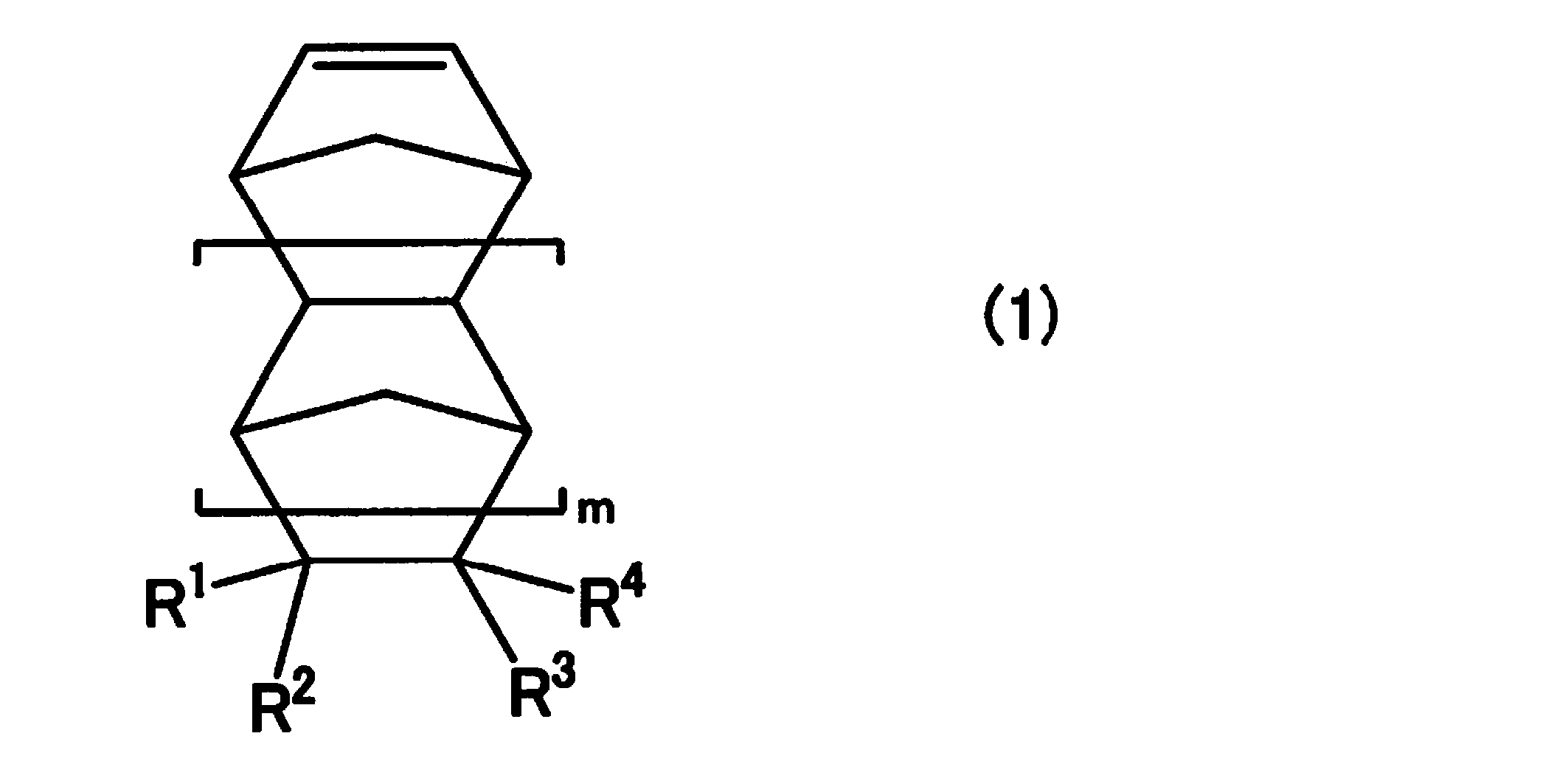
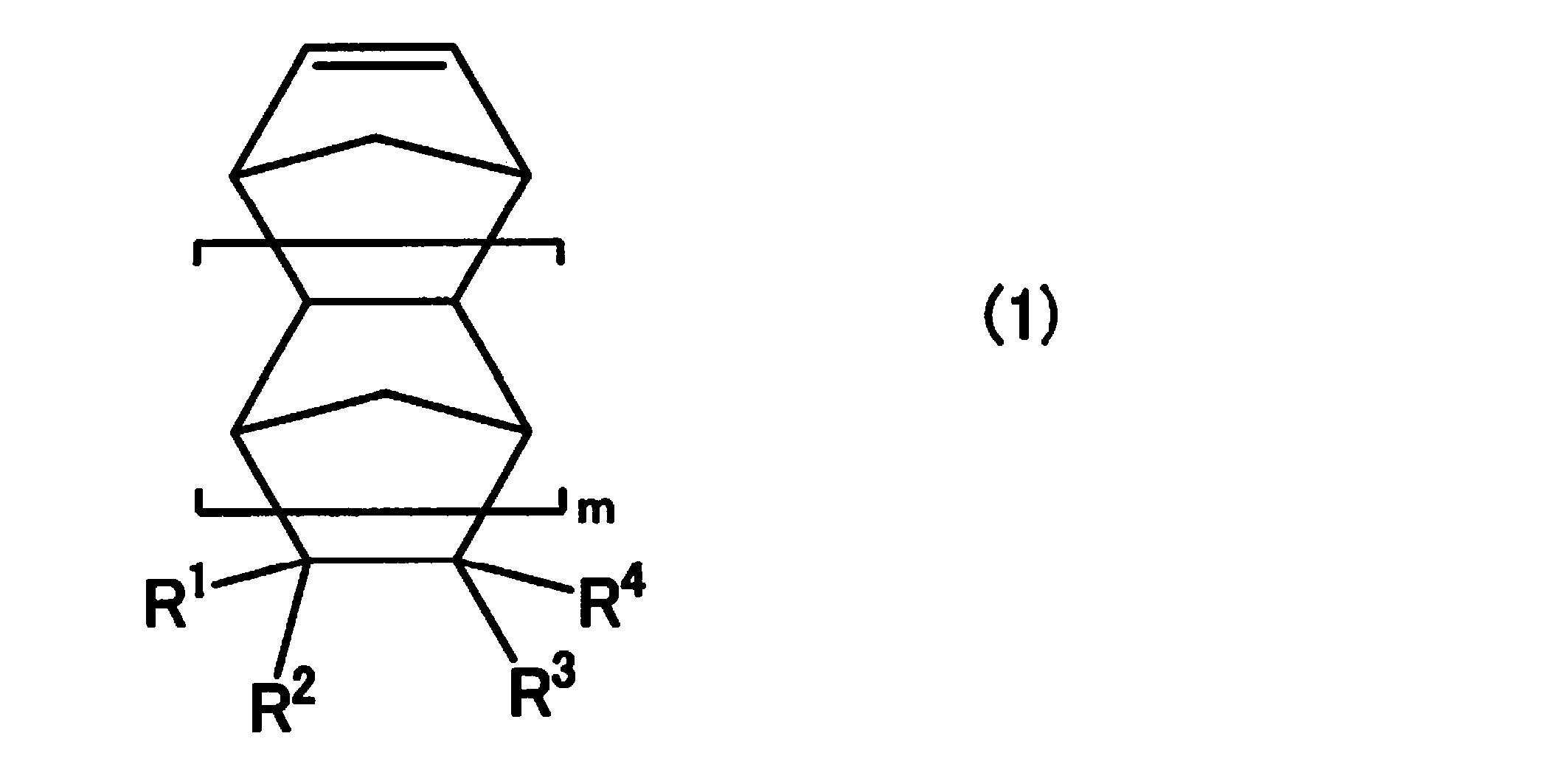
- the rubber component is a compound represented by the following general formula (1): [wherein R 1 to R 4 each independently represent a hydrogen atom, a hydrocarbon group having 1 to 20 carbon atoms, or a substituent containing a halogen atom, a silicon atom, an oxygen atom, or a nitrogen atom, R 2 and R 3 may be bonded to each other to form a ring, and m is an integer of 0 to 2.], and a butadiene rubber.
- CAB cetyltrimethylammonium bromide
- a tire comprising the rubber composition for tires described in any one of [1] to [8].
- a rubber composition for tires which is capable of achieving a good balance between processability and the fuel efficiency and wear resistance of the tire when used in the tire.
- a tire can be provided that achieves a good balance between fuel economy, wear resistance, and productivity.
- the compounds described herein may be derived in whole or in part from fossil sources, from biological sources such as plant sources, from recycled sources such as used tires, or from a mixture of two or more of fossil, biological and/or renewable sources.
- the rubber composition for tires of the present embodiment includes a rubber component and carbon black having a cetyltrimethylammonium bromide (CTAB) adsorption specific surface area of 50 m 2 /g or more and 125 m 2 /g or less.
- CTAB cetyltrimethylammonium bromide
- the rubber component in the rubber composition for tires of the present embodiment includes cyclopentene and a carboxylic acid represented by the following general formula (1): [wherein R 1 to R 4 each independently represent a hydrogen atom, a hydrocarbon group having 1 to 20 carbon atoms, or a substituent containing a halogen atom, a silicon atom, an oxygen atom or a nitrogen atom, R 2 and R 3 may be bonded to each other to form a ring, and m is an integer of 0 to 2.], and a butadiene rubber.
- R 1 to R 4 each independently represent a hydrogen atom, a hydrocarbon group having 1 to 20 carbon atoms, or a substituent containing a halogen atom, a silicon atom, an oxygen atom or a nitrogen atom, R 2 and R 3 may be bonded to each other to form a ring, and m is an integer of 0 to 2.
- the copolymer of cyclopentene and a norbornene compound is characterized in that it has crosslinking points and that polymer chains are entangled with each other.
- the carbon black contained in the rubber composition for tires of this embodiment and having a CTAB adsorption specific surface area of 50 m2 /g or more and 125 m2 /g or less is neither fine nor large, but has a medium particle size.
- a reinforcing layer consisting of the carbon black and the rubber component is formed around the carbon black, and the reinforcing layer contributes to improving the reinforcing properties of the rubber composition, thereby improving abrasion resistance, etc.
- poor dispersion of the carbon black and an increase in the unvulcanized viscosity tend to cause deterioration in fuel economy and processability.
- the rubber composition for tires of this embodiment uses carbon black with a medium particle size having a CTAB adsorption specific surface area of 50 m 2 /g or more and 125 m 2 /g or less, and therefore deterioration of fuel economy and processability can be suppressed.
- the rubber composition for tires of the present embodiment by combining the copolymer of cyclopentene and a norbornene-based compound with the medium particle size carbon black, the reinforcing layer formed around the medium particle size carbon black is sufficiently developed (guaranteed) by the entanglement of the polymer chains described above, and therefore the wear resistance can be sufficiently improved.
- the rubber component contains butadiene rubber (BR).
- BR butadiene rubber
- Tg glass transition temperature
- the rubber composition for a tire of the present embodiment contains a rubber component that provides rubber elasticity to the composition.
- the rubber component of the rubber composition for a tire of the present embodiment contains a copolymer of cyclopentene and a norbornene-based compound represented by the above general formula (1), a butadiene rubber, and may further contain other rubbers.
- copolymer of cyclopentene and norbornene compounds contains a structural unit derived from cyclopentene and a structural unit derived from a norbornene-based compound represented by the above general formula (1).
- the copolymer of cyclopentene and a norbornene-based compound is a ring-opened copolymer, and in particular, a cyclopentene ring-opened copolymer.
- R 1 to R 4 each independently represent a hydrogen atom, a hydrocarbon group having 1 to 20 carbon atoms, or a substituent containing a halogen atom, a silicon atom, an oxygen atom, or a nitrogen atom
- R 2 and R 3 may be bonded to each other to form a ring
- m is an integer of 0 to 2.
- examples of the hydrocarbon group having 1 to 20 carbon atoms include alkyl groups such as a methyl group, an ethyl group, an n-propyl group, an isopropyl group, an n-butyl group, an isobutyl group, a sec-butyl group, a tert-butyl group, a neopentyl group, a hexyl group, and an octyl group; alkenyl groups such as a vinyl group, an allyl group, a 2-pentenyl group, a 3-pentenyl group, and a 4-methyl-3-pentenyl group; aryl groups such as a phenyl group, a tolyl group, a 2,6-dimethylphenyl group, a 2,6-diisopropylphenyl group, and a naphthyl group; and aralkyl groups such as a benzyl group and a phenethyl
- Examples of the norbornene-based compounds represented by the above general formula (1) include 2-norbornene, 5-methyl-2-norbornene, 5-ethyl-2-norbornene, 5-butyl-2-norbornene, 5-hexyl-2-norbornene, 5-decyl-2-norbornene, 5-cyclohexyl-2-norbornene, 5-cyclopentyl-2-norbornene, 5-ethylidene-2-norbornene, 5-vinyl-2-norbornene, 5-propenyl-2-norbornene, 5-cyclohexenyl-2-norbornene, 5-cyclopentenyl-2-norbornene, 5-phenyl-2-norbornene, tetracyclo[9.2.1.0 2,10 .
- bicyclo[2.2.1]hept-2 - enes such as tetracyclo[10.2.1.0 2,11 . 0 4,9 ]pentadeca-4,6,8,13-tetraene (also referred to as "1,4-methano-1,4,4a,9,9a,10-hexahydroanthracene"), dicyclopentadiene, methyldicyclopentadiene, and dihydrodicyclopentadiene (also referred to as "tricyclo[5.2.1.0 2,6 ]dec-8-ene”); Tetracyclo[6.2.1.1 3,6 .
- Bicyclo[2.2.1]hept-2-enes having an alkoxycarbonyl group such as methyl 5-norbornene-2-carboxylate, ethyl 5-norbornene-2-carboxylate, methyl 2-methyl-5-norbornene-2-carboxylate, and ethyl 2-methyl-5-norbornene-2-carboxylate; Tetracyclo[6.2.1.1 3,6 . 0 2,7 ]dodec-4-enes having an alkoxycarbonyl group, such as methyl tetracyclo[6.2.1.1 3,6 .
- dodec-4-enes having a hydroxycarbonyl group or an acid anhydride group Bicyclo[2.2.1]hept-2-enes having a hydroxyl group, such as 5-hydroxy-2-norbornene, 5-hydroxymethyl-2-norbornene, 5,6-di(hydroxymethyl)-2-norbornene, 5,5-di(hydroxymethyl)-2-norbornene, 5-(2-hydroxyethoxycarbonyl)-2-norbornene, and 5-methyl-5-(2-hydroxyethoxycarbonyl)-2-norbornene; Tetracyclo[6.2.1.1 3,6 .
- dodec-4-enes having a carbonyloxy group such as 9-tetracyclo[6.2.1.1 3,6 . 0 2,7 ] dodec-4-enyl acetate, 9-tetracyclo[6.2.1.1 3,6 . 0 2,7 ] dodec-4-enyl acrylate, and 9-tetracyclo[6.2.1.1 3,6 .
- Bicyclo[2.2.1]hept-2-enes having a functional group containing a silicon atom such as 5-trimethoxysilyl-2-norbornene and 5-triethoxysilyl-2-norbornene
- Examples of the norbornene-based compound include tetracyclo[6.2.1.1 3,6 . 0 2,7 ]dodec-4-enes having a functional group containing a silicon atom, such as 4-trimethoxysilyltetracyclo[6.2.1.1 3,6 . 0 2,7 ]dodec-9-ene and 4-triethoxysilyltetracyclo[6.2.1.1 3,6 . 0 2,7 ]dodec-9-ene.
- the norbornene-based compound may be used alone or in combination of two or more.
- the norbornene-based compound represented by the above general formula (1) is preferably one in which m is 0 or 1, and more preferably one in which m is 0.
- R 1 to R 4 may be the same or different.
- R 1 to R 4 in the above general formula (1) are a hydrogen atom, a chain hydrocarbon group having 1 to 20 carbon atoms, or a substituent containing a halogen atom, a silicon atom, an oxygen atom, or a nitrogen atom.
- R 1 to R 4 are not particularly limited as long as they are groups that are not bonded to each other and do not form a ring, and may be the same or different, and R 1 to R 4 are preferably a hydrogen atom or an alkyl group having 1 to 3 carbon atoms.
- m is 0 or 1
- R 1 to R 4 in the above general formula (1) are a hydrogen atom, a chain hydrocarbon group having 1 to 20 carbon atoms, or a substituent containing a halogen atom, a silicon atom, an oxygen atom, or a nitrogen atom
- unsubstituted or hydrocarbon-substituted bicyclo[2.2.1]hept-2-enes are preferred, and among these, 2-norbornene is particularly preferred.
- a compound in which R 2 and R 3 are bonded to each other to form a ring is also preferred.
- specific examples of the ring structure formed by R 2 and R 3 being bonded to each other include a cyclopentane ring, a cyclopentene ring, a cyclohexane ring, a cyclohexene ring, a benzene ring, etc., which may form a polycyclic structure, and may further have a substituent.
- a cyclopentane ring, a cyclopentene ring, and a benzene ring are preferred, and in particular, a compound having a cyclopentene ring alone, or a compound having a polycyclic structure of a cyclopentane ring and a benzene ring is preferred.
- R 1 and R 4 other than R 2 and R 3 forming a ring structure may be the same or different, and are preferably a hydrogen atom or an alkyl group having 1 to 3 carbon atoms. In this case, it is preferable that m is 0.
- the copolymer of cyclopentene and a norbornene-based compound preferably has a content of cyclopentene-derived structural units of 20 to 75 mass%, more preferably 25 to 70 mass%, even more preferably 30 to 65 mass%, and particularly preferably 35 to 60 mass%, based on all repeating structural units of the copolymer.
- the copolymer of cyclopentene and a norbornene-based compound preferably contains structural units derived from a norbornene-based compound represented by the above general formula (1) in a proportion of 10 to 80 mass %, more preferably 20 to 70 mass %, even more preferably 25 to 65 mass %, and particularly preferably 40 to 65 mass %, based on all repeating structural units of the copolymer.
- the norbornene-based compound represented by the above general formula (1) is preferably 2-norbornene and/or dicyclopentadiene. Since 2-norbornene and dicyclopentadiene are easily available, a copolymer of cyclopentene and 2-norbornene and/or dicyclopentadiene is also easily available. Therefore, a rubber composition for tires containing a copolymer of cyclopentene and 2-norbornene and/or dicyclopentadiene is advantageous in terms of cost.
- the copolymer of cyclopentene and a norbornene-based compound preferably contains 10 to 60 mass% of structural units derived from 2-norbornene relative to the total repeating structural units of the copolymer, and more preferably 20 to 60 mass%.
- the copolymer of cyclopentene and a norbornene-based compound preferably has a content of dicyclopentadiene-derived structural units of 10 to 60 mass%, more preferably 20 to 45 mass%, relative to the total repeating structural units of the copolymer. If the content of dicyclopentadiene-derived structural units in the copolymer is 60 mass% or less, the processability of the rubber composition is further improved. Therefore, by setting the content of dicyclopentadiene-derived structural units in the copolymer to the range of 10 to 60 mass%, the fuel economy, wear resistance, and processability of the rubber composition containing the copolymer can be further improved.
- a terpolymer of cyclopentene (CP), 2-norbornene (NB), and dicyclopentadiene (DCPD) may be used as the copolymer of cyclopentene and a norbornene-based compound.
- the terpolymer of cyclopentene, 2-norbornene, and dicyclopentadiene is highly effective in improving the fuel economy of the rubber composition.
- the copolymer of cyclopentene and a norbornene compound may be a copolymer of cyclopentene and a norbornene compound represented by the general formula (1) with other monomers copolymerizable therewith.
- examples of such other monomers include cyclic monoolefins such as cyclopropene, cyclobutene, methylcyclopentene, cyclohexene, methylcyclohexene, cycloheptene, and cyclooctene; cyclic diolefins such as cyclohexadiene, methylcyclohexadiene, cyclooctadiene, and methylcyclooctadiene; and polycyclic cycloolefins having aromatic rings such as phenylcyclooctene, 5-phenyl-1,5-cyclooctadiene, and phenylcyclopentene.
- the content of structural units derived from other monomers in the copolymer of cyclopentene and a norbornene compound is preferably 40% by mass or less, more preferably 30% by mass or less, based on the total repeating structural units of the copolymer. It is particularly preferable that the copolymer does not substantially contain structural units derived from other monomers.
- the copolymer of cyclopentene and norbornene-based compound preferably has a weight average molecular weight (Mw) of 200,000 to 1,000,000, more preferably 200,000 to 800,000, even more preferably 200,000 to 700,000, and particularly preferably 200,000 to 600,000.
- Mw weight average molecular weight
- a copolymer having a weight average molecular weight (Mw) in the range of 200,000 to 1,000,000 is easy to manufacture and has good processability (workability).
- the weight average molecular weight (Mw) of the copolymer in the range of 200,000 to 1,000,000, the fuel economy and wear resistance of a rubber composition containing the copolymer can be further improved.
- the copolymer of cyclopentene and a norbornene-based compound preferably has a ratio of weight average molecular weight (Mw) to number average molecular weight (Mn) (Mw/Mn, also referred to as "molecular weight distribution") of 1.0 to 5.0, more preferably 1.5 to 2.9, even more preferably 1.5 to 2.5, and particularly preferably 1.5 to 2.3.
- Mw/Mn weight average molecular weight
- Mw/Mn number average molecular weight distribution
- the copolymer of cyclopentene and a norbornene-based compound preferably has a cis/trans ratio of 0/100 to 60/40, more preferably 5/95 to 55/45, even more preferably 10/90 to 50/50, and particularly preferably 15/85 to 39/61.
- the cis/trans ratio is the ratio of the cis structure and the trans structure of the double bond present in the repeating units constituting the copolymer of cyclopentene and a norbornene-based compound (cis/trans ratio).
- the copolymer of cyclopentene and a norbornene-based compound preferably has a glass transition temperature (Tg) of -80°C to 10°C, more preferably -75°C to 0°C, and even more preferably -70°C to -10°C.
- Tg glass transition temperature
- the glass transition temperature of the copolymer can be controlled, for example, by adjusting the type and amount of the norbornene-based compound used.
- the copolymer of cyclopentene and a norbornene compound may have a modified group at the polymer chain end.
- a modified end group By having such a modified end group, the affinity for silica and the like can be further increased, and the dispersibility of silica and the like in the rubber composition can be increased, and as a result, the processability (workability), fuel efficiency, and wear resistance of the rubber composition can be further improved.
- the modified group to be introduced into the polymer chain end of the copolymer is not particularly limited, but is preferably a modified group containing an atom selected from the group consisting of an atom of Group 15 of the periodic table, an atom of Group 16 of the periodic table, and a silicon atom.
- a modified group containing an atom selected from the group consisting of a nitrogen atom, an oxygen atom, a phosphorus atom, a sulfur atom, and a silicon atom is more preferable, and among these, a modified group containing an atom selected from the group consisting of a nitrogen atom, an oxygen atom, and a silicon atom is even more preferable.
- Examples of the modified group containing a nitrogen atom include an amino group, a pyridyl group, an imino group, an amide group, a nitro group, a urethane bond group, or a hydrocarbon group containing any of these groups.
- Examples of the modified group containing an oxygen atom include a hydroxyl group, a carboxylic acid group, an ether group, an ester group, a carbonyl group, an aldehyde group, an epoxy group, or a hydrocarbon group containing any of these groups.
- Examples of the modified group containing a silicon atom include an alkylsilyl group, an oxysilyl group, or a hydrocarbon group containing any of these groups.
- modified group containing a phosphorus atom examples include a phosphate group, a phosphino group, or a hydrocarbon group containing any of these groups.
- modified group containing a sulfur atom examples include a sulfonyl group, a thiol group, a thioether group, or a hydrocarbon group containing any of these groups.
- the modified group may also be a modified group containing a plurality of the above groups.
- amino groups, pyridyl groups, imino groups, amide groups, hydroxyl groups, carboxylic acid groups, aldehyde groups, epoxy groups, oxysilyl groups, and hydrocarbon groups containing any of these groups are preferred, and from the viewpoint of affinity for silica, etc., oxysilyl groups are particularly preferred.
- the oxysilyl group refers to a group having a silicon-oxygen bond.
- the oxysilyl group includes an alkoxysilyl group, an aryloxysilyl group, an acyloxy group, an alkylsiloxysilyl group, and an arylsiloxysilyl group.
- an alkoxysilyl group, an aryloxysilyl group, or a hydroxysilyl group obtained by hydrolysis of an acyloxy group can be mentioned.
- an alkoxysilyl group is preferred from the viewpoint of affinity with silica.
- the alkoxysilyl group is a group in which one or more alkoxy groups are bonded to a silicon atom, and specific examples thereof include a trimethoxysilyl group, a dimethoxymethylsilyl group, a methoxydimethylsilyl group, a methoxydichlorosilyl group, a triethoxysilyl group, a diethoxymethylsilyl group, an ethoxydimethylsilyl group, a dimethoxyethoxysilyl group, a methoxydiethoxysilyl group, and a tripropoxysilyl group.
- the introduction ratio of the modified group at the polymer chain end of the copolymer of cyclopentene and norbornene-based compound is not particularly limited, but is preferably 10% or more, more preferably 20% or more, even more preferably 30% or more, and particularly preferably 40% or more, as a percentage value of the number of copolymer chain ends into which the modified group is introduced/the total number of copolymer chain ends.
- the method for measuring the introduction ratio of the modified group at the polymer chain end is not particularly limited, but for example, in the case of introducing an oxysilyl group as the terminal modified group, it can be determined from the peak area ratio corresponding to the oxysilyl group determined by 1 H-NMR spectrum measurement and the number average molecular weight (Mn) determined by gel permeation chromatography (GPC).
- the copolymer of cyclopentene and a norbornene compound preferably has a Mooney viscosity (ML 1+4 , 100° C.) of 20-150, more preferably 22-120, and particularly preferably 25-90.
- the method for producing the copolymer of cyclopentene and a norbornene-based compound is not particularly limited, but an example thereof is a method in which cyclopentene and a norbornene-based compound represented by the above general formula (1) are copolymerized in the presence of a ring-opening polymerization catalyst.
- the ring-opening polymerization catalyst is not particularly limited as long as it can ring-open copolymerize cyclopentene with the norbornene-based compound represented by the above general formula (1), but ruthenium carbene complexes and halogen-containing Group 6 transition metal compounds of the periodic table (hereinafter also referred to as "Group 6 transition metal compounds of the periodic table"). These ring-opening polymerization catalysts may be used alone or in combination of two or more.
- the ruthenium carbene complexes include bis(tricyclohexylphosphine)benzylidene ruthenium dichloride, bis(triphenylphosphine)-3,3-diphenylpropenylidene ruthenium dichloride, bis(tricyclohexylphosphine)t-butylvinylidene ruthenium dichloride, dichloro-(3-phenyl-1H-inden-1-ylidene)bis(tricyclohexylphosphine)ruthenium, bis(1,3-diisopropylimidazolin-2-ylidene)benzylidene ruthenium dichloride, bis(1,3-dicyclohexylimidazolin-2-ylidene)benzylidene ruthenium dichloride, and bis(1,3-dicyclohexylimidazolin-2-ylidene)benzylidene ruthenium dichloride
- Examples include (1,3-dimesitylimidazolin-2-ylidene)benzylidene ruthenium dichloride, (1,3-dimesitylimidazolin-2-ylidene)(tricyclohexylphosphine)benzylidene ruthenium dichloride, (1,3-dimesitylimidazolin-2-ylidene)(tricyclohexylphosphine)benzylidene ruthenium dichloride, bis(tricyclohexylphosphine)ethoxymethylidene ruthenium dichloride, (1,3-dimesitylimidazolin-2-ylidene)(tricyclohexylphosphine)ethoxymethylidene ruthenium dichloride, etc.
- the periodic table Group 6 transition metal compound is a compound having a periodic table Group 6 transition metal atom (long period periodic table, the same applies below), specifically, a compound having a chromium atom, a molybdenum atom, or a tungsten atom, with a compound having a molybdenum atom or a compound having a tungsten atom being preferred, and a compound having a tungsten atom being more preferred from the viewpoint of high solubility in cyclopentene.
- the periodic table Group 6 transition metal compound examples include molybdenum compounds such as molybdenum pentachloride, molybdenum oxotetrachloride, and molybdenum (phenylimido) tetrachloride; tungsten compounds such as tungsten hexachloride, tungsten oxotetrachloride, tungsten (phenylimido) tetrachloride, monocatecholate tungsten tetrachloride, bis(3,5-ditertiarybutyl)catecholate tungsten dichloride, and bis(2-chloroetherate) tetrachloride; and the like.
- molybdenum compounds such as molybdenum pentachloride, molybdenum oxotetrachloride, and molybdenum (phenylimido) tetrachloride
- tungsten compounds such as tungsten hexachloride,
- the amount of the ring-opening polymerization catalyst used is, in terms of the molar ratio of (ring-opening polymerization catalyst:monomer used in copolymerization), usually in the range of 1:500 to 1:2,000,000, preferably 1:700 to 1:1,500,000, and more preferably 1:1,000 to 1:1,000,000.
- the amount of the periodic table Group 6 transition metal compound used is, in terms of the molar ratio of "Group 6 transition metal atom in the ring-opening polymerization catalyst:monomer used in ring-opening polymerization", preferably in the range of 1:100 to 1:200,000, more preferably 1:200 to 1:150,000, and even more preferably 1:500 to 1:100,000.
- the above-mentioned Group 6 transition metal compound of the periodic table is used as the ring-opening polymerization catalyst, it is preferable to use it in combination with an organoaluminum compound represented by the following general formula (2):
- the organoaluminum compound acts as a ring-opening polymerization catalyst together with the above-mentioned Group 6 transition metal compound.
- R 5 and R6 are each independently a hydrocarbon group having 1 to 20 carbon atoms, and preferably a hydrocarbon group having 1 to 10 carbon atoms. Also, x satisfies 0 ⁇ x ⁇ 3.
- examples of R5 and R6 include alkyl groups such as a methyl group, an ethyl group, an isopropyl group, an n-propyl group, an isobutyl group, an n-butyl group, a t-butyl group, an n-hexyl group, a cyclohexyl group, an n-octyl group, and an n-decyl group; and aryl groups such as a phenyl group, a 4-methylphenyl group, a 2,6-dimethylphenyl group, a 2,6-diisopropylphenyl group, and a naphthyl group.
- x is 0 ⁇ x ⁇ 3. That is, in general formula (2), the composition ratio of R5 to OR6 can be any value within the ranges of 0 ⁇ 3-x ⁇ 3 and 0 ⁇ x ⁇ 3, respectively, but from the viewpoint of increasing the polymerization activity, it is preferable that x is 0.5 ⁇ x ⁇ 1.5.
- the organoaluminum compound represented by the above general formula (2) can be synthesized, for example, by reacting trialkylaluminum with an alcohol, as shown in the following general formula (3).
- x in the above general formula (2) can be arbitrarily controlled by specifying the reaction ratio of the corresponding trialkylaluminum and alcohol, as shown in the above general formula (3).
- the amount of the organoaluminum compound used varies depending on the type of organoaluminum compound used, but is preferably 0.1 to 100 times by mole, more preferably 0.2 to 50 times by mole, and even more preferably 0.5 to 20 times by mole, based on the Group 6 transition metal atoms constituting the Group 6 transition metal compound. If the amount of the organoaluminum compound used is too small, the polymerization activity may be insufficient, and if it is too large, side reactions tend to occur more easily during ring-opening polymerization.
- the polymerization reaction may be carried out without a solvent or in a solution.
- the solvent used is not particularly limited as long as it is inert in the polymerization reaction and can dissolve the cyclopentene used in the copolymerization, the norbornene compound represented by the above general formula (1), the polymerization catalyst, etc., but it is preferable to use a hydrocarbon solvent or a halogen-based solvent.
- hydrocarbon solvent examples include aromatic hydrocarbons such as benzene, toluene, xylene, and ethylbenzene; aliphatic hydrocarbons such as hexane, n-heptane, and n-octane; alicyclic hydrocarbons such as cyclohexane, cyclopentane, and methylcyclohexane; and the like.
- halogen-based solvent include haloalkanes such as dichloromethane and chloroform; aromatic halogens such as chlorobenzene and dichlorobenzene; and the like. These solvents may be used alone or in combination of two or more.
- an olefin compound or a diolefin compound may be added to the polymerization reaction system as a molecular weight regulator, if necessary, in order to adjust the molecular weight of the resulting copolymer.
- the olefin compound is not particularly limited as long as it is an organic compound having an ethylenically unsaturated bond, and examples thereof include ⁇ -olefins such as 1-butene, 1-pentene, 1-hexene, 1-octene, etc.; styrenes such as styrene and vinyl toluene; halogen-containing vinyl compounds such as allyl chloride; alkenyl alcohols such as allyl alcohol and 5-hexenol; silicon-containing vinyl compounds such as allyltrimethoxysilane, allyltriethoxysilane, allyltrichlorosilane, and styryltrimethoxysilane; disubstituted olefins such as 2-butene and 3-hexene; etc.
- ⁇ -olefins such as 1-butene, 1-pentene, 1-hexene, 1-octene, etc.
- styrenes
- diolefin compound examples include non-conjugated diolefins such as 1,4-pentadiene, 1,4-hexadiene, 1,5-hexadiene, 1,6-heptadiene, 2-methyl-1,4-pentadiene, and 2,5-dimethyl-1,5-hexadiene.
- the amount of the olefin compound and diolefin compound used as the molecular weight regulator may be appropriately selected depending on the molecular weight of the copolymer to be produced, but is usually in the range of 1/100 to 1/100,000, preferably 1/200 to 1/50,000, more preferably 1/500 to 1/10,000 in terms of molar ratio to the monomer used in the copolymerization.
- the copolymer of cyclopentene and norbornene-based compounds is to have a modifying group at the polymer chain end
- a modifying group-containing olefinically unsaturated hydrocarbon compound as a molecular weight regulator instead of the above-mentioned olefin compound or diolefin compound.
- the modifying group can be suitably introduced at the polymer chain end of the copolymer obtained by copolymerization.
- the modifying group-containing olefinically unsaturated hydrocarbon compound is not particularly limited as long as it has a modifying group and one olefinic carbon-carbon double bond that has metathesis reactivity.
- an oxysilyl group-containing olefinically unsaturated hydrocarbon may be present in the polymerization reaction system.
- Examples of the oxysilyl group-containing olefinic unsaturated hydrocarbons include alkoxysilane compounds such as vinyltrimethoxysilane, vinyltriethoxysilane, allyltrimethoxysilane, allylmethoxydimethylsilane, allyltriethoxysilane, allylethoxydimethylsilane, styryltrimethoxysilane, styryltriethoxysilane, styrylethyltriethoxysilane, allyltriethoxysilylmethylether, and allyltriethoxysilylmethylethylamine, which introduce a modifying group only at one end (single end) of the polymer chain of the copolymer; vinyltriphenoxysilane, allyltriphenoxysilane, and a aryloxysilane compounds such as allylphenoxydimethylsilane; acyloxysilane compounds such as vinyl
- examples of compounds for introducing modifying groups into both ends (both ends) of the polymer chain of the copolymer include alkoxysilane compounds such as bis(trimethoxysilyl)ethylene, bis(triethoxysilyl)ethylene, 2-butene-1,4-di(trimethoxysilane), 2-butene-1,4-di(triethoxysilane), and 1,4-di(trimethoxysilylmethoxy)-2-butene; aryloxysilane compounds such as 2-butene-1,4-di(triphenoxysilane); Examples include acyloxysilane compounds such as 1,4-di(triacetoxysilane); alkylsiloxysilane compounds such as 2-butene-1,4-di[tris(trimethylsiloxy)silane]; arylsiloxysilane compounds such as 2-butene-1,4-di[tris(triphenylsiloxy)silane]
- the modifying group-containing olefinically unsaturated hydrocarbon compound acts as a molecular weight regulator in addition to introducing a modifying group to the polymer chain end of the copolymer, so the amount of the modifying group-containing olefinically unsaturated hydrocarbon compound used may be appropriately selected depending on the molecular weight of the copolymer to be produced, but is usually in the range of 1/100 to 1/100,000, preferably 1/200 to 1/50,000, and more preferably 1/500 to 1/10,000 in molar ratio to the monomers used in the copolymerization.
- the polymerization reaction temperature is not particularly limited, but is preferably -100°C or higher, more preferably -50°C or higher, even more preferably 0°C or higher, and particularly preferably 20°C or higher.
- the upper limit of the polymerization reaction temperature is not particularly limited, but is preferably less than 120°C, more preferably less than 100°C, even more preferably less than 90°C, and particularly preferably less than 80°C.
- the polymerization reaction time is not particularly limited, but is preferably 1 minute to 72 hours, and more preferably 10 minutes to 20 hours.
- an anti-aging agent such as a phenol-based stabilizer, a phosphorus-based stabilizer, or a sulfur-based stabilizer may be added to the copolymer obtained by the polymerization reaction.
- the amount of the anti-aging agent to be added may be determined appropriately depending on the type of the anti-aging agent.
- an extender oil may be blended into the copolymer.
- a known recovery method may be used to recover the copolymer from the polymerization solution. For example, a method may be used in which the solvent is separated by steam stripping, the solid is filtered off, and then the solid is dried to obtain a solid copolymer.
- the content of the copolymer of cyclopentene and norbornene-based compounds is preferably 20 to 90 parts by mass, and more preferably 30 to 85 parts by mass, per 100 parts by mass of the rubber component.
- the content of the copolymer of cyclopentene and norbornene-based compounds is in the range of 20 to 90 parts by mass per 100 parts by mass of the rubber component, the balance of fuel economy, abrasion resistance, and processability of the rubber composition is further improved.
- the rubber component includes butadiene rubber (BR).
- Butadiene rubber has a low glass transition temperature (Tg), and the rubber component includes the butadiene rubber in addition to the copolymer of cyclopentene and a norbornene compound, so that the fuel economy and wear resistance of the rubber composition can be improved.
- the content of the butadiene rubber is preferably in the range of 10 to 80 parts by mass, and more preferably in the range of 15 to 70 parts by mass, per 100 parts by mass of the rubber component.
- the content of the butadiene rubber is in the range of 10 to 80 parts by mass, per 100 parts by mass of the rubber component, the balance of fuel economy, abrasion resistance, and processability of the rubber composition is further improved.
- the rubber component may further contain other rubbers.
- other rubbers include natural rubber (NR), synthetic isoprene rubber (IR), styrene-butadiene rubber (SBR), chloroprene rubber (CR), butyl rubber (IIR), halogenated butyl rubber, ethylene-propylene rubber (EPR, EPDM), fluororubber, silicone rubber, urethane rubber, etc.
- the content of these other rubbers is preferably 30 parts by mass or less, more preferably 20 parts by mass or less, and even more preferably 10 parts by mass or less, per 100 parts by mass of the rubber component.
- the rubber composition for tires of this embodiment contains carbon black having a cetyltrimethylammonium bromide (CTAB) adsorption specific surface area of 50 m 2 /g or more and 125 m 2 /g or less.
- CTAB cetyltrimethylammonium bromide
- the CTAB adsorption specific surface area of the carbon black is 50 m 2 /g or more, the formation of the reinforcing layer is sufficiently compensated for by the entanglement of the polymer chains of the above-mentioned copolymer, and the wear resistance of the tire to which the rubber composition is applied can be improved. Therefore, when the CTAB adsorption specific surface area of the carbon black is 50 m 2 /g or more and 125 m 2 /g or less, the processability of the rubber composition and the fuel economy and wear resistance of the tire to which the rubber composition is applied can be well balanced.
- the CTAB adsorption specific surface area of the carbon black is preferably 100 m 2 /g or more from the viewpoint of abrasion resistance, and is preferably 123 m 2 /g or less from the viewpoints of fuel economy and processability.
- the cetyltrimethylammonium bromide (CTAB) adsorption specific surface area of carbon black is a value measured in accordance with JIS K6217-3, and is the external surface area of carbon black excluding micropores, expressed as the specific surface area when CTAB (cetyltrimethylammonium bromide) is adsorbed onto the carbon black.
- the carbon black content is preferably in the range of 5 to 80 parts by mass per 100 parts by mass of the rubber component.
- the carbon black content is more preferably 10 parts by mass or more, and even more preferably 20 parts by mass or more per 100 parts by mass of the rubber component, and from the viewpoint of fuel economy and processability, it is more preferably 70 parts by mass or less, and even more preferably 60 parts by mass or less.
- the rubber composition for tires of this embodiment may contain various components usually used in the rubber industry as necessary, such as fillers other than carbon black having a CTAB adsorption specific surface area of 50 m 2 /g or more and 125 m 2 /g or less (carbon black having a CTAB adsorption specific surface area of less than 50 m 2 /g, carbon black having a CTAB adsorption specific surface area of more than 125 m 2 /g, silica, etc.), silane coupling agents, antioxidants, hardened fatty acids, zinc oxide (zinc white), tackifiers, vulcanization accelerators, vulcanizing agents, etc., which are appropriately selected within a range that does not impair the object of the present invention.
- Commercially available products can be suitably used as these compounding agents.
- the antioxidants include N-(1,3-dimethylbutyl)-N'-phenyl-p-phenylenediamine (6C), 2,2,4-trimethyl-1,2-dihydroquinoline polymer (TMDQ), etc. These antioxidants may be used alone or in combination of two or more. There are no particular restrictions on the content of the antioxidant, and it is preferably in the range of 0.1 to 5 parts by mass, more preferably 1 to 4 parts by mass, per 100 parts by mass of the rubber component.
- the hardened fatty acid may be stearic acid or the like. There are no particular restrictions on the content of the hardened fatty acid, but it is preferably in the range of 0.1 to 5 parts by mass, and more preferably 1 to 4 parts by mass, per 100 parts by mass of the rubber component.
- the amount of zinc oxide (zinc white) is not particularly limited, but is preferably in the range of 0.1 to 10 parts by mass, and more preferably 1 to 8 parts by mass, per 100 parts by mass of the rubber component.
- the tackifier examples include rosin-based resins, terpene-based resins, petroleum-based resins, phenol-based resins, coal-based resins, xylene-based resins, etc., and among these, petroleum-based resins are preferred.
- the petroleum-based resins include C5 -based resins, C5 - C9- based resins, C9 -based resins, dicyclopentadiene resins, etc.
- the content of the tackifier is not particularly limited, and is preferably in the range of 0.1 to 5 parts by mass, more preferably 0.5 to 3 parts by mass, per 100 parts by mass of the rubber component.
- the vulcanization accelerator may be a sulfenamide-based vulcanization accelerator, a guanidine-based vulcanization accelerator, a thiazole-based vulcanization accelerator, a thiuram-based vulcanization accelerator, a dithiocarbamate-based vulcanization accelerator, or the like. These vulcanization accelerators may be used alone or in combination of two or more. There are no particular limitations on the content of the vulcanization accelerator, and the content is preferably in the range of 0.1 to 5 parts by mass, and more preferably in the range of 0.2 to 4 parts by mass, per 100 parts by mass of the rubber component.
- the vulcanizing agent may be sulfur.
- the content of the vulcanizing agent is preferably in the range of 0.1 to 6 parts by mass, more preferably 0.5 to 3 parts by mass, in terms of sulfur content per 100 parts by mass of the rubber component.
- the method for producing the rubber composition for tires is not particularly limited, but for example, the rubber composition can be produced by blending various components appropriately selected as necessary with the above-mentioned rubber component and carbun black, and kneading, heating, extruding, etc.
- the obtained rubber composition can be vulcanized to produce a vulcanized rubber.
- kneading there are no particular limitations on the conditions for the kneading, and the input volume of the kneading device, the rotation speed of the rotor, the ram pressure, etc., as well as the conditions for the kneading temperature, kneading time, type of kneading device, etc., can be appropriately selected according to the purpose.
- kneading devices include Banbury mixers, intermixes, kneaders, rolls, etc., which are typically used for kneading rubber compositions.
- heat-in process temperature heat-in process time
- heat-in process equipment heat-in process equipment
- other conditions can be appropriately selected according to the purpose.
- the heat-in process equipment include a heat-in process roll machine typically used for heat-in process of rubber compositions.
- extrusion conditions there are no particular limitations on the extrusion conditions, and various conditions such as extrusion time, extrusion speed, extrusion equipment, and extrusion temperature can be appropriately selected depending on the purpose.
- extrusion equipment include extruders that are typically used for extruding rubber compositions.
- the extrusion temperature can be appropriately determined.
- Typical vulcanization equipment includes a mold vulcanizer that uses a mold used to vulcanize rubber compositions.
- the vulcanization temperature is, for example, about 100 to 190°C.
- the tire of the present embodiment is characterized by including the above-mentioned rubber composition for tires. Since the tire of the present embodiment includes the above-mentioned rubber composition for tires, the tire has a good balance of fuel efficiency, abrasion resistance, and productivity.
- the rubber composition is applied to the tread rubber of the tire.
- the tire of this embodiment may be obtained by molding an unvulcanized rubber composition and then vulcanizing it, depending on the type of tire to which it is applied, or by molding a semi-vulcanized rubber that has been subjected to a pre-vulcanization process or the like, and then further vulcanizing it.
- the tire of this embodiment is preferably a pneumatic tire, and the gas to be filled in the pneumatic tire may be normal air or air with an adjusted oxygen partial pressure, or an inert gas such as nitrogen, argon, or helium.
- ⁇ Method for synthesizing copolymer 1> In a nitrogen atmosphere, 77 parts by mass of cyclopentene, 23 parts by mass of dicyclopentadiene, 300 parts by mass of cyclohexane, and 0.069 parts by mass of 1-hexene were added to a glass reaction vessel equipped with a stirrer. Next, 0.024 parts by mass of the ring-opening polymerization catalyst dichloro-(3-phenyl-1H-inden-1-ylidene)bis(tricyclohexylphosphine)ruthenium(II) dissolved in 1 part by mass of toluene was added, and the polymerization reaction was carried out at 40°C for 2 hours.
- ⁇ Method for synthesizing copolymer 2> In a nitrogen atmosphere, 78 parts by mass of cyclopentene, 22 parts by mass of dicyclopentadiene, 360 parts by mass of cyclohexane, and 0.041 parts by mass of 1-hexene were added to a glass reaction vessel equipped with a stirrer. Next, 0.024 parts by mass of the ring-opening polymerization catalyst dichloro-(3-phenyl-1H-inden-1-ylidene)bis(tricyclohexylphosphine)ruthenium(II) dissolved in 1 part by mass of toluene was added, and the polymerization reaction was carried out at 40°C for 2 hours.
- each rubber composition further contains the following compounding ingredients per 100 parts by mass of rubber component: 2 parts by mass of hardened fatty acid, 3.5 parts by mass of zinc oxide, 2.5 parts by mass of antioxidant (total amount of two types), 1 part by mass of resin, 1.4 parts by mass of sulfenamide vulcanization accelerator, and 1.05 parts by mass of sulfur.
- the rubber composition of Comparative Example 4 which contains a copolymer of cyclopentene and a norbornene compound and butadiene rubber but contains carbon black with a CTAB adsorption specific surface area of less than 50 m2 /g, has significantly deteriorated wear resistance.
- the rubber composition of Comparative Example 5 which contains a copolymer of cyclopentene and a norbornene compound and carbon black with a CTAB adsorption specific surface area of 50 m2 /g or more and 125 m2 /g or less but does not contain butadiene rubber, has significantly deteriorated wear resistance.
Landscapes
- Chemical & Material Sciences (AREA)
- Health & Medical Sciences (AREA)
- Chemical Kinetics & Catalysis (AREA)
- Medicinal Chemistry (AREA)
- Polymers & Plastics (AREA)
- Organic Chemistry (AREA)
- Engineering & Computer Science (AREA)
- Mechanical Engineering (AREA)
- Compositions Of Macromolecular Compounds (AREA)
Abstract
Description
また、タイヤの経済性の観点から、タイヤ用ゴム組成物の開発にあたっては、低燃費性の他、耐摩耗性を向上させることも求められている。
また、本発明は、低燃費性と耐摩耗性と生産性とを良好にバランスさせたタイヤを提供することを更なる課題とする。
前記ゴム成分が、シクロペンテンと下記一般式(1):
また、本発明によれば、低燃費性と耐摩耗性と生産性とを良好にバランスさせたタイヤを提供することができる。
本明細書に記載されている化合物は、部分的に、又は全てが化石資源由来であってもよく、植物資源等の生物資源由来であってもよく、使用済タイヤ等の再生資源由来であってもよい。また、化石資源、生物資源、再生資源のいずれか2つ以上の混合物由来であってもよい。
本実施形態のタイヤ用ゴム組成物は、ゴム成分と、セチルトリメチルアンモニウムブロミド(CTAB)吸着比表面積が50m2/g以上125m2/g以下であるカーボンブラックと、を含む。そして、本実施形態のタイヤ用ゴム組成物においては、前記ゴム成分が、シクロペンテンと下記一般式(1):
一般に、ゴム成分にカーボンブラックを配合すると、カーボンブラックの周りに、当該カーボンブラックとゴム成分とからなる補強層が形成され、該補強層が、ゴム組成物の補強性の向上に寄与して、耐摩耗性等が向上する。ここで、一般的には、カーボンブラックの粒径が小さい程、補強層が発達するため、耐摩耗性等が向上する一方、カーボンブラックの分散不良や未加硫粘度の上昇により、低燃費性及び加工性の悪化を引き起こす傾向がある。
これに対して、本実施形態のタイヤ用ゴム組成物においては、CTAB吸着比表面積が50m2/g以上125m2/g以下の、中程度の粒径のカーボンブラックを使用するため、低燃費性及び加工性の悪化を抑制できる。
また、本実施形態のタイヤ用ゴム組成物においては、前記シクロペンテンとノルボルネン系化合物との共重合体と、前記中程度の粒径のカーボンブラックとを組み合わせることで、該中程度の粒径のカーボンブラックの周りに形成される補強層が、上述のポリマー鎖同士の絡み合いにより発達して(担保されて)十分に存在するため、耐摩耗性を十分に向上させることができる。
更に、本実施形態のタイヤ用ゴム組成物においては、前記ゴム成分がブタジエンゴム(BR)を含み、該ブタジエンゴムは、ガラス転移温度(Tg)が低いため、上述のシクロペンテンとノルボルネン系化合物との共重合体と組み合わせることで、ゴム組成物の低燃費性と耐摩耗性とを向上させることができる。
従って、本実施形態のタイヤ用ゴム組成物は、加工性と、タイヤに適用した際のタイヤの低燃費性及び耐摩耗性と、を良好にバランスさせることが可能である。
本実施形態のタイヤ用ゴム組成物は、ゴム成分を含み、該ゴム成分が、組成物にゴム弾性をもたらす。本実施形態のタイヤ用ゴム組成物のゴム成分は、シクロペンテンと上記一般式(1)で表されるノルボルネン系化合物との共重合体と、ブタジエンゴムと、を含み、更に他のゴムを含んでもよい。
前記シクロペンテンとノルボルネン系化合物との共重合体は、シクロペンテン由来の構造単位と、上記一般式(1)で表されるノルボルネン系化合物由来の構造単位と、を含む。また、該シクロペンテンとノルボルネン系化合物との共重合体は、一好適実施形態においては、開環共重合体であり、特には、シクロペンテン開環共重合体である。
テトラシクロ[6.2.1.13,6.02,7]ドデカ-4-エン、9-メチルテトラシクロ[6.2.1.13,6.02,7]ドデカ-4-エン、9-エチルテトラシクロ[6.2.1.13,6.02,7]ドデカ-4-エン、9-シクロヘキシルテトラシクロ[6.2.1.13,6.02,7]ドデカ-4-エン、9-シクロペンチルテトラシクロ[6.2.1.13,6.02,7]ドデカ-4-エン、9-メチレンテトラシクロ[6.2.1.13,6.02,7]ドデカ-4-エン、9-エチリデンテトラシクロ[6.2.1.13,6.02,7]ドデカ-4-エン、9-ビニルテトラシクロ[6.2.1.13,6.02,7]ドデカ-4-エン、9-プロペニルテトラシクロ[6.2.1.13,6.02,7]ドデカ-4-エン、9-シクロヘキセニルテトラシクロ[6.2.1.13,6.02,7]ドデカ-4-エン、9-シクロペンテニルテトラシクロ[6.2.1.13,6.02,7]ドデカ-4-エン、9-フェニルテトラシクロ[6.2.1.13,6.02,7]ドデカ-4-エン等の無置換又は炭化水素置換基を有するテトラシクロ[6.2.1.13,6.02,7]ドデカ-4-エン類;
5-ノルボルネン-2-カルボン酸メチル、5-ノルボルネン-2-カルボン酸エチル、2-メチル-5-ノルボルネン-2-カルボン酸メチル、2-メチル-5-ノルボルネン-2-カルボン酸エチル等のアルコキシカルボニル基を有するビシクロ[2.2.1]ヘプト-2-エン類;
テトラシクロ[6.2.1.13,6.02,7]ドデカ-9-エン-4-カルボン酸メチル、4-メチルテトラシクロ[6.2.1.13,6.02,7]ドデカ-9-エン-4-カルボン酸メチル等のアルコキシカルボニル基を有するテトラシクロ[6.2.1.13,6.02,7]ドデカ-4-エン類;
5-ノルボルネン-2-カルボン酸、5-ノルボルネン-2,3-ジカルボン酸、5-ノルボルネン-2,3-ジカルボン酸無水物等のヒドロキシカルボニル基又は酸無水物基を有するビシクロ[2.2.1]ヘプト-2-エン類;
テトラシクロ[6.2.1.13,6.02,7]ドデカ-9-エン-4-カルボン酸、テトラシクロ[6.2.1.13,6.02,7]ドデカ-9-エン-4,5-ジカルボン酸、テトラシクロ[6.2.1.13,6.02,7]ドデカ-9-エン-4,5-ジカルボン酸無水物等のヒドロキシカルボニル基又は酸無水物基を有するテトラシクロ[6.2.1.13,6.02,7]ドデカ-4-エン類;
5-ヒドロキシ-2-ノルボルネン、5-ヒドロキシメチル-2-ノルボルネン、5,6-ジ(ヒドロキシメチル)-2-ノルボルネン、5,5-ジ(ヒドロキシメチル)-2-ノルボルネン、5-(2-ヒドロキシエトキシカルボニル)-2-ノルボルネン、5-メチル-5-(2-ヒドロキシエトキシカルボニル)-2-ノルボルネン等のヒドロキシル基を有するビシクロ[2.2.1]ヘプト-2-エン類;
テトラシクロ[6.2.1.13,6.02,7]ドデカ-9-エン-4-メタノール、テトラシクロ[6.2.1.13,6.02,7]ドデカ-9-エン-4-オール等のヒドロキシル基を有するテトラシクロ[6.2.1.13,6.02,7]ドデカ-4-エン類;
5-ノルボルネン-2-カルバルデヒド等のヒドロカルボニル基を有するビシクロ[2.2.1]ヘプト-2-エン類;
テトラシクロ[6.2.1.13,6.02,7]ドデカ-9-エン-4-カルバルデヒド等のヒドロカルボニル基を有するテトラシクロ[6.2.1.13,6.02,7]ドデカ-4-エン類;
3-メトキシカルボニル-5-ノルボルネン-2-カルボン酸等のアルコキシカルボニル基とヒドロキシカルボニル基とを有するビシクロ[2.2.1]ヘプト-2-エン類;
酢酸5-ノルボルネン-2-イル、酢酸2-メチル-5-ノルボルネン-2-イル、アクリル酸5-ノルボルネン-2-イル、メタクリル酸5-ノルボルネン-2-イル等のカルボニルオキシ基を有するビシクロ[2.2.1]ヘプト-2-エン類;
酢酸9-テトラシクロ[6.2.1.13,6.02,7]ドデカ-4-エニル、アクリル酸9-テトラシクロ[6.2.1.13,6.02,7]ドデカ-4-エニル、メタクリル酸9-テトラシクロ[6.2.1.13,6.02,7]ドデカ-4-エニル等のカルボニルオキシ基を有するテトラシクロ[6.2.1.13,6.02,7]ドデカ-4-エン類;
5-ノルボルネン-2-カルボニトリル、5-ノルボルネン-2-カルボキサミド、5-ノルボルネン-2、3-ジカルボン酸イミド等の窒素原子を含む官能基を有するビシクロ[2.2.1]ヘプト-2-エン類;
テトラシクロ[6.2.1.13,6.02,7]ドデカ-9-エン-4-カルボニトリル、テトラシクロ[6.2.1.13,6.02,7]ドデカ-9-エン-4-カルボキサミド、テトラシクロ[6.2.1.13,6.02,7]ドデカ-9-エン-4,5-ジカルボン酸イミド等の窒素原子を含む官能基を有するテトラシクロ[6.2.1.13,6.02,7]ドデカ-4-エン類;
5-クロロ-2-ノルボルネン等のハロゲン原子を有するビシクロ[2.2.1]ヘプト-2-エン類;
9-クロロテトラシクロ[6.2.1.13,6.02,7]ドデカ-4-エン等のハロゲン原子を有するテトラシクロ[6.2.1.13,6.02,7]ドデカ-4-エン類;
5-トリメトキシシリル-2-ノルボルネン、5-トリエトキシシリル-2-ノルボルネン等のケイ素原子を含む官能基を有するビシクロ[2.2.1]ヘプト-2-エン類;
4-トリメトキシシリルテトラシクロ[6.2.1.13,6.02,7]ドデカ-9-エン、4-トリエトキシシリルテトラシクロ[6.2.1.13,6.02,7]ドデカ-9-エン等のケイ素原子を含む官能基を有するテトラシクロ[6.2.1.13,6.02,7]ドデカ-4-エン類;等が挙げられる。前記ノルボルネン系化合物は、1種単独で用いてもよいし、2種以上を組み合わせて用いてもよい。
また、前記シクロペンテンとノルボルネン系化合物との共重合体は、重量平均分子量(Mw)と数平均分子量(Mn)との比(Mw/Mn、「分子量分布」とも呼ぶ。)が1.0~5.0であることが好ましく、1.5~2.9であることが更に好ましく、1.5~2.5であることがより一層好ましく、1.5~2.3であることが特に好ましい。
ここで、共重合体の重量平均分子量(Mw)及び数平均分子量(Mn)は、ゲルパーミエーションクロマトグラフィー(GPC)で測定される、ポリスチレン換算の値である。
(R5)3-xAl(OR6)x ・・・ (2)
上記一般式(2)中、R5及びR6は、それぞれ独立して炭素数1~20の炭化水素基であり、好ましくは、炭素数1~10の炭化水素基である。また、xは、0<x<3である。
(R5)3Al + xR6OH → (R5)3-xAl(OR6)x + (R6)xH ・・・ (3)
前記オレフィン化合物としては、エチレン性不飽和結合を有する有機化合物であれば特に限定されず、例えば、1-ブテン、1-ペンテン、1-ヘキセン、1-オクテン等のα-オレフィン類;スチレン、ビニルトルエン等のスチレン類;アリルクロライド等のハロゲン含有ビニル化合物;アリルアルコール、5-ヘキセノール等のアルケニルアルコール類;アリルトリメトキシシラン、アリルトリエトキシシラン、アリルトリクロロシラン、スチリルトリメトキシシラン等のケイ素含有ビニル化合物;2-ブテン、3-ヘキセン等の二置換オレフィン;等が挙げられる。また、前記ジオレフィン化合物としては、1,4-ペンタジエン、1,4-ヘキサジエン、1,5-ヘキサジエン、1,6-ヘプタジエン、2-メチル-1,4-ペンタジエン、2,5-ジメチル-1,5-ヘキサジエン等の非共役ジオレフィンが挙げられる。
分子量調整剤としてのオレフィン化合物及びジオレフィン化合物の使用量は、製造する共重合体の分子量に応じて適宜選択すればよいが、共重合に用いる単量体に対して、モル比で、通常1/100~1/100,000、好ましくは1/200~1/50,000、より好ましくは1/500~1/10,000の範囲である。
前記ゴム成分は、ブタジエンゴム(BR)を含む。ブタジエンゴムは、ガラス転移温度(Tg)が低く、ゴム成分が、上述のシクロペンテンとノルボルネン系化合物との共重合体に加えてブタジエンゴムを含むことで、ゴム組成物の低燃費性と耐摩耗性とを向上させることができる。
前記ゴム成分は、更に他のゴムを含んでもよい。かかる他のゴムとしては、天然ゴム(NR)、合成イソプレンゴム(IR)、スチレン-ブタジエンゴム(SBR)、クロロプレンゴム(CR)、ブチルゴム(IIR)、ハロゲン化ブチルゴム、エチレン-プロピレンゴム(EPR,EPDM)、フッ素ゴム、シリコーンゴム、ウレタンゴム等が挙げられる。これら他のゴムの含有量は、ゴム成分100質量部中、30質量部以下が好ましく、20質量部以下が更に好ましく、10質量部以下がより一層好ましい。
本実施形態のタイヤ用ゴム組成物は、セチルトリメチルアンモニウムブロミド(CTAB)吸着比表面積が50m2/g以上125m2/g以下であるカーボンブラックを含む。カーボンブラックのCTAB吸着比表面積が125m2/g以下であると、ゴム組成物の加工性と、該ゴム組成物を適用したタイヤの低燃費性とを向上させることができる。また、カーボンブラックのCTAB吸着比表面積が50m2/g以上であると、上述の共重合体のポリマー鎖同士の絡み合いにより補強層の形成が十分に補われ、ゴム組成物を適用したタイヤの耐摩耗性を向上させることができる。そのため、カーボンブラックのCTAB吸着比表面積が50m2/g以上125m2/g以下であると、ゴム組成物の加工性と、該ゴム組成物を適用したタイヤの低燃費性及び耐摩耗性と、を良好にバランスさせることができる。ここで、カーボンブラックのCTAB吸着比表面積は、耐摩耗性の観点から、100m2/g以上であることが好ましく、また、低燃費性及び加工性の観点から、123m2/g以下であることが好ましい。
なお、本明細書において、カーボンブラックのセチルトリメチルアンモニウムブロミド(CTAB)吸着比表面積は、JIS K6217-3に準拠して測定された値であり、カーボンブラックの微細孔を含まない外部表面積を、カーボンブラックにCTAB(セチルトリメチルアンモニウムブロミド)を吸着させたときの比表面積で示したものである。
本実施形態のタイヤ用ゴム組成物は、既述のゴム成分、CTAB吸着比表面積が50m2/g以上125m2/g以下のカーボンブラックの他に、必要に応じて、ゴム工業界で通常使用される各種成分、例えば、CTAB吸着比表面積が50m2/g以上125m2/g以下のカーボンブラック以外の充填剤(CTAB吸着比表面積が50m2/g未満のカーボンブラック、CTAB吸着比表面積が125m2/gを超えるカーボンブラック、シリカ等)、シランカップリング剤、老化防止剤、硬化脂肪酸、酸化亜鉛(亜鉛華)、粘着付与剤、加硫促進剤、加硫剤等を、本発明の目的を害しない範囲内で適宜選択して含有していてもよい。これら配合剤としては、市販品を好適に使用することができる。
前記タイヤ用ゴム組成物の製造方法は、特に限定されるものではないが、例えば、既述のゴム成分及びカーブンブラックに、必要に応じて適宜選択した各種成分を配合して、混練り、熱入れ、押出等することにより製造することができる。また、得られたゴム組成物を加硫することで、加硫ゴムとすることができる。
本実施形態のタイヤは、上述のタイヤ用ゴム組成物を含むことを特徴とする。かかる本実施形態のタイヤは、上述のタイヤ用ゴム組成物を含むため、低燃費性と耐摩耗性と生産性とが良好にバランスされている。なお、タイヤにおけるゴム組成物の適用部位としては、トレッドゴムが挙げられる。
窒素雰囲気下、攪拌機を備えたガラス反応容器に、シクロペンテン77質量部、ジシクロペンタジエン23質量部、シクロヘキサン300質量部および1-ヘキセン0.069質量部を加えた。次に、トルエン1質量部に溶解した開環重合触媒ジクロロ-(3-フェニル-1H-インデン-1-イリデン)ビス(トリシクロヘキシルホスフィン)ルテニウム(II)0.024質量部を加え、40℃で2時間重合反応を行った。重合反応後、過剰のビニルエチルエーテルを加えることにより重合を停止した。重合溶液を2,6-ジ-t-ブチル-p-クレゾール(BHT)を含む大過剰のメタノールに注ぎ、沈殿した重合体を回収し、メタノールで洗浄した後、50℃で24時間、真空乾燥して、共重合体1 60質量部を得た。
窒素雰囲気下、攪拌機を備えたガラス反応容器に、シクロペンテン78質量部、ジシクロペンタジエン22質量部、シクロヘキサン360質量部および1-ヘキセン0.041質量部を加えた。次に、トルエン1質量部に溶解した開環重合触媒ジクロロ-(3-フェニル-1H-インデン-1-イリデン)ビス(トリシクロヘキシルホスフィン)ルテニウム(II)0.024質量部を加え、40℃で2時間重合反応を行った。重合反応後、過剰のビニルエチルエーテルを加えることにより重合を停止した。重合溶液を2,6-ジ-t-ブチル-p-クレゾール(BHT)を含む大過剰のメタノールに注ぎ、沈殿した重合体を回収し、メタノールで洗浄した後、50℃で24時間、真空乾燥して、共重合体2 56質量部を得た。
合成した各共重合体の分子量と、各単量体由来の構造単位の割合を下記の方法で測定した。結果を表1に示す。
ゲル・パーミエーション・クロマトグラフィー(GPC)システム「HLC-8220」(東ソー社製)により、Hタイプカラム「HZ-M」(東ソー社製)二本を直列に連結して用い、テトラヒドロフランを溶媒として、カラム温度40℃で測定した。検出器として
は、示差屈折計「RI-8320」(東ソー社製)を用いた。共重合体の重量平均分子量(Mw)は、ポリスチレン換算値として測定した。
共重合体を構成する各単量体由来の構造単位の割合を、1H-NMRスペクトル測定から求めた。
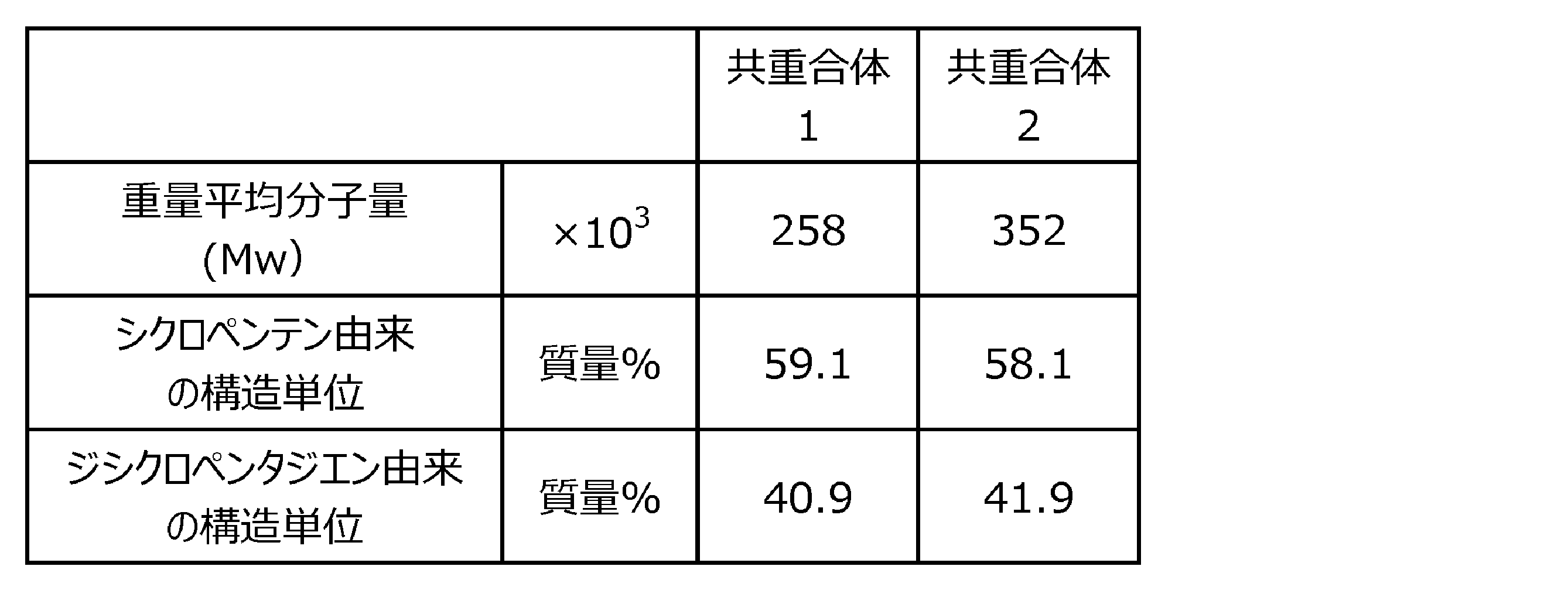
表2に示す配合処方に従って、各成分を配合して混練し、実施例及び比較例の各ゴム組成物を調製した。
得られたゴム組成物に対し、下記の方法で低燃費性、耐摩耗性及び加工性を評価した。結果を表2に示す。
得られたゴム組成物から作製した試験片の損失正接(tanδ)を、粘弾性測定装置(TA Instruments)を用いて、温度50℃、歪10%、周波数15Hzの条件で測定した。また、得られたゴム組成物から作製した試験片の50%歪時のモジュラス(M50)[MPa]を常温で測定した。評価結果は、比較例1のtanδ/M50を100として、指数化した。指数値が小さい程、tanδが小さく、低燃費性に優れることを示す。
JIS K 6264-2:2005に準拠し、上島製作所製ランボーン摩耗試験機を使用して、研磨輪にサンドペーパーを貼り付け、スリップ率8.5%で、室温での摩耗量を測定した。評価結果は、比較例1の摩耗量の逆数を100として、指数化した。指数値が大きい程、摩耗量が少なく、耐摩耗性に優れることを示し、指数103以上で良好とみなすことができる。
未加硫粘弾性装置「RPA2000(ALPHA TECHNOLOGIES社製)」を用い、温度130℃、歪み(捩じり角)1°、周波数100cpmの条件にて、動的貯蔵(せん断)弾性係数G’を測定した。評価結果は、比較例1の値を100として、指数化した。指数値が小さい程、未加硫ゴム粘度が低く、加工性が良好であることを示し、加工指数145以下を良好とみなすことができる。
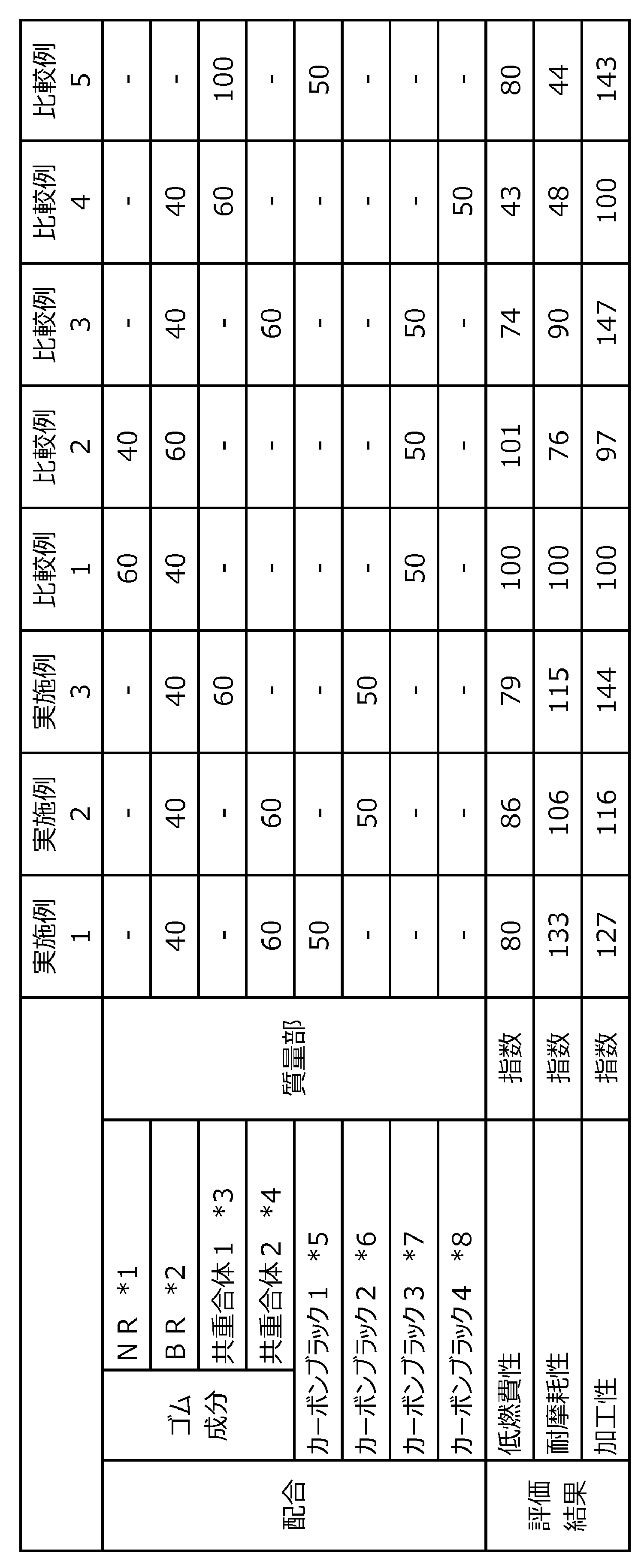
*2 BR: ブタジエンゴム、UBEエラストマー、商品名「BR150L」
*3 共重合体1: 上記の方法で合成したシクロペンテンとノルボルネン系化合物との共重合体
*4 共重合体2: 上記の方法で合成したシクロペンテンとノルボルネン系化合物との共重合体
*5 カーボンブラック1: N234、東海カーボン社製、商品名「シースト7HM」、CTAB吸着比表面積=119m2/g
*6 カーボンブラック2: N220、東海カーボン社製、商品名「シースト6」、CTAB吸着比表面積=111m2/g
*7 カーボンブラック3: CTAB吸着比表面積=130m2/g
*8 カーボンブラック4: N550、旭カーボン社製、商品名「#65」、CTAB吸着比表面積=42m2/g
Claims (9)
- ゴム成分と、セチルトリメチルアンモニウムブロミド(CTAB)吸着比表面積が50m2/g以上125m2/g以下であるカーボンブラックと、を含み、
前記ゴム成分が、シクロペンテンと下記一般式(1):

- 上記一般式(1)で表されるノルボルネン系化合物が、2-ノルボルネン及び/又はジシクロペンタジエンである、請求項1に記載のタイヤ用ゴム組成物。
- 前記シクロペンテンとノルボルネン系化合物との共重合体の含有量が、前記ゴム成分100質量部中、20~90質量部である、請求項1に記載のタイヤ用ゴム組成物。
- 前記シクロペンテンとノルボルネン系化合物との共重合体は、重量平均分子量(Mw)が20万~100万である、請求項1に記載のタイヤ用ゴム組成物。
- 前記シクロペンテンとノルボルネン系化合物との共重合体は、シクロペンテン由来の構造単位の含有割合が20~75質量%である、請求項1に記載のタイヤ用ゴム組成物。
- 前記シクロペンテンとノルボルネン系化合物との共重合体は、2-ノルボルネン由来の構造単位の含有割合が10~60質量%である、請求項2に記載のタイヤ用ゴム組成物。
- 前記シクロペンテンとノルボルネン系化合物との共重合体は、ジシクロペンタジエン由来の構造単位の含有割合が10~60質量%である、請求項2に記載のタイヤ用ゴム組成物。
- 前記カーボンブラックの含有量が、前記ゴム成分100質量部に対して5~80質量部である、請求項1に記載のタイヤ用ゴム組成物。
- 請求項1に記載のタイヤ用ゴム組成物を含むことを特徴とする、タイヤ。
Priority Applications (2)
| Application Number | Priority Date | Filing Date | Title |
|---|---|---|---|
| EP23943790.8A EP4737515A1 (en) | 2023-06-30 | 2023-12-07 | Rubber composition for tires, and tire |
| JP2025529417A JPWO2025004404A1 (ja) | 2023-06-30 | 2023-12-07 |
Applications Claiming Priority (2)
| Application Number | Priority Date | Filing Date | Title |
|---|---|---|---|
| JP2023108692 | 2023-06-30 | ||
| JP2023-108692 | 2023-06-30 |
Publications (1)
| Publication Number | Publication Date |
|---|---|
| WO2025004404A1 true WO2025004404A1 (ja) | 2025-01-02 |
Family
ID=93938324
Family Applications (1)
| Application Number | Title | Priority Date | Filing Date |
|---|---|---|---|
| PCT/JP2023/043873 Ceased WO2025004404A1 (ja) | 2023-06-30 | 2023-12-07 | タイヤ用ゴム組成物及びタイヤ |
Country Status (3)
| Country | Link |
|---|---|
| EP (1) | EP4737515A1 (ja) |
| JP (1) | JPWO2025004404A1 (ja) |
| WO (1) | WO2025004404A1 (ja) |
Citations (12)
| Publication number | Priority date | Publication date | Assignee | Title |
|---|---|---|---|---|
| JPS51122187A (en) * | 1975-04-03 | 1976-10-26 | Goodrich Co B F | Cyclopenteneedicyclopentadiene copolymers and process for producing same |
| JP2009256540A (ja) * | 2008-04-21 | 2009-11-05 | Bridgestone Corp | 冬用タイヤ |
| JP2010116554A (ja) * | 2008-10-16 | 2010-05-27 | Sumitomo Rubber Ind Ltd | ゴム組成物およびそれを用いたタイヤ |
| JP2010116556A (ja) * | 2008-10-16 | 2010-05-27 | Sumitomo Rubber Ind Ltd | ゴム組成物およびそれを用いたタイヤ |
| JP2010215855A (ja) * | 2009-03-18 | 2010-09-30 | Toyo Tire & Rubber Co Ltd | スタッドレスタイヤ用トレッドゴム組成物及びスタッドレスタイヤ |
| JP2011079913A (ja) * | 2009-10-05 | 2011-04-21 | Sumitomo Rubber Ind Ltd | 重合体、タイヤ用ゴム組成物及び空気入りタイヤ |
| WO2014133028A1 (ja) * | 2013-02-26 | 2014-09-04 | 日本ゼオン株式会社 | シクロペンテン開環共重合体、その製造方法およびゴム組成物 |
| WO2020036001A1 (ja) * | 2018-08-17 | 2020-02-20 | 日本ゼオン株式会社 | 環状オレフィン開環共重合体およびその製造方法、ゴム組成物ならびにゴム架橋物 |
| WO2021178235A1 (en) | 2020-03-03 | 2021-09-10 | Exxonmobil Chemical Patents Inc. | Rubber compounds for heavy-duty truck and bus tire treads and methods relating thereto |
| WO2021178233A1 (en) | 2020-03-03 | 2021-09-10 | Exxonmobil Chemical Patents Inc. | Rubber compounds for passenger tire treads and methods relating thereto |
| JP2021147578A (ja) * | 2020-03-23 | 2021-09-27 | 株式会社ブリヂストン | ゴム組成物、及びタイヤ |
| WO2021193076A1 (ja) * | 2020-03-23 | 2021-09-30 | 株式会社ブリヂストン | ゴム組成物、及びタイヤ |
-
2023
- 2023-12-07 WO PCT/JP2023/043873 patent/WO2025004404A1/ja not_active Ceased
- 2023-12-07 EP EP23943790.8A patent/EP4737515A1/en active Pending
- 2023-12-07 JP JP2025529417A patent/JPWO2025004404A1/ja active Pending
Patent Citations (12)
| Publication number | Priority date | Publication date | Assignee | Title |
|---|---|---|---|---|
| JPS51122187A (en) * | 1975-04-03 | 1976-10-26 | Goodrich Co B F | Cyclopenteneedicyclopentadiene copolymers and process for producing same |
| JP2009256540A (ja) * | 2008-04-21 | 2009-11-05 | Bridgestone Corp | 冬用タイヤ |
| JP2010116554A (ja) * | 2008-10-16 | 2010-05-27 | Sumitomo Rubber Ind Ltd | ゴム組成物およびそれを用いたタイヤ |
| JP2010116556A (ja) * | 2008-10-16 | 2010-05-27 | Sumitomo Rubber Ind Ltd | ゴム組成物およびそれを用いたタイヤ |
| JP2010215855A (ja) * | 2009-03-18 | 2010-09-30 | Toyo Tire & Rubber Co Ltd | スタッドレスタイヤ用トレッドゴム組成物及びスタッドレスタイヤ |
| JP2011079913A (ja) * | 2009-10-05 | 2011-04-21 | Sumitomo Rubber Ind Ltd | 重合体、タイヤ用ゴム組成物及び空気入りタイヤ |
| WO2014133028A1 (ja) * | 2013-02-26 | 2014-09-04 | 日本ゼオン株式会社 | シクロペンテン開環共重合体、その製造方法およびゴム組成物 |
| WO2020036001A1 (ja) * | 2018-08-17 | 2020-02-20 | 日本ゼオン株式会社 | 環状オレフィン開環共重合体およびその製造方法、ゴム組成物ならびにゴム架橋物 |
| WO2021178235A1 (en) | 2020-03-03 | 2021-09-10 | Exxonmobil Chemical Patents Inc. | Rubber compounds for heavy-duty truck and bus tire treads and methods relating thereto |
| WO2021178233A1 (en) | 2020-03-03 | 2021-09-10 | Exxonmobil Chemical Patents Inc. | Rubber compounds for passenger tire treads and methods relating thereto |
| JP2021147578A (ja) * | 2020-03-23 | 2021-09-27 | 株式会社ブリヂストン | ゴム組成物、及びタイヤ |
| WO2021193076A1 (ja) * | 2020-03-23 | 2021-09-30 | 株式会社ブリヂストン | ゴム組成物、及びタイヤ |
Also Published As
| Publication number | Publication date |
|---|---|
| EP4737515A1 (en) | 2026-05-06 |
| JPWO2025004404A1 (ja) | 2025-01-02 |
Similar Documents
| Publication | Publication Date | Title |
|---|---|---|
| CN105073823B (zh) | 环戊烯开环共聚物、其制造方法及橡胶组合物 | |
| KR102757945B1 (ko) | 고리형 올레핀 개환 공중합체 및 그 제조 방법, 고무 조성물 그리고 고무 가교물 | |
| EP3354675B1 (en) | Cyclopentene ring-opened copolymer | |
| JP7206672B2 (ja) | 耐破壊特性材料用組成物、耐破壊特性材料用架橋物および耐破壊特性材料 | |
| KR102805219B1 (ko) | 개환 공중합체 | |
| CN106661203A (zh) | 环状烯烃系橡胶和其制造方法、以及橡胶组合物、橡胶交联物和轮胎 | |
| JP7556361B2 (ja) | 開環共重合体 | |
| KR102778230B1 (ko) | 개환 공중합체 조성물 | |
| WO2025004407A1 (ja) | タイヤ用ゴム組成物及びタイヤ | |
| WO2025004406A1 (ja) | タイヤ用ゴム組成物及びタイヤ | |
| WO2025004405A1 (ja) | タイヤ用ゴム組成物及びタイヤ | |
| WO2025169607A1 (ja) | タイヤ用ゴム組成物及びタイヤ | |
| EP4502058A1 (en) | Rubber composition and crosslinked rubber object | |
| EP4737515A1 (en) | Rubber composition for tires, and tire | |
| JP6701892B2 (ja) | 重荷重タイヤ用ゴム組成物 | |
| WO2025004409A1 (ja) | タイヤ用ゴム組成物及びタイヤ | |
| WO2025004408A1 (ja) | タイヤ用ゴム組成物及びタイヤ | |
| WO2025070000A1 (ja) | ゴム組成物、ゴム架橋物、およびタイヤ | |
| EP4640736A1 (en) | Ring-opened copolymer, rubber composition, rubber cross-linked product, and tire | |
| EP3502179A1 (en) | Use of crosslinked rubber | |
| JP2020015834A (ja) | 耐屈曲疲労性材料用組成物、耐屈曲疲労性材料用架橋物および耐屈曲疲労性材料 |
Legal Events
| Date | Code | Title | Description |
|---|---|---|---|
| 121 | Ep: the epo has been informed by wipo that ep was designated in this application |
Ref document number: 23943790 Country of ref document: EP Kind code of ref document: A1 |
|
| ENP | Entry into the national phase |
Ref document number: 2025529417 Country of ref document: JP Kind code of ref document: A |
|
| WWE | Wipo information: entry into national phase |
Ref document number: 2025529417 Country of ref document: JP |
|
| WWE | Wipo information: entry into national phase |
Ref document number: 2023943790 Country of ref document: EP |
|
| NENP | Non-entry into the national phase |
Ref country code: DE |
|
| ENP | Entry into the national phase |
Ref document number: 2023943790 Country of ref document: EP Effective date: 20260130 |
|
| ENP | Entry into the national phase |
Ref document number: 2023943790 Country of ref document: EP Effective date: 20260130 |
|
| WWP | Wipo information: published in national office |
Ref document number: 2023943790 Country of ref document: EP |