WO2025004260A1 - アドレス設定装置、冷凍サイクルシステムおよびアドレス設定方法 - Google Patents
アドレス設定装置、冷凍サイクルシステムおよびアドレス設定方法 Download PDFInfo
- Publication number
- WO2025004260A1 WO2025004260A1 PCT/JP2023/024126 JP2023024126W WO2025004260A1 WO 2025004260 A1 WO2025004260 A1 WO 2025004260A1 JP 2023024126 W JP2023024126 W JP 2023024126W WO 2025004260 A1 WO2025004260 A1 WO 2025004260A1
- Authority
- WO
- WIPO (PCT)
- Prior art keywords
- address
- unit
- devices
- determination unit
- initial
- Prior art date
- Legal status (The legal status is an assumption and is not a legal conclusion. Google has not performed a legal analysis and makes no representation as to the accuracy of the status listed.)
- Ceased
Links
Images




Classifications
-
- H—ELECTRICITY
- H04—ELECTRIC COMMUNICATION TECHNIQUE
- H04L—TRANSMISSION OF DIGITAL INFORMATION, e.g. TELEGRAPHIC COMMUNICATION
- H04L61/00—Network arrangements, protocols or services for addressing or naming
- H04L61/50—Address allocation
Definitions
- This technology relates to an address setting device, a refrigeration cycle system, and an address setting method that sets addresses used when communicating with devices capable of communicating within the system.
- it relates to setting addresses for units that make up the refrigeration cycle device.
- a refrigeration cycle system is configured by combining the refrigeration cycle equipment with other equipment.
- a refrigeration cycle system a system is built that allows communication between the equipment, etc., and coordinated operation and management of the equipment are performed.
- a unique number or the like is set as an address for each device.
- the control device possessed by each device uses the address to identify each device, etc.
- One method for setting an address is, for example, to operate a dip switch on the device.
- the communication terminal and an address setter are directly connected via the terminal.
- a communication terminal has been proposed in which the address setter applies an address input based on a voltage level via the terminal and stores the set address in memory (see, for example, Patent Document 1).
- Another method has been proposed in which an address setting device is provided to set addresses, and addresses are automatically set in each unit (see, for example, Patent Document 2).
- equipment that requires detailed control such as equipment installed in locations with high thermal loads, tends to have a high volume of communication.
- equipment that requires detailed control such as equipment installed in locations with high thermal loads, tends to have a high volume of communication.
- the objective is to provide an address setting device, a refrigeration cycle system, and an address setting method that can automatically and dynamically change address settings.
- the disclosed address setting device is an address setting device that sets communication-related addresses for multiple devices connected within a system, and includes an initial address determination unit that determines an initial address that serves as an initial value for each device within the system, a modified address determination unit that determines the order of devices that are to have priority for communication based on the operating state of the devices while the system is running and determines an address based on the order, and an address setting unit that sets the addresses determined by the initial address determination unit and the modified address determination unit.
- the disclosed refrigeration cycle system is configured by communicatively connecting at least two devices, namely, a heat source unit, an indoor unit, a water heater and a refrigerator, a ventilation device, and a remote controller, related to the refrigeration cycle device, to the address setting device, and the address setting device sets the addresses of the devices.
- the disclosed address setting method is an address setting method for setting communication addresses for multiple devices connected within a system, and includes the steps of determining an initial address that serves as an initial value for each device within the system and setting the address, and determining an order of devices that will have communication priority based on the operating status of the devices while the system is running, determining an address based on the order, and changing the setting to the determined address.
- the initial address determination unit automatically determines the initial address
- the changed address determination unit determines the address in the order of communication priority based on the operating status of the equipment while the system is running.
- FIG. 1 is a diagram illustrating a configuration of a refrigeration cycle system according to a first embodiment.
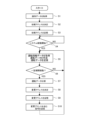
- FIG. 4 is a diagram illustrating a procedure for address setting according to the first embodiment.
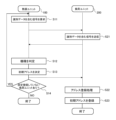
- FIG. FIG. 10 is a diagram illustrating a pre-determined rule according to the first embodiment. 10 is a diagram illustrating an example of a procedure for determining an initial address based on precondition data according to the first embodiment;
- FIG. FIG. 11 is a diagram illustrating the configuration of a refrigeration cycle system according to a second embodiment.
- FIG. 11 is a diagram illustrating the configuration of a refrigeration cycle system according to a third embodiment.
- Fig. 1 is a diagram for explaining the configuration of a refrigeration cycle system according to embodiment 1.
- the refrigeration cycle system in embodiment 1 is a system configured with a refrigeration cycle device having a refrigerant circuit in which a heat source unit 100 and a plurality of load units 200 are connected by piping 400.
- the configurations of the refrigeration cycle device and the refrigeration cycle system in Fig. 1 are merely examples and are not limiting.
- the refrigeration cycle device shown in FIG. 1 has a heat source unit 100 and a load unit 200 as equipment.
- the refrigeration cycle device is configured by connecting the heat source unit 100 and five load units 200 (load unit 200A, load unit 200B, load unit 200C, load unit 200D, and load unit 200E) with piping 400.
- the heat source unit 100 sends a refrigerant that serves as a heat source to the load unit 200.
- the load unit 200 is a unit that uses the refrigerant sent from the heat source unit 100 to heat or cool a thermal load.
- the thermal load of the load unit 200 is, for example, air, water, or an item.
- the load unit 200 may be, for example, an indoor unit that conditions the air in a room that is the space to be air-conditioned, a water heater that heats water to supply hot water, or a refrigerator that cools an item to be cooled.
- Each unit in the first embodiment has not only an operating system device that performs heating or cooling in response to a thermal load, but also a communication and control system device.
- the configuration of the devices related to the communication and control systems in the system (hereinafter referred to as the control system devices) will be particularly described.
- the heat source unit 100 which is an equipment
- each load unit 200 are communicatively connected via a communication line 300, and can communicate signals including various data.
- the heat source unit 100 has a compressor (not shown), a heat exchanger (not shown), a throttling device (not shown), and a heat source fan (not shown) as operating system devices.
- the heat source unit 100 also has a heat source side control device 110, a heat source side communication device 120, and a heat source side memory device 130 as control system devices.
- the heat source side control device 110, the heat source side communication device 120, and the heat source side memory device 130 are each considered to be independent devices, but for example, these devices may be installed on a board and configured as a single control device.
- the heat source side control device 110 in embodiment 1 controls the operating system devices of the heat source unit 100.
- the heat source side control device 110 in embodiment 1 is particularly an address setting device, and performs processing related to setting the initial address used by each unit when communicating within the system and setting changes to the address. For this reason, the heat source side control device 110 in embodiment 1 has particularly an address determination unit 111, an address setting unit 112, and an operating state acquisition unit 113. Processing other than that performed by the address determination unit 111, the address setting unit 112, and the operating state acquisition unit 113 is performed by the heat source side control device 110.
- the address determination unit 111 performs a process of determining an address to be assigned to each unit in the refrigeration cycle device.
- the address determination unit 111 in the first embodiment has an initial address determination unit 111A and a changed address determination unit 111B.
- the initial address determination unit 111A determines an address to be set as an initial value for each unit when the refrigeration cycle device is installed in the facility as an initial address.
- the initial address determination unit 111A may determine the initial address randomly.
- the initial address determination unit 111A determines the initial address based on a pre-defined condition for determining the initial address in advance. However, this is not limited to this. By setting an optimal address determination method as a pre-defined condition in advance, more efficient communication between devices can be performed even in the early stages of system operation.
- the changed address determination unit 111B determines a changed address for each unit based on the operating state of each unit and performs an address change process.
- the changed address is an address determined based on a priority order when the timing of sending signals overlaps on the communication line 300.
- the address setting unit 112 performs setting processing on the address determined by the address determination unit 111, and stores the address as data in the address storage unit 131 of the heat source side storage device 130, which will be described later.
- the operating state acquisition unit 113 acquires data indicating the operating state contained in the signal sent from each load unit 200 via the communication line 300, performs processing such as associating the data with an address, and stores the operating data in the operating data storage unit 132 of the heat source side storage device 130 described below.
- the operating state data is data indicating the operating state of the unit, such as the operation history by the user, the operating time, the time it takes to reach the set temperature, and the state of the equipment of the unit. The processing performed by the heat source side control device 110 will be described later.
- the heat source side communication device 120 is connected to the communication line 300, and serves as an interface for signal communication between the communication line 300 and the heat source side control device 110, transmitting and receiving various signals. Unless otherwise specified, communication between the heat source side control device 110 and other devices is assumed to be performed via the heat source side communication device 120 and the communication line 300.
- the heat source side memory device 130 also temporarily or long-term stores data required for the heat source side control device 110 to perform processing.
- the heat source side memory device 130 has, in particular, an address memory unit 131 and an operation data memory unit 132.
- the address memory unit 131 stores the address data set by the address setting unit 112.
- the operation data memory unit 132 stores the operation data of each unit acquired by the operation state acquisition unit 113.
- the heat source side control device 110 is usually configured with a device that performs control and arithmetic processing, such as a microcomputer centered on a CPU (Central Processing Unit).
- the heat source side control device 110 programs the processing procedures performed by each part in advance and executes the program to realize the processing of each part.
- the heat source side storage device 130 has the program data.
- the realization of the processing is not limited to the execution of the program, and each part may be configured with a separate dedicated device to realize it.
- the heat source side storage device 130 has a volatile storage device (not shown) such as a random access memory (RAM) that can temporarily store data, and a hard disk, a non-volatile auxiliary storage device (not shown) such as a flash memory that can store data for the long term.
- a volatile storage device such as a random access memory (RAM) that can temporarily store data
- a hard disk such as a hard disk
- a non-volatile auxiliary storage device such as a flash memory that can store data for the long term.
- the load unit 200 also has a heat exchanger (not shown) and an indoor fan (not shown) as operating system devices. It also has a load side control device 210, a load side communication device 220, and a load side storage device 230 as control system devices.
- the load side control device 210, the load side communication device 220, and the load side storage device 230 are each considered to be independent devices, but for example, these devices may be installed on a board and configured as a single control device.
- the load side control device 210 controls the operating system devices of the load unit 200.
- the load side control device 210 also has an address registration unit 211.
- the address registration unit 211 performs processing to set the address determined by the address determination unit 111 of the heat source side control device 110 for its own load unit 200 to be controlled, based on a signal sent from the heat source unit 100.
- the load side control device 210 also performs processing other than that in the address registration unit 211.
- the load side communication device 220 is connected to the communication line 300, and serves as an interface for signal communication between the communication line 300 and the load side control device 210, transmitting and receiving various signals. Unless otherwise specified, communication between the load side control device 210 and other devices is assumed to be performed via the load side communication device 220 and the communication line 300.
- the load-side memory device 230 also stores data required for the load-side control device 210 to perform processing.
- the load-side memory device 230 has, in particular, an address memory unit 231, which is a non-volatile auxiliary memory device (not shown), and stores and registers data of addresses determined by the address determination unit 111 of the heat source-side control device 110.
- FIG. 2 is a diagram explaining the procedure for address setting according to the first embodiment.
- the address setting process in FIG. 2 will be explained as the heat source side control device 110, which serves as the address setting device, performing the process in each step.
- the heat source side control device 110 acquires the identification data (step S1).
- the initial address determination unit 111A determines the initial address of each unit based on the identification data and the predefined rules (step S2).
- the predefined rules in the first embodiment include address recommendation setting data that classifies addresses in advance based on the model, and priority condition data that is data indicating the priority conditions that determine the order of priority. The determination of the initial address will be described later.
- the address setting unit 112 stores the data of the initial addresses of each unit determined by the initial address determination unit 111A in the address storage unit 131 of the heat source side storage device 130 (step S3). Furthermore, the address setting unit 112 sends a signal including the data of the initial addresses determined by the initial address determination unit 111A to the load side control device 210 of each load unit 200 via the communication line 300.
- the operating state acquisition unit 113 of the heat source side control device 110 acquires operating state data indicating the operating state contained in the signals sent from each unit at set regular intervals.
- the operating state acquisition unit 113 also creates operating data that associates the operating state data with the addresses of each unit.
- the operating state acquisition unit 113 stores the operating data in the operating data storage unit 132 of the heat source side memory device 130 (step S5).
- the change address determination unit 111B in the address determination unit 111 of the heat source side control device 110 analyzes the operation data (step S7).
- the certain period of time is, for example, one month.
- the change address determination unit 111B determines the change address of each unit based on the analysis (step S8).
- the change address determination unit 111B performs a process of determining the change address when the operation of the refrigeration cycle system has elapsed for a certain period of time, but this is not limited to this. For example, a process of determining whether the change address determination unit 111B will determine the change address may be performed based on the analysis of the operation data.
- the change address determination unit 111B determines the order of communication priority based on the operation time, and changes the addresses to consecutive addresses in order of priority, starting from the smallest number, regardless of the initial address. For example, if the operation time of a unit is long, the deterioration of the operating system devices in the unit progresses, making the unit or the equipment of the unit more likely to break down. Therefore, the heat source side control device 110 shortens the interval at which it acquires the operation state data to perform detailed monitoring. At this time, in order to minimize the occurrence of waiting for signal transmission and to prevent communication delays, the priority order of communication is raised.
- the determination of the change address performed by the change address determination unit 111B is not limited to the operation time.
- the change address determination unit 111B may perform analysis based on other operation state data or a combination of multiple operation state data to determine the change address of each unit.
- the address setting unit 112 stores the data of the changed addresses in each unit determined by the changed address determination unit 111B in the address storage unit 131 of the heat source side memory device 130 (step S9). Furthermore, the address setting unit 112 sends a signal including the data of the changed addresses determined by the changed address determination unit 111B to the load side controller 210 of each load unit 200 via the communication line 300 (step S10). The heat source side controller 110 then returns to step S5, and repeatedly creates operating data and determines changed addresses based on steps S6 to S10 at a fixed frequency.
- step S5 the operating state acquisition unit 113 acquires operating state data indicating the operating state contained in the signal sent from each unit at regular intervals and creates operating data.
- the heat source side control device 110 which is the address setting device, may detect signs of malfunction due to failure, deterioration, or a fault in the operating system device in the unit, such as an abnormal change in the drive frequency of the compressor, based on the obtained operating data. Then, when the change address determination unit 111B of the heat source side control device 110 detects signs of malfunction in the unit, it may immediately determine the change address without waiting for the timing of setting the change address based on the judgment of step S6, which is performed periodically.
- the change address determination unit 111B does not need to strictly determine the change addresses of all units.
- the change address determination unit 111B may determine a change address that interrupts a number that prioritizes communication for a unit in which a sign of malfunction has been detected, and the address setting unit 112 may urgently perform the process of setting the change address. At this time, a process may be performed to shift the address number changed after the interrupt.
- the heat source side control device 110 which acts as the address setting device, may notify an administrator, maintenance company, etc. by sending a signal including information about the address change, the unit that has been changed, and the reason for the change.
- the operating state acquisition unit 113 of the heat source side control device 110 has been described as acquiring operating state data indicating the operating state contained in the signal sent from each unit at regular intervals, but this is not limited to this.
- the operating state acquisition unit 113 may acquire operating state data of a unit that has detected signs of malfunction at intervals shorter than the regular intervals.
- the heat source side control device 110 can monitor the unit that has detected signs of malfunction more closely. Since a small address number is set for the unit that has detected signs of malfunction, signal delays can be prevented and communication can be performed efficiently.
- the operating state data of a unit that has detected signs of malfunction is acquired at intervals shorter than the regular intervals, but for example, the types of operating state data may be increased.
- the address setting unit 112 stores the changed address data determined by the changed address determination unit 111B in the address memory unit 131 of the heat source side memory device 130.
- the initial address stored in the address memory unit 131 is overwritten, but this is not limited to this.
- the initial address may be stored in a different area.
- the changed address is further changed to a different changed address and stored in the address memory unit 131, it may be stored in a different area in the same way.
- FIG. 3 is a diagram explaining the pre-determination according to the first embodiment.
- the pre-determination according to the first embodiment includes address recommendation setting data. For this reason, as shown in FIG. 3, addresses are classified according to the type of device. When the device is a heat source unit 100, addresses 000 to 010 are assigned. When the device is a water heater which is a load unit 200, addresses 011 to 030 are assigned. When the device is an indoor unit which is a load unit 200, addresses 031 to 100 are assigned. When the device is a chiller which is a load unit 200, addresses 101 to 120 are assigned.
- the classification of the initial addresses of the units constituting the refrigeration cycle device has been described, but initial addresses may be specified for devices other than the units constituting the refrigeration cycle device.
- the pre-determination includes priority condition data.
- the priority condition is to prioritize communication with units with addresses having smaller numbers. Therefore, based on the pre-determination in FIG. 3, the water heater is set to have priority over the indoor unit based on the classification of equipment in the initial address.
- the condition for setting the initial address and the priority condition can be set not just once, but multiple times. For example, it is possible to set equipment classifications or priority conditions such as prioritizing the addresses of units with model numbers that require more detailed management.
- FIG. 4 is a diagram illustrating an example of a procedure for determining an initial address based on precondition data according to the first embodiment.
- the initial address determination unit 111A of the heat source side control device 110 requests a signal including identification data from the load unit 200 (step S11).
- the requested load unit 200 transmits a signal including the identification data (step S21).
- the initial address determination unit 111A determines the model of the load unit 200 based on the identification data included in the signal from the load unit 200 (step S12). Then, the initial address determination unit 111A determines an initial address based on the determined model based on the pre-defined rules shown in FIG. 3 (step S13). The initial address determination unit 111A determines whether there is a load unit 200 for which an initial address has not been set and registered (step S14). If the initial address determination unit 111A determines that there is a load unit 200 for which an initial address has not been set and registered, it repeats the above process to determine the initial addresses of each load unit 200 and have the load side control device 210 of the load unit 200 set them respectively.
- the address registration unit 211 performs an address registration process (step S22).
- the address registration unit 211 stores the initial address data contained in the sent address signal in the address storage unit 231 of the load-side storage device 230, and registers the initial address (step S23).
- the address registration unit 211 also performs a similar address registration process when an address signal containing the above-mentioned changed address data is sent.
- the initial address determination unit 111A of the address determination unit 111 automatically sets the initial address based on the type of device. This eliminates the need to set the address using a dip switch or the like, and can improve the efficiency of installing the refrigeration cycle device. In addition, it can reduce the amount of work that workers have to do in high places such as above the ceiling.
- the change address determination unit 111B determines the change address in the order of communication priority based on the operating state of each unit while the refrigeration cycle system is in operation, and dynamically changes the address. Therefore, by setting the address according to the operating state, it is possible to prioritize communication with units that require detailed control or data acquisition, and communication within the system can be carried out efficiently. Also, by changing the addresses of units within the system to addresses with consecutive numbers, it is possible to increase the number of units that are connected for communication within the system without being restricted by model classification.
- FIG. 5 is a diagram for explaining the configuration of a refrigeration cycle system according to the second embodiment.
- devices and the like having the same reference numerals as those in Fig. 1 perform the same operations as those explained in the first embodiment.
- An external device 500 in the second embodiment is an external device other than the control device of the unit in the refrigeration cycle device.
- the external device 500 is, for example, a device capable of processing various data, such as a computer.
- the external device 500 in the second embodiment has an external processing device 510 and an external storage device 520.
- the external processing device 510 has an address determination unit 511 and an operating state acquisition unit 512 similar to the address determination unit 111 and the operating state acquisition unit 113 described in the first embodiment.
- the external storage device 520 has an operating data storage unit 521 similar to the operating data storage unit 132.
- the heat source side control device 110 that controls the heat source unit 100 of the refrigeration cycle device serves as the address setting device and sets the address in the refrigeration cycle system.
- an external device 500 that is independent of the refrigeration cycle device serves as the address setting device and sets the address in the refrigeration cycle device. The process related to address setting performed by the external device 500 is the same as the process described in the first embodiment.
- the external device 500 and the heat source unit 100 are directly connected by a communication line, but this is not limited to this.
- the external device 500 may be equipped with a communication device or the like, and may be communicatively connected via a public telecommunications line (not shown).
- the external device 500 may be a cloud server provided by a cloud service.
- the external device 500 serves as an address setting device, and by setting the address of the refrigeration cycle system, the load on the control device that controls the operation system devices of the units within the refrigeration cycle device can be reduced.
- Fig. 6 is a diagram for explaining the configuration of a refrigeration cycle system according to the third embodiment.
- the devices and the like having the same reference numerals as those in Figs. 1 and 5 perform the same operations as those explained in the first and second embodiments.
- the external processing device 510 has a property data creation unit 513
- the external storage device 520 has a property data storage unit 522.
- the property data creation unit 513 creates property data that associates identification data such as the type and serial number of each unit with an address.
- the property data storage unit 522 stores the property data as a database.
- the address determination unit 111 determines the initial address when a signal including identification data for identifying each unit, such as the type of the load unit 200, is sent.
- the identification data also includes data for identifying the load unit 200, such as a serial number.
- a serial number For example, in drawings such as BIM (Building Information Modeling), data on the type of load unit 200, such as an indoor unit for air conditioning and a water heater, can be obtained, but it is difficult to obtain individual data for each unit.
- the property data creation unit 513 creates property data by associating the identification data with the address based on the identification data acquired when performing the address setting process.
- the property data creation unit 513 then stores the property data in the property data storage unit 522. This makes it possible to automatically grasp the property of the refrigeration cycle device.
- the property data may be included when sending a signal to notify the manager, maintenance company, etc.
- the manager, etc. can obtain information such as the serial number of the operating device showing signs of malfunction and the address of the corresponding unit. This allows the manager, etc. to take action such as investigating the cause of the malfunction and requesting further operating data.
- Embodiment 4 In the above-mentioned embodiment 1, the address setting in the units constituting the refrigeration cycle device has been described, but the present invention is not limited thereto and can be applied to devices that communicate within the refrigeration cycle system.
- the present invention can be applied to control system devices other than the devices constituting the refrigerant circuit, such as a remote controller.
- the present invention can also be applied to devices outside the refrigeration cycle device, such as a ventilation device. For example, by prioritizing communication with the remote controller, the response to the user's operation of the refrigeration cycle system can be made faster, thereby improving the comfort of the user.
- the changed addresses are described as being consecutive numbers in order of priority, but this is not limited to this.
- the changed addresses may be initial addresses to which branch numbers indicating priority have been added.
- models whose addresses are set by DIP switches or the like can be managed separately from models whose addresses cannot be changed automatically, depending on whether or not they have branch numbers.
- the initial address determination unit 111A of the address determination unit 111 determines the initial address based on the address recommendation setting data, but this is not limited to this.
- the initial address determination unit 111A may determine the initial address by determining the model based on a drawing such as a BIM that shows the placement of the load units 200 in the facility.
- the initial address determination unit 111A may determine the load unit 200 that should be prioritized for communication based on data related to the thermal load in the facility, and determine the initial address.
Landscapes
- Engineering & Computer Science (AREA)
- Computer Networks & Wireless Communication (AREA)
- Signal Processing (AREA)
- Air Conditioning Control Device (AREA)
Priority Applications (2)
| Application Number | Priority Date | Filing Date | Title |
|---|---|---|---|
| JP2025529117A JPWO2025004260A1 (https=) | 2023-06-29 | 2023-06-29 | |
| PCT/JP2023/024126 WO2025004260A1 (ja) | 2023-06-29 | 2023-06-29 | アドレス設定装置、冷凍サイクルシステムおよびアドレス設定方法 |
Applications Claiming Priority (1)
| Application Number | Priority Date | Filing Date | Title |
|---|---|---|---|
| PCT/JP2023/024126 WO2025004260A1 (ja) | 2023-06-29 | 2023-06-29 | アドレス設定装置、冷凍サイクルシステムおよびアドレス設定方法 |
Publications (1)
| Publication Number | Publication Date |
|---|---|
| WO2025004260A1 true WO2025004260A1 (ja) | 2025-01-02 |
Family
ID=93937992
Family Applications (1)
| Application Number | Title | Priority Date | Filing Date |
|---|---|---|---|
| PCT/JP2023/024126 Ceased WO2025004260A1 (ja) | 2023-06-29 | 2023-06-29 | アドレス設定装置、冷凍サイクルシステムおよびアドレス設定方法 |
Country Status (2)
| Country | Link |
|---|---|
| JP (1) | JPWO2025004260A1 (https=) |
| WO (1) | WO2025004260A1 (https=) |
Citations (5)
| Publication number | Priority date | Publication date | Assignee | Title |
|---|---|---|---|---|
| WO2006035478A1 (ja) * | 2004-09-27 | 2006-04-06 | Hewlett-Packard Development Company, L.P. | コンピュータシステムおよびその方法 |
| JP2017520053A (ja) * | 2014-06-18 | 2017-07-20 | クアルコム,インコーポレイテッド | マルチプロトコルデバイスによって共有される動的調整可能なマルチラインバス |
| JP2018056725A (ja) * | 2016-09-27 | 2018-04-05 | 東芝キヤリア株式会社 | 通信システム、通信システムに用いるマスター機およびスレーブ機、ならびに通信システム内のアドレス割り当て方法 |
| JP2019166654A (ja) * | 2018-03-22 | 2019-10-03 | コニカミノルタ株式会社 | 画像処理装置及びプログラム |
| JP2023032671A (ja) * | 2021-08-27 | 2023-03-09 | サクサ株式会社 | セキュリティ管理装置 |
Family Cites Families (1)
| Publication number | Priority date | Publication date | Assignee | Title |
|---|---|---|---|---|
| JP7206051B2 (ja) * | 2018-03-15 | 2023-01-17 | 株式会社エヌ・ティ・ティ・データ | 監視システム |
-
2023
- 2023-06-29 JP JP2025529117A patent/JPWO2025004260A1/ja active Pending
- 2023-06-29 WO PCT/JP2023/024126 patent/WO2025004260A1/ja not_active Ceased
Patent Citations (5)
| Publication number | Priority date | Publication date | Assignee | Title |
|---|---|---|---|---|
| WO2006035478A1 (ja) * | 2004-09-27 | 2006-04-06 | Hewlett-Packard Development Company, L.P. | コンピュータシステムおよびその方法 |
| JP2017520053A (ja) * | 2014-06-18 | 2017-07-20 | クアルコム,インコーポレイテッド | マルチプロトコルデバイスによって共有される動的調整可能なマルチラインバス |
| JP2018056725A (ja) * | 2016-09-27 | 2018-04-05 | 東芝キヤリア株式会社 | 通信システム、通信システムに用いるマスター機およびスレーブ機、ならびに通信システム内のアドレス割り当て方法 |
| JP2019166654A (ja) * | 2018-03-22 | 2019-10-03 | コニカミノルタ株式会社 | 画像処理装置及びプログラム |
| JP2023032671A (ja) * | 2021-08-27 | 2023-03-09 | サクサ株式会社 | セキュリティ管理装置 |
Also Published As
| Publication number | Publication date |
|---|---|
| JPWO2025004260A1 (https=) | 2025-01-02 |
Similar Documents
| Publication | Publication Date | Title |
|---|---|---|
| US9250663B2 (en) | System and method for dynamically modeling data center partitions | |
| US7424345B2 (en) | Automated part procurement and service dispatch | |
| US8634962B2 (en) | Method and apparatus for efficiently coordinating data center cooling units | |
| JP6701373B2 (ja) | 空気調和装置 | |
| EP3657086B1 (en) | Apparatus control method and device | |
| CN113455014B (zh) | 设备管理系统 | |
| US12578111B2 (en) | Heating, ventilation, and/or air conditioning system fault log management systems | |
| US10417596B2 (en) | Point-based risk score for managing environmental systems | |
| US11243005B2 (en) | Determining the cause of a fault in an HVAC system | |
| WO2010041386A1 (ja) | 空気調和装置の遠隔管理システムおよび遠隔管理方法 | |
| WO2019220507A1 (ja) | 故障診断システム | |
| KR101259803B1 (ko) | 멀티에어컨 통합관리 시스템 및 그의 에러관리방법 | |
| US11722331B2 (en) | Device management system | |
| US20240430121A1 (en) | Real-time monitoring system of home appliances sold by region and method for control thereof | |
| WO2025004260A1 (ja) | アドレス設定装置、冷凍サイクルシステムおよびアドレス設定方法 | |
| CN113465109B (zh) | 多联机的低能耗待机控制方法及装置、介质 | |
| KR100554282B1 (ko) | 멀티에어컨의 실내기 우선제어방법 | |
| WO2024224601A1 (ja) | 冷凍サイクルシステム | |
| WO2026074279A1 (en) | Data centre monitoring | |
| US20230341143A1 (en) | Air-Conditioning System | |
| CN100437510C (zh) | 供暖、通风和空调系统中全系统故障的有序记录 | |
| CN117889095A (zh) | 用于预测风扇马达故障的系统及其方法 | |
| KR101243230B1 (ko) | 공기조화시스템 | |
| JP2026044325A (ja) | 家電機器管理装置およびプログラム | |
| JPWO2022254612A5 (ja) | 空調システムの保守作業を支援するシステム、方法、および保守支援装置 |
Legal Events
| Date | Code | Title | Description |
|---|---|---|---|
| 121 | Ep: the epo has been informed by wipo that ep was designated in this application |
Ref document number: 23943655 Country of ref document: EP Kind code of ref document: A1 |
|
| ENP | Entry into the national phase |
Ref document number: 2025529117 Country of ref document: JP Kind code of ref document: A |
|
| WWE | Wipo information: entry into national phase |
Ref document number: 2025529117 Country of ref document: JP |
|
| NENP | Non-entry into the national phase |
Ref country code: DE |