WO2024262467A1 - リーン車両用画像処理装置 - Google Patents
リーン車両用画像処理装置 Download PDFInfo
- Publication number
- WO2024262467A1 WO2024262467A1 PCT/JP2024/021932 JP2024021932W WO2024262467A1 WO 2024262467 A1 WO2024262467 A1 WO 2024262467A1 JP 2024021932 W JP2024021932 W JP 2024021932W WO 2024262467 A1 WO2024262467 A1 WO 2024262467A1
- Authority
- WO
- WIPO (PCT)
- Prior art keywords
- lane
- traveling
- center
- vehicle
- image
- Prior art date
- Legal status (The legal status is an assumption and is not a legal conclusion. Google has not performed a legal analysis and makes no representation as to the accuracy of the status listed.)
- Ceased
Links
Images


Classifications
-
- G—PHYSICS
- G06—COMPUTING OR CALCULATING; COUNTING
- G06T—IMAGE DATA PROCESSING OR GENERATION, IN GENERAL
- G06T7/00—Image analysis
-
- G—PHYSICS
- G08—SIGNALLING
- G08G—TRAFFIC CONTROL SYSTEMS
- G08G1/00—Traffic control systems for road vehicles
- G08G1/16—Anti-collision systems
Definitions
- This invention relates to an image processing device for a lean vehicle that is mounted on a lean vehicle.
- Patent Document 1 proposes an arrival time estimation device that extracts feature points from images of an object captured in time series by an imaging device mounted on the vehicle and estimates the time it will take for the vehicle to reach the object based on the extracted feature points, and a driving assistance control device that uses the estimated arrival time to perform control to assist the driver in operating the vehicle.
- Patent Document 1 also proposes a lean vehicle that includes an imaging device, an arrival time estimation device, and a driving assistance control device.
- the lean vehicle is, for example, a motorcycle or other such vehicle.
- the device proposed in Patent Document 1 which combines an imaging device, a time-to-arrival estimation device, and a driving assistance control device, can be rephrased as an image processing device including an imaging device that acquires images and a recognition device that processes the acquired images to recognize objects.
- the imaging device generally includes an optical device such as a lens and an image sensor such as a CMOS (Complementary Metal Oxide Semiconductor) sensor.
- the recognition device generally includes a processor such as an FPGA (Field-Programmable Gate Array), a GPU (Graphics Processing Unit), a CPU (Central Processing Unit), or a SoC (System on Chip) that processes images, and a memory such as a RAM (Random Access Memory).
- a SoC has a form in which a processor and a memory are integrated.
- Patent Document 1 states that the imaging device may be a monocular camera or a stereo camera.
- Patent Document 1 The arrival time described in Patent Document 1 corresponds to the so-called TTC (Time to Collision).
- TTC Time to Collision
- Non-Patent Document 1 describes that an appropriate TTC threshold for evaluating a potential collision is 3 seconds.
- the width of lanes and the width of vehicles are regulated by national or regional administrative agencies.
- lane widths are regulated to 2.75-4m depending on the road classification in accordance with Article 5, paragraphs 4 and 5 of the Road Structure Act (see Non-Patent Document 2).
- lane widths are 3.5-4m.
- Article 59 of the Road Transport Vehicle Safety Standards stipulates that the width of motorcycles must be 1.3m or less
- Article 2 of the Road Transport Vehicle Safety Standards stipulates that the width of automobiles must be 2.5m or less (see Non-Patent Document 3).
- the width of lean-to vehicles is less than 1m, and the width of automobiles is 2-2.5m.
- the width of the lean vehicle is very small compared to the width of an automobile.
- the lean vehicle has a slim body (narrow width) compared to an automobile.
- the width of a lean-to vehicle is very small compared to the width of a lane. Therefore, when a lean-to vehicle is traveling on a single lane, it may travel on the right side area of the lane or on the left side area. Therefore, the degree of freedom of the lean-to vehicle in the left-right direction within a single lane is much higher than that of a car.
- an image processing device for lean vehicles including an imaging device and a recognition device, that can accommodate usage scenarios specific to lean vehicles, such as when a lean vehicle is traveling in the right side area and left side area of a lane while traveling in the same lane as an automobile.
- an imaging device and a recognition device that can accommodate usage scenarios specific to lean vehicles, such as when a lean vehicle is traveling in the right side area and left side area of a lane while traveling in the same lane as an automobile.
- the area including the right edge is defined as the right side area
- the area including the left edge is defined as the left side area.
- lean vehicles have slimmer (narrower) bodies than automobiles, so there is a demand for image processing devices for lean vehicles that are easy to install on lean vehicles.
- the object of the present invention is to provide an image processing device for a lean vehicle that can be adapted to situations where the lean vehicle, which has a slimmer body than an automobile, travels in the right and left side areas of a lane while traveling in the same lane as an automobile, and that is highly mountable on a lean vehicle, which has a slimmer body than an automobile.
- An image processing device for a lean vehicle has the following configuration.
- An image processing device for a lean vehicle which is mounted on a lean vehicle and includes an imaging device that captures an image and a recognition device that recognizes an object from the image acquired by the imaging device, wherein when a single lane is divided into thirds in the left-right direction, an area including the right end of the single lane is defined as a right side area, an area including the left end of the single lane is defined as a left side area, and an area between the right side area and the left side area is defined as a center area, and the lanes of a five-lane road are defined from left to right as the leftmost lane, center left lane, center lane, center right lane, and rightmost lane, respectively, the lean vehicle travels in the right side area or left side area of the center lane of the five-lane road, five automobiles travel in a line in the left-right direction ahead of the lean vehicle, and the distance between the five automobile
- the imaging device includes a monocular camera having a left-right angle of view configured so that, while the lean vehicle is traveling in the right side area of the center lane of the five-lane road, the left edge of the rear of the automobile traveling in the leftmost lane is not captured, but at least the left edge of the rear of the automobile traveling in the center lane and the right edge of the rear of the automobile traveling in the center right lane are captured, and, while the lean vehicle is traveling in the left side area of the center lane of the five-lane road, the right edge of the rear of the automobile traveling in the rightmost lane is not captured, but at least the right edge of the rear of the automobile traveling in the center lane and the left edge of the rear of the automobile traveling in the center left lane are captured.
- the recognition device is configured to at least recognize both the automobile traveling in the center lane and the automobile traveling in the center right lane from the image captured while the lean vehicle is traveling in the right side area of the center lane of the five-lane road, and to at least recognize both the automobile traveling in the center lane and the automobile traveling in the center left lane from the image captured while the lean vehicle is traveling in the left side area of the center lane of the five-lane road.
- the width of the lean vehicle is very small compared to the width of an automobile. In other words, the body of the lean vehicle is slimmer than that of an automobile.
- the width of the lean vehicle is very small compared to the width of a lane. In other words, when the lean vehicle and an automobile are traveling in the same lane, the lean vehicle may travel in the right side area of the lane or in the left side area.
- the imaging device includes a monocular camera.
- the monocular camera of the imaging device has a horizontal angle of view configured so that, when a lean-to vehicle is traveling in the right side area of a center lane of a five-lane road, at least the left edge of the rear of the automobile traveling in the center lane and the right edge of the rear of the automobile traveling in the center right lane are captured.
- the monocular camera of the imaging device has a horizontal angle of view configured so that, when a lean-to vehicle is traveling in the left side area of the center lane of a five-lane road, at least the right edge of the rear of the automobile traveling in the center lane and the left edge of the rear of the automobile traveling in the center left lane are captured.
- the recognition device recognizes at least both of a vehicle traveling in the center lane and a vehicle traveling in the center right lane from an image captured while the lean vehicle is traveling in the right side area of the center lane of a five-lane road.
- the recognition device recognizes at least both of a vehicle traveling in the center lane and a vehicle traveling in the center left lane from an image captured while the lean vehicle is traveling in the left side area of the center lane of a five-lane road.
- the image processing device for lean vehicles can capture and recognize two automobiles located in front of the lean vehicle, whether the lean vehicle is traveling in the right side area or the left side area.
- the image processing device for lean vehicles can be applied to a scene in which a lean vehicle, which has a slimmer body compared to an automobile, runs in the right side area and the left side area of a lane while running in the same lane as an automobile.
- the monocular camera of the imaging device is configured to have a horizontal angle of view such that the left edge of the rear of an automobile traveling in the leftmost lane is not captured when the leaning vehicle is traveling in the right side area of the center lane of a five-lane road.
- the monocular camera of the imaging device is configured to have a horizontal angle of view such that the right edge of the rear of an automobile traveling in the rightmost lane is not captured when the leaning vehicle is traveling in the left side area of the center lane of a five-lane road.
- a car traveling in the leftmost lane is located more than two car lengths away from the lean vehicle to the left.
- a car traveling in the rightmost lane is located more than two car lengths away from the lean vehicle to the right.
- the width of a lean vehicle is very small compared to the width of an automobile.
- the body of a lean vehicle is slimmer than that of an automobile. Therefore, an automobile located more than two automobile lengths away from the lean vehicle in the left-right direction has a smaller impact on the running of the lean vehicle, which has a slimmer body compared to an automobile, compared to two automobiles located in front of the lean vehicle.
- the area to be imaged is limited, for example, a compact optical device and imaging element can be selected, and the imaging device can be made compact.
- the capacity of the image acquired by the imaging device is small, the capacity of the image of the object to be recognized by the recognition device can be reduced.
- the processing load of the recognition device can be reduced, and for example, the heat dissipation structure of the recognition device can be made simple and compact, so the recognition device can be made compact. Therefore, it is possible to improve the mountability of the lean vehicle image processing device on a lean vehicle, which has a slimmer body than an automobile.
- an image processing device for lean vehicles that can adapt to scenes in which a lean vehicle, which has a slimmer body than an automobile, travels in the right side area and left side area of a lane while traveling in the same lane as an automobile, and that is highly mountable in lean vehicles, which have a slimmer body than an automobile.
- the image processing device for a lean vehicle may have the following configuration in addition to the configuration described above in (1).
- the lean vehicle is traveling in the right side area or the left side area of the center lane of the five-lane road, and the five automobiles are traveling in a line left and right in front of the lean vehicle, and the longitudinal distance between the five automobiles and the lean vehicle is the distance necessary to capture an image so that the image processing is completed when the TTC is 3 seconds, assuming that the time from capturing image to completion of image processing is 0.5 seconds and an object approaches the lean vehicle at a relative speed of 15 km/h, the imaging device and the recognition device are further configured as follows.
- the imaging device captures images with the monocular camera while the lean vehicle is traveling in the right side area of the center lane of the five-lane road so that at least the rear of the vehicle traveling in the center lane, the right side of the vehicle traveling in the center lane, the rear of the vehicle traveling in the center right lane, and the left side of the vehicle traveling in the center right lane are included in the image, and while the lean vehicle is traveling in the left side area of the center lane of the five-lane road, the imaging device captures images with the monocular camera so that at least the rear of the vehicle traveling in the center lane, the left side of the vehicle traveling in the center lane, the rear of the vehicle traveling in the center left lane, and the right side of the vehicle traveling in the center left lane are included in the image.
- the recognition device at least recognizes both the vehicle traveling in the center lane and the vehicle traveling in the center right lane from the image including the rear of the vehicle traveling in the center lane, the right side of the vehicle traveling in the center lane, the rear of the vehicle traveling in the center right lane, and the left side of the vehicle traveling in the center right lane, and recognizes at least both the vehicle traveling in the center lane and the vehicle traveling in the center left lane from the image including the rear of the vehicle traveling in the center lane, the left side of the vehicle traveling in the center lane, the rear of the vehicle traveling in the center left lane, and the right side of the vehicle traveling in the center left lane.
- the width of the lean vehicle is very small compared to the width of an automobile. In other words, the body of the lean vehicle is slimmer than that of an automobile.
- the width of the lean vehicle is very small compared to the width of a lane. In other words, when the lean vehicle and an automobile are traveling in the same lane, the lean vehicle may travel in the right side area of the lane or in the left side area.
- the imaging device captures images with a monocular camera while the leaning vehicle is traveling in the right side area of the center lane of a five-lane road so that the rear of the automobile traveling in the center lane, the right side of the automobile traveling in the center lane, the rear of the automobile traveling in the center right lane, and the left side of the automobile traveling in the center right lane are included in the image.
- the imaging device captures images with a monocular camera while the leaning vehicle is traveling in the left side area of the center lane of a five-lane road so that the rear of the automobile traveling in the center lane, the left side of the automobile traveling in the center lane, the rear of the automobile traveling in the center left lane, and the right side of the automobile traveling in the center left lane are included in the image.
- the recognition device recognizes at least both of the automobiles traveling in the center lane and the automobiles traveling in the center right lane from an image including the rear of the automobile traveling in the center lane, the right side of the automobile traveling in the center right lane, and the left side of the automobile traveling in the center right lane.
- the recognition device recognizes at least both of the automobiles traveling in the center lane and the automobiles traveling in the center left lane from an image including the rear of the automobile traveling in the center lane, the left side of the automobile traveling in the center lane, the rear of the automobile traveling in the center left lane, and the right side of the automobile traveling in the center left lane.
- the image processing device for lean vehicles can be adapted to usage scenes in which, while a lean vehicle is traveling in the right side area of the center lane of a five-lane road, the right side of a vehicle traveling in the center lane and the left side of a vehicle traveling in the center right lane are side by side in front of the lean vehicle, between the rear of the vehicle traveling in the center lane and the rear of the vehicle traveling in the center right lane, and also in usage scenes in which, while a lean vehicle is traveling in the right side area of the center lane of a five-lane road, the right side of a vehicle traveling in the center lane and the left side of a vehicle traveling in the center right lane are side by side in front of the lean vehicle, between the rear of the vehicle traveling in the center lane and the rear of the vehicle traveling in the center right lane.
- an image processing device for lean vehicles that is more adaptable to scenes in which a lean vehicle, which has a slimmer body than an automobile, travels in the right side area and left side area of a lane while traveling in the same lane as an automobile, and that is highly mountable in lean vehicles, which have a slimmer body than an automobile.
- the image processing device for a lean vehicle may have the following configuration in addition to the configuration (1) or (2) described above.
- the lean vehicle image processing device further includes an alarm device that outputs an alarm to prompt a driver to pay attention to the vehicle recognized by the recognition device from the image captured by the imaging device,
- the alarm device is configured not to output the alarm even if the lean vehicle drives straight toward the center between the two vehicles and approaches them when two vehicles are moving straight ahead, side by side, with a gap between them in the left and right direction in front of the lean vehicle, and the size of the gap is too large for the width of the vehicles to allow for left and right clearance, but is large enough for the width of the lean vehicle to allow for left and right clearance; and is configured to output the alarm even if the lean vehicle drives straight toward the center between the two vehicles and approaches them when two vehicles are moving straight ahead, side by side, with a gap between them in the left and right direction in front of the lean vehicle, and the size of the gap is too large for the width of the lean
- the lean vehicle image processing device further includes an alarm device that outputs an alarm to prompt the driver to pay attention to the vehicle recognized by the recognition device from the image captured by the imaging device.
- the warning device is configured not to output a warning when two automobiles are traveling straight ahead, side by side, with a gap between them in the left and right direction in front of a lean vehicle, and the size of the gap is too large for the width of the automobiles in the left and right direction but is large enough for the width of the lean vehicle to have some left and right clearance, even if the lean vehicle travels straight towards the center between the two automobiles and approaches the two automobiles.
- the warning device is configured to output a warning when two automobiles are traveling straight ahead, side by side, with a gap between them in the left and right direction in front of a lean vehicle, and the size of the gap is too large for the width of the lean vehicle to have some left and right clearance, even if the lean vehicle travels straight towards the center between the two automobiles and approaches the two automobiles.
- a warning may be issued depending on whether or not the warning is issued.
- a lean vehicle when a lean vehicle is traveling in the left side area of the center lane of a five-lane road, two automobiles traveling in the center lane and the center left lane will be located in front of the lean vehicle.
- a lean vehicle when a lean vehicle is traveling in the left side area of the center lane, a part of the automobile traveling in the center lane is located on the right side area and a part of the automobile traveling in the center left lane is located on the left side area of the center left lane, and a part of the automobile traveling in the center lane is located on the left side area of the center lane and a part of the automobile traveling in the center left lane is located on the right side area of the center left lane, the presence or absence of an alarm can be made different depending on the case.
- the image processing device for lean vehicles can capture and recognize two automobiles located in front of the lean vehicle and output a warning according to the width of the lean vehicle, whether the lean vehicle is traveling in the right side area or the left side area. Therefore, when a lean vehicle, which has a slimmer body compared to an automobile, is traveling in the same lane as an automobile, the image capture, recognition, and warning can be adapted to the scene of traveling in the right side area or the left side area of the lane.
- the image processing device for lean vehicles may be an image processing device dedicated to lean vehicles in which the warning device is configured in advance according to the vehicle width of the lean vehicle.
- the image processing device for lean vehicles may be an image processing device for both lean vehicles and automobiles in which the warning device is configured to adapt to the vehicle width of the lean vehicle or the vehicle width of an automobile by switching. The switching may be performed by a user operation or automatically based on a captured image.
- the image processing device for a lean vehicle may have the following configuration in addition to at least one of the configurations (1) to (3) above.
- the recognition device is further configured as follows.
- the recognition device is configured to process, when the image captured while the lean vehicle is traveling in the right side area of the center lane of the five-lane road includes an image of at least one of the vehicle traveling in the center left lane and the vehicle traveling in the rightmost lane, an image of at least one of the vehicle traveling in the center left lane and the vehicle traveling in the rightmost lane, at a resolution lower than a resolution used to recognize the vehicle traveling in the center lane and the vehicle traveling in the center right lane, and to process, when the image captured while the lean vehicle is traveling in the left side area of the center lane of the five-lane road includes an image of at least one of the vehicle traveling in the center right lane and the vehicle traveling in the leftmost lane, an image of at least one of the vehicle traveling in the center right lane and the vehicle traveling in the leftmost lane, at a resolution lower than a resolution used to recognize the vehicle traveling in the center lane and the vehicle traveling in the center left lane.
- the width of the lean vehicle is very small compared to the width of an automobile. In other words, the body of the lean vehicle is slimmer than that of an automobile.
- the width of the lean vehicle is very small compared to the width of a lane. In other words, when the lean vehicle and an automobile are traveling in the same lane, the lean vehicle may travel in the right side area of the lane or in the left side area.
- a car traveling in the center left lane is located one car width to the left of the lean vehicle, and a car traveling in the rightmost lane is located one car width to the right of the lean vehicle.
- a car traveling in the center right lane is located one car width to the right of the lean vehicle, and a car traveling in the leftmost lane is located one car width to the left of the lean vehicle.
- the recognition device is configured to process at least one of an image of a vehicle traveling in the center left lane and an image of a vehicle traveling in the rightmost lane at a resolution lower than the resolution for recognizing the vehicle traveling in the center lane and the vehicle traveling in the center right lane when an image captured while the lean vehicle is traveling in the right side area of a center lane of a five-lane road includes at least one of an image of a vehicle traveling in the center left lane and an image of a vehicle traveling in the rightmost lane.
- the recognition device is configured to process at least one of an image of a vehicle traveling in the center right lane and an image of a vehicle traveling in the leftmost lane at a resolution lower than the resolution for recognizing the vehicle traveling in the center lane and the vehicle traveling in the center left lane when an image captured while the lean vehicle is traveling in the left side area of a center lane of a five-lane road includes at least one of an image of a vehicle traveling in the center right lane and an image of a vehicle traveling in the leftmost lane.
- the capacity of the image of the object to be recognized by the recognition device can be reduced.
- the processing of the recognition device can be reduced, and for example, the heat dissipation structure of the recognition device can be made simple and compact, so that the recognition device can be made compact.
- an image processing device for lean vehicles that can adapt to scenes in which a lean vehicle, which has a slimmer body than an automobile, travels in the right side area and left side area of a lane while traveling in the same lane as an automobile, and that is more easily installable in lean vehicles, which have a slimmer body than an automobile.
- a lean vehicle may be a vehicle having a body frame that leans leftward when turning left and leans rightward when turning right.
- a lean vehicle may be, for example, a motorcycle or three-wheeled motor vehicle.
- motorcycles include scooters, mopeds, and motorized bicycles.
- the width of a lean vehicle is, for example, less than 1 m. On the other hand, the width of a car is, for example, 2 to 2.5 m.
- the monocular camera has a single imaging element.
- An imaging device including a monocular camera has an optical device such as a lens and a single imaging element.
- An imaging device having a monocular camera may be an imaging device having a single lens.
- the imaging element may be an image sensor such as a CCD (Charge Coupled Device) sensor or a CMOS (Complementary Metal Oxide Semiconductor) sensor.
- the imaging device may be disposed in the center of the leaning vehicle in the left-right direction. However, the position of the imaging device is not limited to this.
- the recognition device includes a processor and a memory.
- the memory includes, for example, a RAM (Random Access Memory).
- the memory may include a ROM (Read Only Memory).
- the processor includes, for example, an FPGA (Field-Programmable Gate Array), a GPU (Graphics Processing Unit), a CPU (Central Processing Unit), or a SoC (System on Chip) that can process images.
- a SoC has a form in which the processor and memory are integrated.
- a recognition device when a recognition device recognizes an object (e.g., an automobile), it means that the recognition device detects the object (e.g., an automobile).
- the recognition device processes an image of a car, which includes, for example, the recognition device recognizing a car from the image.
- a lane means a driving lane.
- a lane may or may not have a mark (e.g., a white line) indicating the edge of the lane.
- the width of a lane is, for example, 3.5 to 4 m.
- the right side area, the left side area, and the center area correspond to three areas obtained by dividing a lane into three equal parts in the left and right direction.
- the five-lane road is a straight road.
- a lean vehicle when a lean vehicle travels in the right side area of a lane, it means that the lean vehicle travels so that the left-right center of the lean vehicle is located within the right side area.
- a lean vehicle travels in the left side area of a lane it means that the lean vehicle travels so that the left-right center of the lean vehicle is located within the left side area.
- a lean vehicle travels in the right side area (left side area) of a lane it includes traveling so that the entire lean vehicle fits within the right side area (left side area) in a plan view.
- a lean vehicle when a lean vehicle travels in the right side area (left side area) of a lane, it may include traveling so that part of the lean vehicle is located outside the right side area (left side area).
- the configuration of the imaging device and the recognition device is defined using a situation in which the distance in the longitudinal direction between the five automobiles and the lean vehicle is the distance required to capture an image so that the image processing is completed at a TTC of 3 seconds, assuming that the time from image capture to completion of image processing is 0.5 seconds and the object approaches the lean vehicle at a relative speed of 15 km/h.
- the distance required to capture an image so that the image processing is completed at a TTC of 3 seconds, assuming that the time from image capture to completion of image processing is 0.5 seconds and the object approaches the lean vehicle at a relative speed of 15 km/h can be rephrased as follows.
- this distance is the distance required when the lean vehicle image processing device is configured to perform image processing so that the time from image capture to completion of image processing is 0.5 seconds, and the image processing is completed at a TTC of 3 seconds, under the assumption that the object approaches the lean vehicle at a relative speed of 15 km/h.
- An object approaches a lean vehicle at a relative speed of 15 km/h means that the object and the lean vehicle are both moving and the lean vehicle is moving at a speed 15 km/h faster than the object, or the object is stationary and the lean vehicle is moving and the lean vehicle is moving at a speed of 15 km/h.
- the "time from capturing an image to completing image processing” is an assumed time, and does not have to be the same as the time required for the image processing that is actually performed by the lean vehicle image processing device.
- the "time from capturing an image to completing image processing” may be, for example, the time from when an image capturing device captures an image to when a recognition device estimates the TTC for a vehicle recognized from the image.
- the "time from capturing an image to completing image processing" may be, for example, the time from when an image capturing device captures an image to when a command is output to an alarm device to output an alarm to alert the driver to the vehicle recognized by a recognition device from the image.
- the rear surface of the automobile is included in the image means that the entire rear surface of the automobile is included in the image.
- the right side of the automobile is included in the image means that, if the right side of the automobile is flat, the entire right side of the automobile is included in the image.
- the right side of the automobile is included in the image means that at least a part of the right side of the automobile is included in the image.
- the meaning of "the left side of the automobile is included in the image” can be interpreted in a similar manner to this definition.
- included in an image means appearing in the image.
- an automobile traveling ahead of a lean vehicle means an automobile located ahead of the lean vehicle when the forward direction is defined as the forward direction of the lean vehicle.
- an automobile traveling ahead of a lean vehicle means an automobile traveling directly or almost directly in front of the lean vehicle.
- An automobile traveling ahead of a lean vehicle is not limited to an automobile traveling ahead of the lean vehicle.
- the size of the gap between two automobiles when the size of the gap between two automobiles is too small in the left-right direction for the width of the automobiles but has enough left-right space for the width of the lean vehicle, this means that the size of the gap is such that an automobile cannot pass through the gap in normal traffic conditions, but a lean vehicle can. In other words, this means that the size of the gap is larger than the width of the lean vehicle and smaller than or about the same as the width of the automobiles.
- cases where the size of the gap between two automobiles is too small in the left-right direction for the width of the automobiles but has enough left-right space for the width of the lean vehicle include cases where the size of the gap between the two automobiles is smaller than the width of the automobiles but larger than the width of the lean vehicle.
- the size of the gap between two vehicles when the size of the gap between two vehicles is too large for the width of a lean vehicle in the lateral direction, it means that the size of the gap is such that the lean vehicle cannot pass through the gap under normal traffic conditions. In other words, it means that the size of the gap is smaller than or approximately the same as the width of the lean vehicle. Therefore, cases where the size of the gap between two vehicles is too large for the width of the vehicles in the lateral direction include cases where the size of the gap between the two vehicles is smaller than the width of the lean vehicle.
- the image processing device for a lean vehicle of the present invention and the embodiments may or may not have an alarm device that outputs an alarm to urge the driver to pay attention to the vehicle recognized by the recognition device from the image captured by the imaging device.
- the use of the recognition result by the recognition device is not limited to the alarm device.
- the recognition result by the recognition device may be used, for example, to control the vehicle speed of the lean vehicle. More specifically, for example, the brake device of the lean vehicle may be operated based on the recognition result by the recognition device without the driver's brake operation.
- an alarm device that outputs an alarm to alert the driver to pay attention to a vehicle recognized by a recognition device may also output an alarm to alert the driver to pay attention to an object other than a vehicle recognized by the recognition device.
- the alarm output by the alarm device is an alarm to alert the driver of the lean vehicle.
- the alarm is an alarm for at least one of the driver's hearing, vision, or touch.
- An alarm for the hearing is an alarm by sound.
- An alarm for the visual sense is, for example, an alarm by light.
- An alarm for the touch is, for example, an alarm by vibration.
- the vibration may be, for example, a vibration of the grip or a vibration of the seat.
- the means for generating the vibration may be a dedicated means of the alarm device, or may be a brake or a drive source.
- low resolution means low density of pixels.
- processing an image of a vehicle at a predetermined resolution includes recognizing an image of a vehicle at the predetermined resolution.
- the situation in which the lean vehicle image processing device of the present invention is used is not limited to a situation in which the lean vehicle is traveling in the right or left side area of the center lane of a five-lane road.
- the lean vehicle image processing device may be used in the following driving situations, for example.
- the driving situation may be, for example, a situation in which the lean vehicle is traveling on a road other than a five-lane road.
- a road other than a five-lane road is a road with six or more lanes, a two-lane road, or a one-lane road on one side.
- the driving situation may also be, for example, a situation in which the lean vehicle is traveling in the center area of a certain lane.
- the driving situation may also be, for example, a situation in which the lean vehicle is traveling in the right or left side area of a lane that is not the center lane of a five-lane road.
- At least one (one side) of multiple options includes all possible combinations of the multiple options. At least one (one side) of multiple options may be any one of the multiple options, or may be all of the multiple options. For example, at least one of A, B, and C may be only A, only B, only C, A and B, A and C, B and C, or A, B, and C.
- the present invention provides an image processing device for lean vehicles that can be adapted to situations where a lean vehicle, which has a slimmer body than an automobile, is traveling in the right side area and left side area of a lane while traveling in the same lane as an automobile, and that is highly mountable on lean vehicles, which have a slimmer body than an automobile.
- FIG. 1 is a diagram illustrating a configuration of an image processing device for a lean vehicle according to a first embodiment of the present invention
- FIG. 11 is a diagram illustrating a configuration of an image processing device for a lean vehicle according to a second embodiment of the present invention
- FIG. 13 is a diagram illustrating a configuration of an image processing device for a lean vehicle according to a third embodiment of the present invention.
- FIG. 13 is a diagram illustrating a configuration of an image processing device for a lean vehicle according to a fourth embodiment of the present invention.
- 13A to 13C are diagrams illustrating three examples of recognition by the image processing device for a lean vehicle according to the fourth embodiment of the present invention.
- the image processing device 10 for a lean vehicle is mounted on a lean vehicle 1.
- the lean vehicle 1 is a motorcycle, but the lean vehicle 1 is not limited to a motorcycle.
- the image processing device 10 for a lean vehicle includes an imaging device 11 that captures images, and a recognition device 12 that recognizes objects from the images acquired by the imaging device 11.
- the imaging device 11 includes a monocular camera.
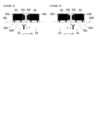
- Figure 1 includes plan views showing two examples (CASE 1 and CASE 2) of a situation in which a lean vehicle 1 and five automobiles 61-65 are traveling on a five-lane road.
- the five-lane road includes a left-most lane 51, a center-left lane 52, a center lane 53, a center-right lane 54, and a right-most lane 55.
- the lean vehicle 1 travels in the center lane 53
- the five automobiles 61-65 travel in a line in the left-right direction ahead of the lean vehicle 1.
- the lean vehicle 1 travels in the right-side area 50R of the center lane 53, and in CASE 2, the lean vehicle 1 travels in the left-side area 50L of the center lane 53.
- the right side area 50R is an area including the right end of a single lane 50 (e.g., center lane 53) when the single lane 50 is divided into thirds in the left-right direction
- the left side area 50L is an area including the left end of the single lane 50.
- the area between the right side area 50R and the left side area 50L is the center area 50C.
- the width of the lean vehicle 1 is very small compared to the width of the automobile 60 (e.g., automobiles 61 to 65).
- the width of the lean vehicle 1 is very small compared to the width of the lane 50. Therefore, the lean vehicle 1 has a high degree of freedom in the left-right running position within the center lane 53, and can move left and right within the center lane 53, and can run in the right side area 50R or the left side area 50L within the center lane 53.
- the longitudinal distance D between the five automobiles 61-65 and the lean vehicle 1 is the distance required to capture an image so that image processing is completed at a TTC of 3 seconds, assuming that the time Ti from capturing an image to completing image processing is 0.5 seconds, and that the object approaches the lean vehicle 1 at a relative speed Vr of 15 km/h. This distance is approximately 15 m. Note that, below, this distance may be referred to as the "specific distance.”
- the imaging device 11 and the recognition device 12 have the following configuration.
- the monocular camera of the imaging device 11 is configured such that while the lean vehicle 1 is traveling in the right side area 50R of the center lane 53, the left edge 61bl of the rear of the automobile 61 traveling in the leftmost lane 51 is not captured, but the angle of view in the left-right direction is configured so that at least the left edge 63bl of the rear of the automobile 63 traveling in the center lane 53 and the right edge 64br of the rear of the automobile 64 traveling in the center right lane 54 are captured.
- the monocular camera of the imaging device 11 is configured such that while the lean vehicle 1 is traveling in the left side area 50L of the center lane 53, the right edge 65br of the rear of the automobile 65 traveling in the rightmost lane 55 is not captured, but the angle of view in the left-right direction is configured so that at least the right edge 63br of the rear of the automobile 63 traveling in the center lane 53 and the left edge 63bl of the rear of the automobile 62 traveling in the center left lane 52 are captured.
- the recognition device 12 is configured to recognize at least both the automobile 63 traveling in the center lane 53 and the automobile 64 traveling in the center right lane 54 from an image captured while the lean vehicle 1 is traveling in the right side area 50R of the center lane 53. At this time, the recognition device 12 recognizes at least the automobiles 63 and 64 from an image captured by the imaging device 11 when the distance D is the specific distance described above.
- the recognition device 12 recognizes at least the automobiles 63 and 64 from an image that does not include the left end 61bl of the rear of the automobile 61 traveling in the leftmost lane 51, but includes the left end 63bl of the rear of the automobile 63 traveling in the center lane 53 and the right end 64br of the rear of the automobile 64 traveling in the center right lane 54.
- the recognition device 12 is configured to recognize at least both the automobile 63 traveling in the center lane 53 and the automobile 62 traveling in the center left lane 52 from an image captured while the lean vehicle 1 is traveling in the left side area 50L of the center lane 53.
- the recognition device 12 recognizes at least the automobiles 63 and 62 from an image captured by the imaging device 11 when the distance D is the above-mentioned specific distance.
- the recognition device 12 recognizes at least the automobiles 63 and 62 from an image that does not include the right end 65br of the rear of the automobile 65 traveling in the rightmost lane 55, but includes the right end 63br of the rear of the automobile 63 traveling in the center lane 53 and the left end 63bl of the rear of the automobile 62 traveling in the center left lane 52.
- the angle ⁇ min in FIG. 1 is a schematic representation of the minimum horizontal angle of view of the monocular camera of the imaging device 11, for a conceptual understanding.
- the angle ⁇ max in FIG. 1 is a schematic representation of the maximum horizontal angle of view of the monocular camera of the imaging device 11, for a conceptual understanding.
- the symbols "o”, “ ⁇ ”, and “x” attached to the automobiles 61-65 have the following meanings:
- the symbol “o” indicates that the entire rear of the automobile is captured.
- the symbol “x” indicates that the rear of the automobile is not captured at all or only a portion of the rear of the automobile is captured.
- the symbol “ ⁇ ” indicates that the rear of the automobile is not captured at all, only a portion of the rear of the automobile is captured, or the entire rear of the automobile is captured.
- a lean vehicle 1 which has a slimmer body than an automobile 60, can be adapted to a scene in which the lean vehicle 1 travels in the right side area 50R and the left side area 50L of the lane 50 while traveling in the same lane 50 as the automobile 60, and an image processing device 10 for a lean vehicle can be realized that is highly mountable in a lean vehicle 1, which has a slimmer body than an automobile 60.
- the lean vehicle 1 or the image processing device 10 for the lean vehicle may or may not have a display device that displays the image captured by the imaging device 11.
- the object e.g., a car
- the recognition device 12 may be surrounded by a frame (see FIG. 4 described later).
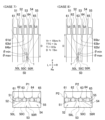
- FIG. 2 is a schematic diagram showing an example of a situation in which a lean vehicle 1 is traveling in a right side area 50R of a center lane 53 of a five-lane road (CASE 3) and an example of a situation in which the lean vehicle 1 is traveling in a left side area 50L of the center lane 53 (CASE 4).
- CASE 3 is an example of CASE 1 of the first embodiment.
- CASE 4 is an example of CASE 2 of the first embodiment.
- the imaging device 11 and the recognition device 12 may have the following configuration.
- the monocular camera of the imaging device 11 captures an image so that at least the rear surface 63b of the automobile 63 traveling in the center lane 53, the right side surface 63r of the automobile 63 traveling in the center lane 53, the rear surface 64b of the automobile 64 traveling in the center right lane 54, and the left side surface 64l of the automobile 64 traveling in the center right lane 54 are included in the image.
- the monocular camera of the imaging device 11 captures an image so that at least the rear surface 63b of the automobile 63 traveling in the center lane 53, the left side surface 63l of the automobile 63 traveling in the center lane 53, the rear surface 62b of the automobile 62 traveling in the center left lane 52, and the right side surface 62r of the automobile 62 traveling in the center left lane 52 are included in the image.
- the recognition device 12 recognizes at least both the automobile 63 traveling in the center lane 53 and the automobile 64 traveling in the center right lane 54 from an image including the rear side 63b of the automobile 63 traveling in the center lane 53, the right side 63r of the automobile 63 traveling in the center lane 53, the rear side 64b of the automobile 64 traveling in the center right lane 54, and the left side 64l of the automobile 64 traveling in the center right lane 54.
- the recognition device 12 recognizes at least both the automobile 63 traveling in the center lane 53 and the automobile 62 traveling in the center left lane 52 from an image including the rear side 63b of the automobile 63 traveling in the center lane 53, the left side 63l of the automobile 63 traveling in the center lane 53, the rear side 62b of the automobile 62 traveling in the center left lane 52, and the right side 62r of the automobile 62 traveling in the center left lane 52.
- the imaging device 11 of the second embodiment does not necessarily have the above-mentioned configuration when the lean vehicle 1 is traveling in the right side area 50R of the center lane 53 and the distance D is the specific distance described above, and may not have the above-mentioned configuration. The same applies to the case where the lean vehicle 1 is traveling in the left side area 50L of the center lane 53.
- the third embodiment has all of the configurations of the first embodiment.
- the third embodiment may also have the configuration of the second embodiment.
- the lean vehicle image processing device 10 further includes an alarm device 13 that outputs an alarm to prompt the driver to pay attention to the automobile 60 recognized by the recognition device 12 from the image captured by the imaging device 11.
- the alarm device 13 outputs an alarm according to the vehicle width of the lean vehicle 1, as described below.
- the warning device 13 is configured not to output an warning even if the lean vehicle 1 travels straight towards the center between the two automobiles 60 and approaches them.
- the warning device 13 when two automobiles 60 are traveling straight ahead in front of the lean vehicle 1, side by side with a gap G in the left-right direction, and the size of the gap G is too large for the width of the lean vehicle 1 in the left-right direction, the warning device 13 is configured to output a warning when the lean vehicle 1 travels straight towards and approaches the center between the two automobiles 60.
- the gap G is slightly larger than the width of the lean vehicle 1, but it may be smaller than the width of the lean vehicle 1.
- two automobiles 60 are traveling straight ahead, side by side with a gap G between them in the left and right direction, in front of an automobile 66 (60) equipped with an alarm device, and the size of the gap G is such that there is no room left and right for the width of the automobile 66, but is large enough for the width of the lean vehicle 1 to have some room left and right.
- the alarm device of the automobile 66 outputs an alarm.
- two automobiles 60 are traveling straight ahead, side by side with a gap G between them in the left and right direction, in front of an automobile 66 equipped with an alarm device, and the size of the gap G is such that there is no room left and right for both the width of the automobile 66 and the width of the lean vehicle 1.
- the alarm device of the automobile 66 will output an alarm.
- EXAMPLE1 and EXAMPLE2 in Figure 3 are specific examples of CASE5.
- EXAMPLE3 and EXAMPLE4 in Figure 3 are specific examples of CASE6.
- the lean vehicle 1 is traveling in the right side area 50R of the center lane 53 of a five-lane road, and two automobiles 63, 64 traveling in the center lane 53 and center right lane 54 are located in front of the lean vehicle 1.
- a portion of the automobile 63 is located on the left side area 50L of the center lane 53, and a portion of the automobile 64 is located on the right side area 50R of the center right lane 54.
- a portion of the automobile 63 is located on the right side area 50R of the center lane 53, and a portion of the automobile 64 is located on the left side area 50L of the center right lane 54.
- the lean vehicle 1 is traveling in the left side area 50L of the center lane 53 of a five-lane road, and two automobiles 63, 62 traveling in the center lane 53 and center left lane 52 are located in front of the lean vehicle 1.
- a portion of the automobile 63 is located on the right side area 50R of the center lane 53, and a portion of the automobile 62 is located on the left side area 50L of the center left lane 52.
- a portion of the automobile 63 is located on the left side area 50L of the center lane 53, and a portion of the automobile 62 is located on the right side area 50R of the center left lane 52.
- the lean vehicle 1 has a display device that displays an image captured by the imaging device 11, and a frame surrounding the vehicle in the image captured by the imaging device 11 is displayed together with the captured image, the color of the frame surrounding the vehicle that is the subject of the warning may be different when the warning device 13 outputs a warning and when the warning device 13 does not output a warning.
- the fourth embodiment has all of the configurations of the first embodiment.
- the fourth embodiment may have the configurations of the second embodiment.
- the fourth embodiment may have the configurations of the third embodiment.
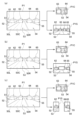
- FIG. 4 includes plan views showing two examples (CASE 7 and CASE 8) of a situation in which a lean vehicle 1 and five automobiles 61-65 are traveling on a five-lane road.
- CASE 7 is an example of CASE 1 in the first embodiment.
- CASE 8 is an example of CASE 2 in the first embodiment.
- FIG. 4 includes an example of an image P1 captured by the imaging device 11 in CASE 7, and an example of an image P1 and an example of an image P2 captured by the imaging device 11 in CASE 8.
- the recognition device 12 has the following configuration.
- the recognition device 12 is configured to process at least one of the images of the vehicle 62 traveling in the center left lane 52 and the vehicle 65 traveling in the rightmost lane 55 at a resolution lower than the resolution used to recognize the vehicle 63 traveling in the center lane 53 and the vehicle 64 traveling in the center right lane 54.
- the recognition device 12 is configured to process at least one of the images of the vehicle 64 traveling in the center right lane 54 and the vehicle 61 traveling in the leftmost lane 51 at a resolution lower than the resolution used to recognize the vehicle 63 traveling in the center lane 53 and the vehicle 62 traveling in the center left lane 52.
- image P1 includes images of both automobiles 62 and 65, but may include images of only automobiles 62 and 65.
- image P2 includes images of both automobiles 64 and 61, but may include images of only automobiles 64 and 61.
- images P1 and P2 are images captured by an imaging device 11 having a horizontal angle of view that is slightly smaller than the maximum horizontal angle of view ⁇ max.
- the recognition device 12 cuts out a predetermined area from image P1 that includes an image of a vehicle 63 traveling in the center lane 53 and an image of a vehicle 64 traveling in the center-right lane 54.
- the cut-out image is referred to as center area image P1C.
- the center area image P1C is in the center or approximately in the center in the left-right direction of image P1.
- the center area image P1C is in the center or approximately in the center in the up-down direction of image P1.
- the cut-out area may be set in advance or may be changeable.
- the recognition device 12 recognizes the automobiles 63 and 64 from the central area image P1C at a predetermined first resolution.
- the first resolution may be the same as the resolution of the original image P1 captured by the imaging device 11, or it may be lower than that.
- the recognition device 12 also sets a peripheral area image P1S, which is different from the central area image P1C, from the image P1.
- the peripheral area image P1S may be the entire image P1, as shown in FIG. 5(a).
- the peripheral area image P1S may be an image cut out from the image P1 so as not to include the central area image P1C, for example, as shown in FIG. 5(b) and FIG. 5(c).
- the peripheral area image P1S shown in FIG. 5(b) is an image obtained by removing only the central area image P1C from the image P1.
- the peripheral area image P1S shown in FIG. 5(c) is an image obtained by removing from the image P1 the image of the same left-right area as the central area image P1C.
- the recognition device 12 processes the surrounding area image P1S at a second resolution lower than the first resolution. Specifically, first, the recognition device 12 reduces the resolution of the surrounding area image P1S to the second resolution lower than the first resolution. Then, the recognition device 12 recognizes at least one of the automobile 62 traveling in the center left lane 52 and the automobile 65 traveling in the rightmost lane 55 from the surrounding area image P1S. In the example of Figures 5(a) to (c), the recognition device 12 recognizes both the automobile 62 and the automobile 65 from the surrounding area image P1S.
- the recognition device 12 recognizes, in addition to automobile 62 and automobile 65, automobile 63 traveling in center lane 53 and automobile 64 traveling in center right lane 54 from the surrounding area image P1S.
- automobile 63 traveling in center lane 53 and automobile 64 traveling in center right lane 54 are recognized using both the center area image P1C and the surrounding area image P1S.
- the recognition device 12 may use the recognition results from the center area image P1C as the final data for recognizing automobiles 63 and 64.
- the surrounding area image P1S includes a portion of the automobile 64 traveling in the center right lane 54.
- the recognition device 12 may or may not recognize the automobile 64 traveling in the center right lane 54 from the surrounding area image P1S.
- the right side area in this specification is included in the right driving area in the specification of Japanese Patent Application No. 2023-100003, which is the basic application of this application.
- the left side area in this specification is included in the left driving area in the specification of the same application.
- the central area in this specification is included in the central driving area in the specification of the same application.
- the automobile in this specification corresponds to a four-wheeled vehicle in the specification of the same application.
- the central area image in this specification corresponds to the central recognition area in the specification of the same application.
- the peripheral area image in this specification corresponds to the peripheral recognition area in the specification of the same application.
- lean vehicle 10: lean vehicle image processing device, 11: imaging device, 12: recognition device, 13: warning device, 50: lane, 50C: center area, 50L: left side area, 50R: right side area, 51: leftmost lane, 52: center left lane, 53: center lane, 54: center right lane, 55: rightmost lane, 60, 61 to 65: automobile
Landscapes
- Engineering & Computer Science (AREA)
- Physics & Mathematics (AREA)
- General Physics & Mathematics (AREA)
- Computer Vision & Pattern Recognition (AREA)
- Theoretical Computer Science (AREA)
- Traffic Control Systems (AREA)
- Image Processing (AREA)
Abstract
リーン車両(1)が5車線の道路の中央車線(53)の右サイドエリア(50R)を走行し、並走する5台の自動車(61~65)とリーン車両との車間距離(D)が、画像処理時間を0.5秒、相対速度15km/hと仮定した場合にTTC(Time to Collision)が3秒の時点で画像処理が完了するために必要な距離である場合、リーン車両用画像処理装置(10)の撮像装置(11)は、左端車線(51)の自動車(61)の後面左端(61bl)は撮像されないが、中央車線の自動車(3)の後面左端(63bl)および中央右車線(54)の自動車(64)の後面右端(64br)が少なくとも撮像されるように左右方向の画角が構成された単眼カメラを含み、リーン車両用画像処理装置の認識装置(12)は、中央車線の自動車および中央右車線の自動車を少なくとも認識する。
Description
この発明は、リーン車両に搭載されるリーン車両用画像処理装置(Image Processing Device for Leaning Vehicle)に関する。
特許文献1において、車両に搭載された撮像装置で対象物を時系列に撮像した画像から特徴点を抽出し、これを基に車両が対象物に到達するまでの時間を推定する到達時間推定装置と、推定された到達時間を用いて運転者の車両操作を支援する制御を行う運転支援制御装置が提案されている。特許文献1には、撮像装置と到達時間推定装置と運転支援制御装置を備えたリーン車両が提案されている。リーン車両は、例えば自動二輪車などの車両である。
特許文献1で提案されている、撮像装置と到達時間推定装置と運転支援制御装置とを合わせた装置は、画像を取得する撮像装置と取得された画像を処理して物体を認識する認識装置とを含む画像処理装置と言い換えることができる。撮像装置は、一般的に、例えばレンズのような光学装置および例えばCMOS(Complementary Metal Oxide Semiconductor)センサのような撮像素子を含む。認識装置は、一般的に、例えば画像を処理するFPGA(Field-Programmable Gate Array)、GPU(Graphics Processing Unit)、CPU(Central Processing Unit)、SoC(System on Chip)のようなプロセッサおよび例えばRAM(Random Access Memory)のようなメモリを含む。なお、SoCはプロセッサとメモリが一体化された形態を有する。特許文献1には、撮像装置は単眼カメラでもステレオカメラでもよいことが記載されている。
特許文献1に記載の到達時間は、いわゆるTTC(Time to Collision)に相当する。非特許文献1には、潜在的な衝突(Collision)を評価するためのTTCの閾値は3秒が適切であることが記載されている。
車線の幅および車両の幅は、国または地域の行政機関によって規定されている。日本では車線の幅は道路構造令第5条第4項および第5項により、道路の区分に応じて2.75~4mに規定されている(非特許文献2参照)。一般的に、車線の幅は、3.5~4mである。また、日本では、道路運送車両の保安基準第59条により自動二輪車の車幅は1.3m以下に規定され、道路運送車両の保安基準第2条により自動車の車幅は2.5m以下に規定されている(非特許文献3参照)。一般的に、リーン車両の車幅は、1m未満であり、自動車の車幅は、2~2.5mである。
Oumaima Barhoumi、Mohamed H. Zaki、SOFIENE TAHAR、"A Formal Approach to Road Safety Assessment Using Traffic Conflict Techniques"、"VI. SENSITIVITY STUDY"、[online]、最終更新2024年4月26日、IEEE Open Journal of Vehicular Technology、[令和6年6月4日検索]、インターネット<URL:https://ieeexplore.ieee.org/stamp/stamp.jsp?arnumber=10496854>
道路構造令、[令和6年6月4日検索]、インターネット<URL:https://elaws.e-gov.go.jp/document?lawid=345CO0000000320>
道路運送車両の保安基準、[令和6年6月4日検索]、インターネット<URL:https://elaws.e-gov.go.jp/document?lawid=326M50000800067>
リーン車両の車幅は、自動車(Automobile)の車幅と比較して非常に小さい。言い換えれば、リーン車両は、自動車と比較して車体がスリム(幅が狭い)である。
また、リーン車両の車幅は、車線の幅と比較しても非常に小さい。そのため、リーン車両は単一の車線を走行中、車線の右サイドエリアを走行する場合もあれば左サイドエリアを走行する場合もある。よって、リーン車両は単一の車線内での左右方向の走行位置の自由度が自動車と比較して非常に高い。
そのため、リーン車両が自動車と同一車線を走行中に、車線の右サイドエリアを走行するシーンおよび左サイドエリアを走行するシーンというリーン車両特有の利用シーンに対応した、撮像装置および認識装置を含むリーン車両用画像処理装置が望まれている。
なお、本明細書では、単一の車線を左右方向で三等分した際、右端を含むエリアを右サイドエリアと、左端を含むエリアを左サイドエリアと定義する。
また、リーン車両の車幅は、車線の幅と比較しても非常に小さい。そのため、リーン車両は単一の車線を走行中、車線の右サイドエリアを走行する場合もあれば左サイドエリアを走行する場合もある。よって、リーン車両は単一の車線内での左右方向の走行位置の自由度が自動車と比較して非常に高い。
そのため、リーン車両が自動車と同一車線を走行中に、車線の右サイドエリアを走行するシーンおよび左サイドエリアを走行するシーンというリーン車両特有の利用シーンに対応した、撮像装置および認識装置を含むリーン車両用画像処理装置が望まれている。
なお、本明細書では、単一の車線を左右方向で三等分した際、右端を含むエリアを右サイドエリアと、左端を含むエリアを左サイドエリアと定義する。
また、リーン車両は、自動車と比較して車体がスリム(幅が狭い)であるため、リーン車両への搭載性の高いリーン車両用画像処理装置が望まれている。
本発明の目的は、自動車と比較して車体がスリムなリーン車両が自動車と同一車線を走行中に、車線の右サイドエリアを走行するシーンおよび左サイドエリアを走行するシーンに適応でき、且つ、自動車と比較して車体がスリムなリーン車両への搭載性が高いリーン車両用画像処理装置を提供することである。
(1)本発明の一実施形態に係るリーン車両用画像処理装置は、以下の構成を有する。
画像を撮像する撮像装置と、前記撮像装置で取得された前記画像から物体を認識する認識装置とを含み、リーン車両に搭載されるリーン車両用画像処理装置であって、単一の車線を左右方向で三等分した際、前記単一の車線の右端を含むエリアを右サイドエリア、前記単一の車線の左端を含むエリアを左サイドエリア、前記右サイドエリアおよび前記左サイドエリアの間のエリアを中央エリアと定義し、5車線の道路の各車線を左から右に順に、左端車線、中央左車線、中央車線、中央右車線、右端車線と定義した場合、前記リーン車両が前記5車線の道路の前記中央車線の右サイドエリアまたは左サイドエリアを走行し、且つ、5台の自動車が前記リーン車両よりも前方を左右方向に一列に並んで走行し、且つ、前記5台の自動車と前記リーン車両との前後方向の距離が、撮像から画像処理の完了までの時間を0.5秒、物体が15km/hの相対速度で前記リーン車両に近づくと仮定した場合においてTTC(Time to Collision)が3秒の時点で前記画像処理が完了するように画像を撮像するために必要な距離である場合、前記撮像装置および前記認識装置は以下のように構成されている。
前記撮像装置は、前記リーン車両が前記5車線の道路の前記中央車線の前記右サイドエリアを走行中、前記左端車線を走行している前記自動車の後面の左端は撮像されないが、前記中央車線を走行している前記自動車の後面の左端および前記中央右車線を走行している前記自動車の後面の右端が少なくとも撮像され、且つ、前記リーン車両が前記5車線の道路の前記中央車線の前記左サイドエリアを走行中、前記右端車線を走行している前記自動車の後面の右端は撮像されないが、前記中央車線を走行している前記自動車の後面の右端および前記中央左車線を走行している前記自動車の後面の左端が少なくとも撮像されるように、左右方向の画角が構成された単眼カメラを含む。
前記認識装置は、前記リーン車両が前記5車線の道路の前記中央車線の前記右サイドエリアを走行中に撮像された前記画像から、前記中央車線を走行している前記自動車および前記中央右車線を走行している前記自動車の両方を少なくとも認識し、且つ、前記リーン車両が前記5車線の道路の前記中央車線の前記左サイドエリアを走行中に撮像された前記画像から、前記中央車線を走行している前記自動車および前記中央左車線を走行している前記自動車の両方を少なくとも認識するように構成される。
画像を撮像する撮像装置と、前記撮像装置で取得された前記画像から物体を認識する認識装置とを含み、リーン車両に搭載されるリーン車両用画像処理装置であって、単一の車線を左右方向で三等分した際、前記単一の車線の右端を含むエリアを右サイドエリア、前記単一の車線の左端を含むエリアを左サイドエリア、前記右サイドエリアおよび前記左サイドエリアの間のエリアを中央エリアと定義し、5車線の道路の各車線を左から右に順に、左端車線、中央左車線、中央車線、中央右車線、右端車線と定義した場合、前記リーン車両が前記5車線の道路の前記中央車線の右サイドエリアまたは左サイドエリアを走行し、且つ、5台の自動車が前記リーン車両よりも前方を左右方向に一列に並んで走行し、且つ、前記5台の自動車と前記リーン車両との前後方向の距離が、撮像から画像処理の完了までの時間を0.5秒、物体が15km/hの相対速度で前記リーン車両に近づくと仮定した場合においてTTC(Time to Collision)が3秒の時点で前記画像処理が完了するように画像を撮像するために必要な距離である場合、前記撮像装置および前記認識装置は以下のように構成されている。
前記撮像装置は、前記リーン車両が前記5車線の道路の前記中央車線の前記右サイドエリアを走行中、前記左端車線を走行している前記自動車の後面の左端は撮像されないが、前記中央車線を走行している前記自動車の後面の左端および前記中央右車線を走行している前記自動車の後面の右端が少なくとも撮像され、且つ、前記リーン車両が前記5車線の道路の前記中央車線の前記左サイドエリアを走行中、前記右端車線を走行している前記自動車の後面の右端は撮像されないが、前記中央車線を走行している前記自動車の後面の右端および前記中央左車線を走行している前記自動車の後面の左端が少なくとも撮像されるように、左右方向の画角が構成された単眼カメラを含む。
前記認識装置は、前記リーン車両が前記5車線の道路の前記中央車線の前記右サイドエリアを走行中に撮像された前記画像から、前記中央車線を走行している前記自動車および前記中央右車線を走行している前記自動車の両方を少なくとも認識し、且つ、前記リーン車両が前記5車線の道路の前記中央車線の前記左サイドエリアを走行中に撮像された前記画像から、前記中央車線を走行している前記自動車および前記中央左車線を走行している前記自動車の両方を少なくとも認識するように構成される。
リーン車両の車幅は、自動車の車幅と比較して非常に小さい。言い換えれば、リーン車両は、自動車と比較して車体がスリムである。リーン車両の車幅は、車線の幅と比較して非常に小さい。言い換えれば、リーン車両と自動車が同一車線を走行中に、リーン車両は車線の右サイドエリアを走行する場合と左サイドエリアを走行する場合がある。
リーン車両が5車線の道路の中央車線の右サイドエリアを走行中の場合、中央車線および中央右車線を走行している2台の自動車がリーン車両の前方に位置することになる。リーン車両が5車線の道路の中央車線の左サイドエリアを走行中の場合、中央車線および中央左車線を走行している2台の自動車がリーン車両の前方に位置することになる。
撮像装置は単眼カメラを含む。撮像装置の単眼カメラは、リーン車両が5車線の道路の中央車線の右サイドエリアを走行中、中央車線を走行している自動車の後面の左端および中央右車線を走行している自動車の後面の右端が少なくとも撮像されるように左右方向の画角が構成されている。撮像装置の単眼カメラは、リーン車両が5車線の道路の中央車線の左サイドエリアを走行中、中央車線を走行している自動車の後面の右端および中央左車線を走行している自動車の後面の左端が少なくとも撮像されるように左右方向の画角が構成されている。
認識装置は、リーン車両が5車線の道路の中央車線の右サイドエリアを走行中に撮像された画像から、中央車線を走行している自動車および中央右車線を走行している自動車の両方を少なくとも認識する。認識装置は、リーン車両が5車線の道路の中央車線の左サイドエリアを走行中に撮像された画像から、中央車線を走行している自動車および中央左車線を走行している自動車の両方を少なくとも認識する。
この構成により、リーン車両用画像処理装置は、リーン車両が右サイドエリアを走行中の場合であっても、リーン車両が左サイドエリアを走行中の場合であっても、リーン車両の前方に位置する2台の自動車を撮像および認識することができる。言い換えれば、単一の車線内での左右方向の走行位置の自由度が自動車と比較して非常に高いリーン車両に特有な利用シーンで要求される最小限の左右方向の画角を確保することができる。従って、自動車と比較して車体がスリムなリーン車両が自動車と同一車線を走行中に、車線の右サイドエリアを走行するシーンおよび左サイドエリアを走行するシーンにリーン車両用画像処理装置は適応できる。
また、撮像装置の単眼カメラは、リーン車両が5車線の道路の中央車線の右サイドエリアを走行中、左端車線を走行している自動車の後面の左端が撮像されないように左右方向の画角が構成されている。撮像装置の単眼カメラは、リーン車両が5車線の道路の中央車線の左サイドエリアを走行中、右端車線を走行している自動車の後面の右端が撮像されないように左右方向の画角が構成されている。
リーン車両が5車線の道路の中央車線の右サイドエリアを走行中、左端車線を走行している自動車は、リーン車両から左方向に自動車2台分より大きく離れて位置する。リーン車両が5車線の道路の中央車線の左サイドエリアを走行中、右端車線を走行している自動車は、リーン車両から右方向に自動車2台分より大きく離れて位置する。
リーン車両の車幅は、自動車の車幅と比較して非常に小さい。言い換えれば、リーン車両は、自動車と比較して車体がスリムである。そのため、左右方向においてリーン車両から自動車2台分より離れて位置する自動車は、リーン車両の前方に位置する2台の自動車と比較して、自動車と比較して車体がスリムなリーン車両の走行への影響度は低い。
上記の構成により、リーン車両が右サイドエリアを走行中の場合であっても、リーン車両が左サイドエリアを走行中の場合であっても、左右方向においてリーン車両から自動車2台分より大きく離れて位置するエリアの撮像を制限することができる。その結果、撮像装置で取得された画像の容量(データ量)を小さくすることができる。また、撮像するエリアを制限するので、例えば、コンパクトな光学装置および撮像素子を選択することができ、撮像装置をコンパクトにできる。加えて、撮像装置で取得された画像の容量が小さいため、認識装置で認識する対象の画像の容量を小さくできる。その結果、認識装置の処理負荷を低減することができ、例えば認識装置の放熱構造をシンプルでコンパクトにできるので、認識装置をコンパクトにできる。従って、自動車と比較して車体がスリムなリーン車両へのリーン車両用画像処理装置の搭載性を高めることができる。
以上により、自動車と比較して車体がスリムなリーン車両が自動車と同一車線を走行中に、車線の右サイドエリアを走行するシーンおよび左サイドエリアを走行するシーンに適応でき、且つ、自動車と比較して車体がスリムなリーン車両への搭載性が高いリーン車両用画像処理装置を提供することができる。
リーン車両が5車線の道路の中央車線の右サイドエリアを走行中の場合、中央車線および中央右車線を走行している2台の自動車がリーン車両の前方に位置することになる。リーン車両が5車線の道路の中央車線の左サイドエリアを走行中の場合、中央車線および中央左車線を走行している2台の自動車がリーン車両の前方に位置することになる。
撮像装置は単眼カメラを含む。撮像装置の単眼カメラは、リーン車両が5車線の道路の中央車線の右サイドエリアを走行中、中央車線を走行している自動車の後面の左端および中央右車線を走行している自動車の後面の右端が少なくとも撮像されるように左右方向の画角が構成されている。撮像装置の単眼カメラは、リーン車両が5車線の道路の中央車線の左サイドエリアを走行中、中央車線を走行している自動車の後面の右端および中央左車線を走行している自動車の後面の左端が少なくとも撮像されるように左右方向の画角が構成されている。
認識装置は、リーン車両が5車線の道路の中央車線の右サイドエリアを走行中に撮像された画像から、中央車線を走行している自動車および中央右車線を走行している自動車の両方を少なくとも認識する。認識装置は、リーン車両が5車線の道路の中央車線の左サイドエリアを走行中に撮像された画像から、中央車線を走行している自動車および中央左車線を走行している自動車の両方を少なくとも認識する。
この構成により、リーン車両用画像処理装置は、リーン車両が右サイドエリアを走行中の場合であっても、リーン車両が左サイドエリアを走行中の場合であっても、リーン車両の前方に位置する2台の自動車を撮像および認識することができる。言い換えれば、単一の車線内での左右方向の走行位置の自由度が自動車と比較して非常に高いリーン車両に特有な利用シーンで要求される最小限の左右方向の画角を確保することができる。従って、自動車と比較して車体がスリムなリーン車両が自動車と同一車線を走行中に、車線の右サイドエリアを走行するシーンおよび左サイドエリアを走行するシーンにリーン車両用画像処理装置は適応できる。
また、撮像装置の単眼カメラは、リーン車両が5車線の道路の中央車線の右サイドエリアを走行中、左端車線を走行している自動車の後面の左端が撮像されないように左右方向の画角が構成されている。撮像装置の単眼カメラは、リーン車両が5車線の道路の中央車線の左サイドエリアを走行中、右端車線を走行している自動車の後面の右端が撮像されないように左右方向の画角が構成されている。
リーン車両が5車線の道路の中央車線の右サイドエリアを走行中、左端車線を走行している自動車は、リーン車両から左方向に自動車2台分より大きく離れて位置する。リーン車両が5車線の道路の中央車線の左サイドエリアを走行中、右端車線を走行している自動車は、リーン車両から右方向に自動車2台分より大きく離れて位置する。
リーン車両の車幅は、自動車の車幅と比較して非常に小さい。言い換えれば、リーン車両は、自動車と比較して車体がスリムである。そのため、左右方向においてリーン車両から自動車2台分より離れて位置する自動車は、リーン車両の前方に位置する2台の自動車と比較して、自動車と比較して車体がスリムなリーン車両の走行への影響度は低い。
上記の構成により、リーン車両が右サイドエリアを走行中の場合であっても、リーン車両が左サイドエリアを走行中の場合であっても、左右方向においてリーン車両から自動車2台分より大きく離れて位置するエリアの撮像を制限することができる。その結果、撮像装置で取得された画像の容量(データ量)を小さくすることができる。また、撮像するエリアを制限するので、例えば、コンパクトな光学装置および撮像素子を選択することができ、撮像装置をコンパクトにできる。加えて、撮像装置で取得された画像の容量が小さいため、認識装置で認識する対象の画像の容量を小さくできる。その結果、認識装置の処理負荷を低減することができ、例えば認識装置の放熱構造をシンプルでコンパクトにできるので、認識装置をコンパクトにできる。従って、自動車と比較して車体がスリムなリーン車両へのリーン車両用画像処理装置の搭載性を高めることができる。
以上により、自動車と比較して車体がスリムなリーン車両が自動車と同一車線を走行中に、車線の右サイドエリアを走行するシーンおよび左サイドエリアを走行するシーンに適応でき、且つ、自動車と比較して車体がスリムなリーン車両への搭載性が高いリーン車両用画像処理装置を提供することができる。
(2)本発明の一実施形態に係るリーン車両用画像処理装置は、上記(1)の構成に加えて以下の構成を有してもよい。
前記リーン車両が前記5車線の道路の前記中央車線の前記右サイドエリアまたは前記左サイドエリアを走行し、且つ、前記5台の自動車が前記リーン車両よりも前方を左右方向に一列に並んで走行し、且つ、前記5台の自動車と前記リーン車両との前後方向の距離が、撮像から画像処理の完了までの時間を0.5秒、物体が15km/hの相対速度で前記リーン車両に近づくと仮定した場合において前記TTCが3秒の時点で前記画像処理が完了するように画像を撮像するために必要な距離である場合、前記撮像装置および前記認識装置は更に以下のように構成されている。
前記撮像装置は、前記リーン車両が前記5車線の道路の前記中央車線の前記右サイドエリアを走行中、少なくとも前記中央車線を走行している前記自動車の後面、前記中央車線を走行している前記自動車の右側面、前記中央右車線を走行している前記自動車の後面および前記中央右車線を走行している前記自動車の左側面が画像に含まれるように前記単眼カメラで撮像し、且つ、前記リーン車両が前記5車線の道路の前記中央車線の左サイドエリアを走行中、少なくとも前記中央車線を走行している前記自動車の後面、前記中央車線を走行している前記自動車の左側面、前記中央左車線を走行している前記自動車の後面および前記中央左車線を走行している前記自動車の右側面が画像に含まれるように前記単眼カメラで撮像する。
前記認識装置は、前記中央車線を走行している前記自動車の後面、前記中央車線を走行している前記自動車の右側面、前記中央右車線を走行している前記自動車の後面および前記中央右車線を走行している前記自動車の左側面が含まれる前記画像から、前記中央車線を走行している前記自動車および前記中央右車線を走行している前記自動車の両方を少なくとも認識し、且つ、前記中央車線を走行している前記自動車の後面、前記中央車線を走行している前記自動車の左側面、前記中央左車線を走行している前記自動車の後面および前記中央左車線を走行している前記自動車の右側面が含まれる前記画像から、前記中央車線を走行している前記自動車および前記中央左車線を走行している前記自動車の両方を少なくとも認識する。
前記リーン車両が前記5車線の道路の前記中央車線の前記右サイドエリアまたは前記左サイドエリアを走行し、且つ、前記5台の自動車が前記リーン車両よりも前方を左右方向に一列に並んで走行し、且つ、前記5台の自動車と前記リーン車両との前後方向の距離が、撮像から画像処理の完了までの時間を0.5秒、物体が15km/hの相対速度で前記リーン車両に近づくと仮定した場合において前記TTCが3秒の時点で前記画像処理が完了するように画像を撮像するために必要な距離である場合、前記撮像装置および前記認識装置は更に以下のように構成されている。
前記撮像装置は、前記リーン車両が前記5車線の道路の前記中央車線の前記右サイドエリアを走行中、少なくとも前記中央車線を走行している前記自動車の後面、前記中央車線を走行している前記自動車の右側面、前記中央右車線を走行している前記自動車の後面および前記中央右車線を走行している前記自動車の左側面が画像に含まれるように前記単眼カメラで撮像し、且つ、前記リーン車両が前記5車線の道路の前記中央車線の左サイドエリアを走行中、少なくとも前記中央車線を走行している前記自動車の後面、前記中央車線を走行している前記自動車の左側面、前記中央左車線を走行している前記自動車の後面および前記中央左車線を走行している前記自動車の右側面が画像に含まれるように前記単眼カメラで撮像する。
前記認識装置は、前記中央車線を走行している前記自動車の後面、前記中央車線を走行している前記自動車の右側面、前記中央右車線を走行している前記自動車の後面および前記中央右車線を走行している前記自動車の左側面が含まれる前記画像から、前記中央車線を走行している前記自動車および前記中央右車線を走行している前記自動車の両方を少なくとも認識し、且つ、前記中央車線を走行している前記自動車の後面、前記中央車線を走行している前記自動車の左側面、前記中央左車線を走行している前記自動車の後面および前記中央左車線を走行している前記自動車の右側面が含まれる前記画像から、前記中央車線を走行している前記自動車および前記中央左車線を走行している前記自動車の両方を少なくとも認識する。
リーン車両の車幅は、自動車の車幅と比較して非常に小さい。言い換えれば、リーン車両は、自動車と比較して車体がスリムである。リーン車両の車幅は、車線の幅と比較して非常に小さい。言い換えれば、リーン車両と自動車が同一車線を走行中に、リーン車両は車線の右サイドエリアを走行する場合と左サイドエリアを走行する場合がある。
リーン車両が5車線の道路の中央車線の右サイドエリアを走行中、リーン車両の前方において、中央車線を走行している自動車の後面と中央右車線を走行している自動車の後面の間に、中央車線を走行している自動車の右側面と中央右車線を走行している自動車の左側面が並んで存在する。リーン車両が5車線の道路の中央車線の右サイドエリアを走行中、リーン車両の前方において、中央車線を走行している自動車の後面と中央右車線を走行している自動車の後面の間に、中央車線を走行している自動車の右側面と中央右車線を走行している自動車の左側面が並んで存在する。
撮像装置は、リーン車両が5車線の道路の中央車線の右サイドエリアを走行中、中央車線を走行している自動車の後面、中央車線を走行している自動車の右側面、中央右車線を走行している自動車の後面および中央右車線を走行している自動車の左側面が画像に含まれるように単眼カメラで撮像する。撮像装置は、リーン車両が5車線の道路の中央車線の左サイドエリアを走行中、中央車線を走行している自動車の後面、中央車線を走行している自動車の左側面、中央左車線を走行している自動車の後面および中央左車線を走行している自動車の右側面が画像に含まれるように単眼カメラで撮像する。
認識装置は、中央車線を走行している自動車の後面、中央車線を走行している自動車の右側面、中央右車線を走行している自動車の後面および中央右車線を走行している自動車の左側面が含まれる画像から、中央車線を走行している自動車および中央右車線を走行している自動車の両方を少なくとも認識する。認識装置は、中央車線を走行している自動車の後面、中央車線を走行している自動車の左側面、中央左車線を走行している自動車の後面および中央左車線を走行している自動車の右側面が含まれる画像から、中央車線を走行している自動車および中央左車線を走行している自動車の両方を少なくとも認識する。
この構成により、リーン車両が5車線の道路の中央車線の右サイドエリアを走行中、リーン車両の前方において、中央車線を走行している自動車の後面と中央右車線を走行している自動車の後面の間に、中央車線を走行している自動車の右側面と中央右車線を走行している自動車の左側面が並んで存在する利用シーンおよびリーン車両が5車線の道路の中央車線の右サイドエリアを走行中、リーン車両の前方において、中央車線を走行している自動車の後面と中央右車線を走行している自動車の後面の間に、中央車線を走行している自動車の右側面と中央右車線を走行している自動車の左側面が並んで存在する利用シーンに、リーン車両用画像処理装置は適応することができる。
以上により、自動車と比較して車体がスリムなリーン車両が自動車と同一車線を走行中に、車線の右サイドエリアを走行するシーンおよび左サイドエリアを走行するシーンにより適応でき、且つ、自動車と比較して車体がスリムなリーン車両への搭載性が高いリーン車両用画像処理装置を提供することができる。
リーン車両が5車線の道路の中央車線の右サイドエリアを走行中、リーン車両の前方において、中央車線を走行している自動車の後面と中央右車線を走行している自動車の後面の間に、中央車線を走行している自動車の右側面と中央右車線を走行している自動車の左側面が並んで存在する。リーン車両が5車線の道路の中央車線の右サイドエリアを走行中、リーン車両の前方において、中央車線を走行している自動車の後面と中央右車線を走行している自動車の後面の間に、中央車線を走行している自動車の右側面と中央右車線を走行している自動車の左側面が並んで存在する。
撮像装置は、リーン車両が5車線の道路の中央車線の右サイドエリアを走行中、中央車線を走行している自動車の後面、中央車線を走行している自動車の右側面、中央右車線を走行している自動車の後面および中央右車線を走行している自動車の左側面が画像に含まれるように単眼カメラで撮像する。撮像装置は、リーン車両が5車線の道路の中央車線の左サイドエリアを走行中、中央車線を走行している自動車の後面、中央車線を走行している自動車の左側面、中央左車線を走行している自動車の後面および中央左車線を走行している自動車の右側面が画像に含まれるように単眼カメラで撮像する。
認識装置は、中央車線を走行している自動車の後面、中央車線を走行している自動車の右側面、中央右車線を走行している自動車の後面および中央右車線を走行している自動車の左側面が含まれる画像から、中央車線を走行している自動車および中央右車線を走行している自動車の両方を少なくとも認識する。認識装置は、中央車線を走行している自動車の後面、中央車線を走行している自動車の左側面、中央左車線を走行している自動車の後面および中央左車線を走行している自動車の右側面が含まれる画像から、中央車線を走行している自動車および中央左車線を走行している自動車の両方を少なくとも認識する。
この構成により、リーン車両が5車線の道路の中央車線の右サイドエリアを走行中、リーン車両の前方において、中央車線を走行している自動車の後面と中央右車線を走行している自動車の後面の間に、中央車線を走行している自動車の右側面と中央右車線を走行している自動車の左側面が並んで存在する利用シーンおよびリーン車両が5車線の道路の中央車線の右サイドエリアを走行中、リーン車両の前方において、中央車線を走行している自動車の後面と中央右車線を走行している自動車の後面の間に、中央車線を走行している自動車の右側面と中央右車線を走行している自動車の左側面が並んで存在する利用シーンに、リーン車両用画像処理装置は適応することができる。
以上により、自動車と比較して車体がスリムなリーン車両が自動車と同一車線を走行中に、車線の右サイドエリアを走行するシーンおよび左サイドエリアを走行するシーンにより適応でき、且つ、自動車と比較して車体がスリムなリーン車両への搭載性が高いリーン車両用画像処理装置を提供することができる。
(3)本発明の一実施形態に係るリーン車両用画像処理装置は、上記(1)または(2)の構成に加えて以下の構成を有してもよい。
前記リーン車両用画像処理装置は、前記撮像装置で撮像された前記画像から前記認識装置で認識された自動車に対する注意を運転者に促す警報を出力する警報装置を更に含み、
前記警報装置は、前記リーン車両の前方において左右方向に間隔をあけて並んで2台の自動車が直進しており、前記間隔の大きさが前記自動車の車幅にとっては左右方向に余裕がないが、前記リーン車両の車幅にとっては左右方向に余裕がある大きさである場合、前記リーン車両が前記2台の自動車の間の中央に向かって直進し、且つ、接近しても、前記警報を出力しないように構成され、且つ、前記リーン車両の前方において左右方向に間隔をあけて並んで2台の自動車が直進しており、前記間隔の大きさが前記リーン車両の車幅にとっては左右方向に余裕がない大きさである場合、前記リーン車両が前記2台の自動車の間の中央に向かって直進し、且つ、接近すると、前記警報を出力するよう構成され、前記リーン車両の車幅に応じた前記警報を出力する。
前記リーン車両用画像処理装置は、前記撮像装置で撮像された前記画像から前記認識装置で認識された自動車に対する注意を運転者に促す警報を出力する警報装置を更に含み、
前記警報装置は、前記リーン車両の前方において左右方向に間隔をあけて並んで2台の自動車が直進しており、前記間隔の大きさが前記自動車の車幅にとっては左右方向に余裕がないが、前記リーン車両の車幅にとっては左右方向に余裕がある大きさである場合、前記リーン車両が前記2台の自動車の間の中央に向かって直進し、且つ、接近しても、前記警報を出力しないように構成され、且つ、前記リーン車両の前方において左右方向に間隔をあけて並んで2台の自動車が直進しており、前記間隔の大きさが前記リーン車両の車幅にとっては左右方向に余裕がない大きさである場合、前記リーン車両が前記2台の自動車の間の中央に向かって直進し、且つ、接近すると、前記警報を出力するよう構成され、前記リーン車両の車幅に応じた前記警報を出力する。
この構成によると、リーン車両用画像処理装置は、撮像装置で撮像された画像から認識装置で認識された自動車に対する注意を運転者に促す警報を出力する警報装置を更に含む。
警報装置は、リーン車両の前方で左右方向に間隔をあけて並んで2台の自動車が直進しており、その間隔の大きさが自動車の車幅にとっては左右方向に余裕がないが、リーン車両の車幅にとっては左右方向に余裕がある大きさである場合、リーン車両がこの2台の自動車の間の中央に向かって直進し、且つ、接近しても、警報を出力しないように構成される。警報装置は、リーン車両の前方で左右方向に間隔をあけて並んで2台の自動車が直進しており、その間隔の大きさがリーン車両の車幅にとっては左右方向に余裕がない大きさである場合、リーン車両がこの2台の自動車の間の中央に向かって直進し、且つ、接近すると、警報を出力するよう構成される。警報装置は、このように、リーン車両の車幅に応じた警報を出力する。
例えば、リーン車両が5車線の道路の中央車線の右サイドエリアを走行中の場合、中央車線および中央右車線を走行している2台の自動車がリーン車両の前方に位置することになる。例えば、リーン車両が中央車線の右サイドエリアを走行中、中央車線を走行している自動車の一部分が中央車線の左サイドエリア上に位置し、且つ、中央右車線を走行している自動車の一部分が中央右車線の右サイドエリア上に位置している場合と、中央車線を走行している自動車の一部分が中央車線の右サイドエリア上に位置し、且つ、中央右車線を走行している自動車の一部分が中央右車線の左サイドエリア上に位置している場合とで、警報の有無を異ならせることができる。
例えば、リーン車両が5車線の道路の中央車線の左サイドエリアを走行中の場合、中央車線および中央左車線を走行している2台の自動車がリーン車両の前方に位置することになる。例えば、リーン車両が中央車線の左サイドエリアを走行中、中央車線を走行している自動車の一部分が右サイドエリア上に位置し、且つ、中央左車線を走行している自動車の一部分が中央左車線の左サイドエリア上に位置している場合と、中央車線を走行している自動車の一部分が中央車線の左サイドエリア上に位置し、且つ、中央左車線を走行している自動車の一部分が中央左車線の右サイドエリア上に位置している場合とで、警報の有無を異ならせることができる。
上記の構成により、リーン車両用画像処理装置は、リーン車両が右サイドエリアを走行中の場合であっても、リーン車両が左サイドエリアを走行中の場合であっても、リーン車両の前方に位置する2台の自動車を撮像および認識し、リーン車両の車幅に応じた警報を出力することができる。従って、自動車と比較して車体がスリムなリーン車両が自動車と同一車線を走行中、撮像、認識および警報を、車線の右サイドエリアを走行するシーンおよび左サイドエリアを走行するシーンにより適応させることができる。
以上により、自動車と比較して車体がスリムなリーン車両が自動車と同一車線を走行中に、車線の右サイドエリアを走行するシーンおよび左サイドエリアを走行するシーンにより適応でき、且つ、自動車と比較して車体がスリムなリーン車両への搭載性が高いリーン車両用画像処理装置を提供することができる。
なお、リーン車両用画像処理装置は、警報装置が予めリーン車両の車幅に応じて構成されたリーン車両専用画像処理装置であっても良い。リーン車両用画像処理装置は、警報装置が切換によってリーン車両の車幅または自動車の車幅に適応するように構成されたリーン車両および自動車兼用画像処理装置であっても良い。切換は、ユーザーの操作による切換でもよく、撮像された画像に基づいた自動的な切換でもよい。
警報装置は、リーン車両の前方で左右方向に間隔をあけて並んで2台の自動車が直進しており、その間隔の大きさが自動車の車幅にとっては左右方向に余裕がないが、リーン車両の車幅にとっては左右方向に余裕がある大きさである場合、リーン車両がこの2台の自動車の間の中央に向かって直進し、且つ、接近しても、警報を出力しないように構成される。警報装置は、リーン車両の前方で左右方向に間隔をあけて並んで2台の自動車が直進しており、その間隔の大きさがリーン車両の車幅にとっては左右方向に余裕がない大きさである場合、リーン車両がこの2台の自動車の間の中央に向かって直進し、且つ、接近すると、警報を出力するよう構成される。警報装置は、このように、リーン車両の車幅に応じた警報を出力する。
例えば、リーン車両が5車線の道路の中央車線の右サイドエリアを走行中の場合、中央車線および中央右車線を走行している2台の自動車がリーン車両の前方に位置することになる。例えば、リーン車両が中央車線の右サイドエリアを走行中、中央車線を走行している自動車の一部分が中央車線の左サイドエリア上に位置し、且つ、中央右車線を走行している自動車の一部分が中央右車線の右サイドエリア上に位置している場合と、中央車線を走行している自動車の一部分が中央車線の右サイドエリア上に位置し、且つ、中央右車線を走行している自動車の一部分が中央右車線の左サイドエリア上に位置している場合とで、警報の有無を異ならせることができる。
例えば、リーン車両が5車線の道路の中央車線の左サイドエリアを走行中の場合、中央車線および中央左車線を走行している2台の自動車がリーン車両の前方に位置することになる。例えば、リーン車両が中央車線の左サイドエリアを走行中、中央車線を走行している自動車の一部分が右サイドエリア上に位置し、且つ、中央左車線を走行している自動車の一部分が中央左車線の左サイドエリア上に位置している場合と、中央車線を走行している自動車の一部分が中央車線の左サイドエリア上に位置し、且つ、中央左車線を走行している自動車の一部分が中央左車線の右サイドエリア上に位置している場合とで、警報の有無を異ならせることができる。
上記の構成により、リーン車両用画像処理装置は、リーン車両が右サイドエリアを走行中の場合であっても、リーン車両が左サイドエリアを走行中の場合であっても、リーン車両の前方に位置する2台の自動車を撮像および認識し、リーン車両の車幅に応じた警報を出力することができる。従って、自動車と比較して車体がスリムなリーン車両が自動車と同一車線を走行中、撮像、認識および警報を、車線の右サイドエリアを走行するシーンおよび左サイドエリアを走行するシーンにより適応させることができる。
以上により、自動車と比較して車体がスリムなリーン車両が自動車と同一車線を走行中に、車線の右サイドエリアを走行するシーンおよび左サイドエリアを走行するシーンにより適応でき、且つ、自動車と比較して車体がスリムなリーン車両への搭載性が高いリーン車両用画像処理装置を提供することができる。
なお、リーン車両用画像処理装置は、警報装置が予めリーン車両の車幅に応じて構成されたリーン車両専用画像処理装置であっても良い。リーン車両用画像処理装置は、警報装置が切換によってリーン車両の車幅または自動車の車幅に適応するように構成されたリーン車両および自動車兼用画像処理装置であっても良い。切換は、ユーザーの操作による切換でもよく、撮像された画像に基づいた自動的な切換でもよい。
(4)本発明の一実施形態に係るリーン車両用画像処理装置は、上記(1)~(3)の少なくとも1つの構成に加えて以下の構成を有してもよい。
前記リーン車両が前記5車線の道路の前記中央車線の前記右サイドエリアまたは前記左サイドエリアを走行し、且つ、前記5台の自動車が前記リーン車両よりも前方を左右方向に一列に並んで走行し、且つ、前記5台の自動車と前記リーン車両との前後方向の距離が、撮像から画像処理の完了までの時間を0.5秒、物体が15km/hの相対速度で前記リーン車両に近づくと仮定した場合において前記TTCが3秒の時点で前記画像処理が完了するように画像を撮像するために必要な距離である場合、前記認識装置は更に以下のように構成されている。
前記認識装置は、前記リーン車両が前記5車線の道路の前記中央車線の前記右サイドエリアを走行中に撮像された前記画像が前記中央左車線を走行している前記自動車および前記右端車線を走行している前記自動車の少なくとも一方の画像を含む場合、前記中央車線を走行している前記自動車および前記中央右車線を走行している前記自動車を認識する際の解像度より低い解像度で、前記中央左車線を走行している前記自動車および前記右端車線を走行している前記自動車の前記少なくとも一方の画像を処理するように構成され、且つ、前記リーン車両が前記5車線の道路の前記中央車線の前記左サイドエリアを走行中に撮像された前記画像が前記中央右車線を走行している前記自動車および前記左端車線を走行している前記自動車の少なくとも一方の画像を含む場合、前記中央車線を走行している前記自動車および前記中央左車線を走行している前記自動車を認識する際の解像度より低い解像度で、前記中央右車線を走行している前記自動車および前記左端車線を走行している前記自動車の前記少なくとも一方の前記画像を処理するように構成される。
前記リーン車両が前記5車線の道路の前記中央車線の前記右サイドエリアまたは前記左サイドエリアを走行し、且つ、前記5台の自動車が前記リーン車両よりも前方を左右方向に一列に並んで走行し、且つ、前記5台の自動車と前記リーン車両との前後方向の距離が、撮像から画像処理の完了までの時間を0.5秒、物体が15km/hの相対速度で前記リーン車両に近づくと仮定した場合において前記TTCが3秒の時点で前記画像処理が完了するように画像を撮像するために必要な距離である場合、前記認識装置は更に以下のように構成されている。
前記認識装置は、前記リーン車両が前記5車線の道路の前記中央車線の前記右サイドエリアを走行中に撮像された前記画像が前記中央左車線を走行している前記自動車および前記右端車線を走行している前記自動車の少なくとも一方の画像を含む場合、前記中央車線を走行している前記自動車および前記中央右車線を走行している前記自動車を認識する際の解像度より低い解像度で、前記中央左車線を走行している前記自動車および前記右端車線を走行している前記自動車の前記少なくとも一方の画像を処理するように構成され、且つ、前記リーン車両が前記5車線の道路の前記中央車線の前記左サイドエリアを走行中に撮像された前記画像が前記中央右車線を走行している前記自動車および前記左端車線を走行している前記自動車の少なくとも一方の画像を含む場合、前記中央車線を走行している前記自動車および前記中央左車線を走行している前記自動車を認識する際の解像度より低い解像度で、前記中央右車線を走行している前記自動車および前記左端車線を走行している前記自動車の前記少なくとも一方の前記画像を処理するように構成される。
リーン車両の車幅は、自動車の車幅と比較して非常に小さい。言い換えれば、リーン車両は、自動車と比較して車体がスリムである。リーン車両の車幅は、車線の幅と比較して非常に小さい。言い換えれば、リーン車両と自動車が同一車線を走行中に、リーン車両は車線の右サイドエリアを走行する場合と左サイドエリアを走行する場合がある。
リーン車両が5車線の道路の中央車線の右サイドエリアを走行中、中央左車線を走行している自動車は、リーン車両から自動車1台分より左方向に位置し、右端車線を走行している自動車は、リーン車両から自動車1台分より右方向に位置する。リーン車両が5車線の道路の中央車線の左サイドエリアを走行中、中央右車線を走行している自動車は、リーン車両から自動車1台分より右方向に位置し、左端車線を走行している自動車は、リーン車両から自動車1台分より左方向に位置する。
認識装置は、リーン車両が5車線の道路の中央車線の右サイドエリアを走行中に撮像された画像が中央左車線を走行している自動車および右端車線を走行している自動車の少なくとも一方の画像を含む場合、中央車線を走行している自動車および中央右車線を走行している自動車を認識する際の解像度より低い解像度で、中央左車線を走行している自動車および右端車線を走行している自動車の少なくとも一方の画像を処理するように構成される。認識装置は、リーン車両が5車線の道路の中央車線の左サイドエリアを走行中に撮像された画像が中央右車線を走行している自動車および左端車線を走行している自動車の少なくとも一方の画像を含む場合、中央車線を走行している自動車および中央左車線を走行している自動車を認識する際の解像度より低い解像度で、中央右車線を走行している自動車および左端車線を走行している自動車の少なくとも一方の画像を処理するように構成される。
この構成により、リーン車両が右サイドエリアを走行中の場合であっても、リーン車両が左サイドエリアを走行中の場合であっても、左右方向においてリーン車両から自動車1台分より大きく離れて位置するエリアに存在する自動車を、より低い解像度で処理することで認識することができる。そのため、認識装置で認識する対象の画像の容量を小さくできる。その結果、認識装置の処理を低減することができ、例えば認識装置の放熱構造をシンプルでコンパクトにできるので、認識装置をコンパクトにできる。
以上により、自動車と比較して車体がスリムなリーン車両が自動車と同一車線を走行中に、車線の右サイドエリアを走行するシーンおよび左サイドエリアを走行するシーンに適応でき、且つ、自動車と比較して車体がスリムなリーン車両への搭載性がより高いリーン車両用画像処理装置を提供することができる。
リーン車両が5車線の道路の中央車線の右サイドエリアを走行中、中央左車線を走行している自動車は、リーン車両から自動車1台分より左方向に位置し、右端車線を走行している自動車は、リーン車両から自動車1台分より右方向に位置する。リーン車両が5車線の道路の中央車線の左サイドエリアを走行中、中央右車線を走行している自動車は、リーン車両から自動車1台分より右方向に位置し、左端車線を走行している自動車は、リーン車両から自動車1台分より左方向に位置する。
認識装置は、リーン車両が5車線の道路の中央車線の右サイドエリアを走行中に撮像された画像が中央左車線を走行している自動車および右端車線を走行している自動車の少なくとも一方の画像を含む場合、中央車線を走行している自動車および中央右車線を走行している自動車を認識する際の解像度より低い解像度で、中央左車線を走行している自動車および右端車線を走行している自動車の少なくとも一方の画像を処理するように構成される。認識装置は、リーン車両が5車線の道路の中央車線の左サイドエリアを走行中に撮像された画像が中央右車線を走行している自動車および左端車線を走行している自動車の少なくとも一方の画像を含む場合、中央車線を走行している自動車および中央左車線を走行している自動車を認識する際の解像度より低い解像度で、中央右車線を走行している自動車および左端車線を走行している自動車の少なくとも一方の画像を処理するように構成される。
この構成により、リーン車両が右サイドエリアを走行中の場合であっても、リーン車両が左サイドエリアを走行中の場合であっても、左右方向においてリーン車両から自動車1台分より大きく離れて位置するエリアに存在する自動車を、より低い解像度で処理することで認識することができる。そのため、認識装置で認識する対象の画像の容量を小さくできる。その結果、認識装置の処理を低減することができ、例えば認識装置の放熱構造をシンプルでコンパクトにできるので、認識装置をコンパクトにできる。
以上により、自動車と比較して車体がスリムなリーン車両が自動車と同一車線を走行中に、車線の右サイドエリアを走行するシーンおよび左サイドエリアを走行するシーンに適応でき、且つ、自動車と比較して車体がスリムなリーン車両への搭載性がより高いリーン車両用画像処理装置を提供することができる。
本発明および実施形態において、リーン車両は、左旋回時に左方向に傾斜し、右旋回時に右方向に傾斜する車体フレームを有する車両でもよい。本発明および実施形態において、リーン車両は、例えば、自動二輪車または自動三輪車でもよい。自動二輪車は、スクータ、モペット、原動機付き自転車を含む。リーン車両の車幅は、例えば1m未満である。一方、自動車の車幅は、例えば2~2.5mである。
本発明および実施形態において、単眼カメラは、単一の撮像素子を有する。単眼カメラを含む撮像装置は、例えばレンズのような光学装置と単一の撮像素子とを有する。単眼カメラを有する撮像装置は、単一のレンズを有する撮像装置でもよい。撮像素子は、例えば、CCD(Charge coupled Device)センサやCMOS(Complementary Metal Oxide Semiconductor)センサなどのイメージセンサでもよい。本発明および実施形態において、撮像装置は、リーン車両の左右方向の中央に配置されていてもよい。但し、撮像装置の配置位置はこれに限らない。
本発明および実施形態において、認識装置は、プロセッサおよびメモリを含む。メモリには、例えばRAM(Random Access Memory)が含まれる。メモリは、ROM(Read Only Memory)を含んでいてもよい。プロセッサには、例えば、FPGA(Field-Programmable Gate Array)、GPU(Graphics Processing Unit)、CPU(Central Processing Unit)、SoC(System on Chip)など、画像を処理できる任意の回路が含まれる。SoCはプロセッサとメモリが一体化された形態を有する。
本発明および実施形態において、認識装置が物体(例えば自動車)を認識するとは、認識装置が物体(例えば自動車)を検知することを意味する。
本発明および実施形態において、認識装置が自動車の画像を処理するとは、例えば、認識装置がこの画像から自動車を認識することを含む。
本発明および実施形態において、認識装置が自動車の画像を処理するとは、例えば、認識装置がこの画像から自動車を認識することを含む。
本発明および実施形態において、車線は、走行レーンを意味する。車線は、車線の端を示すマーク(例えば白線)を有してもよく、有さなくてもよい。車線の車幅は、例えば3.5~4mである。
本発明および実施形態において、右サイドエリア、左サイドエリア、中央エリアは、車線を左右方向で三等分した場合の3つのエリアにそれぞれ該当する。
本発明および実施形態において、5車線の道路はストレートの道路である。
本発明および実施形態において、右サイドエリア、左サイドエリア、中央エリアは、車線を左右方向で三等分した場合の3つのエリアにそれぞれ該当する。
本発明および実施形態において、5車線の道路はストレートの道路である。
本発明および実施形態において、リーン車両が車線の右サイドエリアを走行するとは、リーン車両の左右方向の中央が右サイドエリア内に位置するようにリーン車両が走行することを意味する。リーン車両が車線の左サイドエリアを走行するとは、リーン車両の左右方向の中央が左サイドエリア内に位置するようにリーン車両が走行することを意味する。本発明において、リーン車両が車線の右サイドエリア(左サイドエリア)を走行することは、平面視において、リーン車両全体が右サイドエリア(左サイドエリア)に収まるように走行することを含む。本発明において、リーン車両が車線の右サイドエリア(左サイドエリア)を走行することは、リーン車両の一部が右サイドエリア(左サイドエリア)の外に位置するように走行することを含んでいてもよい。
本発明では、5台の自動車とリーン車両との前後方向の距離が、撮像から画像処理の完了までの時間を0.5秒、物体が15km/hの相対速度でリーン車両に近づくと仮定した場合においてTTCが3秒の時点で画像処理が完了するように画像を撮像するために必要な距離である状況を用いて、撮像装置および認識装置の構成を定義している。「撮像から画像処理の完了までの時間を0.5秒、物体が15km/hの相対速度でリーン車両に近づくと仮定した場合においてTTCが3秒の時点で画像処理が完了するように画像を撮像するために必要な距離」とは、以下のように言い換えることができる。すなわち、この距離は、リーン車両用画像処理装置が撮像から画像処理の完了までの時間が0.5秒となるように画像処理を行うように構成され、且つ、物体が15km/hの相対速度でリーン車両に近づいているという仮定の条件のもと、TTCが3秒の時点で画像処理が完了するように画像を撮像する場合に必要な距離である。TTCは、物体がリーン車両に到達するまでの時間である。この距離は、具体的には、14.58335m(=15km/h×(3.0s+0.5s)÷3600×1000)である。
「物体が15km/hの相対速度でリーン車両に近づく」とは、物体およびリーン車両がともに走行しており、リーン車両が物体よりも15km/h高い速度で走行していること、または、物体が静止しリーン車両が走行しており、リーン車両が15km/hの速度で走行していることである。
「撮像から画像処理の完了までの時間」は、仮定の時間であって、リーン車両用画像処理装置が実際に行う画像処理に要する時間と同じでなくてよい。
「撮像から画像処理の完了までの時間」は、例えば、撮像装置が画像を撮像した時点から、この画像から認識装置で認識された自動車に対するTTCを推定した時点までの時間でもよい。一般的に、撮像からTTCの推定まで0.5秒程度要する。
「撮像から画像処理の完了までの時間」は、例えば、撮像装置が画像を撮影した時点から、この画像から認識装置で認識された自動車に対する注意を運転者に促す警報を出力する指令が警報装置に出力される時点までの時間でもよい。
「物体が15km/hの相対速度でリーン車両に近づく」とは、物体およびリーン車両がともに走行しており、リーン車両が物体よりも15km/h高い速度で走行していること、または、物体が静止しリーン車両が走行しており、リーン車両が15km/hの速度で走行していることである。
「撮像から画像処理の完了までの時間」は、仮定の時間であって、リーン車両用画像処理装置が実際に行う画像処理に要する時間と同じでなくてよい。
「撮像から画像処理の完了までの時間」は、例えば、撮像装置が画像を撮像した時点から、この画像から認識装置で認識された自動車に対するTTCを推定した時点までの時間でもよい。一般的に、撮像からTTCの推定まで0.5秒程度要する。
「撮像から画像処理の完了までの時間」は、例えば、撮像装置が画像を撮影した時点から、この画像から認識装置で認識された自動車に対する注意を運転者に促す警報を出力する指令が警報装置に出力される時点までの時間でもよい。
本発明および実施形態において、「自動車の後面が画像に含まれる」とは、自動車の後面全体が画像に含まれることである。
本発明および実施形態において、「自動車の右側面が画像に含まれる」とは、仮に自動車の右側面が平坦である場合に、自動車の右側面全体が画像に含まれることである。つまり、「自動車の右側面が画像に含まれる」とは、自動車の右側面の少なくも一部が画像に含まれることである。この定義と同様の解釈により、「自動車の左側面が画像に含まれる」の意味も解釈することができる。
本発明および実施形態において、画像に含まれるとは、画像に現れることを意味する。
本発明および実施形態において、「自動車の右側面が画像に含まれる」とは、仮に自動車の右側面が平坦である場合に、自動車の右側面全体が画像に含まれることである。つまり、「自動車の右側面が画像に含まれる」とは、自動車の右側面の少なくも一部が画像に含まれることである。この定義と同様の解釈により、「自動車の左側面が画像に含まれる」の意味も解釈することができる。
本発明および実施形態において、画像に含まれるとは、画像に現れることを意味する。
本発明および実施形態において、リーン車両よりも前方を走行する自動車とは、リーン車両の進行方向を前方向と定義した場合における、リーン車両よりも前方向に位置する自動車を意味する。本発明および実施形態において、リーン車両の前方において走行する自動車とは、リーン車両の真正面またはほぼ真正面を走行する自動車を意味する。リーン車両よりも前方を走行する自動車は、リーン車両の前方を走行する自動車に限らない。
本発明および実施形態において、2台の自動車の間隔の大きさが自動車の車幅にとっては左右方向に余裕がないが、リーン車両の車幅にとっては左右方向に余裕がある大きさであるとは、その間隔の大きさが、通常の交通状況において、その間隔を自動車は通り抜けできないが、リーン車両は通り抜けることができるような大きさであることを意味する。言い換えると、その間隔の大きさが、リーン車両の車幅より大きく、且つ、自動車の車幅より小さいかもしくは同程度であることを意味する。従って、2台の自動車の間隔の大きさが自動車の車幅にとっては左右方向に余裕がないが、リーン車両の車幅にとっては左右方向に余裕がある大きさであるケースには、2台の自動車の間隔の大きさが自動車の車幅より小さいが、リーン車両の車幅より大きいケースが含まれる。
本発明および実施形態において、2台の自動車の間隔の大きさがリーン車両の車幅にとっては左右方向に余裕がない大きさであるとは、その間隔の大きさが、通常の交通状況において、その間隔をリーン車両が通り抜けることができないような大きさであることを意味する。言い換えると、その間隔の大きさが、リーン車両の車幅より小さいかもしくは同程度であることを意味する。従って、2台の自動車の間隔の大きさが自動車の車幅にとっては左右方向に余裕がない大きさであるケースには、2台の自動車の間隔の大きさがリーン車両の車幅より小さいケースが含まれる。
本発明および実施形態において、2台の自動車の間隔の大きさがリーン車両の車幅にとっては左右方向に余裕がない大きさであるとは、その間隔の大きさが、通常の交通状況において、その間隔をリーン車両が通り抜けることができないような大きさであることを意味する。言い換えると、その間隔の大きさが、リーン車両の車幅より小さいかもしくは同程度であることを意味する。従って、2台の自動車の間隔の大きさが自動車の車幅にとっては左右方向に余裕がない大きさであるケースには、2台の自動車の間隔の大きさがリーン車両の車幅より小さいケースが含まれる。
本発明および実施形態のリーン車両用画像処理装置は、撮像装置で撮像された画像から認識装置で認識された自動車に対する注意を運転者に促す警報を出力する警報装置を有してもよく、有さなくてもよい。
本発明および実施形態において、リーン車両用画像処理装置が警報装置を有する場合、認識装置による認識結果の用途は警報装置に限らない。リーン車両用画像処理装置が警報装置を有するか否かに関わらず、認識装置による認識結果は、例えば、リーン車両の車速の制御に使用されてもよい。より具体的には、例えば、認識装置による認識結果に基づいて、運転者のブレーキ操作によらずにリーン車両のブレーキ装置が作動されてもよい。
本発明および実施形態において、認識装置で認識された自動車に対する注意を運転者に促す警報を出力する警報装置は、認認識装置で認識された自動車以外の物体に対する注意を運転者に促す警報を出力してもよい。
本発明および実施形態において、リーン車両用画像処理装置が警報装置を有する場合、認識装置による認識結果の用途は警報装置に限らない。リーン車両用画像処理装置が警報装置を有するか否かに関わらず、認識装置による認識結果は、例えば、リーン車両の車速の制御に使用されてもよい。より具体的には、例えば、認識装置による認識結果に基づいて、運転者のブレーキ操作によらずにリーン車両のブレーキ装置が作動されてもよい。
本発明および実施形態において、認識装置で認識された自動車に対する注意を運転者に促す警報を出力する警報装置は、認認識装置で認識された自動車以外の物体に対する注意を運転者に促す警報を出力してもよい。
本発明および実施形態において、警報装置が出力する警報とは、リーン車両の運転者に注意を促すための警報である。警報は、運転者の聴覚、視覚、または触覚の少なくとも1つに対する警報である。聴覚に対する警報は、音による警報である。視覚に対する警報とは、例えば、光による警報である。触覚に対する警報とは、例えば、振動による警報である。振動は、例えば、グリップの振動、シートの振動でもよい。振動を発生させる手段は、警報装置の専用の手段であってもよく、ブレーキまたは駆動源であってもよい。
本発明および実施形態において、解像度が低いとは、画素の密度が低いことを意味する。
本発明および実施形態において、所定の解像度で、自動車の画像を処理するとは、所定の解像度で、自動車の画像を認識することを含む。
本発明および実施形態において、所定の解像度で、自動車の画像を処理するとは、所定の解像度で、自動車の画像を認識することを含む。
本発明のリーン車両用画像処理装置が使用される状況は、リーン車両が5車線の道路の中央車線の右サイドエリアまたは左サイドエリアを走行する状況に限らない。リーン車両用画像処理装置は、例えば以下のような走行状況において使用されてもよい。その走行状況とは、例えば、例えば、リーン車両が5車線の道路以外の道路を走行する状況でもよい。5車線の道路以外の道路とは、6つ以上の車線を有する道路、2車線道路、または片側1車線道路などである。また、その走行状況とは、例えば、リーン車両がある車線の中央エリアを走行する状況でもよい。また、その走行状況とは、例えば、リーン車両が5車線道路の中央車線ではない車線の右サイドエリアまたは左サイドエリアを走行する状況でもよい。
本発明および実施形態において、複数の選択肢のうちの少なくとも1つ(一方)とは、複数の選択肢から考えられる全ての組み合わせを含む。複数の選択肢のうちの少なくとも1つ(一方)とは、複数の選択肢のいずれか1つでもよく、複数の選択肢の全てでもよい。例えば、AとBとCの少なくとも1つとは、Aのみでもよく、Bのみでもよく、Cのみでもよく、AとBでもよく、AとCでもよく、BとCでもよく、AとBとCでもよい。
本明細書において、例えば「1~10」は、1以上10以下を意味する。1と10以外の数値にも、同様の定義が適用される。
本発明および実施形態において、含む(including)、有する(comprising)、備える(having)およびこれらの派生語は、列挙されたアイテム及びその等価物に加えて追加的アイテムをも包含することが意図されて用いられている。
他に定義されない限り、本明細書および請求範囲で使用される全ての用語(技術用語および科学用語を含む)は、本発明が属する当業者によって一般的に理解されるのと同じ意味を有する。一般的に使用される辞書に定義された用語のような用語は、関連する技術および本開示の文脈における意味と一致する意味を有すると解釈されるべきであり、理想化されたまたは過度に形式的な意味で解釈されることはない。
本明細書において、「してもよい」という用語は非排他的なものである。「してもよい」は、「してもよいがこれに限定されるものではない」という意味である。本明細書において、「してもよい」は、「しない」場合があることを暗黙的に含む。本明細書において、「してもよい」と記載された構成は、少なくとも、請求項1の構成により得られる上記効果を奏する。
本発明の実施形態を詳細に説明する前に、本発明は、以下の説明に記載されたまたは図面に図示された構成要素の構成および配置の詳細に制限されないことが理解されるべきである。本発明は、後述する実施形態以外の実施形態でも可能である。本発明は、後述する実施形態に様々な変更を加えた実施形態でも可能である。
本発明によると、自動車と比較して車体がスリムなリーン車両が自動車と同一車線を走行中に、車線の右サイドエリアを走行するシーンおよび左サイドエリアを走行するシーンに適応でき、且つ、自動車と比較して車体がスリムなリーン車両への搭載性が高いリーン車両用画像処理装置を提供することができる。
各図面に示す矢印F、矢印Re、矢印L、矢印Rは、それぞれ、前方向、後方向、左方向、右方向を表す。
<第1実施形態>
以下、本発明の実施形態のリーン車両用画像処理装置10について図1を参照しつつ説明する。リーン車両用画像処理装置10は、リーン車両1に搭載される。図1ではリーン車両1は自動二輪車であるが、リーン車両1は自動二輪車に限らない。リーン車両用画像処理装置10は、画像を撮像する撮像装置11と、撮像装置11で取得された画像から物体を認識する認識装置12とを含む。撮像装置11は、単眼カメラを含む。
以下、本発明の実施形態のリーン車両用画像処理装置10について図1を参照しつつ説明する。リーン車両用画像処理装置10は、リーン車両1に搭載される。図1ではリーン車両1は自動二輪車であるが、リーン車両1は自動二輪車に限らない。リーン車両用画像処理装置10は、画像を撮像する撮像装置11と、撮像装置11で取得された画像から物体を認識する認識装置12とを含む。撮像装置11は、単眼カメラを含む。
図1は、リーン車両1と5台の自動車61~65が5車線の道路を走行している状況の2つの例(CASE1およびCASE2)をそれぞれ示す平面図を含む。5車線の道路は、左端車線51、中央左車線52、中央車線53、中央右車線54、右端車線55を含む。CASE1およびCASE2では、リーン車両1は、中央車線53を走行し、5台の自動車61~65は、リーン車両1よりも前方を左右方向に一列に並んで走行している。CASE1では、リーン車両1は、中央車線53の右サイドエリア50Rを走行し、CASE2では、リーン車両1は、中央車線53の左サイドエリア50Lを走行している。右サイドエリア50Rは、単一の車線50(例えば中央車線53)を左右方向で三等分した際、単一の車線50の右端を含むエリアであり、左サイドエリア50Lは、単一の車線50の左端を含むエリアである。右サイドエリア50Rおよび左サイドエリア50Lの間のエリアは、中央エリア50Cである。リーン車両1の車幅は、自動車60(例えば自動車61~65)の車幅と比較して非常に小さい。リーン車両1の車幅は、車線50の幅と比較して非常に小さい。そのため、リーン車両1は中央車線53内での左右方向の走行位置の自由度が高く、中央車線53内において左右方向に移動することができ、中央車線53内において、右サイドエリア50Rを走行したり左サイドエリア50Lを走行したりできる。
CASE1およびCASE2において、5台の自動車61~65とリーン車両1との前後方向の距離Dは、撮像から画像処理の完了までの時間Tiを0.5秒、物体が15km/hの相対速度Vrでリーン車両1に近づくと仮定した場合においてTTCが3秒の時点で画像処理が完了するように画像を撮像するために必要な距離である。この距離は約15mである。なお、以下では、この距離のことを「特定の距離」と称することがある。
リーン車両1が5車線の道路の中央車線53の右サイドエリア50Rまたは左サイドエリア50Lを走行し、且つ、5台の自動車61~65がリーン車両1よりも前方を左右方向に一列に並んで走行し、且つ、5台の自動車61~65とリーン車両1との前後方向の距離Dが上述した特定の距離である場合に、撮像装置11および認識装置12は以下の構成を有する。
撮像装置11の単眼カメラは、リーン車両1が中央車線53の右サイドエリア50Rを走行中、左端車線51を走行している自動車61の後面の左端61blは撮像されないが、中央車線53を走行している自動車63の後面の左端63blおよび中央右車線54を走行している自動車64の後面の右端64brが少なくとも撮像されるように、左右方向の画角が構成される。
撮像装置11の単眼カメラは、リーン車両1が中央車線53の左サイドエリア50Lを走行中、右端車線55を走行している自動車65の後面の右端65brは撮像されないが、中央車線53を走行している自動車63の後面の右端63brおよび中央左車線52を走行している自動車62の後面の左端63blが少なくとも撮像されるように、左右方向の画角が構成される。
撮像装置11の単眼カメラは、リーン車両1が中央車線53の左サイドエリア50Lを走行中、右端車線55を走行している自動車65の後面の右端65brは撮像されないが、中央車線53を走行している自動車63の後面の右端63brおよび中央左車線52を走行している自動車62の後面の左端63blが少なくとも撮像されるように、左右方向の画角が構成される。
認識装置12は、リーン車両1が中央車線53の右サイドエリア50Rを走行中に撮像された画像から、中央車線53を走行している自動車63および中央右車線54を走行している自動車64の両方を少なくとも認識するように構成される。このとき、認識装置12は、距離Dが上述した特定の距離のときに撮像装置11により撮像された画像から、自動車63および自動車64を少なくとも認識する。つまり、認識装置12は、左端車線51を走行している自動車61の後面の左端61blは含まれないが、中央車線53を走行している自動車63の後面の左端63blおよび中央右車線54を走行している自動車64の後面の右端64brは含まれる画像から、自動車63および自動車64を少なくとも認識する。
認識装置12は、リーン車両1が中央車線53の左サイドエリア50Lを走行中に撮像された画像から、中央車線53を走行している自動車63および中央左車線52を走行している自動車62の両方を少なくとも認識するように構成される。このとき、認識装置12は、距離Dが上述した特定の距離のときに撮像装置11により撮像された画像から、自動車63および自動車62を少なくとも認識する。つまり、認識装置12は、右端車線55を走行している自動車65の後面の右端65brは含まれないが、中央車線53を走行している自動車63の後面の右端63brおよび中央左車線52を走行している自動車62の後面の左端63blが含まれる画像から、自動車63および自動車62を少なくとも認識する。
認識装置12は、リーン車両1が中央車線53の左サイドエリア50Lを走行中に撮像された画像から、中央車線53を走行している自動車63および中央左車線52を走行している自動車62の両方を少なくとも認識するように構成される。このとき、認識装置12は、距離Dが上述した特定の距離のときに撮像装置11により撮像された画像から、自動車63および自動車62を少なくとも認識する。つまり、認識装置12は、右端車線55を走行している自動車65の後面の右端65brは含まれないが、中央車線53を走行している自動車63の後面の右端63brおよび中央左車線52を走行している自動車62の後面の左端63blが含まれる画像から、自動車63および自動車62を少なくとも認識する。
図1中の角度θminは、撮像装置11の単眼カメラの最小の左右方向の画角を、概念的に理解するために模式的に表している。図1中の角度θmaxは、撮像装置11の単眼カメラの最大の左右方向の画角を、概念的に理解するために模式的に表している。
図1において、自動車61~65に付された記号「〇」、「△」、「×」は、以下の意味を有する。記号「〇」は、自動車の後面全体が撮像されることを示す。記号「×」は、自動車の後面が全く撮像されないまたは自動車の後面の一部分だけ撮像されることを示す。記号「△」は、自動車の後面が全く撮像されないか、自動車の後面の一部分だけ撮像されるか、もしくは、自動車の後面全体が撮像されることを示す。
本実施形態によると、自動車60と比較して車体がスリムなリーン車両1が自動車60と同一車線50を走行中に、車線50の右サイドエリア50Rを走行するシーンおよび左サイドエリア50Lを走行するシーンに適応でき、且つ、自動車60と比較して車体がスリムなリーン車両1への搭載性の高いリーン車両用画像処理装置10を実現できる。
リーン車両1またはリーン車両用画像処理装置10は、撮像装置11で撮像された画像を表示する表示装置を有していてもよく、有さなくてもよい。画像が表示される場合に、認識装置12が認識した物体(例えば自動車)が枠で囲まれていてもよい(後述する図4参照)。
<第2実施形態>
次に、本発明の第2実施形態のリーン車両用画像処理装置10について図2を参照しつつ説明する。第2実施形態は、第1実施形態の構成を全て有する。図2は、リーン車両1が5車線の道路の中央車線53の右サイドエリア50Rを走行している状況の一例(CASE3)と中央車線53の左サイドエリア50Lを走行している状況の一例(CASE4)を模式的に示す図である。CASE3は、第1実施形態のCASE1の一例である。CASE4は、第1実施形態のCASE2の一例である。
次に、本発明の第2実施形態のリーン車両用画像処理装置10について図2を参照しつつ説明する。第2実施形態は、第1実施形態の構成を全て有する。図2は、リーン車両1が5車線の道路の中央車線53の右サイドエリア50Rを走行している状況の一例(CASE3)と中央車線53の左サイドエリア50Lを走行している状況の一例(CASE4)を模式的に示す図である。CASE3は、第1実施形態のCASE1の一例である。CASE4は、第1実施形態のCASE2の一例である。
リーン車両1が5車線の道路の中央車線53の右サイドエリア50Rまたは左サイドエリア50Lを走行し、且つ、5台の自動車61~65がリーン車両1よりも前方を左右方向に一列に並んで走行し、且つ、5台の自動車61~65とリーン車両1との前後方向の距離Dが第1実施形態で説明した特定の距離である場合に、撮像装置11および認識装置12は以下の構成を有してもよい。
図2のCASE3に示すように、撮像装置11の単眼カメラは、リーン車両1が中央車線53の右サイドエリア50Rを走行中、少なくとも中央車線53を走行している自動車63の後面63b、中央車線53を走行している自動車63の右側面63r、中央右車線54を走行している自動車64の後面64bおよび中央右車線54を走行している自動車64の左側面64lが画像に含まれるように撮像する。
図2のCASE4に示すように、撮像装置11の単眼カメラは、リーン車両1が中央車線53の左サイドエリア50Lを走行中、少なくとも中央車線53を走行している自動車63の後面63b、中央車線53を走行している自動車63の左側面63l、中央左車線52を走行している自動車62の後面62bおよび中央左車線52を走行している自動車62の右側面62rが画像に含まれるように撮像する。
図2のCASE4に示すように、撮像装置11の単眼カメラは、リーン車両1が中央車線53の左サイドエリア50Lを走行中、少なくとも中央車線53を走行している自動車63の後面63b、中央車線53を走行している自動車63の左側面63l、中央左車線52を走行している自動車62の後面62bおよび中央左車線52を走行している自動車62の右側面62rが画像に含まれるように撮像する。
認識装置12は、中央車線53を走行している自動車63の後面63b、中央車線53を走行している自動車63の右側面63r、中央右車線54を走行している自動車64の後面64bおよび中央右車線54を走行している自動車64の左側面64lが含まれる画像から、中央車線53を走行している自動車63および中央右車線54を走行している自動車64の両方を少なくとも認識する。
認識装置12は、中央車線53を走行している自動車63の後面63b、中央車線53を走行している自動車63の左側面63l、中央左車線52を走行している自動車62の後面62bおよび中央左車線52を走行している自動車62の右側面62rが含まれる画像から、中央車線53を走行している自動車63および中央左車線52を走行している自動車62の両方を少なくとも認識する。
認識装置12は、中央車線53を走行している自動車63の後面63b、中央車線53を走行している自動車63の左側面63l、中央左車線52を走行している自動車62の後面62bおよび中央左車線52を走行している自動車62の右側面62rが含まれる画像から、中央車線53を走行している自動車63および中央左車線52を走行している自動車62の両方を少なくとも認識する。
なお、リーン車両1が中央車線53の右サイドエリア50Rを走行中、中央車線53を走行している自動車63の右側面63rが画像に含まれるか否かは、リーン車両1の中央車線53の右サイドエリア50Rにおける左右方向の位置、中央車線53を走行している自動車63の中央車線53内における左右方向の位置、中央車線53の幅、自動車63の車幅、リーン車両1の車幅、およびリーン車両1における撮像装置11の左右方向の位置の影響を受ける。したがって、第2実施形態の撮像装置11は、リーン車両1が中央車線53の右サイドエリア50Rを走行し、距離Dが上述した特定の距離である場合に、必ずしも上述した構成を有するわけではなく、上述した構成を有しない場合もある。リーン車両1が中央車線53の左サイドエリア50Lを走行する場合についても同様である。
<第3実施形態>
次に、本発明の第3実施形態のリーン車両用画像処理装置10について図3を参照しつつ説明する。第3実施形態は、第1実施形態の構成を全て有する。第3実施形態は、第2実施形態の構成を有してもよい。
次に、本発明の第3実施形態のリーン車両用画像処理装置10について図3を参照しつつ説明する。第3実施形態は、第1実施形態の構成を全て有する。第3実施形態は、第2実施形態の構成を有してもよい。
図3に示すように、リーン車両用画像処理装置10は、撮像装置11で撮像された画像から認識装置12で認識された自動車60に対する注意を運転者に促す警報を出力する警報装置13を更に含む。警報装置13は、以下に説明するように、リーン車両1の車幅に応じた警報を出力する。
図3のCASE5に示すように、警報装置13は、リーン車両1の前方において左右方向に間隔Gをあけて並んで2台の自動車60が直進しており、間隔Gの大きさが自動車60の車幅にとっては左右方向に余裕がないが、リーン車両1の車幅にとっては左右方向に余裕がある大きさである場合、リーン車両1が2台の自動車60の間の中央に向かって直進し、且つ、接近しても、警報を出力しないように構成される。
図3のCASE6に示すように、警報装置13は、リーン車両1の前方において左右方向に間隔Gをあけて並んで2台の自動車60が直進しており、間隔Gの大きさがリーン車両1の車幅にとっては左右方向に余裕がない大きさである場合、リーン車両1が2台の自動車60の間の中央に向かって直進し、且つ、接近すると、警報を出力するよう構成される。なお、図3のCASE6において、間隔Gは、リーン車両1の車幅よりも若干大きいが、リーン車両1の車幅より小さくてもよい。
図3のCASE6に示すように、警報装置13は、リーン車両1の前方において左右方向に間隔Gをあけて並んで2台の自動車60が直進しており、間隔Gの大きさがリーン車両1の車幅にとっては左右方向に余裕がない大きさである場合、リーン車両1が2台の自動車60の間の中央に向かって直進し、且つ、接近すると、警報を出力するよう構成される。なお、図3のCASE6において、間隔Gは、リーン車両1の車幅よりも若干大きいが、リーン車両1の車幅より小さくてもよい。
図3の比較例に示すように、警報装置を有する自動車66(60)の前方において左右方向に間隔Gをあけて並んで2台の自動車60が直進しており、間隔Gの大きさが自動車66の車幅にとっては左右方向に余裕がないが、リーン車両1の車幅にとっては左右方向に余裕がある大きさである場合、自動車66が2台の自動車60の間の中央に向かって直進し、且つ、接近すると、自動車66の警報装置は警報を出力する。
図示は省略するが、警報装置を有する自動車66の前方において左右方向に間隔Gをあけて並んで2台の自動車60が直進しており、間隔Gの大きさが自動車66の車幅とリーン車両1の車幅の両方にとって左右方向に余裕がない場合、自動車66が2台の自動車60の間の中央に向かって直進し、且つ、接近すると、自動車66の警報装置は警報を出力する。
図示は省略するが、警報装置を有する自動車66の前方において左右方向に間隔Gをあけて並んで2台の自動車60が直進しており、間隔Gの大きさが自動車66の車幅とリーン車両1の車幅の両方にとって左右方向に余裕がない場合、自動車66が2台の自動車60の間の中央に向かって直進し、且つ、接近すると、自動車66の警報装置は警報を出力する。
図3のEXAMPLE1およびEXAMPLE2は、それぞれCASE5の具体例である。図3のEXAMPLE3およびEXAMPLE4は、それぞれCASE6の具体例である。
EXAMPLE1およびEXAMPLE3では、リーン車両1が5車線の道路の中央車線53の右サイドエリア50Rを走行しており、中央車線53および中央右車線54を走行する2台の自動車63、64がリーン車両1の前方に位置する。EXAMPLE1では、自動車63の一部分が中央車線53の左サイドエリア50L上に位置し、自動車64の一部分が中央右車線54の右サイドエリア50R上に位置する。EXAMPLE3では、自動車63の一部分が中央車線53の右サイドエリア50R上に位置し、自動車64の一部分が中央右車線54の左サイドエリア50L上に位置する。
EXAMPLE2およびEXAMPLE4では、リーン車両1は5車線の道路の中央車線53の左サイドエリア50Lを走行しており、中央車線53および中央左車線52を走行する2台の自動車63、62がリーン車両1の前方に位置する。EXAMPLE2では、自動車63の一部分が中央車線53の右サイドエリア50R上に位置し、自動車62の一部分が中央左車線52の左サイドエリア50L上に位置する。EXAMPLE4では、自動車63の一部分が中央車線53の左サイドエリア50L上に位置し、自動車62の一部分が中央左車線52の右サイドエリア50R上に位置する。
第3実施形態において、リーン車両1が撮像装置11により撮像された画像を表示する表示装置を有し、撮像装置11により撮像された画像内の自動車を囲む枠を、撮像された画像とともに表示させる場合には、警報装置13が警報を出力するときと警報装置13が警報を出力しないときとで、警報の対象となる自動車を囲む枠の色を異ならせてもよい。
<第4実施形態>
次に、本発明の第4実施形態のリーン車両用画像処理装置10について図4および図5を参照しつつ説明する。第4実施形態は、第1実施形態の構成を全て有する。第4実施形態は、第2実施形態の構成を有してもよい。第4実施形態は、第3実施形態の構成を有してもよい。
次に、本発明の第4実施形態のリーン車両用画像処理装置10について図4および図5を参照しつつ説明する。第4実施形態は、第1実施形態の構成を全て有する。第4実施形態は、第2実施形態の構成を有してもよい。第4実施形態は、第3実施形態の構成を有してもよい。
図4は、リーン車両1と5台の自動車61~65が5車線の道路を走行している状況の2つの例(CASE7およびCASE8)をそれぞれ示す平面図を含む。CASE7は、第1実施形態のCASE1の一例である。CASE8は、第1実施形態のCASE2の一例である。図4は、CASE7において撮像装置11で撮像された画像P1の一例と、画像P1と、CASE8において撮像装置11で撮像された画像P2の一例を含む。
リーン車両1が5車線の道路の中央車線53の右サイドエリア50Rまたは左サイドエリア50Lを走行し、且つ、5台の自動車61~65がリーン車両1よりも前方を左右方向に一列に並んで走行し、且つ、5台の自動車61~65とリーン車両1との前後方向の距離Dが第1実施形態で説明した特定の距離である場合に、認識装置12は以下の構成を有する。
認識装置12は、リーン車両1が中央車線53の右サイドエリア50Rを走行中に撮像された画像P1が中央左車線52を走行している自動車62および右端車線55を走行している自動車65の少なくとも一方の画像を含む場合、中央車線53を走行している自動車63および中央右車線54を走行している自動車64を認識する際の解像度より低い解像度で、中央左車線52を走行している自動車62および右端車線55を走行している自動車65の上記少なくとも一方の画像を処理するように構成される。
認識装置12は、リーン車両1が中央車線53の左サイドエリア50Lを走行中に撮像された画像P2が中央右車線54を走行している自動車64および左端車線51を走行している自動車61の少なくとも一方の画像を含む場合、中央車線53を走行している自動車63および中央左車線52を走行している自動車62を認識する際の解像度より低い解像度で、中央右車線54を走行している自動車64および左端車線51を走行している自動車61の上記少なくとも一方の画像を処理するように構成される。
認識装置12は、リーン車両1が中央車線53の左サイドエリア50Lを走行中に撮像された画像P2が中央右車線54を走行している自動車64および左端車線51を走行している自動車61の少なくとも一方の画像を含む場合、中央車線53を走行している自動車63および中央左車線52を走行している自動車62を認識する際の解像度より低い解像度で、中央右車線54を走行している自動車64および左端車線51を走行している自動車61の上記少なくとも一方の画像を処理するように構成される。
図4において、画像P1は、自動車62および自動車65の両方の画像を含むが、自動車62および自動車65の一方のみの画像を含んでいてもよい。図4において、画像P2は、自動車64および自動車61の両方の画像を含むが、自動車64および自動車61の一方のみの画像を含んでいてもよい。図4において、画像P1および画像P2は、最大の左右方向の画角θmaxより若干小さい左右方向の画角を有する撮像装置11で撮像された画像である。
図4において、自動車61~65に付された記号「Hi」、「Lo」は、以下の意味を有する。記号「Hi」が付された自動車は、高い解像度で認識される自動車であることを示す。記号「Lo」が付された自動車は、低い解像度で認識される自動車であることを示す。
次に、リーン車両1が中央車線53の右サイドエリア50Rを走行中に撮像された画像P1が中央左車線52を走行している自動車62および右端車線55を走行している自動車65の少なくとも一方の画像を含む場合における認識装置12による処理の詳細について図5(a)~図5(c)を参照しつつ説明する。なお、リーン車両1が中央車線53の左サイドエリア50Lを走行中に撮像された画像P2が中央右車線54を走行している自動車64および左端車線51を走行している自動車61の少なくとも一方の画像を含む場合における認識装置12による処理は、左右が逆となる。
認識装置12は、図5(a)~(c)に示すように、画像P1から、中央車線53を走行している自動車63および中央右車線54を走行している自動車64の画像が含まれる所定の領域を切り出す。切り出された画像を、中央領域画像P1Cと称する。中央領域画像P1Cは、画像P1の左右方向の中央またはほぼ中央である。中央領域画像P1Cは、画像P1の上下方向の中央またはほぼ中央である。切り出す領域は予め設定されていてもよく、変更可能でもよい。
続いて、認識装置12は、中央領域画像P1Cから、所定の第1解像度で、自動車63および自動車64を認識する。第1解像度は、撮像装置11で撮像されたオリジナルの画像P1の解像度と同じでもよく、それより低くてもよい。
また、認識装置12は、画像P1から、中央領域画像P1Cとは異なる周辺領域画像P1Sを設定する。周辺領域画像P1Sは、図5(a)に示すように、画像P1全体でもよい。周辺領域画像P1Sは、例えば図5(b)および図5(c)に示すように、中央領域画像P1Cを含まないように、画像P1から切り出された画像でもよい。図5(b)に示す周辺領域画像P1Sは、画像P1から中央領域画像P1Cだけを除いた画像である。図5(c)に示す周辺領域画像P1Sは、画像P1から中央領域画像P1Cと同じ左右方向の領域の画像を除いた画像である。
続いて、認識装置12は、周辺領域画像P1Sを、第1解像度よりも低い第2解像度で処理する。具体的には、まず、認識装置12は、周辺領域画像P1Sの解像度を、第1解像度よりも低い第2解像度まで低下させる。その後、認識装置12は、周辺領域画像P1Sから、中央左車線52を走行している自動車62および右端車線55を走行している自動車65の少なくとも一方を認識する。図5(a)~(c)の例では、認識装置12は、周辺領域画像P1Sから、自動車62および自動車65の両方を認識する。
図5(a)の例では、認識装置12は、周辺領域画像P1Sから、自動車62および自動車65に加えて、中央車線53を走行している自動車63および中央右車線54を走行している自動車64も認識する。つまり、中央車線53を走行している自動車63および中央右車線54を走行している自動車64は、中央領域画像P1Cおよび周辺領域画像P1Sの両方を用いて認識される。この場合、認識装置12は、自動車63および自動車64を認識する最終的なデータとして、中央領域画像P1Cから認識した結果を用いてもよい。
図5(b)および図5(c)の例では、周辺領域画像P1Sが中央右車線54を走行している自動車64の一部を含む。この場合、認識装置12は、周辺領域画像P1Sから、中央右車線54を走行している自動車64を認識してもよく、しなくてもよい。
なお、本明細書中の右サイドエリアは、本願の基礎出願である特願2023-100003の明細書中の右走行領域に含まれる。本明細書中の左サイドエリアは、同出願の明細書中の左走行領域に含まれる。本明細書中の中央エリアは、同出願の明細書中の中央走行領域に含まれる。本明細書中の自動車は、同出願の明細書中の四輪車に相当する。本明細書中の中央領域画像は、同出願の明細書中の中央認識領域に相当する。本明細書中の周辺領域画像は、同出願の明細書中の周辺認識領域に相当する。
1:リーン車両、10:リーン車両用画像処理装置、11:撮像装置、12:認識装置、13:警報装置、50:車線、50C:中央エリア、50L:左サイドエリア、50R:右サイドエリア、51:左端車線、52:中央左車線、53:中央車線、54:中央右車線、55:右端車線、60、61~65:自動車
Claims (4)
- 画像を撮像する撮像装置と、前記撮像装置で取得された前記画像から物体を認識する認識装置とを含み、リーン車両に搭載されるリーン車両用画像処理装置であって、
単一の車線を左右方向で三等分した際、前記単一の車線の右端を含むエリアを右サイドエリア、前記単一の車線の左端を含むエリアを左サイドエリア、前記右サイドエリアおよび前記左サイドエリアの間のエリアを中央エリアと定義し、
5車線の道路の各車線を左から右に順に、左端車線、中央左車線、中央車線、中央右車線、右端車線と定義した場合、
前記リーン車両が前記5車線の道路の前記中央車線の右サイドエリアまたは左サイドエリアを走行し、且つ、5台の自動車が前記リーン車両よりも前方を左右方向に一列に並んで走行し、且つ、前記5台の自動車と前記リーン車両との前後方向の距離が、撮像から画像処理の完了までの時間を0.5秒、物体が15km/hの相対速度で前記リーン車両に近づくと仮定した場合においてTTC(Time to Collision)が3秒の時点で前記画像処理が完了するように画像を撮像するために必要な距離である場合、前記撮像装置および前記認識装置は以下のように構成されていることを特徴とするリーン車両用画像処理装置。
前記撮像装置は、
前記リーン車両が前記5車線の道路の前記中央車線の前記右サイドエリアを走行中、前記左端車線を走行している前記自動車の後面の左端は撮像されないが、前記中央車線を走行している前記自動車の後面の左端および前記中央右車線を走行している前記自動車の後面の右端が少なくとも撮像され、
且つ、
前記リーン車両が前記5車線の道路の前記中央車線の前記左サイドエリアを走行中、前記右端車線を走行している前記自動車の後面の右端は撮像されないが、前記中央車線を走行している前記自動車の後面の右端および前記中央左車線を走行している前記自動車の後面の左端が少なくとも撮像されるように、左右方向の画角が構成された単眼カメラを含む。
前記認識装置は、
前記リーン車両が前記5車線の道路の前記中央車線の前記右サイドエリアを走行中に撮像された前記画像から、前記中央車線を走行している前記自動車および前記中央右車線を走行している前記自動車の両方を少なくとも認識し、
且つ、
前記リーン車両が前記5車線の道路の前記中央車線の前記左サイドエリアを走行中に撮像された前記画像から、前記中央車線を走行している前記自動車および前記中央左車線を走行している前記自動車の両方を少なくとも認識するように構成される。 - 前記リーン車両が前記5車線の道路の前記中央車線の前記右サイドエリアまたは前記左サイドエリアを走行し、且つ、前記5台の自動車が前記リーン車両よりも前方を左右方向に一列に並んで走行し、且つ、前記5台の自動車と前記リーン車両との前後方向の距離が、撮像から画像処理の完了までの時間を0.5秒、物体が15km/hの相対速度で前記リーン車両に近づくと仮定した場合において前記TTCが3秒の時点で前記画像処理が完了するように画像を撮像するために必要な距離である場合、前記撮像装置および前記認識装置は更に以下のように構成されている、
請求項1に記載のリーン車両用画像処理装置。
前記撮像装置は、
前記リーン車両が前記5車線の道路の前記中央車線の前記右サイドエリアを走行中、少なくとも前記中央車線を走行している前記自動車の後面、前記中央車線を走行している前記自動車の右側面、前記中央右車線を走行している前記自動車の後面および前記中央右車線を走行している前記自動車の左側面が画像に含まれるように前記単眼カメラで撮像し、
且つ、
前記リーン車両が前記5車線の道路の前記中央車線の左サイドエリアを走行中、少なくとも前記中央車線を走行している前記自動車の後面、前記中央車線を走行している前記自動車の左側面、前記中央左車線を走行している前記自動車の後面および前記中央左車線を走行している前記自動車の右側面が画像に含まれるように前記単眼カメラで撮像する。
前記認識装置は、
前記中央車線を走行している前記自動車の後面、前記中央車線を走行している前記自動車の右側面、前記中央右車線を走行している前記自動車の後面および前記中央右車線を走行している前記自動車の左側面が含まれる前記画像から、前記中央車線を走行している前記自動車および前記中央右車線を走行している前記自動車の両方を少なくとも認識し、
且つ、
前記中央車線を走行している前記自動車の後面、前記中央車線を走行している前記自動車の左側面、前記中央左車線を走行している前記自動車の後面および前記中央左車線を走行している前記自動車の右側面が含まれる前記画像から、前記中央車線を走行している前記自動車および前記中央左車線を走行している前記自動車の両方を少なくとも認識する。 - 前記リーン車両用画像処理装置は、前記撮像装置で撮像された前記画像から前記認識装置で認識された自動車に対する注意を運転者に促す警報を出力する警報装置を更に含み、
前記警報装置は、
前記リーン車両の前方において左右方向に間隔をあけて並んで2台の自動車が直進しており、前記間隔の大きさが前記自動車の車幅にとっては左右方向に余裕がないが、前記リーン車両の車幅にとっては左右方向に余裕がある大きさである場合、前記リーン車両が前記2台の自動車の間の中央に向かって直進し、且つ、接近しても、前記警報を出力しないように構成され、
且つ、
前記リーン車両の前方において左右方向に間隔をあけて並んで2台の自動車が直進しており、前記間隔の大きさが前記リーン車両の車幅にとっては左右方向に余裕がない大きさである場合、前記リーン車両が前記2台の自動車の間の中央に向かって直進し、且つ、接近すると、前記警報を出力するよう構成され、
前記リーン車両の車幅に応じた前記警報を出力する、
請求項1または2に記載のリーン車両用画像処理装置。 - 前記リーン車両が前記5車線の道路の前記中央車線の前記右サイドエリアまたは前記左サイドエリアを走行し、且つ、前記5台の自動車が前記リーン車両よりも前方を左右方向に一列に並んで走行し、且つ、前記5台の自動車と前記リーン車両との前後方向の距離が、撮像から画像処理の完了までの時間を0.5秒、物体が15km/hの相対速度で前記リーン車両に近づくと仮定した場合において前記TTCが3秒の時点で前記画像処理が完了するように画像を撮像するために必要な距離である場合、前記認識装置は更に以下のように構成されている。
前記認識装置は、
前記リーン車両が前記5車線の道路の前記中央車線の前記右サイドエリアを走行中に撮像された前記画像が前記中央左車線を走行している前記自動車および前記右端車線を走行している前記自動車の少なくとも一方の画像を含む場合、前記中央車線を走行している前記自動車および前記中央右車線を走行している前記自動車を認識する際の解像度より低い解像度で、前記中央左車線を走行している前記自動車および前記右端車線を走行している前記自動車の前記少なくとも一方の画像を処理するように構成され、
且つ、
前記リーン車両が前記5車線の道路の前記中央車線の前記左サイドエリアを走行中に撮像された前記画像が前記中央右車線を走行している前記自動車および前記左端車線を走行している前記自動車の少なくとも一方の画像を含む場合、前記中央車線を走行している前記自動車および前記中央左車線を走行している前記自動車を認識する際の解像度より低い解像度で、前記中央右車線を走行している前記自動車および前記左端車線を走行している前記自動車の前記少なくとも一方の前記画像を処理するように構成される、
請求項2または3に記載のリーン車両用画像処理装置。
Priority Applications (1)
| Application Number | Priority Date | Filing Date | Title |
|---|---|---|---|
| JP2025528054A JP7762835B2 (ja) | 2023-06-19 | 2024-06-17 | リーン車両用画像処理装置 |
Applications Claiming Priority (2)
| Application Number | Priority Date | Filing Date | Title |
|---|---|---|---|
| JP2023100003 | 2023-06-19 | ||
| JP2023-100003 | 2023-06-19 |
Publications (1)
| Publication Number | Publication Date |
|---|---|
| WO2024262467A1 true WO2024262467A1 (ja) | 2024-12-26 |
Family
ID=93935347
Family Applications (1)
| Application Number | Title | Priority Date | Filing Date |
|---|---|---|---|
| PCT/JP2024/021932 Ceased WO2024262467A1 (ja) | 2023-06-19 | 2024-06-17 | リーン車両用画像処理装置 |
Country Status (2)
| Country | Link |
|---|---|
| JP (1) | JP7762835B2 (ja) |
| WO (1) | WO2024262467A1 (ja) |
Citations (6)
| Publication number | Priority date | Publication date | Assignee | Title |
|---|---|---|---|---|
| JP2013203170A (ja) * | 2012-03-28 | 2013-10-07 | Honda Motor Co Ltd | 車両への携帯情報端末の取付位置判別方法 |
| JP2019175258A (ja) * | 2018-03-29 | 2019-10-10 | 本田技研工業株式会社 | 出力装置 |
| JP2019181976A (ja) * | 2018-04-02 | 2019-10-24 | 株式会社ザクティ | 撮影装置および移動体の後方確認システム |
| JP2020163924A (ja) * | 2019-03-28 | 2020-10-08 | 本田技研工業株式会社 | 車両制御装置、端末装置、サーバ装置、車両、車両制御システム及び車両制御方法 |
| JP2022077041A (ja) * | 2020-11-11 | 2022-05-23 | ロベルト・ボッシュ・ゲゼルシャフト・ミト・ベシュレンクテル・ハフツング | 画像データ生成装置、リーン車両、及び画像データの生成方法 |
| WO2022209069A1 (ja) * | 2021-03-29 | 2022-10-06 | 本田技研工業株式会社 | 運転支援システムおよび車両 |
-
2024
- 2024-06-17 JP JP2025528054A patent/JP7762835B2/ja active Active
- 2024-06-17 WO PCT/JP2024/021932 patent/WO2024262467A1/ja not_active Ceased
Patent Citations (6)
| Publication number | Priority date | Publication date | Assignee | Title |
|---|---|---|---|---|
| JP2013203170A (ja) * | 2012-03-28 | 2013-10-07 | Honda Motor Co Ltd | 車両への携帯情報端末の取付位置判別方法 |
| JP2019175258A (ja) * | 2018-03-29 | 2019-10-10 | 本田技研工業株式会社 | 出力装置 |
| JP2019181976A (ja) * | 2018-04-02 | 2019-10-24 | 株式会社ザクティ | 撮影装置および移動体の後方確認システム |
| JP2020163924A (ja) * | 2019-03-28 | 2020-10-08 | 本田技研工業株式会社 | 車両制御装置、端末装置、サーバ装置、車両、車両制御システム及び車両制御方法 |
| JP2022077041A (ja) * | 2020-11-11 | 2022-05-23 | ロベルト・ボッシュ・ゲゼルシャフト・ミト・ベシュレンクテル・ハフツング | 画像データ生成装置、リーン車両、及び画像データの生成方法 |
| WO2022209069A1 (ja) * | 2021-03-29 | 2022-10-06 | 本田技研工業株式会社 | 運転支援システムおよび車両 |
Also Published As
| Publication number | Publication date |
|---|---|
| JP7762835B2 (ja) | 2025-10-30 |
| JPWO2024262467A1 (ja) | 2024-12-26 |
Similar Documents
| Publication | Publication Date | Title |
|---|---|---|
| JP7222216B2 (ja) | 運転支援装置 | |
| CN102673473B (zh) | 用直观显示商用车视野的显示装置 | |
| US11648932B2 (en) | Periphery monitoring device | |
| CN102474597B (zh) | 车辆周围图像生成装置 | |
| JP7006460B2 (ja) | 車両用表示制御装置、車両用表示システム、車両用表示制御方法、およびプログラム | |
| JP7047763B2 (ja) | 運転支援装置および方法、移動体、並びにプログラム | |
| JP2016097896A (ja) | 画像表示制御装置 | |
| CN114066929A (zh) | 预测目标车辆相对于自主车辆的轨迹的方法 | |
| CN103282236B (zh) | 车辆周边监视装置 | |
| JP6922919B2 (ja) | 運転支援装置および方法、移動体、並びにプログラム | |
| WO2014021332A1 (ja) | 車両用警告装置及び車両用アウトサイドミラー装置 | |
| JP2004147083A (ja) | 運転支援装置 | |
| JP7244562B2 (ja) | 移動体の制御装置及び制御方法並びに車両 | |
| JP7762835B2 (ja) | リーン車両用画像処理装置 | |
| JP7796300B2 (ja) | リーン車両用画像処理装置 | |
| JP2002087188A (ja) | 交通安全支援装置 | |
| US20220309796A1 (en) | Image processing apparatus | |
| JP2009137353A (ja) | 運転支援画像生成装置および運転支援画像生成方法 | |
| TWI817263B (zh) | 移動載具側向盲點感測系統及其方法 | |
| JP2009214790A (ja) | 撮像装置および方法、並びに、画像処理装置および方法 | |
| US10189501B2 (en) | Parking assist apparatus and parking assist method | |
| JP5020606B2 (ja) | 周辺監視装置 | |
| KR102932586B1 (ko) | 운전자 보조 시스템 및 그의 방법 | |
| CN113661700B (zh) | 成像装置与成像方法 | |
| JP2012192777A (ja) | 車両の運転支援装置 |
Legal Events
| Date | Code | Title | Description |
|---|---|---|---|
| 121 | Ep: the epo has been informed by wipo that ep was designated in this application |
Ref document number: 24825868 Country of ref document: EP Kind code of ref document: A1 |
|
| WWE | Wipo information: entry into national phase |
Ref document number: 2025528054 Country of ref document: JP |
|
| NENP | Non-entry into the national phase |
Ref country code: DE |