WO2024257744A1 - 水溶性量子ドットの製造方法及び水溶性量子ドット - Google Patents
水溶性量子ドットの製造方法及び水溶性量子ドット Download PDFInfo
- Publication number
- WO2024257744A1 WO2024257744A1 PCT/JP2024/021119 JP2024021119W WO2024257744A1 WO 2024257744 A1 WO2024257744 A1 WO 2024257744A1 JP 2024021119 W JP2024021119 W JP 2024021119W WO 2024257744 A1 WO2024257744 A1 WO 2024257744A1
- Authority
- WO
- WIPO (PCT)
- Prior art keywords
- quantum dots
- acids
- water
- zinc
- quantum dot
- Prior art date
- Legal status (The legal status is an assumption and is not a legal conclusion. Google has not performed a legal analysis and makes no representation as to the accuracy of the status listed.)
- Ceased
Links
Images

Classifications
-
- C—CHEMISTRY; METALLURGY
- C09—DYES; PAINTS; POLISHES; NATURAL RESINS; ADHESIVES; COMPOSITIONS NOT OTHERWISE PROVIDED FOR; APPLICATIONS OF MATERIALS NOT OTHERWISE PROVIDED FOR
- C09K—MATERIALS FOR MISCELLANEOUS APPLICATIONS, NOT PROVIDED FOR ELSEWHERE
- C09K11/00—Luminescent materials, e.g. electroluminescent or chemiluminescent
- C09K11/02—Use of particular materials as binders, particle coatings or suspension media therefor
-
- C—CHEMISTRY; METALLURGY
- C01—INORGANIC CHEMISTRY
- C01B—NON-METALLIC ELEMENTS; COMPOUNDS THEREOF; METALLOIDS OR COMPOUNDS THEREOF NOT COVERED BY SUBCLASS C01C
- C01B25/00—Phosphorus; Compounds thereof
- C01B25/08—Other phosphides
-
- C—CHEMISTRY; METALLURGY
- C09—DYES; PAINTS; POLISHES; NATURAL RESINS; ADHESIVES; COMPOSITIONS NOT OTHERWISE PROVIDED FOR; APPLICATIONS OF MATERIALS NOT OTHERWISE PROVIDED FOR
- C09K—MATERIALS FOR MISCELLANEOUS APPLICATIONS, NOT PROVIDED FOR ELSEWHERE
- C09K11/00—Luminescent materials, e.g. electroluminescent or chemiluminescent
- C09K11/08—Luminescent materials, e.g. electroluminescent or chemiluminescent containing inorganic luminescent materials
-
- C—CHEMISTRY; METALLURGY
- C09—DYES; PAINTS; POLISHES; NATURAL RESINS; ADHESIVES; COMPOSITIONS NOT OTHERWISE PROVIDED FOR; APPLICATIONS OF MATERIALS NOT OTHERWISE PROVIDED FOR
- C09K—MATERIALS FOR MISCELLANEOUS APPLICATIONS, NOT PROVIDED FOR ELSEWHERE
- C09K11/00—Luminescent materials, e.g. electroluminescent or chemiluminescent
- C09K11/08—Luminescent materials, e.g. electroluminescent or chemiluminescent containing inorganic luminescent materials
- C09K11/56—Luminescent materials, e.g. electroluminescent or chemiluminescent containing inorganic luminescent materials containing sulfur
-
- C—CHEMISTRY; METALLURGY
- C09—DYES; PAINTS; POLISHES; NATURAL RESINS; ADHESIVES; COMPOSITIONS NOT OTHERWISE PROVIDED FOR; APPLICATIONS OF MATERIALS NOT OTHERWISE PROVIDED FOR
- C09K—MATERIALS FOR MISCELLANEOUS APPLICATIONS, NOT PROVIDED FOR ELSEWHERE
- C09K11/00—Luminescent materials, e.g. electroluminescent or chemiluminescent
- C09K11/08—Luminescent materials, e.g. electroluminescent or chemiluminescent containing inorganic luminescent materials
- C09K11/70—Luminescent materials, e.g. electroluminescent or chemiluminescent containing inorganic luminescent materials containing phosphorus
-
- C—CHEMISTRY; METALLURGY
- C09—DYES; PAINTS; POLISHES; NATURAL RESINS; ADHESIVES; COMPOSITIONS NOT OTHERWISE PROVIDED FOR; APPLICATIONS OF MATERIALS NOT OTHERWISE PROVIDED FOR
- C09K—MATERIALS FOR MISCELLANEOUS APPLICATIONS, NOT PROVIDED FOR ELSEWHERE
- C09K11/00—Luminescent materials, e.g. electroluminescent or chemiluminescent
- C09K11/08—Luminescent materials, e.g. electroluminescent or chemiluminescent containing inorganic luminescent materials
- C09K11/88—Luminescent materials, e.g. electroluminescent or chemiluminescent containing inorganic luminescent materials containing selenium, tellurium or unspecified chalcogen elements
Definitions
- the present invention relates to a method for producing water-soluble quantum dots and water-soluble quantum dots obtained by said method.
- quantum dots as luminescent materials has progressed.
- Cadmium-based quantum dots such as CdSe, CdTe, and CdS have been developed as representative quantum dots due to their excellent luminescent properties.
- cadmium is highly toxic and has a high environmental impact, so the development of cadmium-free quantum dots such as InP, CuInS 2 , and ZnTeSe is expected.
- a method is used to measure biological substances such as proteins, viruses, and nucleic acids using molecular recognition bodies in which molecular recognition substances are bound to marker substances such as fluorescent bodies.
- marker substances such as fluorescent bodies.
- quantum dots in order to use quantum dots as marker substances in living organisms, it is necessary to coat the quantum dot surface with a water-soluble ligand to make the quantum dots water-soluble.
- water-soluble InP/ZnS core-shell quantum dots are disclosed, and the method for producing them is described as reacting indium chloride, zinc chloride, tris(diethylamino)phosphine, and sodium propanesulfonate in an amine, then adding mercaptopropionic acid to obtain InP/ZnS core-shell quantum dots coordinated with mercaptopropionic acid, which are then dispersed in water.
- Patent Document 3 describes how, in order to obtain water-soluble quantum dots with high brightness and stability, after ligand exchange with mercaptopropionic acid, a mixed aqueous solution of zinc chloride and mercaptopropionic acid is added, and the defects on the quantum dot surface are protected by zinc while a ZnS shell layer is grown, resulting in excellent luminescence characteristics.
- the object of the present invention is therefore to provide a method for producing water-soluble quantum dots that have excellent quantum yield in aqueous solvents such as water and produce a narrow FWHM emission spectrum, and to provide water-soluble quantum dots obtained by said method.
- the inventors discovered that if ligand-exchanged quantum dots are surface-treated in an aqueous solvent to repair defects on the quantum dot surface, and then a shell is formed, the water-soluble quantum dots have an FWHM equivalent to that of quantum dots obtained in an organic solvent, and the decrease in quantum yield is also suppressed, leading to the completion of the present invention.
- the present invention provides a method for producing water-soluble quantum dots, which includes a ligand exchange step of adding hydrophilic ligands to a hydrophobic quantum dot dispersion and exchanging the ligands bonded to the surface of the quantum dots for hydrophilic ligands to obtain hydrophilic quantum dots; a dispersion step of dispersing the hydrophilic quantum dots in an aqueous solvent to obtain an aqueous solvent dispersion of hydrophilic quantum dots; a surface treatment step of adding a surface treatment agent to the aqueous solvent dispersion to perform surface treatment of the hydrophilic quantum dots in the aqueous solvent to obtain an aqueous solvent dispersion of surface-treated hydrophilic quantum dots; and a shell formation step of adding a shell formation agent to the aqueous solvent dispersion of the surface-treated hydrophilic quantum dots to form a shell on the surface of the surface-treated hydrophilic quantum dots to obtain an aqueous solvent dispersion of water-soluble quantum dots.
- the present invention also provides water-soluble quantum dots, which have a quantum yield of more than 0.8 when the ligands bound to the surface of the hydrophobic quantum dots are replaced with hydrophilic ligands.
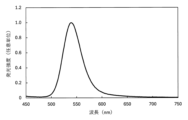
- 1 is an emission spectrum of the aqueous dispersion of water-soluble quantum dots obtained in Example 1.
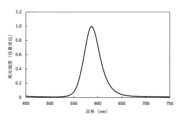
- 1 is an emission spectrum of the aqueous dispersion of water-soluble quantum dots obtained in Example 2.
- 1 is an emission spectrum of the aqueous dispersion of water-soluble quantum dots obtained in Example 3.
- the hydrophobic quantum dot dispersion liquid used in the present invention is a liquid in which hydrophobic quantum dots are dispersed in a solvent, and the hydrophobic quantum dots are quantum dots having hydrophobic ligands on their surfaces.
- the hydrophobic quantum dot dispersion liquid may be one obtained by reacting raw material compounds consisting of elements constituting the hydrophobic quantum dots in a solvent, or may be one obtained by dispersing commercially available hydrophobic quantum dots in a solvent.
- the solvent for the dispersion liquid is preferably a non-polar organic solvent, and more preferably a solvent made of an aliphatic hydrocarbon.
- aliphatic hydrocarbons include saturated hydrocarbons such as n-hexane, n-heptane, n-octane, n-nonane, n-decane, n-dodecane, n-hexadecane, and n-octadecane; and unsaturated aliphatic hydrocarbons such as 1-undecene, 1-dodecene, 1-tetradecene, 1-hexadecene, and 1-octadecene.
- the aliphatic hydrocarbon used as the solvent may be one type, or two or more types may be mixed together.
- the quantum dots constituting the hydrophobic quantum dots include cadmium-based quantum dots such as CdSe, CdTe, and CdS, and cadmium-free quantum dots such as InP, CuInS, and ZnTeSe.
- quantum dots having a core-shell structure in which a shell is formed on the surface of a core are preferable, and quantum dots having a core-shell structure in which the core has at least an InP-based quantum dot obtained by reacting a phosphorus source with an indium source, and the shell has a coating compound other than InP-based, are particularly preferable.
- Hydrophobic ligands constituting the hydrophobic quantum dots include carboxylic acid derivatives, phosphine derivatives, amine derivatives, phosphonic acid, etc.
- carboxylic acid derivatives include those in which the alkyl group in the molecule is linear and has 2 to 24 carbon atoms.
- carboxylic acids in which the alkyl group in the molecule is linear and has 2 to 24 carbon atoms include capric acid, lauric acid, myristic acid, palmitic acid, stearic acid, arachidic acid, behenic acid, elaidic acid, oleic acid, linolenic acid, and erucic acid.
- carboxylic acids in which the alkyl group in the molecule is linear and has 2 to 24 carbon atoms.
- capric acid lauric acid
- myristic acid palmitic acid
- stearic acid arachidic acid
- behenic acid behenic acid
- elaidic acid oleic acid
- linolenic acid linolenic acid
- erucic acid those in which the alkyl group in the molecule has 12 to 20 carbon atoms are particularly preferred, and
- the phosphine derivative is preferably a primary to tertiary alkylphosphine, and the alkyl group in the molecule is preferably a straight-chain alkyl group having 2 to 18 carbon atoms.
- the alkyl groups in the molecule may be the same or different.
- alkylphosphine having a straight-chain alkyl group having 2 to 18 carbon atoms include monoethylphosphine, monobutylphosphine, monodecylphosphine, monohexylphosphine, monooctylphosphine, monododecylphosphine, monohexadecylphosphine, diethylphosphine, dibutylphosphine, didecylphosphine, dihexylphosphine, dioctylphosphine, didodecylphosphine, dihexadecylphosphine, triethylphosphine, tributylphosphine, tridecylphosphine, trihexylphosphine, trioctylphosphine, tridodecylphosphine, and trihexadecylphosphine.
- those in which the number of carbon atoms in the alkyl group in the molecule is 4 to 12 are particularly preferred, those which are trialkylphosphines are preferred, and trioctylphosphine is the most preferred.
- the amine derivative is preferably a primary to tertiary alkylamine, and preferred examples include linear alkylamines in which the alkyl group in the molecule has 2 to 18 carbon atoms, and aromatic alkylamines in which the alkyl group has 6 to 12 carbon atoms.
- the alkyl groups in the molecule may be the same or different.
- linear alkylamines in which the alkyl group has 2 to 18 carbon atoms include monoethylamine, monobutylamine, monodecylamine, monohexylamine, monooctylamine, monododecylamine, monohexadecylamine, diethylamine, dibutylamine, didecylamine, dihexylamine, dioctylamine, didodecylamine, dihexadecylamine, triethylamine, tributylamine, tridecylamine, trihexylamine, trioctylamine, tridodecylamine, and trihexadecylamine.
- aromatic alkylamines in which the alkyl group has 6 to 12 carbon atoms include aniline, diphenylamine, triphenylamine, monobenzylamine, dibenzylamine, tribenzylamine, naphthylamine, dinaphthylamine, and trinaphthylamine.
- the phosphonic acid is preferably a monoalkylphosphonic acid having a linear alkyl group having from 2 to 18 carbon atoms in the molecule.
- examples of coating compounds suitable as the shell include AlN, AlP, Al2O3 , GaN, GaP, Ga2O3 , SiO2 , CdS , CdSe, CdSeS, CdTe, CdSeTe, CdTeS, ZnS, ZnSe, ZnSeS, ZnTe, ZnSeTe, ZnTeS , ZnO, ZnOS, ZnSeO, and ZnTeO, etc.
- the coating compound is obtained by reaction with at least a zinc source.
- the hydrophobic quantum dot dispersion liquid used in the present invention can be produced by known methods, for example, the method described in JP 2023-033157 A.
- the ligand exchange reaction in the present invention is a process in which hydrophilic ligands are added to a hydrophobic quantum dot dispersion liquid, and the ligands bonded to the surface of the quantum dots are exchanged for hydrophilic ligands to obtain hydrophilic quantum dots.
- Hydrophilic ligands include thiols, amine-containing thiols, amines, alcohols, thiol-containing alcohols, selenols, phosphites, phosphinic acids, phosphonic acids, phosphoric acids, phosphine oxides, phosphine sulfides, phosphine selenides, carboxylic acids, thiol-containing carboxylic acids, thiocarboxylic acids, thionocarboxylic acids, dithiocarboxylic acids, sulfenic acids, sulfinic acids, and sulfonic acids.
- thiols thiols, amine-containing thiols, amines, alcohols, thiol-containing alcohols, phosphonic acids, carboxylic acids, and thiol-containing carboxylic acids are preferred, and thiol-containing carboxylic acids are particularly preferred.
- the thiol-containing carboxylic acid may include thioglycolic acid, 2-mercaptopropionic acid, 3-mercaptopropionic acid, thiomalic acid, cysteine, acetylcysteine, homocysteine, penicillamine, etc.
- thioglycolic acid, 3-mercaptopropionic acid, cysteine, and acetylcysteine are preferred, and 3-mercaptopropionic acid is more preferred.
- the temperature when adding hydrophilic ligands to the quantum dot dispersion is preferably 0°C or higher and 350°C or lower, more preferably 20°C or higher and 300°C or lower, from the viewpoint of successfully promoting ligand exchange, and the treatment time is preferably 1 minute or higher and 600 minutes or lower, more preferably 5 minutes or higher and 240 minutes or lower.
- the amount of ligand added depends on the type of ligand, but is preferably 0.01 g/L or higher and 100,000 g/L or lower, more preferably 0.1 g/L or higher and 2,000 g/L or lower, relative to the reaction solution containing quantum dots.
- the atmosphere when adding the hydrophilic ligand to the quantum dot dispersion liquid is preferably a non-oxidizing atmosphere such as an inert gas atmosphere, reduced pressure, or vacuum, from the viewpoint of preventing the denaturation of the quantum dots and the by-production of oxides.
- the non-oxidizing atmosphere is preferably an inert gas atmosphere such as nitrogen gas or argon gas.
- the hydrophilic quantum dots are separated from the dispersion liquid containing the hydrophilic quantum dots.
- the separation method include common methods such as centrifugation, decantation, and suction filtration.
- the dispersion step in the present invention is a step of dispersing the hydrophilic quantum dots in an aqueous solvent to obtain an aqueous solvent dispersion of the hydrophilic quantum dots.
- the aqueous solvent is not particularly limited as long as it is a water-soluble solvent, and examples thereof include water, methanol, ethanol, 2-propanol, ethylene glycol, propylene glycol, acetone, acetonitrile, N-methylpyrrolidone, dimethylformamide, and tetrahydrofuran, with water being preferred.
- the hydrophilic quantum dot aqueous solvent dispersion is obtained by dispersing the hydrophilic quantum dots in the aqueous solvent.
- the hydrophilic quantum dots can be dispersed in the aqueous solvent as they are, but for example, when the hydrophilic ligand is a carboxylic acid containing a thiol, it is preferable to react these with ammonia water or tetraethylammonium hydroxide, etc., to convert them into the form of an ammonium salt, and then disperse them in the aqueous solvent, from the viewpoint of obtaining a uniform dispersion.
- the hydrophilic quantum dots before the dispersion process may contain by-products or unreacted impurities, they may be subjected to a purification process.
- This purification process can be performed by adding an organic solvent such as methanol, ethanol, 2-propanol, acetone, acetonitrile, or tetrahydrofuran to a solution containing hydrophilic quantum dots to precipitate the hydrophilic quantum dots, separating the solution containing impurities from the hydrophilic quantum dots, and dispersing the separated hydrophilic quantum dots in an aqueous solvent.
- the solution containing impurities and the hydrophilic quantum dots can be separated by operations such as centrifugation, decantation, and suction filtration. Through the above steps, an aqueous solvent dispersion of hydrophilic quantum dots is obtained.
- the surface treatment step in the present invention is a step of adding a surface treatment agent to the aqueous solvent dispersion to perform surface treatment of the hydrophilic quantum dots in an aqueous solvent, thereby obtaining an aqueous solvent dispersion of the surface-treated hydrophilic quantum dots.
- the water-soluble quantum dots of the present invention finally obtained have a FWHM equivalent to that of quantum dots obtained in an organic solvent, and the decrease in quantum yield is also suppressed.
- the surface treatment agent examples include metal halides such as halides of Li, Na, K, Be, Mg, Ca, Sr, Cu, Ag, Au, Hg, In, Sn, Pb, Zn, Cd, Al, and Ga; hydrogen halides such as HF, HCl, HBr, and HI; nitrogen halides such as NF3 ; halides of quaternary ammonium compounds and quaternary phosphonium compounds such as NR 4 F and PR 4 F (R represents H, or a saturated, unsaturated, or aromatic hydrocarbon having 1 to 8 carbon atoms, which may be linear or branched, and may be substituted with a functional group); carboxylic acids, phosphonic acids, sulfonic acids, and acid halides thereof; and metal carboxylates, metal carbamates, and metal thiocarboxylates containing metals such as Li, Na, K, Be, Mg, Ca, Sr, Cu, Ag, Au, Hg, In, Sn, P
- the surface treatment agent is preferably a metal halide or a metal carboxylate.
- the metal halide may be zinc fluoride, zinc chloride, zinc bromide, zinc iodide, etc., and zinc chloride is particularly preferred.
- the metal carboxylate may be zinc acetate, zinc trifluoroacetate, zinc myristate, zinc oleate, zinc benzoate, etc., and zinc acetate is particularly preferred.
- the surface treatment of the hydrophilic quantum dots can be carried out by adding a surface treatment agent to the hydrophilic quantum dot aqueous solvent dispersion.
- the surface treatment is preferably carried out at a temperature of -20°C or higher and 200°C or lower, more preferably at a temperature of 0°C or higher and 150°C or lower, and particularly preferably at a temperature of 20°C or higher and 120°C or lower, and for a period of preferably 1 minute or longer and 600 minutes or shorter, more preferably at a temperature of 5 minutes or longer and 240 minutes or shorter, and particularly preferably at a temperature of 10 minutes or longer and 120 minutes or shorter.
- the amount of the surface treatment agent added depends on the type of the surface treatment agent, but is preferably 0.01 g/L or higher and 10,000 g/L or lower, and more preferably 0.1 g/L or higher and 1,000 g/L or lower, relative to the hydrophilic quantum dot aqueous solvent dispersion.
- the atmosphere in the surface treatment process is preferably a non-oxidizing atmosphere such as an inert gas atmosphere, reduced pressure, or vacuum, from the viewpoint of preventing denaturation of the quantum dots and the by-production of oxides.
- the non-oxidizing atmosphere is preferably an inert gas atmosphere such as nitrogen gas or argon gas.
- the method of adding the surface treatment agent in the surface treatment step includes a method of directly adding the surface treatment agent to the reaction liquid, and a method of adding the surface treatment agent dissolved or dispersed in a solvent to the reaction liquid.
- the solvent is not particularly limited as long as it is a water-soluble solvent, and examples of the solvent include water, methanol, ethanol, 2-propanol, ethylene glycol, propylene glycol, acetone, acetonitrile, N-methylpyrrolidone, dimethylformamide, and tetrahydrofuran, with water being particularly preferred.
- the shell formation step in the present invention is a step of adding a shell forming agent to an aqueous solvent dispersion of the surface-treated hydrophilic quantum dots to form a shell on the surface of the surface-treated hydrophilic quantum dots, thereby obtaining an aqueous solvent dispersion of water-soluble quantum dots.
- the shell-forming agent is preferably a mixture of at least one sulfur source selected from thiols, thiol-containing carboxylic acids, thioureas, thiocarbamates, thiocarbonates, thiocarboxylic acids, thionocarboxylic acids, dithiocarboxylic acids, phosphine sulfides, and sulfides of Li, Na, K, Be, Mg, Ca, and Sr, and zinc carboxylate, zinc nitrate, zinc sulfate, zinc hypochlorite, zinc chlorite, zinc chlorate, zinc perchlorate, zinc bromate, zinc iodate, zinc carbonate, zinc borate, zinc hypophosphite, zinc phosphite, zinc phosphate, zinc trifluoromethanesulfonate, or a zinc halide.
- sulfur source selected from thiols, thiol-containing carboxylic acids, thioureas, thioc
- a mixture of thiol-containing carboxylic acids as the sulfur source and zinc carboxylate, zinc perchlorate, or a zinc halide as the zinc source is preferable, and a mixture of thiol-containing carboxylic acids and a zinc halide is particularly preferable.
- the thiol-containing carboxylic acids include thioglycolic acid, 2-mercaptopropionic acid, 3-mercaptopropionic acid, thiomalic acid, cysteine, acetylcysteine, homocysteine, penicillamine, etc.
- thioglycolic acid, 3-mercaptopropionic acid, cysteine, and acetylcysteine are preferred, and 3-mercaptopropionic acid is more preferred.
- the zinc halides are preferably zinc fluoride, zinc chloride, zinc bromide and zinc iodide, with zinc chloride being particularly preferred.
- the formation of a shell can be achieved by adding a shell-forming agent to an aqueous solvent dispersion of the surface-treated hydrophilic quantum dots.
- a treatment is carried out preferably at 30°C or higher and 200°C or lower, more preferably at 50°C or higher and 150°C or lower, and particularly at 70°C or higher and 120°C or lower, for preferably 1 minute or longer and 600 minutes or shorter, more preferably at 5 minutes or higher and 240 minutes or shorter, and particularly at 10 minutes or longer and 120 minutes or shorter, thereby forming a shell on the surface of the surface-treated hydrophilic quantum dots.
- the atmosphere during the shell formation process is preferably a non-oxidizing atmosphere such as an inert gas atmosphere, reduced pressure, or vacuum, from the viewpoint of preventing denaturation of the quantum dots and the by-production of oxides.
- the non-oxidizing atmosphere is preferably an inert gas atmosphere such as nitrogen gas or argon gas.
- the method of adding the shell-forming agent in the shell formation step includes a method of directly adding the shell-forming agent to the reaction liquid, and a method of adding the shell-forming agent dissolved or dispersed in a solvent to the reaction liquid.
- the solvent is not particularly limited as long as it is a water-soluble solvent, and examples of the solvent include water, methanol, ethanol, 2-propanol, ethylene glycol, propylene glycol, acetone, acetonitrile, N-methylpyrrolidone, dimethylformamide, and tetrahydrofuran, with water being particularly preferred.
- the water-soluble quantum dots can be separated from the obtained aqueous solvent dispersion of water-soluble quantum dots by common methods such as centrifugation, decantation, and suction filtration.
- the obtained water-soluble quantum dots are dispersed again in an aqueous solvent, and insoluble impurities are removed to obtain a purified aqueous solvent dispersion of water-soluble quantum dots.
- the water-soluble quantum dots obtained by the manufacturing method of the present invention exhibit excellent luminescence properties even in aqueous solvents, since the decrease in quantum yield from the hydrophobic quantum dots before they are solubilized is suppressed.
- this maintenance value is greater than 0.8, preferably 0.82 or more, and therefore the water-soluble quantum dots can be suitably used in fields where hydrophobic quantum dots could not be used, for example, in the field of bioimaging as fluorescent probes.
- Synthesis Example 1 Synthesis of green InP/ZnSe/ZnS quantum dots 1.04 g of indium myristate, 0.31 g of zinc myristate, and 0.06 g of indium acetate were added to 14.25 g of 1-octadecene, and the mixture was heated to 120° C. under reduced pressure with stirring and degassed for 1.5 hours. After degassing, the mixture was returned to atmospheric pressure with nitrogen gas and cooled to 40° C. to obtain a 1-octadecene solution of indium zinc myristate. The obtained 1-octadecene solution of indium zinc myristate was kept at 40° C.
- the collected InP/ZnSe/ZnS quantum dots were suspended in 7.03 g of octane to obtain an octane dispersion of purified InP/ZnSe/ZnS quantum dots.
- the results of measuring the luminescence characteristics of the obtained dispersion are shown in Table 1.
- Synthesis Example 2 Synthesis of Orange InP/ZnSe/ZnS Quantum Dots 1.43 g of indium myristate was added to 14.25 g of 1-octadecene, and heated to 120° C. under reduced pressure while stirring, and degassed for 1.5 hours. After degassing, the mixture was returned to atmospheric pressure with nitrogen gas and cooled to 40° C. to obtain a 1-octadecene solution of indium myristate. 2.51 g of a trioctylphosphine solution containing 10% by mass of tris(trimethylsilyl)phosphine was added to the obtained 1-octadecene solution of indium myristate at 40° C.
- the pressure was returned to atmospheric pressure with nitrogen gas, and the temperature was raised to 180° C. under a nitrogen atmosphere, and 18.19 g of the reaction solution of InP quantum dots obtained above was added, and the temperature was raised to 230° C. and held for 30 minutes, and then further raised to 300° C. and held for 60 minutes, thereby obtaining an oleylamine/dioctylamine dispersion of InP/ZnSe quantum dots having InP in the core and ZnSe in the shell.
- the obtained dispersion was cooled to 240° C., and then 7.54 g of zinc oleate, 7.54 g of trioctylphosphine, and 4.35 g of trioctylphosphine sulfide were poured thereinto and held for 90 minutes to obtain an oleylamine/dioctylamine dispersion of multi-shell quantum dots having InP in the core and ZnSe and ZnS stacked in the shell. After cooling the obtained dispersion to room temperature, 50 g of acetone was added, the mixture was stirred, and the InP/ZnSe/ZnS quantum dots were collected as a precipitate by centrifugation.
- the collected InP/ZnSe/ZnS quantum dots were suspended in 8.67 g of toluene to obtain a toluene dispersion of InP/ZnSe/ZnS quantum dots. 50 g of acetone was further added to this dispersion, the mixture was stirred, and the InP/ZnSe/ZnS quantum dots were collected as a precipitate by centrifugation. The collected InP/ZnSe/ZnS quantum dots were suspended in 7.03 g of octane to obtain an octane dispersion of purified InP/ZnSe/ZnS quantum dots. The results of measuring the luminescence characteristics of the obtained dispersion are shown in Table 1.
- Synthesis Example 3 Synthesis of red InP/ZnSe/ZnS quantum dots 1.59 g of indium myristate was added to 14.25 g of 1-octadecene, and the mixture was heated to 120° C. under reduced pressure with stirring and degassed for 1.5 hours. After degassing, the mixture was returned to atmospheric pressure with nitrogen gas and cooled to 40° C. to obtain a 1-octadecene solution of indium myristate. The obtained 1-octadecene solution of indium myristate was kept at 40° C.
- the mixture was returned to atmospheric pressure with nitrogen gas and cooled to 40° C. to obtain a 1-octadecene solution of indium myristate.
- the obtained 1-octadecene solution of indium myristate was kept at 40° C. under a nitrogen atmosphere, and 3.76 g of a trioctylphosphine solution containing 10% by mass of tris(trimethylsilyl)phosphine was added thereto, and the mixture was held for 10 minutes and then naturally cooled to 20° C. As a result, a yellow liquid containing an InP quantum dot precursor was obtained.
- the previously prepared base InP quantum dot reaction solution was reheated to 260° C., and the newly prepared InP quantum dot precursor solution was added over 60 minutes to obtain an InP quantum dot reaction solution.
- 7.54 g of zinc oleate, 4.09 g of zinc chloride, 5.40 g of trioctylphosphine selenide, 8.90 g of trioctylphosphine, 16.26 g of oleylamine, and 16.26 g of dioctylamine were mixed in a 200 mL reaction vessel, and heated to 120° C. under reduced pressure while stirring, and degassed for 30 minutes. After degassing, the pressure was returned to atmospheric pressure with nitrogen gas, and the temperature was raised to 180° C.
- the obtained dispersion was cooled to 240° C., and then 7.54 g of zinc oleate, 7.54 g of trioctylphosphine, and 4.35 g of trioctylphosphine sulfide were poured thereinto and held for 90 minutes to obtain an oleylamine/dioctylamine dispersion of multi-shell quantum dots having InP in the core and ZnSe and ZnS stacked in the shell. After cooling the obtained dispersion to room temperature, 50 g of acetone was added, the mixture was stirred, and the InP/ZnSe/ZnS quantum dots were collected as a precipitate by centrifugation.
- the collected InP/ZnSe/ZnS quantum dots were suspended in 8.67 g of toluene to obtain a toluene dispersion of InP/ZnSe/ZnS quantum dots. 50 g of acetone was further added to this dispersion, the mixture was stirred, and the InP/ZnSe/ZnS quantum dots were collected as a precipitate by centrifugation. The collected InP/ZnSe/ZnS quantum dots were suspended in 7.03 g of octane to obtain an octane dispersion of purified InP/ZnSe/ZnS quantum dots. The results of measuring the luminescence characteristics of the obtained dispersion are shown in Table 1.
- Example 1 (Ligand exchange step) 2 ml of the octane dispersion of green InP/ZnSe/ZnS quantum dots obtained in Synthesis Example 1 (quantum dot concentration 0.100 mmol/ml) and 10 ml of hexadecane were weighed into a 50 ml two-necked eggplant flask. The mixture was heated to 90°C under reduced pressure while stirring and degassed for 30 minutes.
- the mixture was returned to atmospheric pressure with nitrogen gas and heated to 220°C under a nitrogen atmosphere, 4 ml of 3-mercaptopropionic acid was added, and the mixture was held for 10 minutes to obtain InP/ZnSe/ZnS quantum dots in which the ligands were substituted with 3-mercaptopropionic acid.
- 40 ml of octane was added and the mixture was cooled to room temperature. The supernatant was removed, 30 ml of hexane was added, and the mixture was stirred, and the supernatant was removed again. This was repeated three times to obtain a solid.
- the solid was suspended in 5 ml of ethanol, and the InP/ZnSe/ZnS quantum dots were collected as a precipitate by centrifugation.
- the collected InP/ZnSe/ZnS quantum dots were dispersed by adding 3.6 ml of 40% aqueous solution of tetraethylammonium hydroxide, and then 6 ml of tetrahydrofuran and 60 ml of 2-propanol were added and stirred, and the InP/ZnSe/ZnS quantum dots were collected as a precipitate by centrifugation.
- the collected InP/ZnSe/ZnS quantum dots were dispersed by adding 1.6 ml of pure water, and then 60 ml of 2-propanol was added and stirred, and the InP/ZnSe/ZnS quantum dots were collected as a precipitate by centrifugation. This was repeated twice, and the resulting precipitate was dispersed in 10 ml of pure water to obtain an aqueous dispersion of purified InP/ZnSe/ZnS quantum dots.
- the water-soluble InP/ZnSe/ZnS quantum dots were collected as a precipitate from the obtained water-soluble InP/ZnSe/ZnS quantum dot aqueous dispersion by centrifugation.
- the collected precipitate was dispersed by adding 2.25 ml of pure water and 0.10 ml of a 35% aqueous solution of tetraethylammonium hydroxide, and then insoluble impurities were removed by centrifugation to obtain a purified water-soluble InP/ZnSe/ZnS quantum dot aqueous dispersion.
- Table 1 The results of measuring the emission characteristics of the obtained water dispersion are shown in Table 1.
- the results of measuring the emission spectrum of the obtained water dispersion are shown in FIG. 1.
- Example 2 In the ligand exchange step, the same procedure as in Example 1 was carried out, except that the octane dispersion of orange InP/ZnSe/ZnS quantum dots obtained in Synthesis Example 2 was used, to obtain a purified aqueous dispersion of water-soluble InP/ZnSe/ZnS quantum dots. The emission characteristics of the obtained aqueous dispersion were measured, and the results are shown in Table 1. The emission spectrum of the obtained aqueous dispersion was also measured, and the results are shown in FIG. 2.
- Example 3 In the ligand exchange step, the same operation as in Example 1 was carried out, except that the octane dispersion of red InP/ZnSe/ZnS quantum dots obtained in Synthesis Example 3 was used, to obtain an aqueous dispersion of purified water-soluble InP/ZnSe/ZnS quantum dots. The emission characteristics of the obtained aqueous dispersion were measured, and the results are shown in Table 1. The emission spectrum of the obtained aqueous dispersion was also measured, and the results are shown in FIG.
- Example 4 In the ligand exchange step, the same operation as in Example 1 was carried out up to the dispersion step, except that the octane dispersion of red InP/ZnSe/ZnS quantum dots obtained in Synthesis Example 3 was used, and an aqueous dispersion of InP/ZnSe/ZnS quantum dots was obtained.
- (Surface treatment process) 0.12 g of anhydrous zinc chloride was dissolved in 0.60 ml of pure water to obtain an anhydrous zinc chloride aqueous solution.
- the obtained aqueous dispersion of water-soluble InP/ZnSe/ZnS quantum dots was centrifuged to recover the water-soluble InP/ZnSe/ZnS quantum dots as a precipitate.
- the recovered precipitate was dispersed by adding 1.0 ml of pure water and 0.1 ml of a 35% aqueous solution of tetraethylammonium hydroxide, and then centrifuged to remove insoluble impurities, thereby obtaining an aqueous dispersion of purified water-soluble InP/ZnSe/ZnS quantum dots.
- Table 1 The results of measuring the luminescence characteristics of the obtained aqueous dispersion are shown in Table 1.
- Example 5 In the ligand exchange step, the same operations as in Example 1 were carried out up to the dispersion step, except that the octane dispersion of orange InP/ZnSe/ZnS quantum dots obtained in Synthesis Example 2 was used, to obtain an aqueous dispersion of InP/ZnSe/ZnS quantum dots. (Surface treatment process) 0.044g of zinc acetate dihydrate was dissolved in 2.0ml of pure water to obtain an aqueous zinc acetate solution.
- the obtained aqueous dispersion of water-soluble InP/ZnSe/ZnS quantum dots was centrifuged to recover the water-soluble InP/ZnSe/ZnS quantum dots as a precipitate.
- the recovered precipitate was dispersed by adding 0.30 ml of pure water and 0.03 ml of a 35% aqueous solution of tetraethylammonium hydroxide, and then centrifuged to remove insoluble impurities, thereby obtaining an aqueous dispersion of purified water-soluble InP/ZnSe/ZnS quantum dots.
- Table 1 The results of measuring the luminescence characteristics of the obtained aqueous dispersion are shown in Table 1.
- Example 1 The aqueous dispersion of the purified InP/ZnSe/ZnS quantum dots obtained in the dispersion step in Example 1 was used as water-soluble quantum dots, and the luminescence characteristics were measured. The results are shown in Table 1.
- 1 ml of the obtained dispersion was placed in a one-neck flask in a nitrogen atmosphere, 1 ml of 28% ammonia water, 0.5 ml of 1-butanol, and 0.25 ml of mercaptopropionic acid were added, and the internal temperature was heated to between 55°C and 65°C with stirring. After cooling, 7.5 ml of acetonitrile was added and centrifuged, and the obtained solid was dispersed in 1.5 ml of pure water to obtain a mixed dispersion of InP/ZnSe/ZnS quantum dots.
- the quantum dots water-soluble by the manufacturing method of the present invention have the same FWHM as the hydrophobic quantum dots used as the raw material, and it can be seen that the decrease in quantum yield is also suppressed.
Landscapes
- Chemical & Material Sciences (AREA)
- Organic Chemistry (AREA)
- Engineering & Computer Science (AREA)
- Materials Engineering (AREA)
- Inorganic Chemistry (AREA)
- Luminescent Compositions (AREA)
Abstract
Description
本発明で使用する疎水性量子ドット分散液は、溶媒中に疎水性量子ドットが分散してなるものであり、該疎水性量子ドットとは、表面に疎水性の配位子を有する量子ドットである。前記疎水性量子ドット分散液は、疎水性量子ドットを構成する元素からなる原料化合物を溶媒中で反応させて得られたものであってもよく、市販の疎水性量子ドットを溶媒中に分散したものであってもよい。
また、前記ホスホン酸としては、分子中のアルキル基が炭素原子数2以上18以下の直鎖状のアルキル基を有するモノアルキルホスホン酸が好ましい。
本発明における配位子交換反応は、疎水性量子ドット分散液に親水性の配位子を加え、量子ドットの表面に結合している配位子を親水性の配位子に交換して、親水性量子ドットを得る工程である。
以上の工程により、親水性量子ドットを含む分散液が得られる。
以上の工程により、親水性量子ドットが得られる。
本発明における分散工程は、前記親水性量子ドットを水性溶媒に分散して、親水性量子ドットの水性溶媒分散液を得る工程である。
以上の工程により、親水性量子ドットの水性溶媒分散液が得られる。
本発明における表面処理工程は、前記水性溶媒分散液に表面処理剤を加えて、水性溶媒中で親水性量子ドットの表面処理を行い、表面処理親水性量子ドットの水性溶媒分散液を得る工程である。
以上の工程により、表面処理親水性量子ドットの水性溶媒分散液が得られる。
本発明におけるシェル形成工程は、前記表面処理親水性量子ドットの水性溶媒分散液にシェル形成剤を加えて、表面処理親水性量子ドット表面にシェルを形成して水溶性量子ドットの水性溶媒分散液を得る工程である。
以上の工程により、水溶性量子ドットの水性溶媒分散液が得られる。
(1)発光スペクトル、極大蛍光波長、半値全幅(FWHM)及び量子収率(PLQY) 絶対PL量子収率測定装置(浜松ホトニクス(株)製、Quantaurus-QY)にて励起波長400nm、測定波長200~950nmの測定条件で、得られた量子ドットの水分散液を測定した。
(2)量子収率の維持値
下記式により算出した。
(量子収率の維持値)=
(水溶性量子ドットの量子収率)/(合成例で得られた量子ドットの量子収率)
ミリスチン酸インジウム1.04g、ミリスチン酸亜鉛0.31g、酢酸インジウム0.06gを、1-オクタデセン14.25gに加えて、減圧下、撹拌しながら120℃に加熱して1.5時間脱気した。脱気後、窒素ガスにより大気圧に戻して40℃まで冷却し、ミリスチン酸インジウム亜鉛の1-オクタデセン溶液を得た。
得られたミリスチン酸インジウム亜鉛の1-オクタデセン溶液を窒素雰囲気下、40℃とした状態で、10質量%のトリス(トリメチルシリル)ホスフィンを含有したトリオクチルホスフィン溶液2.51gを加え、10分間保持した後、20℃まで自然冷却した。これにより、InP量子ドット前駆体を含む黄色の液を得た。
続いて、InP量子ドット前駆体溶液を250℃まで加熱することにより、InP量子ドットの反応溶液を得た。
オレイン酸亜鉛7.54g、塩化亜鉛4.09g、トリオクチルホスフィンセレニド5.40g、トリオクチルホスフィン8.90g、オレイルアミン16.26g、ジオクチルアミン16.26gを200mL反応容器で混合し、減圧下、撹拌しながら120℃に加熱して30分間脱気した。脱気後、窒素ガスにより大気圧に戻して窒素雰囲気下で180℃まで昇温し、前記で得られたInP量子ドットの反応溶液18.17gを加え、230℃まで昇温して30分間保持した後、更に300℃に昇温して60分間保持することにより、コアにInP、シェルにZnSeを有するInP/ZnSe量子ドットのオレイルアミン/ジオクチルアミン分散液を得た。得られた分散液を240℃に冷却後、オレイン酸亜鉛7.54g、トリオクチルホスフィン7.54g、トリオクチルホスフィンスルフィド4.35gを注入し、90分間保持することにより、コアにInPを有し、シェルにZnSe及びZnSが積層されたマルチシェル型量子ドットのオレイルアミン/ジオクチルアミン分散液を得た。
得られた分散液を室温まで冷却後、アセトン50gを加えて撹拌し、遠心分離によりInP/ZnSe/ZnS量子ドットを沈殿物として回収した。回収したInP/ZnSe/ZnS量子ドットを、トルエン8.67gに懸濁してInP/ZnSe/ZnS量子ドットのトルエン分散液を得た。この分散液に更にアセトン50gを加えて撹拌し、遠心分離によりInP/ZnSe/ZnS量子ドットを沈殿物として回収した。回収したInP/ZnSe/ZnS量子ドットをオクタン7.03gに懸濁して、精製InP/ZnSe/ZnS量子ドットのオクタン分散液を得た。得られた分散液の発光特性を測定した結果を表1に示す。
ミリスチン酸インジウム1.43gを、1-オクタデセン14.25gに加えて、減圧下、撹拌しながら120℃に加熱して1.5時間脱気した。脱気後、窒素ガスにより大気圧に戻して40℃まで冷却し、ミリスチン酸インジウムの1-オクタデセン溶液を得た。 得られたミリスチン酸インジウムの1-オクタデセン溶液を窒素雰囲気下、40℃とした状態で、10質量%のトリス(トリメチルシリル)ホスフィンを含有したトリオクチルホスフィン溶液2.51gを加え、10分間保持した後、20℃まで自然冷却した。これにより、InP量子ドット前駆体を含む黄色の液を得た。
続いて、InP量子ドット前駆体溶液を280℃まで加熱することによりInP量子ドットの反応溶液を得た。
オレイン酸亜鉛7.54g、塩化亜鉛4.09g、トリオクチルホスフィンセレニド5.40g、トリオクチルホスフィン8.90g、オレイルアミン16.26g、ジオクチルアミン16.26gを200mL反応容器で混合し、減圧下、撹拌しながら120℃に加熱して30分間脱気した。脱気後、窒素ガスにより大気圧に戻して窒素雰囲気下で180℃まで昇温し、前記で得られたInP量子ドットの反応溶液18.19gを加え、230℃まで昇温して30分間保持した後、更に300℃に昇温して60分間保持することにより、コアにInP、シェルにZnSeを有するInP/ZnSe量子ドットのオレイルアミン/ジオクチルアミン分散液を得た。得られた分散液を240℃に冷却後、オレイン酸亜鉛7.54g、トリオクチルホスフィン7.54g、トリオクチルホスフィンスルフィド4.35gを注入し、90分間保持することにより、コアにInPを有し、シェルにZnSe及びZnSが積層されたマルチシェル型量子ドットのオレイルアミン/ジオクチルアミン分散液を得た。
得られた分散液を室温まで冷却後、アセトン50gを加えて撹拌し、遠心分離によりInP/ZnSe/ZnS量子ドットを沈殿物として回収した。回収したInP/ZnSe/ZnS量子ドットを、トルエン8.67gに懸濁してInP/ZnSe/ZnS量子ドットのトルエン分散液を得た。この分散液に更にアセトン50gを加えて撹拌し、遠心分離によりInP/ZnSe/ZnS量子ドットを沈殿物として回収した。回収したInP/ZnSe/ZnS量子ドットをオクタン7.03gに懸濁して、精製InP/ZnSe/ZnS量子ドットのオクタン分散液を得た。得られた分散液の発光特性を測定した結果を表1に示す。
ミリスチン酸インジウム1.59gを、1-オクタデセン14.25gに加えて、減圧下、撹拌しながら120℃に加熱して1.5時間脱気した。脱気後、窒素ガスにより大気圧に戻して40℃まで冷却し、ミリスチン酸インジウムの1-オクタデセン溶液を得た。
得られたミリスチン酸インジウムの1-オクタデセン溶液を窒素雰囲気下、40℃とした状態で、10質量%のトリス(トリメチルシリル)ホスフィンを含有したトリオクチルホスフィン溶液2.51gを加え、10分間保持した後、20℃まで自然冷却した。これにより、InP量子ドット前駆体を含む黄色の液を得た。
続いて、InP量子ドット前駆体溶液を280℃まで加熱することによりベースとなるInP量子ドットの反応溶液を得た。
別の反応容器にミリスチン酸インジウム2.39gを、1-オクタデセン21.37gに加えて、減圧下、撹拌しながら120℃に加熱して1.5時間脱気した。脱気後、窒素ガスにより大気圧に戻して40℃まで冷却し、ミリスチン酸インジウムの1-オクタデセン溶液を得た。
得られたミリスチン酸インジウムの1-オクタデセン溶液を窒素雰囲気下、40℃とした状態で、10質量%のトリス(トリメチルシリル)ホスフィンを含有したトリオクチルホスフィン溶液3.76gを加え、10分間保持した後、20℃まで自然冷却した。これにより、InP量子ドット前駆体を含む黄色の液を得た。
先に調整したベースとなるInP量子ドットの反応溶液を260℃に再加熱し、新たに調整したInP量子ドット前駆体溶液を60分かけて添加することによりInP量子ドットの反応溶液を得た。
オレイン酸亜鉛7.54g、塩化亜鉛4.09g、トリオクチルホスフィンセレニド5.40g、トリオクチルホスフィン8.90g、オレイルアミン16.26g、ジオクチルアミン16.26gを200mL反応容器で混合し、減圧下、撹拌しながら120℃に加熱して30分間脱気した。脱気後、窒素ガスにより大気圧に戻して窒素雰囲気下で180℃まで昇温し、前記で得られたInP量子ドットの反応溶液から15.29gを加え、230℃まで昇温して30分間保持した後、更に300℃に昇温して60分間保持することにより、コアにInP、シェルにZnSeを有するInP/ZnSe量子ドットのオレイルアミン/ジオクチルアミン分散液を得た。得られた分散液を240℃に冷却後、オレイン酸亜鉛7.54g、トリオクチルホスフィン7.54g、トリオクチルホスフィンスルフィド4.35gを注入し、90分間保持することにより、コアにInPを有し、シェルにZnSe及びZnSが積層されたマルチシェル型量子ドットのオレイルアミン/ジオクチルアミン分散液を得た。
得られた分散液を室温まで冷却後、アセトン50gを加えて撹拌し、遠心分離によりInP/ZnSe/ZnS量子ドットを沈殿物として回収した。回収したInP/ZnSe/ZnS量子ドットを、トルエン8.67gに懸濁してInP/ZnSe/ZnS量子ドットのトルエン分散液を得た。この分散液に更にアセトン50gを加えて撹拌し、遠心分離によりInP/ZnSe/ZnS量子ドットを沈殿物として回収した。回収したInP/ZnSe/ZnS量子ドットをオクタン7.03gに懸濁して、精製InP/ZnSe/ZnS量子ドットのオクタン分散液を得た。得られた分散液の発光特性を測定した結果を表1に示す。
(配位子交換工程)
合成例1で得られた緑色InP/ZnSe/ZnS量子ドットのオクタン分散液(量子ドット濃度0.100mmol/ml)2ml、ヘキサデカン10mlを50ml二口ナスフラスコへ計量した。減圧下、撹拌しながら90℃に加熱して30分間脱気した。脱気後、窒素ガスにより大気圧に戻して窒素雰囲気下で220℃まで昇温し、3-メルカプトプロピオン酸4mlを加え、10分間保持することにより、配位子が3-メルカプトプロピオン酸に置換したInP/ZnSe/ZnS量子ドットを得た。160℃まで冷却後、オクタン40mlを加えて室温まで冷却した。上澄み液を除去し、ヘキサン30mlを加えて撹拌し、再び上澄み液を除去した。これを3回繰り返して固形物を得た。この固形物をエタノール5mlに懸濁させ、遠心分離によりInP/ZnSe/ZnS量子ドットを沈殿物として回収した。
(分散工程)
回収したInP/ZnSe/ZnS量子ドットを、テトラエチルアンモニウムヒドロキシド40%水溶液3.6mlを加えて分散させた後、テトラヒドロフラン6mlと2-プロパノール60mlを加えて撹拌し、遠心分離によりInP/ZnSe/ZnS量子ドットを沈殿物として回収した。回収したInP/ZnSe/ZnS量子ドットを、純水1.6mlを加えて分散させた後、2-プロパノール60mlを加え撹拌し、遠心分離によりInP/ZnSe/ZnS量子ドットを沈殿物として回収した。これを2回繰り返して得られた沈殿物を、純水10mlに分散させて精製InP/ZnSe/ZnS量子ドットの水分散液を得た。
(表面処理工程)
InP/ZnSe/ZnS量子ドット水分散液(量子ドット濃度0.020mmol/ml)3ml、無水塩化亜鉛0.082g、純水5mlを蓋付ガラスフラスコへ計量した。減圧後、窒素ガスにより大気圧へ戻して窒素雰囲気下とし、撹拌しながら内温を80℃から100℃の間で加熱し、30分間保持した後、室温まで冷却して、表面処理InP/ZnSe/ZnS量子ドット水分散液を得た。
(シェル形成工程)
得られた表面処理InP/ZnSe/ZnS量子ドット水分散液に、4.0mlの純水に溶解した無水塩化亜鉛0.090gと3-メルカプトプロピオン酸1.0mlを加えた。減圧後、窒素ガスにより大気圧へ戻して窒素雰囲気下とし、撹拌しながら内温を80℃から100℃の間で加熱し、30分間保持した後、室温まで冷却して、水溶性InP/ZnSe/ZnS量子ドット水分散液を得た。
得られた水溶性InP/ZnSe/ZnS量子ドット水分散液を、遠心分離により水溶性InP/ZnSe/ZnS量子ドットを沈殿物として回収した。回収した沈殿物を、純水2.25ml、テトラエチルアンモニウムヒドロキシド35%水溶液0.10mlを加えて分散させた後、遠心分離により不溶性不純物を取り除き、精製した水溶性InP/ZnSe/ZnS量子ドットの水分散液を得た。得られた水分散液の発光特性を測定した結果を表1に示す。また、得られた水分散液の発光スペクトルを測定した結果を図1に示す。
配位子交換工程において、合成例2で得られた橙色InP/ZnSe/ZnS量子ドットのオクタン分散液を使用すること以外は、実施例1と同じ操作を行い、精製した水溶性InP/ZnSe/ZnS量子ドットの水分散液を得た。得られた水分散液の発光特性を測定した結果を表1に示す。また、得られた水分散液の発光スペクトルを測定した結果を図2に示す。
配位子交換工程において、合成例3で得られた赤色InP/ZnSe/ZnS量子ドットのオクタン分散液を使用すること以外は、実施例1と同じ操作を行い、精製した水溶性InP/ZnSe/ZnS量子ドットの水分散液を得た。得られた水分散液の発光特性を測定した結果を表1に示す。また、得られた水分散液の発光スペクトルを測定した結果を図3に示す。
配位子交換工程において、合成例3で得られた赤色InP/ZnSe/ZnS量子ドットのオクタン分散液を使用すること以外は、分散工程まで実施例1と同じ操作を行い、InP/ZnSe/ZnS量子ドット水分散液を得た。
(表面処理工程)
無水塩化亜鉛0.12gを0.60mlの純水に溶解して無水塩化亜鉛水溶液を得た。この無水塩化亜鉛水溶液0.05ml、γ-ブチロラクトン2.0ml及びInP/ZnSe/ZnS量子ドット水分散液(量子ドット濃度0.025mmol/ml)0.03mlを蓋付ガラスフラスコへ計量した。減圧後、窒素ガスにより大気圧へ戻して窒素雰囲気下とし、撹拌しながら内温を80℃から100℃の間で加熱し、30分間保持した後、室温まで冷却して、表面処理InP/ZnSe/ZnS量子ドット水分散液を得た。
(シェル形成工程)
得られた表面処理InP/ZnSe/ZnS量子ドット水分散液に、無水塩化亜鉛水溶液0.05mlと3-メルカプトプロピオン酸0.02mlを加えた。減圧後、窒素ガスにより大気圧へ戻して窒素雰囲気下とし、撹拌しながら内温を190℃から205℃の間で加熱し、30分間保持した後、室温まで冷却して、水溶性InP/ZnSe/ZnS量子ドット水分散液を得た。
得られた水溶性InP/ZnSe/ZnS量子ドット水分散液を、遠心分離により水溶性InP/ZnSe/ZnS量子ドットを沈殿物として回収した。回収した沈殿物を、純水1.0ml、テトラエチルアンモニウムヒドロキシド35%水溶液0.1mlを加えて分散させた後、遠心分離により不溶性不純物を取り除き、精製した水溶性InP/ZnSe/ZnS量子ドットの水分散液を得た。得られた水分散液の発光特性を測定した結果を表1に示す。
配位子交換工程において、合成例2で得られた橙色InP/ZnSe/ZnS量子ドットのオクタン分散液を使用すること以外は、分散工程まで実施例1と同じ操作を行い、InP/ZnSe/ZnS量子ドット水分散液を得た。
(表面処理工程)
酢酸亜鉛二水和物0.044gを2.0mlの純水に溶解して酢酸亜鉛水溶液を得た。この酢酸亜鉛水溶液1.0ml、純水5.0ml及びInP/ZnSe/ZnS量子ドット水分散液(量子ドット濃度0.020mmol/ml)0.5mlを蓋付ガラスフラスコへ計量した。減圧後、窒素ガスにより大気圧へ戻して窒素雰囲気下とし、撹拌しながら内温を80℃から100℃の間で加熱し、30分間保持した後、室温まで冷却して、表面処理InP/ZnSe/ZnS量子ドット水分散液を得た。
(シェル形成工程)
得られた表面処理InP/ZnSe/ZnS量子ドット水分散液に、酢酸亜鉛水溶液1.0mlと3-メルカプトプロピオン酸0.16mlを加えた。減圧後、窒素ガスにより大気圧へ戻して窒素雰囲気下とし、撹拌しながら内温を80℃から100℃の間で加熱し、30分間保持した後、室温まで冷却して、水溶性InP/ZnSe/ZnS量子ドット水分散液を得た。
得られた水溶性InP/ZnSe/ZnS量子ドット水分散液を、遠心分離により水溶性InP/ZnSe/ZnS量子ドットを沈殿物として回収した。回収した沈殿物を、純水0.30ml、テトラエチルアンモニウムヒドロキシド35%水溶液0.03mlを加えて分散させた後、遠心分離により不溶性不純物を取り除き、精製した水溶性InP/ZnSe/ZnS量子ドットの水分散液を得た。得られた水分散液の発光特性を測定した結果を表1に示す。
実施例1における分散工程で得られた精製InP/ZnSe/ZnS量子ドットの水分散液を、水溶性量子ドットとして発光特性を測定した結果を表1に示す。
実施例2における分散工程で得られた精製InP/ZnSe/ZnS量子ドットの水分散液を、水溶性量子ドットとして発光特性を測定した結果を表1に示す。
実施例3における分散工程で得られた精製InP/ZnSe/ZnS量子ドットの水分散液を、水溶性量子ドットとして発光特性を測定した結果を表1に示す。
合成例3で得られた橙色InP/ZnSe/ZnS量子ドットのオクタン分散液(量子ドット濃度0.020mmol/ml)0.5mlを遠心分離して、InP/ZnSe/ZnS量子ドットを沈殿物として回収した。回収したInP/ZnSe/ZnS量子ドットをn-ヘキサン1mlに分散させ、InP/ZnSe/ZnS量子ドットのn-ヘキサン分散液(量子ドット濃度10mg/ml)を得た。
得られた分散液1mlを、窒素雰囲気中で一口フラスコに入れ、28%アンモニア水1ml、1-ブタノール0.5ml、メルカプトプロピオン酸0.25mlを加えて、内温を55℃から65℃の間で撹拌しながら加熱し、冷却後、アセトニトリル7.5mlを加えて遠心分離し、得られた固形物を純水1.5mlに分散してInP/ZnSe/ZnS量子ドットの混合分散液を得た。
得られたInP/ZnSe/ZnS量子ドットの混合分散液に、無水塩化亜鉛0.14g、メルカプトプロピオン酸1ml及び純水4mlを混合したZn-メルカプトプロピオン酸水溶液1mlを加え、内温が70℃から80℃となるように撹拌しながら加熱し、撹拌しながら紫外線(波長365nm)を40分間照射した。照射を止め、撹拌開始から1時間経過した後、反応液を室温まで冷却し、アセトニトリル4.5mlを加えて遠心分離する操作を2回行い、得られた固形物を純水1mlに分散して水溶性InP/ZnSe/ZnS量子ドット水分散液を得た。得られた水分散液の発光特性を測定した結果を表1に示す。

Claims (11)
- 疎水性量子ドット分散液に親水性の配位子を加え、量子ドットの表面に結合している配位子を親水性の配位子に交換して、親水性量子ドットを得る配位子交換工程、
前記親水性量子ドットを水性溶媒に分散して、親水性量子ドットの水性溶媒分散液を得る分散工程、
前記水性溶媒分散液に表面処理剤を加えて、水性溶媒中で親水性量子ドットの表面処理を行い、表面処理親水性量子ドットの水性溶媒分散液を得る表面処理工程、及び、
前記表面処理親水性量子ドットの水性溶媒分散液にシェル形成剤を加えて、表面処理親水性量子ドット表面にシェルを形成して水溶性量子ドットの水性溶媒分散液を得るシェル形成工程、
を有する水溶性量子ドットの製造方法。 - 前記疎水性量子ドット分散液の量子ドットが、コアに少なくともリン源及びインジウム源との反応により得られたInP系量子ドットを有し、シェルにInP系以外の被覆化合物を有するコアシェル構造の量子ドットである請求項1に記載の水溶性量子ドットの製造方法。
- 前記シェルが、AlN、AlP、Al2O3、GaN、GaP、Ga2O3、SiO2、CdS、CdSe、CdSeS、CdTe、CdSeTe、CdTeS、ZnS、ZnSe、ZnSeS、ZnTe、ZnSeTe、ZnTeS、ZnO、ZnOS、ZnSeO及びZnTeOからなる群から選ばれる少なくとも一つである請求項1又は2に記載の水溶性量子ドットの製造方法。
- 配位子交換工程で用いられる親水性の配位子が、チオール類、アミン含有チオール類、アミン類、アルコール類、チオール含有アルコール類、セレノール類、ホスファイト類、ホスフィン酸類、ホスホン酸類、リン酸類、ホスフィンオキサイド類、ホスフィンスルフィド類、ホスフィンセレナイド類、カルボン酸類、チオール含有カルボン酸類、チオカルボン酸類、チオノカルボン酸類、ジチオカルボン酸類、スルフェン酸類、スルフィン酸類及びスルホン酸類からなる群から選ばれる少なくとも一つである請求項1又は2に記載の水溶性量子ドットの製造方法。
- 前記水性溶媒が水である請求項1又は2に記載の水溶性量子ドットの製造方法。
- 前記表面処理剤が、金属ハロゲン化物、金属カルボン酸塩、ハロゲン化水素、ハロゲン化窒素、第4級アンモニウム化合物若しくは第4級ホスホニウム化合物のハロゲン化物、又はカルボン酸、ホスホン酸、スルホン酸若しくはこれらの酸ハロゲン化物である請求項1又は2に記載の水溶性量子ドットの製造方法。
- 前記シェル形成剤が、チオール類、チオール含有カルボン酸類、チオ尿素類、チオカルバメート類、チオ炭酸類、チオカルボン酸類、チオノカルボン酸類、ジチオカルボン酸類、ホスフィンスルフィド類、並びにLi、Na、K、Be、Mg、Ca及びSrの硫化物から選ばれる少なくとも一つの硫黄源と、カルボン酸亜鉛、硝酸亜鉛、硫酸亜鉛、次亜塩素酸亜鉛、亜塩素酸亜鉛、塩素酸亜鉛、過塩素酸亜鉛、臭素酸亜鉛、ヨウ素酸亜鉛、炭酸亜鉛、ホウ酸亜鉛、次亜リン酸亜鉛、亜リン酸亜鉛、リン酸亜鉛、トリフルオロメタンスルホン酸亜鉛又は亜鉛のハロゲン化物との混合物である請求項1又は2に記載の水溶性量子ドットの製造方法。
- 疎水性量子ドットの量子収率に対する、該疎水性量子ドットの表面に結合している配位子を親水性の配位子に交換して得られる水溶性量子ドットの量子収率が、0.8超である、水溶性量子ドット。
- コアに少なくともリン元素及びインジウム元素からなるInP系量子ドットを有し、シェルにInP系以外の被覆化合物を有するコアシェル構造の量子ドットである請求項8に記載の水溶性量子ドット。
- 前記シェルが、AlN、AlP、Al2O3、GaN、GaP、Ga2O3、SiO2、CdS、CdSe、CdSeS、CdTe、CdSeTe、CdTeS、ZnS、ZnSe、ZnSeS、ZnTe、ZnSeTe、ZnTeS、ZnO、ZnOS、ZnSeO又はZnTeOからなる群から選ばれる少なくとも一つである請求項9に記載の水溶性量子ドット。
- 水溶性量子ドットの表面に配位する配位子が、チオール類、アミン含有チオール類、アミン類、アルコール類、チオール含有アルコール類、セレノール類、ホスファイト類、ホスフィン酸類、ホスホン酸類、リン酸類、ホスフィンオキサイド類、ホスフィンスルフィド類、ホスフィンセレナイド類、カルボン酸類、チオール含有カルボン酸類、チオカルボン酸類、チオノカルボン酸類、ジチオカルボン酸類、スルフェン酸類、スルフィン酸類及びスルホン酸類からなる群から選ばれる少なくとも一つである請求項8又は9に記載の水溶性量子ドット。
Priority Applications (2)
| Application Number | Priority Date | Filing Date | Title |
|---|---|---|---|
| CN202480039027.3A CN121311563A (zh) | 2023-06-12 | 2024-06-11 | 水溶性量子点的制造方法及水溶性量子点 |
| KR1020257043825A KR20260020260A (ko) | 2023-06-12 | 2024-06-11 | 수용성 양자 도트의 제조 방법 및 수용성 양자 도트 |
Applications Claiming Priority (2)
| Application Number | Priority Date | Filing Date | Title |
|---|---|---|---|
| JP2023096240A JP2024177865A (ja) | 2023-06-12 | 2023-06-12 | 水溶性量子ドットの製造方法及び水溶性量子ドット |
| JP2023-096240 | 2023-06-12 |
Publications (1)
| Publication Number | Publication Date |
|---|---|
| WO2024257744A1 true WO2024257744A1 (ja) | 2024-12-19 |
Family
ID=93852023
Family Applications (1)
| Application Number | Title | Priority Date | Filing Date |
|---|---|---|---|
| PCT/JP2024/021119 Ceased WO2024257744A1 (ja) | 2023-06-12 | 2024-06-11 | 水溶性量子ドットの製造方法及び水溶性量子ドット |
Country Status (4)
| Country | Link |
|---|---|
| JP (1) | JP2024177865A (ja) |
| KR (1) | KR20260020260A (ja) |
| CN (1) | CN121311563A (ja) |
| WO (1) | WO2024257744A1 (ja) |
Citations (6)
| Publication number | Priority date | Publication date | Assignee | Title |
|---|---|---|---|---|
| WO2018043238A1 (ja) * | 2016-08-31 | 2018-03-08 | 富士フイルム株式会社 | 半導体ナノ粒子複合体の製造方法、半導体ナノ粒子複合体およびフィルム |
| JP2018538578A (ja) * | 2016-06-14 | 2018-12-27 | 深▲せん▼市華星光電技術有限公司Shenzhen China Star Optoelectronics Technology Co., Ltd. | 水溶性量子ドット、その作製方法及び量子ドットフィルムの作製方法 |
| JP2020507801A (ja) * | 2017-01-27 | 2020-03-12 | オスラム オプト セミコンダクターズ ゲゼルシャフト ミット ベシュレンクテル ハフツングOsram Opto Semiconductors GmbH | ポリマーと絶縁体コーティングとを有する半導体構造物、ならびにそれを形成するための組成物及び方法 |
| US20200172801A1 (en) * | 2017-05-31 | 2020-06-04 | Tcl Corporation | Quantum dot surface ligand exchange method |
| JP2020519565A (ja) * | 2017-03-15 | 2020-07-02 | ナノコ テクノロジーズ リミテッド | 光応答性量子ドット薬物送達システム |
| JP2022074714A (ja) * | 2020-11-05 | 2022-05-18 | 国立研究開発法人産業技術総合研究所 | 蛍光性微粒子及びその製造方法、該蛍光性微粒子を用いたディスプレイ、生体物の蛍光標識又は蛍光試薬 |
Family Cites Families (1)
| Publication number | Priority date | Publication date | Assignee | Title |
|---|---|---|---|---|
| KR102031111B1 (ko) | 2019-03-12 | 2019-10-11 | 주식회사 코보시스 | 사용자와 관리자를 구분하여 화면을 표시하는 키오스크 및 그 방법 |
-
2023
- 2023-06-12 JP JP2023096240A patent/JP2024177865A/ja active Pending
-
2024
- 2024-06-11 CN CN202480039027.3A patent/CN121311563A/zh active Pending
- 2024-06-11 WO PCT/JP2024/021119 patent/WO2024257744A1/ja not_active Ceased
- 2024-06-11 KR KR1020257043825A patent/KR20260020260A/ko active Pending
Patent Citations (6)
| Publication number | Priority date | Publication date | Assignee | Title |
|---|---|---|---|---|
| JP2018538578A (ja) * | 2016-06-14 | 2018-12-27 | 深▲せん▼市華星光電技術有限公司Shenzhen China Star Optoelectronics Technology Co., Ltd. | 水溶性量子ドット、その作製方法及び量子ドットフィルムの作製方法 |
| WO2018043238A1 (ja) * | 2016-08-31 | 2018-03-08 | 富士フイルム株式会社 | 半導体ナノ粒子複合体の製造方法、半導体ナノ粒子複合体およびフィルム |
| JP2020507801A (ja) * | 2017-01-27 | 2020-03-12 | オスラム オプト セミコンダクターズ ゲゼルシャフト ミット ベシュレンクテル ハフツングOsram Opto Semiconductors GmbH | ポリマーと絶縁体コーティングとを有する半導体構造物、ならびにそれを形成するための組成物及び方法 |
| JP2020519565A (ja) * | 2017-03-15 | 2020-07-02 | ナノコ テクノロジーズ リミテッド | 光応答性量子ドット薬物送達システム |
| US20200172801A1 (en) * | 2017-05-31 | 2020-06-04 | Tcl Corporation | Quantum dot surface ligand exchange method |
| JP2022074714A (ja) * | 2020-11-05 | 2022-05-18 | 国立研究開発法人産業技術総合研究所 | 蛍光性微粒子及びその製造方法、該蛍光性微粒子を用いたディスプレイ、生体物の蛍光標識又は蛍光試薬 |
Also Published As
| Publication number | Publication date |
|---|---|
| CN121311563A (zh) | 2026-01-09 |
| JP2024177865A (ja) | 2024-12-24 |
| KR20260020260A (ko) | 2026-02-10 |
Similar Documents
| Publication | Publication Date | Title |
|---|---|---|
| JP7599182B2 (ja) | 半導体ナノ粒子およびその製造方法ならびに発光デバイス | |
| US12454646B2 (en) | Quantum dot material and method for producing quantum dot material | |
| KR100657639B1 (ko) | 반도체 양자점의 대량 합성 방법 | |
| JP7818779B2 (ja) | 半導体ナノ粒子の製造方法 | |
| CA2455938A1 (en) | Colloidal nanocrystals with high photoluminescence quantum yields and methods of preparing the same | |
| US20190367810A1 (en) | Cd-free colloidal quantum dot capable of emitting visible fluorescence, and method for producing same | |
| US20160280991A1 (en) | Process for increasing the photoluminescence internal quantum efficiency of nanocrystals, in particular of agins2-zns nanocrystals | |
| US20250320407A1 (en) | Method for producing semiconductor nanoparticles, semiconductor nanoparticles, and light-emitting device | |
| EP2399733A2 (en) | Preparation of nanocrystallines | |
| KR102277044B1 (ko) | 양자점의 제조방법, 및 이에 의해 제조된 양자점 | |
| WO2023182221A1 (ja) | 量子ドットの製造方法 | |
| JP2020502330A (ja) | ナノサイズの発光半導体材料を調製する方法 | |
| JP2024177865A (ja) | 水溶性量子ドットの製造方法及び水溶性量子ドット | |
| WO2025053075A1 (ja) | 水溶性量子ドット製造用添加剤、水溶性量子ドット分散液及び複合量子ドット | |
| US20240209258A1 (en) | Method for producing semiconductor nanoparticles | |
| US10246637B2 (en) | One-pot method for preparing core-shell nanocrystals | |
| US20240387784A1 (en) | Method for producing semiconductor nanoparticles, semiconductor nanoparticles, and light-emitting device | |
| WO2024044525A1 (en) | Methods for synthesizing iii-v nanocrystals | |
| JP7595881B2 (ja) | 半導体ナノ粒子及びその製造方法並びに発光デバイス | |
| KR102573072B1 (ko) | 양자점의 제조방법, 및 이에 의해 제조된 양자점 | |
| US20240336834A1 (en) | Method for producing quantum dot | |
| KR20210033252A (ko) | 양자점의 제조방법, 및 이에 의해 제조된 양자점 | |
| JP2023033157A (ja) | 量子ドットの製造方法 | |
| JP2025035912A (ja) | バイオメディカル用途向け量子ドット分散液、その製造方法及び複合量子ドット |
Legal Events
| Date | Code | Title | Description |
|---|---|---|---|
| 121 | Ep: the epo has been informed by wipo that ep was designated in this application |
Ref document number: 24823360 Country of ref document: EP Kind code of ref document: A1 |
|
| ENP | Entry into the national phase |
Ref document number: 1020257043825 Country of ref document: KR Free format text: ST27 STATUS EVENT CODE: A-0-1-A10-A15-NAP-PA0105 (AS PROVIDED BY THE NATIONAL OFFICE) |
|
| NENP | Non-entry into the national phase |
Ref country code: DE |
|
| 122 | Ep: pct application non-entry in european phase |
Ref document number: 24823360 Country of ref document: EP Kind code of ref document: A1 |