WO2024257670A1 - コンピュータシステムおよび情報担持媒体 - Google Patents
コンピュータシステムおよび情報担持媒体 Download PDFInfo
- Publication number
- WO2024257670A1 WO2024257670A1 PCT/JP2024/020555 JP2024020555W WO2024257670A1 WO 2024257670 A1 WO2024257670 A1 WO 2024257670A1 JP 2024020555 W JP2024020555 W JP 2024020555W WO 2024257670 A1 WO2024257670 A1 WO 2024257670A1
- Authority
- WO
- WIPO (PCT)
- Prior art keywords
- information
- data
- unit
- communication
- class
- Prior art date
- Legal status (The legal status is an assumption and is not a legal conclusion. Google has not performed a legal analysis and makes no representation as to the accuracy of the status listed.)
- Ceased
Links
Images





Classifications
-
- G—PHYSICS
- G06—COMPUTING OR CALCULATING; COUNTING
- G06K—GRAPHICAL DATA READING; PRESENTATION OF DATA; RECORD CARRIERS; HANDLING RECORD CARRIERS
- G06K19/00—Record carriers for use with machines and with at least a part designed to carry digital markings
- G06K19/06—Record carriers for use with machines and with at least a part designed to carry digital markings characterised by the kind of the digital marking, e.g. shape, nature, code
- G06K19/067—Record carriers with conductive marks, printed circuits or semiconductor circuit elements, e.g. credit or identity cards also with resonating or responding marks without active components
- G06K19/07—Record carriers with conductive marks, printed circuits or semiconductor circuit elements, e.g. credit or identity cards also with resonating or responding marks without active components with integrated circuit chips
-
- G—PHYSICS
- G06—COMPUTING OR CALCULATING; COUNTING
- G06K—GRAPHICAL DATA READING; PRESENTATION OF DATA; RECORD CARRIERS; HANDLING RECORD CARRIERS
- G06K19/00—Record carriers for use with machines and with at least a part designed to carry digital markings
- G06K19/06—Record carriers for use with machines and with at least a part designed to carry digital markings characterised by the kind of the digital marking, e.g. shape, nature, code
- G06K19/067—Record carriers with conductive marks, printed circuits or semiconductor circuit elements, e.g. credit or identity cards also with resonating or responding marks without active components
- G06K19/07—Record carriers with conductive marks, printed circuits or semiconductor circuit elements, e.g. credit or identity cards also with resonating or responding marks without active components with integrated circuit chips
- G06K19/077—Constructional details, e.g. mounting of circuits in the carrier
-
- G—PHYSICS
- G06—COMPUTING OR CALCULATING; COUNTING
- G06Q—INFORMATION AND COMMUNICATION TECHNOLOGY [ICT] SPECIALLY ADAPTED FOR ADMINISTRATIVE, COMMERCIAL, FINANCIAL, MANAGERIAL OR SUPERVISORY PURPOSES; SYSTEMS OR METHODS SPECIALLY ADAPTED FOR ADMINISTRATIVE, COMMERCIAL, FINANCIAL, MANAGERIAL OR SUPERVISORY PURPOSES, NOT OTHERWISE PROVIDED FOR
- G06Q50/00—Information and communication technology [ICT] specially adapted for implementation of business processes of specific business sectors, e.g. utilities or tourism
- G06Q50/10—Services
Definitions
- a service space which is a fixed space such as a store, facility, or place that provides services to users or sells products, and that communicate wirelessly with information-carrying media carried by users.
- Patent Document 1 calls contactless IC cards IC tags, and describes a technology in which two types of antennas are built into the IC tags.
- Patent Document 1 all that is described in Patent Document 1 is that two types of antennas are built into an information carrying medium known as an IC tag. Even if it were possible to realize an information carrying medium capable of multiple types of communication by having multiple types of antennas built in, if the information carrying medium is used in different stores or facilities that provide different services depending on the antenna of the information carrying medium, then this would amount to nothing more than consolidating multiple types of information carrying media into a single information carrying medium. In other words, Patent Document 1 does not describe a system that realizes a rational use of an information carrying medium capable of multiple types of communication.
- the information carrying medium were to be in another form, such as a cylinder or coin type, rather than a card type such as a contactless IC card.
- the problem that this invention aims to solve is to provide a system that can realize a rational use of information carrying media capable of multiple types of communication, or the technology of the information carrying media used in said system.
- the first form is a computer system that is installed in a service space, which is a certain space such as a store, facility, or place that provides services to users or sells products, and that wirelessly communicates with an information carrying medium carried by the user, the information carrying medium includes a first communication unit capable of wireless communication within a first communication distance for communication related to identification information data stored in a first storage unit, and a second communication unit incapable of communication within the first communication distance and capable of wireless communication within a second communication distance shorter than the first communication distance for communication related to personal information data stored in a second storage unit;
- the computer system comprises a visit detection unit that detects the visit of the user by wirelessly communicating with the first communication unit to acquire the identification information data when the information carrying medium is present within the first communication distance, a reception control unit that accepts the visit of the visiting user when detection is made by the visit detection unit, and a main processing unit that wirelessly communicates with the second communication unit to acquire, update, or add data to the personal information data when the information carrying medium is present within the second communication distance.
- a visitor detection unit detects the visit of a user carrying an information carrying medium by acquiring identification information data from the information carrying medium located within a first communication distance in a service space, which is a fixed space such as a store, facility, or location that provides services or sells products to users, and when this detection is made, a reception control unit accepts the visit of the user. Furthermore, a main processing unit acquires personal information data from an information carrying medium located within a second communication distance that is shorter than the first communication distance, and updates this data or adds data.
- the visit is detected.
- the user can then be accepted by the reception control unit.
- personal information data stored in the information carrying medium can be read, updated, or additional data can be added. It is therefore possible to build a system that realizes rational use of information carrying media capable of multiple types of communication.
- the second embodiment is a computer system in which the second storage unit stores the personal information data as data that can be determined through a predetermined security process, and the main processing unit has a security processing unit that performs the security process.
- the second storage unit stores data that can be determined through security processing (e.g., processing such as decrypting encrypted data). Therefore, even if the information carrying medium is within a second communication distance that is shorter than the first communication distance and personal information data is read, the contents of the data cannot be determined simply by reading it. In other words, the security of the data stored in the information carrying medium can be ensured.
- security processing e.g., processing such as decrypting encrypted data
- the third embodiment is a computer system in which the security processing is processing related to biometric authentication using physical characteristics, and further includes a physical characteristic acquisition unit that acquires the physical characteristics of the user to be used in the biometric authentication, and the main processing unit performs the security processing using data acquired by the physical characteristic acquisition unit.
- the third embodiment allows for a system with an even higher level of security to be realized.
- the fourth embodiment is a computer system in which the information carrying medium has a display unit that displays rewritable code information that encodes the user's personal information, and further has a reading unit that reads the code information displayed on the display unit, and the main processing unit controls updating of the code information displayed on the display unit.
- the information carrying medium is provided with a display unit that displays code information that encodes the user's personal information.
- a system can then be realized that can update the code information displayed on the display unit of the information carrying medium.
- a fifth form is an information carrying medium carried by a user that wirelessly communicates with a computer system installed in a service space, which is a certain space such as a store, facility, or place that provides a service or sells a product to the user
- the computer system includes a low-class system having a predetermined low security class for information processing, and a high-class system having a predetermined high security class
- the high-grade system includes a security processing unit that performs a predetermined security process to determine the contents of data
- the service space includes a low-class space in which the low-class system is installed and a high-class space in which the high-class system is installed
- the information carrying medium includes a first memory unit that stores identification information data, a first communication unit that is capable of wireless communication with the low-class system and the high-class system within a first communication distance for communication related to the data stored in the first memory unit, a second memory unit that stores personal information data that can be determined through the security processing, and a second communication unit that is not capable of
- the user can position the information carrying medium within a first communication distance for both a high-class system and a low-class system according to the security class, and the information carrying medium can be wirelessly communicated by the first communication unit.
- the information carrying medium is positioned within a second communication distance that is shorter than the first communication distance, wireless communication is possible by the second communication unit in the high-class system.
- the sixth form is the information carrying medium described above, which is provided with a display unit that displays rewritable code information that encodes the personal information of the user, and the high-grade system is provided with a reading unit that reads the code information, and a control unit that controls updating of the code information displayed on the display unit.
- an information carrying medium can be realized that has a display unit that displays code information that encodes the user's personal information.
- the code information displayed on the display unit can be read and updated by a high-grade system.
- the seventh form is the information carrying medium further comprising a display unit that displays rewritable code information that encodes the personal information of the user, the computer system includes a medium-class system whose security class is higher than the low class and lower than the high class, the medium-class system includes a reading unit that reads the code information, the service space includes a medium-class space in which the medium-class system is installed, and the first communication unit is capable of wireless communication with the low-class system, the medium-class system, and the high-class system within the first communication distance.
- a single information carrying medium can be used to support multiple systems with different security levels.
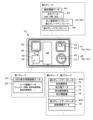
- FIG. 1 is a diagram showing an example of the configuration of an operational system.
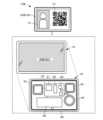
- FIG. 2 is a diagram showing an example of the configuration of an information carrying card.
- 3A and 3B are diagrams for explaining data stored in an information carrying card and storage locations.
- 1 is a table showing examples of information content, storage location, acquisition method, and encryption/decryption key examples for data stored in an information carrier card according to confidentiality grade.
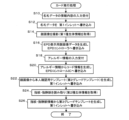
- 6 is a flowchart illustrating the flow of a process executed by the card issuing machine.
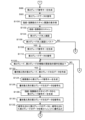
- 10 is a flowchart illustrating the flow of processes executed in the card usage system.
- 7 is a flowchart continuing from FIG. 6 .
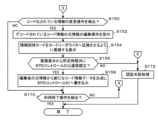
- 8 is a flowchart continuing from FIG. 7 .
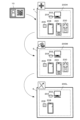
- FIG. 1 is a diagram for explaining an example in which an information carrying card is used in a plurality of service spaces equipped with a card usage system.
- FIG. 13 is a diagram showing an example of the configuration of an information carrying card according to a second embodiment.
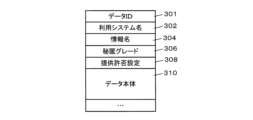
- FIG. 13 is a diagram showing an example of the structure of data stored in an information carrying card according to the second embodiment.
- 10 is a flowchart for explaining a flow of processing of an information carrying card according to a second embodiment.
- First Embodiment 1 is a diagram showing an example of the configuration of an operation system.
- the operation system 3 includes an information carrying card 10, a card issuing machine 100, and a card usage system 200. Note that in actual operation, the number of information carrying cards 10, card issuing machines 100, and card usage systems 200 is not limited to the numbers shown in the figure. Also, the size of each of the information carrying cards 10, card issuing machines 100, and card usage systems 200 in the figure is drawn to an appropriate scale.
- the information carrying card 10 is an information carrying medium that functions as a contactless IC card that is owned and carried by each user.
- the information carrying card 10 has an EPD (Electric Paper Display) 30 on the surface of the card, and the EPD 30 displays a facial image 12 of the user who owns the card and code information 14 that encodes the user's personal information data.
- EPD Electronic Paper Display
- code information 14 that encodes the user's personal information data.
- a matrix-type two-dimensional code is shown as the code information 14, but other types of codes may also be used.
- FIG. 2 is a diagram showing an example of the configuration of the information carrying card 10.
- the information carrying card 10 is a laminated card having a panel layer 16 and an IC layer 18. Note that the information carrying card 10 may also have layers other than the panel layer 16 and the IC layer 18 (e.g., a front surface protective transparent resin layer, a back surface protective resin layer, etc.).
- the information carrier card 10 includes an EPD 30 on the panel layer 16.
- the IC layer 18 also includes an EPD control IC 32, an EPD antenna 34, an EPD communication IC 36, a power storage unit 38, and an electromagnetic induction coil 39.
- the EPD control IC 32 has a display control circuit for the EPD 30 and a memory that stores data for images to be displayed on the EPD 30.
- the EPD control IC 32 wirelessly communicates with an external device via the EPD antenna 34 and the EPD communication IC 36, and acquires and stores image and text data to be displayed on the EPD 30 from the external device. It then causes the EPD 30 to display an image (face image 12 and code information 14) based on the stored data.
- the power required to drive the EPD 30 and the EPD control IC 32 is supplied by receiving radio waves for wireless communication with the EPD control IC 32 from the outside, generating electricity through the electromagnetic induction coil 39, and storing the electricity in the power storage unit 38. It is also possible for the EPD antenna 34 to double as the electromagnetic induction coil 39. Depending on the power consumption of the EPD 30, the power storage unit 38 may be omitted, or a thin battery or secondary battery may be installed instead of the power storage unit 38.
- the information carrying card 10 has a first inlet 41 and a second inlet 45 in the IC layer 18.
- the first inlet 41 is a UHF band RFID tag having a UHF band antenna 42 and an IC chip 43 that realize close-range communication within a first communication distance of 10 meter or less, preferably within a few meters.
- the second inlet 45 is an HF band RFID tag having an HF band antenna 46 and an IC chip 47 that does not allow communication over a few meters, but does allow close-range communication within a second communication distance of 1 meter or less, preferably within a few tens of centimeters.
- FIG. 3 is a diagram for explaining the data stored in the information carrying card 10 and the storage location.
- the information carrying card 10 stores data in accordance with the confidentiality grade required according to the content of the data, and stores data in four levels: grade 0, grade 1, grade 2, and grade 3.
- Grade 0 is the lowest confidentiality grade and corresponds to unconditional disclosure.
- the confidentiality grades increase in the order of grade 1, grade 2, and grade 3, with grade 3 being the highest confidentiality grade.
- the number of confidentiality grades may be three or less, or five or more.
- the confidentiality grades can be set appropriately according to the content of the data stored in the information carrying card 10.
- the 0th grade data is stored in the first inlet 41.
- the first inlet 41 stores identification information data 50, which is card-specific identification information, name tag data 52, and template data for biometric authentication of identity (identification template 54, second grade template 56, third grade template 58).
- the identification information data 50 is data for identifying the information carrying card 10, and is stored as unrewritable data unique to the information carrying card 10.
- the name card data 52 is text data including the name, age, sex, and the like of the user who owns the information carrying card 10 .
- the identity verification template 54 is template data for face authentication.
- the second grade template 56 is template data for biometric authentication to obtain second grade data, and also serves as the identity verification template 54 .
- the third grade template 58 is template data for biometric authentication to obtain third grade data.
- the first grade data is stored in the EPD control IC 32.
- the EPD control IC 32 stores EPD display face image data 60 for displaying the face image 12, and code information data 62 for displaying the code information 14.
- the code information data 62 is one of the user's personal information data.
- the code information data 62 is coded data such as allergy information including the names of foods and medicines to which the user is allergic, and prescribed medication instruction information.
- the medication instruction information is, for example, information such as the type and number of medicines for each timing of taking the medicine, instructions on when to take the medicine before/during/after meals, and names of foods that should not be taken with the prescribed medicine.
- the coded information may be other than these. Therefore, the EPD 30 is a display unit 9h that rewritably displays the coded code information 14 of the user's personal information (see FIG. 2).
- the second grade data and the third grade data are both encrypted personal information of the user, and both are stored in the second inlet 45.
- medical-related data include the name of the doctor in charge 70, prescription data 72, the name of the pharmacist in charge 74, and prescription history 76.
- the third grade data is diagnostic information data 78, etc. Of course, data other than the example shown in FIG. 3 may also be used. Note that the second grade data group and the third grade data group are appropriately provided with data headers 80a, 80b indicating the beginning of the storage area for the data group.
- the IC chip 43 of the first inlet 41 is a first memory unit 9m that stores the identification information data 50.
- the first inlet 41 can be said to be a first communication unit 9a that is capable of wireless communication within a first communication distance for communication related to the identification information data 50 stored in the first memory unit 9m.
- the IC chip 47 of the second inlet 45 is a second memory unit 9n that stores personal information data that can be determined through security processing.
- the second inlet 45 can be said to be a second communication unit 9b that is unable to communicate over a first communication distance and is capable of wireless communication within a second communication distance that is shorter than the first communication distance for communication related to the personal information data stored in the second memory unit 9n.
- Examples of the personal information data stored in the second memory unit 9n include code information data 62, name of doctor in charge 70, prescription data 72, and diagnosis information data 78.
- FIG. 4 is a table summarizing examples of information content, storage location, acquisition method, and encryption/decryption key for an example of data stored in the information carrying card 10 according to confidentiality grade.
- Grade 0 and grade 1 data are not encrypted.
- the data of the 0th grade is stored in the first inlet 41 and can therefore be read by an RFID reader within the first communication distance corresponding to the first inlet 41 .
- First grade data is code information 14 that indicates the code displayed on EPD 30.
- the card usage system 200 In order for the card usage system 200 to obtain first grade data, it is necessary to photograph the code information 14 with a camera. Therefore, if a user is willing to provide first grade data, they must take out the information carrying card 10 at their own discretion, leave it exposed, and point the code information 14 towards the camera. The user can decide on the spot whether or not to provide first grade data. Therefore, it can be said that first grade data has a higher security level than grade 0 data.
- second-grade data and third-grade data are stored in the second inlet 45, which has a communication distance of several tens of centimeters, the user must decide for himself whether to bring the information carrying card 10 closer to the card reader/writer. In other words, the user can decide on the spot whether to provide second-grade and third-grade data and respond accordingly.
- second grade data is encrypted with an encryption key generated from the facial image 12, and is decrypted with a decryption key generated from the facial image 12.
- Third grade data is encrypted with an encryption key generated from one or both of the fingerprint and finger vein scan data, and is decrypted with a decryption key similarly generated from one or both of the fingerprint and finger vein scan data. Therefore, it can be said that second grade and third grade data have a higher security level than first grade data.
- third-grade data has a higher security level than second-grade data.
- the card issuing machine 100 has a combined card reader/writer 102, a wireless power supply unit 104, a fingerprint scanner 106, a finger vein scanner 108, a touch panel display 110, a camera 112, and a control board 114.
- the combined card reader/writer 102 communicates contactlessly with the EPD control IC 32, the first inlet 41, and the second inlet 45.
- it is a combined device that combines an EPD data writer, a UHF band RFID reader/writer, and an HF band RFID reader/writer. It may be realized with three writer devices, or the EPD reader/writer may also function as the HF band RFID reader/writer.
- the UHF band RFID reader/writer and the HF band RFID reader/writer may be realized with a single reader/writer device that can switch frequencies.
- the wireless power supply unit 104 has an electromagnetic coil that supplies power to the information carrying card 10 by generating power in the electromagnetic induction coil 39 of the information carrying card 10 using an electromagnetic induction method.
- the wireless power supply unit 104 may also be used as the combined card reader/writer 102.
- FIG. 5 is a flowchart for explaining the flow of processing executed by the card issuing machine 100. Note that it is assumed that a new information carrying card 10 is placed on the combined card reader/writer 102 before processing begins.
- the card issuing machine 100 displays an operation guide on the touch panel display 110 to prompt the user to input information such as name and age, and accepts the input of information to be used as name tag data 52 (step S10).
- a software keyboard is displayed on the touch panel display 110 to accept the input of name, age, etc.
- the card issuing machine 100 generates name tag data 52 and writes it to the first inlet 41 (step S12).
- the card issuing machine 100 displays an operation guide on the touch panel display 110 informing the user that a face image will be taken with the camera 112, and takes a face image (step S14). Then, it generates face image data 60 for display on the EPD and writes it to the EPD control IC 32 (step S16).
- the card issuing machine 100 displays an operation guide on the touch panel display 110 to prompt the user to input allergy information, and accepts the input of the allergy information (step S18).
- the entered allergy information is then coded to generate code information data 62, which is written to the EPD control IC 32 (step S20).
- the card issuing machine 100 generates an identity verification template 54 (second grade template 56) from the face image captured in step S14 and writes it to the first inlet 41 (step S22).
- the card issuing machine 100 then displays an operation guide on the touch panel display 110 to encourage the user to place their finger on the fingerprint scanner 106, and scans the fingerprint and finger veins (step S24). Then, the card issuing machine 100 generates a third grade template 58 from the scan data and writes it to the first inlet 41 (step S26).
- the card usage system 200 is a computer system that is installed in a service space, which is a fixed space such as a store, facility, or place that provides services or sells products to users, and that wirelessly communicates with the information-carrying card 10 carried by the user.
- a service space which is a fixed space such as a store, facility, or place that provides services or sells products to users, and that wirelessly communicates with the information-carrying card 10 carried by the user.
- the card usage system 200 includes a system control computer 202, a customer database 204, a reception UHF band RFID reader 206, a reception touch panel display 208, an authentication device 220, and a card reader/writer 230.
- the system control computer 202 is connected to each of the following elements for overall control: customer database 204, reception UHF band RFID reader 206, reception touch panel display 208, authentication device 220, and card reader/writer 230, and is capable of wired or wireless communication.
- the customer database 204 stores various information (customer information) associated with each customer of the service provider who uses the system.
- the reception UHF band RFID reader 206 and reception touch panel display 208 are installed at the entrance to the service space.
- the reception UHF band RFID reader 206 performs wireless communication with the first inlet 41 of the information carrying card 10, automatically recognizes the information carrying card 10 that has entered the communication range, and reads various data stored in the first inlet 41 (see FIG. 3).
- the reception UHF band RFID reader 206 then outputs the data read from the first inlet 41 to the system control computer 202.
- the reception UHF band RFID reader 206 performs wireless communication with the first communication unit 9a to acquire the identification information data 50, thereby functioning as a visit detection unit 9c that detects the visit of a user.
- the reception touch panel display 208 displays various information related to the reception of users who visit the service space and accepts operational input.
- the reception touch panel display 208 is equipped with a camera 210 for photographing the user's face and the code information 14 on the information carrying card 10, and outputs the captured image data, i.e., biometric information, to the system control computer 202.
- the camera 210 is a physical characteristic acquisition unit 9g that acquires the user's physical characteristics to be used for biometric authentication.
- the camera 210 is also a reading unit 9j that reads the code information stored in the information carrying card 10.
- the system control computer 202 identifies the visitor user from the identification information data 50 and name tag data 52 among the data read from the first inlet 41. If the identification information data 50 and name tag data 52 are not registered in the customer database 204, a given new reception display prepared for new customers is displayed on the reception touch panel display 208. If they are registered in the customer database 204, a given return reception display prepared for customers is displayed on the reception touch panel display 208. In other words, when a visit is detected by the visit detection unit 9c, the system control computer 202 functions as the reception control unit 9d that receives the visitor user.
- the return reception display for example, a message such as "Welcome, Mr./Ms. [Name included in name tag data 52]. We are pleased to meet you again. We will accept your return reception based on your previous record.” is displayed. In addition, a display necessary for the new provision of services to be provided in the service space is performed.
- the reception control unit 9d may perform reception processing based on the identification information data 50 instead of the name tag data 52. In that case, if the identification name of the user associated with the identification information data 50 is registered in the customer database 204, the return reception display is performed using that identification name.
- the system control computer 202 also identifies the visitor from the identification information data 50 and name tag data 52 among the data read from the first inlet 41, reads a customer information file from the customer database 204, and executes various processes related to the provision of services. For example, if the service space in which the card usage system 200 is installed is a hospital, it will read medical record information, etc.
- the authentication device 220 acquires information necessary for authentication to read additional information from the visitor's information carrying card 10 in relation to the provision of services.
- the authentication device 220 comprises a touch panel display 222, a face authentication camera 224, a fingerprint scanner 226, and a finger vein scanner 228.
- a control microcomputer, a communication device, etc. are appropriately mounted.
- the face authentication camera 224, the fingerprint scanner 226, and the finger vein scanner 228 are a physical characteristic acquisition unit 9g that acquires the physical characteristics of the user to be used for biometric authentication.
- the camera 224 is also a reading unit 9j that reads the code information stored in the information carrying card 10.
- the authentication device 220 and card reader/writer 230 are installed as a set in a service provision spot where services are provided directly to users.
- the service provision spot is set up within a service space. For example, if the card usage system 200 is installed in a hospital, the authentication device 220 and card reader/writer 230 are installed as a set in an examination room or treatment room. If the card usage system 200 is installed in a dispensing pharmacy, the authentication device 220 and card reader/writer 230 are installed as a set at each of the multiple reception desks within the store.
- the authentication device 220 displays operation guides and the like on the touch panel display 222 under the display control of the system control computer 202, and in some cases accepts input of a PIN number, password, etc., and outputs this data to the system control computer 202. It also outputs image data captured by the camera 224, and scan data from the fingerprint scanner 226 and finger vein scanner 228 to the system control computer 202.
- the card reader/writer 230 is a device capable of non-contact communication with each of the EPD control IC 32, the first inlet 41, and the second inlet 45. Specifically, it includes a data writer for the EPD, a UHF band RFID reader/writer, and an HF band RFID reader/writer. It may be realized with three reader/writer devices, or the EPD data writer may also serve as the HF band RFID reader/writer. The UHF band RFID reader/writer and the HF band RFID reader/writer may be realized with a single reader/writer device capable of switching frequencies.
- the system control computer 202 functions as a main processing unit 9e that wirelessly communicates with the second inlet 45 (second communication unit 9b) to obtain, update, or add personal information data (various types of information of the second and third grades, such as prescription data 72, diagnostic information data 78, etc.; see Figure 3).
- FIGS 6 to 8 are flowcharts explaining the flow of processing executed by the card usage system 200.
- the card usage system 200 communicates with the first inlet 41 of the information-carrying card 10 that has entered the communication range of the reception UHF band RFID reader 206, and reads the identification information data 50, name tag data 52, identity verification template 54 (second grade template 56), and third grade template 58 from the first inlet 41 (step S50).
- the card usage system 200 accesses the customer database 204 to search for the presence or absence of a customer registration corresponding to the read identification information data 50 and name tag data 52.
- the card usage system 200 displays a new reception screen on the reception touch panel display 208 and executes new reception processing (step S54). If the customer is registered (YES in step S52), the card usage system 200 displays a return visit reception screen on the reception touch panel display 208 and executes return visit reception processing (step S56).
- the card usage system 200 performs identity verification processing of the visitor. Specifically, a request is displayed on the reception touch panel display 208 requesting that the visitor's face be photographed by the camera 210 for identity verification purposes (step S60). The camera 210 then takes a facial image (step S62), which is then compared with the scanned identity verification template 54 to perform identity verification processing (step S64).
- the card usage system 200 displays a message on the reception touch panel display 208 urging the user to proceed to the service provision spot within the service space (step S68).
- An authentication device 220 and a card reader/writer 230 are installed at the service provision spot.
- the card usage system 200 executes a process for acquiring the first grade data. Specifically, a message is displayed on the touch panel display 222 of the authentication device 220 requesting that the code information 14 of the information carrying card 10 be photographed by the camera 224 in order to read the first grade data (step S70). The card usage system 200 then photographs the code information 14 by the camera 224 (step S72) and decodes the code information 14 (step S74).
- the card usage system 200 executes a process for acquiring second grade data. Specifically, the card usage system 200 performs second-grade identity verification (step S80). That is, the captured face image is compared with the read second-grade template 56 to perform face authentication (biometric authentication).
- the card usage system 200 If the second grade identity verification is passed (YES in step S82), the card usage system 200 then displays a message on the touch panel display 222 of the authentication device 220 urging the user to bring the information carrying card 10 closer to the card reader/writer 230 to read the second grade data (step S84). The card usage system 200 then reads the data from the second inlet 45 with the HF band RFID reader 232 of the card reader/writer 230 (step S86).
- the card reader/writer 230 then generates a decryption key for the second grade from the captured face image (step S88) and decrypts the read second grade data (step S90).
- the system control computer 202 can be said to function as a security processing unit 9f that performs security processing to make it possible to distinguish the data stored in the second inlet 45 of the information carrying card 10 (see FIG. 1).
- the card usage system 200 executes a process for acquiring third-grade data. Specifically, the card usage system 200 displays a message on the touch panel display 222 of the authentication device 220 prompting the user to place a finger against the fingerprint scanner 226 and finger vein scanner 228 of the authentication device 220 to read the third-grade data (step S100). The card usage system 200 scans the fingerprint and finger veins (step S102) and compares them with the read third-grade template 58 to perform fingerprint authentication and finger vein authentication (biometric authentication) to verify the user's identity (step S104).
- step S106 If the fingerprint authentication and finger vein authentication are passed (YES in step S106), a decryption key for the third grade is generated from the fingerprint and finger vein (step S108), and the read third grade data is decrypted (step S110).
- the system control computer 202 can be said to function as a security processing unit 9f that performs security processing to make it possible to distinguish the data stored in the second inlet 45 of the information carrying card 10 (see FIG. 1).
- the card usage system 200 can now obtain various information required to provide services from the information carrying card 10.
- the card usage system 200 detects an instruction to update the second and third grade information (YES in step S120), it creates second grade data to be rewritten and third grade original data according to the instruction (step S122). It then generates an encryption key for the second grade from the face image that has already been captured (step S124) and encrypts the second grade original data to be rewritten (step S126).
- the card usage system 200 generates an encryption key for the third grade from the already read fingerprint and finger vein scan data (step S128) and encrypts the created third grade data (step S130). Then, the encrypted second grade data and the encrypted third grade data are written to the second inlet 45 (step S132).
- step S150 when the card usage system 200 detects an operation to change the information coded as code information 14 (YES in step S150), it accepts an operation to edit the information that has already been decoded (step S152).
- the card usage system 200 displays a request to bring the information carrying card 10 close to the card reader/writer 230 in order to rewrite the code information data 62 (step S154). If communication with the EPD control IC 32 is established within a predetermined time from the start of the request display (YES in step S156), approval for rewriting the code information 14 has been obtained, and the card usage system 200 rewrites the code information data 62 in the EPD control IC 32 (step S158). In relation to step S158, the system control computer 202 functions as a control unit 9k that controls the updating of the code information 14 (see FIG. 1).
- the card usage system 200 repeats steps S120 to S158 until a predetermined usage termination operation is input (NO in step S170).
- a predetermined usage termination operation is input (NO in step S170).
- the series of processes ends.
- step S172 a specified authentication failure process is executed (step S172), and the process ends.
- a visitor detection unit 9c detects a user's visit by acquiring identification information data 50 from an information carrying card 10 located within a first communication distance, and when this detection is made, a reception control unit 9d accepts the visit of that user. Furthermore, a main processing unit 9e acquires personal information data from an information carrying card 10 located within a second communication distance that is shorter than the first communication distance, and updates this data or adds data.
- the visit is detected.
- the user can then be accepted by the reception control unit 9d.
- the personal information data stored in the information carrying card 10 is read, updated, or additional data is added. It is therefore possible to build a system that realizes rational use of the information carrying card 10 that is capable of multiple types of communication.
- card usage system 200 There are multiple types of service spaces in which the card usage system 200 is installed, depending on the security level indicating the confidentiality of the information handled. In this embodiment, three types of service spaces are described as specific examples: high-class space, medium-class space, and low-class space. There are also multiple types of card usage systems 200 depending on the service spaces according to the security level. In this embodiment, the card usage system 200 installed in a high-class space is referred to as a high-class system, the card usage system 200 installed in a medium-class space is referred to as a medium-class system, and the card usage system 200 installed in a low-class space is referred to as a low-class system.
- a high-grade system is a system in which the security grade of information processing is a specified high grade.
- a high-grade system is a system in which data of all grades, including data of grade 3, can be read from the information carrying card 10 and made available, and is a system with a relatively high security grade.
- a high-grade system includes all the elements of the card usage system 200 shown in Figure 1. The flow of processing executed in a high-grade system is as described in Figures 6 to 8.
- a medium-level system is a system in which the security level of information processing is a predetermined medium level.
- a medium-level system is a system in which data from grade 0 to grade 2 can be read from the information-carrying card 10 and made available, and is a system with a relatively medium security level.
- a medium-level system includes all the elements of the card usage system 200 shown in FIG. 1, but does not execute processing related to grade 3 data (e.g., steps S100 to S110 and steps S128 to S132 in FIG. 7).
- a low-class system is a system in which the security class of information processing is a predetermined low class.
- a low-class system is a system in which data from grade 0 to grade 1 can be read from the information carrying card 10 and made available, and is a system with a relatively low security class.
- a low-class system has a configuration in which the authentication device 220 and the card reader/writer 230 are omitted from the configuration of the card usage system 200 shown in Figure 1.
- a low-class system does not execute processes related to second and third grade data (e.g., steps S80 to S132 in Figure 7).
- FIG. 9 is a diagram for explaining an example in which the information carrying card 10 is used in multiple service spaces equipped with the card usage system 200.
- service spaces equipped with the card usage system 200 include a hospital 4, a dispensing pharmacy 5, and a restaurant 6.
- Hospital 4 is a high-class space capable of handling second- and third-class information (e.g., the name of the doctor in charge 70, prescription data 72, and diagnosis information data 78 in FIG. 3), and is equipped with a high-class card usage system 200H.
- second- and third-class information e.g., the name of the doctor in charge 70, prescription data 72, and diagnosis information data 78 in FIG. 3
- the dispensing pharmacy 5 is a medium-level space that cannot handle third-level information but can handle second-level information (e.g., the prescription data 72, the name of the pharmacist in charge 74, and the prescription history 76 in FIG. 3), and is equipped with a card usage system 200M, which is a medium-level system.
- second-level information e.g., the prescription data 72, the name of the pharmacist in charge 74, and the prescription history 76 in FIG. 3
- a card usage system 200M which is a medium-level system.
- Restaurant 6 is a low-class space that cannot handle second- and third-class information, and is equipped with a low-class card usage system 200L.
- the reception UHF band RFID reader 206 and reception touch panel display 208 are installed in a location suitable for reception, near the entrance to each service space.
- the identification information data 50 and name tag data 52 are read from the information carrying card 10, and a reception display for the user is displayed on the reception touch panel display 208. Then, after completing the reception, the user goes to the service provision spot in each service space.
- the service provision spots are examination rooms and treatment rooms.
- the authentication device 220 and card reader/writer 230 installed in the examination room and treatment room, data from the first grade to the third grade can be read from the information carrying card 10 and used for examinations by doctors, etc.
- the doctor can change the coded information as code information 14 by inputting an operation to change the information in the card usage system 200 (step S150 in FIG. 8), thereby changing the coded first grade information to new information (steps S152 to S158 in FIG. 8).
- the code information data 62 can be updated, and the code information 14 displayed on the information carrying card 10 can be updated.
- information about dietary restrictions for example, if diabetes is diagnosed, precautions regarding carbohydrate restriction
- the doctor can rewrite the second grade prescription data 72 and the third grade diagnosis information data 78 stored in the information carrying card 10 (steps S122 to S132 in FIG. 7) by issuing an update instruction for the second and third grade information (step S120 in FIG. 7).
- the service provision spot is the reception desk.
- the second grade data stored in the second inlet 45 of the information carrying card 10 can be read out and used by the pharmacist in dispensing operations.
- step S120 in FIG. 7 the pharmacist issues an instruction to update the second and third grade information (see step S120 in FIG. 7) and creates a prescription history 76 as one of the services provided (see step S122 in FIG. 7).
- the data stored in the information carrying card 10 can then be rewritten to add to the second grade data (steps S124 to S128 in FIG. 7).
- third grade data stored in the information carrying card 10 such as the diagnostic information data 78, cannot be read or changed.
- the coded first grade information can be changed by adding new information, such as medication instruction information for the currently prescribed medicine (steps S152 to S158 in FIG. 8).
- the service provision spot is a table.
- allergy information, dietary restriction information, and medication instruction information can be extracted from the code information 14 of the information carrying card 10, and this information can be used to provide the service.
- the reception touch panel display 208 may be provided with a function for presenting a menu, and the menu may be presented with a warning attached to menu items containing allergens for the user by comparing them with ingredient information for each menu item, or the menu may be presented with menu items containing allergens hidden or unselectable. If the code information 14 contains dietary restriction information, a warning may be displayed for menu items whose content of restricted foods is close to or exceeds the limit. If the code information 14 contains medication instruction information, a warning about the timing of taking medication may be displayed.
- the name and number of medications to be taken after the average meal time at the restaurant has elapsed are displayed, and a display is made to encourage the user to take the medication.
- the name tag data 52 contains an email address, an email may be sent after the average meal time at the restaurant has elapsed, containing the name and number of medications to be taken and text encouraging the user to take the medication.
- restaurant 6's card usage system 200L is a low-grade system, it does not access second-grade or third-grade data stored on the information carrying card 10.
- the data required for identity authentication and the data for each grade are stored in the information carrying card 10, there is no need to prepare a server for identity authentication. Furthermore, in order for the card usage system 200 to read and use the data stored in the information carrying card 10, security barriers must be cleared, such as the user's consent to presenting the card or responding to a biometric authentication read, identity authentication through biometric authentication, and the generation and decryption of a decryption key based on the biometric information. Therefore, even if the information carrying card 10 is used in common in multiple service spaces, the data will not be read, used, or changed in a service space that does not match the security grade. Users can carry their information safely.
- the user can make the information carrying card 10 capable of wireless communication via the first communication unit 9a for any of the high-class system (card use system 200H), medium-class system (card use system 200M), and low-class system (card use system 200L) according to the security class.
- the information carrying card 10 is positioned within a second communication distance that is shorter than the first communication distance, wireless communication is possible via the second communication unit 9b for the high-class system and medium-class system. Therefore, it is possible to realize an information carrying card 10 that can be used rationally using an information carrying card capable of multiple types of communication.
- security levels may be four or more instead of three, or may be two with no intermediate level system.
- This embodiment is basically the same as the first embodiment, but differs in the configuration of the information carrier card 10.
- differences from the first embodiment will be mainly described, and elements similar to those in the first embodiment will be given the same reference numerals as in the first embodiment, and duplicated explanations will be omitted.
- FIG. 10 is a diagram showing an example of the configuration of an information carrying card 10B in the second embodiment.
- the information carrying card 10B includes an EPD 30B with a touch panel that is integrated with a touch panel that allows touch operation input to the display surface. Accordingly, a control circuit 20 is mounted instead of the EPD control IC 32.
- the control circuit 20 includes a CPU 21, a memory 22, an interface circuit 23, and a communication module 24.
- the communication module 24 is connected to the EPD antenna 34, the UHF band antenna 42, and the HF band antenna 46, and realizes wireless communication in each frequency band. Note that the communication module 24 may be provided independently for each antenna.
- the CPU 21 executes the control program stored in the memory 22 to control wireless communication with the card issuing machine 100 and the card usage system 200 via the communication module 24, operation input via the touch panel of the EPD 30B, and management of various data stored in the memory 22.
- the memory 22 stores the control program and each piece of data (see FIG. 3) stored in the EPD control IC 32, the first inlet 41, and the second inlet 45 in the first embodiment in a common data structure as shown in FIG. 11.
- the memory 22 stores data used in the card usage system 200 in an accumulative manner.
- Each piece of stored data has a data ID 301, a usage system name 302, an information name 304, a confidentiality grade 306, a provision permission setting 308, and a data body 310.
- the name of the system used 302 is text data of the name of the card usage system 200 that used the data.
- the information name 304 indicates the content of the information contained in the data. For example, it is text data such as "Name of doctor in charge”, "Prescription from XX Hospital, June 5, 2023", and "Diagnosis information from XX Hospital, June 5, 2023".
- the provision permission setting 308 indicates whether the data is permitted or denied to be provided to the card usage system 200.
- the initial value is set to permitted.
- the CPU 21 controls the data not to be provided even if a read request is made from the card usage system 200 for data that has been set to denied.
- FIG. 12 is a flow chart for explaining the flow of processing of the information carrying card 10B.
- the information carrier card 10B receives a predetermined data rewrite request signal at the EPD antenna 34 (YES in step S200), it rewrites the data for displaying the EPD (step S202).
- the information carrying card 10B receives and stores grade 0 data such as the identification information data 50 and name tag data 52 (step S206).
- the information carrying card 10B transmits grade 0 data such as the identification information data 50 and name tag data 52 (step S210).
- the card usage system 200 When writing second or third grade data to the information carrying card 10B, the card usage system 200 transmits the system name, the name of the information to be written, and the confidentiality grade along with a specified write request signal.
- the information carrier card 10B When the information carrier card 10B receives a write request signal via the HF band antenna 46 (YES in step S212), it searches for data matching the received system name, information name, and confidentiality grade, and if any matching data is found, it overwrites and saves it. If no matching data is found, it saves new data (step S214).
- the card usage system 200 When the card usage system 200 reads second or third grade data from the information carrying card 10B, it transmits the system name, the name of the information to be read, and the confidentiality grade along with a specified read request signal.
- the information carrying card 10B When the information carrying card 10B receives the read request signal via the HF band antenna 46 (YES in step S220), it displays the requesting system name 302, the information name 304 for each requested data item, and the provision permission setting 308 on the touch panel of the EPD 30B in association with each other, and asks the user to confirm whether or not to permit the provision of the requested data (step S222). Then, the touch panel of the EPD 30B accepts permission setting operations for each requested data item (step S224).
- the information carrying card 10B changes the provision permission setting 308 of each requested data in response to the permission setting operation (step S226). Then, of the requested data, the data for which the provision permission setting 308 is permitted is transmitted (step S228).
- This modified example provides the same effects as the above embodiment, and allows users to individually set whether or not to allow data to be provided to the card usage system 200.
- the information carrying cards 10 and 10B may be implemented by being incorporated into a mobile terminal device rather than a card.
- mobile terminal devices include smartphones, tablet computers, and wearable computers.
- a computer system that is installed in a service space, which is a fixed space such as a store, facility, or place that provides services to users or sells products, and that wirelessly communicates with an information carrying medium carried by the user,
- the information carrying medium is a first communication unit capable of wireless communication within a first communication distance as communication related to the identification information data stored in the first storage unit; a second communication unit that is unable to communicate within the first communication distance and is capable of wireless communication within a second communication distance that is shorter than the first communication distance for communication related to personal information data stored in a second storage unit; Equipped with a visit detection unit that detects that the user has visited by acquiring the identification information data through wireless communication with the first communication unit when the information carrying medium is present within the first communication distance; a reception control unit that receives the visitor when the visit detection unit detects the visitor; a main processing unit that performs wireless communication with the second communication unit when the information carrying medium is present within the second communication distance, and acquires, updates, or adds data to the personal information data;
- the second storage unit stores the personal information data as data that can be determined through a predetermined security process
- the main processing unit has a security processing unit that performs the security processing.
- a computer system according to a first embodiment.
- the security processing is processing related to biometric authentication using physical characteristics, a physical feature acquisition unit for acquiring physical features of the user to be used for the biometric authentication; Further comprising: The main processing unit performs the security processing using the data acquired by the physical feature acquisition unit.
- a second embodiment of the computer system is a first embodiment of the computer system.
- the information carrying medium includes a display unit for rewritably displaying code information obtained by encoding the personal information of the user, A reading unit that reads the code information displayed on the display unit; Further comprising: The main processing unit performs control to update the code information displayed on the display unit.
- a computer system according to any one of the first to third aspects.
- An information carrying medium carried by a user that wirelessly communicates with a computer system installed in a service space which is a certain space such as a store, facility, or place that provides services to users or sells products to users
- the computer system includes a low-class system having a predetermined low security class for information processing, and a high-class system having a predetermined high security class
- the high-grade system includes a security processing unit that performs a predetermined security process to determine the contents of data
- the service space includes a low-class space in which the low-class system is installed and a high-class space in which the high-class system is installed, a first storage unit for storing identification information data; a first communication unit capable of wireless communication with the low-class system and the high-class system within a first communication distance as communication related to the data stored in the first storage unit; a second storage unit that stores personal information data that can be determined through the security processing; a second communication unit that is unable to communicate over the first communication distance and is capable of wireless communication with
- the high-grade system includes a reading unit that reads the code information, and a control unit that controls updating of the code information displayed on the display unit.
- the computer system includes a medium security system having a security class higher than the low security class and lower than the high security class;
- the intermediate system includes a reading unit that reads the code information,
- the service space includes an intermediate space in which the intermediate system is installed, the first communication unit is capable of wireless communication with the low-class system, the medium-class system, and the high-class system within the first communication distance;
Landscapes
- Engineering & Computer Science (AREA)
- Physics & Mathematics (AREA)
- Business, Economics & Management (AREA)
- Theoretical Computer Science (AREA)
- General Physics & Mathematics (AREA)
- Tourism & Hospitality (AREA)
- Microelectronics & Electronic Packaging (AREA)
- Computer Hardware Design (AREA)
- General Health & Medical Sciences (AREA)
- Strategic Management (AREA)
- General Business, Economics & Management (AREA)
- Primary Health Care (AREA)
- Marketing (AREA)
- Human Resources & Organizations (AREA)
- Economics (AREA)
- Health & Medical Sciences (AREA)
- Control Of Vending Devices And Auxiliary Devices For Vending Devices (AREA)
Priority Applications (1)
| Application Number | Priority Date | Filing Date | Title |
|---|---|---|---|
| JP2025527867A JPWO2024257670A1 (https=) | 2023-06-12 | 2024-06-05 |
Applications Claiming Priority (2)
| Application Number | Priority Date | Filing Date | Title |
|---|---|---|---|
| JP2023096183 | 2023-06-12 | ||
| JP2023-096183 | 2023-06-12 |
Publications (1)
| Publication Number | Publication Date |
|---|---|
| WO2024257670A1 true WO2024257670A1 (ja) | 2024-12-19 |
Family
ID=93851929
Family Applications (1)
| Application Number | Title | Priority Date | Filing Date |
|---|---|---|---|
| PCT/JP2024/020555 Ceased WO2024257670A1 (ja) | 2023-06-12 | 2024-06-05 | コンピュータシステムおよび情報担持媒体 |
Country Status (2)
| Country | Link |
|---|---|
| JP (1) | JPWO2024257670A1 (https=) |
| WO (1) | WO2024257670A1 (https=) |
Citations (3)
| Publication number | Priority date | Publication date | Assignee | Title |
|---|---|---|---|---|
| JP2007066107A (ja) * | 2005-08-31 | 2007-03-15 | Fujitsu Ltd | 生体情報照合装置、生体情報照合方法および生体情報照合プログラム |
| JP2017215837A (ja) * | 2016-06-01 | 2017-12-07 | 凸版印刷株式会社 | 無線通信デバイス及び処理方法 |
| JP2021510957A (ja) * | 2018-01-15 | 2021-04-30 | ユニバーサル シティ スタジオズ リミテッド ライアビリティ カンパニー | フィードバック装置を備えた相互作用システム及び方法 |
-
2024
- 2024-06-05 JP JP2025527867A patent/JPWO2024257670A1/ja active Pending
- 2024-06-05 WO PCT/JP2024/020555 patent/WO2024257670A1/ja not_active Ceased
Patent Citations (3)
| Publication number | Priority date | Publication date | Assignee | Title |
|---|---|---|---|---|
| JP2007066107A (ja) * | 2005-08-31 | 2007-03-15 | Fujitsu Ltd | 生体情報照合装置、生体情報照合方法および生体情報照合プログラム |
| JP2017215837A (ja) * | 2016-06-01 | 2017-12-07 | 凸版印刷株式会社 | 無線通信デバイス及び処理方法 |
| JP2021510957A (ja) * | 2018-01-15 | 2021-04-30 | ユニバーサル シティ スタジオズ リミテッド ライアビリティ カンパニー | フィードバック装置を備えた相互作用システム及び方法 |
Also Published As
| Publication number | Publication date |
|---|---|
| JPWO2024257670A1 (https=) | 2024-12-19 |
Similar Documents
| Publication | Publication Date | Title |
|---|---|---|
| US12056558B2 (en) | Proximity-based system for object tracking and automatic application initialization | |
| US20230134823A1 (en) | Proximity-Based System for Object Tracking | |
| US11095640B1 (en) | Proximity-based system for automatic application or data access and item tracking | |
| US11893534B2 (en) | System for inventory management | |
| US20130232082A1 (en) | Method And Apparatus For Secure Medical ID Card | |
| US20060106646A1 (en) | Medical kiosk with multiple input sources | |
| US20210303807A1 (en) | Maintaining Medical Device Chain of Custody Using Multiple Identification Encoding Technologies | |
| US20060293925A1 (en) | System for storing medical records accessed using patient biometrics | |
| US20030172279A1 (en) | Recording medium, recording medium reading/writing apparatus, and method of using recording medium | |
| US20120011565A1 (en) | System and method for storing and providing access to secured information | |
| US20130317848A1 (en) | Electronic Medical Record Process | |
| JP2005524890A (ja) | バイオメトリック本人性確認および非接触スマートカードを使用した取引の安全性のための機器および方法 | |
| CN103314386A (zh) | 使用代币处理交易的方法和系统 | |
| WO2001006468A1 (en) | System and method for storing, managing, and retrieving healthcare information on a smart card | |
| JP2013101585A (ja) | 情報処理装置および方法、並びにプログラム | |
| JP2011039674A (ja) | 医療データベースセンターシステム | |
| US20190362828A1 (en) | Systems and methods for electronic prescriptions | |
| US20200279631A1 (en) | Biometric secured medical check in | |
| AU2005270228B2 (en) | System for biometric security using a smartcard | |
| KR102526977B1 (ko) | 지능형 전자 처방전 서비스 제공 방법 및 장치 | |
| US20210098118A1 (en) | Ensuring insurance and payment processing using biometrics | |
| WO2024257670A1 (ja) | コンピュータシステムおよび情報担持媒体 | |
| WO2019147374A1 (en) | System and method for authenticating objects with authorized access controls | |
| JP3143328U (ja) | Icカードシステム | |
| JP2007025763A (ja) | 情報処理装置、及び、情報処理システム |
Legal Events
| Date | Code | Title | Description |
|---|---|---|---|
| 121 | Ep: the epo has been informed by wipo that ep was designated in this application |
Ref document number: 24823288 Country of ref document: EP Kind code of ref document: A1 |
|
| ENP | Entry into the national phase |
Ref document number: 2025527867 Country of ref document: JP Kind code of ref document: A |
|
| NENP | Non-entry into the national phase |
Ref country code: DE |