WO2024257287A1 - 体調診断装置、ウェアラブルデバイス、体調診断システム、モデル決定装置、体調診断方法、およびプログラム - Google Patents
体調診断装置、ウェアラブルデバイス、体調診断システム、モデル決定装置、体調診断方法、およびプログラム Download PDFInfo
- Publication number
- WO2024257287A1 WO2024257287A1 PCT/JP2023/022164 JP2023022164W WO2024257287A1 WO 2024257287 A1 WO2024257287 A1 WO 2024257287A1 JP 2023022164 W JP2023022164 W JP 2023022164W WO 2024257287 A1 WO2024257287 A1 WO 2024257287A1
- Authority
- WO
- WIPO (PCT)
- Prior art keywords
- physical condition
- activity
- information
- body temperature
- unit
- Prior art date
- Legal status (The legal status is an assumption and is not a legal conclusion. Google has not performed a legal analysis and makes no representation as to the accuracy of the status listed.)
- Ceased
Links
Images



Classifications
-
- A—HUMAN NECESSITIES
- A61—MEDICAL OR VETERINARY SCIENCE; HYGIENE
- A61B—DIAGNOSIS; SURGERY; IDENTIFICATION
- A61B5/00—Measuring for diagnostic purposes; Identification of persons
-
- A—HUMAN NECESSITIES
- A61—MEDICAL OR VETERINARY SCIENCE; HYGIENE
- A61B—DIAGNOSIS; SURGERY; IDENTIFICATION
- A61B5/00—Measuring for diagnostic purposes; Identification of persons
- A61B5/01—Measuring temperature of body parts ; Diagnostic temperature sensing, e.g. for malignant or inflamed tissue
Definitions
- the present disclosure relates to a physical condition diagnosis device, a wearable device, a physical condition diagnosis system, a model determination device, a physical condition diagnosis method, and a program.
- Patent Document 1 discloses a biological rhythm prediction device that predicts the ultradian rhythm waveform of biological information such as a user's body temperature and heart rate index.
- the biological rhythm prediction device disclosed in Patent Document 1 reduces the influence of influencing factors from biological signals with ultradian rhythm periods, and predicts the ultradian rhythm waveform at the time when the user's planned behavior will be performed, taking into account the user's planned behavior.
- Patent Document 2 discloses a physical condition monitoring device that evaluates abnormal conditions in the human body from biological information such as blood pressure, pulse, and body temperature.
- the physical condition monitoring device disclosed in Patent Document 2 corrects a reference value based on the mental activity state or physical activity state of the person being measured, and determines the presence or absence of abnormalities in the human body based on a comparison between the measured value of the biological information and the corrected reference value.
- JP 2021-49041 A Japanese Patent Application Publication No. 4-71532
- the biorhythm prediction device disclosed in Patent Document 1 can predict ultradian rhythm waveforms at the time when a user's scheduled actions will be performed, taking into account the user's scheduled actions, but cannot diagnose the subject's physical condition.
- the health condition monitoring device disclosed in Patent Document 2 determines the presence or absence of abnormalities in the human body based on a comparison of measured values of biological information, such as measured body temperature, with a corrected reference value. Therefore, if an abnormality in the human body becomes the dominant factor in body temperature fluctuations, causing a large change in body temperature, the health condition monitoring device disclosed in Patent Document 2 is able to diagnose the abnormality from the body temperature fluctuations. In other words, it is difficult for the health condition monitoring device disclosed in Patent Document 2 to detect internal abnormalities that are not the dominant factor in body temperature fluctuations, making it difficult to accurately diagnose the physical condition of the target organism.
- This disclosure has been made in consideration of the above-mentioned circumstances, and aims to provide a health condition diagnosis device, a wearable device, a health condition diagnosis system, a model determination device, a health condition diagnosis method, and a program that accurately diagnose the health condition of a target organism.
- the physical condition diagnosis device of the present disclosure comprises an information acquisition unit, an activity body temperature estimation unit, and a physical condition diagnosis unit.
- the information acquisition unit acquires biological information including temperature information of at least one part of a target organism that is the subject of a physical condition diagnosis, and fluctuation factor information including activity information indicating the activity of the target organism that causes the temperature of the part to fluctuate.
- the activity body temperature estimation unit obtains activity body temperature data indicating the temperature fluctuation of the part due to activity from the biological information and the fluctuation factor information.
- the physical condition diagnosis unit obtains a physical condition index indicating the physical condition of the target organism based on the activity body temperature data.
- the health condition assessment device determines the health condition index of the target organism based on activity body temperature data that indicates temperature fluctuations in parts of the body caused by the activity of the target organism, making it possible to accurately assess the health condition of the target organism.
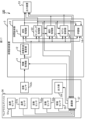
- FIG. 1 is a diagram showing a hardware configuration of a physical condition diagnosis device according to a first embodiment.
- 1 is a timing chart showing an example of temperature information, activity information, and activity body temperature data in the first embodiment;
- FIG. 1 is a diagram showing an example of a display of a diagnosis result obtained by the physical condition diagnosis device according to the first embodiment;
- Block diagram of a physical condition diagnosis system according to a second embodiment. 11 is a timing chart showing an example of temperature information and activity information according to the second embodiment.
- FIG. 11 is a timing chart showing an example of activity body temperature data in the second embodiment.
- FIG. 13 is a diagram showing an example of a heat transfer path within the body of a target organism in the second embodiment.
- FIG. 13 is a diagram showing an example of a display of a diagnosis result obtained by the physical condition diagnosis device according to the second embodiment;
- FIG. 13 is a diagram showing an example of a display of a diagnosis result obtained by the physical condition diagnosis device according to the third embodiment;
- FIG. 1 is a block diagram of a first modified example of a physical condition diagnosis system according to an embodiment.
- FIG. 2 is a block diagram of a second modified example of a physical condition diagnosis system according to an embodiment.
- FIG. 13 is a block diagram of a third modified example of the physical condition diagnosis system according to the embodiment.
- FIG. 13 is a block diagram of a fourth modified example of the physical condition diagnosis system according to the embodiment.
- FIG. 13 is a diagram showing a modification of the hardware configuration of the physical condition diagnosis device according to the embodiment.
- Embodiment 1 A physical condition diagnosis device for diagnosing the physical condition of living beings such as humans and animals, and a physical condition diagnosis system including the physical condition diagnosis device will be described in embodiment 1.
- a living being that is the subject of a physical condition diagnosis is referred to as a target living being.
- a temperature sensor 51 that measures the temperature of at least one part of the target living being
- an activity sensor 52 that generates an activity index that numerically indicates the activity of the target living being that changes the temperature of the part
- a physical condition diagnosis device 1 that determines a physical condition index that indicates the physical condition of the target living being from the measurement result of the temperature sensor 51 and the activity index generated by the activity sensor 52
- an output device 53 that outputs a diagnosis result of the physical condition diagnosis device 1 including the physical condition index.
- the temperature sensor 51 is placed inside or outside the body of the target organism, and measures the temperature of at least one part of the target organism.
- the temperature of a part of the target organism is the temperature of any part that can be measured or estimated, and is not limited to the temperature of the body surface, but includes temperatures inside the body, for example, the temperature of organs, deep body temperature, etc.
- Temperature sensors 51 include, for example, temperature sensors attached to the armpits, calves, or upper arms of the organism that is the subject of physical condition diagnosis, a temperature sensor placed inside the stomach of livestock that is the subject of physical condition diagnosis, an infrared camera or thermograph placed at a position away from the target organism, etc.
- the temperature sensor attached to the target organism is a thermistor, a resistance temperature detector, etc.
- the temperature sensor 51 is a temperature sensor attached to the armpits of the organism that is the subject of physical condition diagnosis.
- the activity sensor 52 generates an activity index that numerically indicates the target organism's activities such as eating, exercise, sleep, and excretion.
- the activity sensor 52 includes, for example, a wearable terminal that measures the target organism's heart rate, movement speed, etc., a camera that can photograph the target organism, and a position sensor that can acquire the target organism's position.
- the activity sensor 52 is a position sensor that detects whether the target organism for which health diagnosis is being performed is in a location where it would be located when eating. When the position sensor detects that the target organism is located in that location, it can be assumed that the target organism is eating.
- the physical condition diagnostic device 1 includes an information acquisition unit 11 that acquires biological information including temperature information of at least one part of the target organism and fluctuation factor information including activity information indicating the activity of the target organism that changes the temperature of the part, an activity body temperature estimation unit 12 that obtains activity body temperature data that indicates the temperature fluctuation of the part caused by the activity of the target organism, and a physical condition diagnostic unit 13 that obtains a physical condition index that indicates the physical condition of the target organism based on the activity body temperature data.
- the information acquisition unit 11 acquires the measurement results of the temperature sensor 51 as temperature information, and acquires the activity index generated by the activity sensor 52 as activity information.
- the information acquisition unit 11 sends biological information including temperature information to the activity body temperature estimation unit 12, and sends variable factor information including activity information to the activity body temperature estimation unit 12 and the physical condition diagnosis unit 13.
- the active body temperature estimation unit 12 obtains active body temperature data indicating temperature fluctuations of parts of the target organism caused by the activity of the target organism from the biological information and the fluctuation factor information. As an example, the active body temperature estimation unit 12 obtains active body temperature data indicating temperature fluctuations of the stomach during a meal.
- the physical condition diagnosis unit 13 has a waveform processing unit 21 that performs waveform processing of the activity body temperature data to diagnose the physical condition of the target organism.
- the waveform processing unit 21 calculates a physical condition index based on at least one of the phase characteristics, amplitude, frequency spectrum, and waveform of the waveform data of the activity body temperature data.
- the output device 53 receives the physical condition index from the physical condition diagnosis unit 13.
- the output device 53 outputs at least one of visual information and audio information indicating the received physical condition index, and a control signal to an external device according to the physical condition index.
- the hardware configuration of the physical condition diagnosis device 1 having the above configuration is shown in Figure 2.
- the physical condition diagnosis device 1 comprises a processor 61, a memory 62, and an interface 63.
- the processor 61, the memory 62, and the interface 63 are connected to each other via a bus 60.
- the functions of each part of the physical condition diagnosis device 1 are realized by software, firmware, or a combination of software and firmware.
- the software and firmware are written as programs and stored in the memory 62.
- the processor 61 reads and executes the programs stored in the memory 62 to realize the functions of each part described above. In other words, the memory 62 stores programs for executing the processing of each part of the physical condition diagnosis device 1.
- Memory 62 may include, for example, non-volatile or volatile semiconductor memory such as RAM (Random Access Memory), ROM (Read-Only Memory), flash memory, EPROM (Erasable Programmable Read-Only Memory), EEPROM (Electrically Erasable and Programmable Read-Only Memory), magnetic disks, flexible disks, optical disks, CDs (Compact Discs), mini discs, DVDs (Digital Versatile Discs), etc.
- RAM Random Access Memory
- ROM Read-Only Memory
- flash memory EPROM (Erasable Programmable Read-Only Memory), EEPROM (Electrically Erasable and Programmable Read-Only Memory), magnetic disks, flexible disks, optical disks, CDs (Compact Discs), mini discs, DVDs (Digital Versatile Discs), etc.
- the physical condition assessment device 1 is connected to a temperature sensor 51, an activity sensor 52, and an output device 53 via an interface 63.
- the interface 63 has an interface module that complies with one or more standards depending on the connection destination.
- the information acquisition unit 11 provided in the physical condition diagnosis device 1 acquires biological information including temperature information that is the measurement result of the temperature sensor 51, and acquires variable factor information including activity information including an activity index generated by the activity sensor 52 (step S11).
- Graph A in FIG. 4 shows an example of temperature information included in the biological information acquired by the information acquisition unit 11.
- the horizontal axis of graph A in FIG. 4 indicates time, and the vertical axis indicates armpit temperature (unit: degree).
- Graph B in FIG. 4 shows an example of activity information included in the variable factor information acquired by the information acquisition unit 11.
- the horizontal axis of graph B in FIG. 4 indicates time, and the vertical axis indicates the activity index generated by the activity sensor 52.
- the activity index indicates an H (High) level or an L (Low) level.
- the activity index generated by the activity sensor 52 is at an H level when the target organism of the physical condition diagnosis is located in a place where it eats, and is at an L level when the target organism is not located in a place where it eats.
- the activity index acquired by the information acquisition unit 11 from the activity sensor 52 is at an H level, it can be considered that the target organism is eating, as shown in graph B in FIG. 4. If the activity index acquired by the information acquisition unit 11 from the activity sensor 52 is at an L level, it can be considered that the target organism is not eating.
- the information acquisition unit 11 sends the above-mentioned biological information and fluctuation factor information to the active body temperature estimation unit 12, and sends the fluctuation factor information to the physical condition diagnosis unit 13.
- the activity body temperature estimation unit 12 obtains activity body temperature data indicating temperature fluctuations of the part caused by the activity of the target organism from the biological information and the fluctuation factor information (step S12).
- the activity of the target organism includes the mental activity and physical activity of the target organism.
- the correspondence between the activity of the target organism and the part whose temperature fluctuates in response to the activity is obtained from biological knowledge.
- biological knowledge can be used to correspond the activity of the target organism to the organ in which heat production or heat dissipation occurs due to the activity.
- the active body temperature estimation unit 12 determines the temperature fluctuation of the stomach of the target organism during a period in which the activity information included in the fluctuation factor information indicates that the target organism is eating.
- the active body temperature estimation unit 12 extracts a fluctuation component from the temperature information during a period in which the activity index shown in FIG. 4 is at the H level, indicating that the target organism is eating, specifically, during the period from time T0 to time T1 and the period from time T2 to time T3.
- the stomach temperature rises due to digestive activity. Therefore, the fluctuation component obtained from the temperature information during the period in which the target organism is eating corresponds to the temperature fluctuation of the stomach.
- the active body temperature estimation unit 12 extracts the fluctuation components of the temperature information while the activity index is at the H level, thereby obtaining active body temperature data that indicates the temperature fluctuations of the stomach while the target organism is eating, as shown in graph C of FIG. 4.
- the horizontal axis of graph C of FIG. 4 indicates time, and the vertical axis indicates the temperature fluctuations of the stomach (unit: degrees).
- the active body temperature estimation unit 12 sends the obtained active body temperature data to the physical condition diagnosis unit 13.
- the physical condition diagnosis unit 13 included in the physical condition diagnosis device 1 determines a physical condition index of the target organism based on the activity body temperature data acquired from the activity body temperature estimation unit 12 and the activity information acquired from the information acquisition unit 11 (step S13).
- the physical condition diagnosis unit 13 diagnoses the physical condition of the target organism by analyzing a single organ or multiple organs that contribute to a specific function.
- the physical condition diagnosis unit 13 determines a physical condition index that indicates at least one of the following: whether the physical condition of the target organism is good or bad, whether the target organism has a disease, and the health level of the target organism expressed as a numerical value.
- the physical condition diagnosis unit 13 determines the health level of the stomach and stomach metabolism as the physical condition index.
- the waveform processing unit 21 in the physical condition diagnosis unit 13 acquires activity information from the information acquisition unit 11 and acquires activity body temperature data from the activity body temperature estimation unit 12.
- the waveform processing unit 21 performs FFT (Fast Fourier Transform) on the activity body temperature data to generate frequency domain data and determines whether the frequency corresponding to the peak value of the frequency domain data is within a target range.
- the target range can be determined from biological knowledge. If the frequency corresponding to the peak value is within the target range, it can be considered that the digestive function and organs related to digestion are healthy. If the frequency corresponding to the peak value is not within the target range, it can be considered that there is a possibility of a disease in the digestive function and organs related to digestion.
- the physical condition diagnosis unit 13 determines the degree of stomach health from the ratio between the frequency corresponding to the peak value of the frequency domain data and an ideal value that is the median of the target range.
- the degree of stomach health is highest, and as the deviation between the frequency corresponding to the peak value of the frequency domain data and the ideal value increases, the degree of stomach health decreases.
- the physical condition diagnosis unit 13 determines metabolic fluctuations in the stomach from temperature fluctuations in the stomach indicated by the activity body temperature data.
- the physical condition diagnosis unit 13 transmits diagnosis results including physical condition indicators indicating the health of the stomach and metabolic fluctuations in the stomach to the output device 53.
- the physical condition diagnosis device 1 ends the physical condition diagnosis processing.
- the physical condition diagnosis device 1 repeats the above-mentioned processing at set intervals.
- the output device 53 outputs at least one of visual information and audio information indicating the physical condition index included in the received diagnosis result, and a control signal to an external device according to the physical condition index.
- the output device 53 is a display device having a screen 54 on which the diagnosis result is displayed.
- the stomach health level included in the diagnosis result is displayed in a display area 54a of the screen 54, and the stomach metabolic fluctuations included in the diagnosis result are displayed in a display area 54b of the screen 54.
- the physical condition evaluation device 1 determines the physical condition index of the target organism from activity body temperature data that indicates temperature fluctuations in parts of the target organism caused by the activity of the target organism. Therefore, it is possible to diagnose the physical condition by determining the physical condition index of the target organism from temperature fluctuations in parts of the target organism before abnormalities inside the target organism become the dominant factor in fluctuations in body temperature and cause large fluctuations in body temperature. Therefore, the physical condition evaluation device 1 according to the first embodiment can accurately diagnose the physical condition of the target organism.
- the method of calculating the physical condition index is not limited to the above example, and the physical condition index may be calculated from biological information including temperature information of multiple parts and multiple types of activity information.
- the physical condition diagnostic device 2 according to the second embodiment shown in Fig. 6 calculates a physical condition index indicating the physical condition of a target organism from the measurement results of multiple temperature sensors 51a, 51b and activity indices generated by multiple activity sensors 52a, 52b.
- the physical condition diagnostic section 13 of the physical condition diagnostic device 2 includes, in addition to the waveform processing section 21, a matching processing section 22 that performs pattern matching processing between the activity body temperature data and predetermined pattern data to obtain a physical condition index, and a statistical processing section 23 that obtains other physical condition indexes of the target organism based on the history of the activity body temperature data and at least one of the combinations of the physical condition indexes obtained by the waveform processing section 21 and the matching processing section 22.
- the hardware configuration of the physical condition diagnosis device 2 according to the second embodiment is the same as the hardware configuration of the physical condition diagnosis device 1 according to the first embodiment.
- the physical condition diagnosis device 2 is connected to the temperature sensors 51a and 51b, the activity sensors 52a and 52b, and the output device 53 via the interface 63.
- the information acquisition unit 11 included in the physical condition diagnosis device 2 acquires the measurement results of the temperature sensors 51a and 51b as temperature information.
- the temperature sensor 51a is a temperature sensor that is attached to the armpit of the target organism, similar to the temperature sensor 51 in the first embodiment.
- the temperature sensor 51b is a temperature sensor that is attached to the surface of the calf of the target organism.
- the information acquisition unit 11 acquires, as activity information, the activity index generated by the activity sensors 52a and 52b, and type information indicating the type of activity associated with the activity sensors 52a and 52b.
- the activity sensor 52a has a camera that photographs the meal contents for physical condition diagnosis, and a device that estimates calorie intake from the photographed meal contents.
- the activity sensor 52a outputs the estimated calorie intake as the activity index, and outputs, as type information, a signal that is at H level indicating that the subject of the physical condition diagnosis is eating if the estimated calorie intake is equal to or greater than the threshold intake amount at which the subject of the physical condition diagnosis is considered to be eating, and at L level indicating that the subject is not eating if the estimated calorie intake is less than the threshold intake amount.
- Activity sensor 52b is a speed sensor that is attached to a target organism and measures the speed of the target organism.
- activity sensor 52b is a wearable terminal worn by the organism that is the target of a physical condition diagnosis, and measures the speed of the target organism.
- Activity sensor 52b outputs a signal as type information that is an H level indicating that the organism is walking if the measured speed of the target organism is within a target walking speed range in which the organism can be considered to be walking, and an L level indicating that the organism is not walking if the measured speed of the target organism is not within the target walking speed range.
- Activity sensor 52b outputs the measured speed of the target organism as an activity index.
- the information acquisition unit 11 provided in the physical condition assessment device 2 acquires biological information including temperature information that is the measurement result of the temperature sensors 51a, 51b, and acquires variable factor information including type information and activity information including an activity index generated by the activity sensors 52a, 52b.
- the information acquisition unit 11 sends the above-mentioned temperature information and activity information to the activity body temperature estimation unit 12 and the physical condition assessment unit 13.
- Graphs A and B in FIG. 7 show an example of temperature information included in the biological information acquired by the information acquisition unit 11.
- Graph A shows temperature information output by temperature sensor 51a.
- the horizontal axis of graph A shows time, and the vertical axis shows armpit temperature (unit: degrees).
- Graph B shows temperature information output by temperature sensor 51b.
- the horizontal axis of graph B shows time, and the vertical axis shows calf surface temperature (unit: degrees).
- FIG. 7 An example of activity information included in the variable factor information acquired by the information acquisition unit 11 is shown in graphs C and D of FIG. 7.
- Graph C shows type information output by the activity sensor 52a.
- the horizontal axis of graph C shows time, and the vertical axis shows the H/L level.
- Graph D shows the activity index output by the activity sensor 52a.
- the horizontal axis of graph D shows time, and the vertical axis shows calorie intake (unit: kcal).
- Graphs E and F in FIG. 7 show an example of activity information included in the variation factor information acquired by the information acquisition unit 11.
- Graph E shows type information output by the activity sensor 52b.
- the horizontal axis of graph E shows time, and the vertical axis shows the H/L level.
- Graph F shows the activity index output by the activity sensor 52b.
- the horizontal axis of graph F shows time, and the vertical axis shows the speed of the target organism (unit: m/min).
- the activity body temperature estimation unit 12 obtains activity body temperature data indicating temperature fluctuations of parts of the body caused by the activity of the target organism from the biological information and the fluctuation factor information. In detail, the activity body temperature estimation unit 12 obtains activity body temperature data by the activity body temperature data calculation process shown in FIG. 8. In detail, the activity body temperature estimation unit 12 performs the activity body temperature data calculation process shown in FIG. 8 every time it obtains temperature information and activity information from the information acquisition unit 11.
- the active body temperature estimation unit 12 performs an FFT on each of the temperature information acquired from the temperature sensors 51a, 51b to generate data in the frequency domain, extracts the frequency components corresponding to the periodic fluctuations of the target organism, and performs an IFFT (Inverse Fast Fourier Transform) to extract data on the periodic fluctuations in the time domain (step S21).
- FFT Fast Fourier Transform
- the active body temperature estimation unit 12 extracts frequency components corresponding to periodic fluctuations such as circadian and ultradian from frequency domain data obtained by performing FFT on the armpit temperature data indicated by the temperature information obtained from temperature sensor 51a and the calf surface temperature data indicated by the temperature information obtained from temperature sensor 51b.
- An example of active body temperature data indicating periodic fluctuations is shown in graph A of Figure 9.
- the horizontal axis of graph A indicates time, and the vertical axis indicates temperature fluctuations (unit: degrees).
- the active body temperature estimation unit 12 can extract frequency components corresponding to the circadian by filtering based on an LPF (Low Pass Filter) on frequency domain data obtained by performing an FFT on the armpit temperature data indicated by the temperature information obtained from the temperature sensor 51a, for example.
- the active body temperature estimation unit 12 obtains data on periodic fluctuations in the time domain by performing an IFFT on the extracted frequency components.
- the active body temperature estimation unit 12 obtains temperature information obtained from the temperature sensors 51a and 51b with periodic fluctuation components removed (step S22).
- the active body temperature estimation unit 12 performs filtering based on a High Pass Filter (HPF) on the frequency domain data generated in step S21 to remove periodic fluctuation components corresponding to the circadian.
- HPF High Pass Filter
- the activity body temperature estimation unit 12 calculates activity body temperature data from the data obtained in step S22 according to the activity information acquired from the activity sensors 52a and 52b (step S23).
- the active body temperature estimation unit 12 estimates the stomach temperature of the target organism from the armpit temperature data from which the cyclical fluctuation components have been removed in step S22 and the calf surface temperature data from which the cyclical fluctuation components have been removed in step S22 based on the heat transfer pathways within the body of the target organism.
- Heat is transferred within the body of the target organism through heat production, represented by heat generation in the digestive organs during a meal and in muscles during exercise, and heat dissipation, represented by sweating. Based on the heat transfer pathways within the body due to such heat production and heat dissipation, the active body temperature estimation unit 12 estimates the stomach temperature of the target organism.
- Heat source 91 is, for example, the stomach which generates heat as it is active while the target organism is eating.
- Heat source 92 is, for example, the calf muscle which generates heat while the target organism is exercising.
- Parts 81, 82 are parts of the body of the target organism and are locations which are the measurement targets of temperature sensors 51a, 51b.
- Part 81 is, for example, the armpit.
- Part 82 is, for example, the surface of the calf.
- the amount of heat transferred is represented by the thickness of the arrow.
- the amount of heat transferred from heat source 91 to part 81 is greater than the amount of heat transferred from heat source 91 to part 82.
- the amount of heat transferred from heat source 92 to part 82 is greater than the amount of heat transferred from heat source 92 to part 81.
- the temperature change ⁇ T caused at part 81 due to heat generation at heat sources 91 and 92 can be expressed as a1 * temperature difference ⁇ t1 between part 81 and heat source 91 + a2 * temperature difference ⁇ t2 between part 81 and heat source 92.
- the active body temperature estimation unit 12 estimates the stomach temperature of the target organism from the armpit temperature data from which the cyclical fluctuation components have been removed in step S22 of FIG. 8 and the calf surface temperature data from which the cyclical fluctuation components have been removed in step S22, based on the heat transfer path described above. Based on the estimated stomach temperature, the active body temperature estimation unit 12 determines active body temperature data that indicates the temperature fluctuation of the stomach during the period when the type information generated by the activity sensor 52a is at the H level.
- FIG. 1 An example of activity temperature data showing stomach temperature fluctuations is shown in graph B of Figure 9.
- the horizontal axis of graph B shows time, and the vertical axis shows temperature fluctuations (units: degrees).
- the activity body temperature estimation unit 12 determines the temperature fluctuations of the calf muscles during the period when the type information included in the activity information acquired from the activity sensor 52b is at the H level from the calf surface temperature data from which the periodic fluctuation components have been removed in step S22.
- FIG. 9 An example of activity temperature data showing temperature fluctuations in the calf muscle is shown in graph C of Figure 9.
- the horizontal axis of graph C shows time, and the vertical axis shows temperature fluctuations (units: degrees).
- the activity body temperature estimation unit 12 obtains the activity body temperature data for each body part as described above, it sends the obtained activity body temperature data to the physical condition diagnosis unit 13 and ends the activity body temperature data calculation process.
- the waveform processing unit 21 of the physical condition diagnosis unit 13 determines the health of the stomach and the metabolic fluctuations of the stomach, as in the first embodiment.
- the waveform processing unit 21 acquires temperature information from the information acquisition unit 11, and outputs the diagnosis results including the temperature information, for example, information on the armpit temperature of the target organism, the health of the stomach, and the metabolic fluctuations of the stomach, to the statistical processing unit 23 and the output device 53.
- the matching processing unit 22 performs pattern matching processing between activity body temperature data indicating temperature fluctuations in parts of the target organism caused by the exercise of the target organism and predetermined pattern data to diagnose the physical condition of the target organism.
- the matching processing unit 22 performs pattern matching processing between activity body temperature data indicating temperature fluctuations in the calf muscles obtained by the activity body temperature estimation unit 12 and predetermined pattern data indicating temperature fluctuations during convulsions.
- the matching processing unit 22 determines the degree of convulsion as a physical condition index according to the degree of match between the activity body temperature data indicating the temperature fluctuations of the calf muscles and the defined pattern data. If the degree of match between the activity body temperature data indicating the temperature fluctuations of the calf muscles and the pattern data is high, the degree of convulsion is large. If the degree of match between the activity body temperature data indicating the temperature fluctuations of the calf muscles and the pattern data is sufficiently low, the degree of convulsion is small and it can be considered that no convulsion is occurring.
- the matching processing unit 22 outputs the diagnosis result including the physical condition index indicating the degree of convulsion to the statistical processing unit 23 and the output device 53.
- the statistical processing unit 23 obtains the activity body temperature data from the activity body temperature estimation unit 12, and obtains the diagnosis results including the physical condition index from the waveform processing unit 21 and the matching processing unit 22.
- the statistical processing unit 23 obtains other physical condition indexes based on at least one of the history of the activity body temperature data and the combination of the physical condition indexes obtained by the waveform processing unit 21 and the matching processing unit 22.
- the statistical processing unit 23 generates a history of active body temperature data by storing the active body temperature data each time it is acquired from the active body temperature estimation unit 12. By performing statistical processing on the history of active body temperature data, the statistical processing unit 23 can determine whether a problematic pattern, for example, a periodic noticeable increase in stomach temperature during digestion, is occurring, and can obtain a physical condition index that indicates the presence or absence of a chronic stomach disease.
- a problematic pattern for example, a periodic noticeable increase in stomach temperature during digestion
- the statistical processing unit 23 determines other physical condition indices, for example, a physical condition index indicating the physical condition and health level of the target organism, based on the combination of physical condition indices determined by the waveform processing unit 21 and the matching processing unit 22.
- the statistical processing unit 23 outputs the diagnosis result including the determined physical condition indices to the output device 53.
- the statistical processing unit 23 determines that the target organism is in good physical condition and healthy when the stomach health level determined by the waveform processing unit 21 is equal to or higher than the first threshold and the degree of spasms determined by the matching processing unit 22 is equal to or lower than the second threshold.
- the statistical processing unit 23 determines that the target organism is in bad physical condition and unhealthy when the stomach health level determined by the waveform processing unit 21 is lower than the first threshold or the degree of spasms determined by the matching processing unit 22 is higher than the second threshold.
- the first threshold is, for example, the median of the range of values that the health level can take.
- the second threshold is, for example, the median of the range of values that the degree of spasms can take.
- the statistical processing unit 23 also determines the health of the target organism based on the physical condition index determined by the waveform processing unit 21 and the matching processing unit 22.
- the health index is a maximum value when the stomach health index determined by the waveform processing unit 21 is at the upper limit and the degree of spasm determined by the matching processing unit 22 is at the lower limit, and is a minimum value when the stomach health index determined by the waveform processing unit 21 is at the lower limit and the degree of spasm determined by the matching processing unit 22 is at the upper limit.
- the output device 53 outputs at least one of visual information and audio information indicating the diagnosis result received from the physical condition diagnosis section 13 and a control signal to an external device according to the diagnosis result.
- the output device 53 is a display device having a screen 54 on which the diagnosis result is displayed, as shown in FIG. 11.
- the display area 54a of the screen 54 displays the stomach health level included in the diagnosis result of the waveform processing section 21, and the display area 54b of the screen 54 displays the stomach metabolic fluctuations included in the diagnosis result of the waveform processing section 21.
- the display area 54c of the screen 54 displays the temperature information included in the diagnosis result of the waveform processing section 21, specifically, the armpit temperature.
- Display area 54d of screen 54 displays the degree of convulsions included in the diagnosis results of the matching processing unit 22.
- Display area 54e of screen 54 displays a judgment of whether the target organism included in the diagnosis results of the statistical processing unit 23 is healthy or not.
- Display area 54f of screen 54 displays the health level of the target organism included in the diagnosis results of the statistical processing unit 23.
- the waveform processing unit 21 and matching processing unit 22 provided in the physical condition diagnosis unit 13 of the physical condition diagnosis device 2 each calculate a physical condition index.
- the statistical processing unit 23 provided in the physical condition diagnosis device 2 calculates another physical condition index based on at least one of the past active body temperature and the combination of physical condition indexes calculated by the waveform processing unit 21 and the matching processing unit 22.
- the physical condition diagnosis device 2 the physical condition of the target organism can be diagnosed by calculating multiple physical condition indexes. Therefore, the physical condition diagnosis device 2 can accurately diagnose the physical condition of the target organism.
- the statistical processing unit 23 can diagnose the physical condition based on past diagnostic results, which prevents the target organism from being erroneously diagnosed as being in a physical condition based on temporary fluctuations in the measurement results of the temperature sensors 51a, 51b or the activity sensors 52a, 52b.
- the method of calculating the physical condition index is not limited to the above example, and the physical condition index may be calculated by applying the activity body temperature data calculated based on the variable factor information including the environmental information indicating the state of the environment surrounding the target organism in addition to the activity information to the learning model.
- the physical condition diagnostic device 3 according to the third embodiment shown in FIG. 12 calculates a physical condition index indicating the physical condition of the target organism from the measurement results of the multiple temperature sensors 51a and 51b, the activity index generated by the multiple activity sensors 52a, 52b, and 52c, and the measurement result of the environmental sensor 55.
- the physical condition diagnosis device 3 further includes a learning unit 14 that determines a physical condition model, which is a model for deriving a physical condition index from the activity body temperature data and the fluctuation factor information.
- the physical condition diagnosis unit 13 includes a waveform processing unit 21, a matching processing unit 22, a statistical processing unit 23, and a model diagnosis unit 24 that determines the physical condition index of the target organism by applying the activity body temperature data and the fluctuation factor information to the physical condition model determined by the learning unit 14.
- the hardware configuration of the physical condition diagnosis device 3 according to the third embodiment is the same as the hardware configuration of the physical condition diagnosis device 1 according to the first embodiment.
- the physical condition diagnosis device 3 is connected to the temperature sensors 51a and 51b, the activity sensors 52a, 52b, and 52c, the environment sensor 55, and the output device 53 via the interface 63.
- the information acquisition unit 11 provided in the physical condition evaluation device 3 acquires the measurement results of the temperature sensors 51a and 51b as temperature information, as in the second embodiment.
- the information acquisition unit 11 acquires, as activity information, the activity index generated by the activity sensors 52a and 52b and type information indicating the type of activity associated with the activity sensors 52a and 52b, as in the second embodiment.
- the information acquisition unit 11 acquires an activity index indicating the measured amount of water intake from the activity sensor 52c, which is attached to a bottle used by the subject organism for physical condition evaluation when drinking water and measures the amount of water intake.
- the information acquisition unit 11 acquires, as environmental information, the measurement results of physical quantities indicating the environmental conditions around the target organism from the environmental sensor 55.
- the environmental sensor 55 is a sensor that measures brightness, temperature, humidity, odor, gas concentration, soil humidity, air pressure, radiation dose, magnetism, weather, dust, infrared rays, etc. In the third embodiment, the environmental sensor 55 measures temperature and humidity.
- the temperature sensors 51a and 51b, the activity sensors 52a and 52b, and the environmental sensor 55 are realized as a wearable device 56 that can be worn by the target organism.
- the target organism wears a wearable device 56 such as a headset or a glasses-type device equipped with the temperature sensors 51a and 51b, the activity sensors 52a and 52b, and the environmental sensor 55, and the information acquisition unit 11 acquires temperature information, activity information, and environmental information from a communication unit 57 possessed by the wearable device 56.
- the communication unit 57 transmits the temperature information acquired from the temperature sensors 51a and 51b, the activity information acquired from the activity sensors 52a and 52b, and the environmental information acquired from the environmental sensor 55 to the information acquisition unit 11 possessed by the physical condition diagnosis device 3.
- the activity body temperature estimation unit 12 estimates the temperature of any part of the target organism. For example, the activity body temperature estimation unit 12 estimates the temperature of the target organism's brain based on temperature information, activity information, and environmental information, specifically, the armpit temperature and calf surface temperature, calorie intake, movement speed, amount of water consumed, and air temperature and humidity. The activity body temperature estimation unit 12 sends the activity body temperature data and estimation data indicating the estimated temperature to the physical condition diagnosis unit 13.
- the waveform processing unit 21 of the physical condition diagnosis unit 13 determines the health of the stomach and the metabolic fluctuations of the stomach, as in the first embodiment.
- the waveform processing unit 21 acquires temperature information from the information acquisition unit 11, and acquires active body temperature data and estimated data from the active body temperature estimation unit 12.
- the waveform processing unit 21 outputs the diagnosis results, including temperature information, for example, information on the armpit temperature of the target organism, the health of the stomach, the metabolic fluctuations of the stomach, and estimated data, for example, the estimated brain temperature, to the statistical processing unit 23 and the output device 53.
- the matching processing unit 22 acquires temperature information from the information acquisition unit 11 and acquires activity body temperature data from the activity body temperature estimation unit 12. As in the second embodiment, the matching processing unit 22 determines the degree of convulsion. The matching processing unit 22 also determines the dehydration risk by performing pattern matching processing between a data pattern corresponding to the temperature and humidity contained in the environmental information and a pattern of armpit temperature contained in the temperature information. The matching processing unit 22 adjusts the dehydration risk based on at least one of the exercise intensity estimated from the speed of the target organism indicated by the activity sensor 52b and the amount of water consumed by the target organism acquired from the activity sensor 52c. For example, high-intensity exercise in a place with a high temperature increases the risk of dehydration, and drinking water in a place with a low temperature reduces the risk of dehydration.
- the matching processing unit 22 also determines the presence or absence of symptoms of heat stroke by performing pattern matching processing between a data pattern corresponding to the temperature and humidity contained in the environmental information and a pattern of armpit temperature contained in the temperature information.
- the matching processing unit 22 determines the risk of heat stroke from the risk of dehydration, the armpit temperature contained in the temperature information, and the amount of water consumed by the target organism obtained from the activity sensor 52c.
- the matching processing unit 22 transmits diagnostic results including data on the amount of water consumed and physical condition indicators indicating the risk of dehydration, the presence or absence of symptoms of heat stroke, and the risk of heat stroke to the statistical processing unit 23 and the output device 53.
- the learning unit 14 acquires fluctuation factor information from the information acquisition unit 11, and acquires activity body temperature data from the activity body temperature estimation unit 12.
- the learning unit 14 acquires physical condition indices from each of the waveform processing unit 21 and the matching processing unit 22.
- the learning unit 14 learns the correspondence between the activity body temperature data, fluctuation factor information, and physical condition indices.
- the learning unit 14 obtains a physical condition model, which is a neural network model for deriving a physical condition index of the target organism from the activity body temperature data and the fluctuation factor information.
- the learning unit 14 learns first learning data including the activity body temperature data, the fluctuation factor information, and the physical condition index obtained by the waveform processing unit 21.
- the learning unit 14 uses the activity body temperature data and the fluctuation factor information as input values, and the physical condition index obtained by the waveform processing unit 21, specifically, the health of the stomach and the metabolic fluctuation of the stomach, as output values, and generates a first physical condition model, which is a neural network model having an input layer, an intermediate layer, and an output layer.
- the first physical condition model is realized, for example, by a recurrent neural network (RNN), a long short term memory (LSTM), a general artificial intelligence model, or the like.
- the learning unit 14 adjusts the weight between the input layer and the intermediate layer, the weight between the intermediate layers, and the weight between the intermediate layer and the output layer for the first physical condition model, based on the first learning data.
- the learning unit 14 learns second learning data including the activity body temperature data, the fluctuation factor information, and the physical condition index obtained by the matching processing unit 22.
- the learning unit 14 uses the activity body temperature data and the fluctuation factor information as input values, and the physical condition index obtained by the matching processing unit 22, specifically, the degree of convulsion, the presence or absence of heat stroke symptoms, and the risk of heat stroke, as output values, and generates a second physical condition model which is a neural network model having an input layer, an intermediate layer, and an output layer.
- the learning unit 14 adjusts the weights between the input layer and the intermediate layer, the weights between the intermediate layers, and the weights between the intermediate layer and the output layer for the second physical condition model based on the second learning data.
- the learning unit 14 learns third learning data including the activity body temperature data, the fluctuation factor information, at least one of the physical condition indices obtained by the waveform processing unit 21 and the matching processing unit 22, and the physical condition indices obtained by the statistical processing unit 23.
- the learning unit 14 uses the activity body temperature data, the fluctuation factor information, and at least one of the physical condition indices obtained by the waveform processing unit 21 and the matching processing unit 22 as input values, and uses the physical condition indices obtained by the statistical processing unit 23, specifically, the good or bad physical condition and the health level, as output values, to generate a third physical condition model which is a neural network model having an input layer, an intermediate layer, and an output layer.
- the learning unit 14 adjusts the weights between the input layer and the intermediate layer, the weights between the intermediate layers, and the weights between the intermediate layer and the output layer for the third physical condition model based on the third learning data.
- the learning unit 14 sends a physical condition model including at least one of the first physical condition model, the second physical condition model, and the third physical condition model to the model diagnosis unit 24.
- the model diagnosis unit 24 obtains a physical condition index of the target organism by applying the fluctuation factor information obtained from the information acquisition unit 11 and the activity body temperature data obtained from the activity body temperature estimation unit 12 to the physical condition model obtained from the learning unit 14.
- the model diagnosis unit 24 obtains a physical condition index, specifically, the health of the stomach and the metabolic fluctuation of the stomach, by applying the activity body temperature data and the fluctuation factor information to the first physical condition model.
- the model diagnosis unit 24 applies the activity body temperature data and the fluctuation factor information to the second physical condition model to obtain physical condition indicators, specifically, the degree of convulsions, the presence or absence of heat stroke symptoms, and the risk of heat stroke.
- the model diagnosis unit 24 obtains a physical condition index, specifically, the good or bad physical condition and the health level, by applying the activity body temperature data, the fluctuation factor information, and the physical condition index obtained by the waveform processing unit 21 and the matching processing unit 22 to the third physical condition model.
- the output device 53 outputs at least one of visual information and audio information indicating the diagnosis result received from the physical condition diagnosis section 13 and a control signal to an external device according to the diagnosis result.
- the output device 53 is a display device having a screen 54 on which the diagnosis result is displayed.
- the display area 54a of the screen 54 displays the stomach health level included in the diagnosis result of the waveform processing section 21, and the display area 54b of the screen 54 displays the stomach metabolic fluctuations included in the diagnosis result of the waveform processing section 21.
- the display area 54c of the screen 54 displays the temperature information contained in the diagnosis result of the waveform processing unit 21, specifically the armpit temperature.
- the display area 54d of the screen 54 displays the degree of convulsion contained in the diagnosis result of the matching processing unit 22.
- the display area 54e of the screen 54 displays the judgment of whether the target organism contained in the diagnosis result of the statistical processing unit 23 is healthy or not.
- the display area 54f of the screen 54 displays the health level of the target organism contained in the diagnosis result of the statistical processing unit 23.
- Display area 54g of screen 54 displays the presence or absence of symptoms of heat stroke, which is included in the diagnosis result of the matching processing unit 22.
- Display area 54h of screen 54 displays the risk of heat stroke, which is included in the diagnosis result of the matching processing unit 22.
- Display area 54i of screen 54 displays the amount of water intake, which is included in the diagnosis result of the matching processing unit 22.
- Display area 54j of screen 54 displays estimated data of brain temperature, which is included in the diagnosis result of the waveform processing unit 21.
- the model diagnosis unit 24 included in the physical condition diagnosis device 3 obtains other physical condition indices by applying the activity body temperature data and the fluctuation factor information, or the activity body temperature data, the fluctuation factor information, and the physical condition index to the physical condition model, which is a neural network model. This makes it possible to accurately diagnose the physical condition of the target organism.
- the present disclosure is not limited to the above-described embodiments.
- the embodiments may be combined in any manner.
- the physical condition assessment device 1 according to embodiment 1 and the physical condition assessment device 2 according to embodiment 2 may include a learning unit 14, as in embodiment 3.
- the physical condition diagnosis device may obtain the physical condition model from an external device.
- the physical condition diagnosis system 101 shown in FIG. 14 includes temperature sensors 51a and 51b, activity sensors 52a, 52b, and 52c, an environmental sensor 55, a physical condition diagnosis device 4, an output device 53, and a model determination device 31 that determines a physical condition model to be used in the physical condition diagnosis.
- the configuration of the physical condition diagnosis device 4 is the same as that of the physical condition diagnosis device 3 without the learning unit 14.
- the model determination device 31 includes a physical condition model determination unit 32 that performs processing similar to that of the learning unit 14 included in the physical condition diagnosis device 3 according to the third embodiment.
- the physical condition model determination unit 32 acquires fluctuation factor information from the information acquisition unit 11, acquires activity body temperature data from the activity body temperature estimation unit 12, and acquires physical condition indices from the waveform processing unit 21, matching processing unit 22, and statistical processing unit 23 of the physical condition diagnosis unit 13. Like the learning unit 14 provided in the physical condition diagnosis device 3 of embodiment 3, the physical condition model determination unit 32 learns the correspondence between the activity body temperature data, fluctuation factor information, and physical condition indices that indicate the physical condition of the target organism, and determines a physical condition model for deriving a physical condition index from the activity body temperature data and the fluctuation factor information. The physical condition model determination unit 32 sends the determined physical condition model to the model diagnosis unit 24 of the physical condition diagnosis unit 13.
- the model diagnosis unit 24 acquires the physical condition model from the physical condition model determination unit 32. As in the third embodiment, the model diagnosis unit 24 obtains a physical condition index of the target organism by applying the fluctuation factor information acquired from the information acquisition unit 11 and the activity body temperature data acquired from the activity body temperature estimation unit 12 to the physical condition model acquired from the physical condition model determination unit 32.
- the model determination device 31 may determine a temperature model for deriving activity body temperature data from biological information and variable factor information in addition to the physical condition model.
- the physical condition diagnosis system 101 shown in FIG. 15 includes temperature sensors 51a, 51b, activity sensors 52a, 52b, 52c, an environmental sensor 55, a physical condition diagnosis device 5, an output device 53, and a model determination device 31 for determining a physical condition model used in physical condition diagnosis and a temperature model for deriving activity body temperature data.
- the configuration of the physical condition diagnosis device 5 is the same as that of the physical condition diagnosis device 3 with the learning unit 14 removed.
- the temperature model determination unit 33 acquires biological information and variable factor information from the information acquisition unit 11, and acquires activity body temperature data from the activity body temperature estimation unit 12.
- the temperature model determination unit 33 learns the correspondence between biological information, variable factor information, and activity body temperature data.
- the temperature model determination unit 33 obtains a temperature model that is a neural network model that receives biological information and variable factor information as input and outputs activity body temperature data.
- the temperature model determination unit 33 learns temperature learning data consisting of biological information, variable factor information, and activity body temperature data, and generates a temperature model that is a neural network model having an input layer, an intermediate layer, and an output layer with biological information and variable factor information as input values and activity body temperature data as output values.
- the temperature model determination unit 33 adjusts the weight between the input layer and the intermediate layer, the weight between the intermediate layer, and the weight between the intermediate layer and the output layer for the temperature model based on the temperature learning data.
- the temperature model determination unit 33 sends the obtained temperature model to the activity body temperature estimation unit 12.
- the activity body temperature estimation unit 12 acquires a temperature model from the temperature model determination unit 33.
- the activity body temperature estimation unit 12 obtains activity body temperature data by applying the biological information and fluctuation factor information acquired from the information acquisition unit 11 to the temperature model acquired from the temperature model determination unit 33.
- the activity body temperature estimation unit 12 sends the obtained activity body temperature data to the physical condition diagnosis unit 13.
- the learning unit 14 included in the physical condition diagnosis device 3 may obtain a temperature model, similar to the temperature model determination unit 33, and obtain activity body temperature data based on the obtained temperature model.
- the activity body temperature estimation unit 12 obtains activity body temperature data by applying the biological information and fluctuation factor information acquired from the information acquisition unit 11 to the temperature model acquired from the learning unit 14.
- the temperature model may be a neural network model that takes biological information, information on fluctuation factors, and environmental information as input and outputs activity body temperature data.
- the target organism may be any organism, such as a human, livestock, or pet.
- the activity of the target organism is not limited to activities that promote heat production, such as eating or exercise, as long as it causes a change in temperature in a part of the organism, but also includes activities that promote a decrease in body temperature, such as sleep or meditation.
- the information acquisition unit 11 may acquire biometric information from data input to the physical condition assessment device 1-5.
- the information acquisition unit 11 may acquire information on the blood glucose level of the target organism as the biometric information. Fluctuations in blood glucose levels that occur in cycles shorter than 8 hours can be considered to be due to eating and digestion.
- the physical condition assessment unit 13 can determine whether or not there is a problem with nutrient absorption capacity from, for example, the fluctuations in blood glucose levels and the fluctuations in active body temperature, which corresponds to the stomach temperature.
- the information acquisition unit 11 may acquire activity information from data input to the physical condition assessment device 1-5.
- the information acquisition unit 11 may acquire type information indicating the state of activity from the behavioral schedule of the target organism.
- the information acquisition unit 11 may acquire measurement results from a temperature sensor provided close to an artery and a temperature sensor provided close to a vein. Temperature changes occurring upstream of the blood flow appear as a phase difference between the measurement results of the temperature sensor provided close to an artery and the measurement results of the temperature sensor provided close to a vein. At this time, the activity body temperature estimation unit 12 may obtain activity body temperature data from the phase difference. In detail, the activity body temperature estimation unit 12 can obtain temperature information free of the influence of blood flow by removing the components of the activity body temperature data obtained from the phase difference from the temperature information.
- the information acquisition unit 11 may acquire an index indicating exercise intensity as activity information. If the target organism is healthy, the amplitude of the activity body temperature data increases as the exercise intensity increases, and decreases as the exercise intensity decreases. At this time, the physical condition assessment unit 13 may determine the physical condition index, for example, the health level, of the target organism based on whether the exercise intensity and the amplitude of the activity body temperature data are linked. In detail, the physical condition assessment unit 13 may determine the health level of the target organism based on the phase difference, frequency spectrum shift, amplitude deviation, etc. between the waveform data of the index indicating exercise intensity and the waveform data of the activity body temperature data.
- the method of obtaining the activity body temperature data by the activity body temperature estimation unit 12 is not limited to the above example.
- the activity body temperature estimation unit 12 may compare the armpit temperature with a waveform pattern determined according to temperature fluctuations during meals, and extract the armpit temperature waveform that matches the waveform pattern as the activity body temperature data.
- the activity body temperature estimation unit 12 may extract frequency components corresponding to the period during which activity is taking place from the frequency domain data, and perform IFFT on the extracted frequency components to obtain activity body temperature data in the time domain.
- the active body temperature estimation unit 12 may remove the cyclical fluctuation component by subtracting a reference waveform corresponding to the cyclical fluctuation component from the waveform data indicated by the temperature information. As another example, the active body temperature estimation unit 12 may obtain the cyclical fluctuation component corresponding to the circadian by the cosinor method, which uses the least squares method to find the parameters of an approximate cosine wave from the armpit temperature.
- the activity body temperature estimation unit 12 may calculate the variation from a reference value, such as the most recent measured value or the average value of measured values over a recent fixed period of time, specifically the variation of armpit temperature from the reference value, as activity body temperature data.
- the heat transfer path shown in FIG. 10 is one example, and the active body temperature estimation unit 12 may estimate the active body temperature based on the fact that the influence of heat exchange with the outside is dominant in areas close to the surface of the target organism's body, that the influence of heat exchange with adjacent organs is dominant, and that the degree of influence from the upstream side closer to the heart varies depending on the thickness of the blood vessels.
- the physical condition diagnosis unit 13 is not limited to the above example.
- the physical condition diagnosis unit 13 may acquire multiple pieces of activity body temperature data that differ in at least one of the target body part and the variable factor, and diagnose the physical condition of the target organism in the time domain from the correlation of the waveform data of the multiple activity body temperature data.
- the physical condition diagnostic section 13 may output a diagnostic result including at least one of the biological information, the variable factor information including the activity information and the environmental information, and the active body temperature data, and a physical condition index.
- the physical condition diagnostic section 13 may output a diagnostic result including the physical condition index indicating liver function, the active body temperature data of organs such as the liver and the bladder, and estimated data indicating the temperatures of organs such as the liver and the bladder.
- the waveform processing unit 21 may diagnose the physical condition of the target organism based on the frequency domain data obtained by performing IFFT on the activity body temperature data, and based on whether the frequency component that has a peak value is within a reference range, whether a peak value exists, whether the amplitude of a specified frequency component is within a target range, etc.
- the waveform processing unit 21 may diagnose that an abnormality has occurred in the organ corresponding to the activity when the amplitude of the waveform data of the activity body temperature data is not within a target amplitude range based on the identification information corresponding to the activity body temperature data.
- the waveform processing unit 21 can diagnose the physical condition of the target organism based on the activity body temperature data corresponding to an arbitrarily determined period, such as a fixed period from midnight to midnight, a period corresponding to activity information, or the period from one rise in the waveform data of the activity body temperature data to the next rise.
- the waveform processing unit 21 may acquire multiple types of activity body temperature data, and determine a physical condition index of the target organism based on at least one of the phase, amplitude, frequency spectrum, and waveform of the waveform data of each activity body temperature data. At this time, the waveform processing unit 21 may output a diagnosis result including multiple physical condition indexes to the statistical processing unit 23, and the statistical processing unit 23 may determine other physical condition indexes of the target organism based on the multiple physical condition indexes determined by the waveform processing unit 21.
- the waveform processing unit 21 may determine a physical condition index of the target organism based on the frequency spectrum of the activity body temperature data related to eating and the activity body temperature data related to excretion.
- the statistical processing unit 23 can determine a physical condition index indicating the health of an organ related to both eating and excretion, or an organ related to only one of eating and excretion, from the physical condition index related to eating and the physical condition index related to excretion.
- the matching processing unit 22 may obtain a physical condition index from the activity body temperature data and the fluctuation factor information.
- the matching processing unit 22 may obtain the degree of convulsions by performing a pattern matching process between the activity body temperature data indicating the temperature fluctuation of the calf muscles obtained by the activity body temperature estimation unit 12 and pattern data indicating the temperature fluctuation during a specified convulsion, and may obtain the cause of the convulsion from the fluctuation factor information.
- the fluctuation factor information indicates that no exercise has been performed in the most recent period
- the cause of the convulsion can be considered to be stiffness due to lack of exercise.
- the cause of the convulsion can be considered to be dehydration.
- the matching processing unit 22 outputs the diagnosis result including the physical condition index indicating the degree of the convulsion and the cause of the convulsion to the output device 53.
- the statistical processing unit 23 may combine physical condition indicators related to each organ, and estimate the disease that the target organism is suffering from from the combination of disorders appearing in each organ.
- the statistical processing unit 23 may determine a physical condition index by combining the activity body temperature data and the fluctuation factor information. As an example, when the activity body temperature data for a recent fixed period shows an upward trend and the fluctuation factor information indicates that a bowel movement has not occurred for a recent fixed period, the statistical processing unit 23 may determine a physical condition index indicating constipation.
- the method of generating a physical condition model by the learning unit 14 is not limited to the above example.
- the learning unit 14 may learn by associating the activity body temperature information, activity information, the physical condition index determined by the matching processing unit 22, and the physical condition index determined by the waveform processing unit 21, and may obtain a first physical condition model that uses the activity body temperature information, activity information, and the physical condition index determined by the matching processing unit 22 as inputs and outputs the physical condition index determined by the waveform processing unit 21.
- the learning unit 14 may perform supervised learning based on multidimensional function fitting to generate a physical condition model and a temperature model.
- Supervised learning means that a large amount of learning data, which is a data set of inputs and results, is provided to a learning device, and the learning device learns features in the large data set and generates a model that estimates results from inputs.
- the physical condition model determination unit 32 and the temperature model determination unit 33 may perform supervised learning based on multidimensional function fitting to generate the physical condition model and the temperature model, respectively.
- the diagnosis results sent from the physical condition diagnosis section 13 to the output device 53 may include at least one of bioinformation and variable factor information, or activity body temperature data, in addition to the physical condition indicators calculated by each section of the physical condition diagnosis section 13.
- the variable factor information may include both activity information and environmental information, or may include only one of activity information and environmental information.
- the activity information included in the variable factor information may include both type information and activity indicators, or may include only one of type information and activity indicators.
- the statistical processing unit 23 may store each time it obtains a physical condition index from the waveform processing unit 21 and the matching processing unit 22, and may obtain other physical condition indexes of the target organism from the previously obtained physical condition indexes. As one example, the statistical processing unit 23 may determine that there is a possibility of PTSD if the degree of convulsions obtained by the matching processing unit 22 is high throughout the year regardless of the season, and the frequency at which the degree of convulsions increases is equal to or greater than a threshold frequency. As another example, the statistical processing unit 23 may determine that there is a possibility of cold sensitivity rather than PTSD if the timing at which the degree of convulsions obtained by the matching processing unit 22 increases is concentrated in winter.
- the configuration of the physical condition diagnosis unit 13 is not limited to the above example, and may be any configuration that can determine the physical condition index of the target organism.
- the physical condition diagnosis unit 13 may have only the matching processing unit 22.
- the physical condition diagnosis unit 13 may have the matching processing unit 22 and the model diagnosis unit 24.
- the output device 53 may output a control signal to an external device according to the diagnosis result.
- the output device 53 outputs a control signal according to the diagnosis result to external devices such as devices for preparing the environment of the livestock house, for example, air conditioners, fans, feeding devices, etc.
- the output device 53 when the target organism is a human exercising using exercise equipment, the output device 53 outputs a control signal to the exercise equipment according to the physical condition index included in the diagnosis result. For example, when the diagnosis result indicates that the health level, which is an example of a physical condition index, is declining, the output device 53 transmits a control signal to the exercise equipment to reduce the load of exercise.
- the output device 53 outputs a control signal corresponding to the diagnosis result to an ordering device that orders medicines, supplements, etc.
- the physical condition diagnosis unit 13 sends a control signal to the ordering device instructing it to order medicines, supplements, etc. corresponding to the illness.
- the implementation examples of the physical condition diagnosis systems 100, 101 are not limited to the above examples, and may be any as long as they are capable of diagnosing the physical condition of the target organism.
- part or all of the physical condition diagnosis device 3 shown in FIG. 12 may be mounted on a wearable device 56 together with temperature sensors 51a, 51b, activity sensors 52a, 52b, and environmental sensor 55.
- part or all of the physical condition diagnosis devices 1, 2, 4, and 5 may be mounted on a wearable device 56.
- the wearable device 56 may transmit and receive information to and from the physical condition assessment device 3.
- the wearable device 56 may acquire a physical condition index from the physical condition assessment unit 13.
- the communication unit 57 of the wearable device 56 shown in FIG. 16 acquires a physical condition index from the physical condition assessment unit 13 provided in the physical condition assessment device 3.
- the wearable device 56 has an equipment control unit 58 that controls the exercise equipment used by the target living being according to the physical condition index received by the communication unit 57.
- the communication unit 57 receives the physical condition index from at least one of the waveform processing unit 21, matching processing unit 22, statistical processing unit 23, and model diagnosis unit 24 provided in the physical condition diagnosis unit 13.
- the communication unit 57 sends the received physical condition index to the equipment control unit 58.
- the equipment control unit 58 controls the exercise equipment based on the exercise load corresponding to the physical condition index calculated by the physical condition diagnosis unit 13 provided in the physical condition diagnosis device 3 and received by the communication unit 57 for the target organism exercising using the exercise equipment. For example, when the health level, which is an example of a physical condition index received by the communication unit 57, decreases, the equipment control unit 58 sends a control signal to the exercise equipment to reduce the exercise load.
- the wearable device 56 shown in FIG. 17 has an output unit 59 that outputs information about the exercise load corresponding to the physical condition index received by the communication unit 57 by screen display, audio, etc.
- the output unit 59 suggests a lower exercise load when the health level declines, and suggests a higher exercise load when the health level improves.
- the exercise load can be, for example, the running pace, gradient, weight of exercise equipment, etc.
- the wearable device 56 shown in FIG. 16 and FIG. 17 may obtain a diagnosis result from the output device 53.
- the output device 53 may be implemented in the wearable device 56.
- the above hardware configuration and flowchart are merely examples, and can be changed or modified as desired.
- the core part that has the processor 61, memory 62, and interface 63 and performs control processing can be realized using a normal computer system, not a dedicated system.
- a computer program for performing the above operations can be stored and distributed on a computer-readable recording medium (such as a flexible disk, a CD-ROM (Compact Disc-Read Only Memory), a DVD-ROM (Digital Versatile Disc-Read Only Memory), etc.), and the computer program can be installed on a computer to configure the physical condition diagnosis device 1-5 that performs the above processing.
- the computer program can be stored in a storage device of a server device on a communication network, and a normal computer system can download it to configure the physical condition diagnosis device 1-5.
- the functions of the physical condition assessment device 1-5 are realized by sharing the functions between an OS (Operating System) and an application program, or by collaboration between an OS and an application program, only the application program portion may be stored in a recording medium or storage device.
- OS Operating System
- the computer program may be posted on a bulletin board (BBS: Bulletin Board System) on the communications network and distributed via the communications network.
- BSS Bulletin Board System
- the computer program may then be started and executed under the control of the OS in the same way as other application programs, thereby carrying out the above-mentioned processing.
- the hardware configuration of the physical condition diagnosis device 1-5 is not limited to the above example.
- the physical condition diagnosis device 1-5 may be realized by a processing circuit 64 as shown in FIG. 18.
- the processing circuit 64 is connected to the temperature sensor 51, the activity sensor 52, the output device 53, etc. via an interface circuit 65.
- the processing circuit 64 is dedicated hardware, the processing circuit 64 is, for example, a single circuit, a composite circuit, a programmed processor, a parallel programmed processor, an ASIC (Application Specific Integrated Circuit), an FPGA (Field Programmable Gate Array), or a combination of these.
- Each part of the physical condition diagnosis device 1-5 may be realized by an individual processing circuit 64, or each part of the physical condition diagnosis device 1-5 may be realized by a common processing circuit 64.
- the functions of the physical condition assessment device 1-5 may be realized by dedicated hardware, and other parts may be realized by software or firmware.
- the information acquisition unit 11 may be realized by the processing circuit 64 shown in FIG. 18, and the active body temperature estimation unit 12 and the physical condition assessment unit 13 may be realized by the processor 61 shown in FIG. 2 reading and executing a program stored in the memory 62.
Landscapes
- Life Sciences & Earth Sciences (AREA)
- Health & Medical Sciences (AREA)
- Medical Informatics (AREA)
- Biophysics (AREA)
- Pathology (AREA)
- Engineering & Computer Science (AREA)
- Biomedical Technology (AREA)
- Heart & Thoracic Surgery (AREA)
- Physics & Mathematics (AREA)
- Molecular Biology (AREA)
- Surgery (AREA)
- Animal Behavior & Ethology (AREA)
- General Health & Medical Sciences (AREA)
- Public Health (AREA)
- Veterinary Medicine (AREA)
- Measuring And Recording Apparatus For Diagnosis (AREA)
- Measuring Pulse, Heart Rate, Blood Pressure Or Blood Flow (AREA)
Priority Applications (3)
| Application Number | Priority Date | Filing Date | Title |
|---|---|---|---|
| PCT/JP2023/022164 WO2024257287A1 (ja) | 2023-06-14 | 2023-06-14 | 体調診断装置、ウェアラブルデバイス、体調診断システム、モデル決定装置、体調診断方法、およびプログラム |
| CN202380098978.3A CN121285330A (zh) | 2023-06-14 | 2023-06-14 | 身体状况诊断装置、穿戴式设备、身体状况诊断系统、模型决定装置、身体状况诊断方法以及程序 |
| JP2025527015A JPWO2024257287A1 (https=) | 2023-06-14 | 2023-06-14 |
Applications Claiming Priority (1)
| Application Number | Priority Date | Filing Date | Title |
|---|---|---|---|
| PCT/JP2023/022164 WO2024257287A1 (ja) | 2023-06-14 | 2023-06-14 | 体調診断装置、ウェアラブルデバイス、体調診断システム、モデル決定装置、体調診断方法、およびプログラム |
Publications (1)
| Publication Number | Publication Date |
|---|---|
| WO2024257287A1 true WO2024257287A1 (ja) | 2024-12-19 |
Family
ID=93851602
Family Applications (1)
| Application Number | Title | Priority Date | Filing Date |
|---|---|---|---|
| PCT/JP2023/022164 Ceased WO2024257287A1 (ja) | 2023-06-14 | 2023-06-14 | 体調診断装置、ウェアラブルデバイス、体調診断システム、モデル決定装置、体調診断方法、およびプログラム |
Country Status (3)
| Country | Link |
|---|---|
| JP (1) | JPWO2024257287A1 (https=) |
| CN (1) | CN121285330A (https=) |
| WO (1) | WO2024257287A1 (https=) |
Citations (3)
| Publication number | Priority date | Publication date | Assignee | Title |
|---|---|---|---|---|
| US20170049332A1 (en) * | 2015-08-21 | 2017-02-23 | Samsung Electronics Co., Ltd. | Health care apparatus and method of operating the same |
| CN108492879A (zh) * | 2018-03-29 | 2018-09-04 | 云谷(固安)科技有限公司 | 终端设备、运动健康评估系统和方法 |
| JP2020052806A (ja) * | 2018-09-27 | 2020-04-02 | コニカミノルタ株式会社 | 見守りシステム、見守りプログラム、および見守り方法 |
Family Cites Families (4)
| Publication number | Priority date | Publication date | Assignee | Title |
|---|---|---|---|---|
| JP2008500113A (ja) * | 2004-05-26 | 2008-01-10 | エンドテリックス,インコーポレイテッド | 健康条件を判別するための方法および装置 |
| US20130331728A1 (en) * | 2012-06-06 | 2013-12-12 | The Charles Stark Draper Laboratory, Inc. | Method and apparatus for determining a core temperature of an internal organ |
| US11504008B2 (en) * | 2015-04-01 | 2022-11-22 | Brain Tunnelgenix Technologies Corp. | Systems and methods for analysis of temperature signals from an abreu brain thermal tunnel and treatment of human conditions via the abreu brain thermal tunnel |
| US20190320909A1 (en) * | 2018-04-18 | 2019-10-24 | Shui Yin Lo | Method for Detection, Reduction of Internal Inflammation, and Prevention of Cancers and Cardiac Vascular |
-
2023
- 2023-06-14 WO PCT/JP2023/022164 patent/WO2024257287A1/ja not_active Ceased
- 2023-06-14 JP JP2025527015A patent/JPWO2024257287A1/ja active Pending
- 2023-06-14 CN CN202380098978.3A patent/CN121285330A/zh active Pending
Patent Citations (3)
| Publication number | Priority date | Publication date | Assignee | Title |
|---|---|---|---|---|
| US20170049332A1 (en) * | 2015-08-21 | 2017-02-23 | Samsung Electronics Co., Ltd. | Health care apparatus and method of operating the same |
| CN108492879A (zh) * | 2018-03-29 | 2018-09-04 | 云谷(固安)科技有限公司 | 终端设备、运动健康评估系统和方法 |
| JP2020052806A (ja) * | 2018-09-27 | 2020-04-02 | コニカミノルタ株式会社 | 見守りシステム、見守りプログラム、および見守り方法 |
Also Published As
| Publication number | Publication date |
|---|---|
| JPWO2024257287A1 (https=) | 2024-12-19 |
| CN121285330A (zh) | 2026-01-06 |
Similar Documents
| Publication | Publication Date | Title |
|---|---|---|
| JP5926517B2 (ja) | 個人の健康およびウェルネスの管理のためのシステムおよび、その命令を含むコンピュータプログラムを格納した非一時的コンピュータ可読記憶媒体 | |
| US12105482B2 (en) | Environment control system | |
| Joy et al. | Non-invasive measure of heat stress in sheep using machine learning techniques and infrared thermography | |
| US20140316220A1 (en) | Personal Health Monitoring System | |
| KR20200123785A (ko) | 반려동물 건강관리 플랫폼을 위한 방법 및 시스템 | |
| US11826125B2 (en) | Method and system for body temperature estimation using a wearable biosensor | |
| CN105992551A (zh) | 生命体征监测和控制 | |
| CA3013974A1 (en) | Computer program products, methods, and systems for assisting a user to achieve a health-related goal | |
| Xu et al. | Lsm-2: Learning from incomplete wearable sensor data | |
| CA3180257A1 (en) | Evaluating pain of a user via time series of parameters from portable monitoring devices | |
| CN113436738A (zh) | 管理风险用户的方法、装置、设备及存储介质 | |
| US20240206755A1 (en) | Systems and methods for determination of personalized health status predictions through precision medicine | |
| JP2022009084A (ja) | 認知機能予測システム及びプログラム | |
| WO2024257287A1 (ja) | 体調診断装置、ウェアラブルデバイス、体調診断システム、モデル決定装置、体調診断方法、およびプログラム | |
| Aunindita et al. | Use of machine learning and iot for monitoring and tracking of livestock | |
| van Putten et al. | Improving systolic blood pressure prediction from remote photoplethysmography using a stacked ensemble regressor | |
| JP7405352B2 (ja) | 認知機能改善ソリューション推定システム、認知機能改善ソリューション推定方法及びプログラム | |
| US10736541B2 (en) | Monitoring liquid and/or food consumption of a person | |
| Lim et al. | Developing a mobile wellness management system for healthy lifestyle by analyzing daily living activities | |
| WO2023074283A1 (ja) | 健康状態判定方法、及び、健康状態判定システム | |
| CN114388089A (zh) | 一种基于人工智能的个人健康管理方法及系统 | |
| Shafeeq et al. | Digital health interventions for diabetes self-management: Harnessing technology for improved outcomes | |
| Towolawi et al. | Health-related climate indicator across four states in Nigeria: Respiratory rate prediction and multivariate analysis approach | |
| Singh | Role of Data Analytics in Bio Cyber Physical Systems | |
| US11763928B2 (en) | System and method for generating a neuropathologic nourishment program |
Legal Events
| Date | Code | Title | Description |
|---|---|---|---|
| 121 | Ep: the epo has been informed by wipo that ep was designated in this application |
Ref document number: 23941591 Country of ref document: EP Kind code of ref document: A1 |
|
| ENP | Entry into the national phase |
Ref document number: 2025527015 Country of ref document: JP Kind code of ref document: A |
|
| WWE | Wipo information: entry into national phase |
Ref document number: 2025527015 Country of ref document: JP |
|
| WWE | Wipo information: entry into national phase |
Ref document number: CN2023800989783 Country of ref document: CN |
|
| NENP | Non-entry into the national phase |
Ref country code: DE |