WO2024252601A1 - 空調機選定システム、サーバ、情報処理端末およびプログラム - Google Patents
空調機選定システム、サーバ、情報処理端末およびプログラム Download PDFInfo
- Publication number
- WO2024252601A1 WO2024252601A1 PCT/JP2023/021281 JP2023021281W WO2024252601A1 WO 2024252601 A1 WO2024252601 A1 WO 2024252601A1 JP 2023021281 W JP2023021281 W JP 2023021281W WO 2024252601 A1 WO2024252601 A1 WO 2024252601A1
- Authority
- WO
- WIPO (PCT)
- Prior art keywords
- air
- air conditioner
- information
- selection
- conditioned space
- Prior art date
- Legal status (The legal status is an assumption and is not a legal conclusion. Google has not performed a legal analysis and makes no representation as to the accuracy of the status listed.)
- Ceased
Links
Images






Classifications
-
- G—PHYSICS
- G06—COMPUTING OR CALCULATING; COUNTING
- G06Q—INFORMATION AND COMMUNICATION TECHNOLOGY [ICT] SPECIALLY ADAPTED FOR ADMINISTRATIVE, COMMERCIAL, FINANCIAL, MANAGERIAL OR SUPERVISORY PURPOSES; SYSTEMS OR METHODS SPECIALLY ADAPTED FOR ADMINISTRATIVE, COMMERCIAL, FINANCIAL, MANAGERIAL OR SUPERVISORY PURPOSES, NOT OTHERWISE PROVIDED FOR
- G06Q10/00—Administration; Management
- G06Q10/10—Office automation; Time management
- G06Q10/103—Workflow collaboration or project management
-
- F—MECHANICAL ENGINEERING; LIGHTING; HEATING; WEAPONS; BLASTING
- F24—HEATING; RANGES; VENTILATING
- F24F—AIR-CONDITIONING; AIR-HUMIDIFICATION; VENTILATION; USE OF AIR CURRENTS FOR SCREENING
- F24F11/00—Control or safety arrangements
- F24F11/62—Control or safety arrangements characterised by the type of control or by internal processing, e.g. using fuzzy logic, adaptive control or estimation of values
- F24F11/63—Electronic processing
-
- G—PHYSICS
- G06—COMPUTING OR CALCULATING; COUNTING
- G06Q—INFORMATION AND COMMUNICATION TECHNOLOGY [ICT] SPECIALLY ADAPTED FOR ADMINISTRATIVE, COMMERCIAL, FINANCIAL, MANAGERIAL OR SUPERVISORY PURPOSES; SYSTEMS OR METHODS SPECIALLY ADAPTED FOR ADMINISTRATIVE, COMMERCIAL, FINANCIAL, MANAGERIAL OR SUPERVISORY PURPOSES, NOT OTHERWISE PROVIDED FOR
- G06Q30/00—Commerce
- G06Q30/01—Customer relationship services
- G06Q30/015—Providing customer assistance, e.g. assisting a customer within a business location or via helpdesk
-
- G—PHYSICS
- G06—COMPUTING OR CALCULATING; COUNTING
- G06Q—INFORMATION AND COMMUNICATION TECHNOLOGY [ICT] SPECIALLY ADAPTED FOR ADMINISTRATIVE, COMMERCIAL, FINANCIAL, MANAGERIAL OR SUPERVISORY PURPOSES; SYSTEMS OR METHODS SPECIALLY ADAPTED FOR ADMINISTRATIVE, COMMERCIAL, FINANCIAL, MANAGERIAL OR SUPERVISORY PURPOSES, NOT OTHERWISE PROVIDED FOR
- G06Q30/00—Commerce
- G06Q30/06—Buying, selling or leasing transactions
- G06Q30/0601—Electronic shopping [e-shopping]
- G06Q30/0623—Electronic shopping [e-shopping] by investigating goods or services
- G06Q30/0625—Electronic shopping [e-shopping] by investigating goods or services by formulating product or service queries, e.g. using keywords or predefined options
- G06Q30/0627—Electronic shopping [e-shopping] by investigating goods or services by formulating product or service queries, e.g. using keywords or predefined options by specifying product or service characteristics, e.g. product dimensions
-
- G—PHYSICS
- G06—COMPUTING OR CALCULATING; COUNTING
- G06Q—INFORMATION AND COMMUNICATION TECHNOLOGY [ICT] SPECIALLY ADAPTED FOR ADMINISTRATIVE, COMMERCIAL, FINANCIAL, MANAGERIAL OR SUPERVISORY PURPOSES; SYSTEMS OR METHODS SPECIALLY ADAPTED FOR ADMINISTRATIVE, COMMERCIAL, FINANCIAL, MANAGERIAL OR SUPERVISORY PURPOSES, NOT OTHERWISE PROVIDED FOR
- G06Q30/00—Commerce
- G06Q30/06—Buying, selling or leasing transactions
- G06Q30/0601—Electronic shopping [e-shopping]
- G06Q30/0631—Recommending goods or services
Definitions
- This disclosure relates to an air conditioner selection system, a server, an information processing terminal, and a program for selecting an air conditioner.
- Patent Document 1 describes that information related to the building and meteorological conditions are input into the air-conditioning equipment selection system as information required for heat load calculations.
- the information related to the building includes the structure, thermal characteristics, and area of the walls, windows, ceiling, and floors that make up the space to be air-conditioned, as well as the solar radiation load, ventilation volume, indoor temperature conditions, and outdoor temperature conditions of the space to be air-conditioned.
- the air conditioning equipment selection system disclosed in Patent Document 1 calculates the heat load based on information about the building and weather conditions, but among the information about the building, the thermal characteristics, area, solar radiation load, and ventilation rate of the space to be air-conditioned are parameters that can be expressed only as scalar quantities. Meanwhile, Patent Document 1 states that the information about the building includes information about the structure of the walls, windows, ceilings, and floors that make up the space to be air-conditioned, but does not clearly state the content of the structure.
- parameters for building information correspond to one-dimensional information that can express scalar quantities on one coordinate axis.
- parameters such as the shape of the air-conditioned space and the position of windows require not only scalar quantities but also directional information, and therefore correspond to two- or three-dimensional information. For example, when comparing a space to be air-conditioned that has a rectangular floor shape with a space to be air-conditioned that has a diamond floor shape, the flow of air blown out from the indoor unit of the air conditioner into the space to be air-conditioned will be different, even if the floor area, which is the scalar quantity for each, is the same.
- the air conditioning equipment selection system disclosed in Patent Document 1 calculates the heat load using one-dimensional information when selecting an air conditioner, and does not take into account two-dimensional or three-dimensional information.
- the air conditioner selected by the air conditioning equipment selection system disclosed in Patent Document 1 may have over-specified or under-specified air conditioning capacity.
- the air conditioner may not be able to operate appropriately for the space to be air-conditioned, which may result in reduced operating efficiency and increased power consumption.
- This disclosure has been made to solve the problems described above, and provides an air conditioner selection system, server, information processing terminal, and program that can select air conditioners that reduce power consumption.
- the air conditioner selection system is an air conditioner selection system that selects an air conditioner, and has an input unit for inputting information necessary to determine the air state of the air conditioned space, the air conditions of the air conditioned space that the air conditioner is to achieve, and the constraint conditions that the air conditioner must satisfy, a storage unit that stores information on the air conditioner selection candidates, and a selection unit that selects an air conditioner that satisfies the air conditions and the constraint conditions from the air conditioner selection candidates stored in the storage unit based on data input to the input unit, and the information necessary to determine the air state of the air conditioned space that is input to the input unit includes three-dimensional information about the air conditioned space.
- the server is a server that is connected to an information processing terminal via a network and selects an air conditioner, and has a memory unit that stores information on the selection candidates for the air conditioner, and a selection unit that, upon receiving from the information processing terminal, information necessary for determining the air state of the air conditioned space, the air conditions of the air conditioned space that the air conditioner is to achieve, and the constraint conditions that the air conditioner must satisfy, selects an air conditioner that satisfies the air conditions and the constraint conditions from the selection candidates for the air conditioner stored in the memory unit based on the data received from the information processing terminal, and the information necessary for determining the air state of the air conditioned space that is received from the information processing terminal includes three-dimensional information regarding the air conditioned space.
- the information processing terminal is an information processing terminal connected to a server that selects air conditioners via a network, and has an input unit that transmits input data to the server when information necessary for determining the air state of the air conditioned space, the air conditions of the air conditioned space that the air conditioner is to achieve, and the constraints that the air conditioner must satisfy are input, and a display unit that displays the selection results when the selection results of the air conditioner by the server are received from the server, and the information necessary for determining the air state of the air conditioned space that is input to the input unit includes three-dimensional information regarding the air conditioned space.
- the program disclosed herein is a program executed by a computer that selects an air conditioner, and causes the computer to execute a storage procedure for storing information on the selection candidates for the air conditioner, an input procedure for inputting information necessary for determining the air state of the air conditioned space, the air conditions of the air conditioned space that the air conditioner is to achieve, and the constraints that the air conditioner must satisfy, and a selection procedure for selecting an air conditioner that satisfies the air conditions and the constraints from the selection candidates for the air conditioner stored in the storage procedure, based on data input in the input procedure, and the information necessary for determining the air state of the air conditioned space in the input procedure includes three-dimensional information on the air conditioned space.
- the air condition in the space can be obtained as a three-dimensional distribution. Based on the obtained distribution of air conditions, an air conditioner that satisfies the specified air conditions and constraint conditions is selected. Compared to when an air conditioner is selected based only on the heat load calculated based on one-dimensional information, an air conditioner that precisely matches the air conditions in the target air conditioned space and the constraint conditions of the air conditioner is selected. This prevents the selection of an air conditioner with over- or under-specified air conditioning capacity, making it possible to reduce power consumption.
- FIG. 1 is a block diagram showing an example configuration of an air-conditioner selection system according to a first embodiment.
- FIG. 1 is a schematic diagram showing an example of an air-conditioned space in which an air conditioner is installed.
- FIG. 2 is a conceptual diagram illustrating an example of an interface of a first input unit illustrated in FIG. 1 .
- 2 is a conceptual diagram illustrating an example of an interface of a second input unit illustrated in FIG. 1 .
- 2 is a hardware configuration diagram showing an example of the configuration of a selection unit shown in FIG. 1 .
- 4 is a flowchart showing an operation procedure of the air conditioner selection system according to the first embodiment.
- FIG. 11 is a block diagram showing an example of the configuration of an air conditioner selection system according to Modification 1.
- FIG. 1 is a block diagram showing an example of the configuration of an air conditioner selection system according to Modification 1.
- FIG. 1 is a schematic diagram showing an example of an air-conditioned space in which an air conditioner is installed.
- FIG. 2 is a conceptual
- FIG. 11 is a block diagram showing an example of the configuration of an air conditioner selection system according to Modification 2.
- FIG. 11 is a block diagram showing an example configuration of an air conditioner selection system according to a second embodiment.
- 13 is a flowchart showing an operation procedure of the air conditioner selection system according to the second embodiment.
- 13 is a flowchart showing an operation procedure of the air conditioner selection system according to the third embodiment.
- 13 is a flowchart showing an operation procedure of the air conditioner selection system according to the fourth embodiment.
- 13 is a flowchart showing an operation procedure of the air conditioner selection system according to the fifth embodiment.
- Embodiment 1 (System Overview) The configuration of the air-conditioner selection system according to the present embodiment 1 will be described.
- Fig. 1 is a block diagram showing an example of the configuration of the air-conditioner selection system according to the embodiment 1.
- Fig. 2 is a schematic diagram showing an example of an air-conditioned space in which an air-conditioner is installed.
- the air conditioner selection system 100 of the first embodiment is a system for selecting an air conditioner 2 to be installed in the air conditioned space 1 shown in FIG. 2.
- the air conditioned space 1 shown in FIG. 2 is an example of a room in a building. If the building is an apartment building, the air conditioned space 1 shown in FIG. 2 is one of the rooms in the building. If the building is a single-story detached house, the air conditioned space 1 shown in FIG. 2 is the main room of the building.
- the building is assumed to be a regular house, and the air conditioner 2 is assumed to be a home air conditioner.
- the air conditioners targeted by the air conditioner selection system 100 of the present disclosure are not limited to either home air conditioners or commercial air conditioners.
- home air conditioners are simpler in configuration than commercial air conditioners, the following explanation will be mainly focused on home air conditioners as the air conditioners targeted by the air conditioner selection system 100.
- the space to be air-conditioned 1 is a space surrounded by a ceiling 4, a floor 7, and a number of walls 3. As shown in FIG. 2, a window 6 may be provided in the wall 3.
- FIG. 2 shows a virtually installed air conditioner 2.
- the air conditioner 2 has an indoor unit and an outdoor unit, and performs air conditioning by discharging indoor heat absorbed by the indoor unit to the outside via the outdoor unit during cooling, and discharging outdoor heat absorbed by the outdoor unit to the inside of the room during heating.
- the indoor unit is often attached to the wall 3, and the outdoor unit is attached outdoors.
- the air conditioner selection system 100 is used to select an air conditioner, including an indoor unit and an outdoor unit, for air-conditioning the air-conditioned space 1.
- the air conditioner selection system 100 is primarily used by people such as purchasers, installers, and sellers of air conditioners. Hereinafter, these people who use the air conditioner selection system 100 will be referred to as "users.”
- the air conditioner selection system 100 has an input unit 5, a selection unit 30, a storage unit 40, and a display unit 50.
- the air conditioner selection system 100 is, for example, an information processing device such as a computer.
- the input unit 5 has a first input unit 10 for the user to input information about the air-conditioned space 1, and a second input unit 20 for the user to input the conditions required of the air conditioner 2.
- the memory unit 40 stores information on the selection candidates for the air conditioner 2.
- the selection unit 30 selects an appropriate air conditioner from the selection candidates for the air conditioner 2 stored in the memory unit 40 based on the information input to each of the first input unit 10 and the second input unit 20.
- the display unit 50 outputs the results of the selection by the selection unit 30 to the user.
- the selection results may be displayed by the display unit 50 shown in FIG. 1, or may be provided to the user as data.
- the air conditioner selection system 100 basically comprises the input unit 5 including the first input unit 10 and the second input unit 20, the selection unit 30, the storage unit 40, and the display unit 50. Each component is constructed by combining software including programs and data with hardware.
- Information relating to the air-conditioned space 1 that is necessary when selecting an air conditioner is input by the user to the first input unit 10.
- the information relating to the air-conditioned space 1 that is necessary when selecting an air conditioner is information necessary to determine the air condition in the air-conditioned space 1.
- Information necessary to determine the air condition in the air-conditioned space 1 includes, for example, geometric information, thermal information, and meteorological information.
- Geometric information is information such as the area, height, layout, and window arrangement of the air-conditioned space 1.
- Thermal information is information such as the insulation performance and airtightness of the walls and ceiling, and the amount of ventilation.
- Meteorological information is information such as the outside temperature, amount of solar radiation, and room orientation. Geometric information, thermal information, and meteorological information are classified into one-dimensional information and three-dimensional information.
- One-dimensional information is information obtained as scalar quantities, such as the area of a room and ventilation rate. Some one-dimensional information belongs to the information used in conventional heat load calculation processing, or the information used to select air conditioners using conventional heat load calculations. On the other hand, three-dimensional information is information that cannot be expressed as scalar quantities, such as the shape of the room and the arrangement and shape of windows. Also, when the thermal properties of the multiple walls surrounding the sides of the space to be air-conditioned differ from wall to wall, the information on the arrangement and thermal properties of each wall belongs to three-dimensional information in the space.
- the air conditioner selection system 100 disclosed herein is characterized in that the above three-dimensional information is input and used to select air conditioners.
- information showing the floor plan is often shown as two-dimensional information in a diagram, as can be seen from advertising diagrams by real estate agents, but in this disclosure, information showing the floor plan is also included in the three-dimensional information.
- the three-dimensional information when the coordinate of the Z-axis (the direction opposite to gravity is positive) is set to zero becomes two-dimensional information showing the floor plan.
- the air conditioner selection system 100 can perform a minimum thermal calculation by setting a provisional value for the insulation performance of the wall based on the material of the wall.
- the air conditioner selection system 100 can perform a minimum calculation if the region where the building is located or the direction of the building is known. When such necessary information is unknown, the air conditioner selection system 100 can perform calculations based on the input information, substituting provisional values or general values for the unknown information. However, the less information there is, the lower the accuracy of determining the indoor air condition. The more information is input to the first input unit 10, the more precise and accurate the selection process the air conditioner selection system 100 can perform. On the other hand, even if there is little information input to the first input unit 10, the air conditioner selection system 100 can perform a minimum selection process, although the accuracy will be lower.
- the one-dimensional information that is particularly desirable to be input to the first input unit 10 in order to effectively operate the air conditioner selection system 100 of the present disclosure is the volume of the target air conditioned space 1, the thermal properties of each wall and the thermal properties of the glass of each window, the ventilation rate, and the outside air temperature and humidity.
- the three-dimensional information that is particularly desirable to be input to the first input unit 10 is data on the three-dimensional shape of the target air conditioned space 1, the direction of each wall of the target air conditioned space 1, the position and shape of the windows, and the position and heat value of heating elements in the target air conditioned space 1.
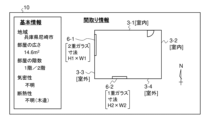
- FIG. 3 is a conceptual diagram showing an example of the interface of the first input unit shown in FIG. 1.
- the display unit 50 may display the image shown in FIG. 3, and the user may operate an input device (not shown) such as a keyboard and mouse to input information for each item while looking at the image displayed by the display unit 50.
- the example interface image shown in FIG. 3 shows that there are columns for inputting one-dimensional information such as the region and size of the room as "basic information," and two-dimensional information such as the shape of the room and the position of the windows as "floor plan information.”
- the interface image shown in FIG. 3 is an example of input information, and it is necessary to design an appropriate interface according to the input information required by the air conditioner selection system 100 and the attributes of the user.
- the floor plan information shown in FIG. 3 indicates that window 6-1 is double glazed and has dimensions H1 x W1.
- the floor plan information also indicates that window 6-2 is single glazed and has dimensions H2 x W2.
- the floor plan information indicates that walls 3-1 and 3-2 face the interior of the room, and walls 3-3 and 3-4 face the exterior.
- the second input unit 20 is used by the user to input an air conditioning target, which is a target that the air conditioner must achieve.
- the air conditioning target includes the air conditions in the conditioned space 1 that the user wants the air conditioner to achieve, and constraint conditions that the air conditioner must satisfy.
- Air conditions are conditions for physical quantities that represent the air state in the air-conditioned space 1.
- conditions for physical quantities that represent the air state in the air-conditioned space 1 are referred to as "air targets.”
- the air target is, for example, the temperature or wind speed at a specific position in the air-conditioned space 1.
- the air target may also be a temperature distribution or spatial average temperature in a specific range in the air-conditioned space 1.
- the temperature at a specific position and the temperature distribution in a specific range may be average values for a predetermined period of time.
- the constraint conditions that an air conditioner must satisfy include at least one of the following: the condition on the installation location of the air conditioner, the condition on monetary costs such as the unit price of the air conditioner, and the condition on the power consumed by the air conditioning performed by the air conditioner.
- the constraint conditions that an air conditioner must satisfy may also include a condition on the presence or absence of a specific function such as a function to automatically clean the inside of the indoor unit, or a condition on specifications other than air conditioning performance such as noise.
- the condition on the power consumed by the air conditioner for air conditioning performed by the air conditioner is also related to running costs, so it may be included in the condition on monetary costs.
- the constraint conditions that an air conditioner must satisfy may be given in the form of specific numerical values, for example, a condition on monetary costs such as “unit price of 200,000 yen or less” and a condition on noise such as “noise level of 40 dB or less”, or may be given in the form of a condition on power consumption that indicates the direction of selection such as "minimum power consumption”.
- the air conditioner selection system 100 of the present disclosure it is desirable to include at least the air target and conditions related to the power consumption and installation location of the air conditioner as the air conditioning target input to the second input unit 20. By including these conditions in the air conditioning target, it is possible to select an air conditioner and its installation location that achieves the air target with less power consumption.
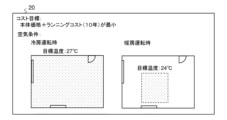
- FIG. 4 is a conceptual diagram showing an example of the interface of the second input unit shown in FIG. 1.
- the display unit 50 displays the image shown in FIG. 4, and the user can operate an input device (not shown) such as a keyboard and mouse to input information for each item while looking at the image displayed by the display unit 50.
- the example of the interface image shown in FIG. 4 shows a case in which the total cost is minimized when the life of use is set to 10 years as the cost target, the average temperature of the entire room is specified as the air target during cooling operation, and the average temperature in a specific range within the room is specified as the air target during heating operation.
- the configuration of the storage unit 40 will be described.
- the storage unit 40 is, for example, a HDD (Hard Disk Drive) or SSD (Solid State Drive).
- the storage unit 40 stores information necessary for selecting an air conditioner.
- the information necessary for selecting an air conditioner is, for example, specification information and price information of all air conditioners that are candidates for selection.
- the storage unit 40 does not necessarily need to store all necessary information at all times.
- a network not shown
- the Internet such as the Internet
- the storage unit 40 may obtain the necessary information from a catalog published on a website via the network.
- the storage unit 40 may obtain information that is similar to the necessary information from the catalog published on the website and use the similar information as a substitute for the necessary information.
- the configuration of the selection unit 30 will be described.
- the selection unit 30 performs calculations to select an air conditioner.
- the selection unit 30 performs calculations required for selecting an air conditioner using data input to the first input unit 10 and the second input unit 20, and selects an optimal air conditioner based on information on the air conditioner selection candidates acquired from the storage unit 40.
- the optimal air conditioner means, for example, the model and installation location of an air conditioner that can achieve the air conditioning target with the minimum power consumption for a space having the characteristics input to the first input unit 10 when the average temperature at a specific position is input to the second input unit 20 as the air target, and the minimization of power consumption and the range of the wall surface on which the air conditioner can be installed are input as constraints.
- the selection unit 30 obtains a three-dimensional distribution of the air condition in the air conditioned space 1 according to the characteristics based on the one-dimensional information and three-dimensional information of the air conditioned space 1.
- the selection unit 33 selects an air conditioner that satisfies the air condition of the specified air conditioned space 1 and the constraints of the air conditioner based on the obtained distribution of the air condition.
- the selection unit 30 determines the air conditioning output required to air-condition the air-conditioned space 1 based on the obtained air condition distribution, and determines the model and installation location of the air conditioner that can achieve that air conditioning output with the minimum necessary power consumption.
- the optimal air conditioner selected by the selection unit 30 does not necessarily have to be limited to a single model.
- the selection unit 30 may select multiple candidates as the optimal air conditioner and display a list of the multiple candidates on the display unit 50.
- a single or multiple candidate air conditioners selected by the selection unit 30 will be referred to as the optimal air conditioner.
- the selection unit 30 selects multiple candidates and displays them on the display unit 50, allowing the user to select an air conditioner that best meets their needs from the multiple candidates.
- the display unit 50 is, for example, a liquid crystal display.
- the display unit 50 displays information related to the optimal air conditioner selected by the selection unit 30.
- the information related to the air conditioner includes information on the model of the air conditioner as well as information on the appearance, specifications, price, etc. of the air conditioner.
- the display unit 50 may also display information that is the basis for selecting the air conditions to be achieved by the air conditioner, etc.
- the selection result by the selection unit 30 is outputted by the display unit 50 so that the user can visually recognize it, but the information on the selection result does not necessarily have to be outputted visually.
- information on the selected air conditioner may be provided as data to an information processing terminal (not shown) used by the user.
- FIG. 5 is a hardware configuration diagram showing an example of the configuration of the selection unit shown in FIG. 1.
- the selection unit 30 shown in FIG. 1 has a processor 91 such as a CPU, and a memory 92.
- the functions of the selection unit 30 are realized by the processor 91 and the memory 92.
- FIG. 5 shows that the processor 91 and the memory 92 are connected to each other so that they can communicate with each other via a bus 93.
- the functions of the selection unit 30 are realized by software, firmware, or a combination of software and firmware.
- the software and firmware are written as programs and stored in the memory 92.
- the processor 91 realizes the functions of the selection unit 30 by reading and executing the programs stored in the memory 92.
- the program executed by the processor 91 does not have to be stored in advance in the memory 92, and may be provided to the user's information processing device (not shown) from an information processing device (not shown) such as a server via a network (not shown). In addition, the program executed by the processor 91 may be provided to the user in a packaged state as dedicated software.
- non-volatile semiconductor memory such as ROM (Read Only Memory), flash memory, EPROM (Erasable and Programmable ROM), and EEPROM (Electrically Erasable and Programmable ROM) may be used as the memory 92.
- Volatile semiconductor memory such as RAM (Random Access Memory) may also be used as the memory 92.
- removable recording media such as magnetic disks, flexible disks, optical disks, CDs (Compact Discs), MDs (Mini Discs), and DVDs (Digital Versatile Discs) may also be used as the memory 92.
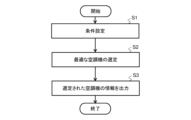
- FIG. 6 is a flowchart showing the operation procedure of the air-conditioner selection system according to embodiment 1.
- the user inputs information required to determine the air state of the air conditioned space 1 into the first input unit 10, and inputs the air conditions in the air conditioned space 1 that the air conditioner is to achieve and the constraint conditions that the air conditioner must satisfy into the second input unit 20.
- the user sets the conditions required to select an air conditioner in the air conditioner selection system 100, including three-dimensional information about the air conditioned space 1 in the information required to determine the air state of the air conditioned space 1 (step S1).
- the selection unit 30 selects an air conditioner that satisfies the air conditions and constraint conditions from among the air conditioner selection candidates stored in the memory unit 40, based on the data input to the input unit 5.
- the display unit 50 outputs information about the air conditioner selected by the selection unit 30.
- the optimal air conditioner that meets the user's preferences and satisfies the air conditions in the air-conditioned space 1 and the constraints of the air conditioner is selected.
- the configuration of the air conditioner selection system 100 is not limited to a single information processing device.
- the functions of the air conditioner selection system 100 may be shared and executed by multiple information processing devices, and the air conditioner selection system 100 may be realized by multiple information processing devices. Below, modified examples of the configuration of the air conditioner selection system 100 are described.
- FIG. 7 is a block diagram showing an example configuration of an air conditioner selection system according to Modification 1.
- the air conditioner selection system 100a has an information processing terminal 60 and a server 70 connected to the information processing terminal 60 via a network 80.
- the network 80 is, for example, a LAN (Local Area Network).
- the network 80 may be the Internet.
- the information processing terminal 60 has an input unit 5 and a display unit 50.
- the server 70 has a selection unit 30 and a storage unit 40.
- the operation of the air conditioner selection system 100a of this modified example 1 will be briefly described.
- the user operates the information processing terminal 60 to input to the input unit 5 the information necessary to determine the air state of the air conditioned space, the air conditions of the air conditioned space that the air conditioner is to achieve, and the constraint conditions that the air conditioner must satisfy.
- the input unit 5 transmits the data input by the user to the server 70 via the network 80.
- the selection unit 30 of the server 70 receives the data from the information processing terminal 60, it selects an air conditioner that satisfies the air conditions and constraint conditions based on the received data from among the air conditioner selection candidates stored in the storage unit 40.
- the selection unit 30 transmits information of the selected air conditioner to the information processing terminal 60 via the network 80.
- the display unit 50 of the information processing terminal 60 receives information of the selected air conditioner from the server 70, it displays the received information.
- FIG. 7 shows a case where one information processing terminal 60 is connected to the network 80, multiple information processing terminals 60 may be connected to the server 70 via the network 80.
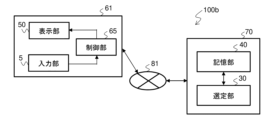
- FIG. 8 is a block diagram showing an example of the configuration of an air conditioner selection system according to Modification 2.
- the air conditioner selection system 100b has an information processing terminal 61 and a server 70 connected to the information processing terminal 61 via a network 81.
- the network 81 is, for example, the Internet.
- the network 81 may also be a LAN.
- the information processing terminal 61 has an input unit 5, a display unit 50, and a control unit 65.
- the control unit 65 has a memory 92 that stores programs, and a processor 91 that executes processing according to the programs, similar to the configuration described with reference to FIG. 5.
- the memory 92 stores a program for a web browser.
- the information processing terminal 61 may be a mobile terminal such as a smartphone or a PDA (Personal Digital Assistant), or may be a desktop or notebook PC (Personal Computer).
- the selection unit 30 of the server 70 stores a program for executing the air conditioner selection process described in the first embodiment as a program for a web browser.
- the operation of the air conditioner selection system 100b of this modified example 2 will be briefly described below.
- the user operates the input unit 5 of the information processing terminal 61 to cause the control unit 65 to execute a web browser program.
- the control unit 65 starts the web browser program, and when the user inputs an instruction to access the server 70, it sends an access request signal to the server 70 requesting access.
- the selection unit 30 sends to the information processing terminal 61 a web page that displays a format in which the items necessary for air conditioner selection are listed.
- the control unit 65 causes the display unit 50 to display the received web page. While viewing the items listed on the web page displayed on the display unit 50, the user inputs, via the input unit 5, the information necessary to determine the air state of the air-conditioned space, the air conditions of the air-conditioned space that the air conditioner is to achieve, and the constraint conditions that the air conditioner must satisfy.
- the control unit 65 transmits the data input by the user to the server 70 via the network 81.
- the selection unit 30 of the server 70 receives the data from the information processing terminal 61, it selects an air conditioner that satisfies the air conditions and constraint conditions based on the received data from among the air conditioner selection candidates stored in the storage unit 40.
- the selection unit 30 transmits information on the selected air conditioner to the information processing terminal 61 via the network 81.
- the display unit 50 of the information processing terminal 61 receives information on the selected air conditioner from the server 70, it displays the received information.
- FIG. 8 shows a case where one information processing terminal 61 is connected to the network 81, multiple information processing terminals 61 may be connected to the server 70 via the network 81.
- the server 70 may provide the program executed by the selection unit 30 to another information processing device (not shown) via the network 80 or 81.
- the program executed by the selection unit 30 may be stored in a portable recording medium.
- the program may be provided to another information processing device (not shown) by the recording medium that stores the program executed by the selection unit 30.
- the air conditioner selection system 100 of the first embodiment has an input unit 5, a storage unit 40, and a selection unit 30.
- the input unit 5 is for a user to input information necessary for determining the air state of the air conditioned space 1, the air conditions of the air conditioned space 1 that the air conditioner is to achieve, and the constraints that the air conditioner must satisfy.
- the storage unit 40 stores information on selection candidates for air conditioners.
- the selection unit 30 selects an air conditioner that satisfies the air conditions of the air conditioned space 1 and the constraints of the air conditioner from the selection candidates for air conditioners stored in the storage unit 40 based on the data input to the input unit 5.
- the information necessary for determining the air state of the air conditioned space that is input to the input unit 5 includes three-dimensional information on the air conditioned space 1.
- the air conditioner selection process three-dimensional information about the air conditioned space 1 is added to the information required to determine the air condition in the air conditioned space 1, and the air condition in the space is obtained as a three-dimensional distribution.
- An air conditioner that satisfies the specified air conditions and constraint conditions is selected based on the obtained distribution of air conditions.
- an air conditioner that precisely matches the air conditions in the air conditioned space and the constraint conditions of the air conditioner is selected. This prevents the selection of an air conditioner with over- or under-specified air conditioning capacity, making it possible to reduce power consumption.
- an air conditioner that is suitable for the air conditions in the air conditioned space 1 and the constraint conditions of the air conditioner is selected, it is possible to reduce running costs and monetary costs.
- the air conditioner selection system 100 calculates air conditions other than heat load, i.e., distribution of temperature and flow rate, by inputting three-dimensional information such as the layout, window positions, and thermal characteristics of each wall for the air-conditioned space 1 in addition to one-dimensional information such as floor area and insulation that is also used in conventional heat load calculations. Furthermore, the air conditions that the air conditioner must satisfy are also input to the air conditioner selection system 100. The air conditions are, for example, the capabilities that a user requires from an air conditioner. The air conditioner selection system 100 outputs the optimal air conditioner model and installation location based on this input information. This allows the user to obtain information on air conditioners and installation locations that are more precisely suited to the air-conditioned space 1 and the user's needs.
- an air conditioner with air conditioning capacity and its installation location that takes into account the distribution of air conditions within the space is selected. Therefore, it is possible to select an air conditioner that is more suitable for the characteristics of the space and the preferences of the user.
- the air conditioner selected based on the heat load by the air-conditioning equipment selection system disclosed in Patent Document 1 will have an over-specified air-conditioning capacity.
- the air conditioner selected based only on the heat load by the air-conditioning equipment selection system disclosed in Patent Document 1 will have an under-specified air-conditioning capacity.
- three-dimensional information of the air-conditioned space is input to the air-conditioner selection system 100 as information necessary to determine the air condition of the air-conditioned space, so that the three-dimensional distribution of the air condition in the space is reflected in the air-conditioner selection. Therefore, an air conditioner with good air-conditioning efficiency is selected when mainly air-conditioning the portion of the space desired by the user. As a result, power consumption can be reduced.
- the heat load calculation in the air conditioner selection system disclosed in Patent Document 1 cannot take into account the installation location of the air conditioner, so there is a possibility that the air conditioner will not be able to perform at its maximum capacity during actual operation.
- the installation location is input to the air conditioner selection system 100 as a constraint condition for the air conditioner, so that an air conditioner that meets not only the air conditions in the space 1 to be air conditioned but also the constraint conditions for the air conditioner is selected.
- the air conditioner selected by the air conditioning equipment selection system disclosed in Patent Document 1 is an air conditioner that has the capacity to process the heat load of the space to be air-conditioned.
- the comfort of the user is improved because indexes such as comfort that are tailored to the user's preferences obtained from the air conditions during use are reflected. For example, if a user prefers a higher temperature than the general set temperature in cooling operation, an air conditioning target including information on the average temperature in a specific range is input via the second input unit 20, and an air conditioner that meets the user's needs is selected.
- Embodiment 2 the calculation process performed by the selection unit 30 based on the data input to the input unit 5 is divided into an evaluation calculation process and an optimization calculation process.
- differences from the first embodiment will be mainly described, and detailed description of the configuration and operation similar to those of the first embodiment will be omitted.
- FIG. 9 is a block diagram showing an example of the configuration of the air conditioner selection system according to the second embodiment.
- the selection unit 30a has an evaluation calculation unit 31 and an optimization calculation unit 32.
- the evaluation calculation unit 31 calculates the air state of the target space 1 to be air conditioned from the geometric information, thermal information, and meteorological information input to the first input unit 10 and the state of the air conditioner that is finally determined. Variables such as the installation position and air conditioning capacity of the air conditioner for determining the final state of the air conditioner are set as design variables. Such a calculation will be referred to as an evaluation calculation below.
- the air state found by the evaluation calculation unit 31 is used to create an objective function in the optimization calculation unit 32.
- the objective function is an evaluation function for evaluating the degree of achievement of the current design variables relative to the target.
- the objective function is composed of not only the degree of achievement of the air state found by the evaluation calculation unit 31, but also constraints such as monetary costs and the degree of achievement of the air target input to the second input unit 20.
- the optimization calculation unit 32 evaluates the value of the objective function and updates the design variables in a direction that is deemed more optimal.
- the optimization calculation unit 32 determines the optimal values of the design variables by repeatedly evaluating the value of the objective function and updating the design variables. This type of calculation is called optimization calculation.
- optimization calculation There are various methods for optimization calculation, such as gradient methods, genetic algorithms, and Bayesian optimization. There are various methods, and the optimization method used in this system is not limited to any one of them.
- FIG. 10 is a flowchart showing the operation procedure of the air conditioner selection system according to the second embodiment.
- the processing of steps S1 and S3 is similar to the content explained with reference to Figure 6 in the first embodiment, and therefore a detailed explanation thereof will be omitted.
- the processing of step S2 will be explained in detail.
- step S11 the evaluation calculation unit 31 sets initial values of the design variables.
- step S12 the evaluation calculation unit 31 performs an evaluation calculation based on the input conditions and information on the design variables, and calculates the objective function.
- step S13 the optimization calculation unit 32 evaluates the value of the objective function.
- step S14 the optimization calculation unit 32 judges whether the target is satisfied. If the result of the judgment in step S14 is that the target is not satisfied, the optimization calculation unit 32 updates the design variables. After the processing in step S15, the selection unit 30a returns to the processing in step S12. On the other hand, if the result of the judgment in step S14 is that the target is satisfied, the optimization calculation unit 32 outputs the evaluation result to the display unit 50 (step S3).
- the air conditioner selection system 100 of the second embodiment by repeatedly executing evaluation calculations and optimization calculations, it is possible to search for values of design variables that best satisfy the targets and select the optimal air conditioner.
- Embodiment 3 an evaluation calculation unit 31 uses numerical calculations by CFD (Computational Fluid Dynamics) for the evaluation calculation.
- CFD computational Fluid Dynamics
- differences from the second embodiment will be mainly described, and detailed descriptions of the configuration and operation similar to those of the second embodiment will be omitted.
- the selection unit 30a has an evaluation calculation unit 31 and an optimization calculation unit 32, similar to the configuration described with reference to FIG. 9.
- the evaluation calculation unit 31 uses CFD as part of the evaluation calculation.
- CFD is a computational fluid analysis that numerically calculates the spatial distribution of physical quantities related to air conditions based on given conditions.
- CFD requires the three-dimensional geometric shape of the space, boundary conditions, and initial conditions.
- the three-dimensional geometric shape of the space is obtained from the geometric information input to the first input unit 10.
- boundary conditions the thermal properties of the walls and windows and the inflow and outflow of air are obtained from the thermal information input to the first input unit 10.
- the initial conditions for example, as the initial conditions, such as a still air state that is the same as the outside temperature.
- CFD requires modeling the operation of the air conditioner.
- the simplest model involves setting boundary conditions for the air volume and heat quantity according to the operating state of the air conditioner. Specifically, the amount of air given from the air conditioner to the space per unit time and the heat given to the air in the space are set as boundary conditions at the air conditioner's outlet.
- sensible heat which appears as a change in air temperature
- latent heat that is condensed and discharged during cooling operation is also taken into account.
- the evaluation calculation unit 31 does not necessarily need to perform all of the evaluation calculations using CFD.
- the evaluation calculation unit 31 calculates the heat load using a conventional calculation method in addition to calculating the spatial distribution of temperature and flow velocity using CFD, and combines the results of these calculations to form the evaluation calculation.
- the optimization calculation unit 32 uses the result of this evaluation calculation in the objective function.
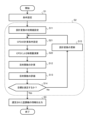
- FIG. 11 is a flowchart showing the operation procedure of the air conditioner selection system according to the third embodiment.
- the processing of steps S1 and S3 is similar to that described with reference to FIG. 6 in the first embodiment, and therefore detailed description thereof will be omitted.
- the processing of steps S11 and S12 to S15 is similar to that described with reference to FIG. 10 in the second embodiment, and therefore detailed description thereof will be omitted.
- step S21 the evaluation calculation unit 31 sets the CFD calculation conditions.
- step S22 the evaluation calculation unit 31 calculates the physical quantities by CFD based on the information on the CFD calculation conditions and design variables, and calculates the objective function.
- more accurate evaluation calculations can be performed by numerical calculations based on physical governing equations, thereby improving the accuracy of air conditioner selection.
- Embodiment 4 is designed to achieve faster processing than the third embodiment. In the fourth embodiment, differences from the third embodiment will be mainly described, and detailed descriptions of the configuration and operation similar to those of the third embodiment will be omitted.
- the selection unit 30a has an evaluation calculation unit 31 and an optimization calculation unit 32, similar to the configuration described with reference to FIG. 9.
- the CFD used by the evaluation calculation unit 31 for the evaluation calculation is a method of determining the distribution of physical quantities in space through repeated calculations by a processor, and generally requires a long time to obtain a solution.
- a computer and software suitable for high-speed calculations are required, and even if a computer and software suitable for high-speed calculations are used, there is a limit to how fast the calculation can be achieved within the realistic cost and technical range.
- the evaluation calculation unit 31 of this embodiment 4 therefore performs evaluation calculations using a surrogate model that uses machine learning.
- the surrogate model is a machine learning model that inputs calculation conditions such as boundary conditions and initial conditions, and outputs values of physical quantities obtained by experiments or CFD.
- the surrogate model is trained using large amounts of data obtained from CFD, experiments, and observations in the real space.
- the surrogate model is constructed by applying common techniques such as DNN (Deep Neural Network), CNN (Convolutional Neural Network), GAN (Generative Adversarial Network), and Diffusion Model. Note that the method of constructing the surrogate model is not limited to these methods.
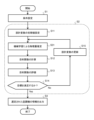
- FIG. 12 is a flowchart showing the operation procedure of the air conditioner selection system according to the fourth embodiment.
- the processing of steps S1 and S3 is similar to that described with reference to FIG. 6 in the first embodiment, and therefore a detailed description thereof will be omitted.
- the processing of steps S11 and S12 to S15 is similar to that described with reference to FIG. 10 in the second embodiment, and therefore a detailed description thereof will be omitted.
- step S31 the evaluation calculation unit 31 estimates physical quantities using machine learning. Specifically, the evaluation calculation unit 31 performs an evaluation calculation using a proxy model based on the input conditions and design variable information to calculate an objective function.
- the air conditioner selection system 100 of the fourth embodiment by performing evaluation calculations using a proxy model, the amount of calculations required is reduced compared to CFD, and the processing speed of the entire system can be improved. In addition, by using experimental data when learning the proxy model, the accuracy of the evaluation calculations can also be improved.
- Embodiment 5 the selection process is faster than in the embodiment 4. In the present embodiment 5, differences from the embodiment 1 will be described, and detailed description of the configuration and operation similar to the embodiment 1 will be omitted.
- the configuration of the air conditioner selection system 100 in this embodiment 5 is the same as the configuration described with reference to FIG. 1 in embodiment 1.
- the selection unit 30 selects an air conditioner using a machine learning model.
- the processing speed of the entire system is improved by using machine learning in the evaluation calculation unit 31 of the selection unit 30.
- the optimization calculation unit 32 performs calculations to maximize or minimize an objective function based on the results of the evaluation calculation unit 31.
- the optimization process becomes a bottleneck in the processing speed of the entire system. Therefore, in the fifth embodiment, machine learning is used in the entire processing of the selection unit 30 to further increase the speed.
- the selection unit 30 uses a machine learning model that outputs the optimal air conditioner or a candidate for the optimal air conditioner to the display unit 50 for the information input to the first input unit 10 and the second input unit 20.
- the selection unit 30 stores in the storage unit 40 a data set consisting of the input information input to the first input unit 10 and the second input unit 20 and the output information output to the display unit 50, creates it using a flow similar to any of those shown in Figures 10 to 12, and builds a machine learning model by learning it in advance.
- the selection unit 30 can select air conditioners that meet the air conditioning targets using a pre-trained machine learning model, eliminating the need to perform evaluation and optimization calculations, and improving the processing speed of the entire system.
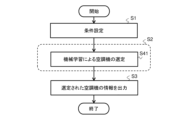
- FIG. 13 is a flowchart showing the operation procedure of the air conditioner selection system according to the fifth embodiment.
- the processing of steps S1 and S3 is similar to that described with reference to FIG. 6 in the first embodiment, and therefore a detailed description thereof will be omitted.
- step S41 the selection unit 30 uses a machine learning model to select an air conditioner that satisfies the air conditions of the space to be air-conditioned and the constraints on the air conditioner, based on the input conditions.
- the optimal air conditioner can be selected without going through optimization calculations, thereby increasing the processing speed of the entire system.
- Modifications 1 and 2 may be applied to any of the second to fifth embodiments.
- Air-conditioned space 2 Air conditioner, 3, 3-1 to 3-4 Walls, 4 Ceiling, 5 Input section, 6, 6-1, 6-2 Window, 7 Floor, 10 First input section, 20 Second input section, 30, 30a Selection section, 31 Evaluation calculation section, 32 Optimization calculation section, 40 Memory section, 50 Display section, 60, 61 Information processing terminal, 65 Control section, 70 Server, 80, 81 Network, 91 Processor, 92 Memory, 93 Bus, 100, 100a, 100b Air conditioner selection system.
Landscapes
- Business, Economics & Management (AREA)
- Engineering & Computer Science (AREA)
- Strategic Management (AREA)
- Finance (AREA)
- Physics & Mathematics (AREA)
- Accounting & Taxation (AREA)
- Theoretical Computer Science (AREA)
- General Physics & Mathematics (AREA)
- General Business, Economics & Management (AREA)
- Marketing (AREA)
- Economics (AREA)
- Development Economics (AREA)
- Human Resources & Organizations (AREA)
- Entrepreneurship & Innovation (AREA)
- Signal Processing (AREA)
- Combustion & Propulsion (AREA)
- Chemical & Material Sciences (AREA)
- Mathematical Physics (AREA)
- Fuzzy Systems (AREA)
- Mechanical Engineering (AREA)
- Data Mining & Analysis (AREA)
- General Engineering & Computer Science (AREA)
- Operations Research (AREA)
- Quality & Reliability (AREA)
- Tourism & Hospitality (AREA)
- Air Conditioning Control Device (AREA)
Abstract
Description
(システムの概要)
本実施の形態1の空調機選定システムの構成を説明する。図1は、実施の形態1に係る空調機選定システムの一構成例を示すブロック図である。図2は、空調機が設置される空調対象空間の一例を示す概略図である。
空調機選定システム100の構成について、詳しく説明する。空調機選定システム100は、上述したように、第1入力部10および第2入力部20を含む入力部5、選定部30、記憶部40ならびに表示部50を基本構成として備える。各構成は、プログラムおよびデータを含むソフトウェアとハードウェアとの組み合わせによって構築される。
本実施の形態1の空調機選定システム100の動作を説明する。図6は、実施の形態1に係る空調機選定システムの動作手順を示すフローチャートである。
図7は、変形例1に係る空調機選定システムの一構成例を示すブロック図である。空調機選定システム100aは、情報処理端末60と、情報処理端末60とネットワーク80を介して接続されるサーバ70とを有する。ネットワーク80は、例えば、LAN(Local Arera Network)である。ネットワーク80は、インターネットであってもよい。情報処理端末60は、入力部5および表示部50を有する。サーバ70は、選定部30および記憶部40を有する。
図8は、変形例2に係る空調機選定システムの一構成例を示すブロック図である。空調機選定システム100bは、情報処理端末61と、情報処理端末61とネットワーク81を介して接続されるサーバ70とを有する。ネットワーク81は、例えば、インターネットである。ネットワーク81はLANであってもよい。
本実施の形態2は、選定部30が入力部5に入力されたデータを基に行う演算処理を、評価演算処理および最適化演算処理に分けたものである。本実施の形態2においては、主に実施の形態1と異なる点を説明し、実施の形態1と同様な構成および動作の詳細な説明を省略する。
本実施の形態3は、評価演算部31が、評価演算に、CFD(Computational Fluid Dynamics)による数値計算を用いるものである。本実施の形態3においては、主に実施の形態2と異なる点を説明し、実施の形態2と同様な構成および動作の詳細な説明を省略する。
本実施の形態4は、実施の形態3よりも高速に処理できるようにしたものである。本実施の形態4においては、主に実施の形態3と異なる点を説明し、実施の形態3と同様な構成および動作の詳細な説明を省略する。
本実施の形態5は、実施の形態4よりも選定処理を高速化したものである。本実施の形態5においては、実施の形態1と異なる点を説明し、実施の形態1と同様な構成および動作の詳細な説明を省略する。
Claims (11)
- 空調機を選定する空調機選定システムであって、
空調対象空間の空気状態を決めるために必要な情報と、前記空調機に達成させたい前記空調対象空間の空気条件および前記空調機が満たすべき制約条件とを入力するための入力部と、
前記空調機の選定候補の情報を記憶する記憶部と、
前記記憶部に記憶された前記空調機の選択候補の中から、前記入力部に入力されたデータに基づいて、前記空気条件および前記制約条件を満たす空調機を選定する選定部と、
を有し、
前記入力部に入力される、前記空調対象空間の空気状態を決めるために必要な情報は、前記空調対象空間に関する3次元情報を含む、
空調機選定システム。 - 前記空気条件は、前記空調対象空間における特定の位置の温度、または特定の範囲の温度分布に関する条件を含む、
請求項1に記載の空調機選定システム。 - 前記制約条件は、前記空調機の設置位置に関する条件、前記空調機の金銭的コストに関する条件、および前記空調機が行う空調によって消費する電力に関する条件のうち、少なくとも1つを含む、
請求項2に記載の空調機選定システム。 - 前記選定部は、
前記空調対象空間の空気状態を決めるために必要な情報として、前記入力部に入力される前記空調対象空間に関する幾何的情報、熱的情報および気象的情報を基に前記空調対象空間の空気状態を求める評価演算部と、
前記空気条件および前記制約条件を満たす空調機を、前記評価演算部によって求められた前記空気状態に関する情報を用いて求める最適化演算部と、を有する、
請求項1~3のいずれか1項に記載の空調機選定システム。 - 前記評価演算部は、前記空調対象空間の空気状態を求める評価演算の一部に数値流体解析を使用する、
請求項4に記載の空調機選定システム。 - 前記評価演算部は、機械学習による代理モデルを用いて、前記空調対象空間の空気状態を求める、
請求項4に記載の空調機選定システム。 - 前記選定部は、前記空調機の選定処理に機械学習を用いる、
請求項1~3のいずれか1項に記載の空調機選定システム。 - 前記選定部による選定の結果を出力する表示部を有する、
請求項1~7のいずれか1項に記載の空調機選定システム。 - 情報処理端末とネットワークを介して接続され、空調機を選定するサーバであって、
前記空調機の選定候補の情報を記憶する記憶部と、
空調対象空間の空気状態を決めるために必要な情報と、前記空調機に達成させたい前記空調対象空間の空気条件および前記空調機が満たすべき制約条件とを前記情報処理端末から受信すると、前記記憶部に記憶された前記空調機の選択候補の中から、前記情報処理端末から受信したデータに基づいて、前記空気条件および前記制約条件を満たす空調機を選定する選定部と、
を有し、
前記情報処理端末から受信する、前記空調対象空間の空気状態を決めるために必要な情報は、前記空調対象空間に関する3次元情報を含む、
サーバ。 - 空調機を選定するサーバとネットワークを介して接続される情報処理端末であって、
空調対象空間の空気状態を決めるために必要な情報と、前記空調機に達成させたい前記空調対象空間の空気条件および前記空調機が満たすべき制約条件とが入力されると、入力されたデータを前記サーバに送信する入力部と、
前記サーバによる前記空調機の選定結果を前記サーバから受信すると、前記選定結果を表示する表示部と、
を有し、
前記入力部に入力される、前記空調対象空間の空気状態を決めるために必要な情報は、前記空調対象空間に関する3次元情報を含む、
情報処理端末。 - 空調機を選定するコンピュータに実行させるプログラムであって、
前記空調機の選定候補の情報を記憶させる記憶手順と、
空調対象空間の空気状態を決めるために必要な情報と、前記空調機に達成させたい前記空調対象空間の空気条件および前記空調機が満たすべき制約条件とを入力する入力手順と、
前記記憶手順において記憶された前記空調機の選択候補の中から、前記入力手順において入力されるデータに基づいて、前記空気条件および前記制約条件を満たす空調機を選定する選定手順と、を前記コンピュータに実行させ、
前記入力手順における、前記空調対象空間の空気状態を決めるために必要な情報は、前記空調対象空間に関する3次元情報を含む、
プログラム。
Priority Applications (4)
| Application Number | Priority Date | Filing Date | Title |
|---|---|---|---|
| EP23940702.6A EP4726624A1 (en) | 2023-06-08 | 2023-06-08 | Air-conditioner selection system, server, information processing terminal, and program |
| JP2024518127A JP7523717B1 (ja) | 2023-06-08 | 2023-06-08 | 空調機選定システム、サーバ、情報処理端末およびプログラム |
| PCT/JP2023/021281 WO2024252601A1 (ja) | 2023-06-08 | 2023-06-08 | 空調機選定システム、サーバ、情報処理端末およびプログラム |
| CN202380098685.5A CN121263636A (zh) | 2023-06-08 | 2023-06-08 | 空调机选定系统、服务器、信息处理终端以及程序 |
Applications Claiming Priority (1)
| Application Number | Priority Date | Filing Date | Title |
|---|---|---|---|
| PCT/JP2023/021281 WO2024252601A1 (ja) | 2023-06-08 | 2023-06-08 | 空調機選定システム、サーバ、情報処理端末およびプログラム |
Publications (1)
| Publication Number | Publication Date |
|---|---|
| WO2024252601A1 true WO2024252601A1 (ja) | 2024-12-12 |
Family
ID=91957752
Family Applications (1)
| Application Number | Title | Priority Date | Filing Date |
|---|---|---|---|
| PCT/JP2023/021281 Ceased WO2024252601A1 (ja) | 2023-06-08 | 2023-06-08 | 空調機選定システム、サーバ、情報処理端末およびプログラム |
Country Status (4)
| Country | Link |
|---|---|
| EP (1) | EP4726624A1 (ja) |
| JP (1) | JP7523717B1 (ja) |
| CN (1) | CN121263636A (ja) |
| WO (1) | WO2024252601A1 (ja) |
Families Citing this family (1)
| Publication number | Priority date | Publication date | Assignee | Title |
|---|---|---|---|---|
| JP7828005B1 (ja) * | 2024-09-30 | 2026-03-11 | ダイキン工業株式会社 | 評価システム、評価プログラム、評価方法 |
Citations (3)
| Publication number | Priority date | Publication date | Assignee | Title |
|---|---|---|---|---|
| JP2014074948A (ja) * | 2012-10-02 | 2014-04-24 | Toshiba Corp | 設計支援装置および設計支援方法 |
| JP6687043B2 (ja) | 2018-01-31 | 2020-04-22 | ダイキン工業株式会社 | 空調機器選定システム |
| JP2021144345A (ja) * | 2020-03-10 | 2021-09-24 | 株式会社大林組 | 栽培施設の設計支援システム、栽培施設空調システム、栽培施設の設計支援方法、および、栽培施設の設計支援プログラム |
Family Cites Families (2)
| Publication number | Priority date | Publication date | Assignee | Title |
|---|---|---|---|---|
| JP2009020640A (ja) * | 2007-07-11 | 2009-01-29 | Daikin Ind Ltd | 空調機の選定方法、選定装置および選定プログラム |
| JP7696124B2 (ja) * | 2021-06-11 | 2025-06-20 | パナソニックIpマネジメント株式会社 | 情報処理方法、プログラム及び情報処理システム |
-
2023
- 2023-06-08 EP EP23940702.6A patent/EP4726624A1/en active Pending
- 2023-06-08 CN CN202380098685.5A patent/CN121263636A/zh active Pending
- 2023-06-08 WO PCT/JP2023/021281 patent/WO2024252601A1/ja not_active Ceased
- 2023-06-08 JP JP2024518127A patent/JP7523717B1/ja active Active
Patent Citations (3)
| Publication number | Priority date | Publication date | Assignee | Title |
|---|---|---|---|---|
| JP2014074948A (ja) * | 2012-10-02 | 2014-04-24 | Toshiba Corp | 設計支援装置および設計支援方法 |
| JP6687043B2 (ja) | 2018-01-31 | 2020-04-22 | ダイキン工業株式会社 | 空調機器選定システム |
| JP2021144345A (ja) * | 2020-03-10 | 2021-09-24 | 株式会社大林組 | 栽培施設の設計支援システム、栽培施設空調システム、栽培施設の設計支援方法、および、栽培施設の設計支援プログラム |
Non-Patent Citations (1)
| Title |
|---|
| See also references of EP4726624A1 |
Also Published As
| Publication number | Publication date |
|---|---|
| EP4726624A4 (en) | 2026-04-15 |
| EP4726624A1 (en) | 2026-04-15 |
| JP7523717B1 (ja) | 2024-07-26 |
| CN121263636A (zh) | 2026-01-02 |
| JPWO2024252601A1 (ja) | 2024-12-12 |
Similar Documents
| Publication | Publication Date | Title |
|---|---|---|
| Jalali et al. | Design and optimization of form and facade of an office building using the genetic algorithm | |
| Chen et al. | A multi-stage optimization of passively designed high-rise residential buildings in multiple building operation scenarios | |
| Corbin et al. | A model predictive control optimization environment for real-time commercial building application | |
| Nguyen et al. | Passive designs and strategies for low-cost housing using simulation-based optimization and different thermal comfort criteria | |
| Kim et al. | Development of a double-skin façade for sustainable renovation of old residential buildings | |
| US20130179373A1 (en) | Systems and Methods for Estimating HVAC Operation Cost | |
| CN108700326A (zh) | 控制装置和控制程序 | |
| Yılmaz et al. | A weighted multi-objective optimisation approach to improve based facade aperture sizes in terms of energy, thermal comfort and daylight usage | |
| JP2023510654A (ja) | Hvac(暖房、換気、空調)システムの動作を制御するためのシステムおよび方法 | |
| JP7696124B2 (ja) | 情報処理方法、プログラム及び情報処理システム | |
| Juaristi et al. | Adaptive opaque façades and their potential to reduce thermal energy use in residential buildings: A simulation-based evaluation | |
| Kim | Computational fluid dynamics assessment for the thermal performance of double-skin façades in office buildings under hot climatic condition | |
| JP7523717B1 (ja) | 空調機選定システム、サーバ、情報処理端末およびプログラム | |
| Tariku et al. | Application of a Whole-Building Hygrothermal model in energy, durability, and indoor humidity retrofit design | |
| Lee | Multi-objective optimization case study with active and passive design in building engineering | |
| Brideau et al. | Effects of controls and floor construction of radiant floor heating systems for residential application with high variability of solar gains | |
| Tsala et al. | Utilizing weather forecast meteorological models for building energy simulations: A case study of a multi-unit residential complex | |
| Arif et al. | WASPAS based Taguchi approach to reduce the energy consumption of a typical office building | |
| Yamamoto et al. | Energy simulation and CFD coupled analysis for the optimal operation of combined convection and radiant air conditioning considering dehumidification | |
| Akeiber | Computational fluid dynamics modeling of air conditioning systems for energy-efficient buildings | |
| Bhandari | Sustainable cooling solutions for building environments: A comprehensive study of earth-air cooling systems | |
| JP7334019B1 (ja) | 空気調和制御装置、空気調和制御方法および空気調和制御プログラム | |
| Duan et al. | Thermal conditions controlled by thermostats: An occupational comfort and well-being perspective | |
| Yau et al. | Numerical simulation of a novel VRF-SV hybrid system performance in a large retail facility in the tropics | |
| Noversa et al. | Thermal simulation of a supermarket cold zone with integrated assessment of human thermal comfort |
Legal Events
| Date | Code | Title | Description |
|---|---|---|---|
| WWE | Wipo information: entry into national phase |
Ref document number: 2024518127 Country of ref document: JP |
|
| 121 | Ep: the epo has been informed by wipo that ep was designated in this application |
Ref document number: 23940702 Country of ref document: EP Kind code of ref document: A1 |
|
| WWE | Wipo information: entry into national phase |
Ref document number: 2501008182 Country of ref document: TH |
|
| WWE | Wipo information: entry into national phase |
Ref document number: 2023940702 Country of ref document: EP |
|
| NENP | Non-entry into the national phase |
Ref country code: DE |
|
| ENP | Entry into the national phase |
Ref document number: 2023940702 Country of ref document: EP Effective date: 20260108 |
|
| ENP | Entry into the national phase |
Ref document number: 2023940702 Country of ref document: EP Effective date: 20260108 |
|
| ENP | Entry into the national phase |
Ref document number: 2023940702 Country of ref document: EP Effective date: 20260108 |
|
| ENP | Entry into the national phase |
Ref document number: 2023940702 Country of ref document: EP Effective date: 20260108 |
|
| ENP | Entry into the national phase |
Ref document number: 2023940702 Country of ref document: EP Effective date: 20260108 |
|
| WWP | Wipo information: published in national office |
Ref document number: 2023940702 Country of ref document: EP |