WO2024252518A1 - 情報処理装置、携帯端末、情報処理方法、記憶媒体 - Google Patents
情報処理装置、携帯端末、情報処理方法、記憶媒体 Download PDFInfo
- Publication number
- WO2024252518A1 WO2024252518A1 PCT/JP2023/021000 JP2023021000W WO2024252518A1 WO 2024252518 A1 WO2024252518 A1 WO 2024252518A1 JP 2023021000 W JP2023021000 W JP 2023021000W WO 2024252518 A1 WO2024252518 A1 WO 2024252518A1
- Authority
- WO
- WIPO (PCT)
- Prior art keywords
- information
- authentication
- terminal
- user
- unit
- Prior art date
- Legal status (The legal status is an assumption and is not a legal conclusion. Google has not performed a legal analysis and makes no representation as to the accuracy of the status listed.)
- Ceased
Links
Images







Classifications
-
- G—PHYSICS
- G06—COMPUTING OR CALCULATING; COUNTING
- G06F—ELECTRIC DIGITAL DATA PROCESSING
- G06F21/00—Security arrangements for protecting computers, components thereof, programs or data against unauthorised activity
- G06F21/30—Authentication, i.e. establishing the identity or authorisation of security principals
- G06F21/31—User authentication
- G06F21/32—User authentication using biometric data, e.g. fingerprints, iris scans or voiceprints
Definitions
- This disclosure relates to an information processing device, a mobile terminal, an information processing method, and a storage medium.
- Patent Document 1 A user uses an information processing device to send and receive information such as messages to and from other people. In such cases, the user needs to unlock the screen of the information processing device to check the received messages. Related technology is disclosed in Patent Document 1.
- Patent document 1 discloses a technology in which an audio playback device has an audio output unit consisting of a speaker or the like, and plays back the audio of spoken words based on supplied audio data (paragraph 0063, etc.).
- the purpose of this disclosure is to provide an information processing device, a mobile terminal, an information processing method, and a storage medium that solve the above problems.
- an information processing device is a first terminal having a structure for being worn on a user's ear and for acquiring a reflected signal of a signal output inside the ear, and includes a connection means for connecting to the first terminal that conveys information acquired from outside to the user while worn by the user, an authentication result acquisition means for acquiring a result of authentication performed using the reflected signal, a detection means for detecting acquisition of a specific first information, and an execution means for outputting information regarding the execution of a specific process performed using the first information to the first terminal when the result of the authentication is successful.
- the information processing device includes a connection means for connecting a first terminal having a structure for being worn on a user's ear and for acquiring a reflected signal of a signal output inside the ear, and a second terminal for communicating information acquired from the outside to the user while worn by the user, an authentication result acquisition means for acquiring a result of authentication performed using the reflected signal, a detection means for detecting acquisition of a specific first information, and an execution means for outputting information regarding the execution of a specific process performed using the first information to the second terminal when the result of the authentication is successful.
- the mobile terminal is a first terminal that has a structure for being worn on a user's ear and acquires a reflected signal of a signal output inside the ear, and includes a connection means for connecting to the first terminal that conveys information acquired from the outside to the user while worn by the user, an authentication result acquisition means for acquiring the result of authentication performed using the reflected signal, a detection means for detecting the acquisition of a specific first information, and an execution means for outputting information regarding the execution of a specific process performed using the first information to the first terminal when the result of the authentication is successful.
- the mobile terminal includes a first terminal having a structure for being worn on a user's ear and for acquiring a reflected signal of a signal output inside the ear, and a second terminal for communicating information acquired from the outside to the user while worn by the user, a connection means for connecting the first terminal and the second terminal, an authentication result acquisition means for acquiring a result of authentication performed using the reflected signal, a detection means for detecting acquisition of a specific first information, and an execution means for outputting information regarding the execution of a specific process performed using the first information to the second terminal when the result of the authentication is successful.
- the information processing method is a first terminal having a structure for being worn on a user's ear and for acquiring a reflected signal of a signal output inside the ear, which is connected to the first terminal that conveys information acquired from outside to the user while worn by the user, acquires the result of authentication performed using the reflected signal, detects acquisition of specific first information, and, if the result of the authentication is successful, outputs information regarding the execution of a specific process performed using the first information to the first terminal.
- the information processing method is connected to a first terminal having a structure for being worn on a user's ear and for acquiring a reflected signal of a signal output inside the ear, and a second terminal for communicating information acquired from the outside to the user while worn by the user, acquires the result of authentication performed using the reflected signal, detects acquisition of specific first information, and, if the result of the authentication is successful, outputs information regarding the execution of a specific process performed using the first information to the second terminal.
- the program causes a computer of an information processing device to function as: a connection means for connecting to the first terminal, which has a structure for being worn on a user's ear and obtains a reflected signal of a signal output inside the ear, and which communicates information obtained from outside to the user while worn by the user; an authentication result acquisition means for acquiring the result of authentication performed using the reflected signal; a detection means for detecting the acquisition of a specific first information; and an execution means for outputting information regarding the execution of a specific process performed using the first information to the first terminal when the result of the authentication is successful.
- the program causes a computer of an information processing device to function as a connection means for connecting a first terminal having a structure for being worn on a user's ear and for acquiring a reflected signal of a signal output inside the ear, and a second terminal for communicating information acquired from outside to the user while worn by the user, an authentication result acquisition means for acquiring the result of authentication performed using the reflected signal, a detection means for detecting the acquisition of a specific first information, and an execution means for outputting information regarding the execution of a specific process performed using the first information to the second terminal when the result of the authentication is successful.
- the information processing device includes a connection means for connecting to a first terminal that acquires biometric information of a user and that communicates information acquired from an external source to the user while worn by the user, an authentication result acquisition means for acquiring a result of authentication performed using the biometric information, a detection means for detecting acquisition of a specific first information, and an execution means for outputting information regarding the execution of a specific process performed using the first information to the first terminal when the result of the authentication is successful.
- the information processing device includes a connection means for connecting to a first terminal that acquires biometric information of a user and a second terminal that communicates information acquired from an external source to the user while the second terminal is worn by the user, an authentication result acquisition means for acquiring a result of authentication performed using the biometric information, a detection means for detecting acquisition of a specific first information, and an execution means for outputting information regarding the execution of a specific process performed using the first information to the second terminal when the result of the authentication is successful.
- FIG. 1 is a schematic configuration diagram of an information processing system according to an embodiment of the present disclosure.
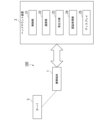
- FIG. 1 is a functional block diagram of an information processing system according to an embodiment of the present disclosure.
- FIG. 2 is a hardware configuration diagram of a mobile terminal according to an embodiment of the present disclosure.
- FIG. 2 is a functional block diagram of a mobile terminal and an earphone according to one embodiment of the present disclosure.
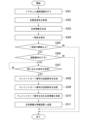
- FIG. 1 is a first diagram showing a processing flow of a mobile terminal according to an embodiment of the present disclosure.
- FIG. 2 is a second diagram showing the processing flow of a mobile terminal according to an embodiment of the present disclosure.
- FIG. 1 is a functional block diagram of an information processing system according to an embodiment of the present disclosure.
- FIG. 1 is a functional block diagram of an information processing system according to an embodiment of the present disclosure.
- FIG. 1 is a functional block diagram of an information processing system according to an embodiment of the present disclosure.
- FIG. 1 is a functional block diagram of an information processing system according to an embodiment of the present disclosure.
- FIG. 4 is a third diagram showing the processing flow of a mobile terminal according to an embodiment of the present disclosure.
- FIG. 1 is a functional block diagram of an information processing system according to an embodiment of the present disclosure.
- FIG. 4 is a fourth diagram showing a processing flow of a mobile terminal according to an embodiment of the present disclosure.
- FIG. 1 is a functional block diagram of an information processing system according to an embodiment of the present disclosure.
- FIG. 5 is a fifth diagram showing the processing flow of a mobile terminal according to one embodiment of the present disclosure.
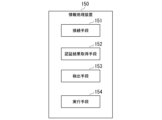
- 1 is a functional block diagram showing a minimum configuration of an information processing device according to an embodiment of the present disclosure.
- FIG. 1 is a diagram illustrating a processing flow by an information processing device with a minimum configuration according to an embodiment of the present disclosure.
- FIG. 1 is a schematic configuration diagram of an information processing system according to an embodiment of the present disclosure.
- the information processing system 100 is configured by at least a mobile terminal 1, which is an aspect of an information processing device, being wirelessly connected to an earphone 2, which is an aspect of a first terminal.
- the mobile terminal 1 may be a smartphone.
- the earphone 2 has a structure that allows it to be worn in a user's ear.
- the earphone 2 also has a function of acquiring a reflected signal of a signal outputted inside the user's ear and outputting the reflected signal to the mobile terminal 1.
- the earphone 2 has a function of sending a sound wave inside the user's ear, acquiring an echo signal of the sound wave from the inner wall of the ear, etc., and outputting the echo signal to the mobile terminal 1.
- the earphone 2 also has a function of converting information acquired from the outside into sound and transmitting it to the user.
- the mobile terminal 1 uses the echo signal as biometric information of the user to perform biometric authentication.
- FIG. 2 is a functional block diagram of an information processing system according to one embodiment of the present disclosure.
- the information processing system 100 may include a server 3 as shown in Fig. 2.
- the server 3 outputs first information to the mobile terminal 1.
- the mobile terminal 1 outputs the first information acquired from the server 3 or second information generated by processing the first information to the earphones 2.
- the earphones 2 convert the first information or the second information into sound and convey it to the user.
- FIG. 3 is a hardware configuration diagram of a mobile terminal according to an embodiment of the present disclosure.
- the mobile terminal 1 is a computer equipped with various hardware components such as a CPU (Central Processing Unit) 101, a ROM (Read Only Memory) 102, a RAM (Random Access Memory) 103, a HDD (Hard Disk Drive) 104, a communication module 105, and a battery 106.
- the server 3 may also have similar functions.
- the earphones 2 are also small information processing devices, and are equipped with part or all of the hardware components of the mobile terminal 1, and realize the functions of the earphones 2 through this hardware configuration.
- FIG. 4 is a functional block diagram of a mobile terminal and an earphone according to one embodiment of the disclosure.
- the mobile terminal 1 performs the functions of a control unit 11, a communication connection unit 12, an authentication unit 13, an authentication result acquisition unit 14, a detection unit 15, an execution unit 16, and a memory unit 17 through the execution of a pre-stored program by the CPU 101, circuit operations, etc.
- the control unit 11 controls each functional unit of the mobile terminal 1 .
- the communication connection unit 12 is connected to the earphones 2 for communication and transmits information to the earphones 2 .
- the authentication unit 13 performs user authentication based on a signal including biometric information acquired from the earphones 2 .
- the detection unit 15 detects predetermined first information.
- the first information is, for example, information received from the server 3. If the result of authentication of the user wearing the earphones 2 is successful, the execution unit 16 transmits to the earphones 2 information related to the execution of a predetermined process that was performed using the first information.
- the storage unit 17 stores various types of information that the mobile terminal 1 uses for processing.
- the earphones 2 perform the functions of the control unit 21, communication unit 22, sound output unit 23, and authentication processing unit 24 by executing a pre-stored program and operating the circuits.
- the control unit 21 controls each function of the earphone 2 .
- the communication unit 22 connects to the mobile terminal 1 and communicates with it.
- the sound output unit 23 outputs sound from a speaker based on a sound signal received from the outside.
- the authentication processing unit 24 sends out sound waves into the inside of the ear, acquires an echo signal of the sound waves reflected from the inner wall of the ear, etc., and outputs the echo signal to the mobile terminal 1 .
- the mobile terminal 1 communicates with the earphones 2 and acquires the result of authentication performed using reverberation signals inside the ear.
- the mobile terminal 1 also detects acquisition of specific first information, and if the authentication result is successful, outputs information related to the execution of specific processing performed using the first information to the earphones 2.
- the earphones 2 are a device that conveys information acquired from the outside to the user while the earphones are worn by the user. Therefore, by using such an information processing system 100, the user can check information sent to them on the mobile terminal 1 with greater confidentiality. Below, the details of each process of the mobile terminal 1, earphones 2, and server 3 that constitute the information processing system 100 will be explained.
- FIG. 5 is a first diagram showing a processing flow of a mobile terminal according to an embodiment of the present disclosure.
- the communication connection unit 12 of the mobile terminal 1 receives a connection signal output by the communication unit 22 of the earphone 2. Then, the communication connection unit 12 of the mobile terminal 1 establishes a communication connection with the communication unit 22 of the earphone 2 (step S101).
- This communication connection may use a known communication connection technology such as Bluetooth (registered trademark).
- the control unit 21 of the earphone 2 detects the communication connection with the mobile terminal 1, it determines whether or not the earphone 2 is worn in the user's ear.
- the earphone 2 may be provided with an infrared sensor, and it may be determined that the earphone 2 is worn when the infrared sensor detects a state in close proximity to the ear. Any technology may be used to determine whether or not the earphone 2 is worn in the user's ear.
- the control unit 21 of the earphone 2 determines that the earphone 2 is being worn by the user's ear, it instructs the authentication processing unit 24 to perform processing.
- the authentication processing unit 24 sends out sound waves from the speaker of the earphone 2.
- the authentication processing unit 24 acquires an echo sound signal and outputs it to the communication unit 22.
- the communication unit 22 transmits the echo sound signal to the mobile terminal 1.
- the authentication unit 13 of the mobile terminal 1 acquires the echo signal received by the communication connection unit 12 (step S102).
- the authentication unit 13 generates biometric information of the user based on the echo signal (step S103).
- the echo signal is a user-specific sound signal according to the shape of the inner wall of the user's ear, and the biometric information generated based on the signal is pre-recorded in the storage unit 17 of the mobile terminal 1.
- the mobile terminal 1 compares the biometric information generated based on the received acoustic signal with the biometric information pre-recorded in the storage unit 17 to calculate the degree of match (step S104).
- the authentication unit 13 determines whether the degree of match is equal to or greater than a predetermined threshold (step S105).
- the authentication unit 13 determines that the authentication is successful.
- the authentication unit 13 outputs information on the authentication success, which is the authentication result, to the authentication result acquisition unit 14. If the authentication result is not successful, the authentication unit 13 does not need to output information on the authentication result to the authentication result acquisition unit 14.
- the authentication process is performed by the authentication unit 13 of the mobile terminal 1.
- the authentication processing unit 24 of the earphones 2 may compare the biometric information generated based on the echo sound signal with biometric information previously recorded inside the earphones 2 to calculate the degree of match, and determine that the authentication is successful if the degree of match is equal to or greater than a predetermined threshold.
- the authentication processing unit 24 of the earphones 2 may output the authentication result to the communication unit 22, and the communication unit 22 may output the authentication result to the mobile terminal 1.
- the authentication unit 13 does not need to be provided in the mobile terminal 1, and the authentication result is acquired by the authentication result acquisition unit 14.
- the authentication result acquisition unit 14 When the authentication result acquisition unit 14 acquires an authentication result indicating successful authentication, it reads the setting information from the storage unit 17.
- the setting information records information on whether or not to perform confidentiality notification.
- the authentication result acquisition unit 14 judges whether or not to perform confidentiality notification is recorded in the setting information (step S106).
- the authentication result acquisition unit 14 instructs the detection unit 15 to start processing confidentiality notification.
- confidentiality notification processing is processing for conveying specific information to the user via a device worn by the user, such as the earphones 2, so that other users cannot see the information. Normally, the user unlocks the screen of the mobile terminal 1 and displays the information held by the mobile terminal 1 on the screen to check the information.
- the control unit 11 writes information that confidentiality notification is to be performed to the setting information. If the setting information records information indicating that confidentiality notification will not be performed, the authentication result acquisition unit 14 does not need to instruct the detection unit 15 to start confidentiality notification processing. In this case, the user can simply unlock the screen and display the specified information to check it.
- an example of information for which the mobile terminal 1 sends a confidential notification is message information sent by the server 3 to the mobile terminal 1.
- the message information may be email information.
- the message information may also be message information received from the server 3 by a specific message application program.
- the detection unit 15 determines whether or not message information has been received from the server 3 (step S107).
- the detection unit 15 acquires information on whether or not message information has been received, and the message information itself, from a message application program in the mobile terminal 1 that handles message information.
- the detection unit 15 acquires information indicating that message information has been received, or the message information itself, it determines to start confidential notification processing.
- the detection unit 15 outputs the message information to the execution unit 16.
- the execution unit 16 When the execution unit 16 acquires the message information, it reads the setting information from the storage unit 17.
- the setting information may include information regarding which information from the information included in the message information is to be sent to the earphones 2.
- the information regarding which information from the information included in the message information is to be sent to the earphones 2 may be information that the user has set and input using the mobile terminal 1.
- the execution unit 16 generates processed information including one or more pieces of information from the information included in the message information based on the setting information (step S108). For example, the execution unit 16 generates processed information including only the sender user name, or information on the sender user and the message body, which is included in the message information, based on the setting information.
- the execution unit 16 outputs the processed information to the communication connection unit 12.
- the communication connection unit 12 transmits the processed information to the earphones 2 (step S109).
- the execution unit 16 only needs to process the copied information contained in the message information received from the server 3 into information that can be recognized by the earphones 2, and the processed information may include any information contained in the message information. It may instruct the communication connection unit 12 to send the processed information to the earphones 2. This processed information is second information generated based on the first information received from the server 3.
- the communication unit 22 of the earphones 2 outputs the processed information received from the mobile terminal 1 to the sound output unit 23.
- the sound output unit 23 converts the text information included in the processed information into sound and outputs it from the speaker. If the processed information includes the sender user and the message body, the earphones 2 read out the sender user name and the message body.
- the above-mentioned processing of the mobile terminal 1 is an example of a mode in which the execution unit 16 specifies the read-out content of the message information based on the setting information stored in advance, and outputs the processed information (second information) including the read-out content to the earphones 2 (first terminal).
- the earphone 2 may again determine whether the earphone 2 is being worn in the user's ear, and if it is not being worn, may stop outputting the audio based on the processed information from the speaker.
- the earphone 2 may also continuously determine whether it is being worn in the user's ear at predetermined time intervals, and if it is determined that the earphone 2 is not being worn in the user's ear, may notify the mobile terminal 1 to stop processing the confidential notification. In this case, the mobile terminal 1 does not need to transmit the second information (processed information) generated based on the first information to the speaker 2.
- the mobile terminal 1 is connected to the earphone 2 (first terminal) which is attached to the user's ear and receives a reflected signal (reverberation signal) of a signal output inside the ear, and transmits information acquired from the outside to the user while the earphone 2 is attached to the user, and receives the result of authentication performed using the reflected signal.
- the mobile terminal 1 detects the acquisition of message information (predetermined first information), and if the authentication result is successful, outputs processed information (information regarding the execution of a predetermined process) processed using the message information to the earphone 2.
- This process allows the user to check the sender user name and message text contained in the processed information from the output of the speaker of the earphone 2, and can check the contents of the message information received on the mobile terminal 1 by himself or herself, without others being able to see the information.
- the user can check the information sent to him or her on the mobile terminal 1 with a higher degree of confidentiality.
- the execution unit 16 of the mobile terminal 1 may output the processed information to the earphones 2, or may output the sender user name, subject, and the like contained in the processed information on the lock screen of the mobile terminal, instead of outputting the processed information.
- the execution unit 16 of the mobile terminal 1 may also automatically unlock the lock screen of the mobile terminal based on the acquisition of the first information.
- the execution unit 16 of the mobile terminal 1 may also automatically log in to the application screen using a message application program that received the first information.
- the execution unit 16 of the mobile terminal 1 generates processed information based on the setting information, including predetermined information such as the sender user name and the message body, which is included in the message information, which is the first information.
- the execution unit 16 may determine whether or not message information has been received from a sender user name corresponding to the sender information, and generate and transmit processed information to the earphones 2 only when message information has been received from a sender user name corresponding to the sender information included in the setting information.
- Second Embodiment 6 is a second diagram showing the processing flow of the mobile terminal according to an embodiment of the present disclosure.
- the communication connection unit 12 of the portable terminal 1 receives a connection signal output by the communication unit 22 of the earphone 2 in the same manner as described above.
- the communication connection unit 12 of the portable terminal 1 establishes a communication connection with the communication unit 22 of the earphone 2 (step S201).
- control unit 11 When the control unit 11 detects a communication connection between the mobile terminal 1 and the earphones 2, it reads the setting information from the storage unit 17.
- the setting information records information on whether or not to process a confidential notification.
- the control unit 11 determines whether or not to perform a confidential notification (step S202). If the setting information records that a confidential notification is to be performed, the control unit 11 instructs the detection unit 15 to start processing the confidential notification.
- an example of information for which the mobile terminal 1 sends a confidential notification is message information sent by the server 3 to the mobile terminal 1.
- the message information may be email information.
- the message information may also be message information received from the server 3 by a specific message application program.
- the detection unit 15 determines whether or not a notification has been received from the server 3 that the server 3 is storing message information received from another user (step S203). When the detection unit 15 has received a notification from the server 3 that the server 3 is storing message information received from another user, the detection unit 15 starts processing of confidential notification. The detection unit 15 outputs authentication start information to the communication connection unit 12. The communication connection unit 12 transmits the authentication start information to the earphones 2 (step S204).
- the control unit 21 of the earphone 2 acquires information on the start of authentication via the communication unit 22.
- the control unit 21 instructs the authentication processing unit 24 to perform processing.
- the authentication processing unit 24 sends out sound waves from the speaker of the earphone 2.
- the authentication processing unit 24 acquires an echo sound signal and outputs it to the communication unit 22.
- the communication unit 22 transmits the echo sound signal to the mobile terminal 1.
- the authentication unit 13 of the mobile terminal 1 acquires the echo signal received by the communication connection unit 12 (step S205).
- the authentication unit 13 generates biometric information of the user based on the echo signal (step S206).
- the mobile terminal 1 compares the biometric information generated based on the received acoustic signal with biometric information previously recorded in the storage unit 17 to calculate the degree of match (step S207).
- the authentication unit 13 determines whether the degree of match is equal to or greater than a predetermined threshold (step S208). If the degree of match is equal to or greater than the predetermined threshold, the authentication unit 13 determines that the authentication is successful.
- the authentication unit 13 outputs information on the authentication success, which is the authentication result, to the authentication result acquisition unit 14. If the authentication result is not successful, the authentication unit 13 does not need to output information on the authentication result to the authentication result acquisition unit 14.
- the authentication result acquisition unit 14 When the authentication result acquisition unit 14 acquires the information of successful authentication, it instructs the message application program in the mobile terminal 1 that handles message information to acquire message information from the server 3.
- the message application program transmits permission to send the message information stored in the server 3 to the server 3 (step S209).
- the authentication result acquisition unit 14 is one aspect of a permission means that outputs permission to send to the sender of the message information (first information) based on the authentication result.
- the server 3 receives permission to send from the mobile terminal 1, it transmits the message information stored for that mobile terminal 1 to the mobile terminal 1.
- the message application program receives the message information (step S210).
- the detection unit 15 obtains information on whether or not message information has been received, and the message information itself, from a message application program in the mobile terminal 1 that handles message information. When the detection unit 15 obtains information indicating that message information has been received, or the message information itself, it determines to start processing of a confidential notification. The detection unit 15 outputs the message information to the execution unit 16.
- the execution unit 16 When the execution unit 16 acquires the message information, it reads the setting information from the storage unit 17.
- the setting information may include information regarding which information from the information included in the message information is to be sent to the earphones 2.
- the information regarding which information from the information included in the message information is to be sent to the earphones 2 may be information that the user has set and input using the mobile terminal 1.
- the execution unit 16 generates processed information including one or more pieces of information from the information included in the message information based on the setting information (step S211). For example, the execution unit 16 generates processed information including only the sender user name, or information of the sender user and the message body, which is included in the message information, based on the setting information.
- the execution unit 16 outputs the processed information to the communication connection unit 12.
- the communication connection unit 12 transmits the processed information to the earphones 2 (step S212).
- the execution unit 16 only needs to process the copied information contained in the message information received from the server 3 into information that can be recognized by the earphones 2, and the processed information may include any information contained in the message information. It may instruct the communication connection unit 12 to send the processed information to the earphones 2. This processed information is second information generated based on the first information received from the server 3.
- the communication unit 22 of the earphones 2 outputs the processed information received from the mobile terminal 1 to the sound output unit 23.
- the sound output unit 23 converts the text information included in the processed information into sound and outputs it from the speaker. If the processed information includes the sender user and the message body, the earphones 2 read out the sender user name and the message body.
- the above-mentioned processing of the mobile terminal 1 is an example of a mode in which the execution unit 16 specifies the read-out content of the message information based on the setting information stored in advance, and outputs the processed information (second information) including the read-out content to the earphones 2 (first terminal).
- the mobile terminal 1 is connected to the earphone 2 (first terminal) which is attached to the user's ear and receives a reflected signal (reverberation signal) of a signal output inside the ear, and transmits information acquired from the outside to the user while the earphone 2 is attached to the user, and receives the result of authentication performed using the reflected signal.
- the mobile terminal 1 detects the acquisition of message information (predetermined first information), and if the authentication result is successful, outputs processed information (information regarding the execution of a predetermined process) processed using the message information to the earphone 2.
- This process allows the user to check the sender user name and message text contained in the processed information from the output of the speaker of the earphone 2, and can check the contents of the message information received on the mobile terminal 1 by himself or herself, without others being able to see the information.
- the user can check the information sent to him or her on the mobile terminal 1 with a higher degree of confidentiality.
- FIG. 7 is a functional block diagram of an information processing system according to one embodiment of the present disclosure.
- the earphone 2 acquires a reflected signal (reverberation signal) of a signal output to the inside of the ear, and performs user authentication based on the reflected signal (reverberation signal).
- the earphone 2 may include, for example, a fingerprint sensor or a voiceprint sensor, and authentication processing may be performed by the mobile terminal 1 or the earphone 2 using biometric information such as a fingerprint or voiceprint acquired by the earphone 2 based on the sensors.
- the mobile terminal 1 is connected to earphones 2 (first terminal) that acquire biometric information of the user and transmit information acquired from the outside to the user while the earphones 2 are worn by the user, and acquires the results of authentication performed using the biometric information.
- the mobile terminal 1 detects the acquisition of specific first information (e.g., message information), and if the authentication result is successful, outputs information (processing information) related to the execution of a specific process performed using the first information to the earphones 2 (first terminal).
- the user can check the sender user name and message text contained in the processed information from the output of the earphone 2 speaker, and can check the contents of the message information received on the mobile terminal 1 by himself/herself, without others being able to see the information.
- the user can check the information sent to him/herself on the mobile terminal 1 with greater confidentiality.
- a head-mounted terminal 4 or headphones 5 may be connected to the mobile terminal 1 for communication instead of the earphones 2 to configure the information processing system 100.
- the headphones 5 have the same functions as the above-mentioned earphones.
- the head-mounted terminal 4 has a display 25 in addition to the functions of the above-mentioned earphones 2.
- the mobile terminal 1 When the mobile terminal 1 is connected to the head-mounted terminal 4 in place of the earphones 2, the mobile terminal 1 transmits processed information to the head-mounted terminal 4.
- the control unit 21 of the head-mounted terminal 4 may display the sender user name and message text included in the processed information on a display 25 provided on the inner surface of the goggle part of the head-mounted terminal 4 (the inner surface of the goggle glasses that the user directly views with his/her eyes).
- FIG. 8 is a functional block diagram of an information processing system according to one embodiment of the present disclosure.
- the terminal that acquires biometric information of a user and transmits the information acquired from the outside to the user while being worn by the user are described as earphones 2, head-mounted terminals 4, and headphones 5.
- the terminal may be another wearable device 5 that can be worn on a part of the body such as an arm, a waist, or a leg.
- the wearable device 5 includes a vibration unit 26.
- the vibration unit 26 of the wearable device 5 may emit vibrations with a vibration pattern corresponding to the sender user name included in the processing information by a vibrator.
- the authentication processing unit 24 of the wearable device 5 may include a fingerprint sensor and acquire a fingerprint of the user as biometric information for authentication processing and transmit the fingerprint to the mobile terminal 1.
- the execution unit 16 of the mobile terminal 1 may output an information request as second information to the first terminal (such as the earphones 2) based on the received first information, and output response information transmitted by the first terminal based on the information request to another device.
- the first terminal such as the earphones 2
- response information transmitted by the first terminal based on the information request to another device.
- the earphones 2 store card information in advance, transmit the card information as response information to the mobile terminal 1, and the mobile terminal 1 transmits the response information to a specific device.
- FIG. 9 is a functional block diagram of an information processing system according to one embodiment of the present disclosure.
- the information processing system 100 may be configured with a mobile terminal 1 connected to an in-car device 6 and an earphone 2 as shown in FIG. 9.
- the in-car device 6 outputs first information to the mobile terminal 1.
- the mobile terminal 1 processes the first information acquired from the in-car device 6 to generate second information and outputs it to the earphone 2.
- the earphone 2 converts the second information into sound and conveys it to the user.
- the earphone 2 also transmits response information corresponding to the second information to the mobile terminal 1.
- the mobile terminal 1 transmits the response information to the in-car device 6.
- the first information is, for example, an inquiry signal based on reception of an ETC signal.
- the second information is a request to transmit credit card information generated based on the inquiry signal.
- the earphone 2 stores a card number as credit card information in advance.
- the earphone 2 transmits the card number 2 to the mobile terminal 1 as response information.
- the mobile terminal 1 transmits the card number acquired from the earphone 2 to the in-car device 6.
- the in-car device 6 communicates with the ETC system using the card number and performs payment processing for tolls for expressways and the like.
- the hardware configuration of the mobile terminal 1, the in-car device 6, etc. is the same as the configuration shown in FIG. 3.
- the functional block diagram of the mobile terminal 1 and the earphones 2 is the same.
- FIG. 10 is a third diagram showing a processing flow of a mobile terminal according to an embodiment of the present disclosure.
- the communication connection unit 12 of the mobile terminal 1 receives a connection signal output by the communication unit 22 of the earphone 2. Then, the communication connection unit 12 of the mobile terminal 1 establishes a communication connection with the communication unit 22 of the earphone 2 (step S301). As in the above, this communication connection may use a known communication connection technology such as Bluetooth (registered trademark).
- the control unit 21 of the earphone 2 detects the communication connection with the mobile terminal 1, it determines whether or not the earphone 2 is worn in the user's ear.
- the earphone 2 may be provided with an infrared sensor, and it may be determined that the earphone 2 is worn when the infrared sensor detects a state in close proximity to the ear. Any technology may be used to determine whether or not the earphone 2 is worn in the user's ear.
- the control unit 21 of the earphone 2 determines that the earphone 2 is being worn by the user's ear, it instructs the authentication processing unit 24 to perform processing.
- the authentication processing unit 24 sends out sound waves from the speaker of the earphone 2.
- the authentication processing unit 24 acquires an echo sound signal and outputs it to the communication unit 22.
- the communication unit 22 transmits the echo sound signal to the mobile terminal 1.
- the authentication unit 13 of the mobile terminal 1 acquires the echo signal received by the communication connection unit 12 (step S302).
- the authentication unit 13 generates biometric information of the user based on the echo signal (step S303).
- the echo signal is a user-specific sound signal according to the shape of the inner wall of the user's ear, and the biometric information generated based on the signal is pre-recorded in the storage unit 17 of the mobile terminal 1.
- the mobile terminal 1 compares the biometric information generated based on the received acoustic signal with the biometric information pre-recorded in the storage unit 17 to calculate the degree of match (step S304).
- the authentication unit 13 determines whether the degree of match is equal to or greater than a predetermined threshold (step S305).
- the authentication unit 13 determines that the authentication is successful.
- the authentication unit 13 outputs information on the authentication success, which is the authentication result, to the authentication result acquisition unit 14. If the authentication result is not successful, the authentication unit 13 does not need to output information on the authentication result to the authentication result acquisition unit 14.
- the authentication process is performed by the authentication unit 13 of the mobile terminal 1.
- the authentication processing unit 24 of the earphones 2 may compare the biometric information generated based on the reverberation signal with biometric information previously recorded inside the earphones 2 to calculate the degree of match, and determine that the authentication is successful if the degree of match is equal to or greater than a predetermined threshold.
- the authentication processing unit 24 of the earphones 2 may output the authentication result to the communication unit 22, and the communication unit 22 may output the authentication result to the mobile terminal 1.
- the authentication unit 13 does not need to be provided in the mobile terminal 1, and the authentication result is acquired by the authentication result acquisition unit 14.
- the authentication result acquisition unit 14 When the authentication result acquisition unit 14 acquires an authentication result indicating successful authentication, it reads the setting information from the storage unit 17.
- the setting information records information on whether or not to issue a confidentiality notification.
- the authentication result acquisition unit 14 determines whether or not to issue a confidentiality notification is recorded in the setting information (step S306).
- the setting information records information on whether to issue a confidentiality notification
- the authentication result acquisition unit 14 instructs the detection unit 15 to start processing a confidentiality notification.
- the setting information records information on not issuing a confidentiality notification
- the authentication result acquisition unit 14 does not need to instruct the detection unit 15 to start processing a confidentiality notification.
- the vehicle-mounted device 6 When the vehicle-mounted device 6 communicates with the ETC system at a highway entrance or the like, it obtains the card number from the credit card inserted in the vehicle-mounted device 6 and sends it to the ETC system. However, if a credit card is not inserted in the vehicle-mounted device 6, the vehicle-mounted device 6 cannot send the card number to the ETC system. The vehicle-mounted device 6 determines whether a credit card is inserted in the device. If a credit card is not inserted in the vehicle-mounted device 6, the vehicle-mounted device 6 sends an inquiry signal to the mobile terminal 1. Note that the vehicle-mounted device 6 and the mobile terminal 1 may be connected for communication beforehand.
- the detection unit 15 of the mobile terminal 1 determines whether or not an inquiry signal has been received (step S307). When the detection unit 15 acquires the inquiry signal, it determines to start processing of confidentiality notification. The detection unit 15 outputs the inquiry signal to the execution unit 16. When the execution unit 16 acquires the inquiry signal, it generates a transmission request for the credit card number (step S308). The execution unit 16 outputs the transmission request for the credit card number to the communication connection unit 12. The communication connection unit 12 transmits the transmission request to the earphones 2 (step S309).
- the transmission request is one aspect of the second information (processed information) generated based on the reception of the inquiry signal, which is the first information.
- the control unit 21 of the earphone 2 outputs the transmission request received by the communication unit 22 from the mobile terminal 1 to the sound output unit 23.
- the sound output unit 23 outputs a voice corresponding to the transmission request from the speaker.
- the voice corresponding to the transmission request may be, for example, "The credit card number will be sent to the in-car device.” This allows the user to privately understand that the in-car device 6 is obtaining the credit card number information from the earphone 2.
- the control unit 21 of the earphone 2 also reads the credit card number recorded in the memory unit of the earphone.
- the control unit 21 outputs response information including the credit card number to the communication unit 22.
- the communication unit 22 transmits the response information to the mobile terminal 1.
- the execution unit 16 of the mobile terminal 1 receives the response information (step S310).
- the execution unit 16 of the mobile terminal 1 transmits the received response information to the in-car device 6 (step S311).
- the vehicle-mounted device 6 receives the response information.
- the vehicle-mounted device 6 transmits the credit card number included in the response information to the ETC system.
- the credit card number is recorded in the earphones 2, making it possible to make a payment for passage on a toll road using the ETC system instead of a credit card.
- the execution unit 16 of the mobile terminal 1 When the execution unit 16 of the mobile terminal 1 detects a sound as the first information, the execution unit 16 may output second information (processed information) generated based on the sound to an output destination such as the earphone 2. For example, assume that a sound is periodically emitted from a ticket gate installed at a ticket gate of a station.
- the execution unit 16 reads the remaining balance information stored in a cashless payment application program provided in the mobile terminal 1, and generates notification information including the remaining balance information as processed information.
- the execution unit 16 transmits the notification information to the earphone 2.
- the earphone 2 reads out the remaining balance information included in the notification information and outputs it as sound from the speaker. Details of the processing of the sixth embodiment will be described below.
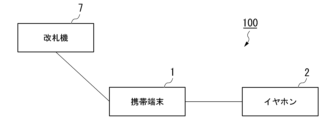
- FIG. 11 is a functional block diagram of an information processing system according to one embodiment of the present disclosure.
- the information processing system 100 is configured by connecting the mobile terminal 1 to a ticket gate 7 and earphones 2.
- the hardware configuration of the mobile terminal 1 may be the same as the configuration shown in Fig. 3.
- the functional block diagrams of the mobile terminal 1 and the earphones 2 are the same.
- FIG. 12 is a fourth diagram showing a processing flow of a mobile terminal according to an embodiment of the present disclosure.
- the communication connection unit 12 of the mobile terminal 1 receives a connection signal output by the communication unit 22 of the earphone 2. Then, the communication connection unit 12 of the mobile terminal 1 establishes a communication connection with the communication unit 22 of the earphone 2 (step S401). As in the above, this communication connection may use a known communication connection technology such as Bluetooth (registered trademark).
- the control unit 21 of the earphone 2 detects the communication connection with the mobile terminal 1, it determines whether or not the earphone 2 is worn in the user's ear.
- the earphone 2 may be provided with an infrared sensor, and it may be determined that the earphone 2 is worn when the infrared sensor detects a state in close proximity to the ear. Any technology may be used to determine whether or not the earphone 2 is worn in the user's ear.
- the control unit 21 of the earphone 2 determines that the earphone 2 is being worn by the user's ear, it instructs the authentication processing unit 24 to perform processing.
- the authentication processing unit 24 sends out sound waves from the speaker of the earphone 2.
- the authentication processing unit 24 acquires an echo sound signal and outputs it to the communication unit 22.
- the communication unit 22 transmits the echo sound signal to the mobile terminal 1.
- the authentication unit 13 of the mobile terminal 1 acquires the echo signal received by the communication connection unit 12 (step S402).
- the authentication unit 13 generates biometric information of the user based on the echo signal (step S403).
- the echo signal is a user-specific sound signal according to the shape of the inner wall of the user's ear, and the biometric information generated based on the signal is pre-recorded in the storage unit 17 of the mobile terminal 1.
- the mobile terminal 1 compares the biometric information generated based on the received acoustic signal with the biometric information pre-recorded in the storage unit 17 to calculate the degree of match (step S404).
- the authentication unit 13 determines whether the degree of match is equal to or greater than a predetermined threshold (step S405).
- the authentication unit 13 determines that the authentication is successful.
- the authentication unit 13 outputs information on the authentication success, which is the authentication result, to the authentication result acquisition unit 14. If the authentication result is not successful, the authentication unit 13 does not need to output information on the authentication result to the authentication result acquisition unit 14.
- the authentication process is performed by the authentication unit 13 of the mobile terminal 1.
- the authentication processing unit 24 of the earphones 2 may compare the biometric information generated based on the reverberation signal with biometric information previously recorded inside the earphones 2 to calculate the degree of match, and determine that the authentication is successful if the degree of match is equal to or greater than a predetermined threshold.
- the authentication processing unit 24 of the earphones 2 may output the authentication result to the communication unit 22, and the communication unit 22 may output the authentication result to the mobile terminal 1.
- the authentication unit 13 does not need to be provided in the mobile terminal 1, and the authentication result is acquired by the authentication result acquisition unit 14.
- the authentication result acquisition unit 14 When the authentication result acquisition unit 14 acquires an authentication result indicating successful authentication, it reads the setting information from the storage unit 17.
- the setting information records information on whether or not to issue a confidentiality notification.
- the authentication result acquisition unit 14 determines whether or not to issue a confidentiality notification is recorded in the setting information (step S406).
- the setting information records information on whether to issue a confidentiality notification
- the authentication result acquisition unit 14 instructs the detection unit 15 to start processing a confidentiality notification.
- the setting information records information on not issuing a confidentiality notification
- the authentication result acquisition unit 14 does not need to instruct the detection unit 15 to start processing a confidentiality notification.
- the ticket gate 7 periodically emits a sound.
- the detection unit 15 of the mobile terminal 1 determines whether or not the sound emitted by the ticket gate 7 has been detected (step S407). When the detection unit 15 detects a sound, it determines to start processing of the confidential notification.
- the detection unit 15 outputs the detection of the sound to the execution unit 16.
- the execution unit 16 acquires the information of the sound detection, it requests the cashless payment application program to notify the remaining balance information.
- the cashless payment application program outputs the remaining balance information stored in a memory or the like to the execution unit 16.
- the execution unit 16 generates notification information including the remaining balance information as processed information (step S408).
- the execution unit 16 outputs the notification information to the communication connection unit 12.
- the communication connection unit 12 transmits the notification information to the earphones 2 (step S409).
- the notification information is one aspect of the second information (processed information) generated based on the detection of the sound, which is the first information.
- the control unit 21 of the earphone 2 outputs the notification information received by the communication unit 22 from the mobile terminal 1 to the sound output unit 23.
- the sound output unit 23 outputs a corresponding sound from the speaker based on the remaining balance information included in the notification information.
- the sound corresponding to the remaining balance information may be, for example, "The remaining balance is 5,000 yen.” This allows the user to confidentially know the remaining balance information of the cashless payment application program of the mobile terminal 1.
- the execution unit 16 of the mobile terminal 1 detects the first information indicating the start of a specific application program
- the execution result of the specific application program based on the detection of the first information may be output to an output destination such as the earphone 2.
- the mobile terminal 1 has a function of a text-to-speech application that reads text from a book.
- the execution unit 16 automatically transmits audio information of the text-to-speech reading to the earphone 2 when the text-to-speech application starts to read the text from the position where the playback was stopped last time.
- the earphone 2 outputs the audio information to the speaker.
- This process is also one aspect of the process of outputting information regarding the execution of a specific process performed by the mobile terminal 1 using the first information to the earphone 2.
- the first information corresponds to information indicating the start of the text-to-speech application
- the execution of the specific process corresponds to transmission of audio information of the text-to-speech application starting to read the text from the position where the playback was stopped last time to the earphone 2. Details of the process of the seventh embodiment will be described below.
- FIG. 13 is a functional block diagram of an information processing system according to one embodiment of the present disclosure.
- the information processing system 100 is configured by connecting a mobile terminal 1 to earphones 2.
- the hardware configuration of the mobile terminal 1 may be the same as the configuration shown in Fig. 3.
- the functional block diagrams of the mobile terminal 1 and the earphones 2 are the same as in the sixth embodiment.
- FIG. 14 is a fifth diagram showing a processing flow of a mobile terminal according to an embodiment of the present disclosure.
- the communication connection unit 12 of the mobile terminal 1 receives a connection signal output by the communication unit 22 of the earphone 2. Then, the communication connection unit 12 of the mobile terminal 1 establishes a communication connection with the communication unit 22 of the earphone 2 (step S501). As in the above, this communication connection may use a known communication connection technology such as Bluetooth (registered trademark).
- the control unit 21 of the earphone 2 detects the communication connection with the mobile terminal 1, it determines whether or not the earphone 2 is worn in the user's ear.
- the earphone 2 may be provided with an infrared sensor, and it may be determined that the earphone 2 is worn when the infrared sensor detects a state in close proximity to the ear. Any technology may be used to determine whether or not the earphone 2 is worn in the user's ear.
- the control unit 21 of the earphone 2 determines that the earphone 2 is being worn by the user's ear, it instructs the authentication processing unit 24 to perform processing.
- the authentication processing unit 24 sends out sound waves from the speaker of the earphone 2.
- the authentication processing unit 24 acquires an echo sound signal and outputs it to the communication unit 22.
- the communication unit 22 transmits the echo sound signal to the mobile terminal 1.
- the authentication unit 13 of the mobile terminal 1 acquires the echo signal received by the communication connection unit 12 (step S502).
- the authentication unit 13 generates biometric information of the user based on the echo signal (step S503).
- the echo signal is a user-specific sound signal according to the shape of the inner wall of the user's ear, and the biometric information generated based on the signal is pre-recorded in the storage unit 17 of the mobile terminal 1.
- the mobile terminal 1 compares the biometric information generated based on the received acoustic signal with the biometric information pre-recorded in the storage unit 17 to calculate the degree of match (step S504).
- the authentication unit 13 determines whether the degree of match is equal to or greater than a predetermined threshold (step S505).
- the authentication unit 13 determines that the authentication is successful.
- the authentication unit 13 outputs information on the authentication success, which is the authentication result, to the authentication result acquisition unit 14. If the authentication result is not successful, the authentication unit 13 does not need to output information on the authentication result to the authentication result acquisition unit 14.
- the authentication process is performed by the authentication unit 13 of the mobile terminal 1.
- the authentication processing unit 24 of the earphones 2 may compare the biometric information generated based on the reverberation signal with biometric information previously recorded inside the earphones 2 to calculate the degree of match, and determine that the authentication is successful if the degree of match is equal to or greater than a predetermined threshold.
- the authentication processing unit 24 of the earphones 2 may output the authentication result to the communication unit 22, and the communication unit 22 may output the authentication result to the mobile terminal 1.
- the authentication unit 13 does not need to be provided in the mobile terminal 1, and the authentication result is acquired by the authentication result acquisition unit 14.
- the authentication result acquisition unit 14 When the authentication result acquisition unit 14 acquires an authentication result indicating successful authentication, it reads the setting information from the storage unit 17.
- the setting information records information on whether or not to issue a confidentiality notification.
- the authentication result acquisition unit 14 determines whether or not to issue a confidentiality notification is recorded in the setting information (step S506).
- the setting information records information on whether to issue a confidentiality notification
- the authentication result acquisition unit 14 instructs the detection unit 15 to start processing a confidentiality notification.
- the setting information records information on not issuing a confidentiality notification
- the authentication result acquisition unit 14 does not need to instruct the detection unit 15 to start processing a confidentiality notification.
- the detection unit 15 of the mobile terminal 1 determines whether the mobile terminal 1 has detected the launch of a text-to-speech application program (step S507).
- the detection of the launch is an example of the detection of the acquisition of predetermined first information.
- the detection unit 15 detects the launch of the text-to-speech application program, it determines to start processing of confidentiality notification.
- the detection unit 15 outputs the detection of the launch of the text-to-speech application program to the execution unit 16.
- the execution unit 16 acquires information that the launch of the text-to-speech application program has been detected, it instructs the text-to-speech application to resume reading the text from the point where playback was previously stopped (step S508).
- the text-to-speech application program reads the point where playback was previously stopped from a memory or the like, and starts reading from the text corresponding to that point.
- the execution unit 16 outputs the audio information resulting from the reading to the communication connection unit 12.
- the communication connection unit 12 transmits the audio information to the earphones 2 (step S509).
- the control unit 21 of the earphone 2 outputs the audio information received by the communication unit 22 from the mobile terminal 1 to the sound output unit 23.
- the sound output unit 23 outputs the audio information from the speaker. This allows the user to secretly listen to the reading of a text from the point where playback was stopped last time, simply by starting up a text reading application on the mobile terminal 1.
- FIG. 15 is a functional block diagram showing a minimum configuration of an information processing device according to an embodiment of the present disclosure.
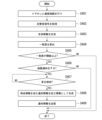
- FIG. 16 is a diagram showing a processing flow by an information processing device with a minimum configuration according to an embodiment of the present disclosure.
- the information processing device 150 has at least the functions of a connection means 151, an authentication result acquisition means 152, a detection means 153, and an execution means 154.
- the mobile terminal 1 of the other embodiment described above is one aspect of the information processing device 150.
- the connection means 151 is a first terminal that has a structure for being worn on a user's ear and obtains a reflected signal of a signal output inside the ear, and connects to a first terminal that transmits information obtained from outside to the user while being worn by the user (step S601).
- the authentication result acquisition means 152 acquires the result of the authentication performed using the reflected signal (step S602).
- the detection unit 153 detects the acquisition of the predetermined first information (step S603). If the result of the authentication is a success, the execution means 154 outputs information regarding the execution of a predetermined process performed using the first information to the first terminal (step S604).
- the program of the mobile terminal 1 may be for realizing some of the functions described above. Furthermore, it may be a so-called differential file (differential program) that can realize the functions described above in combination with a program already recorded in the computer system.
- differential file differential program
- a first terminal having a structure for being worn on a user's ear and for acquiring a reflected signal of a signal outputted to the inside of the ear, said first terminal being adapted to transmit information acquired from an outside source to said user while being worn by said user; and a connection means for connecting said first terminal to said user.
- an authentication result acquisition means for acquiring a result of authentication performed using the reflected signal;
- a detection means for detecting acquisition of predetermined first information; an execution means for outputting information regarding execution of a predetermined process performed using the first information to the first terminal when the result of the authentication is a successful authentication;
- An information processing device comprising:
- the first information is message information
- the second information is processed information obtained by processing the message information.
- the detection means detects first information transmitted from another device, The information processing device according to claim 2, wherein the execution means outputs an information request corresponding to the first information to the first terminal as the second information, and outputs response information received from the first terminal based on the information request to the other device.
- a first terminal having a structure for being worn on a user's ear and for acquiring a reflected signal of a signal outputted to the inside of the ear, and a second terminal for transmitting information acquired from an outside source to the user while being worn by the user; and an authentication result acquisition means for acquiring a result of authentication performed using the reflected signal;
- a detection means for detecting acquisition of predetermined first information; an execution means for outputting information regarding execution of a predetermined process performed using the first information to the second terminal when the result of the authentication is a successful authentication;
- An information processing device comprising:
- the first information is message information
- the second information is processed information obtained by processing the message information.
- Appendix 12 The information processing device according to claim 10 or 11, wherein the execution means specifies a read-out content of the message information based on setting information stored in advance, and outputs the second information including the read-out content to the second terminal.
- the detection means detects first information transmitted from another device, The information processing device according to claim 9, wherein the execution means outputs an information request corresponding to the first information to the second terminal as the second information, and outputs response information received from the second terminal based on the information request to the other device.
- a first terminal having a structure for being worn on a user's ear and for acquiring a reflected signal of a signal outputted to the inside of the ear, said first terminal being adapted to transmit information acquired from an outside source to said user while being worn by said user; and a connection means for connecting said first terminal to said user.
- an authentication result acquisition means for acquiring a result of authentication performed using the reflected signal;
- a detection means for detecting acquisition of predetermined first information; an execution means for outputting information regarding execution of a predetermined process performed using the first information to the first terminal when the result of the authentication is a successful authentication;
- a mobile terminal comprising:
- the first information is message information
- the mobile terminal of claim 16 wherein the second information is processed information obtained by processing the message information.
- the detection means detects first information transmitted from another device, The mobile terminal of claim 16, wherein the execution means outputs an information request corresponding to the first information to the first terminal as the second information, and outputs response information received from the first terminal based on the information request to the other device.
- a first terminal having a structure for being worn on a user's ear and for acquiring a reflected signal of a signal outputted to the inside of the ear, and a second terminal for transmitting information acquired from an outside source to the user while being worn by the user; and an authentication result acquisition means for acquiring a result of authentication performed using the reflected signal;
- a detection means for detecting acquisition of predetermined first information; an execution means for outputting information regarding execution of a predetermined process performed using the first information to the second terminal when the result of the authentication is a successful authentication;
- a mobile terminal comprising:
- the first information is message information
- the mobile terminal of claim 23 wherein the second information is processed information obtained by processing the message information.
- Appendix 26 The mobile terminal according to claim 24 or 25, wherein the execution means specifies a read-out content of the message information based on setting information stored in advance, and outputs the second information including the read-out content to the first terminal.
- the detection means detects first information transmitted from another device, The mobile terminal of claim 23, wherein the execution means outputs an information request corresponding to the first information to the first terminal as the second information, and outputs response information received from the first terminal based on the information request to the other device.
- a first terminal has a structure for being worn on a user's ear and acquires a reflected signal of a signal outputted to the inside of the ear, and is connected to the first terminal that transmits information acquired from an outside source to the user while being worn by the user; Obtaining a result of authentication performed using the reflected signal; Detecting acquisition of predetermined first information; outputting, to the first terminal, information relating to execution of a predetermined process performed using the first information, if a result of the authentication is successful.
- the first information is message information
- the information processing method according to claim 30, wherein the second information is processed information obtained by processing the message information.
- the device is connected to a first terminal having a structure for being worn on a user's ear and for acquiring a reflected signal of a signal outputted to the inside of the ear, and a second terminal for transmitting information acquired from an external source to the user while being worn by the user; Acquire a result of authentication performed using the reflected signal; Detecting acquisition of predetermined first information; outputting, to the second terminal, information relating to execution of a predetermined process performed using the first information, if a result of the authentication is a successful authentication.
- the first information is message information
- the information processing method according to claim 37, wherein the second information is processed information obtained by processing the message information.
- the computer of the information processing device a first terminal having a structure for being worn on a user's ear and for acquiring a reflected signal of a signal outputted to the inside of the ear, said first terminal being adapted to transmit information acquired from an external source to said user while being worn by said user; an authentication result acquisition means for acquiring a result of authentication performed using the reflected signal; A detection means for detecting acquisition of predetermined first information; an execution means for outputting information regarding execution of a predetermined process performed using the first information to the first terminal when the result of the authentication is a successful authentication; A program that functions as a
- the first information is message information
- the program described in Appendix 44, wherein the second information is processed information obtained by processing the message information.
- Appendix 46 a permission means for outputting a transmission permission to a sender of the first information based on a result of the authentication; the detection means detects the first information from the transmission source based on the transmission permission.
- the detection means detects first information transmitted from another device, The program described in Appendix 44, wherein the execution means outputs an information request corresponding to the first information to the first terminal as the second information, and outputs response information received from the first terminal based on the information request to the other device.
- connection means for connecting a first terminal having a structure for being worn on a user's ear and for acquiring a reflected signal of a signal outputted to the inside of the ear, and a second terminal for conveying information acquired from an outside source to the user while being worn by the user; an authentication result acquisition means for acquiring a result of authentication performed using the reflected signal; A detection means for detecting acquisition of predetermined first information; an execution means for outputting information regarding execution of a predetermined process performed using the first information to the second terminal when the result of the authentication is a successful authentication; A program that functions as a
- the first information is message information
- the program described in Appendix 51 wherein the second information is processed information obtained by processing the message information.
- the detection means detects first information transmitted from another device, The program described in Appendix 51, wherein the execution means outputs an information request corresponding to the first information to the second terminal as the second information, and outputs response information received from the second terminal based on the information request to the other device.
- a first terminal for acquiring biometric information of a user, said first terminal being attached to said user and configured to transmit information acquired from an external source to said user; and a connection means for connecting said first terminal to said user.
- an authentication result acquisition means for acquiring a result of authentication performed using the biometric information;
- a detection means for detecting acquisition of predetermined first information;
- an execution means for outputting information regarding execution of a predetermined process performed using the first information to the first terminal when the result of the authentication is a successful authentication;
- An information processing device comprising:
- the first information is message information
- the information processing device of claim 58 wherein the second information is processed information obtained by processing the message information.
- Appendix 60 a permission means for outputting a transmission permission to a sender of the first information based on a result of the authentication; the detection means detects the first information from the transmission source based on the transmission permission.
- the information processing device of claim 59 The information processing device of claim 59.
- the detection means detects first information transmitted from another device, The information processing device of claim 58, wherein the execution means outputs an information request corresponding to the first information to the first terminal as the second information, and outputs response information received from the first terminal based on the information request to the other device.
- connection means for connecting a first terminal for acquiring biometric information of a user and a second terminal for conveying information acquired from an outside source to the user while being worn by the user; an authentication result acquisition means for acquiring a result of authentication performed using the biometric information; A detection means for detecting acquisition of predetermined first information; an execution means for outputting information regarding execution of a predetermined process performed using the first information to the second terminal when the result of the authentication is a successful authentication;
- An information processing device comprising:
- Appendix 65 The information processing device according to claim 64, wherein the execution means outputs second information generated based on the first information to the second terminal when a result of the authentication is successful.
- the first information is message information
- the information processing device according to claim 65, wherein the second information is processed information obtained by processing the message information.
- Appendix 68 The information processing device according to claim 66 or 67, wherein the execution means specifies a read-out content of the message information based on setting information stored in advance, and outputs the second information including the read-out content to the second terminal.
- the detection means detects first information transmitted from another device, The information processing device described in Appendix 65, wherein the execution means outputs an information request corresponding to the first information to the second terminal as the second information, and outputs response information received from the second terminal based on the information request to the other device.
- Mobile terminal information processing device 2...Earphones (first device) 4: Head-mounted terminal 5: Headphones 6: Vehicle-mounted device 11: Control unit 12: Communication connection unit (connection means 151) 13: Authentication unit 14: Authentication result acquisition unit (authentication result acquisition means 152) 15...Detection unit (detection means 153) 16... Execution unit (execution means 154) 17: Memory unit 21: Control unit 22: Communication unit 23: Sound output unit 24: Authentication processing unit 25: Display 26: Vibration unit 100: Information processing system
Landscapes
- Engineering & Computer Science (AREA)
- Computer Security & Cryptography (AREA)
- Theoretical Computer Science (AREA)
- Computer Hardware Design (AREA)
- Software Systems (AREA)
- Physics & Mathematics (AREA)
- General Engineering & Computer Science (AREA)
- General Physics & Mathematics (AREA)
- Telephone Function (AREA)
Abstract
ユーザの耳への装着構造を有し前記耳の内部に出力した信号の反射信号を取得する第一端末であって、外部から取得した情報をユーザに装着された状態で当該ユーザに伝える第一端末と接続する。反射信号を用いて行われた認証の結果を取得する。所定の第一情報の取得を検出する。認証の結果が認証成功である場合に、第一情報を用いて行った所定の処理の実行に関する情報を第一端末へ出力する。
Description
この開示は、情報処理装置、携帯端末、情報処理方法、記憶媒体に関する。
ユーザは情報処理装置を用いて他者とメッセージなどの情報の送受信を行っている。このような場合、ユーザは情報処理装置の画面のロックを解除して受信したメッセージを確認する必要がある。関連する技術が特許文献1に開示されている。
特許文献1には、音声再生デバイスがスピーカなどからなる音声出力部を有しており、供給された音声データに基づいて発話文言の音声を再生する技術が開示されている(段落0063等)。
ところで、上述したようにユーザが情報処理装置を用いて情報を確認する際に、より秘匿性高く情報を確認する技術が求められていた。
この開示は、上記の課題を解決する情報処理装置、携帯端末、情報処理方法、記憶媒体を提供することを目的としている。
この開示の第1の態様によれば、情報処理装置は、ユーザの耳への装着構造を有し前記耳の内部に出力した信号の反射信号を取得する第一端末であって、外部から取得した情報を前記ユーザに装着された状態で当該ユーザに伝える前記第一端末と接続する接続手段と、前記反射信号を用いて行われた認証の結果を取得する認証結果取得手段と、所定の第一情報の取得を検出する検出手段と、前記認証の結果が認証成功である場合に、前記第一情報を用いて行った所定の処理の実行に関する情報を前記第一端末へ出力する実行手段と、を備える。
この開示の第2の態様によれば、情報処理装置は、ユーザの耳への装着構造を有し前記耳の内部に出力した信号の反射信号を取得する第一端末と、外部から取得した情報を前記ユーザに装着された状態で当該ユーザに伝える第二端末と、のそれぞれに接続する接続手段と、前記反射信号を用いて行われた認証の結果を取得する認証結果取得手段と、所定の第一情報の取得を検出する検出手段と、前記認証の結果が認証成功である場合に、前記第一情報を用いて行った所定の処理の実行に関する情報を前記第二端末へ出力する実行手段と、を備える。
この開示の第3の態様によれば、携帯端末は、ユーザの耳への装着構造を有し前記耳の内部に出力した信号の反射信号を取得する第一端末であって、外部から取得した情報を前記ユーザに装着された状態で当該ユーザに伝える前記第一端末と接続する接続手段と、前記反射信号を用いて行われた認証の結果を取得する認証結果取得手段と、所定の第一情報の取得を検出する検出手段と、前記認証の結果が認証成功である場合に、前記第一情報を用いて行った所定の処理の実行に関する情報を前記第一端末へ出力する実行手段と、を備える。
この開示の第4の態様によれば、携帯端末は、ユーザの耳への装着構造を有し前記耳の内部に出力した信号の反射信号を取得する第一端末と、外部から取得した情報を前記ユーザに装着された状態で当該ユーザに伝える第二端末と、のそれぞれに接続する接続手段と、前記反射信号を用いて行われた認証の結果を取得する認証結果取得手段と、所定の第一情報の取得を検出する検出手段と、前記認証の結果が認証成功である場合に、前記第一情報を用いて行った所定の処理の実行に関する情報を前記第二端末へ出力する実行手段と、を備える。
この開示の第5の態様によれば、情報処理方法は、ユーザの耳への装着構造を有し前記耳の内部に出力した信号の反射信号を取得する第一端末であって、外部から取得した情報を前記ユーザに装着された状態で当該ユーザに伝える前記第一端末と接続し、前記反射信号を用いて行われた認証の結果を取得し、所定の第一情報の取得を検出し、前記認証の結果が認証成功である場合に、前記第一情報を用いて行った所定の処理の実行に関する情報を前記第一端末へ出力する。
この開示の第5の態様によれば、情報処理方法は、ユーザの耳への装着構造を有し前記耳の内部に出力した信号の反射信号を取得する第一端末と、外部から取得した情報を前記ユーザに装着された状態で当該ユーザに伝える第二端末と、のそれぞれに接続し、前記反射信号を用いて行われた認証の結果を取得し、所定の第一情報の取得を検出し、前記認証の結果が認証成功である場合に、前記第一情報を用いて行った所定の処理の実行に関する情報を前記第二端末へ出力する。
この開示の第5の態様によれば、プログラムは、情報処理装置のコンピュータを、ユーザの耳への装着構造を有し前記耳の内部に出力した信号の反射信号を取得する第一端末であって、外部から取得した情報を前記ユーザに装着された状態で当該ユーザに伝える前記第一端末と接続する接続手段、前記反射信号を用いて行われた認証の結果を取得する認証結果取得手段、所定の第一情報の取得を検出する検出手段、前記認証の結果が認証成功である場合に、前記第一情報を用いて行った所定の処理の実行に関する情報を前記第一端末へ出力する実行手段、として機能させる。
この開示の第6の態様によれば、プログラムは、情報処理装置のコンピュータを、ユーザの耳への装着構造を有し前記耳の内部に出力した信号の反射信号を取得する第一端末と、外部から取得した情報を前記ユーザに装着された状態で当該ユーザに伝える第二端末と、のそれぞれに接続する接続手段、前記反射信号を用いて行われた認証の結果を取得する認証結果取得手段、所定の第一情報の取得を検出する検出手段、前記認証の結果が認証成功である場合に、前記第一情報を用いて行った所定の処理の実行に関する情報を前記第二端末へ出力する実行手段、として機能させる。
この開示の第7の態様によれば、情報処理装置は、ユーザの生体情報を取得する第一端末であって、外部から取得した情報を前記ユーザに装着された状態で当該ユーザに伝える前記第一端末と接続する接続手段と、前記生体情報を用いて行われた認証の結果を取得する認証結果取得手段と、所定の第一情報の取得を検出する検出手段と、前記認証の結果が認証成功である場合に、前記第一情報を用いて行った所定の処理の実行に関する情報を前記第一端末へ出力する実行手段と、を備える。
この開示の第8の態様によれば、情報処理装置は、ユーザの生体情報を取得する第一端末と、外部から取得した情報を前記ユーザに装着された状態で当該ユーザに伝える第二端末と、のそれぞれに接続する接続手段と、前記生体情報を用いて行われた認証の結果を取得する認証結果取得手段と、所定の第一情報の取得を検出する検出手段と、前記認証の結果が認証成功である場合に、前記第一情報を用いて行った所定の処理の実行に関する情報を前記第二端末へ出力する実行手段と、を備える。
図1はこの開示の一実施形態による情報処理システムの概略構成図である。
情報処理システム100は、少なくとも、情報処理装置の一態様である携帯端末1が、第一端末の一態様であるイヤホン2と無線通信接続することにより構成される。携帯端末1はスマートフォンであってよい。イヤホン2はユーザの耳に装着できる構造を有している。またイヤホン2は、ユーザの耳の内部に出力した信号の反射信号を取得して、その反射信号を携帯端末1に出力する機能を有する。より具体的にはイヤホン2は、ユーザの耳の内部に音波を送出し、その音波の耳内壁等からの反響音信号を取得し、その反響音信号を携帯端末1へ出力する機能を有する。またイヤホン2は、外部から取得した情報を音に変換してユーザに伝える機能を有する。携帯端末1は反響音信号をユーザの生体情報として利用し生体認証を行う。
情報処理システム100は、少なくとも、情報処理装置の一態様である携帯端末1が、第一端末の一態様であるイヤホン2と無線通信接続することにより構成される。携帯端末1はスマートフォンであってよい。イヤホン2はユーザの耳に装着できる構造を有している。またイヤホン2は、ユーザの耳の内部に出力した信号の反射信号を取得して、その反射信号を携帯端末1に出力する機能を有する。より具体的にはイヤホン2は、ユーザの耳の内部に音波を送出し、その音波の耳内壁等からの反響音信号を取得し、その反響音信号を携帯端末1へ出力する機能を有する。またイヤホン2は、外部から取得した情報を音に変換してユーザに伝える機能を有する。携帯端末1は反響音信号をユーザの生体情報として利用し生体認証を行う。
図2はこの開示の一実施形態による情報処理システムの機能ブロック図である。
情報処理システム100は図2で示すようにサーバ3を備えてよい。サーバ3は第一情報を携帯端末1へ出力する。携帯端末1はサーバ3から取得した第一情報またはその第一情報を加工して生成した第二情報をイヤホン2へ出力する。イヤホン2は第一情報または第二情報を音に変換してユーザに伝える。
情報処理システム100は図2で示すようにサーバ3を備えてよい。サーバ3は第一情報を携帯端末1へ出力する。携帯端末1はサーバ3から取得した第一情報またはその第一情報を加工して生成した第二情報をイヤホン2へ出力する。イヤホン2は第一情報または第二情報を音に変換してユーザに伝える。
図3はこの開示の一実施形態による携帯端末のハードウェア構成図である。
図3に示すように、携帯端末1は、CPU(Central Processing Unit)101、ROM(Read Only Memory)102、RAM(Random Access Memory)103、HDD(Hard Disk Drive)104、通信モジュール105、電池106等の各ハードウェアを備えたコンピュータである。サーバ3も同様の機能を備えてもよい。またイヤホン2も小型の情報処理装置であり、上記携帯端末1が備えるハードウェア構成の一部または全部を備え、当該ハードウェア構成により上記イヤホン2の機能を実現する。
図3に示すように、携帯端末1は、CPU(Central Processing Unit)101、ROM(Read Only Memory)102、RAM(Random Access Memory)103、HDD(Hard Disk Drive)104、通信モジュール105、電池106等の各ハードウェアを備えたコンピュータである。サーバ3も同様の機能を備えてもよい。またイヤホン2も小型の情報処理装置であり、上記携帯端末1が備えるハードウェア構成の一部または全部を備え、当該ハードウェア構成により上記イヤホン2の機能を実現する。
図4はこの開示の一実施形態による携帯端末とイヤホンの機能ブロック図である。
携帯端末1は、CPU101による予め記憶するプログラムの実行や回路動作等により、制御部11、通信接続部12、認証部13、認証結果取得部14、検出部15、実行部16、記憶部17の各機能を発揮する。
携帯端末1は、CPU101による予め記憶するプログラムの実行や回路動作等により、制御部11、通信接続部12、認証部13、認証結果取得部14、検出部15、実行部16、記憶部17の各機能を発揮する。
制御部11は、携帯端末1の各機能部を制御する。
通信接続部12は、イヤホン2と通信接続すると共に、情報をイヤホン2に送信する。
認証部13は、イヤホン2から取得した生体情報を含む信号に基づいてユーザ認証を行う。
検出部15は、所定の第一情報の検出を行う。第一情報は例えばサーバ3から受信した情報である。
実行部16は、イヤホン2を装着するユーザの認証の結果が認証成功である場合に、第一情報を用いて行った所定の処理の実行に関する情報をイヤホン2へ送信する。
記憶部17は、携帯端末1が処理に利用する各種情報を記憶する。
通信接続部12は、イヤホン2と通信接続すると共に、情報をイヤホン2に送信する。
認証部13は、イヤホン2から取得した生体情報を含む信号に基づいてユーザ認証を行う。
検出部15は、所定の第一情報の検出を行う。第一情報は例えばサーバ3から受信した情報である。
実行部16は、イヤホン2を装着するユーザの認証の結果が認証成功である場合に、第一情報を用いて行った所定の処理の実行に関する情報をイヤホン2へ送信する。
記憶部17は、携帯端末1が処理に利用する各種情報を記憶する。
イヤホン2は予め記憶するプログラムの実行や回路動作等により、制御部21、通信部22、音出力部23、認証処理部24の各機能を発揮する。
制御部21は、イヤホン2の各機能を制御する。
通信部22は、携帯端末1と接続して通信を行う。
音出力部23は、外部から受信した音信号に基づいてスピーカから音を出力する。
認証処理部24は、耳内部に音波を送出し、その音波の耳内壁等からの反響音信号を取得し、その反響音信号を携帯端末1へ出力する。
通信部22は、携帯端末1と接続して通信を行う。
音出力部23は、外部から受信した音信号に基づいてスピーカから音を出力する。
認証処理部24は、耳内部に音波を送出し、その音波の耳内壁等からの反響音信号を取得し、その反響音信号を携帯端末1へ出力する。
上述の情報処理システム100において、携帯端末1はイヤホン2と通信接続し、耳の内部の反響音信号を用いて行われた認証の結果を取得する。また携帯端末1は、所定の第一情報の取得を検出し、認証の結果が認証成功である場合に、第一情報を用いて行った所定の処理の実行に関する情報をイヤホン2へ出力する。ここでイヤホン2は、外部から取得した情報をユーザに装着された状態で当該ユーザに伝える装置である。従って、このような情報処理システム100を用いることにより、ユーザは、携帯端末1において自身に向けて送信された情報を確認する際に、より秘匿性高くその情報を確認することができる。以下、情報処理システム100を構成する携帯端末1、イヤホン2、サーバ3の各処理の詳細について説明する。
(第一の実施形態)
図5はこの開示の一実施形態による携帯端末の処理フローを示す第一の図である。
まず携帯端末1の通信接続部12は、イヤホン2の通信部22が出力する接続信号を受信する。すると携帯端末1の通信接続部12は、イヤホン2の通信部22と通信接続を行う(ステップS101)。なおこの通信接続は、Bluetooth(登録商標)などの公知の通信接続技術を用いてよい。イヤホン2の制御部21は、携帯端末1との通信接続を検知すると、イヤホン2がユーザの耳に装着されているか否かを判定する。例えばイヤホン2には赤外線センサが設けられており、赤外線センサにより耳との近接状態を検知した場合に装着されていると判定してよい。イヤホン2がユーザの耳に装着されているか否かを判定する技術は、どのような技術を用いてもよい。
図5はこの開示の一実施形態による携帯端末の処理フローを示す第一の図である。
まず携帯端末1の通信接続部12は、イヤホン2の通信部22が出力する接続信号を受信する。すると携帯端末1の通信接続部12は、イヤホン2の通信部22と通信接続を行う(ステップS101)。なおこの通信接続は、Bluetooth(登録商標)などの公知の通信接続技術を用いてよい。イヤホン2の制御部21は、携帯端末1との通信接続を検知すると、イヤホン2がユーザの耳に装着されているか否かを判定する。例えばイヤホン2には赤外線センサが設けられており、赤外線センサにより耳との近接状態を検知した場合に装着されていると判定してよい。イヤホン2がユーザの耳に装着されているか否かを判定する技術は、どのような技術を用いてもよい。
イヤホン2の制御部21は、ユーザの耳に装着されていると判定した場合、認証処理部24に対して処理を指示する。認証処理部24は、イヤホン2のスピーカから音波を送出する。認証処理部24は、反響音信号を取得し通信部22へ出力する。通信部22は反響音信号を携帯端末1へ送信する。
携帯端末1の認証部13は通信接続部12が受信した反響音信号を取得する(ステップS102)。認証部13は反響音信号に基づいてユーザの生体情報を生成する(ステップS103)。反響音信号はユーザの耳内壁などの形状に応じたユーザ固有の音信号であり、当該信号に基づいて生成した生体情報が携帯端末1の記憶部17に予め記録されている。携帯端末1は受信した音響信号に基づいて生成した生体情報と、予め記憶部17に記録されている生体情報とを比較して一致度を算出する(ステップS104)。認証部13は一致度が所定の閾値以上であるか否かを判定する(ステップS105)。認証部13は一致度が所定の閾値以上である場合には認証成功と判定する。認証部13は認証結果である認証成功の情報を認証結果取得部14へ出力する。認証部13は、認証結果が認証成功でない場合には、認証結果の情報を認証結果取得部14へ出力しなくてもよい。
なお上述の処理においては携帯端末1の認証部13が認証処理を行っている。しかしながらイヤホン2の認証処理部24が、反響音信号に基づいて生成した生体情報と、予めイヤホン2の内部に記録されている生体情報とを比較して一致度を算出し、一致度が所定の閾値以上である場合には認証成功と判定するようにしてもよい。この場合、イヤホン2の認証処理部24が通信部22へ認証結果を出力し、通信部22が携帯端末1に認証結果を出力してもよい。この場合、携帯端末1に認証部13は設けなくともよく、当該認証結果は認証結果取得部14が取得する。
認証結果取得部14は認証成功を示す認証結果を取得した場合、記憶部17から設定情報を読み取る。当該設定情報には秘匿通知をする、しないの情報が記録されている。認証結果取得部14は秘匿通知をすることが設定情報に記録されているかを判定する(ステップS106)。認証結果取得部14は秘匿通知をすることが設定情報に記録されている場合、検出部15へ秘匿通知の処理の開始を指示する。なお秘匿通知の処理とは、他のユーザに確認されないように、所定の情報をイヤホン2などのユーザが装着した装置を介して当該ユーザに伝える処理である。通常、ユーザは、携帯端末1の画面のロックを解除し、携帯端末1が保持する情報を画面に表示させて当該情報を確認する。しかしながらそのような情報を他人に見られたくないなどの状況が発生する場合がある。このような場合、ユーザは携帯端末1に秘匿通知をすることを入力する。この場合、制御部11は設定情報に、秘匿通知をすることの情報を書き込む。設定情報に秘匿通知をしないことの情報が記録されている場合、認証結果取得部14は検出部15に秘匿通知の処理の開始を指示しなくてよい。この場合、ユーザは画面のロックを解除して所定の情報を表示させて確認すればよい。
ここで携帯端末1が秘匿通知を行う情報の一例はサーバ3が携帯端末1に送信したメッセージ情報である。メッセージ情報は電子メールの情報であってよい。またメッセージ情報は所定のメッセージアプリケーションプログラムがサーバ3から受信したメッセージ情報であってよい。
検出部15はサーバ3からメッセージ情報を受信したか否かを判定する(ステップS107)。検出部15は、メッセージ情報を扱う携帯端末1内のメッセージアプリケーションプログラムから、メッセージ情報を受信したか否かの情報や、そのメッセージ情報自体を取得する。検出部15は、メッセージ情報を受信したことを示す情報や、メッセージ情報自体を取得した場合、秘匿通知の処理を開始すると判定する。検出部15は、メッセージ情報を実行部16へ出力する。
実行部16はメッセージ情報を取得すると、設定情報を記憶部17から読み込む。設定情報にはメッセージ情報に含まれる情報のうち、何れの情報をイヤホン2に送信するかの情報が含まれていてよい。メッセージ情報に含まれる情報のうち、何れの情報をイヤホン2に送信するかの情報は、ユーザが携帯端末1を用いて設定入力した情報であってよい。実行部16は、設定情報に基づいてメッセージ情報に含まれる情報のうち、一つまたは複数の情報を含む加工情報を生成する(ステップS108)。例えば実行部16はメッセージ情報に含まれる、送信元ユーザ名のみ、または送信元ユーザとメッセージ本文の情報を含む加工情報を、設定情報に基づいて生成する。実行部16は加工情報を通信接続部12へ出力する。通信接続部12はイヤホン2へ加工情報を送信する(ステップS109)。
なお実行部16はサーバ3から受信したメッセージ情報に含まれる所定の情報をコピーした情報を、イヤホン2が認識できる情報として加工すればよく、その加工後の情報はメッセージ情報に含まれる情報のうちの、どのような情報を含むものであってもよい。イヤホン2に送信するよう通信接続部12に指示してもよい。これら加工情報は、サーバ3から受信した第一情報に基づいて生成した第二情報である。
イヤホン2の通信部22は携帯端末1から受信した加工情報を音出力部23へ出力する。音出力部23は、加工情報に含まれる文字情報を音声に変換してスピーカから出力する。加工情報に送信元ユーザとメッセージ本文が含まれる場合には、イヤホン2は送信元ユーザ名と、メッセージ本文を読み上げる。つまり上述の携帯端末1の処理は、実行部16が、予め記憶する設定情報に基づいてメッセージ情報の読み上げ内容を特定し、当該読み上げ内容を含む加工情報(第二情報)をイヤホン2(第一端末)へ出力する態様の一例である。
なおイヤホン2は加工情報を受信した後に、イヤホン2がユーザの耳に装着されているか否かを再度判定し、装着されていない場合には、加工情報に基づく音声のスピーカからの出力を停止してよい。また、イヤホン2は、ユーザの耳に装着されているか否かを所定時間毎に継続して判定し、ユーザの耳に装着されていないと判定した場合に、携帯端末1に秘匿通知の処理の停止を通知してもよい。この場合、携帯端末1は第一情報に基づいて生成した第二情報(加工情報)をスピーカ2へ送信しなくてよい。
以上の処理によれば、携帯端末1は、ユーザの耳への装着構造を有し耳の内部に出力した信号の反射信号(反響音信号)を取得するイヤホン2(第一端末)であって、外部から取得した情報をユーザに装着された状態で当該ユーザに伝えるイヤホン2と接続し、反射信号を用いて行われた認証の結果を取得する。そして携帯端末1は、メッセージ情報(所定の第一情報)の取得を検出し、認証の結果が認証成功である場合に、メッセージ情報を用いて加工した加工情報(所定の処理の実行に関する情報)をイヤホン2へ出力する。このような処理により、ユーザは、加工情報に含まれる送信元ユーザ名やメッセージ本文をイヤホン2のスピーカの出力から確認することができ、他者に情報を見られること無く、自分のみで、携帯端末1において受信したメッセージ情報の内容を確認することができる。つまり、このような携帯端末1を有する情報処理システム100を用いることにより、ユーザは、携帯端末1において自身に向けて送信された情報を確認する際に、より秘匿性高くその情報を確認することができる。
なお携帯端末1の実行部16は、イヤホン2に加工情報を出力すると共に、またはその加工情報の出力に代えて、自端末のロック画面に加工情報に含まれる送信元ユーザ名や件名などを出力するようにしてもよい。また携帯端末1の実行部16は、第一情報の取得に基づいて、自端末のロック画面の解除を自動で行ってもよい。また携帯端末1の実行部16は第一情報を受信したメッセージアプリケーションプログラムによるアプリケーション画面への自動ログインを行うようにしてもよい。
上述の処理において携帯端末1の実行部16は、設定情報に基づいて、第一情報であるメッセージ情報に含まれる、送信元ユーザ名や、メッセージ本文などの所定の情報を含む加工情報を生成している。しかしながら、実行部16は、設定情報に送信元情報が含まれる場合に、その送信元情報に対応する送信元ユーザ名からのメッセージ情報を受信したかどうかを判定し、設定情報に含まれる送信元情報に対応する送信元ユーザ名からのメッセージ情報を受信した場合にのみ加工情報を生成してイヤホン2へ送信するようにしてもよい。
(第二の実施形態)
図6はこの開示の一実施形態による携帯端末の処理フローを示す第二の図である。次に第二の実施形態による携帯端末1の処理フローについて説明する。
まず携帯端末1の通信接続部12は、上記同様に、イヤホン2の通信部22が出力する接続信号を受信する。すると携帯端末1の通信接続部12は、イヤホン2の通信部22と通信接続を行う(ステップS201)。
図6はこの開示の一実施形態による携帯端末の処理フローを示す第二の図である。次に第二の実施形態による携帯端末1の処理フローについて説明する。
まず携帯端末1の通信接続部12は、上記同様に、イヤホン2の通信部22が出力する接続信号を受信する。すると携帯端末1の通信接続部12は、イヤホン2の通信部22と通信接続を行う(ステップS201)。
制御部11は携帯端末1とイヤホン2との通信接続を検出すると、記憶部17から設定情報を読み取る。当該設定情報には秘匿通知の処理をする、しないの情報が記録されている。制御部11は秘匿通知をすることが設定情報に記録されているかを判定する(ステップS202)。制御部11は秘匿通知をすることが設定情報に記録されている場合、検出部15へ秘匿通知の処理の開始を指示する。
ここで携帯端末1が秘匿通知を行う情報の一例はサーバ3が携帯端末1に送信したメッセージ情報である。メッセージ情報は電子メールの情報であってよい。またメッセージ情報は所定のメッセージアプリケーションプログラムがサーバ3から受信したメッセージ情報であってよい。
検出部15は、サーバ3において他のユーザから受信したメッセージ情報を保管していることの通知を当該サーバ3から受けたか否かを判定する(ステップS203)。検出部15は、サーバ3において他のユーザから受信したメッセージ情報を保管していることの通知を当該サーバ3から受けた場合、秘匿通知の処理を開始する。検出部15は、通信接続部12に認証開始の情報を出力する。通信接続部12は、認証開始の情報をイヤホン2へ送信する(ステップS204)。
イヤホン2の制御部21は認証開始の情報を通信部22を介して取得する。制御部21は、認証処理部24に対して処理を指示する。認証処理部24は、イヤホン2のスピーカから音波を送出する。認証処理部24は、反響音信号を取得し通信部22へ出力する。通信部22は反響音信号を携帯端末1へ送信する。
携帯端末1の認証部13は通信接続部12が受信した反響音信号を取得する(ステップS205)。認証部13は反響音信号に基づいてユーザの生体情報を生成する(ステップS206)。携帯端末1は受信した音響信号に基づいて生成した生体情報と、予め記憶部17に記録されている生体情報とを比較して一致度を算出する(ステップS207)。認証部13は一致度が所定の閾値以上であるか否かを判定する(ステップS208)。認証部13は一致度が所定の閾値以上である場合には認証成功と判定する。認証部13は認証結果である認証成功の情報を認証結果取得部14へ出力する。認証部13は、認証結果が認証成功でない場合には、認証結果の情報を認証結果取得部14へ出力しなくてもよい。
認証結果取得部14は認証成功の情報を取得すると、メッセージ情報を扱う携帯端末1内のメッセージアプリケーションプログラムへ、サーバ3からメッセージ情報を取得するよう指示する。メッセージアプリケーションプログラムは、サーバ3において保存されているメッセージ情報の送信許可をサーバ3へ送信する(ステップS209)。この場合、認証結果取得部14は、認証の結果に基づいてメッセージ情報(第一情報)の送信元に送信許可を出力する許可手段の一態様である。サーバ3は携帯端末1から送信許可を受信すると、その携帯端末1について保存しているメッセージ情報を携帯端末1へ送信する。メッセージアプリケーションプログラムはメッセージ情報を受信する(ステップS210)。
検出部15は、メッセージ情報を扱う携帯端末1内のメッセージアプリケーションプログラムから、メッセージ情報を受信したか否かの情報や、そのメッセージ情報自体を取得する。検出部15は、メッセージ情報を受信したことを示す情報や、メッセージ情報自体を取得した場合、秘匿通知の処理を開始すると判定する。検出部15は、メッセージ情報を実行部16へ出力する。
実行部16はメッセージ情報を取得すると、設定情報を記憶部17から読み込む。設定情報にはメッセージ情報に含まれる情報のうち、何れの情報をイヤホン2に送信するかの情報が含まれていてよい。メッセージ情報に含まれる情報のうち、何れの情報をイヤホン2に送信するかの情報は、ユーザが携帯端末1を用いて設定入力した情報であってよい。実行部16は、設定情報に基づいてメッセージ情報に含まれる情報のうち、一つまたは複数の情報を含む加工情報を生成する(ステップS211)。例えば実行部16はメッセージ情報に含まれる、送信元ユーザ名のみ、または送信元ユーザとメッセージ本文の情報を含む加工情報を、設定情報に基づいて生成する。実行部16は加工情報を通信接続部12へ出力する。通信接続部12はイヤホン2へ加工情報を送信する(ステップS212)。
なお実行部16はサーバ3から受信したメッセージ情報に含まれる所定の情報をコピーした情報を、イヤホン2が認識できる情報として加工すればよく、その加工後の情報はメッセージ情報に含まれる情報のうちの、どのような情報を含むものであってもよい。イヤホン2に送信するよう通信接続部12に指示してもよい。これら加工情報は、サーバ3から受信した第一情報に基づいて生成した第二情報である。
イヤホン2の通信部22は携帯端末1から受信した加工情報を音出力部23へ出力する。音出力部23は、加工情報に含まれる文字情報を音声に変換してスピーカから出力する。加工情報に送信元ユーザとメッセージ本文が含まれる場合には、イヤホン2は送信元ユーザ名と、メッセージ本文を読み上げる。つまり上述の携帯端末1の処理は、実行部16が、予め記憶する設定情報に基づいてメッセージ情報の読み上げ内容を特定し、当該読み上げ内容を含む加工情報(第二情報)をイヤホン2(第一端末)へ出力する態様の一例である。
以上の処理によれば、携帯端末1は、ユーザの耳への装着構造を有し耳の内部に出力した信号の反射信号(反響音信号)を取得するイヤホン2(第一端末)であって、外部から取得した情報をユーザに装着された状態で当該ユーザに伝えるイヤホン2と接続し、反射信号を用いて行われた認証の結果を取得する。そして携帯端末1は、メッセージ情報(所定の第一情報)の取得を検出し、認証の結果が認証成功である場合に、メッセージ情報を用いて加工した加工情報(所定の処理の実行に関する情報)をイヤホン2へ出力する。このような処理により、ユーザは、加工情報に含まれる送信元ユーザ名やメッセージ本文をイヤホン2のスピーカの出力から確認することができ、他者に情報を見られること無く、自分のみで、携帯端末1において受信したメッセージ情報の内容を確認することができる。つまり、このような携帯端末1を有する情報処理システム100を用いることにより、ユーザは、携帯端末1において自身に向けて送信された情報を確認する際に、より秘匿性高くその情報を確認することができる。
(第三の実施形態)
図7はこの開示の一実施形態による情報処理システムの機能ブロック図である。
上述の第一の実施形態や第二の実施形態では、イヤホン2が耳の内部に出力した信号の反射信号(反響音信号)を取得し、その反射信号(反響音信号)に基づいてユーザの認証を行う場合の例について説明した。しかしながら、イヤホン2が例えば指紋センサや声紋センサを備え、それらセンサに基づいてイヤホン2が取得した指紋や声紋等の生体情報を用いて携帯端末1やイヤホン2で認証処理が行われるようにしてもよい。
図7はこの開示の一実施形態による情報処理システムの機能ブロック図である。
上述の第一の実施形態や第二の実施形態では、イヤホン2が耳の内部に出力した信号の反射信号(反響音信号)を取得し、その反射信号(反響音信号)に基づいてユーザの認証を行う場合の例について説明した。しかしながら、イヤホン2が例えば指紋センサや声紋センサを備え、それらセンサに基づいてイヤホン2が取得した指紋や声紋等の生体情報を用いて携帯端末1やイヤホン2で認証処理が行われるようにしてもよい。
この場合、携帯端末1は、ユーザの生体情報を取得するイヤホン2(第一端末)であって、外部から取得した情報をユーザに装着された状態で当該ユーザに伝えるイヤホン2と接続し、生体情報を用いて行われた認証の結果を取得する。そして、携帯端末1は、所定の第一情報(例えばメッセージ情報)の取得を検出し、認証の結果が認証成功である場合に、第一情報を用いて行った所定の処理の実行に関する情報(加工情報)をイヤホン2(第一端末)へ出力する。
この場合も、ユーザは、加工情報に含まれる送信元ユーザ名やメッセージ本文をイヤホン2のスピーカの出力から確認することができ、他者に情報を見られること無く、自分のみで、携帯端末1において受信したメッセージ情報の内容を確認することができる。つまり、このような携帯端末1を有する情報処理システム100を用いることにより、ユーザは、携帯端末1において自身に向けて送信された情報を確認する際に、より秘匿性高くその情報を確認することができる。
なお第三の実施形態の場合、耳の内部の反響音信号を取得する必要が無いため、イヤホン2に代えて、ヘッドマウント端末4や、ヘッドホン5が、携帯端末1と通信接続し、情報処理システム100を構成するようにしてよい。ヘッドホン5は上記のイヤホンと同様の機能を備える。ヘッドマウント端末4は、上記のイヤホン2の各機能に加えてディスプレイ25を備える。
携帯端末1がイヤホン2の代わりにヘッドマウント端末4と通信接続する場合、携帯端末1がヘッドマウント端末4に加工情報を送信する。ヘッドマウント端末4の制御部21は、ヘッドマウント端末4のゴーグル部の内側面(ユーザが目により直接視認するゴーグルのグラスの内側の面)に備わるディスプレイ25に、加工情報に含まれる送信元ユーザ名やメッセージ本文が表示するようにしてよい。
(第四の実施形態)
図8はこの開示の一実施形態による情報処理システムの機能ブロック図である。
ユーザの生体情報を取得する端末であって外部から取得した情報をユーザに装着された状態で当該ユーザに伝える端末について、上述の実施形態では、イヤホン2、ヘッドマウント端末4、ヘッドホン5の場合の例を説明している。しかしながら端末は、腕や腰、脚などの体の一部に装着可能な他の装着装置5であってもよい。この場合、装着装置5は振動部26を備える。そして、携帯端末1が装着装置5と通信接続する場合、携帯端末1が装着装置5に加工情報を送信すると、装着装置5の振動部26は、加工情報に含まれる送信元ユーザ名に対応する振動パターンの振動をバイブレータで発するようにしてよい。当該装着装置5の認証処理部24は認証処理のための生体情報として、指紋センサを有し、ユーザの指紋を取得して携帯端末1へ送信するものであってもよい。
図8はこの開示の一実施形態による情報処理システムの機能ブロック図である。
ユーザの生体情報を取得する端末であって外部から取得した情報をユーザに装着された状態で当該ユーザに伝える端末について、上述の実施形態では、イヤホン2、ヘッドマウント端末4、ヘッドホン5の場合の例を説明している。しかしながら端末は、腕や腰、脚などの体の一部に装着可能な他の装着装置5であってもよい。この場合、装着装置5は振動部26を備える。そして、携帯端末1が装着装置5と通信接続する場合、携帯端末1が装着装置5に加工情報を送信すると、装着装置5の振動部26は、加工情報に含まれる送信元ユーザ名に対応する振動パターンの振動をバイブレータで発するようにしてよい。当該装着装置5の認証処理部24は認証処理のための生体情報として、指紋センサを有し、ユーザの指紋を取得して携帯端末1へ送信するものであってもよい。
(第五の実施形態)
携帯端末1の実行部16は、取得した第一情報の受信に基づいて情報要求を第二情報として第一端末(イヤホン2等)へ出力し、当該第一端末が情報要求に基づいて送信した応答情報を、他装置へ出力するようにしてもよい。以下、イヤホン2が、カード情報を予め記憶しており、そのカード情報を応答情報として携帯端末1へ送信し、携帯端末1がその応答情報を所定の装置に送信する例について説明する。
携帯端末1の実行部16は、取得した第一情報の受信に基づいて情報要求を第二情報として第一端末(イヤホン2等)へ出力し、当該第一端末が情報要求に基づいて送信した応答情報を、他装置へ出力するようにしてもよい。以下、イヤホン2が、カード情報を予め記憶しており、そのカード情報を応答情報として携帯端末1へ送信し、携帯端末1がその応答情報を所定の装置に送信する例について説明する。
図9はこの開示の一実施形態による情報処理システムの機能ブロック図である。
情報処理システム100は図9で示すように携帯端末1が車載装置6とイヤホン2とに接続して構成されてよい。車載装置6は第一情報を携帯端末1へ出力する。携帯端末1は車載装置6から取得した第一情報を加工して生成した第二情報をイヤホン2へ出力する。イヤホン2は第二情報を音に変換してユーザに伝える。またイヤホン2は第二情報に対応する応答情報を携帯端末1へ送信する。携帯端末1は応答情報を車載装置6へ送信する。第一情報は例えば、ETC信号の受信に基づく問い合わせ信号である。第二情報は問い合わせ信号に基づいて生成したクレジットカード情報の送信要求である。イヤホン2は予めクレジットカード情報としてのカード番号を記憶する。イヤホン2は応答情報としてカード番号2を携帯端末1へ送信する。携帯端末1は問い合わせ信号に応じて、イヤホン2から取得したカード番号を車載装置6へ送信する。車載装置6はカード番号を用いてETCシステムとの間で通信し、高速道路などの通行料金の決済処理を行う。
情報処理システム100は図9で示すように携帯端末1が車載装置6とイヤホン2とに接続して構成されてよい。車載装置6は第一情報を携帯端末1へ出力する。携帯端末1は車載装置6から取得した第一情報を加工して生成した第二情報をイヤホン2へ出力する。イヤホン2は第二情報を音に変換してユーザに伝える。またイヤホン2は第二情報に対応する応答情報を携帯端末1へ送信する。携帯端末1は応答情報を車載装置6へ送信する。第一情報は例えば、ETC信号の受信に基づく問い合わせ信号である。第二情報は問い合わせ信号に基づいて生成したクレジットカード情報の送信要求である。イヤホン2は予めクレジットカード情報としてのカード番号を記憶する。イヤホン2は応答情報としてカード番号2を携帯端末1へ送信する。携帯端末1は問い合わせ信号に応じて、イヤホン2から取得したカード番号を車載装置6へ送信する。車載装置6はカード番号を用いてETCシステムとの間で通信し、高速道路などの通行料金の決済処理を行う。
第五の実施形態において、携帯端末1や車載装置6等のハードウェア構成は図3で示した構成と同様である。また第六の実施形態において携帯端末1やイヤホン2の機能ブロック図は同様である。
図10はこの開示の一実施形態による携帯端末の処理フローを示す第三の図である。
まず携帯端末1の通信接続部12は、イヤホン2の通信部22が出力する接続信号を受信する。すると携帯端末1の通信接続部12は、イヤホン2の通信部22と通信接続を行う(ステップS301)。上記同様に、この通信接続は、Bluetooth(登録商標)などの公知の通信接続技術を用いてよい。イヤホン2の制御部21は、携帯端末1との通信接続を検知すると、イヤホン2がユーザの耳に装着されているか否かを判定する。例えばイヤホン2には赤外線センサが設けられており、赤外線センサにより耳との近接状態を検知した場合に装着されていると判定してよい。イヤホン2がユーザの耳に装着されているか否かを判定する技術は、どのような技術を用いてもよい。
まず携帯端末1の通信接続部12は、イヤホン2の通信部22が出力する接続信号を受信する。すると携帯端末1の通信接続部12は、イヤホン2の通信部22と通信接続を行う(ステップS301)。上記同様に、この通信接続は、Bluetooth(登録商標)などの公知の通信接続技術を用いてよい。イヤホン2の制御部21は、携帯端末1との通信接続を検知すると、イヤホン2がユーザの耳に装着されているか否かを判定する。例えばイヤホン2には赤外線センサが設けられており、赤外線センサにより耳との近接状態を検知した場合に装着されていると判定してよい。イヤホン2がユーザの耳に装着されているか否かを判定する技術は、どのような技術を用いてもよい。
イヤホン2の制御部21は、ユーザの耳に装着されていると判定した場合、認証処理部24に対して処理を指示する。認証処理部24は、イヤホン2のスピーカから音波を送出する。認証処理部24は、反響音信号を取得し通信部22へ出力する。通信部22は反響音信号を携帯端末1へ送信する。
携帯端末1の認証部13は通信接続部12が受信した反響音信号を取得する(ステップS302)。認証部13は反響音信号に基づいてユーザの生体情報を生成する(ステップS303)。反響音信号はユーザの耳内壁などの形状に応じたユーザ固有の音信号であり、当該信号に基づいて生成した生体情報が携帯端末1の記憶部17に予め記録されている。携帯端末1は受信した音響信号に基づいて生成した生体情報と、予め記憶部17に記録されている生体情報とを比較して一致度を算出する(ステップS304)。認証部13は一致度が所定の閾値以上であるか否かを判定する(ステップS305)。認証部13は一致度が所定の閾値以上である場合には認証成功と判定する。認証部13は認証結果である認証成功の情報を認証結果取得部14へ出力する。認証部13は、認証結果が認証成功でない場合には、認証結果の情報を認証結果取得部14へ出力しなくてもよい。
上述の処理においては携帯端末1の認証部13が認証処理を行っている。しかしながらイヤホン2の認証処理部24が、反響音信号に基づいて生成した生体情報と、予めイヤホン2の内部に記録されている生体情報とを比較して一致度を算出し、一致度が所定の閾値以上である場合には認証成功と判定するようにしてもよい。この場合、イヤホン2の認証処理部24が通信部22へ認証結果を出力し、通信部22が携帯端末1に認証結果を出力してもよい。この場合、携帯端末1に認証部13は設けなくともよく、当該認証結果は認証結果取得部14が取得する。
認証結果取得部14は認証成功を示す認証結果を取得した場合、記憶部17から設定情報を読み取る。当該設定情報には秘匿通知をする、しないの情報が記録されている。認証結果取得部14は秘匿通知をすることが設定情報に記録されているかを判定する(ステップS306)。認証結果取得部14は秘匿通知をすることが設定情報に記録されている場合、検出部15へ秘匿通知の処理の開始を指示する。設定情報に秘匿通知をしないことの情報が記録されている場合、認証結果取得部14は検出部15に秘匿通知の処理の開始を指示しなくてよい。
車載装置6は高速道路の入り口などにおいてETCシステムと通信した場合、車載装置6に挿入されたクレジットカードからカード番号を取得し、ETCシステムに送信する。しかしながら車載装置6にクレジットカードが挿入されていない場合、車載装置6はカード番号をETCシステムに送信することができない。車載装置6はクレジットカードが自装置に挿入されているかどうかを判定する。車載装置6はクレジットカードが自装置に挿入されていない場合、携帯端末1に問い合わせ信号を送信する。なお車載装置6と携帯端末1とは事前に通信接続していてよい。
携帯端末1の検出部15は、問い合わせ信号を受信したか否かを判定する(ステップS307)。検出部15は、問い合わせ信号を取得すると、秘匿通知の処理を開始すると判定する。検出部15は、問い合わせ信号を実行部16へ出力する。実行部16は問い合わせ信号を取得すると、クレジットカード番号の送信要求を生成する(ステップS308)。実行部16はクレジットカード番号の送信要求を通信接続部12へ出力する。通信接続部12は当該送信要求をイヤホン2へ送信する(ステップS309)。送信要求は第一情報である問い合わせ信号の受信に基づいて生成した第二情報(加工情報)の一態様である。
イヤホン2の制御部21は、携帯端末1から通信部22が受信した送信要求を音出力部23へ出力する。音出力部23は、送信要求に対応する音声をスピーカから出力する。送信要求に対応する音声は、例えば「車載装置へクレジットカード番号を送信します。」等であってよい。これによりユーザは、車載装置6がイヤホン2からクレジットカード番号の情報を取得することを、秘匿的に把握することができる。
またイヤホン2の制御部21は、イヤホンの記憶部に記録されているクレジットカード番号を読み取る。制御部21はクレジットカード番号を含む応答情報を通信部22へ出力する。通信部22は応答情報を携帯端末1へ送信する。携帯端末1の実行部16は応答情報を受信する(ステップS310)。携帯端末1の実行部16は受信した応答情報を車載装置6へ送信する(ステップS311)。
車載装置6は応答情報を受信する。車載装置6は応答情報に含まれるクレジットカード番号をETCシステムへ送信する。これにより、車載装置6にクレジットカードが挿入されていない場合も、イヤホン2にクレジットカード番号が記録されていることで、クレジットカードの代わりにETCシステムを用いた有料道路の通行のための決済を行うことが可能となる。
(第六の実施形態)
携帯端末1の実行部16は、第一情報として音を検知した場合に、その音に基づいて生成した第二情報(加工情報)を、イヤホン2などの出力先へ出力するものであってもよい。例えば、駅の改札に設置されている改札機から音が定期的に発信されているとする。携帯端末1がその音を検知すると、実行部16は、携帯端末1に備わるキャッシュレス決済アプリケーションプログラムが記憶する残金情報を読み取り、残金情報を含む通知情報を加工情報として生成する。実行部16はその通知情報をイヤホン2へ送信する。イヤホン2は通知情報に含まれる残金の情報を読み上げてスピーカから音声として出力する。以下、第六の実施形態の処理の詳細を説明する。
携帯端末1の実行部16は、第一情報として音を検知した場合に、その音に基づいて生成した第二情報(加工情報)を、イヤホン2などの出力先へ出力するものであってもよい。例えば、駅の改札に設置されている改札機から音が定期的に発信されているとする。携帯端末1がその音を検知すると、実行部16は、携帯端末1に備わるキャッシュレス決済アプリケーションプログラムが記憶する残金情報を読み取り、残金情報を含む通知情報を加工情報として生成する。実行部16はその通知情報をイヤホン2へ送信する。イヤホン2は通知情報に含まれる残金の情報を読み上げてスピーカから音声として出力する。以下、第六の実施形態の処理の詳細を説明する。
図11はこの開示の一実施形態による情報処理システムの機能ブロック図である。
情報処理システム100は図11で示すように携帯端末1が改札機7とイヤホン2とに接続して構成される。第六の実施形態において、携帯端末1のハードウェア構成は図3で示した構成と同様であってよい。また第六の実施形態において携帯端末1やイヤホン2の機能ブロック図は同様である。
情報処理システム100は図11で示すように携帯端末1が改札機7とイヤホン2とに接続して構成される。第六の実施形態において、携帯端末1のハードウェア構成は図3で示した構成と同様であってよい。また第六の実施形態において携帯端末1やイヤホン2の機能ブロック図は同様である。
図12はこの開示の一実施形態による携帯端末の処理フローを示す第四の図である。
まず携帯端末1の通信接続部12は、イヤホン2の通信部22が出力する接続信号を受信する。すると携帯端末1の通信接続部12は、イヤホン2の通信部22と通信接続を行う(ステップS401)。上記同様に、この通信接続は、Bluetooth(登録商標)などの公知の通信接続技術を用いてよい。イヤホン2の制御部21は、携帯端末1との通信接続を検知すると、イヤホン2がユーザの耳に装着されているか否かを判定する。例えばイヤホン2には赤外線センサが設けられており、赤外線センサにより耳との近接状態を検知した場合に装着されていると判定してよい。イヤホン2がユーザの耳に装着されているか否かを判定する技術は、どのような技術を用いてもよい。
まず携帯端末1の通信接続部12は、イヤホン2の通信部22が出力する接続信号を受信する。すると携帯端末1の通信接続部12は、イヤホン2の通信部22と通信接続を行う(ステップS401)。上記同様に、この通信接続は、Bluetooth(登録商標)などの公知の通信接続技術を用いてよい。イヤホン2の制御部21は、携帯端末1との通信接続を検知すると、イヤホン2がユーザの耳に装着されているか否かを判定する。例えばイヤホン2には赤外線センサが設けられており、赤外線センサにより耳との近接状態を検知した場合に装着されていると判定してよい。イヤホン2がユーザの耳に装着されているか否かを判定する技術は、どのような技術を用いてもよい。
イヤホン2の制御部21は、ユーザの耳に装着されていると判定した場合、認証処理部24に対して処理を指示する。認証処理部24は、イヤホン2のスピーカから音波を送出する。認証処理部24は、反響音信号を取得し通信部22へ出力する。通信部22は反響音信号を携帯端末1へ送信する。
携帯端末1の認証部13は通信接続部12が受信した反響音信号を取得する(ステップS402)。認証部13は反響音信号に基づいてユーザの生体情報を生成する(ステップS403)。反響音信号はユーザの耳内壁などの形状に応じたユーザ固有の音信号であり、当該信号に基づいて生成した生体情報が携帯端末1の記憶部17に予め記録されている。携帯端末1は受信した音響信号に基づいて生成した生体情報と、予め記憶部17に記録されている生体情報とを比較して一致度を算出する(ステップS404)。認証部13は一致度が所定の閾値以上であるか否かを判定する(ステップS405)。認証部13は一致度が所定の閾値以上である場合には認証成功と判定する。認証部13は認証結果である認証成功の情報を認証結果取得部14へ出力する。認証部13は、認証結果が認証成功でない場合には、認証結果の情報を認証結果取得部14へ出力しなくてもよい。
上述の処理においては携帯端末1の認証部13が認証処理を行っている。しかしながらイヤホン2の認証処理部24が、反響音信号に基づいて生成した生体情報と、予めイヤホン2の内部に記録されている生体情報とを比較して一致度を算出し、一致度が所定の閾値以上である場合には認証成功と判定するようにしてもよい。この場合、イヤホン2の認証処理部24が通信部22へ認証結果を出力し、通信部22が携帯端末1に認証結果を出力してもよい。この場合、携帯端末1に認証部13は設けなくともよく、当該認証結果は認証結果取得部14が取得する。
認証結果取得部14は認証成功を示す認証結果を取得した場合、記憶部17から設定情報を読み取る。当該設定情報には秘匿通知をする、しないの情報が記録されている。認証結果取得部14は秘匿通知をすることが設定情報に記録されているかを判定する(ステップS406)。認証結果取得部14は秘匿通知をすることが設定情報に記録されている場合、検出部15へ秘匿通知の処理の開始を指示する。設定情報に秘匿通知をしないことの情報が記録されている場合、認証結果取得部14は検出部15に秘匿通知の処理の開始を指示しなくてよい。
改札機7は上述したように定期的に音を発信している。携帯端末1の検出部15は、改札機7の発信した音を検知したか否かを判定する(ステップS407)。検出部15は、音を検知すると、秘匿通知の処理を開始すると判定する。検出部15は、音の検知を実行部16へ出力する。実行部16は音検知の情報を取得すると、キャッシュレス決済アプリケーションプログラムへ残金情報の通知を要求する。キャッシュレス決済アプリケーションプログラムはメモリ等に記憶する残金情報を実行部16へ出力する。実行部16は残金情報を含む通知情報を加工情報として生成する(ステップS408)。実行部16はその通知情報を通信接続部12へ出力する。通信接続部12は当該通知情報をイヤホン2へ送信する(ステップS409)。通知情報は第一情報である音の検知に基づいて生成した第二情報(加工情報)の一態様である。
イヤホン2の制御部21は、携帯端末1から通信部22が受信した通知情報を音出力部23へ出力する。音出力部23は、通知情報に含まれる残金情報に基づいて対応する音声をスピーカから出力する。残金情報に対応する音声は、例えば「残金は5千円です。」等であってよい。これによりユーザは、携帯端末1のキャッシュレス決済アプリケーションプログラムの残金情報を、秘匿的に把握することができる。
(第七の実施形態)
携帯端末1の実行部16は、所定のアプリケーションプログラムの起動を示す第一情報として検知した場合に、その第一情報の検知に基づいて所定のアプリケーションプログラムが実行した結果を、イヤホン2などの出力先へ出力するものであってもよい。例えば、携帯端末1が本の文章を読み上げる文章読み上げアプリケーションの機能を有しているとする。携帯端末1が文章読み上げアプリケーションプログラムの起動を検知すると、実行部16は、文章読み上げアプリケーションが前回再生を停止した箇所からの文章の読み上げを開始すると、その文章の読み上げの音声情報をイヤホン2へ自動送信する。イヤホン2は音声情報をスピーカ出力する。この処理も、携帯端末1が第一情報を用いて行った所定の処理の実行に関する情報をイヤホン2へ出力する処理の一態様である。つまり第一情報が、文章読み上げアプリケーションの起動を示す情報に相当し、所定の処理の実行が、文章読み上げアプリケーションが前回再生を停止した箇所からの文章の読み上げを開始の音声情報のイヤホン2への送信に相当する。以下、第七の実施形態の処理の詳細を説明する。
携帯端末1の実行部16は、所定のアプリケーションプログラムの起動を示す第一情報として検知した場合に、その第一情報の検知に基づいて所定のアプリケーションプログラムが実行した結果を、イヤホン2などの出力先へ出力するものであってもよい。例えば、携帯端末1が本の文章を読み上げる文章読み上げアプリケーションの機能を有しているとする。携帯端末1が文章読み上げアプリケーションプログラムの起動を検知すると、実行部16は、文章読み上げアプリケーションが前回再生を停止した箇所からの文章の読み上げを開始すると、その文章の読み上げの音声情報をイヤホン2へ自動送信する。イヤホン2は音声情報をスピーカ出力する。この処理も、携帯端末1が第一情報を用いて行った所定の処理の実行に関する情報をイヤホン2へ出力する処理の一態様である。つまり第一情報が、文章読み上げアプリケーションの起動を示す情報に相当し、所定の処理の実行が、文章読み上げアプリケーションが前回再生を停止した箇所からの文章の読み上げを開始の音声情報のイヤホン2への送信に相当する。以下、第七の実施形態の処理の詳細を説明する。
図13はこの開示の一実施形態による情報処理システムの機能ブロック図である。
情報処理システム100は図13で示すように携帯端末1がイヤホン2と接続して構成される。第七の実施形態において、携帯端末1のハードウェア構成は図3で示した構成と同様であってよい。また第六の実施形態において携帯端末1やイヤホン2の機能ブロック図は同様である。
情報処理システム100は図13で示すように携帯端末1がイヤホン2と接続して構成される。第七の実施形態において、携帯端末1のハードウェア構成は図3で示した構成と同様であってよい。また第六の実施形態において携帯端末1やイヤホン2の機能ブロック図は同様である。
図14はこの開示の一実施形態による携帯端末の処理フローを示す第五の図である。
まず携帯端末1の通信接続部12は、イヤホン2の通信部22が出力する接続信号を受信する。すると携帯端末1の通信接続部12は、イヤホン2の通信部22と通信接続を行う(ステップS501)。上記同様に、この通信接続は、Bluetooth(登録商標)などの公知の通信接続技術を用いてよい。イヤホン2の制御部21は、携帯端末1との通信接続を検知すると、イヤホン2がユーザの耳に装着されているか否かを判定する。例えばイヤホン2には赤外線センサが設けられており、赤外線センサにより耳との近接状態を検知した場合に装着されていると判定してよい。イヤホン2がユーザの耳に装着されているか否かを判定する技術は、どのような技術を用いてもよい。
まず携帯端末1の通信接続部12は、イヤホン2の通信部22が出力する接続信号を受信する。すると携帯端末1の通信接続部12は、イヤホン2の通信部22と通信接続を行う(ステップS501)。上記同様に、この通信接続は、Bluetooth(登録商標)などの公知の通信接続技術を用いてよい。イヤホン2の制御部21は、携帯端末1との通信接続を検知すると、イヤホン2がユーザの耳に装着されているか否かを判定する。例えばイヤホン2には赤外線センサが設けられており、赤外線センサにより耳との近接状態を検知した場合に装着されていると判定してよい。イヤホン2がユーザの耳に装着されているか否かを判定する技術は、どのような技術を用いてもよい。
イヤホン2の制御部21は、ユーザの耳に装着されていると判定した場合、認証処理部24に対して処理を指示する。認証処理部24は、イヤホン2のスピーカから音波を送出する。認証処理部24は、反響音信号を取得し通信部22へ出力する。通信部22は反響音信号を携帯端末1へ送信する。
携帯端末1の認証部13は通信接続部12が受信した反響音信号を取得する(ステップS502)。認証部13は反響音信号に基づいてユーザの生体情報を生成する(ステップS503)。反響音信号はユーザの耳内壁などの形状に応じたユーザ固有の音信号であり、当該信号に基づいて生成した生体情報が携帯端末1の記憶部17に予め記録されている。携帯端末1は受信した音響信号に基づいて生成した生体情報と、予め記憶部17に記録されている生体情報とを比較して一致度を算出する(ステップS504)。認証部13は一致度が所定の閾値以上であるか否かを判定する(ステップS505)。認証部13は一致度が所定の閾値以上である場合には認証成功と判定する。認証部13は認証結果である認証成功の情報を認証結果取得部14へ出力する。認証部13は、認証結果が認証成功でない場合には、認証結果の情報を認証結果取得部14へ出力しなくてもよい。
上述の処理においては携帯端末1の認証部13が認証処理を行っている。しかしながらイヤホン2の認証処理部24が、反響音信号に基づいて生成した生体情報と、予めイヤホン2の内部に記録されている生体情報とを比較して一致度を算出し、一致度が所定の閾値以上である場合には認証成功と判定するようにしてもよい。この場合、イヤホン2の認証処理部24が通信部22へ認証結果を出力し、通信部22が携帯端末1に認証結果を出力してもよい。この場合、携帯端末1に認証部13は設けなくともよく、当該認証結果は認証結果取得部14が取得する。
認証結果取得部14は認証成功を示す認証結果を取得した場合、記憶部17から設定情報を読み取る。当該設定情報には秘匿通知をする、しないの情報が記録されている。認証結果取得部14は秘匿通知をすることが設定情報に記録されているかを判定する(ステップS506)。認証結果取得部14は秘匿通知をすることが設定情報に記録されている場合、検出部15へ秘匿通知の処理の開始を指示する。設定情報に秘匿通知をしないことの情報が記録されている場合、認証結果取得部14は検出部15に秘匿通知の処理の開始を指示しなくてよい。
携帯端末1の検出部15は、携帯端末1が文章読み上げアプリケーションプログラムの起動を検知したかを判定する(ステップS507)。当該起動の検知は、所定の第一情報の取得を検出したことの一例である。検出部15は、文章読み上げアプリケーションプログラムの起動を検知すると、秘匿通知の処理を開始すると判定する。検出部15は、文章読み上げアプリケーションプログラムの起動の検知を実行部16へ出力する。実行部16は文章読み上げアプリケーションプログラムの起動を検知したことの情報を取得すると、文章読み上げアプリケーションが前回再生を停止した箇所からの文章の読み上げの再開を指示する(ステップS508)。文章読み上げアプリケーションプログラムは、前回再生を停止した箇所をメモリなどから読み取り、その箇所に相当する文章からの読み上げを開始する。実行部16はその読み上げによる音声情報を通信接続部12へ出力する。通信接続部12は当該音声情報をイヤホン2へ送信する(ステップS509)。
イヤホン2の制御部21は、携帯端末1から通信部22が受信した音声情報を音出力部23へ出力する。音出力部23は、音声情報をスピーカから出力する。これによりユーザは、携帯端末1において文章読み上げアプリケーションを起動するだけで、秘匿的に、前回再生を停止した箇所からの文章の読み上げを聞くことができる。
(第八の実施形態)
図15はこの開示の一実施形態による情報処理装置の最小構成を示す機能ブロック図である。
図16はこの開示の一実施形態の最小構成の情報処理装置による処理フローを示す図である。
図15はこの開示の一実施形態による情報処理装置の最小構成を示す機能ブロック図である。
図16はこの開示の一実施形態の最小構成の情報処理装置による処理フローを示す図である。
情報処理装置150は、少なくとも接続手段151、認証結果取得手段152、検出手段153、実行手段154の機能を備える。上述の他の実施形態の携帯端末1は、情報処理装置150の一態様である。
接続手段151は、ユーザの耳への装着構造を有し耳の内部に出力した信号の反射信号を取得する第一端末であって、外部から取得した情報をユーザに装着された状態で当該ユーザに伝える第一端末と接続する(ステップS601)。
認証結果取得手段152は、反射信号を用いて行われた認証の結果を取得する(ステップS602)。
検出手段153は、所定の第一情報の取得を検出する(ステップS603)。
実行手段154は、認証の結果が認証成功である場合に、第一情報を用いて行った所定の処理の実行に関する情報を第一端末へ出力する(ステップS604)。
認証結果取得手段152は、反射信号を用いて行われた認証の結果を取得する(ステップS602)。
検出手段153は、所定の第一情報の取得を検出する(ステップS603)。
実行手段154は、認証の結果が認証成功である場合に、第一情報を用いて行った所定の処理の実行に関する情報を第一端末へ出力する(ステップS604)。
上記の携帯端末1のプログラムは、前述した機能の一部を実現するためのものであっても良い。さらに、前述した機能をコンピュータシステムにすでに記録されているプログラムとの組み合わせで実現できるもの、いわゆる差分ファイル(差分プログラム)であっても良い。
以上、この開示の情報処理システム100を説明したが、この開示は上述の実施の形態に限定されるものではない。この開示の構成や詳細には、この開示のスコープ内で当業者が理解し得る様々な変更をすることができる。そして、各実施の形態は、適宜他の実施の形態と組み合わせることができる。
なお、上記の実施形態の一部又は全部は、以下の付記のようにも記載されうるが、以下には限られない。
(付記1)
ユーザの耳への装着構造を有し前記耳の内部に出力した信号の反射信号を取得する第一端末であって、外部から取得した情報を前記ユーザに装着された状態で当該ユーザに伝える前記第一端末と接続する接続手段と、
前記反射信号を用いて行われた認証の結果を取得する認証結果取得手段と、
所定の第一情報の取得を検出する検出手段と、
前記認証の結果が認証成功である場合に、前記第一情報を用いて行った所定の処理の実行に関する情報を前記第一端末へ出力する実行手段と、
を備える情報処理装置。
ユーザの耳への装着構造を有し前記耳の内部に出力した信号の反射信号を取得する第一端末であって、外部から取得した情報を前記ユーザに装着された状態で当該ユーザに伝える前記第一端末と接続する接続手段と、
前記反射信号を用いて行われた認証の結果を取得する認証結果取得手段と、
所定の第一情報の取得を検出する検出手段と、
前記認証の結果が認証成功である場合に、前記第一情報を用いて行った所定の処理の実行に関する情報を前記第一端末へ出力する実行手段と、
を備える情報処理装置。
(付記2)
前記実行手段は、前記認証の結果が認証成功である場合に、前記第一情報に基づいて生成した第二情報を前記第一端末へ出力する
付記1に記載の情報処理装置。
前記実行手段は、前記認証の結果が認証成功である場合に、前記第一情報に基づいて生成した第二情報を前記第一端末へ出力する
付記1に記載の情報処理装置。
(付記3)
前記第一情報がメッセージ情報であり、
前記第二情報が前記メッセージ情報を加工した加工情報である
付記2に記載の情報処理装置。
前記第一情報がメッセージ情報であり、
前記第二情報が前記メッセージ情報を加工した加工情報である
付記2に記載の情報処理装置。
(付記4)
前記認証の結果に基づいて前記第一情報の送信元に送信許可を出力する許可手段と、
前記検出手段は、前記送信許可に基づいて前記送信元より前記第一情報を検出する、
付記3に記載の情報処理装置。
前記認証の結果に基づいて前記第一情報の送信元に送信許可を出力する許可手段と、
前記検出手段は、前記送信許可に基づいて前記送信元より前記第一情報を検出する、
付記3に記載の情報処理装置。
(付記5)
前記実行手段は、予め記憶する設定情報に基づいて前記メッセージ情報の読み上げ内容を特定し、当該読み上げ内容を含む前記第二情報を前記第一端末へ出力する
付記3または付記4に記載の情報処理装置。
前記実行手段は、予め記憶する設定情報に基づいて前記メッセージ情報の読み上げ内容を特定し、当該読み上げ内容を含む前記第二情報を前記第一端末へ出力する
付記3または付記4に記載の情報処理装置。
(付記6)
前記検出手段は他装置から送信された第一情報を検出し、
前記実行手段は、前記第一情報に応じた情報要求を前記第二情報として前記第一端末へ出力し、当該第一端末から前記情報要求に基づいて受信した応答情報を、前記他装置へ出力する
付記2に記載の情報処理装置。
前記検出手段は他装置から送信された第一情報を検出し、
前記実行手段は、前記第一情報に応じた情報要求を前記第二情報として前記第一端末へ出力し、当該第一端末から前記情報要求に基づいて受信した応答情報を、前記他装置へ出力する
付記2に記載の情報処理装置。
(付記7)
前記第一情報が音であり、
前記実行手段は、前記音に基づいて生成した前記第二情報を前記第一端末へ出力する
付記2に記載の情報処理装置。
前記第一情報が音であり、
前記実行手段は、前記音に基づいて生成した前記第二情報を前記第一端末へ出力する
付記2に記載の情報処理装置。
(付記8)
ユーザの耳への装着構造を有し前記耳の内部に出力した信号の反射信号を取得する第一端末と、外部から取得した情報を前記ユーザに装着された状態で当該ユーザに伝える第二端末と、のそれぞれに接続する接続手段と、
前記反射信号を用いて行われた認証の結果を取得する認証結果取得手段と、
所定の第一情報の取得を検出する検出手段と、
前記認証の結果が認証成功である場合に、前記第一情報を用いて行った所定の処理の実行に関する情報を前記第二端末へ出力する実行手段と、
を備える情報処理装置。
ユーザの耳への装着構造を有し前記耳の内部に出力した信号の反射信号を取得する第一端末と、外部から取得した情報を前記ユーザに装着された状態で当該ユーザに伝える第二端末と、のそれぞれに接続する接続手段と、
前記反射信号を用いて行われた認証の結果を取得する認証結果取得手段と、
所定の第一情報の取得を検出する検出手段と、
前記認証の結果が認証成功である場合に、前記第一情報を用いて行った所定の処理の実行に関する情報を前記第二端末へ出力する実行手段と、
を備える情報処理装置。
(付記9)
前記実行手段は、前記認証の結果が認証成功である場合に、前記第一情報に基づいて生成した第二情報を前記第二端末へ出力する
付記8に記載の情報処理装置。
前記実行手段は、前記認証の結果が認証成功である場合に、前記第一情報に基づいて生成した第二情報を前記第二端末へ出力する
付記8に記載の情報処理装置。
(付記10)
前記第一情報がメッセージ情報であり、
前記第二情報が前記メッセージ情報を加工した加工情報である
付記9に記載の情報処理装置。
前記第一情報がメッセージ情報であり、
前記第二情報が前記メッセージ情報を加工した加工情報である
付記9に記載の情報処理装置。
(付記11)
前記認証の結果に基づいて前記第一情報の送信元に送信許可を出力する許可手段と、
前記検出手段は、前記送信許可に基づいて前記送信元より前記第一情報を検出する、
付記10に記載の情報処理装置。
前記認証の結果に基づいて前記第一情報の送信元に送信許可を出力する許可手段と、
前記検出手段は、前記送信許可に基づいて前記送信元より前記第一情報を検出する、
付記10に記載の情報処理装置。
(付記12)
前記実行手段は、予め記憶する設定情報に基づいて前記メッセージ情報の読み上げ内容を特定し、当該読み上げ内容を含む前記第二情報を前記第二端末へ出力する
付記10または付記11に記載の情報処理装置。
前記実行手段は、予め記憶する設定情報に基づいて前記メッセージ情報の読み上げ内容を特定し、当該読み上げ内容を含む前記第二情報を前記第二端末へ出力する
付記10または付記11に記載の情報処理装置。
(付記13)
前記検出手段は他装置から送信された第一情報を検出し、
前記実行手段は、前記第一情報に応じた情報要求を前記第二情報として前記第二端末へ出力し、当該第二端末から前記情報要求に基づいて受信した応答情報を、前記他装置へ出力する
付記9に記載の情報処理装置。
前記検出手段は他装置から送信された第一情報を検出し、
前記実行手段は、前記第一情報に応じた情報要求を前記第二情報として前記第二端末へ出力し、当該第二端末から前記情報要求に基づいて受信した応答情報を、前記他装置へ出力する
付記9に記載の情報処理装置。
(付記14)
前記第一情報が音であり、
前記実行手段は、前記音に基づいて生成した前記第二情報を前記第二端末へ出力する
付記9に記載の情報処理装置。
前記第一情報が音であり、
前記実行手段は、前記音に基づいて生成した前記第二情報を前記第二端末へ出力する
付記9に記載の情報処理装置。
(付記15)
ユーザの耳への装着構造を有し前記耳の内部に出力した信号の反射信号を取得する第一端末であって、外部から取得した情報を前記ユーザに装着された状態で当該ユーザに伝える前記第一端末と接続する接続手段と、
前記反射信号を用いて行われた認証の結果を取得する認証結果取得手段と、
所定の第一情報の取得を検出する検出手段と、
前記認証の結果が認証成功である場合に、前記第一情報を用いて行った所定の処理の実行に関する情報を前記第一端末へ出力する実行手段と、
を備える携帯端末。
ユーザの耳への装着構造を有し前記耳の内部に出力した信号の反射信号を取得する第一端末であって、外部から取得した情報を前記ユーザに装着された状態で当該ユーザに伝える前記第一端末と接続する接続手段と、
前記反射信号を用いて行われた認証の結果を取得する認証結果取得手段と、
所定の第一情報の取得を検出する検出手段と、
前記認証の結果が認証成功である場合に、前記第一情報を用いて行った所定の処理の実行に関する情報を前記第一端末へ出力する実行手段と、
を備える携帯端末。
(付記16)
前記実行手段は、前記認証の結果が認証成功である場合に、前記第一情報に基づいて生成した第二情報を前記第一端末へ出力する
付記15に記載の携帯端末。
前記実行手段は、前記認証の結果が認証成功である場合に、前記第一情報に基づいて生成した第二情報を前記第一端末へ出力する
付記15に記載の携帯端末。
(付記17)
前記第一情報がメッセージ情報であり、
前記第二情報が前記メッセージ情報を加工した加工情報である
付記16に記載の携帯端末。
前記第一情報がメッセージ情報であり、
前記第二情報が前記メッセージ情報を加工した加工情報である
付記16に記載の携帯端末。
(付記18)
前記認証の結果に基づいて前記第一情報の送信元に送信許可を出力する許可手段と、
前記検出手段は、前記送信許可に基づいて前記送信元より前記第一情報を検出する、
付記17に記載の携帯端末。
前記認証の結果に基づいて前記第一情報の送信元に送信許可を出力する許可手段と、
前記検出手段は、前記送信許可に基づいて前記送信元より前記第一情報を検出する、
付記17に記載の携帯端末。
(付記19)
前記実行手段は、予め記憶する設定情報に基づいて前記メッセージ情報の読み上げ内容を特定し、当該読み上げ内容を含む前記第二情報を前記第一端末へ出力する
付記17または付記18に記載の携帯端末。
前記実行手段は、予め記憶する設定情報に基づいて前記メッセージ情報の読み上げ内容を特定し、当該読み上げ内容を含む前記第二情報を前記第一端末へ出力する
付記17または付記18に記載の携帯端末。
(付記20)
前記検出手段は他装置から送信された第一情報を検出し、
前記実行手段は、前記第一情報に応じた情報要求を前記第二情報として前記第一端末へ出力し、当該第一端末から前記情報要求に基づいて受信した応答情報を、前記他装置へ出力する
付記16に記載の携帯端末。
前記検出手段は他装置から送信された第一情報を検出し、
前記実行手段は、前記第一情報に応じた情報要求を前記第二情報として前記第一端末へ出力し、当該第一端末から前記情報要求に基づいて受信した応答情報を、前記他装置へ出力する
付記16に記載の携帯端末。
(付記21)
前記第一情報が音であり、
前記実行手段は、前記音に基づいて生成した前記第二情報を前記第一端末へ出力する
付記16に記載の携帯端末。
前記第一情報が音であり、
前記実行手段は、前記音に基づいて生成した前記第二情報を前記第一端末へ出力する
付記16に記載の携帯端末。
(付記22)
ユーザの耳への装着構造を有し前記耳の内部に出力した信号の反射信号を取得する第一端末と、外部から取得した情報を前記ユーザに装着された状態で当該ユーザに伝える第二端末と、のそれぞれに接続する接続手段と、
前記反射信号を用いて行われた認証の結果を取得する認証結果取得手段と、
所定の第一情報の取得を検出する検出手段と、
前記認証の結果が認証成功である場合に、前記第一情報を用いて行った所定の処理の実行に関する情報を前記第二端末へ出力する実行手段と、
を備える携帯端末。
ユーザの耳への装着構造を有し前記耳の内部に出力した信号の反射信号を取得する第一端末と、外部から取得した情報を前記ユーザに装着された状態で当該ユーザに伝える第二端末と、のそれぞれに接続する接続手段と、
前記反射信号を用いて行われた認証の結果を取得する認証結果取得手段と、
所定の第一情報の取得を検出する検出手段と、
前記認証の結果が認証成功である場合に、前記第一情報を用いて行った所定の処理の実行に関する情報を前記第二端末へ出力する実行手段と、
を備える携帯端末。
(付記23)
前記実行手段は、前記認証の結果が認証成功である場合に、前記第一情報に基づいて生成した第二情報を前記第一端末へ出力する
付記22に記載の携帯端末。
前記実行手段は、前記認証の結果が認証成功である場合に、前記第一情報に基づいて生成した第二情報を前記第一端末へ出力する
付記22に記載の携帯端末。
(付記24)
前記第一情報がメッセージ情報であり、
前記第二情報が前記メッセージ情報を加工した加工情報である
付記23に記載の携帯端末。
前記第一情報がメッセージ情報であり、
前記第二情報が前記メッセージ情報を加工した加工情報である
付記23に記載の携帯端末。
(付記25)
前記認証の結果に基づいて前記第一情報の送信元に送信許可を出力する許可手段と、
前記検出手段は、前記送信許可に基づいて前記送信元より前記第一情報を検出する、
付記24に記載の携帯端末。
前記認証の結果に基づいて前記第一情報の送信元に送信許可を出力する許可手段と、
前記検出手段は、前記送信許可に基づいて前記送信元より前記第一情報を検出する、
付記24に記載の携帯端末。
(付記26)
前記実行手段は、予め記憶する設定情報に基づいて前記メッセージ情報の読み上げ内容を特定し、当該読み上げ内容を含む前記第二情報を前記第一端末へ出力する
付記24または付記25に記載の携帯端末。
前記実行手段は、予め記憶する設定情報に基づいて前記メッセージ情報の読み上げ内容を特定し、当該読み上げ内容を含む前記第二情報を前記第一端末へ出力する
付記24または付記25に記載の携帯端末。
(付記27)
前記検出手段は他装置から送信された第一情報を検出し、
前記実行手段は、前記第一情報に応じた情報要求を前記第二情報として前記第一端末へ出力し、当該第一端末から前記情報要求に基づいて受信した応答情報を、前記他装置へ出力する
付記23に記載の携帯端末。
前記検出手段は他装置から送信された第一情報を検出し、
前記実行手段は、前記第一情報に応じた情報要求を前記第二情報として前記第一端末へ出力し、当該第一端末から前記情報要求に基づいて受信した応答情報を、前記他装置へ出力する
付記23に記載の携帯端末。
(付記28)
前記第一情報が音であり、
前記実行手段は、前記音に基づいて生成した前記第二情報を前記第一端末へ出力する
付記23に記載の携帯端末。
前記第一情報が音であり、
前記実行手段は、前記音に基づいて生成した前記第二情報を前記第一端末へ出力する
付記23に記載の携帯端末。
(付記29)
ユーザの耳への装着構造を有し前記耳の内部に出力した信号の反射信号を取得する第一端末であって、外部から取得した情報を前記ユーザに装着された状態で当該ユーザに伝える前記第一端末と接続し、
前記反射信号を用いて行われた認証の結果を取得し、
所定の第一情報の取得を検出し、
前記認証の結果が認証成功である場合に、前記第一情報を用いて行った所定の処理の実行に関する情報を前記第一端末へ出力する
情報処理方法。
ユーザの耳への装着構造を有し前記耳の内部に出力した信号の反射信号を取得する第一端末であって、外部から取得した情報を前記ユーザに装着された状態で当該ユーザに伝える前記第一端末と接続し、
前記反射信号を用いて行われた認証の結果を取得し、
所定の第一情報の取得を検出し、
前記認証の結果が認証成功である場合に、前記第一情報を用いて行った所定の処理の実行に関する情報を前記第一端末へ出力する
情報処理方法。
(付記30)
前記認証の結果が認証成功である場合に、前記第一情報に基づいて生成した第二情報を前記第一端末へ出力する
付記29に記載の情報処理方法。
前記認証の結果が認証成功である場合に、前記第一情報に基づいて生成した第二情報を前記第一端末へ出力する
付記29に記載の情報処理方法。
(付記31)
前記第一情報がメッセージ情報であり、
前記第二情報が前記メッセージ情報を加工した加工情報である
付記30に記載の情報処理方法。
前記第一情報がメッセージ情報であり、
前記第二情報が前記メッセージ情報を加工した加工情報である
付記30に記載の情報処理方法。
(付記32)
前記認証の結果に基づいて前記第一情報の送信元に送信許可を出力し、
前記送信許可に基づいて前記送信元より前記第一情報を検出する、
付記31に記載の情報処理方法。
前記認証の結果に基づいて前記第一情報の送信元に送信許可を出力し、
前記送信許可に基づいて前記送信元より前記第一情報を検出する、
付記31に記載の情報処理方法。
(付記33)
予め記憶する設定情報に基づいて前記メッセージ情報の読み上げ内容を特定し、当該読み上げ内容を含む前記第二情報を前記第一端末へ出力する
付記31または付記32に記載の情報処理方法。
予め記憶する設定情報に基づいて前記メッセージ情報の読み上げ内容を特定し、当該読み上げ内容を含む前記第二情報を前記第一端末へ出力する
付記31または付記32に記載の情報処理方法。
(付記34)
他装置から送信された第一情報を検出し、
前記第一情報に応じた情報要求を前記第二情報として前記第一端末へ出力し、当該第一端末から前記情報要求に基づいて受信した応答情報を、前記他装置へ出力する
付記30に記載の情報処理方法。
他装置から送信された第一情報を検出し、
前記第一情報に応じた情報要求を前記第二情報として前記第一端末へ出力し、当該第一端末から前記情報要求に基づいて受信した応答情報を、前記他装置へ出力する
付記30に記載の情報処理方法。
(付記35)
前記第一情報が音であり、
前記音に基づいて生成した前記第二情報を前記第一端末へ出力する
付記30に記載の情報処理方法。
前記第一情報が音であり、
前記音に基づいて生成した前記第二情報を前記第一端末へ出力する
付記30に記載の情報処理方法。
(付記36)
ユーザの耳への装着構造を有し前記耳の内部に出力した信号の反射信号を取得する第一端末と、外部から取得した情報を前記ユーザに装着された状態で当該ユーザに伝える第二端末と、のそれぞれに接続し、
前記反射信号を用いて行われた認証の結果を取得し、
所定の第一情報の取得を検出し、
前記認証の結果が認証成功である場合に、前記第一情報を用いて行った所定の処理の実行に関する情報を前記第二端末へ出力する
情報処理方法。
ユーザの耳への装着構造を有し前記耳の内部に出力した信号の反射信号を取得する第一端末と、外部から取得した情報を前記ユーザに装着された状態で当該ユーザに伝える第二端末と、のそれぞれに接続し、
前記反射信号を用いて行われた認証の結果を取得し、
所定の第一情報の取得を検出し、
前記認証の結果が認証成功である場合に、前記第一情報を用いて行った所定の処理の実行に関する情報を前記第二端末へ出力する
情報処理方法。
(付記37)
前記認証の結果が認証成功である場合に、前記第一情報に基づいて生成した第二情報を前記第二端末へ出力する
付記36に記載の情報処理方法。
前記認証の結果が認証成功である場合に、前記第一情報に基づいて生成した第二情報を前記第二端末へ出力する
付記36に記載の情報処理方法。
(付記38)
前記第一情報がメッセージ情報であり、
前記第二情報が前記メッセージ情報を加工した加工情報である
付記37に記載の情報処理方法。
前記第一情報がメッセージ情報であり、
前記第二情報が前記メッセージ情報を加工した加工情報である
付記37に記載の情報処理方法。
(付記39)
前記認証の結果に基づいて前記第一情報の送信元に送信許可を出力し、
前記送信許可に基づいて前記送信元より前記第一情報を検出する、
付記38に記載の情報処理方法。
前記認証の結果に基づいて前記第一情報の送信元に送信許可を出力し、
前記送信許可に基づいて前記送信元より前記第一情報を検出する、
付記38に記載の情報処理方法。
(付記40)
予め記憶する設定情報に基づいて前記メッセージ情報の読み上げ内容を特定し、当該読み上げ内容を含む前記第二情報を前記第二端末へ出力する
付記38または付記39に記載の情報処理方法。
予め記憶する設定情報に基づいて前記メッセージ情報の読み上げ内容を特定し、当該読み上げ内容を含む前記第二情報を前記第二端末へ出力する
付記38または付記39に記載の情報処理方法。
(付記41)
他装置から送信された第一情報を検出し、
前記第一情報に応じた情報要求を前記第二情報として前記第二端末へ出力し、当該第二端末から前記情報要求に基づいて受信した応答情報を、前記他装置へ出力する
付記37に記載の情報処理方法。
他装置から送信された第一情報を検出し、
前記第一情報に応じた情報要求を前記第二情報として前記第二端末へ出力し、当該第二端末から前記情報要求に基づいて受信した応答情報を、前記他装置へ出力する
付記37に記載の情報処理方法。
(付記42)
前記第一情報が音であり、
前記音に基づいて生成した前記第二情報を前記第二端末へ出力する
付記37に記載の情報処理方法。
前記第一情報が音であり、
前記音に基づいて生成した前記第二情報を前記第二端末へ出力する
付記37に記載の情報処理方法。
(付記43)
情報処理装置のコンピュータを、
ユーザの耳への装着構造を有し前記耳の内部に出力した信号の反射信号を取得する第一端末であって、外部から取得した情報を前記ユーザに装着された状態で当該ユーザに伝える前記第一端末と接続する接続手段、
前記反射信号を用いて行われた認証の結果を取得する認証結果取得手段、
所定の第一情報の取得を検出する検出手段、
前記認証の結果が認証成功である場合に、前記第一情報を用いて行った所定の処理の実行に関する情報を前記第一端末へ出力する実行手段、
として機能させるプログラム。
情報処理装置のコンピュータを、
ユーザの耳への装着構造を有し前記耳の内部に出力した信号の反射信号を取得する第一端末であって、外部から取得した情報を前記ユーザに装着された状態で当該ユーザに伝える前記第一端末と接続する接続手段、
前記反射信号を用いて行われた認証の結果を取得する認証結果取得手段、
所定の第一情報の取得を検出する検出手段、
前記認証の結果が認証成功である場合に、前記第一情報を用いて行った所定の処理の実行に関する情報を前記第一端末へ出力する実行手段、
として機能させるプログラム。
(付記44)
前記実行手段は、前記認証の結果が認証成功である場合に、前記第一情報に基づいて生成した第二情報を前記第一端末へ出力する
付記43に記載のプログラム。
前記実行手段は、前記認証の結果が認証成功である場合に、前記第一情報に基づいて生成した第二情報を前記第一端末へ出力する
付記43に記載のプログラム。
(付記45)
前記第一情報がメッセージ情報であり、
前記第二情報が前記メッセージ情報を加工した加工情報である
付記44に記載のプログラム。
前記第一情報がメッセージ情報であり、
前記第二情報が前記メッセージ情報を加工した加工情報である
付記44に記載のプログラム。
(付記46)
前記認証の結果に基づいて前記第一情報の送信元に送信許可を出力する許可手段と、
前記検出手段は、前記送信許可に基づいて前記送信元より前記第一情報を検出する、
付記45に記載のプログラム。
前記認証の結果に基づいて前記第一情報の送信元に送信許可を出力する許可手段と、
前記検出手段は、前記送信許可に基づいて前記送信元より前記第一情報を検出する、
付記45に記載のプログラム。
(付記47)
前記実行手段は、予め記憶する設定情報に基づいて前記メッセージ情報の読み上げ内容を特定し、当該読み上げ内容を含む前記第二情報を前記第一端末へ出力する
付記45または付記46に記載のプログラム。
前記実行手段は、予め記憶する設定情報に基づいて前記メッセージ情報の読み上げ内容を特定し、当該読み上げ内容を含む前記第二情報を前記第一端末へ出力する
付記45または付記46に記載のプログラム。
(付記48)
前記検出手段は他装置から送信された第一情報を検出し、
前記実行手段は、前記第一情報に応じた情報要求を前記第二情報として前記第一端末へ出力し、当該第一端末から前記情報要求に基づいて受信した応答情報を、前記他装置へ出力する
付記44に記載のプログラム。
前記検出手段は他装置から送信された第一情報を検出し、
前記実行手段は、前記第一情報に応じた情報要求を前記第二情報として前記第一端末へ出力し、当該第一端末から前記情報要求に基づいて受信した応答情報を、前記他装置へ出力する
付記44に記載のプログラム。
(付記49)
前記第一情報が音であり、
前記実行手段は、前記音に基づいて生成した前記第二情報を前記第一端末へ出力する
付記44に記載のプログラム。
前記第一情報が音であり、
前記実行手段は、前記音に基づいて生成した前記第二情報を前記第一端末へ出力する
付記44に記載のプログラム。
(付記50)
情報処理装置のコンピュータを、
ユーザの耳への装着構造を有し前記耳の内部に出力した信号の反射信号を取得する第一端末と、外部から取得した情報を前記ユーザに装着された状態で当該ユーザに伝える第二端末と、のそれぞれに接続する接続手段、
前記反射信号を用いて行われた認証の結果を取得する認証結果取得手段、
所定の第一情報の取得を検出する検出手段、
前記認証の結果が認証成功である場合に、前記第一情報を用いて行った所定の処理の実行に関する情報を前記第二端末へ出力する実行手段、
として機能させるプログラム。
情報処理装置のコンピュータを、
ユーザの耳への装着構造を有し前記耳の内部に出力した信号の反射信号を取得する第一端末と、外部から取得した情報を前記ユーザに装着された状態で当該ユーザに伝える第二端末と、のそれぞれに接続する接続手段、
前記反射信号を用いて行われた認証の結果を取得する認証結果取得手段、
所定の第一情報の取得を検出する検出手段、
前記認証の結果が認証成功である場合に、前記第一情報を用いて行った所定の処理の実行に関する情報を前記第二端末へ出力する実行手段、
として機能させるプログラム。
(付記51)
前記実行手段は、前記認証の結果が認証成功である場合に、前記第一情報に基づいて生成した第二情報を前記第二端末へ出力する
付記50に記載のプログラム。
前記実行手段は、前記認証の結果が認証成功である場合に、前記第一情報に基づいて生成した第二情報を前記第二端末へ出力する
付記50に記載のプログラム。
(付記52)
前記第一情報がメッセージ情報であり、
前記第二情報が前記メッセージ情報を加工した加工情報である
付記51に記載のプログラム。
前記第一情報がメッセージ情報であり、
前記第二情報が前記メッセージ情報を加工した加工情報である
付記51に記載のプログラム。
(付記53)
前記認証の結果に基づいて前記第一情報の送信元に送信許可を出力する許可手段と、
前記検出手段は、前記送信許可に基づいて前記送信元より前記第一情報を検出する、
付記52に記載のプログラム。
前記認証の結果に基づいて前記第一情報の送信元に送信許可を出力する許可手段と、
前記検出手段は、前記送信許可に基づいて前記送信元より前記第一情報を検出する、
付記52に記載のプログラム。
(付記54)
前記実行手段は、予め記憶する設定情報に基づいて前記メッセージ情報の読み上げ内容を特定し、当該読み上げ内容を含む前記第二情報を前記第二端末へ出力する
付記52または付記53に記載のプログラム。
前記実行手段は、予め記憶する設定情報に基づいて前記メッセージ情報の読み上げ内容を特定し、当該読み上げ内容を含む前記第二情報を前記第二端末へ出力する
付記52または付記53に記載のプログラム。
(付記55)
前記検出手段は他装置から送信された第一情報を検出し、
前記実行手段は、前記第一情報に応じた情報要求を前記第二情報として前記第二端末へ出力し、当該第二端末から前記情報要求に基づいて受信した応答情報を、前記他装置へ出力する
付記51に記載のプログラム。
前記検出手段は他装置から送信された第一情報を検出し、
前記実行手段は、前記第一情報に応じた情報要求を前記第二情報として前記第二端末へ出力し、当該第二端末から前記情報要求に基づいて受信した応答情報を、前記他装置へ出力する
付記51に記載のプログラム。
(付記56)
前記第一情報が音であり、
前記実行手段は、前記音に基づいて生成した前記第二情報を前記第二端末へ出力する
付記51に記載のプログラム。
前記第一情報が音であり、
前記実行手段は、前記音に基づいて生成した前記第二情報を前記第二端末へ出力する
付記51に記載のプログラム。
(付記57)
ユーザの生体情報を取得する第一端末であって、外部から取得した情報を前記ユーザに装着された状態で当該ユーザに伝える前記第一端末と接続する接続手段と、
前記生体情報を用いて行われた認証の結果を取得する認証結果取得手段と、
所定の第一情報の取得を検出する検出手段と、
前記認証の結果が認証成功である場合に、前記第一情報を用いて行った所定の処理の実行に関する情報を前記第一端末へ出力する実行手段と、
を備える情報処理装置。
ユーザの生体情報を取得する第一端末であって、外部から取得した情報を前記ユーザに装着された状態で当該ユーザに伝える前記第一端末と接続する接続手段と、
前記生体情報を用いて行われた認証の結果を取得する認証結果取得手段と、
所定の第一情報の取得を検出する検出手段と、
前記認証の結果が認証成功である場合に、前記第一情報を用いて行った所定の処理の実行に関する情報を前記第一端末へ出力する実行手段と、
を備える情報処理装置。
(付記58)
前記実行手段は、前記認証の結果が認証成功である場合に、前記第一情報に基づいて生成した第二情報を前記第一端末へ出力する
付記57に記載の情報処理装置。
前記実行手段は、前記認証の結果が認証成功である場合に、前記第一情報に基づいて生成した第二情報を前記第一端末へ出力する
付記57に記載の情報処理装置。
(付記59)
前記第一情報がメッセージ情報であり、
前記第二情報が前記メッセージ情報を加工した加工情報である
付記58に記載の情報処理装置。
前記第一情報がメッセージ情報であり、
前記第二情報が前記メッセージ情報を加工した加工情報である
付記58に記載の情報処理装置。
(付記60)
前記認証の結果に基づいて前記第一情報の送信元に送信許可を出力する許可手段と、
前記検出手段は、前記送信許可に基づいて前記送信元より前記第一情報を検出する、
付記59に記載の情報処理装置。
前記認証の結果に基づいて前記第一情報の送信元に送信許可を出力する許可手段と、
前記検出手段は、前記送信許可に基づいて前記送信元より前記第一情報を検出する、
付記59に記載の情報処理装置。
(付記61)
前記実行手段は、予め記憶する設定情報に基づいて前記メッセージ情報の読み上げ内容を特定し、当該読み上げ内容を含む前記第二情報を前記第一端末へ出力する
付記59または付記60に記載の情報処理装置。
前記実行手段は、予め記憶する設定情報に基づいて前記メッセージ情報の読み上げ内容を特定し、当該読み上げ内容を含む前記第二情報を前記第一端末へ出力する
付記59または付記60に記載の情報処理装置。
(付記62)
前記検出手段は他装置から送信された第一情報を検出し、
前記実行手段は、前記第一情報に応じた情報要求を前記第二情報として前記第一端末へ出力し、当該第一端末から前記情報要求に基づいて受信した応答情報を、前記他装置へ出力する
付記58に記載の情報処理装置。
前記検出手段は他装置から送信された第一情報を検出し、
前記実行手段は、前記第一情報に応じた情報要求を前記第二情報として前記第一端末へ出力し、当該第一端末から前記情報要求に基づいて受信した応答情報を、前記他装置へ出力する
付記58に記載の情報処理装置。
(付記63)
前記第一情報が音であり、
前記実行手段は、前記音に基づいて生成した前記第二情報を前記第一端末へ出力する
付記58に記載の情報処理装置。
前記第一情報が音であり、
前記実行手段は、前記音に基づいて生成した前記第二情報を前記第一端末へ出力する
付記58に記載の情報処理装置。
(付記64)
ユーザの生体情報を取得する第一端末と、外部から取得した情報を前記ユーザに装着された状態で当該ユーザに伝える第二端末と、のそれぞれに接続する接続手段と、
前記生体情報を用いて行われた認証の結果を取得する認証結果取得手段と、
所定の第一情報の取得を検出する検出手段と、
前記認証の結果が認証成功である場合に、前記第一情報を用いて行った所定の処理の実行に関する情報を前記第二端末へ出力する実行手段と、
を備える情報処理装置。
ユーザの生体情報を取得する第一端末と、外部から取得した情報を前記ユーザに装着された状態で当該ユーザに伝える第二端末と、のそれぞれに接続する接続手段と、
前記生体情報を用いて行われた認証の結果を取得する認証結果取得手段と、
所定の第一情報の取得を検出する検出手段と、
前記認証の結果が認証成功である場合に、前記第一情報を用いて行った所定の処理の実行に関する情報を前記第二端末へ出力する実行手段と、
を備える情報処理装置。
(付記65)
前記実行手段は、前記認証の結果が認証成功である場合に、前記第一情報に基づいて生成した第二情報を前記第二端末へ出力する
付記64に記載の情報処理装置。
前記実行手段は、前記認証の結果が認証成功である場合に、前記第一情報に基づいて生成した第二情報を前記第二端末へ出力する
付記64に記載の情報処理装置。
(付記66)
前記第一情報がメッセージ情報であり、
前記第二情報が前記メッセージ情報を加工した加工情報である
付記65に記載の情報処理装置。
前記第一情報がメッセージ情報であり、
前記第二情報が前記メッセージ情報を加工した加工情報である
付記65に記載の情報処理装置。
(付記67)
前記認証の結果に基づいて前記第一情報の送信元に送信許可を出力する許可手段と、
前記検出手段は、前記送信許可に基づいて前記送信元より前記第一情報を検出する、
付記66に記載の情報処理装置。
前記認証の結果に基づいて前記第一情報の送信元に送信許可を出力する許可手段と、
前記検出手段は、前記送信許可に基づいて前記送信元より前記第一情報を検出する、
付記66に記載の情報処理装置。
(付記68)
前記実行手段は、予め記憶する設定情報に基づいて前記メッセージ情報の読み上げ内容を特定し、当該読み上げ内容を含む前記第二情報を前記第二端末へ出力する
付記66または付記67に記載の情報処理装置。
前記実行手段は、予め記憶する設定情報に基づいて前記メッセージ情報の読み上げ内容を特定し、当該読み上げ内容を含む前記第二情報を前記第二端末へ出力する
付記66または付記67に記載の情報処理装置。
(付記69)
前記検出手段は他装置から送信された第一情報を検出し、
前記実行手段は、前記第一情報に応じた情報要求を前記第二情報として前記第二端末へ出力し、当該第二端末から前記情報要求に基づいて受信した応答情報を、前記他装置へ出力する
付記65に記載の情報処理装置。
前記検出手段は他装置から送信された第一情報を検出し、
前記実行手段は、前記第一情報に応じた情報要求を前記第二情報として前記第二端末へ出力し、当該第二端末から前記情報要求に基づいて受信した応答情報を、前記他装置へ出力する
付記65に記載の情報処理装置。
(付記70)
前記第一情報が音であり、
前記実行手段は、前記音に基づいて生成した前記第二情報を前記第二端末へ出力する
付記65に記載の情報処理装置。
前記第一情報が音であり、
前記実行手段は、前記音に基づいて生成した前記第二情報を前記第二端末へ出力する
付記65に記載の情報処理装置。
1・・・携帯端末(情報処理装置)
2・・・イヤホン(第一端末)
4・・・ヘッドマウント端末
5・・・ヘッドホン
6・・・車載装置
11・・・制御部
12・・・通信接続部(接続手段151)
13・・・認証部
14・・・認証結果取得部(認証結果取得手段152)
15・・・検出部(検出手段153)
16・・・実行部(実行手段154)
17・・・記憶部
21・・・制御部
22・・・通信部
23・・・音出力部
24・・・認証処理部
25・・・ディスプレイ
26・・・振動部
100・・・情報処理システム
2・・・イヤホン(第一端末)
4・・・ヘッドマウント端末
5・・・ヘッドホン
6・・・車載装置
11・・・制御部
12・・・通信接続部(接続手段151)
13・・・認証部
14・・・認証結果取得部(認証結果取得手段152)
15・・・検出部(検出手段153)
16・・・実行部(実行手段154)
17・・・記憶部
21・・・制御部
22・・・通信部
23・・・音出力部
24・・・認証処理部
25・・・ディスプレイ
26・・・振動部
100・・・情報処理システム
Claims (10)
- ユーザの耳への装着構造を有し前記耳の内部に出力した信号の反射信号を取得する第一端末であって、外部から取得した情報を前記ユーザに装着された状態で当該ユーザに伝える前記第一端末と接続する接続手段と、
前記反射信号を用いて行われた認証の結果を取得する認証結果取得手段と、
所定の第一情報の取得を検出する検出手段と、
前記認証の結果が認証成功である場合に、前記第一情報を用いて行った所定の処理の実行に関する情報を前記第一端末へ出力する実行手段と、
を備える情報処理装置。 - 前記実行手段は、前記認証の結果が認証成功である場合に、前記第一情報に基づいて生成した第二情報を前記第一端末へ出力する
請求項1に記載の情報処理装置。 - 前記第一情報がメッセージ情報であり、
前記第二情報が前記メッセージ情報を加工した加工情報である
請求項2に記載の情報処理装置。 - 前記認証の結果に基づいて前記第一情報の送信元に送信許可を出力する許可手段と、
前記検出手段は、前記送信許可に基づいて前記送信元より前記第一情報を検出する、
請求項3に記載の情報処理装置。 - 前記実行手段は、予め記憶する設定情報に基づいて前記メッセージ情報の読み上げ内容を特定し、当該読み上げ内容を含む前記第二情報を前記第一端末へ出力する
請求項3または請求項4に記載の情報処理装置。 - 前記検出手段は他装置から送信された第一情報を検出し、
前記実行手段は、前記第一情報に応じた情報要求を前記第二情報として前記第一端末へ出力し、当該第一端末から前記情報要求に基づいて受信した応答情報を、前記他装置へ出力する
請求項2に記載の情報処理装置。 - ユーザの耳への装着構造を有し前記耳の内部に出力した信号の反射信号を取得する第一端末と、外部から取得した情報を前記ユーザに装着された状態で当該ユーザに伝える第二端末と、のそれぞれに接続する接続手段と、
前記反射信号を用いて行われた認証の結果を取得する認証結果取得手段と、
所定の第一情報の取得を検出する検出手段と、
前記認証の結果が認証成功である場合に、前記第一情報を用いて行った所定の処理の実行に関する情報を前記第二端末へ出力する実行手段と、
を備える情報処理装置。 - ユーザの耳への装着構造を有し前記耳の内部に出力した信号の反射信号を取得する第一端末であって、外部から取得した情報を前記ユーザに装着された状態で当該ユーザに伝える前記第一端末と接続し、
前記反射信号を用いて行われた認証の結果を取得し、
所定の第一情報の取得を検出し、
前記認証の結果が認証成功である場合に、前記第一情報を用いて行った所定の処理の実行に関する情報を前記第一端末へ出力する
情報処理方法。 - 情報処理装置のコンピュータを、
ユーザの耳への装着構造を有し前記耳の内部に出力した信号の反射信号を取得する第一端末であって、外部から取得した情報を前記ユーザに装着された状態で当該ユーザに伝える前記第一端末と接続する接続手段、
前記反射信号を用いて行われた認証の結果を取得する認証結果取得手段、
所定の第一情報の取得を検出する検出手段、
前記認証の結果が認証成功である場合に、前記第一情報を用いて行った所定の処理の実行に関する情報を前記第一端末へ出力する実行手段、
として機能させるプログラムを記憶する記憶媒体。 - ユーザの生体情報を取得する第一端末であって、外部から取得した情報を前記ユーザに装着された状態で当該ユーザに伝える前記第一端末と接続する接続手段と、
前記生体情報を用いて行われた認証の結果を取得する認証結果取得手段と、
所定の第一情報の取得を検出する検出手段と、
前記認証の結果が認証成功である場合に、前記第一情報を用いて行った所定の処理の実行に関する情報を前記第一端末へ出力する実行手段と、
を備える情報処理装置。
Priority Applications (2)
| Application Number | Priority Date | Filing Date | Title |
|---|---|---|---|
| PCT/JP2023/021000 WO2024252518A1 (ja) | 2023-06-06 | 2023-06-06 | 情報処理装置、携帯端末、情報処理方法、記憶媒体 |
| JP2025525492A JPWO2024252518A5 (ja) | 2023-06-06 | 情報処理装置、情報処理方法、およびプログラム |
Applications Claiming Priority (1)
| Application Number | Priority Date | Filing Date | Title |
|---|---|---|---|
| PCT/JP2023/021000 WO2024252518A1 (ja) | 2023-06-06 | 2023-06-06 | 情報処理装置、携帯端末、情報処理方法、記憶媒体 |
Publications (1)
| Publication Number | Publication Date |
|---|---|
| WO2024252518A1 true WO2024252518A1 (ja) | 2024-12-12 |
Family
ID=93795404
Family Applications (1)
| Application Number | Title | Priority Date | Filing Date |
|---|---|---|---|
| PCT/JP2023/021000 Ceased WO2024252518A1 (ja) | 2023-06-06 | 2023-06-06 | 情報処理装置、携帯端末、情報処理方法、記憶媒体 |
Country Status (1)
| Country | Link |
|---|---|
| WO (1) | WO2024252518A1 (ja) |
Citations (3)
| Publication number | Priority date | Publication date | Assignee | Title |
|---|---|---|---|---|
| JP2006325116A (ja) * | 2005-05-20 | 2006-11-30 | Sharp Corp | 通知装置、通知方法、通知プログラム |
| JP2008065602A (ja) * | 2006-09-07 | 2008-03-21 | Nec Corp | メール返信システム,携帯端末,メール返信方法およびプログラム |
| JP2022152464A (ja) * | 2021-03-29 | 2022-10-12 | トヨタ自動車株式会社 | 車両制御システム及び車両制御方法 |
-
2023
- 2023-06-06 WO PCT/JP2023/021000 patent/WO2024252518A1/ja not_active Ceased
Patent Citations (3)
| Publication number | Priority date | Publication date | Assignee | Title |
|---|---|---|---|---|
| JP2006325116A (ja) * | 2005-05-20 | 2006-11-30 | Sharp Corp | 通知装置、通知方法、通知プログラム |
| JP2008065602A (ja) * | 2006-09-07 | 2008-03-21 | Nec Corp | メール返信システム,携帯端末,メール返信方法およびプログラム |
| JP2022152464A (ja) * | 2021-03-29 | 2022-10-12 | トヨタ自動車株式会社 | 車両制御システム及び車両制御方法 |
Also Published As
| Publication number | Publication date |
|---|---|
| JPWO2024252518A1 (ja) | 2024-12-12 |
Similar Documents
| Publication | Publication Date | Title |
|---|---|---|
| US10154473B2 (en) | Mobile vibratory alert device, system, and method | |
| US10817251B2 (en) | Dynamic capability demonstration in wearable audio device | |
| US20180014107A1 (en) | Selective Sound Field Environment Processing System and Method | |
| CN108391205B (zh) | 左右声道切换方法和装置、可读存储介质、终端 | |
| CN108763978B (zh) | 信息提示方法、装置、终端、耳机及可读存储介质 | |
| US20100035648A1 (en) | Earplug with alarm and electronic device system with same | |
| KR102447381B1 (ko) | 통화 중 인공지능 서비스를 제공하기 위한 방법 및 그 전자 장치 | |
| JP2005503076A (ja) | 電子デバイスに非ネイティブ機能を提供する無線コンパニオン・デバイス | |
| CN108538320A (zh) | 录音控制方法和装置、可读存储介质、终端 | |
| CN107749306B (zh) | 一种振动优化的方法及移动终端 | |
| KR20090112658A (ko) | 다기능 이동통신단말기 시스템 | |
| JP2019060175A (ja) | 車両制御システム | |
| CN113949966A (zh) | 噪声消除音频设备的中断 | |
| CN111800696A (zh) | 听力辅助方法、耳机及计算机可读存储介质 | |
| CN109951765A (zh) | 安全音频输出 | |
| US20210019112A1 (en) | Acoustic system | |
| KR102000282B1 (ko) | 청각 기능 보조용 대화 지원 장치 | |
| KR101398466B1 (ko) | 음향조절 어플리케이션이 저장된 휴대단말 | |
| CN109088980A (zh) | 发声控制方法、装置、电子装置及计算机可读介质 | |
| JP2007272906A (ja) | プレゼンス情報取得/送信/出力装置 | |
| US7412288B2 (en) | Text to speech conversion in hearing systems | |
| WO2023124248A1 (zh) | 声纹识别方法和装置 | |
| JP7093396B2 (ja) | 情報処理端末および自動応答方法 | |
| CN105738908A (zh) | 一种防碰撞预警方法、装置与耳机 | |
| KR101737270B1 (ko) | 능동 방향성 이득 조정 가능한 양이 보청기 시스템 |
Legal Events
| Date | Code | Title | Description |
|---|---|---|---|
| 121 | Ep: the epo has been informed by wipo that ep was designated in this application |
Ref document number: 23940623 Country of ref document: EP Kind code of ref document: A1 |
|
| ENP | Entry into the national phase |
Ref document number: 2025525492 Country of ref document: JP Kind code of ref document: A |
|
| NENP | Non-entry into the national phase |
Ref country code: DE |