WO2024247915A1 - 骨髄ニッチ細胞およびその製造方法 - Google Patents
骨髄ニッチ細胞およびその製造方法 Download PDFInfo
- Publication number
- WO2024247915A1 WO2024247915A1 PCT/JP2024/019183 JP2024019183W WO2024247915A1 WO 2024247915 A1 WO2024247915 A1 WO 2024247915A1 JP 2024019183 W JP2024019183 W JP 2024019183W WO 2024247915 A1 WO2024247915 A1 WO 2024247915A1
- Authority
- WO
- WIPO (PCT)
- Prior art keywords
- cells
- cell
- medium
- stem cells
- mesenchymal
- Prior art date
- Legal status (The legal status is an assumption and is not a legal conclusion. Google has not performed a legal analysis and makes no representation as to the accuracy of the status listed.)
- Ceased
Links
Images

Classifications
-
- C—CHEMISTRY; METALLURGY
- C12—BIOCHEMISTRY; BEER; SPIRITS; WINE; VINEGAR; MICROBIOLOGY; ENZYMOLOGY; MUTATION OR GENETIC ENGINEERING
- C12N—MICROORGANISMS OR ENZYMES; COMPOSITIONS THEREOF; PROPAGATING, PRESERVING, OR MAINTAINING MICROORGANISMS; MUTATION OR GENETIC ENGINEERING; CULTURE MEDIA
- C12N5/00—Undifferentiated human, animal or plant cells, e.g. cell lines; Tissues; Cultivation or maintenance thereof; Culture media therefor
- C12N5/06—Animal cells or tissues; Human cells or tissues
-
- C—CHEMISTRY; METALLURGY
- C12—BIOCHEMISTRY; BEER; SPIRITS; WINE; VINEGAR; MICROBIOLOGY; ENZYMOLOGY; MUTATION OR GENETIC ENGINEERING
- C12N—MICROORGANISMS OR ENZYMES; COMPOSITIONS THEREOF; PROPAGATING, PRESERVING, OR MAINTAINING MICROORGANISMS; MUTATION OR GENETIC ENGINEERING; CULTURE MEDIA
- C12N5/00—Undifferentiated human, animal or plant cells, e.g. cell lines; Tissues; Cultivation or maintenance thereof; Culture media therefor
- C12N5/10—Cells modified by introduction of foreign genetic material
Definitions
- the present invention relates to bone marrow niche cells and methods for producing the same. More specifically, the present invention relates to bone marrow niche cells derived from pluripotent stem cells, methods for producing the cells, and uses of the cells.
- MSCs Mesenchymal stem cells
- bone marrow mesenchymal stem cells are found at low frequencies in mesenchymal tissues, and are thought to exist in tissues and organs throughout the body, although their frequency may vary.
- Bone marrow mesenchymal stem cells are found in bone marrow stromal cells and are a type of cell that supports hematopoietic cells.
- mesenchymal stem cells have been isolated from various tissues, including adipose tissue, placental tissue, umbilical cord tissue, and dental pulp.
- Non-Patent Document 1 The present inventors previously reported that mesenchymal stem cells capable of supporting human hematopoietic stem/progenitor cells could be isolated from the Lineage - CD271 + SSEA-4 + fraction of human bone marrow samples (Non-Patent Document 1, Patent Document 1).
- the inventors have also succeeded in isolating DP MSCs from human bone samples in a similar manner (Patent Document 1).
- an objective of the present invention is to provide a method for producing mesenchymal stem cells from pluripotent stem cells, and mesenchymal stem cells produced by this method.
- the present inventors were inducing differentiation of pluripotent stem cells into skeletal muscle cells for research using skeletal muscle cells.
- a GSK3 ⁇ inhibitor which is usually removed from the medium 5-6 days after the start of culture, was left in the medium, a small number of fibroblast-like cells with a morphology different from that of skeletal myoblasts were generated.
- they In order to analyze these fibroblast-like cells, they first attempted to proliferate the fibroblast-like cells. As a result, they succeeded in proliferating the fibroblast-like cells by adding fibroblast growth factor to the medium.
- BM-DP MSCs bone marrow-derived CD271 and SSEA-4 co-positive mesenchymal stem cells
- the present inventors therefore concluded that the fibroblast-like cells were induced DP MSCs (iDP MSCs) derived from pluripotent stem cells. Based on these findings, the inventors conducted further research and eventually completed the present invention.
- a method for producing mesenchymal stem cells from pluripotent stem cells comprising: A method comprising: (1) culturing pluripotent stem cells in a medium containing a GSK3 ⁇ inhibitor to obtain fibroblast-like cells; and (2) culturing the fibroblast-like cells obtained in step (1) in a medium containing a fibroblast growth factor and a GSK3 ⁇ inhibitor to obtain mesenchymal stem cells.
- a method for producing mesenchymal stem cells from pluripotent stem cells comprising: A method comprising: (1) culturing pluripotent stem cells in a medium containing a GSK3 ⁇ inhibitor to obtain fibroblast-like cells; and (2) culturing the fibroblast-like cells obtained in step (1) in a medium containing a fibroblast growth factor and a GSK3 ⁇ inhibitor to obtain mesenchymal stem cells.
- the method according to [1-1] wherein at least one of the GSK3 ⁇ inhibitors in step (1) is CHIR99021.
- [1-3] The method according to [1-1] or [1-2], wherein the medium in step (1) and/or (2) contains at least one selected from the group consisting of insulin, transferrin, sodium selenite, and ethanolamine.
- [2-1] (3) The method according to any one of [1-1] to [1-3], further comprising a step of expanding the cells obtained in the step (2).
- [2-2] The method according to [2-1], wherein the step (3) is a step of culturing cells in a medium containing serum.
- [3-1] The method according to any one of [1-1] to [2-2], wherein at least one of the fibroblast growth factors in the step (2) is bFGF.
- [3-2] The method according to any one of [1-1] to [3-1], wherein at least one of the GSK3 ⁇ inhibitors in step (2) is CHIR99021.
- [4] The method according to any one of [1-1] to [3-2], wherein the mesenchymal stem cells are positive for CD271 and SSEA-4.
- [5-1] The method according to any one of [1-1] to [4], wherein the pluripotent stem cells are induced pluripotent stem cells.
- [5-2] The method according to any one of [1-1] to [5-1], wherein the pluripotent stem cells are of human origin.
- [6] A mesenchymal stem cell obtained by the method according to any one of [1-1] to [5-2].
- [7] A method for maintaining hematopoietic stem/progenitor cells, comprising a step of co-culturing hematopoietic stem/progenitor cells with the cells described in [6].
- [8] A method for producing mesenchymal cells, comprising a step of inducing differentiation of the cell according to [6].
- [9] A cell transplantation therapeutic agent comprising the cells according to [6] or the cells obtained by the method according to [8].
- the agent according to [9] which contains hematopoietic stem/progenitor cells.
- [11-1] A method for treating or preventing tissue damage or disease, comprising administering or transplanting to a subject an effective amount of the cells according to [6] or the cells obtained by the method according to [8].
- [11-2] The method according to [11-1], which comprises administering or transplanting an effective amount of hematopoietic stem/progenitor cells to a subject.
- the present invention makes it possible to produce mesenchymal stem cells (niche cells) by inducing differentiation from pluripotent stem cells without using valuable bone marrow samples, which are invasive to collect.
- the mesenchymal stem cells have the ability to support hematopoietic stem/progenitor cells, and can also be used as starting cells for inducing differentiation into mesenchymal cells.
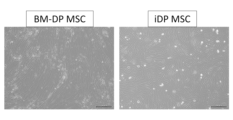
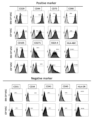
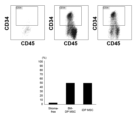
- a schematic diagram of how pluripotent stem cells are induced into iDP MSCs is shown. Comparison of the morphology of BM-DP MSCs and iDPMSCs. Scale bar: 200 ⁇ m. Comparison of surface antigen (positive and negative marker) expression between BM-DP MSCs and iDP MSCs. Analysis was performed by flow cytometry using antibodies against each surface antigen. Comparison of the ability of BM-DP MSCs and iDP MSCs to support human hematopoietic stem/progenitor cells.
- FACS plot top of cells collected after co-culture of human umbilical cord blood-derived hematopoietic stem/progenitor cells with BM-DP MSCs and each iDP MSC for one week, and a graph of the percentage of hematopoietic stem/progenitor cells (CD34 + cells) (bottom).
- the present invention provides a method for producing mesenchymal stem cells (MSCs) (also referred to as "bone marrow niche cells”) from pluripotent stem cells. Specifically, the method includes: (1) culturing pluripotent stem cells in a medium containing a GSK3 ⁇ inhibitor to obtain fibroblast-like cells; and (2) culturing the fibroblast-like cells obtained in step (1) in a medium containing a fibroblast growth factor and a GSK3 ⁇ inhibitor to obtain mesenchymal stem cells (hereinafter, sometimes referred to as the "method for producing MSCs of the present invention").
- MSCs mesenchymal stem cells
- the pluripotent stem cells used in the present invention may be any undifferentiated cells that have the "self-renewal ability" to proliferate while maintaining an undifferentiated state, and the "differentiation pluripotency" to differentiate into all three primary germ layers.
- pluripotent stem cells include induced pluripotent stem cells (iPS cells), embryonic stem cells (ES cells), embryonic stem cells derived from cloned embryos obtained by nuclear transfer (ntES cells), multipotent germline stem cells (mGS cells), and embryonic germline stem cells (EG cells), but preferably iPS cells (more preferably human iPS cells).
- the pluripotent stem cells are ES cells or any cells derived from human embryos, the cells may be cells produced by destroying the embryo or cells produced without destroying the embryo, but from an ethical point of view, preferably cells produced without destroying the embryo.
- iPS cells are artificial stem cells derived from somatic cells that can be created by introducing specific reprogramming factors in the form of DNA or protein into somatic cells and have properties similar to those of ES cells, such as pluripotency and the ability to proliferate through self-renewal (Takahashi K. and Yamanaka S. (2006) Cell, 126:663-676; Takahashi K. et al. (2007), Cell, 131:861-872; Yu J. et al. (2007), Science, 318:1917-1920; Nakagawa M. et al., Nat. Biotechnol. 26:101-106 (2008); WO 2007/069666).
- the iPS cells When using iPS cells, the iPS cells may be prepared from somatic cells by a method known per se, or iPS cells that have already been established and stocked may be used.
- the reprogramming factor may be composed of a gene that is specifically expressed in ES cells, its gene product or non-coding RNA, or a gene that plays an important role in maintaining the undifferentiated state of ES cells, its gene product or non-coding RNA, or a low molecular weight compound.
- genes contained in the reprogramming factor include Oct3/4, Sox2, Sox1, Sox3, Sox15, Sox17, Klf4, Klf2, c-Myc, N-Myc, L-Myc, Nanog, Lin28, Fbx15, ERas, ECAT15-2, Tcl1, beta-catenin, Lin28b, Sall1, Sall4, Esrrb, Nr5a2, Tbx3, or Glis1. These reprogramming factors may be used alone or in combination.
- Combinations of reprogramming factors include WO 2007/069666, WO 2008/118820, WO 2009/007852, WO 2009/032194, WO 2009/058413, WO 2009/057831, WO 2009/075119, WO 2009/079007, WO 2009/091659, and WO 2009/1010.
- ES cells are stem cells that are pluripotent and have the ability to proliferate through self-renewal and are established from the inner cell mass of early mammalian embryos (e.g., blastocysts) such as humans and mice.
- ES cells were discovered in mice in 1981 (M.J. Evans and M.H. Kaufman (1981), Nature 292:154-156), and subsequently, ES cell lines were established in humans, monkeys, and other primates (J.A. Thomson et al. (1998), Science 282:1145-1147; J.A. Thomson et al. (1999), Science 282:1145-1147). (1995), Proc. Natl. Acad. Sci. USA, 92:7844-7848; J.A.
- ES cells can be established by extracting the inner cell mass from the blastocyst of a fertilized egg of a target animal and culturing the inner cell mass on fibroblast feeders. Methods for establishing and maintaining human and monkey ES cells are described, for example, in USP 5,843,780; Thomson JA, et al. (1995), Proc Natl. Acad. Sci. U S A. 92:7844-7848; Thomson JA, et al. (1998), Science.
- ES cells can be established using only a single blastomere from an embryo at the cleavage stage prior to the blastocyst stage (Chung Y. et al. (2008), Cell Stem Cell 2: 113-117) or from developmentally arrested embryos (Zhang X. et al. (2006), Stem Cells 24: 2669-2676.).
- ntES cells are ES cells derived from cloned embryos produced by nuclear transfer technology and have almost the same properties as ES cells derived from fertilized eggs (Wakayama T. et al. (2001), Science, 292:740-743; S. Wakayama et al. (2005), Biol. Reprod., 72:932-936; Byrne J. et al. (2007), Nature, 450:497-502).
- ntES (nuclear transfer ES) cells are ES cells established from the inner cell mass of blastocysts derived from cloned embryos obtained by replacing the nucleus of an unfertilized egg with that of a somatic cell.
- ntES cells To generate ntES cells, a combination of nuclear transfer technology (Cibelli J.B. et al. (1998), Nature Biotechnol., 16:642-646) and ES cell generation technology (mentioned above) is used (Wakayama Sayaka et al. (2008), Experimental Medicine, Vol. 26, No. 5 (special issue), pp. 47-52).
- nuclear transfer the nucleus of a somatic cell is injected into an enucleated unfertilized mammalian egg, which can then be initialized by culturing for several hours.
- mGS cells are pluripotent stem cells derived from the testis and are the source of spermatogenesis. Like ES cells, these cells can be induced to differentiate into cells of various lineages, and have properties such as the ability to produce chimeric mice when transplanted into mouse blastocysts (Kanatsu-Shinohara M. et al. (2003) Biol. Reprod., 69:612-616; Shinohara K. et al. (2004), Cell, 119:1001-1012).
- GDNF glial cell line-derived neurotrophic factor
- EG cells are established from primordial germ cells during the fetal period and have pluripotency similar to that of ES cells. They can be established by culturing primordial germ cells in the presence of substances such as LIF, bFGF, and stem cell factor (Matsui Y. et al. (1992), Cell, 70:841-847; J.L. Resnick et al. (1992), Nature, 359:550-551).
- the species from which the pluripotent stem cells are derived is not particularly limited, and may be, for example, cells from rodents such as rats, mice, hamsters, and guinea pigs; lagomorphs such as rabbits; ungulates such as pigs, cows, goats, and sheep; felines such as dogs and cats; and primates such as humans, monkeys, rhesus monkeys, marmosets, orangutans, and chimpanzees.
- the preferred species is human.
- the increase in cell number may be 1.1-fold, 1.2-fold, 1.5-fold, 2-fold, 3-fold, 4-fold, 5-fold, 6-fold, 7-fold, 8-fold, 9-fold, 10-fold, 15-fold, 20-fold, 30-fold, 40-fold, 50-fold, 100-fold, 300-fold, 500-fold, 1000-fold, 3000-fold, 5000-fold, 10000-fold or more compared to before the start of expansion culture.
- Step (3) of the method for producing MSCs of the present invention is not particularly limited as long as it is capable of proliferating mesenchymal stem cells, and may be performed, for example, by culturing them in a mesenchymal stem cell maintenance medium (e.g., a basal medium (e.g., ⁇ MEM medium) containing serum (e.g., 10% FBS)).
- a mesenchymal stem cell maintenance medium e.g., a basal medium (e.g., ⁇ MEM medium) containing serum (e.g., 10% FBS)
- the method for producing MSCs of the present invention may also include a step of pre-culturing pluripotent stem cells to adjust the size of the colonies prior to step (1).
- a step may involve, for example, seeding an appropriate number of colonies (e.g., 5 or 6 colonies per well) in a culture vessel and culturing until the median colony size reaches 40 to 60 cells/colony (particularly 50 cells/colony).
- the cells are typically cultured in a pluripotent stem cell maintenance medium (e.g., a basal medium containing bFGF (e.g., NutriStem medium)).
- a pluripotent stem cell maintenance medium e.g., a basal medium containing bFGF (e.g., NutriStem medium)
- the method for producing MSCs of the present invention may include a step of isolating or purifying mesenchymal stem cells after the above step (2) or (3). By carrying out such a step, the proportion of mesenchymal stem cells in the cell population can be increased.
- the isolation or purification method can be carried out by a method known per se. For example, the method includes labeling with an antibody against an indicator molecule (e.g., a surface antigen marker such as CD271 or SSEA-4) and purifying using flow cytometry or mass cytometry, magnetic cell separation, or an affinity column on which the desired antigen is immobilized.
- an indicator molecule e.g., a surface antigen marker such as CD271 or SSEA-4
- GSK3 ⁇ inhibitors used in the MSC production method of the present invention include CHIR98014 (2-[[2-[(5-nitro-6-aminopyridin-2-yl)amino]ethyl]amino]-4-(2,4-dichlorophenyl)-5-(1H-imidazol-1-yl)pyrimidine), CHIR99021 (6-[[2-[[4-(2,4-dichlorophenyl)-5-(4-methyl-1H-imidazol-2-yl)-2-pyrimidinyl]amino]ethyl]amino]nicotinonitrile), CP21R7 (3-(3-aminopyridin-2-yl)pyrimidinyl)amino]ethyl]amino]nicotinonitrile), and CP21R7 (3-(3-aminopyridin-2-yl)pyrimidinyl)amino]ethyl]amino]nic
- GSK3 ⁇ inhibitors are included. Among them, CHIR99021 is preferable. These may be used alone or in combination of two or more.
- antisense oligonucleotides and siRNAs against GSK3 ⁇ mRNA, antibodies that bind to GSK3 ⁇ , dominant negative GSK3 ⁇ mutants, etc. can also be used as GSK3 ⁇ inhibitors, and these are commercially available or can be synthesized according to known methods.
- Fibroblast growth factors (FGFs) used in the method for producing MSCs of the present invention can usually be commercially available. There are 22 types of FGFs known in humans, and any that function as a cell growth factor can be used, but bFGF (also called FGF-2) is preferred. FGFs may be used alone or in combination of two or more types.
- the concentration of FGF in the culture medium can be appropriately selected by those skilled in the art depending on the FGF used, but for example, when bFGF is used, it is typically 0.1 to 200 ng/ml, preferably 1 to 100 ng/ml, and more preferably 10 to 50 ng/ml (particularly 20 ng/ml).
- the culture period in step (1) of the MSC production method of the present invention is not particularly limited as long as it is a period during which fibroblast-like cells appear, but is typically 3 to 8 days, preferably 4 to 7 days, and more preferably 5 to 6 days.
- the culture period in step (2) of the MSC production method of the present invention is not particularly limited as long as it is a period during which mesenchymal stem cells appear, but is typically 3 to 8 days, preferably 4 to 7 days, and more preferably 5 to 6 days.
- the culture period in step (3) of the MSC production method of the present invention is not particularly limited since mesenchymal stem cells are maintained and proliferated in step (3), but is typically 5 to 50 days, preferably 10 to 40 days, and more preferably 15 to 30 days.
- basal media used in the method for producing MSCs of the present invention include, but are not limited to, Neurobasal medium, Neural Progenitor Basal medium, NS-A medium, BME medium, BGJb medium, CMRL 1066 medium, Minimum Essential Medium (MEM), Eagle MEM medium, ⁇ MEM medium, Dulbecco's Modified Eagle Medium (DMEM), Glasgow MEM medium, Improved MEM Zinc Option medium, IMDM medium, Medium 199 medium, DMEM/F12 medium, Ham's medium, RPMI 1640 medium, Fischer's medium, and mixtures thereof.
- MEM Minimum Essential Medium
- DMEM Dulbecco's Modified Eagle Medium
- KSR KnockoutTM Serum Replacement
- Chemically-defined Lipid concentrated Glutamax (Invitrogen)
- ITS supplements e.g., ITS-G, ITS-A, ITS-X, all from Fujifilm Wako Pure Chemical Industries, Ltd.
- the concentration of sodium selenite in the medium is typically 0.1-100 ⁇ g/L, preferably 1-50 ⁇ g/L, more preferably 2-10 ⁇ g/L (particularly 6.7 ⁇ g/L).
- the concentration of ethanolamine in the medium is typically 0.1-100 ⁇ g/mL, preferably 0.5-50 ⁇ g/mL, more preferably 1-5 ⁇ g/mL (particularly 2 ⁇ g/mL).
- MSCs meenchymal stem cells
- MSCs mesenchymal stem cells
- the MSCs of the present invention typically have the following characteristics (A) and (B) in addition to the characteristics of MSCs described above.
- a surface antigen marker being positive is used to include the meaning of "the production of a protein encoded by mRNA.” Therefore, when the production of a protein encoded by mRNA is detected at a level above background, at least by the method (cell sorting) described in the Examples below, the surface antigen marker can be said to be expressed. On the other hand, when the production of the protein is not detected by the same method (cell sorting) (i.e., below the detection limit) or is at background levels, the surface antigen marker can be said to be negative.
- hematopoietic stem/progenitor cells having the ability to support hematopoietic stem/progenitor cells.
- the hematopoietic stem/progenitor cells used in the present invention may be cells isolated from a living body (e.g., bone marrow, umbilical cord, peripheral blood, etc.) by a known method, may be commercially available cells, or may be cells induced to differentiate from pluripotent stem cells (e.g., induced pluripotent stem cells derived from an individual to be transplanted), etc.
- a living body e.g., bone marrow, umbilical cord, peripheral blood, etc.
- pluripotent stem cells e.g., induced pluripotent stem cells derived from an individual to be transplanted
- mesenchymal cells include mesenchymal cells other than mesenchymal stem cells, specifically, for example, bone cells, chondrocytes, adipocytes, cardiac muscle cells, skeletal muscle cells, and precursor cells thereof (e.g., bone precursor cells, osteoblasts, cartilage precursor cells, chondroblasts, adipocyte precursor cells, cardiac muscle stem cells, skeletal muscle stem cells, myoblasts, etc.).
- mesenchymal cells other than mesenchymal stem cells, specifically, for example, bone cells, chondrocytes, adipocytes, cardiac muscle cells, skeletal muscle cells, and precursor cells thereof (e.g., bone precursor cells, osteoblasts, cartilage precursor cells, chondroblasts, adipocyte precursor cells, cardiac muscle stem cells, skeletal muscle stem cells, myoblasts, etc.).
- the method for producing the mesenchymal cells of the present invention is typically performed by culturing the MSCs of the present invention in a mesenchymal cell differentiation-inducing medium.
- osteocyte differentiation-inducing media include a basal medium (e.g., ⁇ MEM) containing 10% FBS, 0.1 ⁇ M dexa-methasone, 50 ⁇ g/ml ascorbic acid, and 10 mM ⁇ -glycerophosphate, and a commercially available xeno-free osteocyte differentiation-inducing medium (e.g., MSCgo TM Rapid Osteogenic Differentiation Medium (Biological Industries)).
- the method for differentiating into osteocytes include a method in which 4 ⁇ 10 4 mesenchymal stem cells are seeded on a gelatin-coated 12-well plate and cultured in the osteocyte differentiation-inducing medium for 30 days. Differentiation into osteocytes may be confirmed by detecting calcified nodules by alizanin red staining.
- the purpose of transplanting the mesenchymal cells of the present invention into a living body may be to directly regenerate damaged tissue, or to achieve an indirect effect (e.g., paracrine effect) due to factors secreted by the mesenchymal cells of the present invention.
- mesenchymal stem cells may have a therapeutic effect in patients with acute myocardial infarction, stroke, multiple system atrophy (MSA), graft-versus-host disease, Crohn's disease, ischemic cardiomyopathy, spinal cord injury, and the like.
- the MSCs of the present invention have the ability to support hematopoietic stem/progenitor cells.
- the cell transplantation therapeutic agent of the present invention is provided in a frozen state under conditions normally used for cryopreservation of cells, and can be thawed when in use.
- it may further contain serum or a substitute thereof, an organic solvent (e.g., DMSO), etc.
- an organic solvent e.g., DMSO
- the concentration of serum or a substitute thereof is not particularly limited, but may be about 1 to about 30% (v/v), preferably about 5 to about 20% (v/v).
- the concentration of the organic solvent is not particularly limited, but may be 0 to about 50% (v/v), preferably about 5 to about 20% (v/v).
- the harvested cells were cultured in ⁇ -MEM (Nacalai Tesque) containing 10% fetal bovine serum (BioWest) in T-75 culture flasks (BD Biosciences) at 37°C in a fully humidified atmosphere of 5% CO2.
- Antibody information is shown in Table 1.
- Example 2 Surface antigen analysis To analyze the surface marker expression of iDP MSCs, cells were stained with anti-CD29, anti-CD31, anti-CD34, anti-CD41, anti-CD44, anti-CD45, anti-CD73, anti-CD90, anti-CD105, anti-CD271, anti-SSEA-4, anti-HLA-ABC and anti-HLA-DR antibodies conjugated with FITC, PE, APC or PB. As negative controls, samples stained with isotype IgG antibodies conjugated with FITC, PE, APC or PB were prepared. The stained cells were analyzed using FACSCantoII (BD Biosciences). The antibody information is shown in Table 1.
- Example 3 Evaluation of the ability to support human hematopoietic stem/progenitor cells The ability of iDP MSCs to support human hematopoietic stem/progenitor cells was evaluated by co-culturing them with human umbilical cord blood-derived hematopoietic stem cells.
- Human umbilical cord blood-derived hematopoietic cells were isolated by the method described in Sumide K et al., Nature Communications. 9(1):2202, 2018. Briefly, human mononuclear cells (MNCs) were isolated from healthy donor umbilical cord blood samples using density gradient centrifugation and further enriched using the EasySep Human Progenitor Cell Enrichment Kit (STEMCELL Technologies) to deplete lineage-positive cells.
- MNCs mononuclear cells
- CD34 + HCS Lin - CD34 + CD38 - CD133 + GPI-80 + cells were selected from the 7-AAD negative fraction using a FACSAria (BD Biosciences) or FACSAria III (BD Biosciences). Antibody information is shown in Table 1.
- the cells collected by this method are hereafter referred to as CD34 + HCS.
- the collected CD34 + HSCs were seeded at 1,000 cells per well on iDP MSCs or DP MSCs seeded as feeder cells in a 24-well plate (BD Biosciences).
Landscapes
- Health & Medical Sciences (AREA)
- Engineering & Computer Science (AREA)
- Life Sciences & Earth Sciences (AREA)
- Genetics & Genomics (AREA)
- Biomedical Technology (AREA)
- Chemical & Material Sciences (AREA)
- Biotechnology (AREA)
- Organic Chemistry (AREA)
- Bioinformatics & Cheminformatics (AREA)
- Wood Science & Technology (AREA)
- Zoology (AREA)
- Microbiology (AREA)
- Biochemistry (AREA)
- General Engineering & Computer Science (AREA)
- General Health & Medical Sciences (AREA)
- Cell Biology (AREA)
- Micro-Organisms Or Cultivation Processes Thereof (AREA)
Priority Applications (1)
| Application Number | Priority Date | Filing Date | Title |
|---|---|---|---|
| JP2025524063A JPWO2024247915A1 (https=) | 2023-05-26 | 2024-05-24 |
Applications Claiming Priority (2)
| Application Number | Priority Date | Filing Date | Title |
|---|---|---|---|
| JP2023086944 | 2023-05-26 | ||
| JP2023-086944 | 2023-05-26 |
Publications (1)
| Publication Number | Publication Date |
|---|---|
| WO2024247915A1 true WO2024247915A1 (ja) | 2024-12-05 |
Family
ID=93657946
Family Applications (1)
| Application Number | Title | Priority Date | Filing Date |
|---|---|---|---|
| PCT/JP2024/019183 Ceased WO2024247915A1 (ja) | 2023-05-26 | 2024-05-24 | 骨髄ニッチ細胞およびその製造方法 |
Country Status (2)
| Country | Link |
|---|---|
| JP (1) | JPWO2024247915A1 (https=) |
| WO (1) | WO2024247915A1 (https=) |
Citations (4)
| Publication number | Priority date | Publication date | Assignee | Title |
|---|---|---|---|---|
| JP2017195892A (ja) * | 2010-09-07 | 2017-11-02 | テクニオン リサーチ アンド ディベロップメント ファウンデーション リミテッド | 多能性幹細胞を培養するための新規な方法および培養培地 |
| WO2019177118A1 (ja) * | 2018-03-15 | 2019-09-19 | 国立大学法人京都大学 | 多能性幹細胞から各種細胞への段階的製造方法 |
| WO2020213734A1 (ja) * | 2019-04-19 | 2020-10-22 | 国立大学法人京都大学 | ネフロン前駆細胞の製造方法 |
| CN115011553A (zh) * | 2022-04-22 | 2022-09-06 | 中山大学 | 一种躯干神经嵴来源骨髓间充质干细胞的制备方法及用途 |
-
2024
- 2024-05-24 JP JP2025524063A patent/JPWO2024247915A1/ja active Pending
- 2024-05-24 WO PCT/JP2024/019183 patent/WO2024247915A1/ja not_active Ceased
Patent Citations (4)
| Publication number | Priority date | Publication date | Assignee | Title |
|---|---|---|---|---|
| JP2017195892A (ja) * | 2010-09-07 | 2017-11-02 | テクニオン リサーチ アンド ディベロップメント ファウンデーション リミテッド | 多能性幹細胞を培養するための新規な方法および培養培地 |
| WO2019177118A1 (ja) * | 2018-03-15 | 2019-09-19 | 国立大学法人京都大学 | 多能性幹細胞から各種細胞への段階的製造方法 |
| WO2020213734A1 (ja) * | 2019-04-19 | 2020-10-22 | 国立大学法人京都大学 | ネフロン前駆細胞の製造方法 |
| CN115011553A (zh) * | 2022-04-22 | 2022-09-06 | 中山大学 | 一种躯干神经嵴来源骨髓间充质干细胞的制备方法及用途 |
Non-Patent Citations (1)
| Title |
|---|
| MATSUOKA YOSHIKAZU, NAKATSUKA RYUSUKE, SUMIDE KEISUKE, KAWAMURA HIROSHI, TAKAHASHI MASAYA, FUJIOKA TATSUYA, UEMURA YASUSHI, ASANO : "Prospectively Isolated Human Bone Marrow Cell-Derived MSCs Support Primitive Human CD34-Negative Hematopoietic Stem Cells", STEM CELLS, WILEY, vol. 33, no. 5, 1 May 2015 (2015-05-01), pages 1554 - 1565, XP093244708, ISSN: 1066-5099, DOI: 10.1002/stem.1941 * |
Also Published As
| Publication number | Publication date |
|---|---|
| JPWO2024247915A1 (https=) | 2024-12-05 |
Similar Documents
| Publication | Publication Date | Title |
|---|---|---|
| Chen et al. | Small molecule mesengenic induction of human induced pluripotent stem cells to generate mesenchymal stem/stromal cells | |
| KR102108245B1 (ko) | 중간엽 간질 세포 및 이에 관련된 용도 | |
| JP6647864B2 (ja) | 赤血球の産生 | |
| US10358629B2 (en) | Regulating stem cells | |
| KR101987395B1 (ko) | Cd82 양성 심근 전구세포 | |
| CN114058582A (zh) | 用于诱导造血细胞分化的方法和组合物 | |
| Rutigliano et al. | Molecular characterization and in vitro differentiation of feline progenitor-like amniotic epithelial cells | |
| WO2010114572A1 (en) | Isolation of human umbilical cord blood-derived mesenchymal stem cells | |
| WO2019107485A1 (ja) | 細胞の培養方法 | |
| JPWO2019070021A1 (ja) | iPS細胞由来の遺伝的多様性を有するT細胞集団の製造方法 | |
| US9598675B2 (en) | Method for preparing mesenchymal stem cell-like cells and cardiomyocyte-like cells | |
| US20250032551A1 (en) | Method for producing neural crest cells specialized for differentiation into mesenchymal lineage | |
| JP7437766B2 (ja) | 中内胚葉系への分化抵抗性が解除された多能性幹細胞の作製方法 | |
| US20230078230A1 (en) | Methods for the production of committed cardiac progenitor cells | |
| WO2024247915A1 (ja) | 骨髄ニッチ細胞およびその製造方法 | |
| JP2025532957A (ja) | 心臓線維芽細胞の作製方法 | |
| WO2026088993A1 (ja) | 造血幹細胞の製造方法 | |
| WO2020218579A1 (ja) | 分化誘導のために馴化された多能性幹細胞の作製方法 | |
| Gronthos | Features of mesenchymal stem cells | |
| WO2026014176A1 (ja) | 骨髄間質オルガノイドの製造方法、骨髄間質オルガノイド、及びその利用 | |
| HK40061773A (en) | Methods and compositions for inducing hematopoietic cell differentiation | |
| Pelekanos | Derivation of mesenchymal stem/stromal cells from induced pluripotent stem cells | |
| WO2021187602A1 (ja) | 心筋細胞の精製方法 | |
| Kidiyoor et al. | Cell and Molecular Biology and Imaging of Stem Cells: Stem Cells from the Amniotic Fluid and Placenta | |
| HK1253871B (en) | Methods and compositions for inducing hematopoietic cell differentiation |
Legal Events
| Date | Code | Title | Description |
|---|---|---|---|
| 121 | Ep: the epo has been informed by wipo that ep was designated in this application |
Ref document number: 24815398 Country of ref document: EP Kind code of ref document: A1 |
|
| ENP | Entry into the national phase |
Ref document number: 2025524063 Country of ref document: JP Kind code of ref document: A |
|
| WWE | Wipo information: entry into national phase |
Ref document number: 2025524063 Country of ref document: JP |
|
| NENP | Non-entry into the national phase |
Ref country code: DE |