WO2024236765A1 - 判定方法、判定プログラム、および情報処理装置 - Google Patents
判定方法、判定プログラム、および情報処理装置 Download PDFInfo
- Publication number
- WO2024236765A1 WO2024236765A1 PCT/JP2023/018426 JP2023018426W WO2024236765A1 WO 2024236765 A1 WO2024236765 A1 WO 2024236765A1 JP 2023018426 W JP2023018426 W JP 2023018426W WO 2024236765 A1 WO2024236765 A1 WO 2024236765A1
- Authority
- WO
- WIPO (PCT)
- Prior art keywords
- person
- registered
- determined
- predetermined time
- detected
- Prior art date
- Legal status (The legal status is an assumption and is not a legal conclusion. Google has not performed a legal analysis and makes no representation as to the accuracy of the status listed.)
- Ceased
Links
Images







Classifications
-
- G—PHYSICS
- G06—COMPUTING OR CALCULATING; COUNTING
- G06T—IMAGE DATA PROCESSING OR GENERATION, IN GENERAL
- G06T7/00—Image analysis
Definitions
- This matter relates to a determination method, a determination program, and an information processing device.
- Patent Document 1 uses a camera to extract feature information and perform authentication (see, for example, Patent Document 1 or Non-Patent Document 1).
- Continuous authentication uses, for example, open ReID and closed ReID.
- OpenReID is a continuous authentication method that accepts a person detected from an image captured by a camera as a new person if the person is not identified as a previously registered user. With OpenReID, every time a person is detected in an image, it is determined whether the person is a registered user, which can lead to erroneous authentication.
- Closed ReID is a continuous authentication method that does not treat a detected person as a new person even if the person is not identified as a registered user. Each time a person is detected from an image, the detected person is associated with one of the registered users without determining whether or not the person is a registered user. Therefore, compared to open ReID, improved matching accuracy can be expected. However, the accuracy of person identification decreases when a new person enters or leaves the continuous authentication space.
- the present invention aims to provide a determination method, a determination program, and an information processing device that can improve the accuracy of person determination.
- the determination method includes a process executed by a computer to refer to a storage unit that stores information about registered users, determine whether the number of registered users stored in the storage unit has changed within a predetermined time, and if a person is detected from an image obtained by photographing a predetermined space, determine whether the detected person is the registered user based on a predetermined criterion, and if it is determined that the detected person is not the registered user and it is determined that the number of registered users has changed within the predetermined time, store the detected person in the storage unit as a new registered user, and if it is determined that the detected person is not the registered user and it is determined that the number of registered users has not changed within the predetermined time, determine whether the detected person is the registered user based on a criterion that is looser than the predetermined criterion.
- FIG. 13A and 13B are diagrams illustrating an example of people entering and exiting an authentication space.
- FIG. 1A is a block diagram illustrating an example of an overall configuration of a biometric authentication system according to a first embodiment
- FIG. 1B is a functional block diagram illustrating each function of an information processing device.
- 13 is a flowchart showing a registration process.
- 11 is a diagram illustrating a person table stored in a person registration unit;
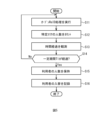
- FIG. 11 is a flowchart illustrating an example of a number of people change observation process executed by an information processing device.
- 11 is a flowchart illustrating an example of an open ReID process in step S11.
- FIG. 13 is a diagram illustrating an example of a specific area user table corresponding to a certain specific area.
- FIG. 13 is a diagram illustrating an example of the difference between the time when a specific person disappears from one camera and the time when the specific person appears on another camera.
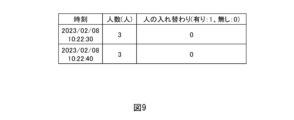
- FIG. 13 is a diagram illustrating a number-of-people table recorded by a number-of-people change recording unit.
- FIG. 11 is a flowchart illustrating an example of a switching process executed by an information processing device.
- 11 is a flowchart illustrating an example of a closed ReID process.
- FIG. 1 is a diagram illustrating an overview of an embodiment.
- FIG. 11 is a functional block diagram illustrating each function of an information processing device according to a second embodiment.
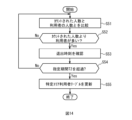
- 11 is a flowchart illustrating a user update process executed by an information processing device.
- FIG. 2 is a block diagram illustrating a hardware configuration of an information processing device.
- Biometric authentication is a technology that uses biometric characteristics such as fingerprints, faces, and veins to verify a person's identity.
- biometric feature data for verification acquired by a biometric sensor is compared (matched) with pre-registered biometric feature data, and identity verification is performed by determining whether the degree of similarity is equal to or exceeds a threshold for determining identity.
- Biometric authentication is used in a variety of fields, including bank ATMs and entrance/exit management, and has recently begun to be used for cashless payments at supermarkets, convenience stores, and other facilities.
- biometric authentication methods are "point” authentication methods that are performed at specific authentication spots, such as in front of an authentication machine.
- point authentication
- the authentication state is interrupted when the user leaves the authentication spot, and if the user wishes to receive a service again or is in a location where authentication is required multiple times, authentication must be performed each time. For this reason, there is a demand for continuous authentication technology that does not require multiple authentication actions, but rather allows the authenticated state to continue with a single authentication and allows the user to enjoy services.
- Continuous authentication mainly involves the following three types of authentication:
- the first step is authentication at check-in.
- the user performs highly accurate authentication using palm vein authentication, and when authentication is successful, a camera takes a picture of the user's appearance, and the characteristic information obtained by the camera is linked to the user's ID as registration information.
- registration information and feature information obtained continuously over time using one or more cameras are used to maintain an authentication state in which a person photographed by a camera is authenticated as a registered user.
- Next is re-authentication. For example, if the user enters a blind spot of the camera due to another person or a pillar, causing the authentication state to be interrupted, re-authentication is performed. By performing this type of authentication, continuous authentication can be performed.
- Continuous authentication may involve, for example, open ReID, closed ReID, etc.
- Open ReID is a continuous authentication in which a person detected from an image captured by a camera is accepted as a new person if the person is not identified as a pre-registered user. With open ReID, a determination is made each time a person is detected from an image as to whether the detected person is a registered user, which may result in erroneous authentication.
- Closed ReID is a continuous authentication in which a detected person is not considered a new person even if the detected person is not identified as a registered user. Each time a person is detected from an image, the detected person is associated with one of the registered users without determining whether the person is a registered user. Therefore, compared to open ReID, improved matching accuracy can be expected.
- FIG. 1(a) when the entry and exit of people into the continuous authentication space is not managed, it is preferable to use an open ReID. However, as described above, if a false authentication occurs, the accuracy of determining the person decreases. As illustrated in FIG. 1(b), when no people enter or exit the continuous authentication space, it is preferable to use a closed ReID. However, when a new person enters or exits the continuous authentication space, the accuracy of determining the person decreases.
- FIG. 2(a) is a block diagram illustrating an example of the overall configuration of a biometric authentication system 200 according to the first embodiment.
- the biometric authentication system 200 includes an information processing device 100, a matching camera 110, a tracking camera 120, and a biometric sensor 130. These devices are connected via electrical communication lines.
- the linking camera 110 is a camera installed at a gate or the like in the continuous authentication space, and is installed in a position where it is easy to obtain characteristic information about a person. There may be one or more linking cameras 110.
- the biometric sensor 130 is installed at the gate or the like, and is installed near the linking camera 110.
- the tracking camera 120 is a camera for tracking a person in the continuous authentication space, and is installed on the ceiling or the like to make it easier to track the person. There may be one tracking camera 120, or there may be multiple tracking cameras 120. When multiple tracking cameras 120 are provided, at least a portion of the field of view of two or more tracking cameras 120 may overlap. Alternatively, the field of view of each tracking camera 120 may not overlap.
- FIG. 2(b) is a functional block diagram showing each function of the information processing device 100.
- the information processing device 100 functions as an acquisition unit 11, a person detection unit 12, a feature extraction unit 13, a ReID processing unit 14, a person registration unit 15, a user registration unit 16, an authentication processing unit 17, a number of people observation unit 18, a number of people change recording unit 19, a switching unit 20, an output unit 21, and the like.
- (Registration process) 3 is a flowchart showing the registration process.
- the acquisition unit 11 acquires biometric data for matching from the biometric sensor 130 (step S1).
- the biometric data in this case is not particularly limited, but may be, for example, a fingerprint, vein, or iris, and is biometric data with high authentication accuracy.
- step S2 judges whether the similarity between the matching biometric data acquired in step S1 and the registered biometric data that has been registered in advance is equal to or greater than a threshold value (step S2). If the judgment in step S2 is "No," execution of the flowchart ends. In this case, for example, the user starts over from the operation in step S1.
- step S2 If the answer in step S2 is "Yes," the ID of the user is identified. In this case, an image of the user is acquired from the linking camera 110 (step S3).
- the user In order to register their own characteristic information, the user assumes a posture that makes it easy to acquire the characteristic information. For example, the user faces the linking camera 110 directly.
- the person detection unit 12 detects a person area from the image acquired in step S3 (step S4).
- Methods for detecting a person area include a method of detecting a person area by background difference, and a method of learning person characteristics in advance and detecting person characteristics from an input image.
- the feature extraction unit 13 extracts feature information, which is identification information for identifying the person, from the person area acquired in step S4, and registers it as registration information in the person table stored in the person registration unit 15 in a state linked to the specified ID (step S5).
- the registration information includes the color of clothing, physique, facial features, behavioral features, etc. Then, execution of the flowchart ends.
- This registration information is feature information for continuous authentication.
- FIG. 4 is a diagram illustrating a person table stored by the person registration unit 15. As illustrated in FIG. 4, in the person table, names, registration information, etc. are linked to each ID.
- (Number of people change observation processing) 5 is a flowchart showing an example of a number of people change observation process executed by the information processing device 100.
- the number of people change observation process is executed at a predetermined cycle. An example of the number of people change observation process will be described with reference to FIG.
- the ReID processing unit 14 executes open ReID processing for a specific area (step S11).
- the specific area may be a part or all of the continuous authentication space described above.
- the continuous authentication space may be divided into a plurality of specific areas. Since the position and shooting range of the tracking camera 120 are predetermined, the correspondence between each specific area and each tracking camera 120 may be determined in advance. The following explanation focuses on one specific area.
- FIG. 6 is a flowchart showing an example of the open ReID process in step S11.
- the acquisition unit 11 acquires images from each tracking camera 120 (step S21).
- the person detection unit 12 detects a person area from each image acquired in step S21 (step S22).
- Methods for detecting a person area include a method of detecting a moving object area by background difference, and a method of learning person characteristics in advance and detecting person characteristics from an input image.
- the feature extraction unit 13 extracts feature information from the image for each person region detected in step S22, and retains the feature information corresponding to the person region (step S23).
- the feature information from the image includes the color of the clothing, physique, facial features, behavioral features, etc.
- the ReID processing unit 14 compares the characteristic information of people detected simultaneously by different tracking cameras 120, or compares the characteristic information of people detected by the same tracking camera 120 at a predetermined time difference, and if the similarity between the characteristic information is equal to or greater than a threshold, determines that the people are the same person (step S24). By executing step S24, it is possible to narrow down the targets of ReID processing.
- the ReID processing unit 14 identifies, for each of the targets of the ReID processing narrowed down in step S24, which of the IDs registered in the person table of the person registration unit 15 corresponds to the user (step S25). For example, the ReID processing unit 14 identifies, for the target of the ReID processing, the user of the ID of the registration information that has the highest similarity between the characteristic information extracted in step S22 and the registration information registered in the person table.
- FIG. 7 is a diagram illustrating a specific area user table corresponding to a certain specific area.
- Mr. A, Mr. B, Mr. C, and Mr. D are identified in the specific area.
- registration information corresponding to each person may be associated. This registration information can be obtained from the person table.
- execution of the flowchart ends. This process makes it possible to count the number of people in the specific area.
- a person detected from the image who is not registered in the specific area user table can be registered as a new person in the specific area user table.
- the number of people observation unit 18 counts the number of people in the specific area (step S12).
- the number of people observation unit 18 counts the number of people in the specific area by referring to the specific area user table stored in the user registration unit 16.
- step S13 the number of people observation unit 18 observes the passage of time. For example, it is sufficient to count the time from the time when step S13 is first executed.
- step S14 the number of people observation unit 18 judges whether or not the fixed period T1 has elapsed (step S14). If the judgement in step S14 is "No", the process is executed again from step S11. For example, the period during which the same person is detected by different tracking cameras 120 in a specific area is observed, and the longest period is set as the fixed period T1. Alternatively, the time required to travel the greatest distance between the installed tracking cameras 120 is set as the fixed period T1. For example, the difference between the time when a specific person is no longer detected by a certain camera and the time when the specific person begins to be detected by another camera is set as the fixed period T1 (for example, 10 seconds). For example, as illustrated in FIG. 8, the difference between the time when the specific person disappeared from camera 002 (exit time) and the time when the specific person appeared on camera 003 (appearance time) is set as the fixed period T1.
- step S14 If the answer is "Yes” in step S14, the number of users observation unit 18 stores the number of users (step S15).
- the number of people observation unit 18 records the change in users (step S16).
- the number of people observation unit 18 refers to the specific area user table of the user registration unit 16, and records in the number of people table of the number of people change recording unit 19 whether or not there has been a change in the ID registered in the specific area user table.
- Figure 9 is a diagram illustrating an example of the number of people table recorded by the number of people change recording unit 19.
- Fig. 10 is a flowchart showing an example of a switching process executed by the information processing device 100.
- the switching process is executed at a predetermined cycle.
- the switching process is also executed in parallel with the number of people change observation process. An example of the switching process will be described with reference to Fig. 10.
- the switching unit 20 refers to the number change recording unit 19 to confirm whether a user has been replaced (step S31).
- step S32 determines whether the user has changed. If the determination in step S32 is "Yes,” the process is executed again from step S31.
- step S32 If the answer is "No" in step S32, the switching unit 20 compares the number of people (step S33).
- the switching unit 20 determines whether the number of people has changed within the specified period T2 (step S34). For example, it determines whether the number of people has increased or decreased.
- step S34 the switching unit 20 specifies the open ReID process (step S35). This causes the ReID processing unit 14 to execute the open ReID process described in FIG. 6. If the result of step S34 is "No", the switching unit 20 specifies the closed ReID process (step S36). This causes the ReID processing unit 14 to execute the closed ReID process.
- the output unit 21 outputs information regarding whether the open ReID process was specified or whether the closed ReID process was executed to an external device or the like. This allows, for example, an administrator to know which ReID process is being executed.
- FIG. 11 is a flowchart showing an example of a closed ReID process. The flowchart in FIG. 11 is repeated at a predetermined interval. First, the acquisition unit 11 acquires images from each tracking camera 120 (step S41).
- the person detection unit 12 detects a person area from each image acquired in step S41 (step S42).
- Methods for detecting a person area include a method of detecting a moving object area by background difference, and a method of learning person characteristics in advance and detecting person characteristics from an input image.
- the feature extraction unit 13 extracts feature information from the image for each person region detected in step S42, and retains the feature information corresponding to the person region (step S43).
- the feature information from the image includes the color of the clothing, physique, facial features, behavioral features, etc.
- the ReID processing unit 14 compares the characteristic information of the person detected between different tracking cameras 120 or the same tracking camera 120 at a specified time difference, and if the similarity between the characteristic information is equal to or greater than a threshold, determines that the person is the same person (step S44).
- the ID and name of each person can be identified by inheriting the ID and name of each person identified in the open ReID processing of FIG. 6. This makes it possible to track each person.
- step S45 the ReID processing unit 14 determines whether there is any person who has not been determined to be the same person. If the determination in step S45 is "No,” execution of the flowchart ends.
- step S45 returns "Yes," the ReID processing unit 14 matches the people stored in the specific area user table stored in the user registration unit 16 who have not been determined to be the same person (step S46). Then, execution of the flowchart ends.
- open ReID processing is executed. This makes it possible to identify people entering and leaving the specific area.
- this embodiment makes it possible to improve the accuracy of person determination. Note that with closed ReID, matching is performed on limited people who have been counted within the specific area and authenticated once, so high accuracy and time reduction in processing can be expected.
- authentication areas are sometimes set up in separate designated areas. Furthermore, if people are free to enter and exit the authentication area, even if a person is present within the authentication area, they may not be correctly identified due to overlap or angle, and may be mistakenly identified as a new person. By applying this embodiment to such cases, it becomes possible to prevent a decrease in authentication accuracy for people present within the authentication area.
- the open ReID process identifies a person using strict criteria by comparing the registration information registered in the specific area user table with the characteristic information of the person detected from the image.
- the closed ReID process associates the registration information registered in the specific area user table with the characteristic information of the person detected from the image without comparing it, and therefore has looser criteria for identifying a person than the open ReID process.
- the process is not limited to this embodiment.
- measures can be taken such as lowering the similarity threshold when matching with registered information. In this way, it is possible to avoid identifying a new person and improve matching accuracy.
- Example 2 we will explain how to update users who use a specific area. We will explain the differences from Example 1.
- FIG. 13 is a functional block diagram showing the functions of the information processing device 100a according to the second embodiment. As illustrated in FIG. 13, the information processing device 100a further includes a user update unit 22.
- (User update process) 14 is a flowchart illustrating a user update process executed by the information processing device 100a.
- the user update process is executed in parallel with the number of people change observation process and the switching process described above. An example of the user update process will be described with reference to FIG. 14.
- the user update unit 22 compares the number of people counted in step S12 of FIG. 5 with the number of users registered in the specific area user table (step S51).
- step S52 determines whether the number of registered users is greater than the number of people counted in step S51 (step S52). If the determination in step S52 is "No,” the process is executed again from step S51.
- step S52 If the answer is "Yes” in step S52, the exit time in the specific area user table is checked (step S53).
- step S54 the user update unit 22 determines whether the specified period T2 has elapsed since the exit time (step S54). If the determination in step S54 is "No,” the process is executed again from step S51.
- step S54 If step S54 returns "Yes," the user update unit 22 updates the specific area user table (step S55). For example, for people registered in the specific area user table who were not identified in the specific area, the user is deleted or the current time is registered as the exit time. Then, the process is executed again from step S51.
- FIG. 15 is a block diagram illustrating the hardware configuration of the information processing device 100, 100a.
- the information processing device 100, 100a includes a CPU 101, a RAM 102, a storage device 103, and the like.
- the CPU (Central Processing Unit) 101 is a central processing unit.
- the RAM (Random Access Memory) 102 is a volatile memory that temporarily stores programs executed by the CPU 101 and data processed by the CPU 101.
- the storage device 103 is a non-volatile storage device. For example, a ROM (Read Only Memory), a solid state drive (SSD) such as a flash memory, or a hard disk driven by a hard disk drive can be used as the storage device 103.
- the functions of each part of the information processing device 100, 100a are realized by the CPU 101 executing a judgment program stored in the storage device 103.
- the functions of each part of the information processing device 100, 100a may be configured using dedicated circuits, etc.
- the user registration unit 16 is an example of a storage unit that stores information about registered users.
- the number of people observation unit 18 is an example of a determination unit that refers to the storage unit and determines whether the number of registered users stored in the storage unit has changed within a predetermined time.
- the switching unit 20 and the ReID processing unit 14 determine whether the detected person is a registered user based on a predetermined criterion, and when it is determined that the detected person is not a registered user and the number of registered users has changed within a predetermined time, the switching unit 20 and the ReID processing unit 14 store the detected person as a new registered user in the storage unit, and when it is determined that the detected person is not a registered user and the number of registered users has not changed within a predetermined time, the switching unit 20 and the ReID processing unit 14 are an example of a processing unit that determines whether the detected person is a registered user based on a criterion looser than the predetermined criterion.
Landscapes
- Engineering & Computer Science (AREA)
- Computer Vision & Pattern Recognition (AREA)
- Physics & Mathematics (AREA)
- General Physics & Mathematics (AREA)
- Theoretical Computer Science (AREA)
- Collating Specific Patterns (AREA)
Priority Applications (2)
| Application Number | Priority Date | Filing Date | Title |
|---|---|---|---|
| PCT/JP2023/018426 WO2024236765A1 (ja) | 2023-05-17 | 2023-05-17 | 判定方法、判定プログラム、および情報処理装置 |
| JP2025520332A JPWO2024236765A1 (https=) | 2023-05-17 | 2023-05-17 |
Applications Claiming Priority (1)
| Application Number | Priority Date | Filing Date | Title |
|---|---|---|---|
| PCT/JP2023/018426 WO2024236765A1 (ja) | 2023-05-17 | 2023-05-17 | 判定方法、判定プログラム、および情報処理装置 |
Publications (1)
| Publication Number | Publication Date |
|---|---|
| WO2024236765A1 true WO2024236765A1 (ja) | 2024-11-21 |
Family
ID=93519505
Family Applications (1)
| Application Number | Title | Priority Date | Filing Date |
|---|---|---|---|
| PCT/JP2023/018426 Ceased WO2024236765A1 (ja) | 2023-05-17 | 2023-05-17 | 判定方法、判定プログラム、および情報処理装置 |
Country Status (2)
| Country | Link |
|---|---|
| JP (1) | JPWO2024236765A1 (https=) |
| WO (1) | WO2024236765A1 (https=) |
Citations (2)
| Publication number | Priority date | Publication date | Assignee | Title |
|---|---|---|---|---|
| JP2010146073A (ja) * | 2008-12-16 | 2010-07-01 | Fujitsu Ltd | 生体認証装置、生体認証方法及び生体認証用コンピュータプログラムならびにコンピュータシステム |
| JP2010199701A (ja) * | 2009-02-23 | 2010-09-09 | Fujitsu Ltd | 画像処理装置、画像処理方法、及び、画像処理プログラム |
-
2023
- 2023-05-17 WO PCT/JP2023/018426 patent/WO2024236765A1/ja not_active Ceased
- 2023-05-17 JP JP2025520332A patent/JPWO2024236765A1/ja active Pending
Patent Citations (2)
| Publication number | Priority date | Publication date | Assignee | Title |
|---|---|---|---|---|
| JP2010146073A (ja) * | 2008-12-16 | 2010-07-01 | Fujitsu Ltd | 生体認証装置、生体認証方法及び生体認証用コンピュータプログラムならびにコンピュータシステム |
| JP2010199701A (ja) * | 2009-02-23 | 2010-09-09 | Fujitsu Ltd | 画像処理装置、画像処理方法、及び、画像処理プログラム |
Also Published As
| Publication number | Publication date |
|---|---|
| JPWO2024236765A1 (https=) | 2024-11-21 |
Similar Documents
| Publication | Publication Date | Title |
|---|---|---|
| JP7196932B2 (ja) | 情報処理装置、情報処理方法、およびプログラム | |
| JP3356144B2 (ja) | バイオメトリクスを用いるユーザ認証装置及びそれに用いるユーザ認証方法 | |
| EP1873675A2 (en) | Biometric authentication method and system | |
| US11997087B2 (en) | Mobile enrollment using a known biometric | |
| JP2009211488A (ja) | 認証装置 | |
| US20130163833A1 (en) | Security device with security image update capability | |
| WO2020065954A1 (ja) | 認証装置、認証方法および記憶媒体 | |
| JP2012067458A (ja) | 通行管理システム及び通行管理方法 | |
| WO2019138688A1 (ja) | 顔認証装置 | |
| WO2022180814A1 (ja) | 認証方法、認証プログラム、および情報処理装置 | |
| CN112183167B (zh) | 考勤方法、认证方法、活体检测方法、装置及设备 | |
| WO2021060256A1 (ja) | 顔認証装置、顔認証方法、及びコンピュータ読み取り可能な記録媒体 | |
| JP2014142838A (ja) | 入室管理システムおよび入室管理装置 | |
| KR102089030B1 (ko) | 조합 인증 기반 출입 통제 시스템 및 방법 | |
| KR20100041562A (ko) | 인증 대상자의 얼굴 인식과 지문 인식을 통한 사용자 인증 수행 방법 및 시스템 | |
| WO2024236765A1 (ja) | 判定方法、判定プログラム、および情報処理装置 | |
| JP2010086263A (ja) | 生体照合装置、顔照合装置および生体照合方法 | |
| JP5131131B2 (ja) | 表示システムおよび表示制御方法 | |
| JP2007249298A (ja) | 顔認証装置および顔認証方法 | |
| EP4693231A1 (en) | Determination method, determination program, and information processing device | |
| WO2024236682A1 (ja) | 判定方法、判定プログラム、および情報処理装置 | |
| WO2024241536A1 (ja) | 制御方法、制御プログラム、および情報処理装置 | |
| WO2023188332A1 (ja) | 人物特定装置、人物特定方法、および人物特定プログラム | |
| JP2012221002A (ja) | ユーザ検知装置、ユーザ検知方法、およびユーザ検知プログラム | |
| WO2021234901A1 (ja) | 制御方法、制御プログラム、および情報処理装置 |
Legal Events
| Date | Code | Title | Description |
|---|---|---|---|
| 121 | Ep: the epo has been informed by wipo that ep was designated in this application |
Ref document number: 23937507 Country of ref document: EP Kind code of ref document: A1 |
|
| ENP | Entry into the national phase |
Ref document number: 2025520332 Country of ref document: JP Kind code of ref document: A |
|
| WWE | Wipo information: entry into national phase |
Ref document number: 2025520332 Country of ref document: JP |
|
| NENP | Non-entry into the national phase |
Ref country code: DE |