WO2024228243A1 - 情報処理装置、情報処理方法、情報処理システム、及びプログラム - Google Patents
情報処理装置、情報処理方法、情報処理システム、及びプログラム Download PDFInfo
- Publication number
- WO2024228243A1 WO2024228243A1 PCT/JP2023/017066 JP2023017066W WO2024228243A1 WO 2024228243 A1 WO2024228243 A1 WO 2024228243A1 JP 2023017066 W JP2023017066 W JP 2023017066W WO 2024228243 A1 WO2024228243 A1 WO 2024228243A1
- Authority
- WO
- WIPO (PCT)
- Prior art keywords
- information processing
- reliability
- models
- processing device
- derivation
- Prior art date
- Legal status (The legal status is an assumption and is not a legal conclusion. Google has not performed a legal analysis and makes no representation as to the accuracy of the status listed.)
- Ceased
Links
Images




Classifications
-
- G—PHYSICS
- G06—COMPUTING OR CALCULATING; COUNTING
- G06N—COMPUTING ARRANGEMENTS BASED ON SPECIFIC COMPUTATIONAL MODELS
- G06N20/00—Machine learning
- G06N20/20—Ensemble learning
Definitions
- the present invention relates to an information processing device, an information processing method, an information processing system, and a program.
- a sequential decision-making technique is known in which a process is sequentially repeated: deriving a prediction (decision-making result) regarding demand or supply volume, etc., observing the results of executing the derived prediction, and deriving a further prediction based on the observed results.
- Patent Document 1 describes a technology for predicting traffic demand within a building, which includes a number of experts who refer to different data contained in a feature database to predict categories of traffic demand and generate predicted values, and one of the predicted values is adopted as the prediction result.
- Prediction techniques that refer to predictions from multiple experts, such as those in Patent Document 1, have the advantage of being able to make predictions while appropriately adapting to changing environments, but they have been problematic in terms of the increasing computational costs, such as the amount of calculations, computation time, and memory capacity.
- One aspect of the present invention has been made in consideration of the above problems, and one of its objectives is to provide an optimization technique that references output values from multiple experts (models) while keeping computational costs down.
- An information processing device includes an acquisition means for acquiring an output value obtained from each of a plurality of models and a loss value corresponding to each output value, a derivation means for deriving an optimal solution according to each output value acquired by the acquisition means and the reliability of each model, and an update means for updating the reliability of each model by referring to each loss value acquired by the acquisition means, and the update means initializes the reliability of each of a plurality of models constituting at least a portion of the plurality of models at different times.
- An information processing method includes an information processing device acquiring output values obtained from each of a plurality of models and loss values corresponding to each output value, deriving an optimal solution according to each of the acquired output values and the reliability of each model, and updating the reliability of each model by referring to each of the acquired loss values, and in the updating step, initializing the reliability of each of a plurality of models constituting at least a portion of the plurality of models at different times.
- An information processing program is a program that causes a computer to function as an information processing device, and the program causes the computer to execute the following operations: acquire output values obtained from each of a plurality of models and loss values corresponding to each output value; derive an optimal solution according to each of the acquired output values and the reliability of each model; and update the reliability of each model by referring to each of the acquired loss values; and in the updating step, initialize the reliability of each of a plurality of models that constitute at least a portion of the plurality of models at different times.
- An information processing system includes an information processing device and a terminal device
- the information processing device includes an acquisition means for acquiring an output value obtained from each of a plurality of models and a loss value corresponding to each output value, a derivation means for deriving an optimal solution according to each output value acquired by the acquisition means and the reliability of each model, and an update means for updating the reliability of each model by referring to each loss value acquired by the acquisition means, the update means initializing the reliability of each of a plurality of models constituting at least a portion of the plurality of models at different times
- the terminal device includes an execution means for executing the optimal solution derived by the information processing device, and a loss value acquisition means for acquiring a loss value obtained by executing the optimal solution.
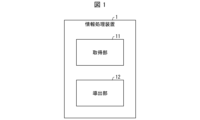
- FIG. 1 is a block diagram showing a configuration of an information processing device according to a first exemplary embodiment.
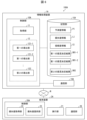
- FIG. 1 is a block diagram showing a configuration of an information processing system according to a first exemplary embodiment.
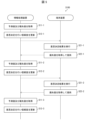
- FIG. 2 is a flow chart showing a process flow by the information processing system according to the first exemplary embodiment.
- FIG. 11 is a block diagram showing a configuration of an information processing device according to a second exemplary embodiment.
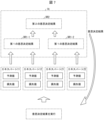
- FIG. 11 is a diagram for explaining a process performed by an information processing device according to an exemplary embodiment 2.
- FIG. 11 is a diagram for explaining a process performed by an information processing device according to an application example of the second exemplary embodiment.
- FIG. 13 is a diagram showing an example of information referred to by an information processing device according to an application example of the exemplary embodiment 2.
- FIG. FIG. 1 is a block diagram showing a configuration of a computer that functions as an information processing device according to each exemplary embodiment.
- Example embodiment 1 DETAILED DESCRIPTION OF THE PREFERRED EMBODIMENTS
- This exemplary embodiment is a basic form of the exemplary embodiments described below.
- the information processing device 1 is an information processing device that acquires a predicted value from each of a plurality of experts and makes a decision using the acquired predicted values.
- the information processing device 1 according to this exemplary embodiment sequentially acquires a predicted value and makes a decision. For example, in round t, a predicted value P1t is acquired from expert 1, a predicted value P2t is acquired from expert 2, and a decision-making result (t) in the round t is derived by referring to the acquired predicted values P1t and P2t.
- the information processing device 1 performs a process of updating a parameter for decision-making, acquiring a predicted value in the next round, and deriving a decision-making result in the next round.
- t is an index that represents the number of repetitions, and can also be interpreted as an index indicating timing.
- the "expert” may specifically be hardware, such as a predicted value derivation device that outputs a predicted value, software, such as a predicted value derivation algorithm that outputs a predicted value, or a living organism (e.g., a human) that outputs a predicted value by some method.
- the information processing device 1 may be configured to include an “expert,” or may be configured to obtain a predicted value from an external "expert.”
- An “expert” is also called a "model” or an "agent.”
- the "predicted value” may be, for example, a predicted value related to demand or supply, or a predicted value related to other cases (events).
- the "predicted value” in this exemplary embodiment may be a predicted value related to some parameter referred to by the information processing device 1.
- the information processing device 1 can be applied to the overall process of making decisions regarding a target event by referring to predicted values from each of a plurality of experts.
- the output value of the expert is a "predicted value” will be described, but the output value of the expert is not necessarily limited to a predicted value.
- the output value of the expert may be any value that can define a loss, which will be described later.
- the output value of the expert may be an output from a generative model or a control model.
- intention refers to some information related to the target event, and is not limited to being interpreted as the intention of a living organism (person).
- a predicted value of future demand is an example of an "intention” determined by the information processing device 1 according to this exemplary embodiment, or a "decision-making result” derived by the information processing device 1.
- the information processing device 1 according to this exemplary embodiment can also be expressed as a decision-making device, a decision-making result derivation device, or the like.
- the "decision-making result” is also called an "optimization solution” or an "optimization result”.
- a loss value is provided corresponding to a predicted value provided by each of the multiple experts.
- a loss value L1 is provided corresponding to a predicted value P1 provided by expert 1
- a loss value L2 is provided corresponding to a predicted value P2 provided by expert 2.
- Each predicted value provided by the experts and the loss value corresponding to each predicted value are acquired by the information processing device 1 and are referenced in the decision-making process or other information processing.
- the loss value can be expressed as the difference between a predicted value and an observed value (actual measured value), as an example, but this does not limit this exemplary embodiment.
- the loss value may be the difference between a predicted value and another predetermined value.
- the loss value may also be an estimated value regarding the loss.
- the term "loss value" may also include the concept of "reward.”
- the loss value may be expressed as the reward value with the sign reversed (the reward value multiplied by a negative constant). Therefore, the loss value according to this exemplary embodiment may be read as the reward value.
- the information referenced to calculate the loss value and the specific algorithm for calculating the loss value do not limit this exemplary embodiment.
- Fig. 1 is a block diagram showing the configuration of the information processing device 1. As shown in Fig. 1, the information processing device 1 includes an acquisition unit 11 and a derivation unit 12.
- the acquisition unit 11 acquires the predicted values obtained from each of the multiple experts and the loss values corresponding to each predicted value.
- the "predicted value” may be, for example, a predicted value related to demand or supply, or a predicted value related to other cases (events).
- the "predicted value” may be a predicted value related to some parameter referenced by the information processing device 1.
- the term "loss value corresponding to each predicted value” refers to a loss value that has some kind of information processing relevance to each predicted value.
- the loss value L1 is It may indicate the difference between the predicted value P1 and the observed value
- the loss value may indicate the difference between the decision-making result derived by the decision-making process that refers to the predicted value P1 and the observed value.
- the concept of the loss value may include the concept of the reward value.
- the acquisition unit 11 may acquire the predicted value and the loss value from the same acquisition source, or from separate acquisition sources.
- the acquisition unit 11 may be configured to acquire the predicted value and the loss value for each round in the sequential decision-making process, but this is not a limitation of this exemplary embodiment.
- the derivation unit 12 is A process of deriving a decision-making result according to each predicted value acquired by the acquisition unit 11 and the reliability of each expert; and The process of updating the reliability of each expert is performed by referring to each loss value acquired by the acquisition unit 11.
- reliability is an index that indicates the extent to which the predicted value by each expert is reflected in the decision-making process.
- reliability can be expressed as a relative weight calculated for the predicted value by each expert, but this is not intended to limit this exemplary embodiment.
- the derivation unit 12 also resets the reliability of each of the multiple experts constituting at least a portion of the multiple experts at different times. For example, in a situation where the acquisition unit 11 acquires the predicted value P1 of expert 1, the predicted value P2 of expert 2, and the predicted value P3 of expert 3, the derivation unit 12 resets the reliability w1 of expert 1 and the reliability w2 of expert 2 at different times (rounds).
- “resetting” refers to, as an example, a process of setting the reliability of the target to 0, but this does not limit this exemplary embodiment. “Resetting” may be any process of setting the reliability of the target to a predetermined value. “Resetting” is also called “initialization.”
- the derivation unit 12 according to this embodiment is an example of the "deriving means" and “updating means” in the claims.
- the information processing device 1 derives a decision-making result (optimal solution) according to the predicted value (output value) provided by each of the multiple experts (models) and the reliability of each expert (model), and resets the reliability of each of the multiple experts (models) that constitute at least a part of the multiple experts (models) at different times (rounds). In this way, the information processing device 1 according to this exemplary embodiment resets the reliability of each of the multiple experts (models) that constitute at least a part of the multiple experts (models) at different times, and therefore can suppress an increase in calculation costs while suppressing a decrease in the accuracy of the decision-making result (optimal solution).
- Fig. 2 is a flow diagram showing the flow of the information processing method S1.
- step S11 the obtaining unit 11 obtains predicted values obtained from each of a plurality of experts and loss values corresponding to each predicted value.
- Step S12 the derivation unit 12 A process of deriving a decision-making result according to each predicted value acquired by the acquisition unit 11 and the reliability of each expert; and The process of updating the reliability of each expert is performed by referring to each loss value acquired by the acquisition unit 11.
- step S12 the derivation unit 12 resets the reliability of each of the multiple experts constituting at least a portion of the multiple experts at different times.
- the derivation unit 12 resets the reliability of a certain expert in step S12 in a certain round, and resets the reliability of another expert in step S12 in another round.
- the information processing device 1 performs the processes of steps S11 and S12 in one round, and then performs the processes of steps S11 and S12 in the next round.
- FIG. 3 is a diagram for illustrating the sequential decision-making process by the information processing method S1 according to this exemplary embodiment.
- the information processing device 1 acquires, for a plurality of experts, predicted values and loss values associated with each expert. Then, by referring to each of the acquired predicted values and loss values, a decision-making result is derived. Then, the derived decision-making result is executed, thereby obtaining a loss value corresponding to the next round.
- the loss value and the predicted value corresponding to the loss value are provided to the information processing device 1, and are referred to in the decision-making process in the next round. In this manner, the information processing device 1 sequentially derives decision-making results.
- a decision-making result is derived according to the predicted value (output value) provided by each of the multiple experts (models) and the reliability of each expert (model), and the reliability of each of the multiple experts (models) constituting at least a part of the multiple experts (models) is reset at different times (rounds).
- the information processing device 1 resets the reliability of each of the multiple experts (models) constituting at least a part of the multiple experts (models) at different times, thereby suppressing a decrease in the accuracy of the decision-making result (optimal solution) while suppressing an increase in calculation costs.
- Fig. 4 is a block diagram showing the configuration of the information processing system 100.
- the information processing device 100 includes an information processing device 1 and a terminal device 2 that are communicably connected to each other.
- Each component of the information processing device 1 has been described above, and therefore description thereof will be omitted here.
- the terminal device 2 includes an execution unit 21 and a loss value acquisition unit 22.
- the execution unit 21 executes the decision-making result derived by the information processing device 1 or a process corresponding to the decision-making result. As an example, if the decision-making result is to predict X units of product A as today's demand, the execution unit 21 places an order for X units of product A.
- the loss value acquiring unit 22 acquires a loss value corresponding to each of the predicted values of the multiple experts referred to by the information processing device 1.
- the loss value acquiring unit 22 The difference between the forecast value P1 of today's demand for product A and the number of units sold of product A today is obtained as a loss L1, based on the forecast value P1 provided by expert 1; The difference between the predicted value P2 of today's demand for product A provided by expert 2 and the number of units of product A sold today is obtained as loss L1.
- the obtained loss values are referenced by the information processing device 1 in the process of updating the reliability of each expert in the next round (tomorrow in this example).
- Fig. 5 is a flow diagram showing the flow of the information processing method S100 executed by the information processing system 100.
- step S12-1 the derivation unit 12 A process of deriving a decision-making result according to each predicted value acquired by the acquisition unit 11 in step S11-1 and the reliability of each expert; and The acquisition unit 11 performs a process of updating the reliability of each expert by referring to each loss value acquired in step S12-1.
- the decision-making result derived in step S12-1 is provided to the terminal device 2.
- step S12-1 the derivation unit 12 resets the reliability of each of the multiple experts that constitute at least a portion of the multiple experts at different times.
- step S12-1 in the round the derivation unit 12 resets the reliability of a certain expert (e.g., expert 1) but does not reset the reliability of other experts (e.g., experts 2 and 3).
- a certain expert e.g., expert 1
- other experts e.g., experts 2 and 3
- Step S21-1 the execution unit 21 of the terminal device 2 executes the decision-making result determined in step S12-1 or a process corresponding to the decision-making result.
- step S22-1 the loss value acquisition unit 22 of the terminal device 2 acquires a loss value obtained as a result of the execution and provides it to the information processing device 1.
- each predicted value is, for example, the loss value acquired by the loss value acquisition unit 22 in step S22-1.
- step S12-2 the derivation unit 12 A process of deriving a decision-making result according to each predicted value acquired by the acquisition unit 11 in step S11-2 and the reliability of each expert; and The acquisition unit 11 performs a process of updating the confidence level for each expert by referring to each loss value acquired in step S11-2.
- the decision-making result derived in step S12-2 is provided to the terminal device 2 and executed in step S21-2.
- step S12-2 the derivation unit 12 resets the reliability of each of the multiple experts that constitute at least a portion of the multiple experts at different times.
- step S12-2 in the round the derivation unit 12 resets the reliability of one expert (e.g., expert 2) but does not reset the reliability of other experts (e.g., experts 1 and 3).
- a decision-making result is derived according to the predicted value (output value) provided by each of the multiple experts (models) and the reliability of each expert (model), and the reliability of each of the multiple experts (models) constituting at least a portion of the multiple experts (models) is reset at different times (rounds).
- the information processing system 100 resets the reliability of each of the multiple experts (models) constituting at least a portion of the multiple experts (models) at different times, thereby suppressing a decrease in the accuracy of the decision-making result (optimal solution) while suppressing an increase in calculation costs.
- Exemplary embodiment 2 A second exemplary embodiment of the present invention will be described in detail with reference to the drawings. Note that components having the same functions as those described in the first exemplary embodiment are denoted by the same reference numerals, and the description thereof will be omitted as appropriate.
- Fig. 6 is a block diagram showing the configuration of the information processing system 100A.
- the information processing system 100A includes an information processing device 1A and a terminal device 2A.
- the information processing device 1A and the terminal device 2A are configured to be able to communicate with each other via a network N.
- the specific configuration of the network N does not limit this exemplary embodiment, but as an example, a wireless LAN (Local Area Network), a wired LAN, a WAN (Wide Area Network), a public line network, a mobile data communication network, or a combination of these networks can be used.
- a wireless LAN Local Area Network
- a wired LAN a wired LAN
- a WAN Wide Area Network
- public line network a mobile data communication network, or a combination of these networks.
- Fig. 6 is a block diagram showing the configuration of the information processing device 1A.
- the information processing device 1A includes a control unit 10A, a memory unit 15A, and a communication unit 16A.
- the communication unit 16A communicates with devices external to the information processing device 1A. As an example, the communication unit 16A communicates with the terminal device 2A. The communication unit 16A transmits data supplied from the control unit 10A to the terminal device 2A, and supplies data received from the terminal device 2A to the control unit 10A.
- the storage unit 15A stores various information referenced by the control unit 10A and various information derived by the control unit 10A.
- - Forecast value information PI including forecast values by each of a plurality of experts
- Loss value information LI including loss values corresponding to the forecast values by each of a plurality of experts
- Reliability information CI including the reliability of each of a plurality of experts
- the information processing system 100A may be configured to include an "expert” or to obtain predicted values from an "expert” external to the system.
- Control unit 10A As shown in FIG. 6 , the control unit 10A includes an acquisition unit 11 and a derivation unit 12 .
- the acquiring unit 11 acquires predicted values obtained from each of the multiple experts and loss values corresponding to each predicted value, similarly to the exemplary embodiment 1.
- the predicted values and loss values have been described in the exemplary embodiment 1, and therefore similar description will be omitted. Specific examples of the predicted values and loss values will be described later.
- the lead-out portion 12 is the same as in the first exemplary embodiment.
- a process of deriving a decision-making result according to each predicted value acquired by the acquisition unit 11 and the reliability of each expert; and The process of updating the reliability of each expert is performed by referring to each loss value acquired by the acquisition unit 11.
- the derivation unit 12 may further refer to a parameter for correcting the reliability to derive the decision-making result.
- a parameter for correcting the reliability to derive the decision-making result.
- the derivation unit 12 resets the reliability of each of the multiple experts constituting at least a portion of the multiple experts at different times, as in exemplary embodiment 1.
- the derivation unit 12 calculates the reliability w n of the n-th expert among the plurality of experts by using a predetermined proportional coefficient d (d is a natural number) and a constant term g (g is an integer) as follows : (where the symbol ⁇ is an arithmetic symbol representing multiplication; the same applies below).
- the derivation unit 12 calculates the reliability w n of the n-th expert among the plurality of experts by using the total number N of experts and predetermined constants d (d is a natural number) and g (g is an integer) as follows:
- the reset may be performed at a timing (round) t expressed as follows:
- the information processing system 100A resets the reliability of each of the multiple experts constituting at least a portion of the multiple experts at different times, thereby preventing a decrease in the accuracy of the decision-making results while preventing an increase in calculation costs.
- the derivation section 12 includes a plurality of first derivation sections 12-1, 121-2, ..., and a second derivation section 122.
- each first derivation unit 121-j (j is an index for distinguishing the first derivation units from one another) derives a first decision-making result (p t (j)) in round t according to each predicted value (m t ) acquired by the acquisition unit 11 and the reliability (w1 t ) of each expert, and updates the reliability (w1 t ) of each expert (derives w1 t+1 ) by referring to each loss value (l t ) acquired by the acquisition unit 11.
- the index for distinguishing each expert from another is omitted in the expression in parentheses.
- the second derivation unit 122 derives a second decision-making result based on the first decision-making result (p t (j)) derived by each of the multiple first derivation units 121-1, 121-2, ... and the reliability (w2 t (j)) of each of the multiple first derivation means.
- the derivation unit 12 performs the above-described hierarchical decision-making process as an example using a plurality of first derivation units 12-1, 121-2, ..., and a second derivation unit 122, but this is not a limitation of this exemplary embodiment.
- the terminal device 2A includes a control unit 20A, an execution unit 21, and a communication unit 26.
- the terminal device 2A can be specifically realized as a checkout terminal installed in a store, an inventory management terminal installed in a warehouse, or the like, but this is not intended to limit the present exemplary embodiment.
- the communication unit 26 communicates with devices external to the terminal device 2A. As an example, the communication unit 26 communicates with the information processing device 1A. The communication unit 26 transmits data supplied from the control unit 20A to the information processing device 1A, and supplies data received from the information processing device 1A to the control unit 20A.
- the execution unit 21 performs the decision-making result derived by the derivation unit 12 or processing corresponding to the decision-making result. As an example, the execution unit 21 executes the second decision-making result derived by the derivation unit 12.
- the execution unit 21 may be configured to execute at least a portion of the multiple first decision-making results derived by the derivation unit 12 instead of or together with the second decision-making result derived by the derivation unit 12.
- the control unit 20A includes a loss value acquisition unit 22 and a loss value provision unit 23.
- the loss value acquisition unit 22 acquires loss values for each expert obtained as a result of execution by the execution unit 21.
- the loss value provision unit 23 provides the loss values acquired by the loss value acquisition unit 22 to the information processing device 1A via the communication unit 26.
- FIG. 7 is a diagram for explaining the sequential decision-making process by the information processing system 100A according to this exemplary embodiment.
- the information processing device 1A acquires prediction values and loss values associated with each expert for multiple experts, and derives a decision-making result by referring to each acquired prediction value and each loss value.
- the decision-making process performed by the information processing device 1A is, as an example, a hierarchical decision-making process by multiple first derivation units 12-1, 121-2, ... and second derivation unit 122, as described above.
- the derived decision-making result is executed to obtain a loss value corresponding to the next round.
- the loss value and a predicted value corresponding to the loss value are provided to the information processing device 1A and are referenced in the decision-making process in the next round. In this way, the information processing system 100A sequentially derives decision-making results.
- the information processing device 1A executes the following algorithm 1 and algorithm 2.
- Algorithm 1 is mainly executed by each of the multiple first derivation units 121-1, 121-2, ..., and algorithm 2 is mainly executed by the second derivation unit 122.
- the acquisition unit 11 acquires the values of K, N, and ⁇ .
- K is a first natural number that defines the total number of experts
- N is a second natural number that defines the total number of experts.
- Each expert Using two indexes i and n, it is specified two-dimensionally as (i, n) as an example.
- the index n can be considered as an index for introducing and identifying each of the so-called sleeping experts, but this does not limit this exemplary embodiment.
- ⁇ is a parameter used when deriving a weighting factor (w t (i,n)) that is referenced to derive the first decision-making result (p t (i)).
- the derivation unit 12 sets the reliability w1 of each expert in round 1 to 0.
- control unit 10A executes the loop process specified by "2:” to “12:” in algorithm 1.
- the control unit 10A repeats the process specified by "3:” to "12:” in algorithm 1 for each round.
- the acquisition unit 11 acquires the predicted value m t provided by each expert.
- m t is acquired as a vector having the number of elements equal to the above-mentioned first natural number K, for example.
- the predicted value m t can be interpreted as an estimate (predicted value) regarding the loss l t, but this does not limit the present exemplary embodiment.
- the first derivation unit 121 derives the weighting factor (w t (i,n) with a tilde) as follows: The confidence of each expert w t (i,n), the forecast provided by each expert m t (i), and ⁇ Parameter ⁇ Using Then, the first derivation unit 121 uses the weighting factor to derive the weighting factor as shown in “5:” of the algorithm 1.
- the first decision result p t (i) is derived by:
- the first derivation unit 121 derives the first decision-making result (p t ) according to each predicted value (m t ) acquired by the acquisition unit 11 and the reliability (w t ) of each expert.
- each of the first derivation units 121-1, 121-2, ... calculates a weighting factor (w t (i, n) with a tilde) determined by the reliability w t (i, n) and the predicted value m t (i) for each expert, and derives the first decision-making result (p t (i)) using the linear sum of the weighting factors.
- the first derivation unit 121 is configured to derive the first decision-making result (p t (i)) by using a linear sum of weighting factors. Therefore, when the number of experts increases, a weighting factor related to the new expert can be added to the linear sum, and when the number of experts decreases, a weighting factor related to the expert can be deleted from the linear sum.
- this configuration makes it possible to realize sequential decision-making processing that can flexibly respond to the addition or removal of experts.
- the derived first decision-making result p t is, as an example, executed by the execution unit 21 of the terminal device 2A, as shown at “6:” in Algorithm 1. Then, a loss value l t corresponding to the first decision-making result p t is acquired by the loss value acquisition unit 22 of the terminal device 2A and provided to the information processing device 1A. Note that at least a part of the derived first decision-making result p t may be supplied to a second derivation unit 122 that executes Algorithm 2, which will be described later, without being executed.
- ⁇ K shown in “6:” of Algorithm 1 is Denote the set defined by
- the acquisition unit 11 acquires a parameter ⁇ t for correcting the reliability w t .
- the condition t d2 n where the round number t is expressed using an odd number d and an index n that designates each expert. satisfies the above, the first derivation unit 121 sets the reliability w t+1 (i, n) of the expert (i, n) to 0.
- the first derivation unit 121 calculates the reliability of each expert as follows:
- ⁇ , > indicates an inner product.
- the first derivation unit 121 refers to each loss value (l t ) acquired by the acquisition unit 11 to update the confidence (w t ) for each expert (derives w t+1 ).
- the reliability is updated by the first derivation unit 121 with reference to the correction parameter ⁇ t obtained in "7:" of algorithm 1. Therefore, by appropriately setting the correction parameter ⁇ t , the reliability of each expert can be appropriately corrected. For example, a process of giving a reliability of a predetermined level or higher to an expert who is more reliable than other experts becomes possible. Therefore, the above configuration enables operation with a minimum level of accuracy guaranteed, that is, a so-called conservative operation.
- the correction parameter ⁇ t can be expressed as a parameter for correcting the reliability.
- it can also be regarded as a parameter for correcting the loss value l t (i) or a parameter for correcting the predicted value m t (i).
- K is a first natural number that defines the total number of experts
- N is a second natural number that defines the total number of experts
- T is the total number of rounds.
- algorithm 2 is executed with reference to base algorithm B.
- base algorithm B refers to algorithm 1 described above as an example.
- Algorithm 2 is executed with reference to multiple base algorithms B.
- the second derivation unit 122 executes the second algorithm in cooperation with a first algorithm that executes each of the multiple algorithms 1.
- algorithm 2 may also be referred to as a master algorithm, but this name does not limit this exemplary embodiment.
- the second derivation unit 122 derives the parameter M using the total number of rounds T.
- the parameter M has the meaning of the total number of base algorithms (algorithm 1) that algorithm 2 references, but this does not limit this exemplary embodiment.
- the second derivation unit 122 calculates ⁇ (j) as
- the index j is an index for distinguishing a plurality of base algorithms from one another, and takes an integer value from 1 to M, as shown by “1:” in the algorithm 2, for example.
- ⁇ M denotes a set obtained by replacing K with M in the above ⁇ K .
- the second derivation unit 122 calculates each base algorithm
- the second derivation unit 122 initializes the base algorithm B j as follows: M, N, T, ⁇ (j) This includes passing each value.
- control unit 10A executes the loop process specified by "4:” to “13:” in algorithm 2.
- control unit 10A repeats the process specified by "5:” to "13:” in algorithm 1 for each round.
- the acquisition unit 11 acquires a predicted value m t
- the second derivation unit 122 supplies the predicted value m t to each base algorithm (each algorithm 1) via each first derivation unit 121.
- the acquisition unit 11 acquires the decision-making result p t,j by each base algorithm (each algorithm 1). Then, as shown in “6:” of Algorithm 2, the second derivation unit 122 derives the parameter h t (j) as follows:
- ⁇ ,> denotes the dot product.
- the second derivation unit 122 A reliability vector wt indicating the reliability of each base algorithm is derived by: where D ⁇ is where ⁇ denotes the Bregman divergence defined by is defined as follows:
- the second derivation unit 122 Decision-making results p t,j by each base algorithm (each algorithm 1), Reliability w t (j), which is each component of the reliability vector w t indicating the reliability of each base algorithm Using
- the second decision result p t is derived by:
- the second derivation unit 122 derives the second decision-making result p t in accordance with the first decision-making result (p t,j ) derived by each of the multiple first derivation units 122-j and the reliability (w t (j)) of each of the multiple first derivation units 122 -j.
- the second derivation unit 122 derives the second decision-making result p t by a weighted sum of each of the first decision-making results (p t,j ) derived by the multiple first derivation units 121-j, the weighted sum corresponding to the reliability (w t (j)) of each of the multiple first derivation units 122-j.
- the second derivation unit 122 derives the second decision-making result p t in accordance with the first decision-making result (p t,j ) derived by each of the multiple first derivation units 122-j and the reliability (w t (j)) of each of the multiple first derivation units 122- j .
- the first decision-making result is made with reference to the predicted values provided by each expert as described above.
- the first derivation unit 121 and the second derivation unit 122 can derive an appropriate decision-making result by referring to the predicted values provided by each expert.
- the derived second decision-making result p t is executed, for example, by the execution unit 21 of the terminal device 2A. Then, the loss value l t corresponding to the second decision-making result p t is acquired by the loss value acquisition unit 22 of the terminal device 2A and provided to the information processing device 1A.
- the acquisition unit 11 acquires a correction parameter ⁇ t .
- the second derivation unit 122 supplies the loss value l t obtained in “9:” of Algorithm 2 and each component ⁇ t (j) of the correction parameter ⁇ t obtained in “10:” of Algorithm 2 to the base algorithm Bj.
- the loss value l t provided in this step corresponds to the l t obtained in “6:” of Algorithm 1, as an example.
- the ⁇ t (j) provided in this step corresponds to the correction parameter ⁇ t obtained in “7:” of Algorithm 1.
- the acquisition unit 11 acquires a correction parameter ⁇ t .
- the second derivation unit 122 updates the weight factor w t ' in round t to a weight factor w t+1 ' in round t+1. More specifically, the second derivation unit 122 updates the weight factor w t+1 ' in round t+1 as follows:
- gt is derived by: and bt is defined by
- ⁇ K '( ⁇ ) is defined as follows: It is the set defined by
- the second derivation unit 122 updates the weighting factor w t ' by referring to the loss value l t and each of the multiple first decision-making results p t,j , and the updated weighting factor is referred to in order to derive the confidence w t+1 in the next round. Therefore, with the above configuration, it is possible to derive a decision-making result that is appropriately adapted to a changeable environment.
- the second derivation unit 122 updates the weight factor w t ' with reference to the correction parameter ⁇ t , as shown in "13:" of Algorithm 2. Therefore, by appropriately setting the correction parameter ⁇ t , it is possible to appropriately correct the reliability of each of the multiple first derivation units 122-j (in other words, multiple base algorithms). For example, it is possible to assign a predetermined level of reliability or higher to a base algorithm that is more reliable than other base algorithms. Therefore, the above configuration makes it possible to perform an operation that guarantees a minimum level of accuracy, that is, a so-called conservative operation.
- the correction parameter ⁇ t can be expressed as a parameter for correcting the reliability, but as is clear from “13:” in Algorithm 2, it can also be regarded as a parameter for correcting the loss value lt or a parameter for correcting the first decision-making result pt,j .
- the reliability of each of the multiple experts that constitute at least a portion of the multiple experts is reset at different times. Then, the second decision-making result is derived by referring to the first decision-making result by such algorithm 1 (base algorithm). Therefore, according to the above configuration, it is possible to derive an appropriate decision-making result while suppressing an increase in calculation costs.
- the base algorithm executed by the first derivation unit 121 is not limited to the above-mentioned algorithm 1.
- algorithm 1' which is another example of the base algorithm.
- Algorithm 1' is mainly executed by each of the multiple first derivation units 121-1, 121-2, ....
- the second derivation unit 122 executes the above-mentioned algorithm 2 in cooperation with the multiple first derivation units 121 that execute algorithm 1'.
- algorithm 2 has been described above, a description thereof will be omitted.
- Algorithm 1' differs from Algorithm 1 in "9:", but is otherwise similar to Algorithm 1.
- FIG. 8 is a diagram that illustrates a process performed by the information processing device 1 according to this embodiment.
- the information processing device 1 makes a decision regarding matching multiple medical professionals with multiple hospitals (derives a decision-making result).
- the information processing device 1 according to this example acquires, for multiple experts, the predicted values and loss values associated with each expert in a certain round, and derives a decision-making result by referring to each of the acquired predicted values and loss values.
- the specific configuration of the information processing device 1 in this example does not limit this application example, but may be the same as the information processing device 1 described in exemplary embodiment 1, or may be the same as the information processing device 1A described in exemplary embodiment 2.
- the decision-making process performed by the information processing device 1 in this example can be, as an example, a hierarchical decision-making process using multiple first derivation units 12-1, 121-2, ... and second derivation unit 122, as described for information processing device 1A, but this is not intended to limit this application example.
- the derived decision-making result is executed to obtain a loss value corresponding to the next round.
- the loss value and a predicted value corresponding to the loss value are provided to the information processing device 1 in this example and are referenced in the decision-making process in the next round.
- each expert in this example and the outputs (predicted values) of each expert are exemplified below.
- the information processing system in this example may be configured to include an "expert” or to obtain predicted values from an external "expert.”
- a person in charge of inputting information at the hospital inputs information (also called hospital data) such as diagnosis status, vacant room status, medical departments, and consultation hours into the information processing system 100 via a terminal device 2A or the like.
- information also called hospital data
- Each piece of input information is stored in the memory unit 15A, for example, and is referenced by the control unit 10A.
- the lower part of Figure 9 is an example of hospital data managed by the information processing system 100 according to this example.
- each medical worker inputs their own data (specialty, years of service, preferred hospital, etc.) (also referred to as medical worker data) into the information processing system 100.
- Each piece of input information is stored in the memory unit 15A, as an example, and is referenced by the control unit 10A.
- the top part of Figure 9 is an example of medical worker data managed by the information processing system 100 of this example.
- the information processing device 1 of this example derives a decision-making result regarding optimal matching of hospitals and medical workers by referring to the hospital data and medical worker data.
- each of the multiple experts of this example calculates a predicted value by referring to the hospital data and medical worker data.
- the information processing device 1 of this example derives a decision-making result regarding optimal matching of hospitals and medical workers by referring to these predicted values.
- the information processing system 100 proposes optimal hospital candidates to the medical worker via the terminal device 2A or the like.
- the information processing system 100 according to this example presents optimal hospital candidates to the medical worker via a display panel or the like provided in the terminal device 2A.
- the information processing system 100 according to this example registers work-related information for each medical worker.
- the information processing system 100 in this example records the number of patients visiting each month (each round) for each hospital. Then, the information processing system 100 in this example determines the allocation for the next time (next round) based on the loss value related to the number of patients visiting.
- the specific example of the loss value is not limited to this example, but as an example, a loss value according to the degree of congestion in a hospital can be used.
- the loss value is (Actual number of patients visiting each hospital) – (Number of medical staff assigned to each hospital x Number of patients that each medical staff can see)
- the calculation may be performed as follows.
- the information processing device 1 in this example may be configured to adopt the predicted values by each expert or each first decision-making result with a probability corresponding to the reliability, instead of using a weighted sum of these values according to the reliability.
- the information processing system described in this specification can, as one example, suitably make decisions regarding matching multiple medical professionals with multiple hospitals.
- application examples of the information processing system described in this specification are not limited to the above examples. It can be applied to various cases related to decision-making (prediction).
- control blocks (particularly the acquisition unit 11 and derivation unit 12) of the information processing device 1, 1A and the terminal device 2, 2A may be realized by a logic circuit (hardware) formed in an integrated circuit (IC chip) or the like, or may be realized by software.
- the information processing device 1, 1A and the terminal device 2, 2A are equipped with a computer that executes instructions of a program, which is software that realizes each function.
- This computer is equipped with, for example, at least one processor (control device) and at least one computer-readable recording medium that stores the program. The object of the present invention is achieved when the processor in the computer reads and executes the program from the recording medium.
- the above processor may be, for example, a CPU (Central Processing Unit), GPU (Graphic Processing Unit), DSP (Digital Signal Processor), MPU (Micro Processing Unit), FPU (Floating point number Processing Unit), PPU (Physics Processing Unit), TPU (Tensor Processing Unit), quantum processor, microcontroller, or a combination of these.
- CPU Central Processing Unit
- GPU Graphic Processing Unit
- DSP Digital Signal Processor
- MPU Micro Processing Unit
- FPU Floating point number Processing Unit
- PPU Physicals Processing Unit
- TPU Tinsor Processing Unit
- quantum processor microcontroller, or a combination of these.
- the recording medium may be a "non-transient tangible medium” such as a ROM (Read Only Memory), as well as a tape, disk, card, semiconductor memory, programmable logic circuit, etc.
- the computer may further include a RAM (Random Access Memory) into which the program is expanded.
- the program may be supplied to the computer via any transmission medium capable of transmitting the program (such as a communications network or broadcast waves).
- One aspect of the present invention may also be realized in the form of a data signal embedded in a carrier wave, in which the program is embodied by electronic transmission.
- An acquisition means for acquiring a predicted value (output value) obtained from each of a plurality of experts (models) and a loss value corresponding to each predicted value (output value); a derivation means (derivation unit 12) for deriving a decision-making result (optimal solution) according to each predicted value (output value) acquired by the acquisition means and the reliability of each expert (model); an update means (derivation unit 12) for updating the reliability of each expert by referring to each loss value acquired by the acquisition means,
- the update means is an information processing device that resets (initializes) the reliability of each of a plurality of experts (models) constituting at least a portion of the plurality of experts (models) at different times.
- the update means calculates the reliability wn of the n-th expert (model) among the plurality of experts (models) by using the total number N of experts (models) and predetermined constants d and g as follows:
- the derivation means is a plurality of first derivation means for deriving a first decision-making result (first optimal solution) according to each predicted value (output value) acquired by the acquisition means and the reliability of each expert (model);
- An information processing device according to any one of appendix 1 to 4, comprising a second derivation means for deriving a second decision-making result (second optimal solution) in accordance with a first decision-making result (first optimal solution) derived by each of the plurality of first derivation means and a reliability of each of the plurality of first derivation means.
- the first derivation means includes: The information processing device described in Appendix 5, which calculates a weighting factor determined by the reliability and the predicted value (output value) for each expert (model), and derives a first decision-making result (first optimal solution) using a linear sum of the weighting factors.
- the second derivation means includes: The information processing device described in Appendix 5 or 6, which derives the second decision-making result (second optimal solution) by a weighted sum of each first decision-making result (first optimal solution) derived by the multiple first derivation means, the weighted sum being based on the reliability of each of the multiple first derivation means.
- An information processing device Obtaining predicted values (output values) obtained from each of a plurality of experts (models) and loss values corresponding to each predicted value (output value); deriving a decision-making result (optimal solution) according to each of the acquired predicted values (output values) and the reliability of each expert (model), and updating the reliability of each expert (model) by referring to each of the acquired loss values; In the updating step, the reliability of each of a plurality of experts (models) constituting at least a portion of the plurality of experts (models) is reset (initialized) at mutually different times.
- a program for causing a computer to function as an information processing device causes the computer to Obtaining predicted values (output values) obtained from each of a plurality of experts (models) and loss values corresponding to each predicted value (output value); deriving a decision-making result (optimal solution) according to each of the acquired predicted values (output values) and the reliability of each expert, and updating the reliability of each expert (model) by referring to each of the acquired loss values; and in the updating step, resetting (initializing) the reliability of each of a plurality of experts (models) constituting at least a part of the plurality of experts (models) at different times.
- An information processing system including an information processing device and a terminal device,
- the information processing device includes: An acquisition means for acquiring a predicted value (output value) obtained from each of a plurality of experts (models) and a loss value corresponding to each predicted value (output value); a derivation means for deriving a decision-making result (optimal solution) according to each predicted value (output value) acquired by the acquisition means and the reliability of each expert (model); an update means for updating the reliability of each expert (model) by referring to each loss value acquired by the acquisition means,
- the update means resets (initializes) the reliability of each of a plurality of experts (models) constituting at least a part of the plurality of experts (models) at different timings;
- the terminal device An execution means for executing a decision-making result (optimal solution) derived by the information processing device; an information processing system comprising a loss value acquisition means for acquiring a loss value obtained by executing the decision-making result (optimum solution).
- At least one processor comprising: an acquisition process for acquiring output values obtained from each of the plurality of models and a loss value corresponding to each output value; a derivation process for deriving an optimal solution according to each output value acquired in the acquisition process and the reliability of each model; an update process for updating the reliability of each model by referring to each loss value acquired in the acquisition process; The information processing device initializes, in the update process, the reliability of each of a plurality of models constituting at least a portion of the plurality of models at different times.
- the processor calculates the reliability w n of the n-th model among the plurality of models by using a predetermined proportional coefficient d and a constant term g as follows:
- the processor calculates the reliability w n of the n-th model among the plurality of models by using the total number N of models and predetermined constants d and g as follows:
- the derivation process includes: a plurality of first derivation processes for deriving a first optimal solution according to each output value acquired in the acquisition process and the reliability of each model;
- the information processing device according to any one of Appendices A1 to A4, further comprising a second derivation process that derives a second optimal solution depending on a first optimal solution derived by each of the plurality of first derivation processes and a reliability of each of the plurality of first derivation processes.
- Appendix A6 The processor, in the first derivation process, The information processing device according to appended claim A5, further comprising: a weighting factor determined by the reliability and the output value for each model; and a linear sum of the weighting factors is used to derive a first optimal solution.
- Appendix A7 The processor, in the second derivation process, The information processing device according to appendix A5 or A6, wherein the second optimal solution is derived by a weighted sum of each of the first optimal solutions derived in the plurality of first derivation processes, the weighted sum being in accordance with a reliability of each of the plurality of first derivation processes.
- An information processing device obtaining output values from each of a plurality of models and a loss value corresponding to each output value; Deriving an optimal solution according to each of the acquired output values and the reliability of each model; updating the confidence level for each model by referring to each of the acquired loss values;
- the information processing method in which the updating step initializes the reliability of each of a plurality of models constituting at least a portion of the plurality of models at different times.
- a non-transitory recording medium storing a program for causing a computer to function as an information processing device, The program causes the computer to obtaining output values from each of a plurality of models and a loss value corresponding to each output value; Deriving an optimal solution according to each of the acquired output values and the reliability of each model; and updating the reliability of each model by referring to each of the acquired loss values.
- the reliability of each of a plurality of models constituting at least a portion of the plurality of models is initialized at mutually different timings.
- An information processing system including an information processing device and a terminal device,
- the information processing device includes one or more first processors, the first processors being an acquisition process for acquiring output values obtained from each of the plurality of models and a loss value corresponding to each output value; a derivation process for deriving an optimal solution according to each output value acquired in the acquisition process and the reliability of each model; an update process for updating the reliability of each model by referring to each loss value acquired in the acquisition process; In the update process, the reliability of each of a plurality of models constituting at least a part of the plurality of models is initialized at different timings;
- the terminal device includes one or more second processors, the second processors including: an execution process for executing the optimal solution derived by the information processing device; and a loss value acquisition process for acquiring a loss value obtained by executing the optimal solution.
- the information processing device and information processing system described above may further include a memory, and this memory may store a program for causing the processor to execute the acquisition process, the derivation process, and the update process.
- this program may be recorded on a computer-readable, non-transitory, tangible recording medium.
- Reference Signs List 1A Information processing device 100, 100A: Information processing system 10A: Control unit 11: Acquisition unit 12: Derivation unit 121: First derivation unit 122: Second derivation unit S1, S100: Information processing method
Landscapes
- Engineering & Computer Science (AREA)
- Theoretical Computer Science (AREA)
- Software Systems (AREA)
- Data Mining & Analysis (AREA)
- Evolutionary Computation (AREA)
- Medical Informatics (AREA)
- Computer Vision & Pattern Recognition (AREA)
- Physics & Mathematics (AREA)
- Computing Systems (AREA)
- General Engineering & Computer Science (AREA)
- General Physics & Mathematics (AREA)
- Mathematical Physics (AREA)
- Artificial Intelligence (AREA)
- Management, Administration, Business Operations System, And Electronic Commerce (AREA)
Priority Applications (2)
| Application Number | Priority Date | Filing Date | Title |
|---|---|---|---|
| JP2025518067A JPWO2024228243A1 (https=) | 2023-05-01 | 2023-05-01 | |
| PCT/JP2023/017066 WO2024228243A1 (ja) | 2023-05-01 | 2023-05-01 | 情報処理装置、情報処理方法、情報処理システム、及びプログラム |
Applications Claiming Priority (1)
| Application Number | Priority Date | Filing Date | Title |
|---|---|---|---|
| PCT/JP2023/017066 WO2024228243A1 (ja) | 2023-05-01 | 2023-05-01 | 情報処理装置、情報処理方法、情報処理システム、及びプログラム |
Publications (1)
| Publication Number | Publication Date |
|---|---|
| WO2024228243A1 true WO2024228243A1 (ja) | 2024-11-07 |
Family
ID=93332878
Family Applications (1)
| Application Number | Title | Priority Date | Filing Date |
|---|---|---|---|
| PCT/JP2023/017066 Ceased WO2024228243A1 (ja) | 2023-05-01 | 2023-05-01 | 情報処理装置、情報処理方法、情報処理システム、及びプログラム |
Country Status (2)
| Country | Link |
|---|---|
| JP (1) | JPWO2024228243A1 (https=) |
| WO (1) | WO2024228243A1 (https=) |
Citations (3)
| Publication number | Priority date | Publication date | Assignee | Title |
|---|---|---|---|---|
| JP2014172718A (ja) * | 2013-03-08 | 2014-09-22 | Toshiba Corp | エレベータ交通需要予測装置 |
| JP2015203308A (ja) * | 2014-04-10 | 2015-11-16 | マツダ株式会社 | 大気圧推定装置 |
| US20200364055A1 (en) * | 2019-05-16 | 2020-11-19 | Qualcomm Incorporated | Efficient load value prediction |
-
2023
- 2023-05-01 JP JP2025518067A patent/JPWO2024228243A1/ja active Pending
- 2023-05-01 WO PCT/JP2023/017066 patent/WO2024228243A1/ja not_active Ceased
Patent Citations (3)
| Publication number | Priority date | Publication date | Assignee | Title |
|---|---|---|---|---|
| JP2014172718A (ja) * | 2013-03-08 | 2014-09-22 | Toshiba Corp | エレベータ交通需要予測装置 |
| JP2015203308A (ja) * | 2014-04-10 | 2015-11-16 | マツダ株式会社 | 大気圧推定装置 |
| US20200364055A1 (en) * | 2019-05-16 | 2020-11-19 | Qualcomm Incorporated | Efficient load value prediction |
Also Published As
| Publication number | Publication date |
|---|---|
| JPWO2024228243A1 (https=) | 2024-11-07 |
Similar Documents
| Publication | Publication Date | Title |
|---|---|---|
| US11488694B2 (en) | Method and system for predicting patient outcomes using multi-modal input with missing data modalities | |
| CN112055878B (zh) | 基于第二组训练数据调整机器学习模型 | |
| CN113408797B (zh) | 流转量预测多时序模型生成方法、信息发送方法和装置 | |
| Faryabi et al. | On approximate stochastic control in genetic regulatory networks | |
| US20260080269A1 (en) | Online probabilistic inverse optimization system for decision making support, online probabilistic inverse optimization method for decision making support, and online probabilistic inverse optimization program for decision making support | |
| CN114141349A (zh) | 一种icu护理人员的智能调配方法及系统 | |
| US20200258618A1 (en) | Patient flow | |
| Rego | Predictive modeling of menstrual cycle length: a time series forecasting approach | |
| Diaz et al. | Flexible budgets in restless bandits: A primal-dual algorithm for efficient budget allocation | |
| CN116386894A (zh) | 一种信息溯源方法、装置、存储介质及电子设备 | |
| WO2024228243A1 (ja) | 情報処理装置、情報処理方法、情報処理システム、及びプログラム | |
| CN120340786A (zh) | 一种医院床位动态调配优化方法、系统和装置 | |
| WO2025126326A1 (ja) | 情報処理装置、情報処理方法、情報処理システム、及びプログラム | |
| CN118053553A (zh) | 一种住院等待时长评估方法及装置、存储介质 | |
| de Oliveira et al. | Time series forecasting approach for predictive modeling of next menstrual cycle length | |
| CN119601251B (zh) | 基于结构化电子病历的日间手术术后病程管理系统 | |
| US20260037868A1 (en) | Prediction device, prediction method, and non-transitory computer readable medium | |
| JP7586311B2 (ja) | 情報処理装置、情報処理方法、情報処理システム、およびプログラム | |
| US20260128179A1 (en) | State transition estimation device, state transition estimation method, and non-transitory computer-readable medium | |
| Yang et al. | Simulation Optimization of Medical Decision Making | |
| JP2924619B2 (ja) | 知識ベース作成支援装置 | |
| JP2026023828A (ja) | 予測装置、予測方法、及び予測プログラム | |
| JP2025171743A (ja) | 情報処理装置、情報処理方法、および情報処理プログラム | |
| WO2025069238A1 (ja) | 情報処理装置、情報処理方法、及びプログラム | |
| JP6777592B2 (ja) | データ数決定装置、データ数決定方法及びデータ数決定プログラム |
Legal Events
| Date | Code | Title | Description |
|---|---|---|---|
| 121 | Ep: the epo has been informed by wipo that ep was designated in this application |
Ref document number: 23935756 Country of ref document: EP Kind code of ref document: A1 |
|
| ENP | Entry into the national phase |
Ref document number: 2025518067 Country of ref document: JP Kind code of ref document: A |
|
| WWE | Wipo information: entry into national phase |
Ref document number: 2025518067 Country of ref document: JP |
|
| NENP | Non-entry into the national phase |
Ref country code: DE |