WO2024214491A1 - フェノール部位を有する固定化第四級ホスホニウム塩およびその製造方法、並びにこれを用いた環状カーボネートの製造方法 - Google Patents
フェノール部位を有する固定化第四級ホスホニウム塩およびその製造方法、並びにこれを用いた環状カーボネートの製造方法 Download PDFInfo
- Publication number
- WO2024214491A1 WO2024214491A1 PCT/JP2024/010487 JP2024010487W WO2024214491A1 WO 2024214491 A1 WO2024214491 A1 WO 2024214491A1 JP 2024010487 W JP2024010487 W JP 2024010487W WO 2024214491 A1 WO2024214491 A1 WO 2024214491A1
- Authority
- WO
- WIPO (PCT)
- Prior art keywords
- hydroxyphenyl
- carbon atoms
- quaternary phosphonium
- bromide
- hydrocarbon group
- Prior art date
- Legal status (The legal status is an assumption and is not a legal conclusion. Google has not performed a legal analysis and makes no representation as to the accuracy of the status listed.)
- Ceased
Links
Images


Classifications
-
- B—PERFORMING OPERATIONS; TRANSPORTING
- B01—PHYSICAL OR CHEMICAL PROCESSES OR APPARATUS IN GENERAL
- B01J—CHEMICAL OR PHYSICAL PROCESSES, e.g. CATALYSIS OR COLLOID CHEMISTRY; THEIR RELEVANT APPARATUS
- B01J31/00—Catalysts comprising hydrides, coordination complexes or organic compounds
- B01J31/02—Catalysts comprising hydrides, coordination complexes or organic compounds containing organic compounds or metal hydrides
- B01J31/0234—Nitrogen-, phosphorus-, arsenic- or antimony-containing compounds
- B01J31/0255—Phosphorus containing compounds
- B01J31/0267—Phosphines or phosphonium compounds, i.e. phosphorus bonded to at least one carbon atom, including e.g. sp2-hybridised phosphorus compounds such as phosphabenzene, the other atoms bonded to phosphorus being either carbon or hydrogen
-
- B—PERFORMING OPERATIONS; TRANSPORTING
- B01—PHYSICAL OR CHEMICAL PROCESSES OR APPARATUS IN GENERAL
- B01J—CHEMICAL OR PHYSICAL PROCESSES, e.g. CATALYSIS OR COLLOID CHEMISTRY; THEIR RELEVANT APPARATUS
- B01J21/00—Catalysts comprising the elements, oxides, or hydroxides of magnesium, boron, aluminium, carbon, silicon, titanium, zirconium, or hafnium
-
- C—CHEMISTRY; METALLURGY
- C07—ORGANIC CHEMISTRY
- C07B—GENERAL METHODS OF ORGANIC CHEMISTRY; APPARATUS THEREFOR
- C07B61/00—Other general methods
-
- C—CHEMISTRY; METALLURGY
- C07—ORGANIC CHEMISTRY
- C07D—HETEROCYCLIC COMPOUNDS
- C07D317/00—Heterocyclic compounds containing five-membered rings having two oxygen atoms as the only ring hetero atoms
- C07D317/08—Heterocyclic compounds containing five-membered rings having two oxygen atoms as the only ring hetero atoms having the hetero atoms in positions 1 and 3
- C07D317/10—Heterocyclic compounds containing five-membered rings having two oxygen atoms as the only ring hetero atoms having the hetero atoms in positions 1 and 3 not condensed with other rings
- C07D317/32—Heterocyclic compounds containing five-membered rings having two oxygen atoms as the only ring hetero atoms having the hetero atoms in positions 1 and 3 not condensed with other rings with hetero atoms or with carbon atoms having three bonds to hetero atoms with at the most one bond to halogen, e.g. ester or nitrile radicals, directly attached to ring carbon atoms
- C07D317/34—Oxygen atoms
- C07D317/36—Alkylene carbonates; Substituted alkylene carbonates
-
- C—CHEMISTRY; METALLURGY
- C07—ORGANIC CHEMISTRY
- C07F—ACYCLIC, CARBOCYCLIC OR HETEROCYCLIC COMPOUNDS CONTAINING ELEMENTS OTHER THAN CARBON, HYDROGEN, HALOGEN, OXYGEN, NITROGEN, SULFUR, SELENIUM OR TELLURIUM
- C07F9/00—Compounds containing elements of Groups 5 or 15 of the Periodic Table
- C07F9/02—Phosphorus compounds
- C07F9/28—Phosphorus compounds with one or more P—C bonds
- C07F9/54—Quaternary phosphonium compounds
- C07F9/5442—Aromatic phosphonium compounds (P-C aromatic linkage)
Definitions
- the present invention relates to an immobilized quaternary phosphonium salt having a phenol moiety, a method for producing the same, and a method for producing a cyclic carbonate using the same.
- Cyclic carbonate compounds such as ethylene carbonate and propylene carbonate, have excellent properties such as high dielectric constant, ease of derivatization, and low toxicity, making them useful, for example, as electrolyte solvents for lithium secondary batteries, raw materials for plastics such as polycarbonate and polyhydroxyurethane, and resin plasticizers.
- One method for producing cyclic carbonate compounds is the cycloaddition reaction of epoxides and carbon dioxide in the presence of a catalyst. This method can fix carbon dioxide and convert it into useful compounds, making it an important way to utilize carbon dioxide from the perspective of carbon neutrality, which is a strong social demand.
- homogeneous catalysts such as quaternary ammonium salts and alkali metal salts have conventionally been used as catalysts.
- immobilized catalysts are useful because they have advantages not found in homogeneous catalysts, such as the ease of separation from products by filtration, the ability to be recovered and reused, and the applicability to continuous synthesis. Specifically, the use of immobilized catalysts makes it possible to simplify the catalyst removal process, improve productivity and atomic efficiency, and reduce waste materials such as solvents used in reactions and cleaning, and catalyst residues. Because of these advantages, the use of immobilized catalysts has been actively considered in recent years in the cycloaddition reaction of epoxides with carbon dioxide.
- a pioneering example of an immobilized catalyst is a phosphonium bromide salt catalyst immobilized on silica gel.
- an alkyl triaryl phosphonium bromide salt immobilized on silica gel is used as a catalyst to produce a cyclic carbonate compound from an epoxide and carbon dioxide under conditions of 10 atm and 90°C.
- the catalyst in Patent Document 1 can be easily recovered by filtration after the reaction is completed, and can be reused without significant loss of catalytic activity.
- Patent Document 2 propylene carbonate and ethylene carbonate are continuously produced by supplying an epoxide and carbon dioxide to a reactor filled with the catalyst under conditions of 70 atm and 100°C using a tetraalkyl phosphonium bromide salt immobilized on silica gel as a catalyst.
- the present invention has been made in consideration of the above circumstances, and aims to provide an immobilized quaternary phosphonium salt having a phenol moiety immobilized on an inorganic carrier that can produce a cyclic carbonate compound in good yield under mild conditions such as normal pressure and/or room temperature, and that can be easily recovered and reused after the reaction, a method for producing the same, and a method for producing a cyclic carbonate compound using the immobilized quaternary phosphonium salt.
- the inventors conducted extensive research to solve the above problems, and discovered that by using an immobilized quaternary phosphonium salt having a phenol moiety, in which a linker moiety having a phenol structure has been introduced into the quaternary phosphonium salt, as a catalyst in the cycloaddition reaction of an epoxide with carbon dioxide, the corresponding cyclic carbonate compound can be produced in high yield and high purity under mild reaction conditions such as normal pressure (0.09 to 0.11 MPa) and/or room temperature (1 to 30°C), and that the immobilized zinc complex catalyst can be easily recovered and reused after the reaction is completed, thus completing the present invention.
- An immobilized quaternary phosphonium salt having a phenol moiety which is composed of at least a quaternary phosphonium silane having a phenol moiety represented by the following general formula (1) and an inorganic support, in which a silicon atom of the quaternary phosphonium silane having a phenol moiety is immobilized on the inorganic support via a covalent bond with an oxygen atom present on the surface of the inorganic support:
- R 1 and R 2 each independently represent a substituted or unsubstituted monovalent hydrocarbon group having 1 to 10 carbon atoms
- R 3 represents an unsubstituted divalent hydrocarbon group having 1 to 10 carbon atoms which may contain a heteroatom
- R 4 to R 6 each independently represent a substituted or unsubstituted monovalent hydrocarbon group having 1 to 10 carbon atoms
- n represents an integer of 0 to 2
- X represents a halogen atom.
- R represents a substituted or unsubstituted monovalent hydrocarbon group having 1 to 18 carbon atoms which may contain a heteroatom, a group represented by the following general formula (5) or a group represented by the following general formula (6):
- R 7 represents an unsubstituted divalent hydrocarbon group having 1 to 10 carbon atoms which may contain a heteroatom
- R 8 and R 9 each independently represent a substituted or unsubstituted monovalent hydrocarbon group having 1 to 10 carbon atoms
- m represents an integer of 0 to 3.
- R 10 represents a substituted or unsubstituted divalent hydrocarbon group having 1 to 20 carbon atoms which may contain a heteroatom).
- R' represents a substituted or unsubstituted monovalent hydrocarbon group having 1 to 18 carbon atoms which may contain a heteroatom, a group represented by the following general formula (5) or a group represented by general formula (8): (In the formula, R 7 to R 9 and m have the same meanings as defined above.) (wherein R 10 represents a substituted or unsubstituted divalent hydrocarbon group having 1 to 20 carbon atoms which may contain a heteroatom).
- the present invention provides a method for producing a cyclic carbonate compound, which uses an immobilized quaternary phosphonium salt having one phenol moiety as the catalyst.
- an immobilized quaternary phosphonium salt having a phenol moiety can be obtained. Furthermore, when this immobilized quaternary phosphonium salt having a phenol moiety is used as a catalyst, a cyclic carbonate compound can be produced in high yield and high purity under mild conditions such as normal pressure and/or room temperature. Furthermore, the quaternary phosphonium salt having a phenol moiety immobilized on an inorganic support used as a catalyst can be easily recovered and reused after the reaction is completed.
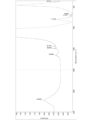
- 1 is an IR spectrum of the quaternary phosphonium salt having a phenol moiety obtained in Example 1.
- 1 is an IR spectrum of (2-[3-(trimethoxysilyl)propoxy]-5-hydroxyphenyl)triphenylphosphonium bromide before immobilization. This is the 1 H-NMR spectrum of 4,4'-[(2,2-dimethyl-1,3-propanediyl)bis(oxymethylene)]bis(1,3-dioxolan-2-one) obtained in Example 2-6.
- the immobilized quaternary phosphonium salt having a phenol moiety is composed of at least a quaternary phosphonium silane compound having a phenol moiety represented by the following general formula (1) (hereinafter referred to as "compound (1)”) and an inorganic support, and is a quaternary phosphonium salt having a phenol moiety immobilized to the inorganic support via a covalent bond between a silicon atom of compound (1) and an oxygen atom on the surface of the inorganic support:
- R 1 and R 2 each independently represent a substituted or unsubstituted monovalent hydrocarbon group having 1 to 10 carbon atoms, preferably 1 to 5 carbon atoms, and more preferably 1 to 3 carbon atoms.
- the monovalent hydrocarbon groups of R 1 and R 2 may be linear, branched, or cyclic.
- linear alkyl groups such as methyl, ethyl, n-propyl, n-butyl, n-pentyl, n-hexyl, n-heptyl, n-octyl, n-nonyl, and n-decyl; branched alkyl groups such as isopropyl, isobutyl, sec-butyl, tert-butyl, isopentyl, neopentyl, isohexyl, isoheptyl, isooctyl, and tert-octyl; cyclic alkyl groups such as cyclopentyl and cyclohexyl; alkenyl groups such as vinyl, allyl, 1-propenyl, butenyl, and methallyl (2-methyl-2-propenyl); aryl groups such as phenyl, tolyl, and xylyl; and aral alkyl
- Some or all of the hydrogen atoms of these monovalent hydrocarbon groups may be substituted with other substituents, and examples of such substituents include alkoxy groups having 1 to 3 carbon atoms, such as methoxy, ethoxy, and propoxy groups; halogen atoms such as fluorine, chlorine, and bromine; aryl groups having 6 to 10 carbon atoms, such as phenyl and tolyl groups; aralkyl groups having 7 to 10 carbon atoms, such as benzyl and phenethyl groups; cyano groups, amino groups, ester groups, ether groups, carbonyl groups, acyl groups, and sulfide groups, and any one or more of these may be used in combination.
- the substitution positions of these substituents are not particularly limited, and the number of substituents is also not limited.
- R3 represents an unsubstituted divalent hydrocarbon group having 1 to 10 carbon atoms, preferably 1 to 8 carbon atoms, more preferably 1 to 5 carbon atoms, and even more preferably 1 to 3 carbon atoms, which may contain a heteroatom.
- the divalent hydrocarbon group of R3 may be linear, branched, or cyclic, and specific examples thereof include alkylene groups such as methylene, ethylene, trimethylene, tetramethylene, isobutylene, hexamethylene, octamethylene, decamethylene, cyclohexylene, and methylenecyclohexylene; alkenylene groups such as butynylene, propenylene, butenylene, hexenylene, and octenylene; arylene groups such as phenylene; and aralkylene groups such as methylenephenylene and methylenephenylenemethylene.
- alkylene groups such as methylene, ethylene, trimethylene, tetramethylene, isobutylene, hexamethylene, octamethylene, decamethylene, cyclohexylene, and methylenecyclohexylene
- alkenylene groups such as butynylene, propenylene, buten
- R 3 is preferably an unsubstituted linear alkylene group having 1 to 8 carbon atoms, and more preferably a methylene group, a trimethylene group, or an octamethylene group, particularly from the viewpoint of easy availability of raw materials.
- divalent hydrocarbon groups may have one or more heteroatoms in the molecular chain, such as ether groups, carbonyl groups, amino groups, and sulfide groups.
- R 4 to R 6 each independently represent a substituted or unsubstituted monovalent hydrocarbon group having 1 to 10 carbon atoms, preferably 1 to 8 carbon atoms, and more preferably 1 to 6 carbon atoms.
- the monovalent hydrocarbon groups R 4 to R 6 may be linear, branched, or cyclic, and specific examples thereof include linear alkyl groups such as methyl, ethyl, n-propyl, n-butyl, n-pentyl, n-hexyl, n-heptyl, n-octyl, n-nonyl, and n-decyl; branched alkyl groups such as isopropyl, isobutyl, sec-butyl, tert-butyl, thexyl (1,1,2-trimethylpropyl), and 2-ethylhexyl; cyclic alkyl groups such as cyclopentyl and cyclohexyl;
- X represents a halogen atom such as fluorine, chlorine, bromine, or iodine. From the viewpoint of availability of raw materials, chlorine, bromine, and iodine are preferred, and from the viewpoint of achieving both catalytic activity and stability, bromine is particularly preferred.
- compound (1) examples include (2-[(trimethoxysilyl)methoxy]-5-hydroxyphenyl)triphenylphosphonium bromide, (2-[3-(trimethoxysilyl)propoxy]-5-hydroxyphenyl)triphenylphosphonium bromide, (2-[8-(trimethoxysilyl)octoxy]-5-hydroxyphenyl)triphenylphosphonium bromide, (2-[(trimethoxysilyl)methoxy]-5-hydroxyphenyl)tri(p-tolyl)phosphonium bromide, (2-[3-(trimethoxysilyl)propoxy]-5-hydroxyphenyl)triphenylphosphonium bromide, methoxysilyl)propoxy]-5-hydroxyphenyl)tri(p-tolyl)phosphonium bromide, (2-[8-(trimethoxysilyl)octoxy]-5-hydroxyphenyl)tri(p-tolyl)phosphonium bromid
- (2-[3-(trialkoxysilyl)propoxy]-5-hydroxyphenyl)triphenylphosphonium bromide, (2-[3-(dialkoxyalkylsilyl)propoxy]-5-hydroxyphenyl)triphenylphosphonium bromide, and (2-[3-(alkoxydialkylsilyl)propoxy]-5-hydroxyphenyl)triphenylphosphonium bromide are preferred, and (2-[3-(trimethoxysilyl)propoxy]-5-hydroxyphenyl)triphenylphosphonium bromide and (2-[3-(triethoxysilyl)propoxy]-5-hydroxyphenyl)triphenylphosphonium bromide are preferred.
- the inorganic carrier used in the present invention may be any material having hydroxyl groups on its surface, such as silica gel, mesoporous silica, alumina, zeolite, titania, ceria, zirconia, magnetite, etc., and from the viewpoint of availability of raw materials, silica gel, mesoporous silica, alumina, and zeolite are preferred.
- the immobilized quaternary phosphonium salt having a phenol moiety according to the present invention can be obtained by reacting a haloalkylalkoxysilane compound represented by the following general formula (2) (hereinafter referred to as "compound (2)”) with a phosphabetaine compound represented by the following general formula (3) (hereinafter referred to as "compound (3)”) in the presence of an organic solvent used as necessary to form a quaternary phosphonium silane having a phenol moiety of compound (1), and then mixing the resulting quaternary phosphonium silane having a phenol moiety with an inorganic support to form a covalent bond between the silicon atom of the quaternary phosphonium silane having a phenol moiety and the oxygen atom on the surface of the inorganic support, thereby immobilizing the quaternary phosphonium salt having a
- compound (2) include (bromoalkyl)trialkoxysilanes such as (bromomethyl)trimethoxysilane, (3-bromopropyl)trimethoxysilane, (8-bromooctyl)trimethoxysilane, (bromomethyl)triethoxysilane, (3-bromopropyl)triethoxysilane, and (8-bromooctyl)triethoxysilane; (bromomethyl)dimethoxymethylsilane, (3-bromopropyl)dimethoxymethylsilane, (8-bromooctyl)dimethoxymethylsilane, and (bromomethyl)diethoxymethylsilane.
- (bromoalkyl)trialkoxysilanes such as (bromomethyl)trimethoxysilane, (3-bromopropyl)trimethoxysilane, (8-bromooctyl)trime
- (Bromoalkyl)dialkoxyalkylsilanes such as (bromoalkyl)dimethylsilane, (3-bromopropyl)diethoxymethylsilane, (8-bromooctyl)diethoxymethylsilane; (Bromoalkyl)alkoxydialkylsilanes such as (bromomethyl)methoxydimethylsilane, (3-bromopropyl)methoxydimethylsilane, (8-bromooctyl)methoxydimethylsilane, (bromomethyl)ethoxydimethylsilane, (3-bromopropyl)ethoxydimethylsilane, (8-bromooctyl)ethoxydimethylsilane, etc.
- (3-bromopropyl)alkoxysilane is preferred, and (3-bromopropyl)trimethoxysilane, (3-bromopropyl)triethoxysilane, (3-bromopropyl)dimethoxymethylsilane, (3-bromopropyl)diethoxymethylsilane, (3-bromopropyl)methoxydimethylsilane, and (3-bromopropyl)ethoxydimethylsilane are even more preferred.
- Compound (2) may be commercially available or may be produced according to a conventional method, for example, a method of subjecting a halogenated alkenyl compound and a hydrosilane compound to a hydrosilylation reaction.
- the amount of compound (2) used is not particularly limited, but is preferably in the range of 0.9 to 1.1 moles, more preferably 0.95 to 1.05 moles, per mole of compound (3).
- compound (3) include 4-hydroxy-2-(trimethylphosphonium)phenolate, 4-hydroxy-2-(triethylphosphonium)phenolate, 4-hydroxy-2-[tri(n-propyl)phosphonium]phenolate, 4-hydroxy-2-[tri(iso-propyl)phosphonium]phenolate, 4-hydroxy-2-[tri(n-butyl)phosphonium]phenolate, 4-hydroxy-2-[tri(tert-butyl)phosphonium]phenolate, 4-hydroxy-2-(tricyclopentylphosphonium)phenolate, 4-hydroxy-2-(tricyclopentylphosphonium)phenolate, and 4-hydroxy-2-[tri(iso-propyl)phosphonium]phenolate.
- 4-hydroxy-2-(trialkylphosphonium)phenolates such as 4-hydroxy-2-(trihexylphosphonium)phenolate, 4-hydroxy-2-(tricyclohexylphosphonium)phenolate, and 4-hydroxy-2-(trioctylphosphonium)phenolate; 4-hydroxy-2-(triphenylphosphonium)phenolate, 4-hydroxy-2-[tri(p-tolyl)phosphonium]phenolate, 4-hydroxy-2-[tri(m-tolyl)phosphonium]phenolate, 4-hydroxy-2-[tri(o-tolyl)phosphonium]phenolate, 4 4-hydroxy-2-(triarylphosphonium)phenolates such as 4-hydroxy-2-[tri(p-methoxyphenyl)phosphonium]phenolate, 4-hydroxy-2-[tri(o-methoxyphenyl)phosphonium]phenolate, and 4-hydroxy-2-[tri(p-fluorophenyl)phosphonium]phenolate; 4-hydroxy-2-(methyldiphenylphosphonium)phenolate, 4-hydroxy
- Compound (3) may be commercially available or may be produced according to a conventional method, for example, a method of subjecting a tri-substituted phosphine compound to an addition reaction with 1,4-benzoquinone.
- examples of the organic solvent used as necessary include hydrocarbon solvents such as benzene, toluene, xylene, etc., ether solvents such as diethyl ether, tetrahydrofuran, 2-methyltetrahydrofuran, 4-methyltetrahydropyran, dioxane, etc., ester solvents such as ethyl acetate, butyl acetate, etc., aprotic polar solvents such as acetonitrile, N,N-dimethylformamide, N-methylpyrrolidone, etc., chlorinated hydrocarbon solvents such as dichloromethane, chloroform, etc.
- hydrocarbon solvents such as benzene, toluene, xylene, etc.
- ether solvents such as diethyl ether, tetrahydrofuran, 2-methyltetrahydrofuran, 4-methyltetrahydropyran, dioxane, etc.
- ester solvents
- solvents may be used alone or in combination of two or more.
- the amount thereof is not particularly limited, but is preferably in the range of 0.1 to 10.0 liters, more preferably 0.5 to 2.0 liters, per mole of compound (2).
- the reaction temperature is not particularly limited, but is preferably 20 to 150° C., more preferably 50 to 100° C.
- the reaction time is not particularly limited, but is preferably 1 to 40 hours, more preferably 1 to 10 hours.
- the reaction is preferably carried out in an atmosphere of an inert gas such as nitrogen or argon.
- a solvent can also be used in the immobilization step in which a solution of the above-mentioned compound (1) is mixed with an inorganic carrier to form a covalent bond between the silicon atom of the quaternary phosphonium silane having a phenol moiety and the oxygen atom on the surface of the inorganic carrier, thereby immobilizing the quaternary phosphonium salt having a phenol moiety on the inorganic carrier.
- the solvent include the same solvents as those used in the formation step of the above-mentioned compound (1).
- the amount thereof is not particularly limited, but is preferably in the range of 1.0 to 50.0 liters, more preferably 5.0 to 20.0 liters, per mole of compound (2).
- the amount of inorganic support used is not particularly limited, but from the viewpoint that a higher loading amount results in better catalytic activity, the amount is preferably in the range of 0.5 to 10.0 kg (equivalent to 2.0 mmol/g to 0.1 mmol/g) and more preferably 0.5 to 5.0 kg (equivalent to 2.0 mmol/g to 0.2 mmol/g) per mole of silicon atoms of compound (1).
- the reaction temperature is not particularly limited, but is preferably 20 to 150° C., more preferably 50 to 120° C.
- the reaction time is not particularly limited, but is preferably 1 to 40 hours, more preferably 1 to 10 hours.
- the reaction is preferably carried out in an atmosphere of an inert gas such as nitrogen or argon.
- the immobilized quaternary phosphonium salt having a phenol moiety obtained by the manufacturing method of the present invention can be further purified by purification methods such as filtration, washing, and drying under reduced pressure depending on the desired quality before use.
- purification methods such as filtration, washing, and drying under reduced pressure.
- purification by filtration, washing, and drying under reduced pressure is particularly preferred.
- compound (7) a cyclic carbonate compound represented by the following general formula (7) (hereinafter referred to as "compound (7)”) by using the obtained quaternary phosphonium silane having a phenol moiety as a catalyst to carry out a cycloaddition reaction between an epoxide represented by the following general formula (4) (hereinafter referred to as "compound (4)”) and carbon dioxide.
- R represents a substituted or unsubstituted monovalent hydrocarbon group having 1 to 18 carbon atoms, preferably 1 to 10 carbon atoms, and more preferably 1 to 5 carbon atoms, which may contain a heteroatom, a group represented by the following general formula (5), or a group represented by the following general formula (6).
- the monovalent hydrocarbon group for R may be linear, branched or cyclic, and specific examples thereof include linear alkyl groups such as methyl, ethyl, n-propyl, n-butyl, n-pentyl, n-hexyl, n-heptyl, n-octyl, n-nonyl, n-decyl, n-undecyl, n-dodecyl, n-tridecyl, n-tetradecyl, n-pentadecyl, n-hexadecyl, n-heptadecyl and n-octadecyl groups; isopropyl, isobutyl, Examples of such alkyl groups include branched alkyl groups such as sec-butyl, tert-butyl, isopentyl, neopentyl, iso
- substituted or unsubstituted linear or branched alkyl groups, alkenyl groups, aryl groups and aralkyl groups having 1 to 10 carbon atoms are preferred, and from the viewpoint of easy availability of raw materials, alkyl groups having 1 to 6 carbon atoms and aryl groups having 6 to 9 carbon atoms are preferred, with methyl groups, ethyl groups, butyl groups and phenyl groups being even more preferred.
- Some or all of the hydrogen atoms of these monovalent hydrocarbon groups may be substituted with other substituents, and examples of such substituents include the same substituents as those for R 1 and R 2 .
- substituents include the same substituents as those for R 1 and R 2 .
- an alkoxy group having 1 to 3 carbon atoms, a fluorine atom, a chlorine atom and a phenyl group are more preferable, particularly from the viewpoint of easy availability of raw materials.
- These monovalent hydrocarbon groups may have one or more heteroatoms in the molecular chain, such as ether groups, carbonyl groups, amino groups, and sulfide groups.
- R7 represents an unsubstituted divalent hydrocarbon group having 1 to 10 carbon atoms, preferably 1 to 8 carbon atoms, and more preferably 1 to 5 carbon atoms, which may contain a heteroatom.
- Examples of the divalent hydrocarbon group for R7 include the same substituents as those for R3 .
- R 7 is preferably an unsubstituted alkylene group containing a linear ether group having 3 to 10 carbon atoms, and from the viewpoint of easy availability of raw materials, a 3-methyleneoxytrimethylene group and an 8-methyleneoxyoctamethylene group are more preferable.
- R8 and R9 each independently represent a substituted or unsubstituted monovalent hydrocarbon group having 1 to 10 carbon atoms, preferably 1 to 5 carbon atoms, and more preferably 1 to 3 carbon atoms.
- Examples of the monovalent hydrocarbon group of R8 and R9 include the same substituents as those of R1 and R2 .
- R 8 and R 9 are more preferably unsubstituted linear alkyl groups and alkenyl groups having 1 to 3 carbon atoms, and particularly from the viewpoint of easy availability of raw materials, a methyl group and an ethyl group are even more preferable.
- m is an integer of 0 to 3.
- R 10 represents a substituted or unsubstituted divalent hydrocarbon group having 1 to 20 carbon atoms, preferably 1 to 10 carbon atoms, and more preferably 1 to 5 carbon atoms, which may contain a heteroatom.
- the divalent hydrocarbon group of R10 may be linear, branched or cyclic, and specific examples thereof include alkylene groups such as methylene, ethylene, trimethylene, tetramethylene, isobutylene, hexamethylene, octamethylene, decamethylene, dodecamethylene, octadecamethylene, cyclohexylene, neopentylene and methylenecyclohexylene; alkenylene groups such as butynylene, propenylene, butenylene, hexenylene and octenylene; arylene groups such as phenylene; and aralkylene groups such as methylenephenylene and methylenephenylenemethylene.
- alkylene groups such as methylene, ethylene, trimethylene, tetramethylene, isobutylene, hexamethylene, octamethylene, decamethylene, dodecamethylene, octadecamethylene, cyclohexylene
- the divalent hydrocarbon group of R may have one or more heteroatoms such as ether groups, carbonyl groups, amino groups, sulfide groups, etc. in its molecular chain, and specific examples thereof include oxyalkylene groups such as methyleneoxydimethyleneoxymethylene group and methyleneoxytetramethyleneoxymethylene group.
- R 10 is preferably an unsubstituted alkylene group having 2 to 10 carbon atoms which may contain an ether group, and from the viewpoint of easy availability of raw materials, an ethylene group, a tetramethylene group, a methyleneoxydimethyleneoxymethylene group, or a methyleneoxytetramethyleneoxymethylene group is more preferable.
- Some or all of the hydrogen atoms of these divalent hydrocarbon groups may be substituted with other substituents, and examples of the substituents include the same substituents as those of R 1 and R 2.
- substituents include the same substituents as those of R 1 and R 2.
- the other substituents particularly from the viewpoint of easy availability of raw materials, an alkoxy group having 1 to 3 carbon atoms, a phenyl group, and a fluorine atom are more preferable.
- compound (4) include aliphatic epoxides such as ethylene oxide, propylene oxide, 1,2-epoxybutane, 1,2-epoxyhexane, 1,2-epoxyoctane, and 1,2-epoxydodecane; aromatic epoxides such as styrene oxide; glycidyl ethers such as allyl glycidyl ether, butyl glycidyl ether, and benzyl glycidyl ether; 3-glycidyloxypropyltrimethoxysilane, 3-glycidyloxypropyldimethoxymethylsilane, 3-glycidyloxypropylmethoxydimethylsilane, 3-glycidyloxypropyltriethoxysilane, 3-glycidyloxypropyldiethoxymethylsilane, 3-glycidyloxypropylethoxydimethylsilane, 8-glycidyl
- silyl group-containing epoxides such as trimethoxysilane, 8-glycidyloxyoctyldimethoxymethylsilane, 8-glycidyloxyoctylmethoxydimethylsilane, 8-glycidyloxyoctyltriethoxysilane, 8-glycidyloxyoctyldiethoxymethylsilane, and 8-glycidyloxyoctylethoxydimethylsilane; and bifunctional epoxides such as 5-hexadiene diepoxide, 1,7-octadiene diepoxide, ethylene glycol diglycidyl ether, 1,4-butanediol diglycidyl ether, 1,6-hexanediol diglycidyl ether, neopentyl glycol diglycidyl ether, 2,2'-bis(4-glycidyloxyphenyl)propan
- the amount of carbon dioxide used in the cycloaddition reaction is not particularly limited, but from the viewpoint of reducing the amount of exhaust gas, it is preferably in the range of 1.0 to 10.0 mol, more preferably 1.1 to 3.0 mol, per 1 mol of compound (4).
- the pressure of carbon dioxide is not limited, but is preferably 0.09 to 10.0 MPa, and from the viewpoint of not requiring reaction equipment capable of withstanding pressure, it is more preferably in the range of 0.09 to 0.11 MPa.
- the amount of the quaternary phosphonium silane having a phenol moiety used in the cycloaddition reaction is not particularly limited, but is preferably in the range of 0.001 to 0.1 mol, more preferably 0.01 to 0.05 mol, per 1 mol of compound (4).
- the cycloaddition reaction is preferably carried out at room temperature (1 to 30° C.), preferably at 10 to 30° C.
- the reaction may be heated, and in that case, the reaction temperature is preferably 40 to 100° C., more preferably 40 to 70° C.
- the reaction time is not particularly limited, but is preferably 1 to 40 hours, more preferably 1 to 20 hours.
- a solvent can be used if necessary.
- the solvent include hydrocarbon solvents such as benzene, toluene, and xylene; ether solvents such as diethyl ether, tetrahydrofuran, 2-methyltetrahydrofuran, 4-methyltetrahydropyran, and dioxane; ester solvents such as ethyl acetate and butyl acetate; aprotic polar solvents such as acetonitrile, N,N-dimethylformamide, and N-methylpyrrolidone; and chlorinated hydrocarbon solvents such as dichloromethane and chloroform. These solvents may be used alone or in combination of two or more.
- R' represents a substituted or unsubstituted monovalent hydrocarbon group having 1 to 18 carbon atoms, which may contain a heteroatom, a group represented by the following general formula (5), or a group represented by the following general formula (8).
- the monovalent hydrocarbon group of R' is the same substituent as when R is a substituted or unsubstituted monovalent hydrocarbon group having 1 to 18 carbon atoms, which may contain a heteroatom.
- compound (7) include aliphatic cyclic carbonates such as ethylene carbonate, propylene carbonate, 4-ethyl-1,3-dioxolan-2-one, 4-butyl-1,3-dioxolan-2-one, 4-hexyl-1,3-dioxolan-2-one, and 4-octyl-1,3-dioxolan-2-one; aromatic cyclic carbonates such as 4-phenyl-1,3-dioxolan-2-one; alkoxymethyl cyclic carbonates such as 4-[(2-propen-1-yloxy)methyl]-1,3-dioxolan-2-one, 4-(butoxymethyl)-1,3-dioxolan-2-one, and 4-(benzyloxymethyl)-1,3-dioxolan-2-one; and 4-[(3-trimethoxysilyl)methyl]-1,3-dioxolan-2-one.
- aromatic cyclic carbonates such as 4-pheny
- the cyclic carbonate compound obtained by the manufacturing method of the present invention can be further purified by various purification methods such as distillation, filtration, washing, column separation, etc., depending on the desired quality, before use. Purification by distillation is particularly preferred to achieve high purity.
- the reaction rate was expressed as the area ratio % of the raw material epoxide to the product cyclic carbonate, as determined by gas chromatography or 1 H-NMR analysis.
- the purity of the cyclic carbonate is a value measured under the following gas chromatography measurement conditions.
- the resulting reaction mixture was diluted with 220 mL of toluene, and then added to 200.0 g of silica gel (trade name: Wakogel (registered trademark) C-200, manufactured by Fujifilm Wako Pure Chemical Industries, Ltd.) that had been dried at 120°C/30 Pa for 2 hours, and stirred at 80°C for 3 hours.
- the reaction mixture was cooled to room temperature, and then filtered through a PTFE membrane (pressure of 0.3 MPa) with a pore size of 0.2 ⁇ m.
- the recovered silica gel was washed three times with a mixed solution of 140 mL of acetone and 60 mL of methanol to obtain a treated silica gel.
- the treated silica gel was dried at 80°C/30 Pa for 2 hours to obtain 236.0 g of an immobilized quaternary phosphonium salt having a phenol moiety.
- Elemental analysis confirmed that the resulting immobilized quaternary phosphonium salt having a phenol moiety contained 8.26% by mass of carbon. Furthermore, the phosphorus content in the immobilized quaternary phosphonium salt having a phenol moiety was measured by X-ray fluorescence analysis (XRF) to be 0.65% by mass. Furthermore, the bromine content in the immobilized quaternary phosphonium salt having a phenol moiety was measured by potentiometric titration to be 1.82% by mass.
- XRF X-ray fluorescence analysis
- Example 2-2 The inside of a four-neck flask equipped with a stirrer, reflux condenser, dropping funnel and thermometer was replaced with nitrogen, and while nitrogen gas was passed through the open end at the top of the reflux condenser to prevent outside air from being mixed in, 47.6 g (P: 10.0 mmol) of the immobilized quaternary phosphonium salt having a phenol moiety synthesized in Example 1, 29.0 g (500 mmol) of propylene oxide and 50 mL of toluene were charged and stirred.
- P 10.0 mmol
- Example 2-3 The inside of a four-neck flask equipped with a stirrer, reflux condenser, dropping funnel and thermometer was replaced with nitrogen, and while nitrogen gas was passed through the open end at the top of the reflux condenser to prevent outside air from mixing in, 25.0 g (P: 5.3 mmol) of the immobilized quaternary phosphonium salt having a phenol moiety synthesized in Example 1 and 50.0 g (384 mmol) of butyl glycidyl ether were charged and stirred.
- the reusability of the silica gel which is the immobilized quaternary phosphonium salt having a phenol moiety, recovered above, as a catalyst was confirmed. Specifically, the recovered silica gel was washed three times with toluene as described above, and then dried at 80° C./30 Pa for two hours. Using this silica gel, the cycloaddition reaction of butyl glycidyl ether was carried out four times in the same manner as described above.
- Example 2-4 The inside of a four-neck flask equipped with a stirrer, reflux condenser, dropping funnel and thermometer was replaced with nitrogen, and while nitrogen gas was passed through the open end at the top of the reflux condenser to prevent outside air from mixing in, 62.5 g (P: 13.1 mmol) of the immobilized quaternary phosphonium salt having a phenol moiety synthesized in Example 1 and 118.0 g (500 mmol) of 3-glycidyloxypropyltrimethoxysilane were charged and stirred.
- the reaction mixture was cooled to room temperature and filtered through a PTFE membrane with a pore size of 0.2 ⁇ m (pressure of 0.3 MPa), and the recovered silica gel was washed three times with 50 mL of toluene.
- the obtained filtrate was distilled at 30 Pa to obtain 4-[(3-trimethoxysilyl)propoxymethyl]-1,3-dioxolan-2-one in an isolated yield of 77.6% and purity of 99.3%.
- Example 2-5 The inside of a four-neck flask equipped with a stirrer, reflux condenser, dropping funnel and thermometer was replaced with nitrogen, and while nitrogen gas was passed through the open end at the top of the reflux condenser to prevent outside air from mixing in, 42.0 g (P: 8.8 mmol) of the immobilized quaternary phosphonium salt having a phenol moiety synthesized in Example 1 and 92.0 g (500 mmol) of 1,2-epoxydodecane were charged and stirred.
- reaction solution was stirred for 8 hours while bubbling carbon dioxide at normal pressure at a rate of 62.2 mL/min (1334 mmol for 8 hours of supply).
- a small amount of the reaction mixture was sampled, and the reaction rate was calculated by gas chromatography, and the reaction rate from 1,2-epoxydodecane to 4-decyl-1,3-dioxolane-2-one was 97.4%.
- the reaction mixture was cooled to room temperature and filtered through a PTFE membrane with a pore size of 0.2 ⁇ m (pressure of 0.3 MPa), and the recovered silica gel was washed three times with 50 mL of toluene.
- the obtained filtrate was distilled at 30 Pa to obtain 4-decyl-1,3-dioxolane-2-one in an isolated yield of 91.4% and purity of 99.3%.
- Example 2-6 The inside of a four-neck flask equipped with a stirrer, reflux condenser, dropping funnel and thermometer was replaced with nitrogen, and 62.5 g (P: 13.1 mmol) of the immobilized zinc complex having a guanidine ligand synthesized in Example 1 and 108.1 g (500 mmol) of neopentyl glycol diglycidyl ether were charged and stirred while nitrogen gas was passed through the open end at the top of the reflux condenser to prevent outside air from mixing in.
- the temperature was adjusted to 70° C., and carbon dioxide was bubbled into the reaction solution at normal pressure at a rate of 62.2 mL/min (2668 mmol for 16 hours of supply) while stirring for 16 hours.
- the reaction mixture was filtered through a PTFE membrane (pressure of 0.3 MPa) with a pore size of 0.2 ⁇ m while keeping the temperature at 70° C., and the recovered silica gel was washed three times with 50 mL of acetone.
- the obtained filtrate was concentrated with an evaporator and then dried at 100° C./30 Pa for 1 hour to obtain a product mainly composed of 4,4′-[(2,2-dimethyl-1,3-propanediyl)bis(oxymethylene)]bis(1,3-dioxolan-2-one) in a yield of 94.6%.
- reaction mixture was sampled, and the reaction rate was calculated by gas chromatography, and the reaction rate from allyl glycidyl ether to 4-[(2-propen-1-yloxy)methyl]-1,3-dioxolan-2-one was 34.9%.
- the reaction mixture was filtered through a PTFE membrane with a pore size of 0.2 ⁇ m (pressure of 0.3 MPa), and the recovered silica gel was washed three times with 37 mL of toluene. The obtained filtrate was distilled at 0.2 kPa to obtain 4-[(2-propen-1-yloxy)methyl]-1,3-dioxolan-2-one in an isolated yield of 20.5% and a purity of 99.8%.
- Example 2-3 the reusability of the immobilized quaternary phosphonium salt having a phenol moiety according to the present invention as a catalyst was confirmed.
- the reaction rate to 4-butoxymethyl-1,3-dioxolan-2-one gradually decreased, but it was shown that the immobilized quaternary phosphonium salt having a phenol moiety could be recovered and reused without a significant decrease in catalytic activity.
- Comparative Example 1 the phosphonium bromide salt immobilized on silica gel described in Patent Document 1 was used as a catalyst to carry out a cycloaddition reaction between allyl glycidyl ether and carbon dioxide at normal pressure and room temperature, as in Example 2-1.
- the target product 4-[(2-propen-1-yloxy)methyl]-1,3-dioxolan-2-one, was only produced at a low reaction rate, and the isolation yield was accordingly extremely low.
Landscapes
- Chemical & Material Sciences (AREA)
- Organic Chemistry (AREA)
- Engineering & Computer Science (AREA)
- Materials Engineering (AREA)
- Chemical Kinetics & Catalysis (AREA)
- Health & Medical Sciences (AREA)
- Life Sciences & Earth Sciences (AREA)
- Biochemistry (AREA)
- General Health & Medical Sciences (AREA)
- Molecular Biology (AREA)
- Organic Low-Molecular-Weight Compounds And Preparation Thereof (AREA)
- Catalysts (AREA)
Priority Applications (3)
| Application Number | Priority Date | Filing Date | Title |
|---|---|---|---|
| JP2025513851A JPWO2024214491A1 (https=) | 2023-04-14 | 2024-03-18 | |
| KR1020257037573A KR20260006585A (ko) | 2023-04-14 | 2024-03-18 | 페놀 부위를 갖는 고정화 제4급 포스포늄염 및 그 제조 방법, 그리고 이것을 사용한 환상 카르보네이트의 제조 방법 |
| EP24788521.3A EP4696696A1 (en) | 2023-04-14 | 2024-03-18 | Immobilized quaternary phosphonium salt having phenol domain, method for producing same, and cyclic carbonate production method using same |
Applications Claiming Priority (2)
| Application Number | Priority Date | Filing Date | Title |
|---|---|---|---|
| JP2023066124 | 2023-04-14 | ||
| JP2023-066124 | 2023-04-14 |
Publications (1)
| Publication Number | Publication Date |
|---|---|
| WO2024214491A1 true WO2024214491A1 (ja) | 2024-10-17 |
Family
ID=93059187
Family Applications (1)
| Application Number | Title | Priority Date | Filing Date |
|---|---|---|---|
| PCT/JP2024/010487 Ceased WO2024214491A1 (ja) | 2023-04-14 | 2024-03-18 | フェノール部位を有する固定化第四級ホスホニウム塩およびその製造方法、並びにこれを用いた環状カーボネートの製造方法 |
Country Status (5)
| Country | Link |
|---|---|
| EP (1) | EP4696696A1 (https=) |
| JP (1) | JPWO2024214491A1 (https=) |
| KR (1) | KR20260006585A (https=) |
| TW (1) | TW202506698A (https=) |
| WO (1) | WO2024214491A1 (https=) |
Citations (7)
| Publication number | Priority date | Publication date | Assignee | Title |
|---|---|---|---|---|
| JP2008296066A (ja) | 2007-05-29 | 2008-12-11 | Okayama Univ | 環状炭酸エステルの合成のための固定化触媒に用いる触媒架橋剤の製造方法、及びその固定化触媒の製造方法、及びその固定化触媒に用いる触媒架橋剤、及びその固定化触媒 |
| JP2009513535A (ja) * | 2003-06-30 | 2009-04-02 | シエル・インターナシヨナル・リサーチ・マートスハツペイ・ベー・ヴエー | プロピレンカーボネートの製造方法 |
| JP2009530240A (ja) * | 2006-03-13 | 2009-08-27 | シエル・インターナシヨナル・リサーチ・マートスハツペイ・ベー・ヴエー | アルキレンカーボネートの製造方法ならびにこのように製造されたアルキレンカーボネートの、アルカンジオールおよびジアルキルカーボネートの製造における使用 |
| WO2014175262A1 (ja) * | 2013-04-23 | 2014-10-30 | 丸善石油化学株式会社 | 環状カーボネート合成用触媒の製造方法 |
| WO2015008854A1 (ja) | 2013-07-19 | 2015-01-22 | 独立行政法人産業技術総合研究所 | 環状カーボネートの製造方法 |
| WO2015008853A1 (ja) * | 2013-07-19 | 2015-01-22 | 丸善石油化学株式会社 | 環状カーボネートの連続的製造方法 |
| JP2020189794A (ja) * | 2019-05-21 | 2020-11-26 | 国立大学法人信州大学 | ルイス酸・ハロゲン化物イオン複合型触媒およびルイス酸・ハロゲン化物イオン複合型触媒による二酸化炭素固定化方法 |
-
2024
- 2024-03-18 JP JP2025513851A patent/JPWO2024214491A1/ja active Pending
- 2024-03-18 WO PCT/JP2024/010487 patent/WO2024214491A1/ja not_active Ceased
- 2024-03-18 EP EP24788521.3A patent/EP4696696A1/en active Pending
- 2024-03-18 KR KR1020257037573A patent/KR20260006585A/ko active Pending
- 2024-04-12 TW TW113113743A patent/TW202506698A/zh unknown
Patent Citations (7)
| Publication number | Priority date | Publication date | Assignee | Title |
|---|---|---|---|---|
| JP2009513535A (ja) * | 2003-06-30 | 2009-04-02 | シエル・インターナシヨナル・リサーチ・マートスハツペイ・ベー・ヴエー | プロピレンカーボネートの製造方法 |
| JP2009530240A (ja) * | 2006-03-13 | 2009-08-27 | シエル・インターナシヨナル・リサーチ・マートスハツペイ・ベー・ヴエー | アルキレンカーボネートの製造方法ならびにこのように製造されたアルキレンカーボネートの、アルカンジオールおよびジアルキルカーボネートの製造における使用 |
| JP2008296066A (ja) | 2007-05-29 | 2008-12-11 | Okayama Univ | 環状炭酸エステルの合成のための固定化触媒に用いる触媒架橋剤の製造方法、及びその固定化触媒の製造方法、及びその固定化触媒に用いる触媒架橋剤、及びその固定化触媒 |
| WO2014175262A1 (ja) * | 2013-04-23 | 2014-10-30 | 丸善石油化学株式会社 | 環状カーボネート合成用触媒の製造方法 |
| WO2015008854A1 (ja) | 2013-07-19 | 2015-01-22 | 独立行政法人産業技術総合研究所 | 環状カーボネートの製造方法 |
| WO2015008853A1 (ja) * | 2013-07-19 | 2015-01-22 | 丸善石油化学株式会社 | 環状カーボネートの連続的製造方法 |
| JP2020189794A (ja) * | 2019-05-21 | 2020-11-26 | 国立大学法人信州大学 | ルイス酸・ハロゲン化物イオン複合型触媒およびルイス酸・ハロゲン化物イオン複合型触媒による二酸化炭素固定化方法 |
Also Published As
| Publication number | Publication date |
|---|---|
| KR20260006585A (ko) | 2026-01-13 |
| JPWO2024214491A1 (https=) | 2024-10-17 |
| TW202506698A (zh) | 2025-02-16 |
| EP4696696A1 (en) | 2026-02-18 |
Similar Documents
| Publication | Publication Date | Title |
|---|---|---|
| JP5862479B2 (ja) | 四級アンモニウム塩、それから得られる酸化触媒、及び該触媒を用いるエポキシ誘導体の製造方法 | |
| US9290522B2 (en) | Functionalised materials, process for the production and uses thereof | |
| Hajipour et al. | Silica grafted ammonium salts based on DABCO as heterogeneous catalysts for cyclic carbonate synthesis from carbon dioxide and epoxides | |
| JP6365445B2 (ja) | アミノアルキルアルコキシジシロキサン化合物及びその製造方法 | |
| JP7782695B2 (ja) | グアニジン配位子を有する固定化亜鉛錯体およびその製造方法、並びにこれを用いた環状カーボネートの製造方法 | |
| WO2024214491A1 (ja) | フェノール部位を有する固定化第四級ホスホニウム塩およびその製造方法、並びにこれを用いた環状カーボネートの製造方法 | |
| JP5450884B2 (ja) | シラオキサシクレン | |
| JP2024152123A (ja) | フェノール部位を有する第四級ホスホニウムシランおよびその製造方法、並びにこれを用いた環状カーボネートの製造方法 | |
| JP7655278B2 (ja) | グアニジン配位子を有する亜鉛錯体およびその製造方法、並びにこれを用いた環状カーボネートの製造方法 | |
| KR101249352B1 (ko) | 에테르 그룹과 디알킬아미노 그룹이 동시에 포함된 알킬알콕시실란 화합물과 이의 제조방법 | |
| JPS5970691A (ja) | 水素含有シリルカ−バメ−ト | |
| JP2014105163A (ja) | アルコキシシリル基含有ノルボルニル化合物の製造方法 | |
| EP1638982B1 (en) | Process for the production of bis(trimethylsilyloxy)silylalkylglycerol methacrylates | |
| KR20060030063A (ko) | 비스(트리메틸실록시)실릴알킬글리세롤 메타크릴레이트의제조방법 | |
| JPS6356209B2 (https=) | ||
| US9593134B2 (en) | Complexes useful as active components in supported epoxidation catalysts | |
| US11312734B2 (en) | Nitrogen-containing cyclic organoxysilane compound and method for producing the same | |
| KR20250152004A (ko) | 환상 아미노오르가녹시실란 화합물 및 그의 제조 방법 | |
| WO2024106213A1 (ja) | ジシロキサン化合物の製造方法 | |
| WO2026079020A1 (ja) | β-ケトエステル構造含有有機ケイ素化合物の製造方法 | |
| JPWO2005044828A1 (ja) | 環状有機ケイ素化合物の製造方法並びにアルコール性水酸基を有するケイ素系樹脂及びその製造方法 | |
| JPWO2005077960A1 (ja) | 有機ケイ素化合物の製造方法並びにジオールを有する有機ケイ素樹脂及びその製造方法 | |
| JP2007537159A (ja) | エポキシオルガノアルコキシシランの製造方法 | |
| KR20250125382A (ko) | 할로알킬오르가노실란의 이리듐 촉매 하이드로실릴화 합성에서의 과산 촉진제 | |
| EP4006042A1 (en) | Method for producing nitrogen-containing organoxysilane compound |
Legal Events
| Date | Code | Title | Description |
|---|---|---|---|
| 121 | Ep: the epo has been informed by wipo that ep was designated in this application |
Ref document number: 24788521 Country of ref document: EP Kind code of ref document: A1 |
|
| ENP | Entry into the national phase |
Ref document number: 2025513851 Country of ref document: JP Kind code of ref document: A |
|
| WWE | Wipo information: entry into national phase |
Ref document number: 2025513851 Country of ref document: JP |
|
| WWE | Wipo information: entry into national phase |
Ref document number: KR1020257037573 Country of ref document: KR |
|
| WWE | Wipo information: entry into national phase |
Ref document number: 2024788521 Country of ref document: EP |
|
| NENP | Non-entry into the national phase |
Ref country code: DE |
|
| ENP | Entry into the national phase |
Ref document number: 2024788521 Country of ref document: EP Effective date: 20251114 |
|
| ENP | Entry into the national phase |
Ref document number: 2024788521 Country of ref document: EP Effective date: 20251114 |
|
| ENP | Entry into the national phase |
Ref document number: 2024788521 Country of ref document: EP Effective date: 20251114 |
|
| ENP | Entry into the national phase |
Ref document number: 2024788521 Country of ref document: EP Effective date: 20251114 |
|
| ENP | Entry into the national phase |
Ref document number: 2024788521 Country of ref document: EP Effective date: 20251114 |
|
| ENP | Entry into the national phase |
Ref document number: 2024788521 Country of ref document: EP Effective date: 20251114 |
|
| ENP | Entry into the national phase |
Ref document number: 2024788521 Country of ref document: EP Effective date: 20251114 |
|
| ENP | Entry into the national phase |
Ref document number: 2024788521 Country of ref document: EP Effective date: 20251114 |
|
| ENP | Entry into the national phase |
Ref document number: 2024788521 Country of ref document: EP Effective date: 20251114 |
|
| WWP | Wipo information: published in national office |
Ref document number: 2024788521 Country of ref document: EP |