WO2024201762A1 - 品出し支援装置、品出し支援システム、品出し支援方法、及び非一時的なコンピュータ可読媒体 - Google Patents
品出し支援装置、品出し支援システム、品出し支援方法、及び非一時的なコンピュータ可読媒体 Download PDFInfo
- Publication number
- WO2024201762A1 WO2024201762A1 PCT/JP2023/012723 JP2023012723W WO2024201762A1 WO 2024201762 A1 WO2024201762 A1 WO 2024201762A1 JP 2023012723 W JP2023012723 W JP 2023012723W WO 2024201762 A1 WO2024201762 A1 WO 2024201762A1
- Authority
- WO
- WIPO (PCT)
- Prior art keywords
- product
- displayed
- products
- worker
- stocking
- Prior art date
- Legal status (The legal status is an assumption and is not a legal conclusion. Google has not performed a legal analysis and makes no representation as to the accuracy of the status listed.)
- Ceased
Links
Images

Classifications
-
- G—PHYSICS
- G06—COMPUTING OR CALCULATING; COUNTING
- G06Q—INFORMATION AND COMMUNICATION TECHNOLOGY [ICT] SPECIALLY ADAPTED FOR ADMINISTRATIVE, COMMERCIAL, FINANCIAL, MANAGERIAL OR SUPERVISORY PURPOSES; SYSTEMS OR METHODS SPECIALLY ADAPTED FOR ADMINISTRATIVE, COMMERCIAL, FINANCIAL, MANAGERIAL OR SUPERVISORY PURPOSES, NOT OTHERWISE PROVIDED FOR
- G06Q30/00—Commerce
- G06Q30/06—Buying, selling or leasing transactions
Definitions
- the present disclosure relates to a stocking support device, a stocking support system, a stocking support method, and a non-transitory computer-readable medium.
- Patent Document 1 describes a product management system that, when the number of products displayed on the shelves falls below a specified number, sends a request to a store clerk to replenish the products to that clerk's portable radio.
- the present disclosure has been made to solve these problems, and aims to provide a stocking support device, a stocking support system, a stocking support method, and a non-transitory computer-readable medium that can improve the efficiency of stocking operations.
- the stocking support device includes a product determination means for determining one or more second products, different from a first product, that are to be displayed within a predetermined range from the display location of the first product designated as a product to be displayed on a product shelf, a quantity determination means for determining the number of the first products to be displayed and the number of each of the one or more second products to be displayed, and a notification means for notifying a worker of the number of the first products to be displayed and the number of each of the one or more second products to be displayed.
- the stocking support system comprises a stocking support device that supports a worker in stocking products, and a terminal device used by the worker, and the stocking support device comprises a product determination means that determines one or more second products different from a first product that is designated as a product to be displayed on a product shelf and that are displayed within a predetermined range from the display location of the first product, a quantity determination means that determines the number of the first products to be displayed and the number of each of the one or more second products to be displayed, and a notification means that notifies the terminal device of the number of the first products to be displayed and the number of each of the one or more second products to be displayed.
- the stocking support method is a method in which a computer determines one or more second products, different from a first product, to be displayed within a predetermined range from the display location of the first product designated as a product to be displayed on a product shelf, determines the number of the first product to be displayed and the number of each of the one or more second products to be displayed, and notifies a worker of the number of the first product to be displayed and the number of each of the one or more second products to be displayed.
- a non-transitory computer-readable medium stores a program that causes a computer to execute a process of determining one or more second products, different from a first product, to be displayed within a predetermined range from a display location of a first product designated as a product to be displayed on a product shelf, a process of determining the number of the first products to be displayed and the number of each of the one or more second products to be displayed, and a process of notifying a worker of the number of the first products to be displayed and the number of each of the one or more second products to be displayed.
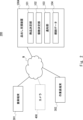
- FIG. 1 is a block diagram showing a configuration of a stock picking support device according to a first embodiment.
- FIG. FIG. 11 is a diagram showing the configuration of a stocking support system according to a second embodiment.
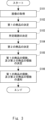
- 13 is a flowchart illustrating an example of a stocking support method according to a second embodiment.
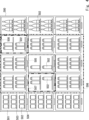
- FIG. 11 is a diagram showing an example of an acquired image according to the second embodiment.
- Fig. 1 is a block diagram showing the configuration of a stocking support device 100 according to embodiment 1.
- Stocking support device 100 supports an operator such as a store clerk in taking out products from a store warehouse and arranging the products on shelves in a store (hereinafter also referred to as "stocking").
- stocking support device 100 includes a product determination unit 101, a quantity determination unit 102, a notification unit 103, etc.
- the product determination unit 101 is also called a product determination means.
- the product determination unit 101 determines one or more second products, different from a first product, to be displayed within a predetermined range from the display location of the first product designated as a product to be displayed on the product shelf.
- the first product is a product displayed on the product shelf where the ratio of the number of products actually displayed to the number that should be displayed is equal to or less than a predetermined ratio.
- the first product means a product displayed on the product shelf that needs to be replenished.
- the second product is a product that should be replenished or displayed together with the replenishment of the first product on the product shelf.
- the second product is a product displayed within a predetermined range from the display location of the first product, and where the number of products actually displayed is less than the number that should be displayed.
- the quantity determination unit 102 is also called a quantity determination means.
- the quantity determination unit 102 determines the number of first products to be displayed and the number of each of one or more second products to be displayed.
- the notification unit 103 is also called a notification means.
- the notification unit 103 notifies the worker of the number of first products on display and the number of each of the one or more second products on display. Specifically, the notification unit 103 transmits the number of first products on display and the number of each of the one or more second products on display to a terminal device used by the worker.
- the above-described stocking support device 100 can determine a second product to be displayed within a predetermined range from the display location of the first product when a first product to be replenished on a product shelf is determined.
- the stocking support device 100 can also determine the number of first products to be displayed and the number of each of one or more second products to be displayed, and notify the worker of these numbers. This allows the worker to replenish or display the second product that is displayed within a predetermined range from the display location of the first product when replenishing the first product on the product shelf. Because the display location of the second product is within a predetermined range of the first display location, the travel distance of the worker to replenish the second product can be limited to the predetermined range. Therefore, a stocking support device 100 can be provided that can improve the efficiency of stocking work.
- the stocking support device 100 includes a processor, memory, and storage device, which are not shown in the figure.
- the storage device also stores a computer program that implements the processing of the stocking support method according to this embodiment.
- the processor then loads the computer program from the storage device into the memory and executes the computer program. In this way, the processor realizes the functions of a product determination unit 101, a quantity determination unit 102, and a notification unit 103.
- the product determination unit 101, the quantity determination unit 102, and the notification unit 103 may each be realized by dedicated hardware. Furthermore, some or all of the components of each device may be realized by general-purpose or dedicated circuits, processors, etc., or a combination of these. These may be configured by a single chip, or may be configured by multiple chips connected via a bus. Some or all of the components of each device may be realized by a combination of the above-mentioned circuits, etc., and programs. Furthermore, a CPU (Central Processing Unit), GPU (Graphics Processing Unit), FPGA (field-programmable gate array), etc. may be used as the processor.
- CPU Central Processing Unit
- GPU Graphics Processing Unit
- FPGA field-programmable gate array
- the multiple information processing devices, circuits, etc. may be centrally located or distributed.
- the information processing devices, circuits, etc. may be realized as a client-server system, cloud computing system, etc., in a form in which each is connected via a communication network.
- the functions of the stocking support device 100 may be provided in the form of SaaS (Software as a Service).
- FIG. 2 is a diagram showing a configuration of a stocking support system 200 according to the second embodiment.
- the stocking support system 200 includes a stocking support device 100A that supports a worker in stocking, and a warehouse terminal 301 and a worker terminal 302 as terminal devices used by the worker.
- the stocking support device 100A, the warehouse terminal 301, and the worker terminal 302 are capable of communicating with each other via the Internet N.
- the warehouse terminal 301 is a terminal device used in the warehouse, and the worker terminal 302 is a terminal device carried by the worker.
- the stocking support system 200 may also include a camera 400.
- the camera 400 is, for example, a store camera installed in a store or a camera mounted on a patrol robot that patrols the store, and takes pictures of the side of the product shelf on which products are displayed over time.
- the camera 400 may also be a camera mounted on the worker terminal 302.
- the stocking support device 100A includes a product determination unit 101, a quantity determination unit 102, a notification unit 103, shelf allocation data 104, and the like.
- the product determination unit 101 acquires an image of a product shelf (hereinafter, also referred to as an "acquired image") captured by the camera 400. Furthermore, the product determination unit 101 determines a first product based on the acquired image. Specifically, the product determination unit 101 first performs image processing on the acquired image to calculate the "ratio of the number of products that are actually displayed to the number that should be displayed" of the products to be displayed on the product shelf.
- the product determination unit 101 performs image processing on the acquired image to detect vacant spaces where no products are displayed. Next, the product determination unit 101 calculates the size of the vacant space based on the number of pixels in the image area corresponding to the vacant space. The product determination unit 101 also identifies the shelf position of the vacant space on the product shelf, and identifies the products to be displayed in the vacant space and the "number that should be displayed” of the products by referring to the shelf allocation data 104 (described later). Next, the product determination unit 101 calculates the "number actually displayed” of the products based on the size of the vacant space. Then, the product determination unit 101 calculates the "ratio of the number actually displayed to the number that should be displayed" of the products.
- the product determination unit 101 may also perform image recognition processing of a single product in the acquired image, and calculate the number of times that single product is displayed as the "number actually displayed.” Next, the product determination unit 101 may refer to the shelf allocation data 104 to acquire the "number that should be displayed” of that single product. The product determination unit 101 may then calculate the "ratio of the number that is actually displayed to the number that should be displayed” for that single product. The product determination unit 101 may perform this image processing on all products displayed on that product shelf, and calculate the "ratio of the number that is actually displayed to the number that should be displayed” of the products displayed on that product shelf.
- the product determination unit 101 determines the first product based on the calculated "ratio of the number of products actually displayed to the number of products to be displayed (hereinafter, simply referred to as "ratio"). Specifically, the product determination unit 101 determines the product with the lowest ratio, which is equal to or lower than a predetermined ratio, as the first product.
- the first product may be arbitrarily designated by the worker.
- the product determination unit 101 determines one or more second products. For example, the product determination unit 101 determines as the second products products that are displayed within a predetermined range from the display location of the first product and in which the "actual number of products displayed" is less than the "number of products that should be displayed". Specifically, the product determination unit 101 performs image processing on the acquired image to detect vacant spaces where no products are displayed. Next, the product determination unit 101 performs image processing on the acquired image to identify the shelf position of the vacant space on the product shelf. Next, the product determination unit 101 refers to the shelf allocation data 104 to determine whether the vacant space is within the predetermined range.
- the product determination unit 101 refers to the shelf allocation data 104 to obtain identification information of the product to be displayed in the vacant space.
- the identification information of the product is the name, identification number, etc. of the product.
- the product determination unit 101 may specify the position of the first product on the acquired image, and detect whether or not there is an empty space in the acquired image in which no product is displayed within the specified range centered on the position of the first product on the acquired image.
- the "position of the first product on the acquired image" is, for example, the image coordinates of the center of the range in which the first product is displayed. If there is an empty space in the specified range, the product determination unit 101 may specify the product to be displayed in the empty space by image recognition processing from an image of the acquired image taken a specified time before. If there is an empty space in the specified range, the product determination unit 101 may specify the product to be displayed in the empty space by image recognition processing on an image of a shelf label corresponding to the empty space in the acquired image.
- a shelf label is a label attached to a product shelf that displays the product name. In these cases, the product determination unit 101 can determine the second product without referring to the shelf allocation data 104.
- the product determination unit 101 may also determine, as the second product, a product whose ratio is equal to or less than the predetermined ratio and that is displayed within a predetermined range from the display location of the first product.
- the product determination unit 101 may refer to the warehouse inventory data and exclude products that are not in the warehouse from the candidates for the second product.
- the inventory data is data that associates product identification information with the number of the product stored in the warehouse, and may be stored in advance in the stocking support device 100A.
- the product identification information is the product name, identification number, etc.
- the product determination unit 101 may also determine the size of the predetermined range depending on the time period during which the worker puts out the products. For example, the product determination unit 101 may set the predetermined range to be narrower than the predetermined width during the time period when the number of customers is at its highest. This reduces the number of types of products to be replenished at one time, but allows a larger number of each product to be replenished, preventing stockouts. On the other hand, the product determination unit 101 may set the predetermined range to be wider than the predetermined width during the time period when the number of customers is relatively low. This allows a larger number of types of products to be replenished at one time, improving the efficiency of the stocking work. Furthermore, the product determination unit 101 may set the predetermined range to be wider than the predetermined width during the time period when the number of customers is at its highest. This allows more types of products to be replenished at once, and prevents more types of products from running out of stock.
- the quantity determination unit 102 determines the number of the first product to be displayed and the number of each of the one or more second products to be displayed.
- “the number to be displayed” means the number of products to be replenished.
- the quantity determination unit 102 may determine the number of the first product to be displayed according to the "number actually displayed” and “number to be displayed” of the first product calculated by the product determination unit 101.
- the quantity determination unit 102 may also calculate the "number actually displayed” of the second product in a similar manner to the product determination unit 101, obtain the "number to be displayed” of the second product by referring to the shelf allocation data 104, and determine the number of the second product to be displayed according to the "number actually displayed” and “number to be displayed” of the second product.
- the quantity determination unit 102 may also determine the number of the first product to be displayed and the number of each of the one or more second products to be displayed, depending on the load capacity of the cart used by the worker to stock the products. Furthermore, when multiple carts are used for one stocking, such as when multiple carts are connected together to stock the products, the quantity determination unit 102 may determine the number of the first product to be displayed and the number of each of the one or more second products to be displayed, depending on the number of carts used for one stocking and the load capacity of the carts.
- the quantity determination unit 102 may also determine the number of first products to be displayed, depending on the predicted sales of the first product predicted based on the day the worker will put out the products and the number of first products actually displayed on the product shelves. Similarly, the quantity determination unit 102 may determine the number of each of one or more second products to be displayed, depending on the predicted sales of the second product predicted based on the day the worker will put out the products and the number of second products actually displayed on the product shelves.
- the "predicted sales of a product predicted based on the day the worker will put out the products” refers to the predicted sales of the product based on, for example, the sales of the product in the past, such as in the morning or one year ago, whether the product is on sale, whether the product is related to a seasonal event, the weather conditions of the day, etc.
- the notification unit 103 transmits to the warehouse terminal 301 or the worker terminal 302 the number of the first product displayed and the number of each of the one or more second products displayed.
- the notification unit 103 may transmit these numbers together with the acquired image to the warehouse terminal 301 or the worker terminal 302.
- the notification unit 103 may transmit to the warehouse terminal 301 or the worker terminal 302 the above-mentioned ratios of the first product and the second product instead of or together with these numbers to the warehouse terminal 301 or the worker terminal 302.
- the shelf allocation data 104 is data that associates product identification information, the shelf position on the shelf where the product is displayed, and the number of products that should be displayed.
- product identification information is the product name, identification number, etc.
- the product determination unit 101 acquires an image of a product shelf photographed by the camera 400 as an acquired image (step S101).
- An example of the acquired image 500 is shown in FIG.
- the product shelf is divided into multiple storage sections 501, and products 502 are displayed in each storage section 501.
- Each storage section 501 is further divided by one or more shelves 503.
- Each storage section 501 is also attached with a shelf label 504 that displays the product name of the product displayed in that storage section 501.
- the product shelf is divided into a total of 15 storage sections 501, 5 horizontally and 3 vertically.
- the product determination unit 101 determines a first product based on the acquired image 500 (step S102). Specifically, the product determination unit 101 processes the acquired image to calculate the "ratio of the number of products actually displayed to the number that should be displayed" of the products to be displayed on the product shelf. The product determination unit 101 then determines the product with the lowest ratio below a predetermined ratio as the first product. For example, in the example shown in FIG. 4, the product 502 displayed in the storage unit 501 surrounded by the dashed line 505 has the lowest ratio. Therefore, the product determination unit 101 determines the product 502 displayed in the storage unit 501 surrounded by the dashed line 505 as the first product.
- the product determination unit 101 determines the size of the predetermined range for determining the second product (step S103).
- the predetermined range 506 determined by the product determination unit 101 is shown by a dashed line.
- the product determination unit 101 determines one or more second products to be displayed within a predetermined range 506 from the display location of the first product (step S104). Specifically, the product determination unit 101 performs image processing on the acquired image to detect an empty space within the predetermined range 506 where no product is displayed, and determines the product to be displayed in that empty space as the second product. For example, in the example shown in FIG. 4, there is an empty space in the storage unit 501 surrounded by the two-dot chain lines 507 and 508. Therefore, the product determination unit 101 determines the product 502 displayed in the storage unit 501 surrounded by the two-dot chain lines 507 and 508 as the second product.
- the quantity determination unit 102 determines the number of first products to be displayed and the number of each of the one or more second products to be displayed (step S105). For example, in the example shown in FIG. 4, the quantity determination unit 102 determines the number of first products 502 to be displayed in the storage unit 501 surrounded by the dashed line 505 to be four, the number of second products 502 to be displayed in the storage unit 501 surrounded by the dashed line 507 to be three, and the number of second products 502 to be displayed in the storage unit 501 surrounded by the dashed line 508 to be two.
- the notification unit 103 notifies the warehouse terminal 301 and the worker terminal 302 of the number of the first product to be displayed and the number of each of the one or more second products to be displayed, which were determined in step S105 (step S106), and ends this process.
- the above-described stocking support system 200 can determine the second product to be displayed within a predetermined range from the display location of the first product when the first product to be replenished on the product shelf is determined.
- the stocking support system 200 can also determine the number of the first product to be displayed and the number of each of the one or more second products to be displayed, and notify the warehouse terminal 301 and the worker terminal 302 of these numbers. This allows the worker to replenish or display the second product that is displayed within a predetermined range from the display location of the first product when replenishing the first product on the product shelf. Since the display location of the second product is within a predetermined range of the first display location, the travel distance of the worker to replenish the second product can be limited to the predetermined range. Therefore, it is possible to provide a stocking support system 200 that can improve the efficiency of stocking work.
- the quantity determination unit 102 determines the number of first products to be displayed and the number of each of one or more second products to be displayed according to the load capacity of the cart used by the worker to put out the products, thereby making it possible to avoid a situation in which the first products and second products to be put out do not fit on the cart.
- the product determination unit 101 determines the size of the specified range depending on the time period during which the worker puts out the products, which makes it possible to prevent stockouts and improve the efficiency of the product putting out work.
- the quantity determination unit 102 determines the number of the first product and the second product to be displayed in accordance with the predicted sales volume of the first product and the second product, which is predicted based on the day that the worker will put out the products, thereby more effectively preventing stockouts of the first product and the second product.
- the configuration is described as hardware, but the present disclosure is not limited to this.
- the above-described processing can also be realized by having a CPU execute a computer program.
- Non-transitory computer readable medium includes various types of tangible storage medium.
- Examples of non-transitory computer readable medium include magnetic recording media (e.g., flexible disks, magnetic tapes, hard disk drives), magneto-optical recording media (e.g., magneto-optical disks), CD-ROM (Read Only Memory), CD-R, CD-R/W, DVD (Digital Versatile Disc), and semiconductor memory (e.g., mask ROM, PROM (Programmable ROM), EPROM (Erasable PROM), flash ROM, RAM (Random Access Memory)).
- magnetic recording media e.g., flexible disks, magnetic tapes, hard disk drives
- magneto-optical recording media e.g., magneto-optical disks
- CD-ROM Read Only Memory
- CD-R Compact Only Memory
- CD-R/W Compact Disc
- DVD Digital Versatile Disc
- semiconductor memory e.g., mask ROM, PROM (Programmable ROM), EPROM (Erasable
- the program may also be supplied to the computer by various types of transitory computer readable medium.
- Examples of transitory computer readable medium include electrical signals, optical signals, and electromagnetic waves.
- the temporary computer-readable medium can provide the program to the computer via a wired communication path, such as an electric wire or optical fiber, or via a wireless communication path.
- the shelf allocation data 104 may be updated based on an image of a product shelf captured at a specified time.
- a part or all of the above-described embodiments can be described as, but is not limited to, the following supplementary notes.
- (Appendix 1) a product determination means for determining one or more second products, which are different from a first product designated as a product to be displayed on a product shelf and are displayed within a predetermined range from a display location of the first product; a quantity determination means for determining the number of the first products to be displayed and the number of each of the one or more second products to be displayed; a notification means for notifying an operator of the number of the first product displayed and the number of each of the one or more second products displayed;
- a product placement support device comprising: (Appendix 2) the number determination means determines the number of the first products to be displayed and the number of each of the one or more second products to be displayed according to the load capacity of a cart used by the worker for putting out the products; 2.
- a product picking support device as described in appendix 1. (Appendix 3) The product determination means determines the size of the predetermined range depending on the time period during which the worker puts out the products. 2.
- a product picking support device as described in appendix 1. (Appendix 4) the quantity determination means determines the number of the first product to be displayed and the number of each of the one or more second products to be displayed according to a predicted sales volume of the first product or the second product predicted based on the day the worker will put out the products, and the number of the first product or the second product displayed on the product shelf; 2.
- the system includes a stocking support device that supports a worker in stocking, and a terminal device used by the worker,
- the product placement support device includes: a product determination means for determining one or more second products, which are different from a first product designated as a product to be displayed on a product shelf and are displayed within a predetermined range from a display location of the first product; a quantity determination means for determining the number of the first products to be displayed and the number of each of the one or more second products to be displayed; a notification means for notifying the terminal device of the number of the first product displayed and the number of each of the one or more second products displayed; Equipped with Product placement support system.
- the number determination means determines the number of the first products to be displayed and the number of each of the one or more second products to be displayed according to the load capacity of a cart used by the worker for putting out the products;
- the product stocking support system described in Appendix 5. (Appendix 7)
- the product determination means determines the size of the predetermined range depending on the time period during which the worker puts out the products.
- the quantity determination means determines the number of the first product to be displayed and the number of each of the one or more second products to be displayed according to a predicted sales volume of the first product or the second product predicted based on the day the worker will put out the products, and the number of the first product or the second product displayed on the product shelf;
- Appendix 9 The computer determining one or more second products, different from the first product, to be displayed within a predetermined range from a display location of the first product designated as a product to be displayed on the product shelf; determining a number of the first product to be displayed and a number of each of the one or more second products to be displayed; notifying an operator of the number of the first product to be displayed and the number of each of the one or more second products to be displayed; How to assist with stocking. (Appendix 10) The computer, determining the number of the first products to be displayed and the number of each of the one or more second products to be displayed according to the load capacity of the cart used by the worker for stocking the products; The method for supporting stocking of goods described in Appendix 9.
- Appendix 11 The computer, The size of the predetermined range is determined according to the time period during which the worker puts out the goods.
- the method for supporting stocking of goods described in Appendix 9. (Appendix 12) The computer, determining the number of the first product to be displayed and the number of each of the one or more second products to be displayed according to a predicted sales volume of the first product or the second product predicted based on the day the worker will put out the products and the number of the first product or the second product displayed on the product shelf; The method for supporting stocking of goods described in Appendix 9.
- a non-transitory computer-readable medium storing a program for executing the program.
- the computer includes: The non-transitory computer-readable medium of claim 13, storing a program for executing a process for determining the number of the first product to be displayed and the number of each of the one or more second products to be displayed depending on the load capacity of a cart used by the worker to put out products.
- the computer includes: 14. The non-transitory computer-readable medium of claim 13, storing a program for executing a process for determining the size of the predetermined range depending on the time period during which the worker stocks the products.
- the computer includes: The non-transitory computer-readable medium of claim 13, storing a program for executing a process of determining the number of the first product to be displayed and the number of each of the one or more second products to be displayed based on a predicted sales volume of the first product or the second product predicted based on the day the worker will stock the products, and the number of the first product or the second product displayed on the product shelf.
Landscapes
- Business, Economics & Management (AREA)
- Accounting & Taxation (AREA)
- Finance (AREA)
- Development Economics (AREA)
- Economics (AREA)
- Marketing (AREA)
- Strategic Management (AREA)
- Physics & Mathematics (AREA)
- General Business, Economics & Management (AREA)
- General Physics & Mathematics (AREA)
- Engineering & Computer Science (AREA)
- Theoretical Computer Science (AREA)
Abstract
Description
<実施形態1>
図1は、実施形態1に係る品出し支援装置100の構成を示すブロック図である。品出し支援装置100は、店員等の作業員が、店舗の倉庫から商品を出し、店頭の商品棚の並べる作業(以下、「品出し」とも称する。)を支援する。例えば、品出し支援装置100は、図1に示すように、商品決定部101、個数決定部102、通知部103等を備える。
図2は、実施形態2に係る品出し支援システム200の構成を示す図である。品出し支援システム200は、作業員の品出しを支援する品出し支援装置100Aと、作業員が使用する端末装置としての倉庫端末301及び作業員端末302と、を備える。品出し支援装置100Aと、倉庫端末301及び作業員端末302とは、インターネットNを介して通信可能となっている。また、倉庫端末301は、倉庫において使用される端末装置であり、作業員端末302は、作業員に携帯される端末装置である。また、品出し支援システム200は、カメラ400を備えていてもよい。カメラ400は、例えば、店内に設置された店内カメラ、店内を巡回する巡回ロボットに搭載されたカメラであり、商品棚の商品が陳列されている側を経時的に撮影する。なお、カメラ400は、作業員端末302に搭載されたカメラであってもよい。また、品出し支援装置100Aは、図2に示すように、商品決定部101、個数決定部102、通知部103、棚割データ104等を備える。
具体的には、商品決定部101は、まず、当該取得画像の画像処理を行って、商品棚に陳列される商品の「陳列されるべき数に対して実際に陳列されている数の割合」を算出する。
なお、第1の商品は作業員によって任意に指定されてもよい。
例えば、商品決定部101は、来客数が最多となる時間帯には、所定範囲を所定の広さよりも狭く設定してもよい。これにより、一度に補充する商品の種類は少なくなるが、1つの商品についてより多くの数を補充することができ、欠品を防ぐことができる。一方、商品決定部101は、来客数が比較的少ない時間帯には、所定範囲を所定の広さよりも広く設定してもよい。これにより、一度により多くの種類の商品を補充することができ、品出し作業の効率化を図ることができる。
また、商品決定部101は、来客数が最多となる時間帯に、所定範囲を所定の広さよりも広く設定してもよい。これにより、一度により多くの種類の商品を補充することができ、より多くの種類の商品について、欠品を防ぐことができる。
まず、商品決定部101は、カメラ400によって撮影された商品棚の画像を取得画像として取得する(ステップS101)。図4に、取得画像500の一例を示す。
(付記1)
商品棚に陳列される商品として指定される第1の商品の陳列場所から所定範囲に陳列される、前記第1の商品とは異なる、1以上の第2の商品を決定する商品決定手段と、
前記第1の商品の陳列する個数と、1以上の前記第2の商品のそれぞれの陳列する個数とを決定する個数決定手段と、
前記第1の商品の陳列する個数と、1以上の前記第2の商品のそれぞれの陳列する個数と、を作業員に通知する通知手段と、
を備える、品出し支援装置。
(付記2)
前記個数決定手段は、前記作業員が品出しに使用する台車の積載量に応じて、前記第1の商品の陳列する個数及び1以上の前記第2の商品のそれぞれの陳列する個数を決定する、
付記1に記載の品出し支援装置。
(付記3)
前記商品決定手段は、前記作業員が品出しする時間帯に応じて、前記所定範囲の広さを決定する、
付記1に記載の品出し支援装置。
(付記4)
前記個数決定手段は、前記作業員が品出しする日に基づいて予測される前記第1の商品又は前記第2の商品の予測販売数、及び前記商品棚に陳列されている前記第1の商品又は前記第2の商品の数に応じて、前記第1の商品の陳列する個数及び1以上の前記第2の商品のそれぞれの陳列する個数を決定する、
付記1に記載の品出し支援装置。
(付記5)
作業員の品出しを支援する品出し支援装置と、前記作業員が使用する端末装置と、を備え、
前記品出し支援装置は、
商品棚に陳列される商品として指定される第1の商品の陳列場所から所定範囲に陳列される、前記第1の商品とは異なる、1以上の第2の商品を決定する商品決定手段と、
前記第1の商品の陳列する個数と、1以上の前記第2の商品のそれぞれの陳列する個数とを決定する個数決定手段と、
前記第1の商品の陳列する個数と、1以上の前記第2の商品のそれぞれの陳列する個数と、を前記端末装置に通知する通知手段と、
を備える、
品出し支援システム。
(付記6)
前記個数決定手段は、前記作業員が品出しに使用する台車の積載量に応じて、前記第1の商品の陳列する個数及び1以上の前記第2の商品のそれぞれの陳列する個数を決定する、
付記5に記載の品出し支援システム。
(付記7)
前記商品決定手段は、前記作業員が品出しする時間帯に応じて、前記所定範囲の広さを決定する、
付記5に記載の品出し支援システム。
(付記8)
前記個数決定手段は、前記作業員が品出しする日に基づいて予測される前記第1の商品又は前記第2の商品の予測販売数、及び前記商品棚に陳列されている前記第1の商品又は前記第2の商品の数に応じて、前記第1の商品の陳列する個数及び1以上の前記第2の商品のそれぞれの陳列する個数を決定する、
付記5に記載の品出し支援システム。
(付記9)
コンピュータが、
商品棚に陳列される商品として指定される第1の商品の陳列場所から所定範囲に陳列される、前記第1の商品とは異なる、1以上の第2の商品を決定し、
前記第1の商品の陳列する個数と、1以上の前記第2の商品のそれぞれの陳列する個数とを決定し、
前記第1の商品の陳列する個数と、1以上の前記第2の商品のそれぞれの陳列する個数と、を作業員に通知する、
品出し支援方法。
(付記10)
前記コンピュータが、
前記作業員が品出しに使用する台車の積載量に応じて、前記第1の商品の陳列する個数及び1以上の前記第2の商品のそれぞれの陳列する個数を決定する、
付記9に記載の品出し支援方法。
(付記11)
前記コンピュータが、
前記作業員が品出しする時間帯に応じて、前記所定範囲の広さを決定する、
付記9に記載の品出し支援方法。
(付記12)
前記コンピュータが、
前記作業員が品出しする日に基づいて予測される前記第1の商品又は前記第2の商品の予測販売数、及び前記商品棚に陳列されている前記第1の商品又は前記第2の商品の数に応じて、前記第1の商品の陳列する個数及び1以上の前記第2の商品のそれぞれの陳列する個数を決定する、
付記9に記載の品出し支援方法。
(付記13)
コンピュータに、
商品棚に陳列される商品として指定される第1の商品の陳列場所から所定範囲に陳列される、前記第1の商品とは異なる、1以上の第2の商品を決定する処理と、
前記第1の商品の陳列する個数と、1以上の前記第2の商品のそれぞれの陳列する個数とを決定する処理と、
前記第1の商品の陳列する個数と、1以上の前記第2の商品のそれぞれの陳列する個数と、を作業員に通知する処理と、
を実行させるプログラムを格納する、非一時的なコンピュータ可読媒体。
(付記14)
前記コンピュータに、
前記作業員が品出しに使用する台車の積載量に応じて、前記第1の商品の陳列する個数及び1以上の前記第2の商品のそれぞれの陳列する個数を決定する処理
を実行させるプログラムを格納する、付記13に記載の非一時的なコンピュータ可読媒体。
(付記15)
前記コンピュータに、
前記作業員が品出しする時間帯に応じて、前記所定範囲の広さを決定する処理
を実行させるプログラムを格納する、付記13に記載の非一時的なコンピュータ可読媒体。
(付記16)
前記コンピュータに、
前記作業員が品出しする日に基づいて予測される前記第1の商品又は前記第2の商品の予測販売数、及び前記商品棚に陳列されている前記第1の商品又は前記第2の商品の数に応じて、前記第1の商品の陳列する個数及び1以上の前記第2の商品のそれぞれの陳列する個数を決定する処理
を実行させるプログラムを格納する、付記13に記載の非一時的なコンピュータ可読媒体。
101 商品決定部(商品決定手段)
102 個数決定部(個数決定手段)
103 通知部(通知手段)
104 棚割データ
200 品出し支援システム
301 倉庫端末(端末装置)
302 作業員端末(端末装置)
400 カメラ
500 取得画像
Claims (16)
- 商品棚に陳列される商品として指定される第1の商品の陳列場所から所定範囲に陳列される、前記第1の商品とは異なる、1以上の第2の商品を決定する商品決定手段と、
前記第1の商品の陳列する個数と、1以上の前記第2の商品のそれぞれの陳列する個数とを決定する個数決定手段と、
前記第1の商品の陳列する個数と、1以上の前記第2の商品のそれぞれの陳列する個数と、を作業員に通知する通知手段と、
を備える、品出し支援装置。 - 前記個数決定手段は、前記作業員が品出しに使用する台車の積載量に応じて、前記第1の商品の陳列する個数及び1以上の前記第2の商品のそれぞれの陳列する個数を決定する、
請求項1に記載の品出し支援装置。 - 前記商品決定手段は、前記作業員が品出しする時間帯に応じて、前記所定範囲の広さを決定する、
請求項1に記載の品出し支援装置。 - 前記個数決定手段は、前記作業員が品出しする日に基づいて予測される前記第1の商品又は前記第2の商品の予測販売数、及び前記商品棚に陳列されている前記第1の商品又は前記第2の商品の数に応じて、前記第1の商品の陳列する個数及び1以上の前記第2の商品のそれぞれの陳列する個数を決定する、
請求項1に記載の品出し支援装置。 - 作業員の品出しを支援する品出し支援装置と、前記作業員が使用する端末装置と、を備え、
前記品出し支援装置は、
商品棚に陳列される商品として指定される第1の商品の陳列場所から所定範囲に陳列される、前記第1の商品とは異なる、1以上の第2の商品を決定する商品決定手段と、
前記第1の商品の陳列する個数と、1以上の前記第2の商品のそれぞれの陳列する個数とを決定する個数決定手段と、
前記第1の商品の陳列する個数と、1以上の前記第2の商品のそれぞれの陳列する個数と、を前記端末装置に通知する通知手段と、
を備える、
品出し支援システム。 - 前記個数決定手段は、前記作業員が品出しに使用する台車の積載量に応じて、前記第1の商品の陳列する個数及び1以上の前記第2の商品のそれぞれの陳列する個数を決定する、
請求項5に記載の品出し支援システム。 - 前記商品決定手段は、前記作業員が品出しする時間帯に応じて、前記所定範囲の広さを決定する、
請求項5に記載の品出し支援システム。 - 前記個数決定手段は、前記作業員が品出しする日に基づいて予測される前記第1の商品又は前記第2の商品の予測販売数、及び前記商品棚に陳列されている前記第1の商品又は前記第2の商品の数に応じて、前記第1の商品の陳列する個数及び1以上の前記第2の商品のそれぞれの陳列する個数を決定する、
請求項5に記載の品出し支援システム。 - コンピュータが、
商品棚に陳列される商品として指定される第1の商品の陳列場所から所定範囲に陳列される、前記第1の商品とは異なる、1以上の第2の商品を決定し、
前記第1の商品の陳列する個数と、1以上の前記第2の商品のそれぞれの陳列する個数とを決定し、
前記第1の商品の陳列する個数と、1以上の前記第2の商品のそれぞれの陳列する個数と、を作業員に通知する、
品出し支援方法。 - 前記コンピュータが、
前記作業員が品出しに使用する台車の積載量に応じて、前記第1の商品の陳列する個数及び1以上の前記第2の商品のそれぞれの陳列する個数を決定する、
請求項9に記載の品出し支援方法。 - 前記コンピュータが、
前記作業員が品出しする時間帯に応じて、前記所定範囲の広さを決定する、
請求項9に記載の品出し支援方法。 - 前記コンピュータが、
前記作業員が品出しする日に基づいて予測される前記第1の商品又は前記第2の商品の予測販売数、及び前記商品棚に陳列されている前記第1の商品又は前記第2の商品の数に応じて、前記第1の商品の陳列する個数及び1以上の前記第2の商品のそれぞれの陳列する個数を決定する、
請求項9に記載の品出し支援方法。 - コンピュータに、
商品棚に陳列される商品として指定される第1の商品の陳列場所から所定範囲に陳列される、前記第1の商品とは異なる、1以上の第2の商品を決定する処理と、
前記第1の商品の陳列する個数と、1以上の前記第2の商品のそれぞれの陳列する個数とを決定する処理と、
前記第1の商品の陳列する個数と、1以上の前記第2の商品のそれぞれの陳列する個数と、を作業員に通知する処理と、
を実行させるプログラムを格納する、非一時的なコンピュータ可読媒体。 - 前記コンピュータに、
前記作業員が品出しに使用する台車の積載量に応じて、前記第1の商品の陳列する個数及び1以上の前記第2の商品のそれぞれの陳列する個数を決定する処理
を実行させるプログラムを格納する、請求項13に記載の非一時的なコンピュータ可読媒体。 - 前記コンピュータに、
前記作業員が品出しする時間帯に応じて、前記所定範囲の広さを決定する処理
を実行させるプログラムを格納する、請求項13に記載の非一時的なコンピュータ可読媒体。 - 前記コンピュータに、
前記作業員が品出しする日に基づいて予測される前記第1の商品又は前記第2の商品の予測販売数、及び前記商品棚に陳列されている前記第1の商品又は前記第2の商品の数に応じて、前記第1の商品の陳列する個数及び1以上の前記第2の商品のそれぞれの陳列する個数を決定する処理
を実行させるプログラムを格納する、請求項13に記載の非一時的なコンピュータ可読媒体。
Priority Applications (2)
| Application Number | Priority Date | Filing Date | Title |
|---|---|---|---|
| PCT/JP2023/012723 WO2024201762A1 (ja) | 2023-03-29 | 2023-03-29 | 品出し支援装置、品出し支援システム、品出し支援方法、及び非一時的なコンピュータ可読媒体 |
| JP2025509379A JPWO2024201762A5 (ja) | 2023-03-29 | 品出し支援装置、品出し支援システム、品出し支援方法、及びプログラム |
Applications Claiming Priority (1)
| Application Number | Priority Date | Filing Date | Title |
|---|---|---|---|
| PCT/JP2023/012723 WO2024201762A1 (ja) | 2023-03-29 | 2023-03-29 | 品出し支援装置、品出し支援システム、品出し支援方法、及び非一時的なコンピュータ可読媒体 |
Publications (1)
| Publication Number | Publication Date |
|---|---|
| WO2024201762A1 true WO2024201762A1 (ja) | 2024-10-03 |
Family
ID=92903582
Family Applications (1)
| Application Number | Title | Priority Date | Filing Date |
|---|---|---|---|
| PCT/JP2023/012723 Ceased WO2024201762A1 (ja) | 2023-03-29 | 2023-03-29 | 品出し支援装置、品出し支援システム、品出し支援方法、及び非一時的なコンピュータ可読媒体 |
Country Status (1)
| Country | Link |
|---|---|
| WO (1) | WO2024201762A1 (ja) |
Citations (2)
| Publication number | Priority date | Publication date | Assignee | Title |
|---|---|---|---|---|
| JP2021081911A (ja) * | 2019-11-18 | 2021-05-27 | パナソニックIpマネジメント株式会社 | 業務支援装置、業務支援方法、コンピュータプログラム、及び、業務支援システム |
| JP2022039073A (ja) * | 2020-08-27 | 2022-03-10 | 沖電気工業株式会社 | 情報処理装置、プログラム、情報処理システムおよび情報処理方法 |
-
2023
- 2023-03-29 WO PCT/JP2023/012723 patent/WO2024201762A1/ja not_active Ceased
Patent Citations (2)
| Publication number | Priority date | Publication date | Assignee | Title |
|---|---|---|---|---|
| JP2021081911A (ja) * | 2019-11-18 | 2021-05-27 | パナソニックIpマネジメント株式会社 | 業務支援装置、業務支援方法、コンピュータプログラム、及び、業務支援システム |
| JP2022039073A (ja) * | 2020-08-27 | 2022-03-10 | 沖電気工業株式会社 | 情報処理装置、プログラム、情報処理システムおよび情報処理方法 |
Also Published As
| Publication number | Publication date |
|---|---|
| JPWO2024201762A1 (ja) | 2024-10-03 |
Similar Documents
| Publication | Publication Date | Title |
|---|---|---|
| US20220129817A1 (en) | Demand aware replenishment system | |
| CA2975835A1 (en) | System and method for managing retail products | |
| US11263584B2 (en) | Demand signal router for demand aware replenishment system | |
| CA2976202A1 (en) | System and method for managing retail products | |
| CN110147974A (zh) | 分布式仓库间库存共享方法及装置 | |
| US11315074B2 (en) | Smart shelf system | |
| JP7267907B2 (ja) | 管理システム及び物品の入出庫の管理方法 | |
| CN110880087A (zh) | 确定货架位置的方法、装置、仓储系统、设备及介质 | |
| CN113627415A (zh) | 确定目标对象摆放信息的方法及装置 | |
| CN114037495A (zh) | 一种订单处理方法及处理器 | |
| KR20250056868A (ko) | 주문 처리 장치 및 그의 동작 방법 | |
| CN112308681A (zh) | 一种库存处理方法、装置、电子设备和存储介质 | |
| WO2024201762A1 (ja) | 品出し支援装置、品出し支援システム、品出し支援方法、及び非一時的なコンピュータ可読媒体 | |
| JP2021080087A (ja) | 情報処理システムと情報処理装置と情報処理プログラムと情報処理方法 | |
| JP5673006B2 (ja) | 商品管理システム、及び商品管理方法 | |
| CN109523690A (zh) | 一种自动要货方法 | |
| CN113104467A (zh) | 一种基于rfid的立体库盘点系统及盘点方法 | |
| JP2000229711A (ja) | 在庫保管スペース管理装置、方法、及び、その記録媒体 | |
| TW202520156A (zh) | 物品庫存管理方法及實行該方法之電子裝置 | |
| CN115936585A (zh) | 一种货品库存管理方法、系统、设备及存储介质 | |
| US11367046B2 (en) | Method and system for tracking inventory | |
| US20220188908A1 (en) | Sales management device, sales management method, and recording medium | |
| JP4001688B2 (ja) | ロケーション管理装置、方法、および、その記録媒体 | |
| KR20230009011A (ko) | 매출데이터 연동의 재고관리 시스템 | |
| CN115649727B (zh) | 一种电厂多尺度物件智慧仓储管理方法和系统 |
Legal Events
| Date | Code | Title | Description |
|---|---|---|---|
| 121 | Ep: the epo has been informed by wipo that ep was designated in this application |
Ref document number: 23930402 Country of ref document: EP Kind code of ref document: A1 |
|
| ENP | Entry into the national phase |
Ref document number: 2025509379 Country of ref document: JP Kind code of ref document: A |
|
| WWE | Wipo information: entry into national phase |
Ref document number: 2025509379 Country of ref document: JP |
|
| NENP | Non-entry into the national phase |
Ref country code: DE |
|
| 122 | Ep: pct application non-entry in european phase |
Ref document number: 23930402 Country of ref document: EP Kind code of ref document: A1 |