WO2024201750A1 - 放送受信装置および放送受信方法 - Google Patents
放送受信装置および放送受信方法 Download PDFInfo
- Publication number
- WO2024201750A1 WO2024201750A1 PCT/JP2023/012656 JP2023012656W WO2024201750A1 WO 2024201750 A1 WO2024201750 A1 WO 2024201750A1 JP 2023012656 W JP2023012656 W JP 2023012656W WO 2024201750 A1 WO2024201750 A1 WO 2024201750A1
- Authority
- WO
- WIPO (PCT)
- Prior art keywords
- text message
- channel
- broadcast
- data
- tuner
- Prior art date
- Legal status (The legal status is an assumption and is not a legal conclusion. Google has not performed a legal analysis and makes no representation as to the accuracy of the status listed.)
- Ceased
Links
Images





Classifications
-
- H—ELECTRICITY
- H04—ELECTRIC COMMUNICATION TECHNIQUE
- H04N—PICTORIAL COMMUNICATION, e.g. TELEVISION
- H04N21/00—Selective content distribution, e.g. interactive television or video on demand [VOD]
- H04N21/40—Client devices specifically adapted for the reception of or interaction with content, e.g. set-top-box [STB]; Operations thereof
- H04N21/41—Structure of client; Structure of client peripherals
- H04N21/426—Internal components of the client ; Characteristics thereof
Definitions
- This disclosure relates to a broadcast receiving device, and in particular to a broadcast receiving device capable of receiving data broadcasts along with main broadcasts.
- Broadcasting services that provide both main broadcasts of video and audio as well as data broadcasts of text messages on a single channel are becoming widespread, and broadcast receiving devices capable of receiving both main broadcasts and data broadcasts are now being installed in mobile devices such as in-car devices and mobile terminals.
- Patent Document 1 proposes a broadcast receiving device that uses a main tuner to receive the main audio broadcast, while using a back tuner to obtain text messages for each channel and create a channel list that registers receivable channels.
- This disclosure has been made to solve the above problems, and aims to prevent delays in the display of text messages when changing channels in a broadcast receiving device that is mounted on a mobile object and capable of receiving main broadcasts and data broadcasts.
- the broadcast receiving device includes a main tuner that receives the broadcast waves of a channel selected by a user, a main broadcast decoding unit that obtains main broadcast data of the channel selected by the user by decoding the main broadcast signal contained in the broadcast waves received by the main tuner, a data broadcast decoding unit that obtains text message data of the channel selected by the user by decoding the data broadcast signal contained in the broadcast waves received by the main tuner, a back tuner, a channel list management unit that causes the back tuner to sequentially select multiple channels and updates a channel list in which channels that can receive broadcast waves from among the multiple channels are registered based on the broadcast waves received by the back tuner, and a channel list management unit that causes the back tuner to sequentially select channels in the channel list and updates the text message data of each channel by decoding the data broadcast signal contained in the broadcast waves received by the back tuner.
- a text message management unit that acquires the main broadcast data and the text message data of each channel acquired by the text message management unit; and an output processing unit that outputs the main broadcast data and the text message data of the channel selected by the user, and the output processing unit acquires and outputs the text message data of the channel selected by the user from the text message storage unit during the period from when the user changes the channel selection to when the data broadcast decoding unit acquires the latest text message data, and while moving, the channel list update process by the channel list management unit is executed with priority over the acquisition process of the text message data of each channel by the text message management unit, and while stopped, the acquisition process of the text message data of each channel by the text message management unit is executed with priority over the update process of the channel list by the channel list management unit.
- the channel list update process is executed with priority while moving, and the process of acquiring text message data for each channel is executed with priority while stopped, thereby preventing the channel list update process using the back tuner from being executed more than necessary. This reduces the period during which the back tuner cannot be used to acquire text message data for each channel, thereby preventing delays in the display of text messages when changing channels.
- FIG. 1 is a diagram showing a configuration of a broadcast receiving device according to a first embodiment
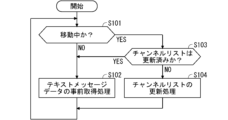
- 10 is a flowchart showing a switching operation between a channel list update process and a text message data advance acquisition process in the broadcast receiving device of the first embodiment.
- FIG. 13 is a diagram showing an example of text message data divided into a plurality of blocks. 13 is a flowchart showing a process of pre-obtaining text message data in the second embodiment.
- FIG. 2 is a diagram illustrating an example of a hardware configuration of a broadcast receiving device.
- FIG. 2 is a diagram illustrating an example of a hardware configuration of a broadcast receiving device.
- ⁇ First embodiment> 1 is a diagram showing a configuration of a broadcast receiving device 10 according to a first embodiment.
- the broadcast receiving device 10 is an in-vehicle device.
- a vehicle equipped with the broadcast receiving device 10 is referred to as a "host vehicle.”
- the moving body on which the broadcast receiving device 10 is equipped it may be, for example, a portable terminal such as a mobile phone or a smartphone that can be carried by a pedestrian.
- the broadcast receiving device 10 is connected to an antenna 21, an input device 22, an output device 23, and a speed sensor 24 mounted on the vehicle.
- the antenna 21 receives and amplifies broadcast waves, and inputs them to the broadcast receiving device 10.
- the input device 22 is an operation input means by which the user operates the broadcast receiving device 10, and is composed of, for example, an operation button, an operation lever, a touch pad, a remote control, etc.
- the output device 23 is a means by which the broadcast receiving device 10 presents the content of the broadcast program to the user, and is equipped with a display for outputting images and text, and a speaker for outputting sound. For example, by placing a touch pad as the input device 22 on the screen of the display of the output device 23, the input device 22 and the output device 23 may be configured as a single touch panel device.
- the speed sensor 24 is a sensor that detects the traveling speed of the vehicle. In this embodiment, the speed sensor 24 is used as a means for determining whether the broadcast receiving device 10 is moving or stopped.
- the broadcast receiving device 10 includes a main tuner 11, a back tuner 12, a main broadcast decoding unit 13, a data broadcast decoding unit 14, a channel list management unit 15, a text message management unit 16, a text message storage unit 17, and an output processing unit 18.
- the main tuner 11 receives, via the antenna 21, the broadcast waves of the channel selected by the user by operating the input device 22.
- the broadcast waves received by the main tuner 11 may be television broadcast waves or radio broadcast waves.
- the main broadcast decoding unit 13 obtains main broadcast data for the channel selected by the user by decoding the main broadcast signal contained in the broadcast waves received by the main tuner 11. If the broadcast waves are television broadcast waves, the main broadcast data includes video data and audio data. If the broadcast waves are radio broadcast waves, the main broadcast data includes only audio data.
- the data broadcasting decoding unit 14 obtains text message data (hereinafter referred to as "text message data") provided by the data broadcasting of the channel selected by the user by decoding the data broadcasting signal contained in the broadcast waves received by the main tuner 11.
- the back tuner 12 like the main tuner 11, receives broadcast waves through the antenna 21. However, the channel that the back tuner 12 receives is selected by the channel list management unit 15 and the text message management unit 16.
- the channel list management unit 15 causes the back tuner 12 to sequentially select multiple channels, and determines whether or not the broadcast waves of each channel can be received based on the broadcast waves received by the back tuner 12, and creates and updates a channel list in which the channels that can receive broadcast waves from among the multiple channels are registered.
- the text message management unit 16 acquires the text message data for each channel by having the back tuner 12 sequentially select the channels in the channel list and decoding the data broadcast signal contained in the broadcast waves received by the back tuner 12. In other words, the text message management unit 16 acquires the text message data for each channel in advance before the user switches channels.
- the process in which the text message management unit 16 acquires the text message data for each channel is referred to as "advance acquisition" of text message data.
- the decoding process performed by the text message management unit 16 may be the same as the decoding process performed by the data broadcast decoding unit 14. Therefore, instead of separating the data broadcast decoding unit 14 and the text message management unit 16, for example, one decoding processing unit may perform the operations of both the data broadcast decoding unit 14 and the text message management unit 16.
- the text message storage unit 17 stores the text message data for each channel that the text message management unit 16 has previously acquired, by linking it to the corresponding channel.
- the channel list update process performed by the channel list management unit 15 and the text message data advance acquisition process performed by the text message management unit 16 both use the same back tuner 12, and therefore cannot be performed simultaneously. Therefore, in the broadcast receiving device 10 according to the first embodiment, a priority is set between the channel list update process and the text message data advance acquisition process, and the process with the higher priority is executed first.
- the priority order between the channel list update process and the text message data pre-acquisition process changes depending on whether the broadcast receiving device 10 is moving or stopped. Specifically, when the broadcast receiving device 10 is moving, the channel list update process by the channel list management unit 15 is given priority over the text message data pre-acquisition process by the text message management unit 16. Conversely, when the broadcast receiving device 10 is stopped, the text message data pre-acquisition process by the text message management unit 16 is given priority over the channel list update process by the channel list management unit 15.
- Whether the broadcast receiving device 10 is moving or stopped is determined based on the output of the speed sensor 24 of the vehicle. That is, when the speed of the vehicle detected by the speed sensor 24 is zero, the broadcast receiving device 10 is determined to be stopped, and when it is greater than zero, the broadcast receiving device 10 is determined to be moving.
- the means for determining whether the broadcast receiving device 10 is moving or stopped is not limited to the speed sensor 24.
- a positioning device that measures the current position using GNSS (Global Navigation Satellite System) may be connected to the broadcast receiving device 10, and whether the broadcast receiving device 10 is moving or stopped may be determined based on the presence or absence of a change in the position of the broadcast receiving device 10.
- GNSS Global Navigation Satellite System
- the output processing unit 18 outputs the main broadcast data and text message data of the channel selected by the user to the output device 23. This causes the display and speaker of the output device 23 to output the main broadcast video, audio, text messages, etc. of the channel selected by the user.
- the output processing unit 18 can also switch between displaying and not displaying text messages in response to user operations using the input device 22, and display the channel list created by the channel list management unit 15 on the display of the output device 23.
- the output processing unit 18 outputs the main broadcast data acquired by the main broadcast decoding unit 13 and the text message data acquired by the data broadcast decoding unit 14 to the output device 23, thereby enabling the output of the main broadcast data and text message data of the channel selected by the user to the output device 23.
- the data broadcast decoding unit 14 since it takes time to acquire a text message, immediately after the user changes the channel selection, the data broadcast decoding unit 14 has not yet completed acquiring the text message data, and the output processing unit 18 is unable to acquire the text message data from the data broadcast decoding unit 14. Generally, it takes about three seconds to determine whether or not a channel is receivable, but it can take about ten seconds to acquire the text message data of a channel.
- the output processing unit 18 obtains the text message data of the channel selected by the user from the text message storage unit 17 (i.e., the text message data obtained in advance by the text message management unit 16) and outputs it to the output device 23. This prevents delays in displaying text messages when changing channels.
- the channels that can receive broadcast waves change when the position of the broadcast receiving device 10 changes, so the channel list only needs to be updated at least when the broadcast receiving device 10 moves.
- the channel list update process is given priority while the broadcast receiving device 10 is moving, and the text message data pre-acquisition process is given priority while the broadcast receiving device 10 is stopped, preventing the channel list update process from being performed more than necessary. This reduces the period during which the back tuner cannot be used for the text message data pre-acquisition process, making it possible to more reliably prevent delays in the display of text messages when changing channels.
- the switching between the channel list update process and the text message data advance acquisition process in the broadcast receiving device 10 will be explained with reference to the flowchart in FIG. 2.
- the channel list management unit 15 holds the channel list that was created the last time the broadcast receiving device 10 was started.
- the broadcast receiving device 10 determines whether the broadcast receiving device 10 is moving or stationary based on the output of the speed sensor 24 (step S101).
- step S101 If the broadcast receiving device 10 is stopped (NO in step S101), it is unlikely that the receivable channels will change, so the text message management unit 16 performs a pre-acquisition process of text message data rather than a channel list update process by the channel list management unit 15 (step S102).
- the broadcast receiving device 10 determines whether the channel list has been updated (step S103). Since the receivable channels may change while the broadcast receiving device 10 is moving, if it is determined that the channel list has not been updated (NO in step S103), the channel list update process is given priority over the pre-acquisition process of text message data (step S104).
- step S102 if it is determined that the channel list has already been updated (YES in step S103), there is little need to immediately perform the channel list update process, so a pre-acquisition process for text message data is performed (step S102).
- the broadcast receiving device 10 repeats the above operations.
- step S103 The determination in step S103 as to whether the channel list has been updated can be made from the distance traveled or the time elapsed since the channel list update process (step S102) was last performed by the broadcast receiving device 10. For example, if the distance traveled or the time elapsed since the channel list update process was last performed is less than a predetermined threshold, it can be determined that the receivable channels are unlikely to have changed, and the channel list can be determined to have been updated.
- text message data is sent and received divided into multiple blocks (text message blocks) as shown in Figure 3.
- data broadcasting such as FM radio's RDS (Radio Data System) and digital radio's DAB (Digital Audio Broadcasting)
- text message data is sent and received divided into multiple blocks (text message blocks) as shown in Figure 3.
- Figure 3 shows an example in which a 32-character text message is divided into blocks of two characters, with each block containing two characters' worth of data.
- Each block contains, in addition to the character data it represents, a block ID that is an identifier for that data, and an address that indicates the position of that character (the number of the character in the text message).
- a block of data for a text message called "RadioText” in RDS contains address data called "Text segment address.”
- a block of data for a text message called "Dynamic Label" in DAB contains address data called "SegNum.”
- the text message management unit 16 changes the channel to be selected by the back tuner 12, when it acquires the first N (N ⁇ 2) blocks of text message data obtained by decoding the data broadcast signal, it compares the address and character string indicated by the N blocks with the text message data stored in the text message storage unit 17 that was acquired the previous time the data broadcast signal of the same channel was decoded. If the address and character string indicated by the N blocks match the text message data that was acquired the previous time the data broadcast signal of the same channel was decoded, the text message management unit 16 determines that the latest text message data for that channel has been acquired in advance, interrupts the decoding, and changes the channel to be selected by the back tuner 12 to the next channel.
- the text message management unit 16 acquires the first N (N ⁇ 2) blocks of text message data and determines that the latest text message data for that channel has already been acquired in advance, it starts to acquire text message data for the next channel in advance without decoding the remaining blocks. This prevents duplicate pre-acquisition of the same text message data, and speeds up the process of pre-acquiring text message data.
- N the address and character string indicated by the first N (N ⁇ 2) blocks of text message data may coincidentally match those of different text message data previously obtained on the same channel, causing the most recent text message data to be erroneously discarded.
- Increasing the value of N will increase the time required to determine whether the most recent text message data is the same as the previously obtained text message data, but will reduce the probability of an erroneous determination. Therefore, it is preferable to determine the value of N by taking into consideration the balance between the time required for the determination and the accuracy of the determination.
- the text message management unit 16 selects a channel from the channel list from which to acquire text message data (step S201). If the selected channel is not the channel selected by the main tuner 11 (a channel already being viewed by the user) (NO in step S202), the text message management unit 16 starts the decoding process to acquire the text message data (step S203).
- the text message management unit 16 obtains N blocks (N ⁇ 2) of text message data through the decoding process (step S204), it determines whether the address and character string indicated by the N blocks match those of the text message data obtained the previous time the data broadcast signal of the same channel was decoded (step S205).
- the text message management unit 16 determines that the latest text message data for that channel has not been obtained, and continues the decoding process to obtain all blocks of the text message data (step S206). The text message management unit 16 then links the text message data obtained by combining the characters obtained from all blocks to the channel and stores it in the text message storage unit 17 (step S207).
- the text message management unit 16 determines that the latest text message data for that channel has been obtained, and skips steps S206 and S207.
- the text message management unit 16 checks whether or not pre-acquisition of text message data has been performed for all channels in the channel list (excluding the channel currently selected by the main tuner 11) (step S208). If there are any channels for which pre-acquisition of text message data has not been performed (NO in step S208), the process returns to step S201. Once pre-acquisition of text message data has been performed for all channels (step S208), the flow in FIG. 4 ends.
- step S202 if the channel selected by the text message management unit 16 is the channel selected by the main tuner 11 (the channel already being viewed by the user) (YES in step S202), there is no need to obtain text message data for that channel in advance, so steps S203 to S207 are not executed and the process moves to step S208.
- ⁇ Hardware configuration example> 5 and 6 are diagrams showing examples of the hardware configuration of the broadcast receiving device 10.
- the functions of the components of the broadcast receiving device 10 shown in FIG. 1 are realized by, for example, a processing circuit 50 shown in FIG. 5.
- the main tuner 11 and the back tuner 12 are generally separate hardware.
- the broadcast receiving device 10 has a processing circuit 50 for sequentially selecting a plurality of channels by the back tuner 12, updating a channel list in which channels capable of receiving broadcast waves are registered among the plurality of channels based on the broadcast waves received by the back tuner 12, sequentially selecting channels in the channel list by the back tuner 12, decoding a data broadcast signal included in the broadcast waves received by the back tuner 12, thereby acquiring and storing text message data of each channel in advance, decoding a main broadcast signal included in the broadcast waves received by the main tuner 11 that receives the broadcast waves of the channel selected by the user, acquiring main broadcast data of the channel selected by the user, decoding a data broadcast signal included in the broadcast waves received by the main tuner 11, acquiring text message data of the channel selected by the user, and outputting the main broadcast data and text message data of the channel selected by the user.
- the processing circuit 50 outputs the pre-acquired text message data during the period from when the user changes the channel selection to when the latest text message data is acquired. Also, the processing circuit 50 gives priority to updating the channel list over pre-acquiring the text message data of each channel while moving, and gives priority to pre-acquiring the text message data of each channel over updating the channel list while stopped.
- the processing circuit 50 may be dedicated hardware, or may be configured using a processor (also called a central processing unit (CPU), processing unit, arithmetic unit, microprocessor, microcomputer, or DSP (Digital Signal Processor)) that executes programs stored in memory.
- a processor also called a central processing unit (CPU), processing unit, arithmetic unit, microprocessor, microcomputer, or DSP (Digital Signal Processor)
- CPU central processing unit
- microprocessor microcomputer
- DSP Digital Signal Processor
- the processing circuit 50 may be, for example, a single circuit, a composite circuit, a programmed processor, a parallel programmed processor, an ASIC (Application Specific Integrated Circuit), an FPGA (Field-Programmable Gate Array), or a combination of these.
- ASIC Application Specific Integrated Circuit
- FPGA Field-Programmable Gate Array
- Each function of the components of the broadcast receiving device 10 may be realized by a separate processing circuit, or these functions may be realized together by a single processing circuit.
- Figure 6 shows an example of the hardware configuration of the broadcast receiving device 10 when the processing circuit 50 is configured using a processor 51 that executes a program.
- the functions of the components of the broadcast receiving device 10 are realized by software, etc. (software, firmware, or a combination of software and firmware).
- the software, etc. is written as a program and stored in memory 52.
- the processor 51 realizes the functions of each part by reading and executing the program stored in memory 52.
- the broadcast receiving device 10 includes a memory 52 for storing a program which, when executed by the processor 51, results in the execution of the following processes: a process of having the back tuner 12 sequentially select a plurality of channels, and updating a channel list in which channels capable of receiving broadcast waves among the plurality of channels are registered based on the broadcast waves received by the back tuner 12, a process of having the back tuner 12 sequentially select channels in the channel list, and decoding a data broadcast signal included in the broadcast waves received by the back tuner 12 to pre-acquire and store text message data for each channel, a process of decoding a main broadcast signal included in the broadcast waves received by the main tuner 11 which receives the broadcast waves of the channel selected by the user to acquire main broadcast data for the channel selected by the user, a process of decoding a data broadcast signal included in the broadcast waves received by the main tuner 11 to acquire text message data for the channel selected by the user, and a process of outputting the main broadcast data and the text message data for the channel selected by the user
- the processor 51 which executes the program outputs the pre-acquired text message data during the period from when the user changes the channel selection to when the latest text message data is acquired.
- the processor 51 that executes this program prioritizes the channel list update process over the pre-acquisition process of text message data for each channel while moving, and prioritizes the pre-acquisition process of text message data for each channel over the channel list update process while stopped.
- this program can be said to cause a computer to execute the procedures and methods of operation of the components of the broadcast receiving device 10.
- memory 52 may be, for example, non-volatile or volatile semiconductor memory such as RAM (Random Access Memory), ROM (Read Only Memory), flash memory, EPROM (Erasable Programmable Read Only Memory), EEPROM (Electrically Erasable Programmable Read Only Memory), HDD (Hard Disk Drive), magnetic disk, flexible disk, optical disk, compact disk, mini disk, DVD (Digital Versatile Disc) and their drive devices, or any other storage medium that will be used in the future.
- RAM Random Access Memory
- ROM Read Only Memory
- flash memory EPROM (Erasable Programmable Read Only Memory), EEPROM (Electrically Erasable Programmable Read Only Memory), HDD (Hard Disk Drive), magnetic disk, flexible disk, optical disk, compact disk, mini disk, DVD (Digital Versatile Disc) and their drive devices, or any other storage medium that will be used in the future.
- EPROM Erasable Programmable Read Only Memory
- EEPROM Electrically Erasable Programmable Read Only Memory
- HDD Hard Disk Drive
- the above describes a configuration in which the functions of the components of the broadcast receiving device 10 are realized either through hardware or software, etc.
- this is not limited to the above, and the configuration may be such that some of the components of the broadcast receiving device 10 are realized through dedicated hardware, and other components are realized through software, etc.
- the functions of some components may be realized through the processing circuit 50 as dedicated hardware, and for the functions of other components to be realized by the processing circuit 50 as the processor 51 reading and executing a program stored in the memory 52.
- the broadcast receiving device 10 can realize each of the above-mentioned functions through hardware, software, etc., or a combination of these.
- 10 broadcast receiving device 11 main tuner, 12 back tuner, 13 main broadcast decoding section, 14 data broadcast decoding section, 15 channel list management section, 16 text message management section, 17 text message storage section, 18 output processing section, 21 antenna, 22 input device, 23 output device, 24 speed sensor, 50 processing circuit, 51 processor, 52 memory.
Landscapes
- Engineering & Computer Science (AREA)
- Multimedia (AREA)
- Signal Processing (AREA)
- Circuits Of Receivers In General (AREA)
Abstract
放送受信装置(10)は、バックチューナー(12)を用いて放送波を受信可能なチャンネルを登録したチャンネルリストを更新するチャンネルリスト管理部(15)と、バックチューナー(12)を用いて各チャンネルのテキストメッセージデータを事前取得するテキストメッセージ管理部(16)とを備える。出力処理部(18)は、ユーザがチャンネルの選択を変更してから最新のテキストメッセージデータが取得されるまでの間、事前取得されたテキストメッセージデータを出力する。放送受信装置(10)の移動中は、チャンネルリストの更新処理がテキストメッセージデータの事前取得処理よりも優先的に実行され、放送受信装置(10)の停止中は、テキストメッセージデータの事前取得処理がチャンネルリストの更新処理よりも優先的に実行される。
Description
本開示は、放送受信装置に関し、特に、主放送とともにデータ放送を受信可能な放送受信装置に関するものである。
1つのチャンネルで、映像や音声による主放送とともにテキストメッセージによるデータ放送を提供する放送サービスが普及しており、主放送およびデータ放送を受信可能な放送受信装置は、例えば車載装置や携帯端末などの移動体にも搭載されるようになってきている。
例えば下記の特許文献1には、メインチューナーを用いて主放送である音声放送を受信しながら、バックチューナーを用いて、各チャンネルのテキストメッセージの取得と、受信可能なチャンネルを登録したチャンネルリストの作成とを実施する放送受信装置が提案されている。
一般に、データ放送のテキストメッセージの取得には時間を要する。そのため、主放送およびデータ放送を受信可能な放送受信装置では、ユーザがチャンネルを変更したときに、主放送の出力に対して、テキストメッセージの表示が遅延しやすい。特許文献1の放送受信装置のように、各チャンネルのテキストメッセージを予め取得しておけば、テキストメッセージの表示遅延の抑制を期待できる。しかし、移動体に搭載される放送受信装置では、放送受信装置の位置の変化に応じてチャンネルリストを更新する必要があり、チャンネルリストの更新のためにバックチューナーが全チャンネルをスキャンしている間は、バックチューナーを用いたテキストメッセージの取得を実施できないため、テキストメッセージの表示遅延の問題が生じるおそれがある。
本開示は以上のような課題を解決するためになされたものであり、移動体に搭載され主放送およびデータ放送を受信可能な放送受信装置において、チャンネル変更時のテキストメッセージの表示遅延を防止することを目的とする。
本開示に係る放送受信装置は、ユーザが選択したチャンネルの放送波を受信するメインチューナーと、メインチューナーが受信した放送波に含まれる主放送の信号をデコードすることで、ユーザが選択したチャンネルの主放送データを取得する主放送デコード部と、メインチューナーが受信した放送波に含まれるデータ放送の信号をデコードすることで、ユーザが選択したチャンネルのテキストメッセージデータを取得するデータ放送デコード部と、バックチューナーと、バックチューナーに複数のチャンネルを順次選択させ、バックチューナーが受信した放送波に基づいて、複数のチャンネルのうち放送波を受信可能なチャンネルが登録されたチャンネルリストを更新するチャンネルリスト管理部と、バックチューナーにチャンネルリスト内のチャンネルを順次選択させ、バックチューナーが受信した放送波に含まれるデータ放送の信号をデコードすることで、各チャンネルのテキストメッセージデータを取得するテキストメッセージ管理部と、テキストメッセージ管理部が取得した各チャンネルのテキストメッセージデータを記憶するテキストメッセージ記憶部と、ユーザが選択したチャンネルの主放送データおよびテキストメッセージデータを出力する出力処理部と、を備え、出力処理部は、ユーザがチャンネルの選択を変更してからデータ放送デコード部が最新のテキストメッセージデータを取得するまでの間、ユーザが選択したチャンネルのテキストメッセージデータをテキストメッセージ記憶部から取得して出力し、移動中は、チャンネルリスト管理部によるチャンネルリストの更新処理が、テキストメッセージ管理部による各チャンネルのテキストメッセージデータの取得処理よりも優先的に実行され、停止中は、テキストメッセージ管理部による各チャンネルのテキストメッセージデータの取得処理が、チャンネルリスト管理部によるチャンネルリストの更新処理よりも、優先的に実行される。
本開示に係る放送受信装置によれば、移動中はチャンネルリストの更新処理が優先的に実行され、停止中は各チャンネルのテキストメッセージデータの取得処理が優先的に実行されることで、バックチューナーを用いたチャンネルリストの更新処理が必要以上に実施されることが防止される。これにより、各チャンネルのテキストメッセージデータの取得処理にバックチューナーを利用できない期間が少なくなるため、チャンネル変更時のテキストメッセージの表示遅延を防止することができる。
本開示の目的、特徴、態様、および利点は、以下の詳細な説明と添付図面とによって、より明白となる。
<実施の形態1>
図1は、実施の形態1に係る放送受信装置10の構成を示す図である。本実施の形態では、放送受信装置10が車載装置であるものと仮定する。以下、放送受信装置10が搭載された車両を「自車両」という。ただし、放送受信装置10が搭載される移動体に制約はなく、例えば、歩行者が持ち運び可能な携帯電話やスマートフォンなどの携帯端末であってもよい。
図1は、実施の形態1に係る放送受信装置10の構成を示す図である。本実施の形態では、放送受信装置10が車載装置であるものと仮定する。以下、放送受信装置10が搭載された車両を「自車両」という。ただし、放送受信装置10が搭載される移動体に制約はなく、例えば、歩行者が持ち運び可能な携帯電話やスマートフォンなどの携帯端末であってもよい。
図1に示すように、実施の形態1に係る放送受信装置10は、自車両に搭載されたアンテナ21、入力装置22、出力装置23および速度センサ24に接続されている。
アンテナ21は、放送波を受信して増幅し、放送受信装置10に入力する。入力装置22は、ユーザが放送受信装置10を操作するための操作入力手段であり、例えば操作ボタン、操作レバー、タッチパッド、リモコンなどで構成される。出力装置23は、放送受信装置10がユーザに放送番組のコンテンツを提示する手段であり、映像や文字を出力するためのディスプレイと、音声を出力するためのスピーカとを備えている。例えば、出力装置23のディスプレイの画面上に入力装置22としてのタッチパッドを配置することで、入力装置22および出力装置23を1つのタッチパネル装置として構成してもよい。
速度センサ24は、自車両の走行速度を検出するセンサである。本実施の形態では、速度センサ24は、放送受信装置10が移動中か停止中かを判断するための手段として用いられる。
放送受信装置10は、メインチューナー11、バックチューナー12、主放送デコード部13、データ放送デコード部14、チャンネルリスト管理部15、テキストメッセージ管理部16、テキストメッセージ記憶部17および出力処理部18を備えている。
メインチューナー11は、ユーザが入力装置22を操作して選択したチャンネルの放送波を、アンテナ21を通して受信する。メインチューナー11が受信する放送波は、テレビ放送の放送波でも、ラジオ放送の放送波でもよい。
主放送デコード部13は、メインチューナー11が受信した放送波に含まれる主放送の信号をデコードすることで、ユーザが選択したチャンネルの主放送データを取得する。放送波がテレビ放送である場合、主放送データには映像データと音声データとが含まれる。放送波がラジオ放送の放送波である場合、主放送データには音声データのみが含まれる。
データ放送デコード部14は、メインチューナー11が受信した放送波に含まれるデータ放送の信号をデコードすることで、ユーザが選択したチャンネルのデータ放送が提供するテキストメッセージのデータ(以下、「テキストメッセージデータ」という)を取得する。
バックチューナー12は、メインチューナー11と同様に、アンテナ21を通して放送波を受信するものである。ただし、バックチューナー12が受信するチャンネルは、チャンネルリスト管理部15およびテキストメッセージ管理部16によって選択される。
チャンネルリスト管理部15は、バックチューナー12に複数のチャンネルを順次選択させ、バックチューナー12により受信された放送波に基づいて、各チャンネルの放送波を受信可能か否か判定し、複数のチャンネルのうち放送波を受信可能なチャンネルが登録されたチャンネルリストの作成およびその更新を行う。
テキストメッセージ管理部16は、バックチューナー12にチャンネルリスト内のチャンネルを順次選択させ、バックチューナー12により受信された放送波に含まれるデータ放送の信号をデコードすることで、各チャンネルのテキストメッセージデータを取得する。つまり、テキストメッセージ管理部16は、ユーザがチャンネルの切り替えを行うのに先立って、各チャンネルのテキストメッセージデータを事前に取得する。以下、テキストメッセージ管理部16が各チャンネルのテキストメッセージデータを取得する処理を、テキストメッセージデータの「事前取得」という。
なお、テキストメッセージ管理部16が行うデコード処理は、データ放送デコード部14が行うデコード処理と同一でよい。そのため、データ放送デコード部14とテキストメッセージ管理部16とを分けずに、例えば1つのデコード処理部が、データ放送デコード部14およびテキストメッセージ管理部16の両方の動作を行ってもよい。
テキストメッセージ記憶部17は、テキストメッセージ管理部16が事前取得した各チャンネルのテキストメッセージデータを、それに対応するチャンネルと紐付けして記憶する。
チャンネルリスト管理部15が実施するチャンネルリストの更新処理と、テキストメッセージ管理部16が実施するテキストメッセージデータの事前取得処理とは、どちらも同じバックチューナー12を使用するので、それらを同時に実施することはできない。そこで、実施の形態1に係る放送受信装置10では、チャンネルリストの更新処理とテキストメッセージデータの事前取得処理とに優先順位を設け、両者のうち優先順位の高い方が優先的に実施されるようにしている。
チャンネルリストの更新処理とテキストメッセージデータの事前取得処理との優先順位は、放送受信装置10が移動中か停止中かによって切り替わる。具体的には、放送受信装置10の移動中は、チャンネルリスト管理部15によるチャンネルリストの更新処理が、テキストメッセージ管理部16によるテキストメッセージデータの事前取得処理よりも優先的に実施される。逆に、放送受信装置10の停止中は、テキストメッセージ管理部16によるテキストメッセージデータの事前取得処理が、チャンネルリスト管理部15によるチャンネルリストの更新処理よりも、優先的に実施される。
放送受信装置10が移動中か停止中かは、自車両の速度センサ24の出力に基づいて判断される。すなわち、速度センサ24によって検出される自車両の速度が0のときは放送受信装置10の停止中と判断され、0よりも大きいときは放送受信装置10の移動中と判断される。ただし、放送受信装置10が移動中か停止中かを判断する手段は、速度センサ24に限られない。例えば、速度センサ24に代えて、GNSS(Global Navigation Satellite System)を利用して現在位置を測定する測位装置を放送受信装置10に接続し、放送受信装置10の位置の変化の有無から、移動中か停止中かを判断してもよい。
出力処理部18は、ユーザが選択したチャンネルの主放送データおよびテキストメッセージデータを、出力装置23に出力する。これにより、出力装置23のディスプレイおよびスピーカから、ユーザが選択したチャンネルの主放送の映像や音声、テキストメッセージなどが出力される。また、出力処理部18は、入力装置22を用いたユーザの操作に応じて、テキストメッセージの表示、非表示を切り替えたり、チャンネルリスト管理部15が作成したチャンネルリストを出力装置23のディスプレイに表示させたりすることもできる。
基本的に、出力処理部18は、主放送デコード部13が取得した主放送データと、データ放送デコード部14が取得したテキストメッセージデータとを、出力装置23に出力することで、ユーザが選択したチャンネルの主放送データおよびテキストメッセージデータを出力装置23に出力することができる。しかし、テキストメッセージの取得には時間を要するため、ユーザがチャンネルの選択を変更した直後は、データ放送デコード部14によるテキストメッセージデータの取得か完了しておらず、出力処理部18は、データ放送デコード部14からテキストメッセージデータを取得することができない。一般的に、1つのチャンネルに対して受信可能か否かを判断するのは3秒程度でできるが、1つのチャンネルのテキストメッセージデータを取得するのには10秒程度かかることもある。
そこで、出力処理部18は、ユーザがチャンネルの選択を変更してからデータ放送デコード部14が最新のテキストメッセージデータを取得するまでの間は、テキストメッセージ記憶部17から、ユーザが選択したチャンネルのテキストメッセージデータ(すなわち、テキストメッセージ管理部16が事前取得したテキストメッセージデータ)を取得し、それを出力装置23へ出力する。これにより、チャンネル変更時のテキストメッセージの表示遅延が防止される。
また、放送波を受信可能なチャンネルは、放送受信装置10の位置が変化したときに変わるため、チャンネルリストの更新は、少なくとも放送受信装置10が移動したときに実施されればよい。本実施の形態では、放送受信装置10の移動中はチャンネルリストの更新処理が優先的に実行され、放送受信装置10の停止中はテキストメッセージデータの事前取得処理が優先的に実行されるため、チャンネルリストの更新処理が必要以上に実施されることが防止される。それにより、テキストメッセージデータの事前取得処理にバックチューナーを利用できない期間が少なくなるため、チャンネル変更時のテキストメッセージの表示遅延をより確実に防止することができる。
放送受信装置10におけるチャンネルリストの更新処理とテキストメッセージデータの事前取得処理との切り替えについて、図2のフローチャートに基づいて説明する。説明の簡略化のため、チャンネルリスト管理部15は、放送受信装置10が前回起動したときに作成したチャンネルリストを保持しているものとする。
まず、放送受信装置10は、速度センサ24の出力に基づいて、放送受信装置10が移動中か停止中かを判定する(ステップS101)。
放送受信装置10が停止中であれば(ステップS101でNO)、受信可能なチャンネルが変わる可能性は低いため、チャンネルリスト管理部15によるチャンネルリストの更新処理ではなく、テキストメッセージ管理部16によるテキストメッセージデータの事前取得処理が実施される(ステップS102)。
放送受信装置10が移動中であれば(ステップS101でYES)、放送受信装置10は、チャンネルリストが更新済みであるか否かを判断する(ステップS103)。放送受信装置10の移動中は受信可能なチャンネルが変わる可能性があるため、チャンネルリストが更新済みでないと判断された場合は(ステップS103でNO)、テキストメッセージデータの事前取得処理よりもチャンネルリストの更新処理が優先的に実施される(ステップS104)。
ただし、チャンネルリストが更新済みであると判断された場合は(ステップS103でYES)、チャンネルリストの更新処理を直ちに実施する必要性は低いため、テキストメッセージデータの事前取得処理が実施される(ステップS102)。
放送受信装置10は、以上の動作を繰り返し行う。
なお、ステップS103におけるチャンネルリストが更新済みか否かの判断は、チャンネルリストの更新処理(ステップS102)が前回実施されたときからの放送受信装置10の移動距離または経過時間から判断することができる。例えば、チャンネルリストの更新処理が前回実施されたときからの移動距離または経過時間が予め定められた閾値よりも小さいときは、受信可能なチャンネルが変わっている可能性は低いと判断し、チャンネルリストは更新済みであると判断すればよい。
<実施の形態2>
実施の形態2では、テキストメッセージデータの事前取得処理を高速化する技術を提案する。放送受信装置10の構成や基本的な動作は実施の形態1と同様である。
実施の形態2では、テキストメッセージデータの事前取得処理を高速化する技術を提案する。放送受信装置10の構成や基本的な動作は実施の形態1と同様である。
例えば、FMラジオのRDS(Radio Data System)やデジタルラジオのDAB(Digital Audio Broadcasting)などのデータ放送において、テキストメッセージデータは、図3のように複数のブロック(テキストメッセージブロック)に分割されて送受信されている。
図3には、32文字のテキストメッセージが2文字ずつに区切られ、各ブロックが2文字分のデータを含むように構成される例を示している。また、各ブロックには、当該ブロックが示す文字のデータに加え、当該データの識別子であるブロックIDと、当該データの文字の位置(テキストメッセージの何番目の文字であるか)を示すアドレスとが含まれている。例えば、RDSの「RadioText」と呼ばれるテキストメッセージのデータのブロックには、「Text segment address」と呼ばれるアドレスのデータが含まれている。また、DABの「DynamicLabel」と呼ばれるテキストメッセージのデータのブロックには、「SegNum」と呼ばれるアドレスのデータが含まれている。
実施の形態2においては、テキストメッセージ管理部16が、バックチューナー12に選択させるチャンネルを変更した後に、データ放送の信号をデコードして得られたテキストメッセージデータの最初のN個(N≧2)のブロックを取得した時点で、当該N個のブロックが示すアドレスおよび文字列と、テキストメッセージ記憶部17に記憶されている、前回同じチャンネルのデータ放送の信号をデコードしたときに得られたテキストメッセージデータとを比較する。このとき、当該N個のブロックが示すアドレスおよび文字列が、前回同じチャンネルのデータ放送の信号をデコードしたときに得られたテキストメッセージデータのものと一致した場合、テキストメッセージ管理部16は、当該チャンネルの最新のテキストメッセージデータを事前取得済みと判断してデコードを中断し、バックチューナー12に選択させるチャンネルを次のチャンネルに変更する。
このように、テキストメッセージ管理部16は、テキストメッセージデータの最初のN個(N≧2)のブロックを取得した時点で、当該チャンネルの最新のテキストメッセージデータを事前取得済みと判断すると、残りのブロックのデコードを行わずに次のチャンネルのテキストメッセージデータの事前取得を開始する。これにより、同じテキストメッセージデータの事前取得が重複して行われることが防止され、テキストメッセージデータの事前取得処理が高速化される。
なお、確率は低いが、テキストメッセージデータの最初に得られたN個(N≧2)のブロックが示すアドレスおよび文字列が、前回同じチャンネルで得られた異なるテキストメッセージデータのものと偶然一致し、最新のテキストメッセージデータが誤って破棄されることも起こり得る。Nの値を大きくすれば、最新のテキストメッセージデータが前回得られたテキストメッセージデータと同じかどうかの判定に要する時間は長くなるが、誤判定が生じる確率を低くできる。よって、Nの値は、判定に要する時間と判定の精度とのバランスを考慮して決定することが好ましい。
実施の形態2におけるテキストメッセージデータの事前取得処理を、図4のフローチャートを参照して説明する。
テキストメッセージデータの事前取得処理が開始されると、テキストメッセージ管理部16は、テキストメッセージデータを取得するチャンネルをチャンネルリストの中から選択する(ステップS201)。選択したチャンネルがメインチューナー11で選択中のチャンネル(既にユーザが視聴中のチャンネル)でなければ(ステップS202でNO)、テキストメッセージ管理部16は、テキストメッセージデータを取得するためのデコード処理を開始する(ステップS203)。
テキストメッセージ管理部16は、デコード処理によりテキストメッセージデータのブロックをN個(N≧2)取得すると(ステップS204)、当該N個のブロックが示すアドレスおよび文字列が、前回同じチャンネルのデータ放送の信号をデコードしたときに得られたテキストメッセージデータのものと一致するかどうか判定する(ステップS205)。
当該N個のブロックが示すアドレスおよび文字列が、前回同じチャンネルで得られたテキストメッセージデータのものと一致しない場合(ステップS205でNO)、テキストメッセージ管理部16は、当該チャンネルの最新のテキストメッセージデータを未取得と判断し、デコード処理を継続して、テキストメッセージデータの全てのブロックを取得する(ステップS206)。そして、テキストメッセージ管理部16は、全てのブロックから得られた文字を結合したテキストメッセージデータを、当該チャンネルと紐付けしてテキストメッセージ記憶部17に記憶させる(ステップS207)。
当該N個のブロックが示すアドレスおよび文字列が、前回同じチャンネルで得られたテキストメッセージデータのものと一致した場合(ステップS205でYES)、テキストメッセージ管理部16は、当該チャンネルの最新のテキストメッセージデータを取得済みと判断し、ステップS206およびステップS207をスキップする。
その後、テキストメッセージ管理部16は、チャンネルリストの全チャンネル(メインチューナー11で選択中のチャンネルを除く)に対してテキストメッセージデータの事前取得を実施したか否かを確認する(ステップS208)。テキストメッセージデータの事前取得を未実施のチャンネルが残っていれば(ステップS208でNO)、ステップS201に戻る。テキストメッセージデータの事前取得を全チャンネルに実施すれば(ステップS208)、図4のフローが終了する。
なお、テキストメッセージ管理部16が選択したチャンネルがメインチューナー11で選択中のチャンネル(既にユーザが視聴中のチャンネル)であった場合は(ステップS202でYES)、当該チャンネルのテキストメッセージデータを事前取得する必要はないため、ステップS203からS207は実行されずに、ステップS208へ移行する。
<ハードウェア構成例>
図5および図6は、それぞれ放送受信装置10のハードウェア構成の例を示す図である。図1に示した放送受信装置10の構成要素の各機能は、例えば図5に示す処理回路50により実現される。ただし、メインチューナー11およびバックチューナー12は、それぞれ個別のハードウェアであるのが一般的である。すなわち、放送受信装置10は、バックチューナー12に複数のチャンネルを順次選択させ、バックチューナー12が受信した放送波に基づいて、複数のチャンネルのうち放送波を受信可能なチャンネルが登録されたチャンネルリストを更新し、バックチューナー12にチャンネルリスト内のチャンネルを順次選択させ、バックチューナー12が受信した放送波に含まれるデータ放送の信号をデコードすることで、各チャンネルのテキストメッセージデータを事前取得して記憶し、ユーザが選択したチャンネルの放送波を受信するメインチューナー11が受信した放送波に含まれる主放送の信号をデコードすることで、ユーザが選択したチャンネルの主放送データを取得し、メインチューナー11が受信した放送波に含まれるデータ放送の信号をデコードすることで、ユーザが選択したチャンネルのテキストメッセージデータを取得し、ユーザが選択したチャンネルの主放送データおよびテキストメッセージデータを出力するための処理回路50を備える。処理回路50は、ユーザがチャンネルの選択を変更してから最新のテキストメッセージデータが取得されるまでの間、事前取得したテキストメッセージデータを出力する。また、処理回路50は、移動中は、チャンネルリストの更新処理を、各チャンネルのテキストメッセージデータの事前取得処理よりも優先的に実行し、停止中は、各チャンネルのテキストメッセージデータの事前取得処理を、チャンネルリストの更新処理よりも、優先的に実行する。
図5および図6は、それぞれ放送受信装置10のハードウェア構成の例を示す図である。図1に示した放送受信装置10の構成要素の各機能は、例えば図5に示す処理回路50により実現される。ただし、メインチューナー11およびバックチューナー12は、それぞれ個別のハードウェアであるのが一般的である。すなわち、放送受信装置10は、バックチューナー12に複数のチャンネルを順次選択させ、バックチューナー12が受信した放送波に基づいて、複数のチャンネルのうち放送波を受信可能なチャンネルが登録されたチャンネルリストを更新し、バックチューナー12にチャンネルリスト内のチャンネルを順次選択させ、バックチューナー12が受信した放送波に含まれるデータ放送の信号をデコードすることで、各チャンネルのテキストメッセージデータを事前取得して記憶し、ユーザが選択したチャンネルの放送波を受信するメインチューナー11が受信した放送波に含まれる主放送の信号をデコードすることで、ユーザが選択したチャンネルの主放送データを取得し、メインチューナー11が受信した放送波に含まれるデータ放送の信号をデコードすることで、ユーザが選択したチャンネルのテキストメッセージデータを取得し、ユーザが選択したチャンネルの主放送データおよびテキストメッセージデータを出力するための処理回路50を備える。処理回路50は、ユーザがチャンネルの選択を変更してから最新のテキストメッセージデータが取得されるまでの間、事前取得したテキストメッセージデータを出力する。また、処理回路50は、移動中は、チャンネルリストの更新処理を、各チャンネルのテキストメッセージデータの事前取得処理よりも優先的に実行し、停止中は、各チャンネルのテキストメッセージデータの事前取得処理を、チャンネルリストの更新処理よりも、優先的に実行する。
処理回路50は、専用のハードウェアであってもよいし、メモリに格納されたプログラムを実行するプロセッサ(中央処理装置(CPU:Central Processing Unit)、処理装置、演算装置、マイクロプロセッサ、マイクロコンピュータ、DSP(Digital Signal Processor)とも呼ばれる)を用いて構成されていてもよい。
処理回路50が専用のハードウェアである場合、処理回路50は、例えば、単一回路、複合回路、プログラム化したプロセッサ、並列プログラム化したプロセッサ、ASIC(Application Specific Integrated Circuit)、FPGA(Field-Programmable Gate Array)、またはこれらを組み合わせたものなどが該当する。放送受信装置10の構成要素の各々の機能が個別の処理回路で実現されてもよいし、それらの機能がまとめて一つの処理回路で実現されてもよい。
図6は、処理回路50がプログラムを実行するプロセッサ51を用いて構成されている場合における放送受信装置10のハードウェア構成の例を示している。この場合、放送受信装置10の構成要素の機能は、ソフトウェア等(ソフトウェア、ファームウェア、またはソフトウェアとファームウェアとの組み合わせ)により実現される。ソフトウェア等はプログラムとして記述され、メモリ52に格納される。プロセッサ51は、メモリ52に記憶されたプログラムを読み出して実行することにより、各部の機能を実現する。すなわち、放送受信装置10は、プロセッサ51により実行されるときに、バックチューナー12に複数のチャンネルを順次選択させ、バックチューナー12が受信した放送波に基づいて、複数のチャンネルのうち放送波を受信可能なチャンネルが登録されたチャンネルリストを更新する処理と、バックチューナー12にチャンネルリスト内のチャンネルを順次選択させ、バックチューナー12が受信した放送波に含まれるデータ放送の信号をデコードすることで、各チャンネルのテキストメッセージデータを事前取得して記憶する処理と、ユーザが選択したチャンネルの放送波を受信するメインチューナー11が受信した放送波に含まれる主放送の信号をデコードすることで、ユーザが選択したチャンネルの主放送データを取得する処理と、メインチューナー11が受信した放送波に含まれるデータ放送の信号をデコードすることで、ユーザが選択したチャンネルのテキストメッセージデータを取得する処理と、ユーザが選択したチャンネルの主放送データおよびテキストメッセージデータを出力する処理と、が結果的に実行されることになるプログラムを格納するためのメモリ52を備える。また、当該プログラムを実行するプロセッサ51は、ユーザがチャンネルの選択を変更してから最新のテキストメッセージデータが取得されるまでの間、事前取得したテキストメッセージデータを出力する。当該プログラムを実行するプロセッサ51は、移動中は、チャンネルリストの更新処理を、各チャンネルのテキストメッセージデータの事前取得処理よりも優先的に実行し、停止中は、各チャンネルのテキストメッセージデータの事前取得処理を、チャンネルリストの更新処理よりも、優先的に実行する。換言すれば、このプログラムは、放送受信装置10の構成要素の動作の手順や方法をコンピュータに実行させるものであるともいえる。
ここで、メモリ52は、例えば、RAM(Random Access Memory)、ROM(Read Only Memory)、フラッシュメモリ、EPROM(Erasable Programmable Read Only Memory)、EEPROM(Electrically Erasable Programmable Read Only Memory)などの、不揮発性または揮発性の半導体メモリ、HDD(Hard Disk Drive)、磁気ディスク、フレキシブルディスク、光ディスク、コンパクトディスク、ミニディスク、DVD(Digital Versatile Disc)およびそのドライブ装置のほか、今後使用されるあらゆる記憶媒体であってもよい。
以上、放送受信装置10の構成要素の機能が、ハードウェアおよびソフトウェア等のいずれか一方で実現される構成について説明した。しかしこれに限ったものではなく、放送受信装置10の一部の構成要素を専用のハードウェアで実現し、別の一部の構成要素をソフトウェア等で実現する構成であってもよい。例えば、一部の構成要素については専用のハードウェアとしての処理回路50でその機能を実現し、他の一部の構成要素についてはプロセッサ51としての処理回路50がメモリ52に格納されたプログラムを読み出して実行することによってその機能を実現することが可能である。
以上のように、放送受信装置10は、ハードウェア、ソフトウェア等、またはこれらの組み合わせによって、上述の各機能を実現することができる。
なお、各実施の形態を自由に組み合わせたり、各実施の形態を適宜、変形、省略したりすることが可能である。
上記した説明は、すべての態様において、例示であって、例示されていない無数の変形例が想定され得るものと解される。
10 放送受信装置、11 メインチューナー、12 バックチューナー、13 主放送デコード部、14 データ放送デコード部、15 チャンネルリスト管理部、16 テキストメッセージ管理部、17 テキストメッセージ記憶部、18 出力処理部、21 アンテナ、22 入力装置、23 出力装置、24 速度センサ、50 処理回路、51 プロセッサ、52 メモリ。
Claims (3)
- ユーザが選択したチャンネルの放送波を受信するメインチューナーと、
前記メインチューナーが受信した放送波に含まれる主放送の信号をデコードすることで、前記ユーザが選択したチャンネルの主放送データを取得する主放送デコード部と、
前記メインチューナーが受信した放送波に含まれるデータ放送の信号をデコードすることで、前記ユーザが選択したチャンネルのテキストメッセージデータを取得するデータ放送デコード部と、
バックチューナーと、
前記バックチューナーに複数のチャンネルを順次選択させ、前記バックチューナーが受信した放送波に基づいて、前記複数のチャンネルのうち放送波を受信可能なチャンネルが登録されたチャンネルリストを更新するチャンネルリスト管理部と、
前記バックチューナーに前記チャンネルリスト内のチャンネルを順次選択させ、前記バックチューナーが受信した放送波に含まれるデータ放送の信号をデコードすることで、各チャンネルの前記テキストメッセージデータを取得するテキストメッセージ管理部と、
前記テキストメッセージ管理部が取得した各チャンネルの前記テキストメッセージデータを記憶するテキストメッセージ記憶部と、
前記ユーザが選択したチャンネルの前記主放送データおよび前記テキストメッセージデータを出力する出力処理部と、
を備え、
前記出力処理部は、前記ユーザがチャンネルの選択を変更してから前記データ放送デコード部が最新の前記テキストメッセージデータを取得するまでの間、前記ユーザが選択したチャンネルの前記テキストメッセージデータを前記テキストメッセージ記憶部から取得して出力し、
移動中は、前記チャンネルリスト管理部による前記チャンネルリストの更新処理が、前記テキストメッセージ管理部による各チャンネルの前記テキストメッセージデータの取得処理よりも優先的に実行され、
停止中は、前記テキストメッセージ管理部による各チャンネルの前記テキストメッセージデータの取得処理が、前記チャンネルリスト管理部による前記チャンネルリストの更新処理よりも、優先的に実行される、
放送受信装置。 - 前記テキストメッセージ管理部は、前記バックチューナーに選択させるチャンネルを変更した後に、データ放送の信号をデコードして得られた前記テキストメッセージデータの最初のN個(N≧2)のブロックが示すアドレスおよび文字列が、前回同じチャンネルのデータ放送の信号をデコードしたときに得られたものと一致した場合、当該チャンネルの最新の前記テキストメッセージデータを取得済みと判断してデコードを中断し、前記バックチューナーに選択させるチャンネルを変更する、
請求項1に記載の放送受信装置。 - 放送受信装置のチャンネルリスト管理部が、バックチューナーに複数のチャンネルを順次選択させ、前記バックチューナーが受信した放送波に基づいて、前記複数のチャンネルのうち放送波を受信可能なチャンネルが登録されたチャンネルリストを更新し、
前記放送受信装置のテキストメッセージ管理部が、前記バックチューナーに前記チャンネルリスト内のチャンネルを順次選択させ、前記バックチューナーが受信した放送波に含まれるデータ放送の信号をデコードすることで、各チャンネルのテキストメッセージデータを取得し、
前記放送受信装置のテキストメッセージ記憶部が、前記テキストメッセージ管理部が取得した各チャンネルの前記テキストメッセージデータを記憶し、
前記放送受信装置の主放送デコード部が、ユーザが選択したチャンネルの放送波を受信するメインチューナーが受信した放送波に含まれる主放送の信号をデコードすることで、前記ユーザが選択したチャンネルの主放送データを取得し、
前記放送受信装置のデータ放送デコード部が、前記メインチューナーが受信した放送波に含まれるデータ放送の信号をデコードすることで、前記ユーザが選択したチャンネルの前記テキストメッセージデータを取得し、
前記放送受信装置の出力処理部が、前記ユーザが選択したチャンネルの前記主放送データおよび前記テキストメッセージデータを出力し、
前記出力処理部は、前記ユーザがチャンネルの選択を変更してから前記データ放送デコード部が最新の前記テキストメッセージデータを取得するまでの間、前記ユーザが選択したチャンネルの前記テキストメッセージデータを前記テキストメッセージ記憶部から取得して出力し、
移動中は、前記チャンネルリスト管理部による前記チャンネルリストの更新処理が、前記テキストメッセージ管理部による各チャンネルの前記テキストメッセージデータの取得処理よりも優先的に実行され、
停止中は、前記テキストメッセージ管理部による各チャンネルの前記テキストメッセージデータの取得処理が、前記チャンネルリスト管理部による前記チャンネルリストの更新処理よりも、優先的に実行される、
放送受信方法。
Priority Applications (1)
| Application Number | Priority Date | Filing Date | Title |
|---|---|---|---|
| PCT/JP2023/012656 WO2024201750A1 (ja) | 2023-03-28 | 2023-03-28 | 放送受信装置および放送受信方法 |
Applications Claiming Priority (1)
| Application Number | Priority Date | Filing Date | Title |
|---|---|---|---|
| PCT/JP2023/012656 WO2024201750A1 (ja) | 2023-03-28 | 2023-03-28 | 放送受信装置および放送受信方法 |
Publications (1)
| Publication Number | Publication Date |
|---|---|
| WO2024201750A1 true WO2024201750A1 (ja) | 2024-10-03 |
Family
ID=92903570
Family Applications (1)
| Application Number | Title | Priority Date | Filing Date |
|---|---|---|---|
| PCT/JP2023/012656 Ceased WO2024201750A1 (ja) | 2023-03-28 | 2023-03-28 | 放送受信装置および放送受信方法 |
Country Status (1)
| Country | Link |
|---|---|
| WO (1) | WO2024201750A1 (ja) |
Citations (2)
| Publication number | Priority date | Publication date | Assignee | Title |
|---|---|---|---|---|
| WO2013084264A1 (ja) * | 2011-12-07 | 2013-06-13 | 三菱電機株式会社 | 放送受信装置およびナビゲーション装置 |
| WO2017191675A1 (ja) * | 2016-05-02 | 2017-11-09 | 三菱電機株式会社 | デジタル放送受信機 |
-
2023
- 2023-03-28 WO PCT/JP2023/012656 patent/WO2024201750A1/ja not_active Ceased
Patent Citations (2)
| Publication number | Priority date | Publication date | Assignee | Title |
|---|---|---|---|---|
| WO2013084264A1 (ja) * | 2011-12-07 | 2013-06-13 | 三菱電機株式会社 | 放送受信装置およびナビゲーション装置 |
| WO2017191675A1 (ja) * | 2016-05-02 | 2017-11-09 | 三菱電機株式会社 | デジタル放送受信機 |
Similar Documents
| Publication | Publication Date | Title |
|---|---|---|
| US9092629B2 (en) | Method and apparatus for authenticating a code image upon starting a device | |
| JPWO2007142182A1 (ja) | 放送受信端末装置、放送受信方法、プログラムおよび記録媒体 | |
| US20240214094A1 (en) | Method operable in a vehicle radio system | |
| US20090275306A1 (en) | Method and Apparatus for Showing Images During Radio Playback | |
| US20240039648A1 (en) | Vehicle, server, vehicle system and method for recommending a radio signal | |
| KR100922465B1 (ko) | 방송수신기, 방송수신 방법 및 컴퓨터 판독가능 기록매체 | |
| US10491316B2 (en) | Digital broadcast receiver | |
| CN102694613A (zh) | 一种用于车载多媒体系统中的交通信息播报装置与方法 | |
| KR20170053450A (ko) | 디지털라디오 방송 수신 장치 및 방법 | |
| US10631034B2 (en) | In-vehicle broadcast reception apparatus | |
| JP4894716B2 (ja) | デジタル放送受信システム及びプログラム | |
| JP5794935B2 (ja) | 受信装置、受信方法および受信プログラム | |
| JP4402984B2 (ja) | 地上波デジタル放送受信装置およびナビゲーション装置 | |
| CN111159462A (zh) | 播放歌曲的方法及终端 | |
| JP6022833B2 (ja) | 放送受信機及びチャンネルリスト管理方法 | |
| JP6880185B2 (ja) | 放送受信装置および放送受信方法 | |
| KR102228394B1 (ko) | 차량에 탑재된 멀티미디어 시스템 및 그 구동 방법 | |
| US20070093278A1 (en) | Method and device for displaying good reception-sensitivity information in broadcast receiver | |
| JP2023130547A (ja) | 放送受信装置及び放送受信プログラム | |
| JP2024004728A (ja) | 放送受信装置および放送再生方法 | |
| US20070157270A1 (en) | Receiving apparatus using non-volatile memory and method of operating the same | |
| CN120979583A (zh) | 车载收音机的节目播放方法、系统、设备及介质 | |
| KR100812950B1 (ko) | 데이터 방송 어플리케이션의 실행시간 단축방법 | |
| JP2018191031A (ja) | 放送受信機及びリスト作成方法 | |
| JP2024055695A (ja) | 放送受信装置及び放送受信方法 |
Legal Events
| Date | Code | Title | Description |
|---|---|---|---|
| 121 | Ep: the epo has been informed by wipo that ep was designated in this application |
Ref document number: 23930390 Country of ref document: EP Kind code of ref document: A1 |
|
| NENP | Non-entry into the national phase |
Ref country code: DE |
|
| 122 | Ep: pct application non-entry in european phase |
Ref document number: 23930390 Country of ref document: EP Kind code of ref document: A1 |