WO2024201679A1 - 情報処理方法、情報処理装置、情報処理システム及び情報処理プログラム - Google Patents
情報処理方法、情報処理装置、情報処理システム及び情報処理プログラム Download PDFInfo
- Publication number
- WO2024201679A1 WO2024201679A1 PCT/JP2023/012327 JP2023012327W WO2024201679A1 WO 2024201679 A1 WO2024201679 A1 WO 2024201679A1 JP 2023012327 W JP2023012327 W JP 2023012327W WO 2024201679 A1 WO2024201679 A1 WO 2024201679A1
- Authority
- WO
- WIPO (PCT)
- Prior art keywords
- document
- items
- item
- display screen
- information processing
- Prior art date
- Legal status (The legal status is an assumption and is not a legal conclusion. Google has not performed a legal analysis and makes no representation as to the accuracy of the status listed.)
- Ceased
Links
Images





Classifications
-
- G—PHYSICS
- G06—COMPUTING OR CALCULATING; COUNTING
- G06F—ELECTRIC DIGITAL DATA PROCESSING
- G06F40/00—Handling natural language data
- G06F40/10—Text processing
- G06F40/166—Editing, e.g. inserting or deleting
- G06F40/169—Annotation, e.g. comment data or footnotes
-
- G—PHYSICS
- G06—COMPUTING OR CALCULATING; COUNTING
- G06F—ELECTRIC DIGITAL DATA PROCESSING
- G06F40/00—Handling natural language data
- G06F40/10—Text processing
- G06F40/194—Calculation of difference between files
-
- G—PHYSICS
- G06—COMPUTING OR CALCULATING; COUNTING
- G06Q—INFORMATION AND COMMUNICATION TECHNOLOGY [ICT] SPECIALLY ADAPTED FOR ADMINISTRATIVE, COMMERCIAL, FINANCIAL, MANAGERIAL OR SUPERVISORY PURPOSES; SYSTEMS OR METHODS SPECIALLY ADAPTED FOR ADMINISTRATIVE, COMMERCIAL, FINANCIAL, MANAGERIAL OR SUPERVISORY PURPOSES, NOT OTHERWISE PROVIDED FOR
- G06Q10/00—Administration; Management
- G06Q10/10—Office automation; Time management
-
- G—PHYSICS
- G06—COMPUTING OR CALCULATING; COUNTING
- G06F—ELECTRIC DIGITAL DATA PROCESSING
- G06F40/00—Handling natural language data
- G06F40/10—Text processing
- G06F40/166—Editing, e.g. inserting or deleting
- G06F40/186—Templates
-
- G—PHYSICS
- G06—COMPUTING OR CALCULATING; COUNTING
- G06F—ELECTRIC DIGITAL DATA PROCESSING
- G06F40/00—Handling natural language data
- G06F40/20—Natural language analysis
- G06F40/279—Recognition of textual entities
- G06F40/289—Phrasal analysis, e.g. finite state techniques or chunking
Definitions
- Embodiments of the present disclosure relate to an information processing method, an information processing device, an information processing system, and an information processing program.
- a contract when a contract is concluded between multiple contracting parties (such as two companies), before the contract is concluded, the legal staff of each contracting party will conduct an examination to consider countermeasures to risks in the contract terms, such as recognizing risks associated with changes to the contract terms made by the other party and judging whether or not to accept those contract terms.
- a document review may be conducted to examine the contract document provided by the other party based on the company's own company standards for contracts.
- the problem that one embodiment of the present disclosure aims to solve is to support document review work based on document comparison.
- a first document including a plurality of items to be reviewed is compared with a second document including a plurality of items and having comments set for the plurality of items, and it is determined whether the plurality of items in the first document are similar items or dissimilar items.
- a first display screen is generated that includes a display in which the comments set in the second document are associated with the dissimilar items, and a display in which the similar items are associated with simpler comments than would be displayed if the items were dissimilar items.
- the first display screen and the second display screen are switchable.
- FIG. 1 is a schematic diagram for explaining an overview of a document review system according to an embodiment.
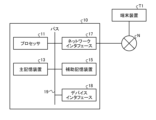
- FIG. 2 is a block diagram illustrating an example of a hardware configuration of the information processing apparatus according to the embodiment.
- FIG. 3 is a block diagram illustrating an example of a functional configuration of the information processing apparatus according to the embodiment.
- FIG. 4 is a block diagram illustrating an example of a hardware configuration of a terminal device according to the embodiment.
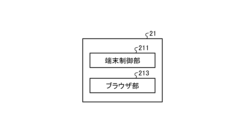
- FIG. 5 is a block diagram illustrating an example of a functional configuration of a terminal device according to the embodiment.
- FIG. 6 is a view showing an example of an initial display screen of a document review screen displayed on the display of a terminal device in the document review process according to this embodiment.
- FIG. 1 is a schematic diagram for explaining an overview of a document review system according to an embodiment.
- FIG. 2 is a block diagram illustrating an example of a hardware configuration of the information processing apparatus according to the embodiment.
- FIG. 3 is a block diagram illustrating an example of a functional configuration
- FIG. 7 is a diagram showing an example of a document review screen displayed on the display of a terminal device in the document review process according to the embodiment, which is a display screen to which the initial display screen is changed.
- FIG. 8 is a diagram for explaining clauses in a document to be reviewed that are determined to have no corresponding clauses in a template document in the document review process according to the embodiment.
- FIG. 9 is a view showing another example of an initial display screen of a document review screen displayed on the display of a terminal device in the document review process according to the embodiment.
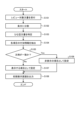
- FIG. 10 is a flowchart showing an example of the flow of a document review process according to the embodiment.
- the document review system according to the embodiment is configured to function as a system that supports document evaluation, i.e., document review.
- the document review system according to the embodiment supports the review of a first document based on a second document to which necessary comments have been added for reviewing the first document.
- the document review system according to the embodiment is an example of an information processing system.
- FIG. 1 is a schematic diagram for explaining an overview of a document review system S according to an embodiment.
- the document review system S of this embodiment includes an information processing device 10 and at least one terminal device T1-TN.
- the information processing device 10 and each of the at least one terminal device T1-TN are configured to be able to communicate with each other via a network N. It is assumed that the at least one terminal device T1-TN is operated by each of users P1-PN.
- the terminal device T1 operated by user P1 will be used as an example.
- the document review system S of this embodiment is a system that provides a document review service that supports document review on a browser.
- a document means a document in various languages that is created according to certain rules or standards such as a certain regulation, law, or custom.
- a document means information that expresses a document that has been digitized to be editable using word processing software or the like, regardless of the data format.
- a document is typically text data, but can also include other types of text data such as image data and table-format data.
- a document includes meta information (version, creation date, update date, creator, updater, etc.), format information (decorations such as underlines and markers, fonts, indents, etc.), change history information, comment information, etc. created by word processing software as necessary.
- the documents handled by the document review system S are legal documents in Japanese (e.g., contracts).
- the documents handled by the document review system S are not limited to contracts, nor are they limited to Japanese documents.
- they may be company regulations in English.
- the document review service of this embodiment may include executing a document review process on the document to be reviewed on a web browser and providing the results of the process to the user.
- the document review service may be a service that includes at least one of, for example, executing document editing in response to an instruction from a user, saving the edited document or providing it to the user, editing additional information (e.g., meta information, comment information, chat information, format information, etc.) associated with the document to be reviewed or a template document, and creating a new document (including a copy).
- the document to be reviewed is an example of a first document.
- the template document is an example of a second document.
- the document review process refers to a process of analyzing or evaluating information contained in a document to be reviewed based on certain criteria and outputting the results.
- the document review process is a process that includes checking and examining whether the information contained in the document to be reviewed is appropriate based on a template document that serves as a reference. Specifically, it includes matching the wording in the document with a template document prepared in advance and outputting the results of the matching and/or the comments contained in the template document.
- editing refers to adding, deleting, or changing information contained in the document to be edited.
- the review process of the first document is performed using the second document.
- the template document is a model contract in which one or more clauses and clauses have been input in advance according to the type of contract, and the style and/or format are specified.
- the template document is not limited to a document prepared in advance as a template, but may be a document to be reviewed that has been used frequently and is treated like a template.
- the template document is a document that describes contents that are considered convenient by the user who uses the document review service.
- the contract terms that the user considers preferable are described in the preferred language.
- Meta information associated with the document to be reviewed or the template document includes, for example, the document ID, the document type (e.g., a basic transaction agreement, a non-disclosure agreement, a service contract, etc.), the version, date and time information such as the document creation date and time, the update date and time, and the upload date and time, information about people such as the creator and updater, the deadline for review or for a response to the other party, and the document ID of a related document.
- the document ID e.g., a basic transaction agreement, a non-disclosure agreement, a service contract, etc.
- the version e.g., a basic transaction agreement, a non-disclosure agreement, a service contract, etc.
- date and time information such as the document creation date and time, the update date and time, and the upload date and time
- information about people such as the creator and updater, the deadline for review or for a response to the other party
- the document ID of a related document e.g., the document
- the comment information associated with the document to be reviewed or the template document is, for example, additional information created by at least one user involved in the creation of the document, and is associated and managed, for example, for each version of the document to be reviewed.
- the comment information is associated and managed with a specific version of the document to be reviewed, or with a specific sentence contained in that specific version of the document.
- the comment information associated with the document to be reviewed or the template document may typically be information separate from comments created by document creation software, and may also include comments created by document creation software as necessary. Note that information related to the second document, including comment information, may be set by someone other than the user attempting to review the first document.
- the chat information according to the embodiment is, for example, additional information generated for a case in which a document to be reviewed or a template document is created between multiple users involved in the creation of the document, and is managed, for example, in association with multiple versions of the document to be reviewed or the template document.
- This additional information is typically text data, but can also include other data formats such as images and audio.
- the comments included in the template document are an example of additional information associated with the template document.
- the comments may be formulated, for example, by a user P1 who uses the document review support service to review the document to be reviewed, a department such as the legal department to which the user P1 belongs, an organization such as a company, an external expert such as a legal counsel for the department or company, a vendor that provides the document review support service or customizes it for users, or the system of the document review support service.
- the comments are information set for the template document that is used in reviewing the document, and are also information that indicates points of contention regarding wording in the document, such as the clauses of the template document, and can also be expressed as company standards.
- the indications may include any of the following: information outlining the clauses of the template document; information indicating the scope or content that can be compromised to the contracting party or the criteria for such; information indicating the scope or content that cannot be compromised to the contracting party or the criteria for such; information indicating proposed amendments to the contract that are expected to be presented by the contracting party; information indicating the response to the proposed amendments from the contracting party or the proposed amendments; and information indicating sample text (draft) for conveying the intention for the amendments to the requesting department or the contracting party.
- the comments are not limited to those affixed to template documents registered in the document review system S, but may be data or documents input, registered, and stored in the document review system S as separate data or documents from the template documents and associated with them.
- a checklist prepared in advance may be used instead of or in addition to the template document to check whether the information contained in the document to be reviewed is appropriate.
- the terminal device T1 is a client device managed by a user P1 who uses the document review service. For example, based on information from the information processing device 10, the terminal device T1 displays the document review results and the company's standards on the screen of the display device 30 (see FIG. 4) while positionally matching them with each other.
- the user P1 can use the screen display on the display device 30 of the terminal device T1 to perform various operations related to document review, such as document review reference for the document to be reviewed, comment input, comment reference, chat information input, chat information reference, document editing processing, and document storage.
- the information processing device 10 of the present embodiment is a device that is connected to a client device via communication and performs various processes in response to requests from the client device.
- it is a server device managed by a provider that provides a document review service.
- the information processing device 10 provides a document review service to a terminal device T1 in response to a document review request received from a terminal device T1 as a client device via a network N.
- the information processing device 10 of the present embodiment executes document review processing of a document in the document review service.
- the information processing device 10 may also execute document editing processing in the document review service or in a document creation support service linked to the document review service.
- FIG. 2 is a block diagram showing an example of the hardware configuration of an information processing device 10 according to an embodiment.
- the information processing device 10 has a configuration similar to that of a general computer, and includes, as an example, a processor 11, a main storage device (memory) 13, an auxiliary storage device (memory) 15, a network interface 17, and a device interface 18.
- the processor 11, the main storage device 13, the auxiliary storage device 15, the network interface 17, and the device interface 18 are connected to each other so as to be able to communicate with each other, for example, via a bus 19.
- FIG. 2 illustrates an information processing device 10 having one of each component, this is not limiting.
- the information processing device 10 may have a plurality of the same components.
- FIG. 2 illustrates one information processing device 10, the software may be installed on a plurality of computers, and each of the plurality of computers may execute the same or different parts of the processing of the software.
- a form of distributed computing may be used in which each of the plurality of computers communicates via a network interface 17 or the like to execute processing.
- the information processing device 10 according to the embodiment may be configured as a system that realizes various functions described below by one or more computers executing instructions stored in one or more storage devices.
- the various calculations of the information processing device 10 may be executed in parallel using one or more processors, or using multiple computers via a network. Furthermore, the various calculations may be distributed to multiple computing cores within a processor and executed in parallel. Furthermore, some or all of the processes, means, etc. disclosed herein may be executed by at least one of a processor and a storage device provided on a cloud that can communicate with the information processing device 10 via the network N. In this way, the processing of the document review system S in this embodiment may be in the form of parallel computing using one or more computers.
- the processor 11 may be an electronic circuit (processing circuit, processing circuitry, CPU (Central Processing Unit), GPU (Graphics Processing Unit), FPGA (Field Programmable Gate Array), ASIC (Application Specific Integrated Circuit), etc.) including a control device and an arithmetic device of the information processing device 10.
- the processor 11 may also be a semiconductor device including a dedicated processing circuit.
- the processor 11 is not limited to an electronic circuit using electronic logic elements, and may be realized by an optical circuit using optical logic elements.
- the processor 11 may also include an arithmetic function based on quantum computing.
- the processor 11 performs calculations based on data and software (programs) input from each device in the internal configuration of the information processing device 10, and can output the calculation results and control signals to each device.
- the processor 11 may control each component that makes up the information processing device 10 by executing the OS (Operating System) of the information processing device 10, applications, etc.
- OS Operating System
- the information processing device 10 in this embodiment may be realized by one or more processors 11.
- the processor 11 may refer to one or more electronic circuits arranged on one chip, or to one or more electronic circuits arranged on two or more chips or two or more devices. When multiple electronic circuits are used, each electronic circuit may communicate by wire or wirelessly.
- the main memory device 13 is a memory device that stores instructions executed by the processor 11 and various data, and information stored in the main memory device 13 is read by the processor 11.
- the auxiliary memory device 15 is a memory device other than the main memory device 13. Note that these memory devices refer to any electronic components capable of storing electronic information, and may be semiconductor memories. The semiconductor memories may be either volatile or non-volatile memories.
- the memory device for saving various data used in the information processing device 10 according to the embodiment may be realized by the main memory device 13 or the auxiliary memory device 15, or may be realized by an internal memory built into the processor 11.
- the memory unit in the embodiment may be realized by the main memory device 13 or the auxiliary memory device 15.
- processors may be connected (coupled) to one storage device (memory), or a single processor 11 may be connected.
- Multiple storage devices (memories) may be connected (coupled) to one processor.
- the information processing device 10 in the embodiment is composed of at least one storage device (memory) and multiple processors connected (coupled) to this at least one storage device (memory)
- it may include a configuration in which at least one of the multiple processors is connected (coupled) to at least one storage device (memory).
- This configuration may also be realized by storage devices (memories) and processors 11 included in multiple computers.
- the storage device (memory) is integrated with the processor 11 (for example, a cache memory including an L1 cache and an L2 cache).
- the network interface 17 is an interface for connecting to the network N wirelessly or by wire.
- the network interface 17 may be an appropriate interface, such as one that conforms to an existing communication standard.
- the network interface 17 may exchange information with an external device connected via the network N.
- the network N may be any of a WAN (Wide Area Network), a LAN (Local Area Network), a PAN (Personal Area Network), or a combination of these, as long as information is exchanged between the information processing device 10 and an external device.
- An example of a WAN is the Internet
- an example of a LAN is IEEE802.11 or Ethernet (registered trademark)
- an example of a PAN is Bluetooth (registered trademark) or NFC (Near Field Communication).
- the device interface 18 is an interface such as an output device, an input device, or a USB (Universal Serial Bus) that directly connects to an external device, such as a display device.
- the external device may also be a storage device (memory), network storage, or HDD.
- the external device may also be a device that has some of the functions of the components of the information processing device 10 according to the embodiment. In other words, the information processing device 10 may transmit or receive some or all of the processing results of the external device.
- FIG. 3 is a block diagram showing an example of the functional configuration of the information processing device 10 of the embodiment.
- the information processing device 10 has functions as a document reception unit 111, a document division unit 113, a review processing execution unit 115, an output control unit 117, and a storage unit 119.
- at least one program that realizes each function of the information processing device 10 is stored, for example, in the main storage device 13 or the auxiliary storage device 15.
- the processor 11 can realize each function of the information processing device 10 by reading and executing a program stored in the main storage device 13 or the auxiliary storage device 15.
- the document reception unit 111 communicates information with the terminal device T1, for example, via a network. Specifically, the document reception unit 111 receives input of a document to be reviewed from the terminal device T1. The document reception unit 111 stores the received document to be reviewed in the storage unit 119.
- the document division unit 113 divides, for example, the input document to be reviewed and the template document stored in the storage unit 119 into units based on clauses that constitute legal documents, such as articles, clauses, and items. In this embodiment, a unit based on a clause is described as an item. It is preferable that the template document is divided in advance and prepared in the storage unit 119.
- the articles and clauses of the document to be reviewed and the template document are examples of items of the document to be reviewed and the template document, respectively.
- the review process execution unit 115 executes a document review process for a document to be reviewed received from the terminal device T1, for example, using a template document.
- the review process execution unit 115 may execute a document review process using multiple template documents.
- the review process execution unit 115 executes a document review process and generates document review information.
- the review information for a contract as in this embodiment is based on additional information in the second document, for example, (1) indication of whether the clauses or contract contents included in the document (in this embodiment, the contract) are advantageous or disadvantageous to the user (the party), (2) advice on the correction or deletion of clauses or contract expressions included in the contract, (3) indication of the absence of items that should normally be included in the contract, and/or suggestions for items to be added, and (4) information on the importance or recommended degree of clauses in each review result. It may also include things that are not specified in the second document, such as format information on whether the text format meets the standards, whether specified terms are used, and other points of discussion not included in the second document.
- the review processing execution unit 115 performs the following processing, for example:
- the review process execution unit 115 extracts, for example, information necessary for generating review information from the first document.
- Various techniques can be adopted as a method for extracting information from a document. For example, a keyword search of the document may be performed to extract letters, numbers, symbols, etc. contained near the keyword. Information may also be extracted by morphological analysis, syntactic analysis, semantic analysis, and context analysis. Information may also be extracted by natural language processing using machine learning.
- documents necessary for document review such as text data, may be extracted from the received data, or a process such as OCR may be performed to extract documents such as text data from image data. Note that the document review process may be performed on the received document without extracting information necessary for generating document review information as described above. This information may also be included in the form of a table.
- the review process execution unit 115 uses the extracted information in the document review process to compare the input review target document with a template document that is used as a reference for the review target document.
- the review process execution unit 115 compares the review target document with the template document.
- This comparison includes comparing the review target document with the template document for each item divided into any clause units based on articles, paragraphs, etc., and includes determining whether each item is similar or dissimilar.
- determining whether an item is similar or dissimilar includes at least one of determining whether an item is similar or dissimilar, and determining whether an item is dissimilar.
- this comparison includes classifying each of the multiple items into at least one of similar items and dissimilar items.
- the review processing execution unit 115 may classify dissimilar items into two or more categories when determining whether they are similar or dissimilar items. As an example, the review processing execution unit 115 may first determine whether the character strings roughly match. In this determination, the review processing execution unit 115 may classify those that do not roughly match as a first dissimilar item. Next, the review processing execution unit 115 may determine whether the roughly matched items are a perfect match. In this determination, the review processing execution unit 115 may classify those that are a perfect match as similar items. On the other hand, the review processing execution unit 115 may classify those that do not completely match as a second dissimilar item.
- the first dissimilar item may be treated as an item that displays the comments in the template document, similar to the dissimilar items in the embodiment.
- the second dissimilar item which has a small dissimilarity, i.e., is generally identical, may be treated, for example, in the same way as the dissimilar items according to the embodiment, or may be treated as an item with a simple display indicating that the wording does not match.
- the display mode can be further divided according to the degree of dissimilarity. Therefore, for example, even if there are many dissimilar items to be displayed as points of concern, some of them are displayed in a simplified manner according to the dissimilarity, so the user can easily understand the points of concern that need to be confirmed.
- the template document may be appropriately divided to facilitate comparison with the document to be reviewed.
- the template document is divided into the same units as the document to be reviewed.
- the division may be performed, for example, by the document division unit described above.
- divided items are not limited to those obtained by subdividing the original document, but also refer to items in the case where a document is composed of a collection of multiple items. For example, if there is a template document in which clauses saved per article are collected into a single contract, those clauses are not obtained by dividing the contract, but are considered to be divided items.
- the review process execution unit 115 extracts, as document review information, comments on the corresponding items in the template document for each item in the document to be reviewed.
- the comments on each item in the template document can include at least one of the comment information included in the template document and the additional information associated with the template document, as described above.
- the review process execution unit 115 may extract comments about items in a template document that correspond to similar items among multiple items included in the document to be reviewed.
- a similar item is an item of wording (e.g., a clause) whose similarity to the example sentence (e.g., a clause) of the corresponding item in the template document satisfies a predetermined condition.
- the review process execution unit 115 may extract comments about items in the template document that correspond to dissimilar items among multiple items included in the document to be reviewed.
- a dissimilar item is an item of wording (e.g., a clause) whose similarity to the corresponding example sentence (e.g., a clause) of the template document item does not satisfy a predetermined condition.
- the review process execution unit 115 may extract a comment about an additional item among multiple items included in the document to be reviewed that is not included in the template document.
- an additional item is an item that is included in the document to be reviewed, but is not included in the template document.
- a comment that is not related to an item in the template document is a standard that specifies wording or content that is predetermined not to be described in the contract, or wording or content that is predetermined to be described in the contract, and is a standard that is not dependent on a specific item in the template document.
- the additional item may be included in dissimilar items. Note that comments about additional items are not limited to comments that are not related to items in the template document, and may be extracted from comments that are related to items in other template documents.
- the review process execution unit 115 may also identify missing items from among multiple items contained in the document to be reviewed.
- a missing item is an item that is included in the template document, but is not included in the document to be reviewed.
- a missing item is an item that corresponds to an indication that is not related to an item in the template document, but is not included in the document to be reviewed. Note that missing items may be included in dissimilar items.
- the similarity of the wording of an item in the document to be reviewed to the example wording of an item in the template document is based on, for example, the degree of correlation between the wording of the item in the document to be reviewed and the example wording of the corresponding item included in the template document.
- the degree of correlation of the wording may be weighted by the correlation of the title of the item.
- the similarity condition is that the wording of the item in the document to be reviewed matches the example wording of the corresponding item included in the template document.
- the similarity condition is that the wording of the item in the document to be reviewed matches the example wording of the corresponding item included in the template document, except for differences stored in the memory unit 119 as allowable differences in advance or set by the user, such as differences in "full-width/half-width” and notations such as "or/or", and names of the parties in the sentence.
- the condition for the similarity is that the degree of correlation between the wording of an item in the document to be reviewed and the wording of the corresponding item included in the template document is equal to or greater than a predetermined threshold value or is equal to or less than a predetermined threshold value. In this case, the numerical value of the degree of correlation can be used as a value expressing the similarity.
- the threshold value for the degree of correlation or similarity is predetermined and stored in the storage unit 119 or the like.
- the similarity is also possible for the similarity to be a text-based (character-based) similarity based on the match/mismatch of character strings such as the wording or words of an item and their frequency, or a vector-based similarity based on the vector of character strings such as the wording or words of an item that have been vectorized.
- the condition for the similarity to be fixed, or to be changed based on conditions such as the type of indication, the user, the contract type, etc. It may also be changed by the user or the system provider.
- the first document is preferably created based on a document that is substantially the same as the second document.
- the documents stipulate substantially similar content (the content of the contract in the case of a contract)
- the documents are expressed differently, and therefore when comparing the provisions of the items in the first document with the provisions of the items in the second document, the similarity is determined to be low, and unnecessary comments may be displayed in the display described below. This problem is particularly likely when determining the similarity on a character-by-character basis.
- the first document is created based on the second document, for example, by replacing the names of the parties or by having the other party rewrite the contract content
- the difference between the text of the first document and the second document that serves as the basis for review becomes clear, and the comment data can be displayed more appropriately.
- the review process execution unit 115 may also generate document review information according to the position of the user (party) by using meta-information associated with the document to be reviewed. Furthermore, the review process execution unit 115 can also generate document review information by referring to the contents of other documents (other versions of the document to be reviewed, other contracts related to the document to be reviewed, etc.). Meta-information includes information that is added to the document file itself by the document creator, etc., and information that is added by the user, etc. by being input separately from the file.
- the output control unit 117 communicates information with the terminal device T1, for example, via a network. Specifically, the output control unit 117 outputs at least the document review information to the terminal device T1.
- the document review information may include layout information.
- the layout information in the document review process is information for displaying the document review information generated by the document review process and the document to be reviewed in a specified format on the browser screen of the terminal device T1 by associating their positions with each other.
- matching positions refers to matching displayed positions to facilitate user viewing, and specifically means matching positions on the screen, for example, by clause, paragraph, or sentence.
- Matching positions includes, for example, displaying corresponding parts closer together in the height or width direction than other parts on the screen, and more preferably, displaying them side by side. For example, if the document to be reviewed has similar items to a template document, it includes displaying similar items in the document to be reviewed and the template document in the same row but different columns in table format.
- the layout information may be generated by any method.
- the layout information may be generated by using a search function to score the degree of match for each position in the document to be reviewed (for example, each position per clause or each position per paragraph) for words and phrases included in the items of the template document that correspond to the indications in the document review information, and the document review information is displayed corresponding to the position with the highest score.
- the display positions of clauses and paragraphs and document review information can be associated.
- the output control unit 117 generates display information for displaying an initial display screen (see FIG. 6 or FIG. 9) including document review information, and outputs it to the terminal device T1.
- the initial display screen is a display screen displayed on the terminal device T1, and is a display screen that displays, as document review information, at least any one of dissimilar items, added items, and missing items of the document to be reviewed, and indications of the template document corresponding to the items, in association with their positions.
- the initial display screen is an example of a first display screen.
- the output control unit 117 generates display information for displaying a full display screen (see FIG. 7) including document review information, and outputs it to the terminal device T1.
- the full display screen is a display screen displayed on the terminal device T1, and is a display screen that further displays, as document review information, similar items of the document to be reviewed and indications of the template document that correspond to the similar items, with their positions associated with each other, in addition to the initial display screen.
- the full display screen is an example of a second display screen.
- the initial display screen is, for example, a screen that is displayed on the terminal device T1 before a user operation is performed regarding the display of a comment, but is not necessarily limited to a screen that is displayed as an initial display in the document review service on the terminal device T1.
- a case where the full display screen is displayed on the terminal device T1 by a screen transition from the initial display screen that is, a case where the initial display screen is set as the default display screen, is exemplified, but this is not limited to this.
- the full display screen is set as the default display screen
- the initial display screen is displayed on the terminal device T1 by a screen transition from the full display screen.
- the output control unit 117 may output, for example, in response to a download instruction from the terminal device T1, the indications included in the display screen from among the multiple indications included in the template document.
- the output control unit 117 when the initial display screen is displayed, the output control unit 117 preferably outputs indications for at least any of the items of dissimilar items, added items, and missing items all at once.
- the output control unit 117 when the full display screen is displayed, the output control unit 117 outputs indications for at least any of the items of similar items, dissimilar items, added items, and missing items all at once.
- the file format when the displayed indications are output is arbitrary. This file format may be a file format that conforms to a specific or arbitrary spreadsheet software or word processing software such as Microsoft Excel or Microsoft Word, or may be another file format such as PDF format or CSV format.
- the storage unit 119 stores various programs executed by the information processing device 10.
- the storage unit 119 also stores documents uploaded from the terminal device T1, additional information associated with each document, and the like.
- Terminal device T1 The terminal device T1 of this embodiment transmits and receives information relating to the display of documents and document review results to and from the information processing device 10 in the document review service.
- FIG. 4 is a block diagram showing an example of the hardware configuration of the terminal device T1 according to the embodiment.
- the terminal device T1 according to the embodiment has a configuration similar to that of a general computer, and includes, as an example, a processor 21, a main storage device (memory) 23, an auxiliary storage device (memory) 25, a network interface 27, a device interface 28, a display device 30, and an input device 31.
- the processor 21, the main storage device 23, the auxiliary storage device 25, the network interface 27, and the device interface 28 are connected to each other so as to be able to communicate with each other, for example, via a bus 29.
- the display device 30 and the input device 31 are each connected to the device interface 28.
- the processor 21, the main memory device 23, the auxiliary memory device 25, the network interface 27, and the device interface 28 have the same hardware configuration as the processor 11, the main memory device 13, the auxiliary memory device 15, the network interface 17, and the device interface 18, respectively.
- the display device 30 is, for example, a display device such as an LCD (Liquid Crystal Display), a CRT (Cathode Ray Tube), a PDP (Plasma Display Panel), or an organic EL (Electro Luminescence) panel.
- the display device 30 displays, for example, a document review screen described below based on instructions from the processor 21.
- the input device 31 is, for example, a device such as a keyboard, a mouse, or a touch panel.
- the input device 31 accepts various operational inputs by the user P1, for example, in the document review process described below.
- the input device 31 outputs the results of the operational inputs accepted from the user P1 to the processor 21.
- terminal device T1 may be connected to the terminal device T1 via the device interface 18.
- other external devices such as a camera, microphone, motion capture, and various sensors, may be connected to the terminal device T1 via the device interface 18.
- FIG. 5 is a block diagram showing an example of the functional configuration of the terminal device T1 according to the embodiment.
- the terminal device T1 according to the embodiment has the functions of a terminal control unit 211 and a browser unit 213.
- at least one program that realizes each function of the terminal device T1 is stored, for example, in the main storage device 23 or the auxiliary storage device 25.
- the processor 21 can realize each function of the terminal device T1 by reading and executing a program stored in the main storage device 23 or the auxiliary storage device 25.
- the terminal control unit 211 launches the browser unit 213 in response to an instruction from the user, for example.
- the browser unit 213 is, for example, a general web browser, and executes processing according to HTML (Hyper Text Markup Language) data and scripts (for example, Java (registered trademark) Script), etc. When started, the browser unit 213 transmits an initial access URL to the information processing device 10 and accesses it.
- HTML Hyper Text Markup Language
- scripts for example, Java (registered trademark) Script
- the browser unit 213 displays data including text data and image data received from the information processing device 10 in a predetermined format on the display device 30 of the terminal device T1. More specifically, in the document review process, the browser unit 213 displays the document review information and the document received from the information processing device 10 in a predetermined format based on the layout information on the display device 30 of the terminal device T1.
- FIG. 6 shows an example of an initial display screen (first display screen) 510, which is a document review screen displayed as a web browser screen on the display device 30 of the terminal device T1 during the document review process according to the embodiment.
- the initial display screen 510 includes, for example, a display 501 of information indicating the document to be reviewed, such as a file name, and a display 503 of information indicating a template owned by the selected user, i.e., a template document created in accordance with the company's standards.
- the initial display screen 510 may also include an icon 509 for editing the company's standards, i.e., for instructing changes or modifications to the template document.
- the terminal control unit 211 of the terminal device T1 may accept the selection of the icon 509 and request the information processing device 10 to edit the company's standards. At this time, the information processing device 10 executes processing related to editing the company's standards in response to the request from the terminal device T1.
- the initial display screen 510 includes, for example, a document display area 511 that displays the document to be reviewed, and a document review area 521 that displays document review information, as shown in FIG. 6.
- the document display area 511 of the initial display screen 510 displays a first clause 511a, a second clause 511b, a third clause 511c, and a fourth clause 511d as divided clauses of the document to be reviewed.
- the first clause 511a and the third clause 511c are each an example of a similar item.
- the second clause 511b is an example of a dissimilar item that has been determined to have a certain difference from the template document.
- the fourth clause 511d is an example of an added item (dissimilar item). In other words, in this embodiment, both similar items and dissimilar items are displayed in the document display area 511 of the initial display screen 510.
- the document review area 521 of the initial display screen 510 displays comments about dissimilar items among the divided clauses of the document to be reviewed, i.e., a second comment 521b about the second clause 511b and a fourth comment 521d about the fourth clause 511d.
- the document review area 521 of the initial display screen 510 also displays a sixth comment 521f based on the company's own standards that is not related to the items in the template document.
- the document review area 521 of the initial display screen 510 also displays a seventh comment 521g about a missing item that does not exist in the divided clauses of the document to be reviewed.
- the document review area 521 on the initial display screen 510 does not display comments about similar items among the divided clauses of the document to be reviewed, i.e., the first comment 521a and the third comment 521c (see FIG. 7) about the first clause 511a and the third clause 511c, respectively.
- This display allows the user to easily grasp only the comments about items that have been modified by the other party to the contract, among the multiple comments on the template document. This reduces the effort involved in reviewing contracts and supports document review work based on document comparison.
- Examples of simple display include not displaying the comment itself as in this embodiment, or displaying only the title or a portion of the comment and not displaying the full text of the comment.
- the sixth comment 521f based on company standards that is not related to the items in the template document and the seventh comment 521g about a missing item are displayed as simple comments with only a portion of the comment text (e.g., the title), but to improve the convenience of the user's review, they may be displayed in the same way as comments about dissimilar items that have differences from the template document (the second comment 521b and the fourth comment 521d in Figure 6).
- clauses and comments related to those clauses may be displayed closer to each other than to other clauses.
- second comment 521b targeting second clause 511b of "Article 1 (Definition of Confidential Information)” may be displayed closer to "Article 1 (Definition of Confidential Information)" of the document being reviewed in the screen height direction than to other clauses.
- the document review information is displayed in a list in an area that does not overlap with the part of the document being commented on by the comment, such as the document review area 521 aligned with the document display area 511, or in an independent (separate) window such as a pop-up window. This type of display allows the user to compare the corresponding parts of the document being reviewed and the comments with minimal eye movement, reducing the burden on the user.
- the positional correspondence between the document display area 511 and the document review area 521 may be temporary.
- the item or comments of the document to be reviewed may be moved in response to a specified operation, such as inserting a cursor into an item in the document to be reviewed or clicking near an item, thereby displaying the positional correspondence between the document to be reviewed and the comments.
- the positional correspondence display between the document to be reviewed and the comments may also be released by a specified operation.
- scroll bars for vertically scrolling the displayed documents or comments may be displayed next to the document display area 511 and the document review area 521.
- the scroll bars or the like By operating the scroll bars or the like, the document to be reviewed displayed in the document display area 511 and the comments displayed in the document review area 521 may be scrolled.
- the other may also be scrolled vertically in tandem with this.
- the number of findings may be displayed according to importance.
- the word "importance" and the number of findings classified into that importance are displayed in the upper part of the document review area 521.
- a toggle 505 is displayed to display "no differences" items, i.e., to instruct the display of comments about similar items.
- the toggle 505 By operating the toggle 505, the user can switch between filtering comments about similar items, i.e., displaying comments about similar items.
- "no differences” refers to no difference in characters between corresponding items in the first document and the second document (all characters match). The user may also be allowed to select whether to display or switch between the second non-similar items described above.
- FIG. 7 is a diagram showing an example of a full display screen (second display screen) 570, which is a document review screen displayed as a web browser screen on the display device 30 of the terminal device T1 in the document review process according to the embodiment, and is a diagram showing an example of a full display screen (second display screen) 570 to which the initial display screen 510 transitions.
- the full display screen 570 in FIG. 7 is a display screen to which the web browser screen is switched and displayed in response to, for example, the operation of the toggle 505 on the initial display screen 510 in FIG. 6.
- the document review area 521 of the full display screen 570 displays the first remark 521a, the second remark 521b, the third remark 521c, the fourth remark 521d, and the fifth remark 521e, which correspond to the divided first clause 511a, the second clause 511b, the third clause 511c, the fourth clause 511d, and the fifth clause (not shown), respectively, of the document to be reviewed.
- the document review area 521 displays the sixth remark 521f based on the company's standards and the seventh remark 521g about the missing items. In other words, as shown in FIG.
- the document review area 521 of the full display screen 570 further includes the first remark 521a, the third remark 521c, and the fifth remark 521e about the similar items of the document to be reviewed, compared to the initial display screen 510. Note that other remarks are omitted in the figure, but are assumed to be displayed.
- the full display screen 570 of this embodiment is an example of a screen that also displays comments about similar items, and is not meant to display all clauses of the document being reviewed.
- the full display screen 570 does not necessarily display all comments included in the document review information.
- the clauses and comments included in the screen display may change as appropriate depending on various conditions, such as the size of the display surface of the display device 30 of the terminal device T1, the screen size of the full display screen 570 on that display surface, the font size on that display surface, and other conditions.
- each indication of a similar item is displayed in a position corresponding to the similar item, as are non-similar items and their indications.
- the first indication 521a, the third indication 521c, and the fifth indication 521e for similar items are simpler indications than those set in the template document.
- the first indication 521a, the third indication 521c, and the fifth indication 521e displayed for similar items may be displayed in a simpler manner than the second indication 521b displayed for dissimilar items, or may be displayed in a similar manner.
- the fourth indication 521d, the sixth indication 521f, and the seventh indication 521g displayed for dissimilar items may also be displayed in a simpler manner than the second indication 521b, or may be displayed in a similar manner.
- a toggle 505 may be displayed in the same manner as in the initial display screen 510 of FIG. 6.
- the display of this toggle 505 is a display for instructing a transition from the initial display screen 510 to the full display screen 570.
- a display for instructing a transition from the initial display screen 510 to the full display screen 570 and a display for instructing a transition from the full display screen 570 to the initial display screen 510 may be displayed as a single toggle.
- each comment may include an open icon 527 for instructing a detailed display.
- Figure 6 illustrates an example in which the open icon 527 is selected for a second comment 521b about a dissimilar item.
- a comment indicating an outline of the comment may be displayed as comment information 500 on either the first screen or the second screen.
- more detailed comment information 500 such as example sentences in a template document may be displayed.
- the display may be made so that the user can easily confirm whether the items are dissimilar or similar in the document to be reviewed.
- the second clause 511b and the fourth clause 511d are respectively displayed at the beginning with caution marks 513 and 515, making it visually easy to understand that they are dissimilar items.
- the background color of the dissimilar items may be made different from that of the similar items.
- the clauses may be highlighted by highlighting or by making the clauses bold.
- the clauses may be highlighted in at least one of the sentences of the items in the document to be reviewed and the sentence examples in the sentence information 500, where there is a difference between the sentence example of the item in the template document and the sentence of the dissimilar item in the document to be reviewed. This makes it easier to compare the documents.
- the display may be changed based on the importance of the comment. For example, comments of high importance are more likely to be checked than other dissimilar items, so they may be displayed on the first display screen, while comments of medium importance may be hidden. This may be done by setting it up in advance, or the user may switch between display and non-display by operating an icon related to the importance that is placed on the screen while reviewing the document.
- a notice may be displayed indicating that there is no corresponding item in the template document, or the clause may be highlighted.
- This notice is preferably displayed on the first display screen 520, as it is considered to be important or to require user confirmation, just like notices regarding dissimilar items.
- the notice to be displayed may be something like "This item has no corresponding item in the template document.”
- Clause(s) that are determined to not be in the template document of the company's standards are likely to have been newly added by the other party, have been significantly rewritten by the other party, or are significantly different from the company's standards, and it is often preferable to carefully check the contents.
- the above configuration can draw the user's attention to clauses that are determined to not be in the template document of the company's standards.
- the clauses can be highlighted or alerted to make them stand out. Therefore, with the above configuration, the user can easily identify clauses that need to be checked and more easily compare documents.
- FIG. 8 is a diagram for explaining an example of a method for determining similarity of items in a document to be reviewed. In particular, it shows a case in which it is determined that there is no corresponding clause in the template document in the document review process according to the embodiment.
- the clause in "Article D" is a clause that has been newly added by the other party to the contract when the document being reviewed is a template document based on the company's own standards, or a document created using that template that has been edited by the other party to the contract.
- the clause in "Article D” is a clause that differs greatly from the original clause due to the other party editing the existing clause when the document being reviewed is a template document based on the company's own standards or a document created using that template and then edited by the other party to the contract.
- the clause in "Article D” can be described as a clause that has been changed so significantly that it is not judged to be "similar” to the clause in the original template document based on the company's own standards when comparing the documents.
- the clause in "Article D” is a clause for cases where the document to be reviewed is a document prepared by the other party, such as a template document for the other party's standards, and there is no clause similar to the template document for the company's standards.
- This clause in "Article D” corresponds to, for example, an additional item in the fourth clause 511d in the example above.
- the clause in "Article G” is a clause in the case where the document to be reviewed is a document created by the other party, such as a template document of the other party's standards, and there is a similar clause in the company's own standard template document, and the clause in the company's own standard template document has already been matched as similar (determined to be similar) to other clauses in the document to be reviewed.
- the clause in "Article G” is similar to the clause in "Article 6" in the company's own standard template document, but the clause in "Article 6" has already been matched as similar to the clause in "Article F" of the document to be reviewed.
- This clause in "Article G” corresponds, for example, to the additional item in the fourth clause 511d in the example above.
- highlighting of dissimilar items that do not have similar clauses in the company's standard template document is applied to the entire clause in the document display area 511 that displays the document to be reviewed.
- the entire text (article) of a dissimilar item that does not have a similar clause in the company's standard template document may be highlighted.
- highlighting may be applied in such a way that the background cells of dissimilar items that do not have similar clauses in the company's standard template document are colored.
- an alert may be displayed in the document review area 521 that displays document review information, indicating that there is no corresponding article in the template.
- FIG. 9 shows an example of an initial display screen 550, which is a document review screen displayed as a web browser screen on the display device 30 of the terminal device T1 during the document review process according to the embodiment.
- the initial display screen 550 shown in FIG. 9 is an example of the initial display screen 510 when no dissimilar items have been pointed out.
- the document review area 521 of the initial display screen 550 displays comments 551 including comments such as "There are no check items that require correction. All provisions are in full agreement with our company standards" indicating that there are no dissimilar items or differences in wording between the template document and the document being reviewed, links that function in the same way as the toggle 505, such as "Show items with no differences," and links such as "Return to preview" to return to the display before the document review process was performed.
- toggle 505 may be displayed similarly to the initial display screen 510 of FIG. 6.
- the full display screen 570 of FIG. 7 can also be expressed as a display screen in which a web browser screen is switched and displayed in response to the operation of toggle 505 on the initial display screen 550 of FIG. 9, for example.
- each display screen 510, 550, 570 may display information 523 showing an overview of the issues displayed in the document review area 521, such as "xx alerts/xx missing," and information 525 showing the progress of responding to the issues, such as "xx/xx.”
- a download icon 507 may be displayed on each display screen 510, 550, 570 to instruct downloading of data related to the indication.
- the user can download the data including the displayed indication, for example, all at once.
- the terminal control unit 211 of the terminal device T1 accepts the selection of the download icon 507 and requests the information processing device 10 to output the indication information.
- the information processing device 10 executes a process of outputting the displayed indication as one data. For example, when the information processing device 10 accepts the selection of the download icon 507 on the initial display screen 510, it outputs multiple indications excluding indications regarding similar items all at once. For example, when the information processing device 10 accepts the selection of the download icon 507 on the initial display screen 510, it outputs multiple indications including indications regarding similar items all at once.
- FIG. 10 is a flowchart showing an example of the flow of a document review process according to an embodiment.
- the flow in FIG. 10 illustrates an example of a flow executed in the information processing device 10 after the browser unit 213 is started in terminal device T1 in response to an instruction from the user, and the document to be reviewed is sent to the information processing device 10 by the browser unit 213 in response to a document upload instruction from the user.
- the document receiving unit 111 of the information processing device 10 receives input of a document to be reviewed from the terminal device T1 (S101).
- the document dividing unit 113 divides the input document to be reviewed into item units (S102).
- This document to be reviewed has been modified by the other party in the negotiation who sent the user's template document.
- the original template document of this document to be reviewed may be stored in the storage unit 119 of the information processing device 10 and may have been output. It is preferable that the original template document of the document to be reviewed has substantially the same content as the template document used during the review. This makes the differences when conducting the review clearer, making the review easier.
- the template document sent to the other party is output from the system or sent to the other party without including information used by the user, such as suggestions or comments.
- the template document may be sent to the other party in the negotiation directly from the system, or sent to the other party by the user who downloaded it.
- the review process execution unit 115 identifies the corresponding divided items in the template document for each divided item in the document to be reviewed (S103), and extracts the additional information, i.e., the comments, that are added to each item in the identified template document (S104).
- the review process execution unit 115 also determines whether or not the example sentences in the review target document and the template document match for each item (S105).
- the review process execution unit 115 sets the corresponding item as a similar item that hides the comments in the template document on the initial display screen 510 (S106).
- the review process execution unit 115 sets the corresponding item as a non-similar item that displays the comments in the template document on the initial display screen 510 (S107).
- the output control unit 117 outputs document review information for the initial display screen, excluding indications of similar items, to the terminal device T1 (S108).
- the browser unit 213 of the terminal device T1 displays the initial display screen 510 (or the initial display screen 550) based on the document review information and layout information received from the information processing device 10.
- the information processing device 10 includes at least one processor.
- the at least one processor realizes a document receiving unit 111, a document dividing unit 113, a review processing execution unit 115, an output control unit 117, and a storage unit 119.
- the at least one processor compares a review target document including multiple items to be reviewed with a template document.
- the template document is a document including multiple items, with comments set for the multiple items, and is a document that is used as a reference for the review target document.
- the at least one processor also determines whether the multiple items in the review target document are similar items or dissimilar items.
- the at least one processor also generates an initial display screen 510 including a display in which comments set in the template document are associated with dissimilar items, and a display in which comments that are simpler than the comments displayed when the items are dissimilar items are associated with similar items.
- the at least one processor also generates a full display screen 570 in which comments set for dissimilar items and similar items are displayed.
- at least one processor can switch between the initial display screen 510 and the full display screen 570.
- the full display screen 570 allows the user to appropriately check the comments about similar items that have been filtered out and hidden on the initial display screens 510 and 550. Furthermore, by making the comments about similar items simpler than those set in the template document, the user can easily identify the comments that need to be checked even when comments about similar items are displayed.
- the initial display screen 510 includes a toggle 505 for instructing a transition to the full display screen 570.
- the screen display can be switched from the initial display screen 510, 550 to the full display screen 570.
- the above configuration makes it possible to appropriately check comments about similar items that have been filtered out and hidden on the initial display screen 510, 550.
- the indication for the template document item corresponding to the dissimilar item may include at least one of comment information included in the template document and additional information associated with the template document.
- Editing the company standards used for the document to be reviewed is not limited to editing the template document, but may also include adding, updating, or deleting the template document. Even if the template document is in an uneditable format such as PDF format because modifications are not desired, or if the comments cannot be edited, or if the proposed modifications are made in a document other than the contract such as an email, the company standards may be edited by adding a template document with comments. When the template document is updated, the comments made on the old version of the template document may be transferred to the new version of the template document.
- the old version of the template document and the new version of the template document may be compared on a clause-by-clause basis, and the comments made on the clauses of the old version of the template document may be transferred as comments on clauses of the new version of the template document that are similar to the clauses in question.
- the full display screen 570 includes a toggle 505 display for instructing a transition to the initial display screens 510 and 550.
- the template document may include comments that are not related to the items.
- the initial display screen 510 further includes a display of comments that are not related to the items of the template document.
- document review processes can be carried out for company standards that do not exist as items in the template, such as content that is stipulated as not to be included in a contract, and violations of said company standards can be notified.
- dissimilar items include a display of missing items that are not included in the document to be reviewed among the multiple items included in the template document.
- the display of the indication for the item of the template document that corresponds to the dissimilar item may include displaying an example of the item of the template document and highlighting the difference between the example and the text of the dissimilar item.
- an output control unit 117 implemented by at least one processor outputs at least one indication displayed among a plurality of items included in the template document in a batch.
- At least one processor may determine that an item in the document to be reviewed is a similar item when the wording of the item in the document to be reviewed matches an example of the corresponding item contained in the template document.
- checking can be omitted for parts of the document to be reviewed that have not been changed from the template document, and checking omissions that can occur when omitting parts at the user's discretion can be reduced.
- the review processing execution unit 115 which is realized by at least one processor, may determine whether an item in the document to be reviewed is a similar item or a dissimilar item based on the degree of correlation between the wording of the item in the document to be reviewed and the example text of the corresponding item included in the template document, weighted based on the degree of correlation between the titles of the item in the document to be reviewed and the template document.
- the document and the document review information are stored as data in separate files and are managed in association with each other.
- data including the document and the document review information may be managed as a single file.
- toggles, icons, buttons, etc. are displayed on the screen, but this is not limited to this as long as the display allows the user to operate appropriately.
- other displays are not limited to the above embodiment, and appropriate content can be selected.
- the devices in the above-mentioned embodiments may be configured with hardware, or may be configured with information processing of software (programs) executed by a CPU, GPU, or the like. Also, in the above-mentioned embodiments, when multiple storage devices store data, each of the multiple storage devices may store only a portion of the data, or may store the entire data.
- the information processing method compares a first document including a plurality of items to be reviewed with a second document including a plurality of items and having comments set for the plurality of items, determines whether the plurality of items in the first document are similar items or dissimilar items, generates a first display screen including a display in which the comments set in the second document are associated with the dissimilar items, and a display in which the comments are associated with the similar items with simpler comments than would be displayed if the items were dissimilar items, generates a second display screen in which the comments set for the dissimilar items and the similar items are displayed, and the first display screen and the second display screen can be switched between.
- the first display screen may include a display for instructing a transition to the second display screen.
- the indication about the item in the second document that corresponds to the dissimilar item may include at least one of comment information included in the second document and additional information associated with the second document.
- the second display screen may include a display for instructing a transition to the first display screen.
- the second document may include comments that are not related to the item
- the first display screen may further include a display of the comments that are not related to the item in the second document.
- the dissimilar items may include missing items that are not included in the first document among the multiple items included in the second document.
- the display of the indication regarding the item of the second document corresponding to the dissimilar item may include displaying an example of the item of the second document and highlighting the difference between the example and the text of the dissimilar item.
- the information processing method may also include outputting, in a lump sum, indications for at least one displayed item among a plurality of items contained in the second document.
- the information processing method may determine that an item in the first document is the similar item when the wording of the item in the first document matches an example of the corresponding item contained in the second document.
- the information processing method may determine whether an item in the first document is a similar item or a dissimilar item based on the degree of correlation between the wording of the item in the first document and an example sentence of the corresponding item contained in the second document, weighted based on the degree of correlation between the titles of the items in the first document and the second document.
- the information processing device includes at least one processor.
- the at least one processor compares a first document including a plurality of items to be reviewed with a second document including a plurality of items and having comments set for the plurality of items, determines whether the plurality of items in the first document are similar items or dissimilar items, generates a first display screen including a display in which the comments set in the second document are associated with the dissimilar items, and a display in which the comments are associated with the similar items with simpler comments than those displayed when the items are dissimilar items, generates a second display screen in which the comments set for the dissimilar items and the similar items are displayed, and the first display screen and the second display screen can be switched between display.
- the information processing device includes at least one processor.
- the at least one processor executes the information processing method.
- the information processing system includes the information processing device and a terminal device that communicates with the information processing device.
- the at least one processor outputs display information for displaying at least one of the first display screen and the second display screen.
- the terminal device includes at least one processor that displays a display screen based on the display information output from the information processing device.
- the information processing program causes a computer to execute the following operations: compare a first document including a plurality of items to be reviewed with a second document including a plurality of items and having comments set for the plurality of items; determine whether the plurality of items in the first document are similar items or dissimilar items; generate a first display screen including a display in which, for the dissimilar items, comments set in the second document are associated with the dissimilar items, and a display in which, for the similar items, comments that are simpler than the comments that would be displayed if the items were dissimilar items; generate a second display screen in which the comments set for the dissimilar items and the similar items are displayed; and enable switching between the first display screen and the second display screen.
- the information processing program according to the embodiment causes a computer to execute the above information processing method.
- the recording medium according to the embodiment is a program executed by a computer, and is a storage medium (Computer Program Product) on which the above-mentioned information processing program is recorded.
Landscapes
- Engineering & Computer Science (AREA)
- Theoretical Computer Science (AREA)
- Physics & Mathematics (AREA)
- General Physics & Mathematics (AREA)
- Health & Medical Sciences (AREA)
- Artificial Intelligence (AREA)
- Audiology, Speech & Language Pathology (AREA)
- Computational Linguistics (AREA)
- General Health & Medical Sciences (AREA)
- General Engineering & Computer Science (AREA)
- Business, Economics & Management (AREA)
- Entrepreneurship & Innovation (AREA)
- Human Resources & Organizations (AREA)
- Strategic Management (AREA)
- Data Mining & Analysis (AREA)
- Economics (AREA)
- Marketing (AREA)
- Operations Research (AREA)
- Quality & Reliability (AREA)
- Tourism & Hospitality (AREA)
- General Business, Economics & Management (AREA)
- Document Processing Apparatus (AREA)
Priority Applications (3)
| Application Number | Priority Date | Filing Date | Title |
|---|---|---|---|
| PCT/JP2023/012327 WO2024201679A1 (ja) | 2023-03-27 | 2023-03-27 | 情報処理方法、情報処理装置、情報処理システム及び情報処理プログラム |
| JP2025509304A JPWO2024201679A1 (https=) | 2023-03-27 | 2023-03-27 | |
| US19/340,873 US20260023924A1 (en) | 2023-03-27 | 2025-09-26 | Information processing method, information processing apparatus, information processing system, and non-transitory computer-readable storage medium |
Applications Claiming Priority (1)
| Application Number | Priority Date | Filing Date | Title |
|---|---|---|---|
| PCT/JP2023/012327 WO2024201679A1 (ja) | 2023-03-27 | 2023-03-27 | 情報処理方法、情報処理装置、情報処理システム及び情報処理プログラム |
Related Child Applications (1)
| Application Number | Title | Priority Date | Filing Date |
|---|---|---|---|
| US19/340,873 Continuation US20260023924A1 (en) | 2023-03-27 | 2025-09-26 | Information processing method, information processing apparatus, information processing system, and non-transitory computer-readable storage medium |
Publications (1)
| Publication Number | Publication Date |
|---|---|
| WO2024201679A1 true WO2024201679A1 (ja) | 2024-10-03 |
Family
ID=92904250
Family Applications (1)
| Application Number | Title | Priority Date | Filing Date |
|---|---|---|---|
| PCT/JP2023/012327 Ceased WO2024201679A1 (ja) | 2023-03-27 | 2023-03-27 | 情報処理方法、情報処理装置、情報処理システム及び情報処理プログラム |
Country Status (3)
| Country | Link |
|---|---|
| US (1) | US20260023924A1 (https=) |
| JP (1) | JPWO2024201679A1 (https=) |
| WO (1) | WO2024201679A1 (https=) |
Citations (4)
| Publication number | Priority date | Publication date | Assignee | Title |
|---|---|---|---|---|
| JP2010092227A (ja) * | 2008-10-07 | 2010-04-22 | Ntt Data Corp | 文書作成支援装置、文書作成支援方法およびプログラム |
| JP2022169992A (ja) * | 2021-04-28 | 2022-11-10 | デロイトトーマツファイナンシャルアドバイザリー合同会社 | 情報処理装置、情報処理方法、端末プログラム、サーバプログラム及び契約書修正支援システム |
| JP2022175298A (ja) * | 2021-05-13 | 2022-11-25 | 株式会社LegalForce | 文書処理プログラム、情報処理装置及び文書処理方法 |
| WO2023021685A1 (ja) * | 2021-08-20 | 2023-02-23 | 株式会社LegalOn Technologies | 契約書レビュープログラム、契約書レビュー装置、及び契約書レビュー方法 |
-
2023
- 2023-03-27 JP JP2025509304A patent/JPWO2024201679A1/ja active Pending
- 2023-03-27 WO PCT/JP2023/012327 patent/WO2024201679A1/ja not_active Ceased
-
2025
- 2025-09-26 US US19/340,873 patent/US20260023924A1/en active Pending
Patent Citations (4)
| Publication number | Priority date | Publication date | Assignee | Title |
|---|---|---|---|---|
| JP2010092227A (ja) * | 2008-10-07 | 2010-04-22 | Ntt Data Corp | 文書作成支援装置、文書作成支援方法およびプログラム |
| JP2022169992A (ja) * | 2021-04-28 | 2022-11-10 | デロイトトーマツファイナンシャルアドバイザリー合同会社 | 情報処理装置、情報処理方法、端末プログラム、サーバプログラム及び契約書修正支援システム |
| JP2022175298A (ja) * | 2021-05-13 | 2022-11-25 | 株式会社LegalForce | 文書処理プログラム、情報処理装置及び文書処理方法 |
| WO2023021685A1 (ja) * | 2021-08-20 | 2023-02-23 | 株式会社LegalOn Technologies | 契約書レビュープログラム、契約書レビュー装置、及び契約書レビュー方法 |
Also Published As
| Publication number | Publication date |
|---|---|
| JPWO2024201679A1 (https=) | 2024-10-03 |
| US20260023924A1 (en) | 2026-01-22 |
Similar Documents
| Publication | Publication Date | Title |
|---|---|---|
| CN113383340B (zh) | 专利文献撰写装置、方法、计算机程序、计算机可读记录介质、服务器及系统 | |
| US9552340B2 (en) | Method and computer-readable media for comparing electronic documents | |
| CN113407671B (zh) | 检索用资料信息存储装置 | |
| US20250390667A1 (en) | Information processing method, information processing apparatus, and computer-readable medium | |
| US20250165702A1 (en) | Information processing device, computer-readable medium, and information processing method | |
| KR20210013991A (ko) | 번역예 검색 기능을 갖는 특허 문서 작성 장치, 방법, 컴퓨터 프로그램, 컴퓨터로 판독 가능한 기록매체, 서버 및 시스템 | |
| WO2024201679A1 (ja) | 情報処理方法、情報処理装置、情報処理システム及び情報処理プログラム | |
| US20260111688A1 (en) | Information processing method, and information processing device, and non-transitory computer-readable medium | |
| WO2025046961A1 (ja) | 情報処理方法及び情報処理装置 | |
| JP2025027550A (ja) | 情報処理方法 | |
| WO2024262539A1 (ja) | 端末装置、情報処理方法、および情報処理プログラム | |
| WO2025143133A1 (ja) | 情報処理装置、情報処理方法、及びプログラム | |
| WO2024202072A1 (ja) | 情報処理方法、情報処理装置及び情報処理プログラム | |
| JP2024084100A (ja) | 文書処理プログラム及び情報処理装置 | |
| WO2024202071A1 (ja) | 情報処理方法及び情報処理装置 | |
| WO2023171790A1 (ja) | 文章作成支援装置及び文章作成支援プログラム | |
| WO2024242164A1 (ja) | 文書処理方法、文書処理システム、及び文書処理プログラム | |
| WO2026063437A1 (ja) | 情報処理方法、及び情報処理装置 | |
| WO2024194932A1 (ja) | 文書管理方法、文書管理システム、修正提案方法、及び修正提案システム | |
| JP2025070079A (ja) | 情報処理方法、情報処理システム、及び情報処理プログラム | |
| KR20210013990A (ko) | 특허 명세서 번역을 위한 특허 문서 작성 장치, 방법, 컴퓨터 프로그램, 컴퓨터로 판독 가능한 기록매체, 서버 및 시스템 | |
| KR20210013992A (ko) | 자동완성 기능을 갖는 특허 문서 작성 장치, 방법, 컴퓨터 프로그램, 컴퓨터로 판독 가능한 기록매체, 서버 및 시스템 | |
| KR20210013989A (ko) | 구성요소 번역 관리 기능을 갖는 특허 문서 작성 장치, 방법, 컴퓨터 프로그램, 컴퓨터로 판독 가능한 기록매체, 서버 및 시스템 | |
| JP2007041894A (ja) | ウェブページ作成支援プログラム |
Legal Events
| Date | Code | Title | Description |
|---|---|---|---|
| 121 | Ep: the epo has been informed by wipo that ep was designated in this application |
Ref document number: 23930319 Country of ref document: EP Kind code of ref document: A1 |
|
| WWE | Wipo information: entry into national phase |
Ref document number: 2025509304 Country of ref document: JP |
|
| NENP | Non-entry into the national phase |
Ref country code: DE |
|
| 122 | Ep: pct application non-entry in european phase |
Ref document number: 23930319 Country of ref document: EP Kind code of ref document: A1 |