WO2024201665A1 - 制御装置 - Google Patents
制御装置 Download PDFInfo
- Publication number
- WO2024201665A1 WO2024201665A1 PCT/JP2023/012257 JP2023012257W WO2024201665A1 WO 2024201665 A1 WO2024201665 A1 WO 2024201665A1 JP 2023012257 W JP2023012257 W JP 2023012257W WO 2024201665 A1 WO2024201665 A1 WO 2024201665A1
- Authority
- WO
- WIPO (PCT)
- Prior art keywords
- information
- vehicle
- control device
- charging
- driver
- Prior art date
- Legal status (The legal status is an assumption and is not a legal conclusion. Google has not performed a legal analysis and makes no representation as to the accuracy of the status listed.)
- Ceased
Links
Images

Classifications
-
- B—PERFORMING OPERATIONS; TRANSPORTING
- B60—VEHICLES IN GENERAL
- B60L—PROPULSION OF ELECTRICALLY-PROPELLED VEHICLES; SUPPLYING ELECTRIC POWER FOR AUXILIARY EQUIPMENT OF ELECTRICALLY-PROPELLED VEHICLES; ELECTRODYNAMIC BRAKE SYSTEMS FOR VEHICLES IN GENERAL; MAGNETIC SUSPENSION OR LEVITATION FOR VEHICLES; MONITORING OPERATING VARIABLES OF ELECTRICALLY-PROPELLED VEHICLES; ELECTRIC SAFETY DEVICES FOR ELECTRICALLY-PROPELLED VEHICLES
- B60L53/00—Methods of charging batteries, specially adapted for electric vehicles; Charging stations or on-board charging equipment therefor; Exchange of energy storage elements in electric vehicles
- B60L53/30—Constructional details of charging stations
- B60L53/32—Constructional details of charging stations by charging in short intervals along the itinerary, e.g. during short stops
-
- B—PERFORMING OPERATIONS; TRANSPORTING
- B60—VEHICLES IN GENERAL
- B60L—PROPULSION OF ELECTRICALLY-PROPELLED VEHICLES; SUPPLYING ELECTRIC POWER FOR AUXILIARY EQUIPMENT OF ELECTRICALLY-PROPELLED VEHICLES; ELECTRODYNAMIC BRAKE SYSTEMS FOR VEHICLES IN GENERAL; MAGNETIC SUSPENSION OR LEVITATION FOR VEHICLES; MONITORING OPERATING VARIABLES OF ELECTRICALLY-PROPELLED VEHICLES; ELECTRIC SAFETY DEVICES FOR ELECTRICALLY-PROPELLED VEHICLES
- B60L53/00—Methods of charging batteries, specially adapted for electric vehicles; Charging stations or on-board charging equipment therefor; Exchange of energy storage elements in electric vehicles
- B60L53/10—Methods of charging batteries, specially adapted for electric vehicles; Charging stations or on-board charging equipment therefor; Exchange of energy storage elements in electric vehicles characterised by the energy transfer between the charging station and the vehicle
- B60L53/12—Inductive energy transfer
-
- B—PERFORMING OPERATIONS; TRANSPORTING
- B60—VEHICLES IN GENERAL
- B60L—PROPULSION OF ELECTRICALLY-PROPELLED VEHICLES; SUPPLYING ELECTRIC POWER FOR AUXILIARY EQUIPMENT OF ELECTRICALLY-PROPELLED VEHICLES; ELECTRODYNAMIC BRAKE SYSTEMS FOR VEHICLES IN GENERAL; MAGNETIC SUSPENSION OR LEVITATION FOR VEHICLES; MONITORING OPERATING VARIABLES OF ELECTRICALLY-PROPELLED VEHICLES; ELECTRIC SAFETY DEVICES FOR ELECTRICALLY-PROPELLED VEHICLES
- B60L53/00—Methods of charging batteries, specially adapted for electric vehicles; Charging stations or on-board charging equipment therefor; Exchange of energy storage elements in electric vehicles
- B60L53/60—Monitoring or controlling charging stations
- B60L53/66—Data transfer between charging stations and vehicles
- B60L53/665—Methods related to measuring, billing or payment
-
- B—PERFORMING OPERATIONS; TRANSPORTING
- B60—VEHICLES IN GENERAL
- B60L—PROPULSION OF ELECTRICALLY-PROPELLED VEHICLES; SUPPLYING ELECTRIC POWER FOR AUXILIARY EQUIPMENT OF ELECTRICALLY-PROPELLED VEHICLES; ELECTRODYNAMIC BRAKE SYSTEMS FOR VEHICLES IN GENERAL; MAGNETIC SUSPENSION OR LEVITATION FOR VEHICLES; MONITORING OPERATING VARIABLES OF ELECTRICALLY-PROPELLED VEHICLES; ELECTRIC SAFETY DEVICES FOR ELECTRICALLY-PROPELLED VEHICLES
- B60L2240/00—Control parameters of input or output; Target parameters
- B60L2240/60—Navigation input
- B60L2240/62—Vehicle position
-
- B—PERFORMING OPERATIONS; TRANSPORTING
- B60—VEHICLES IN GENERAL
- B60L—PROPULSION OF ELECTRICALLY-PROPELLED VEHICLES; SUPPLYING ELECTRIC POWER FOR AUXILIARY EQUIPMENT OF ELECTRICALLY-PROPELLED VEHICLES; ELECTRODYNAMIC BRAKE SYSTEMS FOR VEHICLES IN GENERAL; MAGNETIC SUSPENSION OR LEVITATION FOR VEHICLES; MONITORING OPERATING VARIABLES OF ELECTRICALLY-PROPELLED VEHICLES; ELECTRIC SAFETY DEVICES FOR ELECTRICALLY-PROPELLED VEHICLES
- B60L2240/00—Control parameters of input or output; Target parameters
- B60L2240/60—Navigation input
- B60L2240/64—Road conditions
- B60L2240/645—Type of road
-
- B—PERFORMING OPERATIONS; TRANSPORTING
- B60—VEHICLES IN GENERAL
- B60L—PROPULSION OF ELECTRICALLY-PROPELLED VEHICLES; SUPPLYING ELECTRIC POWER FOR AUXILIARY EQUIPMENT OF ELECTRICALLY-PROPELLED VEHICLES; ELECTRODYNAMIC BRAKE SYSTEMS FOR VEHICLES IN GENERAL; MAGNETIC SUSPENSION OR LEVITATION FOR VEHICLES; MONITORING OPERATING VARIABLES OF ELECTRICALLY-PROPELLED VEHICLES; ELECTRIC SAFETY DEVICES FOR ELECTRICALLY-PROPELLED VEHICLES
- B60L2240/00—Control parameters of input or output; Target parameters
- B60L2240/60—Navigation input
- B60L2240/68—Traffic data
-
- B—PERFORMING OPERATIONS; TRANSPORTING
- B60—VEHICLES IN GENERAL
- B60L—PROPULSION OF ELECTRICALLY-PROPELLED VEHICLES; SUPPLYING ELECTRIC POWER FOR AUXILIARY EQUIPMENT OF ELECTRICALLY-PROPELLED VEHICLES; ELECTRODYNAMIC BRAKE SYSTEMS FOR VEHICLES IN GENERAL; MAGNETIC SUSPENSION OR LEVITATION FOR VEHICLES; MONITORING OPERATING VARIABLES OF ELECTRICALLY-PROPELLED VEHICLES; ELECTRIC SAFETY DEVICES FOR ELECTRICALLY-PROPELLED VEHICLES
- B60L2240/00—Control parameters of input or output; Target parameters
- B60L2240/70—Interactions with external data bases, e.g. traffic centres
- B60L2240/72—Charging station selection relying on external data
-
- B—PERFORMING OPERATIONS; TRANSPORTING
- B60—VEHICLES IN GENERAL
- B60L—PROPULSION OF ELECTRICALLY-PROPELLED VEHICLES; SUPPLYING ELECTRIC POWER FOR AUXILIARY EQUIPMENT OF ELECTRICALLY-PROPELLED VEHICLES; ELECTRODYNAMIC BRAKE SYSTEMS FOR VEHICLES IN GENERAL; MAGNETIC SUSPENSION OR LEVITATION FOR VEHICLES; MONITORING OPERATING VARIABLES OF ELECTRICALLY-PROPELLED VEHICLES; ELECTRIC SAFETY DEVICES FOR ELECTRICALLY-PROPELLED VEHICLES
- B60L2250/00—Driver interactions
-
- B—PERFORMING OPERATIONS; TRANSPORTING
- B60—VEHICLES IN GENERAL
- B60L—PROPULSION OF ELECTRICALLY-PROPELLED VEHICLES; SUPPLYING ELECTRIC POWER FOR AUXILIARY EQUIPMENT OF ELECTRICALLY-PROPELLED VEHICLES; ELECTRODYNAMIC BRAKE SYSTEMS FOR VEHICLES IN GENERAL; MAGNETIC SUSPENSION OR LEVITATION FOR VEHICLES; MONITORING OPERATING VARIABLES OF ELECTRICALLY-PROPELLED VEHICLES; ELECTRIC SAFETY DEVICES FOR ELECTRICALLY-PROPELLED VEHICLES
- B60L2260/00—Operating Modes
- B60L2260/40—Control modes
- B60L2260/50—Control modes by future state prediction
-
- Y—GENERAL TAGGING OF NEW TECHNOLOGICAL DEVELOPMENTS; GENERAL TAGGING OF CROSS-SECTIONAL TECHNOLOGIES SPANNING OVER SEVERAL SECTIONS OF THE IPC; TECHNICAL SUBJECTS COVERED BY FORMER USPC CROSS-REFERENCE ART COLLECTIONS [XRACs] AND DIGESTS
- Y02—TECHNOLOGIES OR APPLICATIONS FOR MITIGATION OR ADAPTATION AGAINST CLIMATE CHANGE
- Y02T—CLIMATE CHANGE MITIGATION TECHNOLOGIES RELATED TO TRANSPORTATION
- Y02T10/00—Road transport of goods or passengers
- Y02T10/60—Other road transportation technologies with climate change mitigation effect
- Y02T10/70—Energy storage systems for electromobility, e.g. batteries
Definitions
- the present invention relates to a control device that controls the charging of a vehicle battery.
- Patent Document 1 Electric vehicles and hybrid electric vehicles are becoming more common in order to reduce carbon dioxide emissions. For this reason, as disclosed in Patent Document 1, for example, the installation of charging equipment in parking lots at rest areas on expressways, shopping centers, convenience stores, accommodation facilities, etc., and the installation of wireless charging lanes on expressways are being considered in order to charge the batteries of electric vehicles and hybrid vehicles.
- the present invention aims to provide a control device that can be charged at low cost.
- a control device for controlling charging of a battery of a vehicle,
- the control device includes: one or more processors; one or more memories coupled to said processor; having The processor, The process executes processing including determining whether or not to prohibit driving in a wireless charging lane or receiving power from the wireless charging lane, based on future behavior information of the driver of the vehicle.
- the present invention makes it possible to charge at low cost.
- FIG. 1 is a schematic diagram showing the configuration of a vehicle according to an embodiment of the present invention.
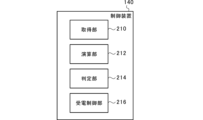
- FIG. 2 is a block diagram showing an example of a functional configuration of the control device for a vehicle according to the embodiment of the present invention.
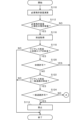
- FIG. 3 is a first flowchart showing the flow of processing of the charging method according to this embodiment.
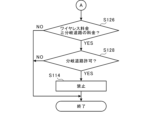
- FIG. 4 is a second flowchart showing the flow of processing in the charging method according to this embodiment.
- FIG. 1 is a schematic diagram showing the configuration of a vehicle 100 according to an embodiment of the present invention.
- the vehicle 100 includes a battery 110, an operation unit 120, a display unit 130, and a control device 140.
- the battery 110 is the driving source for the vehicle 100.
- the vehicle 100 is an electric vehicle or a hybrid vehicle.
- the operation unit 120 accepts operation inputs from the driver of the vehicle 100.
- the operation unit 120 is configured, for example, by a touch panel.
- the display unit 130 is configured, for example, by a liquid crystal display, an organic EL display, etc.
- the operation unit 120 and the display unit 130 function, for example, as part of a car navigation system that the vehicle 100 has.
- the control device 140 has one or more processors 142 and one or more memories 144 connected to the processors 142.
- the processor 142 includes, for example, a CPU (Central Processing Unit).
- the memory 144 includes, for example, a ROM (Read Only Memory) and a RAM (Random Access Memory).
- the ROM is a memory element that stores programs and computational parameters used by the CPU.
- the RAM is a memory element that temporarily stores data such as variables and parameters used in processes executed by the CPU.
- the control device 140 communicates with each device provided in the vehicle 100.
- Each device is, for example, a battery 110, an operation unit 120, a display unit 130, etc.
- Communication between the control device 140 and each device is realized, for example, using CAN (Controller Area Network) communication.
- CAN Controller Area Network
- FIG. 2 is a block diagram showing an example of the functional configuration of the control device 140 of the vehicle 100 according to an embodiment of the present invention.
- the control device 140 of the vehicle 100 has an acquisition unit 210, a calculation unit 212, a determination unit 214, and a power receiving control unit 216.
- various processes including the processes described below, performed by the acquisition unit 210, the calculation unit 212, the determination unit 214, and the power receiving control unit 216 can be executed by the processor 142.
- the various processes are executed by the processor 142 executing programs stored in the memory 144.
- the acquisition unit 210 acquires destination information, vehicle information, power consumption information, and future action information in response to operation input by the driver using the operation unit 120.
- Destination information is information that indicates the driving route to the destination of the vehicle 100.
- Vehicle information is information related to the load on the vehicle 100.
- vehicle information is information indicating the number of occupants of the vehicle 100, information indicating the load, and information indicating the towing status.
- the towing status is information indicating whether towing is occurring and information indicating the weight of items being towed.
- Power consumption information is information that indicates the amount of power consumed for purposes other than driving the vehicle 100.
- Power consumption information is, for example, information that indicates the power consumed within the passenger compartment of the vehicle 100, the power consumed by the air conditioning device, etc.
- Future behavior information is, for example, rest plan information, general road schedule information, or branch road selection information.
- Rest plan information is information about the behavior of stopping at a rest area that has charging facilities.
- a rest area is, for example, a service area or a parking area.
- General road schedule information is information about the behavior of getting off an expressway onto a general road.
- Branch road selection information is information about the behavior of selecting a route to take at a branch point on an expressway.
- a branch point on an expressway is, for example, an interchange or a junction.
- the acquisition unit 210 also establishes communication with an external server.
- the acquisition unit 210 acquires environmental information and road information from the external server.
- Environmental information is, for example, information indicating the weather, the outside temperature, and information indicating the time of sunrise and sunset.
- Road information is, for example, information indicating the traffic congestion situation, the road construction situation, the road accident situation, and information indicating the road gradient.
- the acquisition unit 210 also extracts wireless charging lanes that are installed within a reachable range on the driving route.
- the reachable range is a range that can be reached with the current remaining capacity of the battery 110.
- the acquisition unit 210 then acquires information indicating the fees incurred when charging using the extracted wireless charging lane from an external server.
- the information indicating the fees is, for example, information indicating the charging fee per unit capacity.
- the battery 110 is charged as the vehicle 100 travels through the wireless charging lane.
- the acquisition unit 210 also extracts charging facilities installed within a reachable range on the driving route.
- the acquisition unit 210 acquires information indicating the fees incurred when charging using the extracted charging facilities and information indicating availability from an external server.
- the information indicating the fees is, for example, information indicating the charging fee per unit capacity.
- charging facilities are fixed to parking lots and are facilities that charge the vehicle 100 while it is stopped.
- the charging facilities are, for example, charging facilities installed in rest areas and charging facilities installed on general roads.
- the calculation unit 212 calculates the required remaining capacity based on the destination information, vehicle information, power consumption information, environmental information, and road information.
- the required remaining capacity is the remaining capacity of the battery 110 required to reach the destination from the current location.
- the determination unit 214 compares the current remaining capacity with the required remaining capacity. Furthermore, if the current remaining capacity is equal to or less than the required remaining capacity, the determination unit 214 determines that it is necessary to charge the battery 110. In this case, the determination unit 214 determines whether or not to prohibit driving in the wireless charging lane based on future behavior information of the driver of the vehicle 100.
- the power receiving control unit 216 permits or prohibits travel in the wireless charging lane based on the result of the determination by the determination unit 214.
- FIG. 3 is a first flowchart showing a processing flow of the charging method according to this embodiment.
- FIG. 4 is a second flowchart showing a processing flow of the charging method according to this embodiment.
- the charging method according to this embodiment includes a required remaining capacity calculation process S110, a comparison process S112, a prohibition process S114, a fee information acquisition process S116, a first fee determination process S118, a rest permission determination process S120, a second fee determination process S122, a general road permission determination process S124, a third fee determination process S126, and a branch road permission determination process S128.
- each process of the charging method is executed while the vehicle 100 is traveling on a highway.
- each process of the charging method is repeatedly executed by an interruption that occurs at a predetermined time interval (for example, every 5 minutes). Each process will be described below.
- the calculation unit 212 calculates the required remaining capacity based on the destination information, the vehicle information, the power consumption information, the environmental information, and the road information. For example, the calculation unit 212 calculates the required remaining capacity based on the destination information. The calculation unit 212 may also correct the required remaining capacity based on various information, for example.
- the calculation unit 212 calculates the correction amount based on the vehicle information. For example, when the load on the vehicle 100 is large, the power consumption of the battery 110 increases. Therefore, the calculation unit 212 calculates the amount of power consumption that increases due to the load on the vehicle 100 as a correction amount based on the vehicle information. Then, the calculation unit 212 adds this correction amount to the required remaining capacity.
- the calculation unit 212 calculates the correction amount based on the power consumption information. For example, the calculation unit 212 calculates the power consumption indicated in the power consumption information as the correction amount. Then, the calculation unit 212 adds the correction amount to the required remaining capacity.
- the calculation unit 212 calculates the correction amount based on environmental information.
- the calculation unit 212 calculates the correction amount based on weather information as environmental information. For example, if it is raining or snowing, it is assumed that the wipers will be operated. Therefore, when the weather information indicates rain or snow, the calculation unit 212 calculates the amount of wiper operation as the correction amount. Then, the calculation unit 212 adds this correction amount to the required remaining capacity.
- the calculation unit 212 also calculates the correction amount based on, for example, time information as environmental information. For example, if it is nighttime, it is assumed that the headlights will be operated. Therefore, when the time information indicates nighttime, the calculation unit 212 calculates the amount of headlight operation as the correction amount. Then, the calculation unit 212 adds this correction amount to the required remaining capacity.
- the calculation unit 212 calculates the correction amount based on road information.
- the calculation unit 212 calculates the correction amount based on congestion information as road information. For example, if there is congestion, it is assumed that the power consumption of the battery 110 will increase. For this reason, when the calculation unit 212 acquires congestion information, it calculates the increase in the power consumption of the battery 110 as the correction amount. Then, the calculation unit 212 adds this correction amount to the required remaining capacity.
- the calculation unit 212 also calculates the correction amount based on, for example, gradient information as road information. For example, when traveling on an upward gradient, the power consumption of the battery 110 increases. For this reason, when the road information is gradient information indicating an upward gradient, the calculation unit 212 calculates the increase in power consumption of the battery 110 as the correction amount. The calculation unit 212 then adds this correction amount to the required remaining capacity. For example, when traveling on a downward gradient, the battery 110 can regenerate, so that the decrease in the remaining capacity of the battery 110 is suppressed by the amount of regenerated power. For this reason, when the road information is gradient information indicating a downward gradient, the calculation unit 212 calculates the amount of regenerated power as the correction amount. The calculation unit 212 then subtracts this correction amount from the required remaining capacity.
- gradient information for example, when traveling on an upward gradient, the power consumption of the battery 110 increases. For this reason, when the road information is gradient information indicating an upward gradient, the calculation unit 212 calculates the increase in power consumption of the battery 110 as the correction
- the calculation unit 212 may arbitrarily combine the calculation of the correction amount based on the vehicle information, the calculation of the correction amount based on the power consumption information, the calculation of the correction amount based on the environmental information, and the calculation of the correction amount based on the road information.
- the determination unit 214 determines whether the current remaining capacity is equal to or less than the required remaining capacity. As a result, if the determination unit 214 determines that the current remaining capacity is not equal to or less than the required remaining capacity, that is, that the current remaining capacity exceeds the required remaining capacity (NO in S112), the determination unit 214 shifts the process to prohibition processing S114. On the other hand, if the determination unit 214 determines that the current remaining capacity is equal to or less than the required remaining capacity (YES in S112), the determination unit 214 shifts the process to fee information acquisition processing S116.
- the power receiving control unit 216 prohibits the vehicle 100 from traveling in the wireless charging lane. As a result, the vehicle 100 travels in a travel lane other than the wireless charging lane.
- the acquisition unit 210 extracts wireless charging lanes installed within a reachable range. Then, the acquisition unit 210 acquires information indicating the fees for the extracted wireless charging lanes from an external server.
- the acquisition unit 210 also extracts charging facilities installed within a reachable range. The acquisition unit 210 then acquires information indicating the fees and availability of the extracted charging facilities from an external server.
- the determination unit 214 controls the display unit 130 or a speaker (not shown) to notify the driver of whether or not he intends to stop at the rest area.
- the driver can input information indicating whether or not he intends to stop at the rest area using the operation unit 120.
- the acquisition unit 210 acquires information indicating that the driver intends to stop at the rest area as rest schedule information (YES in S120)
- the determination unit 214 shifts the process to the prohibition process S114.
- the control device 140 reserves the charging equipment provided in the rest area.
- the acquisition unit 210 acquires information indicating that the driver does not intend to stop at the rest area (NO in S120)
- the determination unit 214 shifts the process to the second fee determination process S122.
- Determination unit 214 determines whether the fee of a charging facility that is provided on a general road and that is capable of charging when vehicle 100 arrives is equal to or less than the fee of the wireless charging lane, among the extracted charging facilities. If the result is that the fee of the charging facility is not equal to or less than the fee of the wireless charging lane, that is, the fee of the charging facility exceeds the fee of the wireless charging lane (NO in S122), determination unit 214 ends the charging method. On the other hand, if it is determined that the fee of the charging facility is equal to or less than the fee of the wireless charging lane (YES in S122), processing proceeds to general road permission determination processing S124.
- the determination unit 214 controls the display unit 130 or a speaker (not shown) to notify the driver of whether or not he intends to exit the expressway onto a general road.
- the driver can input information indicating whether or not he intends to exit the expressway onto a general road using the operation unit 120.
- the acquisition unit 210 acquires information indicating that the driver intends to exit the expressway onto a general road as general road schedule information (YES in S124)
- the determination unit 214 moves the process to the prohibition process S114.
- the control device 140 reserves a charging facility provided on a general road.
- the determination unit 214 ends the charging method.
- Determination unit 214 determines whether the fee of a charging facility that is provided on a plurality of branch roads branching off from a branch point on a highway and that is capable of charging when vehicle 100 arrives is equal to or less than the fee of the wireless charging lane. If the result shows that the fee of the charging facility is not equal to or less than the fee of the wireless charging lane, that is, the fee of the charging facility exceeds the fee of the wireless charging lane (NO in S126), determination unit 214 ends the charging method. On the other hand, if it is determined that the fee of the charging facility is equal to or less than the fee of the wireless charging lane (YES in S126), processing proceeds to branch road permission determination processing S128.
- the control device 140 determines whether or not to prohibit driving in the wireless charging lane based on future behavior information of the driver of the vehicle 100. Therefore, the control device 140 can appropriately prohibit driving in the wireless charging lane depending on the driver's future behavior. For example, when the fee for the wireless charging lane is higher than the fee for the charging facility that the vehicle 100 will visit in the future, it is possible to prevent unnecessary driving in the wireless charging lane. Therefore, the control device 140 can reach the destination while charging at low cost.
- the battery 110 is more susceptible to deterioration when it is charged in a wireless charging lane than when it is charged using a charging facility. Therefore, the control device 140 can suppress deterioration of the battery 110 by appropriately prohibiting driving in a wireless charging lane depending on the driver's future actions.
- the acquisition unit 210 acquires the future behavior information based on the operation input of the driver has been described as an example.
- the acquisition unit 210 may acquire the future behavior information based on the travel route of the vehicle 100.
- the acquisition unit 210 determines whether or not there is a branch road equipped with charging facilities among multiple branch roads that branch off from a branch point on the expressway within the reachable range of the driving route. If it is determined that there is a branch road (YES in S128), the acquisition unit 210 presumes that the vehicle 100 will proceed from the expressway to the branch road, and acquires branch road schedule information indicating that the vehicle 100 will proceed from the expressway to the branch road. In addition, the control device 140 reserves charging facilities equipped on the branch road. On the other hand, if the acquisition unit 210 determines that there is no branch road (NO in S128), the determination unit 214 ends the charging method.
- the acquisition unit 210 may also acquire future behavior information based on traffic congestion information.
- the acquisition unit 210 refers to traffic congestion information and determines whether or not traffic congestion is occurring on the expressway on which the vehicle is currently traveling. If it is determined that traffic congestion is occurring (YES in S120), the acquisition unit 210 presumes that the vehicle 100 will stop at a rest area, and acquires rest schedule information indicating that the vehicle will stop at the rest area. The control device 140 also reserves charging equipment provided in the rest area. On the other hand, if it is determined that traffic congestion is not occurring (NO in S120), the determination unit 214 moves the process to the second fare determination process S122.
- the acquisition unit 210 refers to the congestion information and determines whether or not congestion is occurring on the expressway on which the vehicle is currently traveling. If it is determined that congestion is occurring (YES in S124), the acquisition unit 210 presumes that the vehicle 100 will exit the expressway onto a general road, and acquires general road schedule information indicating that the vehicle 100 will exit the expressway onto a general road. The control device 140 also reserves charging equipment provided on the general road. On the other hand, if the acquisition unit 210 determines that congestion is not occurring (NO in S124), the determination unit 214 moves the process to the third fee determination process S126.
- the acquisition unit 210 refers to the congestion information and determines whether or not congestion is occurring on the expressway on which the vehicle is currently traveling. If it is determined that congestion is occurring (YES in S128), the acquisition unit 210 presumes that the vehicle 100 will proceed from the branch point on the expressway to a branch road equipped with charging facilities, and acquires branch road schedule information indicating that the vehicle 100 will proceed from the branch point on the expressway to a branch road equipped with charging facilities. In addition, the control device 140 reserves charging facilities equipped on the branch road. On the other hand, if the acquisition unit 210 determines that congestion is not occurring (NO in S128), the determination unit 214 ends the charging method.
- the acquisition unit 210 may also acquire future behavior information based on state information of the driver of the vehicle 100.
- the state information of the driver is, for example, the degree of fatigue, the degree of hunger, or the like of the driver.
- the acquisition unit 210 acquires driver status information from a smart watch or the like carried by the driver and determines whether the driver's fatigue level is equal to or greater than a predetermined value. If it is determined that the driver's fatigue level is equal to or greater than the predetermined value (YES in S120), the acquisition unit 210 presumes that the vehicle 100 will stop at a rest area, and acquires rest schedule information indicating that the vehicle will stop at the rest area. In addition, the control device 140 reserves charging equipment provided in the rest area. On the other hand, if it is determined that the driver's fatigue level is not equal to or greater than the predetermined value (NO in S120), the determination unit 214 moves the process to the second fee determination process S122.
- the acquisition unit 210 acquires driver status information from a smart watch or the like carried by the driver, and determines whether the driver's fatigue level is equal to or greater than a predetermined value. If it is determined that the driver's fatigue level is equal to or greater than the predetermined value (YES in S124), the acquisition unit 210 presumes that the vehicle 100 will exit the expressway onto a general road, and acquires general road schedule information indicating that the vehicle 100 will exit the expressway onto a general road. The control device 140 also reserves a charging facility provided on the general road. On the other hand, if the acquisition unit 210 determines that the driver's fatigue level is not equal to or greater than the predetermined value (NO in S124), the determination unit 214 moves the process to the third fee determination process S126.
- the acquisition unit 210 acquires driver status information from a smart watch or the like carried by the driver, and determines whether the driver's fatigue level is equal to or greater than a predetermined value. If it is determined that the driver's fatigue level is equal to or greater than the predetermined value (YES in S128), the acquisition unit 210 estimates that the vehicle 100 will proceed from the branch point of the expressway to a branch road equipped with a charging facility, and acquires branch road schedule information indicating that the vehicle 100 will proceed from the branch point of the expressway to a branch road equipped with a charging facility. The control device 140 also reserves a charging facility equipped on the branch road. On the other hand, if the acquisition unit 210 determines that the driver's fatigue level is not equal to or greater than the predetermined value (NO in S128), the determination unit 214 ends the charging method.
- the power receiving control unit 216 permits or prohibits travel in a wireless charging lane based on the determination result by the determination unit 214.
- the power receiving control unit 216 may permit or prohibit power reception from the wireless charging lane instead of permitting or prohibiting travel in the wireless charging lane.
- the determination unit 214 compares the fee for the wireless charging lane with the fee for the charging facility.
- the determination unit 214 may compare the degree of deterioration of the battery 110 when charged via a wireless charging lane with the degree of deterioration of the battery 110 when charged via a charging facility. In this case, the charging with the lower degree of deterioration is given priority.
- the wireless charging lane is provided on an expressway.
- the wireless charging lane may be provided on a general road.
- the control device 140 may refer to future behavior information and prohibit driving in the wireless charging lane or receiving power from the wireless charging lane if the vehicle is going to stop at a charging facility that is less expensive than the wireless charging lane.
- Vehicle 110 Battery 140 Control device 142 Processor 144 Memory
Landscapes
- Engineering & Computer Science (AREA)
- Power Engineering (AREA)
- Transportation (AREA)
- Mechanical Engineering (AREA)
- Electric Propulsion And Braking For Vehicles (AREA)
- Navigation (AREA)
Abstract
Description
車両のバッテリの充電を制御する制御装置であって、
前記制御装置は、
1つまたは複数のプロセッサと、
前記プロセッサに接続される1つまたは複数のメモリと、
を有し、
前記プロセッサは、
前記車両のドライバの将来の行動情報に基づいて、ワイヤレス充電レーンの走行、または、前記ワイヤレス充電レーンからの受電を禁止するか否かを判定することを含む処理を実行する。
続いて、上記車両100の充電方法について説明する。図3は、本実施形態に係る充電方法の処理の流れを示す第1のフローチャートである。図4は、本実施形態に係る充電方法の処理の流れを示す第2のフローチャートである。図3、図4に示すように、本実施形態に係る充電方法は、必要残存容量演算処理S110、比較処理S112、禁止処理S114、料金情報取得処理S116、第1料金判定処理S118、休憩許可判定処理S120、第2料金判定処理S122、一般道路許可判定処理S124、第3料金判定処理S126、分岐道路許可判定処理S128を含む。本実施形態において、充電方法の各処理は、車両100が高速道路を走行中に実行される。また、本実施形態において、所定の時間間隔毎(例えば、5分毎)に生じる割込によって、充電方法の各処理が繰り返し実行される。以下、各処理について説明する。
演算部212は、目的地情報、車両情報、消費電力情報、環境情報、道路情報に基づいて、必要残存容量を演算する。例えば、演算部212は、目的地情報に基づいて、必要残存容量を演算する。また、演算部212は、例えば、各種情報に基づいて、必要残存容量を補正してもよい。
判定部214は、現在の残存容量が必要残存容量以下であるか否かを判定する。その結果、現在の残存容量が必要残存容量以下ではない、つまり、現在の残存容量が必要残存容量を上回ると判定した場合(S112におけるNO)、判定部214は、禁止処理S114に処理を移す。一方、現在の残存容量が必要残存容量以下であると判定した場合(S112におけるYES)、判定部214は、料金情報取得処理S116に処理を移す。
受電制御部216は、ワイヤレス充電レーンの走行を禁止する。そうすると、車両100は、ワイヤレス充電レーン以外の走行レーンを走行する。
取得部210は、到達可能範囲内に設置されているワイヤレス充電レーンを抽出する。そして、取得部210は、外部サーバから、抽出したワイヤレス充電レーンの料金を示す情報を取得する。
判定部214は、抽出された充電設備のうち、休憩エリアに設けられた充電設備であって、車両100の到達時に充電可能である充電設備の料金が、ワイヤレス充電レーンの料金以下であるか否かを判定する。その結果、充電設備の料金が、ワイヤレス充電レーンの料金以下ではない、つまり、充電設備の料金がワイヤレス充電レーンの料金を上回る場合(S118におけるNO)、判定部214は、当該充電方法を終了する。一方、充電設備の料金が、ワイヤレス充電レーンの料金以下であると判定した場合(S118におけるYES)、休憩許可判定処理S120に処理を移す。
判定部214は、表示部130または不図示のスピーカを制御して、休憩エリアに立ち寄る意図を有しているか否かをドライバに質問する報知を行う。ここで、ドライバは操作部120を用いて、休憩エリアに立ち寄る意図を有しているか否かを示す情報を入力できる。そして、取得部210が、ドライバが休憩エリアに立ち寄る意図を有していることを示す情報を休憩予定情報として取得したら(S120におけるYES)、判定部214は、禁止処理S114に処理を移す。また、制御装置140は、休憩エリアに設けられた充電設備を予約する。一方、取得部210が、ドライバが休憩エリアに立ち寄る意図を有していないことを示す情報を取得した場合(S120におけるNO)、判定部214は、第2料金判定処理S122に処理を移す。
判定部214は、抽出された充電設備のうち、一般道路に設けられた充電設備であって、車両100の到達時に充電可能である充電設備の料金が、ワイヤレス充電レーンの料金以下であるか否かを判定する。その結果、充電設備の料金が、ワイヤレス充電レーンの料金以下ではない、つまり、充電設備の料金がワイヤレス充電レーンの料金を上回る場合(S122におけるNO)、判定部214は、当該充電方法を終了する。一方、充電設備の料金が、ワイヤレス充電レーンの料金以下であると判定した場合(S122におけるYES)、一般道路許可判定処理S124に処理を移す。
判定部214は、表示部130または不図示のスピーカを制御して、高速道路から一般道路に降りる意図を有しているか否かをドライバに質問する報知を行う。ここで、ドライバは操作部120を用いて、高速道路から一般道路に降りる意図を有しているか否かを示す情報を入力できる。そして、取得部210が、ドライバが高速道路から一般道路に降りる意図を有していることを示す情報を一般道路予定情報として取得したら(S124におけるYES)、判定部214は、禁止処理S114に処理を移す。また、制御装置140は、一般道路に設けられた充電設備を予約する。一方、取得部210が、ドライバが高速道路から一般道路に降りる意図を有していないことを示す情報を取得した場合(S124におけるNO)、判定部214は、当該充電方法を終了する。
判定部214は、抽出された充電設備のうち、高速道路の分岐箇所から分岐された複数の分岐道路に設けられた充電設備であって、車両100の到達時に充電可能である充電設備の料金が、ワイヤレス充電レーンの料金以下であるか否かを判定する。その結果、充電設備の料金が、ワイヤレス充電レーンの料金以下ではない、つまり、充電設備の料金がワイヤレス充電レーンの料金を上回る場合(S126におけるNO)、判定部214は、当該充電方法を終了する。一方、充電設備の料金が、ワイヤレス充電レーンの料金以下であると判定した場合(S126におけるYES)、分岐道路許可判定処理S128に処理を移す。
判定部214は、表示部130または不図示のスピーカを制御して、高速道路の分岐箇所から分岐された複数の分岐道路のうち、充電設備が設けられた分岐道路へ進む意図を有しているか否かをドライバに質問する報知を行う。ここで、ドライバは操作部120を用いて、高速道路から分岐道路へ進む意図を有しているか否かを示す情報を入力できる。そして、取得部210が、ドライバが高速道路から分岐道路に進む意図を有していることを示す情報を分岐道路予定情報として取得したら(S128におけるYES)、判定部214は、禁止処理S114に処理を移す。また、制御装置140は、分岐道路に設けられた充電設備を予約する。一方、取得部210が、ドライバが高速道路から分岐道路へ進む意図を有していないことを示す情報を取得した場合(S128におけるNO)、判定部214は、当該充電方法を終了する。
上記実施形態では、取得部210が、ドライバの操作入力に基づいて、将来の行動情報を取得する場合を例に挙げた。しかし、取得部210は、車両100の走行ルートに基づいて、将来の行動情報を取得してもよい。
また、取得部210は、渋滞情報に基づいて、将来の行動情報を取得してもよい。
また、取得部210は、車両100のドライバの状態情報に基づいて、将来の行動情報を取得してもよい。ドライバの状態情報は、例えば、ドライバの疲労度、空腹度等である。
110 バッテリ
140 制御装置
142 プロセッサ
144 メモリ
Claims (8)
- 車両のバッテリの充電を制御する制御装置であって、
前記制御装置は、
1つまたは複数のプロセッサと、
前記プロセッサに接続される1つまたは複数のメモリと、
を有し、
前記プロセッサは、
前記車両のドライバの将来の行動情報に基づいて、ワイヤレス充電レーンの走行、または、前記ワイヤレス充電レーンからの受電を禁止するか否かを判定することを含む処理を実行する、制御装置。 - 前記将来の行動情報は、充電設備を有する休憩エリアに立ち寄る行動に関する情報である、請求項1に記載の制御装置。
- 前記将来の行動情報は、高速道路から一般道路に降りる行動に関する情報である、請求項1に記載の制御装置。
- 前記将来の行動情報は、高速道路の分岐箇所で進むルートを選択する行動に関する情報である、請求項1に記載の制御装置。
- 前記プロセッサは、
前記車両の走行ルートに基づいて、前記将来の行動情報を取得することを含む処理を実行する、請求項1から4のいずれか1項に記載の制御装置。 - 前記プロセッサは、
渋滞情報に基づいて、前記将来の行動情報を取得することを含む処理を実行する、請求項1から4のいずれか1項に記載の制御装置。 - 前記プロセッサは、
前記車両のドライバの操作入力に基づいて、前記将来の行動情報を取得することを含む処理を実行する、請求項1から4のいずれか1項に記載の制御装置。 - 前記プロセッサは、
前記車両のドライバの状態情報に基づいて、前記将来の行動情報を取得することを含む処理を実行する、請求項1から4のいずれか1項に記載の制御装置。
Priority Applications (4)
| Application Number | Priority Date | Filing Date | Title |
|---|---|---|---|
| PCT/JP2023/012257 WO2024201665A1 (ja) | 2023-03-27 | 2023-03-27 | 制御装置 |
| CN202380014218.XA CN119053474A (zh) | 2023-03-27 | 2023-03-27 | 控制装置 |
| JP2024542905A JP7762811B2 (ja) | 2023-03-27 | 2023-03-27 | 制御装置 |
| US18/766,788 US20240359580A1 (en) | 2023-03-27 | 2024-07-09 | Control apparatus |
Applications Claiming Priority (1)
| Application Number | Priority Date | Filing Date | Title |
|---|---|---|---|
| PCT/JP2023/012257 WO2024201665A1 (ja) | 2023-03-27 | 2023-03-27 | 制御装置 |
Related Child Applications (1)
| Application Number | Title | Priority Date | Filing Date |
|---|---|---|---|
| US18/766,788 Continuation US20240359580A1 (en) | 2023-03-27 | 2024-07-09 | Control apparatus |
Publications (1)
| Publication Number | Publication Date |
|---|---|
| WO2024201665A1 true WO2024201665A1 (ja) | 2024-10-03 |
Family
ID=92903527
Family Applications (1)
| Application Number | Title | Priority Date | Filing Date |
|---|---|---|---|
| PCT/JP2023/012257 Ceased WO2024201665A1 (ja) | 2023-03-27 | 2023-03-27 | 制御装置 |
Country Status (4)
| Country | Link |
|---|---|
| US (1) | US20240359580A1 (ja) |
| JP (1) | JP7762811B2 (ja) |
| CN (1) | CN119053474A (ja) |
| WO (1) | WO2024201665A1 (ja) |
Families Citing this family (1)
| Publication number | Priority date | Publication date | Assignee | Title |
|---|---|---|---|---|
| JP7435550B2 (ja) * | 2021-06-23 | 2024-02-21 | トヨタ自動車株式会社 | 車両 |
Citations (2)
| Publication number | Priority date | Publication date | Assignee | Title |
|---|---|---|---|---|
| JP2019158413A (ja) * | 2018-03-08 | 2019-09-19 | アルパイン株式会社 | 電子装置、電子システム、経路探索方法および経路案内プログラム |
| JP2023003552A (ja) * | 2021-06-24 | 2023-01-17 | トヨタ自動車株式会社 | 演算装置 |
Family Cites Families (6)
| Publication number | Priority date | Publication date | Assignee | Title |
|---|---|---|---|---|
| US10005367B2 (en) * | 2015-07-30 | 2018-06-26 | Toyota Motor Engineering & Manufacturing North America, Inc. | Wireless charging of a vehicle power source |
| US10525848B2 (en) * | 2016-08-02 | 2020-01-07 | Here Global B.V. | Vehicle charging lanes |
| WO2021178385A1 (en) * | 2020-03-02 | 2021-09-10 | Strong Force Intellectual Capital, Llc | Intelligent transportation systems including digital twin interface for a passenger vehicle |
| JP7548729B2 (ja) * | 2020-06-10 | 2024-09-10 | 株式会社Subaru | 運転支援装置 |
| US12405129B2 (en) * | 2021-03-17 | 2025-09-02 | Raymond Anthony Joao | Battery power management apparatus and method for electric vehicles and/or hybrid vehicles |
| US11999252B2 (en) * | 2022-01-20 | 2024-06-04 | Ford Global Technologies, Llc | Roadway charging coil alignment and monitoring |
-
2023
- 2023-03-27 JP JP2024542905A patent/JP7762811B2/ja active Active
- 2023-03-27 WO PCT/JP2023/012257 patent/WO2024201665A1/ja not_active Ceased
- 2023-03-27 CN CN202380014218.XA patent/CN119053474A/zh active Pending
-
2024
- 2024-07-09 US US18/766,788 patent/US20240359580A1/en active Pending
Patent Citations (2)
| Publication number | Priority date | Publication date | Assignee | Title |
|---|---|---|---|---|
| JP2019158413A (ja) * | 2018-03-08 | 2019-09-19 | アルパイン株式会社 | 電子装置、電子システム、経路探索方法および経路案内プログラム |
| JP2023003552A (ja) * | 2021-06-24 | 2023-01-17 | トヨタ自動車株式会社 | 演算装置 |
Also Published As
| Publication number | Publication date |
|---|---|
| JPWO2024201665A1 (ja) | 2024-10-03 |
| US20240359580A1 (en) | 2024-10-31 |
| CN119053474A (zh) | 2024-11-29 |
| JP7762811B2 (ja) | 2025-10-30 |
Similar Documents
| Publication | Publication Date | Title |
|---|---|---|
| US12447850B2 (en) | Dispatch-based charging for electric vehicle fleet | |
| KR102671447B1 (ko) | 차량의 센서를 세정하기 위한 시스템 및 방법 | |
| CN104823165B (zh) | 车载程序更新装置 | |
| CN105008005B (zh) | 行驶支持设备、行驶支持方法和驾驶支持系统 | |
| US9499161B2 (en) | Predictive and adaptive movement support apparatus, movement support method, and driving support system for a hybrid vehicle for mode driving section optimization | |
| KR20060063776A (ko) | 이동체 에너지 관리 장치 및 이동체 에너지 관리 방법 | |
| CN111605554A (zh) | 车辆路径识别 | |
| US9610936B2 (en) | Travel support device, travel supporting method, and drive support system | |
| JP2020175884A (ja) | 現在の運転モードと現在の状態とに基づいた自律走行車両の運転状態構成要素の制御 | |
| JP2009137340A (ja) | 電力マネージメントシステム及び電力マネージメント方法 | |
| US20120158241A1 (en) | Increasing Vehicle Range by Minimizing Trapped HVAC Energy | |
| JP2019137243A (ja) | 車両用制御システム | |
| JP2023074915A (ja) | 自動運行装置、車両制御方法 | |
| JP7762811B2 (ja) | 制御装置 | |
| CN115556738B (zh) | 基于区域控制架构的线控底盘及新能源电动商用车辆 | |
| US9720388B2 (en) | Method for controlling an electrical system | |
| US12397789B2 (en) | Driving control method and driving control device | |
| US12103524B1 (en) | Driving control method and driving control device | |
| EP4337507A1 (en) | A method for controlling a vehicle | |
| US20260138586A1 (en) | Vehicle battery pre-charging apparatus and method for stay mode | |
| US12508941B2 (en) | Control apparatus for managing charging plans for vehicle batteries | |
| CN114683907B (zh) | 电动牵引车及其充电管理方法及充电管理装置 | |
| US20250334417A1 (en) | Data Processing Device and Method for Route Calculation for a Motor Vehicle | |
| US20240177606A1 (en) | Information management device | |
| JP6684450B2 (ja) | オルタネータ制御装置 |
Legal Events
| Date | Code | Title | Description |
|---|---|---|---|
| WWE | Wipo information: entry into national phase |
Ref document number: 202380014218.X Country of ref document: CN |
|
| WWE | Wipo information: entry into national phase |
Ref document number: 2024542905 Country of ref document: JP |
|
| 121 | Ep: the epo has been informed by wipo that ep was designated in this application |
Ref document number: 23930305 Country of ref document: EP Kind code of ref document: A1 |
|
| NENP | Non-entry into the national phase |
Ref country code: DE |
|
| 122 | Ep: pct application non-entry in european phase |
Ref document number: 23930305 Country of ref document: EP Kind code of ref document: A1 |