WO2024180605A1 - 処理システム、処理方法、及び記録媒体 - Google Patents
処理システム、処理方法、及び記録媒体 Download PDFInfo
- Publication number
- WO2024180605A1 WO2024180605A1 PCT/JP2023/007048 JP2023007048W WO2024180605A1 WO 2024180605 A1 WO2024180605 A1 WO 2024180605A1 JP 2023007048 W JP2023007048 W JP 2023007048W WO 2024180605 A1 WO2024180605 A1 WO 2024180605A1
- Authority
- WO
- WIPO (PCT)
- Prior art keywords
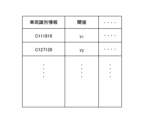
- vehicle
- event
- reference value
- processing system
- detected
- Prior art date
- Legal status (The legal status is an assumption and is not a legal conclusion. Google has not performed a legal analysis and makes no representation as to the accuracy of the status listed.)
- Ceased
Links
Images



Classifications
-
- G—PHYSICS
- G08—SIGNALLING
- G08B—SIGNALLING SYSTEMS, e.g. PERSONAL CALLING SYSTEMS; ORDER TELEGRAPHS; ALARM SYSTEMS
- G08B21/00—Alarms responsive to a single specified undesired or abnormal condition and not otherwise provided for
Definitions
- the present invention relates to a processing system, a processing method, and a recording medium.
- Patent Documents 1 to 3 The technology disclosed in Patent Document 1 determines that the vehicle is parked when the engine is off, the driver is not in the vehicle, and all doors are closed, and detects whether any living creatures have been left behind in the vehicle based on the CO2 concentration inside the vehicle in that state.
- the technology disclosed in Patent Document 2 determines that a vehicle is in a parked state when the ignition switch of the vehicle is in the off state, and detects whether a living thing has been left behind in the vehicle based on the CO2 concentration inside the vehicle in that state.
- the technology disclosed in Patent Document 3 determines that the vehicle is in a parked state when the engine of the vehicle is off, and detects whether a living thing has been left behind in the vehicle based on the CO2 concentration inside the vehicle in that state.
- the following method is one example of a means for detecting that a living organism has been left behind in a vehicle based on the CO2 concentration inside the vehicle detected by a sensor.
- the CO2 concentration inside the vehicle when a stop event that stops the use of the vehicle is detected (for example, when a parked state disclosed in Patent Documents 1 to 3 is detected) is used as a reference value.
- the value obtained by subtracting the reference value from the CO2 concentration inside the vehicle thereafter exceeds a threshold value, it is determined that a living organism has been left behind in the vehicle.
- the inventor has found the following problem with this method.
- the CO2 concentration inside the vehicle after a stop event that stops the use of the vehicle is detected may increase due to factors other than the abandonment of a living organism in the vehicle. For example, there are cases where an occupant intentionally remains in the vehicle after a stop event is detected and then gets off the vehicle. The length of time from when the stop event is detected to when the occupant gets off the vehicle varies. Note that this occupant intentionally remains in the vehicle, so this does not constitute abandonment. As in this example, after a stop event that stops the use of the vehicle is detected, the CO 2 concentration inside the vehicle may increase due to factors other than the leaving of a living organism in the vehicle. If the leaving of a living organism in the vehicle is not determined based on an appropriate reference value, an erroneous determination result may be obtained. None of Patent Documents 1 to 3 describes or suggests the problem or a means for solving the problem.
- One example of the objective of the present invention is to provide a processing system, a processing method, and a recording medium that solve the problem of suppressing erroneous judgments when detecting whether a living organism has been left behind in a vehicle based on the CO2 concentration inside the vehicle, in consideration of the above-mentioned problems.
- a stop detection means for detecting a stop event that stops the use of the vehicle based on a sensor mounted on the vehicle;
- a reference value registration means for registering a CO2 concentration inside the vehicle when the stop event is detected as a reference value;
- an alighting detection means for detecting an alighting event in which a passenger alights from the vehicle based on a sensor mounted on the vehicle;
- a reference value update means for updating the registered reference value to a CO2 concentration inside the vehicle at the time when the disembarking event is detected after the stop event;
- Abandonment detection means for detecting the abandonment of a living organism in the vehicle by comparing the CO 2 concentration inside the vehicle after the stop event is detected with the reference value;
- a processing system is provided having:
- the computer Detecting a stop event that stops the use of the vehicle based on a sensor mounted on the vehicle; registering a CO2 concentration inside the vehicle when the stop event is detected as a reference value; Detecting an alighting event of a passenger alighting from the vehicle based on a sensor mounted on the vehicle; If the disembarking event is detected after the stop event, update the registered reference value to the CO 2 concentration inside the vehicle at the time the disembarking event was detected; A processing method is provided for detecting the abandonment of a living organism in the vehicle by comparing the CO2 concentration inside the vehicle after the stop event is detected with the reference value.
- a stop detection means for detecting a stop event that stops the use of the vehicle based on a sensor mounted on the vehicle; a reference value registration means for registering a CO2 concentration inside the vehicle when the stop event is detected as a reference value; a vehicle alighting detection means for detecting an alighting event in which a passenger alights from the vehicle based on a sensor mounted on the vehicle; a reference value updating means for updating the registered reference value to a CO 2 concentration inside the vehicle at the time when the disembarking event is detected after the stop event; a leaving-behind detection means for detecting the leaving-behind of a living organism in the vehicle by comparing the CO 2 concentration inside the vehicle after the stop event is detected with the reference value; A recording medium is provided for recording a program for causing the device to function as the device.
- a processing system, a processing method, and a recording medium are provided that solve the problem of suppressing erroneous determinations in detecting whether a living organism has been left behind in a vehicle based on the CO 2 concentration inside the vehicle.
- FIG. 2 is a diagram illustrating an example of a functional block diagram of a processing system.
- FIG. 13 is a diagram illustrating another example of a functional block diagram of the processing system.
- 10 is a diagram for explaining an example of a process for detecting an abandoned living thing in a vehicle;
- FIG. 11 is a diagram for explaining a problem that may occur in an example of a process for detecting an abandoned living being in a vehicle.
- FIG. 11 is a diagram for explaining another example of a process for detecting an abandoned living thing in a vehicle.
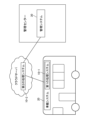
- FIG. FIG. 1 is a diagram showing an example of an overall view of a system having a processing system.
- FIG. 2 is a diagram illustrating an example of a hardware configuration of an information system.
- FIG. 2 is a diagram illustrating an example of information processed by the information system.
- 11 is a flowchart showing an example of a process flow of the processing system.
- 13 is a flowchart showing another example of the process flow of the processing system.
- 13 is a flowchart showing another example of the process flow of the processing system.
- 13 is a flowchart showing another example of the process flow of the processing system.
- 13 is a flowchart showing another example of the process flow of the processing system.
- FIG. 13 is a diagram illustrating another example of a functional block diagram of the processing system.
- FIG. 10 is a diagram illustrating another example of information processed by the information system.
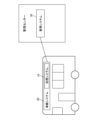
- FIG. 13 is a diagram showing another example of an overall view of a system having a processing system.
- FIG. 13 is a diagram showing another example of an overall view of a system having a processing system.
- FIG. 13 is a diagram showing another example of an overall view of a system having a processing system.
- FIG. 13 is
- First Embodiment 1 is a functional block diagram showing an overview of a processing system 10 according to a first embodiment.
- the processing system 10 includes a stop detection unit 11, a reference value registration unit 12, an abandonment detection unit 13, and a storage unit 14. Note that the processing system 10 does not necessarily have to include the storage unit 14. In this case, an external device configured to be able to communicate with the processing system 10 includes the storage unit 14.
- the stop detection unit 11 acquires parking position information indicating the parking position of the vehicle.
- the stop detection unit 11 detects a stop event that stops the use of the vehicle by comparing the position indicated by the parking position information with a pre-registered registration area.
- the reference value registration unit 12 registers the CO2 concentration inside the vehicle when the stop event is detected in the storage unit 14 as a reference value.
- the abandonment detection unit 13 detects the abandonment of a living thing in the vehicle by comparing the CO2 concentration inside the vehicle after the stop event is detected with the reference value registered in the storage unit 14.
- the processing system 10 detects a stop event that stops the use of the vehicle by comparing the parking position of the vehicle with a registered area that has been registered in advance.
- the condition for detecting a stop event is that the parking position of the vehicle is within a registered area. Then, the processing system 10 detects whether a living organism has been left behind in the vehicle based on the CO2 concentration inside the vehicle after the detection of the stop event.
- the process of detecting whether a living organism has been left behind in the vehicle is executed only when the vehicle is parked in a pre-registered registered area.
- the process of detecting whether a living organism has been left behind in the vehicle can be executed at an appropriate time, and the inconvenience of executing the process at an unnecessary time can be suppressed.
- parking lots that are regularly used or parking lots of facilities such as shopping malls where people tend to park for relatively long periods of time can be registered as registered areas.
- a user who sometimes parks the vehicle nearby and waits in the vehicle until their child comes out when taking their child to or from cram school or extracurricular activities can choose not to register that location as a registered area.
- the processing system 10 of this embodiment solves the problem of executing a process to detect whether a living creature has been left behind in a vehicle at an appropriate time.
- Second Embodiment 2 is a functional block diagram showing an overview of a processing system 10 according to a second embodiment.
- the processing system 10 includes a stop detection unit 11, a reference value registration unit 12, an abandonment detection unit 13, a storage unit 14, an alighting detection unit 15, and a reference value update unit 16.
- the processing system 10 does not need to include the storage unit 14.
- an external device configured to be able to communicate with the processing system 10 includes the storage unit 14.
- the stop detection unit 11 detects a stop event where the use of the vehicle is stopped based on a sensor mounted on the vehicle.
- the reference value registration unit 12 registers the CO2 concentration inside the vehicle when the stop event is detected as a reference value in the storage unit 14.
- the disembarkation detection unit 15 detects a disembarkation event where a person disembarks from the vehicle based on a sensor mounted on the vehicle.
- the reference value update unit 16 updates the reference value registered in the storage unit 14 to the CO2 concentration inside the vehicle when the disembarkation event is detected.
- the abandonment detection unit 13 detects the abandonment of a living organism in the vehicle by comparing the CO2 concentration inside the vehicle after the stop event is detected with the reference value registered in the storage unit 14.
- the processing system 10 registers the CO2 concentration inside the vehicle at the time when a stop event is detected as a reference value, and updates the reference value to the CO2 concentration inside the vehicle at the time when a subsequent disembarking event is detected.
- the processing system 10 detects whether a living organism has been left behind in the vehicle based on the latest reference value. By updating the reference value in this manner and detecting whether a living organism has been left behind in the vehicle based on the reference value, erroneous detection can be suppressed. The reason for this is explained below.
- a method shown in Fig. 3 is considered.
- a graph is shown with time on the horizontal axis and CO2 concentration inside the vehicle on the vertical axis.
- the CO2 concentration inside the vehicle when a stop event that stops the use of the vehicle is detected is used as a reference value. If the value obtained by subtracting the reference value from the CO2 concentration inside the vehicle thereafter (the increase in the CO2 concentration) exceeds a threshold value, it is determined that a living organism has been left behind in the vehicle.
- FIG. 4 shows a flow in which an occupant dismounts from the vehicle after a stop event is detected (the "dismount event” shown in the figure).
- the CO2 concentration inside the vehicle detected by the sensor continues to rise after the stop event, naturally, due to the occupant intentionally remaining in the vehicle. Then, when the occupant dismounts, the increase in the CO2 concentration inside the vehicle detected by the sensor stops. However, as shown in FIG. 4, the increase does not stop immediately in response to the occupant dismounting, but may stop some time after dismounting. This phenomenon is caused by the size of the vehicle, the bias of the CO2 concentration inside the vehicle, the mounting position of the sensor, etc.
- the CO2 concentration inside the vehicle continues to increase for a while even after the occupant gets out of the vehicle after the CO2 concentration inside the vehicle has increased to a certain extent due to the occupant intentionally remaining in the vehicle after the stop event is detected.
- the increase in the CO2 concentration inside the vehicle after the occupant gets out of the vehicle causes the value obtained by subtracting the reference value from the CO2 concentration inside the vehicle detected by the sensor to exceed the threshold value, which may lead to a false determination that a living organism has been left behind in the vehicle.
- the processing system 10 of the present embodiment registers the CO 2 concentration inside the vehicle at the time as a reference value in response to detection of a stop event, as shown in FIG. 5, and updates the reference value to the CO 2 concentration inside the vehicle at the time in response to detection of a subsequent dismounting event. After the dismounting event is detected, the processing system 10 determines that a living organism has been left behind in the vehicle when the value obtained by subtracting the updated reference value from the CO 2 concentration inside the vehicle (the increase in the CO 2 concentration) exceeds a threshold value. According to this processing system 10, as shown in FIG.
- the problem of suppressing erroneous determinations in detecting whether a living organism has been left behind in a vehicle based on the CO 2 concentration inside the vehicle is solved.
- the processing system 10 of the third embodiment is a specific embodiment of the processing system 10 of the first embodiment. That is, the processing system 10 detects a stop event that stops the use of the vehicle by comparing the parking position of the vehicle with a pre-registered registration area. Then, the processing system 10 detects the abandonment of a living organism in the vehicle based on the CO2 concentration inside the vehicle after the stop event is detected. This will be described in detail below.
- the Big Picture 6 shows an overall view of a system including a processing system 10. As shown in the figure, the processing system 10 cooperates with an in-vehicle system 20 and a management system 30 to execute predetermined processes.
- the in-vehicle system 20 is a system mounted on a vehicle.
- the vehicle may be, but is not limited to, a bus, a car, a truck, a train, etc.
- the vehicle may be a human-driven vehicle.
- the vehicle may also be an autonomous vehicle.
- the in-vehicle system 20 has at least various sensors mounted at any position on the vehicle, and a means for collecting measurements taken by the various sensors and information indicating the vehicle status, and transmitting the information to the processing system 10. Examples of the vehicle status include, but are not limited to, the engine status (ON/OFF), power status (ON/OFF), and door lock status (open/closed).
- the in-vehicle system 20 may be equipped with an ECU (Electronic Control Unit). Signals from the various sensors and switches are input to the ECU.
- ECU Electronic Control Unit
- Examples of the various sensors include a CO2 sensor that measures CO2 concentration, a temperature sensor that measures temperature, a camera (image sensor) that captures images, a door sensor that detects the opening and closing of a vehicle door, etc.
- Other examples of the various sensors include a weight sensor that detects whether a person is sitting in a seat, a position sensor (GPS (Global Positioning System) sensor) that measures the current position of the vehicle, etc. Note that the various sensors are not limited to those exemplified here.
- the processing system 10 detects a stop event that stops the use of the vehicle based on the information received from the in-vehicle system 20. Then, the processing system 10 detects the abandonment of a living organism in the vehicle based on the CO2 concentration inside the vehicle after the stop event is detected. The processing system 10 transmits various calculation results to the management system 30. A specific configuration of the processing system 10 will be described later.
- the management system 30 is a system installed in a management center.
- the management system 30 outputs information received from the processing system 10 via various output devices.
- Output devices include, but are not limited to, displays, speakers, projectors, printers, etc.
- a monitor is stationed at the management center and monitors the information output by the management system 30. For example, when the processing system 10 detects that a vehicle has been abandoned, information indicating this is output from the management system 30.
- the output information may include the location information of the vehicle where the abandonment was detected, the date and time when the abandonment was detected, the elapsed time since the stop event was detected, the current state inside the vehicle ( CO2 concentration, temperature, etc.), and the like.
- the monitor can take appropriate measures based on such information. Examples of the measures include, but are not limited to, contacting a contact point (telephone number, email address, etc.) that is registered in advance and associated with the vehicle, and dispatching a worker to the location of the vehicle.
- Hardware Configuration An example of the hardware configuration of the processing system 10 will be described. Each functional unit of the processing system 10 is realized by any combination of hardware and software. Those skilled in the art will understand that there are various variations in the realization method and device.
- the software includes programs that are stored in the device before it is shipped, and programs downloaded from recording media such as CDs (Compact Discs) or servers on the Internet.
- FIG. 7 is a block diagram illustrating an example of the hardware configuration of a processing system 10.
- the processing system 10 has a processor 1A, a memory 2A, an input/output interface 3A, a peripheral circuit 4A, and a bus 5A.
- the peripheral circuit 4A includes various modules.
- the processing system 10 does not have to have the peripheral circuit 4A.
- the processing system 10 may be composed of multiple devices that are physically and/or logically separated. In this case, each of the multiple devices can have the above hardware configuration.
- the bus 5A is a data transmission path for the processor 1A, memory 2A, peripheral circuit 4A, and input/output interface 3A to send and receive data to each other.
- the processor 1A is an arithmetic processing device such as a CPU or a GPU (Graphics Processing Unit).
- the memory 2A is a memory such as a RAM (Random Access Memory) or a ROM (Read Only Memory).
- the input/output interface 3A includes interfaces for acquiring information from an input device, an external device, an external server, an external sensor, a camera, etc., and interfaces for outputting information to an output device, an external device, an external server, etc.
- the input/output interface 3A also includes an interface for connecting to a communication network such as the Internet.
- Examples of input devices include a keyboard, a mouse, a microphone, a physical button, a touch panel, etc.
- Examples of output devices include a display, a speaker, a printer, a mailer, etc.
- the processor 1A can issue commands to each module and perform calculations based on the results of those calculations.
- FIG. 1 shows an example of a functional block diagram of the processing system 10.
- the processing system 10 has a stop detection unit 11, a reference value registration unit 12, an abandonment detection unit 13, and a storage unit 14. Note that the processing system 10 does not need to have the storage unit 14. In this case, an external device configured to be able to communicate with the processing system 10 has the storage unit 14.
- the stop detection unit 11 acquires parking position information indicating the parking position of the vehicle.
- the stop detection unit 11 detects a stop event that stops the use of the vehicle by comparing the position indicated by the parking position information with a pre-registered registration area.
- the "parking position information" is information indicating the position of the vehicle when the parking-related event is detected.
- the parking position information is vehicle position information (GPS information, etc.) acquired at the position of the vehicle when the parking-related event is detected.
- a "parking related event” includes at least one of the following: Vehicle engine stop processing Vehicle power off processing Door lock processing based on a predetermined locking operation that locks the vehicle doors from outside the vehicle Events in which the vehicle position does not change for a predetermined period of time or more Absence of a person in the driver's seat
- the "vehicle engine stop process” is a process in which the vehicle engine is switched from ON to OFF. This process can be detected based on the information handled by the in-vehicle system 20.
- the "vehicle power off process” is a process in which the vehicle power is switched from ON to OFF. This process can be detected based on the information handled by the in-vehicle system 20.
- Door lock processing based on a specific locking operation that locks the vehicle doors from outside the vehicle is processing that locks the doors based on operations on a smart key or a sensor located outside the vehicle (e.g., in the door handle area). This processing can be detected based on information handled by the in-vehicle system 20.
- the data input to the system may include information that identifies the input method (e.g., input from a smart key, input from a sensor located outside the vehicle).
- the "event in which the vehicle's position does not change for a specified period of time or longer" is detected based on the vehicle's current position detected by a position sensor mounted on the vehicle.
- the specified period of time is a value that is determined in advance.
- No person in the driver's seat is detected based on an image generated by a weight sensor for detecting whether a person is sitting in the driver's seat or a camera that photographs the driver's seat. For example, if the weight detected by the weight sensor is below a threshold, it is determined that no person is in the driver's seat. Also, if no person is captured in a predefined area (the area where the driver's seat is located) in the image generated by the camera, it is determined that no person is in the driver's seat.
- the stop detection unit 11 acquires parking position information indicating the position of the vehicle when a parking-related event such as that described above is detected.
- the detection of a parking-related event may be performed by the stop detection unit 11. That is, the stop detection unit 11 may acquire various information for detecting a parking-related event such as that described above from the in-vehicle system 20 by real-time processing, and detect a parking-related event based on the acquired information.
- the detection of a parking-related event may be performed by the in-vehicle system 20. Then, the detection result may be transmitted from the in-vehicle system 20 to the processing system 10.
- the stop detection unit 11 determines that a stop event that stops the use of the vehicle has occurred (detection of a stop event).
- the conditions for detecting a stop event are the above-mentioned "detection of a parking-related event" and "the location indicated by the parking position information is included in a registered area registered in advance.”
- the stop event is an event that triggers the processing executed by the reference value registration unit 12 and the abandoned vehicle detection unit 13.
- a registration area is registered using at least one of the following registration methods 1 to 3.
- Registration method 1 In registration method 1, a registration area is registered for each vehicle. Specifically, the stop detection unit 11 registers a registration area for each vehicle based on a user input.
- the user input may be, for example, an address.
- the area corresponding to that address is registered as the registered area.
- the address entered may include the street number, such as "1-2-3, XX-cho, XX-city, XX-prefecture.”
- the address entered may specify the prefecture or city, ward, town, or village without including the street number, such as "XX prefecture,” "XX city, XX prefecture,” or "XX-cho, XX-city, XX-prefecture.”
- the area specified by the entered information is registered as the registered area.
- the user input may be an input that specifies a specific point on a map.
- a specific area that is identified based on the specified point is registered as a registered area.
- the stop detection unit 11 may register a circle with a radius R [m] centered on the specified point as a registered area.
- the value of radius R may be freely set by the user, or may be predetermined.
- the process of accepting user input as described above for each vehicle and registering the registration location can be realized using any technology. Examples include, but are not limited to, the use of an app or a web page.
- Registration method 2 In registration method 2, a registration area is registered for each vehicle. Specifically, the stop detection unit 11 registers a registration area for each vehicle based on the history of the past positions of each vehicle.
- the premise is that the history of past positions of each vehicle is registered.
- the above history is registered by repeatedly acquiring the vehicle's current position using a GPS sensor installed in the vehicle and registering it.
- the stop detection unit 11 registers as a registered area a location where a person has been present continuously for a predetermined period of time or more in the past. Additionally, the stop detection unit 11 may register as a registered area a location where a person has been present continuously for a predetermined period of time or more in the past while no one was in the driver's seat. As described above, the absence of a person in the driver's seat can be identified based on, for example, a weight sensor or an image generated by a camera that photographs the driver's seat.
- the stop detection unit 11 may register as a registered area a predetermined area that is identified based on a location where a person has been present continuously for a predetermined period of time in the past, or a location where a person has been present continuously for a predetermined period of time without a person in the driver's seat in the past.
- the stop detection unit 11 may register as a registered area a circle with a radius R [m] centered on the location.
- the value of the radius R may be freely set by the user or may be predetermined.
- the predetermined time may be a fixed value that is predetermined. The predetermined time may also be freely changeable by the user.
- Registration method 3 In the registration method 3, a registration area that is commonly applied to all vehicles is registered. In the registration method 3, for example, a facility such as a shopping mall or an amusement park where an unspecified number of people visit and tend to stay for a relatively long time (parking time) is registered as a registration area.
- these facilities are registered as registered areas by input from an operator or administrator of the processing system 10.
- the registration method is the same as registration method 1.
- the stop detection unit 11 determines whether the position indicated by the parking position information acquired in relation to the target vehicle is within a registered area that is linked to the target vehicle. The stop detection unit 11 may also determine whether the position indicated by the parking position information acquired in relation to the target vehicle is within a registered area that is commonly applied to all vehicles.
- the stop detection unit 11 determines that the location indicated by the parking position information acquired in relation to the target vehicle is within a registered area, it determines that a stop event that stops the use of the vehicle has occurred in the target vehicle.
- the stop detection unit 11 determines that the location indicated by the parking position information acquired in relation to the target vehicle is not within a registered area, it does not determine that a stop event that stops the use of the target vehicle has occurred.
- the reference value registration unit 12 registers the CO2 concentration inside the vehicle when a stop event is detected in the memory unit 14 as a reference value.
- Fig. 8 shows an example of information stored in the memory unit 14. In the example shown, the vehicle identification information and the reference value are registered in association with each other. As described above, the vehicle is equipped with a CO2 sensor that measures the CO2 concentration. The CO2 sensor measures the CO2 concentration inside the vehicle when a stop event is detected.
- the abandonment detection unit 13 detects whether a living thing has been abandoned in the vehicle by comparing the CO2 concentration inside the vehicle after a stop event has been detected with a reference value registered in the memory unit 14. Living things include humans and other animals (dogs, cats, etc.).
- the abandonment detection unit 13 determines that a living thing has been abandoned in the vehicle.
- the threshold is a predetermined value. In the following embodiment, a means for setting the threshold for each vehicle will be described.
- the abandonment detection unit 13 When the abandonment detection unit 13 detects that a living being has been left behind in the vehicle, it can perform a specified warning process.
- the abandonment detection unit 13 may transmit information indicating that to the management system 30.
- the information transmitted to the management system 30 may include location information of the vehicle where the abandonment was detected, the date and time when the abandonment was detected, the elapsed time since the stop event was detected, the current state inside the vehicle ( CO2 concentration, temperature, etc.), and the like.
- the abandoned vehicle detection unit 13 may notify a contact that is registered in advance in association with each vehicle.
- the notification may be realized by email, a push notification of an app, etc.
- Information notified by the notification may include location information of the abandoned vehicle, the date and time when the abandoned vehicle was detected, the elapsed time since the stop event was detected, the current state inside the vehicle ( CO2 concentration, temperature, etc.), etc.
- the processing system 10 When the processing system 10 detects a stop event that stops the use of the vehicle (S10), it registers the CO 2 concentration inside the vehicle at the time the stop event is detected as a reference value (S11).
- the processing system 10 detects the abandonment of an organism in the vehicle by comparing the CO 2 concentration inside the vehicle after the stop event is detected with the reference value (S12). Specifically, as shown in FIG. 3, the processing system 10 determines that an organism has been abandoned in the vehicle when the value (increase in CO 2 concentration) obtained by subtracting the reference value from the CO 2 concentration inside the vehicle after the stop event is detected exceeds a threshold value. If the abandonment of an organism in the vehicle is not detected even after a predetermined time (a predetermined value) has elapsed since the detection of the stop event, the processing system 10 may end the process of detecting the abandonment of an organism in the vehicle in S12. That is, in such a case, the processing system 10 may end the monitoring of "whether or not the value obtained by subtracting the reference value from the CO 2 concentration inside the vehicle after the stop event is detected exceeds a threshold value.”
- the processing system 10 detects a parking-related event (Yes in S20), it acquires information indicating the vehicle's position as parking position information (S21).
- the parking-related event includes at least one of the following: a vehicle engine stop process, a vehicle power off process, a door lock process based on a predetermined locking operation that locks the vehicle's doors from outside the vehicle, an event in which the vehicle's position does not change for a predetermined period of time or more, and no one being in the driver's seat.
- the processing system 10 determines that the location indicated by the parking position information is within a pre-registered area (Yes in S22), it determines that a stop event that stops the use of the vehicle has occurred (S23). On the other hand, if the processing system 10 determines that the location indicated by the parking position information is not within a pre-registered area (No in S22), it does not determine that a stop event that stops the use of the vehicle has occurred.
- the processing system 10 of this embodiment may also include a means for updating the reference value as described in the second embodiment.
- the above-mentioned "detection of a parking-related event" and "the location indicated by the parking location information being included in a pre-registered area” can be set as conditions for detecting a stop event.
- the registration area can be registered using the various methods described above.
- the processing system 10 can register a registration area for each vehicle based on user input.
- the user can freely register any desired location as a registration area.
- the processing system 10 can also register a registration area for each vehicle based on the past location history of each vehicle. For example, a location where a person has been present continuously for a predetermined period of time in the past, or a location where a person has been present continuously for a predetermined period of time in the past with no one in the driver's seat, can be registered as a registration area. If a living creature is left behind in a vehicle in such a location, there is a risk that the life of the living creature may be at risk. According to the processing system 10 of this embodiment, such important locations can be automatically registered for each vehicle.
- the processing system 10 can also register a registration area that is commonly applied to all vehicles. For example, facilities such as shopping malls and amusement parks that are visited by an unspecified number of people and where people tend to stay for relatively long periods (parking time) are registered as registration areas. If a living creature is left behind in a vehicle in such a location, there is a risk that the life of the living creature may be at risk. According to the processing system 10 of this embodiment, such important locations can be registered as registration areas that are commonly applied to all vehicles.
- the processing system 10 of the fourth embodiment is a specific embodiment of the processing system 10 of the second embodiment. That is, the processing system 10 registers the CO2 concentration inside the vehicle at the time when a stop event is detected as a reference value, and updates the reference value to the CO2 concentration inside the vehicle at the time when a subsequent disembarking event is detected. Then, the processing system 10 detects the abandonment of a living organism in the vehicle based on the registered reference value. This will be described in detail below.
- the Big Picture This is similar to the third embodiment.
- FIG. 2 shows an example of a functional block diagram of the processing system 10.
- the processing system 10 has a stop detection unit 11, a reference value registration unit 12, an abandonment detection unit 13, a storage unit 14, an alighting detection unit 15, and a reference value update unit 16.
- the processing system 10 does not need to have the storage unit 14.
- an external device configured to be able to communicate with the processing system 10 has the storage unit 14.
- the stop detection unit 11 detects a stop event that stops the use of the vehicle based on a sensor mounted on the vehicle.
- the stop detection unit 11 may detect a stop event using the method described in the third embodiment.
- the stop detection unit 11 may detect a parking-related event described in the third embodiment as a stop event. In other words, when a parking-related event described in the third embodiment is detected, the stop detection unit 11 may determine that a stop event has occurred.
- the configuration of the reference value registration unit 12 is the same as that described in the third embodiment.
- the alighting detection unit 15 detects alighting events in which passengers alight from the vehicle based on sensors mounted on the vehicle.
- An “alighting event” includes at least one of the following: - Opening and closing of vehicle doors - Door lock processing based on a predetermined locking operation to lock the vehicle doors from outside the vehicle - Movement of a living thing in a predetermined direction in an image generated by a camera mounted on the vehicle
- Opening and closing of the vehicle door is detected by a door sensor that is installed in the vehicle and detects the opening and closing of the vehicle door.
- the exit detection unit 15 can detect this event based on the information handled by the in-vehicle system 20.
- the "door lock process based on a specific lock operation that locks the vehicle doors from outside the vehicle” is a process that locks the doors based on an operation on a smart key or a sensor located outside the vehicle (e.g., in the door handle).
- the exit detection unit 15 can detect this event based on information handled by the in-vehicle system 20.
- Movement of a living organism in a specified direction in an image generated by a camera mounted on a vehicle is identified by image analysis. Movement of a living organism in a specified direction is movement to exit the vehicle through the door of the vehicle. The position of the vehicle door in the image generated by the camera and the direction of movement to exit the vehicle are defined in an image coordinate system and registered in the processing system 10. The camera is mounted on the vehicle in a position and orientation that allows it to capture an image of the area near the vehicle door. The camera then captures video images.
- the alighting detection unit 15 analyzes the image generated by the camera and detects a specific living thing within the image. The alighting detection unit 15 then tracks the living thing within the image and identifies the direction of movement of the living thing within the image. The alighting detection unit 15 then determines that an alighting event has occurred when the living thing moves in a predefined movement direction for alighting and passes through a predefined position of the vehicle door. Note that the conditions for detecting alighting through image analysis are not limited to the examples given here, and other conditions can also be used.
- the reference value update unit 16 updates the reference value registered in the storage unit 14 to the CO2 concentration inside the vehicle when the disembarking event is detected.
- the vehicle is equipped with a CO2 sensor that measures the CO2 concentration.
- the CO2 sensor measures the CO2 concentration inside the vehicle when the disembarking event is detected.
- the reference value registration unit 12 associates the vehicle identification information and the reference value with each other and registers them in the storage unit 14.
- the reference value update unit 16 updates the reference value of each vehicle thus registered to the CO2 concentration inside the vehicle when the disembarking event was detected.
- the reference value update unit 16 updates the reference value registered in the memory unit 14 at that time to the CO2 concentration inside the vehicle at the time the new disembarking event is detected in response to the detection of the new disembarking event.
- the abandonment detection unit 13 detects the abandonment of a living organism in the vehicle by comparing the CO2 concentration inside the vehicle after the stop event is detected with the reference value registered in the memory unit 14 at that time. Until the disembarking event is detected, the abandonment detection unit 13 detects the abandonment of a living organism in the vehicle based on the reference value registered by the reference value registration unit 12. Then, after the disembarking event is detected, the abandonment detection unit 13 detects the abandonment of a living organism in the vehicle based on the reference value updated by the reference value update unit 16.
- the processing system 10 When the processing system 10 detects a stop event that stops the use of the vehicle (S30), the processing system 10 registers the CO2 concentration inside the vehicle at the time the stop event is detected as a reference value (S31). Then, the processing system 10 starts a process of updating the reference value (S32).
- the processing system 10 is waiting for detection of an alighting event (S40).
- the alighting event includes at least one of the following: opening and closing of the vehicle door, door lock processing based on a predetermined locking operation that locks the vehicle door from outside the vehicle, and movement of a living being in a predetermined direction in an image generated by a camera mounted on the vehicle.
- the processing system 10 detects a dismounting event (Yes in S40), it updates the reference value registered in the storage unit 14 to the CO2 concentration inside the vehicle when the dismounting event was detected (S41). Thereafter, the processing system 10 repeats the same process. That is, each time a dismounting event is detected repeatedly, the processing system 10 updates the reference value registered in the storage unit 14 to the CO2 concentration inside the vehicle when the dismounting event was detected (S41).
- the processing system 10 detects whether a living organism has been left behind in the vehicle by comparing the CO2 concentration inside the vehicle after a stop event has been detected with a reference value registered in the memory unit 14 at that time (S33).
- the processing system 10 detects the abandonment of a living organism in the vehicle based on a reference value registered in response to the detection of a stop event, as shown in Fig. 3.
- a value obtained by subtracting the reference value from the CO2 concentration inside the vehicle after the stop event is detected exceeds a threshold value, as shown in Fig. 3, the processing system 10 determines that a living organism has been abandoned in the vehicle.
- the processing system 10 detects whether a living organism has been left behind in the vehicle based on the reference value updated in response to the detection of the disembarking event, as shown in Fig. 5. As shown in Fig. 5, when the value obtained by subtracting the updated reference value from the CO2 concentration inside the vehicle after the stop event is detected (the increase in CO2 concentration) exceeds a threshold value, the processing system 10 determines that a living organism has been left behind in the vehicle.
- the processing system 10 may end the process of detecting that a living creature has been left behind in the vehicle in S33.
- the processing system 10 may end the process of detecting a living creature being left behind in the vehicle in S33.
- the processing system 10 of this embodiment may also include a means for detecting a stop event based on the vehicle position as described in the first and third embodiments.
- the processing system 10 of the present embodiment can detect an alighting event using a characteristic method and update the reference value in response to the detection. By updating the reference value at such an appropriate timing, the problem of suppressing erroneous determination in detecting the abandonment of a living organism in a vehicle based on the CO2 concentration inside the vehicle is solved.
- the processing system 10 of this embodiment can vary the contents of the warning process to be performed when it detects that a living thing has been left behind in a vehicle, depending on the situation of the vehicle at that time. This will be described in detail below.
- the abandonment detection unit 13 When the abandonment detection unit 13 detects that a living organism has been left behind in the vehicle, it executes a first warning process or a second warning process depending on the situation of the vehicle at that time.
- the warning process executed by the abandonment detection unit 13 when a living organism has been detected as being left behind in the vehicle will be explained using the flowchart in FIG. 13.
- the abandonment detection unit 13 executes a first warning process (S51).
- a second warning process S52.
- the first condition includes at least one of the following: The temperature inside the vehicle is within a pre-defined danger range. The vehicle doors are locked. The vehicle is located within a pre-defined area. The time is within a pre-defined time period.
- the abandoned vehicle detection unit 13 can determine the "temperature inside the vehicle” based on the measurement value of a temperature sensor mounted on the vehicle.
- the abandoned vehicle detection unit 13 can also determine the "vehicle door lock” status based on the information handled by the in-vehicle system 20.
- the abandoned vehicle detection unit 13 can also identify the "vehicle location” based on the measurement value of a location sensor mounted on the vehicle.
- the "predetermined area” may be, for example, the registered area described in the second embodiment, or an area designated by the user using other methods.
- the "pre-set time period" may be set by the user.
- the user can set the time period to be a time when the vehicle is not normally used. If a living creature is left behind in the vehicle during such a time period, there is a high possibility that the condition will go unnoticed and the creature will be left behind.
- the first and second warning processes differ from each other in the content of the warning process.
- the first warning process which is performed when the first condition is met, has a higher level of urgency.
- the first and second warning processes may differ from each other in at least one of the notification destination, notification content, and notification mode.
- the user preregisters a notification destination when the first condition is satisfied and a notification destination when the first condition is not satisfied. Since the notification when the first condition is satisfied is more urgent, the user can register more notification destinations when the first condition is satisfied than when the first condition is not satisfied. As an example, it is possible to register the contact information of the father and mother as the notification destination when the first condition is not satisfied, and to register the contact information of the father, mother, grandparents, and relatives as the notification destination when the first condition is satisfied.
- the notification content when the first condition is satisfied may indicate the content of the satisfied first condition in addition to the detection of the abandonment of a living organism in the vehicle.
- the notification content when the first condition is satisfied may further indicate the location information of the vehicle where the abandonment was detected, the date and time when the abandonment was detected, the elapsed time since the stop event was detected, the current state inside the vehicle ( CO2 concentration, temperature, etc.), etc.
- the notification content when the first condition is not met may only indicate that a living creature has been detected as being left behind in a vehicle.
- the notification content when the first condition is not met may also include other information, such as the location information of the vehicle where the living creature was detected as being left behind.
- the notification mode when the first condition is satisfied is more likely to attract the user's attention than the notification mode when the first condition is not satisfied. For example, when the first condition is satisfied, the information displayed on the display may be highlighted by blinking or displaying it in a more conspicuous color. Alternatively, when the first condition is satisfied, a warning sound may be output. And when the first condition is not satisfied, it is not necessary to perform the notification in this mode.
- the processing system 10 of this embodiment achieves the same effects as the first to fourth embodiments.
- warning processing can be performed according to the condition of the vehicle at that time. Specifically, in the case of a more urgent situation, warning processing can be performed in a manner suited to that condition. By performing warning processing according to the condition of the vehicle, it is expected that serious accidents caused by living organisms being left behind in a vehicle can be prevented.
- the processing system 10 of this embodiment determines that a living organism has been left behind in a vehicle when a value obtained by subtracting a reference value from the CO2 concentration inside the vehicle after a stop event is detected (an increase in the CO2 concentration) exceeds a threshold.
- the processing system 10 has a means for setting this threshold for each vehicle. This will be described in detail below.
- FIG. 14 shows an example of a functional block diagram of the processing system 10 of this embodiment.
- the processing system 10 has a stop detection unit 11, a reference value registration unit 12, an abandonment detection unit 13, a memory unit 14, a disembarking detection unit 15, a reference value update unit 16, and a threshold setting unit 17.
- the processing system 10 does not have to have the memory unit 14.
- an external device configured to be able to communicate with the processing system 10 has the memory unit 14.
- the processing system 10 does not have to have the disembarking detection unit 15 and the reference value update unit 16.
- the abandonment detection unit 13 determines that a living organism has been abandoned in the vehicle when the value obtained by subtracting a reference value from the CO2 concentration inside the vehicle after a stop event is detected becomes equal to or greater than a threshold value.
- the threshold setting unit 17 sets a threshold based on the vehicle attribute information and occupant information related to the vehicle occupants.
- the threshold setting unit 17 sets a threshold for each vehicle.
- the storage unit 14 can store information such as that shown in FIG. 15.
- FIG. 15 shows information linking vehicle identification information with thresholds.
- Vehicle attribute information includes at least one of the vehicle model and vehicle name.
- vehicle attribute information is registered in advance in the processing system 10 for each vehicle as an initial setting for receiving services from the processing system 10.
- Vehicle model is information that indicates the body type, such as sedan, minivan, or SUV. The approximate size of the vehicle can be identified based on the vehicle model and name.
- threshold setting unit 17 may then set a threshold for each vehicle based on the standard information.
- the age information includes age information of the occupant.
- the age information may be information indicating the age of the occupant. Additionally, the age information may indicate a classification according to age, such as infant, child, adult, elderly, etc.
- the threshold setting unit 17 acquires age information of the occupants of each vehicle.
- the threshold setting unit 17 sets a smaller threshold when an occupant of a predetermined age group is included in the vehicle compared to when no occupant of the predetermined age group is included.
- Occupants of the predetermined age group include young children (e.g., 6 years old or younger), elderly people (e.g., 80 years old or older), etc.
- the threshold setting unit 17 can acquire the age information of the occupants of each vehicle by any of the following acquisition methods 1 to 3.
- the age information is information that serves as a guideline for indicating the age of the occupants riding in the vehicle.
- the age information may be information indicating the age of the occupants who actually ride in the vehicle at that time.
- the age information may be information indicating the age of occupants who tend to ride in each vehicle.
- Acquisition method 1 This method is used in cases where the occupants of a vehicle are generally fixed, such as a private car or a school bus. Based on user input, age information of the occupants who use each vehicle is registered in advance in the processing system 10. The threshold setting unit 17 acquires the age information of the occupants that is set in this way based on the user input and registered in the processing system 10 in association with each vehicle.
- This method can be used not only in cases where the occupants of a vehicle are generally fixed, such as private cars and school buses, but also in cases where the occupants of a vehicle are different each time, such as public transportation (e.g., public buses).
- the occupants of the vehicle are photographed with a camera mounted at a predetermined location on the vehicle, and the image is analyzed to estimate the age of the occupant.
- Age estimation by image analysis can be achieved using any technology.
- a camera may be installed at the entrance and exit of the vehicle.
- the camera is installed in a position and orientation that allows it to capture images of people boarding the vehicle.
- the threshold setting unit 17 detects people from images generated by such a camera and estimates the ages of the detected people.
- the threshold setting unit 17 then registers the estimated ages as age information. If multiple people are detected, the threshold setting unit 17 registers the estimated ages of the multiple people as age information.
- Method 3 This method is used in cases where the occupants of a vehicle are different each time, such as public transportation (e.g., public buses).
- the threshold setting unit 17 identifies an age trend corresponding to the driving characteristics of the vehicle for which the threshold is set from information indicating the age trends of past occupants shown by at least one driving characteristic among the month, day of the week, time period, weather, and route. The identified age trend becomes the age information of the occupants of the vehicle.
- Information showing past age trends of occupants for each driving characteristic is generated in advance and registered in the processing system 10.
- the threshold setting unit 17 executes the above processing based on this information. There are no particular limitations on the means for generating the information showing age trends, and any technology can be used.
- the processing system 10 of this embodiment achieves the same effects as the first to fifth embodiments.
- a threshold value for detecting whether a living organism has been left behind in a vehicle can be set appropriately for each vehicle.
- the way in which the CO2 concentration inside the vehicle increases may differ depending on the size of the vehicle (the size of the interior space of the vehicle) and the age group of the person left behind.
- the cloud server includes the processing system 10.
- the functions of the processing system 10 are distributed between the cloud server and the in-vehicle system 20.
- the processing system 10 is divided into a first processing system 10-1 and a second processing system 10-2.
- the in-vehicle system 20 includes the first processing system 10-1
- the cloud server includes the second processing system 10-2.
- the first processing system 10-1 includes some of the functional units described in the first to fifth embodiments (the stop detection unit 11, the reference value registration unit 12, the abandonment detection unit 13, the memory unit 14, the disembarkation detection unit 15, the reference value update unit 16, and the threshold setting unit 17).
- the second processing system 10-2 includes other parts of the functional units described in the first to fifth embodiments.
- the functions of the processing system 10 are provided in an in-vehicle system 20.
- the in-vehicle system 20 includes the processing system 10.
- the processing system 10 only needs to store information (such as reference values and threshold values) relating to the vehicle in which it is installed.
- the functions of the processing system 10 are provided in the in-vehicle system 20.
- the management system 30 does not exist.
- the processing is completed only by the in-vehicle system 20 and the processing system 10 mounted in each vehicle.
- the processing system 10 only needs to store information (reference values, threshold values, etc.) related to the vehicle in which it is mounted.
- a stop detection means for detecting a stop event that stops the use of the vehicle based on a sensor mounted on the vehicle;
- a reference value registration means for registering a CO2 concentration inside the vehicle when the stop event is detected as a reference value;
- an alighting detection means for detecting an alighting event in which a passenger alights from the vehicle based on a sensor mounted on the vehicle;
- a reference value update means for updating the registered reference value to a CO2 concentration inside the vehicle at the time when the disembarking event is detected after the stop event;
- Abandonment detection means for detecting the abandonment of a living organism in the vehicle by comparing the CO 2 concentration inside the vehicle after the stop event is detected with the reference value;
- a processing system having: 2.
- the stop detection means The processing system described in 1 detects as the stop event an event including at least one of the following: engine stop processing of the vehicle, power off processing of the vehicle, door lock processing based on a predetermined locking operation that locks the doors of the vehicle from outside the vehicle, an event in which the position of the vehicle does not change for a predetermined period of time or more, and the absence of a person in the driver's seat. 3.
- the alighting detection means The processing system described in 1 or 2 detects the disembarking event, which includes at least one of opening and closing of the vehicle door, door lock processing based on a predetermined locking operation that locks the vehicle door from outside the vehicle, and movement of a living thing in a predetermined direction in an image generated by a camera mounted on the vehicle. 4.
- the abandoned vehicle detection means When a value obtained by subtracting the reference value from the CO 2 concentration inside the vehicle after the stop event is detected is equal to or greater than a threshold value, it is determined that a living organism has been left behind in the vehicle; 4.
- the processing system according to any one of 1 to 3, further comprising a threshold setting means for setting the threshold based on attribute information of the vehicle and occupant information relating to an occupant of the vehicle. 5.
- the vehicle attribute information includes at least one of a vehicle model and a vehicle name, 5.
- the occupant information includes age information of the occupant,
- the vehicle is a public transport vehicle;
- the threshold setting means identifies an age trend corresponding to the driving characteristics of the vehicle for which the threshold is to be set from information indicating past age trends of occupants, which are shown by at least one of driving characteristics including month, day of the week, time of day, weather, and route, and sets the threshold based on the identified age trend.
- the processing system wherein the occupant information includes age information of the occupant who uses the vehicle, which is set based on a user input.
- the computer Detecting a stop event that stops the use of the vehicle based on a sensor mounted on the vehicle; registering a CO2 concentration inside the vehicle when the stop event is detected as a reference value; Detecting an alighting event of a passenger alighting from the vehicle based on a sensor mounted on the vehicle; If the disembarking event is detected after the stop event, update the registered reference value to the CO 2 concentration inside the vehicle at the time the disembarking event was detected; A processing method for detecting the abandonment of a living organism in the vehicle by comparing the CO2 concentration inside the vehicle after the stop event is detected with the reference value.
- the computer A stop detection means for detecting a stop event that stops the use of the vehicle based on a sensor mounted on the vehicle; a reference value registration means for registering a CO2 concentration inside the vehicle when the stop event is detected as a reference value; an alighting detection means for detecting an alighting event in which a passenger alights from the vehicle based on a sensor mounted on the vehicle; a reference value updating means for updating the registered reference value to a CO 2 concentration inside the vehicle at the time when the disembarking event is detected after the stop event; a leaving-behind detection means for detecting the leaving-behind of a living organism in the vehicle by comparing the CO 2 concentration inside the vehicle after the stop event is detected with the reference value; A recording medium for recording a program that functions as a
Landscapes
- Business, Economics & Management (AREA)
- Emergency Management (AREA)
- Physics & Mathematics (AREA)
- General Physics & Mathematics (AREA)
- Traffic Control Systems (AREA)
Priority Applications (2)
| Application Number | Priority Date | Filing Date | Title |
|---|---|---|---|
| PCT/JP2023/007048 WO2024180605A1 (ja) | 2023-02-27 | 2023-02-27 | 処理システム、処理方法、及び記録媒体 |
| JP2025503241A JP7848936B2 (ja) | 2023-02-27 | 2023-02-27 | 処理システム、処理方法、及びプログラム |
Applications Claiming Priority (1)
| Application Number | Priority Date | Filing Date | Title |
|---|---|---|---|
| PCT/JP2023/007048 WO2024180605A1 (ja) | 2023-02-27 | 2023-02-27 | 処理システム、処理方法、及び記録媒体 |
Publications (1)
| Publication Number | Publication Date |
|---|---|
| WO2024180605A1 true WO2024180605A1 (ja) | 2024-09-06 |
Family
ID=92589271
Family Applications (1)
| Application Number | Title | Priority Date | Filing Date |
|---|---|---|---|
| PCT/JP2023/007048 Ceased WO2024180605A1 (ja) | 2023-02-27 | 2023-02-27 | 処理システム、処理方法、及び記録媒体 |
Country Status (2)
| Country | Link |
|---|---|
| JP (1) | JP7848936B2 (https=) |
| WO (1) | WO2024180605A1 (https=) |
Cited By (1)
| Publication number | Priority date | Publication date | Assignee | Title |
|---|---|---|---|---|
| JP7783659B1 (ja) * | 2024-12-05 | 2025-12-10 | オリエンタル技研工業株式会社 | 判定装置、判定方法及びコンピュータープログラム |
Citations (4)
| Publication number | Priority date | Publication date | Assignee | Title |
|---|---|---|---|---|
| JP2019168858A (ja) * | 2018-03-22 | 2019-10-03 | 三菱自動車工業株式会社 | 駐車車両異常検出装置 |
| JP2020201108A (ja) * | 2019-06-10 | 2020-12-17 | 株式会社ミツバ | 車両用警報装置 |
| JP2021189620A (ja) * | 2020-05-27 | 2021-12-13 | 本田技研工業株式会社 | 車両制御システム、及び車両制御方法 |
| JP2022155584A (ja) * | 2021-03-30 | 2022-10-13 | 長瀬産業株式会社 | 検知システム及び空間利用システム |
-
2023
- 2023-02-27 WO PCT/JP2023/007048 patent/WO2024180605A1/ja not_active Ceased
- 2023-02-27 JP JP2025503241A patent/JP7848936B2/ja active Active
Patent Citations (4)
| Publication number | Priority date | Publication date | Assignee | Title |
|---|---|---|---|---|
| JP2019168858A (ja) * | 2018-03-22 | 2019-10-03 | 三菱自動車工業株式会社 | 駐車車両異常検出装置 |
| JP2020201108A (ja) * | 2019-06-10 | 2020-12-17 | 株式会社ミツバ | 車両用警報装置 |
| JP2021189620A (ja) * | 2020-05-27 | 2021-12-13 | 本田技研工業株式会社 | 車両制御システム、及び車両制御方法 |
| JP2022155584A (ja) * | 2021-03-30 | 2022-10-13 | 長瀬産業株式会社 | 検知システム及び空間利用システム |
Cited By (1)
| Publication number | Priority date | Publication date | Assignee | Title |
|---|---|---|---|---|
| JP7783659B1 (ja) * | 2024-12-05 | 2025-12-10 | オリエンタル技研工業株式会社 | 判定装置、判定方法及びコンピュータープログラム |
Also Published As
| Publication number | Publication date |
|---|---|
| JPWO2024180605A1 (https=) | 2024-09-06 |
| JP7848936B2 (ja) | 2026-04-21 |
Similar Documents
| Publication | Publication Date | Title |
|---|---|---|
| US20230103670A1 (en) | Video analysis for efficient sorting of event data | |
| CN206049585U (zh) | 碰撞警告系统 | |
| JP7135656B2 (ja) | 乗車マナー評価装置、乗車マナー評価システム、乗車マナー評価方法、及び乗車マナー評価用コンピュータプログラム | |
| US20030158644A1 (en) | Artificial passenger with condition sensors | |
| US20190272755A1 (en) | Intelligent vehicle and method for using intelligent vehicle | |
| KR20210121015A (ko) | 남겨진 객체의 검출 | |
| CN109789777A (zh) | 非预期脉冲变化碰撞检测器 | |
| CN103890730A (zh) | 用于传感器驱动的车辆遥测应用和服务的开发和部署的计算平台 | |
| CN111009115A (zh) | 遗失物品递送辅助装置、遗失物品递送辅助系统、遗失物品递送辅助方法以及存储介质 | |
| US20200219070A1 (en) | Servicing of autonomous vehicles | |
| KR20140137774A (ko) | 알에프아이디 태그를 이용한 차량운행안전시스템 | |
| CN114572141A (zh) | 乘员监测系统、乘员遗留提醒方法及相关设备 | |
| CN116913126A (zh) | 有助于安全校车操作的系统和方法 | |
| WO2022254261A1 (en) | Techniques for detecting a tracking vehicle | |
| WO2024180605A1 (ja) | 処理システム、処理方法、及び記録媒体 | |
| JP2025072533A (ja) | 情報処理システム、情報処理方法及びプログラム | |
| JP2021174405A (ja) | 表示システム、表示方法、及び表示プログラム | |
| JP2022155584A (ja) | 検知システム及び空間利用システム | |
| JP2010039717A (ja) | 車両制御装置、車両制御方法および車両制御処理プログラム | |
| JP2019109794A (ja) | 運行管理システムに係るサーバ、端末装置、サーバの制御方法及びサーバの制御プログラム | |
| US11263837B2 (en) | Automatic real-time detection of vehicular incidents | |
| JP7655254B2 (ja) | ドア制御装置、ドア制御用コンピュータプログラム及びドア制御方法 | |
| WO2024180604A1 (ja) | 処理システム、処理方法、及び記録媒体 | |
| JP7460404B2 (ja) | 管理装置、管理方法、およびプログラム | |
| CN117944594A (zh) | 座舱管理装置、方法以及非易失性的计算机可读取的介质 |
Legal Events
| Date | Code | Title | Description |
|---|---|---|---|
| 121 | Ep: the epo has been informed by wipo that ep was designated in this application |
Ref document number: 23925163 Country of ref document: EP Kind code of ref document: A1 |
|
| ENP | Entry into the national phase |
Ref document number: 2025503241 Country of ref document: JP Kind code of ref document: A |
|
| WWE | Wipo information: entry into national phase |
Ref document number: 2025503241 Country of ref document: JP |
|
| NENP | Non-entry into the national phase |
Ref country code: DE |
|
| 122 | Ep: pct application non-entry in european phase |
Ref document number: 23925163 Country of ref document: EP Kind code of ref document: A1 |