WO2024177006A1 - 細胞にタンパク質付着性を付与する細胞デザイナー分子 - Google Patents
細胞にタンパク質付着性を付与する細胞デザイナー分子 Download PDFInfo
- Publication number
- WO2024177006A1 WO2024177006A1 PCT/JP2024/005767 JP2024005767W WO2024177006A1 WO 2024177006 A1 WO2024177006 A1 WO 2024177006A1 JP 2024005767 W JP2024005767 W JP 2024005767W WO 2024177006 A1 WO2024177006 A1 WO 2024177006A1
- Authority
- WO
- WIPO (PCT)
- Prior art keywords
- cells
- acid
- protein
- compound
- compound according
- Prior art date
- Legal status (The legal status is an assumption and is not a legal conclusion. Google has not performed a legal analysis and makes no representation as to the accuracy of the status listed.)
- Ceased
Links
Images






Classifications
-
- C—CHEMISTRY; METALLURGY
- C12—BIOCHEMISTRY; BEER; SPIRITS; WINE; VINEGAR; MICROBIOLOGY; ENZYMOLOGY; MUTATION OR GENETIC ENGINEERING
- C12N—MICROORGANISMS OR ENZYMES; COMPOSITIONS THEREOF; PROPAGATING, PRESERVING, OR MAINTAINING MICROORGANISMS; MUTATION OR GENETIC ENGINEERING; CULTURE MEDIA
- C12N5/00—Undifferentiated human, animal or plant cells, e.g. cell lines; Tissues; Cultivation or maintenance thereof; Culture media therefor
- C12N5/0068—General culture methods using substrates
-
- A—HUMAN NECESSITIES
- A61—MEDICAL OR VETERINARY SCIENCE; HYGIENE
- A61K—PREPARATIONS FOR MEDICAL, DENTAL OR TOILETRY PURPOSES
- A61K47/00—Medicinal preparations characterised by the non-active ingredients used, e.g. carriers or inert additives; Targeting or modifying agents chemically bound to the active ingredient
- A61K47/50—Medicinal preparations characterised by the non-active ingredients used, e.g. carriers or inert additives; Targeting or modifying agents chemically bound to the active ingredient the non-active ingredient being chemically bound to the active ingredient, e.g. polymer-drug conjugates
- A61K47/51—Medicinal preparations characterised by the non-active ingredients used, e.g. carriers or inert additives; Targeting or modifying agents chemically bound to the active ingredient the non-active ingredient being chemically bound to the active ingredient, e.g. polymer-drug conjugates the non-active ingredient being a modifying agent
- A61K47/56—Medicinal preparations characterised by the non-active ingredients used, e.g. carriers or inert additives; Targeting or modifying agents chemically bound to the active ingredient the non-active ingredient being chemically bound to the active ingredient, e.g. polymer-drug conjugates the non-active ingredient being a modifying agent the modifying agent being an organic macromolecular compound, e.g. an oligomeric, polymeric or dendrimeric molecule
- A61K47/59—Medicinal preparations characterised by the non-active ingredients used, e.g. carriers or inert additives; Targeting or modifying agents chemically bound to the active ingredient the non-active ingredient being chemically bound to the active ingredient, e.g. polymer-drug conjugates the non-active ingredient being a modifying agent the modifying agent being an organic macromolecular compound, e.g. an oligomeric, polymeric or dendrimeric molecule obtained otherwise than by reactions only involving carbon-to-carbon unsaturated bonds, e.g. polyureas or polyurethanes
-
- A—HUMAN NECESSITIES
- A61—MEDICAL OR VETERINARY SCIENCE; HYGIENE
- A61L—METHODS OR APPARATUS FOR STERILISING MATERIALS OR OBJECTS IN GENERAL; DISINFECTION, STERILISATION OR DEODORISATION OF AIR; CHEMICAL ASPECTS OF BANDAGES, DRESSINGS, ABSORBENT PADS OR SURGICAL ARTICLES; MATERIALS FOR BANDAGES, DRESSINGS, ABSORBENT PADS OR SURGICAL ARTICLES
- A61L27/00—Materials for grafts or prostheses or for coating grafts or prostheses
- A61L27/14—Macromolecular materials
- A61L27/18—Macromolecular materials obtained otherwise than by reactions only involving carbon-to-carbon unsaturated bonds
-
- A—HUMAN NECESSITIES
- A61—MEDICAL OR VETERINARY SCIENCE; HYGIENE
- A61L—METHODS OR APPARATUS FOR STERILISING MATERIALS OR OBJECTS IN GENERAL; DISINFECTION, STERILISATION OR DEODORISATION OF AIR; CHEMICAL ASPECTS OF BANDAGES, DRESSINGS, ABSORBENT PADS OR SURGICAL ARTICLES; MATERIALS FOR BANDAGES, DRESSINGS, ABSORBENT PADS OR SURGICAL ARTICLES
- A61L27/00—Materials for grafts or prostheses or for coating grafts or prostheses
- A61L27/36—Materials for grafts or prostheses or for coating grafts or prostheses containing ingredients of undetermined constitution or reaction products thereof, e.g. transplant tissue, natural bone, extracellular matrix
- A61L27/38—Materials for grafts or prostheses or for coating grafts or prostheses containing ingredients of undetermined constitution or reaction products thereof, e.g. transplant tissue, natural bone, extracellular matrix containing added animal cells
-
- A—HUMAN NECESSITIES
- A61—MEDICAL OR VETERINARY SCIENCE; HYGIENE
- A61L—METHODS OR APPARATUS FOR STERILISING MATERIALS OR OBJECTS IN GENERAL; DISINFECTION, STERILISATION OR DEODORISATION OF AIR; CHEMICAL ASPECTS OF BANDAGES, DRESSINGS, ABSORBENT PADS OR SURGICAL ARTICLES; MATERIALS FOR BANDAGES, DRESSINGS, ABSORBENT PADS OR SURGICAL ARTICLES
- A61L27/00—Materials for grafts or prostheses or for coating grafts or prostheses
- A61L27/50—Materials characterised by their function or physical properties, e.g. injectable or lubricating compositions, shape-memory materials, surface modified materials
- A61L27/54—Biologically active materials, e.g. therapeutic substances
-
- C—CHEMISTRY; METALLURGY
- C12—BIOCHEMISTRY; BEER; SPIRITS; WINE; VINEGAR; MICROBIOLOGY; ENZYMOLOGY; MUTATION OR GENETIC ENGINEERING
- C12N—MICROORGANISMS OR ENZYMES; COMPOSITIONS THEREOF; PROPAGATING, PRESERVING, OR MAINTAINING MICROORGANISMS; MUTATION OR GENETIC ENGINEERING; CULTURE MEDIA
- C12N2500/00—Specific components of cell culture medium
- C12N2500/50—Soluble polymers, e.g. polyethyleneglycol [PEG]
Definitions
- the present invention relates to the fields of cell engineering, tissue engineering, medical materials, and the like.
- the present invention relates to a compound that imparts protein adhesiveness to cells, cells to which the compound is attached, and uses thereof.
- Regenerative medicine aims to regenerate tissues and organs whose functions have been reduced or lost due to illness or accident. Regenerative medicine also aims to resolve the shortage of donors for organ transplants.
- cells are directly transplanted or cell sheets are transplanted.
- sheets of retinal pigment epithelial cells have been developed to treat age-related macular degeneration (see Patent Document 1, etc.).
- myocardial cell sheets have been developed to treat severe cardiomyopathy (see Patent Document 2, etc.).
- there are some tissues, such as the retina for which cell sheets are difficult to transplant.
- the engraftment rate is low. Even when cell sheets are used, it is often difficult to engraft a sufficient amount of cells into tissues or organs.
- the present inventors have conducted extensive research to solve the above problems, and have found that protein adhesiveness can be imparted to cells by adsorbing a compound containing a hydrophilic polymer or a derivative thereof, a bile acid or a derivative thereof, and a protein-targeting substance to cells, thereby completing the present invention. That is, the present invention provides the following: (1) A compound comprising a hydrophilic polymer or a derivative thereof, a bile acid or a derivative thereof, and a protein-targeting substance. (2) The compound according to (1), wherein the hydrophilic polymer is selected from the group consisting of polyethylene glycol, polyvinyl alcohol, polyglutamic acid, polyaspartic acid, polylysine and polyhistidine.
- the hydrophilic polymer is polyethylene glycol or polyvinyl alcohol.
- the bile acid is selected from the group consisting of cholic acid, chenodeoxycholic acid, deoxycholic acid, lithocholic acid, ursodeoxycholic acid, hyodeoxycholic acid, glycocholic acid and taurocholic acid.
- the protein-targeting substance is an extracellular matrix-targeting substance.
- a method for producing cells having protein adhesive properties comprising adsorbing the compound according to any one of (1) to (7) onto cells.
- An agent for imparting protein adhesiveness to cells comprising the compound according to any one of (1) to (7).
- a kit for imparting protein adhesiveness to cells comprising the compound according to any one of (1) to (7).
- (11) A cell having adsorbed thereon the compound according to any one of (1) to (7).
- (12) A graft comprising the cells according to (11).
- the present invention provides a compound that imparts protein adhesiveness to cells, cells adsorbing the compound, and cell sheets containing the cells.
- Cells adsorbing the compound of the present invention exhibit proliferation properties similar to cells not adsorbing the compound. Even after re-thawing after cryopreservation, cells adsorbing the compound of the present invention maintain a high viability.
- the upper panel is a scheme showing the experimental procedure of Example 1.
- the lower left panel shows the results of incubating ARPE with 8PEG40k-DCA99-FITC and measuring the fluorescence intensity of the cells over time.
- the lower right panel shows the structures of 8-PEG40k-DCA99-FITC and 8-PEG40k-NH 2 -FITC.
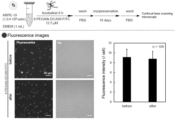
- the upper panel is a scheme showing the experimental procedure of Example 2.
- the lower left panel shows confocal laser scanning microscope images and phase contrast microscope images of the cells before and after 24 hours of incubation.
- the lower right panel shows the results of measuring the fluorescence over time of the cells obtained by incubating ARPE with 8PEG40k-DCA99-FITC at 37° C. for 3 hours.
- the upper panel is a scheme showing the experimental procedure of Example 3.
- the left panel of the lower left section shows a phase-contrast microscopic image of the cells before 24 hours of incubation, and the right panel shows a phase-contrast microscopic image of the cells after 24 hours of incubation.
- the lower right panel shows the viability determined by incubating the cells with 8-PEG40k-DCA100 (0 ⁇ M, 12.5 ⁇ M, 25 ⁇ M) for 24 hours and counting the number of viable cells using WST-8.
- the upper panel is a scheme showing the experimental procedure of Example 4.
- the lower left panel shows confocal laser scanning microscope images and phase contrast microscope images of cells before and after freezing.
- the lower right panel shows the results of investigating the stability of 8-PEG40k-DCA99-FITC adsorbed to cells after cryopreservation (18 days) by measuring the fluorescence intensity.
- the upper part is a scheme showing the synthesis procedure of 8-PEG40k-DCA.
- the lower part is a table showing the introduction rate of deoxycholic acid (DCA) into PEG when PEG-DCA was synthesized by changing the ratio of PEG, deoxycholic acid (DCA), and DMT-MM.
- the upper part shows a scheme illustrating the experimental procedure of Example 6.
- the lower part shows the results of investigating the binding ability of three FITC-labeled collagen-binding peptides (CQDSETRTFY, TKKTLRT, and SYIRIADNTNIT) to type I collagen, type IV collagen, and laminin by measuring the fluorescence intensity.
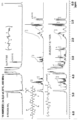
- the top row is a 1 H NMR chart of 8-PEG40k-NH 2 (8-branched PEG with a molecular weight of 40,000 and an amino group at the end).
- the middle row is a 1 H NMR chart of the collagen-binding peptide CTKKTLRT.
- the bottom row is a 1 H NMR chart of 8-PEG40k-NH 2 to which the collagen-binding peptide CTKKTLRT has been bound via maleimide.
- Symbols such as a and b in the chart and structural formula are symbols for the assignment of protons.
- the top is a 1 H NMR chart of 8-PEG40k-DCA (8-branched PEG with a molecular weight of 40,000 into which deoxycholic acid has been introduced).
- the bottom is a 1 H NMR chart of 8-PEG40k-DCA-CTKKTLRT (8-branched PEG with a molecular weight of 40,000 into which deoxycholic acid and collagen-binding peptide CTKKTLRT have been introduced).
- Symbols such as a' and f in the chart and structural formula are symbols for proton assignment.
- the top panel is a scheme showing the experimental procedure of Example 8.
- the top panel of the bottom panel shows phase contrast micrographs of iPS-RPE cells and the bottom panel shows iPS-PRE cells coated with 8-PEG40k-DCA60-CBP40 seeded on the surface of a collagen-coated dish, followed by washing two hours later.
- the bottom graph shows the results of an investigation into the effect of incubation time of 8-PEG40k-DCA60-CBP40 with iPS-RPE on collagen adhesion.
- 1 is a graph showing the results of comparing the proliferation of iPS-RPE with adsorbed 8-PEG40k-DCA60-CBP40 (w/) and the proliferation of iPS-RPE without adsorbed 8-PEG40k-DCA60-CBP40 (w/o).
- the present invention provides a compound comprising a hydrophilic polymer or a derivative thereof, a bile acid or a derivative thereof, and a protein-targeting substance.
- a hydrophilic polymer or a derivative thereof a hydrophilic polymer or a derivative thereof, a bile acid or a derivative thereof, and a protein-targeting substance.
- the above compound may be referred to as the "compound of the present invention” or the "cell designer molecule of the present invention.”
- the compound of the present invention can impart protein adhesiveness to cells.
- Hydrophilic polymers are polymers that have charged or polar functional groups and can dissolve in or interact with water or other polar substances.
- the hydrophilic polymers contained in the compounds of the present invention carry bile acids or their derivatives, and protein-directed substances or their derivatives.
- the hydrophilic polymers contained in the compounds of the present invention may be of any type. There is no particular limit to the molecular weight of the hydrophilic polymer, and it may be, for example, several thousand to several hundred thousand. There is no particular limit to the structure of the hydrophilic polymer, and it may be linear, branched, cyclic, etc.
- Preferred hydrophilic polymers are those that have low cytotoxicity, no cytotoxicity, or high biocompatibility.
- hydrophilic polymers examples include polyethylene glycol, polyvinyl alcohol, poly(vinylpyrrolidone), polyvinylamide, polyacrylic acid, polyacrylamide, polyamino acids, polysaccharides, and proteins.
- Preferred examples of hydrophilic polymers include polyethylene glycol (PEG), polyvinyl alcohol, polyglutamic acid, polyaspartic acid, polylysine, and polyhistidine. More preferred examples of hydrophilic polymers include PEG and polyvinyl alcohol. An even more preferred example of a hydrophilic polymer is PEG. Needless to say, the hydrophilic polymers contained in the compounds of the present invention are not limited to the above examples.
- any type of PEG may be used.
- the shape of PEG is not particularly limited, and linear, Y-shaped, branched, etc. may be used.
- a branched PEG is used in the compound of the present invention.
- the number of branches may be 2, 3, 4, 5, 6, 7, 8, 9, 10, 11, 12 or more, for example, 2 to 20 branches, 2 to 10 branches, 2 to 8 branches, 3 to 12 branches, 3 to 10 branches, 3 to 9 branches, 4 to 12 branches, 4 to 10 branches, 4 to 8 branches, etc.
- PEG with many branches is preferred. 4-arm and 8-arm PEGs are commercially available and can be preferably used.
- PEG poly(ethylene glycol)
- it may be PEG with a molecular weight of several thousand to tens of thousands or hundreds of thousands, for example, PEG with a molecular weight of about 10,000 to about 200,000, about 10,000 to about 100,000, about 20,000 to about 100,000, or about 40,000 to about 80,000.
- Hydrophilic polymer derivatives can be produced appropriately by those skilled in the art, and are also commercially available. Functional groups in the hydrophilic polymer can be amidated, esterified, alkylated, halogenated, etc., by known methods. For example, amino groups, maleimide groups, carboxyl groups, etc. can be bound to the terminus of polyethylene glycol by known methods.
- the hydrophilic polymer derivative can be selected depending on the bile acid or its derivative to be bound to the hydrophilic polymer, and the type and structure of the protein-directed substance.
- Bile acids are steroid compounds that are biosynthesized from cholesterol in the liver of mammals. Bile acids contribute to the adsorption of the compounds of the present invention to cells. Various bile acids are known, and an appropriate one can be selected and used in the compounds of the present invention. Bile acids include primary bile acids such as cholic acid and chenodeoxycholic acid, secondary bile acids such as deoxycholic acid, lithocholic acid, ursodeoxycholic acid, and hyodeoxycholic acid, and conjugated bile acids such as glycocholic acid and taurocholic acid, and any of these may be used in the compounds of the present invention. Deoxycholic acid or cholic acid is preferably used. More preferably, deoxycholic acid (DCA) is used.
- DCA deoxycholic acid
- Bile acid derivatives are known, can be appropriately synthesized, and are commercially available. For example, any hydroxyl group of the bile acid may be attached or detached, or may be alkylated, etc. Also, for example, the carboxyl group of the bile acid may be esterified.
- the bile acid derivatives are not limited to the above.
- a protein-directed substance is a substance that has a high affinity or specific binding ability to proteins.
- the protein that the protein-directed substance is directed to may be, for example, a protein present on the cell surface or present in the extracellular matrix.
- the protein-directed substance contributes to the compound of the present invention imparting protein adhesion to cells.
- An example of a protein-directed substance is an extracellular matrix-directed substance.
- the extracellular matrix contains collagen, laminin, fibronectin, elastin, etc., so it is preferable that the extracellular matrix-directed substance is a substance that has a high affinity or specific binding ability to these proteins.
- the extracellular matrix-directed substance may be a collagen-directed substance.
- the protein-directed substance may also be a substance that has a high affinity or specific binding ability to polysaccharides present on the cell surface or polysaccharides contained in the extracellular matrix, other than proteins.
- the protein-directed substance may be of any type, such as peptides, sugars, lipids, nucleic acids, etc.
- the protein-directed substance may be a naturally occurring substance or an artificially obtained substance. Those skilled in the art can synthesize protein-targeting substances using known methods and materials. Protein-targeting substances may be commercially available compounds.
- protein-directed substances include, but are not limited to, CD42b, which recognizes the vWF factor expressed in damaged blood vessels, tannic acid, which adsorbs to the surface of myocardium, DOPA, which adsorbs to the surface of intestinal epithelial cells, and serine, which adsorbs to the surface of renal epithelial cells.
- extracellular matrix-directed substances include, but are not limited to, collagen-directed substances that recognize collagen, and heparin, which recognizes fibronectin.
- collagen-directed substances include, but are not limited to, collagen-binding peptides such as CQDSETRTFY, TKKTLRT, and SYIRIADNTNIT.
- the hydrophilic polymer or its derivative, the bile acid or its derivative, and the protein-directing substance can be appropriately selected depending on the type of cells to be transplanted, the composition of the extracellular matrix contained in the recipient tissue or organ, the transplant site, the form and physical properties of the graft, etc.
- the engraftment rate of cells to which the compound of the present invention has been adsorbed, or a cell sheet or graft containing cells to which the compound of the present invention has been adsorbed, can be improved by selecting the protein-directing substance in consideration of the composition of the extracellular matrix contained in the recipient tissue or organ.
- the compound of the present invention can be synthesized by binding a hydrophilic polymer or its derivative, a bile acid or its derivative, and a protein-directing substance.
- the compound of the present invention can be synthesized using a known method.
- the compound of the present invention is synthesized by covalently binding a bile acid or its derivative, and a protein-directing substance to a hydrophilic polymer or its derivative.
- a functional group in the hydrophilic polymer or its derivative, a functional group in the bile acid or its derivative, and a functional group in the protein-directing substance can be used for binding.
- the bile acid or its derivative, and the protein-directing substance may be bound to any position of the hydrophilic polymer or its derivative, but are preferably bound near or at the end.
- the mode of these bonds can be appropriately selected by those skilled in the art.
- the bile acid or its derivative, and the protein-directing substance can be bound to the hydrophilic polymer by known methods such as amide formation, ester formation, nucleophilic substitution reaction (e.g., S N 2 reaction using a tosyl group), and click reaction.
- PEG having an amino group at the end may be used, and the amino group and the carboxyl group of deoxycholic acid may be condensed with a condensing agent such as DMT-MM to form an amide (peptide bond), thereby binding PEG to deoxycholic acid.
- a condensing agent such as DMT-MM
- PEG having an amino group or a carboxyl group at the end and a peptidic protein-directed substance may be used to form a peptide bond in the same manner as above, thereby binding PEG to a peptidic protein-directed substance.
- PEG having a carboxyl group at the end may be used, and an ester bond may be formed between the carboxyl group and the hydroxyl group of the protein-directed substance, thereby binding PEG to a protein-directed substance.
- the binding of hydrophilic polymers or derivatives thereof, bile acids or derivatives thereof, and protein-directed substances is not limited to the above examples.
- PEG having a functional group at the end may be synthesized using known methods and materials. PEG having a functional group at the end is commercially available, and may be used. The ratio of hydrophilic polymers or derivatives thereof, bile acids or derivatives thereof, and protein-directed substances may also be appropriately determined.
- the compound of the present invention may contain one or more types of hydrophilic polymers.
- the compound of the present invention may contain one or more types of bile acids.
- the compound of the present invention may contain one or more types of protein-targeting substances.
- the compound of the present invention may contain functional molecules such as molecules that promote tissue-specific binding, therapeutic drugs, and labels.
- the present invention provides a method for producing cells having protein adhesive properties, which comprises adsorbing a compound of the present invention to cells.
- the cells to which the compound of the present invention is adsorbed may be any type of cell or any origin, and may be appropriately selected depending on the purpose.
- the purpose is, for example, regenerative medicine, particularly transplantation.
- the cells may be cardiomyocytes, retinal pigment epithelial cells, hepatic parenchymal cells, vascular endothelial cells, mesenchymal stem cells, osteoblasts, chondrocytes, myoblasts, etc.
- the cells may be cells directly isolated from a living body, or may be established cell lines.
- the cells may be derived from stem cells such as iPS cells or ES cells.
- the cells to which the compound of the present invention is adsorbed are not limited to those exemplified above.
- protein adhesiveness may be imparted to cells that do not have protein adhesiveness, or the protein adhesiveness of cells that have protein adhesiveness may be enhanced.
- the compound of the present invention can be adsorbed to cells by contacting the compound of the present invention with cells.
- the compound of the present invention can be adsorbed to cells by incubating the compound of the present invention with cells in a medium.
- the medium is an aqueous medium, and may be a cell culture medium.
- Cell culture media are known and can be appropriately selected depending on the type of cells.
- Conditions such as incubation temperature and time can also be appropriately determined by those skilled in the art.
- the incubation temperature may be 280° C. to 38° C., for example, 30° C. to 37° C.
- the incubation time may be several tens of minutes to several tens of hours, for example, 15 minutes to 36 hours, 2 hours to 24 hours, etc.
- incubation may be performed in DMEM medium at 37° C. for 12 to 36 hours.
- the ratio of the compound of the present invention to cells can also be appropriately determined by those skilled in the art.
- incubation may be performed with a concentration of the compound of the present invention of several ⁇ M to several tens of ⁇ M for 10 4 to 10 8 cells/mL of cells.
- the present invention provides an agent for imparting protein adhesiveness to cells, comprising the compound of the present invention.
- the agent may be in the form of a solid (powder, granules, etc.), liquid (solution, suspension, etc.), or semi-solid (paste, etc.).
- the above description of the method for producing cells having protein adhesiveness can be applied to the method and dosage of the agent.
- the present invention provides a kit for imparting protein adhesiveness to cells, comprising the compound of the present invention.
- the kit includes the compound of the present invention as a component.
- the kit may include the agent in its packaging.
- the kit is accompanied by an instruction manual.
- the present invention provides cells to which a compound of the present invention is adsorbed.
- adsorbing the compound of the present invention to cells it is possible to improve the directionality and selectivity to a target organ or tissue.
- Cells to which a compound of the present invention is adsorbed have a survival rate similar to that of cells to which a compound of the present invention is not adsorbed. Therefore, when cells to which a compound of the present invention is adsorbed are used for transplantation, there is a possibility that the success rate of transplantation will be increased.
- any administration route used for administering cells to a living body can be used.
- administration routes include, but are not limited to, injection into the affected area, injection into a vein, catheter administration, etc.
- the present invention provides a cell sheet containing cells to which the compound of the present invention is adsorbed.
- the present invention provides a graft containing cells to which the compound of the present invention is adsorbed.
- the cells to which the compound of the present invention is adsorbed may be used as a graft, or a graft containing the above-mentioned cells may be prepared and used for transplantation.
- the form of the graft may include, but is not limited to, a cell sheet, a cell mass (spheroid, embryoid body, etc.), an organoid, a three-dimensional tissue, a paste, etc. Grafts of various shapes can be prepared using known methods.
- grafts When such cell sheets or grafts are used for transplantation, they have high fixation to organs or tissues, and the survival rate of cells in the sheets or grafts is also high. Therefore, the above-mentioned grafts can be said to be suitable for regenerative medicine, particularly transplantation.
- organs or tissues to which the grafts of the present invention are transplanted include, but are not limited to, the heart, retina, damaged blood vessels, intestines, kidneys, bones, and tumors.
- 8-PEG40k-DCA99-FITC a compound in which deoxycholic acid (DCA) and FITC are introduced at a ratio of 99:1 to 8-branched PEG with a molecular weight of 40,000 - see the lower part of FIG. 1
- the cells used were retinal pigment epithelial cell line (ARPE) (Examples 1 to 5). As shown in the upper part of Figure 1, ARPE was incubated with 8-PEG40k-DCA99-FITC, and the fluorescence intensity of the cells was measured over time.
- ARPE retinal pigment epithelial cell line
- 8-PEG40k-HN 2 -FITC (a few percent of FITC alone introduced into 8-PEG40k with a molecular weight of 40,000 - see the lower part of Figure 1) was used as a control. As shown in the graph in the lower part of Figure 1, it was found that the fluorescence intensity increased over time, indicating that the amount of 8PEG40k-DCA99-FITC adsorbed to the ARPE surface had increased.
- the viability of cells adsorbed with 8-PEG40k-DCA100 (8-branched PEG with a molecular weight of 40,000 to which only DCA has been introduced) was examined. As shown in the upper part of Figure 3, cells were incubated with 8-PEG40k-DCA100 (0 ⁇ M, 12.5 ⁇ M, 25 ⁇ M) for 24 hours, and the viability was determined by counting the number of viable cells using WST-8. As shown in the lower part of Figure 3, it was found that the adsorption of 8-PEG40k-DCA100 did not affect the viability of the cells.
- the fluorescence intensity of SYIRIADNTNIT was stronger than that of TKKTLRT (100 ⁇ M, box).
- the selectivity of TKKTLRT was highest for type I collagen, followed by type I collagen > laminin > type IV collagen.
- the selectivity of SYIRIADNTNIT was highest for type I collagen, followed in the order of type I collagen > type IV collagen > laminin.
- 8-PEG40k-DCA 8-PEG40k-DCA was prepared according to the procedure shown in the upper part of Figure 5.
- 8-PEG40k-NH 2 8-branched PEG having a molecular weight of 40,000 and an amino group at the end
- DMT-MM 4-(4,6-dimethoxy-1,3,5-triazin-2-yl)-4-methylmorpholinium chloride
- 4-PEG20k-NH 2 (4-branched PEG having a molecular weight of 20,000 and an amino group at the end) (purchased from Sigma-Aldrich) was used to obtain 4-PEG20k-DCA in the same manner as above.
- iPS-RPE iPS cell-derived retinal pigment epithelial cells
- 8-PEG40k-DCA60-CBP40-containing iPS-RPE medium (25 ⁇ M) was added to the cell suspension at 1 ⁇ 10 6 cells/mL, and the cells were incubated at 37° C. for 15 minutes, 2 hours, 6 hours, and 14 hours, respectively. 3. After incubation, the cells were centrifuged at 300 g for 5 minutes, the solution was removed, and 1 mL of iPS-RPE medium was added again to wash the cells. 4. The cells suspended in fresh iPS-RPE medium were seeded onto collagen-coated wells at 2.5 ⁇ 10 5 cells /well, and incubated at 37° C. for 2 hours. 5.
- the composition of the iPS-RPE medium was as follows: MEM ⁇ (Thermo Fisher, 12571-063) 91.3% KSR (Thermo Fisher, 10828-028) 5% N2 Supplement (Thermo Fisher, 17502-048) 1% Hydrocortisone (Sigma, H0888-1G) 55 nM Taurine, 10G (Sigma, T0625-10G) 250 ⁇ g/ml Triiodothyronine (T3) (Sigma, T5516-1MG) 14 pg/ml Gentamicin (Thermo Fisher, 15750-060) 25 ⁇ g/ml
- the proliferation of cells adsorbed with the compound of the present invention was compared to the proliferation of cells not adsorbed with the compound of the present invention. Specifically, the proliferation of iPS-RPE adsorbed with 8-PEG40k-DCA60-CBP40 was compared to the proliferation of iPS-RPE not adsorbed with 8-PEG40k-DCA60-CBP40.
- iPS-RPE medium containing 8-PEG40k-DCA60-CBP40 (25 ⁇ M) was added to the cell suspension at 1 ⁇ 10 6 cells/mL, and the cells were incubated at 37° C. for 6 hours. 3. After incubation, the cells were centrifuged at 300 g for 5 minutes, the solution was removed, and 1 mL of iPS-RPE medium was added again to wash the cells. 4. The cells suspended in fresh iPS-RPE medium were seeded onto collagen-coated wells at 1.25 ⁇ 10 5 cells /well, and incubated at 37° C. for 2 hours. 5. After 2 hours, 200 ⁇ L of 1 ⁇ DPBS was added, and non-adherent cells were washed three times in total.
- the cells were cultured as is, and the proliferation ability of the cells was examined by WST-8 assay after 1 day, 4 days, and 7 days.
- Cell count (performed after 1, 4, and 7 days) 1.
- the wells prepared in 5 of (ii) were washed with 200 ⁇ L of 1 ⁇ DPBS. 2.
- 200 ⁇ L of iPS-RPE medium (10%, WST-8 reagent) was added, and the mixture was incubated at 37° C. for 40 minutes.
- 100 ⁇ L of the supernatant was taken and transferred to a 96-well plate. 4.
- the 96-well plate containing the supernatant was placed in a plate reader, and the absorbance at 450 nm was measured.
- the present invention can be used in the fields of cell engineering, tissue engineering, medical materials, medicine, etc.
Landscapes
- Health & Medical Sciences (AREA)
- Life Sciences & Earth Sciences (AREA)
- Chemical & Material Sciences (AREA)
- Engineering & Computer Science (AREA)
- Medicinal Chemistry (AREA)
- Biomedical Technology (AREA)
- General Health & Medical Sciences (AREA)
- Veterinary Medicine (AREA)
- Epidemiology (AREA)
- Animal Behavior & Ethology (AREA)
- Public Health (AREA)
- Zoology (AREA)
- Dermatology (AREA)
- Transplantation (AREA)
- Bioinformatics & Cheminformatics (AREA)
- Oral & Maxillofacial Surgery (AREA)
- Wood Science & Technology (AREA)
- Chemical Kinetics & Catalysis (AREA)
- Cell Biology (AREA)
- Biotechnology (AREA)
- Genetics & Genomics (AREA)
- Organic Chemistry (AREA)
- Botany (AREA)
- Molecular Biology (AREA)
- Microbiology (AREA)
- Pharmacology & Pharmacy (AREA)
- Biochemistry (AREA)
- General Engineering & Computer Science (AREA)
- Peptides Or Proteins (AREA)
Priority Applications (2)
| Application Number | Priority Date | Filing Date | Title |
|---|---|---|---|
| EP24760305.3A EP4671361A1 (en) | 2023-02-20 | 2024-02-19 | CELL DESIGN MOLECULE THAT GIVES CELLS PROTEIN ADHESION PROPERTIES |
| JP2025502710A JPWO2024177006A1 (https=) | 2023-02-20 | 2024-02-19 |
Applications Claiming Priority (2)
| Application Number | Priority Date | Filing Date | Title |
|---|---|---|---|
| JP2023-024508 | 2023-02-20 | ||
| JP2023024508 | 2023-02-20 |
Publications (1)
| Publication Number | Publication Date |
|---|---|
| WO2024177006A1 true WO2024177006A1 (ja) | 2024-08-29 |
Family
ID=92501126
Family Applications (1)
| Application Number | Title | Priority Date | Filing Date |
|---|---|---|---|
| PCT/JP2024/005767 Ceased WO2024177006A1 (ja) | 2023-02-20 | 2024-02-19 | 細胞にタンパク質付着性を付与する細胞デザイナー分子 |
Country Status (3)
| Country | Link |
|---|---|
| EP (1) | EP4671361A1 (https=) |
| JP (1) | JPWO2024177006A1 (https=) |
| WO (1) | WO2024177006A1 (https=) |
Citations (5)
| Publication number | Priority date | Publication date | Assignee | Title |
|---|---|---|---|---|
| JP2011006490A (ja) | 2010-09-27 | 2011-01-13 | Cellseed Inc | 心筋細胞シートによる心筋症治療薬 |
| WO2014030749A1 (ja) | 2012-08-24 | 2014-02-27 | 独立行政法人理化学研究所 | 網膜色素上皮細胞シートの製造方法 |
| KR20160061533A (ko) * | 2014-11-21 | 2016-06-01 | 단국대학교 천안캠퍼스 산학협력단 | 콜라겐 결합도메인, 오스테오칼신 도메인 및 피브로넥틴 도메인을 포함하는 융합단백질 및 이를 포함하는 약학 조성물 |
| JP2022535816A (ja) * | 2019-06-03 | 2022-08-10 | ザ・ユニバーシティ・オブ・シカゴ | コラーゲン結合薬物担体を用いてがんを処置するための方法および組成物 |
| JP2023024508A (ja) | 2020-07-17 | 2023-02-16 | 東洋インキScホールディングス株式会社 | ラミネート積層体用グラビアインキ、それを用いた印刷物、ラミネート積層体 |
-
2024
- 2024-02-19 JP JP2025502710A patent/JPWO2024177006A1/ja active Pending
- 2024-02-19 WO PCT/JP2024/005767 patent/WO2024177006A1/ja not_active Ceased
- 2024-02-19 EP EP24760305.3A patent/EP4671361A1/en active Pending
Patent Citations (5)
| Publication number | Priority date | Publication date | Assignee | Title |
|---|---|---|---|---|
| JP2011006490A (ja) | 2010-09-27 | 2011-01-13 | Cellseed Inc | 心筋細胞シートによる心筋症治療薬 |
| WO2014030749A1 (ja) | 2012-08-24 | 2014-02-27 | 独立行政法人理化学研究所 | 網膜色素上皮細胞シートの製造方法 |
| KR20160061533A (ko) * | 2014-11-21 | 2016-06-01 | 단국대학교 천안캠퍼스 산학협력단 | 콜라겐 결합도메인, 오스테오칼신 도메인 및 피브로넥틴 도메인을 포함하는 융합단백질 및 이를 포함하는 약학 조성물 |
| JP2022535816A (ja) * | 2019-06-03 | 2022-08-10 | ザ・ユニバーシティ・オブ・シカゴ | コラーゲン結合薬物担体を用いてがんを処置するための方法および組成物 |
| JP2023024508A (ja) | 2020-07-17 | 2023-02-16 | 東洋インキScホールディングス株式会社 | ラミネート積層体用グラビアインキ、それを用いた印刷物、ラミネート積層体 |
Non-Patent Citations (6)
| Title |
|---|
| KAJIURA, YUSUKE; MOROISHI, KAZUKI; MATSUSAKI, MICHIYA: "D1411-3am-12 Development of cell-designer molecules for accumulation of retinal pigment epithelial cells in the target area by injection", PROCEEDINGS OF THE 103RD ANNUAL MEETING OF THE CHEMICAL SOCIETY OF JAPAN (CSJ); TOKYO, JAPAN; MARCH 22-25, 2023, 24 March 2023 (2023-03-24) - 25 March 2023 (2023-03-25), pages D1411 - 3am, XP009558036 * |
| MARI TAKAHARA; RIE WAKABAYASHI; NAOKI FUJIMOTO; KOSUKE MINAMIHATA; MASAHIRO GOTO; NORIHO KAMIYA: "Enzymatic Cell‐Surface Decoration with Proteins using Amphiphilic Lipid‐Fused Peptide Substrates", CHEMISTRY - A EUROPEAN JOURNAL, JOHN WILEY & SONS, INC, DE, vol. 25, no. 30, 17 April 2019 (2019-04-17), DE, pages 7315 - 7321, XP071849809, ISSN: 0947-6539, DOI: 10.1002/chem.201900370 * |
| NAKATSUJI HIROTAKA, SHIOJI YUDAI, HIRAOKA NOBORU, OKADA YUTA, KATO NATSUKO, SHIBATA SAYAKA, AOKI ICHIO, MATSUSAKI MICHIYA: "Cancer-microenvironment triggered self-assembling therapy with molecular blocks", MATER. HORIZ., THE ROYAL SOCIETY OF CHEMISTRY, vol. 8, no. 4, 12 April 2021 (2021-04-12), pages 1216 - 1221, XP093203353, ISSN: 2051-6347, DOI: 10.1039/D0MH02058C * |
| See also references of EP4671361A1 |
| TERAMURA, YUJI ET AL.: "Cell-modifying materials that contribute to biotechnology", SEIBUTSU-KOGAKU KAISHI, vol. 99, no. 4, 1 January 2021 (2021-01-01), pages 184 - 187, XP009557203, ISSN: 2435-8630, DOI: 10.34565/seibutsukogaku.99.4_184 * |
| WENXUE ZHAO, BING CHEN, XIAODONG LI, HANG LIN, WENJIE SUN, YANHONG ZHAO, BIN WANG, YANNAN ZHAO, QIANQIAN HAN, JIANWU DAI: "Vascularization and cellularization of collagen scaffolds incorporated with two different collagen-targeting human basic fibroblast growth factors", JOURNAL OF BIOMEDICAL MATERIALS RESEARCH PART A, JOHN WILEY & SONS, vol. 82A, no. 3, 1 September 2007 (2007-09-01), pages 630 - 636, XP055193580, ISSN: 15493296, DOI: 10.1002/jbm.a.31179 * |
Also Published As
| Publication number | Publication date |
|---|---|
| JPWO2024177006A1 (https=) | 2024-08-29 |
| EP4671361A1 (en) | 2025-12-31 |
Similar Documents
| Publication | Publication Date | Title |
|---|---|---|
| US20230181462A1 (en) | Dynamic Covalent Hydrogels, Precursors Thereof and Uses Thereof | |
| US20200016085A1 (en) | Modified alginates for anti-fibrotic materials and applications | |
| Ziane et al. | A thermosensitive low molecular weight hydrogel as scaffold for tissue engineering | |
| De Bank et al. | Surface engineering of living myoblasts via selective periodate oxidation | |
| TW201202424A (en) | Method of engrafting cells from solid tissues | |
| JP2001037472A (ja) | 三次元細胞培養基材及びそれを用いた細胞培養方法 | |
| WO2009039185A1 (en) | Uses of immunologically modified scaffold for tissue prevascularization and cell transplantation | |
| Andukuri et al. | Effect of endothelium mimicking self-assembled nanomatrices on cell adhesion and spreading of human endothelial cells and smooth muscle cells | |
| Asif et al. | Heparinization of cell surfaces with short peptide-conjugated PEG-lipid regulates thromboinflammation in transplantation of human MSCs and hepatocytes | |
| Gao et al. | A progressively targeted gene delivery system with a pH triggered surface charge-switching ability to drive angiogenesis in vivo | |
| US12257367B2 (en) | Biomaterials for biological tissue repair | |
| Garbayo et al. | Delivery of cardiovascular progenitors with biomimetic microcarriers reduces adverse ventricular remodeling in a rat model of chronic myocardial infarction | |
| CN110151726A (zh) | 负载白藜芦醇的人多能干细胞外泌体在制备治疗骨与关节退行性疾病药物上的用途 | |
| CN107922459A (zh) | 粘附性肽及其用途 | |
| CN104231114B (zh) | 一种基于多位点锚定的细胞膜荧光成像试剂及其制备方法 | |
| EP4299083B1 (en) | EXTRACELLULAR MATRIX DERIVATIVE, TISSUE DERIVATIVE, MODIFIED BY A PHENOL DERIVATIVE FOR THE CONSTRUCTION OF ARTIFICIAL TISSUE | |
| Nan et al. | Presenting dual-functional peptides on implant surface to direct in vitro osteogenesis and in vivo osteointegration | |
| WO2024177006A1 (ja) | 細胞にタンパク質付着性を付与する細胞デザイナー分子 | |
| KR101596369B1 (ko) | 키토산 카테콜 합성물질을 이용한 췌장소도 막의 표면 개질 방법 | |
| US11253626B2 (en) | Use for peptide uniquely binding to vascular endothelial cells, and peptide | |
| CN104316500B (zh) | 一种长时间细胞膜成像试剂及其制备方法 | |
| WO2024131924A1 (zh) | 广谱响应性自组装肽及其应用 | |
| US20220396673A1 (en) | Method for hydrating water-insoluble polymer capable of containing intermediate water | |
| US20240016971A1 (en) | Phenol derivative-modified, tissue-derived extracellular matrix derivative for construction of artificial tissue | |
| WO2020201127A1 (en) | Capsule comprising insulin-secreting cells for treating diabetes |
Legal Events
| Date | Code | Title | Description |
|---|---|---|---|
| 121 | Ep: the epo has been informed by wipo that ep was designated in this application |
Ref document number: 24760305 Country of ref document: EP Kind code of ref document: A1 |
|
| ENP | Entry into the national phase |
Ref document number: 2025502710 Country of ref document: JP Kind code of ref document: A |
|
| WWE | Wipo information: entry into national phase |
Ref document number: 2025502710 Country of ref document: JP |
|
| WWE | Wipo information: entry into national phase |
Ref document number: 2024760305 Country of ref document: EP |
|
| NENP | Non-entry into the national phase |
Ref country code: DE |
|
| ENP | Entry into the national phase |
Ref document number: 2024760305 Country of ref document: EP Effective date: 20250922 |
|
| ENP | Entry into the national phase |
Ref document number: 2024760305 Country of ref document: EP Effective date: 20250922 |
|
| WWP | Wipo information: published in national office |
Ref document number: 2024760305 Country of ref document: EP |