WO2024176315A1 - 通信制御装置、通信制御方法、および通信制御プログラム - Google Patents
通信制御装置、通信制御方法、および通信制御プログラム Download PDFInfo
- Publication number
- WO2024176315A1 WO2024176315A1 PCT/JP2023/006064 JP2023006064W WO2024176315A1 WO 2024176315 A1 WO2024176315 A1 WO 2024176315A1 JP 2023006064 W JP2023006064 W JP 2023006064W WO 2024176315 A1 WO2024176315 A1 WO 2024176315A1
- Authority
- WO
- WIPO (PCT)
- Prior art keywords
- communication device
- setting
- setting state
- unit
- communication control
- Prior art date
- Legal status (The legal status is an assumption and is not a legal conclusion. Google has not performed a legal analysis and makes no representation as to the accuracy of the status listed.)
- Ceased
Links
Images







Classifications
-
- H—ELECTRICITY
- H04—ELECTRIC COMMUNICATION TECHNIQUE
- H04L—TRANSMISSION OF DIGITAL INFORMATION, e.g. TELEGRAPHIC COMMUNICATION
- H04L41/00—Arrangements for maintenance, administration or management of data switching networks, e.g. of packet switching networks
- H04L41/06—Management of faults, events, alarms or notifications
- H04L41/0654—Management of faults, events, alarms or notifications using network fault recovery
Definitions
- the present invention relates to a communication control device, a communication control method, and a communication control program.
- backups are generally used to quickly restore the latest state, but creating a backup every time a setting is changed places a heavy processing load on the equipment, and this can affect the equipment's original function of forwarding data.
- a communication control device a device that manages communication devices
- determines the setting contents according to the resource usage status of the communication device and dynamically sets the settings could not be restored.
- elements where a communication control device determines the setting contents according to the usage status of the communication device and dynamically sets the settings were difficult to restore using the management of settings entered from a higher-level device.
- the communication control device of the present invention is characterized by having a duplication unit that duplicates information related to the setting state of the communication device at a predetermined timing, and a restoration unit that restores the setting state of the communication device using at least one of the information related to the setting state of the communication device and a predetermined configuration.
- the present invention has the effect of making it possible to restore the most recent configuration state of a communication device before a failure occurred.
- FIG. 1 is a diagram showing an overview of predetermined settings according to this embodiment.
- FIG. 2 is a diagram showing an overview of the first setting and the second setting according to the present embodiment.
- FIG. 3 is a diagram showing an example of predetermined settings according to the present embodiment.
- FIG. 4 is a diagram showing a flow of setting restoration in the conventional technique according to the present embodiment.
- FIG. 5 is a diagram showing an outline of the flow of settings restoration according to this embodiment.
- FIG. 6 is a diagram showing a flow of processing for restoring settings according to the first embodiment.
- FIG. 7 is a diagram illustrating an example of a device configuration of a communication control device according to the first embodiment.
- FIG. 8 is a diagram showing a flow of processing for restoring settings according to the second embodiment.
- FIG. 9 is a diagram illustrating an example of a device configuration of a communication control device according to the second embodiment.
- FIG. 10 is a diagram illustrating an example of storage of a changed configuration according to the second embodiment.
- FIG. 11 is a diagram showing a flow of processing for restoring settings according to the third embodiment.
- FIG. 12 is a diagram illustrating an example of a device configuration of a communication control device according to the third embodiment.
- FIG. 13 is a diagram showing details of the setting restoration process according to the third embodiment.
- FIG. 14 is a diagram illustrating an example of a flowchart of a backup operation according to the first embodiment.
- FIG. 15 is a diagram illustrating an example of a flowchart of a recovery operation when a failure occurs according to the first embodiment.
- FIG. 16 is a diagram illustrating an example of a flowchart of a backup operation according to the second embodiment.
- FIG. 17 is a diagram illustrating an example of a flowchart of a recovery operation when a failure occurs according to the second embodiment.
- FIG. 18 is a diagram illustrating an example of a flowchart of a backup operation according to the third embodiment.
- FIG. 19 is a diagram illustrating an example of a flowchart of a recovery operation when a failure occurs according to the third embodiment.
- FIG. 20 is a diagram illustrating an example of a computer in which the communication control device according to the present embodiment is realized.
- the communication control device 100 of the present embodiment provides a technique for backing up the setting state of a communication device in a network and for recovering from a failure.
- Fig. 1 is a diagram showing an overview of a predetermined setting according to the present embodiment.
- a large-scale network such as a carrier network consisting of a large number of communication devices (e.g., routers, etc.)
- FIG. 1 shows an overview of the configuration of a network device under normal circumstances (when no failure has occurred).
- the network configuration in FIG. 1 shows a communication control device 100, multiple communication devices 200 (communication device 200A, communication device 200B, communication device 200C), and a higher-level device 300.
- the higher-level device 300 inputs a specified setting (SO: service order) to the communication control device 100.
- SO setting input
- the communication control device 100 implements the specified setting for the target communication device 200.
- the communication control device 100 copies the latest setting state of the communication device 200 at a specified timing (hereinafter, this may be referred to as "periodic backup"). In this case, the communication device 200 transfers the backup to the communication control device 100.
- FIG. 2 is a diagram showing an overview of the first setting and the second setting according to this embodiment.
- FIG. 2 shows the communication control device 100, multiple communication devices 200 (communication device 200A, communication device 200B, communication device 200C), and the higher-level device 300.
- the aforementioned "predetermined settings” are settings that should restore the communication device 200 to its most recent setting state when a failure occurs, and include two settings: a "first setting” and a "second setting.”
- the first setting here is an element that the communication control device 100 sets as specified by the higher-level device 300 (e.g., input of a user configuration by an SO). For example, as shown in the left diagram of FIG. 2, in the first setting, the communication control device 100 sets the communication device 200A based on the settings input from the higher-level device 300 ((1) in FIG. 2).
- the second setting is an element (e.g., a shared filter for a multicast ACL) that is dynamically set by the communication control device 100, which determines the setting contents according to the resource usage status of the communication device 200.
- the communication control device 100 dynamically sets the communication device 200A based on dynamic information such as the resource usage status of the communication device 200A, rather than the setting input from the higher-level device 300 ((2) in FIG. 2).
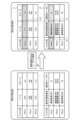
- FIG. 3 is a diagram showing an example of the specified setting according to this embodiment.
- FIG. 3 shows a shared multicast ACL (Access Control List) as an example before and after the specified setting.
- FIG. 3 shows an example of dynamically managing filters using information stored in the communication control device 100, triggered by setting input (SO) from the higher-level device 300.
- SO setting input
- the higher-level device 300 inputs a setting (SO) of "Delete user 01 of communication device 200A."
- the communication control device 100 deletes user 01 of communication device 200A based on the setting (SO) from the higher-level device 300 as the first setting. Specifically, it deletes the applied communication device "communication device 200A” and the applied user IF "01" from the information identified by the filter name "Filter1" shown in setting table 10 ((1) in FIG. 3).
- the communication control device 100 reflects the setting input (SO) from the higher-level device 300 and performs the second setting process based on other setting conditions. Specifically, the communication control device 100 determines that the communication device 200A "does not require Filter1" and deletes other relevant information. For example, the communication control device 100 deletes the filter name "Filter1" shown in setting table 10, and the filter name "Filter1", source “AAA”, and group “aaa” shown in setting table 11 ((2-1) and (2-2) in FIG. 3).
- FIG. 4 is a diagram showing the flow of setting restoration in the conventional technology according to this embodiment.
- the backup state, the recognition of the setting state of the communication control device, and the setting state of the communication device all match in "state A".
- the communication control device based on a setting input (SO) from the upper device, the communication control device creates a configuration for performing the first setting and the second setting for the communication device, and inputs it to the communication device.
- SO setting input
- the recognition of the setting state of the communication control device and the setting state of the communication device match in "state B".
- the backup copied at a specified time reflects both the first setting and the second setting described above.
- a method has been proposed for restoring the communication device to the latest setting state when a failure occurs while suppressing the frequency of regular backups.
- this conventional technique only reflects the first setting described above, when the second setting is dynamically implemented by the communication control device, there are cases where it is not possible to restore to the latest setting state including the second setting.
- Fig. 5 is a diagram showing an overview of the flow of setting restoration according to this embodiment.
- the left diagram in Figure 5 shows the state from normal to when a failure occurs.
- the communication control device 100 restores the setting state of the communication device 200 based on a predetermined method for recovery from the failure, as shown in the right diagram in Figure 5.
- the communication control device 100 acquires a restoration backup (backup after the second setting) of the communication device 200 each time the second setting is changed, and performs restoration based on the restoration backup ((1) in FIG. 5).
- the communication control device 100 manages the change configuration used to change the second setting in association with a periodic backup of the communication device 200, and performs restoration based on the periodic backup and the change configuration ((2) in FIG. 5).
- the communication control device 100 compares the setting state of the communication device 200 restored using a periodic backup of the communication device 200 (a backup that does not reflect the second setting) with the setting state of the communication device 200 recognized by the communication control device 100. Then, the communication control device 100 generates a restoration configuration for changing the setting state to the latest setting state, and inputs it into the communication device 200 to perform restoration ((3) in FIG. 5).
- the communication control device 100 is able to restore the setting state of the communication device 200 that reflects the second setting, and is able to restore the most recent setting state of the communication device 200 when a failure occurs.
- the first embodiment is an embodiment in which the communication control device 100 acquires a restoration backup of the setting state of the communication device 200 each time the second setting is changed, and restores the setting state of the communication device 200 from the restoration backup.
- FIG. 6 is a diagram showing the process flow of the setting restoration according to the first embodiment.
- the backup state periodic backup 122a
- the recognition of the setting state of the communication device 200 by the communication control device 100, and the setting state of the communication device 200 all match at "state A".
- the communication control device 100 based on a setting input (SO) from the upper device 300, the communication control device 100 creates a change configuration 123a for performing the first setting and the second setting for the communication device 200, and inputs it to the communication device 200.
- SO setting input
- the communication control device 100 performs recovery processing based on the information in the restoration backup 122b. As a result, the setting state of the communication device 200 becomes "state B". On the other hand, since the communication control device 100 has implemented the second setting, it recognizes the setting state of the communication device 200 as "state B", and the recognition of the communication control device 100 and the setting state of the communication device 200 match. In this way, the communication control device 100 according to the first embodiment can restore the setting state of the communication device 200 to the latest setting state including the second setting when recovering from the occurrence of a failure by restoring using the restoration backup 122b.
- Fig. 7 is a diagram showing an example of the device configuration of the communication control device 100 according to the embodiment.
- the communication control device 100 has a communication unit 110, a storage unit 120, and a control unit 130.
- the communication unit 110 is realized by a NIC (Network Interface Card) or the like, and controls communication via an electric communication line such as a LAN (Local Area Network) or the Internet.
- the communication unit 110 is connected to a network by wire or wirelessly as necessary, and can transmit and receive information bidirectionally.
- the communication unit 110 realizes communication between the communication control device 100 and the communication device 200, or between the communication control device 100 and the higher-level device 300.
- the storage unit 120 stores data and programs used for various processes by the control unit 130.
- the storage unit 120 is realized by a semiconductor memory element such as a random access memory (RAM) or a flash memory, or a storage device such as a hard disk or an optical disk.
- the storage unit 120 has a setting input storage unit 121, a setting state storage unit 122, and a configuration storage unit 123.
- the setting input storage unit 121 stores the setting input (SO) from the host device 300 as information on the predetermined setting.
- the predetermined setting is input by the communication control device 100 according to the instruction from the host device 300.
- the configuration includes a first configuration, which is an element to be set, and a second configuration, which is an element whose contents are determined and dynamically set by the communication control device 100 depending on the resource usage status of the communication device 200 .
- the setting input storage unit 121 is not limited to the information related to the settings described above, and can store information within the category of setting input (SO) from the higher-level device 300 .
- the setting state storage unit 122 stores information relating to the backup of the setting state of the communication device 200 copied by the copying unit 134 described below. Specifically, the setting state storage unit 122 stores a periodic backup 122a and a restoration backup 122b as information relating to the backup of the setting state of the communication device 200 copied by the copying unit 134.
- the periodic backup 122a is information on a backup of the setting state of the communication device 200, which is copied by a copying unit 134 described below at a predetermined timing.
- the setting state storage unit 122 can store the periodic backup 122a copied by the copying unit 134 described below at a preset cycle (e.g., every minute, every hour, etc.) as the predetermined timing. Note that the above-mentioned predetermined timing and the preset cycle are not particularly limited.
- the restoration backup 122b is information on a backup of the setting state of the communication device 200 that is replicated by a replication unit 134 described below when the change configuration 123a described above is input (the second setting is implemented).
- the setting state storage unit 122 can store the restoration backup 122b that is replicated by a replication unit 134 described below when the change configuration 123a is input to the communication device 200 by the communication control device 100 (the second setting is implemented).
- the configuration storage unit 123 stores a predetermined configuration. Specifically, the configuration storage unit 123 stores a change configuration 123 a when the communication control device 100 performs a predetermined setting on the communication device 200 based on a setting input (SO) from the higher-level device 300 as the predetermined configuration.
- SO setting input
- the control unit 130 has an internal memory for temporarily storing programs that define various processing procedures and the like and processing data, and is realized by electronic circuits such as a CPU (Central Processing Unit) and an MPU (Micro Processing Unit), and integrated circuits such as an ASIC (Application Specific Integrated Circuit) and an FPGA (Field Programmable Gate Array). As shown in FIG. 7 , the control unit 130 has a receiving unit 131, a creating unit 132, an input unit 133, a copying unit 134, and a restoring unit 135.
- the reception unit 131 receives a setting input (SO) including a first setting and a second setting from the higher-level device 300. Then, the reception unit 131 stores the received setting input (SO) in the setting input storage unit 121.
- SO setting input
- the creation unit 132 creates a predetermined configuration. Specifically, the creation unit 132 creates a change configuration 123a for changing the settings of the communication device 200 based on a setting input (SO) from the higher-level device 300. Specifically, the creation unit 132 can create the change configuration 123a including the contents of a first setting and a second setting to be implemented based on the setting input from the higher-level device 300.
- SO setting input
- the input unit 133 inputs the predetermined configuration created by the creation unit 132 to the communication device 200. Specifically, the input unit 133 can input the changed configuration 123a created by the creation unit 132 to the target communication device 200.
- the copying unit 134 copies information related to the setting state of the communication device 200 at a predetermined timing. Specifically, the copying unit 134 copies the periodic backup 122a as information related to the setting state of the communication device 200 at a predetermined timing. For example, the copying unit 134 can copy the periodic backup 122a at a predetermined cycle (e.g., every minute, every hour, etc.) during normal times when no failure occurs. Note that the above-mentioned predetermined timing and the predetermined cycle are not particularly limited.
- the copying unit 134 copies information (restore backup 122b) about the setting state of the communication device 200 after the predetermined setting (second setting) as information about the setting state of the communication device 200.
- the restoration unit 135 restores the setting state of the communication device 200 by using at least one of information on the setting state of the communication device 200 and a predetermined configuration. Specifically, the restoration unit 135 according to the first embodiment can restore the setting state of the communication device 200 by using information on the setting state of the communication device 200 after the predetermined setting (restoration backup 122b).
- the communication device 200 is a specific device that constitutes an IP network.
- the communication device 200 may be a router or the like.
- the communication device 200 according to the present embodiment is not particularly limited as long as it is within the category of devices that constitute a communication network. Also, although only one communication device 200 is shown in FIG. 7, the number of communication devices is not limited.
- the host device 300 is a device that inputs settings to the communication control device 100 that centrally manages a plurality of communication devices 200 that constitute an IP network.
- the second embodiment is an embodiment in which a change config used to change the second setting is managed in association with periodic backups of the communication device 200, and restoration is performed from the information.
- FIG. 8 is a diagram showing the process flow of the setting restoration according to the second embodiment.
- the backup state regular backup 122a
- the recognition of the setting state of the communication control device 100, and the setting state of the communication device 200 all match at "state A".
- the communication control device 100 based on a setting input (SO) from the higher-level device 300, creates a change configuration 123a for performing the first setting and the second setting for the communication device 200, and inputs it to the communication device 200.
- SO setting input
- the recognition of the setting state of the communication device 200 by the communication control device 100 and the setting state of the communication device 200 match at "state B". Then, in the second embodiment, the communication control device 100 stores the change configuration 123a in association with the regular backup 122a when the change configuration 123a for performing the first setting and the second setting is input (the second setting is implemented).
- the communication control device 100 performs restoration based on the periodic backup 122a. Furthermore, the communication control device 100 inputs the change configuration 123a associated with the periodic backup 122a. As a result, the setting state of the communication device 200 becomes "state B.”
- the communication control device 100 since the communication control device 100 has implemented the second setting, it recognizes the setting state of the communication device 200 as "state B," and the recognition of the communication control device 100 and the setting state of the communication device 200 match. In this way, the communication control device 100 according to the second embodiment performs restoration based on information from the periodic backup 122a and the changed configuration 123a, and can restore the communication device 200 to the latest setting state including the second setting when recovering from a failure.
- FIG. 9 is a diagram showing an example of the device configuration of the communication control device 100 according to the second embodiment.
- the communication control device 100 has a communication unit 110, a storage unit 120, and a control unit 130.
- the communication control device 100 according to the second embodiment can be realized with the same configuration as the communication control device 100 according to the first embodiment. Therefore, in this section, only the different parts will be described, and the rest will be omitted.
- the storage unit 120 stores data and programs used for various processes by the control unit 130.
- the storage unit 120 is realized by a semiconductor memory element such as a RAM or a flash memory, or a storage device such as a hard disk or an optical disk. As shown in FIG. 9 , the storage unit 120 has a setting input storage unit 121, a setting state storage unit 122, and a configuration storage unit 123.
- the setting state storage unit 122 stores information relating to the backup of the setting state of the communication device 200 copied by the copying unit 134. Specifically, the setting state storage unit 122 stores periodic backup 122a as information relating to the backup of the setting state of the communication device 200 copied by the copying unit 134. Note that the contents of the periodic backup 122a are similar to those in the first embodiment, and therefore detailed description thereof will be omitted.
- the configuration storage unit 123 stores a predetermined configuration. Specifically, the configuration storage unit 123 stores a change configuration 123 a when the communication control device 100 performs a predetermined setting on the communication device 200 based on a setting input (SO) from the higher-level device 300 as the predetermined configuration.
- SO setting input
- the configuration storage unit 123 also stores the changed configuration 123a in association with the regular backup 122a.
- the procedure for storing the changed configuration 123a in association with information related to the regular backup 122a will be described later in the section on the storage unit 136.
- the control unit 130 has an internal memory for temporarily storing programs that define various processing procedures and the like and processing data, and is realized by electronic circuits such as a CPU and an MPU, and integrated circuits such as an ASIC and an FPGA. As shown in FIG. 9 , the control unit 130 has a receiving unit 131, a creating unit 132, an input unit 133, a replicating unit 134, a restoring unit 135, and a storage unit 136.
- the creation unit 132 creates a predetermined configuration. Specifically, the creation unit 132 creates a change configuration 123a for changing the settings of the communication device 200 based on a setting change instruction (setting input) from the higher-level device 300. For example, the creation unit 132 can create a change configuration 123a including the contents of a first setting and a second setting to be implemented based on a setting change instruction from the higher-level device 300.
- the input unit 133 inputs the predetermined configuration created by the creation unit 132 to the communication device 200. Specifically, the input unit 133 can input the changed configuration 123a created by the creation unit 132 to the target communication device 200.
- the copying unit 134 copies information (periodic backup 122a) related to the setting state of the communication device 200 at a predetermined timing. Specifically, the copying unit 134 can copy the periodic backup 122a at a preset cycle (e.g., every minute, every hour, etc.) during normal times when no failure occurs. Note that the above-mentioned predetermined timing and the preset cycle are not particularly limited.
- the restoration unit 135 restores the setting state of the communication device 200 by using at least one of information on the setting state of the communication device 200 and a predetermined config. Specifically, the restoration unit 135 restores the setting state of the communication device 200 by using, as the predetermined config, the changed config 123a associated with information on the setting state of the communication device 200 (periodic backup 122a).
- the storage unit 136 upon receipt of the changed configuration 123a by the input unit 133, associates and stores the changed configuration 123a with information on the setting state of the communication device 200 copied at a predetermined timing by the copying unit 134. For example, upon receipt of the changed configuration 123a by the input unit 133 and implementation of the second setting, the storage unit 136 can associate and store information for identifying the regular backup 122a copied by the copying unit 134 with the changed configuration 123a created by the creation unit 132.
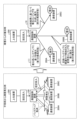
- FIG. 10 is a diagram showing an example of the storage of the change configuration 123a according to the second embodiment.
- FIG. 10 shows three steps for associating the change configuration 123a with the regular backup 122a.
- Step 1 shown in FIG. 10 is the step of setting input (SO) from the higher-level device 300.
- step 2 when the communication control device 100 inputs the changed configuration 123a (the second setting is implemented), the storage unit 136 stores the changed configuration 123a input to the communication device 200 in association with the regular backup 122a.
- the storage unit 136 can store the state of the changed configuration 123a as information such as the communication device name "communication device 200A”, regular backup identification information "Backup1_yymmdd”, and the changed configuration "config1" ((1) in FIG. 10).
- step 3 at the time of updating the backup when a failure occurs, the storage unit 136 deletes the associated and stored changed configuration 123a.
- the state of the changed configuration is stored as information indicating the communication device name "communication device 200A", the regular backup identification information "Backup1_yymmdd'”, and the changed configuration "config1 (deleted)" ((2) in FIG. 10).
- the storage unit 136 can store the change configuration 123a for implementing the second setting in association with the regular backup 122a for each communication device 200.
- the storage unit 136 stores the change configuration 123a in association with the regular backup 122a for each communication device 200 at the timing when the second setting change is performed, but this is not limited to the above and may store the change configuration 123a at a specified timing.
- FIG. 11 is a diagram showing the process flow of the setting restoration according to the third embodiment.
- the backup state regular backup 122a
- the recognition of the setting state of the communication control device 100, and the setting state of the communication device 200 all match at "state A”.
- the communication control device 100 based on a setting input (SO) from the higher-level device 300, the communication control device 100 creates a change configuration 123a for performing the first setting and the second setting for the communication device 200, and inputs it to the communication device 200.
- SO setting input
- the communication control device 100 creates a change configuration 123a for performing the first setting and the second setting for the communication device 200, and inputs it to the communication device 200.
- the recognition of the setting state of the communication device 200 by the communication control device 100 and the setting state of the communication device 200 match at "state B".
- the communication control device 100 restores the setting state of the communication device 200 using the periodic backup 122a.
- the communication control device 100 compares the setting state of the communication device 200 restored by the periodic backup 122a of the communication device 200 (backup that does not reflect the second setting) with the setting state of the communication device 200 recognized by the communication control device 100.
- the communication control device 100 then generates a restored configuration 123b based on the comparison result and inputs it to the communication device 200, thereby restoring the setting state of the communication device 200 to "state B".
- the communication control device 100 since the communication control device 100 has implemented the second setting, it recognizes the setting state of the communication device 200 as "state B," and the recognition of the communication control device 100 and the setting state of the communication device 200 match. In this way, the communication control device 100 according to the third embodiment restores the setting state of the communication device 200 using the restoration configuration 123b created based on the result of comparing the periodic backup 122a with the setting state of the communication device 200 stored by the communication control device 100. Therefore, the communication control device 100 can restore the communication device 200 to the latest setting state including the second setting when recovering from the occurrence of a failure.
- Fig. 12 is a diagram showing an example of the device configuration of the communication control device 100 according to the third embodiment.
- the communication control device 100 has a communication unit 110, a storage unit 120, and a control unit 130.
- the communication control device 100 according to the third embodiment can be realized with the same configuration as the communication control device 100 according to the first or second embodiment. Therefore, in this section, only the different parts will be described, and the rest will be omitted.
- the storage unit 120 stores data and programs used for various processes by the control unit 130.
- the storage unit 120 is realized by a semiconductor memory element such as a RAM or a flash memory, or a storage device such as a hard disk or an optical disk. As shown in FIG. 12 , the storage unit 120 has a setting input storage unit 121, a setting state storage unit 122, and a configuration storage unit 123.
- the setting state storage unit 122 stores information relating to the backup of the setting state of the communication device 200 copied by the copying unit 134 described below. Specifically, the setting state storage unit 122 stores periodic backup 122a as information relating to the backup of the setting state of the communication device 200 copied by the copying unit 134. Note that the contents of the periodic backup 122a are similar to those in the first and second embodiments, and therefore detailed description thereof will be omitted.
- the configuration storage unit 123 stores a predetermined configuration. Specifically, the configuration storage unit 123 stores a change configuration 123 a when the communication control device 100 performs a predetermined setting on the communication device 200 based on a setting input (SO) from the higher-level device 300 as the predetermined configuration.
- SO setting input
- the configuration storage unit 123 also stores a restoration configuration 123b for restoring the setting state of the communication device 200 restored from the periodic backup 122a to the latest setting state based on the comparison result of the comparison unit 137 described below.
- the control unit 130 has an internal memory for temporarily storing programs that define various processing procedures and the like and processing data, and is realized by electronic circuits such as a CPU and an MPU, and integrated circuits such as an ASIC and an FPGA. As shown in FIG. 12 , the control unit 130 has a receiving unit 131, a creating unit 132, an input unit 133, a replicating unit 134, a restoring unit 135, and a comparing unit 137.
- the creation unit 132 creates a predetermined configuration. Specifically, the creation unit 132 creates a change configuration 123a for changing the settings of the communication device 200 based on a setting change instruction (setting input) from the higher-level device 300. Specifically, the creation unit 132 can create the change configuration 123a including the contents of a first setting and a second setting to be implemented based on the setting change instruction from the higher-level device 300.
- the creation unit 132 also creates a specified configuration. Specifically, the creation unit 132 creates the restoration configuration 123b based on the comparison results of the comparison unit 137. The specific flow of creating the restoration configuration 123b will be explained in the section on the comparison unit 137 below.
- the input unit 133 inputs the predetermined configuration created by the creation unit 132 to the communication device 200. Specifically, the input unit 133 can input the changed configuration 123a created by the creation unit 132 to the target communication device 200.
- the copying unit 134 copies information (periodic backup 122a) related to the setting state of the communication device 200 at a predetermined timing. Specifically, the copying unit 134 copies the periodic backup 122a at a predetermined cycle (e.g., every minute, every hour, etc.) during normal times when no failure occurs. Note that the above-mentioned predetermined timing and the predetermined cycle are not particularly limited.
- the restoration unit 135 restores the setting state of the communication device 200 using at least one of information about the setting state of the communication device 200 and a predetermined config. Specifically, the restoration unit 135 restores the setting of the communication device 200 using information about the setting state of the communication device 200 (periodic backup 122a) copied at a predetermined timing by the copying unit 134. Then, the restoration unit 135 restores the setting state of the communication device 200 using the restored config 123b as the predetermined config.
- the restoration unit 135 can restore the setting state of the communication device 200 using the periodic backup 122a when a failure occurs.
- the restoration unit 135 can then input the restored configuration 123b created by the creation unit 132 based on the comparison results of the comparison unit 137 (described below) to the communication device 200 restored using the periodic backup 122a, thereby restoring the settings to the latest setting state after the second setting.
- the comparison unit 137 compares the setting state of the communication device 200 restored using information (periodic backup 122a) regarding the setting state of the communication device copied at a specified timing by the copying unit 134 with the setting state of the communication device 200 recognized by the communication control device 100 at the time when a specified failure occurs.
- FIG. 13 is a diagram showing the details of the settings restoration process according to the third embodiment.
- the settings restoration according to the third embodiment is divided into five steps.
- Step 1 is "regular backup”
- step 2 is “predetermined setting changes”
- step 3 is “restoration from regular backup”
- step 4 is “comparison of differences”
- step 5 is "input of restoration config”.
- FIG. 13 uses a setting example for "Filter” for explanation, but this embodiment is not limited to this.
- step 1 the duplication unit 134 of the communication control device 100 duplicates the setting state of the communication device 200, "Filter1, Filter2", as the periodic backup 122a, "Filter1, Filter2" ((1) in FIG. 13).
- step 2 the communication control device 100 changes the setting of the communication device 200 to "Filter1, Filter2, Filter3” based on the setting input (SO) from the higher-level device 300. At this point, the communication control device 100 holds the information "Filter1, Filter2, Filter3" ((2) in FIG. 13).
- step 3 the communication control device 100 restores the setting state of the communication device 200 based on the information "Filter1, Filter2" from the periodic backup 122a. At this time, the communication control device 100 recognizes that "the setting state of the communication device 200 is Filter1, Filter2, Filter3," and a difference has occurred ((3) in FIG. 13).
- the comparison unit 137 of the communication control device 100 compares the differences ((4-1) in FIG. 13). Specifically, the comparison unit 137 compares the restored configuration information "Filter1, Filter2" of the communication device 200 with the information "Filter1, Filter2, Filter3" held by the communication control device 100, and extracts the difference "Filter3".
- the creation unit 132 of the communication control device 100 creates the restored config 123b based on the comparison result of the comparison unit 137 ((4-2) in FIG. 13). Specifically, the creation unit 132 creates the restored config 123b using the difference "Filter3" extracted by the comparison unit 137.
- step 5 the input unit 133 of the communication control device 100 inputs the restored configuration 123b created by the creation unit 132 to the communication device 200.
- the communication device 200 is restored to the latest setting state "Filter1, Filter2, Filter3" ((5) in FIG. 13).
- the communication control device 100 according to the third embodiment can restore the setting state of the communication device 200 to the latest setting state after the second setting.
- Fig. 14 is a diagram showing an example of a flowchart of the backup operation according to the first embodiment. Note that the steps may be interchanged and executed, and some steps may not be executed.
- step S101 When the specified period arrives (Yes in step S101), the duplication unit 134 duplicates the periodic backup for the target communication device 200 (step S102). If the specified period has not arrived, the duplication unit 134 waits for the start of processing (No in step S101).
- the reception unit 131 receives the settings input to the communication device 200 from the higher-level device 300 (step S103).
- the creation unit 132 creates a change config for making specific settings to the communication device 200 based on the settings input from the higher-level device 300 (step S104).
- the input unit 133 inputs the change config to the target communication device 200 (step S105).
- the duplication unit 134 duplicates the restoration backup (step S106) when the specific settings are made (implementing the second settings by inputting the change config), and the backup operation process ends.
- Fig. 15 is a diagram showing an example of a flowchart of the recovery work when a failure occurs according to the first embodiment. Note that the steps may be performed interchangeably, or some steps may not be performed.
- step S201 If no failure occurs (No in step S201), the communication control device 100 waits without starting processing. On the other hand, if a failure occurs (Yes in step S201), the restoration unit 135 restores the setting state of the communication device 200 using the restoration backup copied in the backup work step (step S202), and ends the process of recovery work when a failure occurs.
- Fig. 16 is a diagram showing an example of a flowchart of the backup operation according to the second embodiment. Note that the steps may be performed in an interchangeable manner, or some steps may not be performed.
- the duplication unit 134 duplicates the periodic backup for the target communication device 200 (step S302). If the specified period has not arrived, the duplication unit 134 waits for the start of processing (No in step S301).
- the reception unit 131 receives the settings input to the communication device 200 from the higher-level device 300 (step S303).
- the creation unit 132 creates a change configuration for a specified setting for the communication device 200 based on the settings input from the higher-level device 300 (step S304).
- the input unit 133 inputs the change configuration to the target communication device 200 (step S305).
- the storage unit 136 associates the change configuration with the regular backup copied at a specified cycle and stores it (step S306), and the backup operation process ends.
- Fig. 17 is a diagram showing an example of a flowchart of the recovery work when a failure occurs according to the second embodiment. Note that each step may be performed interchangeably, or some steps may not be performed.
- step S401 If no failure occurs (No in step S401), the communication control device 100 waits without starting processing. On the other hand, if a failure occurs (Yes in step S401), the restoration unit 135 restores the setting state of the communication device 200 using the changed configuration stored in association with the periodic backup (step S402), and ends the process of recovery work when a failure occurs.
- Fig. 18 is a diagram showing an example of a flowchart of the backup operation according to the third embodiment. Note that the steps may be performed in an interchangeable manner, or some steps may not be performed.
- the duplication unit 134 duplicates the periodic backup for the target communication device 200 (step S502). If the specified period has not arrived, the duplication unit 134 waits for the start of processing (No in step S501).
- the reception unit 131 receives the settings input to the communication device 200 from the higher-level device 300 (step S503).
- the creation unit 132 creates a change configuration for the specified settings of the communication device 200 based on the settings input from the higher-level device 300 (step S504).
- the input unit 133 inputs the change configuration to the target communication device 200 (step S505), and the backup operation process ends.
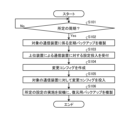
- Fig. 19 is a diagram showing an example of a flowchart of the recovery work when a failure occurs according to the third embodiment. Note that each step may be performed interchangeably, or some steps may not be performed.
- step S601 If no failure occurs (No in step S601), the communication control device 100 waits without starting processing. On the other hand, if a failure occurs (Yes in step S601), the restoration unit 135 restores the setting state of the communication device 200 using a periodic backup (step S602).
- the comparison unit 137 compares the setting state of the communication device 200 restored by the restoration unit 135 with the setting state of the communication device 200 recognized by the communication control device 100 at the time of the failure (step S603).
- the creation unit 132 creates a restoration config based on the comparison result (step S604).
- the restoration unit 135 restores the setting state of the communication device 200 using the created restoration config (step S605), and the process of recovery work at the time of the failure is completed.
- the conventional technology has a problem that it is sometimes difficult to restore the latest setting state before the occurrence of a failure.
- the copying unit 134 of the communication control device 100 copies information about the setting state of the communication device 200 at a predetermined timing.
- the restoration unit 135 of the communication control device 100 restores the setting state of the communication device 200 using at least one of the information about the setting state of the communication device 200 and a predetermined configuration.
- the copying unit 134 of the communication control device 100 copies information about the setting state of the communication device 200 after the predetermined setting (backup for restoration) as information about the setting state of the communication device 200.
- the restoration unit 135 of the communication control device 100 restores the setting state of the communication device 200 using the information about the setting state of the communication device 200 after the predetermined setting (backup for restoration).
- the creation unit 132 of the communication control device 100 creates a change config for changing the settings of the communication device 200 based on a setting change instruction from the higher-level device 300.
- the storage unit 136 of the communication control device 100 associates the change config with information (periodic backup) relating to the setting state of the communication device 200 copied at a specified timing by the copying unit 134 and stores the associated information.
- the restoration unit 135 of the communication control device 100 restores the setting state of the communication device 200 using the change config associated with the information relating to the setting state of the communication device 200 as the specified config.
- the comparison unit 137 of the communication control device 100 compares the setting state of the communication device 200 restored using information (periodic backup) relating to the setting state of the communication device 200 copied at a specified timing by the copying unit 134 with the setting state of the communication device 200 recognized by the communication control device 100 at the time when a specified failure occurred.
- the creation unit 132 of the communication control device 100 creates a restored config based on the comparison result of the comparison unit 137.
- the restoration unit 135 of the communication control device 100 restores the setting state of the communication device 200 using the restored config as the specified config.
- the communication control device 100 has the effect of making it possible to restore the latest setting state of the communication device 200 before a failure occurred.
- the processing of the communication control device 100 according to the first to third embodiments described above is processing that is completed within the communication control device 100, so that the impact on other devices related to the network (e.g., communication devices, transfer devices, etc.) can be suppressed.
- the communication control device 100 can restore the communication device 200 to the latest setting state, taking into consideration the elements (contents of the second setting) that are dynamically set by the management device (communication control device 100) of the communication device 200, which determines the setting contents according to the usage status.
- the communication control device 100 also uses one of three methods (first to third embodiments) to restore the communication device 200 to its latest configuration state. This allows for a highly flexible selection of restoration methods in consideration of the type of communication device 200, the network configuration, restrictions, etc.
- the communication control device 100 can copy a backup of the latest setting state reflecting the second setting every time the second setting is performed, and can use the backup to restore the communication device 200 to the latest setting state when a failure occurs.
- the communication control device 100 according to the second embodiment can associate and store a periodic backup of the target communication device 200 with a changed configuration every time the second setting is performed, and can use the changed configuration to restore the communication device 200 to the latest setting state when a failure occurs.
- the communication control device 100 according to the third embodiment compares the setting state of the communication device 200 restored by a periodic backup when a failure occurs with the latest setting state of the communication device 200 recognized by the communication control device 100 (the setting state after the second setting is reflected) to extract the difference. Then, the communication control device 100 can use the restored configuration created based on the difference to restore the communication device 200 to the latest setting state when a failure occurs.
- each component of each device shown in the figure is a functional concept, and does not necessarily have to be physically configured as shown in the figure.
- the specific form of distribution and integration of each device is not limited to that shown in the figure, and all or a part of it can be functionally or physically distributed and integrated in any unit according to various loads, usage conditions, etc.
- all or any part of each processing function performed by each device can be realized by a CPU and a program analyzed and executed by the CPU, or can be realized as hardware using wired logic.
- the various devices constituting the communication control device 100 can be implemented by installing the above-mentioned communication control program as package software or online software on a desired computer.
- the above-mentioned communication control program on an information processing device, it can function as various information processing devices constituting the communication control device 100.
- the information processing device referred to here includes desktop or notebook personal computers.
- the information processing device also includes mobile communication terminals such as smartphones and mobile phones, and slate terminals such as PDAs (Personal Digital Assistants).
- FIG. 20 is a diagram showing an example of a computer in which the communication control device 100 according to this embodiment is realized.
- the computer 1000 has, for example, a memory 1010 and a CPU 1020.
- the computer 1000 also has a hard disk drive interface 1030, a disk drive interface 1040, a serial port interface 1050, a video adapter 1060, and a network interface 1070. Each of these components is connected by a bus 1080.
- the memory 1010 includes a ROM (Read Only Memory) 1011 and a RAM 1012.
- the ROM 1011 stores a boot program such as a BIOS (Basic Input Output System).
- BIOS Basic Input Output System
- the hard disk drive interface 1030 is connected to a hard disk drive 1090.
- the disk drive interface 1040 is connected to a disk drive 1100.
- a removable storage medium such as a magnetic disk or optical disk is inserted into the disk drive 1100.
- the serial port interface 1050 is connected to a mouse 1110 and a keyboard 1120, for example.
- the video adapter 1060 is connected to a display 1130, for example.
- the hard disk drive 1090 stores, for example, an OS 1091, an application program 1092, a program module 1093, and program data 1094. That is, the programs that define the processes of the various devices that make up the communication control device 100 are implemented as program modules 1093 in which computer-executable code is written.
- the program modules 1093 are stored, for example, in the hard disk drive 1090.
- the program modules 1093 for executing processes similar to the functional configurations of the various devices that make up the communication control device 100 are stored in the hard disk drive 1090.
- the hard disk drive 1090 may be replaced by an SSD (Solid State Drive).
- the setting data used in the processing of the above-mentioned embodiment is stored as program data 1094, for example, in memory 1010 or hard disk drive 1090.
- the CPU 1020 reads out the program module 1093 or program data 1094 stored in memory 1010 or hard disk drive 1090 into RAM 1012 as necessary, and executes the processing of the above-mentioned embodiment.
- the program module 1093 and program data 1094 are not limited to being stored in the hard disk drive 1090, but may be stored in a removable storage medium, for example, and read by the CPU 1020 via the disk drive 1100 or the like. Alternatively, the program module 1093 and program data 1094 may be stored in another computer connected via a network (such as a LAN or a WAN (Wide Area Network)). The program module 1093 and program data 1094 may then be read by the CPU 1020 from the other computer via the network interface 1070.
- a network such as a LAN or a WAN (Wide Area Network)
- Communication control device 110 Communication unit 120 Memory unit 121 Setting input memory unit 122 Setting state memory unit 122a Periodic backup 122b Backup for restoration 123 Configuration memory unit 123a Changed configuration 123b Restored configuration 130 Control unit 131 Reception unit 132 Creation unit 133 Input unit 134 Copy unit 135 Restoration unit 136 Storage unit 137 Comparison unit 200 Communication device 200A, 200B, 200C Communication device 300 Upper device 1000 Computer 1010 Memory 1011 ROM 1012 RAM 1020 CPU 1030 Hard disk drive interface 1040 Disk drive interface 1050 Serial port interface 1060 Video adapter 1070 Network interface 1080 Bus 1090 Hard disk drive 1091 OS 1092 application program 1093 program module 1094 program data 1100 disk drive 1110 mouse 1120 keyboard 1130 display
Landscapes
- Engineering & Computer Science (AREA)
- Computer Networks & Wireless Communication (AREA)
- Signal Processing (AREA)
- Maintenance And Management Of Digital Transmission (AREA)
Priority Applications (2)
| Application Number | Priority Date | Filing Date | Title |
|---|---|---|---|
| JP2025501944A JPWO2024176315A1 (https=) | 2023-02-20 | 2023-02-20 | |
| PCT/JP2023/006064 WO2024176315A1 (ja) | 2023-02-20 | 2023-02-20 | 通信制御装置、通信制御方法、および通信制御プログラム |
Applications Claiming Priority (1)
| Application Number | Priority Date | Filing Date | Title |
|---|---|---|---|
| PCT/JP2023/006064 WO2024176315A1 (ja) | 2023-02-20 | 2023-02-20 | 通信制御装置、通信制御方法、および通信制御プログラム |
Publications (1)
| Publication Number | Publication Date |
|---|---|
| WO2024176315A1 true WO2024176315A1 (ja) | 2024-08-29 |
Family
ID=92500430
Family Applications (1)
| Application Number | Title | Priority Date | Filing Date |
|---|---|---|---|
| PCT/JP2023/006064 Ceased WO2024176315A1 (ja) | 2023-02-20 | 2023-02-20 | 通信制御装置、通信制御方法、および通信制御プログラム |
Country Status (2)
| Country | Link |
|---|---|
| JP (1) | JPWO2024176315A1 (https=) |
| WO (1) | WO2024176315A1 (https=) |
Citations (3)
| Publication number | Priority date | Publication date | Assignee | Title |
|---|---|---|---|---|
| JP2015088123A (ja) * | 2013-11-01 | 2015-05-07 | 富士通テレコムネットワークス株式会社 | 監視制御システム、監視制御装置および設定情報バックアップ方法 |
| JP2015133538A (ja) * | 2014-01-09 | 2015-07-23 | アラクサラネットワークス株式会社 | データ転送装置システム、ネットワークシステム及びネットワークシステムの構成を変更する方法 |
| JP2017098695A (ja) * | 2015-11-20 | 2017-06-01 | Necフィールディング株式会社 | 保守装置、ネットワークシステム及びその保守方法 |
-
2023
- 2023-02-20 WO PCT/JP2023/006064 patent/WO2024176315A1/ja not_active Ceased
- 2023-02-20 JP JP2025501944A patent/JPWO2024176315A1/ja active Pending
Patent Citations (3)
| Publication number | Priority date | Publication date | Assignee | Title |
|---|---|---|---|---|
| JP2015088123A (ja) * | 2013-11-01 | 2015-05-07 | 富士通テレコムネットワークス株式会社 | 監視制御システム、監視制御装置および設定情報バックアップ方法 |
| JP2015133538A (ja) * | 2014-01-09 | 2015-07-23 | アラクサラネットワークス株式会社 | データ転送装置システム、ネットワークシステム及びネットワークシステムの構成を変更する方法 |
| JP2017098695A (ja) * | 2015-11-20 | 2017-06-01 | Necフィールディング株式会社 | 保守装置、ネットワークシステム及びその保守方法 |
Also Published As
| Publication number | Publication date |
|---|---|
| JPWO2024176315A1 (https=) | 2024-08-29 |
Similar Documents
| Publication | Publication Date | Title |
|---|---|---|
| US10055300B2 (en) | Disk group based backup | |
| CN112035293B (zh) | 确定虚拟机节点所有权的方法、计算机系统和程序产品 | |
| US10810088B1 (en) | System and method of dynamic backup policy generation | |
| US7266718B2 (en) | Computer system for recovering data based on priority of the data | |
| US11144405B2 (en) | Optimizing database migration in high availability and disaster recovery computing environments | |
| JP5727020B2 (ja) | クラウドコンピューティングシステム及びそのデータ同期化方法 | |
| US9275060B1 (en) | Method and system for using high availability attributes to define data protection plans | |
| WO2018028229A1 (zh) | 数据的分片存储方法、装置及系统 | |
| US20190155936A1 (en) | Replication Catch-up Strategy | |
| US20180336231A1 (en) | Reconciler for a distributed storage system | |
| US11200207B1 (en) | Compliance namespace separation to achieve snapshot based consistency across failover-failback while maintaining data retention regulation compliance | |
| CN114691771B (zh) | 数据库主从复制方法、装置、计算机设备和存储介质 | |
| CN116233146B (zh) | 实现跨分布式存储集群的缓存一致性的技术 | |
| JP2021033856A (ja) | 情報処理装置、情報処理システム、及び情報処理プログラム | |
| JP7484447B2 (ja) | クラスターシステム上でサービスをデプロイするための方法、プログラムおよびシステム | |
| US11249859B2 (en) | System and method for intelligent backup scheduling and management | |
| WO2015043155A1 (zh) | 一种基于命令集的网元备份与恢复方法及装置 | |
| US9075809B1 (en) | Methods and systems for application cluster virtual nodes | |
| WO2024131184A1 (zh) | 一种数据库的容灾方法及相关设备 | |
| WO2024176315A1 (ja) | 通信制御装置、通信制御方法、および通信制御プログラム | |
| CN108762988B (zh) | 一种数据处理的方法以及相关设备 | |
| JP2009116474A (ja) | ストレージシステムおよびストレージサブシステム | |
| CN118331496A (zh) | 存储集群的仲裁方法、装置、计算机设备及存储介质 | |
| US12032473B2 (en) | Moving an application context to the cloud during maintenance | |
| CN117130830A (zh) | 对象的数据恢复方法、装置、计算机设备及存储介质 |
Legal Events
| Date | Code | Title | Description |
|---|---|---|---|
| 121 | Ep: the epo has been informed by wipo that ep was designated in this application |
Ref document number: 23923971 Country of ref document: EP Kind code of ref document: A1 |
|
| ENP | Entry into the national phase |
Ref document number: 2025501944 Country of ref document: JP Kind code of ref document: A |
|
| WWE | Wipo information: entry into national phase |
Ref document number: 2025501944 Country of ref document: JP |
|
| NENP | Non-entry into the national phase |
Ref country code: DE |
|
| 122 | Ep: pct application non-entry in european phase |
Ref document number: 23923971 Country of ref document: EP Kind code of ref document: A1 |