WO2024176305A1 - 感光性エレメント、レジストパターンの形成方法、及びプリント配線板の製造方法 - Google Patents
感光性エレメント、レジストパターンの形成方法、及びプリント配線板の製造方法 Download PDFInfo
- Publication number
- WO2024176305A1 WO2024176305A1 PCT/JP2023/006003 JP2023006003W WO2024176305A1 WO 2024176305 A1 WO2024176305 A1 WO 2024176305A1 JP 2023006003 W JP2023006003 W JP 2023006003W WO 2024176305 A1 WO2024176305 A1 WO 2024176305A1
- Authority
- WO
- WIPO (PCT)
- Prior art keywords
- support film
- meth
- resist pattern
- photosensitive element
- less
- Prior art date
- Legal status (The legal status is an assumption and is not a legal conclusion. Google has not performed a legal analysis and makes no representation as to the accuracy of the status listed.)
- Ceased
Links
Images
Classifications
-
- G—PHYSICS
- G03—PHOTOGRAPHY; CINEMATOGRAPHY; ANALOGOUS TECHNIQUES USING WAVES OTHER THAN OPTICAL WAVES; ELECTROGRAPHY; HOLOGRAPHY
- G03F—PHOTOMECHANICAL PRODUCTION OF TEXTURED OR PATTERNED SURFACES, e.g. FOR PRINTING, FOR PROCESSING OF SEMICONDUCTOR DEVICES; MATERIALS THEREFOR; ORIGINALS THEREFOR; APPARATUS SPECIALLY ADAPTED THEREFOR
- G03F7/00—Photomechanical, e.g. photolithographic, production of textured or patterned surfaces, e.g. printing surfaces; Materials therefor, e.g. comprising photoresists; Apparatus specially adapted therefor
- G03F7/004—Photosensitive materials
- G03F7/09—Photosensitive materials characterised by structural details, e.g. supports, auxiliary layers
-
- G—PHYSICS
- G03—PHOTOGRAPHY; CINEMATOGRAPHY; ANALOGOUS TECHNIQUES USING WAVES OTHER THAN OPTICAL WAVES; ELECTROGRAPHY; HOLOGRAPHY
- G03F—PHOTOMECHANICAL PRODUCTION OF TEXTURED OR PATTERNED SURFACES, e.g. FOR PRINTING, FOR PROCESSING OF SEMICONDUCTOR DEVICES; MATERIALS THEREFOR; ORIGINALS THEREFOR; APPARATUS SPECIALLY ADAPTED THEREFOR
- G03F7/00—Photomechanical, e.g. photolithographic, production of textured or patterned surfaces, e.g. printing surfaces; Materials therefor, e.g. comprising photoresists; Apparatus specially adapted therefor
- G03F7/004—Photosensitive materials
-
- G—PHYSICS
- G03—PHOTOGRAPHY; CINEMATOGRAPHY; ANALOGOUS TECHNIQUES USING WAVES OTHER THAN OPTICAL WAVES; ELECTROGRAPHY; HOLOGRAPHY
- G03F—PHOTOMECHANICAL PRODUCTION OF TEXTURED OR PATTERNED SURFACES, e.g. FOR PRINTING, FOR PROCESSING OF SEMICONDUCTOR DEVICES; MATERIALS THEREFOR; ORIGINALS THEREFOR; APPARATUS SPECIALLY ADAPTED THEREFOR
- G03F7/00—Photomechanical, e.g. photolithographic, production of textured or patterned surfaces, e.g. printing surfaces; Materials therefor, e.g. comprising photoresists; Apparatus specially adapted therefor
- G03F7/20—Exposure; Apparatus therefor
-
- H—ELECTRICITY
- H05—ELECTRIC TECHNIQUES NOT OTHERWISE PROVIDED FOR
- H05K—PRINTED CIRCUITS; CASINGS OR CONSTRUCTIONAL DETAILS OF ELECTRIC APPARATUS; MANUFACTURE OF ASSEMBLAGES OF ELECTRICAL COMPONENTS
- H05K3/00—Apparatus or processes for manufacturing printed circuits
- H05K3/22—Secondary treatment of printed circuits
- H05K3/28—Applying non-metallic protective coatings
Definitions
- This disclosure relates to a photosensitive element, a method for forming a resist pattern, and a method for manufacturing a printed wiring board.
- photosensitive elements that have a layer (hereinafter also referred to as a "photosensitive layer") formed using a photosensitive resin composition on a support film are widely used as resist materials for etching, plating, and other processes.
- Printed wiring boards are manufactured using photosensitive elements, for example, in the following manner. That is, first, the photosensitive layer of the photosensitive element is laminated onto a circuit-forming substrate such as a copper-clad laminate. Next, the photosensitive layer is exposed to light through a mask film or the like to form a photocured portion. At this time, the support film is peeled off before or after exposure. After that, the areas of the photosensitive layer other than the photocured portion are removed with a developer to form a resist pattern. Next, the resist pattern is used as a resist to perform an etching process or a plating process to form a conductor pattern, and finally the photocured portion of the photosensitive layer (resist pattern) is peeled off (removed).
- Support films that have a specific haze value, support films that have a specific lubricant particle size, etc. are known as support films used in photosensitive elements (see, for example, Patent Documents 1 and 2).
- the lubricants contained in the support film can scatter light during exposure, which can cause roughness (wobble) in the contours of the resist pattern.
- Lubricants with large particle sizes in particular scatter light over a large area, which can easily result in rough contours of the resist pattern.
- the present disclosure aims to provide a photosensitive element that is excellent in forming fine resist patterns, a method for forming a resist pattern using the photosensitive element, and a method for manufacturing a printed wiring board.
- One aspect of the present disclosure relates to the following photosensitive element, method for forming a resist pattern, and method for manufacturing a printed wiring board.
- a photosensitive element comprising a support film containing a lubricant and a photosensitive layer formed on a first surface of the support film, wherein the number of lubricant particles having a particle size of 0.8 ⁇ m or more contained on a second surface of the support film opposite the first surface is 80 or less per 0.0225 mm2 .
- a method for forming a resist pattern comprising: a lamination step of laminating the photosensitive element according to any one of the above [1] to [5] on a substrate in the order of a photosensitive layer and a support film; an exposure step of irradiating a predetermined portion of the photosensitive layer with active light through the support film to form a photocured portion; and a development step of removing an area of the photosensitive layer other than the photocured portion.
- a method for producing a printed wiring board comprising the step of etching or plating a substrate having a resist pattern formed by the method for forming a resist pattern according to [6] above to form a conductor pattern.
- the present disclosure provides a photosensitive element that is excellent in forming fine resist patterns, a method for forming a resist pattern using the photosensitive element, and a method for manufacturing a printed wiring board.
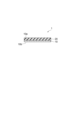
- FIG. 1 is a schematic cross-sectional view illustrating one embodiment of a photosensitive element.
- a numerical range indicated using “ ⁇ ” indicates a range that includes the numerical values before and after " ⁇ " as the minimum and maximum values, respectively.
- a numerical range “A or greater” means A and a range exceeding A.
- a numerical range “A or less” means A and a range less than A.
- the upper limit or lower limit of a numerical range in a certain stage can be arbitrarily combined with the upper limit or lower limit of a numerical range in another stage.
- the upper limit or lower limit of the numerical range may be replaced with a value shown in the examples.
- a or B means that either A or B is included, or both are included.
- the materials exemplified in this specification may be used alone or in combination of two or more.
- the content of each component in the composition means the total amount of the plurality of substances present in the composition, unless otherwise specified.
- the terms “layer” and “film” include structures that are formed over the entire surface, as well as structures that are formed on a portion of the surface, when observed in a plan view.
- process includes not only independent processes, but also processes that cannot be clearly distinguished from other processes, as long as the intended effect of the process is achieved.
- (meth)acrylate means at least one of acrylate and the corresponding methacrylate.
- EO means ethylene oxide
- an "EO-modified” compound means a compound having an oxyethylene group
- PO means propylene oxide
- a “PO-modified” compound means a compound having an oxypropylene group.
- Solid content refers to the non-volatile content excluding volatile substances such as water and solvent contained in the photosensitive resin composition, and refers to the components that remain without volatilization when the resin composition is dried, and also includes liquid, starch syrup, and wax-like components at room temperature around 25°C.
- the photosensitive element comprises a support film containing a lubricant and a photosensitive layer formed on a first surface of the support film, and the number of lubricant particles having a particle size of 0.8 ⁇ m or more contained on a second surface of the support film opposite the first surface is 80 or less per 0.0225 mm2 .
- FIG. 1 is a schematic cross-sectional view showing one embodiment of a photosensitive element.
- the photosensitive element 1 according to this embodiment comprises a support film 10 and a photosensitive layer 20.
- the photosensitive layer 20 is provided on a first surface 10a of the support film 10.
- the support film 10 has a second surface 10b on the side opposite the first surface 10a.
- a lubricant is added to the support film 10, and the support film contains lubricant on both sides.
- the amount of lubricant with a particle size of 0.8 ⁇ m or more contained in the second side 10b of the support film that does not come into contact with the photosensitive layer can be reduced.
- the lubricant is not particularly limited as long as it does not inhibit the light transmittance of the support film and is a component used in the production of polyester films, and may be an inorganic or organic lubricant.
- inorganic lubricants include inorganic particles containing inorganic components such as silica, calcium carbonate, alumina, aluminum silicate, mica, clay, talc, wollastonite, kaolin, zinc oxide, barium sulfate, calcium phosphate, calcium, magnesium, barium, zinc, and manganese.
- organic lubricants include crosslinked polymers such as polystyrene, polymethyl methacrylate, polyimide, polyolefin, modified polyolefin, and silicone resin.
- the number of lubricants having a particle size of 0.8 ⁇ m or more contained on the second surface 10b of the support film may be 75 or less, 70 or less, 65 or less, or 60 or less per 0.0225 mm2 , from the viewpoint of further reducing the roughness of the contour of the resist pattern.
- the number of lubricants according to this embodiment is the average number per unit area of the support film of 0.0225 mm2 (0.150 mm x 0.150 mm). Note that lubricants having a particle size of 0.8 ⁇ m or more also include agglomerates of lubricants having a particle size of 0.8 ⁇ m or less.
- the support film according to the present embodiment may contain a lubricant having a particle size of less than 0.8 ⁇ m.
- the total number of lubricants contained in the second surface 10b (the number of lubricants having a particle size of 0.8 ⁇ m or more and the number of lubricants having a particle size of less than 0.8 ⁇ m) may be 2500 or less, 2200 or less, or 2000 or less, or may be 10 to 1800, 20 to 1600, 30 to 1400, or 40 to 1200 per 0.0225 mm2, from the viewpoint of further improving the slipperiness of the support film.
- the value obtained by dividing the number of lubricants having a particle size of 0.8 ⁇ m or more contained on the second surface 10b by the total number of lubricants contained on the second surface 10b may be 0.20 or less, 0.18 or less, 0.16 or less, 0.14 or less, or 0.12 or less.
- the number of lubricants with a particle size of 0.8 ⁇ m or more contained on the second surface 10b should be less than the number of lubricants with a particle size of 0.8 ⁇ m or more contained on the first surface 10a.
- the number of lubricants with a particle size of 0.8 ⁇ m or more contained on the first surface 10a is not particularly limited, but may be 10 to 400, 20 to 300, or 25 to 200.
- the support film according to this embodiment does not contain a lubricant having a particle size exceeding 3.0 ⁇ m.
- the upper limit of the size of the lubricant having a particle size of 0.8 ⁇ m or more contained on the first surface 10a and the second surface 10b may be 3.0 ⁇ m or less, 2.5 ⁇ m or less, 2.0 ⁇ m or less, or 1.5 ⁇ m or less.
- the size and number of lubricants contained in the support film can be measured using a confocal microscope.
- a hybrid laser microscope such as the OPTELICS HYBRID (product name, Lasertec Corporation) can be used as a confocal microscope.
- Observation with a confocal microscope is a measurement method in which the light reflected from the object being observed is detected by the light receiving unit. When the object being observed is in focus (in focus), strong reflected light is obtained, and the light intensity is observed to be strong (often observed as white). When the object being observed is not in focus (out of focus), the light intensity is observed to be weak (often observed as black).
- the numerical aperture (Na) of the objective lens used for observation may be 0.8 from the viewpoint of facilitating accurate and efficient observation.
- the numerical aperture is 0.8, compared to when the numerical aperture exceeds 0.8, it is easier to prevent the lens from coming into contact with the object being observed and causing damage to the microscope, and it is easier to prevent the magnification from becoming excessively high, so it is easier to prevent a decrease in the amount of light in the field of view and a decrease in the detection level.
- the numerical aperture (Na) is 0.8, compared to when the numerical aperture is less than 0.8, it is easier to perform accurate measurements because it is easier to prevent a decrease in resolution and less errors in detecting the size of the object being observed.
- the measurement magnification may be 50x
- the digital zoom on the software may be 2x.
- the measurement magnification is 50x
- the decrease in the amount of light in the field of view is suppressed and the decrease in the detection level is more likely to be suppressed compared to when the measurement magnification exceeds 50x, and it is easier to accurately measure the size of the defect compared to when the measurement magnification is less than 50x.
- the digital zoom is 2x, the decrease in the amount of light in the field of view is suppressed and the decrease in the detection level is more likely to be suppressed compared to when the digital zoom is 1x (not set).
- the constituent materials of the support film include, for example, polyesters such as polyethylene terephthalate (PET), polybutylene terephthalate (PBT), and polyethylene-2,6-naphthalate (PEN); and polyolefins such as polypropylene and polyethylene.
- PET polyethylene terephthalate
- PBT polybutylene terephthalate
- PEN polyethylene-2,6-naphthalate
- polyolefins such as polypropylene and polyethylene.
- the support film may have a polyester film or a PET film.
- the support film is a light-transmitting film, and may be a transparent resin film.
- the support film may be a multilayer film having a lubricant layer.
- the support film may have a polyester film and a lubricant layer disposed on at least one side of the polyester film.
- the lubricant layer may be formed using a known method such as a roll coater, flow coater, spray coater, curtain flow coater, dip coater, or slit die coater. It is preferable to use a biaxially oriented polyester film having a two-layer or three-layer structure as the support film, and it is more preferable to use a biaxially oriented PET film having a three-layer structure.
- the haze value of the support film may be 0.01% or more, 0.05% or more, 0.1% or more, 0.3% or more, 0.5% or more, or 0.7% or more, from the viewpoint of easily improving operability when laminating a photosensitive element to a substrate and operability when forming a photosensitive layer on the support film.
- the haze value of the support film may be 3.0% or less, 1.5% or less, 0.8% or less, or 0.7% or less, from the viewpoint of easily obtaining good sensitivity and resolution. From these viewpoints, the haze value of the support film may be 0.01 to 3.0%, 0.01 to 1.5%, 0.01 to 0.8%, or 0.01 to 0.7%.
- “Haze value” means the degree of cloudiness.
- the haze value of the support film can be measured using a commercially available haze meter (turbidity meter, for example, the product name "NDH-5000" manufactured by Nippon Denshoku Industries Co., Ltd.) in accordance with the method specified in JIS K 7105.
- a commercially available haze meter for example, the product name "NDH-5000" manufactured by Nippon Denshoku Industries Co., Ltd.
- the light transmittance of the support film may be in the following ranges.
- the light transmittance of the support film may be 80% or more, 85% or more, 87% or more, 88% or more, or 89% or more.
- the light transmittance of the support film may be 95% or less, 93% or less, 90% or less, or 89% or less. From these perspectives, the light transmittance of the support film may be 80 to 95%.
- the light transmittance of the support film can be measured using a commercially available haze meter (e.g., the product name "NDH-5000" manufactured by Nippon Denshoku Industries Co., Ltd.).
- the thickness of the support film or the polyester film may be within the following ranges. From the viewpoint of preventing the support film from tearing when peeling it off from the photosensitive element, the thickness may be 5 ⁇ m or more, 10 ⁇ m or more, 11 ⁇ m or more, 12 ⁇ m or more, 15 ⁇ m or more, or 16 ⁇ m or more. From the viewpoint of easily ensuring the focus tolerance during exposure, the thickness may be 200 ⁇ m or less, 100 ⁇ m or less, 50 ⁇ m or less, 40 ⁇ m or less, 30 ⁇ m or less, 20 ⁇ m or less, or 18 ⁇ m or less. From these viewpoints, the thickness may be 5 to 200 ⁇ m, 11 to 100 ⁇ m, 12 to 50 ⁇ m, or 15 to 40 ⁇ m.
- the photosensitive layer 20 is a layer formed from a photosensitive resin composition.
- the photosensitive resin composition used to form the photosensitive layer 20 may contain (A) a binder polymer (component (A)), (B) a photopolymerizable compound (component (B)), and (C) a photopolymerization initiator (component (C)).
- Constituent materials for the binder polymer include, for example, acrylic resins, styrene resins, epoxy resins, amide resins, amide epoxy resins, alkyd resins, and phenolic resins.
- Component (A) may contain acrylic resins from the viewpoint of facilitating good alkaline developability.
- binder polymers used in conventional photosensitive resin compositions can be used.
- Component (A) can be produced, for example, by radical polymerization of a polymerizable monomer.
- polymerizable monomers include styrene or styrene derivatives, acrylamides such as diacetone acrylamide, acrylonitrile, vinyl alcohol ethers such as vinyl n-butyl ether, (meth)acrylic acid alkyl esters, (meth)acrylic acid benzyl esters, hydroxyalkyl (meth)acrylates, (meth)acrylic acid tetrahydrofurfuryl esters, (meth)acrylic acid dimethylaminoethyl esters, (meth)acrylic acid diethylaminoethyl esters, and (meth)acrylic acid glycidyl esters.
- Examples of the polymerizable monomer include ter, 2,2,2-trifluoroethyl (meth)acrylate, 2,2,3,3-tetrafluoropropyl (meth)acrylate, (meth)acrylic acid, ⁇ -bromoacrylic acid, ⁇ -chloroacrylic acid, ⁇ -furyl (meth)acrylic acid, ⁇ -styryl (meth)acrylic acid, maleic acid, maleic anhydride, maleic acid monoesters such as monomethyl maleate, monoethyl maleate, and monoisopropyl maleate, fumaric acid, cinnamic acid, ⁇ -cyanocinnamic acid, itaconic acid, crotonic acid, and propiolic acid.
- the polymerizable monomers can be used alone or in combination of two or more.
- component (A) may have a carboxy group.
- Component (A) having a carboxy group can be produced, for example, by radical polymerization of a polymerizable monomer having a carboxy group with another polymerizable monomer.
- the polymerizable monomer having a carboxy group may be (meth)acrylic acid or methacrylic acid.
- the content of structural units based on polymerizable monomers having carboxy groups may be 10 to 50 mass%, 15 to 40 mass%, or 20 to 35 mass% based on the total amount of component (A).
- the carboxy group content is 10 mass% or more, alkaline developability tends to improve, and when it is 50 mass% or less, alkaline resistance tends to be excellent.
- component (A) may have a structural unit based on styrene or a styrene derivative.
- Styrene derivatives are polymerizable compounds in which hydrogen atoms at the ⁇ -position or aromatic ring of styrene, such as vinyltoluene and ⁇ -methylstyrene, are substituted.
- the content of structural units based on styrene or a styrene derivative in component (A) may be 10 to 60 mass%, 15 to 50 mass%, 35 to 50 mass%, or 40 to 50 mass%. If this content is 10 mass% or more, adhesion tends to improve, and if it is 60 mass% or less, it is possible to prevent the peeled pieces from becoming large during development, and the time required for peeling tends to be suppressed from increasing.
- component (A) may have a structural unit based on benzyl (meth)acrylic acid ester.
- the content of structural units derived from benzyl (meth)acrylic acid ester in component (A) may be 10 to 40 mass%, 15 to 35 mass%, or 20 to 30 mass%.
- component (A) may have a structural unit based on an alkyl (meth)acrylate.
- alkyl (meth)acrylate include methyl (meth)acrylate, ethyl (meth)acrylate, propyl (meth)acrylate, butyl (meth)acrylate, pentyl (meth)acrylate, hexyl (meth)acrylate, heptyl (meth)acrylate, octyl (meth)acrylate, 2-ethylhexyl (meth)acrylate, nonyl (meth)acrylate, decyl (meth)acrylate, undecyl (meth)acrylate, and dodecyl (meth)acrylate.
- component (A) may have a structural unit based on a hydroxyalkyl (meth)acrylate.
- the hydroxyalkyl (meth)acrylate may be, for example, hydroxymethyl (meth)acrylate, hydroxyethyl (meth)acrylate, hydroxypropyl (meth)acrylate, hydroxybutyl (meth)acrylate, hydroxypentyl (meth)acrylate, hydroxyhexyl (meth)acrylate, etc.
- the number of carbon atoms in the alkyl portion of the hydroxyalkyl (meth)acrylate unit is 3 or more, it may have a branched structure.
- the weight average molecular weight (Mw) of the (A) component may be 10,000 or more, 15,000 or more, 20,000 or more, or 25,000 or more from the viewpoint of excellent adhesion of the resist pattern, and may be 100,000 or less, 80,000 or less, 70,000 or less, or 60,000 or less from the viewpoint of suitable development.
- the dispersity (Mw/Mn) of the (A) component may be, for example, 1.0 or more, 1.5 or more, or 1.8 or more, and may be 3.0 or less, 2.5 or less, or 2.0 or less from the viewpoint of further improving adhesion and resolution.
- the weight average molecular weight (Mw) and dispersity (Mw/Mn) in this specification can be obtained by measuring by gel permeation chromatography (GPC) and converting using a calibration curve of standard polystyrene.
- the acid value of component (A) may be 60 mgKOH/g or more, 80 mgKOH/g or more, 90 mgKOH/g or more, or 100 mgKOH/g or more from the viewpoint of suitable development, and may be 250 mgKOH/g or less, 230 mgKOH/g or less, 210 mgKOH/g or less, or 200 mgKOH/g or less from the viewpoint of improving the adhesion (resistance to developing solution) of the resist pattern.
- the acid value of component (A) can be adjusted by the content of the structural units constituting component (A) (for example, structural units derived from (meth)acrylic acid).
- the (A) component may be used alone or in combination of two or more.
- examples of the (A) component include two or more binder polymers made of different polymerizable monomers, two or more binder polymers with different Mw, and two or more binder polymers with different dispersities.
- the content of component (A) may be 30 to 80 parts by mass, 40 to 75 parts by mass, 50 to 70 parts by mass, or 50 to 60 parts by mass, relative to 100 parts by mass of the total amount of component (A) and component (B) described below. When the content of component (A) is within this range, the strength of the photocured portion of the photosensitive layer is improved.
- the photopolymerizable compound (B) a compound having at least one ethylenically unsaturated bond in the molecule can be used.
- the (B) component one type can be used alone or two or more types can be used in combination.
- the ethylenically unsaturated bond contained in component (B) is not particularly limited as long as it is photopolymerizable.
- Examples of ethylenically unsaturated bonds include ⁇ , ⁇ -unsaturated carbonyl groups such as (meth)acryloyl groups.
- photopolymerizable compounds having ⁇ , ⁇ -unsaturated carbonyl groups include ⁇ , ⁇ -unsaturated carboxylic acid esters of polyhydric alcohols, bisphenol-type (meth)acrylates, ⁇ , ⁇ -unsaturated carboxylic acid adducts of glycidyl group-containing compounds, (meth)acrylates having urethane bonds, nonylphenoxypolyethyleneoxyacrylate, (meth)acrylates having a phthalic acid skeleton, and (meth)acrylic acid alkyl esters.
- Examples of ⁇ , ⁇ -unsaturated carboxylic acid esters of polyhydric alcohols include polyethylene glycol di(meth)acrylate having 2 to 14 ethylene groups, polypropylene glycol di(meth)acrylate having 2 to 14 propylene groups, polyethylene-polypropylene glycol di(meth)acrylate having 2 to 14 ethylene groups and 2 to 14 propylene groups, trimethylolpropane di(meth)acrylate, trimethylolpropane tri(meth)acrylate, EO-modified trimethylolpropane tri(meth)acrylate, PO-modified trimethylolpropane tri(meth)acrylate, EO,PO-modified trimethylolpropane tri(meth)acrylate, tetramethylolmethane tri(meth)acrylate, tetramethylolmethane tetra(meth)acrylate, and (meth)acrylate compounds having a skeleton derived from dipentaerythritol
- the (B) component may contain a polyalkylene glycol di(meth)acrylate from the viewpoint of improving the flexibility of the resist pattern.
- the polyalkylene glycol di(meth)acrylate may have at least one of an EO group and a PO group, or may have both an EO group and a PO group.
- the EO group and the PO group may each be present in a continuous block form or may be present randomly.
- the PO group may be either an oxy-n-propylene group or an oxyisopropylene group.
- the secondary carbon of the propylene group may be bonded to an oxygen atom, and the primary carbon may be bonded to an oxygen atom.
- polyalkylene glycol di(meth)acrylate products include, for example, FA-023M (manufactured by Resonac Corporation), FA-024M (manufactured by Resonac Corporation), and NK Ester HEMA-9P (manufactured by Shin-Nakamura Chemical Co., Ltd.).
- the (B) component may contain a (meth)acrylate having a urethane bond in order to improve the flexibility of the resist pattern.
- (meth)acrylates having a urethane bond include an addition reaction product of a (meth)acrylic monomer having an OH group at the ⁇ -position with a diisocyanate (isophorone diisocyanate, 2,6-toluene diisocyanate, 2,4-toluene diisocyanate, 1,6-hexamethylene diisocyanate, etc.), tris((meth)acryloxytetraethylene glycol isocyanate)hexamethylene isocyanurate, EO-modified urethane di(meth)acrylate, and EO,PO-modified urethane di(meth)acrylate.
- EO-modified urethane di(meth)acrylates include, for example, "UA-11” and “UA-21EB” (manufactured by Shin-Nakamura Chemical Co., Ltd.).
- EO, PO-modified urethane di(meth)acrylates include, for example, "UA-13” (manufactured by Shin-Nakamura Chemical Co., Ltd.).
- the (B) component may contain a (meth)acrylate compound having a skeleton derived from dipentaerythritol or pentaerythritol, from the viewpoint of facilitating the formation of a thick resist pattern and improving resolution and adhesion in a well-balanced manner.
- the (meth)acrylate compound having a skeleton derived from dipentaerythritol or pentaerythritol preferably has four or more (meth)acryloyl groups, and may be dipentaerythritol penta(meth)acrylate or dipentaerythritol hexa(meth)acrylate.
- the component (B) may contain a polyfunctional (meth)acrylate compound obtained by reacting a polyhydric alcohol with an ⁇ , ⁇ -unsaturated carboxylic acid.
- the polyfunctional (meth)acrylate compound may have at least one of an EO group and a PO group, or may have both an EO group and a PO group.
- dipentaerythritol (meth)acrylate having an EO group, etc. can be used.
- An example of a commercially available product of dipentaerythritol (meth)acrylate having an EO group is DPEA-12 (manufactured by Nippon Kayaku Co., Ltd.).
- component (B) may contain a bisphenol type (meth)acrylate, and among the bisphenol type (meth)acrylates, it may contain a bisphenol A type (meth)acrylate.
- bisphenol A type (meth)acrylates include 2,2-bis(4-((meth)acryloxypolyethoxy)phenyl)propane, 2,2-bis(4-((meth)acryloxypolypropoxy)phenyl)propane, 2,2-bis(4-((meth)acryloxypolybutoxy)phenyl)propane, and 2,2-bis(4-((meth)acryloxypolyethoxypolypropoxy)phenyl)propane.
- nonylphenoxy polyethyleneoxyacrylates include nonylphenoxytetraethyleneoxyacrylate, nonylphenoxypentaethyleneoxyacrylate, nonylphenoxyhexaethyleneoxyacrylate, nonylphenoxyheptaethyleneoxyacrylate, nonylphenoxyoctaethyleneoxyacrylate, nonylphenoxynonaethyleneoxyacrylate, nonylphenoxydecaethyleneoxyacrylate, and nonylphenoxyundecaethyleneoxyacrylate.
- Examples of (meth)acrylates having a phthalic acid skeleton include ⁇ -chloro- ⁇ -hydroxypropyl- ⁇ '-(meth)acryloyloxyethyl-o-phthalate, ⁇ -hydroxyethyl- ⁇ '-(meth)acryloyloxyethyl-o-phthalate, and ⁇ -hydroxypropyl- ⁇ '-(meth)acryloyloxyethyl-o-phthalate.
- ⁇ -chloro- ⁇ -hydroxypropyl- ⁇ '-methacryloyloxyethyl-o-phthalate is commercially available as FA-MECH (manufactured by Resonac Corporation).
- the photopolymerization initiator (C) is not particularly limited as long as it can polymerize component (B), and can be appropriately selected from commonly used photopolymerization initiators.
- Component (C) can be used alone or in combination of two or more types.
- component (C) examples include imidazole compounds, aromatic ketones (excluding compounds that fall under the category of benzophenone compounds), quinone compounds, benzoin compounds, acridine compounds, N-phenylglycine compounds, and benzyl derivatives.
- imidazole compounds include 2-(o-chlorophenyl)-4,5-diphenylbiimidazole, 2,2',5-tris-(o-chlorophenyl)-4-(3,4-dimethoxyphenyl)-4',5'-diphenylbiimidazole, 2,4-bis-(o-chlorophenyl)-5-(3,4-dimethoxyphenyl)-diphenylbiimidazole, 2,4,5-tris-(o-chlorophenyl)-diphenylbiimidazole, 2-(o-chlorophenyl)-bis-4,5-(3,4-dimethoxyphenyl)-biimidazole, 2,2'-bi These include 2,2'-bis-(2,3-difluoromethylphenyl)-4,4',5,5'-tetrakis-(3-methoxyphenyl)-biimidazole, 2,2'-bis-
- N-phenylglycine compounds include, for example, N-phenylglycine, N-methyl-N-phenylglycine, and N-ethyl-N-phenylglycine.
- Aromatic ketones include, for example, 2-benzyl-2-dimethylamino-1-(4-morpholinophenyl)-butanone-1, 2-methyl-1-[4-(methylthio)phenyl]-2-morpholino-propanone-1.
- Quinone compounds include, for example, alkyl anthraquinones.
- Benzoin compounds include, for example, benzoin, alkyl benzoin, and benzoin ether compounds (such as benzoin alkyl ethers).
- Benzyl derivatives include, for example, benzyl dimethyl ketal.
- the content of component (C) may be 0.1 to 10 parts by mass, 1 to 5 parts by mass, or 2 to 4.5 parts by mass, based on 100 parts by mass of the total amount of components (A) and (B).
- the content of component (C) is 0.1 parts by mass or more, the photosensitivity, resolution, and adhesion tend to be improved, and when it is 10 parts by mass or less, the resist pattern formability tends to be better.
- the photosensitive resin composition according to this embodiment may further contain a photosensitizer as component (D).
- a photosensitizer as component (D).
- component (D) By containing component (D), it is possible to effectively utilize the absorption wavelength of the actinic radiation used for exposure.
- the component (D) may be used alone or in combination of two or more types.
- Examples of the (D) component include pyrazoline compounds, benzophenone compounds, anthracene compounds, coumarin compounds, xanthone compounds, thioxanthone compounds, oxazole compounds, benzoxazole compounds, thiazole compounds, benzothiazole compounds, triazole compounds, stilbene compounds, triazine compounds, thiophene compounds, naphthalimide compounds, triarylamine compounds, and aminoacridine compounds.
- the sensitizer may contain at least one selected from the group consisting of pyrazoline compounds, benzophenone compounds, anthracene compounds, and coumarin compounds, from the viewpoints of easily suppressing the occurrence of defects in the resist, easily shortening the minimum development time, and easily obtaining good sensitivity, resolution, and adhesion.
- pyrazoline compounds include 1-(4-methoxyphenyl)-3-styryl-5-phenyl-pyrazoline, 1-phenyl-3-(4-methoxystyryl)-5-(4-methoxyphenyl)-pyrazoline, 1,5-bis-(4-methoxyphenyl)-3-(4-methoxystyryl)-pyrazoline, 1-(4-isopropylphenyl)-3-styryl-5-phenyl-pyrazoline, 1-phenyl-3-(4-isopropylstyryl)-5-(4-isopropylphenyl)-pyrazoline, 1,5-bis-(4-isopropylphenyl)-3-(4- isopropylstyryl)-pyrazoline, 1-(4-methoxyphenyl)-3-(4-tert-butyl-styryl)-5-(4-tert-butyl-phenyl)-pyrazoline, 1-(4
- benzophenone compounds include benzophenone; N,N,N',N'-tetraalkyl-4,4'-diaminobenzophenones such as N,N,N',N'-tetramethyl-4,4'-diaminobenzophenone (also known as Michler's ketone) and N,N,N',N'-tetraethyl-4,4'-diaminobenzophenone; and dialkylaminobenzophenones such as 4-methoxy-4'-dimethylaminobenzophenone.
- the sensitizer may contain N,N,N',N'-tetraalkyl-4,4'-diaminobenzophenone from the viewpoint of easily obtaining good resolution and adhesion.
- anthracene compounds include 9,10-dimethoxyanthracene, 9,10-diethoxyanthracene, 9,10-dipropoxyanthracene, 9,10-dibutoxyanthracene, and 9,10-dipentoxyanthracene.
- the sensitizer may contain 9,10-dialkoxyanthracene, from the viewpoint of easily obtaining good sensitivity.
- Examples of coumarin compounds include 7-amino-4-methylcoumarin, 7-dimethylamino-4-methylcoumarin, 7-diethylamino-4-methylcoumarin, 7-methylamino-4-methylcoumarin, 7-ethylamino-4-methylcoumarin, 7-aminocyclopenta[c]coumarin, 7-dimethylaminocyclopenta[c]coumarin, 7-diethylaminocyclopenta[c]coumarin, 4,6-dimethyl-7-dimethylaminocoumarin, and 4,6-dimethyl-7-ethylaminocoumarin.
- the sensitizer may contain 2,3,6,7-tetrahydro-9-methyl-1H,5H,11H-[1]benzopyrano[6,7,8-ij]quinolizin-11-one from the viewpoint of easily obtaining good sensitivity.
- the content of component (D) may be 0.01 to 5 parts by mass, 0.01 to 1 part by mass, or 0.01 to 0.2 parts by mass per 100 parts by mass of the total amount of components (A) and (B).
- the photosensitive resin composition according to this embodiment may further contain additives such as dyes, photocoloring agents, thermal color-developing inhibitors, plasticizers, pigments, fillers, defoamers, flame retardants, adhesion agents, leveling agents, peeling promoters, antioxidants, fragrances, imaging agents, thermal crosslinking agents, and polymerization inhibitors, as necessary.
- additives such as dyes, photocoloring agents, thermal color-developing inhibitors, plasticizers, pigments, fillers, defoamers, flame retardants, adhesion agents, leveling agents, peeling promoters, antioxidants, fragrances, imaging agents, thermal crosslinking agents, and polymerization inhibitors, as necessary.
- additives such as dyes, photocoloring agents, thermal color-developing inhibitors, plasticizers, pigments, fillers, defoamers, flame retardants, adhesion agents, leveling agents, peeling promoters, antioxidants, fragrances, imaging agents, thermal crosslinking agents, and polymerization inhibitors, as
- Dyes include, for example, malachite green, Victoria Pure Blue, brilliant green, and methyl violet.
- Photochromic agents include, for example, tribromophenyl sulfone, leuco crystal violet, diphenylamine, benzylamine, triphenylamine, diethylaniline, and o-chloroaniline.
- Plasticizers include, for example, p-toluenesulfonamide.
- the photosensitive resin composition can be dissolved as necessary in a solvent such as methanol, ethanol, acetone, methyl ethyl ketone, methyl cellosolve, ethyl cellosolve, toluene, N,N-dimethylformamide, propylene glycol monomethyl ether, or a mixture of these solvents to prepare a solution with a solids content of approximately 30 to 60% by mass.
- a solvent such as methanol, ethanol, acetone, methyl ethyl ketone, methyl cellosolve, ethyl cellosolve, toluene, N,N-dimethylformamide, propylene glycol monomethyl ether, or a mixture of these solvents to prepare a solution with a solids content of approximately 30 to 60% by mass.
- the thickness of the photosensitive layer 20 may be 1 to 200 ⁇ m, 5 to 100 ⁇ m, 10 to 50 ⁇ m, or 10 to 30 ⁇ m.
- the photosensitive element according to this embodiment may be provided with a protective film (not shown) on the side of the photosensitive layer 20 opposite the support film 10 (the second surface 10b side).
- a protective film it is preferable to use a film in which the adhesive strength between the photosensitive layer 20 and the protective film is smaller than the adhesive strength between the photosensitive layer 20 and the support film 10.
- a polyolefin film such as polyethylene or polypropylene can be used.
- the protective film may be a polyethylene film.
- the photosensitive element of this embodiment may include an intermediate layer (not shown) between the support film and the photosensitive layer.
- the adhesive strength between the support film and the intermediate layer may be smaller than the adhesive strength between the intermediate layer and the photosensitive layer.
- the intermediate layer may be water-soluble or soluble in a developer.
- the intermediate layer is a layer formed using a resin composition for forming an intermediate layer, which will be described later.
- the resin composition for forming the intermediate layer may contain a water-soluble resin.
- a water-soluble resin By containing a water-soluble resin, the solubility of the intermediate layer to be formed tends to be improved. In addition, the layer separation between the intermediate layer to be formed and the photosensitive layer tends to be easily maintained for a long period of time, so that the stability tends to be improved.
- water-soluble resins include polyvinyl alcohol and polyvinylpyrrolidone. From the viewpoint of having a low oxygen permeability coefficient and being able to further suppress the deactivation of radicals generated by the active light used for exposure, the resin composition for forming the intermediate layer may contain polyvinyl alcohol.
- Polyvinyl alcohol can be obtained, for example, by saponifying polyvinyl acetate obtained by polymerizing vinyl acetate.
- the saponification degree of the polyvinyl alcohol used in this embodiment may be 50 mol% or more, 70 mol% or more, or 80 mol% or more.
- the gas barrier property of the intermediate layer can be further improved, and the resolution of the formed resist pattern tends to be further improved.
- the "saponification degree” refers to a value measured in accordance with JIS K 6726 (1994) (Testing method for polyvinyl alcohol) specified by the Japanese Industrial Standards.
- the upper limit of the saponification degree may be 100 mol%.
- the average degree of polymerization of polyvinyl alcohol may be 300 to 3500, 300 to 2500, or 300 to 1000.
- the average degree of polymerization of polyvinylpyrrolidone may be 10,000 to 100,000 or 10,000 to 50,000.
- the polyvinyl alcohol may be a combination of two or more types of polyvinyl alcohol with different saponification degrees, viscosities, polymerization degrees, modified species, etc.
- the resin composition for forming the intermediate layer may contain a resin that is soluble in the developer.
- the resin that is soluble in the developer may contain, for example, the component (A) used in the photosensitive resin composition, or may contain the component (B).
- the resin composition for forming the intermediate layer may contain at least one solvent as necessary to improve the handleability of the resin composition and to adjust the viscosity and storage stability.
- the solvent include water and organic solvents.
- the organic solvent include methanol, acetone, toluene, or a mixture of these solvents. Methanol may be included from the viewpoint of improving the efficiency of drying when forming the intermediate layer.
- the content of methanol may be 1 to 100 parts by mass, 10 to 80 parts by mass, or 20 to 60 parts by mass per 100 parts by mass of water from the viewpoint of solubility in the water-soluble resin.
- the content of the water-soluble resin may be 1 to 50 parts by mass, 5 to 40 parts by mass, or 10 to 30 parts by mass per 100 parts by mass of water.
- the resin composition for forming the intermediate layer may contain known additives such as surfactants, plasticizers, and leveling agents.
- leveling agents include silicone-based leveling agents.
- examples of commercially available silicone-based leveling agents include Polyflow KL-401 (manufactured by Kyoeisha Chemical Co., Ltd.).
- the content of the leveling agent may be 0.01 to 2.0 parts by mass, 0.03 to 1.5 parts by mass, or 0.05 to 1.0 parts by mass per 100 parts by mass of the resin composition for forming the intermediate layer, from the viewpoint of ease of forming the intermediate layer.
- the surfactant may contain a silicone-based surfactant or a fluorine-based surfactant from the viewpoint of improving the peelability from the support film. These surfactants may be used alone or in combination of two or more. When a surfactant is contained, the content of the surfactant may be 0.01 to 1.0 parts by mass, 0.05 to 0.5 parts by mass, or 0.1 to 0.3 parts by mass per 100 parts by mass of the resin composition for forming the intermediate layer from the viewpoint of ease of forming the intermediate layer.
- the plasticizer may contain, for example, a polyhydric alcohol compound from the viewpoint of improving the ease of forming the intermediate layer.
- the plasticizer include glycerins such as glycerin, diglycerin, and triglycerin; (poly)alkylene glycols such as ethylene glycol, diethylene glycol, triethylene glycol, tetraethylene glycol, polyethylene glycol, propylene glycol, dipropylene glycol, and polypropylene glycol; and trimethylolpropane. These plasticizers may be used alone or in combination of two or more.
- the thickness of the intermediate layer is not particularly limited, but from the viewpoint of developability, it may be 12 ⁇ m or less, 10 ⁇ m or less, or 8 ⁇ m or less. In addition, from the viewpoint of ease of forming the intermediate layer and resolution, the thickness of the intermediate layer may be 1.0 ⁇ m or more, 1.5 ⁇ m or more, or 2.0 ⁇ m or more.
- the method for forming a resist pattern includes a lamination process in which the photosensitive layer 20 of the photosensitive element 1 is laminated on a substrate in the order of the photosensitive layer and the support film; an exposure process in which actinic rays are irradiated through the support film 10 to a predetermined portion of the photosensitive layer 20 to form a photocured portion; and a development process in which areas of the photosensitive layer 20 other than the photocured portion are removed.
- the photosensitive layer and support film of the photosensitive element are laminated on the substrate in this order.
- the photosensitive layer 20 can be laminated on the substrate by, for example, removing a protective film present on the photosensitive layer 20, heating the photosensitive layer 20 to about 70 to 130°C, and then pressing the layer onto the substrate at a pressure of about 0.1 to 1 MPa.
- lamination under reduced pressure is also possible.
- the surface of the substrate on which the photosensitive layer 20 is laminated is usually a metal surface, but is not particularly limited. In order to further improve lamination, the substrate may be preheated.
- active light rays are irradiated to a predetermined portion of the photosensitive layer 20 through the support film 10 to form a photocured portion in the photosensitive layer 20.
- exposure methods include a method of irradiating active light rays in an image-wise manner through a negative or positive mask pattern called artwork (mask exposure method), a method of irradiating active light rays in an image-wise manner by a projection exposure method, and a method of irradiating active light rays in an image-wise manner by a direct imaging exposure method such as an LDI (Laser Direct Imaging) exposure method or a DLP (Digital Light Processing) exposure method.
- LDI Laser Direct Imaging
- DLP Digital Light Processing
- the light source for the actinic rays can be any known light source, including, for example, carbon arc lamps, mercury vapor arc lamps, high pressure mercury lamps, xenon lamps, gas lasers such as argon lasers, solid-state lasers such as YAG lasers, and semiconductor lasers that effectively emit ultraviolet light and visible light.
- PEB post-exposure bake
- the temperature for PEB may be 50 to 100°C.
- a hot plate, a box dryer, a heating roll, etc. may be used as the heater.
- the photosensitive layer other than the photocured portion is removed from the substrate, forming a resist pattern on the substrate.
- the support film 10 is peeled off and removed from the photosensitive layer 20, and then the areas of the photosensitive layer other than the photocured portions are removed.
- the unexposed portions (uncured portions) of the photosensitive layer 20 are removed and developed by, for example, wet development using a developer such as an alkaline aqueous solution, a water-based developer, or an organic solvent, or dry development, to produce a resist pattern.
- Examples of the alkaline aqueous solution include a 0.1 to 5% by mass sodium carbonate solution, a 0.1 to 5% by mass potassium carbonate solution, and a 0.1 to 5% by mass sodium hydroxide solution.
- the pH of the alkaline aqueous solution is preferably in the range of 9 to 11.
- the temperature of the alkaline aqueous solution is adjusted according to the developability of the photosensitive layer 20.
- the alkaline aqueous solution may also contain a surfactant, an antifoaming agent, an organic solvent, and the like.
- Examples of the development method include a dipping method, a spraying method, a brushing method, and a scrubbing method.
- the resist pattern may be further hardened by heating at about 60 to 250° C. or exposing to about 0.2 to 10 J/cm 2 , if necessary.
- the method for producing a printed wiring board according to the present embodiment includes a step of forming a conductor pattern by etching or plating a substrate having a resist pattern formed by the above-described method for forming a resist pattern.
- the etching or plating of the substrate can be performed by etching or plating the surface of the substrate by a known method using the resist pattern as a mask.
- Etching solutions used for etching include, for example, cupric chloride solution, ferric chloride solution, and alkaline etching solution.
- Plating examples include copper plating, solder plating, nickel plating, and gold plating.
- the resist pattern can be stripped off, for example, with an aqueous solution that is more strongly alkaline than the aqueous solution used for development.
- strongly alkaline aqueous solutions include a 1-10% by mass aqueous solution of sodium hydroxide and a 1-10% by mass aqueous solution of potassium hydroxide.
- Stripping methods include, for example, a dipping method and a spraying method.
- the printed wiring board on which the resist pattern is formed may be a multilayer printed wiring board and may have small diameter through holes.
- Photosensitive resin compositions were prepared by mixing the components in the amounts (parts by mass) shown in Table 1. Details of each component shown in Table 1 are as follows.
- (Binder Polymer) A-1 ethylene glycol monomethyl ether/toluene solution (solid content: 40% by mass) of a copolymer of methacrylic acid/styrene/benzyl methacrylate/2-hydroxyethyl methacrylate (mass ratio: 27/50/20/3, Mw: 35,000, acid value: 176 mg KOH/g)
- the Mw of the binder polymer was measured by gel permeation chromatography (GPC) under the following conditions, and calculated by conversion using a calibration curve of standard polystyrene.
- the support film was peeled off, and the unexposed areas were removed by spray development with a 1% by mass aqueous solution of sodium carbonate at 30° C., forming a resist pattern with a line width/space width of 5.0/5.0 (unit: ⁇ m).
- a NEXIV VMZ-R4540 (Nikon Corporation, product name) an image of a 73 ⁇ m x 55 ⁇ m area of a substrate on which a resist pattern was formed was taken.
- the contour of the formed resist pattern was identified by scanning measurement using the NEXIV VMZ-R4540, and the coordinates of the contour of the resist pattern were measured for the six lines of the resist pattern.
- the coordinates of 260 points which were incremented by 0.2 ⁇ m over a length of 52 ⁇ m, were measured for each of the contours on one side and the other side of the line. In addition, these measurements were performed at three points for each of the six lines.
- the coordinates of a total of 9,360 points were measured. Based on the measured coordinates of the 9,360 points, the variation (3 ⁇ ) of the contour of the resist pattern was calculated.
- the 3 ⁇ of the contour is also called LER (Line Edge Roughness). The smaller the value, the finer the resist pattern is formed.
Landscapes
- Engineering & Computer Science (AREA)
- Physics & Mathematics (AREA)
- General Physics & Mathematics (AREA)
- Architecture (AREA)
- Structural Engineering (AREA)
- Manufacturing & Machinery (AREA)
- Microelectronics & Electronic Packaging (AREA)
- Materials For Photolithography (AREA)
- Manufacturing Of Printed Circuit Boards (AREA)
Abstract
本開示の一態様は、滑剤を含む支持フィルムと、該支持フィルムの第1の面上に形成された感光層と、を備え、支持フィルムの第1の面とは反対側の第2の面に含まれる粒径0.8μm以上の滑剤の数が、0.0225mm2あたり80以下である、感光性エレメントに関する。
Description
本開示は、感光性エレメント、レジストパターンの形成方法、及びプリント配線板の製造方法に関する。
プリント配線板の製造分野においては、エッチング処理又はめっき処理等に用いられるレジスト材料として、支持フィルム上に感光性樹脂組成物を用いて形成された層(以下、「感光層」ともいう。)を備える感光性エレメントが広く用いられている。
プリント配線板は、感光性エレメントを用いて、例えば、以下の手順で製造されている。すなわち、まず、感光性エレメントの感光層を銅張積層板等の回路形成用基板上にラミネートする。次に、マスクフィルム等を介して感光層を露光し、光硬化部を形成する。このとき、露光前又は露光後に支持フィルムを剥離する。その後、感光層の光硬化部以外の領域を現像液で除去し、レジストパターンを形成する。次に、レジストパターンをレジストとして、エッチング処理又はめっき処理を施して導体パターンを形成させ、最終的に感光層の光硬化部(レジストパターン)を剥離(除去)する。
感光性エレメントに用いられる支持フィルムとしては、特定のヘーズ値を有する支持フィルム、特定の滑剤粒子サイズを有する支持フィルム等が知られている(例えば、特許文献1及び2参照)。
近年の回路形成の高解像度化に伴い、導体パターンの微細化が要求されており、導体パターンを形成するためのレジストパターンの微細化も要求されている。しかしながら、支持フィルムに含まれる滑剤は、露光時の光を散乱させてしまうことがあり、レジストパターンの輪郭の粗さ(ガタツキ)の原因になることがある。特に粒径が大きい滑剤は、光を散乱させる範囲が大きく、レジストパターンの輪郭が粗くなり易い。
本開示は、微細なレジストパターンの形成性に優れる感光性エレメント、該感光性エレメントを用いたレジストパターンの形成方法、及びプリント配線板の製造方法を提供することを目的とする。
本開示の一態様は、以下の感光性エレメント、レジストパターンの形成方法、及びプリント配線板の製造方法に関する。
[1]滑剤を含む支持フィルムと、該支持フィルムの第1の面上に形成された感光層と、を備え、支持フィルムの第1の面とは反対側の第2の面に含まれる粒径0.8μm以上の滑剤の数が、0.0225mm2あたり80以下である、感光性エレメント。
[2]第2の面に含まれる滑剤の総数が、0.0225mm2あたり2000以下である、上記[1]に記載の感光性エレメント。
[3]第2の面に含まれる粒径0.8μm以上の滑剤の数を第2の面に含まれる滑剤の総数で除した値が、0.20以下である、上記[1]又は[2]に記載の感光性エレメント。
[4]上記支持フィルムが、二軸配向ポリエステルフィルムである、上記[1]~[3]のいずれかに記載の感光性エレメント。
[5]上記支持フィルムが、粒径3.0μmを超える滑剤を含まない、上記[1]~[4]のいずれかに記載の感光性エレメント。
[6]上記[1]~[5]のいずれかに記載の感光性エレメントを、感光層、支持フィルムの順に基板上に積層する積層工程と、支持フィルムを通して感光層の所定部分に活性光線を照射して、光硬化部を形成させる露光工程と、感光層における光硬化部以外の領域を除去する現像工程と、を含む、レジストパターンの形成方法。
[7]上記[6]に記載のレジストパターンの形成方法により形成されたレジストパターンを有する基板を、エッチング処理又はめっき処理して導体パターンを形成する工程を備える、プリント配線板の製造方法。
[2]第2の面に含まれる滑剤の総数が、0.0225mm2あたり2000以下である、上記[1]に記載の感光性エレメント。
[3]第2の面に含まれる粒径0.8μm以上の滑剤の数を第2の面に含まれる滑剤の総数で除した値が、0.20以下である、上記[1]又は[2]に記載の感光性エレメント。
[4]上記支持フィルムが、二軸配向ポリエステルフィルムである、上記[1]~[3]のいずれかに記載の感光性エレメント。
[5]上記支持フィルムが、粒径3.0μmを超える滑剤を含まない、上記[1]~[4]のいずれかに記載の感光性エレメント。
[6]上記[1]~[5]のいずれかに記載の感光性エレメントを、感光層、支持フィルムの順に基板上に積層する積層工程と、支持フィルムを通して感光層の所定部分に活性光線を照射して、光硬化部を形成させる露光工程と、感光層における光硬化部以外の領域を除去する現像工程と、を含む、レジストパターンの形成方法。
[7]上記[6]に記載のレジストパターンの形成方法により形成されたレジストパターンを有する基板を、エッチング処理又はめっき処理して導体パターンを形成する工程を備える、プリント配線板の製造方法。
本開示によれば、微細なレジストパターンの形成性に優れる感光性エレメント、該感光性エレメントを用いたレジストパターンの形成方法、及びプリント配線板の製造方法を提供することができる。
以下、本開示を実施するための形態について詳細に説明する。但し、本開示は以下の実施形態に限定されるものではない。
本明細書において、「~」を用いて示された数値範囲は、「~」の前後に記載される数値をそれぞれ最小値及び最大値として含む範囲を示す。数値範囲の「A以上」とは、A、及び、Aを超える範囲を意味する。数値範囲の「A以下」とは、A、及び、A未満の範囲を意味する。本明細書に段階的に記載されている数値範囲において、ある段階の数値範囲の上限値又は下限値は、他の段階の数値範囲の上限値又は下限値と任意に組み合わせることができる。本明細書に記載されている数値範囲において、その数値範囲の上限値又は下限値は、実施例に示されている値に置き換えてもよい。
本明細書において、「A又はB」とは、A及びBのどちらか一方を含んでいればよく、両方とも含んでいてもよい。本明細書に例示する材料は、特に断らない限り、1種を単独で又は2種以上を組み合わせて用いることができる。組成物中の各成分の含有量は、組成物中に各成分に該当する物質が複数存在する場合、特に断らない限り、組成物中に存在する当該複数の物質の合計量を意味する。「層」及び「膜」との語は、平面図として観察したときに、全面に形成されている形状の構造に加え、一部に形成されている形状の構造も包含される。「工程」との語は、独立した工程だけではなく、他の工程と明確に区別できない場合であってもその工程の所期の作用が達成されれば、本用語に含まれる。
本明細書において、「(メタ)アクリレート」とは、アクリレート、及び、それに対応するメタクリレートの少なくとも一方を意味する。「(メタ)アクリル酸」等の他の類似の表現においても同様である。「EO」は、エチレンオキサイドを示し、「EO変性」された化合物は、オキシエチレン基を有する化合物を意味する。「PO」は、プロピレンオキサイドを示し、「PO変性」された化合物は、オキシプロピレン基を有する化合物を意味する。「固形分」とは、感光性樹脂組成物に含まれる水、溶剤等の揮発する物質を除いた不揮発分のことであり、該樹脂組成物を乾燥させた際に、揮発せずに残る成分を示し、また25℃付近の室温で液状、水飴状、及びワックス状の成分も含む。
[感光性エレメント]
本実施形態に係る感光性エレメントは、滑剤を含む支持フィルムと、該支持フィルムの第1の面上に形成された感光層と、を備え、支持フィルムの第1の面とは反対側の第2の面に含まれる粒径0.8μm以上の滑剤の数が、0.0225mm2あたり80以下である。
本実施形態に係る感光性エレメントは、滑剤を含む支持フィルムと、該支持フィルムの第1の面上に形成された感光層と、を備え、支持フィルムの第1の面とは反対側の第2の面に含まれる粒径0.8μm以上の滑剤の数が、0.0225mm2あたり80以下である。
図1は、感光性エレメントの一実施形態を示す模式断面図である。本実施形態に係る感光性エレメント1は、図1に示すように支持フィルム10と、感光層20とを備える。支持フィルム10の第1の面10a上に感光層20が設けられている。支持フィルム10は、第1の面10aとは反対側に第2の面10bを有している。
支持フィルム10には、滑り性を向上させるために、滑剤が添加されており、支持フィルムの両面に滑剤が含まれている。支持フィルムの感光層と接しない第2の面10bに含まれる滑剤の内、粒径0.8μm以上のサイズの滑剤を減らすことで、レジストパターンの輪郭の粗さを低減することができる。
滑剤としては、支持フィルムの光透過性を阻害せず、ポリエステルフィルムの作製に用いられる成分であれば特に限定されず、無機系滑剤又は有機系滑剤であってもよい。無機系滑剤としては、例えば、シリカ、炭酸カルシウム、アルミナ、珪酸アルミニウム、マイカ、クレー、タルク、ワラストナイト、カオリン、酸化亜鉛、硫酸バリウム、リン酸カルシウム、カルシウム、マグネシウム、バリウム、亜鉛、マンガン等を無機成分として含む無機粒子が挙げられる。有機系滑剤としては、例えば、ポリスチレン、ポリメチルメタクリレート、ポリイミド、ポリオレフィン、変性ポリオレフィン、シリコーン樹脂等の架橋高分子が挙げられる。
支持フィルムにおける第2の面10bに含まれる粒径0.8μm以上の滑剤の数は、レジストパターンの輪郭の粗さをより低減する観点から、0.0225mm2あたり、75以下、70以下、65以下、又は60以下であってもよい。本実施形態に係る滑剤の数は、支持フィルムの単位面積0.0225mm2(0.150mm×0.150mm)あたりの平均値である。なお、粒径0.8μm以上の滑剤には、粒径0.8μm以下の滑剤の凝集物も含まれる。
本実施形態に係る支持フィルムは、粒径0.8μm未満の滑剤を含んでよい。第2の面10bに含まれる滑剤の総数(粒径0.8μm以上の滑剤の数及び粒径0.8μm未満の滑剤の数)は、支持フィルムの滑り性をより高める観点から、0.0225mm2あたり、2500以下、2200以下、又は2000以下であってよく、10~1800、20~1600、30~1400、又は40~1200であってもよい。
支持フィルムの滑り性をより高める観点から、第2の面10bに含まれる粒径0.8μm以上の滑剤の数を第2の面10bに含まれる滑剤の総数で除した値は、0.20以下、0.18以下、0.16以下、0.14以下、又は0.12以下であってもよい。
第2の面10bに含まれる粒径0.8μm以上の滑剤の数は、第1の面10aに含まれる粒径0.8μm以上の滑剤の数より少ないほうがよい。第1の面10aに含まれる粒径0.8μm以上の滑剤の数は、特に限定されないが、10~400、20~300、又は25~200であってもよい。
本実施形態に係る支持フィルムは、レジスト欠損を抑制する観点から、粒径3.0μmを超える滑剤を含まないことが好ましい。第1の面10a及び第2の面10bに含まれる粒径0.8μm以上の滑剤のサイズの上限値は、3.0μm以下、2.5μm以下、2.0μm以下、又は1.5μm以下であってもよい。
支持フィルムに含まれる滑剤のサイズ及び数は、共焦点顕微鏡(コンフォーカル顕微鏡)を用いて測定することができる。共焦点顕微鏡としては、ハイブリッドレーザーマイクロスコープ OPTELICS HYBRID(レーザーテック株式会社、商品名)等を用いることができる。共焦点顕微鏡の観察は、観察対象物からの反射光を受光部で検出する測定手法である。観察対象物に焦点が合った場合(ピントが合った場合)に反射光が強く得られ、光の強度が強く観察される(白色で観察される場合が多い)。観察対象物に焦点が合わない場合(ピントがずれている場合)、光の強度が弱く観察される(黒色で観察される場合が多い)。
観察に用いる対物レンズの開口数(Na)は、精度よく効率的に観察し易い観点から、0.8であってよい。開口数が0.8である場合、開口数が0.8を超える場合と比較して、レンズと観察対象物とが接触して顕微鏡が汚損されることが抑制され易いと共に、過剰に高倍率になることが抑制されるため、視野の光量が低下して検出レベルが低下することを抑制し易い。また、開口数(Na)が0.8である場合、開口数が0.8未満である場合と比較して、解像度が低下することが抑制されて観察対象物のサイズ検出に誤差が入りにくいことから、精度よく測定し易い。
共焦点顕微鏡の観察において、測定倍率は50倍であってよく、ソフトウェア上のデジタルズームは2倍であってよい。測定倍率が50倍である場合、測定倍率が50倍を超える場合と比較して、視野の光量が低下することが抑制されて検出レベルが低下することが抑制され易く、測定倍率が50倍未満である場合と比較して、欠陥の大きさを正確に測定し易い。デジタルズームが2倍である場合、デジタルズームが等倍(設定なし)である場合と比較して、視野の光量が低下することが抑制されて検出レベルが低下することが抑制され易い。
支持フィルムの構成材料としては、例えば、ポリエチレンテレフタレート(PET)、ポリブチレンテレフタレート(PBT)、ポリエチレン-2,6-ナフタレート(PEN)等のポリエステル;及びポリプロピレン、ポリエチレン等のポリオレフィンが挙げられる。支持フィルムは、レジストの欠損の発生を抑制し易い観点から、ポリエステルフィルムを有してよく、PETフィルムを有してよい。支持フィルムは、光透過性のフィルムであり、透明樹脂フィルムであってよい。
支持フィルムは、滑剤層を有する多層フィルムを用いることができる。支持フィルムは、ポリエステルフィルムと、当該ポリエステルフィルムの少なくとも一方の面に配置された滑剤層と、を有してよい。滑剤層は、ロールーコーター、フローコーター、スプレーコーター、カーテンフローコーター、ディップコーター、スリットダイコーター等の公知の方法を用いて形成することができる。支持フィルムとして、2層又は3層構造の二軸配向ポリエステルフィルムを用いることが好ましく、3層構造の二軸配向PETフィルムを用いることがより好ましい。
支持フィルムのヘーズ値は、感光性エレメントを基板へ積層する際の操作性、支持フィルム上に感光層を形成する際の操作性等が向上し易い観点から、0.01%以上、0.05%以上、0.1%以上、0.3%以上、0.5%以上、又は0.7%以上であってよい。支持フィルムのヘーズ値は、良好な感度及び解像度を得易い観点から、3.0%以下、1.5%以下、0.8%以下、又は0.7%以下であってよい。これらの観点から、支持フィルムのヘーズ値は、0.01~3.0%、0.01~1.5%、0.01~0.8%、又は0.01~0.7%であってよい。「ヘーズ値」は曇り度を意味する。支持フィルムのヘーズ値は、JIS K 7105に規定される方法に準拠して、市販の曇り度計(濁度計。例えば、日本電色工業株式会社製の商品名「NDH-5000」)を用いて測定することができる。
支持フィルムの光透過率(例えば、波長380~780nmの全範囲の光透過率)は、下記の範囲であってよい。支持フィルムの光透過率は、80%以上、85%以上、87%以上、88%以上、又は89%以上であってよい。支持フィルムの光透過率は、95%以下、93%以下、90%以下、又は89%以下であってよい。これらの観点から、支持フィルムの光透過率は、80~95%であってよい。支持フィルムの光透過率は、市販の曇り度計(例えば、日本電色工業株式会社製の商品名「NDH-5000」)を用いて測定することができる。
支持フィルムの厚さ、又は、ポリエステルフィルムの厚さは、下記の範囲であってよい。厚さは、感光性エレメントから支持フィルムを剥離する際に支持フィルムが破れづらい観点から、5μm以上、10μm以上、11μm以上、12μm以上、15μm以上、又は16μm以上であってよい。厚さは、露光時の焦点裕度を確保し易い観点から、200μm以下、100μm以下、50μm以下、40μm以下、30μm以下、20μm以下、又は18μm以下であってよい。これらの観点から、厚さは、5~200μm、11~100μm、12~50μm、又は15~40μmであってよい。
感光層20は、感光性樹脂組成物から形成された層である。感光層20を形成するために用いられる感光性樹脂組成物は、(A)バインダーポリマー((A)成分)、(B)光重合性化合物((B)成分)、及び(C)光重合開始剤((C)成分)を含有してもよい。
(A)成分であるバインダーポリマーの構成材料としては、例えば、アクリル樹脂、スチレン樹脂、エポキシ樹脂、アミド樹脂、アミドエポキシ樹脂、アルキド樹脂、及びフェノール樹脂が挙げられる。(A)成分は、良好なアルカリ現像性を得易い観点から、アクリル樹脂を含んでよい。(A)成分としては、従来の感光性樹脂組成物に用いられているバインダーポリマーを用いることができる。
(A)成分は、例えば、重合性単量体をラジカル重合させることにより製造することができる。重合性単量体としては、例えば、スチレン又はスチレン誘導体、ジアセトンアクリルアミド等のアクリルアミド、アクリロニトリル、ビニル-n-ブチルエーテル等のビニルアルコールのエーテル類、(メタ)アクリル酸アルキルエステル、(メタ)アクリル酸ベンジルエステル、ヒドロキシアルキル(メタ)アクリレート、(メタ)アクリル酸テトラヒドロフルフリルエステル、(メタ)アクリル酸ジメチルアミノエチルエステル、(メタ)アクリル酸ジエチルアミノエチルエステル、(メタ)アクリル酸グリシジルエステル、2,2,2-トリフルオロエチル(メタ)アクリレート、2,2,3,3-テトラフルオロプロピル(メタ)アクリレート、(メタ)アクリル酸、α-ブロモアクリル酸、α-クロルアクリル酸、β-フリル(メタ)アクリル酸、β-スチリル(メタ)アクリル酸、マレイン酸、マレイン酸無水物、マレイン酸モノメチル、マレイン酸モノエチル、マレイン酸モノイソプロピル等のマレイン酸モノエステル、フマール酸、ケイ皮酸、α-シアノケイ皮酸、イタコン酸、クロトン酸、及びプロピオール酸が挙げられる。重合性単量体は1種を単独で又は2種以上を組み合わせて用いることができる。
(A)成分は、アルカリ現像性の見地から、カルボキシ基を有してもよい。カルボキシ基を有する(A)成分は、例えば、カルボキシ基を有する重合性単量体とその他の重合性単量体とをラジカル重合させることにより製造することができる。カルボキシ基を有する重合性単量体としては、(メタ)アクリル酸であってもよく、メタクリル酸であってもよい。
アルカリ現像性とアルカリ耐性とをバランスよく向上させる見地から、カルボキシ基を有する重合性単量体に基づく構造単位の含有量は、(A)成分の全体量を基準として、10~50質量%、15~40質量%、又は20~35質量%であってもよい。カルボキシ基含有量が10質量%以上ではアルカリ現像性が向上する傾向があり、50質量%以下ではアルカリ耐性に優れる傾向がある。
(A)成分は、密着性及び剥離特性の観点から、スチレン又はスチレン誘導体に基づく構造単位を有してもよい。スチレン誘導体は、ビニルトルエン、α-メチルスチレン等のスチレンのα位又は芳香環における水素原子が置換された重合可能な化合物である。(A)成分中におけるスチレン又はスチレン誘導体に基づく構造単位の含有量は、10~60質量%、15~50質量%、35~50質量%、又は40~50質量%であってもよい。この含有量が10質量%以上では、密着性が向上する傾向があり、60質量%以下では、現像時に剥離片が大きくなることを抑制でき、剥離に要する時間の長時間化が抑えられる傾向がある。
(A)成分は、解像度を向上する見地から、(メタ)アクリル酸ベンジルエステルに基づく構造単位を有してもよい。(A)成分中における(メタ)アクリル酸ベンジルエステルに由来する構造単位の含有量は、10~40質量%、15~35質量%、又は20~30質量%であってもよい。
(A)成分は、可塑性を向上する見地から、(メタ)アクリル酸アルキルエステルに基づく構造単位を有してもよい。(メタ)アクリル酸アルキルエステルとしては、例えば、(メタ)アクリル酸メチルエステル、(メタ)アクリル酸エチルエステル、(メタ)アクリル酸プロピルエステル、(メタ)アクリル酸ブチルエステル、(メタ)アクリル酸ペンチルエステル、(メタ)アクリル酸ヘキシルエステル、(メタ)アクリル酸ヘプチルエステル、(メタ)アクリル酸オクチルエステル、(メタ)アクリル酸2-エチルヘキシルエステル、(メタ)アクリル酸ノニルエステル、(メタ)アクリル酸デシルエステル、(メタ)アクリル酸ウンデシルエステル、及び(メタ)アクリル酸ドデシルエステルが挙げられる。
(A)成分は、解像度及び密着性を更に向上させる観点から、ヒドロキシアルキル(メタ)アクリレートに基づく構造単位を有してもよい。ヒドロキシアルキル(メタ)アクリレートは、例えば、ヒドロキシメチル(メタ)アクリレート、ヒドロキシエチル(メタ)アクリレート、ヒドロキシプロピル(メタ)アクリレート、ヒドロキシブチル(メタ)アクリレート、ヒドロキシペンチル(メタ)アクリレート、ヒドロキシヘキシル(メタ)アクリレート等であってよい。また、ヒドロキシアルキル(メタ)アクリレート単位中、アルキル部の炭素数が3以上の場合、分岐構造を有していてもよい。
(A)成分の重量平均分子量(Mw)は、レジストパターンの密着性が優れる観点から、10000以上、15000以上、20000以上、又は25000以上であってよく、好適に現像できる観点から、100000以下、80000以下、70000以下、又は60000以下であってよい。(A)成分の分散度(Mw/Mn)は、例えば1.0以上、1.5以上、又は1.8以上であってよく、密着性及び解像度が更に向上する観点から、3.0以下、2.5以下、又は2.0以下であってよい。
本明細書における重量平均分子量(Mw)及び分散度(Mw/Mn)は、ゲルパーミエーションクロマトグラフィー(GPC)によって測定し、標準ポリスチレンの検量線を用いて換算することにより得ることができる。
(A)成分の酸価は、好適に現像できる観点から、60mgKOH/g以上、80mgKOH/g以上、90mgKOH/g以上、又は100mgKOH/g以上であってよく、レジストパターンの密着性(耐現像液性)が向上する観点から、250mgKOH/g以下、230mgKOH/g以下、210mgKOH/g以下、又は200mgKOH/g以下であってよい。(A)成分の酸価は、(A)成分を構成する構造単位の含有量(例えば、(メタ)アクリル酸に由来する構造単位)により調整できる。
(A)成分は、1種を単独で又は2種以上を組み合わせて用いることができる。2種以上を組み合わせて使用する場合の(A)成分としては、例えば、異なる重合性単量体からなる2種以上のバインダーポリマー、異なるMwの2種以上のバインダーポリマー、及び、異なる分散度の2種以上のバインダーポリマーが挙げられる。
(A)成分の含有量は、(A)成分及び後述する(B)成分の総量100質量部に対して、30~80質量部、40~75質量部、50~70質量部、又は50~60質量部であってもよい。(A)成分の含有量がこの範囲内であると、感光層の光硬化部の強度がより良好となる。
(B)成分である光重合性化合物として、分子内に少なくとも1つのエチレン性不飽和結合を有する化合物を用いることができる。(B)成分は1種を単独で又は2種以上を組み合わせて用いることができる。
(B)成分が有するエチレン性不飽和結合は、光重合が可能なであれば特に限定されない。エチレン性不飽和結合としては、例えば、(メタ)アクリロイル基等のα,β-不飽和カルボニル基が挙げられる。α,β-不飽和カルボニル基を有する光重合性化合物としては、例えば、多価アルコールのα,β-不飽和カルボン酸エステル、ビスフェノール型(メタ)アクリレート、グリシジル基含有化合物のα,β-不飽和カルボン酸付加物、ウレタン結合を有する(メタ)アクリレート、ノニルフェノキシポリエチレンオキシアクリレート、フタル酸骨格を有する(メタ)アクリレート、及び(メタ)アクリル酸アルキルエステルが挙げられる。
多価アルコールのα,β-不飽和カルボン酸エステルとしては、例えば、エチレン基の数が2~14であるポリエチレングリコールジ(メタ)アクリレート、プロピレン基の数が2~14であるポリプロピレングリコールジ(メタ)アクリレート、エチレン基の数が2~14でありプロピレン基の数が2~14であるポリエチレン・ポリプロピレングリコールジ(メタ)アクリレート、トリメチロールプロパンジ(メタ)アクリレート、トリメチロールプロパントリ(メタ)アクリレート、EO変性トリメチロールプロパントリ(メタ)アクリレート、PO変性トリメチロールプロパントリ(メタ)アクリレート、EO,PO変性トリメチロールプロパントリ(メタ)アクリレート、テトラメチロールメタントリ(メタ)アクリレート、テトラメチロールメタンテトラ(メタ)アクリレート、及びジペンタエリスリトール又はペンタエリスリトール由来の骨格を有する(メタ)アクリレート化合物が挙げられる。「EO変性」とはエチレンオキサイド(EO)基のブロック構造を有するものであることを意味し、「PO変性」とはプロピレンオキサイド(PO)基のブロック構造を有するものであることを意味する。
(B)成分は、レジストパターンの柔軟性を向上する観点から、ポリアルキレングリコールジ(メタ)アクリレートを含んでもよい。ポリアルキレングリコールジ(メタ)アクリレートは、EO基及びPO基の少なくとも一方を有してもよく、EO基及びPO基の双方を有してもよい。EO基及びPO基の双方を有するポリアルキレングリコールジ(メタ)アクリレートにおいて、EO基及びPO基は、それぞれ連続してブロック的に存在しても、ランダムに存在してもよい。また、PO基は、オキシ-n-プロピレン基又はオキシイソプロピレン基のいずれであってもよい。なお、(ポリ)オキシイソプロピレン基において、プロピレン基の2級炭素が酸素原子に結合していてもよく、1級炭素が酸素原子に結合していてもよい。
ポリアルキレングリコールジ(メタ)アクリレートの市販品としては、例えば、FA-023M(株式会社レゾナック製)、FA-024M(株式会社レゾナック製)、及びNKエステルHEMA-9P(新中村化学工業株式会社製)が挙げられる。
(B)成分は、レジストパターンの柔軟性を向上する観点から、ウレタン結合を有する(メタ)アクリレートを含んでもよい。ウレタン結合を有する(メタ)アクリレートとしては、例えば、β位にOH基を有する(メタ)アクリルモノマーとジイソシアネート(イソホロンジイソシアネート、2,6-トルエンジイソシアネート、2,4-トルエンジイソシアネート、1,6-ヘキサメチレンジイソシアネート等)との付加反応物、トリス((メタ)アクリロキシテトラエチレングリコールイソシアネート)ヘキサメチレンイソシアヌレート、EO変性ウレタンジ(メタ)アクリレート、及びEO,PO変性ウレタンジ(メタ)アクリレートが挙げられる。
EO変性ウレタンジ(メタ)アクリレートの市販品としては、例えば、「UA-11」及び「UA-21EB」(新中村化学工業株式会社製)が挙げられる。EO,PO変性ウレタンジ(メタ)アクリレートの市販品としては、例えば、「UA-13」(新中村化学工業株式会社製)が挙げられる。
(B)成分は、厚膜のレジストパターンが形成し易く、解像度及び密着性をバランスよく向上させる観点から、ジペンタエリスリトール又はペンタエリスリトール由来の骨格を有する(メタ)アクリレート化合物を含んでもよい。ジペンタエリスリトール又はペンタエリスリトール由来の骨格を有する(メタ)アクリレート化合物は、(メタ)アクリロイル基を4つ以上有することが好ましく、ジペンタエリスリトールペンタ(メタ)アクリレート、又はジペンタエリスリトールヘキサ(メタ)アクリレートであってもよい。
(B)成分として、多価アルコールにα,β-不飽和カルボン酸を反応させて得られる多官能(メタ)アクリレート化合物を含有してもよい。多官能(メタ)アクリレート化合物は、EO基及びPO基の少なくとも一方を有してもよく、EO基及びPO基の双方を有してもよい。このような化合物としては、EO基を有するジペンタエリスリトール(メタ)アクリレート等を用いることができる。EO基を有するジペンタエリスリトール(メタ)アクリレートの市販品としては、例えば、DPEA-12(日本化薬株式会社製)等が挙げられる。
解像度及び硬化後の剥離特性を向上させる観点から、(B)成分は、ビスフェノール型(メタ)アクリレートを含んでもよく、ビスフェノール型(メタ)アクリレートの中でもビスフェノールA型(メタ)アクリレートを含んでもよい。ビスフェノールA型(メタ)アクリレートとしては、例えば、2,2-ビス(4-((メタ)アクリロキシポリエトキシ)フェニル)プロパン、2,2-ビス(4-((メタ)アクリロキシポリプロポキシ)フェニル)プロパン、2,2-ビス(4-((メタ)アクリロキシポリブトキシ)フェニル)プロパン、及び2,2-ビス(4-((メタ)アクリロキシポリエトキシポリプロポキシ)フェニル)プロパンが挙げられる。
商業的に入手可能なものとしては、例えば、2,2-ビス(4-((メタ)アクリロキシジエトキシ)フェニル)プロパンは、BPE-200(新中村化学工業株式会社製)、2,2-ビス(4-(メタクリロキシペンタエトキシ)フェニル)プロパンは、BPE-500(新中村化学工業株式会社製)、FA-321M(株式会社レゾナック製)等が挙げられる。
ノニルフェノキシポリエチレンオキシアクリレートとしては、例えば、ノニルフェノキシテトラエチレンオキシアクリレート、ノニルフェノキシペンタエチレンオキシアクリレート、ノニルフェノキシヘキサエチレンオキシアクリレート、ノニルフェノキシヘプタエチレンオキシアクリレート、ノニルフェノキシオクタエチレンオキシアクリレート、ノニルフェノキシノナエチレンオキシアクリレート、ノニルフェノキシデカエチレンオキシアクリレート、及びノニルフェノキシウンデカエチレンオキシアクリレートが挙げられる。
フタル酸骨格を有する(メタ)アクリレートとしては、例えば、γ-クロロ-β-ヒドロキシプロピル-β’-(メタ)アクリロイルオキシエチル-o-フタレート、β-ヒドロキシエチル-β’-(メタ)アクリロイルオキシエチル-o-フタレート、及びβ-ヒドロキシプロピル-β’-(メタ)アクリロイルオキシエチル-o-フタレートが挙げられる。γ-クロロ-β-ヒドロキシプロピル-β’-メタクリロイルオキシエチル-o-フタレートは、FA-MECH(株式会社レゾナック製)として商業的に入手可能である。
(C)成分である光重合開始剤としては、(B)成分を重合させることができるものであれば、特に制限は無く、通常用いられる光重合開始剤から適宜選択することができる。(C)成分は、1種を単独で又は2種以上を組み合わせて用いることができる。
(C)成分として、例えば、イミダゾール化合物、芳香族ケトン(ベンゾフェノン化合物に該当する化合物を除く)、キノン化合物、ベンゾイン化合物、アクリジン化合物、N-フェニルグリシン化合物、及びベンジル誘導体が挙げられる。
イミダゾール化合物としては、例えば、2-(o-クロロフェニル)-4,5-ジフェニルビイミダゾール、2,2’,5-トリス-(o-クロロフェニル)-4-(3,4-ジメトキシフェニル)-4’,5’-ジフェニルビイミダゾール、2,4-ビス-(o-クロロフェニル)-5-(3,4-ジメトキシフェニル)-ジフェニルビイミダゾール、2,4,5-トリス-(o-クロロフェニル)-ジフェニルビイミダゾール、2-(o-クロロフェニル)-ビス-4,5-(3,4-ジメトキシフェニル)-ビイミダゾール、2,2’-ビス-(2-フルオロフェニル)-4,4’,5,5’-テトラキス-(3-メトキシフェニル)-ビイミダゾール、2,2’-ビス-(2,3-ジフルオロメチルフェニル)-4,4’,5,5’-テトラキス-(3-メトキシフェニル)-ビイミダゾール、2,2’-ビス-(2,4-ジフルオロフェニル)-4,4’,5,5’-テトラキス-(3-メトキシフェニル)-ビイミダゾール、及び2,2’-ビス-(2,5-ジフルオロフェニル)-4,4’,5,5’-テトラキス-(3-メトキシフェニル)-ビイミダゾールが挙げられる。
アクリジン化合物としては、例えば、9-フェニルアクリジン、9-(p-メチルフェニル)アクリジン、9-(m-メチルフェニル)アクリジン、9-(p-クロロフェニル)アクリジン、9-(m-クロロフェニル)アクリジン、9-アミノアクリジン、9-ジメチルアミノアクリジン、9-ジエチルアミノアクリジン、9-ペンチルアミノアクリジン、1,2-ビス(9-アクリジニル)エタン、1,4-ビス(9-アクリジニル)ブタン、1,6-ビス(9-アクリジニル)ヘキサン、1,8-ビス(9-アクリジニル)オクタン、1,10-ビス(9-アクリジニル)デカン、1,12-ビス(9-アクリジニル)ドデカン、1,14-ビス(9-アクリジニル)テトラデカン、1,16-ビス(9-アクリジニル)ヘキサデカン、1,18-ビス(9-アクリジニル)オクタデカン、1,20-ビス(9-アクリジニル)エイコサン等のビス(9-アクリジニル)アルカン、1,3-ビス(9-アクリジニル)-2-オキサプロパン、1,3-ビス(9-アクリジニル)-2-チアプロパン、及び1,5-ビス(9-アクリジニル)-3-チアペンタンが挙げられる。
N-フェニルグリシン化合物としては、例えば、N-フェニルグリシン、N-メチル-N-フェニルグリシン、及びN-エチル-N-フェニルグリシンが挙げられる。芳香族ケトンとしては、例えば、2-ベンジル-2-ジメチルアミノ-1-(4-モルホリノフェニル)-ブタノン-1、2-メチル-1-[4-(メチルチオ)フェニル]-2-モルホリノ-プロパノン-1が挙げられる。キノン化合物としては、例えば、アルキルアントラキノンが挙げられる。ベンゾイン化合物としては、例えば、ベンゾイン、アルキルベンゾイン、及びベンゾインエーテル化合物(ベンゾインアルキルエーテル等)が挙げられる。ベンジル誘導体としては、例えば、ベンジルジメチルケタールが挙げられる。
(C)成分の含有量は、(A)成分及び(B)成分の総量100質量部に対して、0.1~10質量部、1~5質量部、又は2~4.5質量部であってもよい。(C)成分の含有量が0.1質量部以上では、光感度、解像度及び密着性が向上する傾向があり、10質量部以下では、レジストパターン形成性により優れる傾向がある。
本実施形態に係る感光性樹脂組成物は、(D)成分として光増感剤を更に含有してもよい。(D)成分を含有することにより、露光に用いる活性光線の吸収波長を有効に利用することができる。(D)成分は、1種を単独で又は2種以上を組み合わせて用いることができる。
(D)成分としては、例えば、ピラゾリン化合物、ベンゾフェノン化合物、アントラセン化合物、クマリン化合物、キサントン化合物、チオキサントン化合物、オキサゾール化合物、ベンゾオキサゾール化合物、チアゾール化合物、ベンゾチアゾール化合物、トリアゾール化合物、スチルベン化合物、トリアジン化合物、チオフェン化合物、ナフタルイミド化合物、トリアリールアミン化合物、及びアミノアクリジン化合物が挙げられる。増感剤は、レジストの欠損の発生を抑制し易い観点、最少現像時間を短縮化し易い観点、並びに、良好な感度、解像度及び密着性を得易い観点から、ピラゾリン化合物、ベンゾフェノン化合物、アントラセン化合物、及びクマリン化合物からなる群より選ばれる少なくとも1種を含んでよい。
ピラゾリン化合物としては、例えば、1-(4-メトキシフェニル)-3-スチリル-5-フェニル-ピラゾリン、1-フェニル-3-(4-メトキシスチリル)-5-(4-メトキシフェニル)-ピラゾリン、1,5-ビス-(4-メトキシフェニル)-3-(4-メトキシスチリル)-ピラゾリン、1-(4-イソプロピルフェニル)-3-スチリル-5-フェニル-ピラゾリン、1-フェニル-3-(4-イソプロピルスチリル)-5-(4-イソプロピルフェニル)-ピラゾリン、1,5-ビス-(4-イソプロピルフェニル)-3-(4-イソプロピルスチリル)-ピラゾリン、1-(4-メトキシフェニル)-3-(4-tert-ブチル-スチリル)-5-(4-tert-ブチル-フェニル)-ピラゾリン、1-(4-tert-ブチル-フェニル)-3-(4-メトキシスチリル)-5-(4-メトキシフェニル)-ピラゾリン、1-(4-イソプロピル-フェニル)-3-(4-tert-ブチル-スチリル)-5-(4-tert-ブチル-フェニル)-ピラゾリン、1-(4-tert-ブチル-フェニル)-3-(4-イソプロピル-スチリル)-5-(4-イソプロピル-フェニル)-ピラゾリン、1-(4-メトキシフェニル)-3-(4-イソプロピルスチリル)-5-(4-イソプロピルフェニル)-ピラゾリン、1-(4-イソプロピル-フェニル)-3-(4-メトキシスチリル)-5-(4-メトキシフェニル)-ピラゾリン、1-フェニル-3-(3,5-ジメトキシスチリル)-5-(3,5-ジメトキシフェニル)-ピラゾリン、1-フェニル-3-(3,4-ジメトキシスチリル)-5-(3,4-ジメトキシフェニル)-ピラゾリン、1-フェニル-3-(2,6-ジメトキシスチリル)-5-(2,6-ジメトキシフェニル)-ピラゾリン、1-フェニル-3-(2,5-ジメトキシスチリル)-5-(2,5-ジメトキシフェニル)-ピラゾリン、1-フェニル-3-(2,3-ジメトキシスチリル)-5-(2,3-ジメトキシフェニル)-ピラゾリン、1-フェニル-3-(2,4-ジメトキシスチリル)-5-(2,4-ジメトキシフェニル)-ピラゾリン、1-(4-メトキシフェニル)-3-(3,5-ジメトキシスチリル)-5-(3,5-ジメトキシフェニル)-ピラゾリン、1-(4-メトキシフェニル)-3-(3,4-ジメトキシスチリル)-5-(3,4-ジメトキシフェニル)-ピラゾリン、1-(4-メトキシフェニル)-3-(2,6-ジメトキシスチリル)-5-(2,6-ジメトキシフェニル)-ピラゾリン、1-(4-メトキシフェニル)-3-(2,5-ジメトキシスチリル)-5-(2,5-ジメトキシフェニル)-ピラゾリン、1-(4-メトキシフェニル)-3-(2,3-ジメトキシスチリル)-5-(2,3-ジメトキシフェニル)-ピラゾリン、1-(4-メトキシフェニル)-3-(2,4-ジメトキシスチリル)-5-(2,4-ジメトキシフェニル)-ピラゾリン、1-(4-tert-ブチル-フェニル)-3-(3,5-ジメトキシスチリル)-5-(3,5-ジメトキシフェニル)-ピラゾリン、1-(4-tert-ブチル-フェニル)-3-(3,4-ジメトキシスチリル)-5-(3,4-ジメトキシフェニル)-ピラゾリン、1-(4-tert-ブチル-フェニル)-3-(2,6-ジメトキシスチリル)-5-(2,6-ジメトキシフェニル)-ピラゾリン、1-(4-tert-ブチル-フェニル)-3-(2,5-ジメトキシスチリル)-5-(2,5-ジメトキシフェニル)-ピラゾリン、1-(4-tert-ブチル-フェニル)-3-(2,3-ジメトキシスチリル)-5-(2,3-ジメトキシフェニル)-ピラゾリン、1-(4-tert-ブチル-フェニル)-3-(2,4-ジメトキシスチリル)-5-(2,4-ジメトキシフェニル)-ピラゾリン、1-(4-イソプロピル-フェニル)-3-(3,5-ジメトキシスチリル)-5-(3,5-ジメトキシフェニル)-ピラゾリン、1-(4-イソプロピル-フェニル)-3-(3,4-ジメトキシスチリル)-5-(3,4-ジメトキシフェニル)-ピラゾリン、1-(4-イソプロピル-フェニル)-3-(2,6-ジメトキシスチリル)-5-(2,6-ジメトキシフェニル)-ピラゾリン、1-(4-イソプロピル-フェニル)-3-(2,5-ジメトキシスチリル)-5-(2,5-ジメトキシフェニル)-ピラゾリン、1-(4-イソプロピル-フェニル)-3-(2,3-ジメトキシスチリル)-5-(2,3-ジメトキシフェニル)-ピラゾリン、及び1-(4-イソプロピル-フェニル)-3-(2,4-ジメトキシスチリル)-5-(2,4-ジメトキシフェニル)-ピラゾリンが挙げられる。増感剤は、良好な解像度及び密着性を得易い観点から、1-フェニル-3-(4-メトキシスチリル)-5-(4-メトキシフェニル)-ピラゾリンを含んでよい。
ベンゾフェノン化合物としては、例えば、ベンゾフェノン;N,N,N’,N’-テトラメチル-4,4’-ジアミノベンゾフェノン(別名:ミヒラーケトン)、N,N,N’,N’-テトラエチル-4,4’-ジアミノベンゾフェノン等のN,N,N’,N’-テトラアルキル-4,4’-ジアミノベンゾフェノン;及び4-メトキシ-4’-ジメチルアミノベンゾフェノン等のジアルキルアミノベンゾフェノンが挙げられる。増感剤は、良好な解像度及び密着性を得易い観点から、N,N,N’,N’-テトラアルキル-4,4’-ジアミノベンゾフェノンを含んでよい。
アントラセン化合物としては、例えば、9,10-ジメトキシアントラセン、9,10-ジエトキシアントラセン、9,10-ジプロポキシアントラセン、9,10-ジブトキシアントラセン、及び9,10-ジペントキシアントラセンが挙げられる。増感剤は、良好な感度を得易い観点から、9,10-ジアルコキシアントラセンを含んでよい。
クマリン化合物としては、例えば、7-アミノ-4-メチルクマリン、7-ジメチルアミノ-4-メチルクマリン、7-ジエチルアミノ-4-メチルクマリン、7-メチルアミノ-4-メチルクマリン、7-エチルアミノ-4-メチルクマリン、7-アミノシクロペンタ[c]クマリン、7-ジメチルアミノシクロペンタ[c]クマリン、7-ジエチルアミノシクロペンタ[c]クマリン、4,6-ジメチル-7-ジメチルアミノクマリン、4,6-ジメチル-7-エチルアミノクマリン、4,6-ジメチル-7-ジエチルアミノクマリン、4,6-ジエチル-7-ジメチルアミノクマリン、4,6-ジエチル-7-エチルアミノクマリン、4,6-ジエチル-7-ジメチルアミノクマリン、3-ベンゾイル-7-ジエチルアミノクマリン、3,3’-カルボニルビス(7-ジエチルアミノクマリン)、及び2,3,6,7-テトラヒドロ-9-メチル-1H,5H,11H-[1]ベンゾピラノ[6,7,8-ij]キノリジン-11-オンが挙げられる。増感剤は、良好な感度を得易い観点から、2,3,6,7-テトラヒドロ-9-メチル-1H,5H,11H-[1]ベンゾピラノ[6,7,8-ij]キノリジン-11-オンを含んでよい。
(D)成分の含有量は、光感度及び解像度を向上させる観点から、(A)成分及び(B)成分の総量100質量部に対して、0.01~5質量部、0.01~1質量部、又は0.01~0.2質量部であってもよい。
本実施形態に係る感光性樹脂組成物には、必要に応じて、染料、光発色剤、熱発色防止剤、可塑剤、顔料、充填剤、消泡剤、難燃剤、密着性付与剤、レベリング剤、剥離促進剤、酸化防止剤、香料、イメージング剤、熱架橋剤、重合禁止剤等の添加剤を更に含有してもよい。これらの添加剤は、1種を単独で又は2種以上を組み合わせて用いることができる。
染料としては、例えば、マラカイトグリーン、ビクトリアピュアブルー、ブリリアントグリーン、及びメチルバイオレットが挙げられる。光発色剤としては、例えば、トリブロモフェニルスルホン、ロイコクリスタルバイオレット、ジフェニルアミン、ベンジルアミン、トリフェニルアミン、ジエチルアニリン、及びo-クロロアニリンが挙げられる。可塑剤としては、例えば、p-トルエンスルホンアミドが挙げられる。
感光性樹脂組成物は、必要に応じて、メタノール、エタノール、アセトン、メチルエチルケトン、メチルセロソルブ、エチルセロソルブ、トルエン、N,N-ジメチルホルムアミド、プロピレングリコールモノメチルエーテル等の溶剤又はこれらの混合溶剤に溶解して、固形分が30~60質量%程度の溶液として調製することができる。
感光層20の厚さは、1~200μm、5~100μm、10~50μm、又は10~30μmであってもよい。
本実施形態に係る感光性エレメントは、感光層20の支持フィルム10とは反対側(第2の面10b側)に保護フィルム(図示せず。)を備えてもよい。保護フィルムとしては、感光層20と支持フィルム10との間の接着力よりも、感光層20と保護フィルムとの間の接着力が小さくなるようなフィルムを用いることが好ましい。保護フィルムとしては、ポリエチレン、ポリプロピレン等のポリオレフィンフィルムを用いることができる。保護フィルムはポリエチレンフィルムであってもよい。
保護フィルムの厚さは、5~100μm、5~70μm、10~60μm、10~50μm、15~40μm、又は15~30μmであってもよい。
本実施形態の感光性エレメントは、支持フィルムと感光層との間に中間層(図示せず。)を備えてもよい。支持フィルムと中間層との接着力は、中間層と感光層との接着力より小さくてもよい。中間層は、水溶性を有していてもよく、現像液に対する溶解性を有していてもよい。中間層は、後述する中間層形成用樹脂組成物を用いて形成される層である。
中間層形成用樹脂組成物は、水溶性樹脂を含んでもよい。水溶性樹脂を含むことによって、形成される中間層の溶解性が向上する傾向がある。また、形成される中間層と感光層との層分離を長い期間保ち続け易くするため、安定性が向上する傾向がある。水溶性樹脂としては、例えば、ポリビニルアルコール、ポリビニルピロリドン等が挙げられる。酸素透過係数が低く、露光に用いられる活性光線によって発生したラジカルの失活をより抑制できる観点から、中間層形成用樹脂組成物は、ポリビニルアルコールを含んでもよい。ポリビニルアルコールは、例えば、酢酸ビニルを重合して得られるポリ酢酸ビニルをケン化して得ることができる。本実施形態で用いられるポリビニルアルコールのケン化度は、50モル%以上、70モル%以上、又は80モル%以上であってもよい。ケン化度が50モル%以上であるポリビニルアルコールを用いることにより、中間層のガスバリア性をより向上させることができ、形成されるレジストパターンの解像性をより向上させることができる傾向がある。なお、本明細書における「ケン化度」は、日本工業規格で規定するJIS K 6726(1994)(ポリビニルアルコールの試験方法)に準拠して測定される値をいう。ケン化度の上限値は、100モル%であってもよい。
ポリビニルアルコールの平均重合度は、300~3500、300~2500、又は300~1000であってもよい。また、ポリビニルピロリドンの平均重合度は、10000~100000又は10000~50000であってもよい。上記ポリビニルアルコールは、ケン化度、粘度、重合度、変性種等の異なる2種以上のポリビニルアルコールを併用してもよい。
中間層形成用樹脂組成物は、現像液に対する溶解性を有する樹脂を含んでもよい。現像液に対する溶解性を有する樹脂としては、例えば、感光性樹脂組成物に使用される(A)成分を含んでもよく、(B)成分を含んでもよい。現像液に対する溶解性を有する樹脂を含むことによって、形成される中間層と感光層との密着性が向上する傾向があり、また、形成される中間層上に感光層を形成し易くする傾向がある。
中間層形成用樹脂組成物は、樹脂組成物の取り扱い性を向上させたり、粘度及び保存安定性を調節したりするために、必要に応じて少なくとも1種の溶剤を含むことができる。溶剤としては、例えば、水、有機溶剤等が挙げられる。有機溶剤としては、例えば、メタノール、アセトン、トルエン又はこれらの混合溶剤等が挙げられる。中間層を形成する際の乾燥の効率を向上させる観点から、メタノールを含んでもよい。また、中間層形成用樹脂組成物が水溶性樹脂、水及びメタノールを含有する場合、メタノールの含有量は、水溶性樹脂に対する溶解性の観点から、水100質量部に対し、1~100質量部、10~80質量部、又は20~60質量部であってもよい。水溶性樹脂の含有量は、水100質量部に対し、1~50質量部、5~40質量部、又は10~30質量部であってもよい。
中間層形成用樹脂組成物は、界面活性剤、可塑剤、レベリング剤等の公知の添加剤を配合してもよい。レベリング剤としては、例えば、シリコーン系レベリング剤等が挙げられる。シリコーン系レベリング剤の市販品としては、例えば、ポリフロー KL-401(共栄社化学株式会社製)等が挙げられる。レベリング剤を含有する場合、レベリング剤の含有量は、中間層の形成し易さの観点から、中間層形成用樹脂組成物100質量部に対して、0.01~2.0質量部、0.03~1.5質量部、又は0.05~1.0質量部であってもよい。
界面活性剤としては、支持フィルムとの剥離性を向上させる観点で、シリコーン系界面活性剤又はフッ素系界面活性剤を含むことができる。これらの界面活性剤は、1種を単独で又は2種以上を組み合わせて使用することができる。界面活性剤を含有する場合、界面活性剤の含有量は、中間層の形成し易さの観点から、中間層形成用樹脂組成物100質量部に対して、0.01~1.0質量部、0.05~0.5質量部、又は0.1~0.3質量部であってもよい。
可塑剤としては、例えば、中間層の形成し易さを向上させる観点で、多価アルコール化合物を含むことができる。可塑剤としては、例えば、グリセリン、ジグリセリン、トリグリセリン等のグリセリン類;エチレングリコール、ジエチレングリコール、トリエチレングリコール、テトラエチレングリコール、ポリエチレングリコール、プロピレングリコール、ジプロピレングリコール、ポリプロピレングリコール等の(ポリ)アルキレングリコール類;及びトリメチロールプロパンが挙げられる。これらの可塑剤は1種を単独で又は2種以上を組み合わせて使用することができる。
中間層の厚みは特に限定されないが、現像性の観点から、12μm以下、10μm以下、又は8μm以下であってもよい。また、中間層の厚みは、中間層の形成し易さ及び解像性の観点から、1.0μm以上、1.5μm以上、又は2.0μm以上であってもよい。
[レジストパターンの形成方法]
本実施形態に係るレジストパターンの形成方法は、感光性エレメント1の感光層20を感光層、支持フィルムの順に基板上に積層する積層工程と、支持フィルム10を通して活性光線を感光層20の所定部分に照射して光硬化部を形成する露光工程と、感光層20における光硬化部以外の領域を除去する現像工程と、を備える。
本実施形態に係るレジストパターンの形成方法は、感光性エレメント1の感光層20を感光層、支持フィルムの順に基板上に積層する積層工程と、支持フィルム10を通して活性光線を感光層20の所定部分に照射して光硬化部を形成する露光工程と、感光層20における光硬化部以外の領域を除去する現像工程と、を備える。
積層工程では、例えば、感光性エレメントの感光層及び支持フィルムをこの順に基板上に積層する。積層工程において、感光層20を基板上に積層する方法としては、例えば、感光層20上に保護フィルムが存在している場合には、保護フィルムを除去した後、感光層20を70~130℃程度に加熱しながら基板に0.1~1MPa程度の圧力で圧着することにより積層する方法が挙げられる。積層工程において、減圧下で積層することも可能である。なお、基板における感光層20が積層される表面は、通常、金属面であるが、特に制限されない。また、積層性を更に向上させるために、基板の予熱処理を行ってもよい。
次に、露光工程では、例えば、支持フィルム10を通して感光層20の所定部分に活性光線を照射して、感光層20に光硬化部を形成させる。露光方法としては、アートワークと呼ばれるネガ又はポジマスクパターンを介して活性光線を画像状に照射する方法(マスク露光法)、投影露光法により活性光線を画像状に照射する方法、LDI(Laser Direct Imaging)露光法、DLP(Digital Light Processing)露光法等の直接描画露光法により活性光線を画像状に照射する方法が挙げられる。
活性光線の光源としては、公知の光源を用いることができ、例えば、カーボンアーク灯、水銀蒸気アーク灯、高圧水銀灯、キセノンランプ、アルゴンレーザ等のガスレーザ、YAGレーザ等の固体レーザ、半導体レーザ等の紫外線、可視光を有効に放射するものが用いられる。
密着性向上の観点から、露光後、現像前に露光後加熱(PEB:Post exposure bake)を行ってもよい。PEBを行う場合の温度は50~100℃であってよい。加熱機としては、ホットプレート、箱型乾燥機、加熱ロール等を用いてよい。
現像工程においては、上記感光層の光硬化部以外の少なくとも一部が基板上から除去されることで、レジストパターンが基板上に形成される。
現像工程では、支持フィルム10を感光層20から剥離除去した後、感光層における上記光硬化部以外の領域を除去する。現像工程では、例えば、アルカリ性水溶液、水系現像液、有機溶剤等の現像液によるウェット現像、ドライ現像等で感光層20の未露光部(未光硬化部)を除去して現像し、レジストパターンを製造することができる。
アルカリ性水溶液としては、例えば、0.1~5質量%炭酸ナトリウム溶液、0.1~5質量%炭酸カリウム溶液、及び0.1~5質量%水酸化ナトリウム溶液が挙げられる。アルカリ性水溶液のpHは、9~11の範囲であることが好ましい。アルカリ性水溶液の温度は、感光層20の現像性に合わせて調節される。また、アルカリ性水溶液は、表面活性剤、消泡剤、有機溶剤等を含有してもよい。現像方法としては、例えば、ディップ方式、スプレー方式、ブラッシング、及びスクラッビングが挙げられる。
現像工程後の処理として、必要に応じて、60~250℃程度の加熱、又は、0.2~10J/cm2程度の露光を行うことにより、レジストパターンを更に硬化してもよい。
[プリント配線板の製造方法]
本実施形態に係るプリント配線板の製造方法は、上記レジストパターンの形成方法により形成されたレジストパターンを有する基板を、エッチング処理又はめっき処理して導体パターンを形成する工程を備える。ここで、基板のエッチング又はめっきは、レジストパターンをマスクとして用いて、基板の表面を公知の方法によりエッチング又はめっきすることによって行うことができる。
本実施形態に係るプリント配線板の製造方法は、上記レジストパターンの形成方法により形成されたレジストパターンを有する基板を、エッチング処理又はめっき処理して導体パターンを形成する工程を備える。ここで、基板のエッチング又はめっきは、レジストパターンをマスクとして用いて、基板の表面を公知の方法によりエッチング又はめっきすることによって行うことができる。
エッチングに用いられるエッチング液としては、例えば、塩化第二銅溶液、塩化第二鉄溶液、及びアルカリエッチング溶液が挙げられる。めっきとしては、例えば、銅めっき、はんだめっき、ニッケルめっき、及び金めっきが挙げられる。
エッチング又はめっきを行った後、レジストパターンは、例えば、現像に用いたアルカリ性水溶液より更に強アルカリ性の水溶液で剥離することができる。この強アルカリ性の水溶液としては、例えば、1~10質量%水酸化ナトリウム水溶液、及び1~10質量%水酸化カリウム水溶液が用いられる。また、剥離方法としては、例えば、浸漬方式及びスプレー方式が挙げられる。なお、レジストパターンが形成されたプリント配線板は、多層プリント配線板であってもよく、小径スルーホールを有していてもよい。
絶縁層と、絶縁層上に形成された導体層と、を備えた基板に対してめっきが行われる場合には、レジストパターン以外の導体層を除去する必要がある。この除去方法としては、例えば、レジストパターンを剥離した後に軽くエッチングする方法;前記めっきに続いてはんだめっき等を行った後にレジストパターンを剥離することで配線部分をはんだでマスクし、次いで、はんだでマスクされていない部分の導体層のみをエッチング可能なエッチング液を用いて処理する方法が挙げられる。
以下、実施例及び比較例を用いて本開示の内容を更に詳細に説明するが、本発明は実施例に限定されるものではない。
[感光性樹脂組成物]
表1に示す配合量(質量部)の各成分を混合することにより、感光性樹脂組成物を調製した。表1に示す各成分の詳細は、以下のとおりである。
表1に示す配合量(質量部)の各成分を混合することにより、感光性樹脂組成物を調製した。表1に示す各成分の詳細は、以下のとおりである。
(バインダーポリマー)
A-1:メタクリル酸/スチレン/メタクリル酸ベンジル/2-ヒドロキシエチルメタクリレートの共重合体(質量比:27/50/20/3、Mw:35000、酸価:176mgKOH/g)のエチレングリコールモノメチルエーテル/トルエン溶液(固形分:40質量%)
A-1:メタクリル酸/スチレン/メタクリル酸ベンジル/2-ヒドロキシエチルメタクリレートの共重合体(質量比:27/50/20/3、Mw:35000、酸価:176mgKOH/g)のエチレングリコールモノメチルエーテル/トルエン溶液(固形分:40質量%)
バインダーポリマーのMwは、下記条件のゲルパーミエーションクロマトグラフィー(GPC)によって測定し、標準ポリスチレンの検量線を用いて換算することにより算出した。
ポンプ:L-2130型(株式会社日立ハイテクノロジーズ製)
検出器:L-2490型RI(株式会社日立ハイテクノロジーズ製)
カラムオーブン:L-2350(株式会社日立ハイテクノロジーズ製)
カラム:Gelpack GL-R440+Gelpack GL-R450+Gelpack GL-R400M(計3本)(株式会社レゾナック製)
カラムサイズ:10.7mmI.D×300mm
溶離液:テトラヒドロフラン
試料濃度:10mg/2mL
注入量:200μL
流量:2.05mL/分
測定温度:25℃
ポンプ:L-2130型(株式会社日立ハイテクノロジーズ製)
検出器:L-2490型RI(株式会社日立ハイテクノロジーズ製)
カラムオーブン:L-2350(株式会社日立ハイテクノロジーズ製)
カラム:Gelpack GL-R440+Gelpack GL-R450+Gelpack GL-R400M(計3本)(株式会社レゾナック製)
カラムサイズ:10.7mmI.D×300mm
溶離液:テトラヒドロフラン
試料濃度:10mg/2mL
注入量:200μL
流量:2.05mL/分
測定温度:25℃
バインダーポリマーの酸価は次の手順で測定した。まず、三角フラスコにバインダーポリマーを秤量した。次いで、混合溶剤(質量比:トルエン/メタノール=70/30)を加えてバインダーポリマーを溶解した後、指示薬としてフェノールフタレイン溶液を添加した。そして、0.1mol/L(N/10)水酸化カリウム溶液(アルコール溶液)を用いて滴定することにより酸価を得た。
(光重合性化合物)
FA-321M:EO変性ビスフェノールAジメタクリレート(株式会社レゾナック製、EO基の数:10(平均値))
FA-024M:ポリアルキレングリコールジメタクリレート(株式会社レゾナック製、EO基の数:12(平均値)、PO基の数:4(平均値))
BP-2EM:2,2-ビス(4-(メタクリロキシジエトキシ)フェニル)プロパン(共栄社化学株式会社製)
(光重合開始剤)
B-CIM:2,2’-ビス(2-クロロフェニル)-4,4’,5,5’-テトラフェニルビイミダゾール(保土谷化学工業株式会社製)
(増感剤)
PZ-501D:1-フェニル-3-(4-メトキシスチリル)-5-(4-メトキシフェニル)-ピラゾリン(株式会社日本化学工業所製)
(重合禁止剤)
TBC:4-tert-ブチルカテコール(DIC株式会社製)
LA-7RD:4-ヒドロキシ-2,2,6,6-テトラメチルピペリジン-N-オキシル(アデカ株式会社製)
(染料)
MKG:マラカイトグリーン(大阪有機化学工業株式会社製)
(発色剤)
LCV:ロイコクリスタルバイオレット(山田化学工業株式会社製)
FA-321M:EO変性ビスフェノールAジメタクリレート(株式会社レゾナック製、EO基の数:10(平均値))
FA-024M:ポリアルキレングリコールジメタクリレート(株式会社レゾナック製、EO基の数:12(平均値)、PO基の数:4(平均値))
BP-2EM:2,2-ビス(4-(メタクリロキシジエトキシ)フェニル)プロパン(共栄社化学株式会社製)
(光重合開始剤)
B-CIM:2,2’-ビス(2-クロロフェニル)-4,4’,5,5’-テトラフェニルビイミダゾール(保土谷化学工業株式会社製)
(増感剤)
PZ-501D:1-フェニル-3-(4-メトキシスチリル)-5-(4-メトキシフェニル)-ピラゾリン(株式会社日本化学工業所製)
(重合禁止剤)
TBC:4-tert-ブチルカテコール(DIC株式会社製)
LA-7RD:4-ヒドロキシ-2,2,6,6-テトラメチルピペリジン-N-オキシル(アデカ株式会社製)
(染料)
MKG:マラカイトグリーン(大阪有機化学工業株式会社製)
(発色剤)
LCV:ロイコクリスタルバイオレット(山田化学工業株式会社製)

[支持フィルム]
感光性エレメントの支持フィルムとして、二軸配向PETフィルム(厚さ16μm)であるS1~S12を準備した。共焦点顕微鏡(レーザーテック株式会社製、商品名「ハイブリッドレーザーマイクロスコープOPTELICS HYBRID」)を用いて、支持フィルムの第1の面及び第2の面における0.0225mm2(0.150mm×0.150mm)の領域に含まれる滑剤数を測定した。レンズ開口数(Na)0.8、倍率50倍、デジタルズーム2倍、及び、下記表2の条件で画像を取得し、画像における画素から滑剤の大きさ及び数を算出した。S1~S7の結果を表3に、S8~S12の結果を表4に示す。なお、S1~S12には、粒径が2.0μm以下の滑剤が含まれていた。
感光性エレメントの支持フィルムとして、二軸配向PETフィルム(厚さ16μm)であるS1~S12を準備した。共焦点顕微鏡(レーザーテック株式会社製、商品名「ハイブリッドレーザーマイクロスコープOPTELICS HYBRID」)を用いて、支持フィルムの第1の面及び第2の面における0.0225mm2(0.150mm×0.150mm)の領域に含まれる滑剤数を測定した。レンズ開口数(Na)0.8、倍率50倍、デジタルズーム2倍、及び、下記表2の条件で画像を取得し、画像における画素から滑剤の大きさ及び数を算出した。S1~S7の結果を表3に、S8~S12の結果を表4に示す。なお、S1~S12には、粒径が2.0μm以下の滑剤が含まれていた。

[感光性エレメント]
感光性樹脂組成物の溶液を、支持フィルムの第1の層上にコンマコーターを用いて均一に塗布した。続いて、100℃の熱風対流式乾燥機で2分間乾燥して、厚さ15μmの感光層を形成した。次いで、感光層の上に、保護フィルムとしてPEフィルム(タマポリ株式会社製、商品名「NF-15A」、厚さ:28μm)をラミネートして、感光性エレメントを作製した。
感光性樹脂組成物の溶液を、支持フィルムの第1の層上にコンマコーターを用いて均一に塗布した。続いて、100℃の熱風対流式乾燥機で2分間乾燥して、厚さ15μmの感光層を形成した。次いで、感光層の上に、保護フィルムとしてPEフィルム(タマポリ株式会社製、商品名「NF-15A」、厚さ:28μm)をラミネートして、感光性エレメントを作製した。
[評価]
(積層体の作製)
PETフィルム(東洋紡株式会社製、商品名「コスモシャインA4160」、厚さ:125μm)上に、チタンを10nmスパッタした後、銅を100nmスパッタした基板aを準備した。この基板aを80℃に加温した後、上述の感光性エレメントの保護フィルムを剥離しながら、感光層が銅層に接するように感光性エレメントをラミネートした。これにより、積層方向に基板a、感光層及び支持フィルムをこの順に備える積層体を得た。ラミネートは、110℃のヒートロールを用いて、圧着圧力0.4MPa及びロール速度1.5m/分で行った。
(積層体の作製)
PETフィルム(東洋紡株式会社製、商品名「コスモシャインA4160」、厚さ:125μm)上に、チタンを10nmスパッタした後、銅を100nmスパッタした基板aを準備した。この基板aを80℃に加温した後、上述の感光性エレメントの保護フィルムを剥離しながら、感光層が銅層に接するように感光性エレメントをラミネートした。これにより、積層方向に基板a、感光層及び支持フィルムをこの順に備える積層体を得た。ラミネートは、110℃のヒートロールを用いて、圧着圧力0.4MPa及びロール速度1.5m/分で行った。
(レジストパターンの形成)
41段ステップタブレットを有するフォトツールと、密着性評価用ネガとしてライン幅/スペース幅が20/20~1.0/1.0(単位:μm)の配線パターンを有するガラスクロムタイプのフォトツールと、高圧水銀灯を有する高解像度投影式露光機(ウシオ電機株式会社製、商品名「UX-2240」)とを用いて、41段ステップタブレットの現像後の残存ステップ段数が11段となる照射エネルギー量で、上記積層体の感光層の露光を行った。次に、支持フィルムを剥離し、30℃で1質量%炭酸ナトリウム水溶液をスプレー現像して未露光部を除去し、ライン幅/スペース幅が5.0/5.0(単位:μm)のレジストパターンを形成した。
41段ステップタブレットを有するフォトツールと、密着性評価用ネガとしてライン幅/スペース幅が20/20~1.0/1.0(単位:μm)の配線パターンを有するガラスクロムタイプのフォトツールと、高圧水銀灯を有する高解像度投影式露光機(ウシオ電機株式会社製、商品名「UX-2240」)とを用いて、41段ステップタブレットの現像後の残存ステップ段数が11段となる照射エネルギー量で、上記積層体の感光層の露光を行った。次に、支持フィルムを剥離し、30℃で1質量%炭酸ナトリウム水溶液をスプレー現像して未露光部を除去し、ライン幅/スペース幅が5.0/5.0(単位:μm)のレジストパターンを形成した。
NEXIV VMZ-R4540(株式会社ニコン製、商品名)を用いて、レジストパターンが形成された基板の73μm×55μmの領域を撮像した。NEXIV VMZ-R4540のスキャニング測定で、形成されたレジストパターンの輪郭を特定するとともに、レジストパターンの6本のラインに対して、レジストパターンの輪郭の座標を測定した。座標の測定では、52μmの長さを0.2μmで刻んだ260点の座標の測定を、ラインの一方側の輪郭及び他方側の輪郭のそれぞれについて行った。また、これらの測定を、6本のラインのそれぞれについて3カ所ずつ行った。これにより、合計9360点の座標を測定した。測定した9360点の座標に基づいて、レジストパターンの輪郭のバラツキ(3σ)を算出した。輪郭の3σは、LER(Line Edge Roughness)とも呼ばれる。数値が小さいほど、微細なレジストパターンが形成されている。
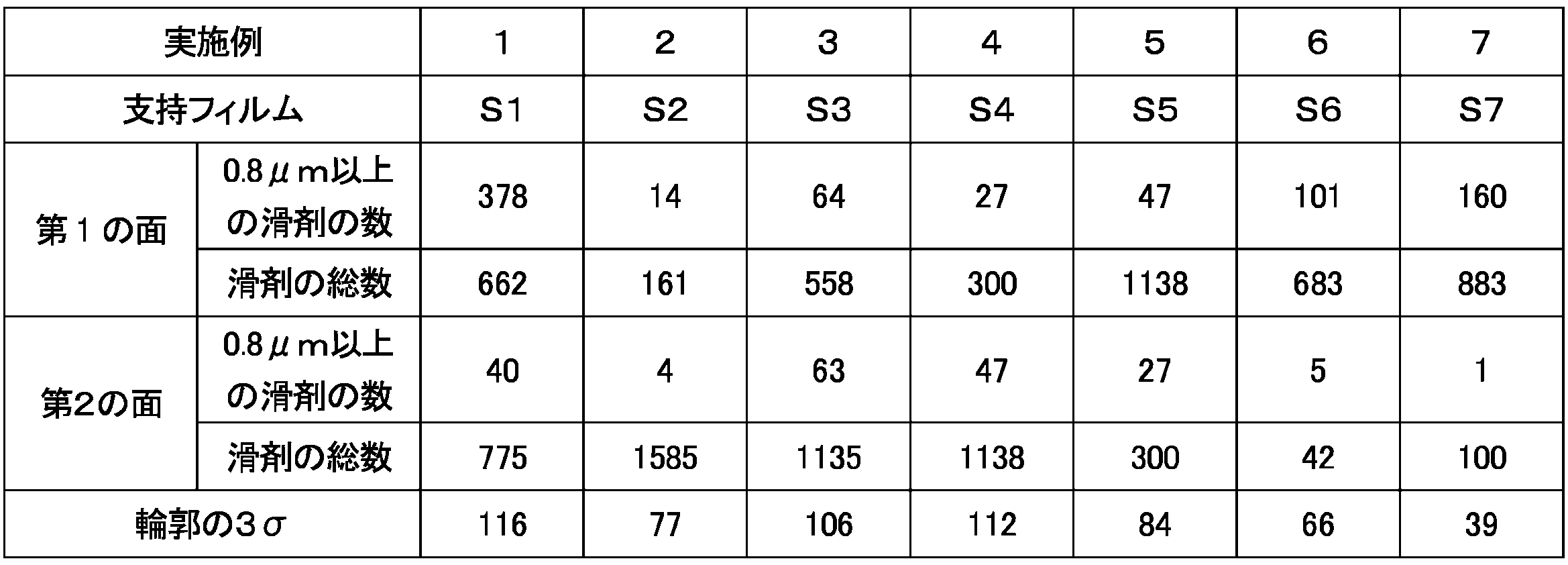

1…感光性エレメント、10…支持フィルム、10a…第1の面、10b…第2の面、20…感光層。
Claims (7)
- 滑剤を含む支持フィルムと、該支持フィルムの第1の面上に形成された感光層と、を備え、
前記支持フィルムの前記第1の面とは反対側の第2の面に含まれる粒径0.8μm以上の滑剤の数が、0.0225mm2あたり80以下である、感光性エレメント。 - 前記第2の面に含まれる滑剤の総数が、0.0225mm2あたり2000以下である、請求項1に記載の感光性エレメント。
- 前記第2の面に含まれる粒径0.8μm以上の滑剤の数を前記第2の面に含まれる滑剤の総数で除した値が、0.20以下である、請求項1に記載の感光性エレメント。
- 前記支持フィルムが、二軸配向ポリエステルフィルムである、請求項1に記載の感光性エレメント。
- 前記支持フィルムが、粒径3.0μmを超える滑剤を含まない、請求項1に記載の感光性エレメント。
- 請求項1~5のいずれか一項に記載の感光性エレメントを、感光層、支持フィルムの順に基板上に積層する積層工程と、
前記支持フィルムを通して前記感光層の所定部分に活性光線を照射して、光硬化部を形成させる露光工程と、
前記感光層における前記光硬化部以外の領域を除去する現像工程と、
を含む、レジストパターンの形成方法。 - 請求項6に記載のレジストパターンの形成方法により形成されたレジストパターンを有する基板を、エッチング処理又はめっき処理して導体パターンを形成する工程を備える、プリント配線板の製造方法。
Priority Applications (6)
| Application Number | Priority Date | Filing Date | Title |
|---|---|---|---|
| PCT/JP2023/006003 WO2024176305A1 (ja) | 2023-02-20 | 2023-02-20 | 感光性エレメント、レジストパターンの形成方法、及びプリント配線板の製造方法 |
| KR1020257023317A KR20250154365A (ko) | 2023-02-20 | 2023-11-20 | 감광성 엘리먼트, 레지스트 패턴의 형성 방법, 및 프린트 배선판의 제조 방법 |
| JP2025502112A JPWO2024176541A1 (ja) | 2023-02-20 | 2023-11-20 | |
| PCT/JP2023/041647 WO2024176541A1 (ja) | 2023-02-20 | 2023-11-20 | 感光性エレメント、レジストパターンの形成方法、及びプリント配線板の製造方法 |
| CN202380037022.2A CN120641828A (zh) | 2023-02-20 | 2023-11-20 | 感光性元件、抗蚀剂图案的形成方法及印刷线路板的制造方法 |
| TW112144915A TW202435669A (zh) | 2023-02-20 | 2023-11-21 | 感光性元件、抗蝕劑圖案的形成方法、及印刷線路板的製造方法 |
Applications Claiming Priority (1)
| Application Number | Priority Date | Filing Date | Title |
|---|---|---|---|
| PCT/JP2023/006003 WO2024176305A1 (ja) | 2023-02-20 | 2023-02-20 | 感光性エレメント、レジストパターンの形成方法、及びプリント配線板の製造方法 |
Publications (1)
| Publication Number | Publication Date |
|---|---|
| WO2024176305A1 true WO2024176305A1 (ja) | 2024-08-29 |
Family
ID=92500448
Family Applications (2)
| Application Number | Title | Priority Date | Filing Date |
|---|---|---|---|
| PCT/JP2023/006003 Ceased WO2024176305A1 (ja) | 2023-02-20 | 2023-02-20 | 感光性エレメント、レジストパターンの形成方法、及びプリント配線板の製造方法 |
| PCT/JP2023/041647 Ceased WO2024176541A1 (ja) | 2023-02-20 | 2023-11-20 | 感光性エレメント、レジストパターンの形成方法、及びプリント配線板の製造方法 |
Family Applications After (1)
| Application Number | Title | Priority Date | Filing Date |
|---|---|---|---|
| PCT/JP2023/041647 Ceased WO2024176541A1 (ja) | 2023-02-20 | 2023-11-20 | 感光性エレメント、レジストパターンの形成方法、及びプリント配線板の製造方法 |
Country Status (5)
| Country | Link |
|---|---|
| JP (1) | JPWO2024176541A1 (ja) |
| KR (1) | KR20250154365A (ja) |
| CN (1) | CN120641828A (ja) |
| TW (1) | TW202435669A (ja) |
| WO (2) | WO2024176305A1 (ja) |
Citations (6)
| Publication number | Priority date | Publication date | Assignee | Title |
|---|---|---|---|---|
| JP2002221797A (ja) * | 2001-01-25 | 2002-08-09 | Hitachi Chem Co Ltd | 積層フィルム及びプリント配線板の製造法 |
| JP2012123394A (ja) * | 2007-01-31 | 2012-06-28 | Hitachi Chem Co Ltd | 感光性エレメント |
| JP2016087854A (ja) * | 2014-10-31 | 2016-05-23 | 東レ株式会社 | ドライフィルムレジスト支持体用二軸配向ポリエステルフィルム |
| JP2018063341A (ja) * | 2016-10-12 | 2018-04-19 | 三菱ケミカル株式会社 | ドライフィルムレジスト用ポリエステルフィルム |
| WO2021152709A1 (ja) * | 2020-01-28 | 2021-08-05 | 昭和電工マテリアルズ株式会社 | 感光性エレメント、レジストパターンの形成方法及びプリント配線板の製造方法 |
| WO2022045256A1 (ja) * | 2020-08-26 | 2022-03-03 | 富士フイルム株式会社 | 感光性転写材料、樹脂パターンの製造方法、導電パターンの製造方法及びタッチセンサー |
Family Cites Families (4)
| Publication number | Priority date | Publication date | Assignee | Title |
|---|---|---|---|---|
| JP2001013681A (ja) | 1999-06-28 | 2001-01-19 | Hitachi Chem Co Ltd | 感光性エレメント、レジストパターンの製造法及びプリント配線板の製造法 |
| JP2002341546A (ja) * | 2001-05-17 | 2002-11-27 | Teijin Dupont Films Japan Ltd | フォトレジスト用二軸配向積層ポリエステルフィルム |
| JP2014074764A (ja) | 2012-10-03 | 2014-04-24 | Hitachi Chemical Co Ltd | 感光性エレメント及びこれを用いたレジストパターンの形成方法、プリント配線板の製造方法 |
| WO2022163778A1 (ja) * | 2021-01-28 | 2022-08-04 | 富士フイルム株式会社 | 積層体の製造方法、回路配線の製造方法、電子デバイスの製造方法、及び、感光性転写材料 |
-
2023
- 2023-02-20 WO PCT/JP2023/006003 patent/WO2024176305A1/ja not_active Ceased
- 2023-11-20 KR KR1020257023317A patent/KR20250154365A/ko active Pending
- 2023-11-20 JP JP2025502112A patent/JPWO2024176541A1/ja active Pending
- 2023-11-20 WO PCT/JP2023/041647 patent/WO2024176541A1/ja not_active Ceased
- 2023-11-20 CN CN202380037022.2A patent/CN120641828A/zh active Pending
- 2023-11-21 TW TW112144915A patent/TW202435669A/zh unknown
Patent Citations (6)
| Publication number | Priority date | Publication date | Assignee | Title |
|---|---|---|---|---|
| JP2002221797A (ja) * | 2001-01-25 | 2002-08-09 | Hitachi Chem Co Ltd | 積層フィルム及びプリント配線板の製造法 |
| JP2012123394A (ja) * | 2007-01-31 | 2012-06-28 | Hitachi Chem Co Ltd | 感光性エレメント |
| JP2016087854A (ja) * | 2014-10-31 | 2016-05-23 | 東レ株式会社 | ドライフィルムレジスト支持体用二軸配向ポリエステルフィルム |
| JP2018063341A (ja) * | 2016-10-12 | 2018-04-19 | 三菱ケミカル株式会社 | ドライフィルムレジスト用ポリエステルフィルム |
| WO2021152709A1 (ja) * | 2020-01-28 | 2021-08-05 | 昭和電工マテリアルズ株式会社 | 感光性エレメント、レジストパターンの形成方法及びプリント配線板の製造方法 |
| WO2022045256A1 (ja) * | 2020-08-26 | 2022-03-03 | 富士フイルム株式会社 | 感光性転写材料、樹脂パターンの製造方法、導電パターンの製造方法及びタッチセンサー |
Also Published As
| Publication number | Publication date |
|---|---|
| WO2024176541A1 (ja) | 2024-08-29 |
| CN120641828A (zh) | 2025-09-12 |
| KR20250154365A (ko) | 2025-10-28 |
| JPWO2024176541A1 (ja) | 2024-08-29 |
| TW202435669A (zh) | 2024-09-01 |
Similar Documents
| Publication | Publication Date | Title |
|---|---|---|
| JP5626428B2 (ja) | 感光性樹脂組成物、並びにこれを用いた感光性エレメント、レジストパターンの形成方法及びプリント配線板の製造方法 | |
| KR101289569B1 (ko) | 감광성 수지 조성물, 감광성 엘리먼트, 레지스트 패턴의 형성방법 및 프린트 배선판의 제조방법 | |
| TWI690774B (zh) | 感光性樹脂積層體及抗蝕劑圖案之製造方法 | |
| CN103221887A (zh) | 感光性树脂组合物、感光性元件、抗蚀图案的形成方法以及印刷布线板的制造方法 | |
| CN101568883A (zh) | 感光性树脂组合物、感光性元件、抗蚀图案的形成方法以及印刷电路板的制造方法 | |
| KR20080097474A (ko) | 감광성 엘리먼트, 레지스트 패턴의 형성 방법 및 프린트 배선판의 제조방법 | |
| JP2025010318A (ja) | 感光性エレメント、レジストパターンの形成方法及びプリント配線板の製造方法 | |
| JP7308014B2 (ja) | 感光性樹脂組成物及び感光性樹脂積層体 | |
| JP2024008940A (ja) | 感光性樹脂組成物、感光性エレメント、レジストパターンの形成方法及びプリント配線板の製造方法 | |
| JP7778919B2 (ja) | 重合体、感光性樹脂組成物、感光性エレメント、レジストパターンの形成方法、及び配線パターンの形成方法 | |
| JP7507862B2 (ja) | アルカリ可溶性樹脂、感光性樹脂組成物、感光性エレメント、レジストパターンの形成方法、及び配線パターンの形成方法 | |
| WO2024176541A1 (ja) | 感光性エレメント、レジストパターンの形成方法、及びプリント配線板の製造方法 | |
| WO2025141881A1 (ja) | 感光性エレメント、レジストパターンの形成方法、及びプリント配線板の製造方法 | |
| WO2026042281A1 (ja) | 感光性エレメント、レジストパターンの形成方法、及びプリント配線板の製造方法 | |
| WO2024116513A1 (ja) | 感光性エレメント、レジストパターンの形成方法、及びプリント配線板の製造方法 | |
| JP7779315B2 (ja) | 感光性エレメント及び感光性エレメントの製造方法 | |
| TW202609468A (zh) | 感光性元件、抗蝕劑圖案的形成方法、及印刷配線板的製造方法 | |
| JP7327485B2 (ja) | 感光性樹脂組成物、感光性エレメント、レジストパターンの形成方法及びプリント配線板の製造方法 | |
| WO2018100640A1 (ja) | 感光性樹脂組成物、感光性エレメント、レジストパターン付き基板の製造方法、及び、プリント配線板の製造方法 | |
| WO2024009870A1 (ja) | 感光性樹脂組成物、感光性エレメント、レジストパターンの形成方法、及び、半導体パッケージ基板又はプリント配線板の製造方法 |
Legal Events
| Date | Code | Title | Description |
|---|---|---|---|
| 121 | Ep: the epo has been informed by wipo that ep was designated in this application |
Ref document number: 23923961 Country of ref document: EP Kind code of ref document: A1 |
|
| NENP | Non-entry into the national phase |
Ref country code: DE |
|
| 122 | Ep: pct application non-entry in european phase |
Ref document number: 23923961 Country of ref document: EP Kind code of ref document: A1 |
|
| NENP | Non-entry into the national phase |
Ref country code: JP |