WO2024171306A1 - 情報処理システム及び情報処理方法 - Google Patents
情報処理システム及び情報処理方法 Download PDFInfo
- Publication number
- WO2024171306A1 WO2024171306A1 PCT/JP2023/005018 JP2023005018W WO2024171306A1 WO 2024171306 A1 WO2024171306 A1 WO 2024171306A1 JP 2023005018 W JP2023005018 W JP 2023005018W WO 2024171306 A1 WO2024171306 A1 WO 2024171306A1
- Authority
- WO
- WIPO (PCT)
- Prior art keywords
- user
- analysis
- information processing
- processing system
- data
- Prior art date
- Legal status (The legal status is an assumption and is not a legal conclusion. Google has not performed a legal analysis and makes no representation as to the accuracy of the status listed.)
- Ceased
Links
Images

Classifications
-
- G—PHYSICS
- G06—COMPUTING OR CALCULATING; COUNTING
- G06Q—INFORMATION AND COMMUNICATION TECHNOLOGY [ICT] SPECIALLY ADAPTED FOR ADMINISTRATIVE, COMMERCIAL, FINANCIAL, MANAGERIAL OR SUPERVISORY PURPOSES; SYSTEMS OR METHODS SPECIALLY ADAPTED FOR ADMINISTRATIVE, COMMERCIAL, FINANCIAL, MANAGERIAL OR SUPERVISORY PURPOSES, NOT OTHERWISE PROVIDED FOR
- G06Q50/00—Information and communication technology [ICT] specially adapted for implementation of business processes of specific business sectors, e.g. utilities or tourism
- G06Q50/10—Services
-
- G—PHYSICS
- G16—INFORMATION AND COMMUNICATION TECHNOLOGY [ICT] SPECIALLY ADAPTED FOR SPECIFIC APPLICATION FIELDS
- G16H—HEALTHCARE INFORMATICS, i.e. INFORMATION AND COMMUNICATION TECHNOLOGY [ICT] SPECIALLY ADAPTED FOR THE HANDLING OR PROCESSING OF MEDICAL OR HEALTHCARE DATA
- G16H10/00—ICT specially adapted for the handling or processing of patient-related medical or healthcare data
Definitions
- the present invention relates to technology for information processing systems.
- Patent Document 1 discloses a content provision system that generates a service list from the user's environment, terminal, biometric status information, attribute information, and history information, and provides the list to the user.
- Patent Document 1 merely generates and provides a list of services, and cannot be said to have sufficient functionality to assist in making appropriate selections in response to the ever-increasing demands of users.
- the information related to the user himself does not contain enough information value to provide appropriate services according to the state of each user by analyzing the user's behavior or mental state in detail.
- the invention is not sufficient as an invention that can respond to the changing service system and user demands due to technological advances, such as the use of 3D models of the user himself in virtual space, not just in real space, as a range of user behavior.
- the present invention provides an improved technique for assisting a user in selecting an appropriate affiliated service from among various affiliated services.
- One aspect of the present disclosure provides an information processing system having a first acquisition means for acquiring time series changes in a 3D model of a user, a second acquisition means for acquiring the results of a behavioral analysis or mental analysis of the user, a selection means for selecting a menu suitable for the user from among multiple menus included in multiple linked services using the time series changes and/or the analysis results, and a presentation means for presenting the selected menu to the user.
- the system may also have a reward/penalty granting means for granting a reward or penalty to a user who has received the menu, depending on the user's actual use of any of the multiple linked services.
- the linked service may have a utilization means for utilizing the rewards and punishments.
- the reward/punishment granting means may grant the reward/punishment for the use performed via the use means.
- the reward/punishment means may award rewards/punishments to a linked service selected from the plurality of linked services according to the time series changes and/or the analysis results.
- the reward/punishment means may use a uniquely set algorithm to grant the reward/punishment to each of the plurality of linked services.
- the system may have an analysis means for performing a behavioral analysis or mental analysis of the user, and the second acquisition means may acquire the analysis results of the behavioral analysis or mental analysis from the analysis means.
- the analysis means may perform the behavioral analysis or the mental analysis using a history of actions taken by the user in a virtual space using the 3D model.
- the analysis means may perform the behavioral analysis or mental analysis using a history of actions taken by the user in real space.
- the analysis means may perform the behavioral analysis or mental analysis using the relationship between the user and other users who use the same linked service.
- the analysis means may perform the behavioral analysis or the mental analysis using evaluations of the user from other users.
- the linked services may be divided into a plurality of types, and the selection means may select, as the menu suitable for the user, a menu included in a linked service of a type selected from the plurality of types in accordance with the time series changes and/or the analysis results.
- Another aspect of the present disclosure provides an information processing method having the steps of acquiring time series changes in a 3D model of a user, acquiring the results of a behavioral or mental analysis of the user, selecting a menu suitable for the user from among multiple menus included in multiple linked services using the time series changes and/or the results of the analysis, and presenting the selected menu to the user.
- the present invention provides an improved technique for assisting users in selecting the most suitable affiliated service from among a variety of affiliated services.
- FIG. 1 is a diagram illustrating an example of an overview of an information processing system 1.
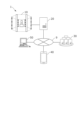
- FIG. 1 is a diagram illustrating an example of a hardware configuration and a network configuration of an information processing system 1.
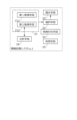
- FIG. 2 is a diagram illustrating an example of a functional configuration of the information processing system 1.
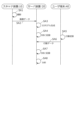
- FIG. 2 is a diagram illustrating an example of the hardware configuration of a server device 20 and a user terminal 40.
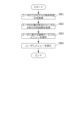
- 4 is a flowchart illustrating an operation concept of the information processing system 1.
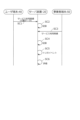
- 4 is a sequence chart illustrating data analysis in the information processing system 1.
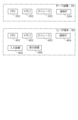
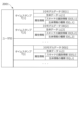
- FIG. 4 is a diagram illustrating a 3D database included in the server device 20.
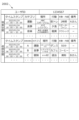
- FIG. 4 is a diagram illustrating an example of a behavior database stored in the server device 20.
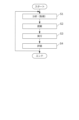
- 4 is a flowchart illustrating a service proposal in the information processing system 1.
- 4 is a sequence chart illustrating an evaluation in the information processing system 1.
- Configuration Fig. 1 is a diagram illustrating an example of an overview of an information processing system 1.
- the information processing system 1 serves as a support system (or simply a system) for both partner businesses (or simply businesses) and end users (or simply users), and the system aims to make services that are widely used in the general public more convenient and beneficial for users, for example, in a service business.
- a partner business is a business that provides a service to an end user.
- the services provided by a business are, for example, fitness instruction, provision of food and drink (e.g., a restaurant or cafe), retail (e.g., a bookstore or clothing store), provision of games, provision of movies, and provision of music.
- These services are generally operated by independent business entities, and each business entity can register information about the service, such as a service menu (or simply a menu) or information about the products or services provided, in the system.
- a service menu refers to the content of the service that a partner business entity has prepared in advance to provide to an end user, and for example, refers to the content of a course at a fitness gym (e.g., a one-hour boxercise course, one-on-one instruction; a 50-minute dance lesson, group instruction, etc.).
- Information about a product includes attribute information such as the product's name, specifications, model number, and size.
- the location where the service provided by the business entity (business entity) is provided can be either in real space or virtual space. There may be a mixture of businesses that provide services in real space, those that provide services in virtual space, and those that provide services in both real space and virtual space.
- an end user refers to a user who uses the service.
- the end user can receive suggestions from the system for a service menu and choose the service that he or she actually wants to receive from the suggested services.
- the user's behavioral history within that service is provided to the system as behavioral data.
- behavioral data includes concepts such as a behavioral history (behavioral record) that is recorded as data via the system (e.g., a user terminal, etc.).
- behavioral data may be detailed information related to a meal at a restaurant, such as when, where, with whom, what menu item was ordered, and how much it cost.
- the user can provide the system with behavioral data that is not related to partner businesses, and the behavioral data provided by the user is recorded in the system.
- the physical data is 3D model data and biometric data.
- the 3D model data refers to data that represents a 3D model in a virtual space.
- data RGB and distance
- the biometric data is information about a living body, and includes, for example, information such as blood pressure, weight, and pulse rate that can be obtained by a sensor or the like. Note that the physical data is not only data obtained at a specific single timing, but also time-series changes are recorded in the system.
- time-series changes may be the data sequence of the physical data obtained and recorded along the time axis itself, or information indicating a trend of change, such as the user's body shape "getting fatter (getting thinner)” or the condition of their skin “getting better (getting worse)."
- the user provides his/her own attribute information to the system.
- the attribute information indicates the user's attributes, such as age, gender, place of residence, occupation, and income.
- FIG. 2 is a diagram illustrating an example of the hardware configuration and network configuration of information processing system 1.
- Information processing system 1 has a scanner device 10, a server device 20, a server device 30, a user terminal 40, and a business terminal 50. Furthermore, each device is integrally connected via a network 9 as shown in FIG. 2.
- the network is a computer network such as the Internet.
- the scanner device 10 is an information processing device for acquiring the user's body data, for example, a 3D scanner.
- the scanner device 10 uses a booth-type 3D scanner to acquire (take) photo (RGB and distance) data from a photographing device installed in the booth. This allows the scanner device 10 to acquire information such as 3D geometry, skin texture, and skin condition (color).
- the scanner device 10 can acquire not only a photograph of the subject, but also biometric data (examples of body data) such as a body temperature map, blood pressure, weight, body fat, and pulse rate.
- the user can provide this body data to the information processing system 1.
- the information processing system 1 can also acquire changes in the user's body (for example, body shape and/or skin condition) by recording and managing this body data in chronological order.
- the server device 20 is an information processing device that performs analysis based on various data provided by the user and executes processing to propose the most suitable service for the user from among services operated by affiliated partner businesses.
- the server device 20 functions, for example, as a management server. More specifically, for example, the server device 20 can acquire 3D model data of the user from the scanner device 10, generate a 3D model of the user, and manage it by recording it in a database. Alternatively, the server device 20 can analyze the user's own hobbies, preferences, and/or mental state based on behavioral data provided by the user.
- the server device 30 is a single or multiple information processing devices that each partner business uses to provide services to users, and refers to a service server that is independently set by each of the various partner businesses.
- functions that can be realized by the server device 30 include those that provide real-world services (restaurants, fitness, apparel, etc.) and those that provide virtual-world services (metaverse, etc.).
- Real-world services are, for example, restaurant reservations and review input, or fitness gym membership and course selection.
- Virtual-world services are, for example, VR (Virtual Reality) experiences, or NFT (Non-Fungible Token) games. Users can use various services via the server device 30. Note that various data related to the services is recorded in the server device 30.
- the user terminal 40 is a terminal device (or simply a terminal) used by an end user, and the user can use various services provided by the operator via this terminal device.
- the user terminal 40 records the user's own actions based on the history of the user's terminal operations.
- terminal operations refer to, for example, inputting an exercise record at a sports gym in real space, or payment processing when eating at a restaurant, and details such as training time (e.g., 2 hours), bill amount (e.g., 10,000 yen), or meal contents (e.g., consuming steak and wine) are recorded as history.
- These actions (action records) are recorded as various data and provided to the system via applications in the user terminal 40, with the user's consent.
- the services that can be used via the user terminal 40 are not limited to those in real space, and may be services such as games in virtual space.
- the business operator terminal 50 is a terminal device (or simply a terminal) used by a partner business operator providing a service.
- the partner business operator operating the service can freely access various data related to the service recorded in the server device 30 via the business operator terminal 50.
- obtaining and utilizing this data can be useful in further improving the quality of the service.
- FIG. 3 is a diagram illustrating an example of the functional configuration of the information processing system 1.
- each function of the information processing system 1 is mainly implemented in the server device 20.
- the information processing system 1 has an acquisition means 21, a selection means 22, a presentation means 23, a reward/punishment means 24, a utilization means 25, and an analysis means 26.
- the acquisition means 21 acquires various types of data. Furthermore, the acquisition means 21 has a first acquisition means 211 and a second acquisition means 212. In this example, the first acquisition means 211 acquires the user's body data. In particular, when acquiring 3D model data (an example of body data), in addition to individual data, the first acquisition means 211 can acquire time-series changes in the user's 3D model. Note that this time-series change may include information indicating a trend in change, such as the user's body shape "getting fatter (getting thinner)."
- the second acquisition means 212 acquires the analysis results of the user's behavioral analysis or mental analysis.
- behavioral analysis and mental analysis refer to the types of analysis that the server device 20 performs based on the user's behavioral data provided to the information processing system 1. Therefore, in this example, the server device 20 can perform behavioral analysis based on the items (e.g., exercise, diet, or music) that appear frequently in the acquired user's behavior history (one example of behavioral data) to determine the user's preferred behavior, or perform mental analysis based on the purchase frequency of books related to self-development in the book purchase history (one example of behavioral data) to estimate the user's mental state.
- the analysis result refers to the user's preferred behavior (e.g., likes exercise) or estimated mental state (e.g., tendency to develop depression) determined by the server device 20.
- the selection means 22 uses at least one of the time series changes in the 3D model of the user and the analysis results to select a service menu suitable for the user from among the service menus provided by the partner business.
- the presentation means 23 presents the service menu selected by the selection means 22 to the user.
- the reward/punishment giving means 24 gives the user a reward or punishment according to the performance.
- the "reward/punishment” here is a concept that includes both things that have a positive effect on the user (i.e., benefits) and things that have a negative effect on the user (i.e., punishment).
- Things that have a positive effect on the user include, for example, the granting of points, the issuance of coupons, the granting of the right to participate in an event, and the granting of a title. Things that have a negative effect on the user include, for example, the revocation of points, the revocation of coupons, the revocation of a title, and the granting of action restrictions.
- the utilization means 25 utilizes the reward/punishment (mainly benefits) given to the user in the linked service according to the user's instructions.
- the analysis means 26 performs behavioral analysis or mental analysis of each user based on the behavioral data.
- FIG 4 is a diagram illustrating an example of the hardware configuration of the server device 20 and the user terminal 40.
- the server device 20 is a computer having a CPU (Central Processing Unit) 201, memory 202, storage 203, and a communication IF 204, and is, for example, a personal computer or a mainframe.
- the CPU 201 is a processor that performs various calculations according to a program.
- the memory 202 is a main storage device that functions as a work area when the CPU 201 executes a program, and includes, for example, a RAM (Random Access Memory).
- the storage 203 is an auxiliary storage device that stores various data and programs, and includes, for example, an SSD (Solid State Drive) or an HDD (Hard Disc Drive).
- the communication IF 204 is a device that communicates with other devices according to a predetermined communication standard, and includes, for example, a NIC (Network Interface Card).
- the programs stored in storage 203 include a program (hereinafter referred to as the "server program") for causing a computer to function as a server in information processing system 1.
- server program a program for causing a computer to function as a server in information processing system 1.
- CPU 201 is an example of acquisition means 21, first acquisition means 211, second acquisition means 212, selection means 22, presentation means 23, reward/punishment means 24, utilization means 25, and analysis means 26.
- the user terminal 40 is a computer having a CPU 401, memory 402, storage 403, communication IF 404, input device 405, and display device 406, and is, for example, a smartphone, tablet, or personal computer.
- the CPU 401 is a processor that performs various calculations according to a program.
- the memory 402 is a main storage device that functions as a work area when the CPU 401 executes a program, and includes, for example, a RAM.
- the storage 403 is an auxiliary storage device that stores various data and programs, and includes, for example, an SSD or HDD.
- the communication IF 404 is a device that communicates with other devices according to a specific communication standard, and includes, for example, a wireless chip in the case of wireless communication.
- the input device 405 is a device for inputting information to the user terminal 40, and includes, for example, a touch screen, a keyboard, a mouse, or a pointing device.
- the display device 406 is a device that displays information, and includes, for example, an organic EL (Electro Luminescence) display or a liquid crystal display.
- the user terminal 40 also includes a device that the user can operate to use services in a virtual space or a mixed reality (MR) space, such as a VR headset or smart glasses.
- the input device 405 includes, for example, a VR controller.
- the display device 406 also includes, for example, a head-mounted display.
- the programs stored in storage 403 include a program (hereinafter referred to as a "client program") for causing a computer to function as a client in information processing system 1.
- client program a program for causing a computer to function as a client in information processing system 1.
- CPU 401 When CPU 401 is executing the client program, CPU 401, memory 402, storage 403, communication IF 404, input device 405, and display device 406 are examples of functions for operating user terminal 40.
- FIG. 5 is a flow chart illustrating an operation concept of the information processing system 1.
- the operation concept or operation concept diagram is a simplified conceptual representation (diagram) of the operation that functions as the entire system by linking with the individual devices, such as the scanner device 10, the server device 20, the server device 30, the user terminal 40, and the business terminal 50, in the information processing system 1, or the operation that functions by the intervention of a user or a partner business. Therefore, the operation of the entire information processing system 1 is controlled based on the flow of the operation concept diagram. Meanwhile, the details of each operation are controlled based on the sequence processing or operation flow by each device. Below, the main operation concept will be described along the flow chart in FIG. 5.
- step S1 the information processing system 1 uses a 3D scanner or the like to acquire time-series changes in the 3D model of the user.
- the time-series changes include analysis results such as the user's body shape being "gained weight” or "skin condition improved.”
- the information processing system 1 also acquires the user's behavioral history (an example of behavioral data) in real space and virtual space, and performs behavioral or mental analysis of the user from the behavioral data.
- the information processing system 1 may acquire the analysis results of the user's behavioral or mental analysis.
- step S2 the information processing system 1 uses the analyzed or acquired time series changes in the user's 3D model and at least one of the analysis results of the behavioral analysis and mental analysis to select and propose a service menu suitable for the user from the service menus offered by partner businesses. Specifically, for example, based on data such as "likes sports (behavioral analysis),” “gaining weight (time series changes in the 3D model),” and “accumulation of stress (mental analysis)” for a certain user, the information processing system 1 can propose to the user a "boxercise course" offered by an affiliated fitness gym.
- step S3 the information processing system 1 executes the service menu finally selected by the user.
- "executing” here includes, for example, the concept of the user actually going to a fitness gym and doing boxercise.
- step S4 the information processing system 1 performs an evaluation of the executed service menu.
- evaluation refers to an evaluation of the behavior of the user who executed the service.
- it includes concepts such as subjective evaluation by the user, such as "it was fun” or "it was boring", when the user actually uses the proposed service.
- the information processing system 1 analyzes the user again based on the evaluation (return to step S1).
- the information processing system 1 may analyze the user together with behavioral data in, for example, the "boxercise course".
- FIG. 6 is a sequence chart illustrating data analysis in the information processing system 1.
- the scanner device 10 uses an imaging device to capture an image of a subject (user) and captures the image data to generate a 3D model of the user.
- the captured image data includes RGB data and distance data.
- the scanner device 10 may capture biological data (an example of physical data) such as a body temperature map, blood pressure, weight, body fat, and pulse rate.
- step SA2 the scanner device 10 transmits the acquired image data of the user to the server device 20.
- the scanner device 10 may also transmit biometric data such as the blood pressure, weight, and pulse rate described above.
- step SA3 the server device 20 generates a 3D model of the user from the acquired image data.
- the generation of the 3D model includes a process of reproducing the user identically in terms of, for example, 3D geometry, skin texture, and skin condition (color). Note that reproduction here does not have to be identical to the user, but may refer to the generation of a 3D model that has been corrected, or the generation of a 3D model that deforms the user using an avatar, etc.
- step SA4 the server device 20 records the generated 3D model in a database.
- the server device 20 distributes the generated 3D models for each user and records them in chronological order.
- the user periodically updates the 3D model using the scanner device 10 (e.g., once a year or once every six months), and each time the data is updated in chronological order in the database.
- FIG. 7 is a diagram illustrating an example of a 3D database held by the server device 20.
- the 3D database 2001 has a user ID, a timestamp T, 3D model data DD, biometric data LL, and attribute information.
- the attribute information further includes scanner identification information ID and biometric information type ID.
- the user ID is unique ID information for identifying each user.
- the timestamp T is time information within the computer that indicates the time when each piece of data was recorded and changed in the 3D database 2001.
- the number in the "circle" in the [circle] such as timestamp T[1] indicates the order in which the data was given in chronological order.
- the 3D model data DD is data that represents a 3D model in a virtual space, and includes shape (geometry such as mesh, curve, surface, or metaball) data and texture data.
- the biometric data LL includes the user's biometric information (blood pressure, weight, body fat percentage, blood glucose level, etc.).
- the scanner identification information ID is unique ID information for identifying the scanner that photographed the user
- the biometric information type ID is unique ID information for identifying the type of the acquired biometric information of the user.
- the 3D database 2001 may have additional data that accompanies the 3D model data DD.
- the additional data is not directly used when generating a 3D model of the user and displaying it on a display or the like, but includes various data such as attribute data that represents the user's attributes (age, sex, place of residence, etc.) related to the 3D model, and/or behavioral data that represents the user's behavioral history (a combination of behavior and location in real space or virtual space).
- the server device 20 can freely access the 3D database 2001 and acquire various data.
- the first acquisition means 211 of the server device 20 can acquire the data recorded in the 3D database 2001 as a time-series change in the user's 3D model.
- the time-series change may include, for example, a change in the user's body shape, such as "gaining weight (losing weight)" or "good (bad) skin condition," and may be determined by the server device 20 based on the data recorded in the 3D database 2001.
- the content of these changes is information used by the system to propose optimal services to each user, and may be defined using any judgment criteria and judgment means.
- the user terminal 40 records the user's own actions based on the user's terminal operation history, etc.
- terminal operation refers to, for example, inputting an exercise record at a sports gym in real space, or payment processing when eating at a restaurant, etc.
- each history may include details such as training time (e.g., 2 hours), cost (e.g., 10,000 yen), or meal contents (e.g., a steak and wine).
- training time e.g., 2 hours
- cost e.g. 10,000 yen
- meal contents e.g., a steak and wine
- These action records are recorded as various data through an application in the user terminal 40, etc., with the user's consent.
- an action record by the user terminal 40 in real space has been described, but an action record in a virtual space may also be used.
- the user terminal 40 is a VR headset, it may be an adventure record in a game in the metaverse, such as defeating a monster in XX village.
- step SA6 the user terminal 40 transmits behavioral data to the server device 20.
- behavioral data includes the user's behavioral history (or behavioral record) recorded as data via the user terminal 40, and refers to various associated detailed information regarding, for example, a meal at the restaurant mentioned above, such as when, where, with whom, what menu item was ordered, and how much it cost.
- the user can provide behavioral data to the system via the user terminal 40 in order to receive more optimal service.
- step SA7 the server device 20 records the received behavioral data in a database.
- a database it is preferable that detailed information for each user's behavior (or time, etc.) is recorded in various associations with the behavioral data recorded, and in this case, the format in which the data is recorded is defined in the database of the server device 20.
- FIG. 8 is a diagram illustrating an example of a behavior database held by the server device 20.
- the behavior database 2002 holds data on behavior history in real space and virtual space for a user identified by a unique user ID (1234567).
- this data includes items such as timestamp, category, location, behavior, target/content, and notes.
- the data further includes the name of the virtual space. Note that FIG. 8 is merely an example of these items, and any items may be set.
- a trigger event includes concepts such as a specific program process in a predetermined computer, such as a predetermined time having passed since the previous analysis or the amount of unanalyzed data exceeding a threshold.
- the analysis means 26 of the server device 20 performs an analysis of each user based on the behavioral data recorded in the behavior database 2002.
- This analysis is particularly divided into behavioral analysis and mental analysis, and each analysis will be described below.
- the behavioral data used by the analysis means 26 is based solely on the data recorded in the behavior database 2002.
- the analysis means 26 may perform behavioral analysis and mental analysis in accordance with a predetermined viewpoint, such as the user's behavior history in a virtual space using his/her own 3D model, the user's behavior history in the real space, the relationship with other users who use the same linked service as the user, or the evaluation of a certain user by other users. Therefore, the specific example used in the following description is based on these viewpoints and is presented merely as an example.
- behavioral analysis is an analytical method for analyzing a user's behavioral history and estimating the user's preferences.
- the analysis means 26 refers to the behavior database 2002, and if there is a behavior (such as strength training) that appears frequently in the history, it estimates that this behavior as the user's preferred behavior.
- the analysis means 26 may also indirectly estimate, as the user's preferred behavior, the behavior preferred by others who visit the same or similar places as the user in real or virtual space (such as drawing pictures in X-X Park).
- the analysis means 26 may estimate, as the user's preferred behavior, the behavior preferred by others who have similar attributes to the user (such as age or gender).
- the analysis means 26 may refer to the behavioral database 2002 and estimate the user's preferred behavior from the emotion data linked to the behavioral history, for example, based on positive emotions such as fun and happiness.
- the user's preferred behavior estimated by the analysis means 26 may be divided into categories such as exercise, eating, music, movies, or reading, and may be further divided into detailed genres such as muscle training, sushi, or pop.
- mental analysis is an analytical method for analyzing a user's behavioral history and estimating the user's mental state. For example, after a user behaves in real or virtual space, the user is asked to input data about the user's own emotions (fun, bored, happy, sad, etc.) via the user terminal 40, and the server device 20 links the acquired behavioral history (an example of behavioral data) with this emotion data and records it in the behavior database 2002.
- the analysis means 26 refers to the behavior database 2002 and estimates the current or future mental state from the emotion data linked to the behavioral history, for example, based on changes in emotions over time.
- the server device 20 links the acquired action history (one example of action data) with this evaluation data and records it in the action database 2002.
- the analysis means 26 refers to the action database 2002 and estimates the current or future mental state from the evaluation data linked to the action history, for example, from time-series changes in evaluations from other users.
- the analysis means 26 may estimate the mental state of the user from the relationship with other users who performed the same behavior in real space or virtual space (comparison of behavior with other users). For example, when a user who uses a fitness service selects the same exercise course with other users, and the user's friends lose weight but the user's weight does not change, the analysis means 26 may estimate the user's mental state as being depressed.
- the behavior database 2002 may add items such as friends, lovers, or family members for other users who are highly related to the user, and link the items to the respective user IDs and manage them within the database. In other words, by linking these databases to each other, the analysis means 26 can compare the user's behavior with that of other users and estimate the user's mental state.
- the behavioral analysis and mental analysis by the server device 20 described above are merely examples, and any method may be used for the analysis.
- an analysis method that utilizes AI or machine learning may be adopted to enable more accurate behavioral analysis and mental analysis of users from a huge amount of data.
- the second acquisition means 212 acquires the analysis results of the behavioral analysis or mental analysis by the analysis means 26. This allows the server device 20 to acquire the necessary information that serves as a selection criterion when proposing the most suitable service to the user.
- a more detailed embodiment of the operation of service proposal in the information processing system 1 will be described.
- FIG. 9 is a flowchart illustrating a service proposal in the information processing system 1.
- the flow of the service proposal is started, for example, in response to a request from a user.
- the service proposal may be automatically started by the server device 20.
- the server device 20 acquires a time series change of the 3D model of the user. More specifically, the first acquisition means 211 acquires a time series change of the 3D model of the user recorded in the 3D database 2001.
- the time series change may include, for example, a change in the body shape of the user's 3D model, such as "gaining weight (losing weight)” or a change in skin condition, such as "good (bad)", and may be determined by the first acquisition means 211 based on the data recorded in the 3D database 2001.
- the server device 20 acquires the analysis results of the user's behavioral analysis and mental analysis. More specifically, the second acquisition means 212 acquires the analysis results of the behavioral analysis and mental analysis for each user performed by the analysis means 26 based on the behavioral data recorded in the behavior database 2002. In this regard, the second acquisition means 212 may acquire the analysis results directly from the analysis means 26.
- the analysis results of the behavioral analysis include the user's hobbies and preferences, such as "User XX likes XX behavior," so the second acquisition means 212 identifies a predetermined category for this "XX.”
- the categories include exercise, food, entertainment, etc., and are used to narrow down the service content when proposing the most suitable service to the user. Note that this category may be directly linked to the "category" included in the behavioral data in the behavior database 2002.
- the server device 20 selects a menu of linked services suitable for the user. More specifically, the selection means 22 uses at least one of the time series changes in the user's 3D model and the analysis results to select a service menu suitable for the user from the service menus provided by the partner business. In this example, regarding the method of selecting a service menu by the selection means 22, for example, for a certain user, based on data such as "likes sports (behavioral analysis)", “gaining weight (change in 3D model)", and “accumulation of stress (mental analysis)", the selection means 22 selects a "boxercise course" provided by the linked fitness gym for that user.
- the server device 20 stores the conditions of the behavior history and the conditions of the service menu to be selected when the conditions are met in a database (not shown).
- the server device 20 refers to this database to select a service menu suitable for the user.
- the selection method is not limited to this, and for example, AI or machine learning may be used.
- a machine learning model is used in which a user's behavior history, the services the user has received, and the user's feedback (or impressions) after receiving the services are given as training data, and machine learning is performed.
- Data other than the above may also be used as training data, and a method may be adopted in which data such as the day of the week, time, weather, or location, or unique data such as the user's routine is further taken into consideration to select a service that is more optimal for the user.
- step SB4 the server device 20 presents (proposes) the selected service menu to the user. More specifically, the presentation means 23 presents the selected service menu to the user. In this example, the user can receive a proposal of the service menu from the server device 20 via the user terminal 40 or the like.
- the server device 20 may record the behavioral data in a database such as the behavioral database 2002 via the user terminal 40 or the like. At that time, the user may be asked to input data on his/her own emotions (fun, bored, happy, sad, etc.) via the user terminal 40. The server device 20 links the acquired behavioral history (an example of behavioral data) with this emotion data and records it in the behavioral database 2002 or the like.
- the emotion data may be used as training data for AI learning so that the server device 20 can select or evaluate the service itself.
- the results of behavioral analysis and mental analysis after the user uses the service may also be used in AI learning so that the server device 20 can select or evaluate the service itself.
- step SA5 in the data analysis of FIG. 6.
- step SA5 the server device 20 to further reanalyze the user based on the user's behavior.
- Evaluation Fig. 10 is a sequence chart illustrating an example of evaluation in the information processing system 1.
- evaluation refers to a process of giving a reward or punishment to a user based on the user's behavior history. This process is mainly executed by the server device 20. That is, when a user who has received a service menu presented by the presentation means 23 actually uses one of a plurality of linked service menus, the reward/punishment giving means 24 gives a reward or punishment to the user according to the performance.
- the reward/punishment in particular, the giving of a privilege, will be described.
- the points given as a benefit include points that have value that can be exchanged by the user for other services or products within the system or a specific service.
- the user grade includes a hierarchy or order for ranking users according to their usage record in the system itself or a specific service. The specific processing steps are explained below.
- the user terminal 40 transmits the user's service usage record to the server device 20.
- the service usage record includes the user's behavioral history (behavioral record) provided by the user via the user terminal 40.
- the service usage record is an example of behavioral data, and actually refers to the user's behavioral history. For example, when a user trains at a fitness gym, the service usage record (behavioral history) includes various associated detailed information such as when, where, with whom, what training course was selected, and the level of satisfaction.
- step SC2 the server device 20 records the service usage history received from the user terminal 40 in a database.
- the server device 20 records the service usage history as behavioral data in the behavioral database 2002.
- the business operator terminal 50 transmits the service usage history to the server device 20.
- the service usage history transmitted from the business operator terminal 50 is data corresponding to the service usage history (behavioral data) provided by the user via the user terminal 40 in step SC1.
- the service menu proposed by the server device 20 is mainly services operated by partner businesses, and, for example, when the user actually uses the proposed service menu, the user's service usage history is recorded as data in the server device 30, which is the service server, in the same way as in the user terminal 40.
- the server device 30 records information such as which user booked what training course, when, the level of satisfaction after completion, and the estimated number of calories burned. Note that this information does not necessarily have to be limited to the behavioral data recorded in the user terminal 40, or be the same, but may be unique data corresponding to various services.
- the data recorded in the server device 30 can be freely acquired, for example, by the partner business that operates the service via the business terminal 50, and can be used to further improve the quality of the service.
- the data acquired by the business terminal 50 is ultimately transmitted to the server device 20 as service usage records (step SC3).
- the server device 20 records the service usage history received from the business operator terminal 50 in a database.
- the server device 20 may record the service usage history as behavioral data in the behavioral database 2002, may record it in a database different from the behavioral database 2002, or may define (link) a relationship with the service usage history received from the user terminal 40 and record it in various databases.
- a trigger event includes concepts such as a specific program process in a predetermined computer, such as a predetermined time having passed since the previous evaluation or the amount of unevaluated data exceeding a threshold.
- step SC6 the server device 20 evaluates the user. More specifically, the reward/punishment granting means 24 calculates the points to be granted to the user.
- points are divided into two categories: common points that can be used by all partner businesses, and unique points that can be used only by specific partner businesses. Users can use them differently depending on the purpose of use, or exchange common points for unique points.
- common points are, for example, points that can be used to purchase goods or services at multiple physical stores or online stores operated by different businesses
- unique points are, for example, points that can be used to purchase goods or services operated by a single specific business (one example is airline mileage).
- the reward/punishment granting means 24 calculates the common points based on the user's service usage record and in accordance with an algorithm and calculation formula predefined within the system.
- the reward/punishment granting means 24 may employ various calculation methods, such as referencing the behavioral data in the behavior database 2002 and awarding the user 100 points for exercising at a fitness gym or eating at a restaurant, and awarding the user 3 points for listening to music via a music distribution app.
- the algorithm and formula that are the basis of the calculation method are provided by the system. Furthermore, the parameters in the algorithm and formula can be freely set by each partner business. As an example, consider a case where a user uses a service menu for overseas travel by airplane. In this example, the reward/punishment granting means 24 can calculate mileage, which is a unique point, and grant it to the user using an algorithm and formula customized by the airline based on the user's service usage record.
- the evaluation process described above is applied not only to points, but also to user grades in the same way.
- user grades may be ranked according to classes such as gold membership, silver membership, or bronze membership.
- User grades may also be divided into two categories: a common grade set by the system and a unique grade set by each partner business.
- the method adopted for determining each grade is that the reward/punishment granting means 24 determines the grades in accordance with algorithms and calculation formulas predefined within the system based on the user's service usage record.
- the utilization means 25 can utilize rewards and punishments including these points and user grades in the linked service in response to instructions from the user.
- utilization of rewards and punishments by the utilization means 25 includes, for example, in the case of points, processing such as exchanging them for other services or products, and in the case of user grades, processing such as exercising rights granted according to the grade (e.g., a 30% discount for gold members).
- the reward/punishment granting means 24 may evaluate the user for such utilization, and may further grant a reward or punishment to the user.
- the hardware configuration of the information processing system 1 is not limited to that exemplified in the embodiment.
- the information processing system 1 may have any hardware configuration as long as it can realize the required functions.
- a plurality of physical devices e.g., the scanner device 10, etc.
- the network configuration in the information processing system 1 is not limited to that exemplified in the embodiment.
- the scanner device 10 and the server device 30 may be connected via a network to provide the service.
- the function of generating 3D model data from image data may be implemented in the scanner device 10.
- the server device 20 obtains the 3D model data from the scanner device 10.
- the server device 20 may be a physical server or a virtual server (including a so-called cloud). Furthermore, the correspondence between the functional elements and the hardware is not limited to that exemplified in the embodiment. For example, in the embodiment, at least a part of the functions described as being implemented in the server device 20 may be implemented in another device (e.g., the scanner device 10), and conversely, at least a part of the functions described as being implemented in another device (e.g., the scanner device 10) may be implemented in the server device 20. Instead of the configuration in which the server device 20 generates a 3D model of the user in this example, the scanner device 10 may generate a 3D model of the user.
- step S1 the information processing system 1 executes analysis processing related to time-series changes in the 3D model of the user, behavior analysis, or mental analysis, but may be replaced with an operation of, for example, cooperating with an external user analysis system (not shown) and acquiring only data required for service selection (proposal), that is, analysis results.
- the operation of the information processing system 1 is merely an example, and is not limited to the above.
- voice analysis may be adopted that estimates the user's mental state from the recorded tone of the user's voice, the manner of speech, or the contents of speech via a voice interface such as Siri (registered trademark) and Alexa (registered trademark).
- feedback refers to feedback such as a teacher's attitude in class or lifestyle if the user is a student, feedback from a superior or coworker at work such as the user's attitude at work or the state of affairs at work if the user is an office worker, or feedback such as a doctor's diagnosis of symptoms or physical condition if the user is a patient with some kind of condition, and mental analysis may be carried out in conjunction with a system that records these.
- the types of analysis by the server device 20 are not limited to the above-mentioned behavioral analysis and mental analysis.
- the analysis means 26 may perform a personality analysis of the user from the behavioral history (one example of behavioral data). For example, if a long-term activity (service) is detected from the user's behavioral history, the user may be classified by applying a predetermined personality, such as a personality that "continuously works on things steadily" (personality category A).
- a predetermined personality such as a personality that "continuously works on things steadily" (personality category A).
- the server device 20 may analyze the user's lifestyle habits, and may manage users by setting stages of health risks (for example, risk level 2, etc.).
- the selection means 22 may select a menu suitable for the user from among multiple menus included in multiple linked services. For example, for a certain user, based on data such as “likes music (behavioral analysis),” “likes new things (personality analysis),” and “high motivation to act (mental analysis),” the selection means 22 may select and suggest the menu “musical instrument lessons at a music school” to the user.
- the server device 20 may not present a specific service menu affiliated by a specific affiliated service provider to the user.
- the server device 20 refers to data indicating the schedule (or planned activities) of the target user, and proposes a service menu according to the planned activities. Specifically, when the target user is scheduled to attend a party later, the server device 20 proposes to the user an outfit suitable for the purpose of the party and the participants (for example, "We recommend that you wear a gray hoodie").
- the server device 20 makes this proposal. That is, in this case, it can be said that the server device 20 generates a new service menu by referring to the service menu data or other data acquired from the service provider, and presents the service menu to the user.
- the server device 20 may obtain data indicating trends (or fads) in society in addition to the user's 3D model data and behavioral data, and may propose a service menu by referring to this data.
- the server device 20 proposes a service menu by considering all of the time series changes in the user's 3D model and the analysis results of the behavioral analysis and mental analysis, but the server device 20 may propose a service menu by considering only at least one of them. That is, the server device 20 proposes a service menu by considering (a) the time series changes in the user's 3D model and (b) at least one of the analysis results (in other words, the time series changes in the user's 3D model and/or the analysis results).
- the analysis results include at least one of the results of the behavioral analysis and mental analysis (in other words, the results of the user's behavioral analysis and/or mental analysis).
- the operation of the information processing system 1 is merely an example, and is not limited to the above.
- the point granting conditions may be freely set.
- the point granting conditions are conditions related to the user's behavior history, and for example, even if multiple users use the same service, a condition may be set such that a user with a high user grade is granted higher points than a user with a low user grade.
- a condition may be set such that, if a user who uses a service proposed by the information processing system 1 continues to use the service thereafter, additional points are granted or the point grant rate is increased according to the duration of use, etc.
- the benefits may be classified into multiple types, for example, the granting of points, the issuance of coupons, the granting of rights to participate in events, and the granting of titles.
- Coupons can be used for services provided by affiliated service providers.
- Rights to participate in events are tickets for participating in events (e.g., parties, concerts, meetings, or workshops) held in real or virtual space.
- Titles are honors given to users.
- the type of benefit to be granted to a user may be decided by the user, or may be decided automatically by the server device 20. These conditions are held, for example, in a database stored in the server device 20.
- the server device 20 stores a database in which the conditions for imposing a punishment are recorded.
- the conditions may include the relationship between a number of different types of behavior. Different types of behavior are, for example, exercise and eating.
- the condition is that a punishment will be imposed if a specific food or drink (for example, food or drink high in sugar or carbohydrates) is consumed within a specific time (for example, within one hour) after exercising at a fitness gym.
- the 3D model data may be in a data format that integrally includes biometric data or past 3D model data.
- CPU 201 CPU 401
- each device may be provided by downloading via a network such as the Internet, or may be provided in a state recorded on a computer-readable non-transitory recording medium such as a DVD-ROM.
- Each processor may be, for example, an MPU (Micro Processing Unit) instead of a CPU.
- MPU Micro Processing Unit
- 1...information processing system 10...scanner device, 20...server device, 30...server device, 40...user terminal, 50...business operator terminal, 9...network, 21...acquisition means, 211...first acquisition means, 212...second acquisition means, 22...selection means, 23...presentation means, 24...reward/punishment means, 25...use means, 26...analysis means, 201...CPU, 202...memory, 203...storage, 204...communication IF, 401...CPU, 402...memory, 403...storage, 404...communication IF, 405...input device, 406...display device, 2001...3D database, 2002...behavior database
Landscapes
- Business, Economics & Management (AREA)
- Engineering & Computer Science (AREA)
- Health & Medical Sciences (AREA)
- General Health & Medical Sciences (AREA)
- Tourism & Hospitality (AREA)
- Primary Health Care (AREA)
- Human Resources & Organizations (AREA)
- Physics & Mathematics (AREA)
- Medical Informatics (AREA)
- Economics (AREA)
- Epidemiology (AREA)
- Marketing (AREA)
- Strategic Management (AREA)
- Public Health (AREA)
- General Business, Economics & Management (AREA)
- General Physics & Mathematics (AREA)
- Theoretical Computer Science (AREA)
- Management, Administration, Business Operations System, And Electronic Commerce (AREA)
- Medical Treatment And Welfare Office Work (AREA)
- Information Retrieval, Db Structures And Fs Structures Therefor (AREA)
Priority Applications (3)
| Application Number | Priority Date | Filing Date | Title |
|---|---|---|---|
| PCT/JP2023/005018 WO2024171306A1 (ja) | 2023-02-14 | 2023-02-14 | 情報処理システム及び情報処理方法 |
| JP2023537410A JP7349766B1 (ja) | 2023-02-14 | 2023-02-14 | 情報処理システム及び情報処理方法 |
| JP2023143621A JP2024115503A (ja) | 2023-02-14 | 2023-09-05 | 情報処理システム及び情報処理方法 |
Applications Claiming Priority (1)
| Application Number | Priority Date | Filing Date | Title |
|---|---|---|---|
| PCT/JP2023/005018 WO2024171306A1 (ja) | 2023-02-14 | 2023-02-14 | 情報処理システム及び情報処理方法 |
Publications (1)
| Publication Number | Publication Date |
|---|---|
| WO2024171306A1 true WO2024171306A1 (ja) | 2024-08-22 |
Family
ID=88099165
Family Applications (1)
| Application Number | Title | Priority Date | Filing Date |
|---|---|---|---|
| PCT/JP2023/005018 Ceased WO2024171306A1 (ja) | 2023-02-14 | 2023-02-14 | 情報処理システム及び情報処理方法 |
Country Status (2)
| Country | Link |
|---|---|
| JP (2) | JP7349766B1 (cg-RX-API-DMAC7.html) |
| WO (1) | WO2024171306A1 (cg-RX-API-DMAC7.html) |
Families Citing this family (1)
| Publication number | Priority date | Publication date | Assignee | Title |
|---|---|---|---|---|
| JP2025103394A (ja) * | 2023-12-27 | 2025-07-09 | エグゼヴィータ株式会社 | 情報処理装置、情報処理方法、およびプログラム |
Citations (5)
| Publication number | Priority date | Publication date | Assignee | Title |
|---|---|---|---|---|
| JP2017224180A (ja) * | 2016-06-16 | 2017-12-21 | 株式会社FiNC | 健康管理サーバおよび健康管理サーバ制御方法並びに健康管理プログラム |
| JP6799883B1 (ja) * | 2020-07-27 | 2020-12-16 | 株式会社Vrc | サーバ及び情報処理方法 |
| KR102197102B1 (ko) * | 2020-03-21 | 2020-12-30 | (주)유도리 | 다이어트 멘탈관리 시스템 |
| JP2021012697A (ja) * | 2019-07-08 | 2021-02-04 | ライン プラス コーポレーションLINE Plus Corporation | ユーザの位置情報とイベント会場別のイベント情報を利用してユーザの関心事を分析する方法、システム、および非一時的なコンピュータ読み取り可能な記録媒体に記録されるコンピュータプログラム |
| KR20210101753A (ko) * | 2020-02-11 | 2021-08-19 | (주)에이알씨엔에스 | 가상환경 사용자 행위분석 시스템 및 이의 구동 방법 |
-
2023
- 2023-02-14 WO PCT/JP2023/005018 patent/WO2024171306A1/ja not_active Ceased
- 2023-02-14 JP JP2023537410A patent/JP7349766B1/ja active Active
- 2023-09-05 JP JP2023143621A patent/JP2024115503A/ja active Pending
Patent Citations (5)
| Publication number | Priority date | Publication date | Assignee | Title |
|---|---|---|---|---|
| JP2017224180A (ja) * | 2016-06-16 | 2017-12-21 | 株式会社FiNC | 健康管理サーバおよび健康管理サーバ制御方法並びに健康管理プログラム |
| JP2021012697A (ja) * | 2019-07-08 | 2021-02-04 | ライン プラス コーポレーションLINE Plus Corporation | ユーザの位置情報とイベント会場別のイベント情報を利用してユーザの関心事を分析する方法、システム、および非一時的なコンピュータ読み取り可能な記録媒体に記録されるコンピュータプログラム |
| KR20210101753A (ko) * | 2020-02-11 | 2021-08-19 | (주)에이알씨엔에스 | 가상환경 사용자 행위분석 시스템 및 이의 구동 방법 |
| KR102197102B1 (ko) * | 2020-03-21 | 2020-12-30 | (주)유도리 | 다이어트 멘탈관리 시스템 |
| JP6799883B1 (ja) * | 2020-07-27 | 2020-12-16 | 株式会社Vrc | サーバ及び情報処理方法 |
Also Published As
| Publication number | Publication date |
|---|---|
| JP7349766B1 (ja) | 2023-09-25 |
| JP2024115503A (ja) | 2024-08-26 |
| JPWO2024171306A1 (cg-RX-API-DMAC7.html) | 2024-08-22 |
Similar Documents
| Publication | Publication Date | Title |
|---|---|---|
| US11568364B2 (en) | Computing system implementing morbidity prediction using a correlative health assertion library | |
| US10387898B2 (en) | Crowd-based personalized recommendations of food using measurements of affective response | |
| US10650474B2 (en) | System and method for using social network content to determine a lifestyle category of users | |
| US10580531B2 (en) | System and method for predicting mortality amongst a user base | |
| Crawford et al. | Our metrics, ourselves: A hundred years of self-tracking from the weight scale to the wrist wearable device | |
| US10930378B2 (en) | Remote health assertion verification and health prediction system | |
| US10198505B2 (en) | Personalized experience scores based on measurements of affective response | |
| Durante et al. | Money, status, and the ovulatory cycle | |
| JP6430391B2 (ja) | 自動健康データ収集、処理および通信システム | |
| JP2025108422A (ja) | 動物データの収益化 | |
| JP2026053332A (ja) | 自動化された健康データの獲得、処理、および通信システム、ならびに方法 | |
| JP2021009725A (ja) | ユーザの知識および活動に基づいて健康判定サービスを提供するためのシステムおよび方法 | |
| Gómez‐Rico et al. | Unlocking the flow experience in apps: Fostering long‐term adoption for sustainable healthcare systems | |
| US20130144919A1 (en) | Template development based on reported aspects of a plurality of source users | |
| JP7549489B2 (ja) | 情報提供方法、情報提供装置、コンピュータプログラム及び情報提供システム | |
| JP2021077269A (ja) | レコメンド装置及びレコメンド方法 | |
| JP2021177347A (ja) | バーチャル疾患体験システム、バーチャル疾患体験方法、及びプログラム | |
| AU2017331252A1 (en) | System and method for predicting mortality amongst a user base | |
| CN114430831A (zh) | 信息处理装置以及信息处理程序 | |
| JP7349766B1 (ja) | 情報処理システム及び情報処理方法 | |
| Guffey | Smartphone application self-tracking use and health | |
| Wysopal | Gamification through Fitbit | |
| JP2025084106A (ja) | 情報処理装置、情報処理方法及びプログラム | |
| WO2024142989A1 (ja) | 情報処理装置、情報処理方法及びプログラム | |
| CN114971755A (zh) | 信息处理装置、信息处理方法和计算机可读介质 |
Legal Events
| Date | Code | Title | Description |
|---|---|---|---|
| WWE | Wipo information: entry into national phase |
Ref document number: 2023537410 Country of ref document: JP |
|
| 121 | Ep: the epo has been informed by wipo that ep was designated in this application |
Ref document number: 23922645 Country of ref document: EP Kind code of ref document: A1 |
|
| NENP | Non-entry into the national phase |
Ref country code: DE |
|
| 122 | Ep: pct application non-entry in european phase |
Ref document number: 23922645 Country of ref document: EP Kind code of ref document: A1 |