WO2024166315A1 - Accommodation changing device, accommodation changing method, and accommodation changing program - Google Patents
Accommodation changing device, accommodation changing method, and accommodation changing program Download PDFInfo
- Publication number
- WO2024166315A1 WO2024166315A1 PCT/JP2023/004414 JP2023004414W WO2024166315A1 WO 2024166315 A1 WO2024166315 A1 WO 2024166315A1 JP 2023004414 W JP2023004414 W JP 2023004414W WO 2024166315 A1 WO2024166315 A1 WO 2024166315A1
- Authority
- WO
- WIPO (PCT)
- Prior art keywords
- accommodation
- change
- user
- route
- accommodation change
- Prior art date
- Legal status (The legal status is an assumption and is not a legal conclusion. Google has not performed a legal analysis and makes no representation as to the accuracy of the status listed.)
- Ceased
Links
Images



Classifications
-
- H—ELECTRICITY
- H04—ELECTRIC COMMUNICATION TECHNIQUE
- H04L—TRANSMISSION OF DIGITAL INFORMATION, e.g. TELEGRAPHIC COMMUNICATION
- H04L41/00—Arrangements for maintenance, administration or management of data switching networks, e.g. of packet switching networks
- H04L41/06—Management of faults, events, alarms or notifications
- H04L41/0654—Management of faults, events, alarms or notifications using network fault recovery
- H04L41/0659—Management of faults, events, alarms or notifications using network fault recovery by isolating or reconfiguring faulty entities
-
- H—ELECTRICITY
- H04—ELECTRIC COMMUNICATION TECHNIQUE
- H04L—TRANSMISSION OF DIGITAL INFORMATION, e.g. TELEGRAPHIC COMMUNICATION
- H04L45/00—Routing or path finding of packets in data switching networks
- H04L45/28—Routing or path finding of packets in data switching networks using route fault recovery
Definitions
- the present invention relates to a storage change device, a storage change method, and a storage change program.
- the service can be continued by changing the user's accommodation to another device.
- operations are carried out such that the user's accommodation is changed back to the original device when the failure is restored.
- operations are also carried out such that the user's accommodation is temporarily changed.
- BGP Border Gateway Protocol
- the location of the user is advertised to the entire core network.
- BGP Border Gateway Protocol
- the user's route information is aggregated and advertised on a device basis, etc. (see Non-Patent Document 1).
- the present invention was made in consideration of the above, and aims to make it easy to change the accommodation for each user.
- the accommodation change device is characterized by having an acquisition unit that acquires information about a user who is the subject of accommodation change, and a setting unit that sets, for each user, a route to the user via a tunnel from the accommodation change source device to the accommodation change destination device.
- the present invention makes it easy to change the accommodation for each user.
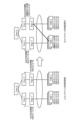
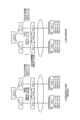
- FIG. 1 is a diagram for explaining an overview of the accommodation change device of the present embodiment.
- FIG. 2 is a diagram for explaining an overview of the accommodation change device of this embodiment.
- FIG. 3 is a diagram for explaining an overview of the accommodation change device of this embodiment.
- FIG. 4 is a diagram for explaining an overview of the accommodation change device of this embodiment.
- FIG. 5 is a diagram for explaining an overview of the accommodation change device of this embodiment.
- FIG. 6 is a schematic diagram illustrating a schematic configuration of the accommodation changing device of this embodiment.
- FIG. 7 is a diagram for explaining the processing of the accommodation change device.
- FIG. 8 is a diagram for explaining the processing of the accommodation change device.
- FIG. 9 is a flowchart showing the accommodation change processing procedure.
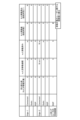
- FIG. 10 is a diagram for explaining the effect of the accommodation change process.
- FIG. 11 is a diagram for explaining the effect of the accommodation change process.
- FIG. 12 is a diagram illustrating an example of a computer that executes a storage change program.
- FIGS. 1 to 5 are diagrams for explaining an overview of the accommodation change device of the present embodiment.
- the accommodation of the user HGW, Home GateWay
- the accommodation of the user is changed to another device Edge-2, so that the service can be continued.
- the BGP advertisement information would change as the user's location changed.
- the advertisement information for "2002:0:1::0/48" that aggregated users accommodated in Edge-1, as shown in Figure 1(a) is changed to advertisement information for Edge-2, as shown in Figure 1(b).
- the relocation is performed one user at a time to minimize the service interruption time.
- users accommodated in Edge-1 are relocated to Edge-2 one user at a time.
- user "2002:0:1:1::0/56" accommodated in Edge-1 is relocated to Edge-2 as shown in FIG. 3(b).
- the route information for user "2002:0:1:1::0/56" is not aggregated but is added to the BGP advertisement information of Edge-2. In this way, the amount of route information circulating in the core network increases even during the process of relocation due to maintenance or the like.
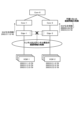
- the increase in route information circulating within the core network is suppressed by utilizing a tunnel from the relocation source device to the relocation destination device.
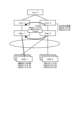
- a static route is set to the user via a tunnel from the relocation source Edge-2 to the relocation destination Edge-1.
- the example shown in FIG. 4 illustrates a case where user "2002:0:1:1::0/56" is relocated to Edge-1.
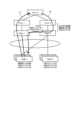
- upstream traffic A and downstream traffic B for the user "2002:0:1:1::0/56" that is the target of the accommodation change will take different routes.
- upstream traffic is sent from Edge-1, the destination of the accommodation change
- downstream traffic travels from Edge-2, the source of the accommodation change, via a tunnel to reach Edge-1, the destination of the accommodation change.
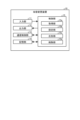
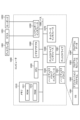
- FIG. 6 is a schematic diagram illustrating the schematic configuration of the accommodation change device of this embodiment.
- Fig. 7 and Fig. 8 are diagrams for explaining the processing of the accommodation change device.
- the accommodation change device 10 of this embodiment is realized by a general-purpose computer such as a personal computer, and includes an input unit 11, an output unit 12, a communication control unit 13, a storage unit 14, and a control unit 15.
- the input unit 11 is realized using input devices such as a keyboard and a mouse, and inputs various instruction information such as starting processing to the control unit 15 in response to input operations by an operator.
- the output unit 12 is realized by a display device such as a liquid crystal display, a printing device such as a printer, etc. For example, the output unit 12 displays the results of the accommodation change processing described below.
- the communication control unit 13 is realized by a NIC (Network Interface Card) or the like, and controls communication between the control unit 15 and external devices via telecommunication lines such as a LAN (Local Area Network) or the Internet.
- the communication control unit 13 controls communication between the control unit 15 and a network device that is the target of accommodation change processing, or a management device that manages information on users accommodated in each device.
- the storage unit 14 is realized by a semiconductor memory element such as a RAM (Random Access Memory) or a flash memory, or a storage device such as a hard disk or an optical disk.
- the storage unit 14 stores in advance the processing program that operates the accommodation change device 10 and data used during the execution of the processing program, or stores it temporarily each time processing is performed.
- the storage unit 14 may be configured to communicate with the control unit 15 via the communication control unit 13.
- the control unit 15 is realized using a CPU (Central Processing Unit), NP (Network Processor), FPGA (Field Programmable Gate Array), etc., and executes a processing program stored in memory. As a result, the control unit 15 functions as an acquisition unit 15a, a setting unit 15b, an advertising unit 15c, and a deletion unit 15d, as illustrated in FIG. 6, to execute the accommodation change process. Note that each of these functional units, or a part of them, may be implemented in different hardware. For example, the advertising unit 15c and the deletion unit 15d may be implemented in a device different from the acquisition unit 15a and the setting unit 15b. The control unit 15 may also have other functional units.
- CPU Central Processing Unit
- NP Network Processor
- FPGA Field Programmable Gate Array
- the acquisition unit 15a acquires information about the user who is the target of the accommodation change. For example, the acquisition unit 15a acquires the address of the user who will perform the accommodation change, information about the device from which the accommodation change is to be performed, and the device to which the accommodation change is to be performed, via the input unit 11, or from a management device or the like via the communication control unit 13. The acquisition unit 15a may store this information acquired in advance in the storage unit 14.
- the setting unit 15b sets a route to the user via a tunnel from the device at the source of the change to the device at the destination of the change for each user to be changed. Specifically, as shown in FIG. 4, the setting unit 15b sets a static route to the user via a tunnel from Edge-2 at the source of the change to Edge-1 at the destination of the change. This route is originally set at the edge using connected or the like, so there is no problem with an increase in the number of routes.
- upstream traffic A and downstream traffic B for the user take different routes.
- the BGP advertisement information of the device from which the accommodation change originates does not need to be changed and remains the aggregated advertisement information. Therefore, the increase in the amount of route information is suppressed, the impact on network stability is reduced, and services can be continued seamlessly. Furthermore, since this is a temporary state, it does not pose any major operational problems.
- the amount of upstream traffic on the upstream side of the device from which the accommodation was changed (Edge-2) or the downstream side of the device to which the accommodation was changed (Edge-1) increases.
- upstream traffic is generally less than downstream traffic, the risk of congestion occurring is small.
- the risk of congestion can be avoided by adding rate control to the tunnel.
- the setting unit 15b may change the static route of an individual route that passes through a tunnel from the source device to the destination device, and may use a static route of an aggregated route or route advertisement such as BGP from the destination device to the source device.
- the advertising unit 15c aggregates and advertises the routes from the destination device to all users. For example, as shown in FIG. 7(a), when the setting of the static route via the tunnel is completed for all users who are the subject of the accommodation change from Edge-2 to Edge-1, the advertising unit 15c aggregates and advertises the route information of all users from the destination Edge-1 as shown in FIG. 7(b). In the example shown in FIG. 7(b), the aggregated route information "2002:0:1:1:0/48" is advertised from Edge-1 to Core-1.
- the deletion unit 15d deletes unnecessary route information. Specifically, the deletion unit 15d deletes routes that go through the set tunnels and aggregated routes from the source device of the accommodation change to the users advertised. For example, as illustrated in FIG. 8, the deletion unit 15d deletes the advertisement information "2002:0:1::0/48" of Edge-2 that is no longer necessary. The deletion unit 15d also deletes the tunnel illustrated in FIG. 7(a) and the information on the static routes of all users that go through the tunnels.
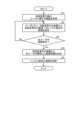
- Fig. 9 is a flowchart showing the accommodation change process procedure.
- the flowchart in Fig. 9 is started, for example, when the user performs an operation input to instruct the start of the process.
- the acquisition unit 15a acquires information about the user who is the target of the accommodation change (step S1). For example, the acquisition unit 15a acquires the address of the user who will perform the accommodation change, information about the device from which the accommodation change is to be performed, and the device to which the accommodation change is to be performed, via the input unit 11 or from a management device or the like via the communication control unit 13.
- the setting unit 15b sets, for each user to be changed, a route to the user via a tunnel from the device at the source of the change to the device at the destination of the change (step S2). For example, the setting unit 15b sets a static route to the user via a tunnel from the edge device at the source of the change to the edge device at the destination of the change.
- step S3 the setting unit 15b repeats the setting of a route via a tunnel from the device at the source of the accommodation change to the device at the destination of the accommodation change for each user that is the subject of the accommodation change.
- step S3 Yes
- step S4 the setting unit 15b proceeds to step S4.
- the advertising unit 15c aggregates and advertises the routes from the new device to all users (step S4).
- the deletion unit 15d also deletes the route that passes through the set tunnel (step S5).
- the deletion unit 15d also deletes the aggregated route from the source device of the accommodation change to the advertised user that is no longer necessary. This completes the series of accommodation change processes.
- the acquisition unit 15a acquires information on users who are the targets of accommodation change.
- the setting unit 15b sets, for each user who is the target of accommodation change, a route to the user that passes through a tunnel from the accommodation change source device to the accommodation change destination device.
- the BGP advertisement information of the device from which the accommodation change originates does not need to be changed and remains the aggregated advertisement information.
- the route via the tunnel is information that was originally set in the device from which the accommodation change originates/destination, and does not contribute to an increase in the amount of route information. Therefore, an increase in the amount of route information is suppressed, the impact on network stability is reduced, and service can be continued seamlessly. In this way, even when accommodation is changed on a user-by-user basis, the accommodation change device 10 suppresses the generation of a large amount of route advertisements, enabling stable operation of the network. Therefore, it becomes easy to change accommodation on a user-by-user basis.
- Figures 10 and 11 are diagrams for explaining the effect of accommodation change processing.
- the number of route information received by the upstream core router becomes N+1, and a large amount of route information is circulated within the core network.
- it may be difficult to incorporate all the route information or the processing costs for route calculation may be large, which may affect the stability of the network.
- the number of pieces of route information received by the upstream core router is almost 1 except when it becomes 2 immediately after the movement of all N users to be accommodated is completed, and it can be said that the impact of the number of pieces of route information within the core network is extremely minor.
- the generation of a large amount of route advertisements is suppressed, device costs are reduced, and stable operation of the network is possible.
- the advertising unit 15c when the advertising unit 15c has completed setting routes to users via a tunnel from the device at the source of the accommodation change to the device at the destination of the accommodation change for all users that are the subject of the accommodation change, the advertising unit 15c aggregates and advertises routes from the device at the destination of the accommodation change to all users. This enables the accommodation change device 10 to streamline route information.
- the deletion unit 15d also deletes the route that passes through the tunnel from the configured device at the source of the change to the device at the destination of the change, and the aggregated route from the device at the source of the change to the advertised user. In this way, by deleting route information that is no longer necessary after the change of accommodation process is completed, it is possible to streamline the route information.
- a program can be created in which the process executed by the accommodation change device 10 according to the above embodiment is written in a language executable by a computer.
- the accommodation change device 10 can be implemented by installing an accommodation change program that executes the above accommodation change process as package software or online software on a desired computer.
- the information processing device can function as the accommodation change device 10 by executing the above accommodation change program on an information processing device.
- the information processing device referred to here includes desktop or notebook personal computers.
- the information processing device also includes mobile communication terminals such as smartphones, mobile phones, and PHS (Personal Handyphone System), as well as slate terminals such as PDAs (Personal Digital Assistants).
- the functions of the accommodation change device 10 may be implemented on a cloud server.
- FIG. 12 is a diagram showing an example of a computer that executes a storage change program.
- the computer 1000 has, for example, a memory 1010, a CPU 1020, a hard disk drive interface 1030, a disk drive interface 1040, a serial port interface 1050, a video adapter 1060, and a network interface 1070. These components are connected by a bus 1080.
- the memory 1010 includes a ROM (Read Only Memory) 1011 and a RAM 1012.
- the ROM 1011 stores a boot program such as a BIOS (Basic Input Output System).
- BIOS Basic Input Output System
- the hard disk drive interface 1030 is connected to a hard disk drive 1031.
- the disk drive interface 1040 is connected to a disk drive 1041.
- a removable storage medium such as a magnetic disk or optical disk is inserted into the disk drive 1041.
- the serial port interface 1050 is connected to a mouse 1051 and a keyboard 1052, for example.
- the video adapter 1060 is connected to a display 1061, for example.
- the hard disk drive 1031 stores, for example, an OS (Operating System) 1091, an application program 1092, a program module 1093, and program data 1094. Each piece of information described in the above embodiment is stored, for example, in the hard disk drive 1031 or memory 1010.
- OS Operating System
- the storage change program is stored in the hard disk drive 1031, for example, as a program module 1093 in which commands to be executed by the computer 1000 are written.
- the program module 1093 in which the processes executed by the storage change device 10 described in the above embodiment are written is stored in the hard disk drive 1031.
- data used for information processing by the accommodation change program is stored as program data 1094, for example, in the hard disk drive 1031.
- the CPU 1020 reads the program module 1093 and program data 1094 stored in the hard disk drive 1031 into the RAM 1012 as necessary, and executes each of the above-mentioned procedures.
- the program module 1093 and program data 1094 related to the storage change program are not limited to being stored in the hard disk drive 1031, but may be stored in a removable storage medium, for example, and read by the CPU 1020 via the disk drive 1041 or the like.
- the program module 1093 and program data 1094 related to the storage change program may be stored in another computer connected via a network such as a LAN or WAN (Wide Area Network), and read by the CPU 1020 via the network interface 1070.
Landscapes
- Engineering & Computer Science (AREA)
- Computer Networks & Wireless Communication (AREA)
- Signal Processing (AREA)
- Data Exchanges In Wide-Area Networks (AREA)
Abstract
Description
本発明は、収容変更装置、収容変更方法および収容変更プログラムに関する。 The present invention relates to a storage change device, a storage change method, and a storage change program.
ネットワークにおいて、ユーザを収容する装置に障害が発生した際、別の装置に収容変更することでサービスの継続を行っている。その場合に、装置容量等の観点から、障害復旧時には元の装置へ収容を変更するといった運用が行われている。また、装置のメンテナンス等においても、一時的にユーザの収容を変更するといった運用が行われている。 When a failure occurs in a device that accommodates a user in a network, the service can be continued by changing the user's accommodation to another device. In such cases, from the standpoint of device capacity, etc., operations are carried out such that the user's accommodation is changed back to the original device when the failure is restored. In addition, when performing maintenance on a device, operations are also carried out such that the user's accommodation is temporarily changed.
その場合に、一度に多くのユーザの収容変更を行うと、コンフィグレーションの再投入に時間を要し、サービス断の時間が発生する。そこで、シームレスにサービスを提供するために、1ユーザ毎に収容を変更する必要がある。 In that case, if you change the accommodation of many users at once, it will take time to re-enter the configuration, resulting in service interruptions. Therefore, in order to provide seamless service, it is necessary to change the accommodation for each user.
ここで、従来、BGP(Border Gateway Protocol)等では、ユーザの収容位置がコアネットワーク全体に広告されている。その際にBGPでは、ネットワーク全体の負担を軽減するために、ユーザの経路情報は装置単位等で集約して広告されている(非特許文献1参照)。 Here, conventionally, in BGP (Border Gateway Protocol) and the like, the location of the user is advertised to the entire core network. In BGP, in order to reduce the burden on the entire network, the user's route information is aggregated and advertised on a device basis, etc. (see Non-Patent Document 1).
しかしながら、従来技術では、1ユーザ毎に収容を変更することが困難な場合がある。例えば、BGPでユーザの経路情報を集約して広告している場合、1ユーザ毎に収容を変更するとユーザ毎の経路広告が必要となるため、大量の経路情報がネットワークに流通し、ネットワーク装置に高い性能が求められたり、ネットワークの安定性に影響を及ぼすおそれがあったりする。 However, with conventional technology, it can be difficult to change the accommodation for each individual user. For example, if BGP aggregates and advertises user route information, changing the accommodation for each individual user requires route advertising for each user, which results in a large amount of route information being circulated on the network, which requires high performance from network devices and may affect the stability of the network.
本発明は、上記に鑑みてなされたものであって、1ユーザ毎に収容を変更することを容易に可能とすることを目的とする。 The present invention was made in consideration of the above, and aims to make it easy to change the accommodation for each user.
上述した課題を解決し、目的を達成するために、本発明に係る収容変更装置は、収容変更対象のユーザに関する情報を取得する取得部と、前記ユーザごとに、収容変更元の装置から収容変更先の装置へのトンネルを経由する該ユーザへの経路を設定する設定部と、を有することを特徴とする。 In order to solve the above-mentioned problems and achieve the object, the accommodation change device according to the present invention is characterized by having an acquisition unit that acquires information about a user who is the subject of accommodation change, and a setting unit that sets, for each user, a route to the user via a tunnel from the accommodation change source device to the accommodation change destination device.
本発明によれば、1ユーザ毎に収容を変更することが容易に可能となる。 The present invention makes it easy to change the accommodation for each user.
以下、図面を参照して、本発明の一実施形態を詳細に説明する。なお、この実施形態により本発明が限定されるものではない。また、図面の記載において、同一部分には同一の符号を付して示している。 Below, one embodiment of the present invention will be described in detail with reference to the drawings. Note that the present invention is not limited to this embodiment. In addition, in the drawings, the same parts are denoted by the same reference numerals.
[収容変更装置の概要]
図1~図5は、本実施形態の収容変更装置の概要を説明するための図である。まず、図1に例示するEdge-1で障害が発生した場合に、ユーザ(HGW, Home GateWay)を別の装置Edge-2に収容変更することで、サービスを継続することが可能となる。
[Overview of accommodation change device]
1 to 5 are diagrams for explaining an overview of the accommodation change device of the present embodiment. First, when a failure occurs in Edge-1 illustrated in Fig. 1, the accommodation of the user (HGW, Home GateWay) is changed to another device Edge-2, so that the service can be continued.
その際に、従来は、ユーザの収容位置変更に伴い、BGPの広告情報が変更される。例えば、図1(a)に例示するEdge-1に収容されているユーザを集約した「2002:0:1::0/48」の広告情報が、図1(b)に例示するようにEdge-2の広告情報に変更されている。 In the past, when this happened, the BGP advertisement information would change as the user's location changed. For example, the advertisement information for "2002:0:1::0/48" that aggregated users accommodated in Edge-1, as shown in Figure 1(a), is changed to advertisement information for Edge-2, as shown in Figure 1(b).
その後、Edge-1が障害復旧した場合には、装置容量の観点から、ユーザの収容位置を元のEdge-1に戻している。ここで、1ユーザずつ収容位置を変更する場合には、図2(b)に例示するように、途中経過でユーザごとに1経路情報をEdge-1の広告情報に追加する必要がある。図2(b)に示す例では、ユーザ「2002:0:1:1::0/56」の経路情報がEdge-1の広告情報に追加されている。一方、Edge-2の広告情報数は変わらない。このように、収容変更の途中経過では、コア網内へ流通する経路情報数が増加する。 After that, when Edge-1 recovers from the failure, the user's accommodation location is returned to the original Edge-1 from the viewpoint of device capacity. Here, when changing the accommodation location one user at a time, it is necessary to add one route information for each user to the advertising information of Edge-1 during the process, as shown in the example of Figure 2(b). In the example shown in Figure 2(b), the route information for user "2002:0:1:1::0/56" is added to the advertising information of Edge-1. Meanwhile, the amount of advertising information for Edge-2 does not change. In this way, the amount of route information circulating within the core network increases during the accommodation change process.
また、メンテナンス等のために特定のエッジ装置からユーザの収容変更を行う場合には、サービス断時間をできるだけ短くするために、1ユーザ毎に収容変更を行う。図3に示す例では、Edge-1に収容されているユーザが1ユーザ毎にEdge-2に収容変更されている。例えば、図3(a)に例示するように、Edge-1に収容されているユーザ「2002:0:1:1::0/56」が、図3(b)に例示するように、Edge-2に収容変更されている。この場合には、ユーザ「2002:0:1:1::0/56」の経路情報が集約されずにEdge-2のBGP広告情報に追加されている。このように、メンテナンス等による収容変更の途中経過でも、コア網内へ流通する経路情報数が増加する。 Furthermore, when a user is relocated from a specific edge device for maintenance or the like, the relocation is performed one user at a time to minimize the service interruption time. In the example shown in FIG. 3, users accommodated in Edge-1 are relocated to Edge-2 one user at a time. For example, as shown in FIG. 3(a), user "2002:0:1:1::0/56" accommodated in Edge-1 is relocated to Edge-2 as shown in FIG. 3(b). In this case, the route information for user "2002:0:1:1::0/56" is not aggregated but is added to the BGP advertisement information of Edge-2. In this way, the amount of route information circulating in the core network increases even during the process of relocation due to maintenance or the like.
そこで、本実施形態の収容変更装置では、収容変更元の装置から収容変更先の装置へのトンネルを活用することにより、コア網内に流通する経路情報の増加を抑制する。具体的には、図4に例示するように、1ユーザ毎に、収容変更元のEdge-2から収容変更先のEdge-1へのトンネルを経由するユーザへのスタティック(static)ルートを設定する。図4に示す例では、ユーザ「2002:0:1:1::0/56」をEdge-1に収容変更した場合が例示されている。 Then, in the relocation device of this embodiment, the increase in route information circulating within the core network is suppressed by utilizing a tunnel from the relocation source device to the relocation destination device. Specifically, as shown in FIG. 4, for each user, a static route is set to the user via a tunnel from the relocation source Edge-2 to the relocation destination Edge-1. The example shown in FIG. 4 illustrates a case where user "2002:0:1:1::0/56" is relocated to Edge-1.
この場合には、図5に例示するように、収容変更対象のユーザ「2002:0:1:1::0/56」に対する上りトラフィックAと下りトラフィックBとは異なる経路となる。すなわち、上りトラフィックは収容変更先のEdge-1からと発信されるが、下りトラフィックは収容変更元のEdge-2からトンネルを経由して収容変更先のEdge-1に到達する。これにより、収容変更の途中経過では、収容変更元の装置(Edge-2)のBGP広告情報は、集約された広告情報のまま変更する必要がない。したがって、経路情報数の増加が抑制され、ネットワークの安定性への影響が低減される。 In this case, as shown in the example of FIG. 5, upstream traffic A and downstream traffic B for the user "2002:0:1:1::0/56" that is the target of the accommodation change will take different routes. In other words, upstream traffic is sent from Edge-1, the destination of the accommodation change, while downstream traffic travels from Edge-2, the source of the accommodation change, via a tunnel to reach Edge-1, the destination of the accommodation change. As a result, during the accommodation change process, there is no need to change the BGP advertisement information of the source device (Edge-2) as it remains the aggregated advertisement information. Therefore, the increase in the amount of route information is suppressed, and the impact on the stability of the network is reduced.
[収容変更装置の構成]
図6は、本実施形態の収容変更装置の概略構成を例示する模式図である。また、図7および図8は、収容変更装置の処理を説明するための図である。まず、図6に例示するように、本実施形態の収容変更装置10は、パソコン等の汎用コンピュータで実現され、入力部11、出力部12、通信制御部13、記憶部14、および制御部15を備える。
[Configuration of accommodation change device]
Fig. 6 is a schematic diagram illustrating the schematic configuration of the accommodation change device of this embodiment. Fig. 7 and Fig. 8 are diagrams for explaining the processing of the accommodation change device. First, as illustrated in Fig. 6, the accommodation change device 10 of this embodiment is realized by a general-purpose computer such as a personal computer, and includes an input unit 11, an output unit 12, a communication control unit 13, a storage unit 14, and a control unit 15.
入力部11は、キーボードやマウス等の入力デバイスを用いて実現され、操作者による入力操作に対応して、制御部15に対して処理開始などの各種指示情報を入力する。出力部12は、液晶ディスプレイなどの表示装置、プリンター等の印刷装置等によって実現される。例えば、出力部12には、後述する収容変更処理の結果が表示される。 The input unit 11 is realized using input devices such as a keyboard and a mouse, and inputs various instruction information such as starting processing to the control unit 15 in response to input operations by an operator. The output unit 12 is realized by a display device such as a liquid crystal display, a printing device such as a printer, etc. For example, the output unit 12 displays the results of the accommodation change processing described below.
通信制御部13は、NIC(Network Interface Card)等で実現され、LAN(Local Area Network)やインターネットなどの電気通信回線を介した外部の装置と制御部15との通信を制御する。例えば、通信制御部13は、収容変更処理対象のネットワーク装置や、各装置に収容されているユーザの情報等を管理する管理装置等と制御部15との通信を制御する。 The communication control unit 13 is realized by a NIC (Network Interface Card) or the like, and controls communication between the control unit 15 and external devices via telecommunication lines such as a LAN (Local Area Network) or the Internet. For example, the communication control unit 13 controls communication between the control unit 15 and a network device that is the target of accommodation change processing, or a management device that manages information on users accommodated in each device.
記憶部14は、RAM(Random Access Memory)、フラッシュメモリ(Flash Memory)等の半導体メモリ素子、または、ハードディスク、光ディスク等の記憶装置によって実現される。記憶部14には、収容変更装置10を動作させる処理プログラムや、処理プログラムの実行中に使用されるデータなどが予め記憶され、あるいは処理の都度一時的に記憶される。なお、記憶部14は、通信制御部13を介して制御部15と通信する構成でもよい。 The storage unit 14 is realized by a semiconductor memory element such as a RAM (Random Access Memory) or a flash memory, or a storage device such as a hard disk or an optical disk. The storage unit 14 stores in advance the processing program that operates the accommodation change device 10 and data used during the execution of the processing program, or stores it temporarily each time processing is performed. The storage unit 14 may be configured to communicate with the control unit 15 via the communication control unit 13.
制御部15は、CPU(Central Processing Unit)やNP(Network Processor)やFPGA(Field Programmable Gate Array)等を用いて実現され、メモリに記憶された処理プログラムを実行する。これにより、制御部15は、図6に例示するように、取得部15a、設定部15b、広告部15cおよび削除部15dとして機能して、収容変更処理を実行する。なお、これらの機能部は、それぞれ、あるいは一部が異なるハードウェアに実装されてもよい。例えば、広告部15cおよび削除部15dは、取得部15aおよび設定部15bとは異なる装置に実装されてもよい。また、制御部15は、その他の機能部を備えてもよい。 The control unit 15 is realized using a CPU (Central Processing Unit), NP (Network Processor), FPGA (Field Programmable Gate Array), etc., and executes a processing program stored in memory. As a result, the control unit 15 functions as an acquisition unit 15a, a setting unit 15b, an advertising unit 15c, and a deletion unit 15d, as illustrated in FIG. 6, to execute the accommodation change process. Note that each of these functional units, or a part of them, may be implemented in different hardware. For example, the advertising unit 15c and the deletion unit 15d may be implemented in a device different from the acquisition unit 15a and the setting unit 15b. The control unit 15 may also have other functional units.
取得部15aは、収容変更対象のユーザに関する情報を取得する。例えば、取得部15aは、入力部11を介して、あるいは管理装置等から通信制御部13を介して、収容変更を行うユーザのアドレスや、収容変更元の装置および収容変更先の装置の情報等を取得する。取得部15aは、予め取得したこれらの情報を記憶部14に記憶させてもよい。 The acquisition unit 15a acquires information about the user who is the target of the accommodation change. For example, the acquisition unit 15a acquires the address of the user who will perform the accommodation change, information about the device from which the accommodation change is to be performed, and the device to which the accommodation change is to be performed, via the input unit 11, or from a management device or the like via the communication control unit 13. The acquisition unit 15a may store this information acquired in advance in the storage unit 14.
設定部15bは、収容変更対象のユーザごとに、収容変更元の装置から収容変更先の装置へのトンネルを経由する該ユーザへの経路を設定する。具体的には、設定部15bは、図4に例示したように、収容変更元のEdge-2から収容変更先のEdge-1へのトンネルを経由するユーザへのスタティック(static)ルートを設定する。この経路は、もとよりconnected等でエッジに設定されている経路であり、経路数の増加の問題は生じない。 The setting unit 15b sets a route to the user via a tunnel from the device at the source of the change to the device at the destination of the change for each user to be changed. Specifically, as shown in FIG. 4, the setting unit 15b sets a static route to the user via a tunnel from Edge-2 at the source of the change to Edge-1 at the destination of the change. This route is originally set at the edge using connected or the like, so there is no problem with an increase in the number of routes.
この場合に、図5に例示したように、ユーザに対する上りトラフィックAと下りトラフィックBとは異なる経路となる。これにより、収容変更の途中経過では、収容変更元の装置のBGP広告情報は、集約された広告情報のまま変更する必要がない。したがって、経路情報数の増加が抑制され、ネットワークの安定性への影響が低減され、シームレスにサービス継続が可能となる。また、一時的な状態であり、運用面の問題もさほど大きくはない。 In this case, as shown in the example of Figure 5, upstream traffic A and downstream traffic B for the user take different routes. As a result, during the process of the accommodation change, the BGP advertisement information of the device from which the accommodation change originates does not need to be changed and remains the aggregated advertisement information. Therefore, the increase in the amount of route information is suppressed, the impact on network stability is reduced, and services can be continued seamlessly. Furthermore, since this is a temporary state, it does not pose any major operational problems.
このように、トンネルを利用することにより、収容変更元の装置(Edge-2)の上流側の上り、または収容変更先の装置(Edge-1)の下流側の上りのトラフィック量は増加する。しかし、一般に上りのトラフィックは下りのトラフィックより少ないため、輻輳が発生するリスクは小さい。また、トンネルにレート制御を加えることにより、輻輳リスクを回避可能である。 In this way, by using tunnels, the amount of upstream traffic on the upstream side of the device from which the accommodation was changed (Edge-2) or the downstream side of the device to which the accommodation was changed (Edge-1) increases. However, since upstream traffic is generally less than downstream traffic, the risk of congestion occurring is small. In addition, the risk of congestion can be avoided by adding rate control to the tunnel.
なお、設定部15bは、収容変更元の装置から収容変更先の装置へのトンネルを経由する個別経路のスタティック(static)ルートに変えて、集約経路のスタティック(static)ルートや収容変更先の装置から収容変更元の装置へのBGP等の経路広告を用いてもよい。 The setting unit 15b may change the static route of an individual route that passes through a tunnel from the source device to the destination device, and may use a static route of an aggregated route or route advertisement such as BGP from the destination device to the source device.
広告部15cは、収容変更対象の全てのユーザについて、収容変更元の装置から収容変更先の装置へトンネルを経由する経路の設定が完了した場合に、収容変更先の装置から全てのユーザへの経路を集約して広告する。例えば、図7(a)に例示するように、Edge-2からEdge-1への収容変更対象の全てのユーザについて、トンネルを経由するスタティックルートの設定が完了した場合に、広告部15cは、図7(b)に例示するように、収容変更先のEdge-1から全ユーザの経路情報を集約して広告する。図7(b)に示す例では、Edge-1からCore-1に対して、集約された経路情報「2002:0:1:1:0/48」が広告されている。 When the setting of the route from the source device to the destination device via the tunnel is completed for all users who are the subject of the accommodation change, the advertising unit 15c aggregates and advertises the routes from the destination device to all users. For example, as shown in FIG. 7(a), when the setting of the static route via the tunnel is completed for all users who are the subject of the accommodation change from Edge-2 to Edge-1, the advertising unit 15c aggregates and advertises the route information of all users from the destination Edge-1 as shown in FIG. 7(b). In the example shown in FIG. 7(b), the aggregated route information "2002:0:1:1:0/48" is advertised from Edge-1 to Core-1.
なお、この段階で設定されている経路情報数が最大となる。そこで、削除部15dが、不要な経路情報を削除する。具体的には、削除部15dは、設定されたトンネルを経由する経路と、収容変更元の装置から広告されたユーザへの集約された経路とを削除する。例えば、削除部15dは、図8に例示するように、不要になったEdge-2の広告情報「2002:0:1::0/48」を削除する。また、削除部15dは、図7(a)に例示したトンネルとトンネルを経由する全ユーザのスタティックルートの情報を削除する。 Note that the number of route information items set at this stage is at its maximum. Therefore, the deletion unit 15d deletes unnecessary route information. Specifically, the deletion unit 15d deletes routes that go through the set tunnels and aggregated routes from the source device of the accommodation change to the users advertised. For example, as illustrated in FIG. 8, the deletion unit 15d deletes the advertisement information "2002:0:1::0/48" of Edge-2 that is no longer necessary. The deletion unit 15d also deletes the tunnel illustrated in FIG. 7(a) and the information on the static routes of all users that go through the tunnels.
[収容変更処理]
次に、図9を参照して、本実施形態に係る収容変更装置10による収容変更処理について説明する。図9は、収容変更処理手順を示すフローチャートである。図9のフローチャートは、例えば、ユーザが開始を指示する操作入力を行ったタイミングで開始される。
[Containment Change Processing]
Next, the accommodation change process by the accommodation change device 10 according to the present embodiment will be described with reference to Fig. 9. Fig. 9 is a flowchart showing the accommodation change process procedure. The flowchart in Fig. 9 is started, for example, when the user performs an operation input to instruct the start of the process.
まず、取得部15aが、収容変更対象のユーザに関する情報を取得する(ステップS1)。例えば、取得部15aは、入力部11を介して、あるいは管理装置等から通信制御部13を介して、収容変更を行うユーザのアドレスや、収容変更元の装置および収容変更先の装置の情報等を取得する。 First, the acquisition unit 15a acquires information about the user who is the target of the accommodation change (step S1). For example, the acquisition unit 15a acquires the address of the user who will perform the accommodation change, information about the device from which the accommodation change is to be performed, and the device to which the accommodation change is to be performed, via the input unit 11 or from a management device or the like via the communication control unit 13.
次に、設定部15bが、収容変更対象のユーザごとに、収容変更元の装置から収容変更先の装置へのトンネルを経由する該ユーザへの経路を設定する(ステップS2)。例えば、設定部15bは、収容変更元のエッジ装置から収容変更先のエッジ装置へのトンネルを経由するユーザへのスタティック(static)ルートを設定する。 Next, the setting unit 15b sets, for each user to be changed, a route to the user via a tunnel from the device at the source of the change to the device at the destination of the change (step S2). For example, the setting unit 15b sets a static route to the user via a tunnel from the edge device at the source of the change to the edge device at the destination of the change.
そして、設定部15bは、収容変更対象の各ユーザについて、収容変更元の装置から収容変更先の装置へのトンネルを経由する経路の設定を繰り返す(ステップS3、No→ステップS2)。全てのユーザについて、トンネルを経由する経路の設定が完了した場合に(ステップS3、Yes)、設定部15bはステップS4に処理を進める。 Then, the setting unit 15b repeats the setting of a route via a tunnel from the device at the source of the accommodation change to the device at the destination of the accommodation change for each user that is the subject of the accommodation change (step S3, No -> step S2). When the setting of the route via the tunnel has been completed for all users (step S3, Yes), the setting unit 15b proceeds to step S4.
そして、広告部15cが、収容変更先の装置から全てのユーザへの経路を集約して広告する(ステップS4)。 Then, the advertising unit 15c aggregates and advertises the routes from the new device to all users (step S4).
また、削除部15dが、設定されたトンネルを経由する経路を削除する(ステップS5)。また、削除部15dは、不要になった、収容変更元の装置から広告されたユーザへの集約された経路を削除する。これにより、一連の収容変更処理が終了する。 The deletion unit 15d also deletes the route that passes through the set tunnel (step S5). The deletion unit 15d also deletes the aggregated route from the source device of the accommodation change to the advertised user that is no longer necessary. This completes the series of accommodation change processes.
[効果]
以上、説明したように、本実施形態の収容変更装置10において、取得部15aが、収容変更対象のユーザに関する情報を取得する。設定部15bが、収容変更対象のユーザごとに、収容変更元の装置から収容変更先の装置へのトンネルを経由する該ユーザへの経路を設定する。
[effect]
As described above, in the accommodation change device 10 of the present embodiment, the acquisition unit 15a acquires information on users who are the targets of accommodation change. The setting unit 15b sets, for each user who is the target of accommodation change, a route to the user that passes through a tunnel from the accommodation change source device to the accommodation change destination device.
これにより、収容変更の途中経過では、収容変更元の装置のBGP広告情報は、集約された広告情報のまま変更する必要がない。また、トンネルを経由する経路はもとより収容変更元/先の装置に設定されていた情報であり、経路情報数の増加に寄与しない。したがって、経路情報数の増加が抑制され、ネットワークの安定性への影響が低減され、シームレスにサービス継続が可能となる。このように、収容変更装置10は、1ユーザ毎に収容を変更する場合にも、大量な経路広告の発生を抑制し、ネットワークの安定運用が可能となる。したがって、1ユーザ毎に収容を変更することが容易に可能となる。 As a result, during the process of accommodation change, the BGP advertisement information of the device from which the accommodation change originates does not need to be changed and remains the aggregated advertisement information. Furthermore, the route via the tunnel is information that was originally set in the device from which the accommodation change originates/destination, and does not contribute to an increase in the amount of route information. Therefore, an increase in the amount of route information is suppressed, the impact on network stability is reduced, and service can be continued seamlessly. In this way, even when accommodation is changed on a user-by-user basis, the accommodation change device 10 suppresses the generation of a large amount of route advertisements, enabling stable operation of the network. Therefore, it becomes easy to change accommodation on a user-by-user basis.
ここで、図10および図11は、収容変更処理の効果を説明するための図である。従来技術によれば、図10に例示するように、収容変更(移動)対象の全ユーザN人の移動が完了した直後には、上流コアルータが受信する経路情報数がN+1となり、多数の経路情報がコア網内に流通することになる。コア網内の装置の性能や移動させるユーザ数によっては、すべての経路情報を取り込むことが困難であったり、経路計算の処理コストが大きかったりして、ネットワークの安定性に影響を及ぼす恐れがあった。 Here, Figures 10 and 11 are diagrams for explaining the effect of accommodation change processing. According to conventional technology, as shown in Figure 10, immediately after all N users subject to accommodation change (movement) have been moved, the number of route information received by the upstream core router becomes N+1, and a large amount of route information is circulated within the core network. Depending on the performance of the devices within the core network and the number of users to be moved, it may be difficult to incorporate all the route information or the processing costs for route calculation may be large, which may affect the stability of the network.
これに対し、本実施形態の収容変更装置10の収容変更処理によれば、図11に例示するように、上流コアルータが受信する経路情報数は、収容変更対象の全ユーザN人の移動が完了した直後に2となる以外はほぼ1であり、コア網内での経路情報数の影響は極めて軽微といえる。このように、収容変更装置10の収容変更処理によれば、大量な経路広告の発生を抑制して装置コストを削減し、ネットワークの安定運用が可能となる。 In contrast, according to the accommodation change processing of the accommodation change device 10 of this embodiment, as illustrated in FIG. 11, the number of pieces of route information received by the upstream core router is almost 1 except when it becomes 2 immediately after the movement of all N users to be accommodated is completed, and it can be said that the impact of the number of pieces of route information within the core network is extremely minor. In this way, according to the accommodation change processing of the accommodation change device 10, the generation of a large amount of route advertisements is suppressed, device costs are reduced, and stable operation of the network is possible.
また、広告部15cが、収容変更対象の全てのユーザについて、収容変更元の装置から収容変更先の装置へトンネルを経由するユーザへの経路の設定が完了した場合に、収容変更先の装置から全てのユーザへの経路を集約して広告する。これにより、収容変更装置10は、経路情報を合理化することが可能となる。 In addition, when the advertising unit 15c has completed setting routes to users via a tunnel from the device at the source of the accommodation change to the device at the destination of the accommodation change for all users that are the subject of the accommodation change, the advertising unit 15c aggregates and advertises routes from the device at the destination of the accommodation change to all users. This enables the accommodation change device 10 to streamline route information.
また、削除部15dが、設定された収容変更元の装置から収容変更先の装置へトンネルを経由する経路と、収容変更元の装置から広告されたユーザへの集約された経路とを削除する。このように、収容変更処理が完了して不要となった経路情報を削除することにより、経路情報の合理化が可能となる。 The deletion unit 15d also deletes the route that passes through the tunnel from the configured device at the source of the change to the device at the destination of the change, and the aggregated route from the device at the source of the change to the advertised user. In this way, by deleting route information that is no longer necessary after the change of accommodation process is completed, it is possible to streamline the route information.
[プログラム]
上記実施形態に係る収容変更装置10が実行する処理をコンピュータが実行可能な言語で記述したプログラムを作成することもできる。一実施形態として、収容変更装置10は、パッケージソフトウェアやオンラインソフトウェアとして上記の収容変更処理を実行する収容変更プログラムを所望のコンピュータにインストールさせることによって実装できる。例えば、上記の収容変更プログラムを情報処理装置に実行させることにより、情報処理装置を収容変更装置10として機能させることができる。ここで言う情報処理装置には、デスクトップ型またはノート型のパーソナルコンピュータが含まれる。また、その他にも、情報処理装置にはスマートフォン、携帯電話機やPHS(Personal Handyphone System)などの移動体通信端末、さらには、PDA(Personal Digital Assistant)などのスレート端末などがその範疇に含まれる。また、収容変更装置10の機能を、クラウドサーバに実装してもよい。
[program]
A program can be created in which the process executed by the accommodation change device 10 according to the above embodiment is written in a language executable by a computer. As an embodiment, the accommodation change device 10 can be implemented by installing an accommodation change program that executes the above accommodation change process as package software or online software on a desired computer. For example, the information processing device can function as the accommodation change device 10 by executing the above accommodation change program on an information processing device. The information processing device referred to here includes desktop or notebook personal computers. In addition, the information processing device also includes mobile communication terminals such as smartphones, mobile phones, and PHS (Personal Handyphone System), as well as slate terminals such as PDAs (Personal Digital Assistants). The functions of the accommodation change device 10 may be implemented on a cloud server.
図12は、収容変更プログラムを実行するコンピュータの一例を示す図である。コンピュータ1000は、例えば、メモリ1010と、CPU1020と、ハードディスクドライブインタフェース1030と、ディスクドライブインタフェース1040と、シリアルポートインタフェース1050と、ビデオアダプタ1060と、ネットワークインタフェース1070とを有する。これらの各部は、バス1080によって接続される。
FIG. 12 is a diagram showing an example of a computer that executes a storage change program. The
メモリ1010は、ROM(Read Only Memory)1011およびRAM1012を含む。ROM1011は、例えば、BIOS(Basic Input Output System)等のブートプログラムを記憶する。ハードディスクドライブインタフェース1030は、ハードディスクドライブ1031に接続される。ディスクドライブインタフェース1040は、ディスクドライブ1041に接続される。ディスクドライブ1041には、例えば、磁気ディスクや光ディスク等の着脱可能な記憶媒体が挿入される。シリアルポートインタフェース1050には、例えば、マウス1051およびキーボード1052が接続される。ビデオアダプタ1060には、例えば、ディスプレイ1061が接続される。
The
ここで、ハードディスクドライブ1031は、例えば、OS(Operating System)1091、アプリケーションプログラム1092、プログラムモジュール1093およびプログラムデータ1094を記憶する。上記実施形態で説明した各情報は、例えばハードディスクドライブ1031やメモリ1010に記憶される。
Here, the hard disk drive 1031 stores, for example, an OS (Operating System) 1091, an
また、収容変更プログラムは、例えば、コンピュータ1000によって実行される指令が記述されたプログラムモジュール1093として、ハードディスクドライブ1031に記憶される。具体的には、上記実施形態で説明した収容変更装置10が実行する各処理が記述されたプログラムモジュール1093が、ハードディスクドライブ1031に記憶される。
The storage change program is stored in the hard disk drive 1031, for example, as a
また、収容変更プログラムによる情報処理に用いられるデータは、プログラムデータ1094として、例えば、ハードディスクドライブ1031に記憶される。そして、CPU1020が、ハードディスクドライブ1031に記憶されたプログラムモジュール1093やプログラムデータ1094を必要に応じてRAM1012に読み出して、上述した各手順を実行する。
In addition, data used for information processing by the accommodation change program is stored as
なお、収容変更プログラムに係るプログラムモジュール1093やプログラムデータ1094は、ハードディスクドライブ1031に記憶される場合に限られず、例えば、着脱可能な記憶媒体に記憶されて、ディスクドライブ1041等を介してCPU1020によって読み出されてもよい。あるいは、収容変更プログラムに係るプログラムモジュール1093やプログラムデータ1094は、LANやWAN(Wide Area Network)等のネットワークを介して接続された他のコンピュータに記憶され、ネットワークインタフェース1070を介してCPU1020によって読み出されてもよい。
The
以上、本発明者によってなされた発明を適用した実施形態について説明したが、本実施形態による本発明の開示の一部をなす記述および図面により本発明は限定されることはない。すなわち、本実施形態に基づいて当業者等によりなされる他の実施形態、実施例および運用技術等は全て本発明の範疇に含まれる。 The above describes an embodiment of the invention made by the inventor, but the present invention is not limited to the descriptions and drawings that form part of the disclosure of the present invention according to this embodiment. In other words, other embodiments, examples, operational techniques, etc. made by those skilled in the art based on this embodiment are all included in the scope of the present invention.
10 収容変更装置
11 入力部
12 出力部
13 通信制御部
14 記憶部
15 制御部
15a 取得部
15b 設定部
15c 広告部
15d 削除部
REFERENCE SIGNS LIST 10 accommodation change device 11 input unit 12 output unit 13 communication control unit 14 storage unit 15 control unit 15a acquisition unit 15b setting unit 15c advertising unit 15d deletion unit
Claims (5)
前記ユーザごとに、収容変更元の装置から収容変更先の装置へのトンネルを経由する該ユーザへの経路を設定する設定部と、
を有することを特徴とする収容変更装置。 An acquisition unit for acquiring information about a user who is a target of accommodation change;
a setting unit that sets, for each user, a route to the user via a tunnel from a source device to a destination device;
A storage change device comprising:
収容変更対象のユーザに関する情報を取得する取得工程と、
前記ユーザごとに、収容変更元の装置から収容変更先の装置へのトンネルを経由する該ユーザへの経路を設定する設定工程と、
を含んだことを特徴とする収容変更方法。 A storage change method executed by a storage change device,
An acquisition step of acquiring information about a user who is a target of accommodation change;
a setting step of setting, for each user, a route to the user via a tunnel from a source device to a destination device;
A method for changing accommodation, comprising:
前記ユーザごとに、収容変更元の装置から収容変更先の装置へのトンネルを経由する該ユーザへの経路を設定する設定ステップと、
をコンピュータに実行させるための収容変更プログラム。 An acquisition step of acquiring information about a user who is a target of accommodation change;
a setting step of setting, for each user, a route to the user via a tunnel from a source device to a destination device;
A containment change program for causing a computer to execute the above.
Priority Applications (2)
| Application Number | Priority Date | Filing Date | Title |
|---|---|---|---|
| JP2024576009A JPWO2024166315A1 (en) | 2023-02-09 | 2023-02-09 | |
| PCT/JP2023/004414 WO2024166315A1 (en) | 2023-02-09 | 2023-02-09 | Accommodation changing device, accommodation changing method, and accommodation changing program |
Applications Claiming Priority (1)
| Application Number | Priority Date | Filing Date | Title |
|---|---|---|---|
| PCT/JP2023/004414 WO2024166315A1 (en) | 2023-02-09 | 2023-02-09 | Accommodation changing device, accommodation changing method, and accommodation changing program |
Publications (1)
| Publication Number | Publication Date |
|---|---|
| WO2024166315A1 true WO2024166315A1 (en) | 2024-08-15 |
Family
ID=92262183
Family Applications (1)
| Application Number | Title | Priority Date | Filing Date |
|---|---|---|---|
| PCT/JP2023/004414 Ceased WO2024166315A1 (en) | 2023-02-09 | 2023-02-09 | Accommodation changing device, accommodation changing method, and accommodation changing program |
Country Status (2)
| Country | Link |
|---|---|
| JP (1) | JPWO2024166315A1 (en) |
| WO (1) | WO2024166315A1 (en) |
Citations (2)
| Publication number | Priority date | Publication date | Assignee | Title |
|---|---|---|---|---|
| JPH09252321A (en) * | 1996-03-15 | 1997-09-22 | Toshiba Corp | Packet switch for mobile terminals |
| JP2010226470A (en) * | 2009-03-24 | 2010-10-07 | Kddi Corp | HANDOVER CONTROL SYSTEM, MAG, AND HANDOVER CONTROL METHOD |
-
2023
- 2023-02-09 WO PCT/JP2023/004414 patent/WO2024166315A1/en not_active Ceased
- 2023-02-09 JP JP2024576009A patent/JPWO2024166315A1/ja active Pending
Patent Citations (2)
| Publication number | Priority date | Publication date | Assignee | Title |
|---|---|---|---|---|
| JPH09252321A (en) * | 1996-03-15 | 1997-09-22 | Toshiba Corp | Packet switch for mobile terminals |
| JP2010226470A (en) * | 2009-03-24 | 2010-10-07 | Kddi Corp | HANDOVER CONTROL SYSTEM, MAG, AND HANDOVER CONTROL METHOD |
Also Published As
| Publication number | Publication date |
|---|---|
| JPWO2024166315A1 (en) | 2024-08-15 |
Similar Documents
| Publication | Publication Date | Title |
|---|---|---|
| US11405316B2 (en) | Live application and kernel migration using routing table entries | |
| US20190310875A1 (en) | Nondisruptive updates in a networked computing environment | |
| CN111666585A (en) | Method, apparatus, electronic device, and readable storage medium for accessing sub-applications | |
| CN113656198A (en) | Copying and pasting method and device from client to cloud mobile phone | |
| WO2023066246A1 (en) | Method and system for installing application on cloudphone, and client cloudphone | |
| US20120072907A1 (en) | Proxy tool for guest machine relocation | |
| CN113703760B (en) | A page jump control method and device | |
| CN113656041A (en) | Data processing method, device, equipment and storage medium | |
| JP2020136701A (en) | Creation device, creation system, creation method and creation program | |
| CN102959513B (en) | Virtual machine merging method and system | |
| CN114443076A (en) | Mirror image construction method, device, equipment and storage medium | |
| JP6930443B2 (en) | Process processing equipment, process processing system, process migration order determination method, and program | |
| CN110599112B (en) | Network page development and maintenance method and device | |
| US11010143B2 (en) | Executing formulas written using formula language | |
| US9727257B2 (en) | Maintaining relative references when unlinking volumes from a volume chain | |
| CN113655977B (en) | Material display method and device, electronic equipment and storage medium | |
| US20060293877A1 (en) | Method and apparatus for uni-lingual workflow usage in multi-lingual data center environments | |
| CN116009792A (en) | A device and method for reading and writing data in image processing, and electronic equipment | |
| US20180341717A1 (en) | Providing instant preview of cloud based file | |
| US20210342070A1 (en) | Method, electronic device, and computer storage medium for information processing | |
| JP5940502B2 (en) | Router, communication system, management method, and management program | |
| JP6483633B2 (en) | Image reconstruction device, image reconstruction method, and image reconstruction program | |
| CN112015409A (en) | Webpage editing data synchronization method, device and system and computer storage medium | |
| JP7556466B2 (en) | Analysis device, analysis method, and analysis program | |
| US11558448B1 (en) | Sparse information sharing system |
Legal Events
| Date | Code | Title | Description |
|---|---|---|---|
| 121 | Ep: the epo has been informed by wipo that ep was designated in this application |
Ref document number: 23921146 Country of ref document: EP Kind code of ref document: A1 |
|
| ENP | Entry into the national phase |
Ref document number: 2024576009 Country of ref document: JP Kind code of ref document: A |
|
| WWE | Wipo information: entry into national phase |
Ref document number: 2024576009 Country of ref document: JP |
|
| NENP | Non-entry into the national phase |
Ref country code: DE |
|
| 122 | Ep: pct application non-entry in european phase |
Ref document number: 23921146 Country of ref document: EP Kind code of ref document: A1 |