WO2024166243A1 - 軌道部材の製造方法、玉の製造方法、及び、ころの製造方法 - Google Patents
軌道部材の製造方法、玉の製造方法、及び、ころの製造方法 Download PDFInfo
- Publication number
- WO2024166243A1 WO2024166243A1 PCT/JP2023/004143 JP2023004143W WO2024166243A1 WO 2024166243 A1 WO2024166243 A1 WO 2024166243A1 JP 2023004143 W JP2023004143 W JP 2023004143W WO 2024166243 A1 WO2024166243 A1 WO 2024166243A1
- Authority
- WO
- WIPO (PCT)
- Prior art keywords
- depth
- heat
- grinding
- melting
- melted
- Prior art date
- Legal status (The legal status is an assumption and is not a legal conclusion. Google has not performed a legal analysis and makes no representation as to the accuracy of the status listed.)
- Ceased
Links
Images

Classifications
-
- F—MECHANICAL ENGINEERING; LIGHTING; HEATING; WEAPONS; BLASTING
- F16—ENGINEERING ELEMENTS AND UNITS; GENERAL MEASURES FOR PRODUCING AND MAINTAINING EFFECTIVE FUNCTIONING OF MACHINES OR INSTALLATIONS; THERMAL INSULATION IN GENERAL
- F16C—SHAFTS; FLEXIBLE SHAFTS; ELEMENTS OR CRANKSHAFT MECHANISMS; ROTARY BODIES OTHER THAN GEARING ELEMENTS; BEARINGS
- F16C19/00—Bearings with rolling contact, for exclusively rotary movement
- F16C19/02—Bearings with rolling contact, for exclusively rotary movement with bearing balls essentially of the same size in one or more circular rows
- F16C19/04—Bearings with rolling contact, for exclusively rotary movement with bearing balls essentially of the same size in one or more circular rows for radial load mainly
- F16C19/06—Bearings with rolling contact, for exclusively rotary movement with bearing balls essentially of the same size in one or more circular rows for radial load mainly with a single row or balls
-
- F—MECHANICAL ENGINEERING; LIGHTING; HEATING; WEAPONS; BLASTING
- F16—ENGINEERING ELEMENTS AND UNITS; GENERAL MEASURES FOR PRODUCING AND MAINTAINING EFFECTIVE FUNCTIONING OF MACHINES OR INSTALLATIONS; THERMAL INSULATION IN GENERAL
- F16C—SHAFTS; FLEXIBLE SHAFTS; ELEMENTS OR CRANKSHAFT MECHANISMS; ROTARY BODIES OTHER THAN GEARING ELEMENTS; BEARINGS
- F16C33/00—Parts of bearings; Special methods for making bearings or parts thereof
- F16C33/30—Parts of ball or roller bearings
- F16C33/58—Raceways; Race rings
- F16C33/64—Special methods of manufacture
Definitions
- This disclosure relates to a method for manufacturing raceway members, a method for manufacturing balls, and a method for manufacturing rollers.
- Bearing materials used in rolling bearings are required to have a long rolling fatigue life.
- the rolling fatigue life of a bearing is affected by non-metallic inclusions present in the material. Furthermore, the larger the size of the non-metallic inclusions, the more likely it is that internally initiated spalling will occur, which will shorten the rolling fatigue life of the bearing.
- Patent Document 1 proposes a bearing material with a specific composition in which the nonmetallic inclusion-forming elements S and O are 0.025 mass% or less and 0.0012 mass% or less, respectively.
- Patent Document 2 proposes a rolling bearing member made of low-cleanliness steel in order to suppress the occurrence of internally initiated spalling caused by non-metallic inclusions and to extend the life of the rolling bearing member, in which non-metallic inclusions present on the surface layer of the rolling surface of the rolling bearing member are crushed to reduce their diameter.
- a method for manufacturing a raceway member is a method for manufacturing a raceway member having a raceway along which rolling elements roll, comprising the steps of: A forging process for forging a metal material containing non-metallic inclusions having a circular equivalent diameter of 2 ⁇ m or more into a forged member; a turning step of turning the forged member to obtain a turned member having a portion that will become a raceway; a melting and solidifying step of melting at least a part of a surface layer portion up to a first depth immediately below a surface forming a rolling surface included in a portion that becomes the raceway of the turned member, and then solidifying the molten material to obtain a melted and solidified member; and and a heat treatment step of heat treating at least the entire surface forming the rolling contact surface of the melt-solidified member to obtain a heat-treated member.
- a method for manufacturing a ball includes: A forging process for forging a metallic material containing non-metallic inclusions having a circular equivalent diameter of 2 ⁇ m or more into a spherical forged member; a first grinding step of grinding a surface of the forged member to obtain a first ground member; a melting and solidifying step of melting at least a part of a surface layer portion up to a third depth just below the surface of the first ground member, and then solidifying the molten material to obtain a melted and solidified member;
- the method includes a heat treatment step of heat treating the entire surface of the melt-solidified member to obtain a heat-treated member, and a second grinding step of grinding the surface of the heat-treated member to obtain a second ground member.
- a method for manufacturing a roller includes: A forging process for forging a metal material containing non-metallic inclusions with a circle equivalent diameter of 2 ⁇ m or more into a roller-shaped forged member; a first grinding step of grinding at least a peripheral surface of the forged member to obtain a first ground member; a melting and solidifying step of melting at least a part of a surface layer portion up to a fourth depth just below the peripheral surface of the first ground member, and then solidifying the molten material to obtain a melted and solidified member;
- the method includes a heat treatment step of heat-treating at least the entire peripheral surface of the melt-solidified member to obtain a heat-treated member, and a second grinding step of grinding at least the peripheral surface of the heat-treated member to obtain a second ground member.
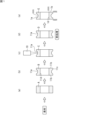
- FIGS. 5A to 5C are process diagrams illustrating a method for manufacturing a track member according to an embodiment of the present disclosure.
- FIG. 2 is a process diagram for explaining the manufacturing method employed in the examples and comparative examples.
- Patent Document 1 ⁇ Problems to be Solved by the Invention of the Present Disclosure> According to the inventions of Patent Documents 1 and 2, it is possible to extend the life of the rolling bearing member. On the other hand, the invention of Patent Document 1 aims to reduce nonmetallic inclusions throughout the entire bearing member, and is therefore expensive as a bearing material. Therefore, when the bearing material of Patent Document 1 is used, it is difficult to provide a rolling bearing member at a low price.
- Patent Document 2 By implementing the invention of Patent Document 2, it is possible to reduce the diameter of nonmetallic inclusions with a particle size of 30 ⁇ m or more to a maximum diameter of about 20 ⁇ m. However, even if the invention of Patent Document 2 is implemented, it is difficult to further refine nonmetallic inclusions with smaller particle sizes.
- a method for manufacturing a raceway member according to the present disclosure is a method for manufacturing a raceway member having a raceway along which rolling elements roll, comprising the steps of: A forging process for forging a metal material containing non-metallic inclusions having a circular equivalent diameter of 2 ⁇ m or more into a forged member; a turning step of turning the forged member to obtain a turned member having a portion that will become a raceway; a melting and solidifying step of melting at least a part of a surface layer portion up to a first depth immediately below a surface forming a rolling surface included in a portion that becomes the raceway of the turned member, and then solidifying the molten material to obtain a melted and solidified member; and and a heat treatment step of heat treating at least the entire surface forming the rolling contact surface of the melt-solidified member to obtain a heat-treated member.
- the method for manufacturing a raceway member disclosed herein it is possible to manufacture a raceway member for a rolling bearing in which non-metallic inclusions present directly below the rolling surface are refined and internally initiated flaking is less likely to occur. Furthermore, the method for manufacturing the raceway member described above is a method that produces little CO2 emissions.
- the method for manufacturing the raceway member further includes a surface processing step performed after the heat treatment step,
- the surface processing step preferably includes removing at least a portion of the surface forming the rolling surface of the heat-treated component from the surface to a second depth to obtain a surface-processed component.
- the method for manufacturing the balls of the present disclosure includes: A forging process for forging a metallic material containing non-metallic inclusions having a circular equivalent diameter of 2 ⁇ m or more into a spherical forged member; a first grinding step of grinding a surface of the forged member to obtain a first ground member; a melting and solidifying step of melting at least a part of a surface layer portion up to a third depth just below the surface of the first ground member, and then solidifying the molten material to obtain a melted and solidified member; a heat treatment step of heat treating the entire surface of the melt-solidified member to obtain a heat-treated member; and a second grinding step of grinding the surface of the heat-treated member to obtain a second ground member. Equipped with. According to the ball manufacturing method disclosed herein, non-metallic inclusions near the surface are refined, making it possible to manufacture balls for bearings that are less susceptible to internally initiated flaking. In addition, the method for manufacturing the balls produces less CO2 emissions.
- the manufacturing method of the roller according to the present disclosure includes: A forging process for forging a metal material containing non-metallic inclusions with a circle equivalent diameter of 2 ⁇ m or more into a roller-shaped forged member; a first grinding step of grinding at least a peripheral surface of the forged member to obtain a first ground member; a melting and solidifying step of melting at least a part of a surface layer portion up to a fourth depth just below the peripheral surface of the first ground member, and then solidifying the molten material to obtain a melted and solidified member;
- the method includes a heat treatment step of heat-treating at least the entire peripheral surface of the melt-solidified member to obtain a heat-treated member, and a second grinding step of grinding at least the peripheral surface of the heat-treated member to obtain a second ground member.
- non-metallic inclusions present directly below the rolling surface are refined, making it possible to manufacture rollers for bearings that are less susceptible to internally initiated flaking. Furthermore, the above-mentioned method for manufacturing the rollers produces little CO2 emissions.
- First Embodiment 1 is a process diagram for explaining a method for manufacturing a raceway member according to the present embodiment.
- a method for manufacturing an inner ring of a ball bearing will be explained as a method for manufacturing a raceway member having a raceway along which rolling elements roll.
- the method for manufacturing the inner ring comprises the steps of: (a) a forging step, (b) a turning step, (c) a melting and solidifying step, (d) a heat treatment step, and (e) a surface machining step are carried out in this order.
- Known methods used in the manufacture of inner rings can be applied to the steps other than the melting and solidifying step (c). Each step will be described below in order.
- the annular raw material A is produced by forging a metal raw material containing nonmetallic inclusions having an equivalent circle diameter of 2 ⁇ m or more.
- a metal raw material containing nonmetallic inclusions having an equivalent circle diameter of 2 ⁇ m or more.
- the above-mentioned metallic material for example, there can be mentioned a steel material whose inclusion evaluation result satisfies the parameters in Table 1 below in a measurement based on JIS G0555 (2003): Microscopic examination method for non-metallic inclusions in steel using a point counting method.
- the metallic material may be, for example, a steel material whose inclusion evaluation results satisfy the parameters in Table 2 below in a measurement according to ASTM E45 A method.
- Steel materials satisfying these parameters contain nonmetallic inclusions with a circular equivalent diameter of 2 ⁇ m or more.
- the measurement of nonmetallic inclusions by the above-mentioned methods in accordance with JIS G0555 (2003) or ASTM E45 A method can be performed using a commercially available nonmetallic inclusion measuring device (for example, METALSPECTOR II-C manufactured by Toshiba Digital Solutions Corporation).
- the above-mentioned metallic materials include carbon steels for machine construction such as S45C and S55C, high carbon chromium bearing steels such as SUJ2, and alloy steels such as SAE5120 and SC420. These steel materials usually contain non-metallic inclusions with a circular equivalent diameter of 2 ⁇ m or more.
- a raw material (steel material) contains non-metallic inclusions with an equivalent circle diameter of 2 ⁇ m or more is determined by observing a cut surface of the raw material before forging and judging whether or not the largest non-metallic inclusion in the observation area has an equivalent circle diameter of 2 ⁇ m or more.
- the above-mentioned circle equivalent diameter is also called the Heywood diameter, and refers to the diameter of a perfect circle equivalent to the area of the observed nonmetallic inclusion. In this process, spheroidizing annealing may be performed after forging.
- surface 11a forming the rolling surface 1a in this step is removed in a subsequent step, and the portion that was located directly below surface 11a forming the rolling surface 1a is exposed and becomes the rolling surface 1a.
- the portion that will become the raceway is the portion that will undergo a subsequent melting and solidifying process and a surface processing process such as a grinding process to form the raceway.
- step (c) Melting and solidifying step: In this step (c), at least a part of the portion of the annular blank B that is the turned member that becomes the raceway is melted. Specifically, at least a part of a surface layer portion up to a first depth immediately below the surface 11a that forms the rolling surface 1a included in the portion that becomes the raceway is melted. The molten annular blank B then solidifies. The annular material B is irradiated with laser light on a part of the surface of the annular material B, and a surface layer portion of a predetermined depth including the surface irradiated with the laser light is melted.
- nonmetallic inclusions that were present in the portion to be melted before melting are refined.
- nonmetallic inclusions with an equivalent circle diameter of about 30 to 60 ⁇ m can be refined to an equivalent circle diameter of about 0.1 to 1.0 ⁇ m, for example.
- the area irradiated with the laser light in step (c) is a part of the annular material B. Specifically, it is a part or all of the surface 11a that forms the rolling surface 1a of the annular material B. Preferably, it is the entire surface 11a that forms the rolling surface 1a of the annular material B.
- Non-metallic inclusions that exist directly below the rolling surface are the cause of internally initiated spalling. At least the rolling surface that has non-metallic inclusions should be irradiated with the laser light. This is because non-metallic inclusions in other parts do not contribute to the occurrence of internally initiated spalling.
- the depth of the portion to be melted may be determined taking into consideration the depth at which the maximum shear stress occurs in the completed inner ring.
- the shear stress of the inner ring increases from the rolling surface toward the depth direction, reaches a maximum value at a certain depth, and then gradually decreases toward the depth direction.
- the depth at which this shear stress reaches its maximum value is the depth at which the maximum shear stress occurs.
- the deeper of the two depths at which 90% of the maximum shear stress occurs is used as an index, and melting is performed up to a depth equal to or greater than this depth. Note that in this specification, the "depth at which 90% of the maximum shear stress occurs" refers to the deeper of the two depths at which 90% of the maximum shear stress occurs, unless otherwise specified.
- the surface 11a that forms the rolling surface 1a is removed by grinding or the like in a subsequent process.
- the depth to be melted in step (c) is determined taking into consideration the depth to be removed in the subsequent step.
- the maximum depth of the melted portion is not particularly limited as long as the melted portion does not penetrate to the inner circumference 11d of the annular raw material B.
- the depth of the portion to be melted may be determined taking into consideration the depth at which the maximum shear stress occurs in the completed inner ring, and should be equal to or greater than the total depth of the depth at which 90% of the maximum shear stress occurs and the depth to be removed in a subsequent process.
- the depth of the portion to be melted is preferably about 120 to 200% of the total depth of the depth at which 90% of the maximum shear stress occurs and the depth to be removed in a subsequent process.
- the preferred depth of the melted portion cannot be generalized as it depends on the depth at which the maximum shear stress occurs and the depth to be removed in the finishing process, but it is usually around 300 to 2000 ⁇ m.
- the laser 10 used in this step may be any laser capable of melting the nonmetallic inclusions. Specifically, it is preferable that the laser 10 be capable of heating the irradiated area of the laser beam to 2500° C. or higher. Specific examples of the laser 10 include a YAG laser, a YVO laser, a semiconductor laser, and a fiber laser.
- the steel material can be melted and solidified continuously by scanning the laser light and changing the irradiation position of the laser light over time.
- the depth of the melted portion and the cooling speed after melting can be adjusted by adjusting the output and moving speed of the laser beam. Specifically, the depth of the melted portion can be made deeper by increasing the output of the laser beam and slowing the moving speed of the laser 10. On the other hand, the cooling speed can be made faster by increasing the moving speed of the laser 10.
- the cooling rate of the molten portion is preferably 1200 to 10000° C./sec for the surface of the molten portion.
- a cooling rate is suitable for refining nonmetallic inclusions.
- the cooling rate may be calculated based on the temperature change measured using a thermometer having sufficient time resolution, such as a radiation thermometer.
- step (d) Heat treatment step: In this step (d), the intermediate material C, which has been subjected to the melting and solidifying steps and in which the non-metallic inclusions have been reduced in size, is subjected to a heat treatment to produce an intermediate material D, which is a heat-treated member.
- a heat treatment for example, quenching and tempering are performed, and carburizing treatment, carbonitriding treatment, etc. may also be performed as the heat treatment.
- the above-mentioned hardening may be through hardening, induction hardening, flame hardening, etc.
- the above-mentioned hardening may be full hardening or partial hardening.
- the above-mentioned partial hardening is performed on at least the entire surface 11a forming the rolling surface 1a formed on the intermediate material C.
- step (e) Surface processing process: In this step (e), the surface 11a forming the rolling surface 1a of the intermediate material D that has been heat treated is subjected to surface processing, and an inner ring E having a rolling surface 1a finished to a predetermined accuracy is formed. .
- the surface 11a forming the rolling surface 1a is machined, and the end face and inner circumference of the intermediate material D are also machined to produce an inner ring E having an end face 1b and inner circumference 1d finished to a predetermined precision. It is preferable to set the above.
- the surface processing that can be adopted includes, for example, grinding processing, cutting processing, and the like.
- the surface 11a forming the rolling surface 1a of the intermediate material D is removed to a predetermined depth (second depth).
- the depth to be removed is set so that the depth of the part that remains after removal, which was melted and solidified in the melting and solidifying process, is equal to or greater than the depth at which 90% of the maximum shear stress occurs.
- the inner ring of the rolling bearing can be manufactured.
- the inner ring manufactured in this embodiment has no non-metallic inclusions with a circle equivalent diameter of 30 ⁇ m or more, or even if present, only in small amounts, up to the depth where 90% of the maximum shear stress occurs directly below the rolling surface, and therefore is less susceptible to internally initiated flaking over long periods of time.
- the inner ring can be manufactured with less CO2 emissions.
- the present embodiment relates to a method for manufacturing balls as rolling bearing members.
- the method for manufacturing the ball according to this embodiment is as follows: (a) a forging step, (b) a first grinding step, (c) a melting and solidifying step, (d) a heat treatment step, and (e) a second grinding step are carried out in this order.
- known methods used in the manufacture of balls for rolling bearings can be applied to the steps other than the melting and solidifying step (c). Each step will be described below in the order of steps, focusing on the differences from the first embodiment.
- the spherical intermediate material F is produced by forging a metallic material containing non-metallic inclusions having a circle equivalent diameter of 2 ⁇ m or more.
- the metallic material may be the same as that used in the first embodiment.
- spheroidizing annealing may be performed after forging.
- step (c) Melting and solidifying step: In this step (c), at least a part of a surface layer portion up to a third depth just below the surface of the ground intermediate material G is melted. Thereafter, the melted material is solidified.
- the intermediate material G becomes a spherical intermediate material H in which non-metallic inclusions immediately below the surface are refined.
- the intermediate material G may be melted in the same manner as in the first embodiment.
- solidification of the melted portion may be performed in the same manner as in the first embodiment.
- the depth of the portion to be melted (third depth) can be determined taking into consideration the depth at which the maximum shear stress occurs in the finished ball, and should be greater than or equal to the sum of the depth at which 90% of the maximum shear stress occurs and the depth to which it is removed in a subsequent process.
- the depth of the portion to be melted is preferably about 120 to 200% of the total depth of the depth at which 90% of the maximum shear stress occurs and the depth to be removed in a subsequent step.
- a preferred value for the depth of the melted portion cannot be generally stated, but is usually about 300 to 2000 ⁇ m.
- step (d) Heat treatment step: In this step (d), the intermediate material H, in which the non-metallic inclusions have been refined through the melting and solidifying steps, is subjected to a heat treatment to produce a spherical intermediate material I, which is a heat-treated component.
- a heat treatment to produce a spherical intermediate material I, which is a heat-treated component.
- the heat treatment may be of the same type and method as the heat treatment in the first embodiment.
- Second grinding step In this process (e), the intermediate material I which has completed the heat treatment has its surface ground to become balls J having rolling surfaces finished to a predetermined precision.
- this step (e) the surface of the intermediate material I is removed to a predetermined depth (fifth depth) from the surface.
- the depth to be removed is set so that the depth from the surface of the part that remains after the removal and that has been melted and solidified in the melting and solidifying step is equal to or greater than the depth at which 90% of the maximum shear stress occurs.
- balls for a rolling bearing are manufactured.
- the balls manufactured in this embodiment have no non-metallic inclusions with a circle equivalent diameter of 30 ⁇ m or more from the surface to the depth where 90% of the maximum shear stress occurs, or even if they are present, they are in small amounts, so that internally initiated spalling is less likely to occur over a long period of time. Furthermore, according to this embodiment, balls can be manufactured with less CO2 emissions.
- the present embodiment relates to a method for manufacturing a roller as a rolling bearing member.
- the method for manufacturing a roller according to this embodiment is as follows: (a) a forging step, (b) a first grinding step, (c) a melting and solidifying step, (d) a heat treatment step, and (e) a second grinding step are carried out in this order.
- known methods used in the manufacture of rollers for rolling bearings can be applied to the steps other than the melting and solidifying step (c). Each step will be described below in the order of steps, focusing on the differences from the first and second embodiments.
- a roller-shaped intermediate material K is produced by forging a metal material containing non-metallic inclusions having a circle equivalent diameter of 2 ⁇ m or more.
- the metallic material may be the same as that used in the first embodiment.
- spheroidizing annealing may be performed after forging.
- step (b) First grinding step: In this step (b), at least the peripheral surface of the intermediate material K, which is a forged member, is ground to produce a roller-shaped intermediate material L. When the intermediate material L is produced, it is preferable to also grind the end surfaces of the intermediate material K. Although burrs and the like are present on the peripheral surface of the intermediate material K produced in the forging process (a) above, by carrying out this process (B), the burrs and the like are removed, and an intermediate material L having a relatively smooth peripheral surface is produced.
- step (c) Melting and solidifying step: In this step (c), at least a part of a surface layer portion up to a fourth depth immediately below the peripheral surface of the ground intermediate material L is melted. Thereafter, the melted material is solidified.
- the intermediate material L becomes an intermediate material M having a roller shape in which non-metallic inclusions immediately below the peripheral surface are refined.
- the intermediate material L may be melted in the same manner as in the first embodiment.
- solidification of the melted portion may be performed in the same manner as in the first embodiment.
- the depth of the portion to be melted (fourth depth) can be determined taking into consideration the depth at which the maximum shear stress occurs in the completed product, and can be set to a depth greater than or equal to the sum of the depth at which 90% of the maximum shear stress occurs and the depth to which it is removed in a subsequent process.
- the depth of the portion to be melted is preferably about 120 to 200% of the total depth of the depth at which 90% of the maximum shear stress occurs and the depth to be removed in a subsequent step.
- a preferred value for the depth of the melted portion cannot be generally stated, but is usually about 300 to 2000 ⁇ m.
- step (d) Heat treatment step: In this step (d), the intermediate material M in which the non-metallic inclusions have been refined through the melting and solidifying steps is subjected to a heat treatment, and a roller-shaped intermediate material N, which is a heat-treated member, is produced. Here, at least the entire peripheral surface of the intermediate material M is heat-treated.
- the heat treatment may be of the same type and method as the heat treatment in the first embodiment.
- step (e) Second grinding step: In this step (e), the intermediate material N after the heat treatment is ground at its circumferential surface to become a roller O having a rolling surface finished to a predetermined precision. When the circumferential surface of the intermediate material N is ground, the end surface of the intermediate material N may also be ground.
- the peripheral surface of the intermediate material N is removed from the surface to a predetermined depth (sixth depth). At this time, the depth to be removed is set so that the depth from the surface of the part that has been melted and solidified in the melting and solidifying step and remains after the removal is equal to or greater than the depth at which 90% of the maximum shear stress occurs.
- rollers of the rolling bearing are manufactured.
- rollers manufactured in this embodiment there are no non-metallic inclusions with a circle equivalent diameter of 30 ⁇ m or more, or even if present, they are in small amounts, from the circumferential surface to the depth where 90% of the maximum shear stress is generated, and therefore internally initiated spalling is less likely to occur over a long period of time.
- rollers can be manufactured with small amounts of CO2 emissions.
- the products produced by the manufacturing method according to the embodiment of the present disclosure are not limited to inner rings, balls, and rollers, which are components of rolling bearings.
- a raceway member having a raceway along which rolling elements roll such as an outer ring of a rolling bearing.
- FIG. 2 is a diagram for explaining the manufacturing process employed in the examples and comparative examples. As shown in FIG. 2, in Examples 1 and 2, the melting and solidifying step was carried out, whereas in Comparative Example 1, the melting and solidifying step was not carried out.
- the heat treatment consisted of a quenching treatment in which the material was heated at 830° C. for 35 minutes, followed by oil cooling, and a tempering treatment in which the material was heated at 180° C. for 120 minutes.
- Example 1 Five disk-shaped materials were produced in the same manner as in step (1) of Comparative Example 1. (2) The disk-shaped material was subjected to a melting and solidifying process in which a part of one side of the disk-shaped material was irradiated with laser light. In the melting and solidifying process, a fiber laser was used, and the disk-shaped material was irradiated with laser light under the conditions of laser A shown in Table 3. The laser beam was irradiated so as to draw a circle having a diameter of about 38.5 mm. The disk-shaped material was melted by the laser beam over a region of 300 ⁇ m from the surface, and then solidified.
- Example 2 Evaluation disks (five disks) of Example 2 were completed in the same manner as Example 1, except that a part of one side of the disk-shaped material was irradiated with the laser light under the conditions of laser B shown in Table 3. The disk-shaped material was melted by the laser light over 300 ⁇ m from the surface, and then solidified.
- Example 1 and Example 2 In the evaluation disks of Example 1 and Example 2, no nonmetallic inclusions with an equivalent circle diameter of 30 ⁇ m or more were found on one side of the disk-shaped raw material. On the other hand, in the evaluation disk of the Comparative Example, nonmetallic inclusions with an equivalent circle diameter of 30 ⁇ m or more were found on one side of the disk-shaped raw material. The number of nonmetallic inclusions with an equivalent circle diameter of 30 ⁇ m or more is shown in Table 4.
- Rolling surface 1b End face 1d: Inner circumference 10: Laser 11a: Surface forming the rolling surface A, B, C, D: Intermediate material E: Inner ring
Landscapes
- Engineering & Computer Science (AREA)
- General Engineering & Computer Science (AREA)
- Mechanical Engineering (AREA)
- Manufacturing & Machinery (AREA)
- Rolling Contact Bearings (AREA)
Priority Applications (2)
| Application Number | Priority Date | Filing Date | Title |
|---|---|---|---|
| PCT/JP2023/004143 WO2024166243A1 (ja) | 2023-02-08 | 2023-02-08 | 軌道部材の製造方法、玉の製造方法、及び、ころの製造方法 |
| JP2024575940A JPWO2024166243A1 (enExample) | 2023-02-08 | 2023-02-08 |
Applications Claiming Priority (1)
| Application Number | Priority Date | Filing Date | Title |
|---|---|---|---|
| PCT/JP2023/004143 WO2024166243A1 (ja) | 2023-02-08 | 2023-02-08 | 軌道部材の製造方法、玉の製造方法、及び、ころの製造方法 |
Publications (1)
| Publication Number | Publication Date |
|---|---|
| WO2024166243A1 true WO2024166243A1 (ja) | 2024-08-15 |
Family
ID=92262178
Family Applications (1)
| Application Number | Title | Priority Date | Filing Date |
|---|---|---|---|
| PCT/JP2023/004143 Ceased WO2024166243A1 (ja) | 2023-02-08 | 2023-02-08 | 軌道部材の製造方法、玉の製造方法、及び、ころの製造方法 |
Country Status (2)
| Country | Link |
|---|---|
| JP (1) | JPWO2024166243A1 (enExample) |
| WO (1) | WO2024166243A1 (enExample) |
Citations (4)
| Publication number | Priority date | Publication date | Assignee | Title |
|---|---|---|---|---|
| JP2004263768A (ja) * | 2003-02-28 | 2004-09-24 | Koyo Seiko Co Ltd | 転がり軸受部材及び転がり軸受部材の製造方法 |
| JP2014040894A (ja) * | 2012-08-23 | 2014-03-06 | Ntn Corp | 軸受部品用リング部材、軌道輪、転がり軸受および軸受部品用リング部材の製造方法 |
| WO2020170953A1 (ja) * | 2019-02-19 | 2020-08-27 | 日本精工株式会社 | 軸受部品とそれに付着する異物を除去する方法と装置 |
| JP2021025598A (ja) * | 2019-08-06 | 2021-02-22 | 日本精工株式会社 | 転がり軸受及び軌道輪の修復方法 |
-
2023
- 2023-02-08 JP JP2024575940A patent/JPWO2024166243A1/ja active Pending
- 2023-02-08 WO PCT/JP2023/004143 patent/WO2024166243A1/ja not_active Ceased
Patent Citations (4)
| Publication number | Priority date | Publication date | Assignee | Title |
|---|---|---|---|---|
| JP2004263768A (ja) * | 2003-02-28 | 2004-09-24 | Koyo Seiko Co Ltd | 転がり軸受部材及び転がり軸受部材の製造方法 |
| JP2014040894A (ja) * | 2012-08-23 | 2014-03-06 | Ntn Corp | 軸受部品用リング部材、軌道輪、転がり軸受および軸受部品用リング部材の製造方法 |
| WO2020170953A1 (ja) * | 2019-02-19 | 2020-08-27 | 日本精工株式会社 | 軸受部品とそれに付着する異物を除去する方法と装置 |
| JP2021025598A (ja) * | 2019-08-06 | 2021-02-22 | 日本精工株式会社 | 転がり軸受及び軌道輪の修復方法 |
Also Published As
| Publication number | Publication date |
|---|---|
| JPWO2024166243A1 (enExample) | 2024-08-15 |
Similar Documents
| Publication | Publication Date | Title |
|---|---|---|
| CN101460754B (zh) | 滚动部件的制造方法、滚动轴承的制造方法、滚动轴承的滚道部件以及滚动轴承 | |
| CN100391688C (zh) | 一种用于柴油机上的奥贝球铁齿轮的制造工艺 | |
| JP3605830B2 (ja) | 連続焼鈍炉、焼鈍方法及び転がり軸受の内外輪の製造方法 | |
| JP5895493B2 (ja) | 転がり軸受の製造方法、高周波熱処理装置 | |
| US20050141799A1 (en) | Wheel-support rolling bearing unit | |
| JPWO1999034023A1 (ja) | 連続焼鈍炉、転がり軸受、焼鈍方法及び深溝玉軸受の内外輪の製造方法 | |
| US5861067A (en) | Steel machine component having refined surface microstructure and process for forming the same | |
| JP2014020538A (ja) | 転がり軸受、転がり軸受の製造方法、高周波熱処理装置 | |
| US6051082A (en) | Rolling bearing | |
| WO2013161623A1 (ja) | 肌焼鋼鋼材 | |
| JP6004698B2 (ja) | 転がり軸受の軌道輪製造法および転がり軸受製造法 | |
| JPH1161337A (ja) | 転動部材及びこれを備えた転動装置 | |
| WO2024166243A1 (ja) | 軌道部材の製造方法、玉の製造方法、及び、ころの製造方法 | |
| WO2024166244A1 (ja) | 軌道部材の製造方法、玉の製造方法、及び、ころの製造方法 | |
| JP4269349B2 (ja) | 転がり軸受の軌道輪 | |
| JP2019055419A (ja) | 冷間圧延用ロール | |
| JP2009270172A (ja) | 転がり軸受用軌道輪の製造方法 | |
| JP4360178B2 (ja) | トロイダル型無段変速機の製造方法 | |
| CN117836528A (zh) | 滚动轴承用轨道圈及其制造方法 | |
| JP2007231332A (ja) | 転動疲労性の優れた鋼部材およびその製造方法 | |
| CN117604203A (zh) | 一种轴承套圈的加工方法 | |
| JP2522457B2 (ja) | 冷間転造に適した軸受レ―ス用鋼管 | |
| JPH11347673A (ja) | 転がり軸受及びその製造方法 | |
| JP2022170056A (ja) | 鋼材 | |
| JP6625420B2 (ja) | 転動疲労寿命に優れた機械部品用鋼の製造方法 |
Legal Events
| Date | Code | Title | Description |
|---|---|---|---|
| 121 | Ep: the epo has been informed by wipo that ep was designated in this application |
Ref document number: 23921075 Country of ref document: EP Kind code of ref document: A1 |
|
| WWE | Wipo information: entry into national phase |
Ref document number: 2024575940 Country of ref document: JP |
|
| NENP | Non-entry into the national phase |
Ref country code: DE |