WO2024143501A1 - 分散対象物質を含む固体分散体、それを含む医薬組成物及びそれらの製造方法 - Google Patents
分散対象物質を含む固体分散体、それを含む医薬組成物及びそれらの製造方法 Download PDFInfo
- Publication number
- WO2024143501A1 WO2024143501A1 PCT/JP2023/047077 JP2023047077W WO2024143501A1 WO 2024143501 A1 WO2024143501 A1 WO 2024143501A1 JP 2023047077 W JP2023047077 W JP 2023047077W WO 2024143501 A1 WO2024143501 A1 WO 2024143501A1
- Authority
- WO
- WIPO (PCT)
- Prior art keywords
- solid dispersion
- less
- polymer
- substance
- dispersed
- Prior art date
- Legal status (The legal status is an assumption and is not a legal conclusion. Google has not performed a legal analysis and makes no representation as to the accuracy of the status listed.)
- Ceased
Links
Images













Classifications
-
- C—CHEMISTRY; METALLURGY
- C08—ORGANIC MACROMOLECULAR COMPOUNDS; THEIR PREPARATION OR CHEMICAL WORKING-UP; COMPOSITIONS BASED THEREON
- C08L—COMPOSITIONS OF MACROMOLECULAR COMPOUNDS
- C08L1/00—Compositions of cellulose, modified cellulose or cellulose derivatives
- C08L1/08—Cellulose derivatives
- C08L1/26—Cellulose ethers
- C08L1/28—Alkyl ethers
- C08L1/284—Alkyl ethers with hydroxylated hydrocarbon radicals
-
- A—HUMAN NECESSITIES
- A61—MEDICAL OR VETERINARY SCIENCE; HYGIENE
- A61K—PREPARATIONS FOR MEDICAL, DENTAL OR TOILETRY PURPOSES
- A61K38/00—Medicinal preparations containing peptides
- A61K38/04—Peptides having up to 20 amino acids in a fully defined sequence; Derivatives thereof
- A61K38/12—Cyclic peptides, e.g. bacitracins; Polymyxins; Gramicidins S, C; Tyrocidins A, B or C
- A61K38/13—Cyclosporins
-
- A—HUMAN NECESSITIES
- A61—MEDICAL OR VETERINARY SCIENCE; HYGIENE
- A61K—PREPARATIONS FOR MEDICAL, DENTAL OR TOILETRY PURPOSES
- A61K9/00—Medicinal preparations characterised by special physical form
- A61K9/14—Particulate form, e.g. powders, Processes for size reducing of pure drugs or the resulting products, Pure drug nanoparticles
- A61K9/141—Intimate drug-carrier mixtures characterised by the carrier, e.g. ordered mixtures, adsorbates, solid solutions, eutectica, co-dried, co-solubilised, co-kneaded, co-milled, co-ground products, co-precipitates, co-evaporates, co-extrudates, co-melts; Drug nanoparticles with adsorbed surface modifiers
- A61K9/146—Intimate drug-carrier mixtures characterised by the carrier, e.g. ordered mixtures, adsorbates, solid solutions, eutectica, co-dried, co-solubilised, co-kneaded, co-milled, co-ground products, co-precipitates, co-evaporates, co-extrudates, co-melts; Drug nanoparticles with adsorbed surface modifiers with organic macromolecular compounds
-
- C—CHEMISTRY; METALLURGY
- C08—ORGANIC MACROMOLECULAR COMPOUNDS; THEIR PREPARATION OR CHEMICAL WORKING-UP; COMPOSITIONS BASED THEREON
- C08L—COMPOSITIONS OF MACROMOLECULAR COMPOUNDS
- C08L1/00—Compositions of cellulose, modified cellulose or cellulose derivatives
- C08L1/08—Cellulose derivatives
- C08L1/32—Cellulose ether-esters
-
- C—CHEMISTRY; METALLURGY
- C08—ORGANIC MACROMOLECULAR COMPOUNDS; THEIR PREPARATION OR CHEMICAL WORKING-UP; COMPOSITIONS BASED THEREON
- C08L—COMPOSITIONS OF MACROMOLECULAR COMPOUNDS
- C08L33/00—Compositions of homopolymers or copolymers of compounds having one or more unsaturated aliphatic radicals, each having only one carbon-to-carbon double bond, and only one being terminated by only one carboxyl radical, or of salts, anhydrides, esters, amides, imides or nitriles thereof; Compositions of derivatives of such polymers
- C08L33/04—Homopolymers or copolymers of esters
- C08L33/14—Homopolymers or copolymers of esters of esters containing halogen, nitrogen, sulfur, or oxygen atoms in addition to the carboxy oxygen
Definitions
- the present invention relates to a solid dispersion containing a substance to be dispersed, a pharmaceutical composition containing the same, and a method for producing the same.
- Patent Documents 1 to 5 In order to improve the solubility of drugs, solid dispersions containing poorly soluble compounds and polymers have been prepared (Patent Documents 1 to 5, Non-Patent Document 1).
- the present invention relates to, for example, the following inventions.
- a substance to be dispersed which has a molecular weight of 1000 g/mol or more and 5000 g/mol or less and is amorphous, and (2) a polymer;
- a solid dispersion in which the ratio of the total mass of the polymer to the total mass of the substance to be dispersed is less than 1.0 and satisfies the following (I) or (II): (I) the glass transition temperature of the substance to be dispersed and the glass transition temperature of the solid dispersion differ by 1° C.
- Tgc represents the glass transition temperature of the substance to be dispersed
- Tgp represents the glass transition temperature of the polymer
- Wa represents the total mass of the solid dispersion
- Wc represents the total mass of the substance to be dispersed contained in the solid dispersion
- Wp represents the total mass of the polymer contained in the solid dispersion
- a method for producing a solid dispersion comprising: evaporating a solvent in a mixture containing (1) a substance to be dispersed, the substance having a molecular weight of 1000 g/mol or more and 5000 g/mol or less and being amorphous; and (2) a polymer, the ratio of the total mass of the polymer to the total mass of the substance to be dispersed being less than 1.0, by spray drying.
- the solvent is capable of dissolving the substance to be dispersed and the polymer.
- the solvent is at least one selected from the group consisting of water, alcohols, ketones, esters, acetonitrile, methylene chloride, toluene, 1,1,1-trichloroethane, and tetrahydrofuran.
- the solvent is an alcohol.
- the solvent is a ketone.
- the solvent is an ester.
- [66] The method according to any one of [62] and [63], wherein the alcohol is one or more selected from the group consisting of methanol, ethanol, n-propanol, iso-propanol, and butanol.
- the ketones are one or more selected from the group consisting of acetone, methyl ethyl ketone, and methyl iso-butyl ketone.
- the ester is one or more selected from the group consisting of ethyl acetate and propyl acetate.
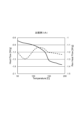
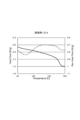
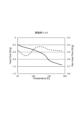
- Example IA-1 is a graph showing the results of DSC measurement of the solid dispersion of Example IA-1.
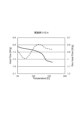
- 1 is a graph showing the results of DSC measurement of the solid dispersion of Example IA-2.
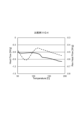
- 1 is a graph showing the results of DSC measurement of the solid dispersion of Example IA-3.
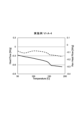
- 1 is a graph showing the results of DSC measurement of the solid dispersion of Example IA-4.
- 1 is a graph showing the results of DSC measurement of the solid dispersion of Example IA-5.
- 1 is a graph showing the results of DSC measurement of the solid dispersion of Example IA-6.
- 1 is a graph showing the results of DSC measurement of the solid dispersion of Comparative Example IAi.
- the molecular weight of the dispersion target substance according to this embodiment may be 1000 g/mol or more and 5000 g/mol or less.
- the molecular weight means the sum of the atomic weights of the atoms constituting the compound molecule (unit: "g/mol"), and is obtained by calculating the sum of the atomic weights of the atoms included in the molecular structure (unit: "g/mol").
- the unit of molecular weight may be omitted.
- the molecular weight can be measured, for example, by liquid chromatography mass spectrometry (LC/MS).
- Examples of the molecular weight range of the dispersion target substance according to this embodiment include 1000 g/mol to 4000 g/mol, 1000 g/mol to 3000 g/mol, 1100 g/mol to 2500 g/mol, 1200 g/mol to 2000 g/mol, 1300 g/mol to 1800 g/mol, 1400 g/mol to 1600 g/mol, and 1400 g/mol to 1500 g/mol.
- the molecular weight of the dispersion target substance according to this embodiment is, for example, 1000 g/mol to 5000 g/mol, preferably 1200 g/mol to 2000 g/mol, more preferably 1300 g/mol to 1800 g/mol, and most preferably 1400 g/mol to 1600 g/mol.
- the molecular weight is within the above range, the substance to be dispersed is less likely to crystallize and has excellent amorphous stability.
- the substance to be dispersed in this embodiment exists as an amorphous substance in the solid dispersion in this embodiment.
- amorphous refers to a substance that does not have long-range order.
- the fact that the substance to be dispersed is amorphous can be confirmed, for example, by subjecting the solid dispersion to X-ray diffraction (XRD) measurement described in the Examples below and finding that the XRD spectrum shows a broad diffraction pattern or a halo pattern with no discernible diffraction peaks, in other words, that it does not show a sharp diffraction pattern.
- XRD X-ray diffraction
- amorphous stability refers to the length of time that the dispersed substance present in the solid dispersion can maintain the amorphous state.
- Amorphous stability can be measured by storing the solid dispersion under certain conditions, such as 40°C and 75% RH, 80°C and 75% RH, or 40°C and 85% RH, and then examining whether the dispersed substance in the solid dispersion maintains an amorphous state. Specifically, it can be measured by the physical stability test described in the Examples.
- the physical stability of a pharmaceutical composition is governed by the physical stability of the solid dispersion contained in the pharmaceutical composition
- the physical stability of the solid dispersion contained in the pharmaceutical composition can be measured by subjecting the pharmaceutical composition to the above physical stability test.
- the physical stability of the solid dispersion can be known by measuring the physical stability of the solid dispersion.
- Examples of the range of the glass transition temperature (Tgc) of the dispersion target substance in this embodiment include, for example, 90°C or more and 180°C or less, 100°C or more and 175°C or less, 110°C or more and 170°C or less, 120°C or more and 165°C or less, 130°C or more and 160°C or less, 135°C or more and 160°C or less, or 140°C or more and 160°C or less.
- the glass transition temperature (Tgc) of the dispersion target substance according to this embodiment is, for example, 90°C to 180°C, preferably 100°C to 175°C, more preferably 120°C to 170°C, and most preferably 130°C to 165°C.
- the dispersion target substance according to this embodiment may be a peptide compound.
- the term "peptide compound” is not particularly limited as long as it is a peptide compound in which amino acid residues are linked by amide bonds or ester bonds.
- the number of amino acid residues constituting the peptide compound may be, for example, 5 or more, 7 or more, 8 or more, 9 or more, or 10 or more.
- the number of amino acid residues constituting the peptide compound may also be 30 or less, 25 or less, 20 or less, 15 or less, 14 or less, 13 or less, or 12 or less.
- Halogen-derived substituents include fluoro (-F), chloro (-Cl), bromo (-Br), and iodine (-I).
- Examples of carbonyloxy include alkylcarbonyloxy, cycloalkylcarbonyloxy, alkenylcarbonyloxy, alkynylcarbonyloxy, arylcarbonyloxy, heteroarylcarbonyloxy, and aralkylcarbonyloxy.
- thiocarbonyl examples include alkylthiocarbonyl, cycloalkylthiocarbonyl, alkenylthiocarbonyl, alkynylthiocarbonyl, arylthiocarbonyl, heteroarylthiocarbonyl, and aralkylthiocarbonyl.
- Examples of carbonylthio include alkylcarbonylthio, cycloalkylcarbonylthio, alkenylcarbonylthio, alkynylcarbonylthio, arylcarbonylthio, heteroarylcarbonylthio, and aralkylcarbonylthio.
- Examples of oxycarbonylamino include alkoxycarbonylamino, cycloalkoxycarbonylamino, alkenyloxycarbonylamino, alkynyloxycarbonylamino, aryloxycarbonylamino, heteroaryloxycarbonylamino, and aralkyloxycarbonylamino.
- sulfonylamino examples include alkylsulfonylamino, cycloalkylsulfonylamino, alkenylsulfonylamino, alkynylsulfonylamino, arylsulfonylamino, heteroarylsulfonylamino, aralkylsulfonylamino, etc.
- compounds in which the H atom bonded to the N atom in -NH-SO 2 -R is further substituted with an alkyl, cycloalkyl, alkenyl, alkynyl, aryl, heteroaryl or aralkyl are also included.
- aminosulfonyl examples include alkylaminosulfonyl, cycloalkylaminosulfonyl, alkenylaminosulfonyl, alkynylaminosulfonyl, arylaminosulfonyl, heteroarylaminosulfonyl, aralkylaminosulfonyl, etc.
- compounds in which the H atom bonded to the N atom in -SO 2 -NHR is further substituted with an alkyl, cycloalkyl, alkenyl, alkynyl, aryl, heteroaryl, or aralkyl are also included.
- sulfamoylamino examples include alkylsulfamoylamino, cycloalkylsulfamoylamino, alkenylsulfamoylamino, alkynylsulfamoylamino, arylsulfamoylamino, heteroarylsulfamoylamino, aralkylsulfamoylamino, etc.
- the two H atoms bonded to the N atom in -NHSO 2 -NHR may be substituted with substituents independently selected from the group consisting of alkyl, cycloalkyl, alkenyl, alkynyl, aryl, heteroaryl, and aralkyl, and these two substituents may form a ring.
- thio examples include alkylthio, cycloalkylthio, alkenylthio, alkynylthio, arylthio, heteroarylthio, and aralkylthio.
- sulfinyl examples include alkylsulfinyl, cycloalkylsulfinyl, alkenylsulfinyl, alkynylsulfinyl, arylsulfinyl, heteroarylsulfinyl, aralkylsulfinyl, etc.
- sulfonyl examples include alkylsulfonyl, cycloalkylsulfonyl, alkenylsulfonyl, alkynylsulfonyl, arylsulfonyl, heteroarylsulfonyl, aralkylsulfonyl, and the like.
- secondary amino examples include alkylamino, cycloalkylamino, alkenylamino, alkynylamino, arylamino, heteroarylamino, and aralkylamino.
- the main chain amino group of an amino acid may be unsubstituted (-NH 2 ) or substituted (i.e., -NHR, where R is, for example, an alkyl group, an alkenyl group, an alkynyl group, an aryl group, a heteroaryl group, an aralkyl group, a cycloalkyl group, or the like, which may have a substituent, and the carbon chain bonded to the N atom and the carbon atom at the ⁇ -position may form a ring, as in proline).
- R is, for example, an alkyl group, an alkenyl group, an alkynyl group, an aryl group, a heteroaryl group, an aralkyl group, a cycloalkyl group, or the like, which may have a substituent, and the carbon chain bonded to the N atom and the carbon atom at the ⁇ -position may form a ring, as in proline).
- an ethyl group or a methyl group is more preferable, and a methyl group is particularly preferable (i.e., an N-methyl amino acid is particularly preferable as the N-substituted amino acid).
- the number of N-substituted amino acid residues contained in the peptide compound according to this embodiment may be, for example, 1 or more, 2 or more, 3 or more, 4 or more, or 5 or more.
- the number of N-substituted amino acid residues contained in the peptide compound according to this embodiment is, for example, 1 or more, preferably 2 or more, more preferably 3 or more, and most preferably 5 or more.
- the peptide compound according to this embodiment may be a peptide compound having a cyclic portion (sometimes referred to as a "cyclic peptide compound" in this specification).
- the "cyclic portion" of a peptide compound means a cyclic portion formed by linking four or more amino acid residues.
- the number of amino acid residues constituting the cyclic portion of a cyclic peptide compound may be, for example, 5 or more, 6 or more, 7 or more, 8 or more, 9 or more, or 10 or more.
- the number of amino acid residues constituting the cyclic portion of a cyclic peptide compound may be, for example, 15 or less, 14 or less, 13 or less, or 12 or less.
- the cyclization may be in any form, such as cyclization by a carbon-nitrogen bond such as an amide bond, cyclization by a carbon-oxygen bond such as an ester bond or an ether bond, cyclization by a carbon-sulfur bond such as a thioether bond, cyclization by a carbon-carbon bond, cyclization by a sulfur-sulfur bond, or cyclization by heterocyclic construction.
- cyclization via a covalent bond such as an amide bond or a carbon-carbon bond is preferred, and cyclization via an amide bond between a carboxy group in a side chain and an amino group in the main chain is more preferred.
- the position of the carboxy group, amino group, etc. used for cyclization may be on the main chain or on the side chain, and is not particularly limited as long as it is in a position that allows cyclization.
- the ClogP of the peptide compound according to this embodiment is more preferably 24 or less, even more preferably 23 or less, even more preferably 22 or less, even more preferably 21 or less, and particularly preferably 20 or less.
- the lower limit of the ClogP of the peptide compound according to this embodiment is more preferably 5 or more, even more preferably 6 or more, even more preferably 7 or more, even more preferably 8 or more, and particularly preferably 10 or more.
- Examples of the range of the ClogP of the peptide compound according to this embodiment include 5 to 24 or less, 6 to 23 or less, 7 to 22 or less, 8 to 21 or less, 9 to 20 or less, 10 to 20 or less, 11 to 18 or less, and 11.2 to 16.1 or less.
- the range of the ClogP of the peptide compound according to this embodiment is, for example, 4 to 25, preferably 6 to 23, more preferably 8 to 21, and most preferably 9 to 20.
- the ClogP/number of amino acid residues of the peptide compound according to this embodiment is more preferably 1.1 or more, and even more preferably 1.2 or more.
- the upper limit of the ClogP/number of amino acid residues of the peptide compound according to this embodiment is preferably 1.8 or less, more preferably 1.7 or less, even more preferably 1.6 or less, and even more preferably 1.5 or less.
- Examples of the range of the ClogP/number of amino acid residues of the peptide compound according to this embodiment include 1.0 or more and 1.8 or less, 1.0 or more and 1.7 or less, 1.1 or more and 1.6 or less, and 1.1 or more and 1.5 or less.
- the ClogP/number of amino acid residues of the peptide compound according to this embodiment is, for example, 1.0 to 1.8, preferably 1.0 to 1.7, more preferably 1.1 to 1.6, and most preferably 1.1 to 1.5.
- the polymer according to this embodiment may be any pharma- ceutical acceptable polymer.
- Examples of the range of the glass transition temperature (Tgp) of the polymer according to this embodiment include, for example, 30°C or more and 170°C or less, 90°C or more and 140°C or less, 100°C or more and 135°C or less, or 105°C or more and 130°C or less.
- the glass transition temperature (Tgp) of the polymer according to this embodiment is, for example, in the range of 30°C to 170°C, preferably 90°C to 140°C, more preferably 100°C to 135°C, and most preferably 105°C to 130°C.
- the weight average molecular weight of the polymer according to this embodiment may be, for example, 3,000 or more, 5,000 or more, 10,000 or more, 15,000 or more, or 20,000 or more.
- the weight average molecular weight of the polymer according to this embodiment may be, for example, 400,000 or less, 200,000 or less, 150,000 or less, 100,000 or less, 80,000 or less, 70,000 or less, 60,000 or less, or 50,000 or less.
- Examples of the range of the weight average molecular weight of the polymer according to this embodiment include 3,000 to 400,000 or less, 5,000 to 200,000 or less, 10,000 to 150,000 or less, 15,000 to 80,000 or less, or 20,000 to 50,000 or less.
- neutral non-cellulosic polymers include: (i) vinyl polymers and copolymers having at least one substituent selected from the group consisting of hydroxyl, alkylacyloxy, and cyclic amide-containing groups; (ii) vinyl copolymers of at least one hydrophilic hydroxyl-containing repeating unit and at least one hydrophobic alkyl- or aryl-containing repeating unit, polyvinyl alcohol; (iii) polyvinyl alcohol, polyvinyl alcohol-polyvinyl acetate copolymers, polyvinylpyrrolidone, copovidone, acrylate and methacrylic acid copolymers, polyethylene-polyvinyl alcohol copolymers, having at least a portion of the repeating units in the non-hydrolyzed (vinyl acetate) form, and (iv) polyoxyethylene-polyoxypropylene block copolymers.
- Neutral cellulose polymers include, for example, hydroxypropyl methylcellulose acetate (HPMCA), hydroxypropyl methylcellulose (HPMC), hydroxypropyl cellulose (HPC), methylcellulose, hydroxyethyl methylcellulose, hydroxyethyl cellulose, hydroxyethyl cellulose acetate, and hydroxyethyl ethyl cellulose.
- Acidic moieties include any functional group that is sufficiently acidic to at least partially donate hydrogen cations to water when contacted with or dissolved in water, thereby increasing the hydrogen ion concentration.
- This definition includes any functional group or "substituent” (as such a functional group is referred to when it is covalently attached to the polymer) that has a pKa of less than about 10.
- Neutralized acidic polymer means any acidic polymer in which a substantial portion of the “acidic moieties” or “acidic substituents” are “neutralized”, i.e., present in deprotonated form.
- the "degree of neutralization", ⁇ , of a polymer substituted with a monoprotic acid (e.g., carboxylic acid) is defined as the fraction of acidic moieties on the polymer that are neutralized, i.e., deprotonated by a base.
- ⁇ must be at least about 0.01 (or 1%), more preferably at least about 0.1 (10%), even more preferably at least about 0.5 (50%), and most preferably at least 0.9 (90%) (meaning that at least 90% of the acidic moieties are neutralized).
- neutralized acidic polymers examples include cellulose acetate phthalate, cellulose acetate trimellitate, cellulose acetate succinate, methylcellulose phthalate, hydroxymethylcellulose ethyl phthalate, hydroxypropyl methylcellulose phthalate, hydroxypropyl methylcellulose acetate succinate (hypromellose acetate succinate: HPMCAS), hydroxypropyl methyl acetate maleate, hydroxypropyl methyl trimellitate, carboxymethyl ethyl cellulose, polyvinyl butyrate phthalate, polyvinyl alcohol acetate phthalate, methacrylic acid/ethyl acrylate copolymer, methacrylic acid/methyl methacrylate copolymer, and methacrylic acid copolymer.
- HPMCAS hyperromellose acetate succinate
- At least one selected from the group consisting of a polymer having a hydroxypropyl cellulose skeleton, a polymer having a povidone skeleton, and a block copolymer polymer may be used, and at least one selected from the group consisting of hydroxypropyl methylcellulose acetate succinate (HPMCAS), hydroxypropyl methylcellulose (HPMC), polyvinylpyrrolidone, vinylpyrrolidone/vinyl acetate copolymer, methacrylic acid/methyl methacrylate copolymer, and methacrylic acid/ethyl acrylate copolymer may be used.
- HPMCAS hydroxypropyl methylcellulose acetate succinate
- HPMC hydroxypropyl methylcellulose
- polyvinylpyrrolidone vinylpyrrolidone/vinyl acetate copolymer
- methacrylic acid/methyl methacrylate copolymer methacrylic acid/ethyl acrylate copoly
- excipients The excipient of this embodiment should be pharma- ceutically acceptable within a range that does not impair the effects of the present invention, and examples of such excipients include starches such as corn starch, lactose, glucose, mannitol, and the like.
- the disintegrant according to the present embodiment should be medicamentally acceptable within a range that does not impair the effects of the present invention, and examples thereof include low-substituted hydroxypropylcellulose, carmellose, carmellose calcium, croscarmellose sodium, sodium carboxymethyl starch, crospovidone, polyvinylpyrrolidone, etc.
- the solid dispersion according to the present embodiment is composed of a substance to be dispersed and a polymer, and the substance to be dispersed is dispersed in the polymer.
- the substance to be dispersed is preferably uniformly dispersed in the polymer.
- the substance to be dispersed is preferably dispersed in fine units in the polymer, and more preferably dispersed at the molecular level.
- the glass transition temperature (Tgc) of the substance to be dispersed and the glass transition temperature of the solid dispersion are different, it can be inferred that the substance to be dispersed is dispersed in a uniform and fine unit in the solid dispersion.
- the content of the substance to be dispersed in the solid dispersion of this embodiment may be, for example, more than 50 mass%, 55 mass% or more, 60 mass% or more, 62.5 mass% or more, 65 mass% or more, 70 mass% or more, or 75 mass% or more, based on the total amount of the solid dispersion.
- the content of the substance to be dispersed in the solid dispersion of this embodiment may be, for example, less than 100 mass%, 99 mass% or less, 97.5 mass% or less, 95 mass% or less, 92.5 mass% or less, 90 mass% or less, 87.5 mass% or less, 85 mass% or less, 82.5 mass% or less, or 80 mass% or less, based on the total amount of the solid dispersion.
- R1 represents a saturated or unsaturated, linear hydrocarbon group having from 5 to 17 carbon atoms which may have a substituent
- X represents sodium or potassium
- Y represents a group represented by the following formula (a4) or a stereoisomer thereof:
- the surfactant according to one embodiment is more preferably a compound represented by the following general formula (a3).
- R 1 represents a saturated or unsaturated linear hydrocarbon group having 5 to 17 carbon atoms which may have a substituent, and X represents sodium or potassium.
- the pharmaceutical composition according to this embodiment may have a solubility in 50 mM phosphate buffer (pH 6.5) at 25° C. and 1 atm of 10 mg/mL or less, or may be a value greater than 0 mg/mL.
- the solubilities (unit: mg/mL) of Compounds I to V and cyclosporine A in 50 mM phosphate buffer (pH 6.5) at 25° C. and 1 atm were measured by the following method.
- 50 mM phosphate buffer (PB, pH 6.5) was added to the compound powder, and the mixture was shaken under normal pressure (25°C, 2000 rpm, 16 to 24 hours), filtered, and the compound concentration of the filtrate was measured by HPLC.
- the solubility (unit: mg/mL) was calculated from the measured compound concentration.
- the HPLC conditions were as follows.
- the weight average molecular weight of each polymer is as follows: HPMCAS: 21,000-26,000 HPMC: 16,000-60,000 HPMCP55S: 37,500-60,500 Eudragit L100: 125,000 Eudragit L100-55: 320,000 Eydragit EPO: 47,000 PVP K30: 44,000-54,000 PVP VA64: 45,000-70,000 HPC-L: 140,000 HPC-SSL: 40,000 Soluplus: 90,000-140,000 PVAP: 45,000-68,000
- Tgp (unit: ° C.) of each polymer is as follows: HPMCAS: 118 HPMC: 128 HPMCP55S: 129 Eudragit L100: NON AVAILABLE Eudragit L100-55:123 Eudragit EPO: 49 PVP K30: 161 PVP VA64: 108 HPC-L: NON AVAILABLE HPC-SSL: NON AVAILABLE Soluplus: 79 PVAP: 128
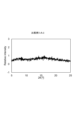
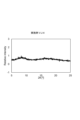
- Figures 1 to 7 are graphs showing examples of XRD measurement results. From the XRD results, each of these solid dispersions showed a halo pattern characteristic of amorphous materials, indicating that the substance to be dispersed was present as an amorphous substance in the solid dispersion.
- Mobile phase B Acetonitrile/trifluoroacetic acid mixture (2000/1) Delivery of mobile phase: The mixing ratio of mobile phase A and mobile phase B was changed as shown in Table 15 below to control the concentration gradient.
- Injection volume 1-3 ⁇ L Sample temperature: constant temperature around 25°C
Landscapes
- Health & Medical Sciences (AREA)
- Chemical & Material Sciences (AREA)
- Medicinal Chemistry (AREA)
- Bioinformatics & Cheminformatics (AREA)
- Chemical Kinetics & Catalysis (AREA)
- Polymers & Plastics (AREA)
- Organic Chemistry (AREA)
- Life Sciences & Earth Sciences (AREA)
- Engineering & Computer Science (AREA)
- General Health & Medical Sciences (AREA)
- Pharmacology & Pharmacy (AREA)
- Epidemiology (AREA)
- Animal Behavior & Ethology (AREA)
- Public Health (AREA)
- Veterinary Medicine (AREA)
- Immunology (AREA)
- Proteomics, Peptides & Aminoacids (AREA)
- Gastroenterology & Hepatology (AREA)
- Medicinal Preparation (AREA)
- Medicines That Contain Protein Lipid Enzymes And Other Medicines (AREA)
Priority Applications (3)
| Application Number | Priority Date | Filing Date | Title |
|---|---|---|---|
| JP2024567955A JPWO2024143501A1 (https=) | 2022-12-28 | 2023-12-27 | |
| CN202380088606.2A CN120418354A (zh) | 2022-12-28 | 2023-12-27 | 含有待分散的物质的固体分散体、含有其的药物组合物及其生产方法 |
| EP23912278.1A EP4603546A1 (en) | 2022-12-28 | 2023-12-27 | Solid dispersion containing substance to be dispersed, pharmaceutical composition containing same, and production methods therefor |
Applications Claiming Priority (2)
| Application Number | Priority Date | Filing Date | Title |
|---|---|---|---|
| JP2022-211372 | 2022-12-28 | ||
| JP2022211372 | 2022-12-28 |
Publications (1)
| Publication Number | Publication Date |
|---|---|
| WO2024143501A1 true WO2024143501A1 (ja) | 2024-07-04 |
Family
ID=91717899
Family Applications (1)
| Application Number | Title | Priority Date | Filing Date |
|---|---|---|---|
| PCT/JP2023/047077 Ceased WO2024143501A1 (ja) | 2022-12-28 | 2023-12-27 | 分散対象物質を含む固体分散体、それを含む医薬組成物及びそれらの製造方法 |
Country Status (5)
| Country | Link |
|---|---|
| EP (1) | EP4603546A1 (https=) |
| JP (1) | JPWO2024143501A1 (https=) |
| CN (1) | CN120418354A (https=) |
| TW (1) | TW202440065A (https=) |
| WO (1) | WO2024143501A1 (https=) |
Citations (15)
| Publication number | Priority date | Publication date | Assignee | Title |
|---|---|---|---|---|
| JP2002537321A (ja) * | 1999-02-22 | 2002-11-05 | エラン コーポレイション ピーエルスィー | 促進剤を含む固体経口剤形 |
| US20030054038A1 (en) | 2001-06-22 | 2003-03-20 | Crew Marshall D. | Pharmaceutical compositions of drugs and neutralized acidic polymers |
| US20030185893A1 (en) | 2002-02-01 | 2003-10-02 | Beyerinck Ronald A. | Method for making homogeneous spray-dried solid amorphous drug dispersions using pressure nozzles |
| JP2006502972A (ja) * | 2002-05-07 | 2006-01-26 | フェリング ベスローテン フェンノートシャップ | デスモプレシンの口腔内分散性医薬製剤 |
| JP2007503380A (ja) * | 2003-08-22 | 2007-02-22 | ベーリンガー インゲルハイム ファルマ ゲゼルシャフト ミット ベシュレンクテル ハフツング ウント コンパニー コマンディトゲゼルシャフト | 含水量を削減した長期安定性に優れた噴霧乾燥非晶質粉末 |
| WO2008047201A2 (en) | 2006-10-17 | 2008-04-24 | Pfizer Products Inc. | Solid dispersion comprising a poorly water soluble drug |
| WO2010126030A1 (ja) | 2009-04-28 | 2010-11-04 | 中外製薬株式会社 | スピロイミダゾロン誘導体 |
| WO2014092061A1 (ja) | 2012-12-10 | 2014-06-19 | 中外製薬株式会社 | ヒダントイン誘導体 |
| WO2015189901A1 (ja) | 2014-06-09 | 2015-12-17 | 中外製薬株式会社 | ヒダントイン誘導体含有医薬組成物 |
| JP2016049105A (ja) * | 2014-08-29 | 2016-04-11 | 花王株式会社 | 難溶解性ポリフェノール類を含有する固体分散体の製造方法 |
| JP2016525123A (ja) * | 2013-07-18 | 2016-08-22 | マンカインド コーポレイション | 熱安定性乾燥粉末医薬組成物及び方法 |
| JP2017504590A (ja) * | 2013-12-11 | 2017-02-09 | アイアンウッド ファーマシューティカルズ インコーポレイテッド | リナクロチドの遅延放出組成物 |
| US10004719B1 (en) | 2017-05-30 | 2018-06-26 | Taigen Biotechnology Co., Ltd. | Solid dispersion formulation |
| WO2021090855A1 (ja) | 2019-11-07 | 2021-05-14 | 中外製薬株式会社 | Kras阻害作用を有する環状ペプチド化合物 |
| JP2021523931A (ja) * | 2018-03-23 | 2021-09-09 | パラティン テクノロジーズ, インコーポレイテッド | メラノコルチン受容体特異的ペプチド製剤及び消化管特異的送達方法 |
-
2023
- 2023-12-27 JP JP2024567955A patent/JPWO2024143501A1/ja active Pending
- 2023-12-27 WO PCT/JP2023/047077 patent/WO2024143501A1/ja not_active Ceased
- 2023-12-27 CN CN202380088606.2A patent/CN120418354A/zh active Pending
- 2023-12-27 EP EP23912278.1A patent/EP4603546A1/en active Pending
- 2023-12-27 TW TW112151142A patent/TW202440065A/zh unknown
Patent Citations (15)
| Publication number | Priority date | Publication date | Assignee | Title |
|---|---|---|---|---|
| JP2002537321A (ja) * | 1999-02-22 | 2002-11-05 | エラン コーポレイション ピーエルスィー | 促進剤を含む固体経口剤形 |
| US20030054038A1 (en) | 2001-06-22 | 2003-03-20 | Crew Marshall D. | Pharmaceutical compositions of drugs and neutralized acidic polymers |
| US20030185893A1 (en) | 2002-02-01 | 2003-10-02 | Beyerinck Ronald A. | Method for making homogeneous spray-dried solid amorphous drug dispersions using pressure nozzles |
| JP2006502972A (ja) * | 2002-05-07 | 2006-01-26 | フェリング ベスローテン フェンノートシャップ | デスモプレシンの口腔内分散性医薬製剤 |
| JP2007503380A (ja) * | 2003-08-22 | 2007-02-22 | ベーリンガー インゲルハイム ファルマ ゲゼルシャフト ミット ベシュレンクテル ハフツング ウント コンパニー コマンディトゲゼルシャフト | 含水量を削減した長期安定性に優れた噴霧乾燥非晶質粉末 |
| WO2008047201A2 (en) | 2006-10-17 | 2008-04-24 | Pfizer Products Inc. | Solid dispersion comprising a poorly water soluble drug |
| WO2010126030A1 (ja) | 2009-04-28 | 2010-11-04 | 中外製薬株式会社 | スピロイミダゾロン誘導体 |
| WO2014092061A1 (ja) | 2012-12-10 | 2014-06-19 | 中外製薬株式会社 | ヒダントイン誘導体 |
| JP2016525123A (ja) * | 2013-07-18 | 2016-08-22 | マンカインド コーポレイション | 熱安定性乾燥粉末医薬組成物及び方法 |
| JP2017504590A (ja) * | 2013-12-11 | 2017-02-09 | アイアンウッド ファーマシューティカルズ インコーポレイテッド | リナクロチドの遅延放出組成物 |
| WO2015189901A1 (ja) | 2014-06-09 | 2015-12-17 | 中外製薬株式会社 | ヒダントイン誘導体含有医薬組成物 |
| JP2016049105A (ja) * | 2014-08-29 | 2016-04-11 | 花王株式会社 | 難溶解性ポリフェノール類を含有する固体分散体の製造方法 |
| US10004719B1 (en) | 2017-05-30 | 2018-06-26 | Taigen Biotechnology Co., Ltd. | Solid dispersion formulation |
| JP2021523931A (ja) * | 2018-03-23 | 2021-09-09 | パラティン テクノロジーズ, インコーポレイテッド | メラノコルチン受容体特異的ペプチド製剤及び消化管特異的送達方法 |
| WO2021090855A1 (ja) | 2019-11-07 | 2021-05-14 | 中外製薬株式会社 | Kras阻害作用を有する環状ペプチド化合物 |
Non-Patent Citations (5)
| Title |
|---|
| "CLOGP Reference Manual Daylight Version 4.9", 1 August 2011, DAYLIGHT CHEMICAL INFORMATION SYSTEMS, INC |
| "Masters, Spray-Drying Handbook", 1985 |
| "Perry's Chemical Engineers' Handbook", 1984, pages: 20 - 54,20-57 |
| INTERNATIONAL JOURNAL OF PHARMACEUTICS, vol. 399, 2010, pages 94 - 101 |
| MARSHALL: "Atomization and Spray-Drying", CHEM. ENG. PROG. MONOGR, vol. 50, 1954 |
Also Published As
| Publication number | Publication date |
|---|---|
| CN120418354A (zh) | 2025-08-01 |
| EP4603546A1 (en) | 2025-08-20 |
| TW202440065A (zh) | 2024-10-16 |
| JPWO2024143501A1 (https=) | 2024-07-04 |
Similar Documents
| Publication | Publication Date | Title |
|---|---|---|
| JP6404217B2 (ja) | エンザルタミドの製剤 | |
| EP3556355B1 (en) | Particles containing amorphous empagliflozin, process for their preparation and pharmaceutical preparation | |
| WO2007100614A2 (en) | STABLE NON-CRYSTALLINE FORMULATION COMPRISING HMG-CoA REDUCTASE INHIBITOR | |
| KR20140107691A (ko) | 의약 조성물 | |
| JP2020529464A (ja) | 3−フルオロ−4−[7−メトキシ−3−メチル−8−(1−メチル−1H−ピラゾール−4−イル)−2−オキソ−2,3−ジヒドロ−イミダゾ[4,5−c]キノリン−1−イル]−ベンゾニトリル含む医薬製剤 | |
| GB2393181A (en) | Amorphous clopidogrel | |
| Tran et al. | Solubilization of poorly water-soluble drugs using solid dispersions | |
| US20060160871A1 (en) | Stable non-crystalline formulation comprising losartan | |
| WO2024143501A1 (ja) | 分散対象物質を含む固体分散体、それを含む医薬組成物及びそれらの製造方法 | |
| KR101441450B1 (ko) | 생체 이용률이 향상된 에프로살탄 고체 분산체, 이의 제조방법 및 용도 | |
| WO2019192195A1 (zh) | 含达比加群酯的药物组合物及其制备方法 | |
| EP3644970A1 (en) | New oral formulations of belinostat | |
| US20210290541A1 (en) | Solid dispersion of hydantoin derivative | |
| Jallouli et al. | Preparation of polymeric fenofibrate formulations with accelerated drug release: solvent evaporation versus co-grinding | |
| KR102601617B1 (ko) | 비-뉴클레오시드 역전사 효소 억제제의 조성물 | |
| WO2024080308A1 (ja) | ペプチド、界面活性剤及びポリマーを含む組成物 | |
| US9775832B2 (en) | Pharmaceutical composition for oral administration | |
| WO2019002614A1 (en) | NEW ORAL FORMULATIONS OF BELINOSTAT | |
| US9211290B2 (en) | Solid dispersions of amorphous paroxetine mesylate | |
| WO2025220686A1 (ja) | ペプチド、糖脂肪酸エステル構造を有する界面活性剤及び(メタ)アクリル酸系ポリマーを含む医薬組成物 | |
| AU2018235447B2 (en) | Novel amorphous dispersion of cyclopropanecarboxylic acid (5-{5-[N'-(2chloro-6-methylbenzoyl)hydrazinocarbonyl]-2-methyl-phenylethynyl}-pyridin-2-yl)amide | |
| Gelabert | Evaluation of fluid bed technology for the preparation of solid dispersions intended for immediate drug release systems | |
| JP2813792B2 (ja) | マレイン酸イルソグラジン経口投与用製剤およびその製造法 | |
| RU2673228C2 (ru) | Фармацевтическая композиция, включающая твердую дисперсию тадалафила | |
| JP2022545822A (ja) | チダミド医薬組成物、その調製方法及びその適用 |
Legal Events
| Date | Code | Title | Description |
|---|---|---|---|
| 121 | Ep: the epo has been informed by wipo that ep was designated in this application |
Ref document number: 23912278 Country of ref document: EP Kind code of ref document: A1 |
|
| WWE | Wipo information: entry into national phase |
Ref document number: 2024567955 Country of ref document: JP |
|
| WWE | Wipo information: entry into national phase |
Ref document number: 2023912278 Country of ref document: EP |
|
| ENP | Entry into the national phase |
Ref document number: 2023912278 Country of ref document: EP Effective date: 20250516 |
|
| WWE | Wipo information: entry into national phase |
Ref document number: 202380088606.2 Country of ref document: CN |
|
| NENP | Non-entry into the national phase |
Ref country code: DE |
|
| WWP | Wipo information: published in national office |
Ref document number: 202380088606.2 Country of ref document: CN |
|
| WWP | Wipo information: published in national office |
Ref document number: 2023912278 Country of ref document: EP |