WO2024143122A1 - 分光分析装置及び分光分析方法 - Google Patents
分光分析装置及び分光分析方法 Download PDFInfo
- Publication number
- WO2024143122A1 WO2024143122A1 PCT/JP2023/045761 JP2023045761W WO2024143122A1 WO 2024143122 A1 WO2024143122 A1 WO 2024143122A1 JP 2023045761 W JP2023045761 W JP 2023045761W WO 2024143122 A1 WO2024143122 A1 WO 2024143122A1
- Authority
- WO
- WIPO (PCT)
- Prior art keywords
- unit
- concentration
- analysis
- component
- liquid sample
- Prior art date
- Legal status (The legal status is an assumption and is not a legal conclusion. Google has not performed a legal analysis and makes no representation as to the accuracy of the status listed.)
- Ceased
Links
Images



Classifications
-
- G—PHYSICS
- G01—MEASURING; TESTING
- G01N—INVESTIGATING OR ANALYSING MATERIALS BY DETERMINING THEIR CHEMICAL OR PHYSICAL PROPERTIES
- G01N21/00—Investigating or analysing materials by the use of optical means, i.e. using sub-millimetre waves, infrared, visible or ultraviolet light
- G01N21/62—Systems in which the material investigated is excited whereby it emits light or causes a change in wavelength of the incident light
- G01N21/63—Systems in which the material investigated is excited whereby it emits light or causes a change in wavelength of the incident light optically excited
- G01N21/65—Raman scattering
-
- G—PHYSICS
- G01—MEASURING; TESTING
- G01N—INVESTIGATING OR ANALYSING MATERIALS BY DETERMINING THEIR CHEMICAL OR PHYSICAL PROPERTIES
- G01N21/00—Investigating or analysing materials by the use of optical means, i.e. using sub-millimetre waves, infrared, visible or ultraviolet light
- G01N21/17—Systems in which incident light is modified in accordance with the properties of the material investigated
- G01N21/25—Colour; Spectral properties, i.e. comparison of effect of material on the light at two or more different wavelengths or wavelength bands
- G01N21/31—Investigating relative effect of material at wavelengths characteristic of specific elements or molecules, e.g. atomic absorption spectrometry
-
- G—PHYSICS
- G01—MEASURING; TESTING
- G01N—INVESTIGATING OR ANALYSING MATERIALS BY DETERMINING THEIR CHEMICAL OR PHYSICAL PROPERTIES
- G01N21/00—Investigating or analysing materials by the use of optical means, i.e. using sub-millimetre waves, infrared, visible or ultraviolet light
- G01N21/62—Systems in which the material investigated is excited whereby it emits light or causes a change in wavelength of the incident light
- G01N21/63—Systems in which the material investigated is excited whereby it emits light or causes a change in wavelength of the incident light optically excited
- G01N21/64—Fluorescence; Phosphorescence
- G01N21/645—Specially adapted constructive features of fluorimeters
-
- G—PHYSICS
- G01—MEASURING; TESTING
- G01N—INVESTIGATING OR ANALYSING MATERIALS BY DETERMINING THEIR CHEMICAL OR PHYSICAL PROPERTIES
- G01N21/00—Investigating or analysing materials by the use of optical means, i.e. using sub-millimetre waves, infrared, visible or ultraviolet light
- G01N21/17—Systems in which incident light is modified in accordance with the properties of the material investigated
- G01N2021/1738—Optionally different kinds of measurements; Method being valid for different kinds of measurement
-
- G—PHYSICS
- G01—MEASURING; TESTING
- G01N—INVESTIGATING OR ANALYSING MATERIALS BY DETERMINING THEIR CHEMICAL OR PHYSICAL PROPERTIES
- G01N2201/00—Features of devices classified in G01N21/00
- G01N2201/12—Circuits of general importance; Signal processing
- G01N2201/124—Sensitivity
Definitions
- the present invention relates to a spectroscopic analysis device and a spectroscopic analysis method that irradiates a substance with primary light and analyzes the secondary light generated from the substance.
- Patent Document 1 discloses an analytical device that performs Raman spectroscopy and fluorescence spectroscopy.
- a spectroscopic analysis device includes a first analysis unit that performs fluorescence spectroscopic analysis and/or absorption spectroscopic analysis of a first component contained in a liquid sample using secondary light generated from the liquid sample irradiated with primary light, a second analysis unit that performs Raman spectroscopic analysis of a second component contained in the liquid sample using secondary light generated from the liquid sample irradiated with primary light, a concentration measurement unit that measures the concentrations of the first component and the second component contained in the liquid sample, and a control unit, and the control unit causes the first analysis unit or the second analysis unit to perform an analysis depending on the concentration measured by the concentration measurement unit.
- the spectroscopic analysis device measures the concentrations of a first component and a second component contained in a liquid sample, and causes a first analysis unit that performs fluorescence spectroscopic analysis and/or absorption spectroscopic analysis, or a second analysis unit that performs Raman spectroscopic analysis, to perform analysis according to the measured concentrations.
- a first analysis unit that performs fluorescence spectroscopic analysis and/or absorption spectroscopic analysis
- Raman spectroscopic analysis the first component can be analyzed with high accuracy when the concentration of the first component is low.
- Raman spectroscopic analysis the second component can be analyzed with high accuracy when the concentration of the second component is high.
- the first component and the second component are different from each other, and the concentration of the first component is lower than the concentration of the second component.
- the first component and the second component are the same.
- the first component and the second component are the same component.
- the spectroscopic analysis device can analyze a specific component contained in a liquid sample over a wide concentration range. When the concentration of the specific component changes over time, the change in concentration of the specific component over time can be obtained.
- the spectroscopic analysis device performs fluorescence spectroscopic analysis or absorption spectroscopic analysis of the liquid sample when the concentration of a first component contained in the liquid sample is low, and performs Raman spectroscopic analysis of the liquid sample when the concentration of a second component contained in the liquid sample is high.
- the spectroscopic analysis device idles the first analysis unit when the concentration of the first component is close to a value appropriate for fluorescence spectroscopy or absorption spectroscopy.
- concentration of the first component becomes a value appropriate for fluorescence spectroscopy or absorption spectroscopy
- analysis is immediately performed in the first analysis unit, thereby enabling fluorescence spectroscopy or absorption spectroscopy to be performed at an appropriate time.
- the spectroscopic analysis device idles the second analysis unit when the concentration of the second component is close to a value appropriate for Raman spectroscopy.
- the concentration of the second component becomes a value appropriate for Raman spectroscopy
- analysis is immediately performed in the second analysis unit, thereby enabling Raman spectroscopy to be performed at an appropriate time.
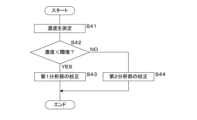
- the spectroscopic analysis device calibrates the first analysis unit when the concentration of the first component contained in the liquid sample is low, and calibrates the second analysis unit when the concentration of the second component contained in the liquid sample is high. Calibration of the first analysis unit is performed in a state appropriate for performing fluorescence spectroscopic analysis or absorption spectroscopic analysis, and the first analysis unit can be calibrated appropriately. Calibration of the second analysis unit is performed in a state appropriate for performing Raman spectroscopic analysis, and the second analysis unit can be calibrated appropriately.
- the first threshold value and the second threshold value are the same threshold value.
- the first threshold and the second threshold are the same. Depending on the concentration of the component contained in the liquid sample, one of the analysis methods is selectively performed.
- a spectroscopic analysis method is characterized in that it measures the concentrations of a first component and a second component contained in a liquid sample, and when the concentration of the first component is low, performs fluorescence spectroscopic analysis and/or absorption spectroscopic analysis using secondary light generated from the liquid sample irradiated with primary light, and when the concentration of the second component is high, performs Raman spectroscopic analysis using secondary light generated from the liquid sample irradiated with primary light.
- the concentrations of a first component and a second component contained in a liquid sample are measured, and when the concentration of the first component is low, fluorescence spectroscopy and/or absorption spectroscopy is performed on the first component, and when the concentration of the second component is high, Raman spectroscopy is performed on the second component. It is possible to analyze the liquid sample using an appropriate analytical method depending on the concentration of the component to be analyzed.
- the present invention has excellent effects, such as being able to analyze components contained in liquid samples over a wide concentration range.
- 1 is a block diagram showing an example of the configuration of a spectroscopic analysis device according to a first embodiment.
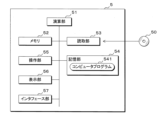
- 4 is a block diagram showing an example of an internal functional configuration of a control unit;
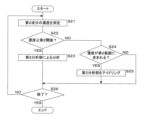
- 5 is a flowchart illustrating an example of a procedure of a process for analyzing a first component, which is executed by the spectroscopic analysis apparatus according to the first embodiment.
- 5 is a flowchart illustrating an example of a procedure of a process for analyzing a second component, which is executed by the spectroscopic analysis device according to the first embodiment.
- 10 is a flowchart showing an example of a procedure of an analysis process executed by a spectroscopic analysis device according to a second embodiment.
- 10 is a flowchart showing an example of a procedure for a calibration process executed by a spectroscopic analysis apparatus.
- the first analysis unit 1 includes a first light source 11, a first spectroscope 12, a first detection unit 13, and an information processing unit 4.
- the first light source 11 generates primary light, which is irradiated onto the liquid sample 61 in the optical cell 62.
- secondary light is generated from the liquid sample 61.
- the secondary light includes fluorescence.
- the secondary light is incident on the first spectroscope 12.
- the first spectroscope 12 separates the incident secondary light and emits the separated secondary light.
- the separated secondary light is incident on the first detection unit 13.
- the first detection unit 13 includes a photodetector and detects the incident light.
- the first detection unit 13 includes, as the photodetector, a photodiode, an image sensor, or a photomultiplier tube, for example.
- the first detection unit 13 may include an amplifier.
- the concentration measurement unit 3 includes a third light source 31, a third detection unit 32, and an information processing unit 4.
- the information processing unit 4 is shared by the first analysis unit 1, the second analysis unit 2, and the concentration measurement unit 3.
- the third light source 31 generates light, which is irradiated onto the liquid sample 61 in the optical cell 62.
- the third detection unit 32 detects transmitted light that has passed through the liquid sample 61, or scattered light that has been scattered by the liquid sample 61.
- the third detection unit 32 includes a photodetector.
- the third detection unit 32 includes, as the photodetector, for example, a photodiode, an image sensor, or a photomultiplier tube.
- the third detection unit 32 may include an amplifier.
- the first analysis unit 1 may be configured to perform absorption spectroscopy instead of fluorescence spectroscopy.
- the first analysis unit 1 performs ultraviolet-visible spectroscopy as absorption spectroscopy.
- the first analysis unit 1 may be configured to perform both fluorescence spectroscopy and absorption spectroscopy.
- the first analysis unit 1 or the second analysis unit 2 may also have the function of the concentration measurement unit 3.
- the spectroscopic analysis device 10 does not have a concentration measurement unit 3 separate from the first analysis unit 1 or the second analysis unit 2, and the first analysis unit 1 or the second analysis unit 2 also operates as the concentration measurement unit 3.
- the first analysis unit 1, the second analysis unit 2, and the concentration measurement unit 3 may each have their own information processing unit, rather than sharing the information processing unit 4.
- a common light source may be used as the first light source 11, the second light source 21, and the third light source 31.
- the control unit 5 determines whether the concentration of the first component measured by the concentration measurement unit 3 is equal to or less than the first threshold value (S12).
- the first threshold value is determined in advance and stored in the memory unit 54.
- the calculation unit 51 receives the concentration input from the information processing unit 4 through the interface unit 57, and compares the received concentration with the first threshold value stored in the memory unit 54.
- the control unit 5 causes the first analysis unit 1 to perform analysis (S13).
- the calculation unit 51 transmits a control signal from the interface unit 57 to the first analysis unit 1 to cause the first analysis unit 1 to perform analysis.
- the first analysis unit 1 performs fluorescence spectroscopy analysis of the first component contained in the liquid sample 61.
- the first light source 11 emits light, and the liquid sample 61 is irradiated with primary light from the first light source 11. Secondary light from the liquid sample 61 enters the first spectroscope 12, which separates the secondary light. The separated secondary light enters the first detection unit 13.
- the first detection unit 13 detects the separated secondary light, and inputs the intensity of the detected secondary light to the information processing unit 4.
- the control unit 5 may perform processing to cause the first analysis unit 1 to perform analysis when the concentration of the first component is less than the first threshold.
- the first component is a trace component contained in the liquid sample 61 in trace amounts.
- the concentration of the first component is 0.1 mg/mL or less.
- a first threshold is determined in advance so that a concentration of the first component of 0.1 mg/mL or less can be determined by fluorescence spectroscopy.
- the information processing unit 4 performs a process of determining the concentration of the first component contained in the liquid sample 61 by absorption spectroscopy.
- the first analysis unit 1 determines the concentration of the first component with higher accuracy than the concentration measurement unit 3.
- the information processing unit 4 stores the results of the fluorescence spectroscopy or absorption spectroscopy.
- the control unit 5 causes the first analysis unit 1 to idle (S15).
- the calculation unit 51 sends a control signal from the interface unit 57 to the first analysis unit 1 to cause the first analysis unit 1 to idle.
- the control unit 5 applies power to the first light source 11, the first spectrometer 12, and the first detection unit 13.
- the first analysis unit 1 By idling the first analysis unit 1, it becomes possible for the first analysis unit 1 to immediately perform fluorescence spectroscopy or absorption spectroscopy when the concentration of the first component decreases and falls below the first threshold. This makes it possible to perform fluorescence spectroscopy or absorption spectroscopy at an appropriate time.
- the information processing unit 4 performs information processing for Raman spectroscopic analysis based on the intensity and Raman shift of the Raman scattered light contained in the secondary light. More specifically, the information processing unit 4 performs processing to identify the concentration of the second component contained in the liquid sample 61 by Raman spectroscopic analysis.
- the information processing unit 4 pre-stores the Raman shift caused by the second component, identifies the intensity of the Raman scattered light caused by the second component, and calculates the concentration of the second component based on the intensity of the Raman scattered light. For example, the information processing unit 4 pre-stores a calibration curve that represents the relationship between the intensity and concentration of the Raman scattered light caused by the second component.
- the information processing unit 4 calculates the concentration of the second component by identifying the concentration corresponding to the intensity of the Raman scattered light based on the calibration curve.
- the spectroscopic analysis device 10 can perform fluorescence spectroscopic analysis or absorption spectroscopic analysis with high accuracy, so that the first component contained in a trace amount in the liquid sample 61 can be analyzed with high accuracy. For example, it becomes possible to accurately determine the concentration of the first component.
- Raman spectroscopic analysis makes it possible to analyze components with high concentrations. By performing Raman spectroscopic analysis when the concentration of the second component is high, it becomes possible to accurately analyze the second component contained in the liquid sample 61 at a high concentration. For example, it becomes possible to accurately determine the concentration of the second component. In this way, the spectroscopic analysis device 10 can analyze components in the liquid sample 61 over a wide concentration range.
- the control unit 5 determines whether the concentration of the specific component measured by the concentration measurement unit 3 is less than the threshold value (S32).
- the threshold value corresponds to a value where the first threshold value and the second threshold value coincide.
- the threshold value is determined in advance and stored in the memory unit 54.
- the calculation unit 51 compares the concentration input from the information processing unit 4 with the threshold value stored in the memory unit 54.
- the information processing unit 4 performs information processing for fluorescence spectroscopy. More specifically, the information processing unit 4 performs processing to identify the concentration of a specific component contained in the liquid sample 61 by fluorescence spectroscopy. The information processing unit 4 pre-stores the wavelength of the fluorescence caused by the specific component, identifies the intensity of the fluorescence caused by the specific component, and calculates the concentration of the specific component based on the fluorescence intensity. In a form in which the first analysis unit 1 performs absorption spectroscopy, the information processing unit 4 performs processing to identify the concentration of a specific component contained in the liquid sample 61 by absorption spectroscopy. The information processing unit 4 stores the results of the fluorescence spectroscopy or absorption spectroscopy.
- the control unit 5 determines whether the concentration of the specific component measured by the concentration measurement unit 3 is within a predetermined second range (S34).
- the second range is a range of values that are less than the threshold and close to the threshold.
- the second range is a range that exceeds a predetermined value that is less than the threshold and is less than the threshold.
- Data indicating the second range is pre-stored in the memory unit 54.
- the calculation unit 51 compares the concentration with the second range. If the concentration is within the second range (S34: YES), the control unit 5 causes the second analysis unit 2 to idle (S35).
- the control unit 5 causes the second analysis unit 2 to perform an analysis (S36). At this time, the control unit 5 does not cause the first analysis unit 1 to perform an analysis.
- the calculation unit 51 sends a control signal from the interface unit 57 to the second analysis unit 2 to cause the second analysis unit 2 to perform an analysis.
- the second analysis unit 2 performs Raman spectroscopic analysis of the liquid sample 61. Note that the control unit 5 may perform a process to cause the second analysis unit 2 to perform an analysis if the concentration exceeds the threshold value.
- the control unit 5 determines whether the concentration of the specific component measured by the concentration measurement unit 3 is within a predetermined first range (S37).
- the first range is a range of values that exceed the threshold and are close to the threshold.
- the first range is a range that is smaller than a predetermined value that exceeds the threshold and exceeds the threshold.
- Data indicating the first range is pre-stored in the memory unit 54.
- the calculation unit 51 compares the concentration with the first range. If the concentration is within the first range (S37: YES), the control unit 5 causes the first analysis unit 1 to idle (S38).
Landscapes
- Physics & Mathematics (AREA)
- Health & Medical Sciences (AREA)
- Biochemistry (AREA)
- Life Sciences & Earth Sciences (AREA)
- Chemical & Material Sciences (AREA)
- Analytical Chemistry (AREA)
- General Health & Medical Sciences (AREA)
- General Physics & Mathematics (AREA)
- Immunology (AREA)
- Pathology (AREA)
- Nuclear Medicine, Radiotherapy & Molecular Imaging (AREA)
- Spectroscopy & Molecular Physics (AREA)
- Investigating, Analyzing Materials By Fluorescence Or Luminescence (AREA)
Priority Applications (3)
| Application Number | Priority Date | Filing Date | Title |
|---|---|---|---|
| JP2024567690A JPWO2024143122A1 (https=) | 2022-12-28 | 2023-12-20 | |
| CN202380088677.2A CN120418637A (zh) | 2022-12-28 | 2023-12-20 | 分光分析装置和分光分析方法 |
| EP23911902.7A EP4644873A1 (en) | 2022-12-28 | 2023-12-20 | Spectroscopic analysis device and spectroscopic analysis method |
Applications Claiming Priority (2)
| Application Number | Priority Date | Filing Date | Title |
|---|---|---|---|
| JP2022212366 | 2022-12-28 | ||
| JP2022-212366 | 2022-12-28 |
Publications (1)
| Publication Number | Publication Date |
|---|---|
| WO2024143122A1 true WO2024143122A1 (ja) | 2024-07-04 |
Family
ID=91717543
Family Applications (1)
| Application Number | Title | Priority Date | Filing Date |
|---|---|---|---|
| PCT/JP2023/045761 Ceased WO2024143122A1 (ja) | 2022-12-28 | 2023-12-20 | 分光分析装置及び分光分析方法 |
Country Status (4)
| Country | Link |
|---|---|
| EP (1) | EP4644873A1 (https=) |
| JP (1) | JPWO2024143122A1 (https=) |
| CN (1) | CN120418637A (https=) |
| WO (1) | WO2024143122A1 (https=) |
Citations (15)
| Publication number | Priority date | Publication date | Assignee | Title |
|---|---|---|---|---|
| JPH10505167A (ja) * | 1995-03-14 | 1998-05-19 | ボード オブ リージェンツ,ザ ユニバーシティ オブ テキサス システム | ラマン分光分析法および蛍光分光分析法を用いて子宮頚前癌を診断するための光学方法および装置 |
| JP2882836B2 (ja) | 1990-02-19 | 1999-04-12 | 株式会社日立製作所 | 液体クロマトグラフ分析法および該分析装置 |
| JP2012526996A (ja) * | 2009-05-15 | 2012-11-01 | ビオメリュー・インコーポレイテッド | 試料内の微生物因子の迅速な同定および/または特徴付けのためのシステムおよび方法 |
| JP2014098626A (ja) * | 2012-11-14 | 2014-05-29 | Horiba Ltd | 着色剤同定方法、及び着色剤同定装置 |
| JP2014518517A (ja) * | 2011-04-11 | 2014-07-31 | フレゼニウス メディカル ケアー ドイチュラント ゲゼルシャフト ミット ベシュレンクテル ハフツング | 患者の治療、好ましくは血液透析、血液透析濾過、および腹膜透析の少なくとも1つを監視する方法および装置 |
| WO2014115516A1 (ja) * | 2013-01-25 | 2014-07-31 | パナソニック株式会社 | 生体内における被検物質の濃度を計測する計測方法、および、計測装置 |
| JP2018087809A (ja) * | 2016-11-22 | 2018-06-07 | リオン株式会社 | 生物粒子計数システムおよび生物粒子計数方法 |
| JP2019518227A (ja) * | 2016-06-03 | 2019-06-27 | ブランストロム グルッペン アクチエボラグBrannstrom Gruppen Ab | 液体媒質中の物質の濃度を判定する方法及び装置 |
| JP2020078543A (ja) * | 2018-09-14 | 2020-05-28 | キヤノン ユーエスエイ, インコーポレイテッドCanon U.S.A., Inc | 光プローブ接続を検出するためのシステム及び方法 |
| JP2020519849A (ja) * | 2017-03-20 | 2020-07-02 | スペクトラル プラットフォームス インコーポレイテッド | 微生物を検出し特徴づけるための分光法 |
| JP2021527818A (ja) * | 2018-06-19 | 2021-10-14 | インペリアル カレッジ オブ サイエンス、テクノロジー アンド メディスン | 単一粒子自動ラマン捕捉分析 |
| JP2021179608A (ja) * | 2020-05-12 | 2021-11-18 | オーケーラボ有限会社 | レーザー走査顕微鏡、レーザー走査顕微鏡システム及びレーザーアブレーションシステム |
| JP2022526650A (ja) * | 2019-04-12 | 2022-05-25 | インベニオ イメージング、インコーポレイテッド | 組織における術中造影剤の検出のための撮像システム |
| WO2022131336A1 (ja) * | 2020-12-17 | 2022-06-23 | 株式会社堀場製作所 | 測定条件探索方法、コンピュータプログラム、測定条件探索装置、及び測定システム |
| JP2022151092A (ja) * | 2021-03-26 | 2022-10-07 | 株式会社汀線科学研究所 | 蛍光測定装置 |
-
2023
- 2023-12-20 WO PCT/JP2023/045761 patent/WO2024143122A1/ja not_active Ceased
- 2023-12-20 EP EP23911902.7A patent/EP4644873A1/en active Pending
- 2023-12-20 JP JP2024567690A patent/JPWO2024143122A1/ja active Pending
- 2023-12-20 CN CN202380088677.2A patent/CN120418637A/zh active Pending
Patent Citations (15)
| Publication number | Priority date | Publication date | Assignee | Title |
|---|---|---|---|---|
| JP2882836B2 (ja) | 1990-02-19 | 1999-04-12 | 株式会社日立製作所 | 液体クロマトグラフ分析法および該分析装置 |
| JPH10505167A (ja) * | 1995-03-14 | 1998-05-19 | ボード オブ リージェンツ,ザ ユニバーシティ オブ テキサス システム | ラマン分光分析法および蛍光分光分析法を用いて子宮頚前癌を診断するための光学方法および装置 |
| JP2012526996A (ja) * | 2009-05-15 | 2012-11-01 | ビオメリュー・インコーポレイテッド | 試料内の微生物因子の迅速な同定および/または特徴付けのためのシステムおよび方法 |
| JP2014518517A (ja) * | 2011-04-11 | 2014-07-31 | フレゼニウス メディカル ケアー ドイチュラント ゲゼルシャフト ミット ベシュレンクテル ハフツング | 患者の治療、好ましくは血液透析、血液透析濾過、および腹膜透析の少なくとも1つを監視する方法および装置 |
| JP2014098626A (ja) * | 2012-11-14 | 2014-05-29 | Horiba Ltd | 着色剤同定方法、及び着色剤同定装置 |
| WO2014115516A1 (ja) * | 2013-01-25 | 2014-07-31 | パナソニック株式会社 | 生体内における被検物質の濃度を計測する計測方法、および、計測装置 |
| JP2019518227A (ja) * | 2016-06-03 | 2019-06-27 | ブランストロム グルッペン アクチエボラグBrannstrom Gruppen Ab | 液体媒質中の物質の濃度を判定する方法及び装置 |
| JP2018087809A (ja) * | 2016-11-22 | 2018-06-07 | リオン株式会社 | 生物粒子計数システムおよび生物粒子計数方法 |
| JP2020519849A (ja) * | 2017-03-20 | 2020-07-02 | スペクトラル プラットフォームス インコーポレイテッド | 微生物を検出し特徴づけるための分光法 |
| JP2021527818A (ja) * | 2018-06-19 | 2021-10-14 | インペリアル カレッジ オブ サイエンス、テクノロジー アンド メディスン | 単一粒子自動ラマン捕捉分析 |
| JP2020078543A (ja) * | 2018-09-14 | 2020-05-28 | キヤノン ユーエスエイ, インコーポレイテッドCanon U.S.A., Inc | 光プローブ接続を検出するためのシステム及び方法 |
| JP2022526650A (ja) * | 2019-04-12 | 2022-05-25 | インベニオ イメージング、インコーポレイテッド | 組織における術中造影剤の検出のための撮像システム |
| JP2021179608A (ja) * | 2020-05-12 | 2021-11-18 | オーケーラボ有限会社 | レーザー走査顕微鏡、レーザー走査顕微鏡システム及びレーザーアブレーションシステム |
| WO2022131336A1 (ja) * | 2020-12-17 | 2022-06-23 | 株式会社堀場製作所 | 測定条件探索方法、コンピュータプログラム、測定条件探索装置、及び測定システム |
| JP2022151092A (ja) * | 2021-03-26 | 2022-10-07 | 株式会社汀線科学研究所 | 蛍光測定装置 |
Non-Patent Citations (1)
| Title |
|---|
| See also references of EP4644873A1 |
Also Published As
| Publication number | Publication date |
|---|---|
| EP4644873A1 (en) | 2025-11-05 |
| JPWO2024143122A1 (https=) | 2024-07-04 |
| CN120418637A (zh) | 2025-08-01 |
Similar Documents
| Publication | Publication Date | Title |
|---|---|---|
| TWI453409B (zh) | 用於生物感測器系統之溫度調節分析物判定 | |
| Rüttinger et al. | Comparison and accuracy of methods to determine the confocal volume for quantitative fluorescence correlation spectroscopy | |
| US8729502B1 (en) | Simultaneous, single-detector fluorescence detection of multiple analytes with frequency-specific lock-in detection | |
| EP2813839A1 (en) | Calibration method for photometry | |
| US20230314331A1 (en) | Optical Sensor System for Quantitative Colorimetric Liquid Analysis | |
| Corsetti et al. | Comparison of Raman and IR spectroscopy for quantitative analysis of gasoline/ethanol blends | |
| EP1384988B1 (en) | IR analysis system | |
| JP7206570B2 (ja) | 分析装置 | |
| Johnston et al. | Performance comparison between high and low resolution spectrophotometers used in a white light surface plasmon resonance sensor | |
| Lyons et al. | Are fluorescence-detected sedimentation velocity data reliable? | |
| Friganovic et al. | Reducing the inner filter effect in microplates by increasing absorbance? Linear fluorescence in highly concentrated fluorophore solutions in the presence of an added absorber | |
| Vogt et al. | A UV spectroscopic method for monitoring aromatic hydrocarbons dissolved in water | |
| JPH09138231A (ja) | 尿検査方法 | |
| Karnachoriti et al. | Raman Spectroscopy as a Tool for Real‐Time Nutrient Monitoring in Bioreactor Cultivation of Microalgae | |
| CN101711352A (zh) | 分析装置和分析方法 | |
| Tian et al. | Rapid evaluation method based on DOM for water quality by microlaser fluorescence spectrometer | |
| CN117723498A (zh) | 基于光纤探头的液体浓度检测方法、装置和光纤探头 | |
| Bornhop et al. | Polarimetry in capillary dimensions | |
| WO2024143122A1 (ja) | 分光分析装置及び分光分析方法 | |
| CN100414286C (zh) | 利用近红外光谱测量固体物质成份含量的装置 | |
| CN115406835A (zh) | 基于波长可调谐紫外窄带光源的硝酸盐测量方法及系统 | |
| US20210254125A1 (en) | Method and device for estimating number of cells | |
| JP2008008794A (ja) | 分析装置 | |
| Kim et al. | Single-detector double-beam modulation for high-sensitivity infrared spectroscopy | |
| Panchbhai et al. | Non-destructive beer gravity measurement using spectroscopy and machine learning with mRMR-based wavelength selection |
Legal Events
| Date | Code | Title | Description |
|---|---|---|---|
| 121 | Ep: the epo has been informed by wipo that ep was designated in this application |
Ref document number: 23911902 Country of ref document: EP Kind code of ref document: A1 |
|
| WWE | Wipo information: entry into national phase |
Ref document number: 2024567690 Country of ref document: JP |
|
| WWE | Wipo information: entry into national phase |
Ref document number: 202380088677.2 Country of ref document: CN |
|
| WWE | Wipo information: entry into national phase |
Ref document number: 2023911902 Country of ref document: EP |
|
| NENP | Non-entry into the national phase |
Ref country code: DE |
|
| WWP | Wipo information: published in national office |
Ref document number: 202380088677.2 Country of ref document: CN |
|
| ENP | Entry into the national phase |
Ref document number: 2023911902 Country of ref document: EP Effective date: 20250728 |
|
| ENP | Entry into the national phase |
Ref document number: 2023911902 Country of ref document: EP Effective date: 20250728 |
|
| WWP | Wipo information: published in national office |
Ref document number: 2023911902 Country of ref document: EP |