WO2024135567A1 - ポリマー及びその合成方法 - Google Patents
ポリマー及びその合成方法 Download PDFInfo
- Publication number
- WO2024135567A1 WO2024135567A1 PCT/JP2023/045084 JP2023045084W WO2024135567A1 WO 2024135567 A1 WO2024135567 A1 WO 2024135567A1 JP 2023045084 W JP2023045084 W JP 2023045084W WO 2024135567 A1 WO2024135567 A1 WO 2024135567A1
- Authority
- WO
- WIPO (PCT)
- Prior art keywords
- polymer
- repeating unit
- formula
- experiment
- hydrocarbon group
- Prior art date
- Legal status (The legal status is an assumption and is not a legal conclusion. Google has not performed a legal analysis and makes no representation as to the accuracy of the status listed.)
- Ceased
Links
Images








Classifications
-
- C—CHEMISTRY; METALLURGY
- C08—ORGANIC MACROMOLECULAR COMPOUNDS; THEIR PREPARATION OR CHEMICAL WORKING-UP; COMPOSITIONS BASED THEREON
- C08G—MACROMOLECULAR COMPOUNDS OBTAINED OTHERWISE THAN BY REACTIONS ONLY INVOLVING UNSATURATED CARBON-TO-CARBON BONDS
- C08G12/00—Condensation polymers of aldehydes or ketones with only compounds containing hydrogen attached to nitrogen
- C08G12/02—Condensation polymers of aldehydes or ketones with only compounds containing hydrogen attached to nitrogen of aldehydes
- C08G12/04—Condensation polymers of aldehydes or ketones with only compounds containing hydrogen attached to nitrogen of aldehydes with acyclic or carbocyclic compounds
- C08G12/06—Amines
Definitions
- the present invention relates to a polymer and a method for synthesizing the same.
- Ammonia can also be used as a material for polymers, including plastics.
- Plastics made from ammonia include urea resins, melamine resins, polyacrylonitrile, polyurethane, polyamides, polyimides, and the like.
- Patent Document 1 discloses an aromatic polyimine obtained by casting a composition in which an aromatic polyimine oligomer (A) synthesized from an aromatic dialdehyde and a diamine, a ketone resin (B), and an alkoxysilane (C) are dissolved in a solvent onto a suitable substrate and heated.
- Patent Document 2 discloses a polyimine used as a curing agent for rubber compositions, in which a hydrocarbon group containing at least two carbon atoms is present between two imine groups.
- polymers that contain nitrogen elements in the main chain generally have higher heat resistance than those composed of hydrocarbons.
- heat resistance There are two thought to be factors that increase heat resistance.
- thermal recycling which uses them as fuel for thermal power generation
- material recycling which physically crushes them into powder or flakes and then reshapes them for use
- chemical recycling which breaks them down through chemical reactions and uses them for the next purpose.
- thermal recycling which uses them as fuel for thermal power generation
- material recycling which physically crushes them into powder or flakes and then reshapes them for use
- chemical recycling which breaks them down through chemical reactions and uses them for the next purpose.
- chemical recycling has the advantages of lower carbon dioxide emissions, lower refining costs, and high purity after refining, making it the most environmentally friendly processing method.
- conventional nitrogen-containing polymers have the advantages of high heat resistance and mechanical strength, but on the other hand, they tend to be more expensive materials than petroleum-derived plastics.
- One reason for this is that conventional nitrogen-containing polymers cannot be synthesized directly from ammonia, but must be synthesized via nitrogen-containing monomers.
- Ammonia is first converted into nitrogen-containing monomers such as amines, and then the monomers are polymerized to obtain the nitrogen-containing polymer. For this reason, there has been a demand for a nitrogen-containing polymer that can be synthesized in one step directly from ammonia.
- the present invention solves these problems.
- the present invention provides a polymer that can be produced at low cost and is degradable.
- R 11 is a monovalent aliphatic hydrocarbon group.
- the present invention provides a polymer that can be produced at low cost and is degradable.
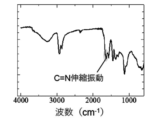
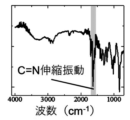
- FIG. 1 is an IR spectrum of the network polyimine synthesized in Experiment 1.
- FIG. 2 shows the results of TG and DTG measurements of the network polyimine synthesized in Experiment 1.
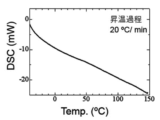
- FIG. 2 shows the results of DSC measurement of the network polyimine synthesized in Experiment 1.
- FIG. 1 shows the results of 1 H-NMR measurement of the linear polyimine synthesized in Experiment 2.
- FIG. 2 shows the TG and DTG measurement results of the linear polyimine synthesized in Experiment 2.
- FIG. 1 shows the results of DSC measurement of the linear polyimine synthesized in Experiment 2.
- FIG. 1 shows an image of a molded product of the linear polyimine synthesized in Experiment 4 and its flexibility.
- FIG. 1 shows the results of 1 H-NMR measurement of the linear polyimine synthesized in Experiment 4.
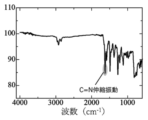
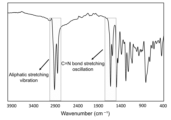
- IR spectrum of the linear polyimine synthesized in Experiment 4. 1 is a stress-strain curve of the linear polyimine synthesized in Experiment 4.
- 13 is an image showing the state of a linear polyimine film from Experiment 4 immersed in 0.1 M hydrochloric acid at room temperature. 13 shows comparative images of linear polyimine in Experiment 4 when immersed in each solvent and after immersion for four days.
- a numerical range expressed using " ⁇ " means a range that includes the numerical values written before and after " ⁇ " as the lower and upper limits.
- an "alkyl group” includes not only alkyl groups that do not have a substituent (unsubstituted alkyl groups), but also alkyl groups that have a substituent (substituted alkyl groups). This also applies to each compound.
- the repeating unit (I) represented by formula (1) is a trivalent group. Therefore, a structure including repeating units (I) and (II) is a network structure (three-dimensional mesh structure), and the polymer of this embodiment is a network polymer (network polyimine).
- a network polymer is a general term for polymers in which the polymer chain has a network structure (three-dimensional mesh structure).
- the repeating unit (I), which is a trivalent group, is a crosslinking point of the network structure.
- the repeating unit (I) contains an imine bond, which is a rigid structure, and therefore high heat resistance and mechanical strength are obtained.
- repeating units (I) and repeating units (II) are bonded alternately, repeating units (II) are bonded to bonding positions *1 to *3 in formula (1) of repeating unit (I).
- the repeating unit (II) is not particularly limited as long as it is a substituted or unsubstituted divalent hydrocarbon group.
- the hydrocarbon group may be an aliphatic hydrocarbon group or an aromatic hydrocarbon group.
- the aliphatic hydrocarbon group may be a linear, branched, cyclic, or combination thereof divalent group, and the number of carbon atoms may be, for example, 1 to 18, or 3 to 8. In one embodiment, the number of carbon atoms may be 10 to 16.
- the aromatic hydrocarbon group may have 5 to 24 or 6 to 12 carbon atoms, and may be a group derived from a monocyclic compound or a group derived from a condensed ring compound.
- the repeating unit (II) may be a divalent group composed of an aliphatic hydrocarbon group and an aromatic hydrocarbon group.
- substituents include a hydroxyl group, an amino group, an alkoxy group (such as a methoxy group or an ethoxy group), a cyano group, a halogen atom (such as a fluorine atom, a chlorine atom, or a bromine atom), and an ionic hydrophilic group (such as a carboxylate or a sulfonate).
- a divalent aliphatic hydrocarbon group is preferred as the repeating unit (II).
- the polymer of this embodiment has degradability as described below, but if the acidity of the central carbon sandwiched between the two nitrogens in formula (1) increases, intramolecular cyclization may occur and an imidazoline ring may be formed. It is more advantageous in terms of the degradability of the polymer if intramolecular cyclization does not occur.
- an aliphatic hydrocarbon group which is an electron-donating group
- the acidity of the central carbon decreases and intramolecular cyclization is further suppressed, thereby further improving the degradability of the polymer.
- the divalent aliphatic hydrocarbon group is preferably a straight-chain alkylene group having 4 or more carbon atoms, or 4 to 8 carbon atoms.
- the network structure of this embodiment may have only one type of group as the repeating unit (II), or may have multiple types of groups. However, from the viewpoint of minimizing the types of raw materials and saving the effort of raw material management, it is preferable that the repeating unit (II) constituting the network structure is one type. In this case, the same type of repeating unit (II) is bonded to all of the bonding positions *1 to *3 of formula (1) of the repeating unit (I). That is, the network polymer of this embodiment preferably has a network structure constituted by the repeating unit (III) represented by the following formula (3).
- R 1 is a divalent hydrocarbon group, and *31 to *33 each represent a bonding position. Examples of the divalent hydrocarbon group include the forms described for the repeating unit (II), and the same applies to the preferred embodiments.
- the bonding position *32 of one repeating unit (III) is bonded to the bonding position *31 of another repeating unit (III).
- the bonding position *33 of one repeating unit (III) is bonded to the bonding position *31 of yet another repeating unit (III). That is, the network structure formed by the repeating unit (III) has a structure represented by the following formula (5).
- formula (5) * represents a bonding position
- R 1 is the same as that described in formula (3).
- the network structure of this embodiment may be composed of only repeating units (I) and (II), or may contain other functional groups as long as the effects of this embodiment are achieved. However, it is preferable that the main constituent units of the network structure are repeating units (I) and (II).
- the molecular weight of the network polymer of this embodiment is not particularly limited, but may be, for example, a weight average molecular weight of 1,000 to 1,000,000, or 10,000 to 100,000.
- the network polymer of this embodiment can be synthesized by reacting an aldehyde with ammonia. Therefore, unlike conventional nitrogen-containing polymers, the network polymer of this embodiment does not require a nitrogen-containing monomer, so that the production cost and production time can be significantly reduced.
- the aldehyde is a dialdehyde, which is a repeating unit (II) in which a substituted or unsubstituted divalent hydrocarbon group and two aldehyde groups are bonded. For example, first, dialdehyde is dissolved in a solvent, and ammonia dissolved in the solvent is added thereto to prepare a reaction solution.
- the reaction solution is stirred for a predetermined time to react, and a network polymer, which is a product, is obtained.
- Formula (6) explaining the synthesis of the network polymer is shown below.
- R represents the repeating unit (II).
- the network polymer can be synthesized in a very simple process of one batch using ammonia.
- the raw material ammonia may be in a gaseous state or may be dissolved in the reaction solution (solvent), and ammonium ions, ammonium salts, etc. may be used as an ammonia supply source.
- the reaction conditions are not particularly limited and can be adjusted as appropriate, but may be adjusted to the following ranges in order to promote the reaction.
- the solvent for the reaction solution include protic solvents such as water, methanol, ethanol, butanol, pentanol, hexanol, and 2-isopropanol.
- the reaction temperature may be 25°C to 100°C, and the reaction time may be 1 hour to 12 hours.
- the synthesized network polymer may be subjected to reprecipitation, filtration, washing, drying, etc., using general-purpose methods as necessary.
- the network polymer of the present embodiment has decomposability.
- decomposability means a property that can be decomposed into monomers or oligomers by chemical reaction.
- the decomposable network polymer of the present embodiment is expected to be chemically recycled.
- the network polymer of the present embodiment is decomposed, for example, by an acidic decomposition liquid.
- the reverse reaction of the above-mentioned formula (6) occurs, and the network polymer can be decomposed into the raw material aldehyde (monomer) or its oligomer and ammonia (ammonium ion in the acidic liquid).
- the network polymer of the present embodiment preferably exhibits decomposability under strong acid conditions (for example, pH 1 or less). As a result, the network polymer can be stably present without being decomposed during use in general applications.
- the conditions for the decomposition treatment of the network polymer are not particularly limited and can be adjusted as appropriate, but may be adjusted to the following ranges from the viewpoint of promoting the decomposition reaction.
- the decomposition liquid preferably contains an inorganic acid (aqueous solution of an inorganic acid), and examples of the inorganic acid include hydrochloric acid and sulfuric acid. These inorganic acids may be used alone or in combination.
- the concentration of the inorganic acid may be 0.1N to 1N, or 0.1N to 0.3N.
- the decomposition liquid may further contain an organic solvent such as methanol, ethanol, acetone, acetonitrile, dioxane, or N,N-dimethylformamide (DMF), and preferably contains acetonitrile from the viewpoint of promoting the decomposition reaction.
- organic solvents may be used alone or in combination.
- the network polymer (polyimine) of this embodiment described above can reduce production costs and time, has high heat resistance and mechanical strength, and is also degradable. This makes it possible to expect applications in a variety of applications, such as adhesives, garbage bags, paints, building materials, medical equipment, and solid fuels.
- an N,N'-methylenediimine derivative represented by formula (1) was used as the repeating unit (I).
- an N,N'-methylenediimine derivative represented by the following formula (2) is used as the repeating unit (I). That is, the polymer of this embodiment has a structure including a repeating unit (I) which is an N,N'-methylenediimine derivative represented by formula (2) and a repeating unit (II) which is a substituted or unsubstituted divalent hydrocarbon group.
- *12 and *13 each represent a bonding position
- R 11 represents a monovalent aliphatic hydrocarbon group.
- the repeating unit (I) represented by formula (2) is a divalent group
- the structure containing the repeating unit (I) and the repeating unit (II) is linear
- the polymer of this embodiment is a linear polymer (linear polyimine). Since the polymer of this embodiment is a polyimine containing many imine bonds, which are rigid structures, it has sufficiently high heat resistance and mechanical strength as a linear polymer.
- the polymer of this embodiment is a linear polymer, it is soluble in organic solvents and has high moldability, and can be molded into, for example, a film. From the viewpoint of further increasing heat resistance and mechanical strength, it is preferable that the repeating unit (I) and the repeating unit (II) are alternately bonded in the linear structure.
- R 11 is not particularly limited as long as it is a monovalent aliphatic hydrocarbon group, and may be a linear, branched, cyclic, or combination thereof monovalent group, and may have, for example, 1 to 18 carbon atoms, or 3 to 8 carbon atoms. On the other hand, when the number of carbon atoms is 10 to 16, thermoforming such as press molding tends to be easier, and excellent decomposability is also achieved. From the viewpoint of promoting polymer synthesis, R 11 (monovalent aliphatic hydrocarbon group) is preferably a linear alkyl group. In the polymer of the present embodiment, since R 11 in formula (2) is an aliphatic hydrocarbon group that is an electron-donating group, intramolecular cyclization is suppressed and the polymer has better decomposition properties.
- the substituted or unsubstituted divalent hydrocarbon group of the repeating unit (II) may be the same as that described in the first embodiment.
- the repeating unit (II) is preferably a divalent group containing an aromatic ring.
- an aromatic ring which is a rigid structure, the heat resistance and mechanical strength of the polymer are further improved.
- Examples of the divalent group containing an aromatic ring include the groups shown below. In the groups shown below, * indicates a bonding position.
- the polymer of this embodiment may have only one type of group as the repeating unit (II), or may have multiple types of groups. However, from the viewpoint of minimizing the types of raw materials and saving the effort of raw material management, it is preferable that the repeating unit (II) constituting the linear structure is one type. In this case, the same type of repeating unit (II) is bonded to the bonding positions *12 and *13 of the formula (2) of the repeating unit (I). That is, the polymer of this embodiment preferably has a linear structure constituted by the repeating unit (IV) represented by the following formula (4).
- R 11 is a monovalent aliphatic hydrocarbon group
- R 12 is a divalent group containing an aromatic ring.
- R 11 (monovalent aliphatic hydrocarbon group) include the above-mentioned forms, and the preferred embodiments are the same.
- Examples of the divalent group containing an aromatic ring of R 12 include the forms described as the repeating unit (II), and the preferred embodiments are the same.
- the linear structure of the polymer of this embodiment may be composed of only repeating units (I) and (II), or may contain other functional groups as long as the effects of this embodiment are achieved. However, it is preferable that the main constituent units of the linear structure are repeating units (I) and (II).
- the molecular weight of the polymer of this embodiment is not particularly limited, but may be, for example, a weight average molecular weight of 1,000 to 10,000,000, 1,000 to 1,000,000, or 10,000 to 100,000.
- the polymer of this embodiment can be synthesized by reacting an aldehyde with ammonia (or a salt thereof). More specifically, the polymer of this embodiment can be synthesized by reacting a dialdehyde having two aldehyde groups bonded to a substituted or unsubstituted divalent hydrocarbon group, which is the repeating unit (II) constituting the polymer, and a monoaldehyde having one aldehyde group bonded to a monovalent aliphatic hydrocarbon group, which is R 11 in formula (2), with ammonia (or a salt thereof).
- the dialdehyde and the monoaldehyde are dissolved in a solvent, and ammonia (or a salt thereof) dissolved in the solvent is added thereto to prepare a reaction solution.
- the reaction solution is stirred for a predetermined time to react, and a polymer, which is a product, is obtained.
- Formula (7) explaining the synthesis of the polymer is shown below.
- R 11 is a monovalent aliphatic hydrocarbon group
- R 12 is a divalent group containing an aromatic ring.
- the polymer of this embodiment can be synthesized in a very simple process of one batch using ammonia (or a salt thereof) in the same manner as the polymer of the first embodiment.
- TEA in the following formula is an abbreviation for triethylamine.
- reaction conditions are not particularly limited and can be adjusted as appropriate, but may be adjusted to the following ranges in order to promote the reaction.
- the solvent for the reaction solution include N,N-dimethylformamide (DMF), dimethyl sulfoxide, ethyl acetate, butyl acetate, and methyl ethyl ketone.
- the ammonia concentration e.g., the concentration of ammonium acetate as an ammonia source
- the reaction temperature may be 25°C to 100°C
- the reaction time may be 1 hour to 12 hours.
- the synthesized polymer may be subjected to reprecipitation, filtration, washing, drying, etc., using general-purpose methods as necessary.
- the polymer of this embodiment is degradable and is expected to be chemically recycled, similar to the polymer of the first embodiment.
- the conditions for the decomposition treatment of the polymer are not particularly limited and can be appropriately adjusted, but may be adjusted to the same range as in the first embodiment from the viewpoint of promoting the decomposition reaction.
- the polymer (linear polyimine) of this embodiment described above can reduce production costs and production time, and has high heat resistance and mechanical strength, as well as degradability.
- the polymer of this embodiment is a linear polymer, it has high moldability and can be molded into, for example, a film. This makes it possible to expect applications in a variety of applications, such as adhesives, garbage bags, paints, building materials, medical equipment, and solid fuels.
- the infrared spectroscopy (IR) spectrum of the network polymer was measured using a Fourier transform infrared spectrophotometer (FT/IR6100, manufactured by JASCO Corporation). The measurement was performed by the ATR method. The analysis was performed using an MCT detector in the measurement range of 600 to 4000 cm -1 while cooling with liquid nitrogen. The results are shown in Figure 1.
- the vertical axis represents absorbance
- the horizontal axis represents wave number (unit: cm -1 ).
- the first vertical axis (left side) represents thermogravimetric Tg (unit: %)
- the second vertical axis (right side) represents thermogravimetric derivative (DTG, unit: ⁇ g/sec)
- the horizontal axis represents temperature (unit: ° C.).
- the 5% weight loss temperature T5 % was defined as the temperature at which 5% of the weight of the sample before the thermogravimetry was decomposed in the thermogravimetry.
- the 5% weight loss temperature T5 % was 300°C.
- the glass transition temperature was measured by differential scanning calorimetry (DSC 60 Plus, manufactured by Shimadzu Corporation). The measurement range was ⁇ 50° C. to 250° C., the heating rate was 20° C./min, and a two-cycle temperature program was carried out in a nitrogen atmosphere, and the heat quantity was measured during the heating process in the second cycle.
- the results are shown in FIG. 2B.
- the vertical axis in FIG. 2B represents heat flow (unit: mW, indicated as DSC in the figure), and the horizontal axis represents temperature (unit: ° C.).
- No glass transition temperature was observed in the DSC measurements, as shown in Figure 2B.
- Network polymers often lack a glass transition temperature (the glass transition temperature is higher than the thermal decomposition temperature), and this is likely true for this system as well. From the above results, it was confirmed that the network polymer of Experiment 1 has high heat resistance.
- the evaluation method was the same as in ⁇ Evaluation of degradability of network polymer> described above.
- the sample after DSC measurement i.e., the polymer after heating
- the sample before DSC measurement i.e., the polymer before heating
- s-Trioxane (1.00 g, 11 mmol) was added to a 50 mL two-neck flask and purged with nitrogen. Salicylaldehyde (8.95 g, 73 mmol), acetic acid (10 g), and sulfuric acid (0.309 g) were added and heated and stirred at 85°C for 22 hours. When the reaction vessel was allowed to cool, a white solid precipitated, which was filtered and then dissolved in methanol. Reprecipitation was performed with water and dried overnight at 105°C (milky white solid, yield: 31%). The product was identified by 1 H-NMR in deuterated chloroform, and it was confirmed that the desired monomer was produced.
- FIG. 6A shows the decomposition reaction formula of the linear polyimine synthesized in Experiment 2. It was confirmed that the polymer of Experiment 2 was decomposed into the two raw aldehydes shown in Figure 6 A by immersing it in a hydrochloric acid solution. To confirm the quantitativeness of this reaction, the reaction was tracked by 1 H-NMR measurement, and the imine peak of the polymer and the aldehyde peak of the monomer were compared before and after the reaction.
- a network polymer (network polyimine) was synthesized by the method described below.
- the repeating unit (II) of the polymer is a divalent group containing an aromatic ring.
- the NMR spectrum confirmed an aromatic peak at 120-140 ppm and an imine peak at 160-170 ppm.
- the peak at 76 ppm is thought to be the central carbon peak of methanediamine.
- the chemical shift of this peak is highly dependent on the substituent on the aromatic to which it is directly bonded, and is thought to be shifted to the high magnetic field side by the electron-withdrawing imine bonding to the para position.
- the measurement results (Tg and DTG) are shown in Figure 9A.
- the definitions of the vertical and horizontal axes in Figure 9A are the same as those in Figure 2A.
- the 5% weight loss temperature T 5% of the polymer in Experiment 3 (imidazoline polymer after heat treatment) was 381°C.
- the DSC measurement was performed at a temperature increase rate of 10° C./min from ⁇ 50° C. to 300° C.
- the results are shown in FIG 9B.
- the vertical and horizontal axes in FIG 9B are defined in the same way as in FIG 2B.
- the glass transition temperature was not confirmed from the results in FIG 9B.
- the heat resistance temperature of the polymer in Experiment 3 was equivalent to that of phenolic resin (340-380°C), and it was found to have very good heat resistance.
- the NMR spectrum showed peaks of the raw material terephthalaldehyde and ammonium ion (ammonium chloride), confirming the decomposition into the raw materials. Finally, the solid was washed with water and dried overnight at 100 ° C. to obtain a white solid. The decomposition yield was 92%.
- the imidazoline polymer after the heat treatment was also subjected to a similar decomposition evaluation, but the imidazoline polymer showed no decomposition.
- FIG. 14 shows the stress-strain curve of the linear polymer of Experiment 2.
- the test piece had a width of 10 mm, a length of 6 mm, and a thickness of 0.1 mm, and the tensile speed was 1 mm/min.
- the test temperature was room temperature. From the results in Figure 14, the tensile strength was 25.4 MPa. This value was higher when compared to other polyimines.
- the inset image shows the broken specimen.
- the test was performed by a tensile vibration method (frequency 1 Hz).
- the test piece had a gauge length of 4 mm, width of 6.3 mm, and thickness of 0.1 mm, a load of 1.5 N, a displacement of 0.24 mm, and a measurement temperature range of -10 to 200 ° C.
- the glass transition temperature (° C.) and storage modulus obtained from the test results are shown in Table 1. It was speculated that the high glass transition temperature obtained from the above test was mainly due to the high content of ⁇ -conjugated Schiff base structures and the high rigidity caused by hydrogen bonds associated therewith. Although not shown, the speculation was also supported by the height of the tan ⁇ peak.
- Tg stands for glass transition temperature
- FIG. 15 is an image showing the linear polymer film of Experiment 4 immersed in 0.1 M hydrochloric acid at room temperature.
- the solution was colorless immediately after immersion (left image). Although it cannot be determined from the drawing, the linear polymer is actually transparent, yellow to orange, immediately after immersion. After 6 hours of immersion (right image), the solution turned light yellow. The linear polymer film also disappeared in the solution (it could no longer be seen). The clumps seen in the image are stirring bars. From the above results, it was confirmed that an exchange reaction of imine bonds occurred under acidic conditions, and decomposition to the starting materials proceeded.
- Rectangular test pieces (1-5 mg) of the linear polymer synthesized in Experiment 4 were immersed in 2 mL of different solvents (toluene, DMF, acetone, THF, DMSO, water) at room temperature for 4 days. The solid and liquid phases were then separated. The solvent was removed from the surface of the removed test pieces, and the remaining mass was measured.
- Fig. 16 shows comparative images of the specimens when immersed in each solvent and after 4 days of immersion.
- the images shown in column (a) are images when immersed, and the images shown in column (b) are images after 4 days of immersion. Initially (when immersed), the test specimens sink in all the solvents, but after 4 days of immersion, the test specimens immersed in DMF float in the solvent. All test specimens are transparent, ranging from yellow to orange.
- the polymer of this embodiment described above can reduce manufacturing costs and time, and is degradable. This makes it possible to expect applications in a variety of applications, such as adhesives, garbage bags, paints, building materials, medical equipment, and solid fuels.
Landscapes
- Chemical & Material Sciences (AREA)
- Health & Medical Sciences (AREA)
- Chemical Kinetics & Catalysis (AREA)
- Medicinal Chemistry (AREA)
- Polymers & Plastics (AREA)
- Organic Chemistry (AREA)
- Macromolecular Compounds Obtained By Forming Nitrogen-Containing Linkages In General (AREA)
Priority Applications (2)
| Application Number | Priority Date | Filing Date | Title |
|---|---|---|---|
| EP23906929.7A EP4640725A4 (en) | 2022-12-21 | 2023-12-15 | POLYMER AND ITS SYNTHESIS PROCESS |
| JP2024565883A JPWO2024135567A1 (https=) | 2022-12-21 | 2023-12-15 |
Applications Claiming Priority (2)
| Application Number | Priority Date | Filing Date | Title |
|---|---|---|---|
| JP2022204233 | 2022-12-21 | ||
| JP2022-204233 | 2022-12-21 |
Publications (1)
| Publication Number | Publication Date |
|---|---|
| WO2024135567A1 true WO2024135567A1 (ja) | 2024-06-27 |
Family
ID=91588881
Family Applications (1)
| Application Number | Title | Priority Date | Filing Date |
|---|---|---|---|
| PCT/JP2023/045084 Ceased WO2024135567A1 (ja) | 2022-12-21 | 2023-12-15 | ポリマー及びその合成方法 |
Country Status (3)
| Country | Link |
|---|---|
| EP (1) | EP4640725A4 (https=) |
| JP (1) | JPWO2024135567A1 (https=) |
| WO (1) | WO2024135567A1 (https=) |
Citations (6)
| Publication number | Priority date | Publication date | Assignee | Title |
|---|---|---|---|---|
| US3506613A (en) * | 1969-01-15 | 1970-04-14 | Owens Illinois Inc | Novel polymers prepared from aliphatic diketones and aliphatic diamines |
| JPH11269380A (ja) | 1998-03-20 | 1999-10-05 | Arakawa Chem Ind Co Ltd | 有機・無機ハイブリッド材料用溶液組成物、有機・無機ハイブリッド体およびその製造方法 |
| WO2004003044A2 (en) * | 2002-06-28 | 2004-01-08 | Jean-Marie Lehn | Dynamers: polymeric materials exhibiting reversible formation and component exchange |
| CN103509165A (zh) * | 2012-12-21 | 2014-01-15 | 北京林业大学 | 一种木材浸渍增强剂的制备方法 |
| CN104017920A (zh) * | 2014-06-11 | 2014-09-03 | 四川德赛尔化工实业有限公司 | 一种无甲醛氨基树脂复鞣剂 |
| JP2015528845A (ja) | 2012-07-25 | 2015-10-01 | コンパニー ゼネラール デ エタブリッスマン ミシュラン | エポキシ樹脂とポリイミン硬化剤とを含むゴム組成物 |
Family Cites Families (4)
| Publication number | Priority date | Publication date | Assignee | Title |
|---|---|---|---|---|
| GB717412A (en) * | 1951-03-30 | 1954-10-27 | Distillers Co Yeast Ltd | Resinous condensation products |
| JPH01269380A (ja) | 1988-04-20 | 1989-10-26 | Fuji Photo Film Co Ltd | ベクトル量子化による画像データの圧縮方法 |
| KR101627607B1 (ko) * | 2014-09-19 | 2016-06-07 | 한국화학연구원 | 2,5-비스(아미노메틸)퓨란의 제조방법 |
| CN106866907B (zh) * | 2017-03-07 | 2018-12-04 | 上海师范大学 | 一种双席夫碱荧光聚合物的制备方法及应用 |
-
2023
- 2023-12-15 EP EP23906929.7A patent/EP4640725A4/en active Pending
- 2023-12-15 JP JP2024565883A patent/JPWO2024135567A1/ja active Pending
- 2023-12-15 WO PCT/JP2023/045084 patent/WO2024135567A1/ja not_active Ceased
Patent Citations (6)
| Publication number | Priority date | Publication date | Assignee | Title |
|---|---|---|---|---|
| US3506613A (en) * | 1969-01-15 | 1970-04-14 | Owens Illinois Inc | Novel polymers prepared from aliphatic diketones and aliphatic diamines |
| JPH11269380A (ja) | 1998-03-20 | 1999-10-05 | Arakawa Chem Ind Co Ltd | 有機・無機ハイブリッド材料用溶液組成物、有機・無機ハイブリッド体およびその製造方法 |
| WO2004003044A2 (en) * | 2002-06-28 | 2004-01-08 | Jean-Marie Lehn | Dynamers: polymeric materials exhibiting reversible formation and component exchange |
| JP2015528845A (ja) | 2012-07-25 | 2015-10-01 | コンパニー ゼネラール デ エタブリッスマン ミシュラン | エポキシ樹脂とポリイミン硬化剤とを含むゴム組成物 |
| CN103509165A (zh) * | 2012-12-21 | 2014-01-15 | 北京林业大学 | 一种木材浸渍增强剂的制备方法 |
| CN104017920A (zh) * | 2014-06-11 | 2014-09-03 | 四川德赛尔化工实业有限公司 | 一种无甲醛氨基树脂复鞣剂 |
Non-Patent Citations (1)
| Title |
|---|
| See also references of EP4640725A1 |
Also Published As
| Publication number | Publication date |
|---|---|
| EP4640725A4 (en) | 2026-04-08 |
| EP4640725A1 (en) | 2025-10-29 |
| JPWO2024135567A1 (https=) | 2024-06-27 |
Similar Documents
| Publication | Publication Date | Title |
|---|---|---|
| Li et al. | Environmental friendly polymers based on schiff-base reaction with self-healing, remolding and degradable ability | |
| Hedrick et al. | Poly (aryl ether phenylquinoxalines) | |
| Liou et al. | Synthesis and characterization of novel soluble triphenylamine‐containing aromatic polyamides based on N, N′‐bis (4‐aminophenyl)‐N, N′‐diphenyl‐1, 4‐phenylenediamine | |
| Wang et al. | Synthesis and properties of fluorinated polyimides with multi-bulky pendant groups | |
| Espeso et al. | Synthesis and characterization of new soluble aromatic polyamides derived from 1, 4‐Bis (4‐carboxyphenoxy)‐2, 5‐di‐tert‐butylbenzene | |
| Yang et al. | Synthesis of novel biobased polyimides derived from isomannide with good optical transparency, solubility and thermal stability | |
| KR102070942B1 (ko) | 폴리이미드계 공중합체 및 이를 포함하는 폴리이미드계 필름 | |
| Wang et al. | Environment‐friendly synthesis of long chain semiaromatic polyamides with high heat resistance | |
| US10144716B2 (en) | Polybenzoxazine precursor and method for preparing same | |
| CN102746510B (zh) | 制备聚醚酰胺材料的方法 | |
| Ali et al. | Synthesis of thermotropic polybenzoxazole using 3-amino-4-hydroxybenzoic acid | |
| CN112341584A (zh) | 一种生物基含呋喃酰胺结构苯并噁嗪树脂及其制备方法 | |
| Liaw et al. | Synthesis and characterization of new soluble cardo poly (amide–imide) s derived from 2, 2-bis [4-(4-trimellitimidophenoxy) phenyl] norbornane | |
| WO2024135567A1 (ja) | ポリマー及びその合成方法 | |
| Hsiao et al. | Synthesis and properties of novel soluble polyamides having ether linkages and laterally attached p‐terphenyl units | |
| JP2016196630A (ja) | 新規なポリイミド共重合体 | |
| Yang et al. | Synthesis and characterization of two polytrimellitamideimide series with different segment order by direct polycondensation | |
| CN108243613B (zh) | 基于聚酰亚胺的嵌段共聚物和包含其的基于聚酰亚胺的膜 | |
| Lin et al. | One‐pot synthesis and characterization of hyperbranched poly (ester‐amide) s from commercially available dicarboxylic acids and multihydroxyl secondary amines | |
| Abdolmaleki et al. | Noncoplanar rigid‐rod aromatic polyhydrazides containing Tröger's base | |
| CN100383103C (zh) | 3,5-二(4-羧基苯氧基)苯甲酸及其制备方法 | |
| KR102078384B1 (ko) | 폴리이미드계 블록 공중합체 필름 | |
| TWI227251B (en) | Fluoropolyamide and fluoropolyimide and its manufacturing method | |
| JP2024089094A (ja) | ネットワークポリマー及びその製造方法、並びに、プレポリマー及びその製造方法 | |
| Yanpeng et al. | New polytriazoleimides with high thermal and chemical stabilities |
Legal Events
| Date | Code | Title | Description |
|---|---|---|---|
| 121 | Ep: the epo has been informed by wipo that ep was designated in this application |
Ref document number: 23906929 Country of ref document: EP Kind code of ref document: A1 |
|
| WWE | Wipo information: entry into national phase |
Ref document number: 2024565883 Country of ref document: JP |
|
| WWE | Wipo information: entry into national phase |
Ref document number: 2023906929 Country of ref document: EP |
|
| NENP | Non-entry into the national phase |
Ref country code: DE |
|
| ENP | Entry into the national phase |
Ref document number: 2023906929 Country of ref document: EP Effective date: 20250721 |
|
| ENP | Entry into the national phase |
Ref document number: 2023906929 Country of ref document: EP Effective date: 20250721 |
|
| ENP | Entry into the national phase |
Ref document number: 2023906929 Country of ref document: EP Effective date: 20250721 |
|
| WWP | Wipo information: published in national office |
Ref document number: 2023906929 Country of ref document: EP |