WO2024117113A1 - 生体情報出力装置 - Google Patents
生体情報出力装置 Download PDFInfo
- Publication number
- WO2024117113A1 WO2024117113A1 PCT/JP2023/042489 JP2023042489W WO2024117113A1 WO 2024117113 A1 WO2024117113 A1 WO 2024117113A1 JP 2023042489 W JP2023042489 W JP 2023042489W WO 2024117113 A1 WO2024117113 A1 WO 2024117113A1
- Authority
- WO
- WIPO (PCT)
- Prior art keywords
- output device
- bioinformation
- remaining amount
- cpu
- battery
- Prior art date
- Legal status (The legal status is an assumption and is not a legal conclusion. Google has not performed a legal analysis and makes no representation as to the accuracy of the status listed.)
- Ceased
Links
Images

Classifications
-
- A—HUMAN NECESSITIES
- A61—MEDICAL OR VETERINARY SCIENCE; HYGIENE
- A61B—DIAGNOSIS; SURGERY; IDENTIFICATION
- A61B5/00—Measuring for diagnostic purposes; Identification of persons
-
- A—HUMAN NECESSITIES
- A61—MEDICAL OR VETERINARY SCIENCE; HYGIENE
- A61B—DIAGNOSIS; SURGERY; IDENTIFICATION
- A61B5/00—Measuring for diagnostic purposes; Identification of persons
- A61B5/0002—Remote monitoring of patients using telemetry, e.g. transmission of vital signals via a communication network
-
- G—PHYSICS
- G08—SIGNALLING
- G08B—SIGNALLING SYSTEMS, e.g. PERSONAL CALLING SYSTEMS; ORDER TELEGRAPHS; ALARM SYSTEMS
- G08B23/00—Alarms responsive to unspecified undesired or abnormal conditions
-
- G—PHYSICS
- G08—SIGNALLING
- G08B—SIGNALLING SYSTEMS, e.g. PERSONAL CALLING SYSTEMS; ORDER TELEGRAPHS; ALARM SYSTEMS
- G08B25/00—Alarm systems in which the location of the alarm condition is signalled to a central station, e.g. fire or police telegraphic systems
- G08B25/01—Alarm systems in which the location of the alarm condition is signalled to a central station, e.g. fire or police telegraphic systems characterised by the transmission medium
- G08B25/04—Alarm systems in which the location of the alarm condition is signalled to a central station, e.g. fire or police telegraphic systems characterised by the transmission medium using a single signalling line, e.g. in a closed loop
-
- H—ELECTRICITY
- H01—ELECTRIC ELEMENTS
- H01M—PROCESSES OR MEANS, e.g. BATTERIES, FOR THE DIRECT CONVERSION OF CHEMICAL ENERGY INTO ELECTRICAL ENERGY
- H01M10/00—Secondary cells; Manufacture thereof
- H01M10/42—Methods or arrangements for servicing or maintenance of secondary cells or secondary half-cells
- H01M10/48—Accumulators combined with arrangements for measuring, testing or indicating the condition of cells, e.g. the level or density of the electrolyte
-
- H—ELECTRICITY
- H02—GENERATION; CONVERSION OR DISTRIBUTION OF ELECTRIC POWER
- H02J—ELECTRIC POWER NETWORKS; CIRCUIT ARRANGEMENTS OR SYSTEMS FOR SUPPLYING OR DISTRIBUTING ELECTRIC POWER; SYSTEMS FOR STORING ELECTRIC ENERGY
- H02J7/00—Circuit arrangements for charging or discharging batteries or for supplying loads from batteries
-
- H—ELECTRICITY
- H02—GENERATION; CONVERSION OR DISTRIBUTION OF ELECTRIC POWER
- H02J—ELECTRIC POWER NETWORKS; CIRCUIT ARRANGEMENTS OR SYSTEMS FOR SUPPLYING OR DISTRIBUTING ELECTRIC POWER; SYSTEMS FOR STORING ELECTRIC ENERGY
- H02J7/00—Circuit arrangements for charging or discharging batteries or for supplying loads from batteries
- H02J7/40—Circuit arrangements for charging or discharging batteries or for supplying loads from batteries characterised by the exchange of charge or discharge related data
-
- H—ELECTRICITY
- H02—GENERATION; CONVERSION OR DISTRIBUTION OF ELECTRIC POWER
- H02J—ELECTRIC POWER NETWORKS; CIRCUIT ARRANGEMENTS OR SYSTEMS FOR SUPPLYING OR DISTRIBUTING ELECTRIC POWER; SYSTEMS FOR STORING ELECTRIC ENERGY
- H02J7/00—Circuit arrangements for charging or discharging batteries or for supplying loads from batteries
- H02J7/80—Circuit arrangements for charging or discharging batteries or for supplying loads from batteries including monitoring or indicating arrangements
- H02J7/82—Control of state of charge [SOC]
-
- A—HUMAN NECESSITIES
- A61—MEDICAL OR VETERINARY SCIENCE; HYGIENE
- A61B—DIAGNOSIS; SURGERY; IDENTIFICATION
- A61B2505/00—Evaluating, monitoring or diagnosing in the context of a particular type of medical care
- A61B2505/05—Surgical care
-
- A—HUMAN NECESSITIES
- A61—MEDICAL OR VETERINARY SCIENCE; HYGIENE
- A61B—DIAGNOSIS; SURGERY; IDENTIFICATION
- A61B2560/00—Constructional details of operational features of apparatus; Accessories for medical measuring apparatus
- A61B2560/02—Operational features
- A61B2560/0204—Operational features of power management
-
- A—HUMAN NECESSITIES
- A61—MEDICAL OR VETERINARY SCIENCE; HYGIENE
- A61B—DIAGNOSIS; SURGERY; IDENTIFICATION
- A61B2560/00—Constructional details of operational features of apparatus; Accessories for medical measuring apparatus
- A61B2560/02—Operational features
- A61B2560/0204—Operational features of power management
- A61B2560/0209—Operational features of power management adapted for power saving
-
- A—HUMAN NECESSITIES
- A61—MEDICAL OR VETERINARY SCIENCE; HYGIENE
- A61B—DIAGNOSIS; SURGERY; IDENTIFICATION
- A61B2560/00—Constructional details of operational features of apparatus; Accessories for medical measuring apparatus
- A61B2560/02—Operational features
- A61B2560/0204—Operational features of power management
- A61B2560/0214—Operational features of power management of power generation or supply
Definitions
- This disclosure relates to a bioinformation output device.
- Patent document 1 describes a device that runs on a battery.
- the device is equipped with a power supply voltage monitoring means for detecting the remaining battery power.
- the power supply voltage monitoring means stores a flag indicating the reset.
- the power supply voltage monitoring means determines whether the battery is dead based on whether the flag has been stored and the remaining battery power.
- bioinformation output devices that are powered by a battery supply.
- the bioinformation output device outputs bioinformation.
- a bioinformation output device if the battery runs out while the device is in operation, there is a risk that the bioinformation output device will stop operating at an unexpected time.
- surgery may be performed using the output bioinformation. If the battery runs out in the bioinformation output device during such surgery, the bioinformation will no longer be output, making it difficult to continue the surgery.
- one aspect of the present disclosure is a bioinformation output device that is driven by power supply from a battery and includes a control unit that controls driving and stopping of the bioinformation output device that outputs bioinformation, and the control unit executes a start battery remaining amount acquisition process that acquires a start battery remaining amount, which is the remaining amount of the battery when driving of the bioinformation output device is started, a first remaining amount determination process that determines whether the start battery remaining amount is equal to or less than a first remaining amount necessary to drive the bioinformation output device for a predetermined specified time, and a notification process that outputs a notification signal to notify a user that the device cannot be driven for the specified time when it is determined in the first remaining amount determination process that the start battery remaining amount is equal to or less than the first remaining amount.
- the user can check whether the bioinformation output device can be operated after the specified time has elapsed since it started to operate, depending on whether or not a notification has been received. This makes it possible to prevent the bioinformation output device from stopping unexpectedly within the specified time.
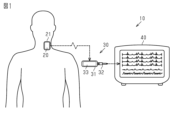
- FIG. 1 is a schematic diagram of a biometric information acquisition system according to an embodiment.
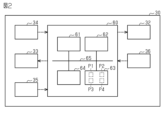
- FIG. 2 is a block diagram of the bioinformation output device.
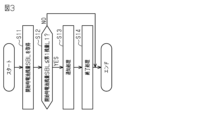
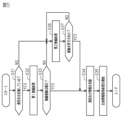
- FIG. 3 is a flowchart showing a series of processes related to the remaining battery power at the start of operation.
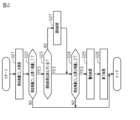
- FIG. 4 is a flow chart showing a series of processes related to the remaining battery power during operation.
- FIG. 5 is a flowchart showing a series of processes related to wireless communication.
- FIG. 6 is a flowchart showing a series of processes related to the continuous drive time during driving.
- bioinformation output device An embodiment of a bioinformation output device will be described below with reference to the drawings. In the following description, a bioinformation acquisition system including the bioinformation output device will be described as an example.
- the bioinformation acquisition system 10 includes a biosensor 20, a bioinformation output device 30, and a display 40.
- the biosensor 20 is attached to a monitoring target when in use.
- the biosensor 20 is attached to the monitoring target via an adhesive sheet 21.
- the biosensor 20 monitors the bioinformation of the monitoring target, for example, a hospitalized patient or a person undergoing surgery.
- the bioinformation includes body temperature, blood pressure, blood glucose level, oxygen saturation, heart rate, pulse rate, etc.
- the biosensor 20 is capable of detecting multiple types of bioinformation.
- the biosensor 20 is capable of wireless communication with other devices.
- the biosensor 20 can transmit a signal indicating the detected bioinformation to the bioinformation output device 30 via wireless communication.
- the wireless communication method is, for example, Bluetooth (registered trademark).
- the bioinformation output device 30 receives a signal indicating bioinformation from the biosensor 20 via wireless communication. As a result, the bioinformation output device 30 obtains the monitoring results of the bioinformation from the biosensor 20.
- the bioinformation output device 30 comprises a main body case 31, an output terminal 32, and a small monitor 33.
- the main body case 31 houses each unit described below and a battery 36.
- the output terminal 32 can be connected to a display 40.
- the small monitor 33 is attached to the outer surface of the main body case 31.
- the small monitor 33 displays an image that is smaller than the image displayed on the display 40 described below.
- the bioinformation output device 30 is capable of communicating with the display 40 by connecting the output terminal 32 to the display 40.
- the bioinformation output device 30 outputs the monitoring results of the acquired bioinformation to the display 40 via the output terminal 32.
- the display 40 acquires the monitoring results of the biological information from the biological information output device 30.
- the display 40 displays the acquired monitoring results of the biological information as an image showing time series data.
- the bioinformation output device 30 further includes a switch 34 , a wireless receiver 35 , a battery 36 , and a control unit 60 in addition to the output terminal 32 and the small monitor 33 described above.
- the switch 34 is for switching the power supply of the bioinformation output device 30 between an on state and an off state. For example, when the bioinformation output device 30 is in an off state, pressing and holding the switch 34 for a long time switches the bioinformation output device 30 to an on state. This causes the bioinformation output device 30 to start operating.
- a predetermined operation of the switch 34 inputs a prescribed signal corresponding to the operation to the control unit 60. Examples of the predetermined operation of the switch 34 include a long press operation, a short press operation, and a double consecutive press operation.
- the switch 34 is located on the outer surface of the main body case 31. The user is, for example, a medical professional.
- the wireless receiver 35 receives a signal from the biosensor 20 via wireless communication. That is, the wireless receiver 35 receives the monitoring results of the bioinformation from the biosensor 20 via wireless communication. The wireless receiver 35 also outputs the received monitoring results of the bioinformation to the control unit 60.
- the battery 36 is built into the main body case 31.
- the battery 36 supplies power to the bioinformation output device 30.
- the battery 36 is a rechargeable secondary battery.
- the bioinformation output device 30 is driven by the power supply from the battery 36.
- the control unit 60 controls the driving and stopping of the bioinformation output device 30.
- the control unit 60 includes a CPU 61, a peripheral circuit 62, a ROM 63, a storage device 64, and an internal bus 65.
- the internal bus 65 connects the CPU 61, the peripheral circuit 62, the ROM 63, and the storage device 64 so that they can communicate with each other.
- the peripheral circuit 62 includes a circuit that generates a clock signal that regulates internal operations, a power supply circuit, a reset circuit, etc.
- the ROM 63 stores various programs in advance.
- the CPU 61 controls the bioinformation output device 30 by executing the various programs stored in the ROM 63.
- the ROM 63 stores a drive start program P1, a drive in progress program P2, a wireless communication program P3, and a continuous drive program P4.
- the storage device 64 can store, as a communication destination, the biosensor 20 with which the bioinformation output device 30 is in wireless communication. Specifically, the storage device 64 can store, as a communication destination, the unique ID of the biosensor 20. In this embodiment, the storage device 64 can store only one biosensor 20 as a communication destination.
- step S11 the CPU 61 performs a start battery remaining capacity acquisition process.
- the CPU 61 acquires a start battery remaining capacity SBL, which is the remaining capacity of the battery 36 when the drive of the bioinformation output device 30 is started.
- the CPU 61 calculates the remaining capacity of the battery 36 using a known method based on the terminal voltage of the battery 36, the integrated current value of the battery 36, and the like. The CPU 61 then proceeds to the process of step S12.
- step S12 the CPU 61 performs a first remaining charge determination process at the start of operation.
- the CPU 61 determines whether the starting battery remaining charge SBL is equal to or less than the first remaining charge L1.
- the first remaining charge L1 is determined by testing or simulation as the remaining charge of the battery 36 required to drive the bioinformation output device 30 for a predetermined specified time RT.
- the specified time RT is, for example, 12 hours.
- the first remaining capacity L1 does not indicate that the battery 36 has only a small amount of charge remaining or that the voltage of the battery 36 is unstable.
- the first remaining capacity L1 is a threshold value for ensuring that the bioinformation output device 30 can be operated stably for a considerable period of time. Therefore, when the remaining capacity of the battery 36 in a fully charged state is taken as 100%, if the first remaining capacity L1 is set to a value of 30% or more, the first remaining capacity L1 can be said to be the remaining capacity of the battery 36 required to operate the bioinformation output device 30 for the specified time RT.
- step S12 determines in step S12 that the starting battery remaining capacity SBL is greater than the first remaining capacity L1 (S12: NO)
- the CPU 61 ends the current series of processes.
- the CPU 61 determines that the starting battery remaining capacity SBL is equal to or less than the first remaining capacity L1 (S12: YES)
- the CPU 61 advances the process to step S13.
- step S13 the CPU 61 performs a notification process.
- the CPU 61 outputs a notification signal.
- the notification signal is a signal that notifies the user that the bioinformation output device 30 cannot be operated for the specified time RT.
- the CPU 61 outputs the notification signal to the small monitor 33. This causes the small monitor 33 to display an image of a message indicating that the bioinformation output device 30 cannot be operated for the specified time RT. This message image is displayed for several to several tens of seconds.
- the CPU 61 advances the process to step S14.
- step S14 the CPU 61 performs a termination process.
- the CPU 61 first outputs a stop warning signal.
- the stop warning signal is a signal for notifying the user that the bioinformation output device 30 will be stopped.
- the CPU 61 outputs a notification signal to the small monitor 33. This causes the small monitor 33 to display an image of a message indicating that the operation of the bioinformation output device 30 will soon be stopped. This message image is displayed for several to several tens of seconds.
- the CPU 61 ends the operation of the bioinformation output device 30 using power supplied from the battery 36. In other words, the CPU 61 stops the bioinformation output device 30. This causes the CPU 61 to end the current series of processes.
- step S21 the CPU 61 executes a current remaining amount acquisition process.
- the CPU 61 acquires the current remaining amount CL, which is the current remaining amount of the battery 36. Thereafter, the CPU 61 advances the process to step S22.
- step S22 the CPU 61 performs a first remaining amount determination process during operation.
- the CPU 61 determines whether the current remaining amount CL acquired in the current remaining amount acquisition process in step S21 is equal to or less than the first remaining amount L1.
- the CPU 61 determines that the current remaining amount CL is greater than the first remaining amount L1 (S22: NO)
- the CPU 61 ends the current series of processes. In other words, the CPU 61 continues to drive the bioinformation output device 30.
- the CPU 61 determines that the current remaining amount CL is equal to or less than the first remaining amount L1 (S22: YES)
- the CPU 61 advances the process to step S23.
- step S23 the CPU 61 determines whether or not the notification process has been completed.
- the CPU 61 repeatedly executes the running program P2 until the driving of the bioinformation output device 30 is stopped. Then, if the notification process of step S27 described below has been executed even once during the repeated execution of the running program P2, the CPU 61 determines that the notification process has been completed. Then, if step S27 has not been executed even once during the repeated execution of the running program P2, the CPU 61 determines that the notification process has not been completed.
- step S27 the CPU 61 performs the notification process.
- the notification process in step S27 is the same process as the process in step S13 in the drive start program P1. Thereafter, the CPU 61 advances the process to step S24.
- the CPU 61 determines that the notification process has been completed in step S23 (S23: YES)
- the CPU 61 also advances the process to step S24.
- step S24 the CPU 61 performs a second remaining amount determination process.
- the CPU 61 determines whether the current remaining amount CL acquired in the current remaining amount acquisition process in step S21 is equal to or less than the second remaining amount L2.
- the second remaining amount L2 is a predetermined value that is smaller than the first remaining amount L1.
- the second remaining amount L2 is set to the lower limit of the remaining amount of the battery 36 at which the bioinformation output device 30 can be operated stably. In this embodiment, when the remaining amount of the battery 36 in a fully charged state is 100%, the second remaining amount L2 is set to 5%.
- the CPU 61 determines that the current remaining amount CL is greater than the second remaining amount L2 (S24: NO)
- the CPU 61 ends the current series of processes. In other words, the CPU 61 continues to drive the bioinformation output device 30 when the current remaining amount CL is equal to or less than the first remaining amount L1 and greater than the second remaining amount L2.
- the CPU 61 determines that the current remaining amount CL is equal to or less than the second remaining amount L2 (S24: YES)
- the CPU 61 advances the process to step S25.
- step S25 the CPU 61 performs a warning process.
- the CPU 61 outputs a warning signal.
- the warning signal is a signal that notifies the user that the current remaining amount CL is almost full.
- the CPU 61 outputs a warning signal to the small monitor 33. This causes the small monitor 33 to display an image of a message indicating that the bioinformation output device 30 can only be operated for a short time. This message image is displayed for several to tens of seconds.
- the CPU 61 advances the process to step S26.
- step S26 the CPU 61 performs a termination process.
- the termination process in step S26 is the same process as the process in step S14 in the drive start program P1. That is, in the termination process in step S26, the CPU 61 notifies the user that the bioinformation output device 30 will be stopped, and then stops the bioinformation output device 30. This causes the CPU 61 to end the current series of processes.
- the CPU 61 executes the wireless communication program P3 only once when the switch 34 is pressed and held to change the bioinformation output device 30 from an off state to an on state, i.e., when the operation of the bioinformation output device 30 is started.
- This wireless communication program P3 is executed in parallel with the operation start program P1. Furthermore, when the operation of the bioinformation output device 30 is stopped by the operation start program P1, the wireless communication program P3 ends even if it is in the middle of being executed. Note that when the operation of the bioinformation output device 30 is started, the bioinformation output device 30 has not yet established wireless communication with the biosensor 20.
- step S31 the CPU 61 determines whether or not the storage device 64 stores a communication destination.
- step S31: YES the CPU 61 advances the process to step S32.
- step S32 the CPU 61 performs a first connection process.
- the CPU 61 establishes wireless communication with the biosensor 20 in response to a request from the biosensor 20 stored in the storage device 64 as a communication destination.
- the CPU 61 establishes wireless communication only upon receiving a request to establish wireless communication from the biosensor 20 stored in the storage device 64 as a communication destination. Thereafter, the CPU 61 advances the process to step S33.
- step S33 the CPU 61 determines whether or not wireless communication has been established with the biosensor 20 stored in the storage device 64 as a communication destination. Specifically, when a signal indicating that wireless communication has been established is received from the biosensor 20 stored in the storage device 64 as a communication destination, the CPU 61 determines that wireless communication has been established. On the other hand, when a signal cannot be received from the biosensor 20 stored in the storage device 64 as a communication destination within a predetermined period of time, the CPU 61 determines that wireless communication has not been established. When wireless communication is completed (S33: YES), the CPU 61 advances the process to step S34.
- step S34 the CPU 61 deletes the information on the communication destination stored in the storage device 64. After that, the CPU 61 advances the process to step S35.
- step S35 the CPU 61 starts a bioinformation acquisition process. In the bioinformation acquisition process, the monitoring result of the bioinformation is acquired from the biosensor 20 by wireless communication. After that, the CPU 61 continues the bioinformation acquisition process until the bioinformation output device 30 is stopped. Then, when the bioinformation output device 30 is stopped, the CPU 61 ends the bioinformation acquisition process.
- step S31 determines in step S31 that the storage device 64 does not store a communication destination (S31: NO)
- the CPU 61 advances the process to step S36.
- step S33 determines in step S33 that wireless communication has not been established (S33: NO)
- the CPU 61 advances the process to step S36.
- step S36 the CPU 61 performs a second connection process.
- the CPU 61 allows the establishment of wireless communication with a biosensor 20 that is not stored as a communication destination in the storage device 64.
- the CPU 61 accepts a request to establish wireless communication from a biosensor 20 that is not stored as a communication destination. Thereafter, the CPU 61 advances the process to step S37.
- step S37 the CPU 61 performs a connection permission process.
- the CPU 61 outputs a connection permission request signal on the condition that an establishment request from the biosensor 20 has been accepted in the second connection process.
- the connection permission request signal is a signal for allowing the user to select whether or not to establish a wireless communication connection with the biosensor 20.
- the CPU 61 outputs the connection permission request signal to the small monitor 33. This causes the small monitor 33 to display an image of a message inquiring whether or not to connect to the biosensor 20. While this message image is being displayed, a predetermined operation is performed on the switch 34, and the CPU 61 obtains a signal indicating permission from the user.
- the CPU 61 When the CPU 61 obtains a signal indicating permission from the user (S37: YES), the CPU 61 establishes wireless communication with the biosensor 20. The CPU 61 then advances the process to step S34. On the other hand, if the specified operation is not performed on the switch 34, i.e., if the CPU 61 does not receive a signal indicating permission from the user (S37: NO), the CPU 61 returns the process to step S36.
- step S41 the CPU 61 performs a drive time acquisition process.
- the CPU 61 acquires the continuous drive time CT from when the bioinformation output device 30 starts to be driven by the battery 36.
- the CPU 61 acquires, as the continuous drive time CT, the time from when the switch 34 is operated to when the bioinformation output device 30 is turned on to the current time during which the device has been continuously driven. Thereafter, the CPU 61 advances the process to step S42.
- step S42 the CPU 61 performs a drive time determination process.
- the CPU 61 determines whether or not the continuous drive time CT is equal to or greater than the specified time RT. If the continuous drive time CT is less than the specified time RT (S42: NO), the CPU 61 ends the current series of processes. In other words, the CPU 61 continues to drive the bioinformation output device 30. On the other hand, if the continuous drive time CT is equal to or greater than the specified time RT (S42: YES), the CPU 61 advances the process to step S43.
- step S43 the CPU 61 performs a warning process.
- the CPU 61 outputs a warning signal.
- the warning signal is a signal that notifies the user that the power required to drive the bioinformation output device 30 for the specified time RT has been consumed.
- the CPU 61 outputs a warning signal to the small monitor 33. This causes the small monitor 33 to display an image of a message indicating that the power required to drive the bioinformation output device 30 for the specified time RT has been consumed. This message image is displayed for several to several tens of seconds.
- the CPU 61 advances the process to step S44.
- step S44 the CPU 61 performs a stop permission process.
- the CPU 61 first outputs a stop permission request signal.
- the stop permission request signal is a signal for allowing the user to select whether or not it is acceptable to stop the drive of the bioinformation output device 30.
- the CPU 61 outputs the stop permission request signal to the small monitor 33. This causes the small monitor 33 to display an image of a message inquiring whether or not it is acceptable to stop the drive of the bioinformation output device 30. While this message image is being displayed, a predetermined operation is performed on the switch 34, and the CPU 61 acquires a signal indicating permission from the user.
- step S45 the CPU 61 determines whether or not wireless communication is occurring. If wireless communication is not occurring (S45: NO), the CPU 61 advances the process to step S47. On the other hand, if wireless communication is occurring (S45: YES), the CPU 61 advances the process to step S46.
- step S46 the CPU 61 performs a storage process.
- the CPU 61 stores the biosensor 20 in wireless communication as the communication destination in the storage device 64. Specifically, the unique ID of the biosensor 20 in wireless communication is stored in the storage device 64. After that, the CPU 61 advances the process to step S47.
- step S47 the CPU 61 performs a termination process.
- the termination process in step S47 is the same process as the process in step S14 in the drive start program P1. That is, in the termination process in step S47, the CPU 61 notifies the user that the bioinformation output device 30 will be stopped, and then stops the bioinformation output device 30. This causes the CPU 61 to end the current series of processes.
- the control unit 60 when the user starts the activation of the bioinformation output device 30 by operating the switch 34, the control unit 60 starts executing the drive start program P1. Then, the user can check whether or not there is a message indicated by the notification signal on the small monitor 33. If a message indicated by the notification signal is displayed on the small monitor 33, the user can check the message and confirm that the bioinformation output device 30 cannot be driven for the specified time RT or more, i.e., 12 hours or more, in the current drive. After that, the control unit 60 performs a termination process, and the drive of the bioinformation output device 30 is stopped before the current drive of the bioinformation output device 30 proceeds.
- the CPU 61 executes a notification process.
- the CPU 61 outputs a notification signal.
- the notification signal is a signal that notifies the user that the bioinformation output device 30 cannot be driven for the specified time RT. Therefore, the user can confirm from the notification signal that the driven bioinformation output device 30 cannot be driven for the specified time RT or more. Therefore, it is possible to prevent the bioinformation output device 30 from stopping unexpectedly within the specified time RT.
- the CPU 61 further executes the termination process after performing the notification process. Therefore, in the current operation of the bioinformation output device 30, it is possible to prevent the operation of the bioinformation output device 30 from suddenly stopping due to the battery running out during the specified RT operation. In other words, if an unexpected stop occurs during the specified RT operation, the operation of the bioinformation output device 30 can be stopped at the start. Furthermore, since the CPU 61 executes the termination process after performing the notification process, the bioinformation output device 30 can stop operation in a state that the user can expect.
- the CPU 61 executes a warning process.
- the CPU 61 outputs a warning signal.
- the warning signal is a signal that notifies the user that the current remaining amount CL is almost complete. Therefore, the user can confirm from the warning signal that the bioinformation output device 30 can only be operated for a short time. This makes it possible to prevent the bioinformation output device 30 from entering a state that is unexpected by the user after the warning process.
- the CPU 61 executes the termination process after the warning process. Therefore, the bioinformation output device 30 can stop operating in a state that the user can expect.
- the CPU 61 continues to drive the bioinformation output device 30 when the current remaining amount CL is equal to or less than the first remaining amount L1 and is greater than the second remaining amount L2. Therefore, after the bioinformation output device 30 starts to drive, even if the current remaining amount CL is equal to or less than the first remaining amount L1, the drive continues if it is greater than the second remaining amount L2. Therefore, the bioinformation output device 30 can be driven continuously for a longer period of time. In other words, it is possible to avoid the bioinformation output device 30 from stopping its drive unnecessarily.
- the CPU 61 executes a warning process when the continuous drive time CT becomes equal to or greater than the specified time RT.
- the CPU 61 outputs a warning signal.
- the warning signal is a signal that notifies the user that the battery 36 has consumed the power necessary to drive the battery 36 for the specified time RT. Therefore, the user can confirm from the warning signal that the drive time of the specified time RT, which is guaranteed by the absence of the notification process, has passed. This makes it possible to prevent the bioinformation output device 30 from entering a state that the user does not expect after the warning process.
- the CPU 61 further executes the termination process after the warning process. Therefore, the bioinformation output device 30 can stop operating in a state that the user can expect.
- the CPU 61 executes the biometric information acquisition process by wireless communication. Therefore, even if the biometric information is monitored at a considerable distance from the biometric sensor 20, the biometric information can be acquired. In addition, it becomes easier to provide space around the person to whom the biometric sensor 20 is attached, which makes it less likely that treatment will be interrupted.
- the CPU 61 executes a first connection process.
- the CPU 61 establishes wireless communication only with the biosensor 20 stored in the storage device 64 as a communication destination. Therefore, when the bioinformation output device 30 is used repeatedly with the same biosensor 20, it is possible to prevent the bioinformation monitoring results from being obtained from different communication destinations.
- the CPU 61 executes a storage process when the continuous drive time CT is equal to or greater than the specified time RT.
- the CPU 61 stores the communication destination in the storage device 64. Therefore, even if the termination process is performed after the continuous drive time CT is equal to or greater than the specified time RT, the storage device 64 will have stored the communication destination at the next startup. Therefore, at the next drive, wireless communication can be established with the same communication destination.
- the CPU 61 executes the second connection process.
- the CPU 61 allows the establishment of wireless communication with a biosensor 20 that is not stored as a communication destination in the storage device 64. Therefore, even when the storage device 64 does not store a communication destination, wireless communication can be established and bioinformation can be acquired.
- the bioinformation output device 30 is powered on when the switch 34 is operated.
- the control unit 60 starts executing the drive start program P1 while the user is holding the bioinformation output device 30 in his/her hands. Therefore, when a notification process is performed in the drive start program P1, a message is displayed on the small monitor 33 while the user is holding the bioinformation output device 30 in his/her hands. This makes it easier for the user to notice the message of the notification signal.
- the biosensor 20 is not limited to being attached to a monitoring target via the adhesive sheet 21.
- the biosensor 20 may be any device that can detect bioinformation.
- the communication method between the biosensor 20 and the bioinformation output device 30 is not limited to the example in the above embodiment.
- the wireless communication method between them may be ZigBee (registered trademark) or wireless LAN.
- a signal indicating permission is input by operating the switch 34 of the bioinformation output device 30, but the bioinformation output device 30 may have an operable mechanism separate from the switch 34.
- the small monitor 33 of the bioinformation output device 30 may be a touch panel and may be operable.
- the bioinformation output device 30 is powered on by operating the switch 34, but instead of the switch 34, a signal to turn on the power may be input via wireless communication.
- the bioinformation output device 30 may have a speaker in addition to or instead of the small monitor 33.
- notification signals, warning signals, and caution signals may be output to the speaker, and audio messages may be output from the speaker.
- the notification signals, warning signals, and caution signals are not limited to signals that output images, but may also be signals that output light, signals that output sound, or signals that stop the bioinformation that has been continuously displayed on the small monitor 33.
- the bioinformation output device 30 is not limited to outputting the monitoring results of the bioinformation via the output terminal 32.
- the bioinformation output device 30 may output the monitoring results of the bioinformation to the display 40 while connected to the display 40 by wire.
- the bioinformation output device 30 may output the monitoring results of the bioinformation to the display 40 by wireless communication.
- the control unit 60 may be configured as a circuit including one or more processors that execute various processes according to a computer program (software).
- the control unit 60 may be configured as a circuit including one or more dedicated hardware circuits, such as an application specific integrated circuit (ASIC), that execute at least a part of the various processes, or a combination thereof.
- the processor includes a CPU and memory such as a RAM and a ROM.
- the memory stores program code or instructions that are configured to cause the CPU to execute the processes.
- the memory i.e., the computer-readable medium, includes any available medium that can be accessed by a general-purpose or dedicated computer.
- the timing at which the control unit 60 performs the storage process is not limited to the example of the above embodiment.
- the process of step S34 may be omitted.
- the control unit 60 may perform the storage process after the second connection process.
- the control unit 60 may omit the stop permission process of step S44 in the series of processes in the continuous drive program P4.
- the control unit 60 may also omit the processes of steps S45 and S46.
- the control unit 60 may also omit the termination process of step S47.
- the control unit 60 does not have to execute the continuous drive program P4.
- the storage device 64 does not have to store the continuous drive program P4. In other words, the control unit 60 does not have to perform the drive time acquisition process in step S41, the process in step S42, and the warning process in step S43.
- the control unit 60 may not execute the second connection process of step S36.
- the connection permission process of step S37 may not be executed either.
- the bioinformation output device 30 may establish wireless communication only with a predetermined biosensor 20.
- the storage device 64 may always store the predetermined biosensor 20 as the communication destination.
- the control unit 60 does not need to execute the wireless communication program P3.
- the storage device 64 does not need to store the wireless communication program P3.
- the bioinformation output device 30 may be connected to the biosensor 20 by wire and acquire bioinformation from the biosensor 20.
- the bioinformation output device 30 may have a sensor capable of detecting bioinformation, and in this case, it is sufficient to acquire the monitoring results of the bioinformation from the sensor.
- the wireless receiver 35 may be omitted.
- the bioinformation output device 30 does not need to be a device that relays between the biosensor 20 and the display 40. It is sufficient that the bioinformation output device 30 is at least a device that outputs the monitoring results of the bioinformation.
- control unit 60 may perform the notification process of step S27 regardless of the process of step S23. Also, the control unit 60 may omit the processes of steps S22, S23, and S27. In other words, in the series of processes in the running program P2, the current remaining amount CL may be compared with the second remaining amount L2 without comparing the current remaining amount CL with the first remaining amount L1.
- the control unit 60 may stop driving the bioinformation output device 30 when the current remaining amount CL is equal to or less than the first remaining amount L1 and is greater than the second remaining amount L2 during the series of processes in the running program P2. For example, even if the current remaining amount CL is equal to or less than the first remaining amount L1 and is greater than the second remaining amount L2, the driving of the bioinformation output device 30 may be stopped by the termination process of step S47 in the continuous driving program P4. Also, for example, after the attention process of step S43, the control unit 60 may perform the termination process after the notification process of step S27 when the current remaining amount CL is equal to or less than the first remaining amount L1, even if the current remaining amount CL is greater than the second remaining amount L2.
- the control unit 60 may omit the processes of steps S24 and S25 in the series of processes in the driving program P2.
- the control unit 60 may omit the termination process of step S26 in the series of processes in the running program P2.
- the driving of the bioinformation output device 30 may be stopped due to the battery running out. Even in this case, the battery may run out in a state that the user can expect due to the warning process.
- the control unit 60 does not have to execute the driving program P2.
- the storage device 64 does not have to store the driving program P2.
- the control unit 60 only needs to execute at least the driving start program P1 out of the four programs.
- control unit 60 may terminate the drive of the bioinformation output device 30 without outputting a stop warning signal. This also applies to the termination processes in other programs.
- the control unit 60 may omit the termination process of step S14 in the series of processes in the drive start program P1.
- the control unit 60 may perform notification processing at least when it is determined in the series of processes in the drive start program P1 that the start-time battery remaining amount SBL is equal to or less than the first remaining amount L1.
- the control unit 60 executes the drive time acquisition process and the warning process. This allows the user to confirm, based on the warning signal, that the drive time of the specified time RT, which is guaranteed because the notification process was not performed, has passed. This makes it possible to prevent the bioinformation output device 30 from entering a state that the user does not expect after the warning process. In this way, in terms of being able to confirm that the drive time of the specified time RT has passed, it is not essential for the control unit 60 to perform the start-time battery remaining amount acquisition process, the first remaining amount determination process, and the notification process.
- a control unit for controlling driving and stopping of the bioinformation output device, the bioinformation output device being driven by power supplied from a battery
- the control unit a start-time battery remaining amount acquisition process for acquiring a start-time battery remaining amount, which is a remaining amount of the battery when the operation of the bioinformation output device is started; a first remaining amount determination process for determining whether or not the start-time remaining battery amount is equal to or less than a first remaining amount necessary for driving the bioinformation output device for a predetermined specified time; and a notification process of outputting a notification signal notifying a user that the bioinformation output device cannot be operated for the specified time when it is determined in the first remaining amount determination process that the start-time battery remaining amount is equal to or less than the first remaining amount.
- control unit further executes, after the notification process, a termination process for terminating the driving of the bioinformation output device by the power supply from the battery.
- the control unit A current remaining capacity acquisition process for acquiring a current remaining capacity of the battery; a second remaining amount determination process for determining whether the current remaining amount is equal to or less than a second remaining amount that is a value smaller than the first remaining amount after the bioinformation output device is driven;
- the bioinformation output device according to ⁇ 1> or ⁇ 2> further executes a warning process of outputting a warning signal to notify a user when it is determined in the second remaining amount determination process that the current remaining amount is equal to or less than the second remaining amount.
- ⁇ 4> The bioinformation output device according to ⁇ 3>, wherein the control unit further executes, after the warning process, a termination process for terminating the driving of the bioinformation output device by the power supply from the battery.
- ⁇ 5> The bioinformation output device according to ⁇ 3> or ⁇ 4>, wherein the control unit continues driving the bioinformation output device when the current remaining amount is equal to or less than the first remaining amount and is greater than the second remaining amount.
- the control unit a drive time acquisition process for acquiring a continuous drive time from when the drive by the battery is started;
- the bioinformation output device described in any one of ⁇ 1> to ⁇ 5> further executes a warning process that outputs a signal to notify a user that the power required to operate for the specified time has been consumed when the continuous operation time reaches or exceeds the specified time.
- ⁇ 7> The bioinformation output device according to ⁇ 6>, wherein the control unit further executes a termination process for terminating the driving of the bioinformation output device by the power supply from the battery after the warning process.
- ⁇ 8> The bioinformation output device according to any one of ⁇ 1> to ⁇ 7>, wherein the control unit further executes a bioinformation acquisition process for acquiring the bioinformation from a biosensor that monitors the bioinformation via wireless communication.
- the control unit has a storage device; a storage process for storing the biosensor that is wirelessly communicating in the storage device as a communication destination; and further executing a first connection process for establishing wireless communication with the biosensor in response to a request from the biosensor when wireless communication has not been established;
- the bioinformation output device according to ⁇ 8>, wherein the control unit establishes wireless communication only with the biosensor stored in the storage device as the communication destination in the first connection process.
- control unit further executing a drive time acquisition process for acquiring a continuous drive time from when the drive by the battery is started;
- the bioinformation output device further comprising: a step of: executing the storage process when the continuous drive time acquired in the drive time acquisition process is equal to or longer than the specified time.
- the control unit The bioinformation output device described in ⁇ 9> or ⁇ 10> further executes a second connection process that allows the establishment of wireless communication with the biosensor that is not stored in the storage device as the communication destination when wireless communication is not established with the biosensor that is stored in the storage device as the communication destination.
- a control unit is provided to control driving and stopping of a bioinformation output device that is driven by power supplied from a battery and outputs bioinformation,
- the control unit a drive time acquisition process for acquiring a continuous drive time from when the drive by the battery is started; and when the continuous drive time reaches or exceeds a predetermined specified time, a warning process is executed to output a signal notifying a user that the power required for drive over the specified time has been consumed.
Landscapes
- Engineering & Computer Science (AREA)
- Life Sciences & Earth Sciences (AREA)
- Health & Medical Sciences (AREA)
- Physics & Mathematics (AREA)
- Power Engineering (AREA)
- Surgery (AREA)
- Veterinary Medicine (AREA)
- Pathology (AREA)
- Biomedical Technology (AREA)
- Heart & Thoracic Surgery (AREA)
- Medical Informatics (AREA)
- Molecular Biology (AREA)
- Biophysics (AREA)
- Animal Behavior & Ethology (AREA)
- General Health & Medical Sciences (AREA)
- Public Health (AREA)
- Computer Networks & Wireless Communication (AREA)
- Business, Economics & Management (AREA)
- Emergency Management (AREA)
- General Physics & Mathematics (AREA)
- Manufacturing & Machinery (AREA)
- Chemical & Material Sciences (AREA)
- Chemical Kinetics & Catalysis (AREA)
- Electrochemistry (AREA)
- General Chemical & Material Sciences (AREA)
- Measuring And Recording Apparatus For Diagnosis (AREA)
Priority Applications (2)
| Application Number | Priority Date | Filing Date | Title |
|---|---|---|---|
| JP2024561498A JP7848891B2 (ja) | 2022-11-29 | 2023-11-28 | 生体情報出力装置 |
| US19/220,641 US20250281042A1 (en) | 2022-11-29 | 2025-05-28 | Biological information output device |
Applications Claiming Priority (2)
| Application Number | Priority Date | Filing Date | Title |
|---|---|---|---|
| JP2022-190488 | 2022-11-29 | ||
| JP2022190488 | 2022-11-29 |
Related Child Applications (1)
| Application Number | Title | Priority Date | Filing Date |
|---|---|---|---|
| US19/220,641 Continuation US20250281042A1 (en) | 2022-11-29 | 2025-05-28 | Biological information output device |
Publications (1)
| Publication Number | Publication Date |
|---|---|
| WO2024117113A1 true WO2024117113A1 (ja) | 2024-06-06 |
Family
ID=91323809
Family Applications (1)
| Application Number | Title | Priority Date | Filing Date |
|---|---|---|---|
| PCT/JP2023/042489 Ceased WO2024117113A1 (ja) | 2022-11-29 | 2023-11-28 | 生体情報出力装置 |
Country Status (3)
| Country | Link |
|---|---|
| US (1) | US20250281042A1 (https=) |
| JP (1) | JP7848891B2 (https=) |
| WO (1) | WO2024117113A1 (https=) |
Citations (4)
| Publication number | Priority date | Publication date | Assignee | Title |
|---|---|---|---|---|
| JP2017131319A (ja) * | 2016-01-26 | 2017-08-03 | 株式会社Jvcケンウッド | 生体センサ装置、管理装置、通信システム、及び通信方法 |
| WO2018003608A1 (ja) * | 2016-06-28 | 2018-01-04 | オムロンヘルスケア株式会社 | 生体情報測定装置、生体情報測定装置の作動方法、及び、生体情報測定装置の作動プログラム |
| JP2019080786A (ja) * | 2017-10-31 | 2019-05-30 | フクダ電子株式会社 | 生体情報測定装置 |
| JP2019163964A (ja) * | 2018-03-19 | 2019-09-26 | セイコーエプソン株式会社 | 携帯型電子機器 |
-
2023
- 2023-11-28 JP JP2024561498A patent/JP7848891B2/ja active Active
- 2023-11-28 WO PCT/JP2023/042489 patent/WO2024117113A1/ja not_active Ceased
-
2025
- 2025-05-28 US US19/220,641 patent/US20250281042A1/en active Pending
Patent Citations (4)
| Publication number | Priority date | Publication date | Assignee | Title |
|---|---|---|---|---|
| JP2017131319A (ja) * | 2016-01-26 | 2017-08-03 | 株式会社Jvcケンウッド | 生体センサ装置、管理装置、通信システム、及び通信方法 |
| WO2018003608A1 (ja) * | 2016-06-28 | 2018-01-04 | オムロンヘルスケア株式会社 | 生体情報測定装置、生体情報測定装置の作動方法、及び、生体情報測定装置の作動プログラム |
| JP2019080786A (ja) * | 2017-10-31 | 2019-05-30 | フクダ電子株式会社 | 生体情報測定装置 |
| JP2019163964A (ja) * | 2018-03-19 | 2019-09-26 | セイコーエプソン株式会社 | 携帯型電子機器 |
Also Published As
| Publication number | Publication date |
|---|---|
| US20250281042A1 (en) | 2025-09-11 |
| JP7848891B2 (ja) | 2026-04-21 |
| JPWO2024117113A1 (https=) | 2024-06-06 |
Similar Documents
| Publication | Publication Date | Title |
|---|---|---|
| US9019098B2 (en) | Wireless communication system | |
| JP5965591B2 (ja) | センシング無線端末、センシング方法およびセンシングシステム | |
| US8318096B2 (en) | Biological sample measurement apparatus | |
| JP5535251B2 (ja) | 試料測定装置および試料測定システム | |
| US10987002B2 (en) | Biological information measurement device, and biological information measurement device operating method | |
| WO2020039830A1 (ja) | 測定装置、測定方法及び測定プログラム | |
| US11464496B2 (en) | Patient monitor, vital sign software control method, and program | |
| RU2700978C1 (ru) | Портативное комплексное измерительное устройство для измерения нескольких видов биометрической информации и способ измерения | |
| WO2024117113A1 (ja) | 生体情報出力装置 | |
| US12029569B2 (en) | Portable electrocardiographic waveform measurement device, information management system, method of controlling portable electrocardiographic waveform measurement device, and non-transitory recording medium including program recorded therein | |
| US20240224363A1 (en) | Biomedical data relay device and biomedical-device wireless communication system | |
| CN118697301A (zh) | 患者监护仪、生命体征软件控制方法和程序 | |
| KR101631010B1 (ko) | 자동제세동기의 저전력 운영 시스템 | |
| US12539066B2 (en) | Biological information measurement device, biological information management system, and control method of biological information measurement device | |
| RU2831109C1 (ru) | Способ управления медицинским устройством с питанием от аккумуляторной батареи для компенсации ее пассивации (варианты) | |
| JP2016187437A (ja) | 医療機器及び生体情報モニター | |
| CN114343578B (zh) | 体内分析物检测系统 | |
| TW202142179A (zh) | 用於醫療裝置中的電池鈍化補償之設備及方法 | |
| US20250380912A1 (en) | Method of displaying communication status in glucose monitoring system | |
| JP5932499B2 (ja) | 電子機器、電子時計及びプログラム | |
| JP2024080043A (ja) | 生体モニタリングデータの送信装置 | |
| JP2016097054A (ja) | 投薬制御方法、投薬装置および投薬制御プログラム | |
| JP2021078880A5 (https=) | ||
| US20110223879A1 (en) | Method and Arrangement for Operating a Mobile Battery-Operated Personal Emergency Signal Device | |
| CN108174015A (zh) | 功耗控制方法、装置、可穿戴设备及计算机可读存储介质 |
Legal Events
| Date | Code | Title | Description |
|---|---|---|---|
| 121 | Ep: the epo has been informed by wipo that ep was designated in this application |
Ref document number: 23897761 Country of ref document: EP Kind code of ref document: A1 |
|
| WWE | Wipo information: entry into national phase |
Ref document number: 2024561498 Country of ref document: JP |
|
| NENP | Non-entry into the national phase |
Ref country code: DE |
|
| 122 | Ep: pct application non-entry in european phase |
Ref document number: 23897761 Country of ref document: EP Kind code of ref document: A1 |