WO2024075201A1 - 複合材料構造体 - Google Patents
複合材料構造体 Download PDFInfo
- Publication number
- WO2024075201A1 WO2024075201A1 PCT/JP2022/037239 JP2022037239W WO2024075201A1 WO 2024075201 A1 WO2024075201 A1 WO 2024075201A1 JP 2022037239 W JP2022037239 W JP 2022037239W WO 2024075201 A1 WO2024075201 A1 WO 2024075201A1
- Authority
- WO
- WIPO (PCT)
- Prior art keywords
- sound
- fiber
- absorbing material
- wrapping paper
- composite material
- Prior art date
- Legal status (The legal status is an assumption and is not a legal conclusion. Google has not performed a legal analysis and makes no representation as to the accuracy of the status listed.)
- Ceased
Links
Images
Classifications
-
- B—PERFORMING OPERATIONS; TRANSPORTING
- B32—LAYERED PRODUCTS
- B32B—LAYERED PRODUCTS, i.e. PRODUCTS BUILT-UP OF STRATA OF FLAT OR NON-FLAT, e.g. CELLULAR OR HONEYCOMB, FORM
- B32B5/00—Layered products characterised by the non- homogeneity or physical structure, i.e. comprising a fibrous, filamentary, particulate or foam layer; Layered products characterised by having a layer differing constitutionally or physically in different parts
- B32B5/02—Layered products characterised by the non- homogeneity or physical structure, i.e. comprising a fibrous, filamentary, particulate or foam layer; Layered products characterised by having a layer differing constitutionally or physically in different parts characterised by structural features of a fibrous or filamentary layer
Definitions
- the present invention relates to a composite material structure, and more specifically to a composite material structure suitable for vehicle sound-silencing panels.
- Electric vehicles produce less noise from their motors than vehicles equipped with conventional engines, and noise inside the vehicle is dominated by wind noise and road noise while driving, so there is a greater demand for measures to prevent noise generated by sources other than the motor.
- Patent Document 1 discloses a composite material structure that can be used for automobile panel materials, etc., in which high-density permeation-suppressing layers are provided on both sides of a nonwoven fabric to prevent the matrix resin of the fiber-reinforced resin from permeating the nonwoven fabric.
- the present invention was made in consideration of the problems inherent in the conventional technology, and its purpose is to provide a composite material structure that has excellent sound-absorbing properties and allows 100% reuse of the sound-absorbing material.
- the inventors discovered that the above objective could be achieved by wrapping the sound-absorbing material in oil-repellent wrapping paper to prevent adhesion between the matrix resin of the fiber-reinforced resin and the sound-absorbing material, thus completing the present invention.
- the composite material structure of the present invention comprises a sound-absorbing material and a fiber-reinforced resin.
- the sound absorbing material is wrapped in oil repellent wrapping paper, and the fiber reinforced resin is in close contact with the wrapping paper, covering the entire sound absorbing material wrapped in the wrapping paper.
- the sound-absorbing material is wrapped in oil-repellent wrapping paper to prevent adhesion between the matrix resin of the fiber-reinforced resin and the sound-absorbing material, making it possible to provide a composite material structure in which the sound-absorbing material is 100% recyclable.
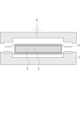
- FIG. 1A to 1C are diagrams illustrating the state of molding a composite material structure.
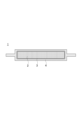
- FIG. 1 is a cross-sectional view showing an example of a composite material structure.
- the composite material structure of the present invention comprises a sound-absorbing material and a fiber-reinforced resin.
- the fiber-reinforced resin maintains the shape of the composite material structure.
- the sound-absorbing material is entirely covered with the fiber-reinforced resin and vibrates finely in response to sound (vibration energy) incident on the composite material structure, converting the vibrational energy of the sound into thermal energy to absorb the sound.
- the composite material structure described above can be produced at the same time as the fiber-reinforced resin is produced, rather than being produced by combining the fiber-reinforced resin and the sound-absorbing material, which are each produced separately.
- the fiber-reinforced resin is generally produced by impregnating a fiber sheet such as woven or nonwoven fabric with a matrix resin in a mold and then curing or solidifying the matrix resin. At this time, as shown in Figure 1, the sound-absorbing material is covered on both sides with the fiber sheet, which is then impregnated with the matrix resin, making it possible to produce a composite material structure at the same time as producing the fiber-reinforced resin.
- the matrix resin impregnated in the fiber sheet will penetrate the fiber sheet and reach the sound-absorbing material, bonding the sound-absorbing material and the fiber-reinforced resin together, making them difficult to separate, and reducing the recyclability of the sound-absorbing material.
- the matrix resin will penetrate into the sound-absorbing material and solidify, preventing the sound-absorbing material from vibrating, thereby reducing the sound-absorbing performance.
- the sound-absorbing material is wrapped in oil-repellent wrapping paper, so the wrapping paper repels the matrix resin and prevents adhesion between the fiber-reinforced resin and the sound-absorbing material, preventing a decrease in the recyclability of the sound-absorbing material and a decrease in its sound-absorbing performance.
- This makes it possible to reduce the amount of sound-absorbing material and matrix resin used, making it lighter and less expensive.
- wrapped in wrapping paper means that the sound-absorbing material does not come into contact with the matrix resin, and it is acceptable for there to be small gaps where the wrapping paper overlaps, and for a small amount of matrix resin to get into the gaps between the wrapping paper.
- the sound-absorbing material is impregnated with matrix resin while covered with a fiber sheet
- the fiber-reinforced resin adheres to the entire surface of the wrapping paper encasing the sound-absorbing material, preventing the sound-absorbing material from shifting inside the composite material structure.
- the wrapping paper used can be oil-repellent so that it repels and does not allow the matrix resin to penetrate during molding of the composite material structure, and has heat resistance to the extent that it does not change even when it comes into contact with the matrix resin during molding of the composite material structure.
- the heat resistance of the wrapping paper is preferably 150°C or higher, and more preferably 200 to 300°C.
- the wrapping paper may be, for example, a paper base coated with an oil repellent material. Because the base material of the wrapping paper is paper, even if the wrapping paper and the fiber reinforced resin stick together due to matrix resin getting into wrinkles or gaps in the wrapping paper, the sound absorbing material can be easily removed by tearing the wrapping paper, and the torn wrapping paper can be incinerated.
- the oil-repellent material may be fluororesin, silicone resin, polypropylene, polyethylene, polyacetal, etc. Among them, fluororesin and silicone resin are preferred because of their excellent oil repellency and heat resistance.
- the sound absorbing material in addition to porous sound absorbing materials such as a fiber aggregate having pores between the fibers and sponge, diaphragm type sound absorbing materials and resonance type sound absorbing materials can be used.
- a sound absorbing material made of a fiber assembly is preferably used since it has excellent sound absorbing properties and is lightweight.
- the fibers forming the fiber sheet of the fiber-reinforced resin may include carbon fiber and glass fiber.
- thermosetting resins such as epoxy resins and phenolic resins, as well as thermoplastic resins such as polyethylene, polypropylene, and polystyrene
- epoxy resins are preferably used because the monomer has a low viscosity, which allows it to easily penetrate between the fibers of fiber sheets such as woven and nonwoven fabrics, and they also have high heat resistance.
- the composite material structure of the present invention can be molded not only into a plate shape, but also into a hat shape or other shape suited to the area of use, and since it absorbs incident sound, it can be used in vehicle undercovers and door trims to absorb and silence sounds entering the vehicle interior.
Landscapes
- Laminated Bodies (AREA)
- Vehicle Interior And Exterior Ornaments, Soundproofing, And Insulation (AREA)
Abstract
本発明の複合材料構造体は、吸音材と、繊維強化樹脂と、を備える。 そして、上記吸音材が、撥油性を有する包装紙で包まれており、上記繊維強化樹脂が上記包装紙に密着し該包装紙で包まれた吸音材の全体を覆っていることとしたため、繊維強化樹脂と吸音材との接着を防止でき、吸音材を100%再利用可能な複合材料構造体を提供することができる。
Description
本発明は、複合材料構造体に係り、更に詳細には、車両の静音化パネルに好適な複合材料構造体に関する。
電気自動車は、従来のエンジン搭載車に比べてモーターからの騒音が少なく、電気自動車の車内での騒音は、走行時の風切り音やロードノイズが支配的となるので、モーター以外から発生する騒音を防ぐ対策がより厳しく求められる。
特許文献1には、不織布の両面上に素材密度が高い浸潤抑制層を設けて繊維強化樹脂のマトリクス樹脂が不織布に含侵することを防止した、自動車のパネル材などに利用できる複合材料構造体が開示されている。
しかしながら、特許文献1に記載のものは、不織布の一部を加熱圧縮して浸潤抑制層を形成しているので、この部分での吸音性が低下するのに加えて、浸潤抑制層が繊維強化樹脂のマトリクス樹脂と接着しているため、上記複合材料構造体をリサイクルする際、不織布と繊維強化樹脂との分離が困難であり、不織布のリサイクル性が低い。
本発明は、このような従来技術の有する課題に鑑みてなされたものであり、その目的とするところは、吸音性に優れ、かつ吸音材を100%再利用することが可能な複合材料構造体を提供することにある。
本発明者は、上記目的を達成すべく鋭意検討を重ねた結果、撥油性を有する包装紙で吸音材を包み、繊維強化樹脂のマトリックス樹脂と吸音材との接着を防止することにより、上記目的が達成できることを見出し、本発明を完成するに至った。
即ち、本発明の複合材料構造体は、吸音材と、繊維強化樹脂と、を備える。
そして、上記吸音材が、撥油性を有する包装紙で包まれており、上記繊維強化樹脂が上記包装紙に密着し該包装紙で包まれた吸音材の全体を覆っていることを特徴とする。
そして、上記吸音材が、撥油性を有する包装紙で包まれており、上記繊維強化樹脂が上記包装紙に密着し該包装紙で包まれた吸音材の全体を覆っていることを特徴とする。
本発明によれば、撥油性を有する包装紙で吸音材を包み、繊維強化樹脂のマトリックス樹脂と吸音材との接着を防止することとしたため、吸音材を100%再利用可能な複合材料構造体を提供することができる。
本発明の複合材料構造体について詳細に説明する。
本発明の複合材料構造体は、吸音材と繊維強化樹脂とを備える。
上記繊維強化樹脂は、複合材料構造体の形状を維持する。上記吸音材はその全体が上記繊維強化樹脂で覆われており、複合材料構造体に入射した音(振動エネルギ-)によって細かく振動し、音の振動エネルギーを熱エネルギーに変えて吸音する。
本発明の複合材料構造体は、吸音材と繊維強化樹脂とを備える。
上記繊維強化樹脂は、複合材料構造体の形状を維持する。上記吸音材はその全体が上記繊維強化樹脂で覆われており、複合材料構造体に入射した音(振動エネルギ-)によって細かく振動し、音の振動エネルギーを熱エネルギーに変えて吸音する。
上記複合材料構造体は、それぞれ別々に作製された繊維強化樹脂と吸音材とを併せて作製するのではなく、繊維強化樹脂の作製と同時に複合材料構造体を作製することができる。
すなわち、一般的に、上記繊維強化樹脂は、金型内で織布や不織布などの繊維シートにマトリックス樹脂を含侵させ、マトリックス樹脂を硬化又は固化することで作製する。このとき、図1に示すように、吸音材を上記繊維シートで両面から覆い、ここにマトリックス樹脂を含侵させることで繊維強化樹脂の作製と同時に複合材料構造体を作製できる。
しかし、上記吸音材を上記繊維シートで覆っただけであると、上記繊維シートに含侵させたマトリックス樹脂が上記繊維シートを透過して吸音材に達し、吸音材と繊維強化樹脂とが接着してしまい、これらの分離が困難であるので吸音材のリサイクル性が低下する。加えて、マトリックス樹脂が吸音材の内部まで浸透して固化し、吸音材の振動を妨げるので吸音性能が低下してしまう。
本発明の複合材料構造体は、図2に示すように、吸音材が撥油性を有する包装紙で包まれているので、包装紙がマトリックス樹脂を撥いて繊維強化樹脂と吸音材とが接着することを防止し、吸音材のリサイクル性の低下と吸音性能の低下とを防止することができる。したがって、吸音材やマトリックス樹脂の使用量を削減することができ、軽量化できると共に安価である。なお、「包装紙で包まれた」とは、マトリックス樹脂に吸音材が接触しなければよく、包装紙が重なったところなどに少し隙間があり、この包装紙間の隙間にマトリックス樹脂少し入り込んでも構わない。
また、吸音材を繊維シートで覆った状態でマトリックス樹脂を含侵させるため、吸音材を包んだ状態の包装紙の表面全体に繊維強化樹脂が密着し、複合材料構造体の内部での吸音材のズレが防止される。したがって、吸音材と包装紙との間や、包装紙と繊維強化樹脂との間に空間が存在せず、複合材料構造体に入射した音は、吸音材に吸収され、そのまま透過することがないので吸音性能が優れる。
上記包装紙としては、複合材料構造体の成形中にマトリックス樹脂を忌避し浸透させない撥油性を有し、複合材料構造体の成形中にマトリックス樹脂と接触しても変化しない程度の耐熱性を有するものを使用することができる。
包装紙の耐熱性は、具体的には耐熱温度が、150℃以上であることが好ましく、さらに200~300℃であることが好ましい。
上記包装紙としては、例えば、紙基材に撥油材をコーティングしたものを使用することができる。包装紙の基材が紙であることで、仮に、包装紙のしわや隙間にマトリックス樹脂が入り込む等して、包装紙と繊維強化樹脂とがくっついたとしても包装紙を破くことで吸音材を容易に取り出すことができると共に、破いた包装紙の焼却処分が可能である。
上記撥油材としては、フッ素樹脂、シリコン樹脂、ポリプロピレン、ポリエチレン、ポリアセタールなどを挙げることができる。中でもフッ素樹脂やシリコン樹脂は、撥油性及び耐熱性に優れるので好ましく使用できる。
上記吸音材としては、繊維間に細孔を有する繊維集合体やスポンジなどの多孔質系吸音材の他、振動板系の吸音材、共鳴型系の吸音材を使用できる。
なかでも繊維集合体の吸音材は、吸音性に優れると共に軽量であるので好ましく使用できる。
なかでも繊維集合体の吸音材は、吸音性に優れると共に軽量であるので好ましく使用できる。
上記繊維強化樹脂の繊維シートを形成する繊維としては、炭素繊維やガラス繊維を挙げることができる。
上記繊維強化樹脂のマトリックス樹脂としては、エポキシ樹脂、フェノール樹脂などの熱硬化性樹脂の他、ポリエチレン、ポリプロピレン、ポリスチレンなどの熱可塑性樹脂を使用できる。なかでもエポキシ樹脂は、モノマーの粘度が低く織布や不織布などの繊維シートの繊維間に浸透し易いのに加えて耐熱性が高いので好ましく使用できる。
本発明の複合材料構造体は、板状だけでなく、ハット形状など使用箇所に応じた形状に成形することが可能であると共に、入射した音を吸音するので、車両のアンダーカバーやドアトリムなどに使用し、車内に侵入する音を吸音して静音化することができる。
1 複合樹脂材料構造体
2 吸音材
3 包装紙
4 繊維強化樹脂
5 繊維シート
6 マトリックス樹脂
7 金型
2 吸音材
3 包装紙
4 繊維強化樹脂
5 繊維シート
6 マトリックス樹脂
7 金型
Claims (4)
- 吸音材と、繊維強化樹脂と、を備える複合材料構造体であって、
上記吸音材が、撥油性を有する包装紙で包まれており、
上記繊維強化樹脂が、上記包装紙に密着し該包装紙で包まれた吸音材を覆っていることを特徴とする複合材料構造体。 - 上記コア材が、繊維集合体であることを特徴とする請求項1に記載の複合材料構造体。
- 上記繊維強化樹脂のマトリックス樹脂が、エポキシ樹脂であることを特徴とする請求項1に記載の複合材料構造体。
- 上記包装紙が、フッ素樹脂を含有することを特徴とする請求項1に記載の複合材料構造体。
Priority Applications (2)
| Application Number | Priority Date | Filing Date | Title |
|---|---|---|---|
| PCT/JP2022/037239 WO2024075201A1 (ja) | 2022-10-05 | 2022-10-05 | 複合材料構造体 |
| JP2024555519A JP7814678B2 (ja) | 2022-10-05 | 2022-10-05 | 複合材料構造体 |
Applications Claiming Priority (1)
| Application Number | Priority Date | Filing Date | Title |
|---|---|---|---|
| PCT/JP2022/037239 WO2024075201A1 (ja) | 2022-10-05 | 2022-10-05 | 複合材料構造体 |
Publications (1)
| Publication Number | Publication Date |
|---|---|
| WO2024075201A1 true WO2024075201A1 (ja) | 2024-04-11 |
Family
ID=90607821
Family Applications (1)
| Application Number | Title | Priority Date | Filing Date |
|---|---|---|---|
| PCT/JP2022/037239 Ceased WO2024075201A1 (ja) | 2022-10-05 | 2022-10-05 | 複合材料構造体 |
Country Status (2)
| Country | Link |
|---|---|
| JP (1) | JP7814678B2 (ja) |
| WO (1) | WO2024075201A1 (ja) |
Citations (5)
| Publication number | Priority date | Publication date | Assignee | Title |
|---|---|---|---|---|
| JP2005220482A (ja) * | 2004-02-06 | 2005-08-18 | Lintec Corp | プリプレグ用工程紙 |
| JP2010203002A (ja) * | 2009-03-04 | 2010-09-16 | Oji Tokushushi Kk | 工程剥離紙用原紙、及び当該工程剥離紙用原紙を用いた工程剥離紙 |
| JP2012224952A (ja) * | 2011-04-18 | 2012-11-15 | Oji Paper Co Ltd | 剥離紙 |
| JP2013134427A (ja) * | 2011-12-27 | 2013-07-08 | Kureha Corp | 脂肪族ポリエステル不織布の積層体を備える吸音材 |
| JP2017205885A (ja) * | 2016-05-16 | 2017-11-24 | 石川県 | 繊維強化樹脂製サンドイッチ構造体及び繊維強化樹脂製サンドイッチ構造体の製造方法 |
-
2022
- 2022-10-05 WO PCT/JP2022/037239 patent/WO2024075201A1/ja not_active Ceased
- 2022-10-05 JP JP2024555519A patent/JP7814678B2/ja active Active
Patent Citations (5)
| Publication number | Priority date | Publication date | Assignee | Title |
|---|---|---|---|---|
| JP2005220482A (ja) * | 2004-02-06 | 2005-08-18 | Lintec Corp | プリプレグ用工程紙 |
| JP2010203002A (ja) * | 2009-03-04 | 2010-09-16 | Oji Tokushushi Kk | 工程剥離紙用原紙、及び当該工程剥離紙用原紙を用いた工程剥離紙 |
| JP2012224952A (ja) * | 2011-04-18 | 2012-11-15 | Oji Paper Co Ltd | 剥離紙 |
| JP2013134427A (ja) * | 2011-12-27 | 2013-07-08 | Kureha Corp | 脂肪族ポリエステル不織布の積層体を備える吸音材 |
| JP2017205885A (ja) * | 2016-05-16 | 2017-11-24 | 石川県 | 繊維強化樹脂製サンドイッチ構造体及び繊維強化樹脂製サンドイッチ構造体の製造方法 |
Also Published As
| Publication number | Publication date |
|---|---|
| JPWO2024075201A1 (ja) | 2024-04-11 |
| JP7814678B2 (ja) | 2026-02-17 |
Similar Documents
| Publication | Publication Date | Title |
|---|---|---|
| US9505178B2 (en) | Production process for a moulded multilyer lining | |
| RU2595669C2 (ru) | Формованная многослойная облицовка для теплоизоляции и звукоизоляции | |
| US20080067002A1 (en) | Acoustic Cover Part for a Vehicle | |
| US20030124314A1 (en) | Structurally enhanced sound and heat energy absorbing liner and related method | |
| JP6326376B2 (ja) | 自動車両用部品および当該部品に関連する自動車 | |
| JP2010076756A (ja) | 自動車用の薄膜を有する防音アセンブリ、および関連する自動車 | |
| JPH06171436A (ja) | 遮音用複合部品 | |
| US20180106191A1 (en) | Light Weight Engine Mounted Trim Part | |
| US4619344A (en) | Composite sound and heat insulating board | |
| RU2704223C2 (ru) | Панель для обшивки и/или звукоизоляции стенки транспортного средства и способ ее изготовления | |
| JP7814678B2 (ja) | 複合材料構造体 | |
| JP7684836B2 (ja) | 吸音材、その吸音材を備えた乗物用外装品、及び吸音材の製造方法 | |
| JPH11245320A (ja) | 吸音材、吸音材の成形方法、および遮蔽カバー | |
| KR101895541B1 (ko) | 차량용 엔진룸 제조방법 | |
| KR20230004980A (ko) | 자동차용 엔진룸 흡·차음재 | |
| JP2018066939A (ja) | 自動車の動力装置用防音カバー | |
| KR20070046019A (ko) | 잡사 펠트를 이용한 pet 흡음재 | |
| JPWO2011122179A1 (ja) | 繊維強化プラスチック成形体、その製造方法、及びエレベーター | |
| JPH05718B2 (ja) | ||
| JPH0454576B2 (ja) | ||
| JPH06332466A (ja) | 車両外装用吸音材 | |
| KR20210065213A (ko) | 섬유집합체를 이용한 자동차용 휠 가드 | |
| KR20250092812A (ko) | 자동차 내장재 및 그 제조 방법 | |
| JPWO2024075201A5 (ja) | ||
| CN121241390A (zh) | 吸声和隔声的汽车噪声衰减装饰部件 |
Legal Events
| Date | Code | Title | Description |
|---|---|---|---|
| 121 | Ep: the epo has been informed by wipo that ep was designated in this application |
Ref document number: 22961214 Country of ref document: EP Kind code of ref document: A1 |
|
| WWE | Wipo information: entry into national phase |
Ref document number: 2024555519 Country of ref document: JP |
|
| NENP | Non-entry into the national phase |
Ref country code: DE |
|
| 122 | Ep: pct application non-entry in european phase |
Ref document number: 22961214 Country of ref document: EP Kind code of ref document: A1 |