WO2024062609A1 - 異常検知装置、方法およびプログラム - Google Patents
異常検知装置、方法およびプログラム Download PDFInfo
- Publication number
- WO2024062609A1 WO2024062609A1 PCT/JP2022/035446 JP2022035446W WO2024062609A1 WO 2024062609 A1 WO2024062609 A1 WO 2024062609A1 JP 2022035446 W JP2022035446 W JP 2022035446W WO 2024062609 A1 WO2024062609 A1 WO 2024062609A1
- Authority
- WO
- WIPO (PCT)
- Prior art keywords
- culture
- sample
- abnormality
- abnormality detection
- state
- Prior art date
- Legal status (The legal status is an assumption and is not a legal conclusion. Google has not performed a legal analysis and makes no representation as to the accuracy of the status listed.)
- Ceased
Links
Images





Classifications
-
- C—CHEMISTRY; METALLURGY
- C12—BIOCHEMISTRY; BEER; SPIRITS; WINE; VINEGAR; MICROBIOLOGY; ENZYMOLOGY; MUTATION OR GENETIC ENGINEERING
- C12M—APPARATUS FOR ENZYMOLOGY OR MICROBIOLOGY; APPARATUS FOR CULTURING MICROORGANISMS FOR PRODUCING BIOMASS, FOR GROWING CELLS OR FOR OBTAINING FERMENTATION OR METABOLIC PRODUCTS, i.e. BIOREACTORS OR FERMENTERS
- C12M41/00—Means for regulation, monitoring, measurement or control, e.g. flow regulation
- C12M41/46—Means for regulation, monitoring, measurement or control, e.g. flow regulation of cellular or enzymatic activity or functionality, e.g. cell viability
-
- C—CHEMISTRY; METALLURGY
- C12—BIOCHEMISTRY; BEER; SPIRITS; WINE; VINEGAR; MICROBIOLOGY; ENZYMOLOGY; MUTATION OR GENETIC ENGINEERING
- C12M—APPARATUS FOR ENZYMOLOGY OR MICROBIOLOGY; APPARATUS FOR CULTURING MICROORGANISMS FOR PRODUCING BIOMASS, FOR GROWING CELLS OR FOR OBTAINING FERMENTATION OR METABOLIC PRODUCTS, i.e. BIOREACTORS OR FERMENTERS
- C12M1/00—Apparatus for enzymology or microbiology
- C12M1/34—Measuring or testing with condition measuring or sensing means, e.g. colony counters
-
- C—CHEMISTRY; METALLURGY
- C12—BIOCHEMISTRY; BEER; SPIRITS; WINE; VINEGAR; MICROBIOLOGY; ENZYMOLOGY; MUTATION OR GENETIC ENGINEERING
- C12M—APPARATUS FOR ENZYMOLOGY OR MICROBIOLOGY; APPARATUS FOR CULTURING MICROORGANISMS FOR PRODUCING BIOMASS, FOR GROWING CELLS OR FOR OBTAINING FERMENTATION OR METABOLIC PRODUCTS, i.e. BIOREACTORS OR FERMENTERS
- C12M21/00—Bioreactors or fermenters specially adapted for specific uses
- C12M21/02—Photobioreactors
-
- C—CHEMISTRY; METALLURGY
- C12—BIOCHEMISTRY; BEER; SPIRITS; WINE; VINEGAR; MICROBIOLOGY; ENZYMOLOGY; MUTATION OR GENETIC ENGINEERING
- C12M—APPARATUS FOR ENZYMOLOGY OR MICROBIOLOGY; APPARATUS FOR CULTURING MICROORGANISMS FOR PRODUCING BIOMASS, FOR GROWING CELLS OR FOR OBTAINING FERMENTATION OR METABOLIC PRODUCTS, i.e. BIOREACTORS OR FERMENTERS
- C12M23/00—Constructional details, e.g. recesses, hinges
- C12M23/02—Form or structure of the vessel
- C12M23/16—Microfluidic devices; Capillary tubes
-
- C—CHEMISTRY; METALLURGY
- C12—BIOCHEMISTRY; BEER; SPIRITS; WINE; VINEGAR; MICROBIOLOGY; ENZYMOLOGY; MUTATION OR GENETIC ENGINEERING
- C12M—APPARATUS FOR ENZYMOLOGY OR MICROBIOLOGY; APPARATUS FOR CULTURING MICROORGANISMS FOR PRODUCING BIOMASS, FOR GROWING CELLS OR FOR OBTAINING FERMENTATION OR METABOLIC PRODUCTS, i.e. BIOREACTORS OR FERMENTERS
- C12M41/00—Means for regulation, monitoring, measurement or control, e.g. flow regulation
- C12M41/48—Automatic or computerized control
-
- G—PHYSICS
- G01—MEASURING; TESTING
- G01N—INVESTIGATING OR ANALYSING MATERIALS BY DETERMINING THEIR CHEMICAL OR PHYSICAL PROPERTIES
- G01N37/00—Details not covered by any other group of this subclass
Definitions
- Embodiments of the present invention relate to an abnormality detection device, method, and program.
- Cultured objects such as microalgae, are utilized for various purposes such as food, environmental purification, and production of biofuels (see, for example, Patent Document 1 and Non-Patent Document 1).
- microalgae in large quantities (sometimes referred to as large-scale culture)
- problems such as contamination of contaminating organisms in the culture equipment, which prevents the production of microalgae with the desired properties. There is.
- the present invention was made in view of the above circumstances, and its purpose is to provide an abnormality detection device and method that can appropriately detect abnormalities in the culture state of a culture target during mass culture. and programs.
- An abnormality detection device sets the culture state of a sample of a culture target that is being mass-cultured by a mass-culture device and is cultured by being fed to a microchannel chip.
- a measurement unit that performs measurement under culture conditions that are different from normal culture conditions; and an abnormality detection unit that indicates that the culture state of the sample of the culture target is different from normal, and a criterion for abnormality in the culture state is defined for each of a plurality of culture conditions.
- a detection unit that detects an abnormality in the culture state of the sample of the culture target by comparing the culture state measured by the measurement unit and the set culture conditions for the model and the sample.
- An abnormality detection method is a method performed by an abnormality detection device, in which a measurement unit of the abnormality detection device detects a microchannel chip, which is a culture target being mass-cultured by a mass-culture device.
- the culture state of the sample of the culture target is measured under the set culture conditions, and the culture state of the sample of the culture target is measured by the detection unit of the abnormality detection device.
- An abnormality detection model in which criteria for abnormality in the culture state indicating that the culture state is different from normal are defined for each of a plurality of culture conditions, and the culture state measured by the measurement unit for the sample and the set culture conditions. and detecting an abnormality in the culture state of the sample of the culture target by comparing.
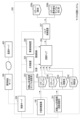
- FIG. 1 is a diagram showing an example of application of an abnormality detection system according to an embodiment of the present invention.
- FIG. 2 is a diagram showing a configuration example of a microchannel system.
- FIG. 3 is a block diagram showing an example of the functional configuration of the control server.
- FIG. 4 is a block diagram showing an example of the functional configuration of the anomaly detection server.
- FIG. 5 is a flowchart illustrating an example of a procedure for creating an anomaly detection model.
- FIG. 6 is a diagram showing an example of an anomaly detection model in a table format.
- FIG. 7 is a flowchart illustrating an example of a procedure for mass culture and abnormality detection.
- FIG. 8 is a diagram showing an example of abnormality determination results in a table format.
- FIG. 9 is a diagram showing an example of an abnormality detection notification screen.
- FIG. 10 is a block diagram showing an example of the hardware configuration of the above detection server according to an embodiment of the present invention.
- FIG. 1 is a diagram showing an example of application of an abnormality detection system according to an embodiment of the present invention.
- the abnormality detection system includes a mass culture device 100, a microchannel system 200, an abnormality detection server 300, and a monitoring server 400.
- the abnormality detection server 300 and the monitoring server 400 may be connected via a network, for example.
- an abnormality detection model which is a model for detecting an abnormality during culturing, is created by the abnormality detection system before the start of mass culturing of the culture target.
- the culture target is microalgae
- the present invention is not limited to this, and the present invention can be applied even if the culture target is, for example, a microorganism, a cell, a bacteria, or yeast.
- a culture target strain that is to be used as the standard for determining abnormalities during culture i.e., an ideal culture strain that is free of contamination or genetic mutations
- various culture conditions which are the environmental conditions that should be considered during culture, and culture data related to this culture is obtained and transmitted to the anomaly detection server 300.
- the anomaly detection server 300 Based on this culture data, the anomaly detection server 300 creates an anomaly detection model.
- mass culture and abnormality detection by the abnormality detection system will be explained.
- mass culturing of a cultured strain of microalgae is started using the mass culturing apparatus 100.
- the mass culturing apparatus 100 sends a small sample of a culture solution containing a strain to be cultured during mass culturing to the microchannel system 200 (reference numeral a in FIG. 1).
- the micro sample is cultured under various culture conditions, and culture data related to this culture is generated and transmitted to the abnormality detection server 300 (reference numeral b in FIG. 1).
- the anomaly detection server 300 detects an abnormality during mass culture of microalgae, that is, a change in culture efficiency due to occurrence of contamination or genetic mutation, based on the culture data and the anomaly detection model created in advance as described above. .
- This abnormality response includes, for example, (1) notification from the abnormality detection server 300 to the monitoring server 400 (represented by c in FIG. Examples include sending valve control commands for sorting.
- FIG. 2 is a diagram showing a configuration example of a microchannel system.
- the microchannel system 200 includes an automatic push liquid transfer device (for channel culture) 201, a reservoir (for sample) 202a, a reservoir (for buffer) 202b, a reservoir (for culture solution) 202c, Reservoir (for diluted liquid) 202d, automatic pull liquid feeding device (for sample collection) 203, channel chip (microchannel chip) 204, measuring device (microscope system, etc.) 205, environment control device (temperature, illuminance, etc.) 206 , a valve control device 207, a reservoir (for waste liquid) 208a, a reservoir (for liquid containing a sample at the time of abnormality detection) 208b, and a control server 209.
- Automatic push liquid transfer device 201 and automatic pull liquid transfer device 203 may include a pump, a flow path regulator, a flow rate sensor, and the like.
- a small amount of sample containing a cultured microalgae and a culture solution from the mass culture device 100 is sent to a reservoir (for samples) 202a.
- the control server 209 controls the automatic push liquid transfer device (for flow path culture) 201 from the reservoir (for sample) 202a, the reservoir (for buffer) 202b, the reservoir (for culture solution) 202c, and the reservoir (for diluted solution) 202d. Controls liquid feeding to the channel chip 204.
- the automatic pull liquid feeding device 203 collects a small amount of sample from the reservoir (for sample) 202 a before feeding the liquid to the microchannel system 200 according to a control command from the control server 209 .
- the measuring device 205 includes, for example, a microscope system, and measures the specific growth rate of the minute sample sent to the channel chip 204, that is, the amount of increase in cell amount per unit time, multiple times in accordance with control instructions from the control server 209. can be measured over a wide range of The object of this measurement may be, for example, a specific substrate consumption rate, a product specific production rate, or a specific oxygen consumption rate. It is assumed that the measurement results obtained over multiple times are distributed according to a normal distribution.
- the environment control device 206 controls, in accordance with control instructions from the control server 209, the temperature of the trace sample flowing through the channel in the channel chip 204, which is a kind of culture condition related to the trace sample flowing through the channel chip 204, and the micro sample flowing through the channel chip 204.
- the illuminance of the light irradiated onto the sample is controlled via an air conditioning and illumination device (not shown).
- the control server 209 also controls pH (hydrogen ion concentration index), pCO 2 (carbon dioxide partial pressure), nutrient concentration, etc., which are a type of culture conditions related to the trace sample flowing through the channel chip 204.
- the nutrient concentration can include multiple concentrations, such as concentrations of phosphorus, nitrogen, metal ions, and silicic acid.
- the metal ion is, for example, an iron ion.
- the valve control device 207 controls valves (not shown) provided in the flow paths between the outlet side of the flow path chip 204 and the reservoirs 208a and 208b in accordance with control commands from the control server 209, thereby allowing air to flow from the flow path chip 204.
- the destination of the trace sample is switched between the reservoirs 208a and 208b.
- FIG. 3 is a block diagram showing an example of the functional configuration of the control server.
- the control server 209 includes a storage device 221, a control section 222, an acquisition section 223, a data generation section 224, and a communication section 225.
- the storage device 221 is provided with, for example, a working memory related to processing by the data generation unit 224. The functions of each part will be described later.
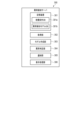
- FIG. 4 is a block diagram showing an example of the functional configuration of the anomaly detection server.
- the anomaly detection server 300 includes a storage device 301, an acquisition section 302, a model creation section 303, an anomaly determination section 304, a notification section 305, and a display processing section 306.
- the storage device 301 is provided with a culture condition DB (database) 301a and an abnormality detection model DB 301b, and is also provided with, for example, a work memory related to processing by the model creation section 303 and the abnormality determination section 304. The functions of each part will be described later.
- a culture solution containing a culture strain that is a target strain of microalgae to be cultured and that is to be used as a standard for abnormality determination is sent from the mass culture device 100 to the microchannel system 200 (S11).
- the culture strain contained in the culture solution delivered in S11 is cultured under various culture conditions by the channel chip 204.
- the control unit 222 of the control server 209 controls multiple measurements by the measurement device 205 of the culture strain (also referred to as the culture result) being cultured by the channel chip 204, and also controls the setting of culture conditions by the environmental control device 206.
- the acquisition unit 223 of the control server 209 acquires the measurement results from the measurement device 205 and the microscope system.
- the data generation unit 224 of the control server 209 calculates the specific growth rate of the microalgae culture sample many times based on the obtained measurement results.
- the data generation unit 224 generates culture data including the results of multiple calculations according to a normal distribution of the specific growth rate for each of a plurality of types of culture conditions controlled by the environment control device 206 or the like. Culture data including the specific growth rate calculated above is generated (S12).
- This culture data includes (1) the culture result measurement date and time when the culture result of the trace sample was measured by the measuring device 205, and (2) the sample number that identifies the trace sample. , (3) the sample acquisition date and time when the minute sample was acquired by the automatic pull liquid feeding device 203, and (4) the culture result number that identifies the culture result in which the above (1) to (3) are associated. , may be included.
- the specific growth rate may be calculated by the control server 209 based on the measurement result by the microscope system of the measuring device 205.
- the communication unit 225 of the control server 209 of the microchannel system 200 transmits the culture data for each of the plurality of types of culture conditions acquired in S12 to the abnormality detection server 300 (S13).
- the acquisition unit 302 of the anomaly detection server 300 acquires the culture data for each of the multiple types of culture conditions transmitted in S13, and stores it in the culture condition DB 301a of the storage device 301.
- the model creation unit 303 of the anomaly detection server 300 selects culture data relating to one of the multiple types of culture conditions from the stored culture data.
- the model creation unit 303 determines the average and variance of the individual specific growth rates in the culture data under the selected conditions, for example based on Hotelling's T2 method, and calculates the degree of anomaly of the specific growth rate based on these averages and variances.
- the model creation unit 303 calculates the anomaly threshold, which is the threshold at which this anomaly becomes an outlier, and by performing this calculation for each of the other culture conditions, creates a model for anomaly detection in which an anomaly threshold is defined for each culture condition, and stores this anomaly detection model in the anomaly detection model DB 301b of the storage device 301 (S14).
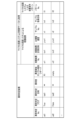
- FIG. 6 is a diagram showing an example of an anomaly detection model in a table format.
- abnormality detection model parameters for each of a plurality of culture condition patterns by the microchannel system 200 are defined.
- the above culture condition patterns have pattern numbers, which are identification numbers of individual culture condition patterns. and the contents of the culture conditions.
- the culture conditions include the temperature and illuminance related to the channel chip 204 of the microchannel system 200, the pH of the trace sample flowing through the channel of the channel chip 204, pCO 2 , and the concentration of multiple types of nutrient salts.
- "nutrient salt a concentration” and "nutrient salt b concentration” shown in FIG. 6 mean the concentrations of the first and second types of nutrients.
- the above abnormality detection model parameters include the average specific growth rate, variance, and abnormality threshold.
- culture condition pattern No For example, in the first row of the table shown in FIG. 5, culture condition pattern No. It is shown that an abnormality detection model with an abnormality threshold value "a1” has been created under culture conditions including temperature “T1” and illuminance “l1” related to "X1", and is shown in Figure 5.
- culture condition pattern No It is shown that an abnormality detection model having an abnormality degree threshold value "a2” has been created under culture conditions including temperature "T2", illuminance "l2”, etc. related to "X2".
- FIG. 7 is a flowchart illustrating an example of a procedure for mass culture and abnormality detection.
- mass culture by the mass culture apparatus 100 has started and continues, and that the abnormality detection model has already been created by the abnormality detection server 300.
- a sample that is, a culture solution containing a strain to be cultured during mass culture, is sent from the mass culture device 100 to the reservoir 202a of the microchannel system 200 (S21).
- the microchannel system 200 cultivates the sample sent in S21 under various culture conditions using the channel chip 204, and the control unit 222 of the control server 209 controls the measurement by the measurement device 205, and also controls the environment control device. 206, etc., to control the culture conditions.
- the measuring device 205 calculates the specific growth rate of the sample based on the measurement results obtained by the microscope system.
- the acquisition unit 223 of the control server 209 acquires culture data including the specific growth rate calculated by the measurement device 205 for each of the plurality of types of culture conditions set by the environment control device 206 (S22).
- the communication unit 225 of the control server 209 transmits the culture data acquired in S22 to the abnormality detection server 300 (S23).
- the acquisition unit 302 of the abnormality detection server 300 acquires the culture data transmitted in S23 (S24).
- the abnormality determination unit 304 of the abnormality detection server 300 selects culture data related to one type of the plurality of types of culture conditions in the culture data acquired in S24. Then, the abnormality determination unit 304 calculates the degree of abnormality of each specific growth rate indicated by the selected culture data.
- the abnormality determination unit 304 reads out the abnormality degree threshold related to the same culture condition as the selected culture condition in the abnormality detection model stored in the abnormality detection model DB 301b of the storage device 301.
- the abnormality determination unit 304 performs abnormality determination for each of the plurality of culture conditions by comparing the read abnormality degree threshold with the calculated abnormality degree ( S25).
- the abnormality determination unit 304 determines that the abnormality The result of the determination is "abnormal", that is, it is determined that an abnormality has occurred during mass culture under these culture conditions ("abnormal" in S26).
- This response to an abnormality includes, for example, notification of the occurrence of an abnormality by the notification unit 305 of the abnormality detection server 300 to the monitoring server 400, and notification of the occurrence of an abnormality from the abnormality detection server 300 to the control server 209 of the microchannel system 200 when determining that an abnormality has occurred. For example, if the sample sent to the reservoir 204 is a sample in which an abnormality was observed during mass culture, a valve control command for sending the liquid to the reservoir 208b may be output.
- the abnormality determination unit 304 determines that the result of the abnormality determination is "normal", that is, no abnormality has occurred during mass culture of the cultured strain. Determination is made (“normal” in S26). At the time of this determination or after the abnormality response described above, the abnormality determination unit 304 stores a series of abnormality determination results in, for example, the storage device 301, and the process ends.
- FIG. 8 is a diagram showing an example of abnormality determination results in a table format.
- an abnormality determination result is generated for each culture condition pattern in the culture data acquired from the control server 209 of the microchannel system 200 in S24.
- the abnormality determination result includes (1) an abnormality determination flag indicating the presence or absence of an abnormality, (2) the date and time of determination of the presence or absence of an abnormality, (3) the degree of abnormality of the specific growth rate calculated in the determination of the presence or absence of an abnormality, ( 4) Reservoir information that specifies the reservoir in which the sample sent to the channel chip 204 is held when it is determined that there is an abnormality, and (5) An abnormality that is caused by the association of (1) to (4) above. Abnormality judgment No. for identifying judgment results. ,including.
- the culture results in the microchannel system 200 under each culture condition are shown, and the culture results are the same as the culture result No. 1 above. , culture result measurement date and time, specific growth rate, sample No. , and date and time of sample acquisition.
- the abnormality determination No. in the first row of the table shown in FIG. The abnormality determination result for "ad1" indicates that the abnormality determination flag at the abnormality determination date and time "tad1" under the culture condition pattern "X1" is "True", that is, an abnormality was observed during mass culture. It will be done.
- the abnormality determination result for "ad2" indicates that the abnormality determination flag at the abnormality determination date and time "tad2" under the culture condition pattern "X2" is "False", that is, no abnormality was observed during mass culture. shown.
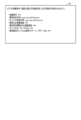
- FIG. 9 is a diagram showing an example of an abnormality detection notification screen.
- the screen G1 shown in FIG. 9 is displayed when the display processing unit 306 of the abnormality detection server 300 displays an external image (not shown) when the determination result by the abnormality detection server 300 indicates that an abnormality was observed during mass culture. This is the screen displayed on the display device.
- This screen displays the message ⁇ The possibility of a culture state different from normal under the following culture conditions has been detected.'' along with the culture conditions, abnormality determination date and time, sample acquisition date and time, specific growth rate at the time of abnormality determination, Threshold of abnormality degree of specific growth rate (specific growth rate of abnormality determination threshold), sample No. , and the reservoir where the sample is held upon detection of an anomaly.
- a micro-sample containing a strain to be cultured and a culture medium being mass-cultured in a mass-culture device is sent to a micro-channel system, and cultured in this micro-channel system under various culture conditions. Obtain data and use this data to detect abnormalities during mass culture.
- This microchannel system can culture small-scale samples, making data acquisition costs relatively low. Furthermore, since the sample can be cultured in the microchannel system and culture data can be obtained under conditions different from the culture conditions used in the mass culture device, abnormalities during mass culture can be detected at an early stage.
- outdoor raceway ponds are sometimes used for mass cultivation of microalgae, but this method is prone to contamination by contaminant organisms, and the timing of contamination is difficult to predict.
- An example of a contaminating organism is a ciliate that is dormant at the time of contamination, but awakens under certain temperature conditions and affects the culture.
- the microchannel system is exposed to specific temperature conditions before the contaminant organisms wake up from dormancy in the mass culture device, so the culture efficiency is improved by predation of the awakened nematodes. It is possible to detect changes in
- FIG. 10 is a block diagram showing an example of the hardware configuration of the abnormality detection server 300 according to an embodiment of the present invention.
- the abnormality detection server 300 according to the above embodiment is configured by, for example, a server computer or a personal computer, and includes a hardware processor 511A such as a CPU. has.
- a program memory 511B, a data memory 512, an input/output interface 513, and a communication interface 514 are connected to the hardware processor 511A via a bus 515.
- the abnormality detection server 300 will be described below as an example, the same applies to the control server 209, monitoring server 400, etc. in the microchannel system 200.
- the communication interface 514 includes, for example, one or more wireless communication interface units, and enables information to be sent and received with a communication network NW.
- a wireless interface for example, an interface adopting a low power wireless data communication standard such as a wireless LAN (Local Area Network) is used.
- the input/output interface 513 is connected to an input device 600 and an output device 700 attached to the anomaly detection server 300 and used by a user or the like.
- the input/output interface 513 receives operation data input by a user through an input device 600 such as a keyboard, touch panel, touchpad, mouse, etc., and outputs output data on a liquid crystal display.
- processing is performed to output and display the image on an output device 700 including a display device using organic EL (Electro Luminescence) or the like.
- the input device 600 and the output device 700 may be a device built into the anomaly detection server 300, or may be an input device of another information terminal that can communicate with the anomaly detection server 300 via the network NW. Devices and output devices may also be used.
- the program memory 511B is a non-temporary tangible storage medium, such as a non-volatile memory that can be written to and read from at any time, such as an HDD (Hard Disk Drive) or an SSD (Solid State Drive). It is used in combination with a nonvolatile memory such as a ROM (Read Only Memory), and stores programs necessary for executing various control processes and the like according to an embodiment.
- a non-volatile memory such as a ROM (Read Only Memory)
- ROM Read Only Memory
- the data memory 512 is a tangible storage medium that is used in combination with the above-mentioned nonvolatile memory and volatile memory such as RAM (Random Access Memory), and is used to perform various processes. It is used to store various data acquired and created during the process.
- RAM Random Access Memory
- the anomaly detection server 300 may be configured as a data processing device having a processing function section using software.
- the storage device 301 used as a work memory or the like by the abnormality detection server 300 may be configured by using the data memory 512 shown in FIG. 10.
- these configured storage areas are not essential configurations within the anomaly detection server 300, and are, for example, external storage media such as a USB (Universal Serial Bus) memory, or a database server located in the cloud (cloud). It may be an area provided in a storage device such as a database server.
- the above processing function unit can be realized by causing the hardware processor 511A to read and execute a program stored in the program memory 511B.
- this processing function unit may be realized in various other formats, including an integrated circuit such as an application specific integrated circuit (ASIC) or a field-programmable gate array (FPGA).
- ASIC application specific integrated circuit
- FPGA field-programmable gate array
- each embodiment can be applied to a magnetic disk (floppy (registered trademark) disk, hard disk) as a program (software means) that can be executed by a computer (computer). etc.), optical discs (CD-ROM, DVD, MO, etc.), semiconductor memories (ROM, RAM, Flash memory, etc.), and are stored in recording media, or transmitted and distributed via communication media. can be done.
- the programs stored on the medium side also include a setting program for configuring software means (including not only execution programs but also tables and data structures) in the computer to be executed by the computer.
- a computer that realizes this device reads a program recorded on a recording medium, and if necessary, constructs software means using a setting program, and executes the above-described processing by controlling the operation of the software means.
- the recording medium referred to in this specification is not limited to one for distribution, and includes storage media such as a magnetic disk and a semiconductor memory provided inside a computer or in a device connected via a network.
- the present invention is not limited to the above-described embodiments, and can be variously modified at the implementation stage without departing from the gist thereof.
- each embodiment may be implemented in combination as appropriate, and in that case, the combined effect can be obtained.
- the embodiments described above include various inventions, and various inventions can be extracted by combinations selected from the plurality of constituent features disclosed. For example, if a problem can be solved and an effect can be obtained even if some constituent features are deleted from all the constituent features shown in the embodiment, the configuration from which these constituent features are deleted can be extracted as an invention.
Landscapes
- Chemical & Material Sciences (AREA)
- Life Sciences & Earth Sciences (AREA)
- Health & Medical Sciences (AREA)
- Engineering & Computer Science (AREA)
- Bioinformatics & Cheminformatics (AREA)
- Organic Chemistry (AREA)
- Wood Science & Technology (AREA)
- Zoology (AREA)
- Biotechnology (AREA)
- Genetics & Genomics (AREA)
- General Health & Medical Sciences (AREA)
- Biochemistry (AREA)
- General Engineering & Computer Science (AREA)
- Microbiology (AREA)
- Biomedical Technology (AREA)
- Sustainable Development (AREA)
- Analytical Chemistry (AREA)
- Cell Biology (AREA)
- Computer Hardware Design (AREA)
- Dispersion Chemistry (AREA)
- Clinical Laboratory Science (AREA)
- Molecular Biology (AREA)
- Physics & Mathematics (AREA)
- General Physics & Mathematics (AREA)
- Immunology (AREA)
- Pathology (AREA)
- Medicinal Chemistry (AREA)
- Apparatus Associated With Microorganisms And Enzymes (AREA)
Priority Applications (3)
| Application Number | Priority Date | Filing Date | Title |
|---|---|---|---|
| PCT/JP2022/035446 WO2024062609A1 (ja) | 2022-09-22 | 2022-09-22 | 異常検知装置、方法およびプログラム |
| US19/105,892 US20260055357A1 (en) | 2022-09-22 | 2022-09-22 | Anomaly detection apparatus, method, and program |
| JP2024548043A JPWO2024062609A1 (https=) | 2022-09-22 | 2022-09-22 |
Applications Claiming Priority (1)
| Application Number | Priority Date | Filing Date | Title |
|---|---|---|---|
| PCT/JP2022/035446 WO2024062609A1 (ja) | 2022-09-22 | 2022-09-22 | 異常検知装置、方法およびプログラム |
Publications (1)
| Publication Number | Publication Date |
|---|---|
| WO2024062609A1 true WO2024062609A1 (ja) | 2024-03-28 |
Family
ID=90454066
Family Applications (1)
| Application Number | Title | Priority Date | Filing Date |
|---|---|---|---|
| PCT/JP2022/035446 Ceased WO2024062609A1 (ja) | 2022-09-22 | 2022-09-22 | 異常検知装置、方法およびプログラム |
Country Status (3)
| Country | Link |
|---|---|
| US (1) | US20260055357A1 (https=) |
| JP (1) | JPWO2024062609A1 (https=) |
| WO (1) | WO2024062609A1 (https=) |
Citations (3)
| Publication number | Priority date | Publication date | Assignee | Title |
|---|---|---|---|---|
| JP2018141753A (ja) * | 2017-02-28 | 2018-09-13 | 株式会社Lsiメディエンス | 異常検出装置、異常検出方法及び異常検出プログラム |
| JP2021508872A (ja) * | 2017-12-29 | 2021-03-11 | エフ.ホフマン−ラ ロシュ アーゲーF. Hoffmann−La Roche Aktiengesellschaft | 細胞培養物の代謝状態の予測 |
| WO2021100191A1 (ja) * | 2019-11-22 | 2021-05-27 | オリンパス株式会社 | 細胞数情報の表示方法、システム、及び、プログラム |
-
2022
- 2022-09-22 US US19/105,892 patent/US20260055357A1/en active Pending
- 2022-09-22 JP JP2024548043A patent/JPWO2024062609A1/ja active Pending
- 2022-09-22 WO PCT/JP2022/035446 patent/WO2024062609A1/ja not_active Ceased
Patent Citations (3)
| Publication number | Priority date | Publication date | Assignee | Title |
|---|---|---|---|---|
| JP2018141753A (ja) * | 2017-02-28 | 2018-09-13 | 株式会社Lsiメディエンス | 異常検出装置、異常検出方法及び異常検出プログラム |
| JP2021508872A (ja) * | 2017-12-29 | 2021-03-11 | エフ.ホフマン−ラ ロシュ アーゲーF. Hoffmann−La Roche Aktiengesellschaft | 細胞培養物の代謝状態の予測 |
| WO2021100191A1 (ja) * | 2019-11-22 | 2021-05-27 | オリンパス株式会社 | 細胞数情報の表示方法、システム、及び、プログラム |
Non-Patent Citations (1)
| Title |
|---|
| NUNES P. S., KJAERULFF S., DUFVA M., MOGENSEN K. B.: "Real-time direct cell concentration and viability determination using a fully automated microfluidic platform for standalone process monitoring", ANALYST, ROYAL SOCIETY OF CHEMISTRY, UK, vol. 140, no. 12, 1 January 2015 (2015-01-01), UK , pages 4007 - 4020, XP093148856, ISSN: 0003-2654, DOI: 10.1039/C5AN00478K * |
Also Published As
| Publication number | Publication date |
|---|---|
| JPWO2024062609A1 (https=) | 2024-03-28 |
| US20260055357A1 (en) | 2026-02-26 |
Similar Documents
| Publication | Publication Date | Title |
|---|---|---|
| Cadart et al. | Volume growth in animal cells is cell cycle dependent and shows additive fluctuations | |
| Leidenfrost et al. | Benchmarking the MinION: evaluating long reads for microbial profiling | |
| US20240052288A1 (en) | Image analysis and non-invasive data collection from cell culture devices | |
| JP6824050B2 (ja) | 細胞培養装置 | |
| CN111615674B (zh) | 缩放工具 | |
| CN113838530A (zh) | 利用细胞代谢网络监测生物制造过程的方法 | |
| US11603517B2 (en) | Method for monitoring a biotechnological process | |
| CN108138111A (zh) | 监测生物反应器中的状态偏差 | |
| CN113474841A (zh) | 使用核酸扩增测定的靶生物体的机器学习量化 | |
| Agarwal et al. | Water activity and biomass estimation using digital image processing in solid-state fermentation | |
| EP4442804B1 (en) | Systems and methods for optimizing a bioreactor for controlling growth of human stem cells | |
| Blöbaum et al. | Quantifying microbial robustness in dynamic environments using microfluidic single-cell cultivation | |
| JP7142501B2 (ja) | バイオガスの発生量を予測するための予測情報の作成方法、および、当該予測情報の利用 | |
| WO2024062609A1 (ja) | 異常検知装置、方法およびプログラム | |
| CN106022532A (zh) | 谷氨酸产物浓度在线估计方法、装置及监控系统 | |
| CN113853657A (zh) | 用于检测对生物测定的抑制的系统和方法 | |
| Julyantoro | Sensing techniques for microbial pathogens | |
| CN118966037B (zh) | 一种微生物控制分析方法及系统 | |
| Liu et al. | Ecological stability properties of microbial communities assessed by flow cytometry. mSphere 3: e00564-17 | |
| JP2022143061A (ja) | 培養管理装置、推定方法、プログラム | |
| Müller et al. | High-yield recombinant xylanase production by Aspergillus nidulans under pyridoxine limitation | |
| Zhou et al. | Natural environmental variation determines microbial diversity patterns in serofluid dish, a traditional chinese fermented vegetable food | |
| KR20190004493A (ko) | 곰팡이 모니터링 시스템 및 그 방법 | |
| Nandy et al. | A high‐throughput method for quantifying metabolically active yeast cells | |
| CN120758335A (zh) | 微生物检测盒、检测装置及检测方法 |
Legal Events
| Date | Code | Title | Description |
|---|---|---|---|
| 121 | Ep: the epo has been informed by wipo that ep was designated in this application |
Ref document number: 22959573 Country of ref document: EP Kind code of ref document: A1 |
|
| WWE | Wipo information: entry into national phase |
Ref document number: 2024548043 Country of ref document: JP |
|
| NENP | Non-entry into the national phase |
Ref country code: DE |
|
| 122 | Ep: pct application non-entry in european phase |
Ref document number: 22959573 Country of ref document: EP Kind code of ref document: A1 |