WO2024053101A1 - 学習プログラム、生成プログラム、学習方法および情報処理装置 - Google Patents
学習プログラム、生成プログラム、学習方法および情報処理装置 Download PDFInfo
- Publication number
- WO2024053101A1 WO2024053101A1 PCT/JP2022/033926 JP2022033926W WO2024053101A1 WO 2024053101 A1 WO2024053101 A1 WO 2024053101A1 JP 2022033926 W JP2022033926 W JP 2022033926W WO 2024053101 A1 WO2024053101 A1 WO 2024053101A1
- Authority
- WO
- WIPO (PCT)
- Prior art keywords
- vector
- machine
- program
- information processing
- tokens
- Prior art date
- Legal status (The legal status is an assumption and is not a legal conclusion. Google has not performed a legal analysis and makes no representation as to the accuracy of the status listed.)
- Ceased
Links
Images




Classifications
-
- G—PHYSICS
- G01—MEASURING; TESTING
- G01M—TESTING STATIC OR DYNAMIC BALANCE OF MACHINES OR STRUCTURES; TESTING OF STRUCTURES OR APPARATUS, NOT OTHERWISE PROVIDED FOR
- G01M99/00—Subject matter not provided for in other groups of this subclass
- G01M99/005—Testing of complete machines, e.g. washing-machines or mobile phones
-
- G—PHYSICS
- G05—CONTROLLING; REGULATING
- G05B—CONTROL OR REGULATING SYSTEMS IN GENERAL; FUNCTIONAL ELEMENTS OF SUCH SYSTEMS; MONITORING OR TESTING ARRANGEMENTS FOR SUCH SYSTEMS OR ELEMENTS
- G05B13/00—Adaptive control systems, i.e. systems automatically adjusting themselves to have a performance which is optimum according to some preassigned criterion
- G05B13/02—Adaptive control systems, i.e. systems automatically adjusting themselves to have a performance which is optimum according to some preassigned criterion electric
- G05B13/0265—Adaptive control systems, i.e. systems automatically adjusting themselves to have a performance which is optimum according to some preassigned criterion electric the criterion being a learning criterion
- G05B13/027—Adaptive control systems, i.e. systems automatically adjusting themselves to have a performance which is optimum according to some preassigned criterion electric the criterion being a learning criterion using neural networks only
-
- G—PHYSICS
- G05—CONTROLLING; REGULATING
- G05B—CONTROL OR REGULATING SYSTEMS IN GENERAL; FUNCTIONAL ELEMENTS OF SUCH SYSTEMS; MONITORING OR TESTING ARRANGEMENTS FOR SUCH SYSTEMS OR ELEMENTS
- G05B23/00—Testing or monitoring of control systems or parts thereof
- G05B23/02—Electric testing or monitoring
-
- G—PHYSICS
- G05—CONTROLLING; REGULATING
- G05B—CONTROL OR REGULATING SYSTEMS IN GENERAL; FUNCTIONAL ELEMENTS OF SUCH SYSTEMS; MONITORING OR TESTING ARRANGEMENTS FOR SUCH SYSTEMS OR ELEMENTS
- G05B23/00—Testing or monitoring of control systems or parts thereof
- G05B23/02—Electric testing or monitoring
- G05B23/0205—Electric testing or monitoring by means of a monitoring system capable of detecting and responding to faults
- G05B23/0218—Electric testing or monitoring by means of a monitoring system capable of detecting and responding to faults characterised by the fault detection method dealing with either existing or incipient faults
- G05B23/0243—Electric testing or monitoring by means of a monitoring system capable of detecting and responding to faults characterised by the fault detection method dealing with either existing or incipient faults model based detection method, e.g. first-principles knowledge model
- G05B23/0254—Electric testing or monitoring by means of a monitoring system capable of detecting and responding to faults characterised by the fault detection method dealing with either existing or incipient faults model based detection method, e.g. first-principles knowledge model based on a quantitative model, e.g. mathematical relationships between inputs and outputs; functions: observer, Kalman filter, residual calculation, Neural Networks
-
- G—PHYSICS
- G06—COMPUTING OR CALCULATING; COUNTING
- G06F—ELECTRIC DIGITAL DATA PROCESSING
- G06F40/00—Handling natural language data
- G06F40/20—Natural language analysis
- G06F40/237—Lexical tools
- G06F40/242—Dictionaries
-
- G—PHYSICS
- G06—COMPUTING OR CALCULATING; COUNTING
- G06F—ELECTRIC DIGITAL DATA PROCESSING
- G06F40/00—Handling natural language data
- G06F40/20—Natural language analysis
- G06F40/279—Recognition of textual entities
- G06F40/284—Lexical analysis, e.g. tokenisation or collocates
-
- G—PHYSICS
- G06—COMPUTING OR CALCULATING; COUNTING
- G06N—COMPUTING ARRANGEMENTS BASED ON SPECIFIC COMPUTATIONAL MODELS
- G06N20/00—Machine learning
-
- G—PHYSICS
- G06—COMPUTING OR CALCULATING; COUNTING
- G06Q—INFORMATION AND COMMUNICATION TECHNOLOGY [ICT] SPECIALLY ADAPTED FOR ADMINISTRATIVE, COMMERCIAL, FINANCIAL, MANAGERIAL OR SUPERVISORY PURPOSES; SYSTEMS OR METHODS SPECIALLY ADAPTED FOR ADMINISTRATIVE, COMMERCIAL, FINANCIAL, MANAGERIAL OR SUPERVISORY PURPOSES, NOT OTHERWISE PROVIDED FOR
- G06Q50/00—Information and communication technology [ICT] specially adapted for implementation of business processes of specific business sectors, e.g. utilities or tourism
- G06Q50/04—Manufacturing
Definitions
- the present invention relates to learning programs and the like.
- NC Genetic Control
- the production line may stop, reducing production efficiency or causing a human accident. is required to do so.
- a learning model is machine learned using a training data set consisting of multiple sensor information and failure information, and multiple sensor information is input to this machine learned learning model. Detects machine tool failure.
- machine learning of a learning model is performed using information from multiple sensors, but the sensor information of a machine tool may change in synchronization with the control commands of an NC control program. It is difficult to predict failures alone.
- One aspect of the present invention is to provide a learning program, a generation program, a learning method, and an information processing device for a learning model that can predict machine failures with high accuracy.
- the computer executes the following process.
- a computer converts a plurality of time-series numerical values included in sensing information of a machine or a sensor set around the machine into a character string representing a time-series transition.
- the computer generates control instructions for controlling the machine, input data generated based on character string information representing time-series changes, and a label indicating whether or not the machine is experiencing signs of failure. Train a machine learning model using the training data you have.
- Machine failures can be predicted with high accuracy.
- FIG. 1 is a diagram showing an example of a system according to this embodiment.
- FIG. 2 is a diagram (1) for explaining the preparation phase processing.
- FIG. 3 is a diagram (2) for explaining the preparation phase processing.
- FIG. 4 is a diagram (1) for explaining the process of the learning phase.
- FIG. 5 is a diagram (2) for explaining the learning phase process.
- FIG. 6 is a diagram showing an example of the data structure of the training data table.
- FIG. 7 is a diagram for explaining a process in which the information processing device trains a machine learning model.
- FIG. 8 is a diagram for explaining the processing of the inference phase.
- FIG. 9 is a functional block diagram showing the configuration of the information processing device according to this embodiment.
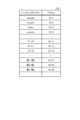
- FIG. 10 is a diagram showing an example of the data structure of the first vector dictionary.
- FIG. 11 is a diagram showing an example of the data structure of the second vector dictionary.
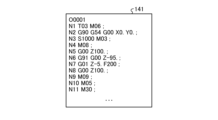
- FIG. 12 is a diagram showing an example of a machine control program.
- FIG. 13 is a flowchart (1) showing the processing procedure of the preparation phase.
- FIG. 14 is a flowchart (2) showing the processing procedure of the preparation phase.
- FIG. 15 is a flowchart (1) showing the processing procedure of the learning phase.
- FIG. 16 is a flowchart (2) showing the processing procedure of the learning phase.
- FIG. 17 is a flowchart (1) showing the processing procedure of the inference phase.
- FIG. 18 is a flowchart (2) showing the processing procedure of the inference phase.
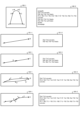
- FIG. 19 is a diagram illustrating an example of the relationship between line shapes and Postscript programs.
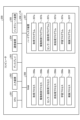
- FIG. 20 is a diagram illustrating an example of the hardware configuration of a computer that implements the same functions as the information processing device of the embodiment.
- FIG. 1 is a diagram showing an example of a system according to this embodiment.
- this system includes a sensor 5, a machine tool 10, and an information processing device 100.
- the sensor 5 and the information processing device 100 are connected to each other wirelessly or by wire.
- the machine tool 10 and the information processing device 100 are connected to each other wirelessly or by wire.
- the machine tool 10 and the information processing device 100 are described as separate devices in this embodiment, they may be a single device having the functions of the machine tool 10 and the information processing device 100.
- the sensor 5 is a temperature sensor that measures the temperature of the machine tool 10 or the temperature around the machine tool 10.
- the sensor 5 may be installed on the machine tool 10 or may be installed around the machine tool 10. In this embodiment, as an example, the sensor 5 will be described as a temperature sensor, but it may be other sensors such as a vibration sensor or a humidity sensor. Each time the sensor 5 measures the temperature, it outputs a value as a measurement result to the information processing device 100.
- the machine tool 10 is a machine that is driven based on a machine control program input from the information processing device 100. For example, the information processing device 100 sequentially inputs command statements of each line included in a machine control program to the machine tool 10, and the machine tool 10 sequentially executes the command statements.
- the information processing device 100 uses character string information of the machine control program that controls the machine tool 10 and information obtained by converting the time series numerical values output from the sensor 5 into character strings representing the time series transition. , to predict a failure of the machine tool 10. For example, the information processing device 100 performs preparation phase processing, learning phase processing, and inference phase processing. Below, the preparation phase process, the learning phase process, and the inference phase process will be explained in order.
- the preparation phase process will be explained. 2 and 3 are diagrams for explaining the preparation phase processing. First, FIG. 2 will be explained.
- the information processing device 100 uses the machine control program 50 to execute the following process.
- the machine control program 50 is an example of a "control command.”
- the machine control program 50 is a program that controls the machine tool 10, and is a program that is prepared in advance to generate a first vector dictionary D1, which will be described later.
- the machine control program 50 has a plurality of lines, and each line includes an instruction type, a plurality of arguments, and the like. In the following description, each character string in each line of the machine control program 50 will be referred to as a "command statement.”
- the information processing device 100 generates a plurality of instruction sentences 51 and 52 by dividing the machine control program 50 into instructions.
- the instruction statement 51 is the instruction statement on the first line of the machine control program 50, and has instruction type A, argument a1, argument a2, etc.
- the instruction statement 52 is the instruction statement on the second line of the machine control program 50, and has an instruction type B, an argument b1, an argument b2, and the like.
- command sentences other than command sentences 51 and 52 are omitted.
- the information processing device 100 divides each imperative sentence into a plurality of tokens by dividing each imperative sentence into tokens. For example, the information processing device 100 divides the command sentence 51 into tokens 51a, 51b, and 51c.
- the token 51a is "instruction type A.”
- the token 51b is “argument a1”.
- the token 51c is "argument a2".
- the information processing device 100 divides the instruction sentence 52 into tokens 52a, 52b, and 52c.
- the token 52a is "command type B.”
- the token 52b is “argument b1”.
- the token 52c is "argument b2”.
- the information processing device 100 similarly divides other command sentences into tokens.
- the information processing device 100 arranges each token in order. For example, the information processing device 100 may perform tokens 51a, 51b, 51c included in the command statement 51 on the first line, tokens 52a, 52b, 52c included in the command statement on the second line, ..., the command on the nth line. Place each token in order, in the order of each token in the sentence.
- the information processing device 100 applies the CBoW or skip-gram (Word2vec) algorithm to each token arranged in order, treats each token as a word, and calculates a vector for each token.
- the information processing device 100 registers the relationship between the token included in the imperative sentence and the vector of this token in the first vector dictionary D1.
- the first vector dictionary D1 registers a vector of instruction type A, a vector of argument a1, a vector of argument a2, etc. included in an instruction sentence.
- the information processing device 100 registers the relationship between the tokens and vectors included in the machine control program in the first vector dictionary D1 by repeatedly executing the above process for other machine control programs.
- the information processing device 100 uses the sensor data 60 to execute the following process.
- the sensor data 60 is time-series information that associates a value (for example, temperature) output from the sensor 5 with a time T.
- a graph 61 shows the relationship between the time and the value of the sensor data 60.
- the horizontal axis corresponds to time
- the vertical axis corresponds to the value of the sensor 5.
- the relationship between the time and the value of the sensor data 60 is a line 61a of the graph 61.
- the information processing device 100 generates a Postscript (registered trademark) program 62 based on the relationship between each time and value included in the sensor data 60.
- the Postscript program 62 corresponds to a "character string representing a chronological transition.”
- the information processing device 100 divides the Postscript program 62 into tokens.
- the Postscript program 62 is divided into tokens 62a, 62b, 62c, 62d, 62e, 62f, 62g, 62h, 62i, 62j, . . . , 62n, 62o, 62p, 62q, 62r.
- the token 62a is "newpath”. Token 62b is “T0”. The token 62c has “value 0". The token 62d is “moveto”. The token 62e is “ ⁇ T1-T0>”. The token 62f is " ⁇ value 1-value 0>”. The token 62g is “lineto”. The token 62h is “ ⁇ T2-T1>”. The token 62i is “ ⁇ value 2 - value 1>”. Token 62j is "lineto”. The token 62n is “ ⁇ Tn-T(n-1)>”. The token 62o is “ ⁇ value n-value (n-1)>”. The token 62p is “lineto”. Token 62q is "stroke”. The token 62r is “showpage”.
- the information processing device 100 After performing token division, the information processing device 100 arranges each token in order. For example, the information processing device 100 stores the tokens 62a to 62l in the order of tokens 62a, 62b, 62c, 62d, 62e, 62f, 62g, 62h, 62i, 62j, ..., 62n, 62o, 62p, 62q, 62r. Arrange.
- the information processing device 100 applies a CBoW or skip-gram (Word2vec) algorithm to each of the tokens 62a to 62r arranged in order, and calculates a vector for each token by treating each token 62a to 62r as a word. .
- the information processing device 100 registers the relationship between each token of the Postscript program 62 and the vector of this token in the second vector dictionary D2. For example, newpath and lineto vectors, T1-T0 vectors, value 1-value 0 vectors, etc. are registered in the second vector dictionary D2.
- the information processing device 100 registers the relationship between the tokens and vectors included in the Postscript program in the second vector dictionary D2 by repeatedly performing the above process for other Postscript programs. Note that drawing may be similarly processed using not only a page description language such as Postscript but also a markup language such as SVG.
- the information processing device 100 generates the first vector dictionary D1 and the second vector dictionary D2 by executing the preparation phase process described above. Note that the information processing device 100 may acquire the already generated first vector dictionary D1 and second vector dictionary D2 from an external device or the like, and execute the subsequent learning phase processing and inference phase processing.
- FIGS. 4 and 5 are diagrams for explaining the learning phase process.
- FIG. 4 will be explained.
- the information processing device 100 when operating the machine tool 10 using a machine control program, the information processing device 100 outputs each line of instructions to the machine tool 10 in order, and records the time at which the instructions were output and the character string of the instructions. are registered in the instruction execution history table 70 in association with each other.
- the information processing device 100 associates the time at which the value was acquired with the value and registers the value in the sensor value history table 80.
- the information processing device 100 Based on the command execution history table 70 and the sensor value history table 80, the information processing device 100 associates the command statements in the command execution history table 70 with the values of the plurality of sensors in the sensor value history table 80. For example, the information processing device 100 selects one command statement from the command execution history table 70. The command sentence selected by the information processing device 100 will be referred to as a "first command sentence.” The time of the first imperative sentence is expressed as "first time.” The information processing device 100 identifies the time of the command statement executed next to the first command statement (hereinafter referred to as the second command statement). This predetermined time can be changed as appropriate.
- the information processing device 100 extracts a plurality of values from the first time to the second time among the sensor values registered in the sensor value history table 80.
- the information processing device 100 registers the "first command sentence" and "the plurality of values from the first time to the second time” in the training data table 90 in association with each other.
- the manufacturing worker also checks whether there is a sign of failure in the machine tool 10 between the first time and the second time, and sets a label of "normal” or "sign of failure". .
- a manufacturing worker may set a label in the training data table 90 at any timing. Such values and settings can be changed as appropriate.
- the horizontal axis corresponds to time
- the vertical axis corresponds to the value of the sensor 5.
- the interval ts1 is a time period during which the machine tool 10 executes the first command.
- the interval ts2 is a time period during which the machine tool 10 executes the second command.
- the information processing device 100 registers the first command and the plurality of values measured by the sensor 5 in the interval ts1 in the training data table 90 in association with each other.
- the information processing device 100 registers the second command and the plurality of values measured by the sensor 5 in the interval ts2 in the training data table 90 in association with each other. When registering a plurality of values measured by the sensor 5 in the training data table 90, the information processing device 100 also registers the time at which each value was measured.
- the information processing device 100 repeatedly executes the above process while changing the command statement to be selected, thereby associating the command statement, a plurality of sensor values corresponding to the command statement, and the label, and creating a training data table. Register to 90.
- FIG. 6 is a diagram showing an example of the data structure of the training data table. As shown in FIG. 6, this training data table 90 associates item numbers, command statements, command vectors, values, measurement times, script vectors, and labels.
- the item number is a number that identifies each record in the training data table 90.
- the command statement is a command statement included in the command execution history table 70, and the value is a plurality of values included in the sensor value history table 80.
- the pairs of command statements and values included in the same record in the training data table 90 are the "first command statement” and "multiple values from the first time to the second time" explained in FIG. corresponds to the set of
- the label indicates whether the machine tool 10 is "normal” or "with signs of failure.” For example, if the machine tool 10 is normal, the label will be "0". If there is a sign of failure in the machine tool, the label will be "1".
- the measurement time is the time when each value was measured.
- command vector and script vector included in the training data table 90 are calculated by the information processing device 100 executing the following process.
- the information processing device 100 obtains a command sentence (for example, command type C, argument c1, argument c2) from the training data table 90, and divides the command sentence into a plurality of tokens.
- a command sentence for example, command type C, argument c1, argument c2
- the process by which the information processing apparatus 100 divides a command statement into a plurality of tokens is similar to the process described in FIG. 2 .
- the information processing device 100 compares each divided token with the first vector dictionary D1 to identify the vector of each token.
- the information processing device 100 calculates an instruction vector by integrating the vectors of each identified token, and registers it in the training data table 90.
- the information processing device 100 repeatedly executes the above process for each instruction sentence included in the training data table 90, calculates an instruction vector for each instruction sentence, and registers it in the training data table 90.
- the information processing device 100 acquires a plurality of values set in one record (for example, value 1, value 2, value 3, ...) and measurement times from the training data table 90, and Generates a Postscript program based on the relationship between values and time.
- the information processing apparatus 100 divides the generated Postscript program into tokens.
- the information processing device 100 compares each divided token with the second vector dictionary D2 to identify the vector of each token.
- the information processing device 100 calculates a script vector by integrating the vectors of each identified token, and registers it in the training data table 90.
- the processing in which the information processing apparatus 100 generates a Postscript program and the processing in which the Postscript program is divided into tokens based on the relationship between a plurality of values and times are similar to the processing described in FIG. 3.
- the information processing device 100 repeatedly executes the above process for each value and measurement time included in the training data table 90, calculates a script vector for each value, and registers it in the training data table 90.
- the information processing device 100 By executing the above processing, the information processing device 100 generates a training data table 90 for training a machine learning model.
- FIG. 7 is a diagram for explaining a process in which the information processing device trains a machine learning model.
- the machine learning model M1 trained in this embodiment is a DNN (Deep Neural Network) or the like.
- the information processing device 100 selects one record (hereinafter referred to as training data) from the training data table 90 and obtains the command vector, script vector, and label included in the selected training data.
- the information processing device 100 inputs the command vector and the script vector to the machine learning model M1, calculates the difference between the output result of the machine learning model M1 and the label, and adjusts the machine learning model so that the difference is small. Update the parameters of M1.
- the information processing device 100 repeatedly executes the above processing based on a plurality of training data. For example, the information processing device 100 trains the machine learning model M1 based on the backpropagation method.
- FIG. 8 is a diagram for explaining the processing of the inference phase.
- the information processing device 100 outputs a command statement 55 included in a machine control program to the machine tool 10 to drive the machine tool 10.
- the information processing device 100 acquires sensor values from the sensor 5.
- the information processing device 100 calculates the relationship between the value received from the sensor 5 and the time (measurement time) in the section ts55. Obtained as data 66.
- the information processing device may set the period ts55 to be a time period from the time when the instruction statement 55 is output to the machine tool 10 until after a predetermined time period.
- the information processing device 100 divides the instruction sentence 55 into a plurality of tokens.
- the process by which the information processing apparatus 100 divides a command sentence into a plurality of tokens is similar to the process described in FIG. 2.
- the information processing device 100 compares each divided token with the first vector dictionary D1 to identify the vector of each token.
- the information processing device 100 calculates the command vector SV1-55 by integrating the vectors of each identified token.
- the information processing device 100 generates a Postscript program 67 based on the relationship between multiple values included in the sensor data 66 and time.
- the information processing device 100 divides the generated Postscript program 67 into tokens.
- the information processing device 100 compares each divided token with the second vector dictionary D2 to identify the vector of each token.
- the information processing device 100 calculates the script vector WV2-66 by integrating the vectors of each identified token.
- the processing in which the information processing apparatus 100 generates a Postscript program and the processing in which the Postscript program is divided into tokens based on the relationship between a plurality of values and times are similar to the processing described in FIG. 3.
- the information processing device 100 obtains the inference result by inputting the command vector SV1-55 and the script vector WV2-66 to the trained machine learning model M1. If the inference result is "0", the information processing device 100 determines that the machine tool 10 is normal. On the other hand, when the inference result is "1", the information processing device 100 determines that there is a sign of failure in the machine tool 10, and outputs a warning.
- the information processing device 100 associates the values measured by the sensor 5 set in the machine tool 10 with the time, and calculates the time series values based on the information. Generate a Postscript program that can draw displacements.
- the information processing device 100 calculates the command vector of the command statement for the machine tool 10 and the script vector of the Postscript program, and trains the machine learning model M1 based on the command vector and the script vector. By using the machine learning model M1, failures in the machine tool 10 can be predicted with high accuracy.
- the information processing device 100 first generates a Postscript program based on the information by associating the value that is the measurement result of the sensor 5 with the time, and generates a script vector based on the character string of the Postscript program.
- the machine learning model M1 is trained and failures are predicted. Thereby, training and failure prediction can be performed only by the machine learning model M1 targeting natural language.
- FIG. 9 is a functional block diagram showing the configuration of the information processing device according to this embodiment.
- the information processing device 100 includes a timer 105, a communication section 110, an input section 120, a display section 130, a storage section 140, and a control section 150.
- the timer 105 outputs current time information to the control unit 150.
- the control unit 150 may obtain current time information from an external device on the network.
- the communication unit 110 is connected to the machine tool 10, the sensor 5, external devices, etc. by wire or wirelessly, and performs data communication.
- the communication unit 110 is a NIC (Network Interface Card) or the like.
- the input unit 120 is an input device that inputs various information to the information processing device 100.
- the input unit 120 corresponds to a keyboard, a mouse, a touch panel, etc.
- the display unit 130 is a display device that displays information output from the control unit 150.
- the display unit 130 corresponds to a liquid crystal display, an organic EL (Electro Luminescence) display, a touch panel, etc.
- the storage unit 140 includes corpus data 40, a first vector dictionary D1, a second vector dictionary D2, an instruction execution history table 70, a sensor value history table 80, a training data table 90, a machine learning model M1, and a machine control program 141.
- the storage unit 140 is realized by, for example, a semiconductor memory element such as a RAM (Random Access Memory) or a flash memory, or a storage device such as a hard disk or an optical disk.
- the corpus data 40 includes a machine control program 50, sensor data 60, etc. used when performing the preparation phase.
- the corpus data 40 is prepared in advance and used when generating the first vector dictionary D1 and the second vector dictionary D2.
- the first vector dictionary D1 is a dictionary that indicates vectors of tokens (instruction type, arguments, etc.) included in the instruction sentences of the machine control program.
- FIG. 10 is a diagram showing an example of the data structure of the first vector dictionary. As shown in FIG. 10, the first vector dictionary D1 associates tokens of imperative sentences with vectors.
- the second vector dictionary D2 is a dictionary indicating vectors of tokens included in the Postscript program.
- FIG. 11 is a diagram showing an example of the data structure of the second vector dictionary. As shown in FIG. 11, the second vector dictionary D2 associates tokens included in the Postscript program with vectors.
- the command execution history table 70 stores commands output by the drive control unit 152 of the control unit 150 to the machine tool 10 in association with the times at which the commands were output. Other explanations regarding the instruction execution history table 70 correspond to the explanation of the instruction execution history table 70 explained with reference to FIG.
- the sensor value history table 80 holds values acquired from the sensor 5 and the times at which the values were acquired in association with each other. Other explanations regarding the sensor value history table 80 correspond to the explanation of the sensor value history table 80 explained with reference to FIG.
- the training data table 90 is a table that holds training data generated in the learning phase process described above.
- the explanation regarding the training data table 90 corresponds to the explanation of the training data table 90 explained with reference to FIG.
- the machine learning model M1 outputs an estimation result of whether the machine tool 10 is normal or not when the command vector and script vector are input.
- the machine learning model M1 is a DNN or the like.
- the machine control program 141 has command statements for controlling the machine tool 10 in the learning phase or the inference phase.
- FIG. 12 is a diagram showing an example of a machine control program. As shown in FIG. 12, the machine control program consists of a plurality of command statements, and each command statement includes an instruction type, an argument, and the like.
- the control unit 150 includes an acquisition unit 151 , a drive control unit 152 , a sensor value acquisition unit 153 , a preprocessing unit 154 , a preprocessing unit 154 , a learning unit 155 , and an inference unit 156 .
- the control unit 150 is realized by, for example, a CPU (Central Processing Unit) or an MPU (Micro Processing Unit). Further, the control unit 150 may be executed by an integrated circuit such as an ASIC (Application Specific Integrated Circuit) or an FPGA (Field Programmable Gate Array).
- ASIC Application Specific Integrated Circuit
- FPGA Field Programmable Gate Array
- the acquisition unit 151 acquires corpus data 40 from an external device or the like via the network, and registers the acquired corpus data 40 in the storage unit 140.
- the acquisition unit 151 may acquire information on the first vector dictionary D1 and the second vector dictionary D2 from an external device and register it in the storage unit 140.
- the drive control unit 152 acquires command sentences from the machine control program 141 in the learning phase and the inference phase, and drives the machine tool 10 by outputting the acquired command sentences to the machine tool 10.
- the drive control unit 152 also acquires the time at which the instruction statement is output to the machine tool 10 from the timer 105, associates the time with the instruction statement, and registers it in the instruction execution history table 70.
- the drive control unit 152 repeatedly executes the above process every time it acquires a command statement from the machine control program 141.
- the drive control unit 152 may acquire command sentences from the machine control program 141 during the learning phase or the inference phase, or may acquire command sentences from different machine control programs during the learning phase and the inference phase. It's okay.
- the sensor value acquisition unit 153 acquires sensor values from the sensor 5 in the learning phase and the inference phase.
- the sensor value acquisition unit 153 acquires the time at which the sensor value was acquired from the timer 105, associates the time with the sensor value, and registers it in the sensor value history table 80.
- the sensor value acquisition unit 153 repeatedly executes the above process every time it acquires a value from the sensor 5.
- the preprocessing unit 154 executes the preparation phase processing described in FIGS. 2 and 3. For example, the preprocessing unit 154 obtains the machine control program 50 included in the corpus data 40 and performs instruction division and token division on the machine control program 50. The preprocessing unit 154 applies the CBoW or skip-gram (Word2vec) algorithm to each token and calculates a vector for each token. The preprocessing unit 154 registers the relationship between the token included in the imperative sentence and the vector of this token in the first vector dictionary D1.
- the preprocessing unit 154 acquires the sensor data 60 included in the corpus data 40 and generates the Postscript program 62 based on the relationship between each time and value included in the sensor data 60.
- the preprocessing unit 154 divides the Postscript program 62 into a plurality of tokens, applies the Word2vec algorithm to each token, and calculates a vector for each token.
- the preprocessing unit 154 registers the relationship between each token of the Postscript program 62 and the vector of this token in the second vector dictionary D2.
- the learning unit 155 executes the learning phase processing described in FIGS. 4 to 7.
- the learning unit 155 associates the command sentences in the command execution history table 70 with the values of the plurality of sensors in the sensor value history table 80 based on the command execution history table 70 and the sensor value history table 80.
- the learning unit 155 acquires label information from the input unit 120 and the like.
- the learning unit 155 registers the command sentence, a plurality of sensor values corresponding to the command sentence, and a label in the training data table 90 in association with each other.
- the learning unit 155 executes the following process for each command sentence registered in the training data table 90.
- the learning unit 155 divides the imperative sentence into a plurality of tokens, compares each divided token with the first vector dictionary D1, and identifies the vector of each token.
- the learning unit 155 calculates an instruction vector by integrating the vectors of each identified token, and registers the calculated instruction vector in the training data table 90.
- the learning unit 155 performs the following processing on the values of the sensor 5 and the measurement times of each value registered in the training data table 90.
- the learning unit 155 generates a Postscript program based on the relationship between a plurality of values and time.
- the learning unit 155 divides the Postscript program into tokens, compares each divided token with the second vector dictionary D2, and identifies the vector of each token.
- the learning unit 155 calculates a script vector by integrating the vectors of each identified token, and registers it in the training data table 90.
- the learning unit 155 executes the above processing to generate a training data table 90 for training the machine learning model M1.
- the learning unit 155 selects training data from the training data table 90 and obtains the command vector, script vector, and label included in the selected training data.
- the learning unit 155 inputs the command vector and the script vector to the machine learning model M1, calculates the difference between the output result of the machine learning model M1 and the label, and adjusts the machine learning model M1 so that the difference is small. Update the parameters of
- the learning unit 155 repeatedly executes the above process based on a plurality of training data. For example, the learning unit 155 trains the machine learning model M1 based on the backpropagation method.
- the inference unit 156 executes the inference phase processing described in FIG. 8.
- the inference unit 156 acquires the command sentence (for example, the command sentence 55) output to the machine tool 10 by the drive control unit 152. Furthermore, the inference unit 156 acquires information about the value and time of the sensor 5 in the section in which the acquired command statement 55 is executed by the machine tool 10 from the sensor value history table 80. For example, assuming that the section in which the instruction statement 55 is executed by the machine tool 10 is section ts55, the inference section 156 calculates the relationship between the value received from the sensor 5 and the time (measurement time) in the section ts55 using the sensor data. 66, it is acquired from the sensor value history table 80.
- the reasoning unit 156 divides the imperative sentence 55 into a plurality of tokens.
- the process by which the inference unit 156 divides the imperative sentence into a plurality of tokens is similar to the process described in FIG. 2.
- the inference unit 156 compares each divided token with the first vector dictionary D1 to identify the vector of each token.
- the inference unit 156 calculates the instruction vector SV1-55 by integrating the vectors of each identified token.
- the inference unit 156 generates a Postscript program 67 based on the relationship between multiple values included in the sensor data 66 and time.
- the reasoning unit 156 divides the generated Postscript program 67 into tokens.
- the inference unit 156 compares each divided token with the second vector dictionary D2 to identify the vector of each token.
- the inference unit 156 calculates the script vector WV2-66 by integrating the vectors of each identified token.
- the processing in which the inference unit 156 generates a Postscript program based on the relationship between a plurality of values and time and the processing in which the Postscript program is divided into tokens are similar to the processing described in FIG. 3.
- the inference unit 156 obtains an inference result by inputting the command vector SV1-55 and the script vector WV2-66 to the trained machine learning model M1.
- the inference unit 156 determines that the machine tool 10 is normal when the inference result is "0". On the other hand, if the inference result is "1", the inference unit 156 determines that there is a sign of failure in the machine tool 10, and outputs a warning to the display unit 130 or the like.
- FIG. 13 is a flowchart (1) showing the processing procedure of the preparation phase.
- the preprocessing unit 154 of the information processing device 100 acquires a machine control program from the corpus data 40 (step S101).
- the preprocessing unit 154 executes instruction division on the machine control program (step S102).
- the preprocessing unit 154 performs token division for each imperative sentence (step S103).
- the preprocessing unit 154 applies the CBoW or skip-gram algorithm to calculate a vector for each token (step S104).
- the preprocessing unit 154 associates the token with the vector of the token and registers it in the first vector dictionary D1 (step S105).
- step S106 If there is an unprocessed machine control program (step S106, Yes), the preprocessing unit 154 moves to step S101. On the other hand, if there is no unprocessed machine control program (step S106, No), the preprocessing unit 154 ends the process.
- FIG. 14 is a flowchart (2) showing the processing procedure of the preparation phase.
- the preprocessing unit 154 of the information processing device 100 acquires sensor data from the corpus data 40 (step S111).
- the preprocessing unit 154 generates a Postscript program based on the relationship between each time and value included in the sensor data (step S112).
- the preprocessing unit 154 performs token division on the Postscript program (step S113).
- the preprocessing unit 154 applies the CBoW or skip-gram algorithm to calculate a vector for each token (step S114).
- the preprocessing unit 154 associates the token with the vector of the token and registers it in the second vector dictionary D2 (step S115).
- step S116 If unprocessed sensor data exists (step S116, Yes), the preprocessing unit 154 moves to step S111. On the other hand, if there is no unprocessed sensor data (step S116, No), the preprocessing unit 154 ends the process.
- FIG. 15 is a flowchart (1) showing the processing procedure of the learning phase.
- the learning unit 155 of the information processing device 100 selects the first command sentence from the command execution history table 70 (step S201).
- the learning unit 155 selects the second command statement that was executed one command after the first command statement from the command execution history table 70 (step S202).
- the learning unit 155 identifies an interval in which the machine tool 10 executes the second instruction statement based on the time of the first instruction statement and the time of the second instruction statement (step S203).
- the learning unit 155 acquires a plurality of values and measurement times corresponding to the specified section from the sensor value history table 80 (step S204).
- the learning unit 155 associates the second command with the plurality of values and measurement times corresponding to the sections and registers them in the training data table 90 (step S205).
- step S206 If there is an unselected instruction statement in the instruction execution history table 70 (step S206, Yes), the learning unit 155 moves to step S201. On the other hand, if there is no unselected instruction statement in the instruction execution history table 70 (step S206, No), the learning unit 155 moves to step S207.
- the learning unit 155 divides the command sentence in the training data table 90 into tokens, and identifies the vector of each token based on each token and the first vector dictionary D1 (step S207).
- the learning unit 155 calculates an instruction vector by integrating the vectors of each token, and registers it in the training data table 90 (step S208).
- the learning unit 155 generates a Postscript program based on the multiple values and measurement times of the training data table 90 (step S209).
- the learning unit 155 divides the Postscript program into tokens and identifies the vector of each token based on each token and the second vector dictionary D2 (step S210).
- the learning unit 155 calculates a script program by integrating the vectors of each token, and registers it in the training data table 90 (step S211).
- the learning unit 155 receives information on each label from the input unit 120, etc., and sets it in the training data table 90 (step S212).
- FIG. 16 is a flowchart (2) showing the processing procedure of the learning phase.
- the learning unit 155 of the information processing device 100 obtains a set of a command vector, a script vector, and a label as training data from the training data table 90 (step S251).
- the learning unit 155 inputs the command vector and script vector to the machine learning model and obtains the output result (step S252).
- the learning unit 155 updates the parameters of the machine learning model M1 so that the error between the output result and the label becomes smaller (step S253).
- step S254, Yes If unselected training data exists (step S254, Yes), the learning unit 155 moves to step S251. On the other hand, if there is no unselected training data (step S254, No), the learning unit 155 ends the process.
- the inference unit 156 of the information processing device 100 acquires the command sentence output to the machine tool 10 (step S301).
- the inference unit 156 performs token division on the imperative sentence (step S302).
- the inference unit 156 identifies the vector of each token based on each token of the imperative sentence and the first vector dictionary (step S303).
- the inference unit 156 calculates an instruction vector by integrating the vectors of each token of the instruction sentence (step S304).
- the inference unit 156 registers sensor data including sensor values and measurement times in the section in which the instruction statement is executed by the machine tool in the buffer (step S305).
- the inference unit 156 generates a Postscript program based on the relationship between the sensor value and the measurement time included in the sensor data (step S306).
- the inference unit 156 performs token division on the Postscript program (step S307).
- the inference unit 156 identifies the vector of each token based on each token of the Postscript program and the second vector dictionary D2 (step S308).
- the inference unit 156 calculates a script vector by integrating the vectors of each token of the Postscript program (step S309).
- the inference unit 156 leaves the most recent sensor value and measurement time, clears other information from the buffer (step S310), and proceeds to step S311 in FIG. 18.
- the inference unit 156 inputs the command vector and script vector to the machine learning model M1 (step S311).
- the inference unit 156 acquires the output result of the machine learning model M1 (step S312).
- step S313 If the output result is "there is a sign of failure" (step S313, Yes), the inference unit 156 outputs a warning to the display unit 130 (step S314), and proceeds to step S301 in FIG. 17.
- step S313, No If the output result does not indicate "there is a sign of failure" (step S313, No), the inference unit 156 moves to step S301 in FIG. 17.
- the information processing device 100 converts the time-series numerical changes into a Postscript character string that can be drawn based on information that associates the measurement result of the sensor 5 set in the machine tool 10 with the time. Convert.
- the information processing device 100 calculates an instruction vector of an instruction statement for the machine tool 10 and a script vector of a Postscript character string (Postscript program), and trains a machine learning model M1 based on the instruction vector and the script vector. By using the machine learning model M1, failures in the machine tool 10 can be predicted with high accuracy.
- the information processing device 100 uses a Postscript program that can accurately draw the time-series numerical changes of sensor data using a regression analysis method such as linear interpolation of buffered sensor data. It may be converted to In such a case, the Postscript program can be said to correspond to data after noise has been removed. Therefore, the machine learning model M1 can be learned using a Postscript program that corresponds to data after noise has been removed.
- the information processing device 100 can obtain the missing information by synchronizing with the command.
- the information processing device 100 first generates a Postscript program based on the information by associating the value that is the measurement result of the sensor 5 with the time, and generates a script vector based on the character string of the Postscript program.
- the machine learning model M1 is trained and failures are predicted. Thereby, training and failure prediction can be performed only by the machine learning model M1 targeting natural language.
- the information processing device 100 divides the instruction sentence into a plurality of tokens, calculates the vector of each token based on the first vector dictionary D1, and integrates the vectors of each token to calculate the instruction vector of the instruction sentence. calculate. This makes it possible to generate an instruction vector that indicates the characteristics of the instruction sentence.
- the information processing device 100 generates a Postscript program from the relationship between the value of the sensor 5 and the measurement time, and divides the character string of the Postscript program into a plurality of tokens.
- the information processing device 100 calculates the vector of each token based on the first vector dictionary D2, and calculates the script vector of the Postscript program by integrating the vectors of each token. Thereby, a script vector representing the characteristics of the time-series values of the sensor 5 can be generated from natural language.
- the information processing device 100 inputs the command vector of the command statement to be output to the machine tool 10 and the script vector obtained from the sensor data of the section in which the command statement is executed into the trained machine learning model M1, and outputs the command vector. Get results. Thereby, failures in the machine tool 10 can be predicted with high accuracy.
- the information processing device 100 converts a plurality of time-series numerical values included in sensing information of a machine or a sensor set around the machine into a character string representing a time-series transition, and converts the character string into a plurality of tokens.
- the vectors are divided and assigned to a plurality of tokens, and a second vector dictionary D2 is generated in which tokens are associated with vectors corresponding to the tokens.
- the second vector dictionary D2 it is possible to easily identify the vector of the Postscript program token converted from the sensor data by comparing it with the token of the Postscript program converted from the sensor data.
- the information processing device 100 generated the Postscript program from the relationship between the value of the sensor 5 and the measurement time, but here, an example of the relationship between the shape of the line and the Postscript program will be described.
- FIG. 19 is a diagram illustrating an example of the relationship between line shapes and Postscript programs.
- a Postscript program with line information 160-1 consisting of straight lines and curved lines becomes a Postscript program 160-2.
- A, B, C, and D in the line information indicate connection points, and ⁇ and ⁇ indicate control points. The same applies to other line information.
- the Postscript program of the line information 161-1 consisting of one straight line becomes the Postscript program 161-2.
- the Postscript program of the line information 162-1 consisting of two straight lines becomes the Postscript program 162-2.
- the Postscript program of the line information 163-1 corresponding to the Bezier curve becomes the Postscript program 163-2.
- the Postscript program of the line information 164-1 consisting of two curves (Bezier curves) becomes the Postscript program 164-2.
- the information processing device 100 holds the relationship between the line information shown in FIG. 19 and the Postscript program corresponding to the line information in a table.
- the information processing device 100 identifies a combination of line information that fits the shape obtained from the value of the sensor 5 and the measurement time, and generates a final Postscript program by combining the Postscript programs corresponding to the identified line information. do.
- the information processing apparatus 100 may hold the relationship between line information other than that described in FIG. 19 and the Postscript program in a table.
- FIG. 20 is a diagram illustrating an example of the hardware configuration of a computer that implements the same functions as the information processing device of the embodiment.
- the computer 200 includes a CPU 201 that executes various calculation processes, an input device 202 that accepts data input from the user, and a display 203.
- the computer 200 also includes a communication device 204 and an interface device 205 that exchange data with the machine tool 10, the sensor 5, external devices, etc. via a wired or wireless network.
- the computer 200 also includes a RAM 206 that temporarily stores various information and a hard disk device 207. Each device 201-207 is then connected to a bus 208.
- the hard disk device 207 has an acquisition program 207a, a drive control program 207b, a sensor value acquisition program 207c, a preprocessing program 207d, a learning program 207e, and an inference program 207f. Further, the CPU 201 reads each program 207a to 207f and expands it in the RAM 206.
- the acquisition program 207a functions as an acquisition process 206a.
- the drive control program 207b functions as a drive control process 206b.
- the sensor value acquisition program 207c functions as a sensor value acquisition process 206c.
- the preprocessing program 207d functions as a preprocessing process 206d.
- the learning program 207e functions as a learning process 206e.
- the inference program 207f functions as an inference process 206f.
- the processing of the acquisition process 206a corresponds to the processing of the acquisition unit 151.
- the processing of the drive control process 206b corresponds to the processing of the drive control section 152.
- the processing of the sensor value acquisition process 206c corresponds to the processing of the sensor value acquisition unit 153.
- the processing of the preprocessing process 206d corresponds to the processing of the preprocessing section 154.
- the processing of the learning process 206e corresponds to the processing of the learning section 155.
- the processing of the inference process 206f corresponds to the processing of the inference unit 156.
- each of the programs 207a to 207f does not necessarily have to be stored in the hard disk device 207 from the beginning.
- each program is stored in a "portable physical medium" such as a flexible disk (FD), CD-ROM, DVD, magneto-optical disk, or IC card that is inserted into the computer 200. Then, the computer 200 may read and execute each program 207a to 207f.
Landscapes
- Engineering & Computer Science (AREA)
- Theoretical Computer Science (AREA)
- Physics & Mathematics (AREA)
- General Physics & Mathematics (AREA)
- Artificial Intelligence (AREA)
- General Engineering & Computer Science (AREA)
- Health & Medical Sciences (AREA)
- Software Systems (AREA)
- General Health & Medical Sciences (AREA)
- Evolutionary Computation (AREA)
- Computational Linguistics (AREA)
- Audiology, Speech & Language Pathology (AREA)
- Mathematical Physics (AREA)
- Computer Vision & Pattern Recognition (AREA)
- Medical Informatics (AREA)
- Automation & Control Theory (AREA)
- Computing Systems (AREA)
- Data Mining & Analysis (AREA)
- Business, Economics & Management (AREA)
- Economics (AREA)
- Primary Health Care (AREA)
- Marketing (AREA)
- Tourism & Hospitality (AREA)
- Strategic Management (AREA)
- Manufacturing & Machinery (AREA)
- Human Resources & Organizations (AREA)
- General Business, Economics & Management (AREA)
- Numerical Control (AREA)
Priority Applications (5)
| Application Number | Priority Date | Filing Date | Title |
|---|---|---|---|
| PCT/JP2022/033926 WO2024053101A1 (ja) | 2022-09-09 | 2022-09-09 | 学習プログラム、生成プログラム、学習方法および情報処理装置 |
| AU2022477771A AU2022477771A1 (en) | 2022-09-09 | 2022-09-09 | Learning program, generation program, learning method, and information processing device |
| JP2024545409A JPWO2024053101A1 (https=) | 2022-09-09 | 2022-09-09 | |
| EP22958179.8A EP4586166A4 (en) | 2022-09-09 | 2022-09-09 | LEARNING PROGRAM, GENERATION PROGRAM, LEARNING METHOD AND INFORMATION PROCESSING DEVICE |
| US19/066,853 US20250200445A1 (en) | 2022-09-09 | 2025-02-28 | Non-transitory computer-readable recording medium storing training program, generation program, training method, and information processing apparatus |
Applications Claiming Priority (1)
| Application Number | Priority Date | Filing Date | Title |
|---|---|---|---|
| PCT/JP2022/033926 WO2024053101A1 (ja) | 2022-09-09 | 2022-09-09 | 学習プログラム、生成プログラム、学習方法および情報処理装置 |
Related Child Applications (1)
| Application Number | Title | Priority Date | Filing Date |
|---|---|---|---|
| US19/066,853 Continuation US20250200445A1 (en) | 2022-09-09 | 2025-02-28 | Non-transitory computer-readable recording medium storing training program, generation program, training method, and information processing apparatus |
Publications (1)
| Publication Number | Publication Date |
|---|---|
| WO2024053101A1 true WO2024053101A1 (ja) | 2024-03-14 |
Family
ID=90192192
Family Applications (1)
| Application Number | Title | Priority Date | Filing Date |
|---|---|---|---|
| PCT/JP2022/033926 Ceased WO2024053101A1 (ja) | 2022-09-09 | 2022-09-09 | 学習プログラム、生成プログラム、学習方法および情報処理装置 |
Country Status (5)
| Country | Link |
|---|---|
| US (1) | US20250200445A1 (https=) |
| EP (1) | EP4586166A4 (https=) |
| JP (1) | JPWO2024053101A1 (https=) |
| AU (1) | AU2022477771A1 (https=) |
| WO (1) | WO2024053101A1 (https=) |
Citations (6)
| Publication number | Priority date | Publication date | Assignee | Title |
|---|---|---|---|---|
| JP2017033526A (ja) | 2015-07-31 | 2017-02-09 | ファナック株式会社 | 故障条件を学習する機械学習方法及び機械学習装置、並びに該機械学習装置を備えた故障予知装置及び故障予知システム |
| JP2018077586A (ja) * | 2016-11-07 | 2018-05-17 | 日本電信電話株式会社 | 分類器学習装置、表種類分類装置、方法、及びプログラム |
| JP2018092428A (ja) | 2016-12-05 | 2018-06-14 | ファナック株式会社 | 工作機械及び機械学習装置 |
| JP2019091367A (ja) | 2017-11-17 | 2019-06-13 | 株式会社東芝 | 情報処理装置、情報処理方法及び情報処理プログラム |
| JP2021526250A (ja) | 2018-05-07 | 2021-09-30 | ストロング フォース アイオーティ ポートフォリオ 2016,エルエルシー | 産業用のモノのインターネットを利用した解析及びメンテナンスのための機械信号のデータ収集、学習、ストリーミングのための方法並びにシステム |
| US20220066413A1 (en) * | 2015-02-12 | 2022-03-03 | Glowforge Inc. | Safety and reliability guarantees for laser fabrication |
-
2022
- 2022-09-09 EP EP22958179.8A patent/EP4586166A4/en active Pending
- 2022-09-09 AU AU2022477771A patent/AU2022477771A1/en active Pending
- 2022-09-09 JP JP2024545409A patent/JPWO2024053101A1/ja active Pending
- 2022-09-09 WO PCT/JP2022/033926 patent/WO2024053101A1/ja not_active Ceased
-
2025
- 2025-02-28 US US19/066,853 patent/US20250200445A1/en active Pending
Patent Citations (6)
| Publication number | Priority date | Publication date | Assignee | Title |
|---|---|---|---|---|
| US20220066413A1 (en) * | 2015-02-12 | 2022-03-03 | Glowforge Inc. | Safety and reliability guarantees for laser fabrication |
| JP2017033526A (ja) | 2015-07-31 | 2017-02-09 | ファナック株式会社 | 故障条件を学習する機械学習方法及び機械学習装置、並びに該機械学習装置を備えた故障予知装置及び故障予知システム |
| JP2018077586A (ja) * | 2016-11-07 | 2018-05-17 | 日本電信電話株式会社 | 分類器学習装置、表種類分類装置、方法、及びプログラム |
| JP2018092428A (ja) | 2016-12-05 | 2018-06-14 | ファナック株式会社 | 工作機械及び機械学習装置 |
| JP2019091367A (ja) | 2017-11-17 | 2019-06-13 | 株式会社東芝 | 情報処理装置、情報処理方法及び情報処理プログラム |
| JP2021526250A (ja) | 2018-05-07 | 2021-09-30 | ストロング フォース アイオーティ ポートフォリオ 2016,エルエルシー | 産業用のモノのインターネットを利用した解析及びメンテナンスのための機械信号のデータ収集、学習、ストリーミングのための方法並びにシステム |
Non-Patent Citations (1)
| Title |
|---|
| See also references of EP4586166A4 |
Also Published As
| Publication number | Publication date |
|---|---|
| EP4586166A4 (en) | 2025-10-22 |
| AU2022477771A1 (en) | 2025-02-27 |
| JPWO2024053101A1 (https=) | 2024-03-14 |
| EP4586166A1 (en) | 2025-07-16 |
| US20250200445A1 (en) | 2025-06-19 |
Similar Documents
| Publication | Publication Date | Title |
|---|---|---|
| JP7069269B2 (ja) | デジタル・ツイン・シミュレーション・データを利用した時系列データに基づく、大規模な産業用監視システム向けの半教師あり深層異常検出のための方法およびシステム | |
| JP6647473B1 (ja) | 異常検知装置および異常検知方法 | |
| JP5684941B1 (ja) | 異常予兆診断装置及び異常予兆診断方法 | |
| EP2836881B1 (en) | Embedded prognostics on plc platforms for equipment condition monitoring, diagnosis and time-to-failure/service prediction | |
| JP6810097B2 (ja) | 異常検出器 | |
| CN104111858B (zh) | 事件分析器和计算机可读存储介质 | |
| EP3382485B1 (en) | Controller, control program, control system, and control method | |
| JP5151556B2 (ja) | 工程解析装置、工程解析方法および工程解析プログラム | |
| EP4071570B1 (en) | Prediction system, information processing device, and information processing program | |
| JP7797593B2 (ja) | 情報処理方法、情報処理装置、システム、物品の製造方法、プログラム、記録媒体 | |
| EP3795975A1 (en) | Abnormality sensing apparatus, abnormality sensing method, and abnormality sensing program | |
| CN114675597B (zh) | 一种数控机床故障预测可视化方法 | |
| WO2019045699A1 (en) | RECURRENT GAUSSIAN MIXTURE MODEL FOR ESTIMATING SENSOR STATUS IN STATUS MONITORING | |
| JPWO2020148904A1 (ja) | 異常検知装置、異常検知システム及び学習装置、並びに、これらの方法及びプログラム | |
| EP3872593B1 (en) | Control device and control program | |
| WO2024053101A1 (ja) | 学習プログラム、生成プログラム、学習方法および情報処理装置 | |
| CN112654939B (zh) | 控制系统以及控制装置 | |
| JP2019016326A (ja) | プログラマブル・ロジック・コントローラおよびデータ収集装置 | |
| US20230400831A1 (en) | Process analysis device, process analysis method, and process analysis recording medium | |
| US11747791B2 (en) | Recording medium storing system construction assistance program, system construction assistance method, and system construction assistance device | |
| AU2024202948A1 (en) | Human machine interface for providing information to an operator of an industrial production facility | |
| Kuo et al. | State of product detection method applicable to Industry 4.0 manufacturing models with small quantities and great variety: An example with springs | |
| JP2020057289A (ja) | 情報処理装置、算出方法および算出プログラム | |
| JP5278082B2 (ja) | シミュレーションシステム | |
| JP2023002081A (ja) | 予測システム、情報処理装置および情報処理プログラム |
Legal Events
| Date | Code | Title | Description |
|---|---|---|---|
| 121 | Ep: the epo has been informed by wipo that ep was designated in this application |
Ref document number: 22958179 Country of ref document: EP Kind code of ref document: A1 |
|
| WWE | Wipo information: entry into national phase |
Ref document number: 2024545409 Country of ref document: JP |
|
| WWE | Wipo information: entry into national phase |
Ref document number: AU2022477771 Country of ref document: AU |
|
| ENP | Entry into the national phase |
Ref document number: 2022477771 Country of ref document: AU Date of ref document: 20220909 Kind code of ref document: A |
|
| WWE | Wipo information: entry into national phase |
Ref document number: 2022958179 Country of ref document: EP |
|
| NENP | Non-entry into the national phase |
Ref country code: DE |
|
| ENP | Entry into the national phase |
Ref document number: 2022958179 Country of ref document: EP Effective date: 20250409 |
|
| WWP | Wipo information: published in national office |
Ref document number: 2022958179 Country of ref document: EP |