WO2024048635A1 - 化合物及びその製造方法 - Google Patents
化合物及びその製造方法 Download PDFInfo
- Publication number
- WO2024048635A1 WO2024048635A1 PCT/JP2023/031426 JP2023031426W WO2024048635A1 WO 2024048635 A1 WO2024048635 A1 WO 2024048635A1 JP 2023031426 W JP2023031426 W JP 2023031426W WO 2024048635 A1 WO2024048635 A1 WO 2024048635A1
- Authority
- WO
- WIPO (PCT)
- Prior art keywords
- compound
- composition
- group
- acid
- formula
- Prior art date
- Legal status (The legal status is an assumption and is not a legal conclusion. Google has not performed a legal analysis and makes no representation as to the accuracy of the status listed.)
- Ceased
Links
Classifications
-
- C—CHEMISTRY; METALLURGY
- C07—ORGANIC CHEMISTRY
- C07D—HETEROCYCLIC COMPOUNDS
- C07D331/00—Heterocyclic compounds containing rings of less than five members, having one sulfur atom as the only ring hetero atom
- C07D331/02—Three-membered rings
-
- C—CHEMISTRY; METALLURGY
- C08—ORGANIC MACROMOLECULAR COMPOUNDS; THEIR PREPARATION OR CHEMICAL WORKING-UP; COMPOSITIONS BASED THEREON
- C08G—MACROMOLECULAR COMPOUNDS OBTAINED OTHERWISE THAN BY REACTIONS ONLY INVOLVING UNSATURATED CARBON-TO-CARBON BONDS
- C08G59/00—Polycondensates containing more than one epoxy group per molecule; Macromolecules obtained by polymerising compounds containing more than one epoxy group per molecule using curing agents or catalysts which react with the epoxy groups
- C08G59/14—Polycondensates modified by chemical after-treatment
-
- C—CHEMISTRY; METALLURGY
- C08—ORGANIC MACROMOLECULAR COMPOUNDS; THEIR PREPARATION OR CHEMICAL WORKING-UP; COMPOSITIONS BASED THEREON
- C08G—MACROMOLECULAR COMPOUNDS OBTAINED OTHERWISE THAN BY REACTIONS ONLY INVOLVING UNSATURATED CARBON-TO-CARBON BONDS
- C08G75/00—Macromolecular compounds obtained by reactions forming a linkage containing sulfur with or without nitrogen, oxygen, or carbon in the main chain of the macromolecule
- C08G75/02—Polythioethers
Definitions
- the present invention relates to a compound and a method for producing the same.
- the present invention also relates to a composition containing the compound, a cured product of the compound or the composition, a display device containing the cured product, and a solid-state image sensor containing the cured product. Furthermore, the present invention relates to encapsulating materials and insulating materials containing the compositions.
- Lenses can be obtained from highly refractive materials and can control the optical path within an optical device. Lenses are used in solid-state image sensors to improve the efficiency of light collection to each photoelectric conversion element, and lenses are used in display devices to improve the efficiency of light extraction from pixels. Conventionally, various high refractive materials have been developed (for example, Patent Document 1).
- One object of the present invention is to provide a new compound that can provide a cured product that is visually transparent and exhibits a high refractive index, and has excellent film-forming properties and curability, and a method for producing the same.
- Another object of the present invention is to provide a composition containing the compound, a cured product of the compound or the composition, a display device containing the cured product, and a solid-state imaging device containing the cured product.
- the present invention includes the following.
- R represents a monovalent hydrocarbon group, and when there is a plurality of R's, the plurality of R's may be the same or different.
- n represents an average value of 1 or more.
- A represents an O atom or an S atom.
- the plural A's may be the same or different, but at least one A is an S atom.
- [2] The compound according to [1], wherein the ratio of the number of A's that are S atoms to the total number of A's is 0.5 or more.
- [3] A composition containing the compound described in [1] or [2].
- a display device comprising the cured product according to [5].
- a solid-state imaging device comprising the cured product according to [5].
- a sealing material containing the compound according to [1] or [2], or the composition according to [3] or [4].
- An insulating material containing the compound according to [1] or [2], or the composition according to [3] or [4].
- a manufacturing method comprising the step of obtaining a compound represented by formula (I) by reacting the compound represented by formula (I) with a sulfurizing agent.
- a cured product that is visible and transparent and exhibits a high refractive index
- a new compound that has excellent film-forming properties and curability
- a method for producing the same a composition containing the compound, a cured product of the compound or the composition, a display device containing the cured product, and a solid-state image sensor containing the cured product can be provided.
- a sealing material with a small linear thermal expansion coefficient and an insulating material with excellent dielectric constant and dielectric loss tangent.
- the compound according to the present invention is a compound represented by formula (I) (hereinafter also referred to as "compound (I)").
- Compound (I) can provide a cured product that is visually transparent and exhibits a high refractive index, and can also exhibit excellent film-forming properties and curability.
- Compound (I) has a thiirane group (episulfide group) and belongs to episulfide resins.
- R represents a monovalent hydrocarbon group, and when there is a plurality of R's, the plurality of R's may be the same or different.
- n represents an average value of 1 or more.
- A represents an O atom or an S atom. The plural A's may be the same or different, but at least one A is an S atom.
- Formula (I) is a group represented by the following formula (hereinafter also referred to as a group containing an A atom) represents that may be bonded to any position from 1 to 8 of the naphthalene ring. Furthermore, the group R can be bonded to any position from the 2nd to 6th positions of the benzene ring.
- R representing a monovalent hydrocarbon group when there are multiple R's, each independently includes, for example, a monovalent aliphatic chain hydrocarbon group that may have a substituent, a monovalent aliphatic chain hydrocarbon group that may have a substituent, A monovalent alicyclic hydrocarbon group which may have a substituent, a monovalent aromatic hydrocarbon group which may have a substituent, and a monovalent group consisting of a combination thereof (aralkyl group, etc.). valent hydrocarbon groups.
- -CH 2 - contained in the monovalent hydrocarbon group is -O-, -S-, -NR 1A - (R 1A represents a hydrogen atom or an alkyl group having 1 to 6 carbon atoms), -CO-, It may be substituted with -SO 2 -.
- -CH 2 - contained in the monovalent hydrocarbon group is substituted with -O-, such as methoxy group, ethoxy group, propoxy group, butoxy group, pentyloxy group, hexyloxy group, heptyloxy group. and alkoxy groups having 1 to 12 carbon atoms such as octyloxy group; alkoxyalkyl groups such as methoxymethyl group, ethoxymethyl group, and methoxyethyl group.
- Examples of the monovalent aliphatic chain hydrocarbon group include saturated or unsaturated aliphatic chain hydrocarbon groups, and specifically, methyl group, ethyl group, propyl group, butyl group, pentyl group. , alkyl groups such as hexyl group, heptyl group, octyl group, nonyl group, decyl group, undecyl group, dodecyl group, tridecyl group, tetradecyl group, pentadecyl group, hexadecyl group, heptadecyl group, octadecyl group, nonadecyl group, eicosyl group, etc. can be mentioned.
- the monovalent aliphatic chain hydrocarbon group may be linear or branched.
- the number of carbon atoms in the monovalent aliphatic chain hydrocarbon group is usually 1 to 20, preferably 1 to 10, more preferably 1 to 6, still more preferably 1 to 4, even more preferably 1 or 2. be.
- substituents that the monovalent aliphatic chain hydrocarbon group may have include halogen atoms such as fluorine atom, chlorine atom, bromine atom, and iodine atom, hydroxy group, amino group, acetyl group, and cyano group. Examples include groups.
- Examples of the monovalent alicyclic hydrocarbon group include saturated or unsaturated alicyclic hydrocarbon groups, specifically, cyclopropyl group, cyclobutyl group, cyclopentyl group, cyclohexyl group, cyclooctyl group. , cyclononyl group, monocyclic alicyclic hydrocarbon group such as cyclodecyl group; bicyclo[1.1.0]butyl group, tricyclo[2.2.1.0]heptyl group, bicyclo[3.2.1] Octyl group, bicyclo [2.2.2.
- Polycyclic alicyclic hydrocarbon groups such as an octyl group, an adamantyl group, a bicyclo[4.3.2]undecyl group, and a tricyclo[5.3.1.1]dodecyl group.
- the monovalent alicyclic hydrocarbon group usually has 3 to 20 carbon atoms, preferably 3 to 10 carbon atoms, more preferably 3 to 6 carbon atoms, and even more preferably 5 or 6 carbon atoms.
- substituents that the monovalent alicyclic hydrocarbon group may have include methyl group, ethyl group, propyl group, butyl group, pentyl group, hexyl group, heptyl group, octyl group, nonyl group, Alkyl groups having 1 to 10 carbon atoms (preferably 1 to 4 carbon atoms) such as decyl groups, halogen atoms such as fluorine atoms, chlorine atoms, bromine atoms, and iodine atoms, hydroxy groups, amino groups, acetyl groups, cyano Examples include groups.
- the monovalent aromatic hydrocarbon group may be monocyclic or polycyclic, and includes, for example, a phenyl group, a naphthyl group, an anthracenyl group, a fluorenyl group, and the like.
- the monovalent aromatic hydrocarbon group usually has 6 to 20 carbon atoms, preferably 6 to 10 carbon atoms.
- Examples of the substituents that the monovalent aromatic hydrocarbon group may have include methyl group, ethyl group, propyl group, butyl group, pentyl group, hexyl group, heptyl group, octyl group, nonyl group, Alkyl groups having 1 to 10 carbon atoms (preferably 1 to 4 carbon atoms) such as decyl groups, halogen atoms such as fluorine atoms, chlorine atoms, bromine atoms, and iodine atoms, hydroxy groups, amino groups, acetyl groups, cyano Examples include groups.
- R is preferably a monovalent aliphatic chain hydrocarbon group that may have a substituent, more preferably an alkyl group that may have a substituent, and still more preferably, It is an alkyl group having 1 to 6 carbon atoms, even more preferably an alkyl group having 1 to 4 carbon atoms, and particularly preferably a methyl group or an ethyl group.
- R can be bonded to any position from the 2nd to 6th positions of the benzene ring, but is preferably bonded to the para position to the group containing the A atom.
- n represents an average value and a number of 1 or more.
- compound (I) may be one type of compound represented by formula (I), or may be a mixture of two or more types of compounds represented by formula (I).
- the above "average value” is the value of n (an integer of 1 or more) that the compound (I) has when the compound (I) is one type of compound represented by the formula (I); When it is a mixture of two or more types of compounds represented by (I), it is the average value of the n values of the two or more types of compounds.
- n is preferably an integer of 1 to 10, more preferably an integer of 1 to 5. .
- n is an average value, preferably in the range of 1 to 10, more preferably in the range of 1 to 5. It is within. Note that the two or more types of compounds may have the same value of n but different structures.
- A represents an O atom or an S atom.
- the plural A's may be the same or different, but at least one A is an S atom.
- the ratio of the number of A that is S atoms to the total number of A (hereinafter also referred to as "S atom content ratio") is preferably as large as possible.
- the average S atom content ratio of compound (I) is preferably 0.5 or more, more preferably 0.6 or more, even more preferably 0.7 or more, even more preferably 0.8 or more, and particularly preferably is 0.9 or more, most preferably 1.0.
- the S atom content ratio may be less than 1.0.
- the average value here has the same meaning as above.
- the bonding position of the group containing the A atom bonded to the naphthalene ring is not particularly limited, but is preferably the 1st or 2nd position of the naphthalene ring.
- Examples of the compound represented by formula (I) include compounds represented by formula (Ia). R, n and A in formula (Ia) have the same meanings as above.
- compound (I) may be a mixture of two or more compounds represented by formula (I).
- the mixture includes, for example, formulas (I) that differ from each other in any one or more of the S atom content ratio, the position of the group containing the A atom in the naphthalene ring, the type of R, the position of R in the benzene ring, and the value of n.
- the weight average molecular weight Mw of compound (I) is, for example, 500 to 10,000, preferably 750 to 3,000, as calculated by gel permeation chromatography (GPC) in terms of polystyrene.
- Compound (I) can be produced by a method including the following steps.
- Formula (II) [In formula (II), R and n represent the same meanings as above. ]
- the reaction between the compound represented by formula (II) (hereinafter also referred to as "compound (II)”) and a sulfurizing agent involves replacing the oxygen atom of the epoxy group of compound (II) with a sulfur atom using a sulfurizing agent. This is a reaction that forms a thiirane group (episulfide group).
- the sulfurizing agent include thiourea, methylthiourea, dimethylthiourea, trimethylthiourea, tetramethylthiourea, tetraethylthiourea, ethylenethiourea, sodium thiocyanate, potassium thiocyanate, and the like.
- the amount of the sulfurizing agent used is, for example, 0.01 to 20 mol, preferably 0.5 to 10 mol, per 1 mol of the epoxy group contained in compound (II).
- the temperature of the reaction between compound (II) and the sulfurizing agent is, for example, -80 to 200°C, preferably 0 to 100°C.
- the reaction between compound (II) and the sulfurizing agent is preferably carried out in a solvent.
- solvents include ketones, aromatic hydrocarbons, halogenated aromatic hydrocarbons, aliphatic hydrocarbons, halogenated aliphatic hydrocarbons, ethers, alcohols, glymes, esters, and aliphatic nitriles.
- examples include organic solvents such as compounds, sulfoxides, and amides. Two or more types of organic solvents may be used in combination. Specific examples of the organic solvent include the following solvents.
- Ketones acetone, methyl ethyl ketone, diethyl ketone, butyl methyl ketone, diisobutyl ketone, methyl isobutyl ketone, methyl isoamyl ketone, 2-heptanone, 2-octanone, cyclopentanone, cyclohexanone, etc.
- Aromatic hydrocarbons benzene, toluene, xylene , mesitylene, naphthalene, anisole, nitrobenzene, aniline, tetralin, durene, etc.
- Halogenated aromatic hydrocarbons chlorobenzene, dichlorobenzene, chloronaphthalene, etc.
- Aliphatic hydrocarbons pentane, hexane, heptane, etc.
- Halogenated aliphatic hydrocarbons dichloromethane , chloroform, 1,2-dichloroethane, tetrachloroethane, etc.
- Ethers diethyl ether, diisopropyl ether, methyl t-butyl ether, cyclopentyl methyl ether, diphenyl ether, dimethoxyethane, dioxane, etc.
- Alcohols methanol, ethanol, propanol, isopropanol, butanol, t-Butanol, hexanol, cyclohexanol, ethylene glycol, propylene glycol, hexafluoroisopropanol, etc.
- Glyme methyl diglyme, ethyl diglyme, triglyme, diethylene glycol butyl methyl ether, etc.
- Esters methyl acetate, ethyl acetate, propyl acetate, acetic acid Butyl, etc.
- Aliphatic nitriles acetonitrile, etc.
- Sulfoxides dimethyl sulfoxide, sulfolane, etc. Amides: N,N-dimethylformamide, N,N-dimethylacetamide, N-methylpyrrolidone, etc.
- Compound (II) is a naphthol-substituted phenol novolak type epoxy resin which is a glycidyl etherified product of a naphthol-substituted phenol novolac resin, and examples thereof include naphthol-cresol novolac type epoxy resin.
- Compound (II) is a known compound, and contains naphthol (1-naphthol, 2-naphthol, or a mixture thereof, etc.), phenols having a group R as a substituent, and formaldehydes (formalin, paraformaldehyde, etc.).
- the naphthol-substituted phenol novolak resin can be produced by a known method such as reacting with epihalohydrin (epichlorohydrin, etc.).
- Compound (II) used in the production of compound (I) may be a commercially available product.
- Commercial products include "NC-7000L”, “NC-7300L” (all manufactured by Nippon Kayaku Co., Ltd.), “NC30", “NC50”, “BNC64”, and “BNC73” (all manufactured by Gunei Co., Ltd.). (manufactured by Kagaku Kogyo Co., Ltd.), “OP100”, “OP200” (manufactured by Asahi Yokuzai Co., Ltd.), “MEH-7000” (manufactured by UBE Corporation), and the like.
- a polymerization inhibitor may be added to suppress polymerization of the generated compound (I).
- the polymerization inhibitor include acids, acid anhydrides, and the like. in particular, Nitric acid, hydrochloric acid, perchloric acid, hypochlorous acid, chlorine dioxide, hydrofluoric acid, sulfuric acid, fuming sulfuric acid, sulfuryl chloride, boric acid, arsenic acid, arsenous acid, pyroarsenic acid, phosphoric acid, phosphorous acid, hypophosphorous acid , phosphorus oxychloride, phosphorus oxybromide, phosphorus sulfide, phosphorus trichloride, phosphorus tribromide, phosphorus pentachloride, hydrocyanic acid, chromic acid, nitric acid anhydride, sulfuric anhydride, boron oxide, arsenic pentoxide, phosphorus pentoxide, anhydrous Chromic acid, si
- Organic phosphorus compounds such as dialkyldithiophosphoric acids represented by dimethyldithiophosphoric acid, Phenol, catechol, t-butylcatechol, 2,6-di-t-butylcresol, 2,6-di-t-butylethylphenol, resorcinol, hydroquinone, phloroglucin, pyrogallol, cresol, ethylphenol, butylphenol, nonylphenol, hydroxy Phenylacetic acid, hydroxyphenylpropionic acid, hydroxyphenylacetamide, methyl hydroxyphenylacetate, ethyl hydroxyphenylacetate, hydroxyphenethyl alcohol, hydroxyphenethylamine, hydroxybenzaldehyde, phenylphenol, bisphenol-A, 2,2'-methylene-bis(4) -methyl-6-t-butylphenol), bisphenol-F, bisphenol-S, ⁇ -naphthol
- the amount of the polymerization inhibitor used is, for example, 0.0001 to 1.0 mol, preferably 0.01 to 0.2 mol, per 1 mol of compound (IV).
- the polymerization inhibitor acetic acid, acetic anhydride, maleic acid, maleic anhydride, phosphoric acid, alkali metal hydrogen phosphate, and alkali metal dihydrogen phosphate are preferred.
- the stability over time of the obtained compound (I) can be improved by washing the product solution after the reaction with an acidic aqueous solution.
- acidic aqueous solution include the acids exemplified above as polymerization inhibitors. These acids may be used alone or in combination of two or more.
- the above acidic aqueous solution is usually effective at a pH of 6 or less, but the more effective range is a pH of 3 or less.
- composition (I) contains compound (I) and other components other than compound (I).
- Composition (I) may contain two or more types of compound (I).
- Composition (I) can be cured by active energy ray irradiation or heating because compound (I) is curable.
- composition (I) By curing composition (I), a molded article containing a cured product of composition (I) can be formed.
- the molded product containing the cured product is a product containing the cured product and molded into a desired shape.
- the content of compound (I) in composition (I) is preferably 1% by mass or more, more preferably 2% by mass or more, even more preferably 5% by mass, based on the total solid content of composition (I).
- the content may be 100% by mass or less, preferably 99% by mass or less, more preferably 95% by mass or less, and may be 90% by mass or less or 80% by mass or less.
- the total solid content of composition (I) means the total of the components contained in composition (I) excluding the solvent.
- the content of each component in the solid content of the composition can be measured by known analytical means such as liquid chromatography or gas chromatography.
- the content of each component in the solid content of composition (I) may be calculated from the formulation at the time of preparing the composition.
- composition (I) examples include resins other than compound (I) which are episulfide resins, curable compounds other than compound (I), polymerization initiators, solvents, polymerization inhibitors, and others.
- additives such as: Other additives include, for example, inorganic particles, fillers, polymerization initiation aids, sensitizers, leveling agents, stabilizers, surfactants, antistatic agents, lubricants, antifouling agents, ultraviolet absorbers, and oxidizing agents. Examples include inhibitors, dispersants, and the like.
- Composition (I) may contain two or more of the other components described above. When composition (I) contains additives, two or more additives may be used in combination.
- Resin Composition (I) can contain one or more resins other than compound (I), which is an episulfide resin.
- Composition (I) containing the resin imparts developability to the cured product of composition (I) and adjusts the mechanical properties and/or optical properties of the cured product and molded products containing it.
- the resin include thermoplastic resins and curable resins.
- the curable resin may be a photocurable resin that is cured by irradiation with active energy rays, or a thermosetting resin that is cured by heat.
- thermoplastic resins examples include olefin resins such as polyethylene resins, polypropylene resins, and polycycloolefin resins, (meth)acrylic resins such as poly(meth)acrylate resins, polystyrene resins, and styrene-acrylonitrile resins.
- olefin resins such as polyethylene resins, polypropylene resins, and polycycloolefin resins
- (meth)acrylic resins such as poly(meth)acrylate resins, polystyrene resins, and styrene-acrylonitrile resins.
- Resin acrylonitrile-butadiene-styrene resin, polyvinyl chloride resin, polyvinylidene chloride resin, polyvinyl acetate resin, polyvinyl butyral resin, ethylene-vinyl acetate copolymer, ethylene-vinyl alcohol resin, polyethylene
- polyester resins such as terephthalate resin, polybutylene terephthalate resin, and liquid crystal polyester resin, polyacetal resin, polyamide resin, polycarbonate resin, polyurethane resin, and polyphenylene sulfide resin.
- One or more of these resins may be used as a polymer blend or polymer alloy.
- the curable resin examples include resins having a photopolymerizable group or a thermally polymerizable group, such as (meth)acrylic resins, episulfide resins other than compound (I), epoxy resins, melamine resins, and unsaturated polyester resins. , phenolic resin, urea resin, alkyd resin, polyimide resin, etc.
- (meth)acrylic acid means acrylic acid and/or methacrylic acid. The same applies to "(meth)acryloyl", "(meth)acrylate”, etc.
- the resin examples include alkali-soluble resins.
- the alkali-soluble resin refers to a resin that is soluble in an alkaline aqueous solution. Specifically, it refers to a resin having, for example, a carboxyl group and/or a phenolic hydroxyl group.
- the acid value of the alkali-soluble resin is preferably 10 to 170 mgKOH/g, more preferably 20 to 150 mgKOH/g, and even more preferably 30 to 170 mgKOH/g, from the viewpoint of improving the developability and solvent resistance of the cured product of composition (I). It is 140mgKOH/g.
- the acid value is a value measured as the amount (mg) of potassium hydroxide required to neutralize 1 g of alkali-soluble resin, and can be determined, for example, by titration using an aqueous potassium hydroxide solution.
- the resin include high refractive index resins.
- the high refractive index resin refers to a resin having a refractive index of 1.60 or more at a wavelength of 550 nm.
- the weight average molecular weight (Mw) of the resin measured by gel permeation chromatography (GPC) in terms of standard polystyrene is, for example, 1000 to 9000, preferably 2000 to 8500, more preferably 3000 to 8500.
- reaction conditions such as selection of raw materials, preparation method, reaction temperature and time, etc. can be appropriately combined and adjusted.
- composition (I) contains a resin
- the content of the resin in composition (I) is preferably 5% by mass or more, more preferably 10% by mass, based on the total solid content of composition (I). or more, preferably 80% by mass or less, more preferably 70% by mass or less.
- Curable compound Composition (I) can contain one or more curable compounds other than compound (I).
- composition (I) contains a curable compound other than compound (I)
- the viscosity or curability of composition (I) can be adjusted, and the mechanical properties and properties of the resulting cured product and molded product containing it can be adjusted. /Or it is possible to adjust the optical properties.
- curable compounds other than compound (I) include episulfide compounds, epoxy compounds, oxetane compounds, hydroxy compounds, vinyl ether compounds, allyl compounds, thiol compounds, polyphenol compounds, and iso(thio)cyanate compounds other than compound (I). , (meth)acrylate compounds, and the like.
- composition (I) contains a curable compound other than compound (I)
- the content of the curable compound in composition (I) is preferably such that the content of the curable compound in composition (I) is based on the total solid content of composition (I).
- the content is 1% by mass or more, more preferably 2% by mass or more, and preferably 30% by mass or less, more preferably 20% by mass or less.
- Polymerization initiator Composition (I) can contain one or more types of polymerization initiator.
- the polymerization initiator is not particularly limited as long as it can initiate the polymerization of compound (I), and includes, for example, radical polymerization initiators, cationic polymerization initiators, anionic polymerization initiators, radical and cationic polymerization initiators, etc. and can be selected and used as appropriate.
- These polymerization initiators generate radicals, acids, or bases by at least one of active energy ray irradiation and heat, and advance radical polymerization, cationic polymerization, or anionic polymerization of compound (I).
- compound (I) can be polymerized and cured by at least one of active energy ray irradiation and heat even in the absence of a polymerization initiator.
- examples of the photoradical polymerization initiator that initiates radical polymerization by irradiation with active energy rays include oxime compounds, alkylphenone compounds, aryl ketone compounds, biimidazole compounds, triazine compounds, and acylphosphine compounds.
- a cationic polymerization initiator is a compound that can release a substance that initiates cationic polymerization by at least one of active energy ray irradiation and heat.
- the cationic polymerization initiator include aromatic iodonium salts, aromatic sulfonium salts, cyclopentadienyl iron (II) complexes, and the like.
- cationic polymerization can be initiated by irradiation with active energy rays and/or heat.
- the content of the polymerization initiator in the composition (I) is such that the content of the polymerization initiator in the composition (I) is such that the curability is determined based on the total of 100 parts by mass of the compound (I) and other curable compounds. From the viewpoint of improving the properties, preferably 0.1 part by mass or more, more preferably 0.5 parts by mass or more, and from the viewpoint of improving physical properties such as mechanical properties of the cured product, preferably 10% by mass or less, More preferably, it is 8% by mass or less.
- Solvent Composition (I) may contain one or more solvents.
- the solvent include ethers such as methyl methoxyacetate, ethyl methoxy acetate, methyl 3-methoxypropionate, propylene glycol monomethyl ether acetate, propylene glycol monoethyl ether acetate, and ethylene glycol monomethyl ether acetate.
- ester solvents include ester solvents.
- the solvent is preferably one that can dissolve or disperse compound (I), and more preferably one that can further dissolve or disperse components other than compound (I).
- the solvent for example, the organic solvents listed above can be used.
- the content of the solvent in the composition (I) is the ratio of the total mass of all solvents contained in the composition (I) to the total amount of the composition (I).
- the content of the solvent in composition (I) is preferably 60 parts by mass or more, more preferably 80 parts by mass, based on 100 parts by mass of solid content of composition (I). parts or more, and preferably 1000 parts by mass or less, more preferably 500 parts by mass or less.
- the solid content concentration of composition (I) is preferably 5 to 60% by mass, more preferably 10 to 50% by mass.
- Polymerization inhibitor Composition (I) may contain one or more types of polymerization inhibitor.
- composition (I) contains a polymerization initiator, whether or not to include a polymerization inhibitor in composition (I) is preferably determined in consideration of the type of polymerization initiator.
- the polymerization inhibitor is preferably one that is dissolved or dispersed in a solvent.
- the polymerization inhibitor contained in the composition (I) may be a polymerization inhibitor contained in the composition (I) together with the compound (I) during the preparation of the composition (I), or may be a polymerization inhibitor contained in the composition (I) together with the compound (I) during the preparation of the composition (I).
- the polymerization inhibitor may be added in this step.
- Composition (I) contains a polymerization inhibitor, unintended polymerization of Compound (I) is suppressed, so that the storage stability of Composition (I) can be improved.
- the content of the polymerization inhibitor in the composition (I) is set to 100 parts by mass of the compound (I) from the viewpoint of improving the storage stability of the composition (I).
- the content of the polymerization inhibitor in the composition (I) is set to 100 parts by mass of the compound (I) from the viewpoint of improving the storage stability of the composition (I).
- polymerization inhibitor contained in the composition (I) examples include those listed above as those that can be used in the reaction between the compound (II) and the sulfurizing agent, preferably carboxylic acids, and more preferably carboxylic acids. is formic acid and/or acetic acid.
- the present invention provides a cured product of compound (I) or composition (I), and a molded product containing the cured product. Since compound (I) and composition (I) have excellent film-forming properties and curability, they are suitable as curable materials for producing cured products or molded products containing the same.
- the cured product can be obtained by curing compound (I) or composition (I) using at least one of active energy ray irradiation and heat.
- the shape of the molded product containing the cured product is not particularly limited, and may include film (membrane), plate, lens, powder, granules, non-spherical particles, crushed particles, porous, continuous lumps, and fibers. The shape may be any shape depending on the purpose of the molded product, including shape, tubular shape, hollow fiber shape, etc.
- the method for obtaining a molded article from composition (I) is not particularly limited, and examples include a method of forming a film on a substrate and then molding by etching, etc., an injection molding method, a cast polymerization method, and the like.
- compound (I) or composition (I) is injected into a mold, defoamed as necessary, and then cured by heating in an oven, etc. Remove the molded product. The removed molded product may be further irradiated with active energy rays to additionally cure the molded product.
- a molded article that is a cured film can be obtained.
- the molded article may be a patterned cured film.
- a patterned cured film can be obtained by patterning by a method such as a photolithography method, an inkjet method, or a printing method.
- the patterning method is preferably a photolithography method.
- the photolithography method is a method of applying compound (I) or composition (I) to a substrate, drying as necessary to form a coating layer, exposing the coating layer to light through a photomask, and then developing it. It is.
- Substrates include glass plates such as quartz glass, borosilicate glass, alumina silicate glass, and soda lime glass whose surface is coated with silica, resin plates such as polycarbonate, polymethyl methacrylate, and polyethylene terephthalate, silicon, and the above substrates.
- resin plates such as polycarbonate, polymethyl methacrylate, and polyethylene terephthalate, silicon, and the above substrates.
- a material in which a thin film of aluminum, silver, silver/copper/palladium alloy, etc. is formed can be used.
- Examples of the method for applying compound (I) or composition (I) to a substrate include a spin coating method, a slit coating method, and a slit and spin coating method.
- the light source used for exposure is preferably a light source that generates light with a wavelength of 250 nm or more and 450 nm or less. For example, from the light of this wavelength, depending on the absorption wavelength of the photopolymerization initiator, light around 436 nm, around 408 nm, or around 365 nm may be selectively extracted using a bandpass filter.
- the light source include a mercury lamp, a light emitting diode, a metal halide lamp, and a halogen lamp.
- Examples of the developer used for development include aqueous solutions of alkaline compounds such as potassium hydroxide, sodium hydrogen carbonate, sodium carbonate, and tetramethylammonium hydroxide, and organic solvents.
- Examples of the organic solvent include those similar to the above-mentioned solvents.
- the developer may contain a surfactant.
- the developing method may be any of the paddle method, dipping method, spray method, etc.
- the patterned film obtained by development may be further heated (post-baked).
- the cured product or the molded product containing the same is formed from the compound (I) or the composition (I) containing the same, it can exhibit a high refractive index; By adjusting the composition etc. of substance (I), the refractive index can be controlled to a desired value.
- the cured product or the molded product containing the same has a refractive index at a wavelength of 550 nm of 1.60 or more, 1.65 or more, 1.68 or more, 1.70 or more, 1.72 or more, and even 1.75 or more. obtain.
- the refractive index at a wavelength of 550 nm is, for example, 1.80 or less, and may be 1.78 or less.
- a cured product or molded product having a high refractive index, or a cured product or molded product having a desired refractive index can be obtained.
- Applications of the cured product or molded product include, for example, glass substitutes and their surface coating materials; coating materials for window glass, lighting glass, and light source protection glass for residences, facilities, transportation equipment, etc.; residences, facilities, transportation equipment, etc. Window films such as; interior and exterior materials and interior and exterior paints for houses, facilities, transportation equipment, etc., and coatings formed by such coatings; alkyd resin lacquer paints and coatings formed by such coatings; acrylic lacquer paints and coatings formed by such coatings.
- Coating film formed Materials for light sources that emit ultraviolet rays such as fluorescent lamps and mercury lamps; Materials for blocking electromagnetic waves, etc. generated from precision machinery, electronic and electrical equipment materials, and various displays; Containers or packaging for foods, chemicals, drugs, etc. Materials; Bottles, boxes, blisters, cups, special packaging, compact disk coatings, agricultural and industrial sheet or film materials; Anti-fading agents for printed matter, dyed products, dyes and pigments; For polymer supports (e.g.
- Print overcoats Inkjet media coatings; Laminated matte; Optical light films; Safety glass/windshield interlayers; Electrochromic/photochromic applications; Overlaminate films; Solar thermal control coatings; Cosmetics such as sunscreen creams, shampoos, conditioners, and hair conditioners; Textile products and fibers for clothing such as sportswear, stockings, and hats; Home interior products such as curtains, carpets, and wallpaper; Plastic lenses, contact lenses, and artificial eyes, etc.
- Optical products such as optical filters, backlight display films, prisms, lenses (e.g., eyeglass lenses, camera lenses, and microlenses and pickup lenses described below), mirrors, and photographic materials; mold films, transfer type Stationery such as stickers, anti-graffiti films, tapes, and inks; Sign boards, indicators, etc. and their surface coating materials; Substrates used in optical devices, etc.; Optical waveguides; Holograms; Various types of LED sealing members, semiconductor sealing members, etc. Examples include sealing members; various insulating members; and the like.
- the molded product is suitably used as a lens, which is an optical article used in optical equipment.
- optical devices include solid-state image sensors, display devices, and the like. Lenses are used in solid-state image sensors to improve the efficiency of light collection to each photoelectric conversion element, and lenses are used in display devices to improve the efficiency of light extraction from pixels.
- the lens may be a microlens.
- As a display device it is suitably used for a liquid crystal display device, an organic EL display device, etc.
- Compound (I) and composition (I) of the present invention can be applied to a sealing material.
- the sealing material of the present invention contains compound (I) or composition (I).
- the sealing material of the present invention can have excellent film formability and curability.
- the sealing material of the present invention can form a cured product or a molded product thereof having a small coefficient of linear thermal expansion (CTE). Further, the sealing material of the present invention can form a cured product or a molded product thereof with low water absorption and high flexibility.
- the cured product or the molded product can be used as various sealing members such as LED sealing material members and semiconductor sealing members.
- the sealing member may be a sealing film.
- the sealing material of the present invention may contain compound (I) or composition (I) and other components.
- Other components include inorganic fillers and the like.
- the content of the inorganic filler is, for example, 0.5 parts by mass or more and 10,000 parts by mass or less with respect to 100 parts by mass of compound (I) or composition (I).
- Compound (I) and composition (I) of the present invention can be applied to insulating materials.
- the insulating material of the present invention contains compound (I) or composition (I).
- the insulating material of the present invention can have excellent patterning properties.
- the insulating material of the present invention can form a cured product or a molded product thereof having excellent dielectric constant and dielectric loss tangent.
- the insulating material of the present invention can form a cured product or a molded product thereof having a small coefficient of linear thermal expansion (hereinafter also referred to as CTE).
- the cured product or the molded product can be used as various insulating members.
- the insulating member may be an interlayer insulating film.
- the insulating material of the present invention may contain compound (I) or composition (I) and other components.
- Other components include plasticizers, antioxidants, heat stabilizers, antistatic agents, and the like.
- a four-necked flask equipped with a Dimroth condenser and a thermometer was set in a nitrogen atmosphere, and a compound represented by formula (IIa-1) (naphthol-cresol novolak type epoxy resin "NC-7000L” manufactured by Nippon Kayaku Co., Ltd.) was added.
- a compound represented by formula (IIa-1) (naphthol-cresol novolak type epoxy resin "NC-7000L” manufactured by Nippon Kayaku Co., Ltd.) was added.
- 320 parts of dichloromethane, 80 parts of methanol, and 33 parts of thiourea were added to the flask and stirred at room temperature for 72 hours.
- the resulting mixture was purified to obtain 14 parts of a compound represented by formula (Ia-1).
- Example 2 Preparation of composition
- 100 parts by mass of the compound represented by formula (Ia-1) obtained in Example 1 a polymerization initiator (sulfonium salt type photocationic polymerization initiator, "VC-1S” manufactured by San-Apro Co., Ltd.) Parts by mass and 310 parts by mass of cyclopentanone as a solvent were placed in a flask and stirred to obtain a liquid composition.
- Visual inspection of the composition revealed that it was transparent and that the ingredients were uniformly dissolved.
- a hole defect refers to a state in which a hole-like exposed portion of the alkali-free glass plate with a diameter of 1 mm or more is formed in the coating film.
- the transmission spectrum of the alkali-free glass on which the coating film was formed was measured at wavelengths from 300 nm to 800 nm using a visible and ultraviolet spectrophotometer (V-650, manufactured by JASCO Corporation) with an integrating sphere unit (ISV-922, manufactured by JASCO Corporation). Reflection spectra were measured. Among the true reflection spectra obtained by subtracting and smoothing the increase/decrease due to interference in the reflection spectra from the transmission spectrum and reflection spectrum, the wavelength 550 nm is calculated from the value at wavelength 550 nm and the refractive index of alkali-free glass (EagleXG, manufactured by Corning).
- Refractive index of compound represented by formula (Ia-1) 1.66 Refractive index of compound represented by formula (IIa-1): 1.63 Refractive index of compound represented by formula (Y2): 1.67 Refractive index of compound represented by formula (Y3): 1.58
- the thickness of the cured film on the alkali-free glass was measured using a stylus-type film thickness meter (DekTak XT, manufactured by Bruker) and found to be 1.5 ⁇ m.
- the transmission spectrum of the alkali-free glass on which the cured film was formed was measured at wavelengths from 300 nm to 800 nm using a visible and ultraviolet spectrophotometer (V-650, manufactured by JASCO Corporation) with an integrating sphere unit (ISV-922, manufactured by JASCO Corporation). Reflection spectra were measured. Among the true reflection spectra obtained by subtracting and smoothing the increase/decrease due to interference in the reflection spectra from the transmission spectrum and reflection spectrum, the wavelength 550 nm is calculated from the value at wavelength 550 nm and the refractive index of alkali-free glass (EagleXG, manufactured by Corning). The refractive index of the cured film was calculated based on Fresnel's formula (Hecto Optics I original 5th edition, Maruzen Publishing, 2018, p. 209-p. 226). The results are shown in Table 1.
- the thickness of the cured film on the alkali-free glass was measured using a stylus-type film thickness meter (DekTak XT, manufactured by Bruker) and found to be 1.5 ⁇ m.
- Transparency of cured film The transparency of the cured film formed in (3) above was evaluated according to the following evaluation criteria. The results are shown in Table 1. Transparency was evaluated by internal transmittance (%) at a wavelength of 420 nm. The internal transmittance (%) at a wavelength of 420 nm is the true transmittance value ignoring interface reflection, and the transmittance (%) and reflectance (%) at a wavelength of 420 nm are calculated for the alkali-free glass on which the cured film is formed.
- Internal transmittance at wavelength 420 nm 100 x transmittance at wavelength 420 nm ⁇ (100 -Reflectance at wavelength 420nm) Calculated by.
- a film for measuring physical properties (cured product for measuring physical properties) was produced in accordance with the following.
- composition for measuring physical properties-2 50 parts by mass of the compound represented by formula (Ib-1), 50 parts by mass of the compound represented by formula (Ia-1), polymerization initiator (ammonium salt type thermal cationic polymerization initiator (manufactured by KING INDUSTRIES INC.) 1 part by mass of "CXC-1821" and 50 parts by mass of propylene glycol monomethyl ether acetate as a solvent were placed in a flask and stirred to obtain a liquid composition. When the composition was visually inspected, it was transparent and the ingredients were uniform. It was confirmed that it was dissolved in This composition was dropped onto a polyimide film and applied with an applicator to form a coating layer. The film on which the coating layer was formed was heated at 120° C. for 30 minutes. After heating, the thickness of the obtained film (film for measuring physical properties-2) was 150 ⁇ m.
- CTE Coefficient of linear thermal expansion
- Dielectric loss tangent (Df) and relative permittivity (Dk) A measurement sample of 50 mm x 50 mm was cut out from the film-1 for measuring physical properties or the film-2 for measuring physical properties obtained above, and Df and Dk were measured under the following conditions. Measurements were performed after conditioning the samples for 24 hours at 25° C./55% RH. The results are shown in Table 2.
Landscapes
- Chemical & Material Sciences (AREA)
- Organic Chemistry (AREA)
- Health & Medical Sciences (AREA)
- Chemical Kinetics & Catalysis (AREA)
- Medicinal Chemistry (AREA)
- Polymers & Plastics (AREA)
- General Chemical & Material Sciences (AREA)
- Polymers With Sulfur, Phosphorus Or Metals In The Main Chain (AREA)
- Epoxy Resins (AREA)
- Heterocyclic Carbon Compounds Containing A Hetero Ring Having Oxygen Or Sulfur (AREA)
- Organic Low-Molecular-Weight Compounds And Preparation Thereof (AREA)
Abstract
本発明は、高い屈折率を示す硬化物を与えることができ、硬化性にも優れる新たな化合物を提供することを課題とする。 本発明は、式(I)で表される化合物に関する。式中、式(I)で表される化合物において、Rは1価の炭化水素基を表し、Rが複数ある場合、複数のRは同一であっても異なっていてもよい。nは平均値で1以上の数を表す。AはO原子又はS原子を表す。複数あるAは同一であっても異なっていてもよいが、少なくとも1つのAはS原子である。
Description
本発明は化合物及びその製造方法に関する。また、本発明は、該化合物を含む組成物、該化合物又は該組成物の硬化物、該硬化物を含む表示装置、及び該硬化物を含む固体撮像素子にも関する。さらに、本発明は、該組成物を含む封止材料及び絶縁材料に関する。
光学機器の分野において高屈折材料が要望されている。高屈折材料によりレンズを得ることができ、レンズにより光学機器内の光路を制御することができる。固体撮像素子において各光電変換素子への集光効率を向上させる目的でレンズが用いられ、また表示装置において画素からの光の取り出し効率を向上させる目的でレンズが用いられている。従来、種々の高屈折材料の開発がなされている(例えば特許文献1)。
本発明の1つの目的は、可視透明かつ高い屈折率を示す硬化物を与えることができ、成膜性及び硬化性にも優れる新たな化合物及びその製造方法を提供することにある。本発明の他の目的は、該化合物を含む組成物、該化合物又は該組成物の硬化物、該硬化物を含む表示装置、及び該硬化物を含む固体撮像素子を提供することにある。
本発明は、以下を含む。
〔1〕 式(I)で表される化合物。
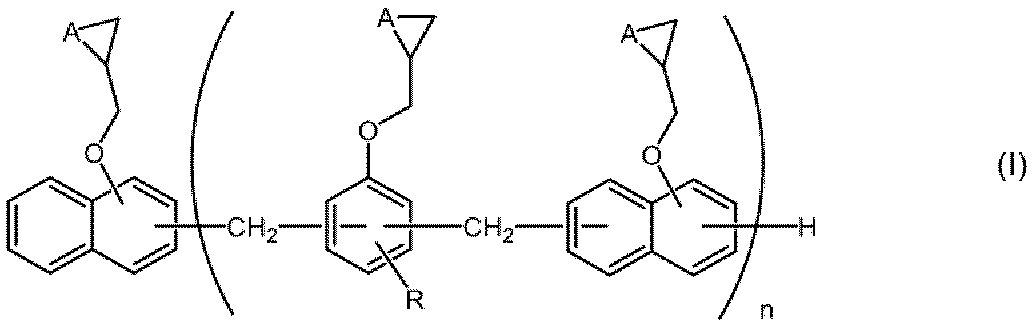 [式(I)中、
Rは1価の炭化水素基を表し、Rが複数ある場合、複数のRは同一であっても異なっていてもよい。
nは平均値で1以上の数を表す。
AはO原子又はS原子を表す。複数あるAは同一であっても異なっていてもよいが、少なくとも1つのAはS原子である。]
〔2〕 Aの総数に対するS原子であるAの数の比が0.5以上である、〔1〕に記載の化合物。
〔3〕 〔1〕又は〔2〕に記載の化合物を含む組成物。
〔4〕 重合抑制剤をさらに含む、〔3〕に記載の組成物。
〔5〕 〔1〕もしくは〔2〕に記載の化合物、又は〔3〕もしくは〔4〕に記載の組成物の硬化物。
〔6〕 〔5〕に記載の硬化物を含む表示装置。
〔7〕 〔5〕に記載の硬化物を含む固体撮像素子。
〔8〕 〔1〕もしくは〔2〕に記載の化合物、又は〔3〕もしくは〔4〕に記載の組成物を含む封止材料。
〔9〕 〔1〕もしくは〔2〕に記載の化合物、又は〔3〕もしくは〔4〕に記載の組成物を含む絶縁材料。
〔10〕 〔1〕又は〔2〕に記載の化合物の製造方法であって、
式(II)
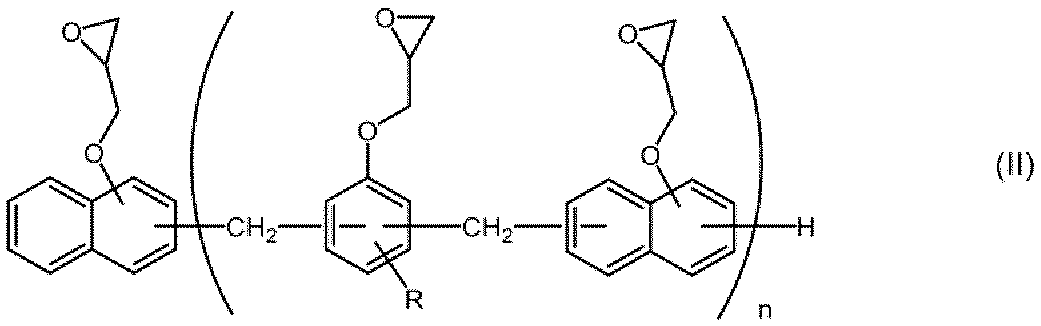 [式(II)中、R及びnは前記と同じ意味を表す。]
で表される化合物と硫化剤との反応により、前記式(I)で表される化合物を得る工程
を含む、製造方法。
〔1〕 式(I)で表される化合物。
Rは1価の炭化水素基を表し、Rが複数ある場合、複数のRは同一であっても異なっていてもよい。
nは平均値で1以上の数を表す。
AはO原子又はS原子を表す。複数あるAは同一であっても異なっていてもよいが、少なくとも1つのAはS原子である。]
〔2〕 Aの総数に対するS原子であるAの数の比が0.5以上である、〔1〕に記載の化合物。
〔3〕 〔1〕又は〔2〕に記載の化合物を含む組成物。
〔4〕 重合抑制剤をさらに含む、〔3〕に記載の組成物。
〔5〕 〔1〕もしくは〔2〕に記載の化合物、又は〔3〕もしくは〔4〕に記載の組成物の硬化物。
〔6〕 〔5〕に記載の硬化物を含む表示装置。
〔7〕 〔5〕に記載の硬化物を含む固体撮像素子。
〔8〕 〔1〕もしくは〔2〕に記載の化合物、又は〔3〕もしくは〔4〕に記載の組成物を含む封止材料。
〔9〕 〔1〕もしくは〔2〕に記載の化合物、又は〔3〕もしくは〔4〕に記載の組成物を含む絶縁材料。
〔10〕 〔1〕又は〔2〕に記載の化合物の製造方法であって、
式(II)
で表される化合物と硫化剤との反応により、前記式(I)で表される化合物を得る工程
を含む、製造方法。
本発明によれば、可視透明かつ高い屈折率を示す硬化物を与えることができ、成膜性及び硬化性にも優れる新たな化合物及びその製造方法を提供することができる。また、該化合物を含む組成物、該化合物又は該組成物の硬化物、該硬化物を含む表示装置、及び該硬化物を含む固体撮像素子を提供することができる。さらに本発明によれば、線熱膨張係数が小さい封止材料、並びに、誘電率及び誘電正接に優れた絶縁材料を提供することができる。
<化合物>
本発明に係る化合物は、式(I)で表される化合物(以下、「化合物(I)」ともいう)である。化合物(I)は、可視透明かつ高い屈折率を示す硬化物を与えることができ、また、優れた成膜性及び硬化性を示すことができる。化合物(I)は、チイラン基(エピスルフィド基)を有しており、エピスルフィド樹脂に属する。
 [式(I)中、
Rは1価の炭化水素基を表し、Rが複数ある場合、複数のRは同一であっても異なっていてもよい。
nは平均値で1以上の数を表す。
AはO原子又はS原子を表す。複数あるAは同一であっても異なっていてもよいが、少なくとも1つのAはS原子である。]
本発明に係る化合物は、式(I)で表される化合物(以下、「化合物(I)」ともいう)である。化合物(I)は、可視透明かつ高い屈折率を示す硬化物を与えることができ、また、優れた成膜性及び硬化性を示すことができる。化合物(I)は、チイラン基(エピスルフィド基)を有しており、エピスルフィド樹脂に属する。
Rは1価の炭化水素基を表し、Rが複数ある場合、複数のRは同一であっても異なっていてもよい。
nは平均値で1以上の数を表す。
AはO原子又はS原子を表す。複数あるAは同一であっても異なっていてもよいが、少なくとも1つのAはS原子である。]
式(I)は、下記式で表される基(以下、A原子を含む基ともいう)
 がナフタレン環の1~8位の任意の位置に結合していてもよいことを表す。また、基Rは、ベンゼン環の2~6位の任意の位置に結合し得る。
1価の炭化水素基を表すRとしては、Rが複数ある場合はそれぞれ独立して、例えば、置換基を有していてもよい1価の脂肪族鎖状炭化水素基、置換基を有していてもよい1価の脂環式炭化水素基、置換基を有していてもよい1価の芳香族炭化水素基、及びこれらの組み合わせからなる1価の基(アラルキル基等)等の1価の炭化水素基が挙げられる。1価の炭化水素基に含まれる-CH2-は、-O-、-S-、-NR1A-(R1Aは水素原子又は炭素数1~6のアルキル基を表す)、-CO-、-SO2-で置換されていてもよい。なお、1価の炭化水素基に含まれる-CH2-が、-O-で置換された基としては、メトキシ基、エトキシ基、プロポキシ基、ブトキシ基、ペンチルオキシ基、ヘキシルオキシ基、ヘプチルオキシ基、オクチルオキシ基等の炭素数1~12のアルコキシ基;メトキシメチル基、エトキシメチル基、メトキシエチル基等のアルコキシアルキル基等が挙げられる。
1価の脂肪族鎖状炭化水素基としては、例えば、飽和又は不飽和の脂肪族鎖状炭化水素基が挙げられ、具体的には、メチル基、エチル基、プロピル基、ブチル基、ペンチル基、ヘキシル基、ヘプチル基、オクチル基、ノニル基、デシル基、ウンデシル基、ドデシル基、トリデシル基、テトラデシル基、ペンタデシル基、ヘキサデシル基、ヘプタデシル基、オクタデシル基、ノナデシル基、エイコシル基等のアルキル基等が挙げられる。1価の脂肪族鎖状炭化水素基は、直鎖状であっても分岐鎖状であってもよい。1価の脂肪族鎖状炭化水素基の炭素数は、通常1~20であり、好ましくは1~10、より好ましくは1~6、さらに好ましくは1~4、なおさらに好ましくは1又は2である。
1価の脂肪族鎖状炭化水素基が有していてもよい置換基としては、例えば、フッ素原子、塩素原子、臭素原子、ヨウ素原子等のハロゲン原子、ヒドロキシ基、アミノ基、アセチル基、シアノ基等が挙げられる。
1価の脂環式炭化水素基としては、例えば、飽和又は不飽和の脂環式炭化水素基が挙げられ、具体的には、シクロプロピル基、シクロブチル基、シクロペンチル基、シクロヘキシル基、シクロオクチル基、シクロノニル基、シクロデシル基等の単環の脂環式炭化水素基;ビシクロ[1.1.0]ブチル基、トリシクロ[2.2.1.0]ヘプチル基、ビシクロ[3.2.1]オクチル基、ビシクロ[2.2.2.]オクチル基、アダマンチル基、ビシクロ[4.3.2]ウンデシル基、トリシクロ[5.3.1.1]ドデシル基等の多環の脂環式炭化水素基等が挙げられる。1価の脂環式炭化水素基の炭素数は、通常3~20であり、好ましくは3~10、より好ましくは3~6、さらに好ましくは5又は6である。
1価の脂環式炭化水素基が有していてもよい置換基としては、例えば、メチル基、エチル基、プロピル基、ブチル基、ペンチル基、ヘキシル基、ヘプチル基、オクチル基、ノニル基、デシル基等の炭素原子数1~10(好ましくは炭素原子数1~4)のアルキル基、フッ素原子、塩素原子、臭素原子、ヨウ素原子等のハロゲン原子、ヒドロキシ基、アミノ基、アセチル基、シアノ基等が挙げられる。
1価の芳香族炭化水素基は、単環であっても多環であってもよく、例えば、フェニル基、ナフチル基、アントラセニル基、フルオレニル基等が挙げられる。1価の芳香族炭化水素基の炭素数は、通常6~20であり、好ましくは6~10である。
上記1価の芳香族炭化水素基が有していてもよい置換基としては、例えば、メチル基、エチル基、プロピル基、ブチル基、ペンチル基、ヘキシル基、ヘプチル基、オクチル基、ノニル基、デシル基等の炭素原子数1~10(好ましくは炭素原子数1~4)のアルキル基、フッ素原子、塩素原子、臭素原子、ヨウ素原子等のハロゲン原子、ヒドロキシ基、アミノ基、アセチル基、シアノ基等が挙げられる。
Rは、好ましくは、置換基を有していてもよい1価の脂肪族鎖状炭化水素基であり、より好ましくは、置換基を有していてもよいアルキル基であり、さらに好ましくは、炭素数1~6のアルキル基であり、なおさらに好ましくは、炭素数1~4のアルキル基であり、特に好ましくはメチル基又はエチル基である。
Rは、ベンゼン環の2~6位の任意の位置に結合し得るが、好ましくは、A原子を含む基に対してパラ位に結合する。
nは平均値で1以上の数を表す。ここで、化合物(I)は、式(I)で表される1種の化合物であってもよいし、式(I)で表される2種以上の化合物の混合物であってもよい。上記「平均値」とは、化合物(I)が式(I)で表される1種の化合物であるときには該化合物が有するnの値(1以上の整数)であり、化合物(I)が式(I)で表される2種以上の化合物の混合物であるときには、該2種以上の化合物が有するnの値の平均値である。化合物(I)が式(I)で表される1種の化合物であるとき、nは、好ましくは1~10のいずれかの整数であり、より好ましくは1~5のいずれかの整数である。化合物(I)が式(I)で表される2種以上の化合物の混合物であるとき、nは、平均値で、好ましくは1~10の範囲内であり、より好ましくは1~5の範囲内である。なお、該2種以上の化合物は、nの値が同じで他の構成が異なる化合物であってもよい。
AはO原子又はS原子を表す。複数あるAは同一であっても異なっていてもよいが、少なくとも1つのAはS原子である。硬化物の屈折率を高める観点及び化合物(I)の硬化性の観点から、Aの総数に対するS原子であるAの数の比(以下、「S原子含有比」ともいう)は大きいほど好ましい。化合物(I)のS原子含有比は平均値で、好ましくは0.5以上であり、より好ましくは0.6以上、さらに好ましくは0.7以上、なおさらに好ましくは0.8以上、特に好ましくは0.9以上、最も好ましくは1.0である。S原子含有比は1.0未満であってもよい。ここでいう平均値は、上記と同様の意味である。
式(I)において、ナフタレン環に結合するA原子を含む基の結合位置は特に制限されないが、好ましくは、ナフタレン環の1位又は2位である。
式(I)で表される化合物としては、式(Ia)で表される化合物が挙げられる。式(Ia)中のR、n及びAは前記と同じ意味である。

上述のように、化合物(I)は、式(I)で表される2種以上の化合物の混合物であってもよい。該混合物としては、例えば、S原子含有比、ナフタレン環におけるA原子を含む基の位置、Rの種類、ベンゼン環におけるRの位置及びnの値のいずれか一つ以上が互いに異なる式(I)で表される2種以上の化合物の混合物が挙げられる。
化合物(I)の重量平均分子量Mwは、ゲルパーミエーションクロマトグラフィ(GPC)によるポリスチレン換算で、例えば500~10000であり、好ましくは750~3000である。
<化合物の製造方法>
化合物(I)は、下記工程を含む方法によって製造することができる。
式(II)
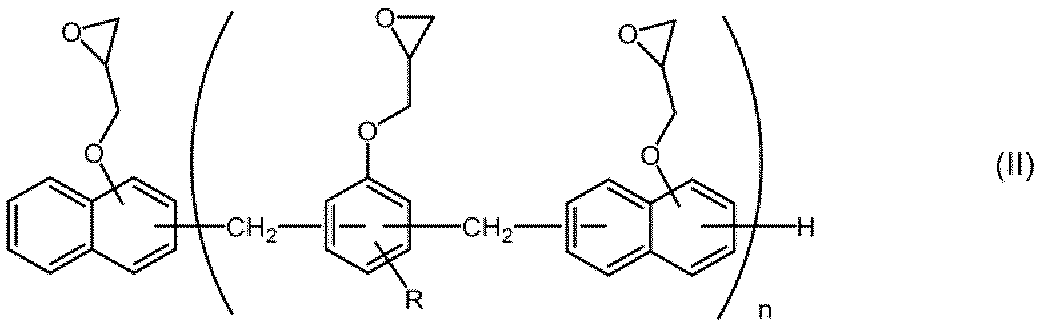 [式(II)中、R及びnは前記と同じ意味を表す。]
で表される化合物と硫化剤との反応により、化合物(I)を得る工程
化合物(I)は、下記工程を含む方法によって製造することができる。
式(II)
で表される化合物と硫化剤との反応により、化合物(I)を得る工程
式(II)で表される化合物(以下、「化合物(II)」ともいう)と硫化剤との反応は、化合物(II)が有するエポキシ基の酸素原子を硫化剤を用いて硫黄原子に置換し、チイラン基(エピスルフィド基)を形成する反応である。硫化剤としては、例えば、チオ尿素、メチルチオウレア、ジメチルチオウレア、トリメチルチオウレア、テトラメチルチオウレア、テトラエチルチオウレア、エチレンチオウレア、チオシアン酸ナトリウム、チオシアン酸カリウム等が挙げられる。使用する硫化剤の量は、化合物(II)が有するエポキシ基の1モルに対して、例えば0.01~20モルであり、好ましくは0.5~10モルである。
化合物(II)と硫化剤との反応の温度は、例えば-80~200℃であり、好ましくは0~100℃である。化合物(II)と硫化剤との反応は、溶媒中で実施されることが好ましい。溶媒としては、ケトン類、芳香族炭化水素類、ハロゲン化芳香族炭化水素類、脂肪族炭化水素類、ハロゲン化脂肪族炭化水素類、エーテル類、アルコール類、グライム類、エステル類、脂肪族ニトリル類、スルホキシド類、アミド類等の有機溶媒が挙げられる。2種以上の有機溶媒を併用してもよい。有機溶媒として、具体的には以下の溶媒が例示される。
ケトン類:アセトン、メチルエチルケトン、ジエチルケトン、ブチルメチルケトン、ジイソブチルケトン、メチルイソブチルケトン、メチルイソアミルケトン、2-ヘプタノン、2-オクタノン、シクロペンタノン、シクロヘキサノン等
芳香族炭化水素類:ベンゼン、トルエン、キシレン、メシチレン、ナフタレン、アニソール、ニトロベンゼン、アニリン、テトラリン、デュレン等
ハロゲン化芳香族炭化水素:クロロベンゼン、ジクロロベンゼン、クロロナフタレン等
脂肪族炭化水素:ペンタン、ヘキサン、ヘプタン等
ハロゲン化脂肪族炭化水素類:ジクロロメタン、クロロホルム、1,2-ジクロロエタン、テトラクロロエタン等
エーテル類:ジエチルエーテル、ジイソプロピルエーテル、メチルt-ブチルエーテル、シクロペンチルメチルエーテル、ジフェニルエーテル、ジメトキシエタン、ジオキサン等
アルコール類:メタノール、エタノール、プロパノール、イソプロパノール、ブタノール、t-ブタノール、ヘキサノール、シクロヘキサノール、エチレングリコール、プロピレングリコール、ヘキサフルオロイソプロパノール等
グライム類:メチルジグライム、エチルジグライム、トリグライム、ジエチレングリコールブチルメチルエーテル等
エステル類:酢酸メチル、酢酸エチル、酢酸プロピル、酢酸ブチル等
脂肪族ニトリル類:アセトニトリル等
スルホキシド類:ジメチルスルホキシド、スルホラン等
アミド類:N,N-ジメチルホルムアミド、N,N-ジメチルアセトアミド、N-メチルピロリドン等。
化合物(II)は、ナフトール-置換フェノールノボラック樹脂のグリシジルエーテル化物であるナフトール-置換フェノールノボラック型エポキシ樹脂であり、例えば、ナフトール-クレゾールノボラック型エポキシ樹脂等が挙げられる。化合物(II)は公知の化合物であり、ナフトール(1-ナフトール、2-ナフトール、又はこれらの混合物等)と、置換基として基Rを有するフェノール類と、ホルムアルデヒド類(ホルマリン、パラホルムアルデヒド等)との反応により上述のナフトール-置換フェノールノボラック樹脂を得た後、ナフトール-置換フェノールノボラック樹脂とエピハロヒドリン(エピクロロヒドリン等)とを反応させるなどの公知の方法によって製造することができる。
化合物(I)の製造に用いる化合物(II)は、市販品であってもよい。該市販品としては、例えば、「NC-7000L」、「NC-7300L」(以上、日本化薬株式会社製)、「NC30」、「NC50」、「BNC64」、「BNC73」(以上、群栄化学工業株式会社製)、「OP100」、「OP200」(以上、旭有機材株式会社製)、「MEH-7000」(UBE株式会社製)等が挙げられる。
化合物(II)と硫化剤との反応において、生成した化合物(I)の重合を抑制するために重合抑制剤を添加してもよい。重合抑制剤としては酸、酸無水物等が挙げられる。具体的には、
硝酸、塩酸、過塩素酸、次亜塩素酸、二酸化塩素、フッ酸、硫酸、発煙硫酸、塩化スルフリル、ホウ酸、ヒ酸、亜ヒ酸、ピロヒ酸、燐酸、亜リン酸、次亜リン酸、オキシ塩化リン、オキシ臭化リン、硫化リン、三塩化リン、三臭化リン、五塩化リン、青酸、クロム酸、無水硝酸、無水硫酸、酸化ホウ素、五酸化ヒ酸、五酸化燐、無水クロム酸、シリカ、アルミナ、塩化アルミニウム、塩化亜鉛、リン酸水素リチウム、リン酸水素ナトリウム、リン酸水素カリウム、リン酸水素セシウム、リン酸二水素リチウム、リン酸二水素ナトリウム、リン酸二水素カリウム、リン酸二水素セシウム等の無機の酸性化合物、
蟻酸、酢酸、過酢酸、チオ酢酸、蓚酸、酒石酸、プロピオン酸、酪酸、コハク酸、吉草酸、カプロン酸、カプリル酸、ナフテン酸、メチルメルカプトプロピオネート、マロン酸、グルタル酸、アジピン酸、シクロヘキサンカルボン酸、チオジプロピオン酸、ジチオジプロピオン酸酢酸、マレイン酸、安息香酸、フェニル酢酸、o-トルイル酸、m-トルイル酸、p-トルイル酸、サリチル酸、2-メトキシ安息香酸、3-メトキシ安息香酸、ベンゾイル安息香酸、フタル酸、イソフタル酸、テレフタル酸、サリチル酸、ベンジル酸、α-ナフタレンカルボン酸、β-ナフタレンカルボン酸、無水酢酸、無水プロピオン酸、無水酪酸、無水コハク酸、無水マレイン酸、無水安息香酸、無水フタル酸、無水ピロメリット酸、無水トリメリット酸、無水トリフルオロ酢酸等の有機カルボン酸類、
モノ、ジ及びトリメチルホスフェート、モノ、ジ及びトリエチルホスフェート、モノ、ジ及びトリイソブチルホスフェート、モノ、ジ及びトリブチルホスフェート、モノ、ジ及びトリラウリルホスフェート等のリン酸類及びこれらのホスフェート部分がホスファイトとなった亜リン酸類、
ジメチルジチオリン酸に代表されるジアルキルジチオリン酸類等の有機リン化合物、
フェノール、カテコール、t-ブチルカテコール、2,6-ジ-t-ブチルクレゾール、2,6-ジ-t-ブチルエチルフェノール、レゾルシン、ハイドロキノン、フロログルシン、ピロガロール、クレゾール、エチルフェノール、ブチルフェノール、ノニルフェノール、ヒドロキシフェニル酢酸、ヒドロキシフェニルプロピオン酸、ヒドロキシフェニル酢酸アミド、ヒドロキシフェニル酢酸メチル、ヒドロキシフェニル酢酸エチル、ヒドロキシフェネチルアルコール、ヒドロキシフェネチルアミン、ヒドロキシベンズアルデヒド、フェニルフェノール、ビスフェノール-A、2,2’-メチレン-ビス(4-メチル-6-t-ブチルフェノール)、ビスフェノール-F、ビスフェノール-S、α-ナフトール、β-ナフトール、アミノフェノール、クロロフェノール、2,4,6-トリクロロフェノール等のフェノール類、
メタンスルホン酸、エタンスルホン酸、ブタンスルホン酸、ドデカンスルホン酸、ベンゼンスルホン酸、o-トルエンスルホン酸、m-トルエンスルホン酸、p-トルエンスルホン酸、エチルベンゼンスルホン酸、ブチルベンゼンスルホン酸、ドデシルベンゼンスルホン酸、p-フェノールスルホン酸、o-クレゾールスルホン酸、メタニル酸、スルファニル酸、4B-酸、ジアミノスチルベンスルホン酸、ビフェニルスルホン酸、α-ナフタレンスルホン酸、β-ナフタレンスルホン酸、ペリ酸、ローレント酸、フェニルJ酸等のスルホン酸類
等が挙げられ、複数を併用することも可能である。
使用する重合抑制剤の量は、化合物(IV)の1モルに対して、例えば0.0001~1.0モルであり、好ましくは0.01~0.2モルである。重合抑制剤としては酢酸、無水酢酸、マレイン酸、無水マレイン酸、リン酸、リン酸水素アルカリ金属塩、リン酸二水素アルカリ金属塩が好ましい。
化合物(II)と硫化剤との反応において、反応後の生成物溶液を酸性水溶液を用いて洗浄することによって、得られる化合物(I)の経時安定性を向上させることができる。酸性水溶液に用いる酸の具体例としては、上記において重合抑制剤として例示した酸等が挙げられる。該酸は単独でも2種類以上を混合して用いても良い。上記酸性水溶液は通常pH6以下で効果を現すが、より効果的な範囲はpH3以下である。好ましくは塩酸、硫酸、リン酸及び/又はマレイン酸の水溶液である。
<組成物>
本発明に係る組成物(以下、「組成物(I)」ともいう)は、化合物(I)と、化合物(I)以外の他の成分とを含む。組成物(I)は、化合物(I)を2種以上含んでいてもよい。組成物(I)は、化合物(I)が硬化性であるため活性エネルギー線照射又は加熱により硬化することができる。組成物(I)を硬化させることにより、組成物(I)の硬化物を含む成形物を形成することができる。上記硬化物を含む成形物とは、上記硬化物を含む物であって、所望の形状に成形された物をいう。
本発明に係る組成物(以下、「組成物(I)」ともいう)は、化合物(I)と、化合物(I)以外の他の成分とを含む。組成物(I)は、化合物(I)を2種以上含んでいてもよい。組成物(I)は、化合物(I)が硬化性であるため活性エネルギー線照射又は加熱により硬化することができる。組成物(I)を硬化させることにより、組成物(I)の硬化物を含む成形物を形成することができる。上記硬化物を含む成形物とは、上記硬化物を含む物であって、所望の形状に成形された物をいう。
組成物(I)における化合物(I)の含有率は、組成物(I)の固形分の総量に対して、好ましくは1質量%以上、より好ましくは2質量%以上、さらに好ましくは5質量%以上であり、また、100質量%以下でもよく、好ましくは99質量%以下、より好ましくは95質量%以下であり、90質量%以下又は80質量%以下であってもよい。
組成物(I)の固形分の総量とは、組成物(I)に含まれる成分のうち、溶剤を除いた成分の合計を意味する。組成物の固形分中における各成分の含有率は、液体クロマトグラフィ又はガスクロマトグラフィ等の公知の分析手段で測定することができる。組成物(I)の固形分中における各成分の含有率は、該組成物調製時の配合から算出されてもよい。
組成物(I)に含まれる上記他の成分としては、例えば、エピスルフィド樹脂である化合物(I)以外の樹脂、化合物(I)以外の硬化性化合物、重合開始剤、溶剤、重合抑制剤、その他の添加剤等が挙げられる。その他の添加剤としては、例えば、無機粒子、充填剤、重合開始助剤、増感剤、レベリング剤、安定剤、界面活性剤、帯電防止剤、潤滑剤、防汚剤、紫外線吸収剤、酸化防止剤、分散剤等が挙げられる。組成物(I)は、上記他の成分を2種以上含んでいてもよい。組成物(I)が添加剤を含む場合、添加剤を2種以上併用してもよい。
(1)樹脂
組成物(I)は、エピスルフィド樹脂である化合物(I)以外の樹脂を1種又は2種以上含むことができる。組成物(I)が該樹脂を含むことにより、組成物(I)の硬化物に現像性を付与したり、該硬化物及びそれを含む成形物の機械的特性及び/又は光学特性を調整したりすることが可能である。該樹脂としては、熱可塑性樹脂及び硬化性樹脂が挙げられる。硬化性樹脂は、活性エネルギー線照射により硬化する光硬化性樹脂であってもよいし、熱により硬化する熱硬化性樹脂であってもよい。
組成物(I)は、エピスルフィド樹脂である化合物(I)以外の樹脂を1種又は2種以上含むことができる。組成物(I)が該樹脂を含むことにより、組成物(I)の硬化物に現像性を付与したり、該硬化物及びそれを含む成形物の機械的特性及び/又は光学特性を調整したりすることが可能である。該樹脂としては、熱可塑性樹脂及び硬化性樹脂が挙げられる。硬化性樹脂は、活性エネルギー線照射により硬化する光硬化性樹脂であってもよいし、熱により硬化する熱硬化性樹脂であってもよい。
熱可塑性樹脂としては、例えば、ポリエチレン樹脂、ポリプロピレン樹脂、ポリシクロオレフィン樹脂等のオレフィン系樹脂、ポリ(メタ)アクリル酸エステル系樹脂等の(メタ)アクリル系樹脂、ポリスチレン系樹脂、スチレン-アクリロニトリル系樹脂、アクリロニトリル-ブタジエン-スチレン系樹脂、ポリ塩化ビニル系樹脂、ポリ塩化ビニリデン系樹脂、ポリ酢酸ビニル系樹脂、ポリビニルブチラール系樹脂、エチレン-酢酸ビニル系共重合体、エチレン-ビニルアルコール系樹脂、ポリエチレンテレフタレート樹脂、ポリブチレンテレフタレート樹脂、液晶ポリエステル樹脂等のポリエステル系樹脂、ポリアセタール樹脂、ポリアミド樹脂、ポリカーボネート樹脂、ポリウレタン樹脂、ポリフェニレンサルファイド樹脂等が挙げられる。これらの樹脂の1種を又は2種以上をポリマーブレンド若しくはポリマーアロイとして使用してもよい。
硬化性樹脂としては、光重合性基又は熱重合性基を有する樹脂が挙げられ、例えば、(メタ)アクリル系樹脂、化合物(I)以外のエピスルフィド樹脂、エポキシ樹脂、メラミン樹脂、不飽和ポリエステル樹脂、フェノール樹脂、尿素樹脂、アルキド樹脂、ポリイミド樹脂等が挙げられる。本明細書において(メタ)アクリル酸とは、アクリル酸及び/又はメタクリル酸を意味する。「(メタ)アクリロイル」、「(メタ)アクリレート」等についても同様である。
樹脂としては、アルカリ可溶性樹脂が挙げられる。組成物(I)がアルカリ可溶性樹脂を含むことにより、組成物(I)の硬化物に現像性を付与することができる。アルカリ可溶性樹脂とは、アルカリ水溶液に可溶な樹脂をいう。具体的には、例えばカルボキシ基及び/又はフェノール性水酸基を有する樹脂をいう。
アルカリ可溶性樹脂の酸価は、組成物(I)の硬化物の現像性及び耐溶剤性を高める観点から、好ましくは10~170mgKOH/g、より好ましくは20~150mgKOH/g、さらに好ましくは30~140mgKOH/gである。酸価は、アルカリ可溶性樹脂1gを中和するに必要な水酸化カリウムの量(mg)として測定される値であり、例えば水酸化カリウム水溶液を用いて滴定することにより求めることができる。
また、樹脂の他の例としては、高屈折率樹脂が挙げられる。高屈折率樹脂とは、波長550nmにおける屈折率が1.60以上である樹脂をいう。
樹脂は、ゲルパーミエーションクロマトグラフィ(GPC)によって測定される標準ポリスチレン換算の重量平均分子量(Mw)が、例えば1000~9000であり、好ましくは2000~8500、より好ましくは3000~8500である。樹脂のMwを上記範囲とするために、用いる原料の選択、仕込方法、反応温度及び時間等の反応条件を適宜組み合わせて調整することができる。
組成物(I)が樹脂を含む場合、組成物(I)における樹脂の含有率は、組成物(I)の固形分の総量に対して、好ましくは5質量%以上、より好ましくは10質量%以上であり、好ましくは80質量%以下、より好ましくは70質量%以下である。
(2)硬化性化合物
組成物(I)は、化合物(I)以外の硬化性化合物を1種又は2種以上含むことができる。組成物(I)が化合物(I)以外の硬化性化合物を含むことにより、組成物(I)の粘度又は硬化性を調整したり、得られる硬化物及びそれを含む成形物の機械的特性及び/又は光学特性を調整したりすることが可能である。
組成物(I)は、化合物(I)以外の硬化性化合物を1種又は2種以上含むことができる。組成物(I)が化合物(I)以外の硬化性化合物を含むことにより、組成物(I)の粘度又は硬化性を調整したり、得られる硬化物及びそれを含む成形物の機械的特性及び/又は光学特性を調整したりすることが可能である。
化合物(I)以外の硬化性化合物としては、例えば、化合物(I)以外のエピスルフィド化合物、エポキシ化合物、オキセタン化合物、ヒドロキシ化合物、ビニルエーテル化合物、アリル化合物、チオール化合物、ポリフェノール化合物、イソ(チオ)シアナート化合物、(メタ)アクリレート化合物等が挙げられる。
組成物(I)が化合物(I)以外の硬化性化合物を含む場合、組成物(I)における該硬化性化合物の含有率は、組成物(I)の固形分の総量に対して、好ましくは1質量%以上、より好ましくは2質量%以上であり、好ましくは30質量%以下、より好ましくは20質量%以下である。
(3)重合開始剤
組成物(I)は、1種又は2種以上の重合開始剤を含むことができる。重合開始剤としては、化合物(I)の重合を開始できるものであれば特に制限されず、例えば、ラジカル重合開始剤、カチオン重合開始剤、アニオン重合開始剤、ラジカル及びカチオン重合開始剤等が挙げられ、適宜選択して用いられる。これらの重合開始剤は、活性エネルギー線照射及び熱の少なくとも1種によりラジカル、酸又は塩基を発生し、化合物(I)のラジカル重合、カチオン重合又はアニオン重合を進行させる。なお、化合物(I)は、重合開始剤の不存在下でも、活性エネルギー線照射及び熱の少なくとも1種により重合硬化し得る。
組成物(I)は、1種又は2種以上の重合開始剤を含むことができる。重合開始剤としては、化合物(I)の重合を開始できるものであれば特に制限されず、例えば、ラジカル重合開始剤、カチオン重合開始剤、アニオン重合開始剤、ラジカル及びカチオン重合開始剤等が挙げられ、適宜選択して用いられる。これらの重合開始剤は、活性エネルギー線照射及び熱の少なくとも1種によりラジカル、酸又は塩基を発生し、化合物(I)のラジカル重合、カチオン重合又はアニオン重合を進行させる。なお、化合物(I)は、重合開始剤の不存在下でも、活性エネルギー線照射及び熱の少なくとも1種により重合硬化し得る。
熱によりラジカル重合を開始させるラジカル重合開始剤としては、例えば、過酸化水素、過安息香酸等の有機過酸化物、アゾビスブチロニトリル等のアゾ化合物等が挙げられる。活性エネルギー線照射によりラジカル重合を開始させる光ラジカル重合開始剤としては、例えば、オキシム化合物、アルキルフェノン化合物、アリールケトン化合物、ビイミダゾール化合物、トリアジン化合物、アシルホスフィン化合物等が挙げられる。
カチオン重合開始剤は、活性エネルギー線照射及び熱の少なくともいずれかによりカチオン重合を開始させる物質を放出することができる化合物である。カチオン重合開始剤としては、芳香族ヨードニウム塩、芳香族スルホニウム塩、シクロペンタジエニル鉄(II)錯体等が挙げられる。これらは、構造の違いによって活性エネルギー線照射又は熱のいずれか又はいずれでもカチオン重合を開始させることができる。
組成物(I)が重合開始剤を含む場合、組成物(I)における重合開始剤の含有率は、化合物(I)及びそれ以外の硬化性化合物の合計100質量部に対して、硬化性を高める観点から、好ましくは0.1質量部以上、より好ましくは0.5質量部以上であり、また、硬化物の機械的物性等の物性を良好にする観点から、好ましくは10質量%以下、より好ましくは8質量%以下である。
(4)溶剤
組成物(I)は、1種又は2種以上の溶剤を含んでいてもよい。溶剤としては、前記で記載した溶媒に加えて、メトキシ酢酸メチル、メトキシ酢酸エチル、3-メトキシプロピオン酸メチル、プロピレングリコールモノメチルエーテルアセテート、プロピレングリコールモノエチルエーテルアセテート、及びエチレングリコールモノメチルエーテルアセテート等のエーテルエステル溶剤が挙げられる。
溶剤は、好ましくは、化合物(I)を溶解又は分散させることができるものであり、より好ましくは、さらに化合物(I)以外の他の成分を溶解又は分散させることができるものである。溶剤としては、例えば、上で例示した有機溶媒を用いることができる。
組成物(I)は、1種又は2種以上の溶剤を含んでいてもよい。溶剤としては、前記で記載した溶媒に加えて、メトキシ酢酸メチル、メトキシ酢酸エチル、3-メトキシプロピオン酸メチル、プロピレングリコールモノメチルエーテルアセテート、プロピレングリコールモノエチルエーテルアセテート、及びエチレングリコールモノメチルエーテルアセテート等のエーテルエステル溶剤が挙げられる。
溶剤は、好ましくは、化合物(I)を溶解又は分散させることができるものであり、より好ましくは、さらに化合物(I)以外の他の成分を溶解又は分散させることができるものである。溶剤としては、例えば、上で例示した有機溶媒を用いることができる。
組成物(I)における溶剤の含有率は、組成物(I)の総量に対する組成物(I)に含まれる全溶剤の合計質量の割合である。組成物(I)が溶剤を含む場合、組成物(I)における溶剤の含有率は、組成物(I)の固形分100質量部に対して、好ましくは60質量部以上、より好ましくは80質量部以上であり、また、好ましくは1000質量部以下、より好ましくは500質量部以下である。組成物(I)が溶剤を含む場合、組成物(I)の固形分濃度は、好ましくは5~60質量%、より好ましくは10~50質量%である。
(5)重合抑制剤
組成物(I)は、1種又は2種以上の重合抑制剤を含んでいてもよい。
重合抑制剤を組成物(I)に含有させるか否かは、組成物(I)が重合開始剤を含む場合、その重合開始剤の種類を考慮して決定することが好ましい。重合抑制剤は、好ましくは溶剤に溶解又は分散されるものである。組成物(I)に含有される重合抑制剤は、組成物(I)の調製時に化合物(I)とともに組成物(I)に含有させる重合抑制剤であってもよいし、化合物(I)の製造時の第2工程において重合抑制剤を添加する場合には、該工程において添加する重合抑制剤であってもよい。組成物(I)が重合抑制剤を含むことにより、化合物(I)の意図しない重合が抑制されるため、組成物(I)の保管安定性を向上させることができる。
組成物(I)が重合抑制剤を含む場合、組成物(I)における重合抑制剤の含有量は、組成物(I)の保管安定性を向上させる観点から、化合物(I)100質量部に対して、好ましくは0.0001質量部以上100質量部以下、より好ましくは0.001質量部以上50質量部以下、さらに好ましくは0.1質量部以上25質量部以下、なおさらに好ましくは0.5質量部以上10質量部以下である。
組成物(I)に含有される重合抑制剤としては、例えば、化合物(II)と硫化剤との反応において使用できるものとして上で例示したものが挙げられ、好ましくはカルボン酸であり、より好ましくは蟻酸及び/又は酢酸である。
<硬化物及び成形物>
本発明は、化合物(I)又は組成物(I)の硬化物、及び該硬化物を含む成形物を提供する。化合物(I)及び組成物(I)は成膜性及び硬化性に優れているため、硬化物又はそれを含む成形物を作製するための硬化性材料として好適である。該硬化物は、活性エネルギー線照射及び熱の少なくともいずれかにより化合物(I)又は組成物(I)を硬化させることにより得ることができる。該硬化物を含む成形物の形状は特に制限されず、フィルム(膜)状、板状、レンズ形状、粉状、粒状、非球粒子状、破砕粒子状、多孔質状、塊状連続体、繊維状、管状、中空糸状等を含む、成形物の用途等に応じた任意の形状であってよい。
本発明は、化合物(I)又は組成物(I)の硬化物、及び該硬化物を含む成形物を提供する。化合物(I)及び組成物(I)は成膜性及び硬化性に優れているため、硬化物又はそれを含む成形物を作製するための硬化性材料として好適である。該硬化物は、活性エネルギー線照射及び熱の少なくともいずれかにより化合物(I)又は組成物(I)を硬化させることにより得ることができる。該硬化物を含む成形物の形状は特に制限されず、フィルム(膜)状、板状、レンズ形状、粉状、粒状、非球粒子状、破砕粒子状、多孔質状、塊状連続体、繊維状、管状、中空糸状等を含む、成形物の用途等に応じた任意の形状であってよい。
組成物(I)から成形物を得る方法としては、特に限定されず、基板上に膜を形成してその後エッチング等により成形を行う方法、射出成型方法、注型重合成型方法等が挙げられる。
注型重合成型方法では、例えば、成型モールド内に化合物(I)又は組成物(I)を注入し、必要に応じて脱泡等を行い、次にオーブンでの加熱等により硬化させ、得られた成形物を取り出す。取り出した成形物に、さらに活性エネルギー線照射を行い、追加で硬化を行うこともできる。
基板上に成形物としての膜を形成する場合、化合物(I)又は組成物(I)を基板に塗布し、必要に応じて乾燥を行って塗布層を形成し、塗布層を硬化させることにより硬化膜である成形物を得ることができる。成形物はパターニングされた硬化膜であってもよい。フォトリソグラフ法、インクジェット法、印刷法等の方法によってパターニングすることによりパターニングされた硬化膜を得ることができる。パターニング方法は、フォトリソグラフィ法であることが好ましい。フォトリソグラフィ法は、化合物(I)又は組成物(I)を基板に塗布し、必要に応じて乾燥を行って塗布層を形成し、フォトマスクを介して塗布層を露光し、ついで現像する方法である。
基板としては、石英ガラス、ホウケイ酸ガラス、アルミナケイ酸塩ガラス、表面をシリカコートしたソーダライムガラス等のガラス板や、ポリカーボネート、ポリメタクリル酸メチル、ポリエチレンテレフタレート等の樹脂板、シリコン、上記基板上にアルミニウム、銀、銀/銅/パラジウム合金薄膜等を形成したもの等を用いることができる。化合物(I)又は組成物(I)の基板への塗布方法としては、スピンコート法、スリットコート法、スリットアンドスピンコート法等が挙げられる。
露光に用いられる光源としては、250nm以上450nm以下の波長の光を発生する光源が好ましい。例えば、該波長の光から、光重合開始剤の吸収波長に応じて、436nm付近、408nm付近、又は365nm付近の光をバンドパスフィルタにより選択的に取り出してもよい。光源として具体的には、水銀灯、発光ダイオード、メタルハライドランプ、ハロゲンランプ等が挙げられる。
現像に用いる現像液としては、例えば、水酸化カリウム、炭酸水素ナトリウム、炭酸ナトリウム、水酸化テトラメチルアンモニウム等のアルカリ性化合物の水溶液や有機溶剤が挙げられる。有機溶剤としては、上述の溶剤と同様のものが挙げられる。現像液は、界面活性剤を含んでいてもよい。現像方法は、パドル法、ディッピング法及びスプレー法等のいずれでもよい。現像により得られたパターン状の膜に対してさらに加熱(ポストベーク)を行ってもよい。
硬化物又はそれを含む成形物は、化合物(I)又はそれを含む組成物(I)から形成されるものであるため、高屈折率を示すことができ、また、それらの屈折率は、組成物(I)の組成等を調整することにより所望の屈折率に制御することができる。硬化物又はそれを含む成形物は、波長550nmにおける屈折率が、1.60以上、1.65以上、1.68以上、1.70以上、1.72以上、さらには1.75以上であり得る。波長550nmにおける屈折率は、例えば1.80以下であり、1.78以下であってもよい。
[用途]
本発明によると高屈折率を有する硬化物若しくは成形物、又は所望の屈折率を有する硬化物又は成形物を得ることができる。該硬化物又は成形物の用途としては、例えば、ガラス代替品とその表面コーティング材;住居、施設、輸送機器等の窓ガラス、採光ガラス及び光源保護ガラス用のコーティング材;住居、施設、輸送機器等のウインドウフィルム;住居、施設、輸送機器等の内外装材及び内外装用塗料及び該塗料によって形成させる塗膜;アルキド樹脂ラッカー塗料及び該塗料によって形成される塗膜;アクリルラッカー塗料及び該塗料によって形成される塗膜;蛍光灯、水銀灯等の紫外線を発する光源用部材;精密機械、電子電気機器用部材、各種ディスプレイから発生する電磁波等の遮断用材;食品、化学品、薬品等の容器又は包装材;ボトル、ボックス、ブリスター、カップ、特殊包装用、コンパクトディスクコート、農工業用シート又はフィルム材;印刷物、染色物、染顔料等の退色防止剤;ポリマー支持体用(例えば、機械及び自動車部品のようなプラスチック製部品用)の保護膜;印刷物オーバーコート;インクジェット媒体被膜;積層艶消し;オプティカルライトフィルム;安全ガラス/フロントガラス中間層;エレクトロクロミック/フォトクロミック用途;オーバーラミネートフィルム;太陽熱制御膜;日焼け止めクリーム、シャンプー、リンス、整髪料等の化粧品;スポーツウェア、ストッキング、帽子等の衣料用繊維製品及び繊維;カーテン、絨毯、壁紙等の家庭用内装品;プラスチックレンズ、コンタクトレンズ、義眼等の医療用器具;光学フィルタ、バックライトディスプレーフィルム、プリズム、レンズ(例えば、眼鏡レンズ、カメラレンズ、及び後述するマイクロレンズ、ピックアップレンズ等)、鏡、写真材料等の光学用品;金型膜、転写式ステッカー、落書き防止膜、テープ、インク等の文房具;標示板、標示器等とその表面コーティング材;光学装置等に用いられる基板;光導波路;ホログラム;LED封止部材、半導体封止部材等の各種封止部材;各種絶縁部材;等を挙げることができる。
本発明によると高屈折率を有する硬化物若しくは成形物、又は所望の屈折率を有する硬化物又は成形物を得ることができる。該硬化物又は成形物の用途としては、例えば、ガラス代替品とその表面コーティング材;住居、施設、輸送機器等の窓ガラス、採光ガラス及び光源保護ガラス用のコーティング材;住居、施設、輸送機器等のウインドウフィルム;住居、施設、輸送機器等の内外装材及び内外装用塗料及び該塗料によって形成させる塗膜;アルキド樹脂ラッカー塗料及び該塗料によって形成される塗膜;アクリルラッカー塗料及び該塗料によって形成される塗膜;蛍光灯、水銀灯等の紫外線を発する光源用部材;精密機械、電子電気機器用部材、各種ディスプレイから発生する電磁波等の遮断用材;食品、化学品、薬品等の容器又は包装材;ボトル、ボックス、ブリスター、カップ、特殊包装用、コンパクトディスクコート、農工業用シート又はフィルム材;印刷物、染色物、染顔料等の退色防止剤;ポリマー支持体用(例えば、機械及び自動車部品のようなプラスチック製部品用)の保護膜;印刷物オーバーコート;インクジェット媒体被膜;積層艶消し;オプティカルライトフィルム;安全ガラス/フロントガラス中間層;エレクトロクロミック/フォトクロミック用途;オーバーラミネートフィルム;太陽熱制御膜;日焼け止めクリーム、シャンプー、リンス、整髪料等の化粧品;スポーツウェア、ストッキング、帽子等の衣料用繊維製品及び繊維;カーテン、絨毯、壁紙等の家庭用内装品;プラスチックレンズ、コンタクトレンズ、義眼等の医療用器具;光学フィルタ、バックライトディスプレーフィルム、プリズム、レンズ(例えば、眼鏡レンズ、カメラレンズ、及び後述するマイクロレンズ、ピックアップレンズ等)、鏡、写真材料等の光学用品;金型膜、転写式ステッカー、落書き防止膜、テープ、インク等の文房具;標示板、標示器等とその表面コーティング材;光学装置等に用いられる基板;光導波路;ホログラム;LED封止部材、半導体封止部材等の各種封止部材;各種絶縁部材;等を挙げることができる。
成形物は、光学機器に用いられる光学用品であるレンズとして好適に用いられる。光学機器としては、固体撮像素子、表示装置等が挙げられる。固体撮像素子において各光電変換素子への集光効率を向上させる目的でレンズが用いられ、また表示装置において画素からの光の取り出し効率を向上させる目的でレンズが用いられている。レンズはマイクロレンズであってもよい。表示装置としては、液晶表示装置、有機EL表示装置等に好適に用いられる。
本発明の化合物(I)及び組成物(I)は、封止材料に適用することができる。本発明の封止材料は、化合物(I)又は組成物(I)を含有する。本発明の封止材料は、成膜性及び硬化性に優れ得る。本発明の封止材料は、線熱膨張係数(CTE)が小さい硬化物又はその成形物を形成し得る。また、本発明の封止材料は、吸水性が低く、柔軟性が高い硬化物又はその成形物を形成し得る。該硬化物又は該成形物は、LED封止材部材、半導体封止部材等の各種封止部材として用いることができる。封止部材は、封止フィルムであってもよい。
本発明の封止材料は、化合物(I)又は組成物(I)と、他の成分とを含有してもよい。他の成分としては、無機充填剤等が挙げられる。無機充填剤の含有量は、化合物(I)又は組成物(I)100質量部に対して、例えば、0.5質量部以上10000質量部以下である。
本発明の化合物(I)及び組成物(I)は、絶縁材料に適用することができる。本発明の絶縁材料は、化合物(I)又は組成物(I)を含有する。本発明の絶縁材料は、パターニング性に優れ得る。本発明の絶縁材料は、誘電率及び誘電正接に優れる硬化物又はその成形物を形成し得る。また、本発明の絶縁材料は、線熱膨張係数(以下、CTEとも記載する)が小さい硬化物又はその成形物を形成し得る。該硬化物又は該成形物は、各種絶縁部材として用いることができる。絶縁部材は、層間絶縁フィルムであってもよい。
本発明の絶縁材料は、化合物(I)又は組成物(I)と、他の成分とを含有してもよい。他の成分としては、可塑剤、酸化防止剤、熱安定剤、帯電防止剤等が挙げられる。
以下、実施例及び比較例を示した本発明をさらに具体的に説明するが、本発明はこれらの例によって限定されるものではない。例中、含有量ないし使用量を表す%及び部は、特に断りのない限り質量基準である。
[実施例1:式(Ia-1)で表される化合物の合成]
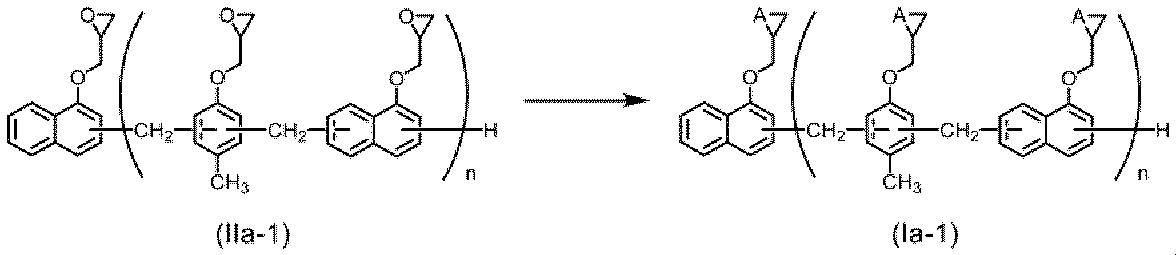 [式中、A及びnは前記と同じ意味を表す。]
ジムロート冷却管及び温度計を設置した4つ口フラスコ内を窒素雰囲気とし、式(IIa-1)で表される化合物(日本化薬株式会社製のナフトール-クレゾールノボラック型エポキシ樹脂「NC-7000L」)20部、ジクロロメタン320部、メタノール80部、チオ尿素33部を上記フラスコに加えて室温下で72時間撹拌した。得られた混合物を精製し、式(Ia-1)で表される化合物14部を得た。
1H-NMR解析(重クロロホルム)を行い、式(Ia-1)で表される化合物が生成したことを確認した。エポキシ由来の2.56~2.96ppmのピークが完全に消失し、新たに2.40~2.65ppmにチイラン由来のピークの生成を確認できた。
上記1H-NMR解析から、Aの総数に対するS原子であるAの数の比(S原子含有比)を求めたところ、平均値で1.0であった。また、GPC測定による式(Ia-1)で表される化合物の重量平均分子量Mwは1500であり、数平均分子量は600であった。GPC測定は以下の条件で行った。
装置;K2479((株)島津製作所製)
カラム;SHIMADZU Shim-pack GPC-80M
カラム温度;40℃
溶媒;テトラヒドロフラン
流速;1.0mL/min
検出器;RI
校正用標準物質 ;TSK STANDARD POLYSTYRENE F-40、F-4、F-288、A-2500、A-500(東ソー(株)製)
装置;K2479((株)島津製作所製)
カラム;SHIMADZU Shim-pack GPC-80M
カラム温度;40℃
溶媒;テトラヒドロフラン
流速;1.0mL/min
検出器;RI
校正用標準物質 ;TSK STANDARD POLYSTYRENE F-40、F-4、F-288、A-2500、A-500(東ソー(株)製)
[実施例2:組成物の調製]
実施例1で得られた式(Ia-1)で表される化合物100質量部、重合開始剤(スルホニウム塩タイプの光カチオン重合開始剤、サンアプロ株式会社製「VC-1S」)
質量部、及び溶剤としてのシクロペンタノン310質量部をフラスコに入れ、攪拌して液状の組成物を得た。組成物を目視したところ透明であり、配合成分が均一に溶解されていることが確認された。
実施例1で得られた式(Ia-1)で表される化合物100質量部、重合開始剤(スルホニウム塩タイプの光カチオン重合開始剤、サンアプロ株式会社製「VC-1S」)
質量部、及び溶剤としてのシクロペンタノン310質量部をフラスコに入れ、攪拌して液状の組成物を得た。組成物を目視したところ透明であり、配合成分が均一に溶解されていることが確認された。
[合成例1:式(Ib-1)で表される化合物の合成]
(1)式(IVb-1)で表される化合物の合成
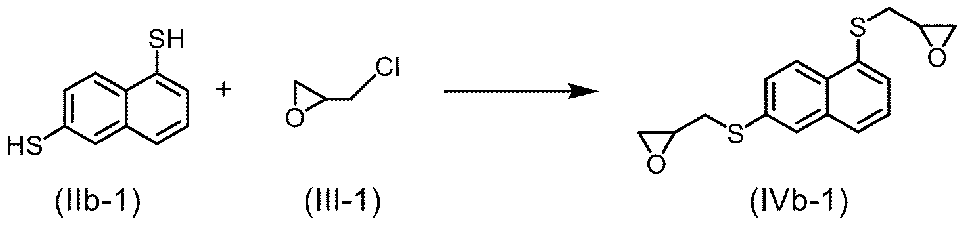 ジムロート冷却管及び温度計を設置した4つ口フラスコ内を窒素雰囲気とし、式(IIb-1)で表される化合物(1,6-ナフタレンジチオール)30部、アセトン165部、純水45部、及び式(III-1)で表される化合物(エピクロロヒドリン)139部を上記フラスコに加えて氷浴中で15分撹拌した。続いて、別のフラスコに水酸化ナトリウム15部、アセトン66部、及び純水203部を加えて完溶させたのちに、上記4つ口フラスコに1時間かけて滴下した。滴下したのちに30℃まで昇温し、30℃で2時間撹拌した。得られた混合物を精製し、式(IVb-1)で表される化合物46部を得た。
(1)式(IVb-1)で表される化合物の合成
LC-MS測定及び1H-NMR解析を行い、式(IVb-1)で表される化合物が生成したことを確認した。
1H-NMR(重クロロホルム)δ:8.37~8.39(1H)、7.85(1H)、7.39~7.70(4H)、3.08~3.29(5H)、2.94~2.98(1H)、2.57~2.81(3H)、2.39~2.41(1H)
LC-MS;[M+H]+=305.5
1H-NMR(重クロロホルム)δ:8.37~8.39(1H)、7.85(1H)、7.39~7.70(4H)、3.08~3.29(5H)、2.94~2.98(1H)、2.57~2.81(3H)、2.39~2.41(1H)
LC-MS;[M+H]+=305.5
(2)式(Ib-1)で表される化合物の合成
 ジムロート冷却管及び温度計を設置した4つ口フラスコ内を窒素雰囲気とし、式(IVb-1)で表される化合物3部、メタノール30部、トルエン30部、無水酢酸0.05部、及びチオ尿素3.8部を上記フラスコに加えて室温下で24時間撹拌した。得られた混合物を精製し、式(Ib-1)で表される化合物2.5部を得た。
LC-MS測定及び1H-NMR解析を行い、式(Ib-1)で表される化合物が生成したことを確認した。
1H-NMR(重クロロホルム)δ:8.39~8.43(1H)、7.86(1H)、7.40~7.74(4H)、3.40~3.53(2H)、3.04~3.18(2H)、2.78~2.96(2H)、2.47~2.49(1H)、2.35~2.36(1H)、2.14~2.16(1H)、1.93~1.94(1H)
LC-MS;[M+H]+=337.5
1H-NMR(重クロロホルム)δ:8.39~8.43(1H)、7.86(1H)、7.40~7.74(4H)、3.40~3.53(2H)、3.04~3.18(2H)、2.78~2.96(2H)、2.47~2.49(1H)、2.35~2.36(1H)、2.14~2.16(1H)、1.93~1.94(1H)
LC-MS;[M+H]+=337.5
[比較例1~6:組成物の調製]
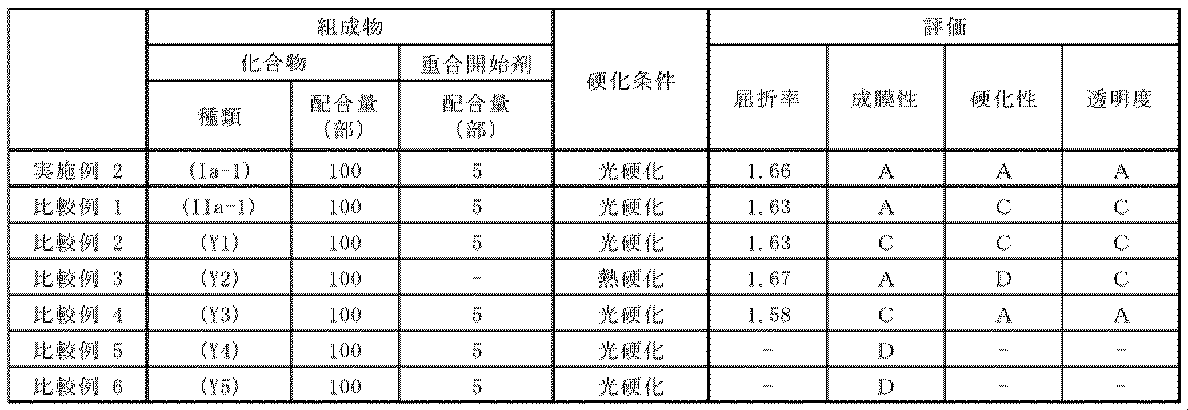
組成物における配合成分の種類及びそれらの添加量を表1に示すとおりとしたこと以外は、実施例1と同様にして液状の組成物を得た。比較例1~6の組成物を目視したところ透明であり、配合成分が均一に溶解されていることが確認された。
組成物における配合成分の種類及びそれらの添加量を表1に示すとおりとしたこと以外は、実施例1と同様にして液状の組成物を得た。比較例1~6の組成物を目視したところ透明であり、配合成分が均一に溶解されていることが確認された。
表1に示される配合成分の略称の詳細は次のとおりである。
〔1〕(Ia-1):式(Ia-1)で表される化合物
〔2〕(IIa-1):式(IIa-1)で表される化合物(日本化薬株式会社製のナフトール-クレゾールノボラック型エポキシ樹脂「NC-7000L」)
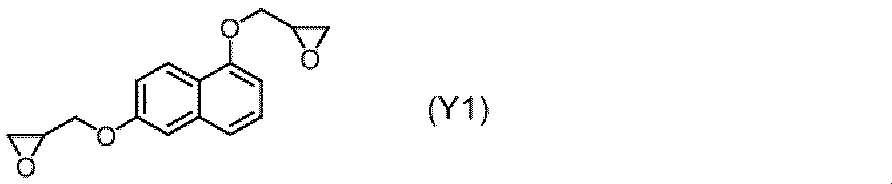
〔3〕(Y1):式(Y1)で表される化合物(1,6-ビス(グリシジルオキシ)ナフタレン、DIC株式会社製「EPICLON HP-4032D」)
〔4〕(Y2):式(Y2)で表される化合物(ポリ(1-ビニルナフタレン)、シグマアルドリッチ社製)

〔5〕(Y3):式(Y3)で表される化合物(ビスフェノールAジグリシジルエーテル、DIC社製「EPICLON EXA-850CRP」)

〔6〕(Y4):式(Y4)で表される化合物(2,2’-ジグリシジルオキシ-1,1’-ビナフタレン、スガイ化学工業株式会社製「DGOBINL」)

〔7〕(Y5):式(Y5)で表される化合物(9-ビニルカルバゾール、TCI社製)

〔1〕(Ia-1):式(Ia-1)で表される化合物
〔2〕(IIa-1):式(IIa-1)で表される化合物(日本化薬株式会社製のナフトール-クレゾールノボラック型エポキシ樹脂「NC-7000L」)
〔3〕(Y1):式(Y1)で表される化合物(1,6-ビス(グリシジルオキシ)ナフタレン、DIC株式会社製「EPICLON HP-4032D」)
〔4〕(Y2):式(Y2)で表される化合物(ポリ(1-ビニルナフタレン)、シグマアルドリッチ社製)
〔5〕(Y3):式(Y3)で表される化合物(ビスフェノールAジグリシジルエーテル、DIC社製「EPICLON EXA-850CRP」)
〔6〕(Y4):式(Y4)で表される化合物(2,2’-ジグリシジルオキシ-1,1’-ビナフタレン、スガイ化学工業株式会社製「DGOBINL」)
〔7〕(Y5):式(Y5)で表される化合物(9-ビニルカルバゾール、TCI社製)
[評価試験]
(1)成膜性
上記で調製した組成物を、無アルカリガラス(Eagle XG 厚み0.7mm、コーニング社製)上に約3cc滴下し、1000rpm、20秒の条件でスピンコーター(MS-B100、ミカサ製)を用いてスピンコートして、塗布層を形成した。実施例2、比較例1、2、4~6については塗布層が形成された無アルカリガラス板を60℃で2分間加熱した。比較例3については塗布層が形成された無アルカリガラス板を200℃で3分間加熱した。
(1)成膜性
上記で調製した組成物を、無アルカリガラス(Eagle XG 厚み0.7mm、コーニング社製)上に約3cc滴下し、1000rpm、20秒の条件でスピンコーター(MS-B100、ミカサ製)を用いてスピンコートして、塗布層を形成した。実施例2、比較例1、2、4~6については塗布層が形成された無アルカリガラス板を60℃で2分間加熱した。比較例3については塗布層が形成された無アルカリガラス板を200℃で3分間加熱した。
得られた塗布膜を観察して、以下の評価基準に従って組成物の成膜性を評価した。結果を表1に示す。穴あき欠陥とは塗布膜に直径1mm以上の穴状の無アルカリガラス板露出部が生じた状態を指す。
A:無色透明であり、穴あき欠陥及び白濁のどちらもない
C:穴あき欠陥がある
D:白濁している
A:無色透明であり、穴あき欠陥及び白濁のどちらもない
C:穴あき欠陥がある
D:白濁している
(2)化合物の屈折率
式(Ia-1)で表される化合物、式(IIa-1)で表される化合物、式(Y2)で表される化合物、及び式(Y3)で表される化合物について、下記手順に従って波長550nmにおける化合物の屈折率を算出した。
式(Ia-1)で表される化合物、式(IIa-1)で表される化合物、式(Y2)で表される化合物、及び式(Y3)で表される化合物について、下記手順に従って波長550nmにおける化合物の屈折率を算出した。
式(Ia-1)で表される化合物、式(IIa-1)で表される化合物、式(Y2)で表される化合物、又は式(Y3)で表される化合物100質量部、及び溶剤としてのシクロペンタノン310質量部をフラスコに入れ、攪拌して液状の組成物を得た。組成物を目視したところ透明であり、配合成分が均一に溶解されていることが確認された。上記で調製した組成物を、無アルカリガラス(Eagle XG 厚み0.7mm、コーニング社製)上に約3cc滴下し、1000rpm、20秒の条件でスピンコーター(MS-B100、ミカサ製)を用いてスピンコートして、塗布層を形成した。塗布層が形成された無アルカリガラス板を60℃で5分間加熱し溶媒を乾燥させ、溶媒を含まない塗布膜が形成された無アルカリガラスを得た。触針式膜厚計(DekTak XT、Bruker製)で無アルカリガラス上の塗布膜の膜厚を測定したところ1.5μmであった。
塗布膜が形成された無アルカリガラスについて、積分球ユニット(ISV-922、日本分光製)付き可視紫外分光光度計(V-650、日本分光製)を用いて、波長300nmから800nmにおける透過スペクトルと反射スペクトルを測定した。透過スペクトルと反射スペクトルから反射スペクトルの干渉による増減を減算処理して平滑化して得られた真の反射スペクトルのうち、波長550nmの値と無アルカリガラス(EagleXG、コーニング製)の屈折率から波長550nmにおける塗布膜の屈折率をフレネルの公式(ヘクト光学I原著5版、丸善出版、2018年、p.209-p.226)に基づいて算出した。結果を以下に示す。
式(Ia-1)で表される化合物の屈折率 :1.66
式(IIa-1)で表される化合物の屈折率:1.63
式(Y2)で表される化合物の屈折率 :1.67
式(Y3)で表される化合物の屈折率 :1.58
式(Ia-1)で表される化合物の屈折率 :1.66
式(IIa-1)で表される化合物の屈折率:1.63
式(Y2)で表される化合物の屈折率 :1.67
式(Y3)で表される化合物の屈折率 :1.58
(3)硬化物の屈折率
上記で調製した組成物を、無アルカリガラス(Eagle XG 厚み0.7mm、コーニング社製)上に約3cc滴下し、1000rpm、20秒の条件でスピンコーター(MS-B100、ミカサ製)を用いてスピンコートして、塗布層を形成した。塗布層が形成された無アルカリガラス板を60℃で2分間加熱した。次に、塗布層が形成された無アルカリガラス板に高圧水銀灯プロキシミティUV露光装置(UV-3300SC、ウシオ製)を用いて大気雰囲気中、1000mJ/cm2の照射エネルギーで露光した。続いて、露光後の塗布層が形成された無アルカリガラス板を120℃で5分間加熱して、硬化膜が形成された無アルカリガラスを得た。触針式膜厚計(DekTak XT、Bruker製)で無アルカリガラス上の硬化膜の膜厚を測定したところ1.5μmであった。
上記で調製した組成物を、無アルカリガラス(Eagle XG 厚み0.7mm、コーニング社製)上に約3cc滴下し、1000rpm、20秒の条件でスピンコーター(MS-B100、ミカサ製)を用いてスピンコートして、塗布層を形成した。塗布層が形成された無アルカリガラス板を60℃で2分間加熱した。次に、塗布層が形成された無アルカリガラス板に高圧水銀灯プロキシミティUV露光装置(UV-3300SC、ウシオ製)を用いて大気雰囲気中、1000mJ/cm2の照射エネルギーで露光した。続いて、露光後の塗布層が形成された無アルカリガラス板を120℃で5分間加熱して、硬化膜が形成された無アルカリガラスを得た。触針式膜厚計(DekTak XT、Bruker製)で無アルカリガラス上の硬化膜の膜厚を測定したところ1.5μmであった。
硬化膜が形成された無アルカリガラスについて、積分球ユニット(ISV-922、日本分光製)付き可視紫外分光光度計(V-650、日本分光製)を用いて、波長300nmから800nmにおける透過スペクトルと反射スペクトルを測定した。透過スペクトルと反射スペクトルから反射スペクトルの干渉による増減を減算処理して平滑化して得られた真の反射スペクトルのうち、波長550nmの値と無アルカリガラス(EagleXG、コーニング製)の屈折率から波長550nmにおける硬化膜の屈折率をフレネルの公式(ヘクト光学I原著5版、丸善出版、2018年、p.209-p.226)に基づいて算出した。結果を表1に示す。
(4)硬化性
上記で調製した組成物を、無アルカリガラス(Eagle XG 厚み0.7mm、コーニング社製)上に約3cc滴下し、1000rpm、20秒の条件でスピンコーター(MS-B100、ミカサ製)を用いてスピンコートして、塗布層を形成した。塗布層が形成された無アルカリガラス板を60℃で2分間加熱した。次に、塗布層が形成された無アルカリガラス板に高圧水銀灯プロキシミティUV露光装置(UV-3300SC、ウシオ製)を用いて大気雰囲気中、1000mJ/cm2の照射エネルギーで露光した。続いて、露光後の塗布層が形成された無アルカリガラス板を120℃で5分間加熱して、硬化膜が形成された無アルカリガラスを得た。触針式膜厚計(DekTak XT、Bruker製)で無アルカリガラス上の硬化膜の膜厚を測定したところ1.5μmであった。
上記で調製した組成物を、無アルカリガラス(Eagle XG 厚み0.7mm、コーニング社製)上に約3cc滴下し、1000rpm、20秒の条件でスピンコーター(MS-B100、ミカサ製)を用いてスピンコートして、塗布層を形成した。塗布層が形成された無アルカリガラス板を60℃で2分間加熱した。次に、塗布層が形成された無アルカリガラス板に高圧水銀灯プロキシミティUV露光装置(UV-3300SC、ウシオ製)を用いて大気雰囲気中、1000mJ/cm2の照射エネルギーで露光した。続いて、露光後の塗布層が形成された無アルカリガラス板を120℃で5分間加熱して、硬化膜が形成された無アルカリガラスを得た。触針式膜厚計(DekTak XT、Bruker製)で無アルカリガラス上の硬化膜の膜厚を測定したところ1.5μmであった。
得られた硬化膜を用いて、以下の評価基準に従って組成物の硬化性を評価した。結果を表1に示す。硬化性は、23℃のアセトンに、硬化膜が形成された無アルカリガラスを10分間浸漬し、浸漬前後の硬化膜の外観変化と浸漬前後の膜厚保持率(膜厚保持率=浸漬後膜厚÷浸漬前膜厚)によって評価した。
A:外観変化がなく、膜厚保持率が100%以下95%以上
B:外観変化がなく、膜厚保持率が95%未満90%以上
C:外観変化がなく、膜厚保持率が90%未満
D:膜厚保持率に関わらず、浸漬後に硬化膜が白濁した
A:外観変化がなく、膜厚保持率が100%以下95%以上
B:外観変化がなく、膜厚保持率が95%未満90%以上
C:外観変化がなく、膜厚保持率が90%未満
D:膜厚保持率に関わらず、浸漬後に硬化膜が白濁した
(5)硬化膜の透明度
上記(3)で形成した硬化膜について以下の評価基準に従って透明度を評価した。結果を表1に示す。透明度は波長420nmの内部透過率(%)により評価した。波長420nmの内部透過率(%)は、界面反射を無視した真の透過率値であり、硬化膜が形成された無アルカリガラスについて、波長420nmの透過率(%)及び反射率(%)を積分球ユニット(ISV-922、日本分光製)付き可視紫外分光光度計(V-650、日本分光製)で測定し、下記式
波長420nmの内部透過率=100×波長420nmの透過率÷(100-波長420nmの反射率)
により算出した。
A:内部透過率が100%以下98%以上
B:内部透過率が98%未満95%以上
C:内部透過率が95%未満
(6)物性測定用フィルム(物性測定用硬化物)の作製
下記に従い、物性測定用フィルム(硬化物)を作製した。
下記に従い、物性測定用フィルム(硬化物)を作製した。
(6-1)物性測定用フィルム-1
式(Ib-1)で表される化合物 100質量部、式(Ia-1)で表される化合物 5質量部、重合開始剤(アンモニウム塩タイプの熱カチオン重合開始剤(KING INDUSTRIES INC.製「CXC-1821」) 1質量部、及び溶剤としてのプロピレングリコールモノメチルエーテルアセテート 50質量部をフラスコに入れ、攪拌して液状の組成物を得た。組成物を目視したところ透明であり、配合成分が均一に溶解されていることが確認された。
この組成物を、ポリイミドフィルム上に滴下し、アプリケーターで塗布して塗布層を形成した。塗布層が形成されたフィルムを120℃30分、加熱した。加熱後、得られたフィルム(物性測定用フィルム-1)の膜厚は260μmであった。
(6-2)物性測定用組成物-2
式(Ib-1)で表される化合物 50質量部、式(Ia-1)で表される化合物 50質量部、重合開始剤(アンモニウム塩タイプの熱カチオン重合開始剤(KING INDUSTRIES INC.製「CXC-1821」 1質量部、及び溶剤としてのプロピレングリコールモノメチルエーテルアセテート 50質量部をフラスコに入れ、攪拌して液状の組成物を得た。組成物を目視したところ透明であり、配合成分が均一に溶解されていることが確認された。
この組成物を、ポリイミドフィルム上に滴下し、アプリケーターで塗布して塗布層を形成した。塗布層が形成されたフィルムを120℃で30分、加熱した。加熱後、得られたフィルム(物性測定用フィルム-2)の膜厚は150μmであった。
(7)線熱膨張係数(CTE)
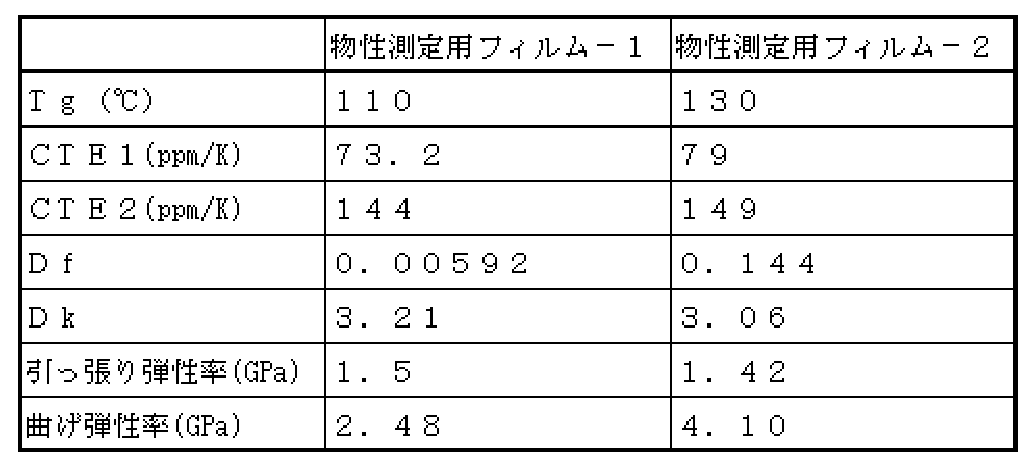
上記で得られた物性測定用フィルム-1、又は物性測定用フィルム-2のCTE測定は、熱機械分析装置(TMA)を用いて、下記条件で測定を行い、25℃からTgまで(CTE1とする)とTgから170℃におけるCTE(CTE2とする)におけるCTEを算出した。また、ガラス転移温度(Tg)を測定した。結果を表2に示す。
装置:(株)日立ハイテクサイエンス製 TMA/SS7100
荷重:50.0mN
温度プログラム:20℃から200℃まで5℃/分の速度で昇温
試験片:直方体。長さ40mm。幅5mm。厚さは物性測定用組成物-1では260μm、物性測定用組成物-2では150μm
上記で得られた物性測定用フィルム-1、又は物性測定用フィルム-2のCTE測定は、熱機械分析装置(TMA)を用いて、下記条件で測定を行い、25℃からTgまで(CTE1とする)とTgから170℃におけるCTE(CTE2とする)におけるCTEを算出した。また、ガラス転移温度(Tg)を測定した。結果を表2に示す。
装置:(株)日立ハイテクサイエンス製 TMA/SS7100
荷重:50.0mN
温度プログラム:20℃から200℃まで5℃/分の速度で昇温
試験片:直方体。長さ40mm。幅5mm。厚さは物性測定用組成物-1では260μm、物性測定用組成物-2では150μm
(8)誘電正接(Df)及び比誘電率(Dk)
上記で得られた物性測定用フィルム-1、又は物性測定用フィルム-2から50mm×50mmの測定サンプルを切り出し、Df及びDkを以下の条件で測定した。25℃/55%RHで24時間サンプルを調湿した後に、測定を行った。結果を表2に示す。
装置:アンリツ(株)製 コンパクトUSBベクトルネットワークアナライザ(製品名:MS46122B)
(株)エーイーティー製空洞共振器(TEモード 10GHzタイプ)
測定周波数:10GHz
測定雰囲気:23℃/50%RH
上記で得られた物性測定用フィルム-1、又は物性測定用フィルム-2から50mm×50mmの測定サンプルを切り出し、Df及びDkを以下の条件で測定した。25℃/55%RHで24時間サンプルを調湿した後に、測定を行った。結果を表2に示す。
装置:アンリツ(株)製 コンパクトUSBベクトルネットワークアナライザ(製品名:MS46122B)
(株)エーイーティー製空洞共振器(TEモード 10GHzタイプ)
測定周波数:10GHz
測定雰囲気:23℃/50%RH
(9)引っ張り弾性率
上記で得られた物性測定用フィルム-1、又は物性測定用フィルム-2について、チャック間距離22mm、速度10mm/分の条件で引張試験を実施し、S-S曲線を測定し、その傾きから25℃、55%R.H.における引っ張り弾性率(GPa)を算出した。結果を表2に示す。
試験片:ダンベル試験片形状 幅4mm、長さ50mm
装置:(株)島津製作所製「オートグラフAG-IS」
上記で得られた物性測定用フィルム-1、又は物性測定用フィルム-2について、チャック間距離22mm、速度10mm/分の条件で引張試験を実施し、S-S曲線を測定し、その傾きから25℃、55%R.H.における引っ張り弾性率(GPa)を算出した。結果を表2に示す。
試験片:ダンベル試験片形状 幅4mm、長さ50mm
装置:(株)島津製作所製「オートグラフAG-IS」
(10)曲げ弾性率
上記で得られた物性測定用フィルム-1、又は物性測定用フィルム-2について、下部支点間距離20mm、速度1mm/分の条件で3点曲げ試験を実施し、S-S曲線を測定し、その傾きから25℃、55%R.H.における曲げ弾性率(GPa)を算出した。結果を表2に示す。
試験片:幅10mm、長さ80mm
装置:(株)島津製作所製「オートグラフAG-IS」
上記で得られた物性測定用フィルム-1、又は物性測定用フィルム-2について、下部支点間距離20mm、速度1mm/分の条件で3点曲げ試験を実施し、S-S曲線を測定し、その傾きから25℃、55%R.H.における曲げ弾性率(GPa)を算出した。結果を表2に示す。
試験片:幅10mm、長さ80mm
装置:(株)島津製作所製「オートグラフAG-IS」
Claims (10)
- 式(I)で表される化合物。
[式(I)中、
Rは1価の炭化水素基を表し、Rが複数ある場合、複数のRは同一であっても異なっていてもよい。
nは平均値で1以上の数を表す。
AはO原子又はS原子を表す。複数あるAは同一であっても異なっていてもよいが、少なくとも1つのAはS原子である。] - Aの総数に対するS原子であるAの数の比が平均値で0.5以上である、請求項1に記載の化合物。
- 請求項1に記載の化合物を含む組成物。
- 重合抑制剤をさらに含む、請求項3に記載の組成物。
- 請求項1もしくは2に記載の化合物又は請求項3もしくは4に記載の組成物の硬化物。
- 請求項5に記載の硬化物を含む表示装置。
- 請求項5に記載の硬化物を含む固体撮像素子。
- 請求項1もしくは2に記載の化合物又は請求項3もしくは4に記載の組成物を含む封止材料。
- 請求項1もしくは2に記載の化合物又は請求項3もしくは4に記載の組成物を含む絶縁材料。
- 請求項1又は2に記載の化合物の製造方法であって、
式(II)
[式(II)中、R及びnは前記と同じ意味を表す。]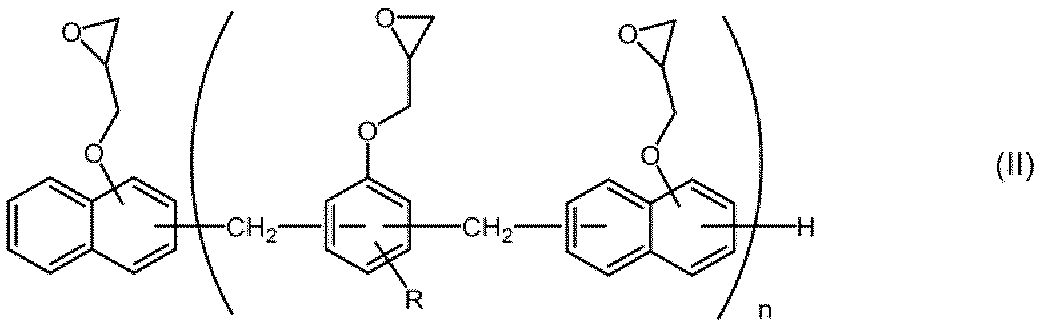
で表される化合物と硫化剤との反応により、前記式(I)で表される化合物を得る工程
を含む、製造方法。
Applications Claiming Priority (2)
| Application Number | Priority Date | Filing Date | Title |
|---|---|---|---|
| JP2022-140255 | 2022-09-02 | ||
| JP2022140255 | 2022-09-02 |
Publications (1)
| Publication Number | Publication Date |
|---|---|
| WO2024048635A1 true WO2024048635A1 (ja) | 2024-03-07 |
Family
ID=90099618
Family Applications (1)
| Application Number | Title | Priority Date | Filing Date |
|---|---|---|---|
| PCT/JP2023/031426 Ceased WO2024048635A1 (ja) | 2022-09-02 | 2023-08-30 | 化合物及びその製造方法 |
Country Status (3)
| Country | Link |
|---|---|
| JP (1) | JP2024035817A (ja) |
| TW (1) | TW202419502A (ja) |
| WO (1) | WO2024048635A1 (ja) |
Citations (4)
| Publication number | Priority date | Publication date | Assignee | Title |
|---|---|---|---|---|
| JP2010212630A (ja) * | 2009-03-12 | 2010-09-24 | Sekisui Chem Co Ltd | バックコンタクト型太陽電池用非導電性ペースト |
| WO2012144594A1 (ja) * | 2011-04-21 | 2012-10-26 | 旭化成ケミカルズ株式会社 | エピスルフィド化合物を製造する方法 |
| JP2013014671A (ja) * | 2011-07-01 | 2013-01-24 | Hitachi Chemical Co Ltd | 樹脂組成物シート、金属箔付樹脂組成物シート、メタルベース配線板材料、メタルベース配線板、及び電子部材 |
| JP2019035060A (ja) * | 2017-08-21 | 2019-03-07 | 味の素株式会社 | 樹脂組成物 |
-
2023
- 2023-08-30 JP JP2023139922A patent/JP2024035817A/ja active Pending
- 2023-08-30 WO PCT/JP2023/031426 patent/WO2024048635A1/ja not_active Ceased
- 2023-08-31 TW TW112133008A patent/TW202419502A/zh unknown
Patent Citations (4)
| Publication number | Priority date | Publication date | Assignee | Title |
|---|---|---|---|---|
| JP2010212630A (ja) * | 2009-03-12 | 2010-09-24 | Sekisui Chem Co Ltd | バックコンタクト型太陽電池用非導電性ペースト |
| WO2012144594A1 (ja) * | 2011-04-21 | 2012-10-26 | 旭化成ケミカルズ株式会社 | エピスルフィド化合物を製造する方法 |
| JP2013014671A (ja) * | 2011-07-01 | 2013-01-24 | Hitachi Chemical Co Ltd | 樹脂組成物シート、金属箔付樹脂組成物シート、メタルベース配線板材料、メタルベース配線板、及び電子部材 |
| JP2019035060A (ja) * | 2017-08-21 | 2019-03-07 | 味の素株式会社 | 樹脂組成物 |
Non-Patent Citations (1)
| Title |
|---|
| KAWAI, KOICHI: "New Multifunctional Epoxy Resins", NETTO WAKU PORIMA - JOURNAL OF NETWORK POLYMER, JAPAN, GOSEI JYUSHI KOGYO KYOKAI, TOKYO, JP, vol. 33, no. 6, 1 January 2012 (2012-01-01), JP , pages 354 - 360, XP009553350, ISSN: 1342-0577, DOI: 10.11364/networkpolymer.33.354 * |
Also Published As
| Publication number | Publication date |
|---|---|
| TW202419502A (zh) | 2024-05-16 |
| JP2024035817A (ja) | 2024-03-14 |
Similar Documents
| Publication | Publication Date | Title |
|---|---|---|
| WO2024048632A1 (ja) | 化合物及びその製造方法 | |
| WO2024048631A1 (ja) | 化合物及びその製造方法 | |
| WO2024171777A1 (ja) | 化合物及びその製造方法、組成物、硬化物、表示装置、並びに固体撮像素子 | |
| JP2015214684A (ja) | アルカリ可溶性樹脂、それを含む感光性樹脂組成物、それを用いた硬化物、並びにその硬化物を構成成分として含むタッチパネル及びカラーフィルター | |
| KR20250057881A (ko) | 조성물, 경화물, 표시 장치, 및 고체 촬상 소자 | |
| KR20250060253A (ko) | 조성물, 경화물, 표시 장치, 및 고체 촬상 소자 | |
| JP2024035817A (ja) | 化合物及びその製造方法 | |
| CN120386140A (zh) | 化合物、组合物及其固化物、成型物、显示装置以及固体摄像器件 | |
| KR20260017980A (ko) | 조성물 및 그 경화물, 성형물, 표시 장치, 및 고체 촬상 소자 | |
| WO2024252940A1 (ja) | 化合物及びそれを含む組成物 | |
| KR20260032366A (ko) | 조성물 및 그 경화물, 성형물, 표시 장치, 고체 촬상 소자, 및 도광판 | |
| KR20250156641A (ko) | 조성물 및 그 경화물, 성형물, 표시 장치, 및 고체 촬상 소자 | |
| TW202545910A (zh) | 化合物、組合物及其硬化物、成形物、顯示裝置、以及固體攝像元件 | |
| JP2026047002A (ja) | 組成物及びその硬化物、成形物、表示装置、固体撮像素子、並びに導光板 | |
| WO2026079414A1 (ja) | 組成物及びその硬化物、成形物、表示装置、並びに固体撮像素子 | |
| KR20250156640A (ko) | 조성물 및 그 경화물, 성형물, 표시 장치, 및 고체 촬상 소자 | |
| JP2026022583A (ja) | 組成物及びその硬化物、成形物、表示装置、並びに固体撮像素子 | |
| KR20250142790A (ko) | 조성물 및 그 경화물, 성형물, 표시 장치, 및 고체 촬상 소자 | |
| JP2025075012A (ja) | 組成物及びその硬化物、成形物、表示装置、並びに固体撮像素子 | |
| JP2025074696A (ja) | 化合物及びその製造方法、組成物、硬化物、表示装置、固体撮像素子、封止材料、並びに絶縁材料 |
Legal Events
| Date | Code | Title | Description |
|---|---|---|---|
| 121 | Ep: the epo has been informed by wipo that ep was designated in this application |
Ref document number: 23860397 Country of ref document: EP Kind code of ref document: A1 |
|
| NENP | Non-entry into the national phase |
Ref country code: DE |
|
| 122 | Ep: pct application non-entry in european phase |
Ref document number: 23860397 Country of ref document: EP Kind code of ref document: A1 |