WO2024048375A1 - 窒化ホウ素粉末及び樹脂組成物 - Google Patents
窒化ホウ素粉末及び樹脂組成物 Download PDFInfo
- Publication number
- WO2024048375A1 WO2024048375A1 PCT/JP2023/030197 JP2023030197W WO2024048375A1 WO 2024048375 A1 WO2024048375 A1 WO 2024048375A1 JP 2023030197 W JP2023030197 W JP 2023030197W WO 2024048375 A1 WO2024048375 A1 WO 2024048375A1
- Authority
- WO
- WIPO (PCT)
- Prior art keywords
- boron nitride
- less
- nitride powder
- pore volume
- differential
- Prior art date
- Legal status (The legal status is an assumption and is not a legal conclusion. Google has not performed a legal analysis and makes no representation as to the accuracy of the status listed.)
- Ceased
Links
Images


Classifications
-
- C—CHEMISTRY; METALLURGY
- C01—INORGANIC CHEMISTRY
- C01B—NON-METALLIC ELEMENTS; COMPOUNDS THEREOF; METALLOIDS OR COMPOUNDS THEREOF NOT COVERED BY SUBCLASS C01C
- C01B21/00—Nitrogen; Compounds thereof
- C01B21/06—Binary compounds of nitrogen with metals, with silicon, or with boron, or with carbon, i.e. nitrides; Compounds of nitrogen with more than one metal, silicon or boron
- C01B21/064—Binary compounds of nitrogen with metals, with silicon, or with boron, or with carbon, i.e. nitrides; Compounds of nitrogen with more than one metal, silicon or boron with boron
-
- C—CHEMISTRY; METALLURGY
- C08—ORGANIC MACROMOLECULAR COMPOUNDS; THEIR PREPARATION OR CHEMICAL WORKING-UP; COMPOSITIONS BASED THEREON
- C08L—COMPOSITIONS OF MACROMOLECULAR COMPOUNDS
- C08L101/00—Compositions of unspecified macromolecular compounds
Definitions
- the present invention relates to boron nitride powder and a resin composition.
- Boron nitride has lubricity, high thermal conductivity, and insulation properties, and is used in various applications such as solid lubricants, mold release materials, raw materials for cosmetics, heat dissipation materials, and heat-resistant insulating sintered bodies. used for a purpose.
- Patent Document 1 describes a hexagonal boron nitride powder made of primary particles of hexagonal boron nitride that can impart high thermal conductivity and high dielectric strength to a resin composition obtained by filling a resin. Contains aggregated particles, has a BET specific surface area of 0.7 to 1.3 m 2 /g, and has an oil absorption amount of 80 g/100 g or less measured based on JIS K 5101-13-1. A hexagonal boron nitride powder is disclosed.
- the main objective of the present invention is to provide a novel boron nitride powder.
- the present invention provides the following [1] to [5].
- [1] A boron nitride powder containing boron nitride particles having pores, which has a differential pore volume of 1.2 ⁇ m or less in a curve of differential pore volume against pore radius measured by a mercury porosimeter.
- [2] The boron nitride powder according to [1], wherein the cumulative pore volume in a range where the pore radius is 1.2 ⁇ m or less is 0.2 ml/g or less.
- [3] The boron nitride powder according to [1] or [2], which has a maximum value of 0.4 ml/g or less.
- [4] The boron nitride powder according to any one of [1] to [3], which has a maximum value of 0.1 ml/g or more.
- [5] A resin composition containing the boron nitride powder according to any one of [1] to [4] and a resin.
- a novel boron nitride powder can be provided.
- 1 is a graph of X-ray diffraction measurement results of boron nitride powder obtained in Example 1.
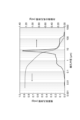
- 1 is a pore size distribution of boron nitride powder obtained in Example 1.
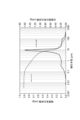
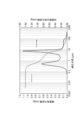
- 1 is a pore size distribution of boron nitride powder obtained in Example 2. It is a pore size distribution of the boron nitride powder obtained in Example 3.
- 1 is a pore size distribution of boron nitride powder obtained in Comparative Example 1.
- the boron nitride powder according to the present embodiment includes boron nitride particles having pores, and may be an aggregate of a plurality of boron nitride particles (boron nitride particles having pores).
- Each of the plurality of boron nitride particles is composed of, for example, a plurality of boron nitride pieces.
- the pores of the boron nitride particles may be formed between a plurality of boron nitride pieces.
- the boron nitride pieces are made of boron nitride and may have, for example, a scale-like shape.
- the plurality of boron nitride pieces may be in physical contact with each other or may be chemically bonded.
- the fact that the plurality of boron nitride pieces are chemically bonded to each other can be confirmed by using SEM, since no boundaries between the boron nitride pieces are observed at the joints between the boron nitride pieces.
- the boron nitride particles may have a cross section that includes a region where a plurality of boron nitride pieces are stacked. The fact that multiple boron nitride pieces are stacked is confirmed by observing the cross section of the boron nitride particles using SEM, and confirming that the multiple boron nitride pieces are arranged side by side in the thickness direction of the boron nitride pieces. can.
- the average thickness of the boron nitride pieces may be 0.5 ⁇ m or more, 1 ⁇ m or more, or 1.5 ⁇ m or more, and 5 ⁇ m or less.
- the average length of the boron nitride pieces in the longitudinal direction may be, for example, 1 ⁇ m or more and 10 ⁇ m or less.
- the average thickness and average length in the longitudinal direction of the boron nitride pieces can be determined by using an SEM to observe the cross section of the boron nitride particles at a magnification of 1,000 times using an image analysis software (for example, "Mac- It is defined as the average value of the thickness and longitudinal length of 40 boron nitride pieces measured in the SEM image.
- the boron nitride particles may consist essentially of boron nitride. That the boron nitride particles are substantially composed only of boron nitride can be confirmed by detecting only a peak derived from boron nitride in X-ray diffraction measurement.
- Boron nitride powder has a pore radius of 1.2 ⁇ m or less in a curve of differential pore volume versus pore radius (horizontal axis: pore radius, vertical axis: differential pore volume) measured using a mercury porosimeter. It has a maximum value (peak) within the range. The maximum value is a maximum value such that the slope of the straight line connecting the point where the differential pore volume curve rises and the point where the differential pore volume reaches the maximum value is 0.8 or less. .
- the differential pore volume at the point where the curve of differential pore volume rises in the range where the pore radius is 1.2 ⁇ m or less is defined as V 1 (ml/ g)
- the pore radius when the differential pore volume is V 1 is R 1 ( ⁇ m)
- the differential pore volume at the point where the differential pore volume reaches its maximum value is V 2 (ml/g)
- the boron nitride powder has a peak such that the slope of the above straight line (the slope a expressed by the above formula (1)) is 0.8 or less in the curve of the differential pore volume against the pore radius.
- Each boron nitride particle in the boron nitride powder has few pores with a small pore radius, so the volume of voids existing inside the particle is also small. Therefore, the boron nitride powder contains dense boron nitride particles, and when such boron nitride powder is mixed with a resin and used as a thermally conductive material (e.g., a heat dissipating material), it is different from the conventional boron nitride powder. It can exhibit higher thermal conductivity than powder.
- the curve of differential pore volume versus pore radius is determined using a mercury porosimeter based on the mercury intrusion method in accordance with JIS R1655:2003.
- the differential pore volume curve is obtained by the following procedure. Specifically, first, the differential pore volume with respect to pressure is measured in the range of 0.40 to 60,000 psia using a mercury porosimeter. At this time, in a logarithmic graph with the logarithm of pressure on the horizontal axis and the differential pore volume on the vertical axis, set the pressure values at which the differential pore volume is measured to be 130 points equally spaced on the horizontal axis. .
- the point at which the differential pore volume curve rises is defined as the point where the differential pore volume becomes 0.02 ml/g. That is, the differential pore volume V 1 in equation (1) is 0.02 ml/g, and the pore radius R 1 is the pore radius when the differential pore volume is 0.02 ml/g. In a range where the differential pore volume is less than 0.02 ml/g, the influence of measurement noise is large, so the point where the differential pore volume becomes 0.02 ml/g is the point at which the differential pore volume curve rises. defined.
- the point with the smallest pore radius among the multiple points is the differential fine. It is defined as the point where the pore volume curve rises.
- the maximum value (peak) of the differential pore volume is defined as a measurement point on the curve of the differential pore volume versus the pore radius at which the change in the differential pore volume with an increase in the pore radius changes from positive to negative. That is, among the measurement points of the differential pore volume, the m-th measurement point (pore radius: R m-1 ( ⁇ m), differential pore volume: V m-1 (ml/g)), the m-th measurement point measurement point (pore radius: R m ( ⁇ m), differential pore volume: V m (ml/g)), and the m+1th measurement point (pore radius: R m+1 ( ⁇ m), differential pore volume :V m+1 (ml/g)), the m-th measurement point that satisfies R m-1 ⁇ R m ⁇ R m+1 and also satisfies V m - V m-1 > 0 and V m +1 - V m ⁇ 0 is defined as the point where the differential pore volume reaches
- V m+1 V m
- V m the m+nth measurement point (pore radius: R m+n ( ⁇ m), differential pore volume: V m+n (ml/g), n: 2 or more, and V m ⁇ V m+n )
- V m + n - V m ⁇ 0 is the differential It is defined as the point where the pore volume reaches its maximum value.
- the point where the pore radius is the smallest among the multiple points is the point of the differential pore volume. It is defined as the point where the maximum value is reached.
- the pore radius R1 may be 0.01 ⁇ m or more, 0.02 ⁇ m or more, 0.04 ⁇ m or more, 0.05 ⁇ m or more, or 0.06 ⁇ m or more, and 0.3 ⁇ m or less, 0.2 ⁇ m or less, 0.15 ⁇ m Below, it may be 0.13 ⁇ m or less, 0.12 ⁇ m or less, or 0.11 ⁇ m or less.
- the maximum value V2 is 0.4 ml/g or less, 0.35 ml/g or less, 0.32 ml/g or less, 0.3 ml/g or less, 0.28 ml/g or less, or 0.26 ml/g or less.
- the amount may be 0.1 ml/g or more, 0.15 ml/g or more, 0.19 ml/g or more, or 0.2 ml/g or more.
- the pore radius R2 may be 0.2 ⁇ m or more, 0.3 ⁇ m or more, 0.4 ⁇ m or more, 0.5 ⁇ m or more, or 0.6 ⁇ m or more, and 1.1 ⁇ m or less, 1 ⁇ m or less, 0.9 ⁇ m or less, It may be 0.8 ⁇ m or less, or 0.7 ⁇ m or less.
- the slope of the above straight line may be 0.7 or less, 0.6 or less, or 0.5 or less, 0.1 or more, 0.2 or more, 0. It may be greater than or equal to .3, or greater than or equal to 0.35.
- the curve of the differential pore volume against the pore radius shows that the change (decrease) in the differential pore volume occurs in the range from the pore radius R2 , where the differential pore volume becomes the maximum value V2 , to the pore radius 1.2 ⁇ m. It may be a gentle curve.
- the minimum value of the differential pore volume in the range from the pore radius R 2 where the differential pore volume becomes the maximum value V 2 to the pore radius 1.2 ⁇ m is set as V 3 (ml/g), and the differential pore volume is
- the cumulative pore volume of boron nitride powder in a range where the pore radius measured by a mercury porosimeter is 1.2 ⁇ m or less is 0.2 ml/g or less, 0.19 ml/g or less, or 0.18 ml/g or less. It's good.
- the cumulative pore volume in the range where the pore radius of boron nitride powder is 1.2 ⁇ m or less can be regarded as the total amount of voids in each boron nitride particle constituting the boron nitride powder. The smaller the integrated pore volume in the following range, the more dense the boron nitride particles become.
- the cumulative pore volume in the range where the pore radius measured by a mercury porosimeter is 1.2 ⁇ m or less is 0.1 ml/g or more, 0.12 ml/g or more, 0.14 ml/g or more, 0.15 ml/g or more , 0.16 ml/g or more, or 0.17 ml/g or more.
- the cumulative pore volume of the boron nitride powder in a range where the pore radius measured by a mercury porosimeter is 500 ⁇ m or less may be 1 ml/g or less, 0.95 ml/g or less, or 0.91 ml/g or less.
- the cumulative pore volume may be 0.7 ml/g or more, 0.8 ml/g or more, 0.85 ml/g or more, 0.88 ml/g or more, or 0.9 ml/g or more.
- the bulk density of the boron nitride powder may be 0.7 g/ml or more, 0.72 g/ml or more, 0.74 g/ml or more, or 0.75 g/ml or more, and 0.9 g/ml or less, 0. It may be 8 g/ml or less, or 0.75 g/ml or less.
- the average particle diameter of the boron nitride powder may be, for example, 10 ⁇ m or more, 20 ⁇ m or more, or 30 ⁇ m or more, and 100 ⁇ m or less, 80 ⁇ m or less, or 60 ⁇ m or less.
- the average particle size of boron nitride powder means the particle size (D50) at which the volume cumulative particle size distribution is 50%, and can be measured by a laser diffraction scattering method.
- the BET specific surface area of boron nitride powder can be measured by the BET multipoint method using nitrogen gas in accordance with JIS Z 8830:2013.
- the BET specific surface area of the boron nitride powder may be 1 m 2 /g or more, 2 m 2 /g or more, or 2.5 m 2 /g or more, and 5 m 2 /g or less, 4 m 2 /g or less, or 3.5 m 2 /g or less.
- the method for producing the above boron nitride powder will be explained below.
- the boron nitride powder is obtained by, for example, nitriding boron carbide particles while hot isostatic pressing (also called “hot isostatic pressing") to obtain boron carbonitride particles (nitriding step); It can be manufactured by a method comprising a step (decarburization step) of decarburizing boron carbonitride particles to obtain boron nitride powder containing boron nitride particles. That is, another embodiment of the present invention is a method for producing such boron nitride powder.
- the method for producing the boron nitride particles is not limited to the above method.
- Boron carbide particles can be produced, for example, by a known production method. For example, there is a method in which boric acid and acetylene black are mixed and then heated in an inert gas atmosphere at 1800 to 2400° C. for 1 to 10 hours to obtain bulk boron carbide particles.
- the bulk boron carbide particles obtained by this method may be subjected to pulverization, sieving, washing, impurity removal, drying, etc. as appropriate.
- the average particle diameter of the boron carbide particles may be, for example, 5 ⁇ m or more, 10 ⁇ m or more, or 15 ⁇ m or more, and 80 ⁇ m or less, 60 ⁇ m or less, or 40 ⁇ m or less.
- the average particle diameter of boron carbide particles means the particle diameter (D50) at which the volume cumulative particle size distribution is 50%, and can be measured by a laser diffraction scattering method.
- boron carbide particles are nitrided to obtain boron carbonitride particles by heating the container filled with boron carbide particles while applying hot isostatic pressure in an atmosphere that allows the nitriding reaction to proceed.
- the container may be, for example, a carbon crucible.
- the hot isostatic pressing can be performed using, for example, a hot isostatic pressing device (for example, manufactured by Kobe Steel, Ltd.).
- the atmosphere in which the nitriding reaction proceeds in the nitriding step may be a nitriding gas atmosphere that nitrides boron carbide particles.
- the nitriding gas may be nitrogen gas, ammonia gas, etc. Nitrogen gas may be used from the viewpoint of ease of nitriding boron carbide particles and from the viewpoint of cost.
- the nitriding gas may be used alone or in combination of two or more, and the proportion of nitrogen gas in the nitriding gas may be 95% by volume or more, 99% by volume or more, or 99.9% by volume or more.
- the pressure in the nitriding step may be 50 MPa or more, 70 MPa or more, or 100 MPa or more.
- the pressure in the nitriding step may be 200 MPa or less or 150 MPa or less.
- the heating temperature in the nitriding step may be 1600° C. or higher or 1700° C. or higher from the viewpoint of sufficiently nitriding the boron carbide particles.
- the heating temperature in the nitriding step may be 2200°C or lower or 2000°C or lower.
- the time for pressurizing and heating in the nitriding step may be 30 minutes, 45 minutes or more, or 1 hour or more from the viewpoint of sufficiently nitriding the boron carbide particles.
- the time for applying pressure and heating in the nitriding step may be 30 hours or less, 20 hours or less, or 10 hours or less.
- the boron carbonitride particles are decarburized by heating a mixture containing the boron carbonitride particles obtained in the nitriding step and a boron source in a container.
- the container may be, for example, a boron nitride crucible.
- Boron sources include boric acid, boron oxide, or mixtures thereof.
- the mixture may further contain other additives used in the art, if necessary.
- the mixing ratio of boron carbonitride particles and boron source is selected as appropriate.
- boric acid or boron oxide is used as a boron source, the proportion of boric acid or boron oxide may be, for example, 50 parts by mass or more or 80 parts by mass or more, and 300 parts by mass or less, based on 100 parts by mass of boron carbonitride. Or it may be 200 parts by mass or less.
- the atmosphere in the decarburization process may be a normal pressure (atmospheric pressure) atmosphere or a pressurized atmosphere.
- the pressure in the decarburization step may be, for example, 0.5 MPa or less or 0.3 MPa or less, and may be 0.01 MPa or more or 0.03 MPa or more.
- the temperature is raised to a predetermined temperature (a temperature at which decarburization can start), and then the temperature is further raised to a holding temperature at the predetermined temperature.
- the predetermined temperature temperature at which decarburization can start
- the rate of temperature increase from a predetermined temperature (temperature at which decarburization can be started) to the holding temperature may be, for example, 5° C./min or less, 4° C./min or less, 3° C./min or less, or 2° C./min or less.
- the holding temperature may be 1800° C. or higher or 2000° C. or higher from the viewpoint of facilitating good particle growth.
- the holding temperature may be 2200°C or less or 2100°C or less.
- the holding time at the holding temperature may be, for example, 0.5 hours or more, 1 hour or more, 3 hours or more, or 5 hours or more, from the viewpoint of good particle growth.
- the holding time at the holding temperature may be, for example, 40 hours or less, 30 hours or less, or 20 hours or less.
- the boron nitride particles (boron nitride powder) obtained as described above may be subjected to a step (classification step) of classifying them using a sieve so as to obtain boron nitride powder having a desired particle size.
- the boron nitride powder described above is suitable for use in, for example, heat dissipation members.
- the boron nitride powder is used, for example, as a resin composition mixed with a resin.
- another embodiment of the present invention is a resin composition containing a resin and the above boron nitride powder.
- the content of the boron nitride powder mentioned above is 50% by volume or more and 55% by volume based on the total volume of the resin composition, from the viewpoint of improving the thermal conductivity of the resin composition and easily obtaining excellent heat dissipation performance.
- the content may be 60% by volume or more, 65% by volume or more, or 70% by volume or more.
- the content of the boron nitride powder is 85% by volume or less, 80% by volume or less, based on the total volume of the resin composition, from the viewpoint of suppressing the generation of pores during molding and the decrease in insulation and mechanical strength. Or it may be 75 volume% or less.
- the resin examples include epoxy resin, silicone resin, silicone rubber, acrylic resin, phenol resin, melamine resin, urea resin, unsaturated polyester, fluororesin, polyimide, polyamideimide, polyetherimide, polybutylene terephthalate, polyethylene terephthalate, Polyphenylene ether, polyphenylene sulfide, fully aromatic polyester, polysulfone, liquid crystal polymer, polyether sulfone, polycarbonate, maleimide modified resin, ABS (acrylonitrile-butadiene-styrene) resin, AAS (acrylonitrile-acrylic rubber/styrene) resin, and AES ( Examples include acrylonitrile, ethylene, propylene, diene rubber (styrene) resin.
- the content of the resin may be 15% by volume or more, 20% by volume or more, or 25% by volume or more, and 50% by volume or less, 45% by volume or less, 40% by volume or less, based on the total volume of the resin composition. , 35% by volume or less, or 30% by volume or less.
- the resin composition may further contain a curing agent for curing the resin.
- the curing agent is appropriately selected depending on the type of resin.
- examples of the curing agent include phenol novolac compounds, acid anhydrides, amino compounds, and imidazole compounds.
- the content of the curing agent may be, for example, 0.5 parts by mass or more or 1.0 parts by mass or more, and 15 parts by mass or less or 10 parts by mass or less, based on 100 parts by mass of the resin.
- the resin composition may further contain other components.
- Other components may include a curing accelerator (curing catalyst), a coupling agent, a wetting and dispersing agent, a surface conditioner, and the like.
- curing accelerators examples include phosphorus curing accelerators such as tetraphenylphosphonium tetraphenylborate and triphenyl phosphate, imidazole curing accelerators such as 2-phenyl-4,5-dihydroxymethylimidazole, and trifluorocarbon curing accelerators.
- phosphorus curing accelerators such as tetraphenylphosphonium tetraphenylborate and triphenyl phosphate
- imidazole curing accelerators such as 2-phenyl-4,5-dihydroxymethylimidazole
- trifluorocarbon curing accelerators examples include amine curing accelerators such as boron monoethylamine.
- Examples of the coupling agent include silane coupling agents, titanate coupling agents, and aluminate coupling agents.
- Chemical bonding groups contained in these coupling agents include vinyl groups, epoxy groups, amino groups, methacrylic groups, mercapto groups, and the like.
- wetting and dispersing agents include phosphate ester salts, carboxylic esters, polyesters, acrylic copolymers, block copolymers, and the like.
- surface conditioners examples include acrylic surface conditioners, silicone surface conditioners, vinyl surface conditioners, fluorine surface conditioners, and the like.
- Example 1 Boron carbide particles with an average particle diameter (D50) of 26 ⁇ m were filled in a carbon crucible, and heated at 1800° C. and 196 MPa in a nitrogen gas atmosphere using a hot isostatic press device (manufactured by Kobe Steel). Boron carbide particles were nitrided by heating and pressurizing by HIP method for .5 hours to obtain boron carbonitride particles (B 4 CN 4 ). After mixing 100 parts by mass of the obtained boron carbonitride particles and 150 parts by mass of boric acid (60% by mass of boric acid) using a Henschel mixer, the mixture was filled into a boron nitride crucible and heated using a resistance heating furnace.
- D50 average particle diameter
- Coarse particles were obtained by heating under conditions of a holding temperature of 2000° C., 0.03 MPa, and a holding time of 5 hours in a nitrogen gas atmosphere at normal pressure. After the coarse particles were crushed in a mortar for 10 minutes, they were classified using a nylon sieve with a mesh size of 175 ⁇ m. As a result, a particle aggregate (powder) was obtained.
- Example 2 A powder was obtained in the same manner as in Example 1, except that the amount of boric acid was changed to 100 parts by mass (50% by mass of boric acid).
- Example 3 A powder was obtained in the same manner as in Example 1, except that the boric acid was changed to 81.8 parts by mass (boric acid 45% by mass).
- Example 1 The same as in Example 1 except that boron carbide particles were nitrided by heating and pressurizing in a nitrogen gas atmosphere at 2000° C. and 0.85 MPa for 25 hours using a resistance heating furnace to obtain boron carbonitride particles. Boron nitride powder was obtained.
- the volume curve is shown in FIG. From the obtained differential pore volume curve, the above-mentioned pore radii R 1 , R 2 and R 3 , differential pore volumes V 2 and V 3 , straight line slopes a and b, and pore radius up to 1.2 ⁇ m are determined. The cumulative pore volume and the cumulative pore volume up to a pore radius of 500 ⁇ m were calculated. The results are shown in Table 1. Further, the bulk density of the boron nitride powder was calculated from the density of the boron nitride particles (2.26 g/ml) and the integrated pore volume.
- press heating and pressing was performed for 60 minutes at a temperature of 150° C. and a pressure of 160 kg/cm 2 to produce a 0.5 mm sheet-like heat dissipating material.
- a measurement sample with a size of 10 mm x 10 mm was cut out from the prepared heat dissipation material, and the thermal diffusivity A (m 2 /sec) of the measurement sample was measured using a laser flash method using a xenon flash analyzer (manufactured by NETZSCH, LFA447NanoFlash). was measured. Further, the specific gravity B (kg/m 3 ) of the measurement sample was measured by the Archimedes method.
- the thermal conductivity of the heat dissipating material produced using the boron nitride powder obtained in Example 1 was 22 W/(m K), and the thermal conductivity of the heat dissipating material produced using the boron nitride powder obtained in Comparative Example 1 was The thermal conductivity was 17 W/(m ⁇ K).
Landscapes
- Chemical & Material Sciences (AREA)
- Organic Chemistry (AREA)
- Health & Medical Sciences (AREA)
- Chemical Kinetics & Catalysis (AREA)
- Medicinal Chemistry (AREA)
- Polymers & Plastics (AREA)
- Inorganic Chemistry (AREA)
- Compositions Of Macromolecular Compounds (AREA)
Priority Applications (2)
| Application Number | Priority Date | Filing Date | Title |
|---|---|---|---|
| JP2024544157A JPWO2024048375A1 (https=) | 2022-08-30 | 2023-08-22 | |
| CN202380062838.0A CN119790016A (zh) | 2022-08-30 | 2023-08-22 | 氮化硼粉末及树脂组合物 |
Applications Claiming Priority (2)
| Application Number | Priority Date | Filing Date | Title |
|---|---|---|---|
| JP2022-137087 | 2022-08-30 | ||
| JP2022137087 | 2022-08-30 |
Publications (1)
| Publication Number | Publication Date |
|---|---|
| WO2024048375A1 true WO2024048375A1 (ja) | 2024-03-07 |
Family
ID=90099694
Family Applications (1)
| Application Number | Title | Priority Date | Filing Date |
|---|---|---|---|
| PCT/JP2023/030197 Ceased WO2024048375A1 (ja) | 2022-08-30 | 2023-08-22 | 窒化ホウ素粉末及び樹脂組成物 |
Country Status (4)
| Country | Link |
|---|---|
| JP (1) | JPWO2024048375A1 (https=) |
| CN (1) | CN119790016A (https=) |
| TW (1) | TW202417371A (https=) |
| WO (1) | WO2024048375A1 (https=) |
Citations (5)
| Publication number | Priority date | Publication date | Assignee | Title |
|---|---|---|---|---|
| JPH05319934A (ja) * | 1992-05-21 | 1993-12-03 | Toshiba Corp | 窒化ホウ素の製造方法およびmhd発電機 |
| JPH0753269A (ja) * | 1993-08-12 | 1995-02-28 | Agency Of Ind Science & Technol | 被覆高圧型窒化硼素焼結体及びその製造法 |
| JPH0753282A (ja) * | 1993-08-12 | 1995-02-28 | Agency Of Ind Science & Technol | 被覆高圧型窒化硼素準微粒子、並びに被覆高圧型窒化硼素準微粒子焼結体及びその製造法 |
| WO2021079912A1 (ja) * | 2019-10-23 | 2021-04-29 | デンカ株式会社 | 窒化ホウ素粉末及びその製造方法、炭窒化ホウ素粉末、並びに、複合材及び放熱部材 |
| JP2022106113A (ja) * | 2021-01-06 | 2022-07-19 | デンカ株式会社 | 窒化ホウ素粉末、熱伝導性樹脂組成物、放熱シート及び電子部品構造体 |
-
2023
- 2023-08-22 WO PCT/JP2023/030197 patent/WO2024048375A1/ja not_active Ceased
- 2023-08-22 CN CN202380062838.0A patent/CN119790016A/zh active Pending
- 2023-08-22 JP JP2024544157A patent/JPWO2024048375A1/ja active Pending
- 2023-08-28 TW TW112132214A patent/TW202417371A/zh unknown
Patent Citations (5)
| Publication number | Priority date | Publication date | Assignee | Title |
|---|---|---|---|---|
| JPH05319934A (ja) * | 1992-05-21 | 1993-12-03 | Toshiba Corp | 窒化ホウ素の製造方法およびmhd発電機 |
| JPH0753269A (ja) * | 1993-08-12 | 1995-02-28 | Agency Of Ind Science & Technol | 被覆高圧型窒化硼素焼結体及びその製造法 |
| JPH0753282A (ja) * | 1993-08-12 | 1995-02-28 | Agency Of Ind Science & Technol | 被覆高圧型窒化硼素準微粒子、並びに被覆高圧型窒化硼素準微粒子焼結体及びその製造法 |
| WO2021079912A1 (ja) * | 2019-10-23 | 2021-04-29 | デンカ株式会社 | 窒化ホウ素粉末及びその製造方法、炭窒化ホウ素粉末、並びに、複合材及び放熱部材 |
| JP2022106113A (ja) * | 2021-01-06 | 2022-07-19 | デンカ株式会社 | 窒化ホウ素粉末、熱伝導性樹脂組成物、放熱シート及び電子部品構造体 |
Also Published As
| Publication number | Publication date |
|---|---|
| JPWO2024048375A1 (https=) | 2024-03-07 |
| CN119790016A (zh) | 2025-04-08 |
| TW202417371A (zh) | 2024-05-01 |
Similar Documents
| Publication | Publication Date | Title |
|---|---|---|
| CN115697898B (zh) | 氮化硼粒子、树脂组合物及树脂组合物的制造方法 | |
| US20230106510A1 (en) | Boron nitride sintered body, composite, methods for producing same, and heat dissipation member | |
| WO2024048375A1 (ja) | 窒化ホウ素粉末及び樹脂組成物 | |
| JP7357180B1 (ja) | 窒化ホウ素粒子及び放熱シート | |
| KR102935933B1 (ko) | 질화붕소 분말 및 수지 조성물 | |
| JP7606559B2 (ja) | 窒化ホウ素粒子、窒化ホウ素粉末、樹脂組成物、及び樹脂組成物の製造方法 | |
| WO2021200724A1 (ja) | 窒化ホウ素焼結体、複合体及びこれらの製造方法、並びに放熱部材 | |
| JP7106033B1 (ja) | 窒化ホウ素粒子、樹脂組成物、及び樹脂組成物の製造方法 | |
| WO2024048377A1 (ja) | シートの製造方法及びシート | |
| CN115768720B (zh) | 氮化硼粒子、树脂组合物及树脂组合物的制造方法 | |
| WO2024048376A1 (ja) | 窒化ホウ素粒子、窒化ホウ素粒子の製造方法、及び樹脂組成物 | |
| JP7804810B1 (ja) | 窒化ホウ素粉末、無機フィラー及び窒化ホウ素粉末の製造方法 | |
| JP7357181B1 (ja) | 窒化ホウ素粒子及び放熱シート | |
| JP7796274B1 (ja) | 窒化ホウ素粉末、及び無機フィラー | |
| JP7158634B2 (ja) | 中空部を有する窒化ホウ素粒子を含有するシート | |
| KR102954517B1 (ko) | 질화 붕소 입자, 수지 조성물, 및 수지 조성물의 제조 방법 | |
| JP2025137039A (ja) | 窒化ホウ素粉末及び樹脂組成物 | |
| US20230295399A1 (en) | Boron nitride particles, method for producing boron nitride particles, resin composition, and method for producing resin composition | |
| TW202547780A (zh) | 氮化硼粉末及樹脂組成物 | |
| JP2023054801A (ja) | 複合材料、放熱材及び放熱材の製造方法 |
Legal Events
| Date | Code | Title | Description |
|---|---|---|---|
| 121 | Ep: the epo has been informed by wipo that ep was designated in this application |
Ref document number: 23860138 Country of ref document: EP Kind code of ref document: A1 |
|
| WWE | Wipo information: entry into national phase |
Ref document number: 2024544157 Country of ref document: JP |
|
| WWE | Wipo information: entry into national phase |
Ref document number: 202380062838.0 Country of ref document: CN |
|
| NENP | Non-entry into the national phase |
Ref country code: DE |
|
| WWP | Wipo information: published in national office |
Ref document number: 202380062838.0 Country of ref document: CN |
|
| 122 | Ep: pct application non-entry in european phase |
Ref document number: 23860138 Country of ref document: EP Kind code of ref document: A1 |