WO2024024720A1 - 細胞培養用の培地 - Google Patents
細胞培養用の培地 Download PDFInfo
- Publication number
- WO2024024720A1 WO2024024720A1 PCT/JP2023/026987 JP2023026987W WO2024024720A1 WO 2024024720 A1 WO2024024720 A1 WO 2024024720A1 JP 2023026987 W JP2023026987 W JP 2023026987W WO 2024024720 A1 WO2024024720 A1 WO 2024024720A1
- Authority
- WO
- WIPO (PCT)
- Prior art keywords
- medium
- acetylcysteine
- cysteine
- agent
- liquid medium
- Prior art date
- Legal status (The legal status is an assumption and is not a legal conclusion. Google has not performed a legal analysis and makes no representation as to the accuracy of the status listed.)
- Ceased
Links
Images


Classifications
-
- C—CHEMISTRY; METALLURGY
- C12—BIOCHEMISTRY; BEER; SPIRITS; WINE; VINEGAR; MICROBIOLOGY; ENZYMOLOGY; MUTATION OR GENETIC ENGINEERING
- C12N—MICROORGANISMS OR ENZYMES; COMPOSITIONS THEREOF; PROPAGATING, PRESERVING, OR MAINTAINING MICROORGANISMS; MUTATION OR GENETIC ENGINEERING; CULTURE MEDIA
- C12N5/00—Undifferentiated human, animal or plant cells, e.g. cell lines; Tissues; Cultivation or maintenance thereof; Culture media therefor
- C12N5/0018—Culture media for cell or tissue culture
-
- C—CHEMISTRY; METALLURGY
- C12—BIOCHEMISTRY; BEER; SPIRITS; WINE; VINEGAR; MICROBIOLOGY; ENZYMOLOGY; MUTATION OR GENETIC ENGINEERING
- C12N—MICROORGANISMS OR ENZYMES; COMPOSITIONS THEREOF; PROPAGATING, PRESERVING, OR MAINTAINING MICROORGANISMS; MUTATION OR GENETIC ENGINEERING; CULTURE MEDIA
- C12N5/00—Undifferentiated human, animal or plant cells, e.g. cell lines; Tissues; Cultivation or maintenance thereof; Culture media therefor
- C12N5/06—Animal cells or tissues; Human cells or tissues
- C12N5/0602—Vertebrate cells
- C12N5/0681—Cells of the genital tract; Non-germinal cells from gonads
- C12N5/0682—Cells of the female genital tract, e.g. endometrium; Non-germinal cells from ovaries, e.g. ovarian follicle cells
-
- C—CHEMISTRY; METALLURGY
- C07—ORGANIC CHEMISTRY
- C07K—PEPTIDES
- C07K16/00—Immunoglobulins [IG], e.g. monoclonal or polyclonal antibodies
-
- C—CHEMISTRY; METALLURGY
- C12—BIOCHEMISTRY; BEER; SPIRITS; WINE; VINEGAR; MICROBIOLOGY; ENZYMOLOGY; MUTATION OR GENETIC ENGINEERING
- C12N—MICROORGANISMS OR ENZYMES; COMPOSITIONS THEREOF; PROPAGATING, PRESERVING, OR MAINTAINING MICROORGANISMS; MUTATION OR GENETIC ENGINEERING; CULTURE MEDIA
- C12N15/00—Mutation or genetic engineering; DNA or RNA concerning genetic engineering, vectors, e.g. plasmids, or their isolation, preparation or purification; Use of hosts therefor
- C12N15/09—Recombinant DNA-technology
- C12N15/63—Introduction of foreign genetic material using vectors; Vectors; Use of hosts therefor; Regulation of expression
- C12N15/74—Vectors or expression systems specially adapted for prokaryotic hosts other than E. coli, e.g. Lactobacillus, Micromonospora
-
- C—CHEMISTRY; METALLURGY
- C12—BIOCHEMISTRY; BEER; SPIRITS; WINE; VINEGAR; MICROBIOLOGY; ENZYMOLOGY; MUTATION OR GENETIC ENGINEERING
- C12N—MICROORGANISMS OR ENZYMES; COMPOSITIONS THEREOF; PROPAGATING, PRESERVING, OR MAINTAINING MICROORGANISMS; MUTATION OR GENETIC ENGINEERING; CULTURE MEDIA
- C12N15/00—Mutation or genetic engineering; DNA or RNA concerning genetic engineering, vectors, e.g. plasmids, or their isolation, preparation or purification; Use of hosts therefor
- C12N15/09—Recombinant DNA-technology
- C12N15/63—Introduction of foreign genetic material using vectors; Vectors; Use of hosts therefor; Regulation of expression
- C12N15/79—Vectors or expression systems specially adapted for eukaryotic hosts
- C12N15/80—Vectors or expression systems specially adapted for eukaryotic hosts for fungi
-
- C—CHEMISTRY; METALLURGY
- C12—BIOCHEMISTRY; BEER; SPIRITS; WINE; VINEGAR; MICROBIOLOGY; ENZYMOLOGY; MUTATION OR GENETIC ENGINEERING
- C12N—MICROORGANISMS OR ENZYMES; COMPOSITIONS THEREOF; PROPAGATING, PRESERVING, OR MAINTAINING MICROORGANISMS; MUTATION OR GENETIC ENGINEERING; CULTURE MEDIA
- C12N15/00—Mutation or genetic engineering; DNA or RNA concerning genetic engineering, vectors, e.g. plasmids, or their isolation, preparation or purification; Use of hosts therefor
- C12N15/09—Recombinant DNA-technology
- C12N15/63—Introduction of foreign genetic material using vectors; Vectors; Use of hosts therefor; Regulation of expression
- C12N15/79—Vectors or expression systems specially adapted for eukaryotic hosts
- C12N15/80—Vectors or expression systems specially adapted for eukaryotic hosts for fungi
- C12N15/81—Vectors or expression systems specially adapted for eukaryotic hosts for fungi for yeasts
-
- C—CHEMISTRY; METALLURGY
- C12—BIOCHEMISTRY; BEER; SPIRITS; WINE; VINEGAR; MICROBIOLOGY; ENZYMOLOGY; MUTATION OR GENETIC ENGINEERING
- C12N—MICROORGANISMS OR ENZYMES; COMPOSITIONS THEREOF; PROPAGATING, PRESERVING, OR MAINTAINING MICROORGANISMS; MUTATION OR GENETIC ENGINEERING; CULTURE MEDIA
- C12N5/00—Undifferentiated human, animal or plant cells, e.g. cell lines; Tissues; Cultivation or maintenance thereof; Culture media therefor
- C12N5/0018—Culture media for cell or tissue culture
- C12N5/0037—Serum-free medium, which may still contain naturally-sourced components
-
- C—CHEMISTRY; METALLURGY
- C12—BIOCHEMISTRY; BEER; SPIRITS; WINE; VINEGAR; MICROBIOLOGY; ENZYMOLOGY; MUTATION OR GENETIC ENGINEERING
- C12N—MICROORGANISMS OR ENZYMES; COMPOSITIONS THEREOF; PROPAGATING, PRESERVING, OR MAINTAINING MICROORGANISMS; MUTATION OR GENETIC ENGINEERING; CULTURE MEDIA
- C12N5/00—Undifferentiated human, animal or plant cells, e.g. cell lines; Tissues; Cultivation or maintenance thereof; Culture media therefor
- C12N5/06—Animal cells or tissues; Human cells or tissues
-
- C—CHEMISTRY; METALLURGY
- C12—BIOCHEMISTRY; BEER; SPIRITS; WINE; VINEGAR; MICROBIOLOGY; ENZYMOLOGY; MUTATION OR GENETIC ENGINEERING
- C12N—MICROORGANISMS OR ENZYMES; COMPOSITIONS THEREOF; PROPAGATING, PRESERVING, OR MAINTAINING MICROORGANISMS; MUTATION OR GENETIC ENGINEERING; CULTURE MEDIA
- C12N5/00—Undifferentiated human, animal or plant cells, e.g. cell lines; Tissues; Cultivation or maintenance thereof; Culture media therefor
- C12N5/10—Cells modified by introduction of foreign genetic material
-
- C—CHEMISTRY; METALLURGY
- C12—BIOCHEMISTRY; BEER; SPIRITS; WINE; VINEGAR; MICROBIOLOGY; ENZYMOLOGY; MUTATION OR GENETIC ENGINEERING
- C12P—FERMENTATION OR ENZYME-USING PROCESSES TO SYNTHESISE A DESIRED CHEMICAL COMPOUND OR COMPOSITION OR TO SEPARATE OPTICAL ISOMERS FROM A RACEMIC MIXTURE
- C12P21/00—Preparation of peptides or proteins
- C12P21/02—Preparation of peptides or proteins having a known sequence of two or more amino acids, e.g. glutathione
-
- C—CHEMISTRY; METALLURGY
- C07—ORGANIC CHEMISTRY
- C07K—PEPTIDES
- C07K2317/00—Immunoglobulins specific features
- C07K2317/10—Immunoglobulins specific features characterized by their source of isolation or production
- C07K2317/14—Specific host cells or culture conditions, e.g. components, pH or temperature
-
- C—CHEMISTRY; METALLURGY
- C12—BIOCHEMISTRY; BEER; SPIRITS; WINE; VINEGAR; MICROBIOLOGY; ENZYMOLOGY; MUTATION OR GENETIC ENGINEERING
- C12N—MICROORGANISMS OR ENZYMES; COMPOSITIONS THEREOF; PROPAGATING, PRESERVING, OR MAINTAINING MICROORGANISMS; MUTATION OR GENETIC ENGINEERING; CULTURE MEDIA
- C12N2500/00—Specific components of cell culture medium
- C12N2500/30—Organic components
- C12N2500/32—Amino acids
Definitions
- the present invention relates to a culture medium.
- the invention also relates to a method for culturing cells in a culture medium or a method for producing recombinant proteins.
- the present invention also relates to a method or agent for improving the stability of a culture medium.
- Japanese Patent Application Publication No. 2000-507812 describes a stable medium supplement component useful for a medium that supports the proliferation of hematopoietic cells in culture.
- the present invention can provide a medium with high stability.
- Feed medium containing 10-40mM L-cysteine and 1-40mM N-acetylcysteine [2] A feed medium containing L-cysteine and N-acetylcysteine, wherein the molar concentration ratio of N-acetylcysteine to L-cysteine is 0.04 to 1.0. [3] The feed medium according to [1] or [2], containing 15 to 30 mM L-cysteine. [4] The feed medium according to any one of [1] to [3], containing 2 to 10 mM N-acetylcysteine.
- [5] The feed medium according to any one of [1] to [4], wherein the molar concentration ratio of N-acetylcysteine to L-cysteine is 0.04 to 1.0.
- [6] The feed medium according to any one of [1] to [5], wherein the molar concentration ratio of N-acetylcysteine to L-cysteine is 0.1 to 0.4.
- the feed medium according to any one of [1] to [6] which has a pH of 5.0 to 9.0.
- [8] The feed medium according to any one of [1] to [7], which has a pH of 6.5 to 7.6.
- [28] The method according to [27], wherein the antibody or antigen-binding fragment thereof is derived from IgG.
- [29] The method according to any one of [21] to [28], wherein there is no precipitation of medium components due to heat load.
- a method for producing a recombinant protein which comprises adding the feed medium according to any one of [1] to [10] to a medium for culturing cells capable of producing a recombinant protein.
- the cell is an animal cell, a plant cell, a bacterial cell, or a fungal cell.
- the method according to [30] or [31], wherein the cells are animal cells.
- a method for improving the stability of a liquid medium which comprises adding L-cysteine and/or N-cysteine such that the concentration of L-cysteine is 10 to 40 mM and the concentration of N-acetylcysteine is 1 to 40 mM.
- a method comprising adding acetylcysteine to a medium comprising: L-cysteine and/or A method comprising adding N-acetylcysteine to a culture medium.
- a method for suppressing the production and/or precipitation of cystine in a liquid medium comprising: suppressing the production and/or precipitation of cystine in a liquid medium, comprising: A method comprising adding cysteine and/or N-acetylcysteine to a medium.
- a method for suppressing the production and/or precipitation of cystine in a liquid medium comprising: suppressing the production and/or precipitation of cystine in a liquid medium, comprising: - A method comprising adding cysteine and/or N-acetylcysteine to the medium.
- An agent containing L-cysteine and N-acetylcysteine for improving the stability of a liquid medium wherein the liquid medium after adding the agent contains 10 to 40 mM L-cysteine and 1 to 40 mM L-cysteine.
- An agent containing L-cysteine and N-acetylcysteine for improving the stability of a liquid medium the molar concentration of N-acetylcysteine relative to L-cysteine in the liquid medium after the addition of the agent
- An agent containing L-cysteine and N-acetylcysteine for suppressing the production and/or precipitation of cystine in a liquid medium wherein the liquid medium after adding the agent contains 10 to 40 mM L-cysteine. and 1-40mM N-acetylcysteine.
- An agent containing L-cysteine and N-acetylcysteine for suppressing the production and/or precipitation of cystine in a liquid medium the agent containing L-cysteine and N-acetylcysteine in the liquid medium after addition of the agent.
- [62] The agent according to any one of [51] to [61], wherein the molar concentration ratio of N-acetylcysteine to L-cysteine in the liquid medium after adding the agent is 0.1 to 0.4. .
- [63] The agent according to any one of [51] to [62], wherein the pH of the liquid medium after adding the agent is 5.0 to 9.0.
- [65] Contains N-acetylcysteine and L-cysteine for preparing the feed medium according to any one of [1] to [10] or the powder medium according to any one of [11] to [20].
- [66] A medium additive containing N-acetylcysteine for preparing the feed medium according to any one of [1] to [10] or the powder medium according to any one of [11] to [20].
- the present invention can improve the stability of the culture medium.
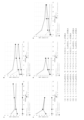
- FIG. 1 is a graph showing changes over time in the concentrations of L-cysteine, cystine, N-acetylcysteine, N-acetylcystine, and N,N'-diacetylcystine in a liquid medium.
- FIG. 2 is a photograph showing the influence of N-acetylcysteine on the precipitation of medium components in a medium containing L-cysteine.
- FIG. 3 is a graph showing the effect of N-acetylcysteine on viable cell density in a medium containing L-cysteine. The living cell density on days 9 and 14 after the start of culture is shown.
- FIG. 1 is a graph showing changes over time in the concentrations of L-cysteine, cystine, N-acetylcysteine, N-acetylcystine, and N,N'-diacetylcystine in a liquid medium.
- FIG. 2 is a photograph showing the influence
- FIG. 4 is a graph showing the influence of N-acetylcysteine on the amount of antibody produced in a medium containing L-cysteine. The amount of antibody produced on days 7, 9, 11, and 14 after the start of culture is shown.
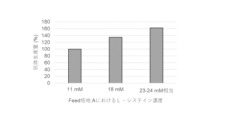
- FIG. 5 is a graph showing the influence of L-cysteine concentration on the amount of antibody produced in the culture medium. The relative value of the amount of antibody produced on the 14th day after the start of culture is shown.
- Cell culture medium in the present disclosure refers to a medium that provides a cell growth environment that is used to proliferate or maintain cells.
- Cell culture media typically contain essential and useful components for cell growth and survival.
- Feed medium in this disclosure refers to a component that is additionally added to the medium during cell culture after the cell culture process has begun. Feed media typically contain essential and useful components for achieving cell growth and survival.
- the feed medium may consist of only one of these components or may be a composition containing multiple components.
- a liquid containing only L-cysteine and/or N-acetylcysteine is also included in the feed medium.
- the feed medium may include components of cell culture medium (eg, sugars (glucose), amino acids, etc.). Note that the expression “medium” may be used to mean a cell culture medium or a feed medium, and includes both meanings.
- Feed media are typically used in cell culture by fed-batch culture.
- the fed-batch culture method involves feeding a basal medium containing all components for cell culture (including cells and all nutrients) to the culture vessel at the beginning of the culture process, and then adding feed medium continuously or in stages to the culture vessel.
- This is a culture method in which the product is added to the water.
- the basal medium is a medium used from the start of the cell culture process, and any medium that can be used as a basal medium can be used as a basal medium without particular limitation.
- Feed media are generally provided and sold in the form of liquid or powdered media. Plastic bottles and stainless steel tanks are typically used to store the feed medium, but are not limited to these.
- the timing of adding the feed medium to the culture container is not particularly limited, and may be, for example, at the start of cell culture, during the lag phase, logarithmic growth phase, stationary phase, and/or death phase.
- the feed medium may also be used in other culture methods, such as continuous culture methods.
- the continuous culture method also called the perfusion culture method, is a culture method in which an additional medium (such as a feed medium) is supplied to a culture container at a constant rate, and at the same time, the same amount of culture solution is withdrawn from the culture container.
- Non-limiting examples of components essential or useful for cell growth and survival include carbohydrates such as sugars (e.g. glucose), lipids, nucleic acids, vitamins (e.g. thiamine), essential and non-essential amino acids, ammonium Salts, nitrates, minerals (e.g. phosphorus, sulfur, potassium, magnesium, iron, magnesium and their salts), trace metals (e.g.
- animal-derived components e.g., hydrolysates
- vegetable proteins e.g., plant-derived components
- microbial proteins e.g., hydrolysates
- nutrients/growth factors include hormones, enzyme cofactors, pH buffers, sodium chloride, calcium chloride, antibiotics, preservatives (eg, antioxidants), and pH indicators (eg, phenol red).
- Non-limiting examples of essential and non-essential amino acids include alanine, cysteine, aspartic acid, glutamic acid, phenylalanine, glycine, histidine, isoleucine, lysine, leucine, methionine, asparagine, proline, glutamine, arginine, serine, threonine, valine, Examples include tryptophan, tyrosine, cystine, hydroxyproline, thyroxine, phosphoserine, desmosine, ⁇ -alanine, sarcosine, ornithine, citrulline and ⁇ -aminobutyric acid, salts thereof, and hydrates thereof.
- the concentrations of essential and non-essential amino acids in the medium are appropriately selected depending on the purpose of culture and the cells.
- the total concentration of essential and non-essential amino acids contained in the medium is typically between 10 and 1000 mM.
- pH buffers include sodium carbonate buffer, potassium carbonate buffer, sodium phosphate buffer, phosphate buffer, trishydroxymethylaminomethane buffer, citric buffer, and Good's buffer ( Examples include HEPES buffers and MES buffers). If the medium includes a pH buffer, the concentration of the pH buffer is typically 10-500mM.
- the medium can be appropriately selected from commercially available media and known media described in literature, depending on the cells to be cultured and the purpose. Depending on the purpose of culture and cells, the composition may be changed, agents or medium additives may be added to the medium, or two or more types of medium may be mixed and used. Additionally, additional media, agents and/or media additives may be added to the media during cell culture.
- the medium may be a synthetic medium. Further, the medium may be a serum-free medium or an animal protein-free medium. Further, the medium may be a liquid medium or a powdered medium.
- Non-limiting examples of commercially available media include Dulbecco's Modified Eagle's Medium (DMEM), DME/F12, Eagle's Minimum Essential Medium (MEM), Basal Medium Eagle (BME), F-10 Medium, F- 12 medium, ⁇ -minimum essential medium ( ⁇ -MEM), Glasgow minimum essential medium (G-MEM), PF CHO medium, Iscove's modified Dulbecco's medium, AmpliCHO CD medium, Dynamis TM medium, EX-CELL TM Advanced TM CHO fed-batch medium , CD FortiCHO TM Medium, CP OptiCHO TM , BalanCD TM CHO Growth A Medium, ActiPro TM , RPMI-1640 (Roswell Park Memorial Institute 1640) Medium, CELLiST TM B asal Media (BASAL3, BASAL10) and Feed Media (FEED2), HyClone TM Cell Boost TM 7a Supplement, Cellvento TM Feed-200, Cellvento TM Feed-210, Cell
- Synthetic medium in the present disclosure refers to a medium prepared only with chemically defined components. Synthetic media typically contain serum and its substitutes, unpurified animal proteins, unpurified animal-derived components (e.g., hydrolysates), unpurified vegetable proteins, unpurified plant-derived components ( For example, it is a medium to which no unpurified microbial protein or unpurified microbial-derived components (for example, hydrolyzate) are added.
- “Serum-free medium” in the present disclosure refers to a medium that does not contain unconditioned or unpurified serum.
- a medium containing purified blood-derived components or animal tissue-derived components (eg, growth factors) is also included in serum-free media, as long as it does not contain unadjusted or unpurified serum.
- animal protein-free medium refers to a medium that does not contain animal proteins (for example, animal-derived proteins such as albumin, transferrin, insulin, and growth factors).
- animal protein-free medium may contain small peptides and/or oligopeptides.
- Powdered medium in the present disclosure refers to a medium in powder form. Powdered media also include media in granular form. Powdered media also include dry media. The powdered medium can be dissolved in a suitable solvent (eg, water) to form a liquid medium. Any medium in this disclosure can be prepared and provided in the form of a powdered medium.
- a suitable solvent eg, water
- Liquid medium in the present disclosure refers to a medium in liquid form. Any medium in this disclosure can be prepared and provided in the form of a liquid medium. Liquid media can also be prepared by dissolving any of the powdered media in this disclosure in a suitable solvent (eg, water). Liquid media can be used as feed media.
- a suitable solvent eg, water
- Recombinant protein in this disclosure refers to a polymer of amino acids of any length produced using any genetic recombination technique.
- the polymer may be linear or branched, may contain modified amino acids, or may contain components other than amino acids.
- Recombinant proteins may also be processed by disulfide bond formation, glycosylation, lipidation, acetylation, phosphorylation, amidation, derivatization with protecting groups, cleavage, or labeling components (e.g., radioisotopes) or drugs (e.g., toxins). , cytotoxic drugs or radioactive isotopes). All molecules that include a recombinant protein moiety as part of their structure are included in recombinant proteins in this disclosure.
- Gene recombination technology is not particularly limited as long as it is a technology for artificially manipulating genes, but a typical example is a technology for introducing a nucleic acid encoding a recombinant protein into a host cell.
- Non-limiting examples of recombinant proteins include antibodies and antigen-binding fragments thereof, antibody mimetics, immunoadhesins, enzymes, hormones, cytokines, coagulation factors (or blood coagulation-related proteins) produced using recombinant genetic techniques. , extracellular proteins as well as membrane proteins. These recombinant proteins are mainly used in pharmaceuticals, agricultural chemicals, foods, and other chemical industry fields, but are not limited to specific uses.
- Antibody in this disclosure refers to an immunoglobulin molecule that has antigen-binding properties.
- Antibodies include full-length antibodies and fragments thereof (eg, Fv, Fab, Fab', F(ab') 2 and VHH fragments) having polypeptide chains that include light and heavy chains.
- Antibodies may include heavy and/or light chains.
- the heavy and/or light chain may include a variable region (involved in recognition and binding to antigen) and a constant region (involved in localization and cell-cell interactions).
- the most common full-length antibodies contain two heavy chain constant regions (CH), two heavy chain variable regions (VH), two light chain constant regions (CL), and two light chain variable regions (VL). )including.
- Variable regions include complementarity determining regions (CDRs), which are sequences that confer antigen specificity to an antibody, and framework regions (FR).
- Antibodies include monoclonal antibodies, multispecific antibodies formed from two or more types of antibodies or antigen-binding sites (e.g., bispecific antibodies), antibody fragments with desired biological activity, and antigen-binding sites of antibodies. Included are fusion proteins that contain.
- Antibodies also include chimeric antibodies, mammalian antibodies (eg, human antibodies), mammalianized antibodies (eg, humanized antibodies), multivalent antibodies, and modified antibodies. Antibodies may be of any class (eg, IgG, IgA, IgM, IgD, IgE) and of any subclass (isotype).
- Antibodies may have undergone chemical or biological modifications, such as conjugation with other molecules (e.g., small or large molecule toxins (cytotoxic drugs) or radioactive isotopes), and these modifications
- the antibodies of the present invention also include antibodies that have been subjected to the following procedures.
- antibody mimetic refers to a protein that can specifically bind to an antigen but is not structurally related to antibodies.
- a specific example of an antibody mimetic is the Z domain (Affibody) of protein A, and a more specific example is the ZHER2 affibody.
- enzymes include alkaline phosphatase, ⁇ -lactamase, galactosidase, glucosidase, glucocerebrosidase, superoxide dismutase and DNase.
- hormones include renin, growth hormone (such as human growth hormone or bovine growth hormone), parathyroid hormone, thyroid-stimulating hormone, calcitonin, gonadotropin (such as follicle-stimulating hormone, luteinizing hormone), glucagon, insulin A chain and insulin B chain) and proinsulin.
- cytokines examples include tumor necrosis factors (e.g., TNF- ⁇ and ⁇ ), vascular endothelial growth factor (VEGF), brain-derived neurotrophic factor (BDNF), neurotrophic factors (e.g., NT-3 to NT-6), Nerve growth factor (NGF), platelet-derived growth factor (PDGF), fibroblast growth factor (e.g., aFGF, bFGF), epidermal growth factor (EGF), transforming growth factor (e.g., TGF- ⁇ , TGF- ⁇ 1- TGF- ⁇ 5), activins (e.g. activin A, activin C, activin E), insulin-like growth factors (e.g.
- TNF- ⁇ and ⁇ tumor necrosis factors
- VEGF vascular endothelial growth factor
- BDNF brain-derived neurotrophic factor
- NGF Nerve growth factor
- PDGF platelet-derived growth factor
- fibroblast growth factor e.g., aFGF, bFGF
- HGF hepatocyte growth factor
- SCF stem cell factor
- BMP bone morphogenetic protein
- RANTES erythropoietin
- EPO erythropoietin
- TPO thrombopoietin
- coagulation factors and blood coagulation-related proteins include factor VII, factor VIII, factor VIIIC, factor IX, factor X, factor XI, factor XII, tissue factor, von Willebrand factor, protein C. , protein S, plasminogen activator (e.g. urokinase, human urine or human tissue plasminogen activator (t-PA)), thrombin, prothrombin, thrombopoietin, thrombomodulin, antithrombin III, fibrinogen and serum albumin.
- plasminogen activator e.g. urokinase, human urine or human tissue plasminogen activator (t-PA)
- extracellular proteins examples include fibronectin, vitronectin, collagen, osteopontin, laminin, and fragments thereof.
- membrane proteins include membrane receptor proteins, membrane transporter proteins, membrane enzymes and cell adhesion factors, and fragments thereof.
- Recombinant proteins are not limited to the above examples, and include, for example, receptors such as the above-mentioned cytokines, transferrin, various CD proteins, tumor-related antigens (e.g., HER2, HER3 or HER4 receptors, CA125), and vaccines.
- Recombinant proteins also include viral antigens such as (eg, viral envelope proteins).
- fusion proteins containing any of the above-mentioned proteins are also included in recombinant proteins.
- having the ability to produce a recombinant protein means having the ability to produce a protein by genetic recombination technology.
- the produced recombinant protein may be secreted extracellularly (ie, into the medium) or accumulated intracellularly, but is preferably secreted extracellularly.
- a host cell can be given the ability to produce a recombinant protein by introducing a nucleic acid encoding the recombinant protein into the host cell.
- a typical cell capable of producing a recombinant protein is a cell containing a nucleic acid encoding a recombinant protein.
- Various methods are known in the art for introducing nucleic acids into host cells. In the present disclosure, any method known at the time of carrying out the present invention, including these various methods, can be arbitrarily used. A non-limiting example of such a method includes introducing a vector containing a nucleic acid encoding a recombinant protein into a host cell.
- the vector is preferably an expression vector comprising a nucleic acid encoding the recombinant protein in an expressible form (e.g. operably linked to regulatory sequences such as a promoter, enhancer, ribosome binding sequence and/or transcription termination sequence); It may also be a plasmid.
- Non-limiting examples of methods for introducing vectors into host cells include methods for physically or chemically introducing vectors into host cells by electroporation, particle gun methods, calcium phosphate methods, or lipofection; Examples include methods of infecting host cells with viral vectors.
- the nucleic acid in the vector introduced into the host cell may be integrated into the genome in the host cell by genome editing technology such as CRISPR/Cas9.
- the gene sequence on genomic DNA can be directly modified using genome editing techniques such as CRISPR/Cas9 to encode the desired recombinant protein.
- the production of the endogenous protein of interest may be controlled (for example, improved) by modifying the control sequence or the like. All proteins produced in such a manner are also included in the recombinant proteins in the present disclosure.
- Cell in this disclosure includes animal cells, plant cells, bacterial cells, and fungal cells.
- the cells are preferably established cell lines suitable for producing recombinant proteins.
- the animal cell may be a cell of any animal origin, preferably a mammal, an avian, an amphibian, a fish or an insect, more preferably a mammal or an insect, most preferably a mammal. is a cell of mammalian origin.
- Non-limiting examples of mammalian-derived cells include cells derived from humans or primates such as monkeys, and cells derived from rodents such as mice, rats, or hamsters.
- Non-limiting examples of mammalian-derived cells include HL-60 (ATCC No. CCL-240), HT-1080 (ATCC No. CCL-121), HeLa (ATCC No. CCL-2), 293 (ECACC No.85120602), Hep G2 (ATCC No.HB8065), VERO (ATCC No.CCL-1651), CV1 (ATCC No.CCL70), COS-7 (ATCC No.CRL-1651), NIH3T3 (ATCC No.CRL -1658), NS0 (ATCC No.
- BHK21 also simply referred to as BHK cells, ATCC No. CRL-10
- MDCK ATCC No. CCL-34
- cell lines and sublines derived from these cell lines for example, BHK TK- cells as a sub-line of BHK cells, CHO-K1 cells as a sub-line of CHO cells, CHO-S cells, CHO- DXB11 cells (also referred to as CHO-DUKX cells or DuxB11 cells) and CHO-DG44 cells).
- a non-limiting example of avian-derived cells includes the chicken cell line SL-29.
- Non-limiting examples of amphibian-derived cells include Xenopus oocytes.
- a non-limiting example of a fish-derived cell includes the zebrafish cell line ZF4.
- Non-limiting examples of cells derived from insects include cells derived from Spodoptera frugiperda.
- Non-limiting examples of cells derived from Spodoptera trifoliata include Sf9 cells, Sf21 cells and SF+ cells.
- the plant cells are not particularly limited as long as the collected cells and/or tissues can be cultured in liquid.
- Non-limiting examples of plant cells include plants that produce herbal medicines (e.g. saponins, alkaloids, berberine, scopolin or phytosterols) (e.g. ginseng, periwinkle, henbane, orensis or belladonna), and cosmetics/foods.
- Plants that produce raw material pigments and polysaccharides for example, anthocyanins, safflower pigments, madder pigments, saffron pigments, or flavones
- plants that produce pharmaceutical raw materials are included. .
- Bacterial cells are eubacterial (Gram-positive or Gram-negative) or archaeal cells.
- Non-limiting examples of bacterial cells include bacterial cells of the genus Escherichia (e.g., Escherichia coli), bacterial cells of the genus Bacillus (e.g., Bacillus subtilis), bacterial cells of the genus Pseudomonas (e.g., Examples include Pseudomonas fluorescens, bacterial cells of the genus Corynebacterium, and bacterial cells of the genus Lactococcus (eg, Lactococcus lactis).
- Fungal cells are large cells with differentiated organelles and a typical nucleus that belong to eukaryotes.
- Non-limiting examples of fungal cells include fungi of the genus Saccharomyces (e.g., Saccharomyces cerevisiae), fungi of the genus Schizosaccharomyces (e.g., Schizosaccharomyces) pombe) and fungi of the genus Pichia (e.g. , Pichia pastoris).
- L-cysteine in the present disclosure refers to an L-cysteine salt, a hydrate of L-cysteine, and a hydrate of L-cysteine that functions as L-cysteine in a solution (for example, a solution using water, a buffer solution, or a medium as a solvent). Contains salt hydrates. However, when referring to the concentration of L-cysteine, the concentration refers to the concentration of L-cysteine that is functional in solution. The concentration of L-cysteine in a solution is typically expressed as the concentration of L-cysteine at the time the solution is prepared (a calculated value is preferred, but an actual value immediately after preparation may be used).
- the concentration of L-cysteine means the concentration of L-cysteine at the time point when a predetermined time has elapsed after solution preparation.
- L-cysteine salts include L-cysteine hydrochloride, L-cysteine sodium salt, and L-cysteine ammonium salt.
- L-cysteine hydrates include L-cysteine hydrochloride monohydrate, L-cysteine sodium salt monohydrate, and L-cysteine ammonium salt monohydrate.
- L-cysteine it is also possible to use a combination of L-cysteine, L-cysteine salts, and hydrates thereof.
- N-acetylcysteine refers to an N-acetylcysteine salt, a hydrated form of N-acetylcysteine, which functions as N-acetylcysteine in a solution (e.g., a solution using water, a buffer solution, or a medium as a solvent). and hydrates of N-acetylcysteine salts.
- a solution e.g., a solution using water, a buffer solution, or a medium as a solvent
- the concentration refers to the concentration of N-acetylcysteine that is functional in solution.
- N-acetylcysteine may be in the L form or the D form. Further, it may be a mixture of L-form and D-form.
- the concentration of N-acetylcysteine in a solution is typically expressed as the concentration of N-acetylcysteine at the time the solution is prepared (a calculated value is preferred, but an actual value immediately after preparation may be used).
- the concentration of N-acetylcysteine means the concentration of N-acetylcysteine at the time point when a predetermined time has elapsed after solution preparation.
- N-acetylcysteine salts include N-acetylcysteine sodium salt and N-acetylcysteine ammonium salt.
- Non-limiting examples of L-cysteine hydrates include N-acetylcysteine sodium salt monohydrate and N-acetylcysteine ammonium salt monohydrate.
- N-acetylcysteine it is also possible to use a combination of N-acetylcysteine, N-acetylcysteine salts, and hydrates thereof.
- Heat load in the present disclosure refers to applying heat at a temperature that can adversely affect the medium when it is applied to the medium during preparation, storage, and/or cell culture.
- Non-limiting examples of such adverse effects include precipitation of media components in the media during preparation, storage and/or cell culture, and reduction in the yield and/or quality of recombinant proteins produced in the media. It will be done.
- Temperatures that may adversely affect the culture medium may be temperatures that the culture medium is normally capable of during preparation, storage and/or cell culture (typically 4-40°C), including higher temperatures (e.g. , 4°C to 120°C).
- Stability in the present disclosure when used with respect to a culture medium, refers to the property that physical or chemical changes do not occur or are unlikely to occur during preparation, storage, and/or cell culture. For example, if the production rate of byproducts (e.g., cystine produced from L-cysteine) in the medium is slow, or if the culture medium components (e.g., cystine) do not precipitate or the time (number of days, etc.) until they precipitate is long. In this case, it can be said that the stability of the medium is high.
- byproducts e.g., cystine produced from L-cysteine
- the culture medium components e.g., cystine
- Medium additive in this disclosure refers to any substance or composition containing a substance that is added to a medium.
- the medium additive may be one that replenishes components already present in the medium to which it is added, or it may be one that newly adds components that are not present in the medium to which it is added.
- Media additives are typically provided in liquid or powder form (including granular form). Moreover, the purpose of addition is not particularly limited.
- Each numerical range in the present disclosure includes the upper and lower limits indicated by “ ⁇ " and “from”, respectively.
- the description “A to B” or “A to B” using numerical values A and B means that the number is greater than or equal to A and less than or equal to B.
- the description of "A to B", “A to B”, or “A or more and B or less” in the numerical ranges described in stages in this disclosure independently means “A or more is preferable”.
- These lower or upper limits may be replaced with upper or lower limits of other numerical ranges.
- the lower limit or upper limit of the numerical range described in the present disclosure is a numerical value within the numerical range, and may be replaced with the numerical value shown in the examples.
- a feed medium (or liquid medium) is provided that includes L-cysteine and N-acetylcysteine.
- a powdered medium comprising N-acetylcysteine and L-cysteine for preparing a feed medium (or liquid medium) is also provided.
- methods for preparing feed (or liquid) or powdered media are also provided.
- media additives for preparing feed media (or liquid media) or powdered media are also provided.
- the liquid medium is preferably a feed medium.
- the concentration of L-cysteine is 1 to 40mM, preferably 10 to 40mM, 10 to 30mM or 15 to 40mM, more preferably 15 to 30mM, and/or the concentration of N-acetylcysteine is 1 to 40mM.
- the molar concentration ratio of N-acetylcysteine to L-cysteine is 0.04 to 2.0, preferably 0.04-1.0, 0.04-0.4, 0.1-2.0, 0.1-1.0 or 0.1-0.4, more preferably 0 .2 to 0.4.
- the liquid medium in these embodiments preferably contains N-acetylcysteine at a suitable concentration and content ratio, thereby suppressing the formation and/or precipitation of cystine from L-cysteine and/or improving stability. is improving.
- the liquid medium in these embodiments also preferably contains a high concentration of L-cysteine, which is advantageous for the growth or proliferation of cultured cells.
- the liquid medium in these embodiments is not limited to a specific composition as long as it contains L-cysteine and N-acetylcysteine, and any liquid medium can be used.
- the pH of the liquid medium may be 5.0 to 9.0, preferably 6.0 to 8.0, more preferably 6.5 to 7.5, most preferably 6.5 to 7.0. be.
- the liquid medium may be a serum-free medium and/or an animal protein-free medium.
- the liquid medium may be a synthetic medium. Liquid media may be used in large scale processes (eg, 500L scale cell culture).
- the ability to produce recombinant proteins can be improved. That is, when cell culture conditions are optimized, it is typically possible to produce 1 to 20 g/L of recombinant protein, preferably 2 to 16 g/L, and more preferably 6 to 14 g/L. Even more preferably 8-12 g/L, most preferably 10-12 g/L of recombinant protein can be produced. Also, the components of the liquid medium preferably do not precipitate out due to heat loads during preparation, storage and/or cell culture.
- the powdered medium in these embodiments includes L-cysteine and N-acetylcysteine.
- the powder medium is not limited to a specific composition as long as it contains L-cysteine and N-acetylcysteine, and any powder medium can be used.
- Powdered media can be dissolved in a solvent (eg, water) and used to prepare liquid media of embodiments of the present disclosure.
- the powdered medium contains L-cysteine and N-acetylcysteine in an amount that provides the desired concentration of L-cysteine and N-acetylcysteine in the liquid medium.
- the powdered medium may be accompanied by instructions or instructions on a website for diluting the liquid medium to the desired concentration of L-cysteine and N-acetylcysteine.
- Powdered media are advantageous compared to liquid media in that they are generally easier to handle and, for example, can be more stably stored and distributed.
- a method for preparing a liquid medium or a powdered medium includes mixing L-cysteine, N-acetylcysteine, and components essential and useful for cell proliferation and survival, and preparing a liquid medium according to any of the embodiments of the present disclosure. including obtaining a culture medium or powdered medium.
- L-cysteine and/or N-acetylcysteine the medium additives and agents of any of the embodiments of the present disclosure can also be used.
- a liquid medium or powder medium can be appropriately prepared by those skilled in the art.
- the medium additive contains L-cysteine and/or N-acetylcysteine.
- Media additives may be added to either the cell culture medium or the feed medium, or to both media.
- the medium additive is not limited to a specific composition, and any composition can be used as long as it contains L-cysteine and/or N-acetylcysteine.
- the medium additive may consist only of L-cysteine and/or N-acetylcysteine, or may be a composition containing a carrier, a pH adjuster, a medium, etc.
- Media additives may be in liquid or solid form, such as powdered form (including granular form).
- Media additives can be added to any liquid media.
- the medium supplement typically contains L-cysteine and/or N-acetylcysteine in an amount that provides the desired concentration of L-cysteine and N-acetylcysteine in the liquid medium.
- medium additives can be added to any powdered medium.
- the medium additive is typically added to L-cysteine and N-acetyl in the liquid medium when the liquid medium is prepared by dissolving the powdered medium to which the medium additive is added in a solvent (e.g., water).
- a solvent e.g., water
- a solvent e.g., water
- a solvent e.g., water
- the medium additive may be accompanied by instructions or instructions on a website for diluting the liquid medium to the desired concentration of L-cysteine and N-acetylcysteine. .
- liquid or powdered media of embodiments of the present disclosure can be obtained.
- Media additives are used to prepare liquid or powdered media. The use is preferably described in the sales brochure, instruction manual, etc. of the medium additive. In this case, the use may also be described as an effect of a medium additive.
- a method for culturing cells includes adding a liquid medium of an embodiment of the present disclosure to a medium in which the cells are cultured.
- a method for producing a recombinant protein is provided, which includes adding the liquid medium of the embodiment of the present disclosure to a medium for culturing cells capable of producing a recombinant protein.
- the medium for culturing cells is typically the medium filled in the culture container during cell culture. Further, the medium for culturing cells is typically a basal medium or a basal medium supplemented with a feed medium.
- the liquid medium of any of the embodiments of the present disclosure can be used as the medium for culturing cells and the feed medium, respectively.
- the liquid medium added to the medium in which cells are cultured is typically a feed medium.
- the method for culturing cells preferably allows stable cell culture by using a medium with improved stability and/or a medium in which cystine formation and/or precipitation is suppressed. Make it.
- the method for culturing cells also preferably reduces culturing costs.
- the method for producing recombinant proteins improves the productivity of products using recombinant proteins by using a medium with improved stability and/or a medium in which cystine formation and/or precipitation is suppressed. can be done.
- the method for producing recombinant proteins also preferably reduces the cost of producing products using recombinant proteins.
- the method for producing recombinant proteins preferably contributes to increased efficiency in research and development of products using recombinant proteins.
- the cell may be an animal cell, a plant cell, a bacterial cell or a fungal cell, preferably an animal cell, more preferably a mammalian cell, and even more preferably a Chinese hamster ovary (CHO) cell.
- the cells may also express proteins.
- the protein is typically a recombinant protein.
- Recombinant proteins may include antibodies or antigen-binding fragments thereof.
- the antibody or antigen-binding fragment thereof may be derived from IgG.
- the number of times the liquid medium is added to the medium for culturing cells is not particularly limited, and may be once or multiple times.
- the timing of adding the liquid medium to the medium for culturing cells is not particularly limited, and may be at any time before the start of culture, at the start of culture, after the start of culture, or at multiple times.
- the liquid medium may be added continuously or in stages to the cells to be cultured.
- the liquid medium may be added alone to the medium for culturing cells, or may be added together with other medium, agents, or medium additives.
- the same amount of culture solution may be simultaneously withdrawn.
- the amount of liquid medium added to the medium in which the cells are cultured is typically 1 to 20%, preferably 2 to 10%, of the amount of the medium in which the cells are cultured.
- the concentration of L-cysteine in the medium in which the cells are cultured after addition of the liquid medium is typically 0.01 to 8 mM, preferably 0.02 to 4 mM.
- the N-acetylcysteine concentration in the medium for culturing cells after addition of the liquid medium is typically 0.01 to 8 mM, preferably 0.02 to 4 mM.
- the methods for culturing cells and producing recombinant proteins may be used in large scale processes (eg, 500L scale cell culture).
- the method for culturing cells may include preparing a medium.
- the method for culturing cells may also include culturing cells. Methods for culturing cells typically follow a fed-batch culture method, but may follow other culture methods (eg, continuous culture methods).
- the method for producing a recombinant protein may include preparing a culture medium.
- the method for producing a recombinant protein may also include culturing cells.
- a method for producing a recombinant protein may also include producing a recombinant protein.
- the method for producing a recombinant protein may also include recovering the produced recombinant protein.
- the method for producing a recombinant protein may also include other additional steps.
- Non-limiting examples of additional steps include purifying the recombinant protein or chemically or biologically modifying the recombinant protein.
- chromatography is preferably used.
- the recombinant protein is an antibody, affinity chromatography, protein A chromatography, etc. are preferably used.
- Non-limiting examples of chemical or biological modifications of recombinant proteins include disulfide bond formation, glycosylation, lipidation, acetylation, phosphorylation, amidation, derivatization with protecting groups, cleavage or labeling components.
- binding with drugs toxins, etc.
- Methods for producing recombinant proteins also include methods for producing antibodies conjugated to drugs such as toxins. In this case, the method for producing the recombinant protein may further include conjugating the antibody and the drug as an additional step.
- Antibodies conjugated to drugs are included in the recombinant proteins of this disclosure.
- a high yield of recombinant protein can be produced. That is, according to the method for producing a recombinant protein of the present disclosure, when culture conditions are optimized, it is typically possible to produce 1 to 20 g/L of recombinant protein, and preferably allows the production of recombinant protein from 2 to 16 g/L, more preferably from 6 to 14 g/L, even more preferably from 8 to 12 g/L, and most preferably from 10 to 12 g/L. Further, according to the method for producing a recombinant protein of the present disclosure, the medium components of the liquid medium preferably do not precipitate due to heat load during preparation, storage and/or cell culture.
- a method or agent for improving the stability of a liquid medium (or feed medium) includes adding L-cysteine and/or N-acetylcysteine to the medium.
- a method or agent for suppressing cystine production and/or precipitation in a liquid medium (or feed medium) is provided, which comprises adding L-cysteine and/or N-acetylcysteine to the medium. be done.
- the use of L-cysteine and/or N-acetylcysteine to improve the stability of liquid media (or feed media) is provided.
- liquid medium in these embodiments, is preferably a feed medium.
- L-cysteine and/or N-acetylcysteine is (1) The concentration of L-cysteine is 1 to 40mM, preferably 10 to 40mM, 10 to 30mM or 15 to 40mM, more preferably 15 to 30mM, and/or the concentration of N-acetylcysteine is 1 to 40mM. , preferably 1 to 30mM, 1 to 20mM, or 1 to 10mM, more preferably 2 to 10mM, and/or (2) the molar concentration ratio of N-acetylcysteine to L-cysteine is 0.04.
- the agent is added to the liquid medium, or the concentration or ratio in the liquid medium after adding the agent is within the above range.
- the stability of a liquid medium containing L-cysteine is improved by including N-acetylcysteine at a suitable concentration or content ratio, and/or the liquid medium
- the formation and/or precipitation of cystine can be suppressed. Therefore, according to the methods, agents, or uses of these embodiments, it becomes possible to stably perform industrial-scale cell culture. Furthermore, when the methods, agents, or uses of these embodiments are used in a recombinant protein production process, the productivity of products using recombinant proteins can be improved. Preferably, the cost of manufacturing products using recombinant proteins is also reduced. Also, preferably, research and development of products using recombinant proteins becomes efficient.
- the methods, agents or uses of these embodiments improve the stability of a liquid medium comprising L-cysteine and N-acetylcysteine compared to a liquid medium comprising L-cysteine but not N-acetylcysteine. be able to. Improvement in the stability of the liquid medium may be evaluated by a known method, or evaluation may not be performed and the objective may be simply to improve stability.
- a non-limiting example of a method for evaluating stability is to detect precipitation of a medium component (e.g., cystine) by visual or spectroscopic means (e.g., turbidity meter) and to detect the time (e.g., number of days) until precipitation occurs.
- a medium component e.g., cystine
- spectroscopic means e.g., turbidity meter
- Non-limiting examples of physicochemical analysis means include means using a liquid chromatograph-tandem mass spectrometer, such as described in WO 2021/060517.
- a method or agent for improving the stability of a liquid medium increases the time (such as days) until precipitation occurs in a liquid medium comprising L-cysteine and N-acetylcysteine. compared to a liquid medium containing cysteine but not N-acetylcysteine.
- the lengthening time is, for example, 1 day or more, preferably 5 days or more, more preferably 10 days or more, and even more preferably 15 days or more.
- the method, agent, or use for inhibiting the production and/or precipitation of cystine in a liquid medium includes a byproduct in the liquid medium containing L-cysteine and N-acetylcysteine (e.g., cystine ) production rate by 10% or more, preferably 20% or more, more preferably 30% or more, even more preferably 40% or more, compared to a liquid medium containing L-cysteine but not N-acetylcysteine. lower.
- the method, agent or use for inhibiting the production and/or precipitation of cystine in a liquid medium comprises producing by-products (e.g. , cystine) is not precipitated for a period of at least 2 weeks, preferably at least 3 weeks, more preferably at least 1 month, even more preferably at least 2 months, and most preferably at least 3 months.
- a method, agent or use for inhibiting the production and/or precipitation of cystine in a liquid medium includes L-cysteine and N-acetylcysteine compared to a liquid medium containing L-cysteine but not N-acetylcysteine.
- the production and/or precipitation of cystine in a liquid medium containing can be suppressed.
- the production and/or precipitation of cystine in the liquid medium may be evaluated by a known method, or the evaluation is not performed and the purpose is simply to suppress the production and/or precipitation of cystine in the liquid medium. Good too.
- cystine precipitation is detected visually or by spectroscopic means (e.g., turbidity meter), and the time (days) until precipitation occurs is determined. etc.), and a method of evaluating suppression of cystine production and/or precipitation by analyzing changes in cystine concentration using physicochemical analysis means. It will be done.
- spectroscopic means e.g., turbidity meter
- a method of evaluating suppression of cystine production and/or precipitation by analyzing changes in cystine concentration using physicochemical analysis means include means using a liquid chromatograph-tandem mass spectrometer, such as described in WO 2021/060517.
- the method, agent or use for inhibiting the production and/or precipitation of cystine in a liquid medium comprises: longer compared to a liquid medium containing L-cysteine but not N-acetylcysteine.
- the lengthening time is, for example, 1 day or more, preferably 5 days or more, more preferably 10 days or more, and even more preferably 15 days or more.
- the method, agent, or use for suppressing the production and/or precipitation of cystine in a liquid medium includes suppressing the production and/or precipitation of cystine in a liquid medium containing L-cysteine and N-acetylcysteine. 10% or more, preferably 20% or more, more preferably 30% or more, even more preferably 40% or more, compared to a liquid medium containing L-cysteine but not N-acetylcysteine. .
- the pH of the liquid medium after adding L-cysteine and/or N-acetylcysteine to the medium may be 5.0 to 9.0, preferably 6.0 to 8.0, more preferably 6. .5 to 7.5, most preferably 6.5 to 7.0.
- the characteristics of the liquid medium after adding L-cysteine and/or N-acetylcysteine to the medium may be the same as the characteristics of the liquid medium described anywhere in this disclosure.
- Adding L-cysteine and/or N-acetylcysteine to a liquid medium includes (1) adding L-cysteine and/or N-acetylcysteine or a composition containing them to the liquid medium; (2) Mixing L-cysteine and/or N-acetylcysteine or a composition containing them with other components or other compositions containing other components (medium, etc.), and then adding the mixture to the medium; 3) Making a medium by mixing N-acetylcysteine or a composition containing them with other components or other compositions (medium, etc.) containing other components is included.
- the liquid medium to which L-cysteine and/or N-acetylcysteine or the above agent is added may contain L-cysteine and/or N-acetylcysteine before being added.
- the desired concentration of L-cysteine and N-acetylcysteine in the liquid medium may be achieved after adding L-cysteine and/or N-acetylcysteine or the agent.
- the above agent is not limited to a specific form as long as it contains L-cysteine and/or N-acetylcysteine, and it may consist of only L-cysteine and/or N-acetylcysteine, or it may contain a carrier or It may be in the form of a composition containing a pH adjuster, a medium, etc.
- the agent may also be in liquid or solid form, such as powder (including granule form).
- the above agent is preferably used to improve the stability of a liquid medium or to suppress the production and/or precipitation of cystine in a liquid medium.
- the uses are preferably described in the agent's sales brochure, instruction manual, product website, etc. In this case, the use may also be described as an effect of the agent.
- the embodiments of the present disclosure are not limited to feed culture media, but can be applied to any liquid culture medium, etc., including those that are not used for feeds. It can also be applied to That is, other embodiments of the present disclosure are any of the above embodiments in which the feed medium is replaced with a liquid medium (including one that is not a feed medium).
- a recombinant protein produced according to an embodiment of the present disclosure is provided.
- Another embodiment also relates to a pharmaceutical composition or medicament comprising the recombinant protein, a use of the recombinant protein in the manufacture of a medicament, or a method of treating a disease comprising administering the recombinant protein.
- another embodiment includes any step according to an embodiment of the present disclosure or any method according to an embodiment of the present disclosure, comprising obtaining a recombinant protein thereby, and further comprising obtaining a recombinant protein. It also relates to a method of manufacturing a pharmaceutical composition or formulation comprising mixing a protein and a carrier.
- Example 1 Effect of N-acetylcysteine on liquid stability of feed medium enriched with L-cysteine Feed medium A was prepared based on the commercially available medium CELLiST TM Feed media (Ajinomoto Co., Inc.: FEED2). Feed medium A does not contain N-acetylcysteine. N-acetylcysteine at a final concentration of 0-5.5mM was added to Feed medium A containing L-cysteine at a final concentration of 18-26mM and glucose at 60g/L according to the procedure described in the product manual of FEED2. , a liquid medium with a pH of 6.7 to 6.9 was prepared. The prepared liquid medium was filtered in 200 mL portions using a 150 mL Stericup-GP (Merck: S2GPU01RE) and stored at 4°C or 25°C in the dark for 18 days.
- CELLiST TM Feed media Ajinomoto Co., Inc.: FEED2
- Table 1 shows the results of visually detecting precipitation after storage.
- Feed medium A to which N-acetylcysteine was not added precipitation was detected after 18 days.
- no precipitation was detected when 2.7 to 5.5 mM N-acetylcysteine was further added to FEED medium A supplemented with 18 mM L-cysteine.
- FEED medium A FEED medium A to which 22 mM L-cysteine was added
- N-acetylcysteine suppresses the formation of precipitates in a liquid medium containing a high concentration of L-cysteine, and stabilizes the liquid medium, compared to when N-acetylcysteine is not added. It has been shown that this improves performance.
- Example 2 Effect of N-acetylcysteine on liquid stability of L-cysteine enriched medium and cystine concentration during medium storage Based on the commercially available medium CELLiST TM Feed media (Ajinomoto Co., Inc.: FEED2), Feed medium A Prepared. Feed medium A does not contain N-acetylcysteine.
- N-acetylcysteine at a final concentration of 0 to 5.5mM was added to Feed medium A to which L-cysteine at a final concentration of 18mM or 24mM and glucose at 60g/L was added, and N-acetylcysteine at a final concentration of 0 to 5.5mM was added to the feed medium A to which L-cysteine at a final concentration of 18mM or 24mM and glucose at 60g/L was added.
- the procedure prepared a liquid medium with a pH of 6.7-6.9.
- the prepared liquid medium was filtered using Stericup-GP, and 25 mL or 50 mL of it was placed in a 60 mL PETG square medium bottle (Thermo Fisher Scientific: 2019-0030) and kept at 4°C in the dark. It was stored for 21 days under these conditions.
- Table 2 shows the results of visually detecting crystal precipitation after storage.
- Feed medium A containing 18mM L-cysteine precipitation was detected after 18 or 13 days when N-acetylcysteine was not added.
- no precipitation was detected when 5.5mM N-acetylcysteine was added.
- FEED medium A containing 24 mM L-cysteine precipitation was detected after 7 days when N-acetylcysteine was not added.
- 2.8mM N-acetylcysteine precipitation was detected after 8 or 13 days.
- 5.5 mM N-acetylcysteine precipitation was detected after 21 days under the condition of a liquid volume of 25 mL, and no precipitation was detected under the condition of a liquid volume of 50 mL.
- the liquid medium supplemented with cysteine and 5.5mM N-acetylcysteine the liquid volume of each liquid medium is 50mL
- 10mL of the liquid medium was removed on the 13th day after preparation and continued storage until the 63rd day. The precipitation was visually detected. The results are shown in Figure 2. Precipitation was detected in liquid media (A) and (B) that did not contain N-acetylcysteine.
- no precipitation was detected in the liquid medium (C) containing N-acetylcysteine.
- Example 3 Effect of N-acetylcysteine on liquid stability of L-cysteine enriched medium
- a commercially available medium, CELLiST TM Feed media (Ajinomoto Co., Inc.: FEED2), was used.
- FEED2 does not contain N-acetylcysteine.
- FEED2 containing 72 g/L glucose was further supplemented with a final concentration of 18 mM L-cysteine and a final concentration of 0, 3, or 9 mM N-acetylcysteine.
- the prepared liquid medium was filtered using Stericup-GP, 10 or 40 mL was poured into a 50 mL Falcon tube, and stored at 25° C. in the dark.
- Table 3 shows the results of visually detecting the precipitation of crystals after storage.
- a medium containing FEED2 supplemented with 18 mM L-cysteine precipitation was detected after 2 days under a 10 mL liquid volume condition and after 5 days under a 40 mL liquid volume condition.
- a medium containing FEED2 supplemented with 18 mM L-cysteine and 3 mM N-acetylcysteine precipitation was detected after 5 days when the liquid volume was 10 mL and after 10 days when the liquid volume was 40 mL.
- Example 4 Effect of N-acetylcysteine on liquid stability of feed medium
- CELLiST TM Feed media (Ajinomoto Co., Inc.: FEED2)
- FEED2 does not contain N-acetylcysteine.
- FEED2 containing 72 g/L glucose was supplemented with 3, 6, 9, 13.5 or 18 mM N-acetylcysteine.
- the prepared liquid medium was filtered using Stericup-GP, and 10 mL was poured into a 50 mL Falcon tube under conditions that promoted the oxidation reaction, and stored at 25° C. for 32 days in the dark.
- Table 4 shows the results of visually detecting the precipitation of crystals after storage. Precipitation was detected after 22 days in FEED2 medium to which N-acetylcysteine was not added. On the other hand, no precipitation was detected in the medium containing FEED2 supplemented with 3, 6, 9, 13.5, or 18 mM N-acetylcysteine.
- Example 5 Effect of addition of N-acetylcysteine to Feed medium on CHO cell proliferation and antibody production.
- 50 ⁇ g/mL and L-Glutamine (Thermo Fisher SCIENTIFIC: 25030081, final concentration 6 mM) were added to prepare a basal medium.
- the culture temperature was 37°C and the stirring speed was 110 rpm.
- 7% feed medium was added to the staked medium.
- the cell culture medium was sampled on days 7, 9, 11, and 14 after the start of culture, and the number of living cells was measured using a live/dead cell autoanalyzer Vi-CELLTM XR (Beckman Coulter), and the amount of antibody production was measured using Octet QK ( FORTEBIO).
- Example 6 Effect of L-cysteine enriched Feed medium on CHO cell proliferation and antibody production
- a medium designed based on CELLiST TM Basal media (Ajinomoto Co., Inc.: BASAL10) was supplemented with L-Glutamine (Thermo Fisher) at a final concentration of 4mM.
- SCIENTIFIC 25030081 was added to prepare a basal medium.
- Feed medium A was prepared based on CELLiST TM Feed media (Ajinomoto Co., Inc.: FEED2), which is a commercially available medium.
- Feed medium A containing L-cysteine at a final concentration of 11 or 18 mM and glucose at 60 g/L was prepared to have a pH of 6.7 to 6.9 according to the procedure described in the FEED2 product manual. .
- a 110 mM L-cysteine solution (pH 11.3) was prepared.
- the experimental group includes a condition group (11mM group, 18mM group) in which Feed medium A containing 11 or 18mM L-cysteine is added at a rate of 3.3% every day from the second day of culture initiation, and a condition group containing 18mM L-cysteine.
- a condition group 23-24mM equivalent group in which Feed medium A was added at a rate of 3.3% every day from the second day of culturing, and 110mM L-cysteine solution was added at a rate of 0.163% every day from the second day of culturing. including.
- the amount of antibody produced under these conditions on day 14 was measured using Cedex Bio HT (Roche Diagnostics).
- Example 7 Effect of N-acetylcysteine on liquid stability of L-cysteine enriched medium
- a commercially available medium, CELLiST TM Feed media (Ajinomoto Co., Inc.: FEED2), was used.
- FEED2 does not contain N-acetylcysteine.
- FEED2 was further supplemented with L-cysteine at a final concentration of 0, 4, 9 or 18mM and N-acetylcysteine at a final concentration of 0, 2, 10 or 20mM.
- the prepared liquid medium was filtered using Stericup-GP, 10 or 40 mL was poured into a 50 mL Falcon tube, and stored at 4° C. in the dark for 29 days. Table 5 shows the results of visually detecting the precipitation of crystals after storage.
- N-acetylcysteine suppresses the formation of precipitates in a liquid medium containing a high concentration of L-cysteine, and stabilizes the liquid medium, compared to when N-acetylcysteine is not added. It has been shown that this improves performance.
- the culture medium of this embodiment can improve the productivity of products using recombinant proteins, it can be suitably used, for example, in the production of antibody drugs using recombinant proteins, and has industrial applicability. have.
Landscapes
- Health & Medical Sciences (AREA)
- Life Sciences & Earth Sciences (AREA)
- Engineering & Computer Science (AREA)
- Genetics & Genomics (AREA)
- Chemical & Material Sciences (AREA)
- Organic Chemistry (AREA)
- Biomedical Technology (AREA)
- Biotechnology (AREA)
- Wood Science & Technology (AREA)
- Zoology (AREA)
- Bioinformatics & Cheminformatics (AREA)
- General Engineering & Computer Science (AREA)
- Biochemistry (AREA)
- General Health & Medical Sciences (AREA)
- Microbiology (AREA)
- Cell Biology (AREA)
- Molecular Biology (AREA)
- Biophysics (AREA)
- Physics & Mathematics (AREA)
- Plant Pathology (AREA)
- Mycology (AREA)
- Proteomics, Peptides & Aminoacids (AREA)
- Immunology (AREA)
- Medicinal Chemistry (AREA)
- Reproductive Health (AREA)
- General Chemical & Material Sciences (AREA)
- Chemical Kinetics & Catalysis (AREA)
- Preparation Of Compounds By Using Micro-Organisms (AREA)
- Micro-Organisms Or Cultivation Processes Thereof (AREA)
Priority Applications (5)
| Application Number | Priority Date | Filing Date | Title |
|---|---|---|---|
| EP23846450.7A EP4563694A1 (en) | 2022-07-25 | 2023-07-24 | Cell culture medium |
| JP2024537701A JPWO2024024720A1 (https=) | 2022-07-25 | 2023-07-24 | |
| CN202380055540.7A CN119546744A (zh) | 2022-07-25 | 2023-07-24 | 细胞培养用培养基 |
| KR1020257005569A KR20250042168A (ko) | 2022-07-25 | 2023-07-24 | 세포 배양용의 배지 |
| US19/036,249 US20250327034A1 (en) | 2022-07-25 | 2025-01-24 | Cell culture medium |
Applications Claiming Priority (2)
| Application Number | Priority Date | Filing Date | Title |
|---|---|---|---|
| JP2022118189 | 2022-07-25 | ||
| JP2022-118189 | 2022-07-25 |
Related Child Applications (1)
| Application Number | Title | Priority Date | Filing Date |
|---|---|---|---|
| US19/036,249 Continuation US20250327034A1 (en) | 2022-07-25 | 2025-01-24 | Cell culture medium |
Publications (1)
| Publication Number | Publication Date |
|---|---|
| WO2024024720A1 true WO2024024720A1 (ja) | 2024-02-01 |
Family
ID=89706616
Family Applications (1)
| Application Number | Title | Priority Date | Filing Date |
|---|---|---|---|
| PCT/JP2023/026987 Ceased WO2024024720A1 (ja) | 2022-07-25 | 2023-07-24 | 細胞培養用の培地 |
Country Status (6)
| Country | Link |
|---|---|
| US (1) | US20250327034A1 (https=) |
| EP (1) | EP4563694A1 (https=) |
| JP (1) | JPWO2024024720A1 (https=) |
| KR (1) | KR20250042168A (https=) |
| CN (1) | CN119546744A (https=) |
| WO (1) | WO2024024720A1 (https=) |
Citations (6)
| Publication number | Priority date | Publication date | Assignee | Title |
|---|---|---|---|---|
| JPH06200475A (ja) * | 1993-01-06 | 1994-07-19 | Tsuyatsuku Kk | 蛋白繊維品の耐久的形状固定剤 |
| JP2000507812A (ja) | 1996-03-12 | 2000-06-27 | ライフ テクノロジーズ,インコーポレイテッド | 造血細胞培養栄養補充成分 |
| US20090123975A1 (en) * | 2007-05-11 | 2009-05-14 | Amgen Inc. | Feed media |
| JP2021503938A (ja) * | 2017-12-01 | 2021-02-15 | ユーシービー バイオファルマ エスアールエル | 細胞培養方法 |
| WO2021060517A1 (ja) | 2019-09-26 | 2021-04-01 | 味の素株式会社 | 有機物質の誘導体の製造方法、及び有機物質を含む試料の分析方法 |
| WO2021165302A1 (en) * | 2020-02-18 | 2021-08-26 | Boehringer Ingelheim International Gmbh | Mammalian cell culture processes |
-
2023
- 2023-07-24 JP JP2024537701A patent/JPWO2024024720A1/ja active Pending
- 2023-07-24 WO PCT/JP2023/026987 patent/WO2024024720A1/ja not_active Ceased
- 2023-07-24 KR KR1020257005569A patent/KR20250042168A/ko active Pending
- 2023-07-24 EP EP23846450.7A patent/EP4563694A1/en active Pending
- 2023-07-24 CN CN202380055540.7A patent/CN119546744A/zh active Pending
-
2025
- 2025-01-24 US US19/036,249 patent/US20250327034A1/en active Pending
Patent Citations (6)
| Publication number | Priority date | Publication date | Assignee | Title |
|---|---|---|---|---|
| JPH06200475A (ja) * | 1993-01-06 | 1994-07-19 | Tsuyatsuku Kk | 蛋白繊維品の耐久的形状固定剤 |
| JP2000507812A (ja) | 1996-03-12 | 2000-06-27 | ライフ テクノロジーズ,インコーポレイテッド | 造血細胞培養栄養補充成分 |
| US20090123975A1 (en) * | 2007-05-11 | 2009-05-14 | Amgen Inc. | Feed media |
| JP2021503938A (ja) * | 2017-12-01 | 2021-02-15 | ユーシービー バイオファルマ エスアールエル | 細胞培養方法 |
| WO2021060517A1 (ja) | 2019-09-26 | 2021-04-01 | 味の素株式会社 | 有機物質の誘導体の製造方法、及び有機物質を含む試料の分析方法 |
| WO2021165302A1 (en) * | 2020-02-18 | 2021-08-26 | Boehringer Ingelheim International Gmbh | Mammalian cell culture processes |
Non-Patent Citations (1)
| Title |
|---|
| CHEVALLIER VALENTINE; ZOLLER MARVIN; KOCHANOWSKI NADINE; ANDERSEN MIKAEL R.; WORKMAN CHRISTOPHER T.; MALPHETTES LAETITIA: "Use of novel cystine analogs to decrease oxidative stress and control product quality", JOURNAL OF BIOTECHNOLOGY, ELSEVIER, AMSTERDAM NL, vol. 327, 26 December 2020 (2020-12-26), Amsterdam NL , pages 1 - 8, XP086476040, ISSN: 0168-1656, DOI: 10.1016/j.jbiotec.2020.12.011 * |
Also Published As
| Publication number | Publication date |
|---|---|
| JPWO2024024720A1 (https=) | 2024-02-01 |
| US20250327034A1 (en) | 2025-10-23 |
| KR20250042168A (ko) | 2025-03-26 |
| EP4563694A1 (en) | 2025-06-04 |
| CN119546744A (zh) | 2025-02-28 |
Similar Documents
| Publication | Publication Date | Title |
|---|---|---|
| AU2019202259B2 (en) | Cell culture compositions and methods for polypeptide production | |
| EP3736326B1 (en) | Cell culture medium | |
| TWI601823B (zh) | Cell culture methods using media containing high concentrations of amino acids | |
| AU2022204600B2 (en) | Process of production with controlled copper ions | |
| JP6108170B2 (ja) | 細胞培養用培地 | |
| WO2024024720A1 (ja) | 細胞培養用の培地 | |
| EP3371297A1 (en) | Methods for modulating production profiles of recombinant proteins in perfusion mode | |
| CN111512161A (zh) | 分析托酚酮的方法 | |
| HK40117649A (zh) | 细胞培养用培养基 | |
| EP4484567A1 (en) | Perfusion culture method | |
| JP6411891B2 (ja) | 培養液にアミノ酸を添加することによるポリペプチドの還元防止方法 | |
| EP4455263A1 (en) | Composition for culturing animal cells | |
| HK40112443A (zh) | 灌流培养方法 | |
| WO2025262319A1 (en) | Modifying blue color formation in bioprocesses | |
| EA050960B1 (ru) | Не содержащая сыворотки среда для культивирования клеток | |
| EA047026B1 (ru) | Не содержащая сыворотки среда для культивирования клеток | |
| EA045169B1 (ru) | Не содержащая сыворотки среда для культивирования клеток | |
| HK1142095A1 (zh) | 使用抗衰老化合物產生蛋白質的方法 |
Legal Events
| Date | Code | Title | Description |
|---|---|---|---|
| 121 | Ep: the epo has been informed by wipo that ep was designated in this application |
Ref document number: 23846450 Country of ref document: EP Kind code of ref document: A1 |
|
| WWE | Wipo information: entry into national phase |
Ref document number: 2024537701 Country of ref document: JP |
|
| WWE | Wipo information: entry into national phase |
Ref document number: 202380055540.7 Country of ref document: CN |
|
| WWE | Wipo information: entry into national phase |
Ref document number: 202547014208 Country of ref document: IN |
|
| ENP | Entry into the national phase |
Ref document number: 20257005569 Country of ref document: KR Kind code of ref document: A |
|
| WWE | Wipo information: entry into national phase |
Ref document number: 2023846450 Country of ref document: EP |
|
| NENP | Non-entry into the national phase |
Ref country code: DE |
|
| WWP | Wipo information: published in national office |
Ref document number: 202380055540.7 Country of ref document: CN |
|
| ENP | Entry into the national phase |
Ref document number: 2023846450 Country of ref document: EP Effective date: 20250225 |
|
| WWP | Wipo information: published in national office |
Ref document number: 202547014208 Country of ref document: IN |
|
| WWP | Wipo information: published in national office |
Ref document number: 1020257005569 Country of ref document: KR |
|
| WWP | Wipo information: published in national office |
Ref document number: 2023846450 Country of ref document: EP |