WO2024019141A1 - ニコチンアミドモノヌクレオチドが封入されている腸内細菌叢改善用腸溶性カプセル剤 - Google Patents
ニコチンアミドモノヌクレオチドが封入されている腸内細菌叢改善用腸溶性カプセル剤 Download PDFInfo
- Publication number
- WO2024019141A1 WO2024019141A1 PCT/JP2023/026741 JP2023026741W WO2024019141A1 WO 2024019141 A1 WO2024019141 A1 WO 2024019141A1 JP 2023026741 W JP2023026741 W JP 2023026741W WO 2024019141 A1 WO2024019141 A1 WO 2024019141A1
- Authority
- WO
- WIPO (PCT)
- Prior art keywords
- enteric
- intestinal flora
- bacteria
- improving intestinal
- coated capsule
- Prior art date
- Legal status (The legal status is an assumption and is not a legal conclusion. Google has not performed a legal analysis and makes no representation as to the accuracy of the status listed.)
- Ceased
Links
Images
Classifications
-
- A—HUMAN NECESSITIES
- A23—FOODS OR FOODSTUFFS; TREATMENT THEREOF, NOT COVERED BY OTHER CLASSES
- A23L—FOODS, FOODSTUFFS OR NON-ALCOHOLIC BEVERAGES, NOT OTHERWISE PROVIDED FOR; PREPARATION OR TREATMENT THEREOF
- A23L33/00—Modifying nutritive qualities of foods; Dietetic products; Preparation or treatment thereof
- A23L33/10—Modifying nutritive qualities of foods; Dietetic products; Preparation or treatment thereof using additives
- A23L33/13—Nucleic acids or derivatives thereof
-
- A—HUMAN NECESSITIES
- A23—FOODS OR FOODSTUFFS; TREATMENT THEREOF, NOT COVERED BY OTHER CLASSES
- A23L—FOODS, FOODSTUFFS OR NON-ALCOHOLIC BEVERAGES, NOT OTHERWISE PROVIDED FOR; PREPARATION OR TREATMENT THEREOF
- A23L33/00—Modifying nutritive qualities of foods; Dietetic products; Preparation or treatment thereof
- A23L33/10—Modifying nutritive qualities of foods; Dietetic products; Preparation or treatment thereof using additives
- A23L33/125—Modifying nutritive qualities of foods; Dietetic products; Preparation or treatment thereof using additives containing carbohydrate syrups; containing sugars; containing sugar alcohols; containing starch hydrolysates
-
- A—HUMAN NECESSITIES
- A23—FOODS OR FOODSTUFFS; TREATMENT THEREOF, NOT COVERED BY OTHER CLASSES
- A23L—FOODS, FOODSTUFFS OR NON-ALCOHOLIC BEVERAGES, NOT OTHERWISE PROVIDED FOR; PREPARATION OR TREATMENT THEREOF
- A23L33/00—Modifying nutritive qualities of foods; Dietetic products; Preparation or treatment thereof
- A23L33/10—Modifying nutritive qualities of foods; Dietetic products; Preparation or treatment thereof using additives
- A23L33/135—Bacteria or derivatives thereof, e.g. probiotics
-
- A—HUMAN NECESSITIES
- A23—FOODS OR FOODSTUFFS; TREATMENT THEREOF, NOT COVERED BY OTHER CLASSES
- A23P—SHAPING OR WORKING OF FOODSTUFFS, NOT FULLY COVERED BY A SINGLE OTHER SUBCLASS
- A23P10/00—Shaping or working of foodstuffs characterised by the products
- A23P10/30—Encapsulation of particles, e.g. foodstuff additives
-
- A—HUMAN NECESSITIES
- A61—MEDICAL OR VETERINARY SCIENCE; HYGIENE
- A61K—PREPARATIONS FOR MEDICAL, DENTAL OR TOILETRY PURPOSES
- A61K31/00—Medicinal preparations containing organic active ingredients
- A61K31/70—Carbohydrates; Sugars; Derivatives thereof
- A61K31/7042—Compounds having saccharide radicals and heterocyclic rings
- A61K31/7052—Compounds having saccharide radicals and heterocyclic rings having nitrogen as a ring hetero atom, e.g. nucleosides, nucleotides
- A61K31/706—Compounds having saccharide radicals and heterocyclic rings having nitrogen as a ring hetero atom, e.g. nucleosides, nucleotides containing six-membered rings with nitrogen as a ring hetero atom
-
- A—HUMAN NECESSITIES
- A61—MEDICAL OR VETERINARY SCIENCE; HYGIENE
- A61K—PREPARATIONS FOR MEDICAL, DENTAL OR TOILETRY PURPOSES
- A61K35/00—Medicinal preparations containing materials or reaction products thereof with undetermined constitution
- A61K35/66—Microorganisms or materials therefrom
- A61K35/74—Bacteria
- A61K35/741—Probiotics
- A61K35/742—Spore-forming bacteria, e.g. Bacillus coagulans, Bacillus subtilis, clostridium or Lactobacillus sporogenes
-
- A—HUMAN NECESSITIES
- A61—MEDICAL OR VETERINARY SCIENCE; HYGIENE
- A61K—PREPARATIONS FOR MEDICAL, DENTAL OR TOILETRY PURPOSES
- A61K35/00—Medicinal preparations containing materials or reaction products thereof with undetermined constitution
- A61K35/66—Microorganisms or materials therefrom
- A61K35/74—Bacteria
- A61K35/741—Probiotics
- A61K35/744—Lactic acid bacteria, e.g. enterococci, pediococci, lactococci, streptococci or leuconostocs
- A61K35/745—Bifidobacteria
-
- A—HUMAN NECESSITIES
- A61—MEDICAL OR VETERINARY SCIENCE; HYGIENE
- A61K—PREPARATIONS FOR MEDICAL, DENTAL OR TOILETRY PURPOSES
- A61K35/00—Medicinal preparations containing materials or reaction products thereof with undetermined constitution
- A61K35/66—Microorganisms or materials therefrom
- A61K35/74—Bacteria
- A61K35/741—Probiotics
- A61K35/744—Lactic acid bacteria, e.g. enterococci, pediococci, lactococci, streptococci or leuconostocs
- A61K35/747—Lactobacilli, e.g. L. acidophilus or L. brevis
-
- A—HUMAN NECESSITIES
- A61—MEDICAL OR VETERINARY SCIENCE; HYGIENE
- A61K—PREPARATIONS FOR MEDICAL, DENTAL OR TOILETRY PURPOSES
- A61K45/00—Medicinal preparations containing active ingredients not provided for in groups A61K31/00 - A61K41/00
- A61K45/06—Mixtures of active ingredients without chemical characterisation, e.g. antiphlogistics and cardiaca
-
- A—HUMAN NECESSITIES
- A61—MEDICAL OR VETERINARY SCIENCE; HYGIENE
- A61K—PREPARATIONS FOR MEDICAL, DENTAL OR TOILETRY PURPOSES
- A61K9/00—Medicinal preparations characterised by special physical form
- A61K9/48—Preparations in capsules, e.g. of gelatin, of chocolate
- A61K9/4841—Filling excipients; Inactive ingredients
- A61K9/4866—Organic macromolecular compounds
-
- A—HUMAN NECESSITIES
- A61—MEDICAL OR VETERINARY SCIENCE; HYGIENE
- A61K—PREPARATIONS FOR MEDICAL, DENTAL OR TOILETRY PURPOSES
- A61K9/00—Medicinal preparations characterised by special physical form
- A61K9/48—Preparations in capsules, e.g. of gelatin, of chocolate
- A61K9/4891—Coated capsules; Multilayered drug free capsule shells
-
- A—HUMAN NECESSITIES
- A61—MEDICAL OR VETERINARY SCIENCE; HYGIENE
- A61P—SPECIFIC THERAPEUTIC ACTIVITY OF CHEMICAL COMPOUNDS OR MEDICINAL PREPARATIONS
- A61P1/00—Drugs for disorders of the alimentary tract or the digestive system
-
- A—HUMAN NECESSITIES
- A23—FOODS OR FOODSTUFFS; TREATMENT THEREOF, NOT COVERED BY OTHER CLASSES
- A23V—INDEXING SCHEME RELATING TO FOODS, FOODSTUFFS OR NON-ALCOHOLIC BEVERAGES AND LACTIC OR PROPIONIC ACID BACTERIA USED IN FOODSTUFFS OR FOOD PREPARATION
- A23V2002/00—Food compositions, function of food ingredients or processes for food or foodstuffs
-
- A—HUMAN NECESSITIES
- A23—FOODS OR FOODSTUFFS; TREATMENT THEREOF, NOT COVERED BY OTHER CLASSES
- A23V—INDEXING SCHEME RELATING TO FOODS, FOODSTUFFS OR NON-ALCOHOLIC BEVERAGES AND LACTIC OR PROPIONIC ACID BACTERIA USED IN FOODSTUFFS OR FOOD PREPARATION
- A23V2200/00—Function of food ingredients
- A23V2200/20—Ingredients acting on or related to the structure
- A23V2200/224—Encapsulating agent
-
- A—HUMAN NECESSITIES
- A23—FOODS OR FOODSTUFFS; TREATMENT THEREOF, NOT COVERED BY OTHER CLASSES
- A23V—INDEXING SCHEME RELATING TO FOODS, FOODSTUFFS OR NON-ALCOHOLIC BEVERAGES AND LACTIC OR PROPIONIC ACID BACTERIA USED IN FOODSTUFFS OR FOOD PREPARATION
- A23V2200/00—Function of food ingredients
- A23V2200/30—Foods, ingredients or supplements having a functional effect on health
- A23V2200/32—Foods, ingredients or supplements having a functional effect on health having an effect on the health of the digestive tract
-
- Y—GENERAL TAGGING OF NEW TECHNOLOGICAL DEVELOPMENTS; GENERAL TAGGING OF CROSS-SECTIONAL TECHNOLOGIES SPANNING OVER SEVERAL SECTIONS OF THE IPC; TECHNICAL SUBJECTS COVERED BY FORMER USPC CROSS-REFERENCE ART COLLECTIONS [XRACs] AND DIGESTS
- Y02—TECHNOLOGIES OR APPLICATIONS FOR MITIGATION OR ADAPTATION AGAINST CLIMATE CHANGE
- Y02A—TECHNOLOGIES FOR ADAPTATION TO CLIMATE CHANGE
- Y02A50/00—TECHNOLOGIES FOR ADAPTATION TO CLIMATE CHANGE in human health protection, e.g. against extreme weather
- Y02A50/30—Against vector-borne diseases, e.g. mosquito-borne, fly-borne, tick-borne or waterborne diseases whose impact is exacerbated by climate change
Definitions
- the present invention relates to enteric-coated capsules for improving intestinal flora, in which nicotinamide mononucleotide is encapsulated.
- enteric bacteria Approximately 1,000 types of enteric bacteria, ranging from 100 to 1,000 trillion, live in the human intestinal tract, from the small intestine to the large intestine. is known to be deeply involved.
- Human intestinal bacteria can be broadly divided into so-called good bacteria (hereinafter simply referred to as good bacteria), so-called bad bacteria (hereinafter simply referred to as bad bacteria), and intermediate bacteria (opportunistic bacteria). These bacteria are closely related to each other, and while maintaining a balance, each group chooses a place where it is easy to live and colonize.
- bad bacteria increase in the intestines due to factors such as a Western-style diet that is high in protein and fat, an irregular lifestyle, stress, and constipation. When the number of bad bacteria increases too much, it becomes easy to cause rough skin, weakened immunity, and the onset of lifestyle-related diseases.
- beneficial bacteria such as Bifidobacterium and Lactobacillus are dominant, and other bacteria are in a recessive state.
- Beneficial bacteria produce short-chain fatty acids such as lactic acid and acetic acid, making the intestines acidic, suppressing the proliferation of bad bacteria and activating intestinal motility, which helps prevent food-poisoning bacteria and pathogenic bacteria, and reduce carcinogenicity.
- beneficial bacteria produce various vitamins (B 1 , B 2 , B 6 , B 12 , K, nicotinic acid, etc.) in the intestines.
- vitamins B 1 , B 2 , B 6 , B 12 , K, nicotinic acid, etc.
- the substances that make up the body of good bacteria have been reported to have the effect of increasing the body's immunity and lowering serum cholesterol.
- opportunistic bacteria help produce vitamins and hormones necessary for life activities, lipid metabolism, etc.
- bad bacteria become dominant, they produce harmful substances and improve the intestinal barrier function. It contributes to the weakening of immunity.
- the types (composition) of intestinal bacteria are extremely diverse and differ from person to person, and are also said to vary depending on factors such as diet, climate, and living environment. For example, compared to the intestinal flora of the United States and France, the profile of the Japanese intestinal flora is dominated by Bifidobacterium and Blautiae, with less archaea, and carbohydrate and amino acid metabolism. It has become clear that the system has a wide range of functions. In addition, the balance of the intestinal flora changes with age, and the number of types of intestinal bacteria increases with age, with Clostridium perfringens, Escherichia coli, enterococci, and lactobacilli increasing in the elderly, whereas they were predominant in the young.
- Bifidobacterium decreases.
- the intestinal flora changes due to factors such as stress, drugs, and diseases.
- drugs such as antibiotics and proton pump inhibitors (PPIs) and food poisoning can cause large changes in intestinal bacteria.
- PPIs proton pump inhibitors
- Dysbiosis is an abnormality in the bacterial species that make up the intestinal flora, and includes a decrease in the diversity of resident bacterial species, an abnormal proliferation of bacterial species that are normally rare, and an abnormal decrease in bacterial species that are normally abundant. means.
- drugs such as antibiotics and proton pump inhibitors, Western diets, and environmental factors have been pointed out as causes of dysbiosis. It is believed that after administration of drugs such as antibiotics and proton pump inhibitors, the homogeneity and diversity of the intestinal flora is disrupted, leading to a state of dysbiosis, which disrupts the host's defense mechanism. There is.
- the Western diet is characterized by low dietary fiber and high fat content, but low dietary fiber means low short-chain fatty acids such as lactic acid and acetic acid produced by fermentation. means. It has been reported that short-chain fatty acids exhibit anti-inflammatory effects and reduce intestinal permeability, thereby acting as a protective agent for the intestinal tract.
- LPS lipopolysaccharide
- the intestinal mucosal barrier is an infection defense mechanism that exists on the surface of the gastrointestinal tract, where foreign microorganisms pass through when ingesting food, and where many microorganisms coexist. Works to avoid excessive immune response.
- the intestinal mucosal barrier is roughly divided into two types, physical barrier and chemical barrier, depending on its function and properties.
- a physical barrier is a barrier that acts as a physical wall to prevent the invasion of microorganisms, and includes the mucus layer (mucin layer) that covers the intestinal epithelial layer, and the sugar chain layer that exists on the surface of epithelial cells. It includes the glycocalyx, which is an aggregate, and tight junctions, which are intercellular adhesion devices.
- intestinal epithelial cells have an intestinal mucosal barrier function that prevents the invasion of pathogens, and play an important role in host defense and, ultimately, in maintaining homeostasis.
- the intestinal mucosal barrier is important in separating intestinal bacteria and intestinal epithelium, thereby avoiding an excessive immune response in the host against intestinal bacteria. Therefore, when an abnormality occurs in the intestinal mucosal barrier, intestinal bacteria and intestinal epithelium become spatially close to each other, making it easier for an immune response to occur against the intestinal bacteria. When a strong immune response occurs, the result is an imbalance in the intestinal flora, leading to the onset or exacerbation of various diseases such as inflammatory bowel diseases such as intestinal inflammation, metabolic diseases, and autoimmune diseases. .
- the intestinal mucosal barrier and intestinal flora are closely related to health and disease, and even affect human lifespan. Therefore, it allows the intestinal mucosal barrier to function normally, improves dysbiosis that is involved in the onset of various diseases, and corrects the intestinal flora to the good balance that a healthy host has, maintaining homeostasis. This can be said to be extremely important for the prevention and treatment of diseases and for the host to live a long and healthy life.
- active live bacteria preparations that adjust the intestinal environment with resident bacteria have been widely known as drugs for improving the human intestinal flora, including Lactomin preparations (Streptococcus faecalis, Lactobacillus acidophilus), Commonly used bacteria include butyric acid bacteria (Miyairi bacteria), casei bacteria (Lactobacillus casei), and resistant lactic acid bacteria.
- Lactomin preparations Streptococcus faecalis, Lactobacillus acidophilus
- Commonly used bacteria include butyric acid bacteria (Miyairi bacteria), casei bacteria (Lactobacillus casei), and resistant lactic acid bacteria.
- composition for promoting the production of intestinal short chain fatty acids containing fucose as an active ingredient has been reported to improve the intestinal flora by promoting the production of short chain fatty acids produced by intestinal bacteria (patented). Reference 1).
- Another example is the intestinal flora containing Euglena, a microalgae belonging to the genus Euglena, which is used for the prevention or improvement of at least one selected from the group consisting of obesity, hypertension, and constipation.
- An intestinal flora improving agent has been reported that has the effect of reducing the ratio of Firmicutes to Bacteroidetes bacteria (Patent Document 2).
- an object of the present invention is to provide a formulation that is effective in improving the intestinal flora and intestinal mucosal barrier function, and is safe even when ingested over a long period of time.
- nicotinamide mononucleotide an intermediate metabolite involved in the biosynthesis of coenzyme NAD (nicotinamide adenine dinucleotide)
- coenzyme NAD nicotinamide adenine dinucleotide
- the present invention is as follows. [1] An enteric-coated capsule for improving intestinal flora, containing nicotinamide mononucleotide as an active ingredient. [2] The enteric-coated capsule according to [1] above, wherein the improvement of the intestinal flora is to reduce the proportion of bacteria belonging to the genus Alistipes in the intestinal flora. [3] The enteric-coated capsule for improving intestinal flora according to [1] above, wherein the intestinal flora improvement is to increase the proportion of bacteria of the genus Phascolark in the intestinal flora. .
- enteric-coated capsules [4] The intestinal flora improvement according to [1] above, wherein the intestinal flora improvement suppresses a decrease in the proportion of bacteria of the genus Dorea and/or bacteria of the genus Lachnospira in the intestinal flora. enteric-coated capsules. [5] The enteric-coated capsule for improving intestinal flora according to [1] above, which contains intestinal bacteria. [6] The enteric-coated capsule for improving intestinal flora according to [1] above, which contains probiotics.
- the probiotics include Acidobacteria, Actinobacteria, Firmicutes, Bacteroidetes, Ascomycota, Fusobacterium, Chlamydia, Chloroflexus, Cyanobacteria, Deferibacter, Deinococcus Thermus, [ 6], the enteric-coated capsule for improving intestinal flora.
- the probiotics include Lactobacillus, Bacillus, Bifidobacterium, Escherichia, Saccharomyces, Enterococcus, Clostridium, Prevotella, Acidaminococcus, Fusobacterium, Veillonella, Klebsilea , one or more of the following: Streptococcus, Megasphaera, Aerococcus, Aspergillus, Bacteroides, Lactococcus, Leuconostoc, Debaryomyces, Oenococcus, Pediococcus, Weissella, and Eubacterium
- the enteric-coated capsule for improving intestinal flora according to [6] above, which is selected from strains belonging to.
- the prebiotics include fructooligosaccharide, lactosucrose, theanderose, galactooligosaccharide, lactulose, isomalto-oligosaccharide, gentio-oligosaccharide, trehalose, xylooligosaccharide, soybean oligosaccharide, maltitol, lactitol, reduced isomaltulose, sorbitol, and xylitol, the enteric-coated capsule for improving intestinal flora according to [9] above.
- the enteric-coated capsule for improving intestinal flora according to [1] above which is used to improve intestinal mucosal barrier function.
- the enteric-coated capsule for improving intestinal flora according to [1] above which is a food.
- the enteric-coated capsule for improving intestinal flora which is a pharmaceutical product.
- a method for improving intestinal flora or a method for improving intestinal mucosal barrier function which comprises having a subject ingest the enteric-coated capsule for improving intestinal flora according to any one of [1] to [13] above.
- the present invention uses nicotinamide mononucleotide as an active ingredient, which is effective in improving the intestinal flora and improving the intestinal mucosal barrier function, and is an intermediate metabolite involved in the biosynthesis of NAD + in vivo. It is safe and can be taken over a long period of time.
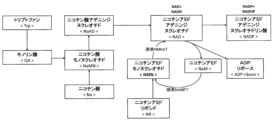
- FIG. 2 is an explanatory diagram showing metabolic pathways involved in niacin (generic term for nicotinamide and nicotinic acid).
- enteric-coated capsules for improving intestinal flora that is, acid-resistant capsules, hereinafter also simply referred to as "enteric-coated capsules"
- enteric-coated capsules contain nicotinamide mononucleotide as an active ingredient and It is a capsule preparation in which other ingredients are encapsulated as appropriate, and the capsule is dissolved in the small intestine to the large intestine to expose the capsule contents. Therefore, the active ingredient is not deactivated by stomach acid until it reaches the small intestine or large intestine, and the function of the capsule contents is maintained, allowing it to exert its function in the small intestine or large intestine.
- the type of enteric-coated capsules may be any of hard capsules, soft capsules, and seamless capsules.
- nicotinamide mononucleotide as an active ingredient improves intestinal flora and intestinal mucosal barrier function is currently under investigation, but NAD + -dependent deacetylase Sirt1 and Sirt3
- nicotinamide mononucleotide promotes sirtuin, which is represented by Conceivable.
- Conceivable The present invention will be explained in detail below.
- Nicotinamide mononucleotide (chemical formula: C 11 H 15 N 2 O 8 P) is a compound represented by the following structural formula [Formula 1], which is produced in the bodies of many organisms including humans. It is generally called NMN (Nicotinamide mononucleotide) and is known as an intermediate metabolite involved in the biosynthesis of the coenzyme NAD + .
- nicotinamide mononucleotide which is the active ingredient of the enteric-coated capsule, is involved in the synthesis of nicotinamide adenine dinucleotide (NAD) from quinolinic acid via the NAD metabolic pathway by liver tissue, that is, the kynurenine pathway. It is produced in This point will be specifically explained with reference to FIG. 1.
- FIG. 1 is an explanatory diagram showing the metabolic pathway involved in niacin (a generic term for nicotinamide and nicotinic acid) known as vitamin B3 . Nicotinic acid ingested through food is taken up by the liver and converted to nicotinamide, which is then distributed throughout the body via the bloodstream. Each cell takes in nicotinamide from the blood and converts it into NAD and NADP for use. Nicotinamide is also biosynthesized from tryptophan.
- niacin a generic term for nicotinamide and nicotin
- Nicotinamide (NaM) is converted to nicotinamide mononucleotide by nicotinamide phosphoribosyltransferase (NAMPT), which is then converted by nicotinamide mononucleotide adenyltransferase (NMNAT) to generate NAD.
- NAMPT nicotinamide phosphoribosyltransferase
- NMNAT nicotinamide mononucleotide adenyltransferase
- NR nicotinamide riboside
- Nicotinamide mononucleotide has two types of optical isomers, ⁇ -form and ⁇ -form, and the ⁇ -form is used in the present invention. Nicotinamide mononucleotide is produced by, for example, synthesizing nicotinamide riboside from nicotinamide and ribose (see Bioorg. Med. Chem. Lett., 12, 1135-1137 (2002)), and then converting the 5-hydroxyl group of the ribose moiety into It can be obtained by phosphorylation (see Chem. Comm., 1999, 729-730).
- nicotinamide and L-ribose tetraacetate are dissolved in anhydrous acetonitrile, and after adding an excess amount of trimethylsilyltrifluorosulfonic acid under a nitrogen stream, the mixture is stirred at room temperature, and methanol is added.
- the reaction solution, in which the reaction has been stopped, is applied to a column packed with activated carbon, washed with distilled water, and then eluted with methanol to recover the product.
- the nicotinamide mononucleotide is preferably a purified product with a low content of impurities, particularly its purity is preferably 90% or more, more preferably 95% or more. If the purity is less than 90%, there is a risk that an off-flavor will occur or the effect of nicotinamide mononucleotide will be weakened, making it impossible to obtain the effects of the present invention sufficiently.
- enteric-coated capsules according to the present invention are easily manufactured by using nicotinamide mononucleotide alone or by mixing other components.
- Other ingredients are not particularly limited as long as the enteric-coated capsule exhibits the effects of the present invention.
- Examples of the other components include intestinal bacteria.
- intestinal bacteria Regarding the specific selection of intestinal bacteria, the composition of bacterial species in the intestinal flora varies from person to person, and it is now believed that having a wide variety of intestinal bacteria is good for health. Based on the composition of the intestinal flora when each person is healthy, it is important to select strains that are considered to be deficient when compared with the current intestinal flora. is considered preferable.
- Bacillus natto, lactic acid bacteria, and bifidobacteria are widely used. These three types of good bacteria work together to produce metabolic products (organic acids such as lactic acid and acetic acid) that keep the intestinal environment slightly acidic, and the weakly acidic environment prevents the growth of bad bacteria that are sensitive to acids. , can be expected to have high health effects by strengthening the intestinal barrier function.
- probiotics are preferably exemplified.
- probiotics are defined as "microorganisms that have a positive effect on the human body or products containing them.” This includes so-called useful bacteria and fermented products containing useful bacteria.
- probiotics include not only living bacteria but also dead bacteria, and further includes not only bacteria but also cell wall components such as peptidoglycan, and components such as DNA and RNA.
- probiotics can be selected from strains belonging to one or more of the phylum Acidobacteria, Actinobacteria, Firmicutes, Bacteroidetes, Ascomycota, Fusobacteria, and Proteobacteria.
- probiotics include Lactobacillus (various lactobacilli, etc.), Bacillus (natto bacteria, saccharifying bacteria, etc.), Bifidobacterium (various bifidobacteria, etc.), Escherichia genus (Escherichia ⁇ Escherichia coli, etc.), Saccharomyces (Saccharomyces cerevisiae, etc.), Enterococcus (Enterococcus faecalis, Enterococcus faecium, etc.), Clostridium (butyric acid bacteria, Clostridium ⁇ Clostridium coccoides, Clostridium leptum, Clostridium ramosum, Clostridium perfringens, etc.), Prevotella genus (Prevotella copri, etc.), Acidamino Coccus (Acidaminococcus fermentans, etc.), Fusobacterium (Fusobacterium nucleat) and Bacillus
- probiotics when incorporating probiotics, it is preferable to also incorporate prebiotics. Taking probiotics and prebiotics at the same time (synbiotics) can improve the intestinal environment more effectively.
- Prebiotics are generally defined as "indigestible food ingredients that have a beneficial effect on the host by increasing the growth of beneficial bacteria resident in the large intestine or inhibiting the growth of harmful bacteria.”
- ⁇ Beneficial effects'' include a wide range of effects, such as infection prevention, immune response regulation, blood pressure and blood sugar regulation, promotion of mineral absorption, skin health, and stress relief.
- prebiotics include fructooligosaccharide, lactosucrose, theanderose, galactooligosaccharide, lactulose, isomalto-oligosaccharide, gentio-oligosaccharide, trehalose, xylooligosaccharide, soybean oligosaccharide, maltitol, lactitol, reduced isomaltulose, and sorbitol. , and xylitol.
- the enteric-coated capsule according to the present invention can be used to improve intestinal flora or improve intestinal mucosal barrier function.
- “improvement of intestinal flora” refers to returning or approaching the diversity and balance of intestinal bacteria in the intestinal flora of a healthy host when compared with the intestinal flora of a healthy host.
- the meaning broadly includes prevention or delay of deterioration of the state of intestinal flora.
- “improvement of intestinal mucosal barrier function” refers only to improvement of intestinal mucosal barrier function in a narrow sense (returning to or approaching the intestinal mucosal barrier function of a healthy host) when compared with the intestinal mucosal barrier function of a healthy host. Rather, it broadly includes prevention or delay of deterioration of intestinal mucosal barrier function.
- specific examples of improving the intestinal flora include decreasing the proportion of bacteria of the genus Alistipes in the intestinal flora, and increasing the proportion of bacteria of the genus Phascolarctobacterium. Furthermore, it is possible to suppress a decrease in the abundance ratio of Dorea bacteria and/or Lachnospira bacteria.
- enteric-coated capsules according to the present invention can be roughly divided into enteric-coated capsules in which capsule contents (enteric-coated granules) coated with an enteric polymer are encapsulated; This is an enteric-coated capsule in which the contents of the capsule are encapsulated in a capsule that dissolves in the small or large intestine.
- enteric-coated capsules in which enteric-coated granules are encapsulated in enteric-coated capsules coated with an enteric polymer are also included.
- the enteric polymer is one that exhibits good solubility in an aqueous solvent with a neutral to alkaline pH value assuming the intestinal environment, specifically, a pH methacrylic acid polymers (methacrylic acid copolymer L, methacrylic acid copolymer LD, methacrylic acid copolymer S, etc.), cellulose polymers (carboxymethylethylcellulose, hypromellose phthalate, Examples include hypromellose acetate succinate, etc.), vinyl polymers, etc. (polyvinyl acetate phthalate, polyvinyl butyrate phthalate, etc.).
- a pH methacrylic acid polymers methacrylic acid copolymer L, methacrylic acid copolymer LD, methacrylic acid copolymer S, etc.
- cellulose polymers carbboxymethylethylcellulose, hypromellose phthalate, Examples include hypromellose acetate succinate, etc.
- vinyl polymers etc
- enteric-coated capsules include those whose surfaces are coated with acid-resistant enteric polymers, and because the capsule surfaces themselves are acid-resistant, they require acid-resistant coating with enteric polymers. Includes both those with and without.
- the former enteric-coated capsule in which the capsule contents (enteric-coated granules) coated with an enteric polymer are encapsulated, is produced, for example, by the following method.
- a method for coating the capsule contents with an enteric polymer to obtain enteric granules a fluidized bed granulation method, a microparticle coating method, etc., which are widely used microparticle coating methods, can be used.
- enteric granules can be obtained by spraying and drying a coating solution containing an enteric polymer or the like onto a raw material powder introduced into a fluidized bed granulator and coating the material.
- the amount of coating may be appropriately set so that the raw material powder fulfills the function of being released for the first time in the small intestine or large intestine.
- the enteric-coated capsules are produced by encapsulating the enteric-coated granules in gelatin capsules, ordinary capsules made of cellulose derivatives, starch, etc., or enteric-coated capsules, along with additives as needed.
- enteric-coated capsule in which the capsule contents are encapsulated in an enteric-coated capsule is produced, for example, by the following method.
- Enteric-coated capsules can be obtained by coating non-enteric-coated gelatin capsules, ordinary capsules made of cellulose derivatives, etc. with the enteric polymer using a fluidized bed type coating device, a pan rotating type coating device, or the like. The amount of coating may be appropriately set so that the capsule contents are released for the first time in the small intestine or large intestine. Then, the enteric-coated capsule is manufactured by encapsulating the contents of the capsule in this enteric-coated capsule. Note that commercially available enteric-coated capsules can also be used as long as the capsule contents are released for the first time in the small intestine or large intestine.
- the amounts of nicotinamide mononucleotide, probiotics, and prebiotics are determined based on the number of intakes per day, etc., with reference to the daily intake amount of each of them described below. It is only necessary to take this into account and decide accordingly.
- the enteric-coated capsule according to the present invention can be used as food or medicine. When ingested in the form of food on a daily basis, the effects of the present invention are continuously exerted, so it is particularly effective in improving the balance and diversity of intestinal flora.
- the types of foods covered by the present invention are not particularly limited, and include general foods, functional foods, foods for specified health uses, nutritional supplements, food additives, feeds, nursing foods, dietary therapy foods, and therapeutic foods. , diet food, etc.
- the intake amount of the above foods varies depending on the type of food, the age, sex, weight, expected effects, etc. of the person being ingested, but the daily intake of nicotinamide mononucleotide contained in foods for adults is usually 1 mg. -500mg, preferably 5mg - 400mg, more preferably 50mg - 300mg. If the amount is less than 1 mg, the effects of the present invention may not be obtained, while if the amount is more than 500 mg, the effect obtained will not be particularly different, and this will be economically disadvantageous.
- the blending ratio of nicotinamide mononucleotide in the food can be appropriately set within a range of 100% or less based on the total weight of the food.
- the intake amount of probiotics contained in food may be determined appropriately depending on the type of bacterial strain, etc., but the daily intake for an adult is 10 7 cfu to 10 11 cfu, or 10 9 cfu. ⁇ 10 10 cfu.
- the intake amount of prebiotics contained in food is preferably an amount suitable for promoting the proliferation of the probiotics used, and the daily intake for adults is usually in the range of 1 mg to 20 g. It may be determined as appropriate depending on the type of the bacterial strain.
- the above food is safe and has no particular side effects, so it can be consumed over a long period of time. It can be applied not only to elderly people but also to young people.
- the enteric-coated capsule according to the present invention can be orally administered as a drug (including quasi-drugs) for improving intestinal flora or improving intestinal mucosal barrier function in the pharmaceutical field.
- a drug including quasi-drugs
- known pharmaceutically acceptable additives for formulations can be appropriately blended into the drug.
- the dosage of the above medicines varies depending on the age, sex, weight, expected effects, symptoms, number of administrations, etc. of the subject, and cannot be uniformly prescribed.
- the amount of nicotinamide mononucleotide to be administered is usually 1 mg to 500 mg, preferably 5 mg to 400 mg, and more preferably 50 mg to 300 mg. If the amount is less than 1 mg, the effects of the present invention may not be obtained, while if the amount is more than 500 mg, the effect obtained will not be particularly different, and this will be economically disadvantageous.
- the blending ratio of nicotinamide mononucleotide in the drug can be appropriately set depending on the dosage form, dosage, etc. of the drug.
- the dosage of probiotics contained in pharmaceuticals may be determined as appropriate depending on the type of bacterial strain, etc., but the daily dosage for adults is 10 7 cfu to 10 11 cfu, or 10 9 cfu. ⁇ 10 10 cfu.
- the dosage of prebiotics contained in pharmaceuticals is preferably an amount suitable for promoting the proliferation of the probiotics used, and the dosage per adult is usually in the range of 1 mg to 20 g. It may be determined as appropriate depending on the type of the bacterial strain.
- the number of administrations of the drug can be appropriately set depending on the age, weight, symptoms of the subject, the amount of the drug per dose, etc.
- An example of the number of times the drug is administered per day is 1 to 3 times.
- the present invention further provides a method for improving intestinal flora or improving intestinal mucosal barrier function, which comprises ingesting the enteric-coated capsules into a subject.
- the subjects to be ingested are preferably mammals such as humans, mice, rats, rabbits, dogs, cats, cows, horses, pigs, and monkeys, with humans being particularly preferred.
- the amount of the enteric-coated capsule to be taken, the number of times of ingestion per day, etc. are as described for the enteric-coated capsule.
- the enteric-coated capsule can be ingested at any time and in any situation, and can be ingested by a subject over a long period of time.
- Example 58 general men and women aged 45 to under 65 were tested in Group I (enteric-coated capsules containing NMN (capsules 1) intake group: 30 subjects) and Group II subjects (placebo (capsules 2) intake group: 28 subjects). Each capsule was orally ingested for 4 weeks in a double-blind, placebo-controlled comparative study. Group I was given two capsules of Capsule 1 per day, and Group II was given two capsules of Capsule 2 per day. As Capsules 1 and 2, enteric-coated capsules containing the following ingredients were used.
- Capsule 1 NMN 150mg, starch 50mg, hydroxypropyl methylcellulose 60mg (per capsule)
- Capsule 2 Starch 200mg, hydroxypropyl methylcellulose 60mg (per capsule)
- Feces were collected at the start of intake and 4 weeks after intake, and changes in the intestinal flora of the subjects due to administration of the enteric-coated capsules of the present invention were analyzed.
- the analysis was performed on bacteria at the genus level, and the bacteria with an abundance ratio of more than 0.1% in the intestinal flora were Alistipes, Phascolarctobacterium, Dorea, and Lachnospira.
- the genus Lachnospira was targeted for analysis, and their relative abundance relative to all bacterial species was investigated.
- Analysis of intestinal flora was performed using a next-generation sequencer. Analysis of fecal microbiota was outsourced to Healthcare Systems Co., Ltd.
- Table 1 shows the mean value ⁇ SD of the abundance ratio of each bacterial species in Group I subjects (NMN) and Group II subjects (placebo).
- Table 2 shows the intergroup comparison between Group I and Group II. Note that the numerical values for the before-and-after comparison were determined by the Wilcoxon signed-rank test. Further, the numerical values for the above-mentioned intergroup comparisons were determined by the Wilcoxon-Mann-Whitney Test.
- the amount of change before and after ingesting the enteric-coated capsules was significantly higher in Group II than in Group I, and a significant increase was observed in Group II. It was done.
- the genus Alistipes is an intestinal bacterium that has been reported to be involved in various diseases, and has been reported to have a pathogenic effect on hypertension, cardiovascular diseases, psychiatric disorders, and colorectal cancer. Therefore, the presence of the genus Alistipes is considered to have effects that are not beneficial to humans.
- the genus Lachnospira is known as a bacterium that produces butyric acid, and because butyric acid has beneficial effects in the intestines, such as anti-inflammatory effects and mineral absorption effects, the presence of the genus Lachnospira has beneficial effects for humans. It is thought to bring about In addition, it was confirmed that the intake of the NMN-containing enteric-coated capsule had an effect of suppressing the decrease in Dorea and Lachnospira species observed in Group II.
Landscapes
- Health & Medical Sciences (AREA)
- Life Sciences & Earth Sciences (AREA)
- Chemical & Material Sciences (AREA)
- Mycology (AREA)
- General Health & Medical Sciences (AREA)
- Public Health (AREA)
- Medicinal Chemistry (AREA)
- Pharmacology & Pharmacy (AREA)
- Veterinary Medicine (AREA)
- Animal Behavior & Ethology (AREA)
- Engineering & Computer Science (AREA)
- Molecular Biology (AREA)
- Epidemiology (AREA)
- Food Science & Technology (AREA)
- Polymers & Plastics (AREA)
- Microbiology (AREA)
- Nutrition Science (AREA)
- Bioinformatics & Cheminformatics (AREA)
- General Chemical & Material Sciences (AREA)
- Chemical Kinetics & Catalysis (AREA)
- Nuclear Medicine, Radiotherapy & Molecular Imaging (AREA)
- Organic Chemistry (AREA)
- Biochemistry (AREA)
- Zoology (AREA)
- Medicines Containing Material From Animals Or Micro-Organisms (AREA)
- Medicinal Preparation (AREA)
- Pharmaceuticals Containing Other Organic And Inorganic Compounds (AREA)
Priority Applications (5)
| Application Number | Priority Date | Filing Date | Title |
|---|---|---|---|
| JP2024535151A JPWO2024019141A1 (cg-RX-API-DMAC7.html) | 2022-07-21 | 2023-07-21 | |
| EP23843064.9A EP4559327A4 (en) | 2022-07-21 | 2023-07-21 | Enteric capsule to improve gut bacteria, encapsulating nicotine mononucleotide |
| CN202380054931.7A CN119584872A (zh) | 2022-07-21 | 2023-07-21 | 封入有烟酰胺单核苷酸的用于改善肠道菌群的肠溶性胶囊制剂 |
| KR1020257004804A KR20250038714A (ko) | 2022-07-21 | 2023-07-21 | 니코틴아미드모노뉴클레오티드가 봉입되어 있는 장내세균총 개선용 장용성 캡슐제 |
| US18/997,183 US20260027144A1 (en) | 2022-07-21 | 2023-07-21 | Enteric capsule for improving intestinal bacterial flora encapsulating nicotinamide mononucleotide |
Applications Claiming Priority (2)
| Application Number | Priority Date | Filing Date | Title |
|---|---|---|---|
| JP2022116167 | 2022-07-21 | ||
| JP2022-116167 | 2022-07-21 |
Publications (1)
| Publication Number | Publication Date |
|---|---|
| WO2024019141A1 true WO2024019141A1 (ja) | 2024-01-25 |
Family
ID=89617960
Family Applications (1)
| Application Number | Title | Priority Date | Filing Date |
|---|---|---|---|
| PCT/JP2023/026741 Ceased WO2024019141A1 (ja) | 2022-07-21 | 2023-07-21 | ニコチンアミドモノヌクレオチドが封入されている腸内細菌叢改善用腸溶性カプセル剤 |
Country Status (6)
| Country | Link |
|---|---|
| US (1) | US20260027144A1 (cg-RX-API-DMAC7.html) |
| EP (1) | EP4559327A4 (cg-RX-API-DMAC7.html) |
| JP (1) | JPWO2024019141A1 (cg-RX-API-DMAC7.html) |
| KR (1) | KR20250038714A (cg-RX-API-DMAC7.html) |
| CN (1) | CN119584872A (cg-RX-API-DMAC7.html) |
| WO (1) | WO2024019141A1 (cg-RX-API-DMAC7.html) |
Citations (9)
| Publication number | Priority date | Publication date | Assignee | Title |
|---|---|---|---|---|
| JP2003522136A (ja) * | 2000-02-14 | 2003-07-22 | フリースランド・ブランズ・ビー・ブイ | 腸壁の透過性亢進または望まれない透過性の治療または予防のための栄養学的または薬学的調製物の製造のためのグルタメートおよび/またはグルタメート前駆体の使用 |
| JP2007112805A (ja) * | 2002-07-22 | 2007-05-10 | Meito Sangyo Co Ltd | ラクトバシラス・カゼイ亜種カゼイ増殖促進用組成物 |
| JP2018070613A (ja) * | 2016-10-28 | 2018-05-10 | ロッテ コンフェクショナリー カンパニー リミテッド | 過敏性大腸症候群改善用組成物 |
| JP2019089733A (ja) | 2017-11-15 | 2019-06-13 | 株式会社神鋼環境ソリューション | 腸内細菌叢改善剤 |
| JP2019170335A (ja) | 2018-03-29 | 2019-10-10 | 焼津水産化学工業株式会社 | 腸内短鎖脂肪酸生成促進組成物 |
| WO2020166527A1 (ja) * | 2019-02-12 | 2020-08-20 | めぐみ 田中 | 乳幼児用飲食品、乳幼児の腸内環境の改善方法、及び乳幼児の免疫力の増強方法 |
| JP2021152062A (ja) * | 2014-10-29 | 2021-09-30 | グリコム・アクティーゼルスカブGlycom A/S | 過敏性腸症候群の治療のための合成組成物および方法 |
| JP2021195334A (ja) * | 2020-06-15 | 2021-12-27 | 株式会社山田養蜂場本社 | 細菌の腸内における数を調整するための剤、腸内代謝物質量調整剤、及び便通改善剤 |
| US20210401870A1 (en) * | 2020-06-24 | 2021-12-30 | Bohai University | Use of soy hull polysaccharide in preparation of drugs for modulating intestinal flora, reducing blood glucose and blood lipid, and resisting inflammation, and of foods for special medical purpose |
Family Cites Families (5)
| Publication number | Priority date | Publication date | Assignee | Title |
|---|---|---|---|---|
| KR102205195B1 (ko) | 2018-01-23 | 2021-01-20 | 주식회사 네패스 | 반도체 칩 적층 패키지 및 그 제조 방법 |
| CN112386581A (zh) * | 2020-09-24 | 2021-02-23 | 赫曼因生物科技有限公司 | 一种抗酸肠溶nmn胶囊的包衣配方 |
| CN112089775A (zh) * | 2020-10-30 | 2020-12-18 | 成都及禾生物科技有限公司 | 一种nmn有益菌健康组合物及其制备方法和应用 |
| CN112972426A (zh) * | 2021-02-23 | 2021-06-18 | 成都西域从容生物科技有限公司 | 一种含nmn的胶囊及其制备方法 |
| CN113633626B (zh) * | 2021-07-28 | 2022-09-27 | 山东润德生物科技有限公司 | 一种nmn的胶囊包衣及nmn胶囊制备方法与应用 |
-
2023
- 2023-07-21 JP JP2024535151A patent/JPWO2024019141A1/ja active Pending
- 2023-07-21 KR KR1020257004804A patent/KR20250038714A/ko active Pending
- 2023-07-21 EP EP23843064.9A patent/EP4559327A4/en active Pending
- 2023-07-21 US US18/997,183 patent/US20260027144A1/en active Pending
- 2023-07-21 WO PCT/JP2023/026741 patent/WO2024019141A1/ja not_active Ceased
- 2023-07-21 CN CN202380054931.7A patent/CN119584872A/zh active Pending
Patent Citations (9)
| Publication number | Priority date | Publication date | Assignee | Title |
|---|---|---|---|---|
| JP2003522136A (ja) * | 2000-02-14 | 2003-07-22 | フリースランド・ブランズ・ビー・ブイ | 腸壁の透過性亢進または望まれない透過性の治療または予防のための栄養学的または薬学的調製物の製造のためのグルタメートおよび/またはグルタメート前駆体の使用 |
| JP2007112805A (ja) * | 2002-07-22 | 2007-05-10 | Meito Sangyo Co Ltd | ラクトバシラス・カゼイ亜種カゼイ増殖促進用組成物 |
| JP2021152062A (ja) * | 2014-10-29 | 2021-09-30 | グリコム・アクティーゼルスカブGlycom A/S | 過敏性腸症候群の治療のための合成組成物および方法 |
| JP2018070613A (ja) * | 2016-10-28 | 2018-05-10 | ロッテ コンフェクショナリー カンパニー リミテッド | 過敏性大腸症候群改善用組成物 |
| JP2019089733A (ja) | 2017-11-15 | 2019-06-13 | 株式会社神鋼環境ソリューション | 腸内細菌叢改善剤 |
| JP2019170335A (ja) | 2018-03-29 | 2019-10-10 | 焼津水産化学工業株式会社 | 腸内短鎖脂肪酸生成促進組成物 |
| WO2020166527A1 (ja) * | 2019-02-12 | 2020-08-20 | めぐみ 田中 | 乳幼児用飲食品、乳幼児の腸内環境の改善方法、及び乳幼児の免疫力の増強方法 |
| JP2021195334A (ja) * | 2020-06-15 | 2021-12-27 | 株式会社山田養蜂場本社 | 細菌の腸内における数を調整するための剤、腸内代謝物質量調整剤、及び便通改善剤 |
| US20210401870A1 (en) * | 2020-06-24 | 2021-12-30 | Bohai University | Use of soy hull polysaccharide in preparation of drugs for modulating intestinal flora, reducing blood glucose and blood lipid, and resisting inflammation, and of foods for special medical purpose |
Non-Patent Citations (4)
| Title |
|---|
| BIOORG. MED. CHEM. LETT., vol. 12, 2002, pages 1135 - 1137 |
| CHEM. COMM., 1999, pages 729 - 730 |
| HUANG PAN, JIANG ANQI, WANG XUXIN, ZHOU YAN, TANG WEIHONG, REN CAIFANG, QIAN XIN, ZHOU ZHENGRONG, GONG AIHUA: "NMN Maintains Intestinal Homeostasis by Regulating the Gut Microbiota", FRONTIERS IN NUTRITION, FRONTIERS MEDIA, LAUSANNE, vol. 8, July 2021 (2021-07-01), Lausanne , XP093131223, ISSN: 2296-861X, DOI: 10.3389/fnut.2021.714604 * |
| See also references of EP4559327A4 |
Also Published As
| Publication number | Publication date |
|---|---|
| KR20250038714A (ko) | 2025-03-19 |
| US20260027144A1 (en) | 2026-01-29 |
| EP4559327A1 (en) | 2025-05-28 |
| EP4559327A4 (en) | 2026-07-08 |
| CN119584872A (zh) | 2025-03-07 |
| JPWO2024019141A1 (cg-RX-API-DMAC7.html) | 2024-01-25 |
Similar Documents
| Publication | Publication Date | Title |
|---|---|---|
| US11696921B2 (en) | Synthetic composition for microbiota modulation | |
| JP6882931B2 (ja) | プレバイオティック製剤および使用方法 | |
| CN108541221B (zh) | Hmo的混合物 | |
| KR102741265B1 (ko) | 미생물총 조절을 위한 인간 밀크 올리고당 및 그의 합성 조성물 | |
| EP3265099B1 (en) | Human milk oligosaccharides for treating acute respiratory tract infections | |
| CA3208064A1 (en) | Bifidobacterium animalis subsp. lactis and use thereof | |
| CN108348536B (zh) | 治疗抗生素相关性并发症的合成组合物 | |
| WO2018175879A1 (en) | Methods of treating lactose intolerance and improving gastrointestinal health | |
| JP2017533915A (ja) | 過敏性腸症候群の治療のための合成組成物および方法 | |
| WO2018157900A1 (en) | Synthetic composition for microbiota modulation | |
| EP2729152B1 (en) | Oligosaccharides composition for preventing or reducing the risk of metabolic syndrome | |
| EP3721889B1 (en) | Butyribacter intestini for use in preventing and/or treating inflammatory bowel disease | |
| US20210038545A1 (en) | Use of short-chain fatty acids for the treatment of bacterial superinfections post-influenza | |
| KR20240050332A (ko) | 과민성 대장 증후군 관련 불안의 치료 또는 예방을 위한 살균된 아커만시아를 포함하는 조성물 | |
| US20260027144A1 (en) | Enteric capsule for improving intestinal bacterial flora encapsulating nicotinamide mononucleotide | |
| CN111491643A (zh) | 预防或治疗耐药感染的含益生菌和益生元的药物组合物 | |
| JP2025183464A (ja) | イヌの腸内細菌叢改善用剤 | |
| JP2025106426A (ja) | 腸内短鎖脂肪酸産生促進用組成物及びこれを含む飲食品 | |
| HK40101013A (en) | Bifidobacterium lactis and application thereof | |
| HK1240143A (en) | Application of thick-wall fungus probiotics in preventing and/or treating diabetes and related diseases thereof | |
| HK1240143A1 (en) | Application of thick-wall fungus probiotics in preventing and/or treating diabetes and related diseases thereof | |
| HK1240131A (en) | Use of streptococcus probiotics in the prevention and/or treatment of diabetes and related diseases | |
| HK1240131A1 (en) | Use of streptococcus probiotics in the prevention and/or treatment of diabetes and related diseases | |
| HK1240096A (en) | Application of intestinal probiotics in preventing and/or treating diabetes and related diseases thereof | |
| HK1240096A1 (en) | Application of intestinal probiotics in preventing and/or treating diabetes and related diseases thereof |
Legal Events
| Date | Code | Title | Description |
|---|---|---|---|
| 121 | Ep: the epo has been informed by wipo that ep was designated in this application |
Ref document number: 23843064 Country of ref document: EP Kind code of ref document: A1 |
|
| WWE | Wipo information: entry into national phase |
Ref document number: 202380054931.7 Country of ref document: CN |
|
| WWE | Wipo information: entry into national phase |
Ref document number: 2024535151 Country of ref document: JP Ref document number: 18997183 Country of ref document: US |
|
| ENP | Entry into the national phase |
Ref document number: 20257004804 Country of ref document: KR Kind code of ref document: A |
|
| WWE | Wipo information: entry into national phase |
Ref document number: 1020257004804 Country of ref document: KR |
|
| WWE | Wipo information: entry into national phase |
Ref document number: 2023843064 Country of ref document: EP |
|
| NENP | Non-entry into the national phase |
Ref country code: DE |
|
| ENP | Entry into the national phase |
Ref document number: 2023843064 Country of ref document: EP Effective date: 20250221 |
|
| WWP | Wipo information: published in national office |
Ref document number: 202380054931.7 Country of ref document: CN |
|
| WWP | Wipo information: published in national office |
Ref document number: 1020257004804 Country of ref document: KR |
|
| WWP | Wipo information: published in national office |
Ref document number: 2023843064 Country of ref document: EP |
|
| WWP | Wipo information: published in national office |
Ref document number: 18997183 Country of ref document: US |