WO2024019017A1 - 試薬層および試薬層を備えるバイオセンサ - Google Patents
試薬層および試薬層を備えるバイオセンサ Download PDFInfo
- Publication number
- WO2024019017A1 WO2024019017A1 PCT/JP2023/026089 JP2023026089W WO2024019017A1 WO 2024019017 A1 WO2024019017 A1 WO 2024019017A1 JP 2023026089 W JP2023026089 W JP 2023026089W WO 2024019017 A1 WO2024019017 A1 WO 2024019017A1
- Authority
- WO
- WIPO (PCT)
- Prior art keywords
- group
- polymer
- reagent layer
- solution
- biosensor
- Prior art date
- Legal status (The legal status is an assumption and is not a legal conclusion. Google has not performed a legal analysis and makes no representation as to the accuracy of the status listed.)
- Ceased
Links
Images






Classifications
-
- C—CHEMISTRY; METALLURGY
- C12—BIOCHEMISTRY; BEER; SPIRITS; WINE; VINEGAR; MICROBIOLOGY; ENZYMOLOGY; MUTATION OR GENETIC ENGINEERING
- C12Q—MEASURING OR TESTING PROCESSES INVOLVING ENZYMES, NUCLEIC ACIDS OR MICROORGANISMS; COMPOSITIONS OR TEST PAPERS THEREFOR; PROCESSES OF PREPARING SUCH COMPOSITIONS; CONDITION-RESPONSIVE CONTROL IN MICROBIOLOGICAL OR ENZYMOLOGICAL PROCESSES
- C12Q1/00—Measuring or testing processes involving enzymes, nucleic acids or microorganisms; Compositions therefor; Processes of preparing such compositions
- C12Q1/26—Measuring or testing processes involving enzymes, nucleic acids or microorganisms; Compositions therefor; Processes of preparing such compositions involving oxidoreductase
-
- G—PHYSICS
- G01—MEASURING; TESTING
- G01N—INVESTIGATING OR ANALYSING MATERIALS BY DETERMINING THEIR CHEMICAL OR PHYSICAL PROPERTIES
- G01N27/00—Investigating or analysing materials by the use of electric, electrochemical, or magnetic means
- G01N27/26—Investigating or analysing materials by the use of electric, electrochemical, or magnetic means by investigating electrochemical variables; by using electrolysis or electrophoresis
- G01N27/28—Electrolytic cell components
- G01N27/30—Electrodes, e.g. test electrodes; Half-cells
- G01N27/327—Biochemical electrodes, e.g. electrical or mechanical details for in vitro measurements
- G01N27/3271—Amperometric enzyme electrodes for analytes in body fluids, e.g. glucose in blood
- G01N27/3272—Test elements therefor, i.e. disposable laminated substrates with electrodes, reagent and channels
-
- C—CHEMISTRY; METALLURGY
- C08—ORGANIC MACROMOLECULAR COMPOUNDS; THEIR PREPARATION OR CHEMICAL WORKING-UP; COMPOSITIONS BASED THEREON
- C08F—MACROMOLECULAR COMPOUNDS OBTAINED BY REACTIONS ONLY INVOLVING CARBON-TO-CARBON UNSATURATED BONDS
- C08F226/00—Copolymers of compounds having one or more unsaturated aliphatic radicals, each having only one carbon-to-carbon double bond, and at least one being terminated by a single or double bond to nitrogen or by a heterocyclic ring containing nitrogen
- C08F226/06—Copolymers of compounds having one or more unsaturated aliphatic radicals, each having only one carbon-to-carbon double bond, and at least one being terminated by a single or double bond to nitrogen or by a heterocyclic ring containing nitrogen by a heterocyclic ring containing nitrogen
-
- C—CHEMISTRY; METALLURGY
- C12—BIOCHEMISTRY; BEER; SPIRITS; WINE; VINEGAR; MICROBIOLOGY; ENZYMOLOGY; MUTATION OR GENETIC ENGINEERING
- C12Q—MEASURING OR TESTING PROCESSES INVOLVING ENZYMES, NUCLEIC ACIDS OR MICROORGANISMS; COMPOSITIONS OR TEST PAPERS THEREFOR; PROCESSES OF PREPARING SUCH COMPOSITIONS; CONDITION-RESPONSIVE CONTROL IN MICROBIOLOGICAL OR ENZYMOLOGICAL PROCESSES
- C12Q1/00—Measuring or testing processes involving enzymes, nucleic acids or microorganisms; Compositions therefor; Processes of preparing such compositions
- C12Q1/001—Enzyme electrodes
- C12Q1/002—Electrode membranes
-
- C—CHEMISTRY; METALLURGY
- C12—BIOCHEMISTRY; BEER; SPIRITS; WINE; VINEGAR; MICROBIOLOGY; ENZYMOLOGY; MUTATION OR GENETIC ENGINEERING
- C12Q—MEASURING OR TESTING PROCESSES INVOLVING ENZYMES, NUCLEIC ACIDS OR MICROORGANISMS; COMPOSITIONS OR TEST PAPERS THEREFOR; PROCESSES OF PREPARING SUCH COMPOSITIONS; CONDITION-RESPONSIVE CONTROL IN MICROBIOLOGICAL OR ENZYMOLOGICAL PROCESSES
- C12Q1/00—Measuring or testing processes involving enzymes, nucleic acids or microorganisms; Compositions therefor; Processes of preparing such compositions
- C12Q1/001—Enzyme electrodes
- C12Q1/002—Electrode membranes
- C12Q1/003—Functionalisation
-
- C—CHEMISTRY; METALLURGY
- C12—BIOCHEMISTRY; BEER; SPIRITS; WINE; VINEGAR; MICROBIOLOGY; ENZYMOLOGY; MUTATION OR GENETIC ENGINEERING
- C12Q—MEASURING OR TESTING PROCESSES INVOLVING ENZYMES, NUCLEIC ACIDS OR MICROORGANISMS; COMPOSITIONS OR TEST PAPERS THEREFOR; PROCESSES OF PREPARING SUCH COMPOSITIONS; CONDITION-RESPONSIVE CONTROL IN MICROBIOLOGICAL OR ENZYMOLOGICAL PROCESSES
- C12Q1/00—Measuring or testing processes involving enzymes, nucleic acids or microorganisms; Compositions therefor; Processes of preparing such compositions
- C12Q1/001—Enzyme electrodes
- C12Q1/005—Enzyme electrodes involving specific analytes or enzymes
-
- G—PHYSICS
- G01—MEASURING; TESTING
- G01N—INVESTIGATING OR ANALYSING MATERIALS BY DETERMINING THEIR CHEMICAL OR PHYSICAL PROPERTIES
- G01N2333/00—Assays involving biological materials from specific organisms or of a specific nature
- G01N2333/90—Enzymes; Proenzymes
- G01N2333/902—Oxidoreductases (1.)
- G01N2333/904—Oxidoreductases (1.) acting on CHOH groups as donors, e.g. glucose oxidase, lactate dehydrogenase (1.1)
Definitions
- the present invention relates to a reagent layer and a biosensor including the reagent layer.
- biosensors can be used in various fields such as the medical field to measure analytes in samples (cell culture fluid, etc.).
- a method for measuring the analyte for example, an electrochemical measurement method can be used.
- a biosensor in an electrochemical measurement method there is one that includes an electrode (working electrode, counter electrode, reference electrode) and an enzyme membrane provided on the electrode (see Patent Document 1).
- a biosensor including the electrode and the enzyme membrane can be placed in a weighing section having a structure that allows continuous supply of a buffer solution having pH buffering capacity and injection of a sample into the buffer solution.
- an enzyme that acts as a substrate for the analyte to be measured it becomes possible to measure various analytes.
- the inventors of the present application newly discovered that there are matters that can be improved with respect to the configuration of the conventional biosensor.
- conventional biosensors can be placed in a structure that allows continuous supply of buffer and sample injection into the same buffer.
- such conventional biosensors are difficult to support a method of directly monitoring a sample continuously without continuously supplying a buffer solution. Therefore, it is desired that the reagent layer (corresponding to the enzyme membrane of Patent Document 1) as a component of the biosensor has a property of pH buffering ability.
- an object of the present invention is to provide a reagent layer having a pH buffering property and a biosensor equipped with the reagent layer.
- a reagent layer includes a polymer that includes proton-accepting groups in its repeating units and has pH buffering capacity, and an oxidoreductase that oxidizes or dehydrogenates the analyte.
- a biosensor including the above reagent layer is provided.
- the reagent layer itself to have pH buffering properties.
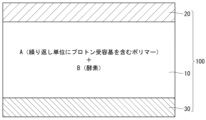
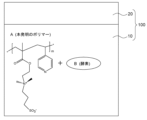
- FIG. 1 is a cross-sectional view schematically showing the configuration of a reagent layer containing a reagent according to an embodiment of the present invention.
- FIG. 2 is a cross-sectional view schematically showing the main configuration of a biosensor according to an embodiment of the present invention.
- FIG. 3 is a cross-sectional view schematically showing an action mechanism provided based on the main configuration of a biosensor according to an embodiment of the present invention.
- FIG. 4 is a cross-sectional view schematically showing an action mechanism provided based on the main configuration of a biosensor according to another embodiment of the present invention.
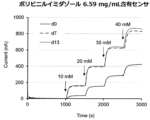
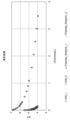
- FIG. 5 is a graph showing the relationship between measurement elapsed time and current response value in Example 1A.
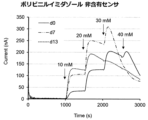
- FIG. 6 is a graph showing the relationship between measurement elapsed time and current response value in Comparative Example 1A.
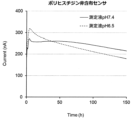
- FIG. 7 is a graph showing the relationship between measurement elapsed time and current response value in Example 2A.
- FIG. 8 is a graph showing the relationship between measurement elapsed time and current response value in Comparative Example 2A.
- invention A embodiments of the present invention (invention A) will be specifically described. Below, first, the overall configuration of the biosensor will be explained. After that, the characteristic parts of the present invention will be explained.
- FIG. 1 is a cross-sectional view schematically showing the configuration of a reagent layer according to an embodiment of the present invention.
- FIG. 2 is a cross-sectional view schematically showing the main configuration of a biosensor according to an embodiment of the present invention.
- a biosensor 100 includes a working electrode 30 located on the surface of a substrate, a reagent layer 10 located on the surface of the working electrode, and a protective film 20 located on the surface of the reagent layer 10 (see FIGS. (See Figure 2). Note that in this embodiment, for convenience, the working electrode 30 as a component of the electrode section is illustrated, and illustrations of the counter electrode and reference electrode as other components of the electrode section are omitted. I would like to add.
- a “biosensor” as used herein refers to a chemical reaction generated by a molecular recognition reaction between a substrate (corresponding to an analyte) and an enzyme (corresponding to a receptor) using a combination such as an enzyme and a substrate.
- This is a measurement device that converts changes in electrical signals into electrical signals and measures the metabolic rate, concentration, etc. of analytes according to the strength of the electrical signals obtained.
- an insulating substrate can be used as the substrate.
- the substrate may be made of a material such as polyethylene terephthalate, polyamide, polyimide, etc. with a thickness of several hundreds of micrometers.
- the electrode portion of biosensor 100 is insertable into a liquid sample (such as a cell culture fluid). Furthermore, after the biosensor 100 is inserted, voltage can be applied to the electrode section.
- the reagent layer 10 may contain at least enzyme B (see FIG. 1).
- enzyme B one may be selected that allows the analyte to be measured to act as a substrate. Such selection allows measurement of various analytes.
- Enzyme B may be an oxidoreductase that oxidizes or dehydrogenates the analyte.
- the oxidoreductases include glucose oxidase, lactate oxidase, cholesterol oxidase, bilirubin oxidase, glucose dehydrogenase, lactate dehydrogenase, amino acid oxidase, amino acid dehydrogenase, glutamate oxidase, glutamate dehydrogenase, fructosyl amino acid oxidase, fructosyl peptide oxidase, 3- Examples include hydroxybutyrate dehydrogenase, alcohol oxidase, and/or alcohol dehydrogenase.
- the reagent layer can further contain a mediator and/or conductive particles.
- the conductive fine particles include carbon black and carbon nanotubes.
- the term "mediator” as used herein refers to a redox substance that mediates electron transfer in a broad sense, and in a narrow sense, it refers to a substance that is responsible for the transfer of electrons generated by the redox reaction of an analyte in the following biosensor. Point.
- mediators include metal complexes (for example, osmium complexes, ruthenium complexes, iron complexes, etc.), quinone compounds (for example, benzoquinone, naphthoquinone, phenanthrenequinone, phenanthrolinequinone, anthraquinone, and derivatives thereof). ), phenazine compounds, viologen compounds, phenothiazine compounds, and phenolic compounds.
- metal complexes for example, osmium complexes, ruthenium complexes, iron complexes, etc.
- quinone compounds for example, benzoquinone, naphthoquinone, phenanthrenequinone, phenanthrolinequinone, anthraquinone, and derivatives thereof.
- phenazine compounds for example, osmium complexes, ruthenium complexes, iron complexes, etc.
- quinone compounds for example, benzoquinone
- the protective film 20 may be configured to cover the reagent layer 10 and the electrode section.
- the protective film 20 is arranged to allow the analyte (lactic acid, etc.) to permeate to the working electrode side while controlling the permeation rate of the analyte (lactic acid, etc.) of cells in the culture medium.
- the protective film 20 is arranged so as to be able to suppress components contained in the reagent layer 10 on the working electrode from flowing out to the outside of the protective film 20. That is, the "protective film” as used herein refers to a film that contributes to suppressing the leakage of substances contained in the reagent layer to the outside of the protective film, and that also prevents analytes present outside the protective film from leaking out of the protective film. This is a membrane that has pores through which the reagent layer can move toward the reagent layer side.
- the protective film contains a biocompatible polymer.
- the polymer and cross-linking agent are dissolved in an alcoholic solvent, such as a buffer-alcohol-containing solvent to form a membrane solution, and the membrane solution is applied to the reagent layer and dried or the membrane solution is coated with the electrode and reagent layers. It can be obtained by dipping a laminate, pulling it up, and drying it.
- the polymer contained in the protective film may include one having a biocompatible phosphorylcholine group and a methacryloyl group or an acryloyl group as a polymerizable group.
- One example may include 2-methacryloyloxyethylphosphorylcholine (MPC) polymer.
- the polymer contained in the protective film may include t-butyl acrylate having a heterocyclic nitrogen group.
- a heterocyclic nitrogen group for example, a pyridyl group can be selected.
- Random copolymers of butyl methacrylate (S2VPtBuMA), random copolymers of tripropylene glycol methyl ether methacrylate-styrene-4-vinylpyridine (TGMAS4VP), and/or poly(ter. butyl methacrylate-b-4-vinylpyridine (tBuMA4VP)) can be selected.
- crosslinking agent one having a reactive group capable of reacting with the above-mentioned heterocyclic nitrogen group can be used.
- One example is poly(ethylene glycol) diglycidyl ether.
- FIG. 3 is a cross-sectional view schematically showing an action mechanism provided based on the main configuration of a biosensor according to an embodiment of the present invention.
- FIG. 4 is a cross-sectional view schematically showing an action mechanism provided based on the main configuration of a biosensor according to another embodiment of the present invention.
- the analyte that moves from the medium to the reagent layer 10 via the protective film 20 is catalyzed by enzyme B in the reagent layer 10, and dissolved oxygen is oxidize using By electrically detecting the hydrogen peroxide produced at this time, it becomes possible to measure the concentration of the analyte.
- lactic acid (corresponding to Lac in FIG. 3) that has migrated from the medium to the reagent layer 10 through the protective film 20 is detected by the enzyme (lactic acid oxidase (LOx) in FIG. 3) in the reagent layer 10. ) is oxidized by an enzymatic reaction with Such oxidation can result in the formation of pyruvate (corresponding to Pyru in Figure 3), hydrogen peroxide, and ionized protons (H+). By electrically measuring hydrogen peroxide produced during this formation, it is possible to measure the concentration of lactic acid. In this case, biosensor 100 can function as a lactate sensor.
- LOx lactic acid oxidase
- the reagent layer 10 may contain a mediator.
- the mediator is a redox substance that mediates the transfer of electrons caused by the redox reaction of the analyte (corresponding to lactic acid) in the biosensor 100. Therefore, due to the presence of this mediator, the generated electrons can be transferred favorably.
- the present invention is characterized by the configuration of the reagent layer 10, which is a component of the biosensor (see FIG. 1).
- the inventors of the present application have worked diligently to develop a configuration that allows continuous direct monitoring of analytes present in cell culture fluid, etc., without the need for continuous supply of a buffer solution with pH buffering ability, as in conventional biosensors. investigated.
- the inventor of the present application has developed a structure in which the reagent layer 10, which is a component of the biosensor 100, includes a polymer A that "contains a proton-accepting group in a repeating unit" and has a pH buffering ability in addition to the enzyme B described above. I came up with a idea.
- the term "proton-accepting group” as used herein refers to a functional group that is included in a repeating unit of a polymer and is capable of accepting protons (H + ).
- the repeating unit of the polymer A contains a proton-accepting group, it becomes possible to accept ionized protons that may be generated when the analyte is oxidized by the enzymatic reaction with the enzyme B in the reagent layer 10.
- the weight average molecular weight (Mw) of polymer A is preferably 10,000 or more.
- heterocyclic nitrogen groups include imidazole group, pyridyl group, indolyl group, quinolyl group, isoquinolyl group, tetrahydroquinolyl group, thiazole group, indolidyl group, imidazopyridyl group, acridinyl group, tetrazole group, triazole group, pyrazyl group. , a morpholyl group, and a piperazyl group.
- polymer A containing a heterocyclic nitrogen group in a repeating unit is, for example, the following polyvinylimidazole PolyIMZ. [Case 1]
- polymer A containing a heterocyclic nitrogen group in the repeating unit is, for example, the following poly-L-histidine (PolyH). [Case 2]
- the proton-accepting group contained in the repeating unit of the polymer A may be at least one selected from the group consisting of an ionized phosphoric acid group, a sulfo group, and a carboxy group.
- an ionized phosphoric acid group a sulfo group
- a carboxy group a group consisting of an ionized phosphoric acid group, a sulfo group, and a carboxy group.
- sodium polyphosphate having a degree of polymerization of 700 to 1000 and a weight average molecular weight (Mw) of 70,000 to 100,000 can be used.
- ionic group refers to a functional group in an ionic state that is contained in a repeating unit of a polymer and is capable of providing hydrophilicity.
- Polymer A may include a portion in which the repeating units are derived from 4-vinylpyridine and a portion derived from 3-[[2-(methacryloyloxy)ethyl]dimethylammonio]propane-1-sulfonate. That is, in the repeating unit of the polymer A, the first portion with an ionic group may include 3-[[2-(methacryloyloxy)ethyl]dimethylammonio]propane-1-sulfonate. Further, in the repeating unit of the polymer A, the second portion provided with a proton-accepting group may include 4-vinylpyridine. For example, polymer A may have the following structure. [C4]
- Biosensor production method An example of a method for manufacturing the above biosensor will be described below.
- a conductive thin film (corresponding to a working electrode) selected from metals such as gold, platinum, or palladium can be deposited by sputtering, vapor deposition, ion plating, or the like.
- the surface of this working electrode can be coated with Nafion, which has a fluorocarbon main chain and a sulfo group in its side chain.
- the thickness of the conductive thin film can be from 10 nm to several hundred nm.
- the counter electrode and/or reference electrode may be arranged at the periphery of the working electrode, for example on the back side of the substrate.
- An insulating resist layer may be formed on areas other than these electrode forming portions.
- a reagent constituting the reagent layer of the present invention is applied onto the working electrode.
- the reagent includes Polymer A containing a proton-accepting group in the repeating unit described above and Enzyme B.
- the reagent can further contain a suspension of conductive particles such as carbon particles for imparting conductivity and an aqueous solution of a mediator.
- the reagent layer 10 can be formed by drying the reagent applied to the working electrode.
- a polymer solution for the protective film 20 is applied to the surface of the reagent layer 10, and then dried at room temperature.
- dipping the electrode 30 with the reagent layer 10 into the polymer solution for the protective film 20, pulling it up, and drying it is repeated multiple times.
- the protective film 20 can be formed to cover the reagent layer 10 and the electrode section.
- invention A examples of the present invention (invention A) will be described below.
- Example 1A [Fabrication of biosensor] A biosensor was produced through the following steps (1) to (6).
- ⁇ Step (1) Preparation of electrode Carbon ink (manufactured by Fujikura Kasei Co., Ltd.) was printed on an insulating substrate using a screen printer 250IP (manufactured by Ceria Corporation) to form a conductive thin film.
- the conductive thin film constitutes a working electrode and wiring.
- a first resist film for regulating the extension range of the reagent layer was laminated on the insulating substrate.
- a water-repellent film for regulating the extension range of the cation exchange membrane and the protective film was pasted on the first resist film.
- ⁇ Step (2) Preparation of reagent solution
- the following reagents were mixed to the following final concentrations and reacted for about 1 hour to prepare a reagent solution.
- Final concentration 400 U/mL ⁇ Glutaraldehyde 25% solution manufactured by Fujifilm
- the sodium phosphate buffer was prepared with disodium hydrogen phosphate (manufactured by Fuji Film Wako Pure Chemical Industries, Ltd.) and sodium dihydrogen phosphate (manufactured by Fuji Film Wako Pure Chemical Industries, Ltd.).
- the carbon dispersion liquid was prepared by mixing Ketjen black (EC300J, manufactured by Lion Specialty Chemicals Co., Ltd.) with a 5 mg/mL hydroxypropyl cellulose (NISSO HPCL, manufactured by Nippon Soda Co., Ltd.) solution so that the carbon concentration was 16 mg/mL. It was obtained by processing with an ultrasonic homogenizer for 3 minutes or more.
- the carbon dispersion was treated with an ultrasonic bath for about 10 minutes before use.
- concentration of polymer-bonded PNT was determined by diluting the solution of polymer-bonding PNT 25 times, injecting 100 ⁇ L into a microplate, and measuring the absorption spectrum with a plate reader to confirm the concentration of PNT in the solution, and based on that value. It was adjusted. For example, a final concentration of 4 is a concentration that exhibits an absorbance of 0.16 when the polymer-bonded PNT is diluted 25 times.
- GPC gel permeation chromatography
- the total volume was adjusted to 1200 ⁇ L with MilliQ water. Thereafter, the reaction was allowed to proceed for about 20 hours at room temperature with stirring. Thereafter, ultrafiltration was performed several times using a centrifugal ultrafiltration filter (Amicon Ultra-4 50k; Merck Millipore), and the liquid from which low molecules were removed was collected. Through the above steps, polymer-bonded PNTs were obtained.
- Step (3) Application of reagent solution 0.9 ⁇ L of the reagent prepared in step (2) was applied onto the electrode prepared in step (1) and dried overnight. This formed a reagent layer on the working electrode.
- Step (4) Preparation of polymer solution for protective film 2-methacryloyloxyethylphosphorylcholine (MPC) polymer (Lipidure-CM5206 NOF Corporation) was dissolved in ethanol at a concentration of 4% (w/w). Also, styrene-2-vinylpyridine-ter. A random copolymer of butyl methacrylate (hereinafter referred to as "S2VPtBuMA”) was dissolved in 2-propanol at a concentration of 7% (w/w).
- MPC 2-methacryloyloxyethylphosphorylcholine
- ⁇ Step (5) Application of protective film solution 1 ⁇ L of Lipidure-CM5206 solution prepared in step (4) was applied onto the electrode prepared in step (3) and dried at room temperature. Thereafter, 1 ⁇ L of S2VPtBuMA solution was applied and dried at room temperature. Thereby, a protective film was formed on the reagent layer.
- Step (6) Formation of electrode part
- the biosensor electrode prepared in step (5) is used as a working electrode, a gold electrode is used as a counter electrode, and an Ag/AgCl electrode (saturated KCl) is used as a reference electrode (B.A. (manufactured by S Corporation) to create a three-electrode type electrode section.
- a gold electrode is used as a counter electrode
- an Ag/AgCl electrode saturated KCl
- B.A. manufactured by S Corporation
- Comparative example 1A differs from Example 1A in that polyvinylimidazole is not added in step (2): preparation of the reagent solution.
- the other points are the same as those in Example 1A, so the description will be omitted to avoid duplication.
- a potentiostat manufactured by BAS
- BAS BAS
- the measurement was performed using an amperometric method in an RPMI medium heated to about 37°C for a predetermined period of time. Changes in current value when lactic acid was added over time were measured.
- RPMI-1640 Medium (R1383 manufactured by Sigma-Aldrich) was used as the RPMI medium, and MES (2-morpholinoethanesulfonic acid monohydrate) was added as a buffer component to simulate the buffering capacity in a CO 2 incubator. (manufactured by Dojindo Chemical Co., Ltd.) and MOPS (3-Morpholinopropanesulfonic acid) (manufactured by Dojindo Chemical Co., Ltd.) were added to a final concentration of 25 mM, and the pH was adjusted to 7.4.
- the current response value of the sensor obtained when a lactic acid solution was added to the above medium at a final concentration of 10mM, 20mM, 30mM, and 40mM was continuously measured. It was measured.
- a solution obtained by diluting L-lactic acid (manufactured by Tokyo Chemical Industry Co., Ltd.) to 0.5M with a 0.5M MOPS solution was used.
- the senor was immersed in RPMI medium and stored at 37°C. Furthermore, in order to evaluate the durability of the lactic acid sensor, the above-mentioned current response values were measured before storage, 7 days after storage, and 13 days after storage.
- Example 1A ⁇ About the relationship between the measurement elapsed time and the current response value in each of Example 1A and Comparative Example 1A
- the relationship between the measurement elapsed time and the current response value in Example 1A is shown in FIG.
- the relationship with the current response value is shown in FIG.
- Comparative Example 1A it was found that the current response value of the sensor after adding lactic acid decreased significantly, especially at a high concentration (40 mM) of lactic acid.
- Example 1A an embodiment in which polyvinylimidazole was added to the sensor reagent solution
- polyvinylimidazole played the role of pH buffering ability, and the pH near the enzyme was suitably suppressed from falling outside the optimum pH range of the enzyme. It is thought that the
- Example 1A it is thought that the inactivation of lactate oxidase was suppressed due to the pH buffering ability of polyvinylimidazole.
- Example 1A the responsiveness of the sensor to lactic acid at each concentration (10mM to 40mM) was maintained even after the storage period (before storage of the sensor ⁇ 7 days after storage ⁇ 13 days after storage).
- Example 2A [Fabrication of biosensor] A biosensor was produced through the following steps (1) to (6).
- Electrode fabricated by sputtering platinum onto an insulating substrate is immersed in a Nafion solution (manufactured by Fujifilm Wako Pure Chemical Industries, Ltd.), pulled up, and dried several times to create a platinum solution. Nafion was coated on the electrode surface.
- ⁇ Step (2) Preparation of reagent solution The following reagents were mixed to the following final concentrations and reacted for about 1 hour to prepare a reagent solution.
- ⁇ Lactic acid oxidase (LOX T-47: manufactured by Asahi Kasei Pharma) Final concentration 40 U/mL ⁇ Bovine serum albumin (manufactured by Fujifilm Wako Pure Chemical Industries, Ltd.)
- ⁇ Poly-L-histidine hydrochloride manufactured by Sigma-Aldrich
- Final concentration 13.7 mg/mL ⁇ Glutaraldehyde 25% solution (manufactured by Fujifilm Wako Pure Chemical Industries, Ltd.)
- Step (3) Application of reagent solution 1 ⁇ L of the reagent prepared in step (2) was applied onto the electrode prepared in step (1) and dried overnight. This formed a reagent layer on the working electrode.
- ⁇ Step (4) Preparation of polymer solution for protective film
- the following reagents were mixed to have the following final concentrations to prepare a polymer solution for protective film.
- ⁇ Poly(ter.butyl methacrylate-b-4-vinylpyridine) (manufactured by Polymer Source, hereinafter referred to as "tBuMA4VP")
- tBuMA4VP Poly(ter.butyl methacrylate-b-4-vinylpyridine)
- TGMAS4VP Trimethacrylate-styrene-4-vinylpyridine
- HEPES buffer solution was prepared by dissolving 2-[4-(2-hydroxyethyl)-1-piperazinyl]ethanesulfonic acid (manufactured by Dojindo Chemical Co., Ltd.) in Milli-Q water and adjusting the pH with sodium hydroxide.
- Step (5) Application of protective film solution
- the electrodes prepared in step (3) were immersed in the protective film polymer solution, pulled up, and dried, which was repeated several times to form a protective film on each electrode. Thereby, a protective film was formed on the reagent layer.
- Step (6) Formation of electrode part
- the sensor electrode prepared in step (5) is used as a working electrode, and a palladium electrode as a counter electrode and an Ag/AgCl electrode as a reference electrode are combined to form a three-electrode type electrode part. Created.
- Comparative example 2A differs from Example 2A in that poly-L-histidine hydrochloride is not added in step (2): preparation of the reagent solution. Since the other points are the same as those in Example 2A, the description will be omitted to avoid duplication.
- the current response value of the sensor to lactic acid in the RPMI medium to which lactic acid had been added in advance was continuously measured until 150 hours had passed after the start of the measurement.
- RPMI-1640 Medium (R1383, manufactured by Sigma-Aldrich) was used as the RPMI medium, and 20 mM of L-lactic acid (manufactured by Tokyo Chemical Industry Co., Ltd.) and 10 mM of inactivated fetal bovine serum (manufactured by Thermo Fisher) were used as the RPMI medium.
- % penicillin-streptomycin-amphotericin B suspension (manufactured by Fujifilm Wako Pure Chemical Industries, Ltd.) at 1%, buffer components: MES (2-Morpholinoethanesulfonic acid monohydrate) (manufactured by Dojindo Chemical Co., Ltd.), MOPS (3-Morpholinopropane).
- MES 2-Morpholinoethanesulfonic acid monohydrate
- MOPS 3-Morpholinopropane
- esulfonic acid (manufactured by Dojindo Chemical Co., Ltd.)
- Example 2A an embodiment in which poly-L-histidine is added to the sensor reagent solution
- the current response value of the sensor to lactic acid was almost the same even when the pH of the measurement solution was different.
- poly-L-histidine played the role of pH buffering ability, suppressing the pH dependence of the responsiveness of the lactate sensor. That is, in Example 2A, it is considered that the pH buffering ability of poly-L-histidine suppressed the pH change in the vicinity of the reagent, and no change in the activity of lactate oxidase occurred due to the decrease in pH.
- poly-L-histidine which plays the role of the above-mentioned pH buffering ability, can also contribute to maintaining the activity of lactate oxidase.
- the reagent layer as a component of the final biosensor contains a polymer containing a proton-accepting group in the repeating unit in addition to the enzyme, lactic acid (equivalent to the analyte) becomes the reagent layer. It has been found that ionized protons that may be generated during oxidation in an enzymatic reaction within the layer can be suitably received.
- the pH of the reaction field can be prevented from deviating from the optimum pH of the enzyme, and the pH of the reaction field can be maintained within a certain range. Therefore, it was found that deactivation of the enzyme can be avoided even during continuous measurement of analytes, the pH dependence of the biosensor's responsiveness can be suppressed, and the durability can be improved.
- invention A as described above includes the following preferred aspects.
- ⁇ 1A> A reagent layer comprising a polymer containing proton-accepting groups in repeating units and an oxidoreductase that oxidizes or dehydrogenates the analyte.
- ⁇ 2A> The reagent layer according to ⁇ 1A>, wherein the polymer has pH buffering ability.
- ⁇ 3A> The reagent layer according to ⁇ 1A> or ⁇ 2A>, wherein the polymer has a buffering capacity within a pH range in which the oxidoreductase can maintain its activity.
- ⁇ 4A> The reagent layer according to any one of ⁇ 1A> to ⁇ 3A>, wherein the proton accepting group is a heterocyclic nitrogen group.
- ⁇ 5A> The reagent layer according to any one of ⁇ 1A> to ⁇ 3A>, wherein the proton accepting group is at least one selected from the group consisting of an ionized phosphoric acid group, a sulfo group, and a carboxy group.
- the heterocyclic nitrogen group is an imidazole group, a pyridyl group, an indolyl group, a quinolyl group, an isoquinolyl group, a tetrahydroquinolyl group, a thiazole group, an indolidyl group, an imidazopyridyl group, an acridinyl group, a tetrazole group, a triazole group, a pyrazyl group,
- the reagent layer according to ⁇ 4A> which is at least one selected from the group consisting of a morpholyl group and a piperazyl group.
- ⁇ 7A> The reagent layer according to any one of ⁇ 1A> to ⁇ 4A>, wherein the polymer is polyvinylimidazole.
- ⁇ 8A> The reagent layer according to any one of ⁇ 1A> to ⁇ 4A>, wherein the polymer is poly-L-histidine.
- ⁇ 9A> The reagent layer according to any one of ⁇ 1A> to ⁇ 3A> and ⁇ 5A>, wherein the polymer is sodium polyphosphate.
- ⁇ 10A> The reagent layer according to any one of ⁇ 1A> to ⁇ 9A>, wherein the polymer has a weight average molecular weight of 10,000 or more.
- ⁇ 11A> A biosensor comprising the reagent layer according to any one of ⁇ 1A> to ⁇ 10A>.
- ⁇ 12A> The biosensor according to ⁇ 11A>, which is a lactic acid sensor.
- a biosensor equipped with a reagent layer according to an embodiment of the present invention can be used for suitable measurement of analytes.
- invention B one embodiment of the present invention
- the present invention relates to a polymer, a reagent containing a polymer, a biosensor equipped with a reagent layer containing a polymer, and a method for synthesizing a polymer.
- a biosensor in an electrochemical measurement method includes a reagent layer containing an enzyme provided on an electrode (corresponding to a working electrode) and a protective film covering the reagent layer.
- an enzyme that acts as a substrate for the analyte to be measured it becomes possible to measure various analytes.
- lactate oxidase (LO x ) as the enzyme, it becomes possible to measure the concentration of lactic acid as the analyte.
- the inventors of the present application newly discovered that there are matters to be improved regarding the conventional biosensor. Specifically, when an analyte in a cell undergoes a chemical reaction by an enzyme, protons (H + ) are released, and the pH of the reagent layer of the biosensor may decrease accordingly. As a method for suppressing this pH drop, a configuration in which the reagent layer further contains a phosphate buffer in addition to the enzyme can be considered.
- the molecular weight of the buffer is relatively small, it may be difficult to stay in the reagent layer. Therefore, it may be difficult to secure a predetermined amount of buffering agent in the reagent layer, and it may be difficult to suppress a decrease in pH.
- a decrease in pH can lead to deterioration of enzymes contained in a reagent layer, which may make it difficult to properly measure an analyte.
- a polymer that can suppress pH decrease and provide water solubility during reagent formation is desired.
- an object of the present invention is to provide a polymer capable of suppressing pH decrease and providing water solubility, a reagent containing the polymer, a biosensor equipped with a reagent layer containing the polymer, and a method for synthesizing the polymer. do.
- Polymers that include proton-accepting groups and ionic groups as repeating units.
- a reagent in one embodiment, includes an oxidoreductase that oxidizes or dehydrogenates the polymer and analyte.
- a biosensor in one embodiment, includes a reagent layer containing the above-mentioned reagent.
- a biosensor including a polymer capable of suppressing pH decrease and providing water solubility, a reagent containing the same polymer, and a reagent layer containing the same polymer.
- FIG. 9 is a cross-sectional view schematically showing the structure of a reagent layer containing a reagent according to an embodiment of the present invention.
- FIG. 10 is a cross-sectional view schematically showing the main configuration of a biosensor 100 according to an embodiment of the present invention.
- FIG. 11 is a cross-sectional view schematically showing an operating mechanism provided based on the main configuration of a biosensor 100 according to an embodiment of the present invention.
- FIG. 12 is a graph showing the relationship between dropped HCl and solution pH in Example 2B and Comparative Example 2B.
- invention B embodiments of the present invention
- the inventors of the present application have conducted extensive studies on new polymer configurations that can suppress pH decrease and provide water solubility. As a result, it has been newly discovered that when the repeating unit of the polymer has both the following two characteristic groups, it is possible to suppress the above-mentioned pH decrease and provide water solubility.
- the polymer according to one embodiment of the present invention is characterized by having a "proton-accepting group” and an “ionic group” as repeating units.
- the term "proton-accepting group” refers to a functional group that is included in a repeating unit of a polymer and is capable of accepting protons (H + ).
- the term "ionic group” refers to a functional group in an ionic state that is contained in a repeating unit of a polymer and is capable of providing hydrophilicity.
- the presence of a proton-accepting group in the repeating unit allows the polymer to accept protons (H + ).
- the presence of an ionic group in the repeating unit can suitably provide hydrophilicity, thereby making it possible to provide water solubility. Since the polymer is composed of a large number of repeating units, it is possible to effectively provide the proton-accepting function and the water-soluble donating function of the repeating units.
- the effective proton-accepting function of the above polymer allows analytes (for example, lactic acid) in cells to undergo a chemical reaction by the enzyme. It becomes possible to suitably accept protons (H + ) that can be released. This makes it possible to suppress a decrease in pH in the reagent layer, and thereby suppress deterioration of the enzyme contained in the reagent layer. As a result, suitable measurement of the analyte becomes possible.
- the effective water-solubility-providing function of the polymer allows the polymer to be suitably dissolved in the enzyme-containing solution, so that the reagent layer can be suitably formed as a whole.
- the weight average molecular weight (Mw) of the polymer is 10,000 or more, 20,000 or more, 30,000 or more, 40,000 or more from the viewpoint of effective proton acceptance and water solubility provision. 50,000 or more, 60,000 or more, 70,000 or more, 80,000 or more, 90,000 or more, 100,000 or more, 110,000 or more, preferably 90,000 or more, for example 98,000. obtain.
- the upper limit of the weight average molecular weight (Mw) of the above polymer may be 1 million or less from the viewpoint of water solubility and viscosity.
- the ionic group described above may be of the zwitterion type.
- the term "zwitterionic type" as used herein refers to a polymer in which the repeating unit of the present invention has both a positively charged (+) ionic group and a negatively charged (-) ionic group.
- the ionic group is of the zwitterion type, the number of ionic groups contained in the repeating unit is at least doubled, so that hydrophilicity can be more suitably provided. This may make it easier to provide water solubility.
- a zwitterionic type of ionic group can include a quaternary ammonium group in a cationic state and a sulfo group or a carboxy group in an anionic state.
- the proton-accepting group may be a heterocyclic nitrogen group containing an atom having a lone pair of electrons.
- heterocyclic nitrogen group means one having a nitrogen-containing ring structure. Nitrogen is highly electronegative and has high electron-withdrawing properties, so it is in a state where it easily accepts protons. Further, from the viewpoint of suitably providing a buffering function by accepting protons, the pKa of the heterocyclic nitrogen group may be 4 to 8, taking into consideration the pH range of the reagent layer containing the polymer of the present invention.
- a heterocyclic nitrogen group can be a pyridyl group.
- the heterocyclic nitrogen group can be an imidazole group. [Chem.13]
- the heterocyclic nitrogen group can be a benzimidazole group.
- a heterocyclic nitrogen group can be an isoquinolyl group.
- the heterocyclic nitrogen group may be at least one selected from the group consisting of the above-mentioned pyridyl group, imidazole group, benzimidazole group, and isoquinolyl group. That is, the heterocyclic nitrogen group may consist of two or more types selected from these.
- the polymer according to one embodiment of the present invention can have the following structure. [C16]
- the first portion with an ionic group may include 3-[[2-(methacryloyloxy)ethyl]dimethylammonio]propane-1-sulfonate.
- the second portion with the proton-accepting group may include 4-vinylpyridine. That is, the repeating unit of the polymer may include a moiety derived from 4-vinylpyridine and a moiety derived from 3-[[2-(methacryloyloxy)ethyl]dimethylammonio]propane-1-sulfonate.
- a method for synthesizing a polymer according to an embodiment of the present invention includes: a first step of preparing a first solution containing a proton-accepting group; a second step of preparing a second solution containing an ionic group; a third step of adding and mixing the second solution to the first solution; and a fourth step of performing a polymerization reaction using a mixture containing the first solution and the second solution in the presence of a polymerization initiator.
- a first solution containing proton accepting groups is prepared as described above.
- a first solution containing a heterocyclic nitrogen group as the proton-accepting group is prepared.
- the pKa of the heterocyclic nitrogen group may be 4 to 8, taking into account the pH range of the reagent layer to be formed later.
- the heterocyclic nitrogen group can be at least one selected from the group consisting of pyridyl, imidazole, benzimidazole, and isoquinolyl.
- the first solution can be obtained by mixing an aprotic polar solvent (for example, dimethyl sulfoxide (DMSO)) with the following 4-vinylpyridine (which may be referred to as 4VP) containing a proton-accepting group.
- aprotic polar solvent for example, dimethyl sulfoxide (DMSO)
- 4-vinylpyridine which may be referred to as 4VP
- a second solution containing ionic groups is prepared as described above.
- a second solution is prepared by dissolving this ionic group-containing substance in water as a solvent for several seconds.
- the ionic group contained in this second solution is preferably of the zwitterion type from the viewpoint of providing suitable water solubility.
- the zwitterion type ionic group one containing a cationic quaternary ammonium group and an anionic sulfo group or carboxy group can be selected.
- the second solution is added to the first solution and mixed. Specifically, in the third step, the second solution prepared in the second step is quickly added to the first solution prepared in the first step, for example, within 0.5 seconds or more and within 4 seconds, Mix evenly.
- a polymerization reaction is performed using a mixture containing the first solution and the second solution in the presence of a polymerization initiator.
- a polymerization initiator for example, the following powdered azobisisobutyronitrile (also referred to as AIBN) can be used as a radical reaction initiator.
- AIBN powdered azobisisobutyronitrile
- an initiator is added to the above mixture in a three-necked flask, and then the inside of the flask is replaced with a nitrogen environment, and the polymerization reaction is started. After starting the polymerization reaction at a predetermined reaction temperature and stirring speed, the polymerization reaction is terminated after a predetermined reaction time has elapsed. After the polymerization reaction is completed, Milli-Q water is added to dissolve the polymerization reaction product. Thereafter, in order to purify the polymerization reaction product, the solution is dropped into hexane to form a precipitate. Thereafter, the precipitate is collected, evaporated, and finally dried under reduced pressure.
- FIG. 9 is a cross-sectional view schematically showing the configuration of a reagent layer containing a reagent according to an embodiment of the present invention.
- the polymer according to one embodiment of the present invention can be used in a reagent containing an enzyme. That is, in one embodiment of the present invention, the reagent may include at least the above polymer A and enzyme B.
- the reagent layer 10 is a layer containing this reagent (see FIG. 9).
- Enzyme B may be an oxidoreductase that oxidizes or dehydrogenates the analyte.
- oxidoreductase refers to a biochemical substance that can specifically catalyze the oxidation or reduction of an analyte.
- the oxidoreductases include glucose oxidase, lactate oxidase, cholesterol oxidase, bilirubin oxidase, glucose dehydrogenase, lactate dehydrogenase, amino acid oxidase, amino acid dehydrogenase, glutamate oxidase, glutamate dehydrogenase, fructosyl amino acid oxidase, fructosyl peptide oxidase, 3- Examples include hydroxybutyrate dehydrogenase, alcohol oxidase, and/or alcohol dehydrogenase.
- the above oxidoreductases can be used to detect amino acids such as glucose, lactic acid, cholesterol, bilirubin, glutamine, and glutamic acid, glycated amino acids, or glycated peptides, ketone bodies (3-hydroxybutyric acid), alcohol, and the like.
- the amount of oxidoreductase is, for example, 0.01 U to 100 U ( ⁇ mol/min), preferably 0.05 U to 10 U, per one biosensor or per measurement, which will be described later. More preferably, it is 0.1U to 5U.
- the above reagent can further contain a mediator and/or conductive particles in addition to the above polymer and enzyme.
- a mediator and/or conductive particles include carbon black and carbon nanotubes.
- the term "mediator” as used herein refers to a redox substance that mediates electron transfer in a broad sense, and in a narrow sense, it refers to a substance that is responsible for the transfer of electrons generated by the redox reaction of an analyte in the following biosensor. Point.
- mediators include metal complexes (e.g., osmium complexes, ruthenium complexes, iron complexes, etc.), quinone compounds (e.g., benzoquinone, naphthoquinone, phenanthrenequinone, phenanthrolinequinone, anthraquinone, and derivatives thereof). ), phenazine compounds, viologen compounds, phenothiazine compounds, and phenolic compounds.
- metal complexes e.g., osmium complexes, ruthenium complexes, iron complexes, etc.
- quinone compounds e.g., benzoquinone, naphthoquinone, phenanthrenequinone, phenanthrolinequinone, anthraquinone, and derivatives thereof.
- phenazine compounds viologen compounds
- phenothiazine compounds phenolic compounds.
- the above salts include, but are not limited to, sodium salts, potassium salts, calcium salts, magnesium salts, lithium salts, and the like.
- the blending amount of the mediator is not particularly limited, and is, for example, 0.1 pmol to 1000 ⁇ mol, preferably 10 pmol to 500 ⁇ mol, more preferably 500 pmol to 500 ⁇ mol, per one measurement or per biosensor described below. It is 100 ⁇ mol.
- FIG. 10 is a cross-sectional view schematically showing the main configuration of a biosensor 100 according to an embodiment of the present invention.
- a “biosensor” as used herein refers to a chemical reaction generated by a molecular recognition reaction between a substrate (corresponding to an analyte) and an enzyme (corresponding to a receptor) using a combination such as an enzyme and a substrate.
- This is a measurement device that converts changes in electrical signals into electrical signals and measures the metabolic rate, concentration, etc. of analytes according to the strength of the electrical signals obtained.
- a biosensor 100 includes a reagent layer 10 and a protective film 20 disposed on an electrode portion formed on a substrate surface (see FIG. 10). It should be noted that in this embodiment, for convenience, the reagent layer 10 and the protective film 20 of the biosensor 100 are illustrated, and other electrode parts and the like are not illustrated.
- an insulating substrate can be used as the substrate.
- the substrate may be made of a material such as polyethylene terephthalate, polyamide, polyimide, etc. with a thickness of several hundreds of micrometers.
- the electrode part of the biosensor 100 can be inserted into a liquid medium (liquid sample) provided in a culture tank. Furthermore, after the biosensor 100 is inserted, voltage can be applied to the electrode section.
- the above electrode section has a working electrode, and a counter electrode and/or a reference electrode.
- a reagent layer 10 containing a reagent containing the above-mentioned polymer and enzyme of the present invention may be placed on the surface of the working electrode.
- the protective film 20 may be configured to cover the reagent layer 10 and the electrode section.
- the protective film 20 is configured to control the permeation rate of a specific component (lactic acid, etc.) of cells in the culture medium and allow the specific component to permeate into the working electrode side. Further, the protective film 20 is configured to be able to suppress components (such as the above-mentioned polymer and enzyme of the present invention) contained in the reagent layer 10 on the working electrode from flowing out to the outside of the protective film 20 .
- the "protective film” as used herein refers to a film that contributes to suppressing the leakage of substances contained in the reagent layer to the outside of the protective film, and that also prevents the analytes present outside the protective film from leaking out of the protective film. It is a membrane that has pores through which the reagent layer can move toward the reagent layer side.
- the protective membrane can be a biocompatible polymer membrane.
- the polymer constituting this protective film may be t-butyl acrylate having a heterocyclic nitrogen group.
- the heterocyclic nitrogen group for example, a pyridyl group, an imidazole group, etc. can be selected.
- the polymer constituting this protective film may further include Nafion, which has a fluorocarbon as its main chain and has a sulfo group or a carboxyl group in its side chain.
- examples of the medium include RPMI-1640 medium, D-MEM medium, F12, and MEM medium. Note that in the present invention, the culture medium does not contain an enzyme.
- the analyte that moves from the medium to the reagent layer 10 via the protective film 20 is transported using enzymes as a catalyst and dissolved oxygen in the reagent layer 10. and oxidize.
- enzymes as a catalyst and dissolved oxygen in the reagent layer 10.
- FIG. 11 is a cross-sectional view schematically showing the action mechanism provided based on the main configuration of the biosensor 100 according to an embodiment of the present invention.
- lactic acid corresponding to Lac in FIG. 11
- the enzyme in the reagent layer 10 corresponding to LOx in FIG. 11
- pyruvate corresponding to Pyru in FIG. 11
- H+ ionized protons
- Biosensor 100 includes a reagent layer 10 containing this polymer A and enzyme B. Therefore, due to the effective proton-accepting function of polymer A, protons (H + ) that can be released when the analyte (lactic acid is targeted in FIG. 11) that has moved into the reagent layer 10 is subjected to a chemical reaction by enzyme B are preferably absorbed. Becomes acceptable. Thereby, it becomes possible to suppress a decrease in pH in the reagent layer 10, and it becomes possible to suppress deterioration of the enzyme B contained in the reagent layer 10. As a result, it becomes possible to directly insert the biosensor 100 into a culture tank provided with a culture medium and suitably measure the analyte.
- the polymer A of the present invention has a high molecular weight, so it tends to stay within the reagent layer 10 and is located outside the protective film 20. The outflow to the medium side can be suitably suppressed.
- the above-mentioned protective film includes a heterocyclic nitrogen-containing polymer.
- This protective layer only serves to limit the diffusion of the analyte to the working electrode, which is a component of the sensor.
- the reagent layer 10 (not the protective film 20) that is a component contains a polymer, and this polymer further contributes to providing a proton accepting group that contributes to accepting protons and water solubility.
- the ionic groups have groups with different properties. From the above, compared to the embodiment in which the protective film contains a heterocyclic nitrogen-containing polymer, the polymer of the present invention is different in both its provision location and function (both proton-accepting and water-soluble functions). do.
- Biosensor production method An example of a method for manufacturing the above biosensor will be described below.
- a conductive thin film (equivalent to a working electrode) selected from metals such as silver, platinum, or palladium is deposited on the insulating substrate by sputtering, vapor deposition, or ion plating. do.
- the thickness of the conductive thin film can be from 10 nm to several hundred nm.
- the counter and/or reference electrode may be arranged at the periphery of the working electrode, for example on the back side of the substrate.
- An insulating resist layer may be formed on areas other than these electrode forming portions.
- a reagent comprising at least the above polymer of the invention and an enzyme solution is applied onto the working electrode.
- the reagent may further contain a suspension of conductive particles such as carbon particles for imparting conductivity, and an aqueous solution of a mediator.
- the reagent layer 10 can be suitably formed by drying this reagent applied to the working electrode.
- a protective film 20 is formed to cover the reagent layer 10 and the electrode section.
- invention B examples of the present invention
- a first solution was prepared by mixing dimethyl sulfoxide (DMSO) with 4-vinylpyridine (which may be referred to as 4VP) and styrene.
- DMSO dimethyl sulfoxide
- 4VP 4-vinylpyridine
- the usage amount, concentration, and product number are as follows. [amount to use] ⁇ DMSO: 24.8mL ⁇ 4VP: 3.539mL ⁇ Styrene: 0.077mL [Concentration of 4VP] 12.45 v/v% [Styrene concentration] 0.27 v/v% [Product number] ⁇ DMSO: 045-28335 (manufactured by Fuji Film Wako Pure Chemical Industries, Ltd.) ⁇ 4VP: V0150 (manufactured by Tokyo Chemical Industry Co., Ltd.)
- MAS 9.36g Milli-Q water: 5.0mL
- MAS concentration 65.2 (w/w%)
- Product number MAS: M1971 (manufactured by Tokyo Chemical Industry Co., Ltd.)
- a polymerization reaction was performed using a mixture containing the first solution and the second solution in the presence of a polymerization initiator.
- an initiator azobisisobutyronitrile (also referred to as AIBN)
- AIBN azobisisobutyronitrile
- AIBN 0.064g
- AIBN concentration 0.064g
- AIBN concentration 100%
- Product number AIBN: 019-04932 (manufactured by Fuji Film Wako Pure Chemical Industries)
- the polymerization reaction was started at a reaction temperature of 80° C. and a stirring speed of 500 rpm, and the polymerization reaction was terminated after a reaction time of 42.5 hours.
- Milli-Q water was added to dissolve the polymerization reaction product. Thereafter, the solution was dropped into hexane to form a precipitate, which was collected, evaporated, and finally dried under reduced pressure.
- Example 2B [Characteristic evaluation of the polymer of the present invention] The properties of the polymer of the present invention synthesized above were evaluated by the following method.
- Example 2B As a comparative example that can be compared with Example 2B, HCl at a concentration (0.1 mol/L) was sequentially added to 50 mL of DW (distilled water). To ensure reproducibility, the same procedure was performed again. Thereafter, the pH was evaluated using a pH meter.
- Evaluation result 1 is shown in FIG. 12.
- Example 2B in which HCl at a concentration (0.1 mol/L) was sequentially added to a solution in which the polymer of the present invention was added to DW, the pH at the start of addition of HCl was around 7; The pH reached around 4 only when the HCl concentration reached around 3.4 mmol/L. Moreover, in Example 2B, 1 mL of the polymer of the present invention (250 mg/mL) could be suitably added to 50 mL of DW (distilled water). From the above, it was found that the polymer of the present invention has a function of suppressing a decrease in pH and a function of providing water solubility.
- weight average molecular weight (Mw) and number average molecular weight (Mn) of the obtained polymer of the present invention were measured using GPC (Gel Permeation Chromatography). The measurement results of each average molecular weight were as follows. ⁇ Weight average molecular weight (Mw): 98,000 ⁇ Number average molecular weight (Mn): 13,000
- Example 3B After going through the following steps, [1. Polymer synthesis], [2. Preparation of sensor containing synthesized polymer], and [3. Sensor immersion experiment] was conducted. Note that, from the viewpoint of avoiding duplication with the content described in Example 1B, the content of the same overlapping portion will be omitted from description.
- Examplementation of the first step As a first step, a first solution was prepared by mixing 4-vinylpyridine and styrene in dimethyl sulfoxide (DMSO). The first solution preparation conditions in this first step are the same as in Example 1B.
- the usage amount, concentration, and product number are as follows. [amount to use] ⁇ DMSO: 24.8mL ⁇ 4VP: 3.539mL (105.14/mol) ⁇ Styrene: 0.077mL (104.15/mol) [Concentration of 4VP] 12.45 v/v% [Styrene concentration] 0.27 v/v% [Product number] ⁇ DMSO: 045-28335 (manufactured by Fuji Film Wako Pure Chemical Industries, Ltd.) ⁇ 4VP: V0150 (manufactured by Tokyo Chemical Industry Co., Ltd.)
- MAS 9.36g (279.35/mol)
- Milli-Q water 5.0mL
- MAS concentration 65.2 (w/w%)
- Product number MAS: M1971 (manufactured by Tokyo Chemical Industry Co., Ltd.)
- Examplementation of the third step In the third step, the second solution was added to the first solution and mixed.
- the addition and mixing conditions of the first solution and the second solution in this third step are the same as in Example 1B.
- the polymer of the present invention could be synthesized.
- the molecular weight of the polymer basic structural unit consisting of 4VP and MAS was 191.63.
- the concentration of the polymer solution was set to 250 mg/mL (0.25 mg/ ⁇ L, 1304.6 mmol/L).
- ⁇ (2) Preparation of water-repellent resist layer Using a screen printer (manufactured by Seria Corporation), resist ink XB-3342 (manufactured by Fujikura Kasei Co., Ltd.) was printed on the working electrode to form a water-repellent resist.
- Corona discharge treatment The working electrode was subjected to surface treatment using a corona discharge surface modification device (manufactured by Shinko Denki Keiso Co., Ltd.).
- ⁇ (6) Preparation of protective film solution and application of protective film solution
- 0.6 mg of 16.125 wt% neutralized Nafion solution for coating was applied onto the polymer film, dried at room temperature, and Nafion A film was formed.
- 0.6 mg of the 4VP-tBuMA solution for coating was applied onto the Nafion membrane and dried at room temperature to form a 4VP-tBuMA membrane.
- a protective film was formed on the polymer film.
- PEGDGE1000 product number 805505, manufactured by Sigma-Aldrich
- the obtained sensor was immersed in 1.5 mL of pure water, and the sensor immersed in pure water was left in a constant temperature bath at 37 degrees for 22 hours. After that, the eluate from the sensor was collected, and the MAS concentration in the collected eluate was measured. The MAS concentration was measured using an ultraviolet-visible spectrophotometer (wavelength: 256 nm) (manufactured by JASCO Corporation, model V-650).
- Comparative Example 3B (Example for comparison with Example 3B) Comparative Example 3B differs from Example 3B in that a phosphate buffer instead of a polymer was applied onto the working electrode during sensor fabrication. The applied phosphate buffer solution was dried at room temperature after application.
- the concentrations of the polymer solution and phosphate buffer applied onto the working electrode were set to be the same (1304.6 mmol/L), and the amount of application was also the same, 1 ⁇ L. Furthermore, the types and concentrations of the constituent materials of the protective film, which is a component of the sensor, were the same.
- Example 3B the sensor immersion experiment after sensor fabrication was carried out using the same procedure as in Example 3B. Specifically, the obtained sensor was immersed in 1.5 mL of pure water, and the sensor immersed in pure water was left in a constant temperature bath at 37 degrees for 22 hours.
- the eluate from the sensor was collected, and the phosphoric acid concentration in the collected eluate was measured.
- the phosphoric acid concentration was measured using ion chromatography (manufactured by Thermo Scientific, model ICS 5000+). Note that, from the viewpoint of avoiding duplication with the content described in Example 3B, the description of the content of the same overlapping portion is omitted.
- Example 3B 84% of the MAS constituting the polymer film was able to remain within the sensor covered with the protective film.
- Comparative Example 3B it was found that only 15% of the phosphoric acid constituting the phosphate buffer film was able to remain in the sensor covered with the protective film.
- Example 3B it was found that the elution of MAS to the outside through the protective film in Example 3B was suppressed by about 5.2 times compared to the elution of phosphoric acid to the outside through the protective film in Comparative Example 3B.
- Example 3B Compared to the case of using a low molecular weight phosphate buffer like Comparative Example 3B, the polymer in Example 3B tends to stay in the polymer film (corresponding to the reagent layer in the present invention), and is more likely to stay in the polymer film than the protective film. It was also found that it is possible to suitably suppress the outflow to the outside of the medium.
- invention B includes the following preferred aspects.
- ⁇ 1B> A polymer comprising a proton-accepting group and an ionic group as repeating units.
- ⁇ 5B> The polymer according to any one of ⁇ 1B> to ⁇ 4B>, wherein the ionic group includes a cationic quaternary ammonium group and an anionic sulfo group or carboxy group.
- ⁇ 6B> The polymer according to any one of ⁇ 1B> to ⁇ 5B>, wherein the proton-accepting group is a heterocyclic nitrogen group.
- ⁇ 7B> The polymer according to ⁇ 6B>, wherein the heterocyclic nitrogen group has a pKa of 4 to 8.
- ⁇ 8B> The polymer in ⁇ 6B> or ⁇ 7B>, wherein the heterocyclic nitrogen group is at least one selected from the group consisting of a pyridyl group, an imidazole group, a benzimidazole group, and an isoquinolyl group.
- ⁇ 9B> The polymer according to any one of ⁇ 1B> to ⁇ 8B>, wherein the first moiety having an ionic group includes 3-[[2-(methacryloyloxy)ethyl]dimethylammonio]propane-1-sulfonate.
- ⁇ 10B> The polymer according to any one of ⁇ 1B> to ⁇ 9B>, wherein the second portion provided with a proton-accepting group contains 4-vinylpyridine.
- the repeating unit is derived from a moiety derived from 4-vinylpyridine and 3-[[2-(methacryloyloxy)ethyl]dimethylammonio]propane-1-sulfonate.
- ⁇ 12B> A reagent containing an oxidoreductase that oxidizes or dehydrogenates any of the polymers ⁇ 1B> to ⁇ 11B> and an analyte.
- ⁇ 13B> A biosensor comprising a reagent layer containing the reagent ⁇ 12B>.
- the biosensor is a lactic acid sensor.
- ⁇ 15B> a first step of preparing a first solution containing a proton-accepting group; a second step of preparing a second solution containing an ionic group; a third step of adding and mixing the second solution to the first solution; a fourth step of performing a polymerization reaction using a mixture containing the first solution and the second solution in the presence of a polymerization initiator.
- ⁇ 16B> The method for synthesizing a polymer according to ⁇ 15B>, wherein in the first step, the first solution containing a heterocyclic nitrogen group as the proton-accepting group is prepared.
- ⁇ 17B> A method for synthesizing a polymer in ⁇ 15B> or ⁇ 16B>, wherein the heterocyclic nitrogen group has a pKa of 4 to 8.
- ⁇ 18B> The method for synthesizing a polymer in ⁇ 16B> or ⁇ 17B>, wherein the heterocyclic nitrogen group is at least one selected from the group consisting of a pyridyl group, an imidazole group, a benzimidazole group, and an isoquinolyl group.
- ⁇ 19B> The method for synthesizing a polymer according to any one of ⁇ 15B> to ⁇ 18B>, wherein the first solution is a solution containing 4-vinylpyridine.
- ⁇ 20B> The method for synthesizing a polymer according to any one of ⁇ 15B> to ⁇ 19B>, wherein in the second step, the second solution in which the ionic group is a zwitterion type is prepared.
- ⁇ 21B> The method for synthesizing a polymer according to any one of ⁇ 15B> to ⁇ 20B>, wherein the ionic group of the second solution includes a quaternary ammonium group in a cationic state and a sulfo group or a carboxy group in an anionic state.
- ⁇ 22B> The method for synthesizing a polymer according to any one of ⁇ 15B> to ⁇ 21B>, wherein the second solution is a solution containing 3-[[2-(methacryloyloxy)ethyl]dimethylammonio]propane-1-sulfonate.
- ⁇ 23B> In any one of ⁇ 15B> to ⁇ 22B>, in the second step, the substance containing an ionic group is dissolved in water as a solvent for 3 seconds to 7 seconds, and the second solution is dissolved. A method of synthesizing polymers to prepare them. ⁇ 24B> In any one of ⁇ 15B> to ⁇ 23B>, in the third step, the second solution prepared in the second step is added to the first solution for at least 0.5 seconds and within 4 seconds. Synthesis method. [Industrial applicability]
- a biosensor equipped with a reagent layer containing a polymer according to an embodiment of the present invention is capable of suitably measuring an analyte.
Landscapes
- Chemical & Material Sciences (AREA)
- Life Sciences & Earth Sciences (AREA)
- Organic Chemistry (AREA)
- Health & Medical Sciences (AREA)
- Zoology (AREA)
- Engineering & Computer Science (AREA)
- Proteomics, Peptides & Aminoacids (AREA)
- Wood Science & Technology (AREA)
- Biochemistry (AREA)
- Biophysics (AREA)
- General Health & Medical Sciences (AREA)
- Immunology (AREA)
- Molecular Biology (AREA)
- Analytical Chemistry (AREA)
- Physics & Mathematics (AREA)
- Microbiology (AREA)
- Bioinformatics & Cheminformatics (AREA)
- General Engineering & Computer Science (AREA)
- Biotechnology (AREA)
- Genetics & Genomics (AREA)
- Chemical Kinetics & Catalysis (AREA)
- Medicinal Chemistry (AREA)
- Polymers & Plastics (AREA)
- Hematology (AREA)
- Electrochemistry (AREA)
- General Physics & Mathematics (AREA)
- Pathology (AREA)
- Measuring Or Testing Involving Enzymes Or Micro-Organisms (AREA)
Priority Applications (4)
| Application Number | Priority Date | Filing Date | Title |
|---|---|---|---|
| US18/996,166 US20260015649A1 (en) | 2022-07-21 | 2023-07-14 | Reagent layer and biosensor comprising reagent layer |
| CN202380054593.7A CN119585610A (zh) | 2022-07-21 | 2023-07-14 | 试剂层和具备试剂层的生物传感器 |
| EP23842940.1A EP4560304A1 (en) | 2022-07-21 | 2023-07-14 | Reagent layer and biosensor comprising reagent layer |
| JP2024535072A JPWO2024019017A1 (https=) | 2022-07-21 | 2023-07-14 |
Applications Claiming Priority (4)
| Application Number | Priority Date | Filing Date | Title |
|---|---|---|---|
| JP2022116519 | 2022-07-21 | ||
| JP2022-116519 | 2022-07-21 | ||
| JP2022-116522 | 2022-07-21 | ||
| JP2022116522 | 2022-07-21 |
Publications (1)
| Publication Number | Publication Date |
|---|---|
| WO2024019017A1 true WO2024019017A1 (ja) | 2024-01-25 |
Family
ID=89617745
Family Applications (1)
| Application Number | Title | Priority Date | Filing Date |
|---|---|---|---|
| PCT/JP2023/026089 Ceased WO2024019017A1 (ja) | 2022-07-21 | 2023-07-14 | 試薬層および試薬層を備えるバイオセンサ |
Country Status (5)
| Country | Link |
|---|---|
| US (1) | US20260015649A1 (https=) |
| EP (1) | EP4560304A1 (https=) |
| JP (1) | JPWO2024019017A1 (https=) |
| CN (1) | CN119585610A (https=) |
| WO (1) | WO2024019017A1 (https=) |
Citations (7)
| Publication number | Priority date | Publication date | Assignee | Title |
|---|---|---|---|---|
| JPH02102455A (ja) * | 1988-10-07 | 1990-04-16 | Konica Corp | 測定素子 |
| JPH1078405A (ja) | 1996-09-03 | 1998-03-24 | Nec Corp | 液体成分測定装置 |
| WO2004112174A1 (ja) * | 2003-06-11 | 2004-12-23 | Matsushita Electric Industrial Co., Ltd. | 酸素還元用電極の製造方法ならびに酸素還元用電極及びそれを用いた電気化学素子 |
| JP2010517054A (ja) | 2007-01-31 | 2010-05-20 | アボツト・ダイアベテイス・ケア・インコーポレイテツド | 複素環式窒素含有ポリマーで被覆された検体監視装置および使用方法 |
| JP2012011208A (ja) * | 1998-03-04 | 2012-01-19 | Abbott Diabetes Care Inc | 電気化学分析物センサ |
| JP2015221872A (ja) * | 2014-05-23 | 2015-12-10 | 国立研究開発法人産業技術総合研究所 | 生体材料用コーティング液の製造方法及び該方法により製造されたコーティング液 |
| JP2019506910A (ja) * | 2015-12-30 | 2019-03-14 | デックスコム・インコーポレーテッド | 分析物センサのための拡散抵抗層 |
-
2023
- 2023-07-14 JP JP2024535072A patent/JPWO2024019017A1/ja active Pending
- 2023-07-14 US US18/996,166 patent/US20260015649A1/en active Pending
- 2023-07-14 WO PCT/JP2023/026089 patent/WO2024019017A1/ja not_active Ceased
- 2023-07-14 CN CN202380054593.7A patent/CN119585610A/zh active Pending
- 2023-07-14 EP EP23842940.1A patent/EP4560304A1/en active Pending
Patent Citations (7)
| Publication number | Priority date | Publication date | Assignee | Title |
|---|---|---|---|---|
| JPH02102455A (ja) * | 1988-10-07 | 1990-04-16 | Konica Corp | 測定素子 |
| JPH1078405A (ja) | 1996-09-03 | 1998-03-24 | Nec Corp | 液体成分測定装置 |
| JP2012011208A (ja) * | 1998-03-04 | 2012-01-19 | Abbott Diabetes Care Inc | 電気化学分析物センサ |
| WO2004112174A1 (ja) * | 2003-06-11 | 2004-12-23 | Matsushita Electric Industrial Co., Ltd. | 酸素還元用電極の製造方法ならびに酸素還元用電極及びそれを用いた電気化学素子 |
| JP2010517054A (ja) | 2007-01-31 | 2010-05-20 | アボツト・ダイアベテイス・ケア・インコーポレイテツド | 複素環式窒素含有ポリマーで被覆された検体監視装置および使用方法 |
| JP2015221872A (ja) * | 2014-05-23 | 2015-12-10 | 国立研究開発法人産業技術総合研究所 | 生体材料用コーティング液の製造方法及び該方法により製造されたコーティング液 |
| JP2019506910A (ja) * | 2015-12-30 | 2019-03-14 | デックスコム・インコーポレーテッド | 分析物センサのための拡散抵抗層 |
Also Published As
| Publication number | Publication date |
|---|---|
| EP4560304A1 (en) | 2025-05-28 |
| US20260015649A1 (en) | 2026-01-15 |
| JPWO2024019017A1 (https=) | 2024-01-25 |
| CN119585610A (zh) | 2025-03-07 |
Similar Documents
| Publication | Publication Date | Title |
|---|---|---|
| Dzyadevych et al. | Amperometric enzyme biosensors: Past, present and future | |
| Narváez et al. | Reagentless biosensors based on self-deposited redox polyelectrolyte-oxidoreductases architectures | |
| Li et al. | A cholesterol biosensor based on entrapment of cholesterol oxidase in a silicic sol‐gel matrix at a prussian blue modified electrode | |
| Jiménez et al. | Amperometric biosensors for NADH based on hyperbranched dendritic ferrocene polymers and Pt nanoparticles | |
| Ozoemena et al. | Novel amperometric glucose biosensor based on an ether-linked cobalt (II) phthalocyanine–cobalt (II) tetraphenylporphyrin pentamer as a redox mediator | |
| Quan et al. | Characterization of an amperometric laccase electrode covalently immobilized on platinum surface | |
| EP1482056A2 (en) | Biosensor | |
| Liu et al. | Enzymatic activity of glucose oxidase covalently wired via viologen to electrically conductive polypyrrole films | |
| Hoshino et al. | Amperometric biosensor based on multilayer containing carbon nanotube, plasma-polymerized film, electron transfer mediator phenothiazine, and glucose dehydrogenase | |
| Zamfir et al. | Non-enzymatic polyamic acid sensors for hydrogen peroxide detection | |
| Gobi et al. | Layer-by-layer construction of an active multilayer enzyme electrode applicable for direct amperometric determination of cholesterol | |
| Malinauskas et al. | Bioelectrochemical sensor based on PQQ-dependent glucose dehydrogenase | |
| Kannan et al. | Highly sensitive amperometric detection of bilirubin using enzyme and gold nanoparticles on sol–gel film modified electrode | |
| US20050164328A1 (en) | Substrate determining method | |
| Du et al. | Development of an amperometric biosensor for glucose based on electrocatalytic reduction of hydrogen peroxide at the single-walled carbon nanotube/nile blue A nanocomposite modified electrode | |
| Losada et al. | Bienzyme sensors based on novel polymethylferrocenyl dendrimers | |
| Gu et al. | Peroxidase and methylene blue-incorporated double stranded DNA–polyamine complex membrane for electrochemical sensing of hydrogen peroxide | |
| Wang et al. | Amperometric bienzyme glucose biosensor based on carbon nanotube modified electrode with electropolymerized poly (toluidine blue O) film | |
| JP6484741B1 (ja) | 新規メディエータ | |
| WO2024019017A1 (ja) | 試薬層および試薬層を備えるバイオセンサ | |
| Wang et al. | Carbon felt-based bioelectrocatalytic flow-through detectors: Highly sensitive amperometric determination of H2O2 based on a direct electrochemistry of covalently modified horseradish peroxidase using cyanuric chloride as a linking agent | |
| JP6484742B1 (ja) | 新規メディエータ | |
| Wang et al. | Electrocatalytic Detection of Hydrogen Peroxide at aPoly (m-phenylenediamine)-modified Carbon Paste Electrode and itsUse for Biosensing of Glucose | |
| Zhou et al. | Immobilization of glucose oxidase on a carbon nanotubes/dendrimer-ferrocene modified electrode for reagentless glucose biosensing | |
| JP7716187B2 (ja) | 新規メディエータ |
Legal Events
| Date | Code | Title | Description |
|---|---|---|---|
| 121 | Ep: the epo has been informed by wipo that ep was designated in this application |
Ref document number: 23842940 Country of ref document: EP Kind code of ref document: A1 |
|
| WWE | Wipo information: entry into national phase |
Ref document number: 2024535072 Country of ref document: JP |
|
| WWE | Wipo information: entry into national phase |
Ref document number: 202380054593.7 Country of ref document: CN Ref document number: 18996166 Country of ref document: US |
|
| WWE | Wipo information: entry into national phase |
Ref document number: 2023842940 Country of ref document: EP |
|
| NENP | Non-entry into the national phase |
Ref country code: DE |
|
| ENP | Entry into the national phase |
Ref document number: 2023842940 Country of ref document: EP Effective date: 20250221 |
|
| WWE | Wipo information: entry into national phase |
Ref document number: 11202500300T Country of ref document: SG |
|
| WWP | Wipo information: published in national office |
Ref document number: 11202500300T Country of ref document: SG |
|
| WWP | Wipo information: published in national office |
Ref document number: 202380054593.7 Country of ref document: CN |
|
| WWP | Wipo information: published in national office |
Ref document number: 2023842940 Country of ref document: EP |
|
| WWP | Wipo information: published in national office |
Ref document number: 18996166 Country of ref document: US |