WO2024014137A1 - 免疫寛容を誘導するための組成物 - Google Patents
免疫寛容を誘導するための組成物 Download PDFInfo
- Publication number
- WO2024014137A1 WO2024014137A1 PCT/JP2023/019186 JP2023019186W WO2024014137A1 WO 2024014137 A1 WO2024014137 A1 WO 2024014137A1 JP 2023019186 W JP2023019186 W JP 2023019186W WO 2024014137 A1 WO2024014137 A1 WO 2024014137A1
- Authority
- WO
- WIPO (PCT)
- Prior art keywords
- cells
- rlvrn
- ido1
- peripheral blood
- leu
- Prior art date
- Legal status (The legal status is an assumption and is not a legal conclusion. Google has not performed a legal analysis and makes no representation as to the accuracy of the status listed.)
- Ceased
Links
Images






Classifications
-
- A—HUMAN NECESSITIES
- A61—MEDICAL OR VETERINARY SCIENCE; HYGIENE
- A61K—PREPARATIONS FOR MEDICAL, DENTAL OR TOILETRY PURPOSES
- A61K35/00—Medicinal preparations containing materials or reaction products thereof with undetermined constitution
- A61K35/12—Materials from mammals; Compositions comprising non-specified tissues or cells; Compositions comprising non-embryonic stem cells; Genetically modified cells
-
- A—HUMAN NECESSITIES
- A61—MEDICAL OR VETERINARY SCIENCE; HYGIENE
- A61K—PREPARATIONS FOR MEDICAL, DENTAL OR TOILETRY PURPOSES
- A61K38/00—Medicinal preparations containing peptides
- A61K38/16—Peptides having more than 20 amino acids; Gastrins; Somatostatins; Melanotropins; Derivatives thereof
-
- A—HUMAN NECESSITIES
- A61—MEDICAL OR VETERINARY SCIENCE; HYGIENE
- A61P—SPECIFIC THERAPEUTIC ACTIVITY OF CHEMICAL COMPOUNDS OR MEDICINAL PREPARATIONS
- A61P31/00—Antiinfectives, i.e. antibiotics, antiseptics, chemotherapeutics
- A61P31/12—Antivirals
-
- A—HUMAN NECESSITIES
- A61—MEDICAL OR VETERINARY SCIENCE; HYGIENE
- A61P—SPECIFIC THERAPEUTIC ACTIVITY OF CHEMICAL COMPOUNDS OR MEDICINAL PREPARATIONS
- A61P37/00—Drugs for immunological or allergic disorders
- A61P37/02—Immunomodulators
-
- A—HUMAN NECESSITIES
- A61—MEDICAL OR VETERINARY SCIENCE; HYGIENE
- A61P—SPECIFIC THERAPEUTIC ACTIVITY OF CHEMICAL COMPOUNDS OR MEDICINAL PREPARATIONS
- A61P37/00—Drugs for immunological or allergic disorders
- A61P37/02—Immunomodulators
- A61P37/06—Immunosuppressants, e.g. drugs for graft rejection
-
- A—HUMAN NECESSITIES
- A61—MEDICAL OR VETERINARY SCIENCE; HYGIENE
- A61P—SPECIFIC THERAPEUTIC ACTIVITY OF CHEMICAL COMPOUNDS OR MEDICINAL PREPARATIONS
- A61P9/00—Drugs for disorders of the cardiovascular system
- A61P9/12—Antihypertensives
-
- C—CHEMISTRY; METALLURGY
- C07—ORGANIC CHEMISTRY
- C07K—PEPTIDES
- C07K14/00—Peptides having more than 20 amino acids; Gastrins; Somatostatins; Melanotropins; Derivatives thereof
- C07K14/435—Peptides having more than 20 amino acids; Gastrins; Somatostatins; Melanotropins; Derivatives thereof from animals; from humans
-
- C—CHEMISTRY; METALLURGY
- C12—BIOCHEMISTRY; BEER; SPIRITS; WINE; VINEGAR; MICROBIOLOGY; ENZYMOLOGY; MUTATION OR GENETIC ENGINEERING
- C12N—MICROORGANISMS OR ENZYMES; COMPOSITIONS THEREOF; PROPAGATING, PRESERVING, OR MAINTAINING MICROORGANISMS; MUTATION OR GENETIC ENGINEERING; CULTURE MEDIA
- C12N5/00—Undifferentiated human, animal or plant cells, e.g. cell lines; Tissues; Cultivation or maintenance thereof; Culture media therefor
- C12N5/06—Animal cells or tissues; Human cells or tissues
-
- C—CHEMISTRY; METALLURGY
- C12—BIOCHEMISTRY; BEER; SPIRITS; WINE; VINEGAR; MICROBIOLOGY; ENZYMOLOGY; MUTATION OR GENETIC ENGINEERING
- C12N—MICROORGANISMS OR ENZYMES; COMPOSITIONS THEREOF; PROPAGATING, PRESERVING, OR MAINTAINING MICROORGANISMS; MUTATION OR GENETIC ENGINEERING; CULTURE MEDIA
- C12N5/00—Undifferentiated human, animal or plant cells, e.g. cell lines; Tissues; Cultivation or maintenance thereof; Culture media therefor
- C12N5/10—Cells modified by introduction of foreign genetic material
-
- C—CHEMISTRY; METALLURGY
- C12—BIOCHEMISTRY; BEER; SPIRITS; WINE; VINEGAR; MICROBIOLOGY; ENZYMOLOGY; MUTATION OR GENETIC ENGINEERING
- C12Q—MEASURING OR TESTING PROCESSES INVOLVING ENZYMES, NUCLEIC ACIDS OR MICROORGANISMS; COMPOSITIONS OR TEST PAPERS THEREFOR; PROCESSES OF PREPARING SUCH COMPOSITIONS; CONDITION-RESPONSIVE CONTROL IN MICROBIOLOGICAL OR ENZYMOLOGICAL PROCESSES
- C12Q1/00—Measuring or testing processes involving enzymes, nucleic acids or microorganisms; Compositions therefor; Processes of preparing such compositions
- C12Q1/02—Measuring or testing processes involving enzymes, nucleic acids or microorganisms; Compositions therefor; Processes of preparing such compositions involving viable microorganisms
- C12Q1/04—Determining presence or kind of microorganism; Use of selective media for testing antibiotics or bacteriocides; Compositions containing a chemical indicator therefor
- C12Q1/06—Quantitative determination
Definitions
- the present disclosure relates to a composition for inducing immune tolerance, a method for inducing immune tolerance, a method for treating cells, a composition for cell transplant therapy, an antiviral agent, a method for treating viral diseases, and a method for inducing dendritic cells. It includes compositions, methods for preparing dendritic cells, methods for determining diseases or the risk of developing them, methods for evaluating the effects of therapeutic drugs, etc.
- Liebelin is a unique glycoprotein expressed in the extravillous trophoblast cells (EVT) of the placenta.
- EVT extravillous trophoblast cells
- Liebelin is a cell that infiltrates the maternal endometrium, and can infiltrate into the myometrium without being attacked by maternal immune cells, making it immunologically tolerant. Although it has been reported that leaverin is involved in EVT infiltration, the mechanism of establishment of immune tolerance in EVT has not been clarified.
- Fujiwara H, et. al. Promoting Roles of Embryonic Signals in Embryo Implantation and Placentation in Cooperation with Endocrine and Immune Systems. Int J Mol Sci. 2020 Mar 10;21(5):1885. doi: 10.3390/ijms210518 85. Horie A, et. al., Laeverin/aminopeptidase Q induces trophoblast invasion during human early placentation. Hum Reprod. 2012 May;27(5):1267-76. doi: 10.1093/humrep/des068. Fujiwara H, et. al., Human extravillous trophoblasts express laeverin, a novel protein that belongs to membrane-bound gluzincin metallopeptidases.
- the present inventors discovered that Leaverin induces IDO1 and PD-L1, which are involved in immune tolerance, and induces the expression of IFN- ⁇ and the ISG gene group induced thereby. Furthermore, compared to normal pregnant women, pregnant women with diseases such as gestational hypertension syndrome have lower ISG15 expression levels, IDO1 expression levels, and IDO1/ISG15 ratios in peripheral blood mononuclear cells stimulated by Leaverin stimulation, and lower peripheral blood mononuclear cells. It was found that the proportion of Leavellin-positive T cells in the cells was high. Based on these findings, the present invention was completed.
- the present disclosure relates to a composition for inducing immune tolerance that includes Reebelin.
- the present disclosure relates to a method of inducing immune tolerance comprising administering an effective amount of Reevelin to a subject in need thereof.
- the present disclosure relates to a method of treating cells, the method comprising culturing an immune cell or a cell population comprising the same in the presence of Reebelin.
- the present disclosure relates to a composition for cell transplantation therapy comprising a livelin-expressing cell containing a transgene encoding livelin.
- the present disclosure relates to an antiviral agent comprising Reevelin.
- the present disclosure relates to a method of treating a viral disease comprising administering an effective amount of Reevelin to a subject in need thereof.
- the present disclosure relates to a composition for inducing dendritic cells that includes Reebelin.
- the present disclosure relates to a method for preparing dendritic cells, the method comprising culturing monocytes or a cell population comprising the same in the presence of livelin.
- the present disclosure provides a method for determining a disease or the risk of developing the same, comprising: culturing peripheral blood mononuclear cells collected from the subject in the presence of Liebelin, and comparing the ISG15 expression level, IDO1 expression level, or IDO1/ISG15 ratio in the peripheral blood mononuclear cells after culture with a reference value. Relating to a method including.
- the present disclosure provides a method of evaluating the effectiveness of a therapeutic agent, the method comprising: culturing peripheral blood mononuclear cells collected from a subject with a disease after administration of a therapeutic agent in the presence of Reevelin; and determining the ISG15 expression level, IDO1 expression level, or IDO1/ISG15 ratio in the peripheral blood mononuclear cells after culture. and a method involving comparing the value with a reference value.
- the present disclosure relates to a method of determining a disease or the risk of developing the same, the method comprising comparing the amount or ratio of Leavellin-positive T cells in peripheral blood collected from a subject with a reference value.
- the present disclosure provides a method for evaluating the effectiveness of a therapeutic agent, the method comprising: comparing the amount or proportion of Leaverin-positive T cells in peripheral blood collected from a subject with a disease after administration of the therapeutic agent with a reference value. Relating to a method including.
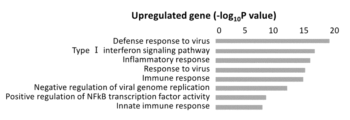
- FIG. 1A shows the results of gene ontology analysis of genes induced by recombinant lievelin (rLVRN) in peripheral blood mononuclear cells (PBMCs).
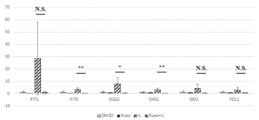
- FIG. 1B shows the expression of interferon-induced genes (OAS2, IFIT1, IFIT3, and ISG15), IDO1, and PD-L1 in PBMCs stimulated by rLVRN.
- OF1, and IFIT3, and ISG15 interferon-induced genes
- IDO1 interferon-induced genes
- PD-L1 interferon-induced genes stimulated by rLVRN.
- Figure 1C shows the results of rLVRN absorption experiments with beads.
- FIG. 1D shows gene induction in PBMCs by direct or indirect culture with LVRN forced expression Swan71 cells.
- FIG. 1E shows gene induction in PBMCs by enzyme-inactive rLVRN.
- FIG. 1E shows gene induction in PBMCs by enzyme-inactive rLVRN.
- Figure 2A shows induction of IFN expression in PBMCs by rLVRN.
- FIG. 2B shows the onset time of the gene induction effect of rLVRN in PBMC.
- Statistical analysis was performed using ANOVA and Dunnett's multiple comparison test. *p ⁇ 0.05, **p ⁇ 0.01, ***p ⁇ 0.001.
- Figure 2C shows the working concentration of IFN- ⁇ corresponding to rLVRN (1.5 ⁇ g/mL).
- Figure 2D shows the effect of IFN- ⁇ neutralizing antibody (aIFNb) on gene induction by IFN- ⁇ .
- Figure 2E shows the effect of IFN- ⁇ neutralizing antibody (aIFNb) and type I IFN receptor neutralizing antibody (aIFNabR) on gene induction by rLVRN.
- Figure 2F shows the effect of JAK1,2 inhibitor (Ruxo) on gene induction in PBMCs by rLVRN. Statistical analysis was performed by multiple comparison test using Bonferroni correction.
- Figure 2G shows a comparison of the ISG15 and IDO1 inducing effects of IFN- ⁇ and rLVRN in PBMC. Statistical analysis was performed using Welch's two-sample t-test. *p ⁇ 0.05, **p ⁇ 0.01.
- Figure 3A shows the expression of ISG15 and IDO1 after rLVRN stimulation in PBMCs of non-preg, normal preg, and hypertensive syndrome of pregnancy (HDP) women.
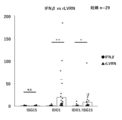
- Figure 3B shows the expression of ISG15 and IDO1 after stimulation with IFN ⁇ or rLVRN in PBMCs of normally pregnant women. Statistical analysis was performed using Welch's two-sample t-test. *p ⁇ 0.05, **p ⁇ 0.01.
- FIG. 4A shows FACS analysis of ISG15 protein expression in lymphocyte and monocyte fractions of PBMCs after rLVRN stimulation.
- Figure 4B shows cell staining of ISG15 protein expression in CD14-positive monocytes, CD4-positive T lymphocytes, CD8-positive T lymphocytes, and CD19-positive B lymphocytes in PBMCs after rLVRN stimulation.
- FIG. 4A shows FACS analysis of ISG15 protein expression in lymphocyte and monocyte fractions of PBMCs after rLVRN stimulation.
- Figure 4B shows cell staining of ISG15 protein expression in CD14-positive monocytes, CD4-positive T lymphocytes, CD8-positive T lymphocytes, and CD19-positive B lymphocytes in PBMCs after rLVRN stimulation.
- FIG. 4C shows FACS analysis of labeled rLVRN binding or uptake into the lymphocyte and monocyte fractions of PBMC.
- FIG. 4D shows analysis of the binding or uptake of labeled rLVRN to the monocyte fraction of PBMCs by cell staining.
- Figure 4E shows gene induction in CD4+ and CD8+ T lymphocytes after rLVRN stimulation. Statistical analysis was performed using Welch's two-sample t-test. *p ⁇ 0.05, **p ⁇ 0.01.
- FIG. 4F shows microarray analysis of rLVRN-induced genes in CD14-positive monocytic cells.
- Figure 4G shows gene induction in CD14 positive monocytic cells by rLVRN.
- FIG. 4H shows induction of differentiation of CD14-positive monocytic cells into dendritic cells (DC) by rLVRN.
- FIG. 4I shows induction of differentiation of CD14-positive monocytic cells into CD11c-positive/CD123-positive DCs by rLVRN.
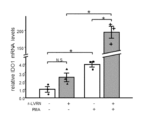
- Figure 5A shows the expression of IDO1 after rLVRN stimulation in PMA-activated or non-activated THP-1 cells.
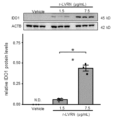
- FIG. 5A shows Western blot analysis of IDO1 protein in PMA-activated THP-1 cells after rLVRN stimulation.
- Figure 5C shows the effect of rLVRN on IDO1 induction in PMA-activated THP-1 cells.
- Figure 5D shows Western blot analysis of IDO1 protein in PMA-activated THP-1 cells after rLVRN stimulation.
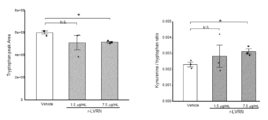
- Figure 6 shows changes in tryptophan levels and kynurenine/tryptophan ratio by rLVRN in PMA-activated THP-1 cells. Statistical analysis was performed using the Welch two-sample test with Bonferroni correction for multiple testing. *p ⁇ 0.05.
- Liebelin (also referred to herein as LVRN) is a glycoprotein identified as a cell surface antigen of extravillous trophoblast cells (EVT) of the placenta.
- EVT extravillous trophoblast cells
- Liberin is a cell membrane-bound protein with M1 peptidase activity and has a membrane-binding site on the N-terminal side.
- the amino acid sequence of Liebelin can be obtained from data bank sites provided by public institutions.
- SEQ ID NO: 1 The representative amino acid sequence of human Liebelin is shown in SEQ ID NO: 1, and the nucleotide sequence encoding this is shown in SEQ ID NO: 2.
- amino acids 14-36 are the membrane binding site
- amino acids 415-438 are the HEXXH(X) 18 E motif, which is the Zn binding site, which is the enzyme active site called the gluzincin motif.
- HEXXH(X) 18 E motif which is the Zn binding site, which is the enzyme active site called the gluzincin motif.
- cleavage site corresponds to the 64th and 65th amino acids in SEQ ID NO: 1 (Non-Patent Document 5).
- Reebelin may be membrane-bound or secreted.
- Liberin may lack peptidase activity, for example may have a mutation in the enzymatic active site.
- Liebelin has a sequence identity of 80% or more, 85% or more, 90% or more, 95% or more, 96% or more, 97% or more, 98% or more, or 99% or more to the amino acid sequence of SEQ ID NO: 1.
- Reebelin has the amino acid sequence of SEQ ID NO: 1, 1-200, 1-150, 1-100, 1-90, 1-80, 1-70, 1-60, 1-50, 1-
- Liberin is a polypeptide comprising or consisting of the amino acid sequence of SEQ ID NO: 1.
- Liebelin has an amino acid sequence of 80% or more, 85% or more, 90% or more, 95% or more, 96% or more, 97% or more, 98% or more, or 99% or more of the amino acid sequence 65th to 990th of SEQ ID NO: 1.
- a polypeptide comprising or consisting of an amino acid sequence having % or more sequence identity.
- Liebelin is 1-200, 1-150, 1-100, 1-90, 1-80, 1-70, 1-60, 1 in the amino acid sequence 65-990 of SEQ ID NO: 1.
- Revelin is a polypeptide comprising or consisting of the amino acid sequence 65-990 of SEQ ID NO: 1.
- Revelin is 80% or more, 85% or more, 90% or more, 95% or more, 96% or more, 97% or more, 98% or more, or 99% or more sequence identical to the nucleotide sequence of SEQ ID NO:2. It is a polypeptide comprising an amino acid sequence encoded by a nucleotide sequence having a specific property, or consisting of the amino acid sequence.
- Reebelin has a nucleotide sequence of 1-600, 1-500, 1-400, 1-300, 1-200, 1-100, 1-90, 1-80, 1- 70, 1-60, 1-50, 1-40, 1-30, 1-20, 1-10, 1-5, 1-3, or 1-2 nucleotides encoded in the modified nucleotide sequence A polypeptide comprising or consisting of an amino acid sequence.
- Liberin is a polypeptide comprising or consisting of the amino acid sequence encoded by the nucleotide sequence of SEQ ID NO:2.
- Liebelin has a nucleotide sequence of 80% or more, 85% or more, 90% or more, 95% or more, 96% or more, 97% or more, 98% or more, or 99% or more of the nucleotide sequence 193-2970 of SEQ ID NO:2.
- a polypeptide comprising or consisting of an amino acid sequence encoded by a nucleotide sequence having % or more sequence identity.
- Reebelin is 1-600, 1-500, 1-400, 1-300, 1-200, 1-100, 1-90, 1 in the nucleotide sequence 193-2970 of SEQ ID NO:2.
- Revelin is a polypeptide comprising or consisting of the amino acid sequence encoded by the nucleotide sequence 193-2970 of SEQ ID NO:2.
- the amino acid length of Reebelin is 700-1200, 800-1100, or 900-1000 amino acids.
- amino acid or nucleotide modifications include deletions, substitutions, insertions, and additions of amino acids or nucleotides, and combinations thereof. Amino acid or nucleotide modifications may be made at any position.
- sequence identity refers to the proportion of amino acids or nucleotides that match between two sequences that are optimally aligned (maximum match) over the entire region of the sequences being compared. . Additions or deletions (eg, gaps) may be present in the optimal alignment of two sequences. Sequence identity can be calculated using programs such as FASTA, BLAST, and CLUSTAL W provided in public databases (for example, DDBJ (http://www.ddbj.nig.ac.jp). Alternatively, It can also be determined using commercially available sequence analysis software (eg, Vector NTI (registered trademark) software, GENETYX (registered trademark) ver. 12).
- Reevelin is a polypeptide consisting of the amino acid sequence of SEQ ID NO: 1 or a polypeptide functionally equivalent to the polypeptide consisting of the amino acid sequence of positions 65 to 990 of SEQ ID NO: 1.
- Functionally equivalent to the polypeptide consisting of the amino acid sequence of SEQ ID NO: 1 or the polypeptide consisting of the 65th to 990th amino acid sequence of SEQ ID NO: 1 means having the same activity as said polypeptide.
- the polypeptide consisting of the amino acid sequence of SEQ ID NO: 1 or the polypeptide functionally equivalent to the polypeptide consisting of the amino acid sequence 65th to 990th of SEQ ID NO: 1 has immune tolerance-inducing activity, antiviral activity, and dendritic cell inducing activity.
- Leavellin can be produced by conventional methods used for producing polypeptides, such as genetic recombination and chemical synthesis.
- Leavellin can be produced by introducing a vector containing a sequence encoding Leavellin into a host cell and obtaining a transformant that expresses Leavellin.
- Vectors include plasmid vectors, phage vectors, viral vectors, and the like.
- Viral vectors include retrovirus vectors, lentivirus vectors, adenovirus vectors, adeno-associated virus vectors, baculovirus vectors, and the like.
- Host cells include E. coli, yeast, insect cells, animal cells, and plant cells.
- the vector usually contains regulatory sequences such as a promoter that regulate its expression. Regulatory sequences are selected to be suitable for expression in the host cell.
- the vector may further contain other elements, such as sequences encoding selectable markers for selection of transformants, sequences encoding tags such as histidine (His) tags, glutathione S-transferase (GST) tags, and the like.
- Vectors can be introduced into host cells by electroporation, lipofection, calcium phosphate method, DEAE-dextran method, and the like. Reebelin can be obtained from the obtained transformant or its culture solution. Liebelin can be isolated and purified by methods commonly used for isolating and purifying polypeptides, such as ammonium sulfate precipitation, gel filtration chromatography, ion exchange chromatography, and affinity chromatography.
- Liebelin may be a fusion polypeptide with a tag or other sequence added, or may be bound to a carrier such as a bead. Additionally, Liebelin may be incorporated into an artificial lipid bilayer membrane (https://bio-med.jp/projects/hanayama/; Drug Delivery System 35-1, p35-46, 2020).
- IDO1 Indoleamine 2,3-dioxygenase 1
- PD-L1 Programmed death-ligand 1
- IDO1 was induced more strongly in pregnant subjects than in non-pregnant subjects.
- IDO1 metabolizes tryptophan, an amino acid essential for cell survival, and converts it into kynurenine, a metabolite with immunosuppressive effects. Therefore, increased IDO1 expression in immune cells induces immunosuppression.
- immune tolerance refers to a state in which a specific immune response to a specific antigen does not occur or is reduced.
- Revelin is used to induce immune tolerance in a subject.
- Reevelin is used to induce immune tolerance in cells.
- Revelin can be used to treat a subject in which induction of immune tolerance is required or in the treatment of cells in which induction of immune tolerance is required.
- Reevelin is administered to a patient with an autoimmune disease.
- autoimmune diseases include systemic lupus erythematosus (SLE), rheumatoid arthritis, Sjögren's syndrome, Hashimoto's disease, type 1 diabetes, autoimmune myositis, systemic scleroderma, glomerulonephritis, Graves' disease, and the like.
- the present disclosure provides compositions for treating autoimmune diseases that include Reebelin.
- Reevelin is administered to an organ transplant recipient.
- Immunosuppressants are used in organ transplants to prevent the recipient's immune system from rejecting the transplanted organ, but since the immune system necessary to maintain homeostasis is also suppressed, the risk of infection is high. There are concerns that the risk of developing cancer may increase due to the suppression of cancer immunity. By inducing immune tolerance in organ transplant recipients, weaning from immunosuppressants can be expected.
- Liberin is administered intrauterinely prior to embryo transfer following in vitro fertilization.
- Liebelin is a molecule involved in inducing immune tolerance in the fetus, and administration of Liebelin can make the immune environment of the endometrium suitable for implantation, improving the implantation rate of embryo transfer. I can do it.
- Reebelin is used to treat immune cells or cell populations comprising the same.
- Immune cells include T cells (including CD4+ T cells and CD8+ T cells), B cells, NK cells, monocytes, macrophages, dendritic cells, or combinations thereof, preferably monocytes.
- Cell populations containing immune cells include peripheral blood mononuclear cells. Peripheral blood mononuclear cells can be isolated from peripheral blood by conventional methods, for example, by density gradient centrifugation.
- the immune cell or cell population containing the same may be an immune cell or a cell population containing the same collected from a subject in which induction of immune tolerance is required.
- immune cells or cell populations comprising immune cells can be harvested from a subject in which induction of immune tolerance is required, treated with Reevelin, and returned to said subject.
- Subjects in which induction of immune tolerance is required include patients with autoimmune diseases and organ transplant recipients.
- the implantation rate can be improved in autoimmune transplantation therapy, in which autoimmune cells taken out of the body are activated with the embryonic signal human chorionic gonadotropin (HCG) and administered into the uterus, followed by embryo transfer. It has been reported that it has a therapeutic effect in many follow-up trials (Yoshioka et al., Hum Reproduction, vol. 21, No. 12, pp.3290-3294, 2006;). Liebelin can be used as an embryonic signal in place of HCG in this autoimmune transplantation therapy. Therefore, subjects in which induction of immune tolerance is required also include recipients of embryo transfer.
- HCG human chorionic gonadotropin
- Treatment of cells or cell populations with Leavelin can be performed by culturing the cells or cell populations in the presence of Leavelin.
- a medium commonly used for culturing animal cells can be used, and for example, RPMI1640, MEM, IMDM, DMEM, etc. can be used.
- Revelin may be present at a final concentration of, for example, 1 ng/mL to 10 ⁇ g/mL, 5 ng/mL to 5 ⁇ g/mL, 10 ng/mL to 1 ⁇ g/mL, 20 ng/mL to 500 ng/mL, or 100 ng/mL to 500 ng/mL, such as 1. It can be added to the culture medium at 5 ⁇ g/mL.
- the medium may contain substances such as serum, serum substitutes, antibiotics, amino acids, 2-mercaptoethanol, growth factors, and the like.
- the medium may be a serum-free medium.
- the culture period is not limited, but for example, 1 to 30 days, 1 to 20 days, 1 to 14 days, 1 to 10 days, for example, 1, 2, 3, 4, 5, 6, 7, 8, 9 , or 10 days.
- Reebelin-treated cells also includes cells co-cultured with Reebelin-expressing cells.
- a livelin-expressing cell may be a cell into which a livelin-encoding sequence has been introduced, ie, a cell that contains a livelin-encoding transgene.
- Such Reebelin-expressing cells can be produced by introducing into the cells a vector containing the Reevelin coding sequence described herein. Cells into which the vector is introduced can be appropriately selected by those skilled in the art; for example, Swan71 cells can be used.
- Reebelin-expressing cells containing a transgene encoding Reevelin can be used for cell transplantation therapy.
- the transgene may encode any Reebelin described herein.
- Cells into which the Liberin coding sequence is introduced include iPS cells or cells for transplantation derived from iPS cells. This is particularly useful when using allogeneic iPS cells for therapy.
- IFN- ⁇ IFN- ⁇
- ISG gene group ISG gene group induced by it, as well as the APOBEC3 family, in peripheral blood mononuclear cells.
- Interferon is a cytokine produced by immune cells in vivo during viral infection and has antiviral activity.
- IFN- ⁇ has been clinically applied and widely used as a therapeutic agent for viral hepatitis such as hepatitis B and hepatitis C.
- the APOBEC3 family is a cytidine deaminase and is known to inhibit virus replication and have antiviral activity. Therefore, Revelin can be used as an antiviral agent.
- Target viruses include hepatitis B virus, hepatitis C virus, human immunodeficiency virus (HIV), and human papillomavirus (HPV).
- Target viral diseases include hepatitis B, hepatitis C, HIV infection, and HPV infection.
- livelin the cells themselves have an effect of promoting the secretion of IFN- ⁇ against immune cells, so by expressing livelin, it is possible to create transplanted cells that are resistant to infectious diseases.
- Dendritic cells can be prepared by culturing monocytes or a cell population containing them in the presence of Reevelin.
- Monocytes can be identified by expression of CD14 and can also be isolated from cell populations containing monocytes.
- Cell populations containing monocytes include peripheral blood mononuclear cells.
- the peripheral blood mononuclear cells can be peripheral blood mononuclear cells collected from a subject receiving the prepared dendritic cells.
- As the medium a medium commonly used for culturing animal cells can be used, and for example, RPMI1640, MEM, IMDM, DMEM, etc. can be used.
- Revelin may be present at a final concentration of, for example, 1 ng/mL to 10 ⁇ g/mL, 5 ng/mL to 5 ⁇ g/mL, 10 ng/mL to 1 ⁇ g/mL, 20 ng/mL to 500 ng/mL, or 100 ng/mL to 500 ng/mL, such as 1. It can be added to the culture medium at 5 ⁇ g/mL.
- the medium may contain substances such as serum, serum substitutes, antibiotics, amino acids, 2-mercaptoethanol, growth factors, and the like.
- the medium may be a serum-free medium.
- the culture period is not limited, but for example, 1 to 30 days, 1 to 20 days, 1 to 14 days, 1 to 10 days, for example, 1, 2, 3, 4, 5, 6, 7, 8, 9 , or 10 days.
- Obtaining dendritic cells can be confirmed by detecting cell surface markers. Examples of dendritic cell markers include CD11b, CD11c, CD123, CD38, CD80, and HLA-DR, and induction of dendritic cells can be confirmed by detecting one or more markers selected from these. can.
- the dendritic cells are CD11c/CD123 double positive cells.
- the present disclosure provides a method for preparing dendritic cells, the method comprising culturing a cell population comprising monocytes in the presence of Reevelin.
- Dendritic cells can be used in dendritic cell therapy for diseases such as cancer, autoimmune diseases, and allergic diseases.
- the composition may contain Leavellin, Leavellin-treated cells, or Leavellin-expressing cells as an active ingredient.
- the composition may include one or more pharmaceutically acceptable carriers.
- a pharmaceutically acceptable carrier means any substance other than the active ingredient that does not impair the effect of the active ingredient and is highly safe for subjects.
- Pharmaceutically acceptable carriers include excipients, stabilizers, buffers, preservatives, suspending agents, tonicity agents, and the like.
- the pharmaceutically acceptable carrier can be, for example, water, culture medium, isotonic solutions including saline, dextrose, and the like, phosphate buffered saline (PBS).
- PBS phosphate buffered saline
- the composition may contain Reebelin or other active ingredients to the extent that they do not impair the effects of the cells.
- the composition can be in solid or liquid form. Dosage forms include, but are not limited to, capsules, tablets, powders, solutions, suspensions, injections, ointments, creams, and suppositories.
- the composition can be prepared according to known methods.
- the composition is an injection. Examples of injections include aqueous injections, non-aqueous injections, suspension injections, emulsion injections, and solid injections that are dissolved or suspended during use.
- Liebelin, Liebelin-treated cells, Liebelin-expressing cells, or compositions containing the same can be administered to a subject by known administration methods.
- Administration methods include oral administration and parenteral administration, and examples of parenteral administration include intravenous administration, intrauterine administration, intramuscular administration, transdermal administration, and subcutaneous administration.
- the subject can be a human or non-human mammal.
- Non-human mammals include, for example, rodents such as mice, rats, guinea pigs, and hamsters; non-human primates such as chimpanzees; artiodactyla such as cows, goats, and sheep; perissodactyla such as horses; rabbits and dogs. , pet animals such as cats.
- the subject is a human or non-human primate (eg, chimpanzee, monkey, gorilla, gibbon, and orangutan).
- the subject is a human.
- the dosage of Reevelin or cells will be determined depending on factors such as the age, weight, and condition of the subject, and the purpose of treatment.
- the dosage of Leavelin is, for example, 1 mg, 5 mg, 10 mg, 15 mg, 20 mg, 25 mg, 30 mg, 35 mg, 40 mg, 45 mg, or 50 mg or more, 10000 mg, 5000 g, 4500 mg per day for adults, It can be up to 4000 mg, 3500 mg, 3000 mg, 2500 mg, 2000 mg, 1500 mg, or 1000 mg.
- the dose of Reevelin is 15 mg to 4500 mg.
- the number of cells administered is, for example, 1 to 10 10 cells, 10 to 10 9 cells, 10 2 to 10 8 cells, or 10 3 to 10 7 cells per adult day. It can be a cell.
- the daily dose may be administered once or divided into multiple doses.
- the period of administration can be 1 or several days (for example 2, 3, 4, 5 or 6 days), 1 or several weeks (for example 2, 3, 4, 5 or 6 weeks), 1 month or several months (for example 2 , 3, 4, 5 or 6 months), or longer.
- Administration may be daily, several days (e.g. 2, 3, 4, 5 or 6 days), one week or several weeks (e.g. 2, 3, 4, 5 or 6 weeks), one month or several months ( For example, it may be once every 2, 3, 4, 5 or 6 months).
- the disease or its onset risk can be determined, or the therapeutic effect of a therapeutic agent. can be evaluated.
- Diseases include gestational hypertension and immune-related diseases such as SLE.
- the method of the present disclosure comprises culturing peripheral blood mononuclear cells collected from a subject in the presence of Revelin, and then determining the ISG15 expression level, IDO1 expression level, or IDO1/ISG15 ratio in the peripheral blood mononuclear cells. is compared with the corresponding reference value.
- a medium commonly used for culturing animal cells can be used, and for example, RPMI1640, MEM, IMDM, DMEM, etc. can be used.
- Revelin may be present at a final concentration of, for example, 1 ng/mL to 10 ⁇ g/mL, 5 ng/mL to 5 ⁇ g/mL, 10 ng/mL to 1 ⁇ g/mL, 20 ng/mL to 500 ng/mL, or 100 ng/mL to 500 ng/mL, such as 1. It can be added to the culture medium at 5 ⁇ g/mL.
- the medium may contain substances such as serum, serum substitutes, antibiotics, amino acids, 2-mercaptoethanol, growth factors, and the like.
- the medium may be a serum-free medium.
- the culturing time is, but is not limited to, for example, 4 to 24 hours, 6 to 24 hours, 8 to 24 hours, 10 to 24 hours, or 12 to 24 hours.
- Harvesting peripheral blood mononuclear cells from a subject and measuring the expression levels of ISG15 and IDO1 can be performed using standard methods.
- the expression levels of ISG15 and IDO1 can be measured by PCR (polymerase chain reaction), microarray, etc.
- the method of the present disclosure may include comparing two or more selected from ISG15 expression level, IDO1 expression level, and IDO1/ISG15 ratio with respective corresponding reference values.
- the method of the present disclosure includes comparing the amount or proportion of Leavellin-positive T cells in peripheral blood collected from the subject to a reference value.
- the ratio of Leavelin-positive T cells in peripheral blood means the ratio of Leavelin-positive T cells in peripheral blood mononuclear cells contained in peripheral blood. Collection of peripheral blood and peripheral blood mononuclear cells from a subject and measurement of Leavellin-positive T cells can be performed by conventional methods. For example, Leavelin-positive T cells in peripheral blood can be measured by flow cytometry using an anti-CD3 antibody and an anti-Leebelin antibody against peripheral blood mononuclear cells.
- the reference values are the ISG15 expression level, IDO1 expression level, and IDO1 expression level that can separate a subject group known to have a disease from a subject group without a disease (for example, a healthy group) with a statistically significant difference. /ISG15 ratio, or the amount or ratio of Leavelin-positive T cells. Statistically significant differences can be analyzed using test methods such as chi-square test, generalized Wilcoxon test, Wilcoxon signed rank test, Mann-Whitney test, log-rank test, Cox proportional hazards, and the like.
- the reference value may be set based on sensitivity and/or specificity. Sensitivity means the true positive rate, and specificity means the true negative rate. For example, a value showing a high positive rate in a group of subjects known to have a disease and a high negative rate in a group of subjects without a disease may be set as the reference value.
- the subject is determined to have the disease or to be at risk of developing the disease.
- peripheral blood or peripheral blood mononuclear cells are collected from subjects with the disease after administration of the therapeutic drug.
- the ISG15 expression level, IDO1 expression level, or IDO1/ISG15 ratio in peripheral blood mononuclear cells collected after administration of a therapeutic agent from a subject with a disease is higher than a reference value, or from a subject with a disease. If the amount or ratio of Reebelin-positive T cells in the peripheral blood collected after administration of the drug is lower than the reference value, it is determined that the therapeutic drug is effective.
- the reference value is the ISG15 expression level, IDO1 expression level, or IDO1/ISG15 ratio in peripheral blood mononuclear cells collected from the same subject before administration of the therapeutic agent, or the same It may also be the amount or proportion of Leavelin-positive T cells in peripheral blood collected from a subject before administration of a therapeutic agent.
- a composition for inducing immune tolerance comprising Revelin.
- [2] 2. The composition according to 1 above, which is administered to an autoimmune disease patient.
- [3] 2. The composition according to item 1, which is administered to an organ transplant recipient.
- [4] 2. The composition according to 1 above, which is administered into the uterus prior to embryo transfer after in vitro fertilization.
- [5] 2. The composition described in 1 above, which is used for in vitro treatment of immune cells or cell populations containing the same.
- composition according to 5 above wherein the immune cells or the cell population containing the same are cells collected from an organ transplant recipient.
- [8] 6 The composition according to 5 above, wherein the immune cells or the cell population containing the same are cells collected from an embryo transplant recipient.
- Liebelin has a sequence identity of 80% or more, 85% or more, 90% or more, 95% or more, 96% or more, 97% or more, 98% or more, or 99% or more with the amino acid sequence from 65th to 990th of SEQ ID NO: 1 9.
- a method of inducing immune tolerance comprising administering to a subject in need thereof an effective amount of Reevelin.
- the subject is an autoimmune disease patient.
- the subject is an organ transplant recipient.
- the subject is an embryo transplant recipient.
- a method for treating cells comprising culturing immune cells or a cell population comprising the same in the presence of Reebelin.
- the method comprising culturing immune cells or a cell population comprising the same in the presence of Reebelin.
- the cell population is peripheral blood mononuclear cells.
- composition for cell transplantation therapy comprising a livelin-expressing cell containing a transgene encoding livelin.
- Antiviral drugs including Revelin.
- a method of treating a viral disease comprising administering to a subject in need thereof an effective amount of Reevelin.
- a composition for inducing dendritic cells containing Reebelin.
- a method for preparing dendritic cells comprising culturing monocytes or a cell population containing the same in the presence of Reebelin.
- 24 The method according to 23 above, wherein the cell population is peripheral blood mononuclear cells.
- a method for determining a disease or its risk of onset comprising: culturing peripheral blood mononuclear cells collected from the subject in the presence of Liebelin, and comparing the ISG15 expression level, IDO1 expression level, or IDO1/ISG15 ratio in the peripheral blood mononuclear cells after culture with a reference value. including methods.
- a method for evaluating the effectiveness of a therapeutic drug comprising: Culturing peripheral blood mononuclear cells collected from a subject with a disease after administration of a therapeutic agent in the presence of Liebelin, and determining the ISG15 expression level, IDO1 expression level, or IDO1/ISG15 ratio in the peripheral blood mononuclear cells after culture. method, including comparing the value to a reference value.
- 27 The method according to 25 or 26 above, wherein the disease is gestational hypertension syndrome.
- a method for determining a disease or the risk of developing the same comprising comparing the amount or ratio of Leavellin-positive T cells in peripheral blood collected from a subject with a reference value.
- a method for evaluating the effectiveness of a therapeutic agent comprising comparing the amount or ratio of Leavellin-positive T cells in peripheral blood collected from a subject with a disease after administration of the therapeutic agent to a reference value.
- rLVRN recombinant lievelin
- LVRN full-length human lievelin
- His6 hexahistidine
- the amplified cDNA was cloned into the EcoRI-XhoI site of the baculovirus transfer vector pFastBac1 vector (Invitrogen).
- the prepared transfer vector was introduced into E. coli DH10Bac cells harboring a baculovirus genome (Bacmid) and a transposition helper vector (Invitrogen) to produce recombinant bacmid DNA containing LVRN cDNA.
- bacmid DNA was introduced into Sf9 insect cells using Cellfectin (registered trademark) Reagent (Invitrogen), and after culturing for 72 hours, the recombinant baculovirus was collected.
- the cells were cultured in 900III medium (Invitrogen) at 27° C. for 72 hours (Cellmaster-1700, WAKENYAKU CO., LTD., Kyoto, Japan).
- the medium containing soluble rLVRN was collected by centrifugation and applied to a hydroxyapatite column (2.5 x 10 cm, Nacalai Tesque, Kyoto, Japan) equilibrated with 50 mM Tris/HCl buffer (pH 7.5). , and eluted with 100 mM sodium phosphate buffer (pH 7.5). The eluate was applied to a chelate Sepharose column (1.0 x 10 cm) preloaded with Ni 2+ (GE Healthcare Bio-Science, Piscataway, NJ) and eluted with 200 mM imidazole. Secreted LVRN (LVRN(65-990)+His6) with a His6 tag at the C-terminus was recovered.
- E416Q rLVRN Enzyme-inactive rLVRN
- cDNA encoding E416Q rLVRN was generated using the QuikChange Site-Directed Mutagenesis Kit (Stratagene, LaJolla, Calif.).
- the coding sequences of the cytoplasmic region and transmembrane region (Met1-Gln64) of the enzyme were replaced with the signal peptide of human trypsin II (MNLLILTFVAAVAA) (SEQ ID NO: 3), and a His6 tag was added at the C-terminus. Added.
- the amplified cDNA was cloned into the BssHII-XhoI site of baculovirus transfer vector pFastbac-1 (Invitrogen).
- the prepared transfer vector was transformed into E. coli DH10Bac cells carrying the baculovirus genome (bacmid) and a transposition helper vector (Invitrogen).
- Bacmid DNA was introduced into Sf9 insect cells using Cellfectin (registered trademark) Reagent (Invitrogen), and after culturing for 72 hours, recombinant baculovirus was collected.
- the cells were cultured in 900III medium (Invitrogen) at 27° C. for 72 hours (Cellmaster-1700, WAKENYAKU CO., LTD., Kyoto, Japan).
- the medium containing E416Q rLVRN was collected by centrifugation, applied to a hydroxyapatite column (2.5 x 10 cm) (Nacalai Tesque, Kyoto, Japan) equilibrated with 50 mM Tris/HCl buffer (pH 7.5), and Elution was carried out with acid sodium buffer (pH 7.5).
- the eluate was applied to a Ni 2+ chelating Sepharose column (1.0 x 10 cm) (GE Healthcare Bio-Science, Piscataway, NJ) and eluted with 200 mM imidazole.
- Microarray analysis and gene ontology analysis Microarray-based gene expression array analysis was performed according to the manufacturer's instructions. Specifically, labeled cDNA was prepared from 0.2 ⁇ g of RNA using a Low Input Quick Amp Labeling Kit (Agilent Technologies, Santa Clara, CA, USA). The sample was printed on SurePrint G3 Human GE microarray 8 ⁇ 60 K Ver. 3.0 (G4845A#72363, Agilent Technologies) and scanned with one-color scan setting of 1x60k array slides using Agilent DNA Microarray Scanner (G2539A) (A gilent Technologies). The scanned images were analyzed using Feature Extraction Software 11.0.1.1 (Agilent).
- PBMC peripheral blood mononuclear cells
- PBMC or Swan71 cells were incubated at 4°C with FITC-conjugated anti-LVRN antibody (clone 5-23) or FITC-conjugated mouse IgG antibody (clone: P3.6.2.8.1 LOT: 2067148 Invitrogen) as a control. Incubated for 30 minutes. Cell surface labels were analyzed by fluorescence detection using a BD FACS Aria TM Fusion cell sorter.
- FACS analysis of ISG15 expression in immune cells by rLVRN was performed as follows. After adding 1.5 ⁇ g/mL of rLVRN to PBMC and collecting the PBMC after culturing for 24 hours, blocking was performed at 4°C for 30 minutes using BD Pharmingen TM Human BD Fc block TM (Cat #564220, LOT: 9049805). Ta.
- FITC-conjugated CD14 (monocyte marker) antibody (FITC mouse IgG1k anti-humena CD14 Clone: HCD14 Cat#325604 LOT:B268830 Biolegend), APC-conjugated anti-CD19 (B cell marker) antibody (APC mouse IgG1k anti-human CD19 Cat# 555415 LOT:8296813 BD pharmingen) and BV421-binding CD3 (T cell marker) antibody (BV421 mouse IgG1k anti-human CD3 Clone: UCHT1 Cat#562426 LOT:9113553) at 4°C. It was allowed to act for 1 hour.
- PE-conjugated anti-ISG15 antibody (anti-hISG15/UCRP PE conjugated Rat IgG2A Cat#IC8044P LOT:ADRU0219021 R&D systems) was reacted at 4°C for 1 hour, and BD FACS Aria TM Fus Analysis was performed by fluorescence detection using an ion cell sorter.
- LVRN-positive T cells in maternal blood was performed as follows. After separating the collected PBMC, blocking was performed at 4°C for 30 minutes using BD Pharmingen TM Human BD Fc block TM (Cat #564220, LOT:9049805). After washing several times, FITC-conjugated anti-LVRN antibody (clone 5-23) and BV421-conjugated CD3 (T cell marker) antibody (BV421 mouse IgG1k anti-human CD3 Clone: UCHT1 Cat#562426 LOT:9113553) were incubated at 4°C. Double staining was carried out over time. Subsequently, the antibodies were washed several times and then analyzed by fluorescence detection using a BD FACS Aria TM Fusion cell sorter.
- rLVRN Analysis regarding the differentiation of CD14 cells by rLVRN was performed as follows. 1.5 ⁇ g/mL of rLVRN was added to PBMC, and after 24 hours of culture, PBMC were collected and blocked at 4°C for 30 minutes using BD Pharmingen TM Human BD Fc block TM (Cat #564220, LOT:9049805). .
- FITC-conjugated CD14 (monocyte marker) antibody FITC mouse IgG1k anti-humena CD14 Clone: HCD14 Cat#325604 LOT: B268830 Biolegend
- PE-conjugated anti-HLA-DR (antigen presenting cells marker) antibody PE mouse IgG2ak anti-human HLA-DR Cat#555812 LOT:9248092 BD Pharmingen
- APC-conjugated anti-CD11c dendritic cell marker (mainly moDC)) antibody
- BV421-binding anti-CD123 (dendritic cell marker (mainly pDC)) antibody BV421 mouse IgG2ak anti-human CD123 Clone:7G3 Cat#563362 L OT:0279696 BD Horizon
- rLVRN Absorption Experiment Using Beads An rLVRN suppression experiment was conducted using beads that recognize the histidine tag of rLVRN. 1 ⁇ L of Bc Mag TM His-Ni magnetic Beads (Cat #MHN-102, LOT:0119) and 4.5 ⁇ g of rLVRN were added to 400 ⁇ L of PBS, and the mixture was stirred at 4°C. After 30 minutes, the beads and rLVRN reacted with the beads were collected using a magnet (6-Tube Magnetic Separation Rack #7017S LOT:0001 Cell Signaling), and only the supernatant was added to PBMC. After incubation at 37°C for 24 hours, PBMC were collected and RNA was extracted.
- LVRN-Swan71 cells To establish the Swan71 cell line expressing LVRN, the cDNA of full-length human Liebelin (hLVRN-His) with a His6 tag at the C-terminus was inserted into the pTargeT vector (Promega), and the resulting rLVRN-His /pTargeT (500 ng) was linearized by cutting with Psp1406I, and introduced into Swan71 cells using FuGeneHD (Promega). 48 hours after gene introduction, a stable expression strain was established using a medium containing 500 ⁇ g/mL of G418 and isolated. In establishing NEO-Swan71 cells, pTargeT vector was introduced instead of rLVRN-His/pTargeT.
- LVRN-Swan71 cells and NEO-Swan71 cells previously treated with mitomycin 2 ⁇ g/mL for 4 hours were cultured at 1.5 ⁇ 10 5 cells/well using a 12-well adherent cell plate.
- the cells were cultured in RPMI at a concentration of 1 mL/well.
- 1 mL of PBMC prepared at a concentration of 1.5 ⁇ 10 5 cells with RPMI was replaced with the culture medium of LVRN-Swan71 cells and NEO-Swan71 cells, and after incubation at 37°C for 24 hours, the culture plate was removed. Stir on a shaker for 10 minutes.
- CD14-positive monocyte fraction For separation/recovery of CD14-positive monocytes, use CD14 MicroBeads (CD14 MicroBeads, human, Order no.: 130-050-201, Lot no. :5210205621, Miltenyi Biotec), and CD45-positive cells were selectively separated and collected using the Possel program of autoMACS (registered trademark) Pro Separator (Miltenyi Biotec).
- CD14 MicroBeads CD14 MicroBeads, human, Order no.: 130-050-201, Lot no. :5210205621, Miltenyi Biotec
- CD45-positive cells were selectively separated and collected using the Possel program of autoMACS (registered trademark) Pro Separator (Miltenyi Biotec).
- CD4 MicroBeads CD4 MicroBeads, human, Order no: 130-045-101, Lot no: 5210401362, Miltenyi Biotec
- CD8 MicroBeads CD8 MicroBeads, human. man, order no : 130-045-201, Lot no: 5210401341, Miltenyi Biotec).
- rLVRN Observation of ISG15 expression in immune cells by rLVRN was performed as follows. After adding rLVRN (1.5 ⁇ g/mL) to PBMC and collecting the PBMC after culturing for 24 hours, they were fixed with 4% PFA for 10 minutes, and further permeabilized with 0.1% triton/PBS for 10 minutes. Blocking was performed with 1% FBS/PBS for 30 minutes.
- Anti-CD14 (monocyte marker) antibody (CD14 (UCH-M1) mouse mAb sc-1182 LOT: K1308 Santa Cruz), anti-CD19 (B cell marker) antibody (CD19 (EPR5906) rabbit Ab b134114 LOT:GR3252252-1) , anti-CD4 antibody (CD4 (BC/1F6) mouse mAb ab846 LOT: GR235014-1) and anti-CD8 antibody (CD8 Clone C8/144B mouse mAb anti-human REF: M71 03 LOT:20024879 DAKO), PE-conjugated anti-ISG15 antibody ( anti-hISG15/UCRP PE conjugated Rat IgG2A Cat#IC8044P LOT: ADRU0219021 R&D systems) was allowed to act at room temperature for 2 hours.
- Alexa Fluor 488 goat anti-rabbit IgG H+L
- Alexa Fluor 488 goat anti-rabbit IgG H+L
- 488 goat anti-mouse IgG H+L
- nucleic acid staining 1 ⁇ g/mL Hoechst (registered trademark) 33342
- washing the antibody several times suspending the centrifuged cells in 20 ⁇ L of PBS, and dropping 20 ⁇ L onto a glass slide.
- the cells were then embedded with coverslips, observed with a fluorescence microscope (Olympus BX50 microscope), and photographed with a camera (DP72 Olympus digital camera).
- the intracellular uptake of rLVRN by CD14 cells was confirmed as follows. Added RLVRN (1.5 ⁇ g / ml), which indicates HILYTE FLUOR TM 555 pigments in PBMC, collected PBMC after 24 hours, BD Pharmingen TM HUMAN BD FC BLOCK TM (CAT # 564 Use 220, Lot: 9049805) Blocking was performed at 4°C for 30 minutes. After fixation with 1% PFA for 10 minutes, anti-CD14 antibody (CD14 (UCH-M1) mouse mAb sc-1182 LOT:K1308 Santa Cruz) was allowed to act at 4°C for 1 hour.
- CD14 UCH-M1 mouse mAb sc-1182 LOT:K1308 Santa Cruz
- Alexa Fluor 488 goat anti-mouse IgG H+L
- H+L Alexa Fluor 488 goat anti-mouse IgG
- H+L Alexa Fluor 488 goat anti-mouse IgG
- Hoechst registered trademark
- 33342 was added as a nucleic acid stain at room temperature. It was allowed to act for 2 hours.
- the centrifuged cells were suspended in 200 ⁇ L of PBS, 50 ⁇ L was dropped onto a slide glass, and a cover glass was stacked and embedded, observed with a fluorescence microscope (Olympus BX50 microscope), and captured with a camera (DP72 Olympus). The photo was taken with a digital camera.
- THP-1 human acute monocytic leukemia cell line THP-1 (RRID: CVCL_0006) with monocytic properties was purchased from ATCC.
- THP-1 cells were cultured at 37°C under 5% CO in RPMI (Nacalai Tesque, Kyoto, Japan) supplemented with 10% FBS (Sigma-Aldrich), 100 g/mL streptomycin, 100 IU/mL penicillin.
- FBS Sigma-Aldrich
- PMA phorbol 12-myristate 13-acetate
- the protein lysate was extracted with RIPA Buffer (Cell Signaling Technology Inc., Danvers, MA, USA), electrophoresed on a 10% SDS-PAGE gel, and then transferred to a nitrocellulose membrane.
- the transferred membrane was coated with IDO (1:1000, Cell Signaling Technology Cat# 86630, RRID:AB_2636818) or Actin (1:5,000, Santa Cruz Biotechnology Cat# sc-1). 615, RRID: AB_630835) Incubated overnight at °C.
- a secondary antibody, horseradish peroxidase (HRP)-conjugated antibody was applied for 1 hour at room temperature.
- High performance liquid chromatography-mass spectrometry HPLC-MS
- the levels of tryptophan and kynurenine in the culture medium were quantified by high performance liquid chromatography and high resolution mass spectrometry and tandem mass spectrometry (HPLC-MS/MS).
- HPLC-MS/MS high performance liquid chromatography-mass spectrometry
- PMA-activated THP-1 cells were treated with 1.5 or 7.5 ⁇ g/mL r-LVRN for 48 hours. After that, the amount of metabolites in the culture solution was measured by HPLC-MS at Kanazawa University Gene Research Institute (Dochi, H., Kondo, S., Murata, T., Fukuyo, M., Nanbo, A., Wakae, K.
- ISGs, IDO1, and PD-L1 gene induction in PBMCs by Liebelin 1A Gene ontology analysis using microarray After adding rLVRN (1.5 ⁇ g/mL) to PBMCs and culturing them for 24 hours, the gene groups whose expression changed in PBMCs were compared to the unadded control. A comparative analysis was performed between groups and microarrays.
- FIG. 1A shows the results of gene ontology analysis of genes whose expression was observed to be induced. An immune response involving the Type I interferon signaling pathway was induced.
- ISGs interferon stimulated genes
- PBMCs cultured for 24 hours in the presence of rLVRN (1.5 ⁇ g/mL) for ISG15 and IDO1 (indoleamine 2,3-dioxygenase-1) and PD-L1 (Programmed death-ligand 1), which are related to immune tolerance induction.
- ISG15 and IDO1 indoleamine 2,3-dioxygenase-1
- PD-L1 Programmed death-ligand 1
- rLVRN absorption experiment using beads In order to negate the effect of contaminants mixed in during the production process of rLVRN, rLVRN was absorbed with anti-His tag antibody-conjugated beads that adsorb His tag proteins to induce the expression of ISGs and IDO1 on PBMCs. An experiment was conducted. As a result, the inducing effect of rLVRN was suppressed by absorption by the beads, indicating that rLVRN, not impurities, had the effect of inducing the expression of ISGs and IDO1 (FIG. 1C).
- Swan71 cells are a cell line established from human extravillous trophoblast cells that express LVRN on their cell membranes, but normal monolayer culture Under these conditions, LVRN expression is abolished.
- LVRN-Swan71 a forced LVRN-expressing Swan71 cell line in which LVRN was forcibly expressed in the cell membrane, and confirmed the expression of LVRN by cell staining and the expression on the cell surface by flow cytometry (Fig. 1D top).
- Direct culture of these LVRN-Swan71 cells with PBMC or indirect culture using a chamber membrane was performed for 24 hours, and the gene expression induction effect of LVRN on PBMC was examined.
- ISGs gene induction mechanism 2A in immune cells rLVRN's ability to induce IFN production Since the induction of ISGs was confirmed in microarray analysis, the induction of IFN production in PBMC by rLVRN was investigated by quantitative PCR. As a result, rLVRN (1.5 ⁇ g/mL) induced the production of IFN- ⁇ in PBMC, but not the production of IFN- ⁇ and IFN- ⁇ (FIG. 2A).
- ISG15 and IDO1 induction effects by IFN- ⁇ and rLVRN PBMC from normal non-pregnant subjects (female) (12 cases) in the presence of IFN- ⁇ (10 IU/mL) or rLVRN (1.5 ⁇ g/mL)
- the cells were cultured for 24 hours, and the inducing effects of ISG15 and IDO1 were examined.
- IFN- ⁇ and rLVRN had particularly different IDO1-inducing effects, and a comparison of the IDO1/ISG15 ratio showed that rLVRN had a stronger IDO1-inducing effect than IFN- ⁇ (FIG. 2G).
- 3B Effects of IFN ⁇ and rLVRN on PBMCs of normally pregnant women After culturing PBMCs from normally pregnant women (29 cases) in the presence of IFN- ⁇ (10 IU/mL) or rLVRN (1.5 ⁇ g/mL) for 24 hours, ISG15 and The expression of IDO1 was examined by quantitative PCR. As a result, IDO1 was more strongly induced by rLVRN than by IFN- ⁇ , and the IDO1/ISG15 ratio after rLVRN stimulation was significantly higher than that after IFN- ⁇ stimulation (FIG. 3B).
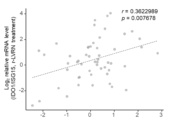
- 3C Association between fetal growth and IDO1/ISG15 ratio Standard deviation score (Z score) of birth weight for gestational age as an indicator of fetal growth (Itabashi K, Miura F, Uehara R, Nakamura Y. New Japanese neonatal anthropometric charts for gestational age at birth. Pediatr Int. 2014;56(5):702-8.) and the Pearson correlation coefficient (r) to compare fold changes in IDO1 and ISG15 mRNA levels and birth weight. The linear correlation between the Z-score and the Z score was analyzed.
- Z score Standard deviation score
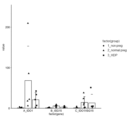
- LVRN-positive T cells in women with non-pregnancy, normal pregnancy, gestational hypertension, and pregnancies with immune disorders Flow cytometry of LVRN-positive T cells in women with non-pregnancy, normal pregnancies, gestational hypertension, and pregnancies with immune disorders. Analyzed by. As a result, LVRN-positive T cells were observed to increase during pregnancy, and to be higher in pregnancies complicated by gestational hypertension syndrome or systemic lupus erythematosus (SLE) (Fig. 3D).
- Analysis of cells in PBMC responsive to rLVRN 4A Analysis of ISG15 protein expression in PBMC after rLVRN stimulation by FACS After culturing PBMC in the presence of rLVRN (1.5 ⁇ g/mL) for 24 hours, lymphocyte fraction and cell ISG15-expressing cells in the sphere fraction were analyzed by FACS. As a result, the expression of ISG15 was increased in most of the lymphocyte and monocyte fractions (FIG. 4A).
- ISG15 protein expression in PBMC after rLVRN stimulation by cell staining The expression of ISG15 protein in PBMC after 24-hour culture with rLVRN (1.5 ⁇ g/mL) was analyzed by cell staining. As a result, expression of ISG15 protein was observed in CD14-positive monocytes, CD4-positive T lymphocytes, CD8-positive T lymphocytes, and CD19-positive B lymphocytes (FIG. 4B).
- CD4-positive fractions and CD8-positive fractions were separated from PBMC of normal non-pregnant women (1 case) and men (1 case), and rLVRN ( PBMC were cultured for 24 hours in the presence of 1.5 ⁇ g/mL).
- PBMC normal non-pregnant women (1 case) and men (1 case)
- rLVRN PBMC were cultured for 24 hours in the presence of 1.5 ⁇ g/mL.
- CD14-positive monocytic cells were isolated from PBMC, cultured for 24 hours in the presence of rLVRN (1.5 ⁇ g/mL), and the expressed genes were analyzed using a microarray. . As a result, reactivity was shown to be 70 times stronger for ISGs and 177 times stronger for IDO1 than PBMC. In particular, changes in the expression of the following genes were observed.
Landscapes
- Health & Medical Sciences (AREA)
- Life Sciences & Earth Sciences (AREA)
- Chemical & Material Sciences (AREA)
- Engineering & Computer Science (AREA)
- Organic Chemistry (AREA)
- General Health & Medical Sciences (AREA)
- Bioinformatics & Cheminformatics (AREA)
- Immunology (AREA)
- Zoology (AREA)
- Medicinal Chemistry (AREA)
- Genetics & Genomics (AREA)
- Biotechnology (AREA)
- Pharmacology & Pharmacy (AREA)
- Wood Science & Technology (AREA)
- Animal Behavior & Ethology (AREA)
- Biomedical Technology (AREA)
- Public Health (AREA)
- Veterinary Medicine (AREA)
- Proteomics, Peptides & Aminoacids (AREA)
- Biochemistry (AREA)
- Chemical Kinetics & Catalysis (AREA)
- General Chemical & Material Sciences (AREA)
- Nuclear Medicine, Radiotherapy & Molecular Imaging (AREA)
- General Engineering & Computer Science (AREA)
- Cell Biology (AREA)
- Microbiology (AREA)
- Molecular Biology (AREA)
- Biophysics (AREA)
- Epidemiology (AREA)
- Gastroenterology & Hepatology (AREA)
- Toxicology (AREA)
- Virology (AREA)
- Developmental Biology & Embryology (AREA)
- Communicable Diseases (AREA)
- Transplantation (AREA)
- Heart & Thoracic Surgery (AREA)
- Cardiology (AREA)
- Oncology (AREA)
- Physics & Mathematics (AREA)
- Analytical Chemistry (AREA)
Priority Applications (1)
| Application Number | Priority Date | Filing Date | Title |
|---|---|---|---|
| JP2024533546A JPWO2024014137A1 (https=) | 2022-07-14 | 2023-05-23 |
Applications Claiming Priority (2)
| Application Number | Priority Date | Filing Date | Title |
|---|---|---|---|
| JP2022-113357 | 2022-07-14 | ||
| JP2022113357 | 2022-07-14 |
Publications (1)
| Publication Number | Publication Date |
|---|---|
| WO2024014137A1 true WO2024014137A1 (ja) | 2024-01-18 |
Family
ID=89536527
Family Applications (1)
| Application Number | Title | Priority Date | Filing Date |
|---|---|---|---|
| PCT/JP2023/019186 Ceased WO2024014137A1 (ja) | 2022-07-14 | 2023-05-23 | 免疫寛容を誘導するための組成物 |
Country Status (2)
| Country | Link |
|---|---|
| JP (1) | JPWO2024014137A1 (https=) |
| WO (1) | WO2024014137A1 (https=) |
Citations (1)
| Publication number | Priority date | Publication date | Assignee | Title |
|---|---|---|---|---|
| JP2005160473A (ja) * | 2003-11-10 | 2005-06-23 | Kyoto Univ | 絨毛外栄養膜細胞特異的蛋白質 |
-
2023
- 2023-05-23 JP JP2024533546A patent/JPWO2024014137A1/ja active Pending
- 2023-05-23 WO PCT/JP2023/019186 patent/WO2024014137A1/ja not_active Ceased
Patent Citations (1)
| Publication number | Priority date | Publication date | Assignee | Title |
|---|---|---|---|---|
| JP2005160473A (ja) * | 2003-11-10 | 2005-06-23 | Kyoto Univ | 絨毛外栄養膜細胞特異的蛋白質 |
Non-Patent Citations (4)
| Title |
|---|
| FUJIWARA HIROSHI, ONO MASANORI, SATO YUKIYASU, IMAKAWA KAZUHIKO, IIZUKA TAKASHI, KAGAMI KYOSUKE, FUJIWARA TOMOKO, HORIE AKIHITO, T: "Promoting Roles of Embryonic Signals in Embryo Implantation and Placentation in Cooperation with Endocrine and Immune Systems", INTERNATIONAL JOURNAL OF MOLECULAR SCIENCES, MOLECULAR DIVERSITY PRESERVATION INTERNATIONAL (MDPI), BASEL, CH, vol. 21, no. 5, Basel, CH , pages 1885, XP093128449, ISSN: 1422-0067, DOI: 10.3390/ijms21051885 * |
| FUJIWARA HIROSHI: "Induction of immune-tolerance by a novel human trophoblast-specific soluble factor, laeverin", GRANTS-IN-AID FOR SCIENTIFIC RESEARCH FINAL RESEARCH REPORT, 1 January 2012 (2012-01-01), XP093128459 * |
| HORIE A., FUJIWARA H., SATO Y., SUGINAMI K., MATSUMOTO H., MARUYAMA M., KONISHI I., HATTORI A.: "Laeverin/aminopeptidase Q induces trophoblast invasion during human early placentation", HUMAN REPRODUCTION, OXFORD JOURNALS, GB, vol. 27, no. 5, 1 May 2012 (2012-05-01), GB , pages 1267 - 1276, XP093077527, ISSN: 0268-1161, DOI: 10.1093/humrep/des068 * |
| MATSUMOTO TAKEO: "Analysis of the role of laeverin expression in fetal-placental circulating stem cells derived from chorionic villi", GRANTS-IN-AID FOR SCIENTIFIC RESEARCH FISCAL YEAR FINAL RESEARCH REPORT, 1 January 2019 (2019-01-01), XP093128455 * |
Also Published As
| Publication number | Publication date |
|---|---|
| JPWO2024014137A1 (https=) | 2024-01-18 |
Similar Documents
| Publication | Publication Date | Title |
|---|---|---|
| US20230295567A1 (en) | Methods for culturing cells and kits and apparatus for same | |
| Ohminami et al. | HLA class I-restricted lysis of leukemia cells by a CD8+ cytotoxic T-lymphocyte clone specific for WT1 peptide | |
| CN113631172B (zh) | 用于靶向突变型ras的组合物和方法 | |
| Bachem et al. | Superior antigen cross-presentation and XCR1 expression define human CD11c+ CD141+ cells as homologues of mouse CD8+ dendritic cells | |
| Rukavina et al. | Age-related decline of perforin expression in human cytotoxic T lymphocytes and natural killer cells | |
| CN115109141B (zh) | 闭合蛋白-18.2特异性免疫受体和t细胞表位 | |
| Bryceson et al. | Defective cytotoxic lymphocyte degranulation in syntaxin-11–deficient familial hemophagocytic lymphohistiocytosis 4 (FHL4) patients | |
| KR20210019993A (ko) | Τ 세포 수용체 및 이를 발현하는 조작된 세포 | |
| JP2020099356A (ja) | T細胞受容体ベータ定常領域に対する抗原結合ドメインを有するキメラ抗原抗体(car) | |
| JP2018531035A6 (ja) | 細胞を培養するための方法ならびにそのためのキットおよび装置 | |
| JP2019525898A (ja) | ヒト白血球抗原拘束ガンマデルタt細胞受容体及びその使用方法 | |
| CN116041538A (zh) | 修饰的嵌合受体及相关组合物和方法 | |
| KR20180099641A (ko) | 세포의 배양 방법 및 이를 위한 키트와 장치 | |
| Moussa et al. | Placental cytokine and chemokine production in HIV-1-infected women: trophoblast cells show a different pattern compared to cells from HIV-negative women | |
| JP2023552895A (ja) | Cd70をターゲティングする細胞ベースの治療剤 | |
| CN114929752A (zh) | 嵌合细胞因子受体 | |
| EP4289859A1 (en) | Fusion protein for maintenance of regulatory t-cells | |
| US20220098268A1 (en) | Human immunodeficiency virus-specific t cell receptors | |
| WO2024014137A1 (ja) | 免疫寛容を誘導するための組成物 | |
| US20250353889A1 (en) | Fusion protein for maintenance of regulatory t-cells | |
| JP7851611B2 (ja) | ループスを処置するための組成物及び方法 | |
| Suarez‐Trujillo et al. | HLA‐G: Function, polymorphisms and pathology | |
| JP2024537353A (ja) | 改変された結合タンパク質及びその治療上の使用 | |
| EP4340853A1 (en) | Neuroprotective compositions and methods | |
| CN116761813A (zh) | 结合ny-eso-1和/或lage-1a癌抗原的重组t细胞受体 |
Legal Events
| Date | Code | Title | Description |
|---|---|---|---|
| 121 | Ep: the epo has been informed by wipo that ep was designated in this application |
Ref document number: 23839314 Country of ref document: EP Kind code of ref document: A1 |
|
| WWE | Wipo information: entry into national phase |
Ref document number: 2024533546 Country of ref document: JP |
|
| NENP | Non-entry into the national phase |
Ref country code: DE |
|
| 122 | Ep: pct application non-entry in european phase |
Ref document number: 23839314 Country of ref document: EP Kind code of ref document: A1 |