WO2024004880A1 - 情報処理装置、情報処理方法及びプログラム - Google Patents
情報処理装置、情報処理方法及びプログラム Download PDFInfo
- Publication number
- WO2024004880A1 WO2024004880A1 PCT/JP2023/023408 JP2023023408W WO2024004880A1 WO 2024004880 A1 WO2024004880 A1 WO 2024004880A1 JP 2023023408 W JP2023023408 W JP 2023023408W WO 2024004880 A1 WO2024004880 A1 WO 2024004880A1
- Authority
- WO
- WIPO (PCT)
- Prior art keywords
- user
- reduction
- amount
- greenhouse gas
- information processing
- Prior art date
- Legal status (The legal status is an assumption and is not a legal conclusion. Google has not performed a legal analysis and makes no representation as to the accuracy of the status listed.)
- Ceased
Links
Images


Classifications
-
- G—PHYSICS
- G06—COMPUTING OR CALCULATING; COUNTING
- G06Q—INFORMATION AND COMMUNICATION TECHNOLOGY [ICT] SPECIALLY ADAPTED FOR ADMINISTRATIVE, COMMERCIAL, FINANCIAL, MANAGERIAL OR SUPERVISORY PURPOSES; SYSTEMS OR METHODS SPECIALLY ADAPTED FOR ADMINISTRATIVE, COMMERCIAL, FINANCIAL, MANAGERIAL OR SUPERVISORY PURPOSES, NOT OTHERWISE PROVIDED FOR
- G06Q30/00—Commerce
- G06Q30/018—Certifying business or products
-
- G—PHYSICS
- G06—COMPUTING OR CALCULATING; COUNTING
- G06Q—INFORMATION AND COMMUNICATION TECHNOLOGY [ICT] SPECIALLY ADAPTED FOR ADMINISTRATIVE, COMMERCIAL, FINANCIAL, MANAGERIAL OR SUPERVISORY PURPOSES; SYSTEMS OR METHODS SPECIALLY ADAPTED FOR ADMINISTRATIVE, COMMERCIAL, FINANCIAL, MANAGERIAL OR SUPERVISORY PURPOSES, NOT OTHERWISE PROVIDED FOR
- G06Q10/00—Administration; Management
- G06Q10/10—Office automation; Time management
-
- G—PHYSICS
- G06—COMPUTING OR CALCULATING; COUNTING
- G06Q—INFORMATION AND COMMUNICATION TECHNOLOGY [ICT] SPECIALLY ADAPTED FOR ADMINISTRATIVE, COMMERCIAL, FINANCIAL, MANAGERIAL OR SUPERVISORY PURPOSES; SYSTEMS OR METHODS SPECIALLY ADAPTED FOR ADMINISTRATIVE, COMMERCIAL, FINANCIAL, MANAGERIAL OR SUPERVISORY PURPOSES, NOT OTHERWISE PROVIDED FOR
- G06Q10/00—Administration; Management
- G06Q10/04—Forecasting or optimisation specially adapted for administrative or management purposes, e.g. linear programming or "cutting stock problem"
-
- G—PHYSICS
- G06—COMPUTING OR CALCULATING; COUNTING
- G06Q—INFORMATION AND COMMUNICATION TECHNOLOGY [ICT] SPECIALLY ADAPTED FOR ADMINISTRATIVE, COMMERCIAL, FINANCIAL, MANAGERIAL OR SUPERVISORY PURPOSES; SYSTEMS OR METHODS SPECIALLY ADAPTED FOR ADMINISTRATIVE, COMMERCIAL, FINANCIAL, MANAGERIAL OR SUPERVISORY PURPOSES, NOT OTHERWISE PROVIDED FOR
- G06Q10/00—Administration; Management
- G06Q10/06—Resources, workflows, human or project management; Enterprise or organisation planning; Enterprise or organisation modelling
- G06Q10/063—Operations research, analysis or management
- G06Q10/0637—Strategic management or analysis, e.g. setting a goal or target of an organisation; Planning actions based on goals; Analysis or evaluation of effectiveness of goals
-
- G—PHYSICS
- G06—COMPUTING OR CALCULATING; COUNTING
- G06Q—INFORMATION AND COMMUNICATION TECHNOLOGY [ICT] SPECIALLY ADAPTED FOR ADMINISTRATIVE, COMMERCIAL, FINANCIAL, MANAGERIAL OR SUPERVISORY PURPOSES; SYSTEMS OR METHODS SPECIALLY ADAPTED FOR ADMINISTRATIVE, COMMERCIAL, FINANCIAL, MANAGERIAL OR SUPERVISORY PURPOSES, NOT OTHERWISE PROVIDED FOR
- G06Q10/00—Administration; Management
- G06Q10/06—Resources, workflows, human or project management; Enterprise or organisation planning; Enterprise or organisation modelling
- G06Q10/063—Operations research, analysis or management
- G06Q10/0639—Performance analysis of employees; Performance analysis of enterprise or organisation operations
-
- G—PHYSICS
- G06—COMPUTING OR CALCULATING; COUNTING
- G06Q—INFORMATION AND COMMUNICATION TECHNOLOGY [ICT] SPECIALLY ADAPTED FOR ADMINISTRATIVE, COMMERCIAL, FINANCIAL, MANAGERIAL OR SUPERVISORY PURPOSES; SYSTEMS OR METHODS SPECIALLY ADAPTED FOR ADMINISTRATIVE, COMMERCIAL, FINANCIAL, MANAGERIAL OR SUPERVISORY PURPOSES, NOT OTHERWISE PROVIDED FOR
- G06Q50/00—Information and communication technology [ICT] specially adapted for implementation of business processes of specific business sectors, e.g. utilities or tourism
- G06Q50/10—Services
- G06Q50/26—Government or public services
Definitions
- the present invention relates to an information processing device, an information processing method, and a program.
- the present invention was made in view of this situation, and aims to support companies and their bases in achieving their greenhouse gas emissions reduction goals.
- an information processing device includes: a registration means for registering the amount of activity for each item used to calculate the user's greenhouse gas emissions in association with one or more factors that change the amount of activity; Based on the greenhouse gas emission reduction target amount by the predetermined deadline set by the user and the content registered by the registration means, the user's greenhouse gas emissions that require efforts to be reduced by the predetermined deadline.
- a necessary reduction amount calculation means for calculating the degree of the amount;
- Solution generation means for identifying the element expected to have an impact for reduction based on the calculation result of the required reduction amount calculation means and generating a solution regarding the element; solution presenting means for presenting recommendation information including the identified element and the generated solution to the user; Equipped with.
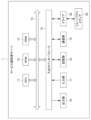
- FIG. 1 is a block diagram showing a configuration example of an embodiment of an information processing system of the present invention.
- 2 is a block diagram showing an example of the hardware configuration of a service provider server in the information processing system shown in FIG. 1.
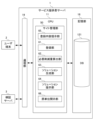
- FIG. 3 is a functional block diagram showing an example of the functional configuration of the service provider server of FIG. 2.
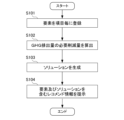
- FIG. 4 is a flowchart showing the operation of the service provider server of FIGS. 2 and 3.
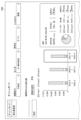
- FIG. 4 is a diagram showing a dashboard screen (by year) displayed on the user's my page of the website disclosed by the service provider server of FIGS. 2 and 3.
- FIG. 4 is a diagram showing a dashboard screen (by year) displayed on the user's my page of the website disclosed by the service provider server of FIGS. 2 and 3.
- FIG. 4 is a diagram showing a dashboard screen displayed on the user's my page of the website disclosed by the service provider server of FIGS. 2 and 3.
- FIG. 4 is a diagram showing a dashboard screen displayed on the user's my page of the website disclosed by the service provider server of FIGS. 2 and 3.
- FIG. 4 is a diagram showing a database management screen of the user's my page of the website disclosed by the service provider server of FIGS. 2 and 3.
- FIG. 1 is a block diagram showing a configuration example of an embodiment of an information processing system of the present invention.
- This service calculates the user's activity amount for each item used to calculate greenhouse gas (GHG) emissions such as CO2, and one or more factors that change the activity amount (for example, Based on the GHG emission reduction target amount by the predetermined deadline set by the user and the registered results, The degree of GHG emissions of a user that requires efforts to reduce by a predetermined period is calculated. Based on the calculation results, the elements that are expected to have an impact for reduction (emission reduction effect exceeding a certain value) are identified, solutions related to the elements are generated, and the identified elements and Recommendation information including the generated solution is presented to the user.
- GHG greenhouse gas
- the information processing system applied to this service includes a service provider server 1, user terminals 2-1 to 2-n (n is an arbitrary integer value), and a verification server 3. , and are connected to a network N such as the Internet.
- the service provider server 1 is an information processing device managed by the service provider of this service, and discloses a website to users who have registered as members.
- the service provider server 1 additionally calculates the GHG emission reduction target set by the user based on the actual results (the current degree of achievement, the expected future achievement based on the current year-on-year reduction level, etc.). Calculate the scale at which reduction efforts are required (degree of reduction in elemental emissions that will have an impact, etc.). Based on the results of the calculations, we identify corporations, locations, product groups, scopes, and categories that are expected to have an impact on reductions, and use AI to recommend them along with specific solutions for reductions.
- the user terminal 2 accepts operations by a user (company) who wants to understand the GHG emissions of their company or its bases, or a person in charge of a user (company) who wants to achieve GHG emission reduction targets, for example, a personal computer, tablet, etc. It is an information processing device such as a smartphone.
- the user accesses the website of this service, which is disclosed to those who have registered as a member, from the user terminal 2, and registers the target GHG emission reduction amount and actual performance by a predetermined period. By requesting recommendations on the scale that requires additional reduction efforts, it is possible to receive recommendations for specific solutions for reducing GHG emissions.
- user terminal 2 the user terminals 2-1 to 2-n will be collectively referred to as "user terminal 2."
- the user terminal 2 can execute, for example, the following series of processes as a process for obtaining recommendations for reducing GHG emissions while cooperating with the service provider server 1.
- the "collaboration" method is not particularly limited.
- the user terminal 2 can adopt the first method of having the service provider server 1 execute main processing while appropriately communicating with the service provider server 1 as the "collaboration" method.
- the user terminal 2 downloads and installs a dedicated application program (hereinafter simply referred to as an "app") from the service provider server 1 or a device (not shown) under its management, and executes the program using the application.
- the two methods can be adopted as "collaboration" methods.
- a method in which the first method and the second method are appropriately combined may be employed as a "collaboration” method.
- the first method will be described as being adopted as a “collaboration” method. That is, in the following example, the part where the main body of processing is "service provider server 1" is merely an example, and it goes without saying that it may be changed to "user terminal 2" as appropriate during implementation.
- the service provider server 1 performs a series of processes for presenting recommendation information in response to a user's recommendation request for achieving GHG emission reduction goals, with the user terminal 2 and the verification server 3 as appropriate. Execute while communicating.
- a verification server 3 connected to the service provider server 1 via the network N is also included in the information processing system.
- the verification server 3 is an information processing device managed by a third-party verification organization, such as a standardization organization, and communicates with the service provider server 1 to respond to input value verification requests from the service provider server 1. Accordingly, the input value verification process (validity check) is executed, and the verification result as to whether the input value is valid or not is returned.
- the service provider server 1 calculates the degree of GHG emissions of users (companies, etc.) that require reduction efforts by a predetermined deadline, such as by the end of the year, based on information registered by the user, Based on the calculation results, we identify factors that are expected to have an impact on reducing GHG emissions, and present recommended information including solutions related to those factors to the user. We can provide support to achieve goals for issues that are relatively difficult to quantify, such as volume reduction.
- the service provider server 1 executes the main processing (executes the processing according to the first method described above), so we focused on the service provider server 1 in the information processing system of FIG. The following explanation will be given.
- FIG. 2 is a block diagram showing an example of the hardware configuration of a server in the information processing system shown in FIG. 1.
- the service provider server 1 will be CPU (Central Processing Unit) 11, ROM (READ ONLY MEMORY) 12, RAM (RANDOM AccessSSSSSSSSSSSSSSSSSSSSSSSSSSSSSSSSSSSSSSSSSSSSSSSSSSSSSSSSSSSSSSSSSSSSSSSSSSSSSSSSSSSSSSSSSSSSSSSSSSSSSSSSSSSSSSSSSSSSSSSSSSSSSSSSSSSSSSSSSSSSSSSSSSSSSSSSSSSSSSSSSSSSSSSSSSSSSSSSSSSSSSSSSSSSSSSSSSSSSSSSSSSSSSSSSSSSSSSSSSSSSSSSSSSSSSSSSSSSSSSSSSSSSSSSSSSSSSSSSSSSSSSSSSSSSSSSSSSSSSSSSSSSSSSSSSSSSSSSSSSSSSSSSSSSSSSSSSSSSSSSSSSSSSSSSSSSSSSSSSSSSSSSSSSSSSSSSSSSSSSSSSSSSSSSSSSSSSSSSSSSSSSSSSSSSSSSSSSSSSSSSSSSSSSSSSSSSSSSSSSSSSSSSSSSSSSSSSSSSSSSSSSSSSSS
- the CPU 11 executes various processes according to programs recorded in the ROM 12 or programs loaded into the RAM 13 from the storage section 18 .
- the RAM 13 also appropriately stores data necessary for the CPU 11 to execute various processes.
- the CPU 11, ROM 12, and RAM 13 are interconnected via a bus 14.
- An input/output interface 15 is also connected to this bus 14 .
- An output section 16 , an input section 17 , a storage section 18 , a communication section 19 , and a drive 20 are connected to the input/output interface 15 .
- the output unit 16 includes a display such as a liquid crystal display, a speaker, and the like, and outputs various information as images and sounds.
- the input unit 17 includes, for example, a keyboard, and outputs various information.
- the storage unit 18 is composed of a DRAM (Dynamic Random Access Memory) or the like, and stores various data.
- the communication unit 19 communicates with other devices (for example, the user terminal 2 and the verification server 3 in FIG. 1) via a network N including the Internet.
- a removable medium 30 made of a magnetic disk, an optical disk, a magneto-optical disk, a semiconductor memory, or the like is appropriately installed in the drive 20.
- the program read from the removable medium 30 by the drive 20 is installed in the storage unit 18 as necessary. Further, the removable medium 30 can also store various data stored in the storage section 18 in the same manner as the storage section 18.
- the user terminal 2 and verification server 3 in FIG. 1 can also have basically the same hardware configuration as the hardware configuration shown in FIG. 2. Therefore, a description of the hardware configurations of the user terminal 2 and the verification server 3 will be omitted.
- FIG. 3 is a functional block diagram showing an example of the functional configuration of the service provider server of FIG. 2.
- the storage unit 18 of the service provider server 1 stores a database 121 (hereinafter referred to as “DB 121”).
- the DB 121 contains the amount of activity and one or more factors that change the amount of activity (for example, by year/month, by corporation, by base, scope, category, etc.) for each item used to calculate the user's GHG emissions. ) are registered in association with each other.
- the DB 121 also stores information on users who are registered as members (company name, base name, person in charge, login information such as login ID and password, contact information, etc.).
- users who are registered as members
- one or more member users (companies) can register their own specific consumption databases as customized DBs, and the contents of the customized DBs can be shared with others according to the requests of each member user (companies).
- a third party is provided at the request of each member user (company). can be verified by a verification organization (for example, a standardization organization, etc.). Further, a unique consumption rate DB registered in the customization DB may be disclosed according to the user's authority level.
- a site management unit 50 functions when a website is published.
- the site management section 50 includes a registration section 61, a required reduction amount calculation section 62, a solution generation section 63, a solution presentation section 64, a registered content presentation section 65, a basic unit disclosure section 66, and the like.
- the registration unit 61 records the amount of activity for each item used to calculate the GHG emissions of the user, based on one or more factors that change the amount of activity (for example, by year/month, by corporation, by base, Scope or category). ) and register it. Specifically, the registration unit 61 receives the activity amount for each item used for calculating GHG emissions transmitted from the user terminal 2, and selects one or more factors (for example, by year) that change the activity amount. The amount of activity is registered for each item in the DB 121 in association with (by month, by corporation, by base, scope, category). The registration unit 61 also registers a plurality of items and a basic unit used in each of the plurality of items as initial registration.
- the required reduction amount calculation unit 62 calculates the GHG emission reduction target amount by a predetermined deadline (for example, the end of this year, etc.) set by the user and the content registered by the registration unit 61.
- the degree (ratio or percentage) of the user's GHG emissions that requires reduction efforts by the end of the year, etc.) is calculated.
- the required reduction amount calculation unit 62 calculates the GHG emission reduction target amount by a predetermined period (for example, the end of this year, etc.) set in the DB 121 by the user, and the elements registered in the DB 121 by the registration unit 61.
- the degree of GHG emissions of the user that requires reduction efforts by the end of this year is calculated.
- the required reduction amount calculation unit 62 multiplies the activity amount for the predetermined item, which is registered in the DB 121 by the registration unit 61, by the basic unit for the predetermined item, which is registered in the DB 121 by the registration unit 61.
- the GHG emissions of the predetermined items are calculated. That is, the GHG emission amount for a predetermined item is calculated by multiplying the activity amount for the predetermined item, registered by the registration unit 61, by the basic unit for the predetermined item, registered by the registration unit 61.
- the solution generation unit 63 Based on the calculation results of the required reduction amount calculation unit 62, the solution generation unit 63 identifies elements that are expected to have an impact for reduction (have an emission reduction effect greater than a preset threshold), Generate a solution for that element. Specifically, the solution generation unit 63 has AI, and calculates the degree of additional reduction (XX tons or XX percent reduction), an element that is expected to have an effect of reducing emissions by more than a preset threshold is identified, and a solution regarding the element is generated.
- the degree of additional reduction XX tons or XX percent reduction
- the element with the degree of impact that contributes to reducing GHG emissions is ⁇ electricity,'' and ⁇ thermal power generation.'' Generate solutions such as "switch your electricity plan to a renewable energy electricity plan.”
- the solution presentation unit 64 presents recommendation information including the identified elements and generated solutions to the user. Specifically, the solution presentation unit 64 presents recommendation information including the elements specified by the solution generation unit 63 and the generated solution on the screen of the user terminal 2 of the requesting user.
- Example 1 ⁇ By switching to a renewable energy electricity plan, it is possible to reduce Scope 2 emissions to virtually 0, reducing overall GHG emissions by 15%. ”, “If you use the renewable energy power plan provided by ⁇ electric power company, you can install it at a total unit price of 18.0 yen/kWh” ⁇ Click the “Consult” button. etc. on the screen of the user terminal 2.
- Example 2) “By switching the raw materials (e.g. flour) purchased at the ⁇ factory from overseas to domestically produced, we can expect a significant reduction in GHG emissions in Scope 3 Category 4 procurement logistics. ” ⁇ Click the “Consult with domestic raw material manufacturer” button. etc. on the screen of the user terminal 2.
- raw materials e.g. flour
- the registered content presentation unit 65 visualizes (eg, graphs) the content registered by the registration unit 61 (e.g. basic unit for each element (each item), amount of activity, etc.) and presents it to the user. Specifically, the registered content presentation unit 65 displays the content registered in the DB 121 by the registration unit 61 (distribution of GHG emissions by item for the entire company and its bases, etc.) in the form of, for example, a pie chart or a table. It is visualized and presented to the user's user terminal 2. As a result, it is possible to visualize issues that are relatively difficult to quantify, such as reducing greenhouse gas (GHG) emissions that companies and their bases face, in a format suitable for companies, and to determine which factors account for a large proportion. Since you can understand it at a glance, you can provide support to achieve your goals.
- GHG greenhouse gas
- the basic unit disclosure unit 66 discloses the basic unit registered by the registration unit 61 and used to calculate the user's GHG emissions to other users (general). Specifically, when an element is specified by another user who has accessed the website, the basic unit disclosure unit 66 discloses the basic unit corresponding to the element to other users (general). The basic unit disclosure unit 66 discloses the unique DB (basic unit for each item) of each user whose validity has been verified by the verification server 3 of a predetermined third-party organization such as a standardization organization and which is subject to guarantee. By doing so, reliable basic units can be disclosed.
- a predetermined third-party organization such as a standardization organization
- FIG. 4 is a flowchart showing the operation of the service provider server of FIGS. 2 and 3.
- the service provider server 1 executes a process of registering the user's unique DB in the DB 121. Specifically, in step S101 of FIG. 4, the registration unit 61 of the service provider server 1 records the amount of activity for each item used to calculate the user's GHG emissions, and registers the amount of activity for one or more items in which the amount of activity changes. It is registered in the DB 121 in association with the element.
- the required reduction amount calculation unit 62 requests the user to provide a solution in step S102. Based on the set GHG emission reduction target amount until the predetermined period and the content registered in the DB 121 by the registration unit 61, the degree of the user's GHG emission amount that needs to be reduced by the predetermined period is calculated.
- step S103 the solution generation unit 63 identifies an element that is expected to have an impact for reduction based on the calculation result in the required reduction amount calculation step of step S102, and Generate a solution.
- step S104 the solution presentation unit 64 presents recommendation information including the identified element and the generated solution to the user.
- the amount of activity is registered in association with one or more factors that change the amount of activity, and the registered content and the GHG emission reduction target amount by the predetermined period set by the user in advance are registered.
- we calculate the degree of GHG emissions that users need to make efforts to reduce by a predetermined period identify factors that are expected to have an impact for reduction, and provide recommended information including those factors and their solutions to users.
- the service provider server 1 of the embodiment includes: [1] Recommendation function for greenhouse gas emission reduction solutions, [2] Master DB construction and quality assurance, public release, general-purpose DB disclosure function, I will explain about it.
- the recommendation function of [1] GHG emission reduction solution will be explained. When requested by a user, this recommendation function displays emissions by element (by year/month, by corporation, by location, scope and category) based on the GHG emissions data registered by the user. is visualized.
- the recommendation function uses the GHG emission reduction target set by the user to determine the size of the GHG emission reduction target that requires additional reduction efforts, based on the current degree of achievement and the expected future achievement based on the current year-on-year reduction level.
- the recommendation function selects elements (corporations, locations, product groups, Scope AI generates recommendation information that includes the relevant elements and specific solutions for reducing GHG emissions, and presents it to the requesting user.
- [2] DB disclosure function for constructing a master DB, ensuring quality, making it publicly available, and making it general-purpose will be explained.
- GHG emissions are calculated by multiplying "activity amount” by “basic unit.” Assuming that the amount of activity does not decrease, the only way to reduce GHG emissions is to lower the basic unit.
- “Intensity” is based on the "Emissions intensity database for calculating greenhouse gas emissions of organizations through the supply chain,” which is updated and published every year by public institutions such as the Ministry of the Environment, and the Sustainable If figures from standard databases such as the LCI database IDEA published by the Management Promotion Organization (SuMPO) are used, self-help efforts and reduction efforts by suppliers will not be reflected, and Scope 3 will not actually be lowered.
- the service provider server 1 is equipped with an interface (such as the customized DB management screen 310 in FIG. 16) that allows each user company's unique basic unit DB to be registered in the system (DB 121 of the service provider server 1) as a "customized DB".
- the registered contents (values and units of basic unit, etc.) registered in the "Customization DB" can be freely referred to when registering data.
- each company's unique basic unit database this website cooperates with the verification server 3 of a third-party standardization organization, etc., verifies the validity of the unique basic unit database, and then The contents of the DB can be disclosed after guaranteeing them.
- the unique intensity database of each guaranteed user company is integrated and managed in DB121 (master DB) of service provider server 1, and can be widely used, greatly increasing operational efficiency regarding visualization of GHG emissions. This will lead to further improvement and visualization both domestically and internationally, providing momentum for reducing GHG emissions.
- DB121 master DB
- DB121 master DB
- it can be utilized for recommending solutions in [1].
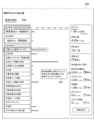
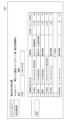
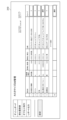
- FIGS. 5 to 8 are diagrams showing examples of dashboard screens displayed on the user's my page of the website disclosed by the service provider server of FIGS. 2 and 3.
- the dashboard screen shown in FIGS. 5A and 5B shows the dashboard screen 200 (by year) displayed on the user's my page of the website disclosed by the service provider server of FIGS. 2 and 3.
- the dashboard screen 200 is provided with visualization areas for each period and visualization areas for each category.
- pull-down menus such as organizational classification, corporate name, business name, Location, etc. are arranged, and by selecting and operating each pull-down menu, the user (person in charge of the company) can calculate GHG emissions. are color-coded for each period and scope (category), and a bar graph, a pie chart, and a numerical value are presented to the user terminal 2.
- the visualization area for each category there is a pull-down menu for specifying a period by year or month, and the GHG emissions for each Scope in the specified period are displayed in bar graphs and numerical values.
- Scope 1 indicates the direct emission of GHG gas by the business operator itself.
- Scope 2 represents indirect emissions from the use of energy supplied by other companies.
- Scope 3 has been newly added in recent years, and is a concept that indicates how much GHG gas is emitted by the supplier.It is divided into 15 items, and GHG emissions are disclosed for each item. Increasingly,
- the 15 specific items are “Purchased products and services,” “Capital goods,” “Fuel and energy-related activities,” “Transportation and delivery to the company,” “Waste generated from business,” “Business travel,” “Commuting of employees”, “Rental lease assets”, “Transportation and delivery to other companies”, “Processing of sold products”, “Use of sold products”, “Disposal of sold products”, “Rental lease assets” ”, “franchise”, “investment”, etc.
- the category When the user selects an item such as "Purchased products/services" from the Scope 3 items in the visualization area by category, the category, The total emissions, comparison with the previous year, comparison with all bases, and items with high emissions are displayed as numerical values and percentages (%).
- the total emissions are 4,234t-CO2, 12% compared to the previous year, 28% compared to all sites, and the top five elements with large emissions are, for example, iron 3,524t-CO2, 40%, Magnesium 2,202t-CO2, 25%, special steel 1,586t-CO2, 18%, polyethylene 810t-CO2, 10%, epoxy resin 57t-CO2, 7%, etc. are presented.
- a balloon 201 containing recommendation information is displayed as a pop-up at a position corresponding to the column of the element.
- this dashboard screen 200 By viewing this dashboard screen 200, a user (person in charge of a company) can understand at a glance which element has a large amount of GHG emissions, what proportion it accounts for in the whole, and so on. In addition, by viewing the recommended information in the pop-up balloon 201, the user (person in charge of the company) can obtain hints and the direction in which the company should strive to achieve its goals.
- the dashboard screen 210 shown in FIG. 6 is a screen that presents the user with emissions by site, including scope (select Scope 1, 2, or 3) and display (select monthly or yearly). , a pull-down menu for the period (for example, selecting the year, month and year) and a list of user (company) bases are displayed.
- the base list displays information divided into individual companies and subsidiaries based on items such as organizational classification, corporate name, business name, emissions, and ratio of all bases, so you can see GHG emissions within a user's company by base. can be grasped.
- the scope (Scope 1), display (monthly), and period (for example, March 2021, etc.) are specified in the pull-down menu, so that the GHG emissions of the parent company and the subsidiary can be calculated. Since the ratio (%) of all bases is displayed on the user terminal 2, the person in charge of the user can understand at a glance the proportion of GHG emissions of each base in the company (which bases have more and which bases have less, etc.). Can be done.
- the dashboard screen 220 shown in FIG. 7 is a screen showing detailed contents of emissions by base, for example, elements such as "1. Purchased products/services” and “Iron (excluding high-alloy steel)" of "Scope 3"
- the details for each site are displayed for the display period (monthly, March 2021) selected from the display and period pull-down menu, so the user's person in charge can For the element (excluding high-alloy steel), you can understand at a glance the proportion of GHG emissions for each site (which sites have more, which have less, etc.).
- the customization DB screen will be explained with reference to FIG.
- the customized DB management screen 310 shown in FIG. 8 it is possible to create a DB that summarizes the basic units used independently, IDEA, CFPDB, etc. Management details include item name, activity amount (unit), basic unit (number), basic unit (unit), source, etc.
- CO2 carbon dioxide
- GHG greenhouse gas
- the series of processes described above can be executed by hardware or by software.
- the functional configuration in FIG. 3 is merely an example and is not particularly limited. In other words, it is sufficient that the information processing device is equipped with a function that can execute the series of processes described above as a whole, and what functional blocks and databases are used to realize this function are limited to the example shown in FIG. Not done.
- the locations of the functional blocks and the database are not particularly limited to those shown in FIG. 3, and may be arbitrary.
- at least a portion of the functional blocks and databases required to execute various processes may be transferred to the user terminal 2, the verification server 3, or the like.
- the functional blocks and database of the user terminal 2 and verification server 3 may be transferred to the service provider server 1 or the like.
- one functional block and database may be configured by a single piece of hardware, a single piece of software, or a combination thereof.
- a program constituting the software is installed on a computer or the like from a network or a recording medium.
- the computer may be a computer built into dedicated hardware. Further, the computer may be a computer that can execute various functions by installing various programs, such as a server, a general-purpose smartphone, or a personal computer.
- Recording media containing such programs not only consist of removable media (not shown) that is distributed separately from the main body of the device in order to provide programs to users, etc., but also those that are pre-installed in the main body of the device and provided to the user. It consists of recording media etc. provided to etc.
- the step of writing a program to be recorded on a recording medium is not only a process that is performed chronologically in accordance with the order, but also a process that is not necessarily performed chronologically but in parallel or individually. It also includes the processing to be executed.
- the term system refers to an overall device composed of a plurality of devices, a plurality of means, and the like.
- the information processing apparatus to which the present invention is applied only needs to have the following configuration, and can take various embodiments. That is, the information processing device to which the present invention is applied (for example, the service provider server 1 in FIG. 3), For each item used to calculate the user's greenhouse gas emissions (GHG emissions), the amount of activity is divided into one or more factors that change the amount of activity (for example, by year/month, by corporation, by location, Scope).
- a registration unit for example, the registration unit 61 in FIG. 3 that registers the information in association with The user who needs to make efforts to reduce greenhouse gas emissions (GHG emissions) by the predetermined deadline based on the target greenhouse gas emissions (GHG emissions) reduction amount by the predetermined deadline set by the user and the content registered by the registration means.
- a required reduction amount calculation means (for example, the required reduction amount calculation unit 62 in FIG. 3) that calculates the degree of greenhouse gas emissions (GHG emissions) of Based on the calculation result of the required reduction amount calculation means (for example, the required reduction amount calculation unit 62 in FIG. 3), the above-mentioned items that are expected to have an impact for reduction (have an emission reduction effect of a certain value or more)
- a solution generation means (for example, the solution generation unit 63 in FIG. 3) that identifies an element and generates a solution regarding the element;
- Solution presenting means (for example, the solution presenting unit 64 in FIG. 3) that presents recommendation information including the identified element and the generated solution to the user; Equipped with.
- GFG greenhouse gas
- registered content presentation means for example, registered content presentation unit 65 in FIG. 3 that visualizes the content registered by the registration unit (for example, registration unit 61 in FIG. 3) and presents it to the user; Furthermore, it is equipped with.
- GHG greenhouse gas
- the required reduction amount calculation means calculates the current greenhouse gas emissions (GHG emissions) of the user based on the content registered by the registration means. ), and further calculate the likelihood that the user will achieve the greenhouse gas emissions (GHG emissions) reduction target in the future when predicted based on the current year-on-year reduction level; Based on the calculation results and the greenhouse gas emissions (GHG emissions) reduction target, it is possible to calculate the degree of greenhouse gas emissions of the user that requires efforts to reduce by the predetermined period.
- the registration means (for example, the registration unit 61 in FIG. 3) can further register the plurality of items and the basic units used in each of the plurality of items as initial registration.
- the amount of greenhouse gas emissions (GHG emissions) for a predetermined item is calculated based on the amount of activity for the predetermined item registered by the registration device (for example, the registration unit 61 in FIG. 3). It is calculated by multiplying the basic unit for the predetermined item registered by the registration unit 61 in FIG. 3, etc.).
- Disclosing means for disclosing to other users the basic unit registered by the registration means (e.g., the registration unit 61 in FIG. 3) and used for calculating greenhouse gas emissions (GHG emissions) of the user; Basic unit disclosure section 66 in Figure 3, etc.), It is possible to further include the following.
- the disclosure means (for example, the basic unit disclosure unit 66 in FIG. 3) discloses the basic unit whose validity has been verified by a predetermined third party organization (verification server 3 of a standardization organization, etc. in FIG. 3) and which has become a guarantee target. Disclose. This makes it possible to disclose reliable basic units. In the above example, the guarantee is made for each basic unit, but the guarantee may be made for each unique DB for each user in which a plurality of basic units are registered.
- a registration step (such as step S101 in FIG. 4) of registering the amount of activity for each item used to calculate the user's greenhouse gas emissions (GHG emissions) in association with one or more factors that change the amount of activity. )and, The user who needs to make efforts to reduce greenhouse gas emissions (GHG emissions) by the predetermined deadline based on the target greenhouse gas emissions (GHG emissions) reduction amount by the predetermined deadline set by the user and the content registered in the registration step.
- a necessary reduction amount calculation step (step S102 in FIG. 4, etc.) of calculating the degree of greenhouse gas emissions of A solution generation step (such as step S103 in FIG.
- a solution presenting step (such as step S104 in FIG. 4) of presenting recommendation information including the identified element and the generated solution to the user; can include.
- a registration step (such as step S101 in FIG. 4) of registering the amount of activity for each item used to calculate the user's greenhouse gas emissions (GHG emissions) in association with one or more factors that change the amount of activity. )and, The user who needs to make efforts to reduce greenhouse gas emissions (GHG emissions) by the predetermined deadline based on the target greenhouse gas emissions (GHG emissions) reduction amount by the predetermined deadline set by the user and the content registered in the registration step.
- a necessary reduction amount calculation step (step S102 in FIG. 4, etc.) of calculating the degree of greenhouse gas emissions (GHG emissions);
- a solution generation step (such as step S103 in FIG.
- a solution presenting step (such as step S103 in FIG. 4) of presenting recommendation information including the identified element and the generated solution to the user; Control processing including the following can be executed.
- SYMBOLS 1 Service provider server, 2, 2-a to 2-n... User terminal, 3... Verification server, 11... CPU, 12... ROM, 18... Storage unit, DESCRIPTION OF SYMBOLS 19... Communication department, 50... Site management department, 61... Registration department, 62... Necessary reduction amount calculation part, 63... Solution generation part, 64... Solution presentation part, 65. ...Registered content presentation section, 66...Basic unit disclosure section, 121...DB
Landscapes
- Business, Economics & Management (AREA)
- Engineering & Computer Science (AREA)
- Human Resources & Organizations (AREA)
- Strategic Management (AREA)
- Economics (AREA)
- Entrepreneurship & Innovation (AREA)
- Development Economics (AREA)
- Theoretical Computer Science (AREA)
- General Physics & Mathematics (AREA)
- Marketing (AREA)
- General Business, Economics & Management (AREA)
- Physics & Mathematics (AREA)
- Tourism & Hospitality (AREA)
- Educational Administration (AREA)
- Quality & Reliability (AREA)
- Operations Research (AREA)
- Game Theory and Decision Science (AREA)
- Accounting & Taxation (AREA)
- Finance (AREA)
- Health & Medical Sciences (AREA)
- General Health & Medical Sciences (AREA)
- Primary Health Care (AREA)
- Data Mining & Analysis (AREA)
- Management, Administration, Business Operations System, And Electronic Commerce (AREA)
Priority Applications (5)
| Application Number | Priority Date | Filing Date | Title |
|---|---|---|---|
| US18/879,061 US20260245099A1 (en) | 2022-06-30 | 2023-06-23 | Information processing device, information processing method, and program |
| EP23831322.5A EP4542481A4 (en) | 2022-06-30 | 2023-06-23 | INFORMATION PROCESSING DEVICE, INFORMATION PROCESSING METHOD, AND PROGRAM |
| JP2023560070A JP7474006B1 (ja) | 2022-06-30 | 2023-06-23 | 情報処理装置、情報処理方法及びプログラム |
| JP2024061172A JP2024086796A (ja) | 2022-06-30 | 2024-04-05 | 情報処理装置、情報処理方法及びプログラム |
| JP2026087037A JP2026121571A (ja) | 2022-06-30 | 2026-05-25 | 情報処理装置、情報処理方法及びプログラム |
Applications Claiming Priority (2)
| Application Number | Priority Date | Filing Date | Title |
|---|---|---|---|
| JP2022-106210 | 2022-06-30 | ||
| JP2022106210 | 2022-06-30 |
Publications (1)
| Publication Number | Publication Date |
|---|---|
| WO2024004880A1 true WO2024004880A1 (ja) | 2024-01-04 |
Family
ID=89382960
Family Applications (1)
| Application Number | Title | Priority Date | Filing Date |
|---|---|---|---|
| PCT/JP2023/023408 Ceased WO2024004880A1 (ja) | 2022-06-30 | 2023-06-23 | 情報処理装置、情報処理方法及びプログラム |
Country Status (4)
| Country | Link |
|---|---|
| US (1) | US20260245099A1 (enExample) |
| EP (1) | EP4542481A4 (enExample) |
| JP (3) | JP7474006B1 (enExample) |
| WO (1) | WO2024004880A1 (enExample) |
Families Citing this family (5)
| Publication number | Priority date | Publication date | Assignee | Title |
|---|---|---|---|---|
| JP7881221B2 (ja) * | 2024-12-10 | 2026-06-29 | 株式会社ゼロボード | 情報処理システム、情報処理方法及びプログラム |
| JP7898679B2 (ja) * | 2024-12-10 | 2026-08-03 | 株式会社ゼロボード | 情報処理システム、情報処理方法及びプログラム |
| JP2026105601A (ja) * | 2024-12-16 | 2026-06-26 | Booost株式会社 | 情報処理方法、情報処理プログラム及び情報処理装置 |
| JP2026113336A (ja) * | 2024-12-25 | 2026-07-07 | Booost株式会社 | 情報システム、情報処理装置、情報処理プログラム、及び情報処理方法 |
| JP7706203B1 (ja) | 2025-01-31 | 2025-07-11 | 株式会社ディー・ジー・アイ | 情報処理装置、情報処理方法及び情報処理プログラム |
Citations (5)
| Publication number | Priority date | Publication date | Assignee | Title |
|---|---|---|---|---|
| JPH11149500A (ja) * | 1996-10-02 | 1999-06-02 | Nec Corp | 環境負荷評価方法及びその装置、及び環境管理方法 |
| JP2004046505A (ja) * | 2002-07-11 | 2004-02-12 | Ricoh Co Ltd | 環境負荷低減支援方法、装置、プログラム、及び記録媒体 |
| JP2007041705A (ja) * | 2005-08-01 | 2007-02-15 | National Institute Of Advanced Industrial & Technology | 事業者の温暖化対策計画策定方法 |
| US20110137574A1 (en) * | 2009-07-24 | 2011-06-09 | Hara Software, Inc. | Graphical Technique for Visualizing Effects of Environmental Emission Reductions |
| JP2012226588A (ja) * | 2011-04-20 | 2012-11-15 | Fujitsu Ltd | 環境負荷評価方法、環境負荷評価装置及び環境負荷評価プログラム |
Family Cites Families (6)
| Publication number | Priority date | Publication date | Assignee | Title |
|---|---|---|---|---|
| US20100042453A1 (en) * | 2008-08-12 | 2010-02-18 | Efficiency 2.0, LLC. | Methods and apparatus for greenhouse gas footprint monitoring |
| US20110119113A1 (en) * | 2010-08-20 | 2011-05-19 | Hara Software, Inc. | Best Practices for Emission and Energy Management |
| US20210279777A1 (en) * | 2020-03-03 | 2021-09-09 | Rare, Inc. | System and method for providing carbon offsets |
| JP7084583B1 (ja) * | 2021-02-08 | 2022-06-15 | booost technologies株式会社 | 情報出力装置、情報出力方法、及びプログラム |
| CN115239487A (zh) * | 2021-04-22 | 2022-10-25 | 亚洲绿色基金管理有限公司 | 一种带有碳中和属性标记的资产交易方法和系统 |
| US12462261B2 (en) * | 2021-08-19 | 2025-11-04 | International Business Machines Corporation | Optimizing carbon emissions from streaming platforms with artificial intelligence based model |
-
2023
- 2023-06-23 WO PCT/JP2023/023408 patent/WO2024004880A1/ja not_active Ceased
- 2023-06-23 US US18/879,061 patent/US20260245099A1/en active Pending
- 2023-06-23 EP EP23831322.5A patent/EP4542481A4/en active Pending
- 2023-06-23 JP JP2023560070A patent/JP7474006B1/ja active Active
-
2024
- 2024-04-05 JP JP2024061172A patent/JP2024086796A/ja active Pending
-
2026
- 2026-05-25 JP JP2026087037A patent/JP2026121571A/ja active Pending
Patent Citations (5)
| Publication number | Priority date | Publication date | Assignee | Title |
|---|---|---|---|---|
| JPH11149500A (ja) * | 1996-10-02 | 1999-06-02 | Nec Corp | 環境負荷評価方法及びその装置、及び環境管理方法 |
| JP2004046505A (ja) * | 2002-07-11 | 2004-02-12 | Ricoh Co Ltd | 環境負荷低減支援方法、装置、プログラム、及び記録媒体 |
| JP2007041705A (ja) * | 2005-08-01 | 2007-02-15 | National Institute Of Advanced Industrial & Technology | 事業者の温暖化対策計画策定方法 |
| US20110137574A1 (en) * | 2009-07-24 | 2011-06-09 | Hara Software, Inc. | Graphical Technique for Visualizing Effects of Environmental Emission Reductions |
| JP2012226588A (ja) * | 2011-04-20 | 2012-11-15 | Fujitsu Ltd | 環境負荷評価方法、環境負荷評価装置及び環境負荷評価プログラム |
Non-Patent Citations (1)
| Title |
|---|
| See also references of EP4542481A4 |
Also Published As
| Publication number | Publication date |
|---|---|
| US20260245099A1 (en) | 2026-08-20 |
| EP4542481A4 (en) | 2025-10-01 |
| EP4542481A1 (en) | 2025-04-23 |
| JPWO2024004880A1 (enExample) | 2024-01-04 |
| JP2026121571A (ja) | 2026-07-24 |
| JP7474006B1 (ja) | 2024-04-24 |
| JP2024086796A (ja) | 2024-06-28 |
Similar Documents
| Publication | Publication Date | Title |
|---|---|---|
| JP7474006B1 (ja) | 情報処理装置、情報処理方法及びプログラム | |
| Ghasemi et al. | The effectiveness of management accounting systems: evidence from financial organizations in Iran | |
| Weckenmann et al. | Quality management–history and trends | |
| Kuo et al. | How service quality affects customer loyalty in the travel agency: The effects of customer satisfaction, service recovery, and perceived value | |
| Zaied | An integrated success model for evaluating information system in public sectors | |
| JP6978115B2 (ja) | 情報処理システム、情報処理方法、及びプログラム | |
| Duffy | The ASQ Quality Improvement Pocket Guide | |
| Musa et al. | E-procurement adoption in Nigeria: perceptions from the public sector employees | |
| JP2024104183A (ja) | 入力管理装置、入力管理方法、及びプログラム | |
| TW202205177A (zh) | 用於在多階層行銷系統中結合產品及允許使用者激勵其下線之方法 | |
| JP2020021487A (ja) | 廃棄物回収サービスとコンテンツ配信サービスとを統合するためのシステム | |
| Atento et al. | Legacy Retail under Digital Disruption: Strategic Insights from National Book Store’s Omnichannel Transition in the Philippines | |
| JP7516462B2 (ja) | Co2排出量算出サーバ、co2排出量算出システム、co2排出量算出方法、及び、プログラム | |
| EP3719718A1 (en) | Solution proposal support system and solution proposal support method | |
| JP7565726B2 (ja) | 分析コード別収支管理システム、分析コード別収支管理方法、及び分析コード別収支管理プログラム | |
| JP6653604B2 (ja) | 情報処理装置及び情報処理プログラム | |
| US10825036B2 (en) | Systems and methods to accommodate multi-party business relationships | |
| JP7559454B2 (ja) | 施策提案装置、施策提案方法、及び、プログラム | |
| Martinez et al. | Optimizing employee time in a purchasing department: a Six Sigma case study | |
| JP7444935B1 (ja) | プログラム、情報処理装置、及び方法 | |
| US20130138545A1 (en) | Framework for implementing trade preference agreements | |
| Khalid et al. | Pricing dynamics in trade-in-enabled closed-loop supply chains under predetermined acquisition costs | |
| Sayam | Bookplace: a modular & scalable multi-vendor ecommerce system with advanced order, inventory & analytics management | |
| JP7667749B2 (ja) | 仕入先補填管理装置、仕入先補填管理方法および仕入先補填管理プログラム | |
| Sleilati | From TQM to perceived value: an industrial outlook case study |
Legal Events
| Date | Code | Title | Description |
|---|---|---|---|
| ENP | Entry into the national phase |
Ref document number: 2023560070 Country of ref document: JP Kind code of ref document: A |
|
| 121 | Ep: the epo has been informed by wipo that ep was designated in this application |
Ref document number: 23831322 Country of ref document: EP Kind code of ref document: A1 |
|
| WWE | Wipo information: entry into national phase |
Ref document number: 18879061 Country of ref document: US |
|
| WWE | Wipo information: entry into national phase |
Ref document number: 2023831322 Country of ref document: EP |
|
| ENP | Entry into the national phase |
Ref document number: 2023831322 Country of ref document: EP Effective date: 20250114 |
|
| NENP | Non-entry into the national phase |
Ref country code: DE |
|
| WWP | Wipo information: published in national office |
Ref document number: 2023831322 Country of ref document: EP |
|
| WWP | Wipo information: published in national office |
Ref document number: 18879061 Country of ref document: US |